
Implement Policies on Sodium Reduction What is
Description: Implement Policies on Sodium Reduction What is Sodium? NaCl (table salt) Maintain balance of fluids Helps to transmit nerve impulses Aids in contraction and relaxation of muscles Dietary Recommendations Recommended levels of sodium intake :
Related Topics
Download Presentation
"Implement Policies on Sodium Reduction What is" is the property of its rightful owner. Permission is granted to download and print the materials on this website for personal, non-commercial use only, and to display it on your personal computer provided you do not modify the materials and that you retain all copyright notices contained in the materials. By downloading content from our website, you accept the terms of this agreement.
Presentation Transcript
slide1. Implement Policies on Sodium Reduction<br>
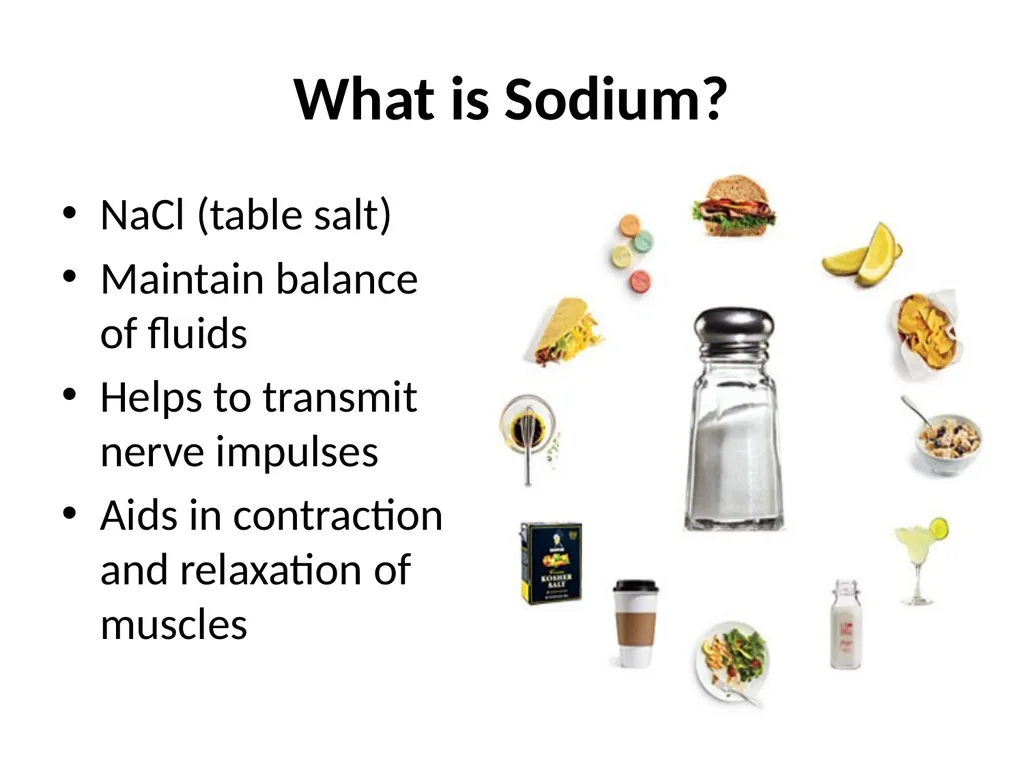
slide2. What is Sodium? NaCl (table salt)
Maintain balance of fluids
Helps to transmit nerve impulses
Aids in contraction and relaxation of muscles<br>
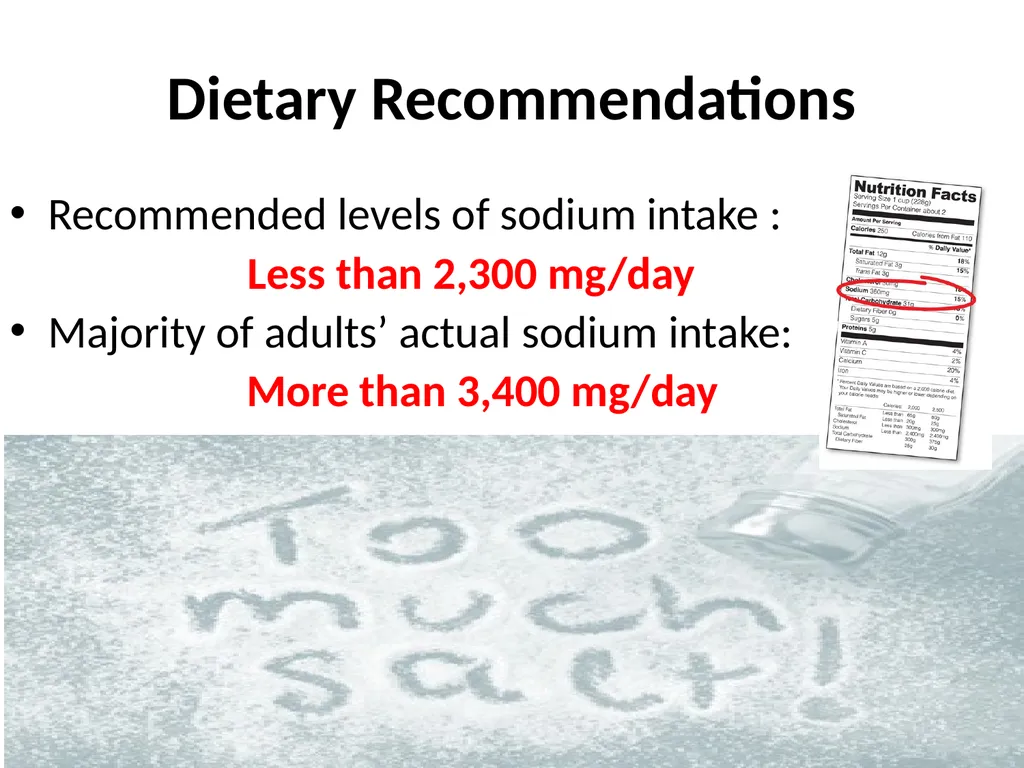
slide3. Dietary Recommendations Recommended levels of sodium intake :
Less than 2,300 mg/day
Majority of adults’ actual sodium intake:
More than 3,400 mg/day<br>
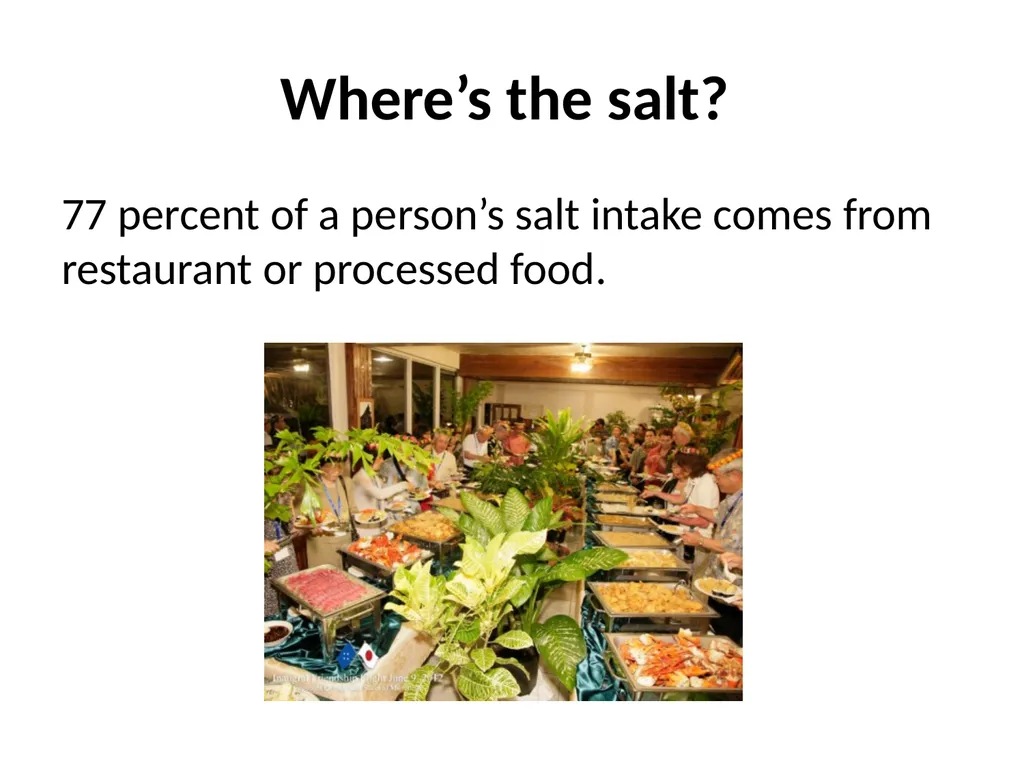
slide4. Where’s the salt? 77 percent of a person’s salt intake comes from restaurant or processed food.<br>
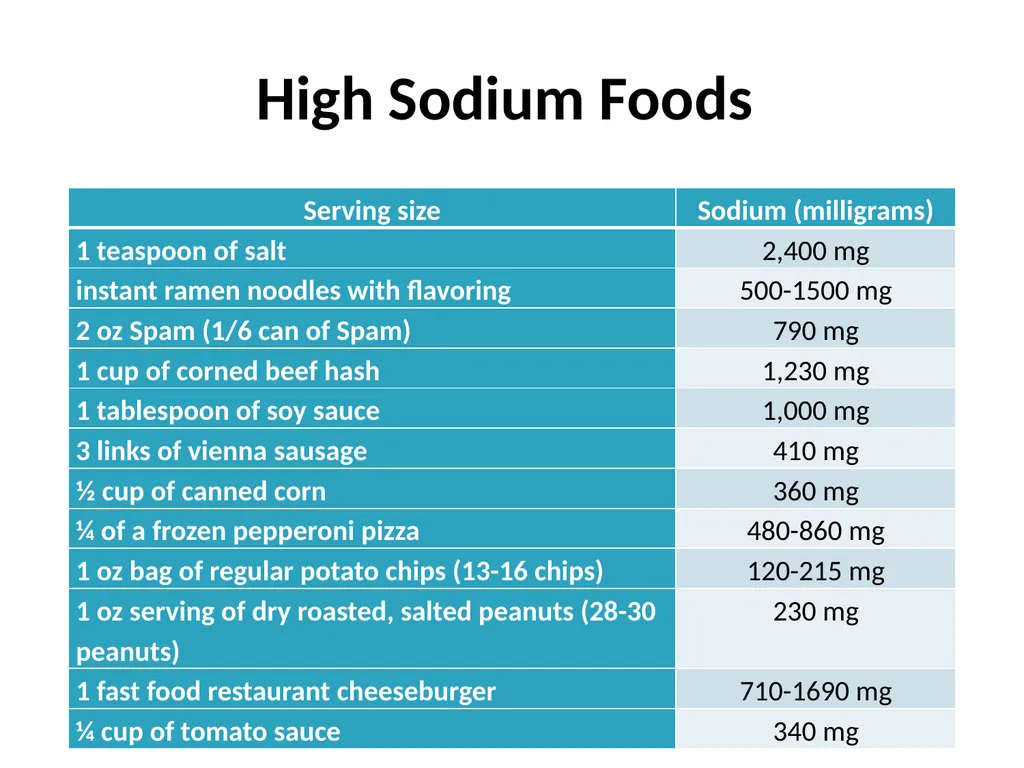
slide5. High Sodium Foods<br>
slide6. High Sodium Intake’s Effect on Health Heart diseases
High blood pressure / hypertension
about 68 million U.S. adults (1 in 3) have hypertension
Heart Disease
Stroke
Only 46 of 100 of adults with hypertension had adequately controlled blood pressure<br>
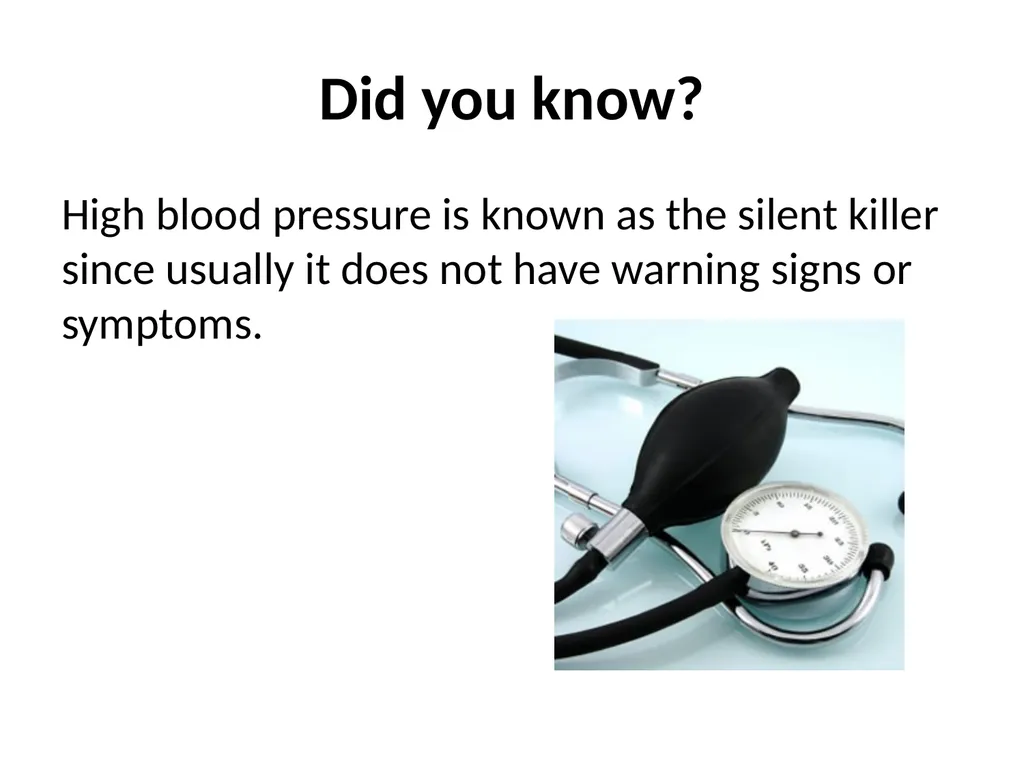
slide7. Did you know? High blood pressure is known as the silent killer since usually it does not have warning signs or symptoms.<br>
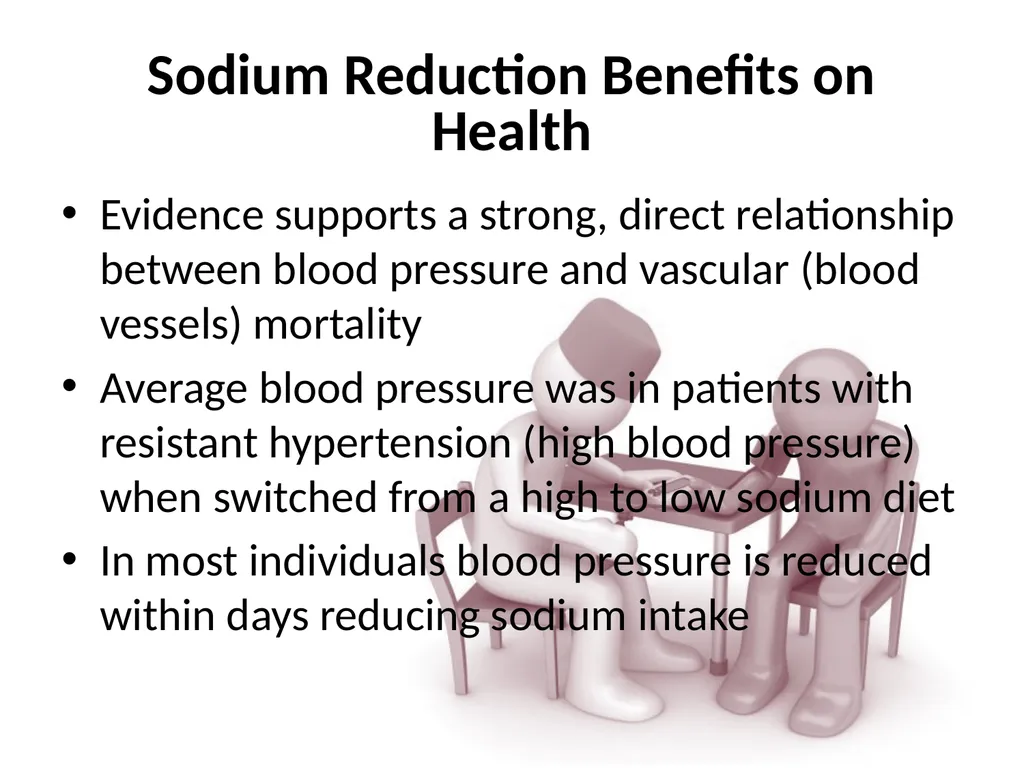
slide8. Sodium Reduction Benefits on Health Evidence supports a strong, direct relationship between blood pressure and vascular (blood vessels) mortality
Average blood pressure was in patients with resistant hypertension (high blood pressure) when switched from a high to low sodium diet
In most individuals blood pressure is reduced within days reducing sodium intake<br>
slide9. What should we do? WHO states that population-wide reductions in dietary sodium consumption are highly cost effective. There is a need to give priority to implement national strategies and policies aiming at the reduction of dietary salt consumption.<br>
slide10. Law and Policy Food and Drug Administration
Nutrition labeling
Improve effectiveness of the Nutrition Facts Panel through labeling
Menu labeling/Sodium Claims
Expand regulations under the Nutrition Labeling Education Act of 1990 (NLEA) to cover sodium content claims on menu items
Daily Value
Lower sodium intake to 2,300mg or less<br>
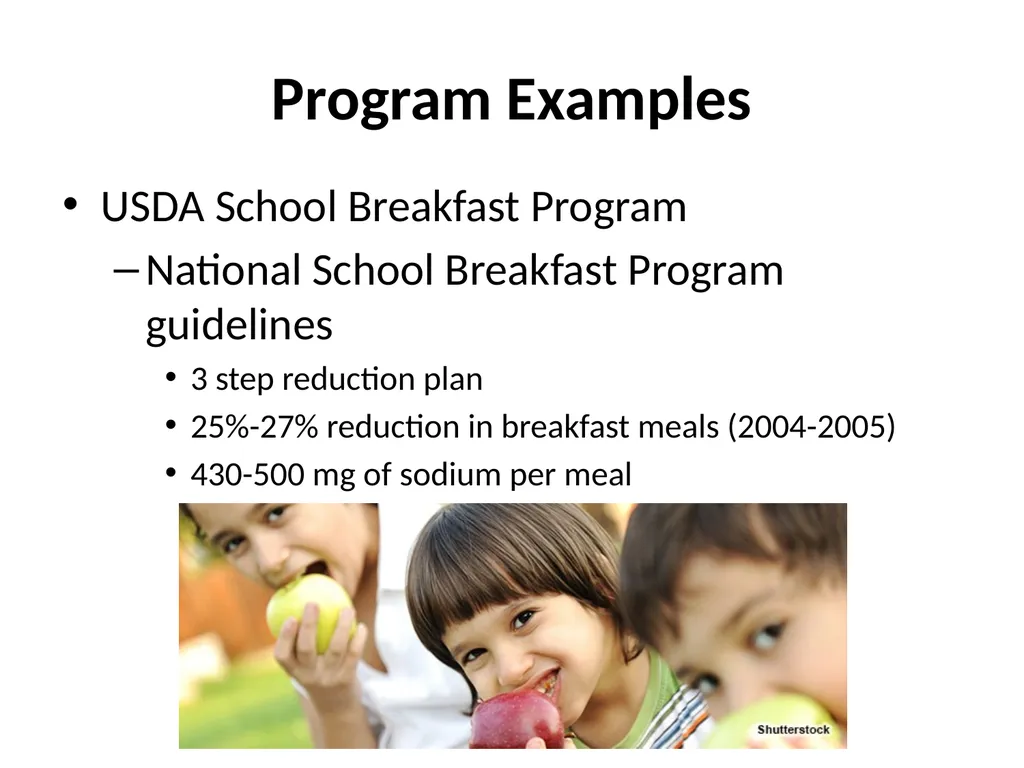
slide11. Program Examples USDA School Breakfast Program
National School Breakfast Program guidelines
3 step reduction plan
25%-27% reduction in breakfast meals (2004-2005)
430-500 mg of sodium per meal<br>
slide12. State and Local Level Menu Labeling
Warning Labels
Procurement Policies
Licensing/Taxing<br>
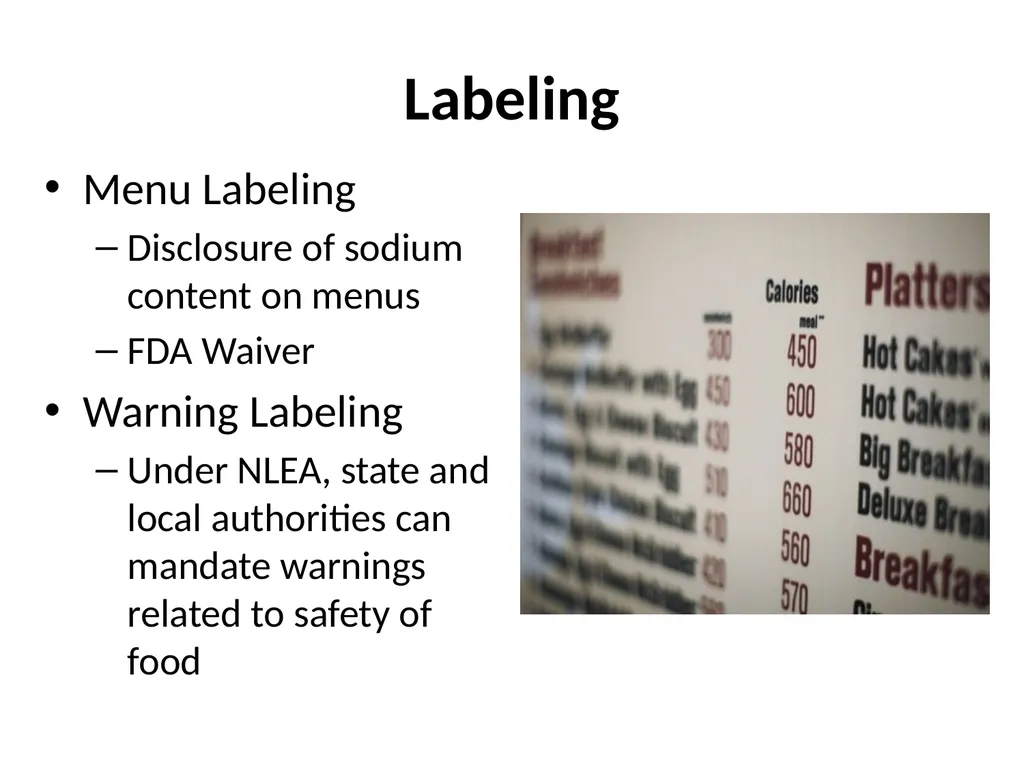
slide13. Labeling Menu Labeling
Disclosure of sodium content on menus
FDA Waiver
Warning Labeling
Under NLEA, state and local authorities can mandate warnings related to safety of food<br>
slide14. Procurement, Licensing, Taxing Procurement
Government use of purchasing power to reduce sodium
MA Department of Public Health
Nutritional policies for purchased and prepared foods for all state agencies
NYC Nutritional Purchasing Criteria
Vending machines (2011)
Licensing/Taxing
Inclusion of a sodium reduction requirement as part of licensing standards
Higher sales tax on high sodium meals<br>
slide15. Who can I contact for more information? Adrian Bauman
Boden Institute of Obesity, Nutrition and Exercise and Prevention Research Collaboration
University of Sydney
Sydney, Australia
Email: adrian.bauman@sydney.edu.au<br>
slide2. What is Sodium? NaCl (table salt)
Maintain balance of fluids
Helps to transmit nerve impulses
Aids in contraction and relaxation of muscles<br>
slide3. Dietary Recommendations Recommended levels of sodium intake :
Less than 2,300 mg/day
Majority of adults’ actual sodium intake:
More than 3,400 mg/day<br>
slide4. Where’s the salt? 77 percent of a person’s salt intake comes from restaurant or processed food.<br>
slide5. High Sodium Foods<br>
slide6. High Sodium Intake’s Effect on Health Heart diseases
High blood pressure / hypertension
about 68 million U.S. adults (1 in 3) have hypertension
Heart Disease
Stroke
Only 46 of 100 of adults with hypertension had adequately controlled blood pressure<br>
slide7. Did you know? High blood pressure is known as the silent killer since usually it does not have warning signs or symptoms.<br>
slide8. Sodium Reduction Benefits on Health Evidence supports a strong, direct relationship between blood pressure and vascular (blood vessels) mortality
Average blood pressure was in patients with resistant hypertension (high blood pressure) when switched from a high to low sodium diet
In most individuals blood pressure is reduced within days reducing sodium intake<br>
slide9. What should we do? WHO states that population-wide reductions in dietary sodium consumption are highly cost effective. There is a need to give priority to implement national strategies and policies aiming at the reduction of dietary salt consumption.<br>
slide10. Law and Policy Food and Drug Administration
Nutrition labeling
Improve effectiveness of the Nutrition Facts Panel through labeling
Menu labeling/Sodium Claims
Expand regulations under the Nutrition Labeling Education Act of 1990 (NLEA) to cover sodium content claims on menu items
Daily Value
Lower sodium intake to 2,300mg or less<br>
slide11. Program Examples USDA School Breakfast Program
National School Breakfast Program guidelines
3 step reduction plan
25%-27% reduction in breakfast meals (2004-2005)
430-500 mg of sodium per meal<br>
slide12. State and Local Level Menu Labeling
Warning Labels
Procurement Policies
Licensing/Taxing<br>
slide13. Labeling Menu Labeling
Disclosure of sodium content on menus
FDA Waiver
Warning Labeling
Under NLEA, state and local authorities can mandate warnings related to safety of food<br>
slide14. Procurement, Licensing, Taxing Procurement
Government use of purchasing power to reduce sodium
MA Department of Public Health
Nutritional policies for purchased and prepared foods for all state agencies
NYC Nutritional Purchasing Criteria
Vending machines (2011)
Licensing/Taxing
Inclusion of a sodium reduction requirement as part of licensing standards
Higher sales tax on high sodium meals<br>
slide15. Who can I contact for more information? Adrian Bauman
Boden Institute of Obesity, Nutrition and Exercise and Prevention Research Collaboration
University of Sydney
Sydney, Australia
Email: adrian.bauman@sydney.edu.au<br>