
Implementation Challenges: Lessons Learned from a




Description: Implementation Challenges: Lessons Learned from a Large Pragmatic Trial Joel Stevans, PhD, DC Assistant Professor, Department of Physical Therapy Senior Implementation Scientist, Health Policy Institute University of Pittsburgh Targeted
Related Topics
Download Presentation
"Implementation Challenges: Lessons Learned from a" is the property of its rightful owner. Permission is granted to download and print the materials on this website for personal, non-commercial use only, and to display it on your personal computer provided you do not modify the materials and that you retain all copyright notices contained in the materials. By downloading content from our website, you accept the terms of this agreement.
Presentation Transcript
slide1. Implementation Challenges: Lessons Learned from a Large Pragmatic Trial Joel Stevans, PhD, DC
Assistant Professor, Department of Physical Therapy
Senior Implementation Scientist, Health Policy Institute
University of Pittsburgh<br>
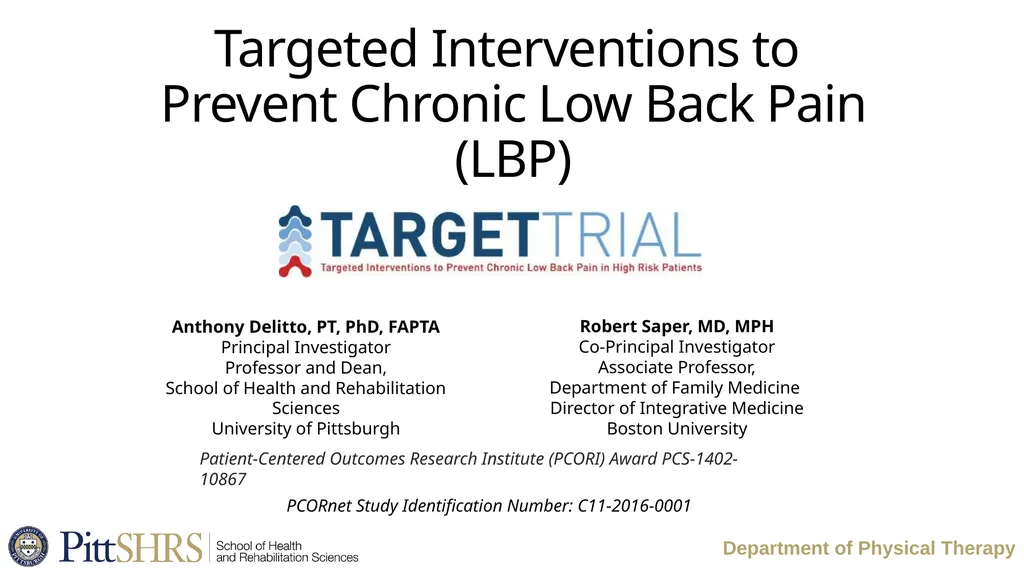
slide2. Targeted Interventions to Prevent Chronic Low Back Pain (LBP) Anthony Delitto, PT, PhD, FAPTA
Principal Investigator
Professor and Dean,
School of Health and Rehabilitation Sciences
University of Pittsburgh Robert Saper, MD, MPH
Co-Principal Investigator
Associate Professor,
Department of Family Medicine
Director of Integrative Medicine
Boston University Patient-Centered Outcomes Research Institute (PCORI) Award PCS-1402-10867
PCORnet Study Identification Number: C11-2016-0001<br>
slide3. Acknowledgements TARGET Trial Site Principal Investigators
Anthony Delitto, PT, PhD, FAPTA, University of Pittsburgh
Robert Saper, MD, MPH, Boston Medical Center
Gerard Brennan, PT, PhD, Intermountain Healthcare
David Morrisette, PT, PhD, Medical University of South Carolina
Stephen Wegener, PhD, Johns Hopkins University
TARGET Trial Study Team<br>
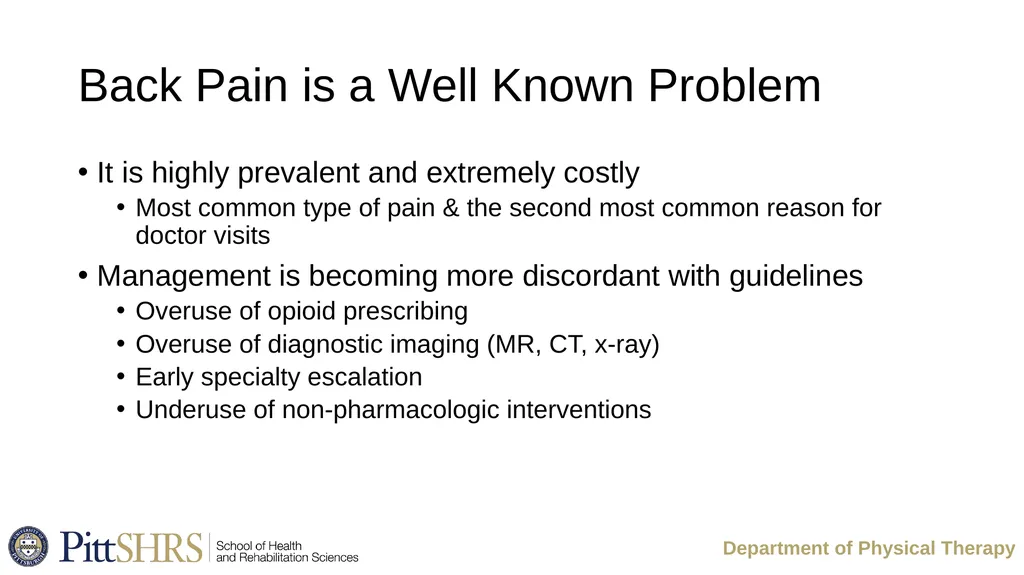
slide4. Back Pain is a Well Known Problem It is highly prevalent and extremely costly
Most common type of pain & the second most common reason for doctor visits
Management is becoming more discordant with guidelines
Overuse of opioid prescribing
Overuse of diagnostic imaging (MR, CT, x-ray)
Early specialty escalation
Underuse of non-pharmacologic interventions<br>
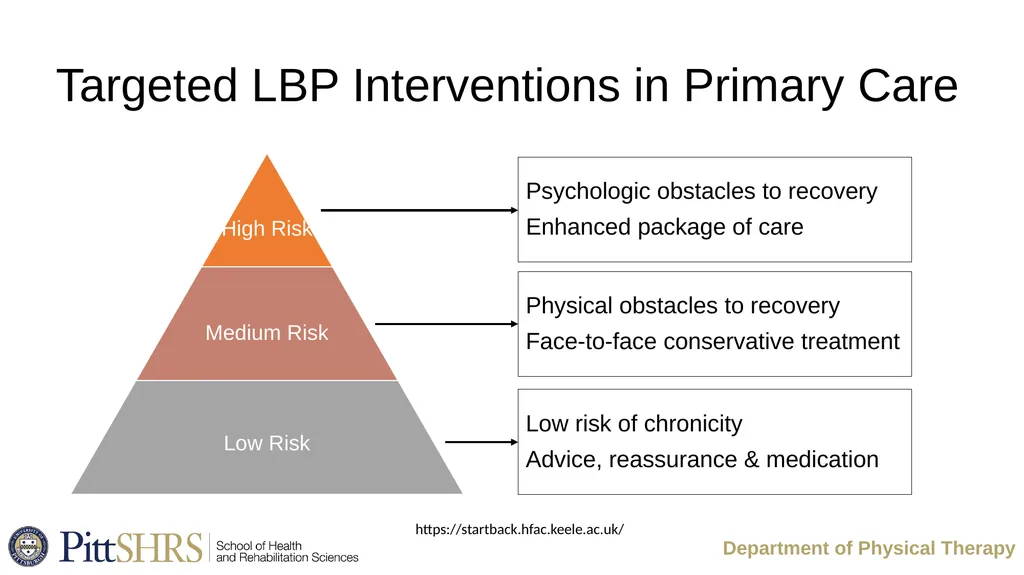
slide5. Targeted LBP Interventions in Primary Care Psychologic obstacles to recovery
Enhanced package of care Physical obstacles to recovery
Face-to-face conservative treatment Low risk of chronicity
Advice, reassurance & medication https://startback.hfac.keele.ac.uk/<br>
slide6. Psychologically Informed Physical Therapy Improve physical function through tailored stretching, strengthening, and aerobic exercises
Address psychosocial obstacles to recovery through education, coaching, graded exercise
Fear-avoidance behaviors and beliefs
Catastrophizing<br>
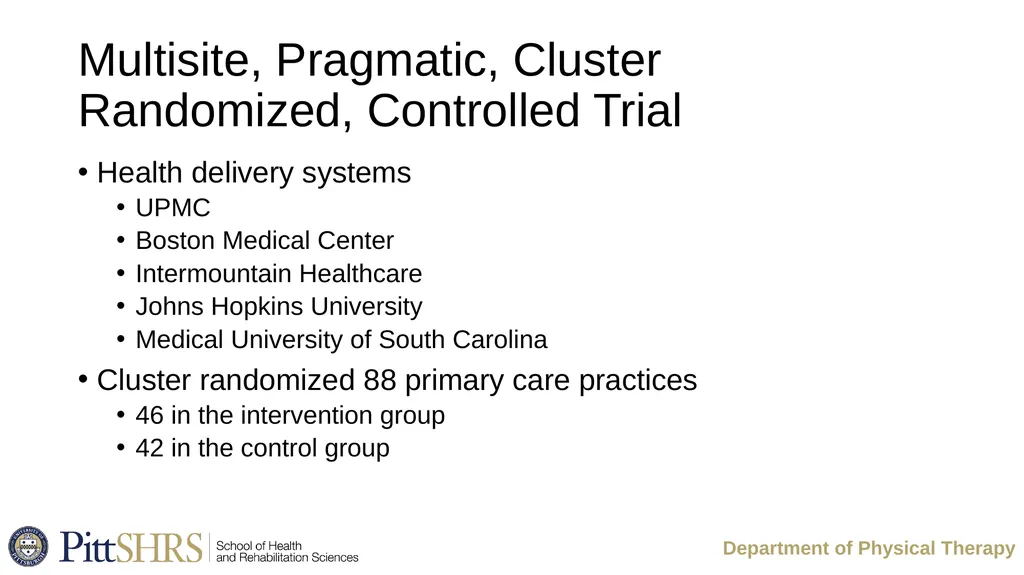
slide7. Multisite, Pragmatic, Cluster Randomized, Controlled Trial Health delivery systems
UPMC
Boston Medical Center
Intermountain Healthcare
Johns Hopkins University
Medical University of South Carolina
Cluster randomized 88 primary care practices
46 in the intervention group
42 in the control group<br>
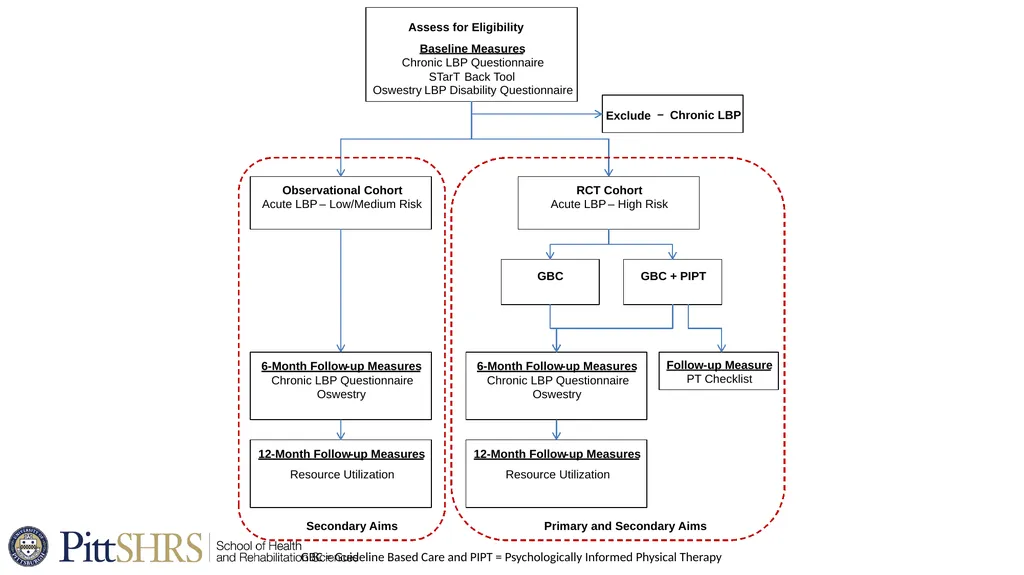
slide8. GBC = Guideline Based Care and PIPT = Psychologically Informed Physical Therapy<br>
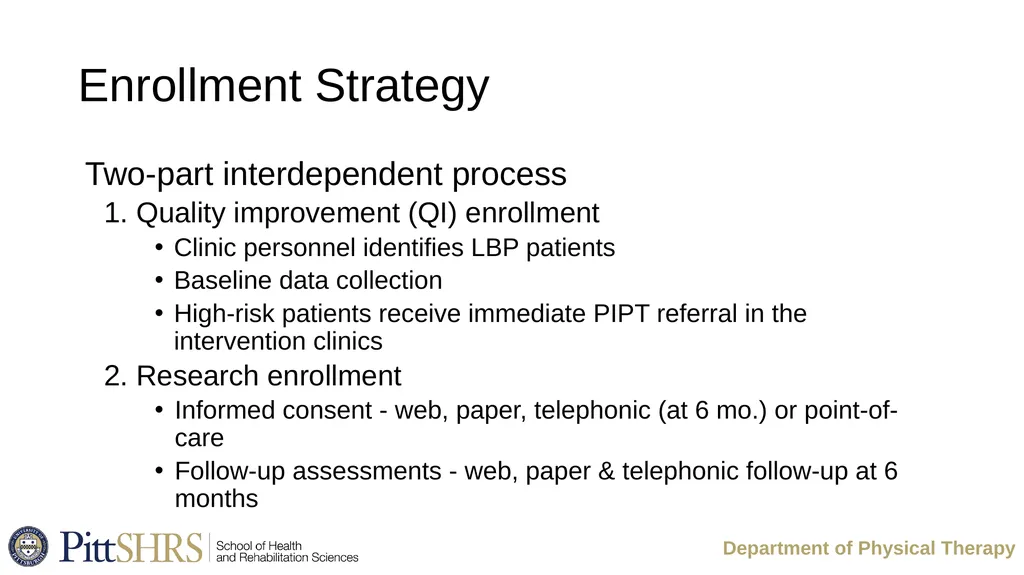
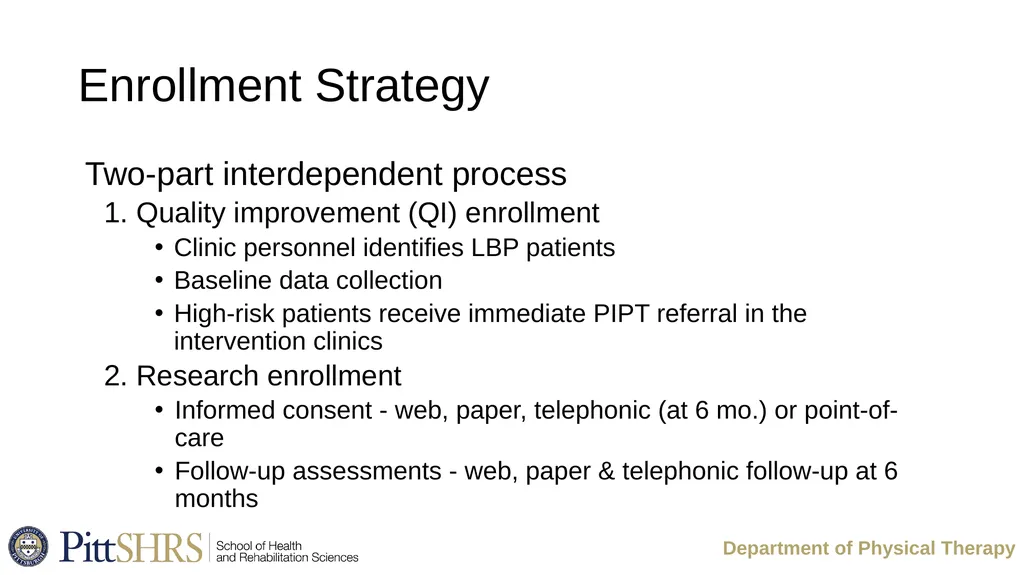
slide9. Enrollment Strategy Two-part interdependent process
Quality improvement (QI) enrollment
Clinic personnel identifies LBP patients
Baseline data collection
High-risk patients receive immediate PIPT referral in the intervention clinics
Research enrollment
Informed consent - web, paper, telephonic (at 6 mo.) or point-of-care
Follow-up assessments - web, paper & telephonic follow-up at 6 months<br>
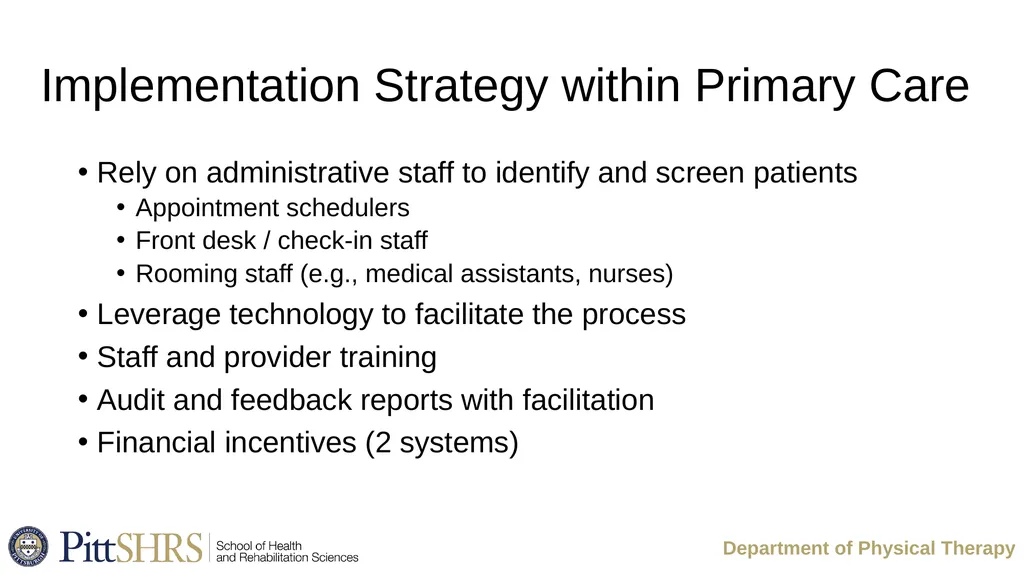
slide10. Implementation Strategy within Primary Care Rely on administrative staff to identify and screen patients
Appointment schedulers
Front desk / check-in staff
Rooming staff (e.g., medical assistants, nurses)
Leverage technology to facilitate the process
Staff and provider training
Audit and feedback reports with facilitation
Financial incentives (2 systems)<br>
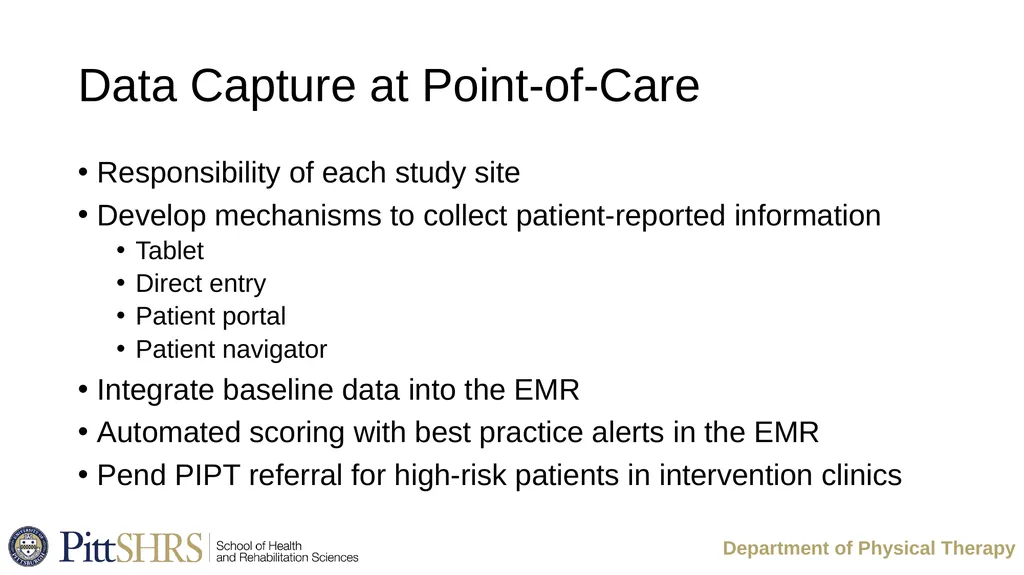
slide11. Data Capture at Point-of-Care Responsibility of each study site
Develop mechanisms to collect patient-reported information
Tablet
Direct entry
Patient portal
Patient navigator
Integrate baseline data into the EMR
Automated scoring with best practice alerts in the EMR
Pend PIPT referral for high-risk patients in intervention clinics<br>
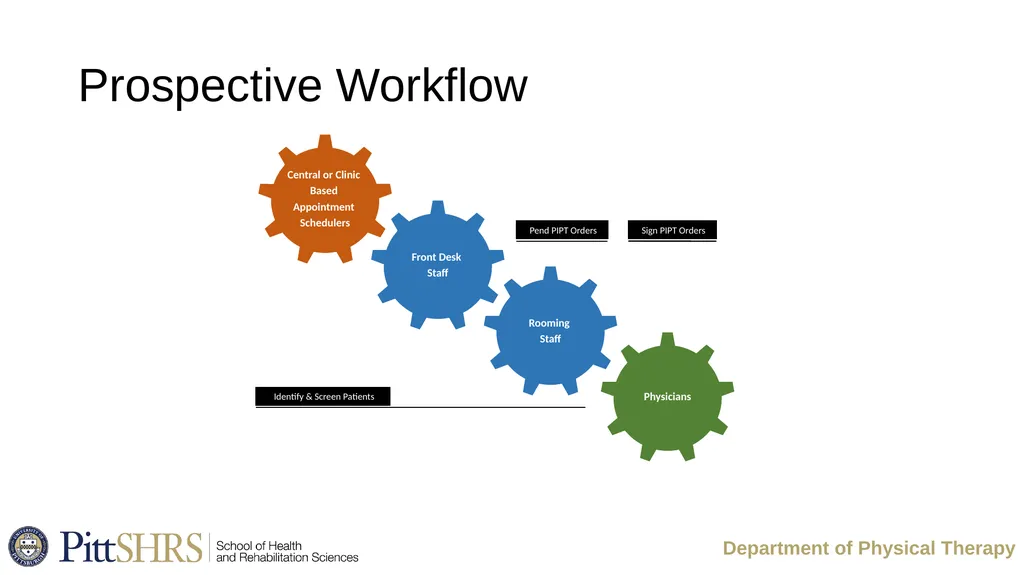
slide12. Pend PIPT Orders Sign PIPT Orders Identify & Screen Patients Prospective Workflow<br>
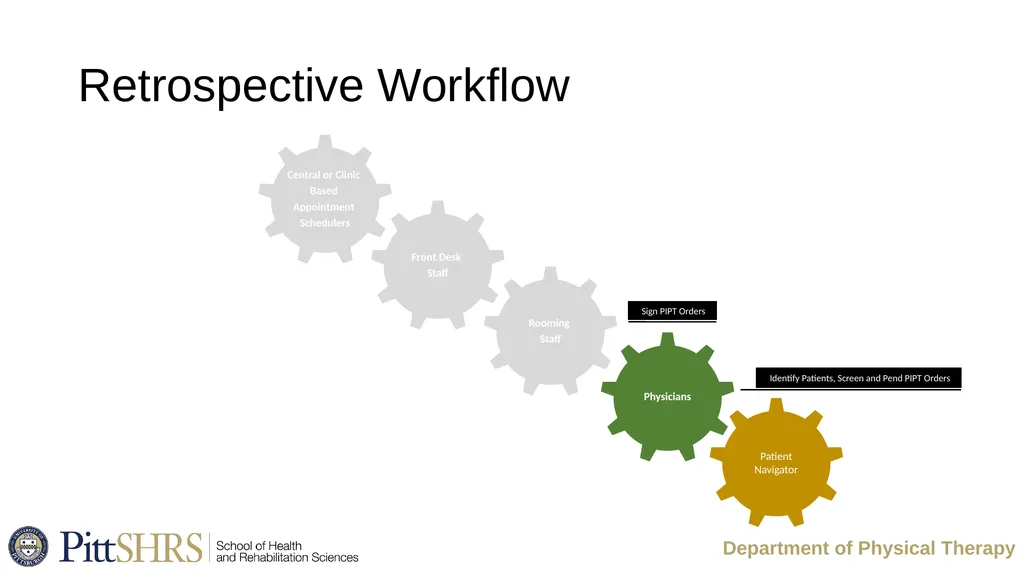
slide13. Sign PIPT Orders Identify Patients, Screen and Pend PIPT Orders Retrospective Workflow Patient Navigator<br>
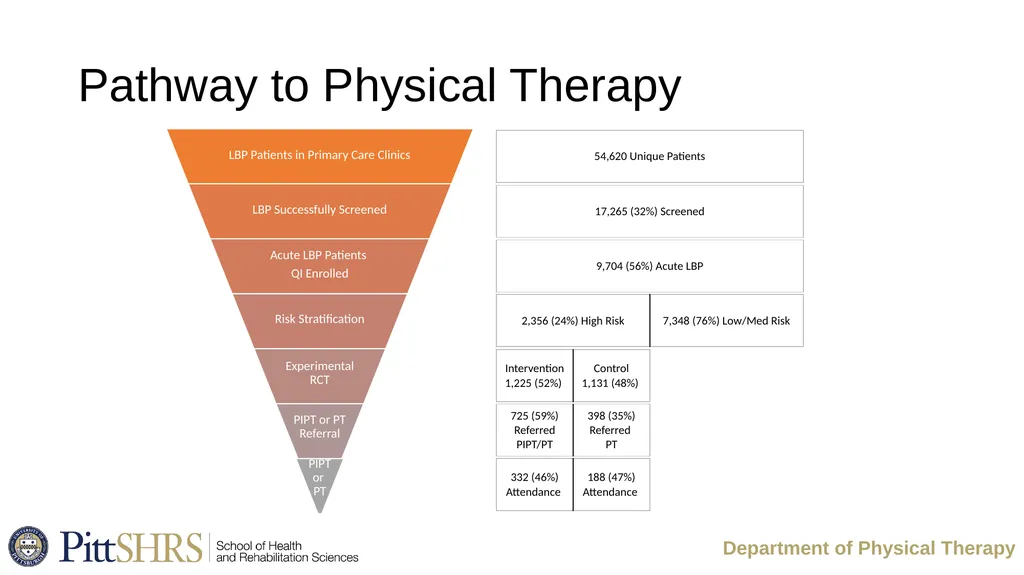
slide14. Pathway to Physical Therapy<br>
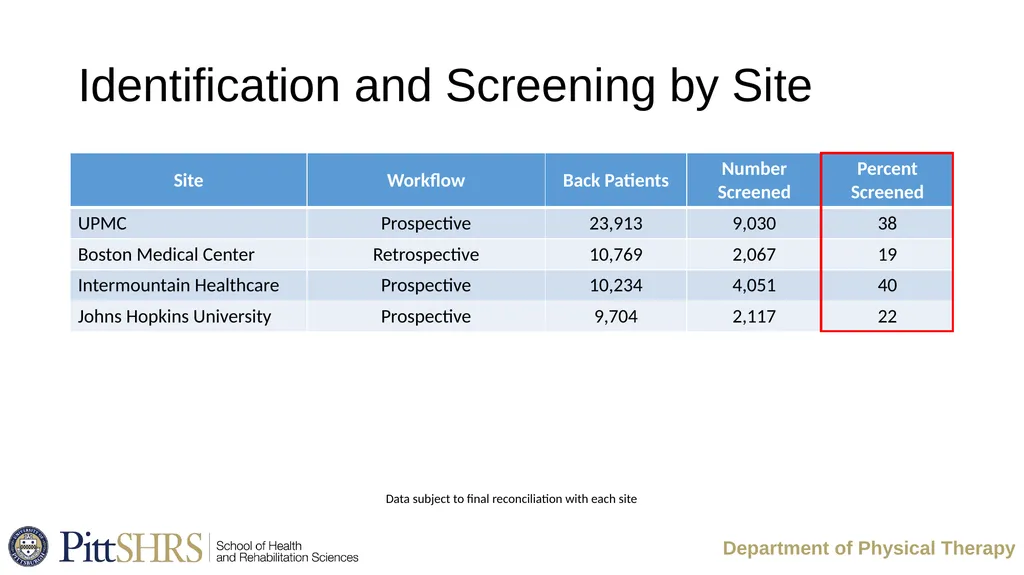
slide15. Identification and Screening by Site Data subject to final reconciliation with each site<br>
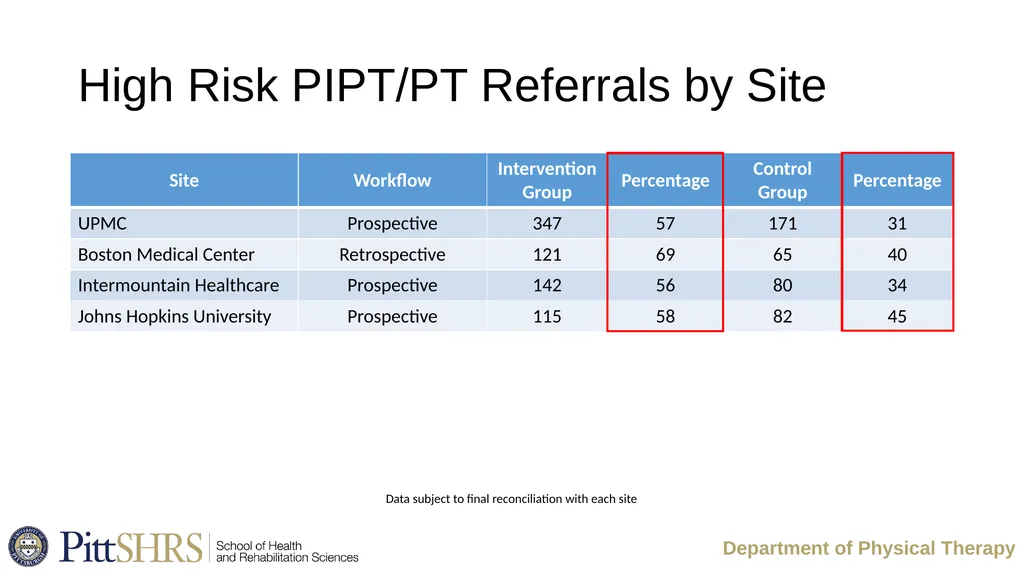
slide16. High Risk PIPT/PT Referrals by Site Data subject to final reconciliation with each site<br>
slide17. Enrollment Strategy Two-part interdependent process
Quality improvement (QI) enrollment
Clinic personnel identifies LBP patients
Baseline data collection
High-risk patients receive immediate PIPT referral in the intervention clinics
Research enrollment
Informed consent - web, paper, telephonic (at 6 mo.) or point-of-care
Follow-up assessments - web, paper & telephonic follow-up at 6 months<br>
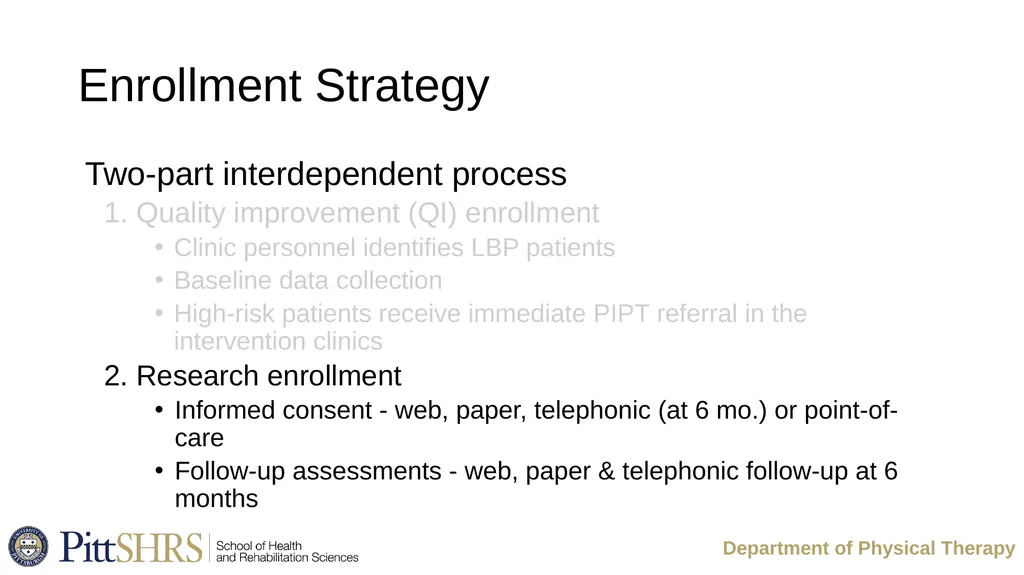
slide18. Enrollment Strategy Two-part interdependent process
Quality improvement (QI) enrollment
Clinic personnel identifies LBP patients
Baseline data collection
High-risk patients receive immediate PIPT referral in the intervention clinics
Research enrollment
Informed consent - web, paper, telephonic (at 6 mo.) or point-of-care
Follow-up assessments - web, paper & telephonic follow-up at 6 months<br>
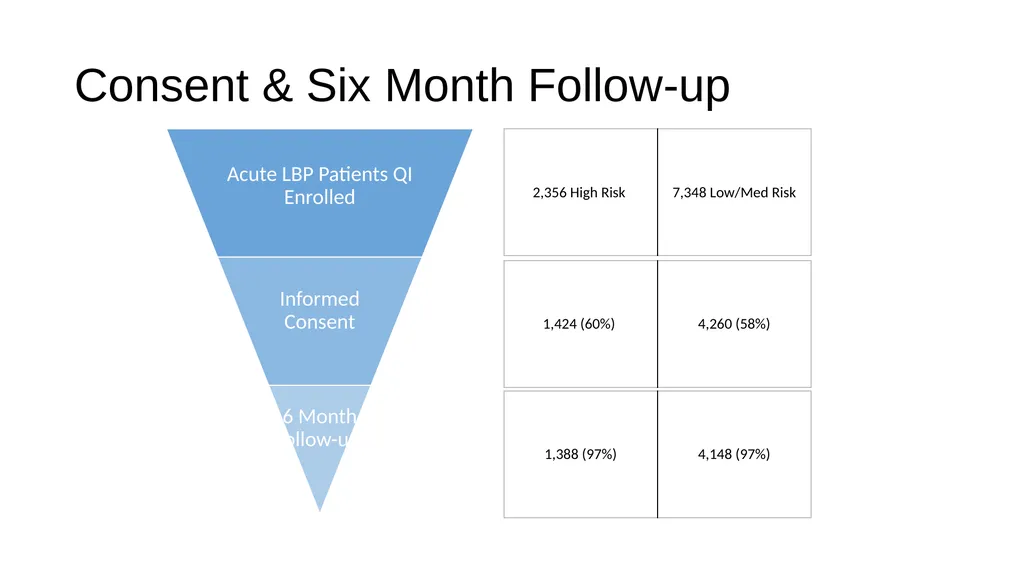
slide19. Consent & Six Month Follow-up<br>
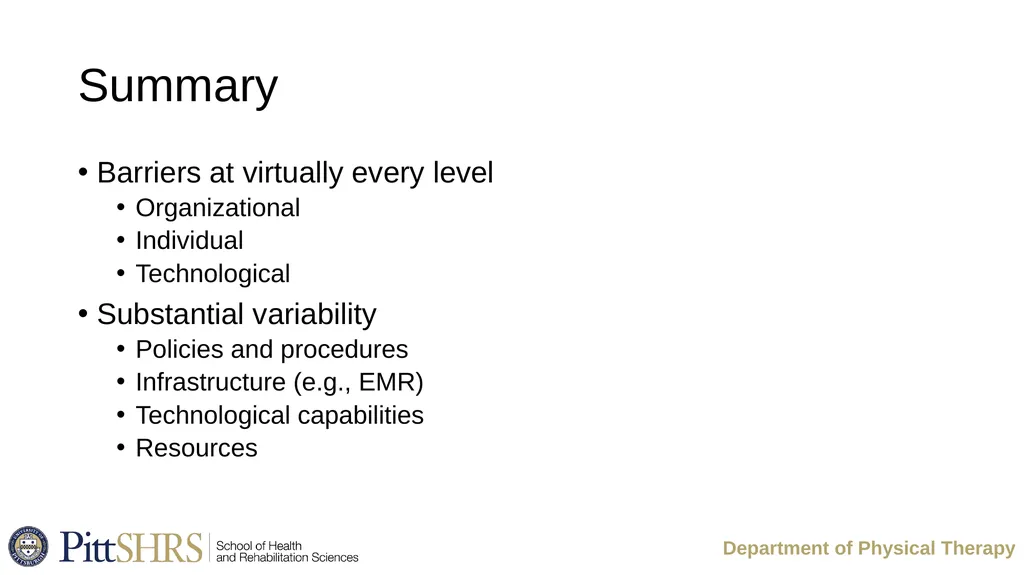
slide20. Summary Barriers at virtually every level
Organizational
Individual
Technological
Substantial variability
Policies and procedures
Infrastructure (e.g., EMR)
Technological capabilities
Resources<br>
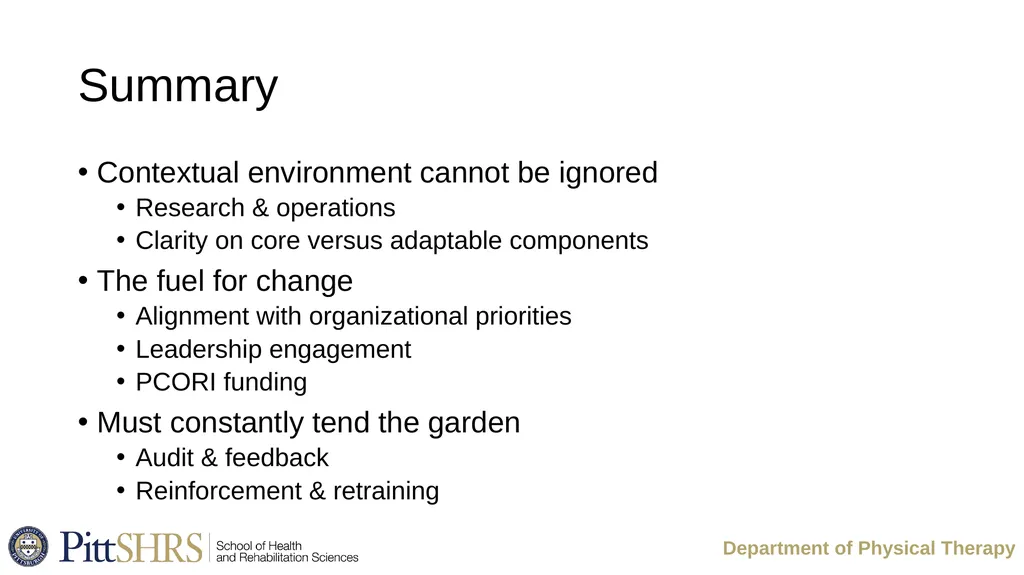
slide21. Summary Contextual environment cannot be ignored
Research & operations
Clarity on core versus adaptable components
The fuel for change
Alignment with organizational priorities
Leadership engagement
PCORI funding
Must constantly tend the garden
Audit & feedback
Reinforcement & retraining<br>
slide22. Questions<br>
Assistant Professor, Department of Physical Therapy
Senior Implementation Scientist, Health Policy Institute
University of Pittsburgh<br>
slide2. Targeted Interventions to Prevent Chronic Low Back Pain (LBP) Anthony Delitto, PT, PhD, FAPTA
Principal Investigator
Professor and Dean,
School of Health and Rehabilitation Sciences
University of Pittsburgh Robert Saper, MD, MPH
Co-Principal Investigator
Associate Professor,
Department of Family Medicine
Director of Integrative Medicine
Boston University Patient-Centered Outcomes Research Institute (PCORI) Award PCS-1402-10867
PCORnet Study Identification Number: C11-2016-0001<br>
slide3. Acknowledgements TARGET Trial Site Principal Investigators
Anthony Delitto, PT, PhD, FAPTA, University of Pittsburgh
Robert Saper, MD, MPH, Boston Medical Center
Gerard Brennan, PT, PhD, Intermountain Healthcare
David Morrisette, PT, PhD, Medical University of South Carolina
Stephen Wegener, PhD, Johns Hopkins University
TARGET Trial Study Team<br>
slide4. Back Pain is a Well Known Problem It is highly prevalent and extremely costly
Most common type of pain & the second most common reason for doctor visits
Management is becoming more discordant with guidelines
Overuse of opioid prescribing
Overuse of diagnostic imaging (MR, CT, x-ray)
Early specialty escalation
Underuse of non-pharmacologic interventions<br>
slide5. Targeted LBP Interventions in Primary Care Psychologic obstacles to recovery
Enhanced package of care Physical obstacles to recovery
Face-to-face conservative treatment Low risk of chronicity
Advice, reassurance & medication https://startback.hfac.keele.ac.uk/<br>
slide6. Psychologically Informed Physical Therapy Improve physical function through tailored stretching, strengthening, and aerobic exercises
Address psychosocial obstacles to recovery through education, coaching, graded exercise
Fear-avoidance behaviors and beliefs
Catastrophizing<br>
slide7. Multisite, Pragmatic, Cluster Randomized, Controlled Trial Health delivery systems
UPMC
Boston Medical Center
Intermountain Healthcare
Johns Hopkins University
Medical University of South Carolina
Cluster randomized 88 primary care practices
46 in the intervention group
42 in the control group<br>
slide8. GBC = Guideline Based Care and PIPT = Psychologically Informed Physical Therapy<br>
slide9. Enrollment Strategy Two-part interdependent process
Quality improvement (QI) enrollment
Clinic personnel identifies LBP patients
Baseline data collection
High-risk patients receive immediate PIPT referral in the intervention clinics
Research enrollment
Informed consent - web, paper, telephonic (at 6 mo.) or point-of-care
Follow-up assessments - web, paper & telephonic follow-up at 6 months<br>
slide10. Implementation Strategy within Primary Care Rely on administrative staff to identify and screen patients
Appointment schedulers
Front desk / check-in staff
Rooming staff (e.g., medical assistants, nurses)
Leverage technology to facilitate the process
Staff and provider training
Audit and feedback reports with facilitation
Financial incentives (2 systems)<br>
slide11. Data Capture at Point-of-Care Responsibility of each study site
Develop mechanisms to collect patient-reported information
Tablet
Direct entry
Patient portal
Patient navigator
Integrate baseline data into the EMR
Automated scoring with best practice alerts in the EMR
Pend PIPT referral for high-risk patients in intervention clinics<br>
slide12. Pend PIPT Orders Sign PIPT Orders Identify & Screen Patients Prospective Workflow<br>
slide13. Sign PIPT Orders Identify Patients, Screen and Pend PIPT Orders Retrospective Workflow Patient Navigator<br>
slide14. Pathway to Physical Therapy<br>
slide15. Identification and Screening by Site Data subject to final reconciliation with each site<br>
slide16. High Risk PIPT/PT Referrals by Site Data subject to final reconciliation with each site<br>
slide17. Enrollment Strategy Two-part interdependent process
Quality improvement (QI) enrollment
Clinic personnel identifies LBP patients
Baseline data collection
High-risk patients receive immediate PIPT referral in the intervention clinics
Research enrollment
Informed consent - web, paper, telephonic (at 6 mo.) or point-of-care
Follow-up assessments - web, paper & telephonic follow-up at 6 months<br>
slide18. Enrollment Strategy Two-part interdependent process
Quality improvement (QI) enrollment
Clinic personnel identifies LBP patients
Baseline data collection
High-risk patients receive immediate PIPT referral in the intervention clinics
Research enrollment
Informed consent - web, paper, telephonic (at 6 mo.) or point-of-care
Follow-up assessments - web, paper & telephonic follow-up at 6 months<br>
slide19. Consent & Six Month Follow-up<br>
slide20. Summary Barriers at virtually every level
Organizational
Individual
Technological
Substantial variability
Policies and procedures
Infrastructure (e.g., EMR)
Technological capabilities
Resources<br>
slide21. Summary Contextual environment cannot be ignored
Research & operations
Clarity on core versus adaptable components
The fuel for change
Alignment with organizational priorities
Leadership engagement
PCORI funding
Must constantly tend the garden
Audit & feedback
Reinforcement & retraining<br>
slide22. Questions<br>