04
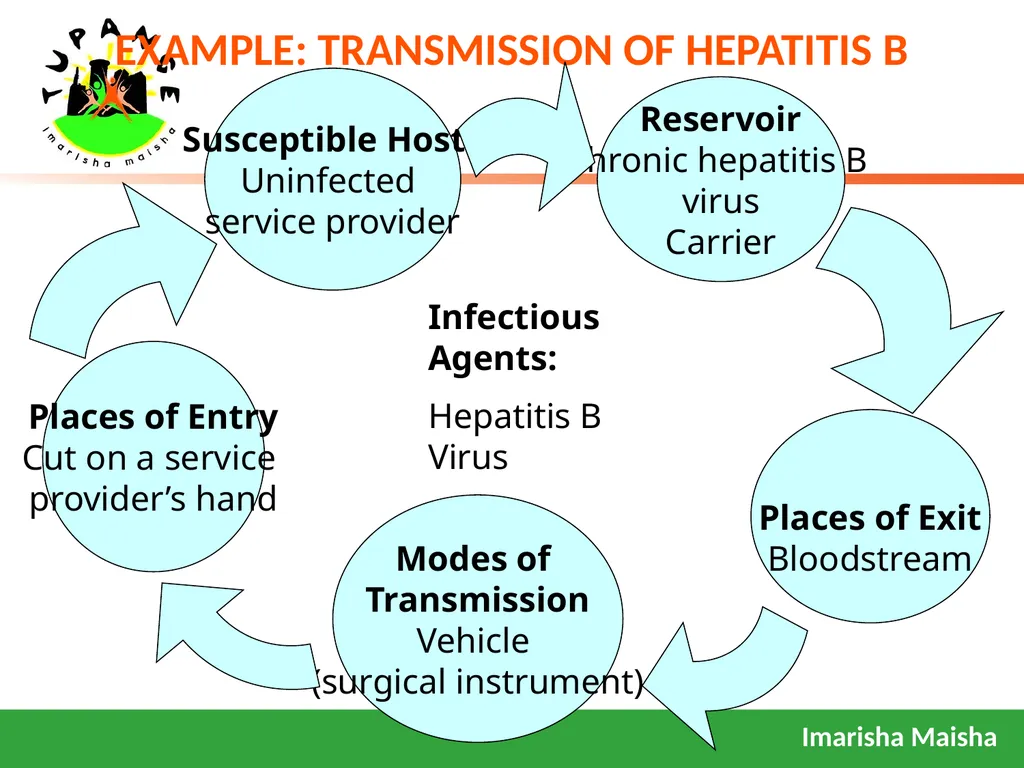
EXAMPLE: TRANSMISSION OF HEPATITIS B Susceptible Hosts
Uninfected
service provider Reservoir
Chronic hepatitis B
virus
Carrier Modes of
Transmission
Vehicle
(surgical instrument) Places of Exit
Bloodstream Places of Entry
Cut on a service
provider’s hand Infectious Agents:
Hepatitis B Virus<br>
05
ADVANTAGES OF INFECTION PREVENTION: Prevents post procedure infections when providing clinical contraceptive methods (eg, IUCDs, implants)
Results in high-quality, safe services
Prevents infections in staff
Protects the community
Prevents the spread of antibiotic-resistant microorganisms
Lowers the cost of health care<br>
06
UNIVERSAL PRECAUTIONS A simple set of effective practices designed to
protect health workers and patients from
infection with a range of pathogens
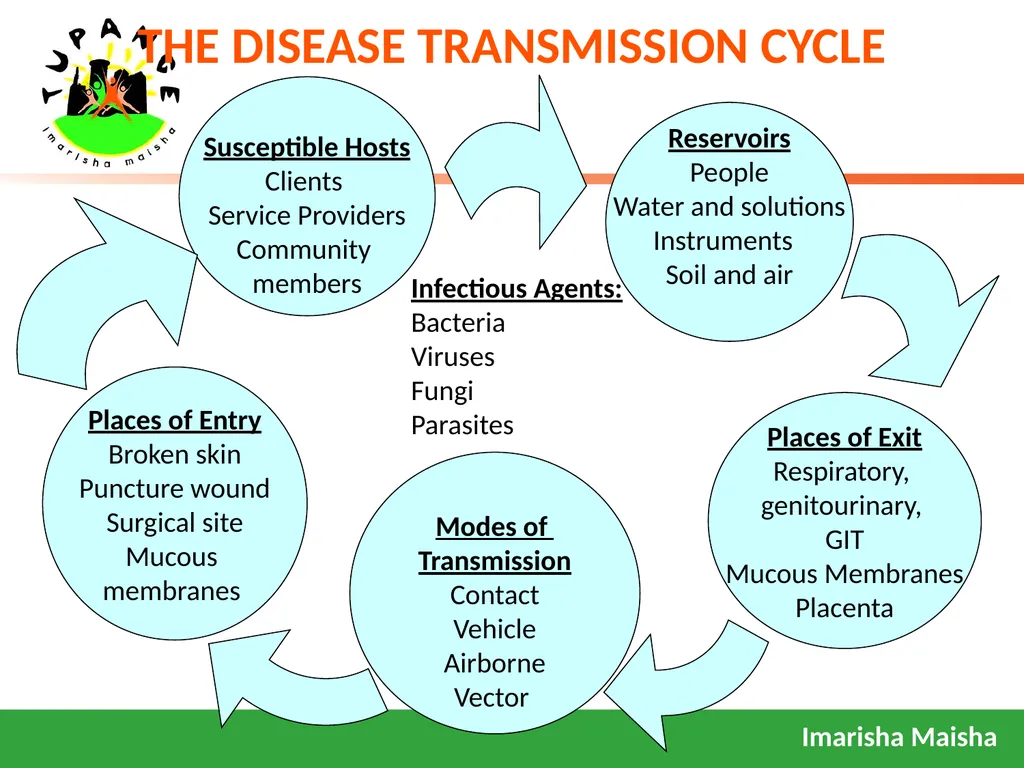
Help break the disease-transmission cycle at the
mode of transmission step
These practices are used when caring for all
patients regardless of diagnosis.<br>
07
UNIVERSAL PRECAUTIONS Wash hands.
Decontaminate equipment and devices.
Use and dispose of needles and sharps safely (avoid recapping, especially two-handed).
Wear protective items.
Promptly clean up blood and body fluid spills.
Use safe disposal systems for waste collection and disposal.<br>
08
HAND WASHING 1 Wash hands
After arriving at work
Before and after examining each client
After touching anything that might be contaminated
Before putting on gloves for clinical procedures
After removing gloves
After using the toilet or latrine
Before leaving work<br>
09
HAND WASHING 2 After hand washing
Air dry hands
Dry with personal hand towel
Use electric drying machine
Avoid using a communal towel<br>
10
USE OF GLOVES 1 Types of Gloves
Surgical gloves
Single-use examination gloves
Utility or heavy-duty household gloves<br>
11
USE OF GLOVES 2 Use separate pair of gloves for each patient
Wear correct size of gloves
Remove rings
Keep nails short<br>
12
USE AND DISPOSAL OF NEEDLES AND OTHER SHARPS 1 Causes of Injuries with Sharps
Recapping hypodermic needles
Manipulating sharps before disposal
Accidentally sticking another staff member
Leaving sharps in areas where they are unexpected
Surgical procedures with limited visibility or in confined spaces
Handling or disposing of waste
Unexpected client motion during injections<br>
13
USE AND DISPOSAL OF NEEDLES AND OTHER SHARPS 2 To Prevent Injuries Due to Sharps
Handle all sharps minimally after use
Use extreme care whenever sharps are handled
Dispose of sharps in puncture-resistant containers
Pass sharps using the “hands-free technique”
Do NOT recap needles<br>
14
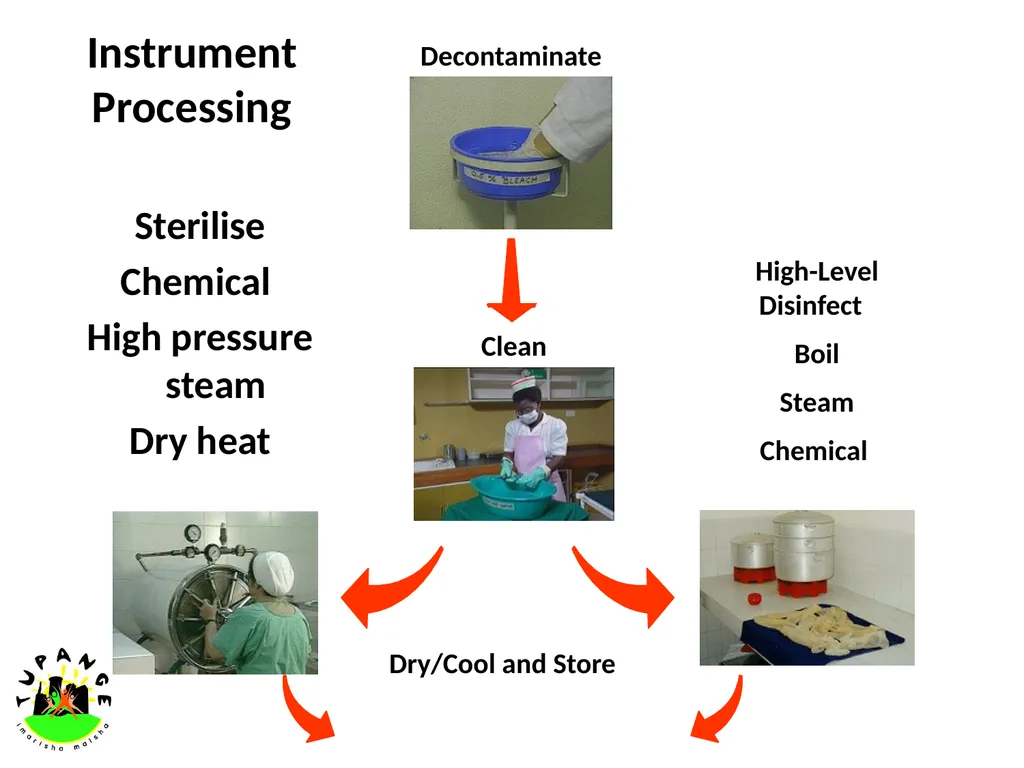
High-Level Disinfect
Boil
Steam
Chemical Instrument Processing Sterilise
Chemical
High pressure steam
Dry heat Dry/Cool and Store Decontaminate Clean<br>
15
DECONTAMINATION It is the first step in processing items
Makes items safer to handle and easier to clean
Soak items in a 0.5% chlorine solution for 10 minutes immediately after use. Do not soak longer
Replace solution daily or when it becomes heavily contaminated<br>
16
CLEANING Removes blood, body fluids, tissue, and dirt
Reduces the number of microorganisms (including endospores)
Sterilization and HLD may not be effective without proper cleaning<br>
17
STEPS OF CLEANING Wear utility gloves, goggles, a mask, and protective eyewear
Scrub vigorously with a brush, detergent and water
Guard against injury from sharp objects
Hold items under the water, and be sure to get in the grooves, teeth, and joints
Rinse thoroughly to remove all detergent
Air-dry on a clean towel<br>
18
STERILIZATION Eliminate all microorganisms, including endospores
Recommended when items will come in contact with the bloodstream or tissue under the skin<br>
19
DRY HEAT STERILIZATION Temperatures 170 °C for 1 hour or 60 °C for 2 hours
It is not necessary to open or disassemble items
Start timing when the oven reaches the desired temperature<br>
20
STEAM STERILIZATION (AUTOCLAVE) Temperature: 121 °C Pressure: 106 kPa
Time: 20 minutes if unwrapped
30 minutes if wrapped
Wrapped packs can be stored up to 1 week
Unwrapped items should be stored in a sterile or HLD container with a tight fitting lid<br>
21
CHEMICAL STERILIZATION Gluteraldehyde 2-4% (e.g. cidex): soak for 10hrs minimum
Formaldehyde 8%: soak for 24hrs minimum
After sterilization
Rinse with boiled water and air dry
Store in HLD container with a tight fitting lid<br>
22
HIGH LEVEL DISINFECTION (HLD) Eliminates all microorganisms, but does not kill all endospores
Use for items that will come in contact with broken skin or intact mucous membranes
Types:
Boiling
Use of chemicals<br>
23
TIPS FOR HLD BY BOILING Boil for 20 minutes in a cooking pot with a lid
Open or disassemble items
Do not add anything else to the pot after boiling begins
Articles must be completely immersed in water
Start timing when the water begins to boil
Store all items dry and use within one week<br>
24
CHEMICALS FOR USE IN HLD Chlorine
Cheapest effective disinfectant
Effective against many microorganisms
Can be corrosive and irritating
Prepare a new solution daily
Soak instruments for 20 minutes and rinse in clean water before use<br>
25
CHEMICALS FOR USE IN HLD Gluteraldehyde
Effective against many microorganisms
Not corrosive when used as directed
Irritating to people
Soak instruments for 20 minutes
Rinse in clan water before use
Use prepared solution for up to two weeks<br>
26
HOUSEKEEPING General cleaning and maintenance of cleanliness
Reduces the number of microorganisms and thus, the risk of infections
Provides an appealing environment<br>
27
GENERAL GUIDELINES FOR HOUSEKEEPING Schedules should be posted and followed
Wear utility gloves and shoes when cleaning client-care areas
Minimize scattering of dust and dirt
Scrub when cleaning
Wash from top to bottom
Change cleaning solutions when they are dirty<br>
28
ROOM ARRANGEMENT Put everything in the right place
Make all equipment and supplies needed accessible
Arrange the room so that you can move around easily and safely<br>
29
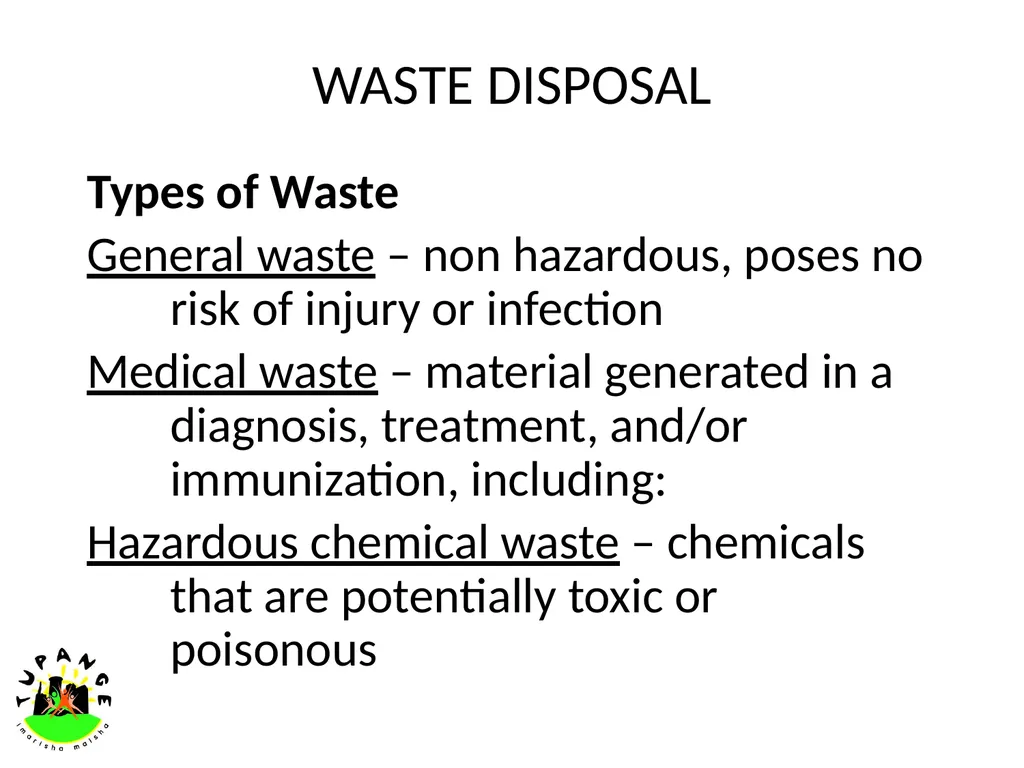
WASTE DISPOSAL Types of Waste
General waste – non hazardous, poses no risk of injury or infection
Medical waste – material generated in a diagnosis, treatment, and/or immunization, including:
Hazardous chemical waste – chemicals that are potentially toxic or poisonous<br>
30
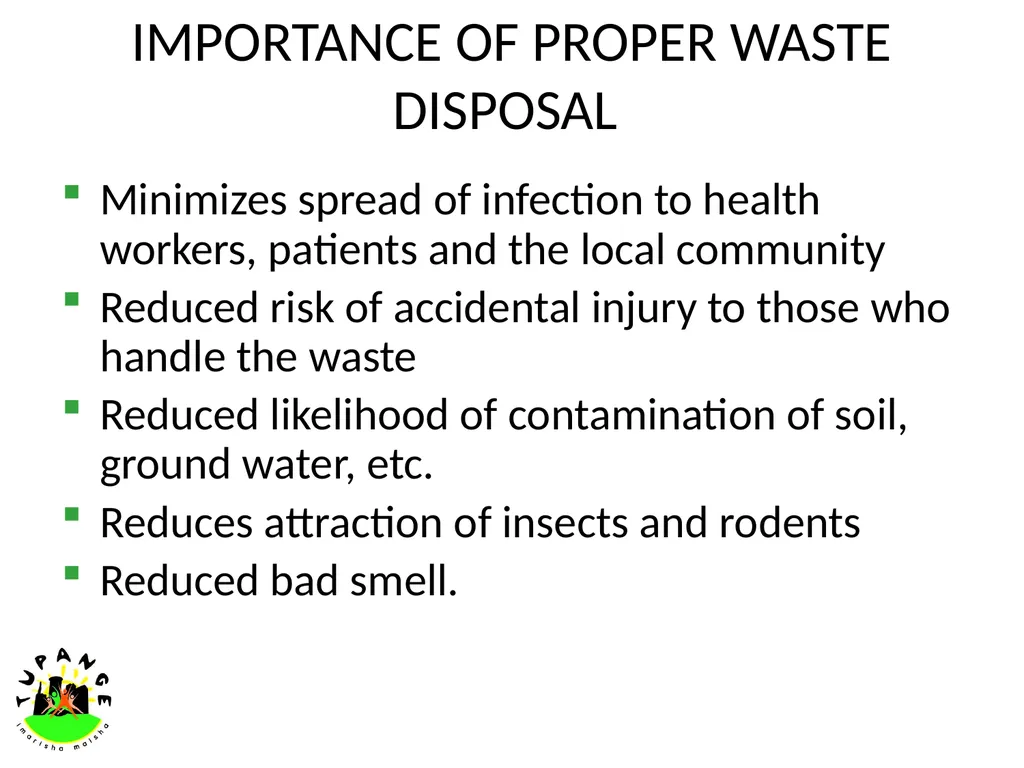
IMPORTANCE OF PROPER WASTE DISPOSAL Minimizes spread of infection to health workers, patients and the local community
Reduced risk of accidental injury to those who handle the waste
Reduced likelihood of contamination of soil, ground water, etc.
Reduces attraction of insects and rodents
Reduced bad smell.<br>
31
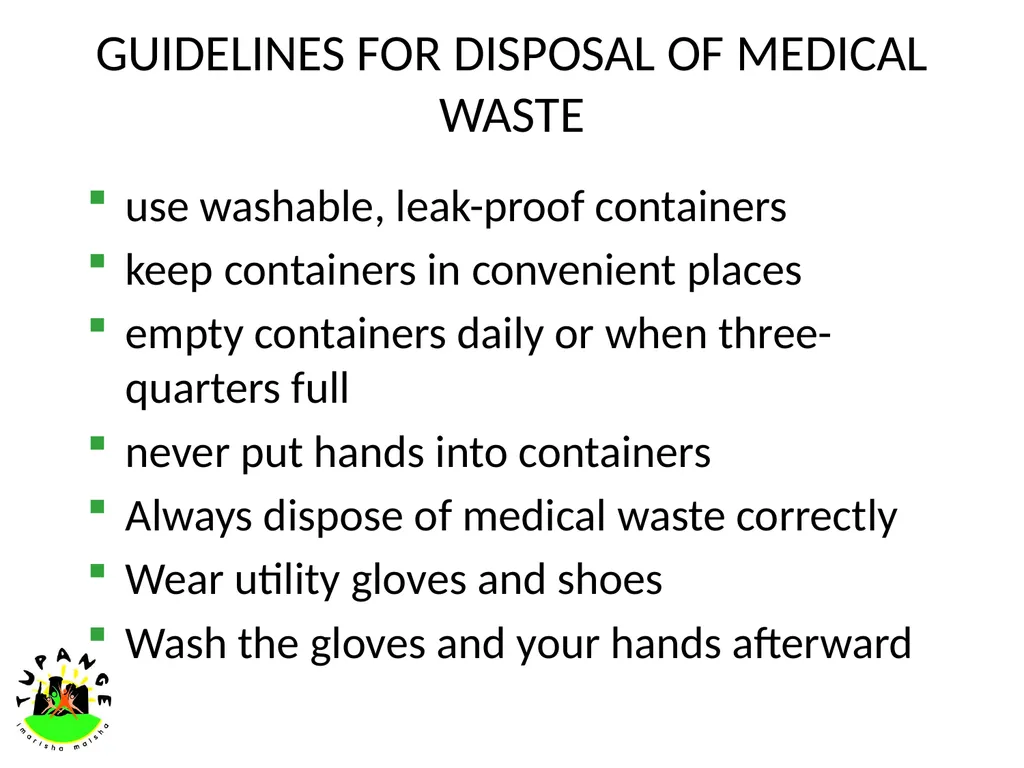
GUIDELINES FOR DISPOSAL OF MEDICAL WASTE use washable, leak-proof containers
keep containers in convenient places
empty containers daily or when three-quarters full
never put hands into containers
Always dispose of medical waste correctly
Wear utility gloves and shoes
Wash the gloves and your hands afterward<br>
32
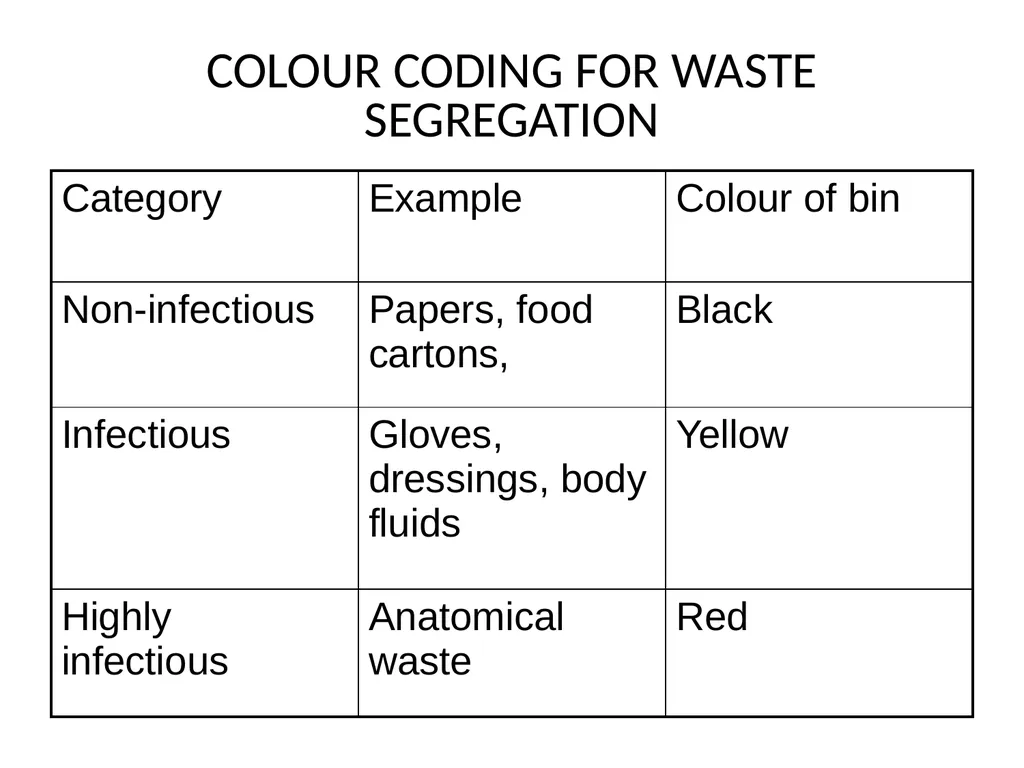
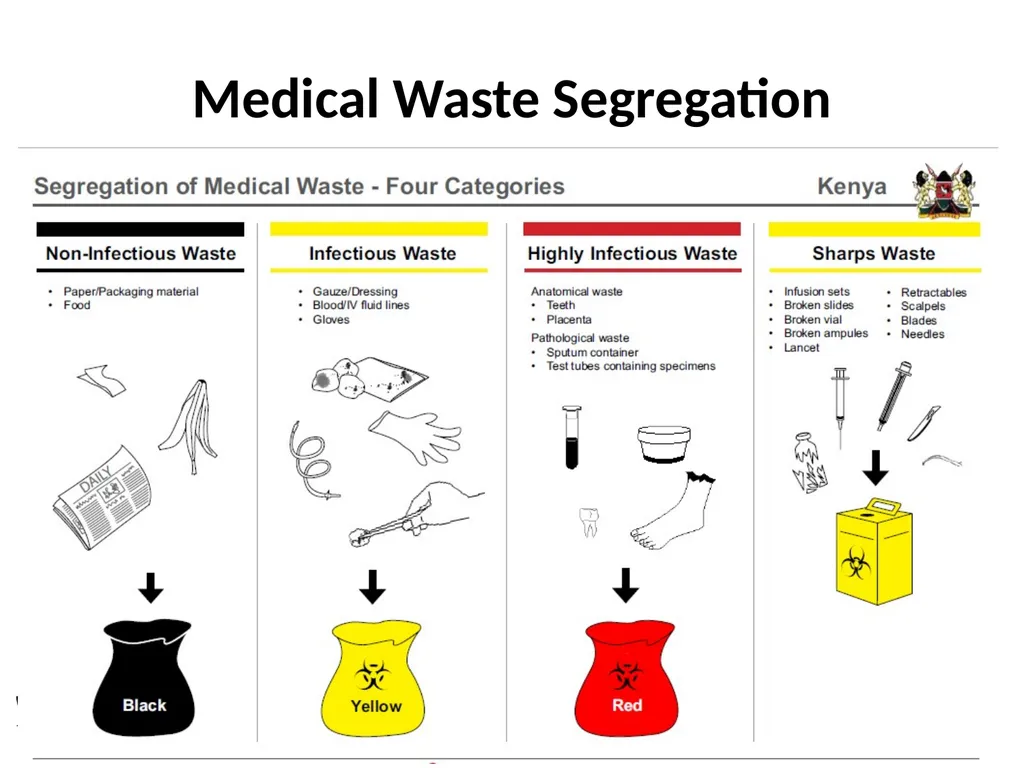
COLOUR CODING FOR WASTE SEGREGATION<br>
33
Medical Waste Segregation<br>
34
DISPOSAL PROCEDURES FOR SHARPS Dispose of all sharps in puncture-resistant containers
Close containers when three-quarters full
Burn or bury the container
Wash the gloves and hands afterward<br>