
Integrated Advertising, Promotion, and Marketing
PC
Published · 42 slides · 0 views

1 / 1
Description
Integrated Advertising, Promotion, and Marketing Communications Eighth Edition, Global Edition Chapter 9 Social Media Copyright 2018 Pearson Education Ltd. All Rights Reserved Chapter Objectives What constitutes a social network? What
Related Topics
Share
Embed code
Download this presentation From Below
"Integrated Advertising, Promotion, and Marketing" is the property of its rightful owner. Permission is granted to download and print the materials on this website for personal, non-commercial use only, and to display it on your personal computer provided you do not modify the materials and that you retain all copyright notices contained in the materials. By downloading content from our website, you accept the terms of this agreement.
Presentation Transcript
01
Integrated Advertising, Promotion, and Marketing Communications Eighth Edition, Global Edition Chapter 9 Social Media Copyright © 2018 Pearson Education Ltd. All Rights Reserved<br>
02
Chapter Objectives What constitutes a social network?
What unique characteristics are parts of primary social media websites?
What is the nature of social media marketing?
Which social media marketing strategies do companies employ?
How can marketers use social media strategies in international operations?<br>
What unique characteristics are parts of primary social media websites?
What is the nature of social media marketing?
Which social media marketing strategies do companies employ?
How can marketers use social media strategies in international operations?<br>
03
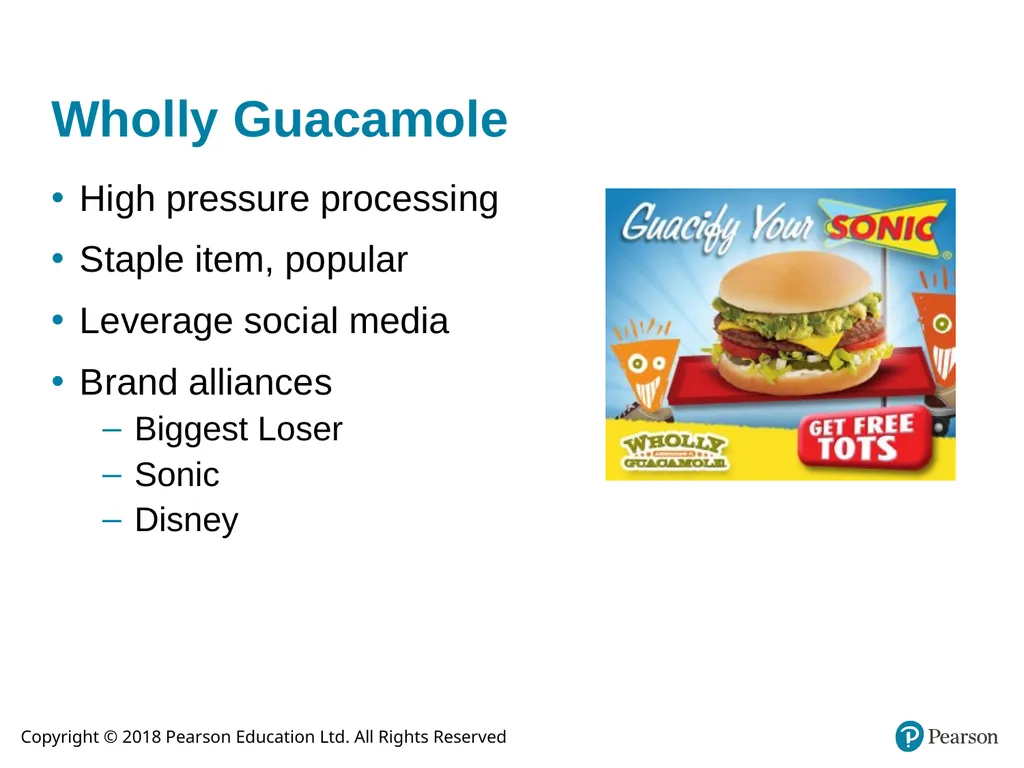
Wholly Guacamole High pressure processing
Staple item, popular
Leverage social media
Brand alliances
Biggest Loser
Sonic
Disney<br>
Staple item, popular
Leverage social media
Brand alliances
Biggest Loser
Sonic
Disney<br>
04
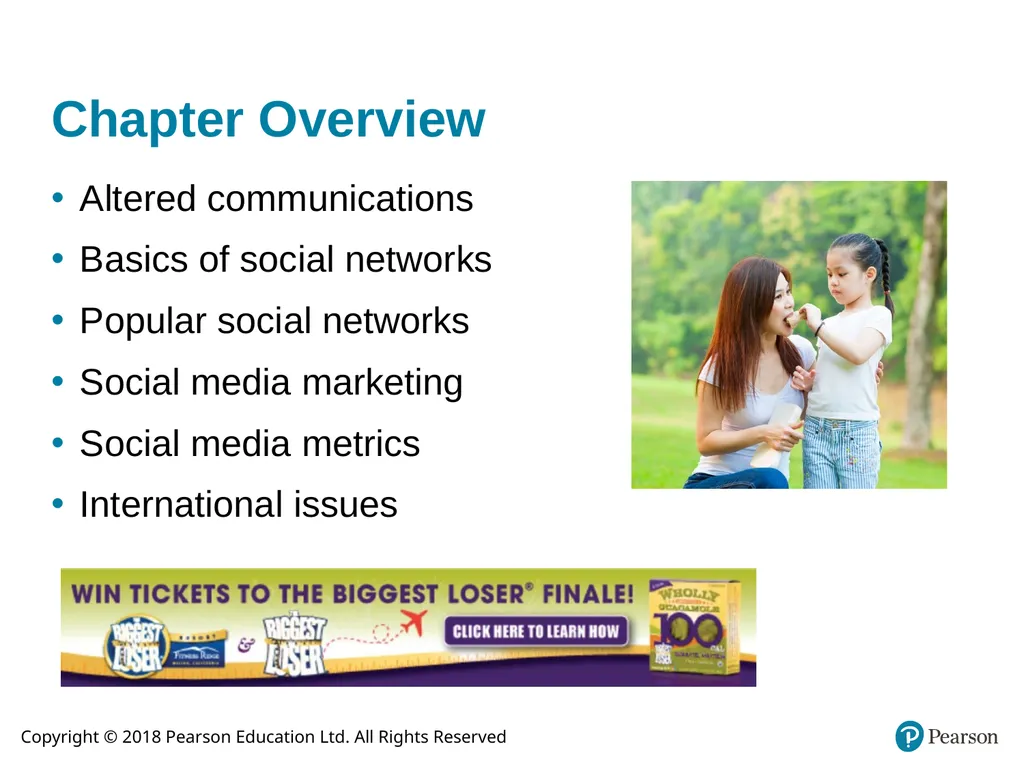
Chapter Overview Altered communications
Basics of social networks
Popular social networks
Social media marketing
Social media metrics
International issues<br>
Basics of social networks
Popular social networks
Social media marketing
Social media metrics
International issues<br>
05
Social Media Terms Social media – digital tool or venue that allows for social interaction
Social network – social structure of individuals or organizations
Social media marketing – utilization of social media or social networks to market a product, company, or brand<br>
Social network – social structure of individuals or organizations
Social media marketing – utilization of social media or social networks to market a product, company, or brand<br>
06
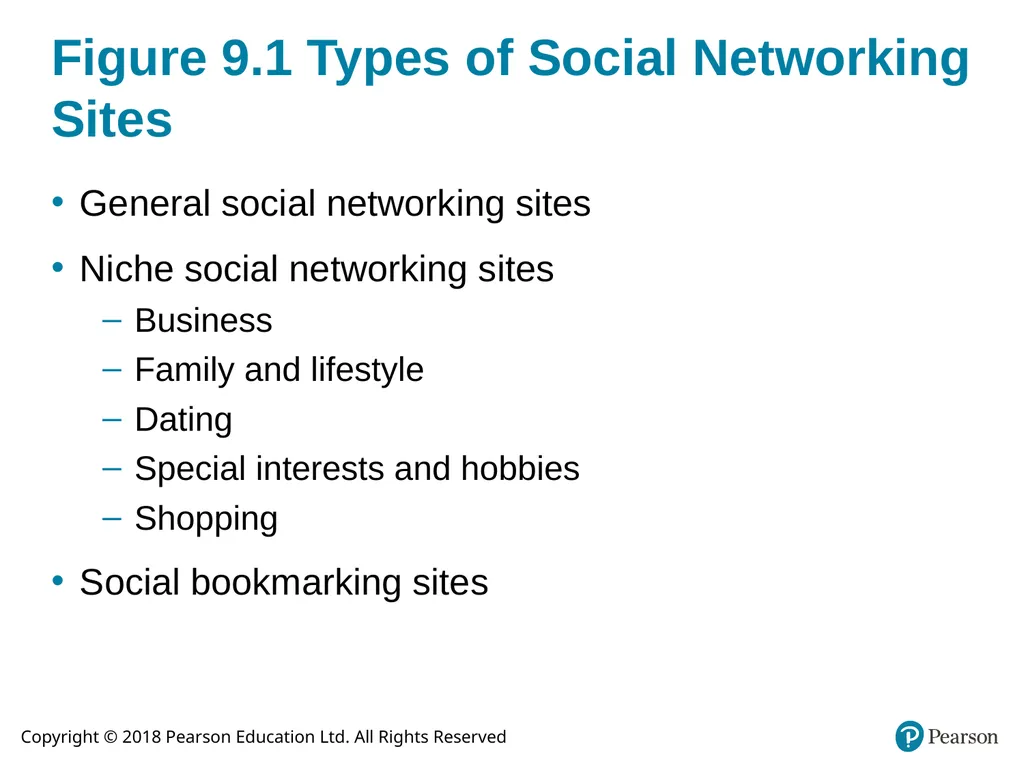
Figure 9.1 Types of Social Networking Sites General social networking sites
Niche social networking sites
Business
Family and lifestyle
Dating
Special interests and hobbies
Shopping
Social bookmarking sites<br>
Niche social networking sites
Business
Family and lifestyle
Dating
Special interests and hobbies
Shopping
Social bookmarking sites<br>
07
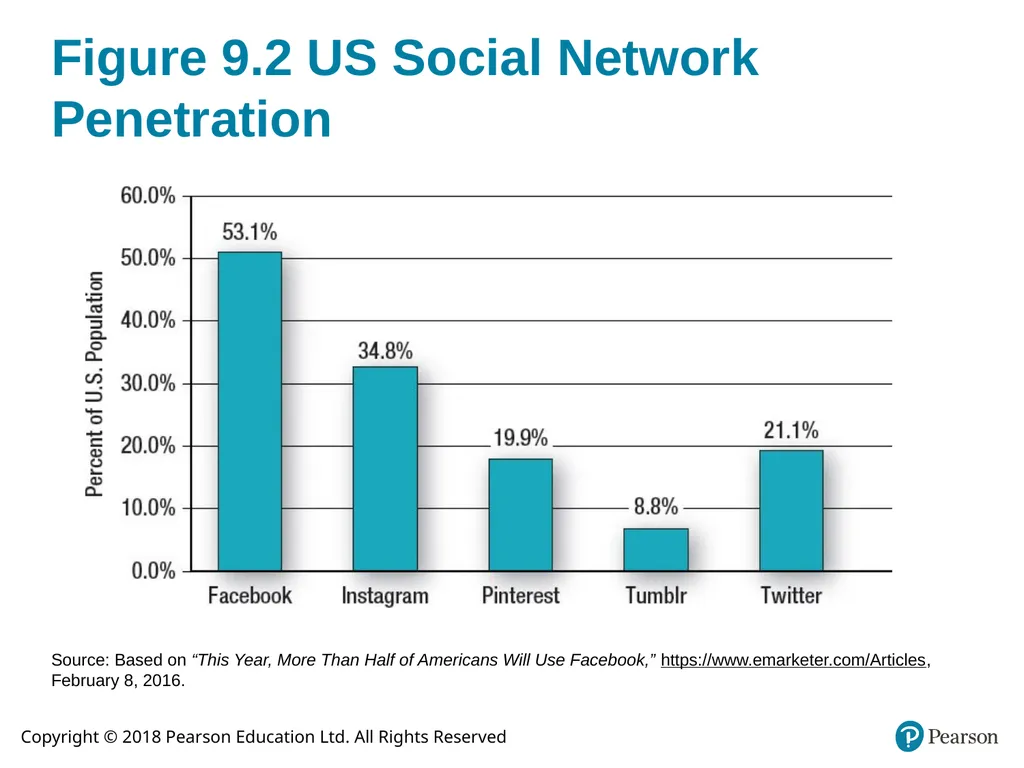
Figure 9.2 US Social Network Penetration Source: Based on “This Year, More Than Half of Americans Will Use Facebook,” https://www.emarketer.com/Articles, February 8, 2016.<br>
08
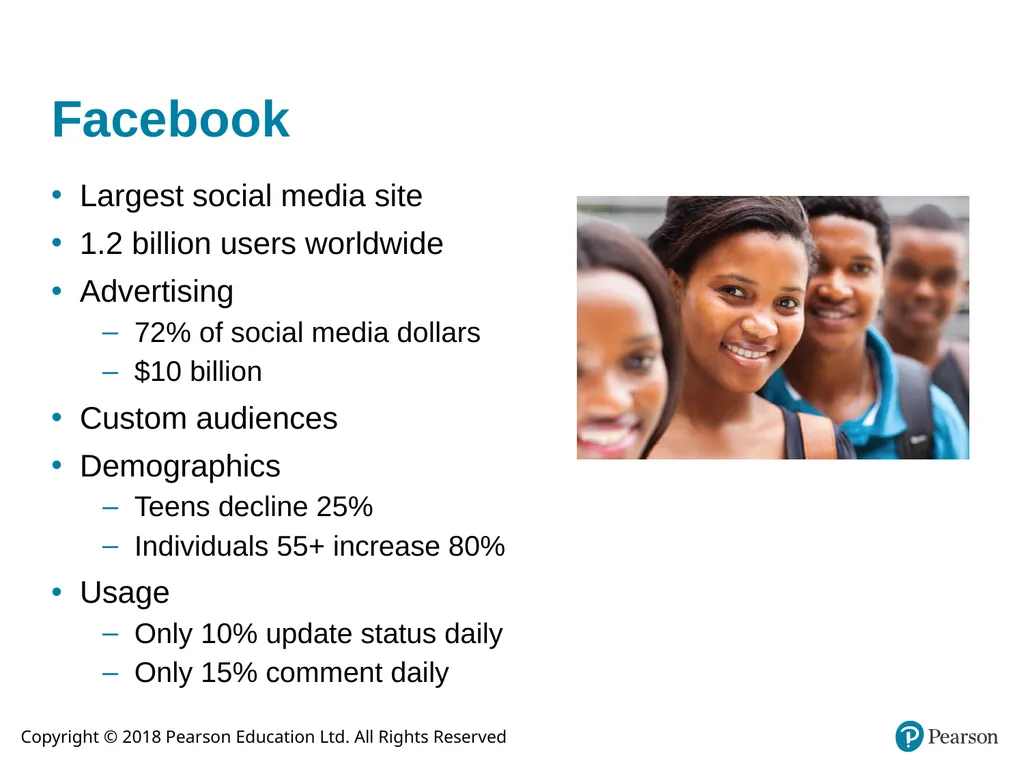
Facebook Largest social media site
1.2 billion users worldwide
Advertising
72% of social media dollars
$10 billion
Custom audiences
Demographics
Teens decline 25%
Individuals 55+ increase 80%
Usage
Only 10% update status daily
Only 15% comment daily<br>
1.2 billion users worldwide
Advertising
72% of social media dollars
$10 billion
Custom audiences
Demographics
Teens decline 25%
Individuals 55+ increase 80%
Usage
Only 10% update status daily
Only 15% comment daily<br>
09
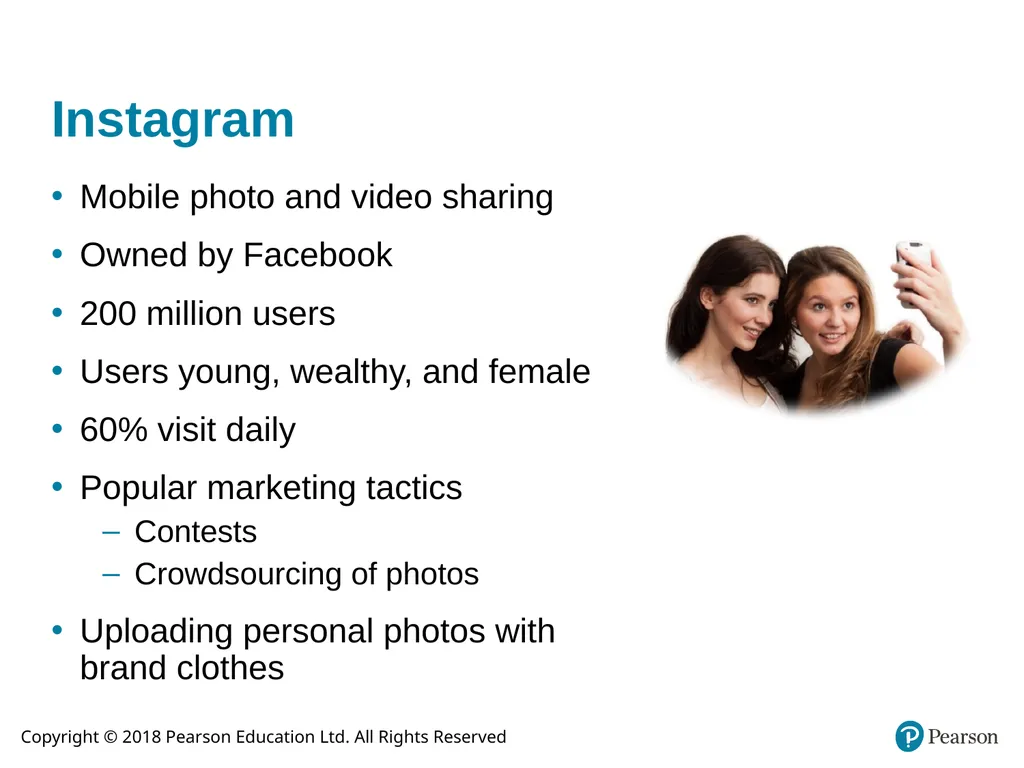
Instagram Mobile photo and video sharing
Owned by Facebook
200 million users
Users young, wealthy, and female
60% visit daily
Popular marketing tactics
Contests
Crowdsourcing of photos
Uploading personal photos with brand clothes<br>
Owned by Facebook
200 million users
Users young, wealthy, and female
60% visit daily
Popular marketing tactics
Contests
Crowdsourcing of photos
Uploading personal photos with brand clothes<br>
10
Twitter Micro-blogging service
Maximum of 140 characters per message
54 million users
41 percent are minority
Effective method of reaching customers
Monitor what customers are saying
Effective for small businesses<br>
Maximum of 140 characters per message
54 million users
41 percent are minority
Effective method of reaching customers
Monitor what customers are saying
Effective for small businesses<br>
11
Figure 9.3 Tips for Using Twitter Develop a strategy
Maintain consistent brand voice
Engage followers
Focus on relationships
Respond to customer comments
Avoid total automation<br>
Maintain consistent brand voice
Engage followers
Focus on relationships
Respond to customer comments
Avoid total automation<br>
12
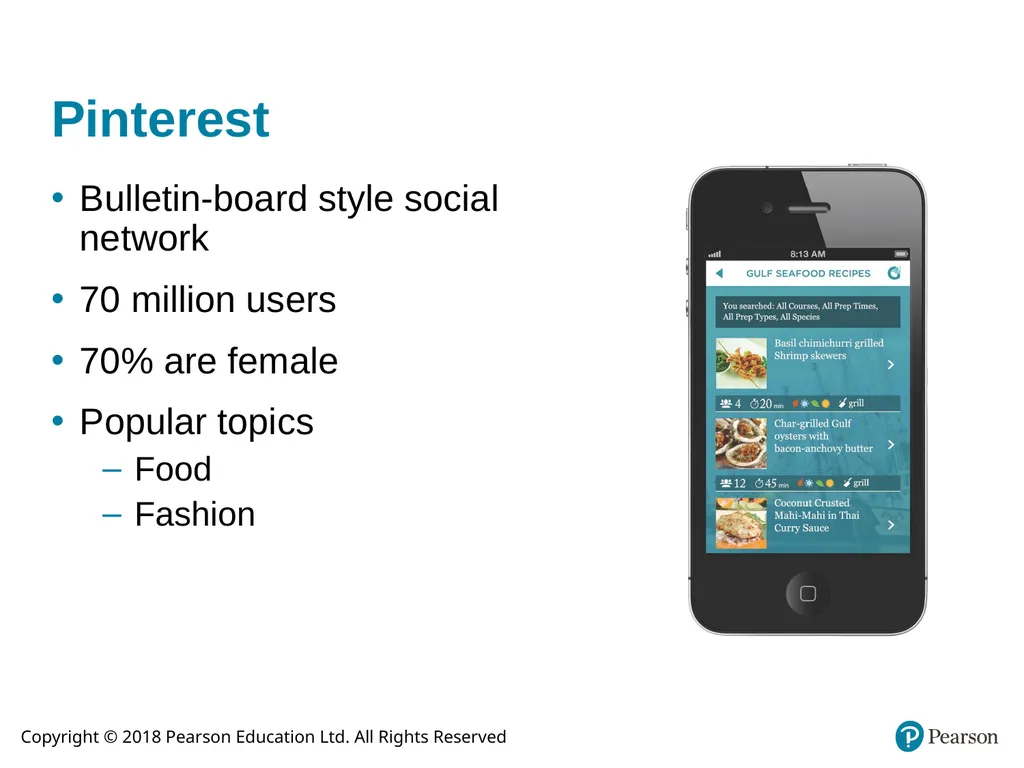
Pinterest Bulletin-board style social network
70 million users
70% are female
Popular topics
Food
Fashion<br>
70 million users
70% are female
Popular topics
Food
Fashion<br>
13
YouTube By 2017 YouTube will surpass Facebook and Twitter
Covergirl, Revlon – 99% views consumer generated
Swiffer ad re-creations – 10.5 million views
Fan-produced videos exceed brand-produced
Product usage or repair – videos instead of manuals
Brands monitor fan-created videos
Positive videos – support
Negative videos – creatively respond<br>
Covergirl, Revlon – 99% views consumer generated
Swiffer ad re-creations – 10.5 million views
Fan-produced videos exceed brand-produced
Product usage or repair – videos instead of manuals
Brands monitor fan-created videos
Positive videos – support
Negative videos – creatively respond<br>
14
Figure 9.4 Trends in Consumer Video Sharing Uploading broadcast ads
Video reviews of products
Re-creation of ads
Creating consumer produced how-to videos
Capturing real-time events
Creating branded videos<br>
Video reviews of products
Re-creation of ads
Creating consumer produced how-to videos
Capturing real-time events
Creating branded videos<br>
15
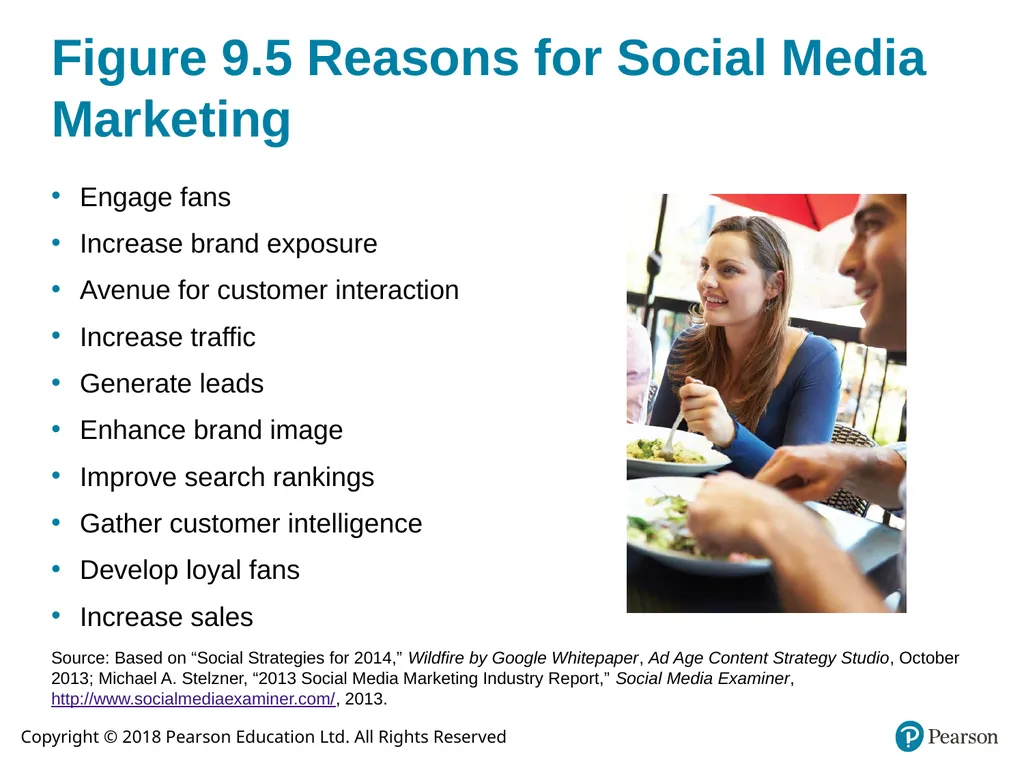
Figure 9.5 Reasons for Social Media Marketing Engage fans
Increase brand exposure
Avenue for customer interaction
Increase traffic
Generate leads
Enhance brand image
Improve search rankings
Gather customer intelligence
Develop loyal fans
Increase sales Source: Based on “Social Strategies for 2014,” Wildfire by Google Whitepaper, Ad Age Content Strategy Studio, October 2013; Michael A. Stelzner, “2013 Social Media Marketing Industry Report,” Social Media Examiner, http://www.socialmediaexaminer.com/, 2013.<br>
Increase brand exposure
Avenue for customer interaction
Increase traffic
Generate leads
Enhance brand image
Improve search rankings
Gather customer intelligence
Develop loyal fans
Increase sales Source: Based on “Social Strategies for 2014,” Wildfire by Google Whitepaper, Ad Age Content Strategy Studio, October 2013; Michael A. Stelzner, “2013 Social Media Marketing Industry Report,” Social Media Examiner, http://www.socialmediaexaminer.com/, 2013.<br>
16
Reasons for Social Media Marketing (1 of 4) Engage fans
Increase brand exposure
Hooters
Brand rejuvenation
Social media integral component
Engage females
Share experiences<br>
Increase brand exposure
Hooters
Brand rejuvenation
Social media integral component
Engage females
Share experiences<br>
17
Reasons for Social Media Marketing (2 of 4) Drive traffic
Enhance brand image
Provide Web URL in social media
Generate leads – business-to-business
Enhance brand image
Solve problems
Provide information
Gain insights into product usage
JD Powers
Online interactions impact brand perceptions<br>
Enhance brand image
Provide Web URL in social media
Generate leads – business-to-business
Enhance brand image
Solve problems
Provide information
Gain insights into product usage
JD Powers
Online interactions impact brand perceptions<br>
18
Reasons for Social Media Marketing (3 of 4) Improve [organic] search rankings
Brand name mentioned in social media
Search engine algorithms examine mentions
Content or comments fit search terms
Quality of interactions enhanced<br>
Brand name mentioned in social media
Search engine algorithms examine mentions
Content or comments fit search terms
Quality of interactions enhanced<br>
19
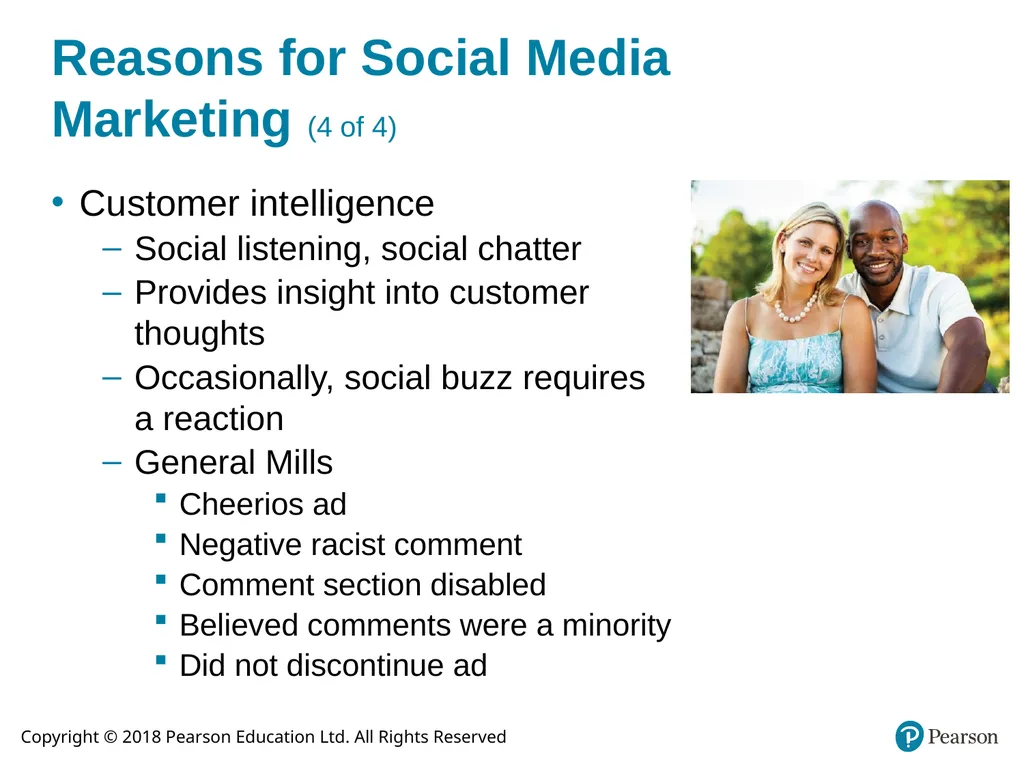
Reasons for Social Media Marketing (4 of 4) Customer intelligence
Social listening, social chatter
Provides insight into customer thoughts
Occasionally, social buzz requires a reaction
General Mills
Cheerios ad
Negative racist comment
Comment section disabled
Believed comments were a minority
Did not discontinue ad<br>
Social listening, social chatter
Provides insight into customer thoughts
Occasionally, social buzz requires a reaction
General Mills
Cheerios ad
Negative racist comment
Comment section disabled
Believed comments were a minority
Did not discontinue ad<br>
20
Figure 9.6 Functions of Social Listening React to negative feedback
Detect problems
Gather topics for branded content
Predict trends
Detect patterns or shifts in views
Identify brand advocates<br>
Detect problems
Gather topics for branded content
Predict trends
Detect patterns or shifts in views
Identify brand advocates<br>
21
Brand Advocates
Social Listening 4.7% fans generate most social buzz
Most customers do not make comments
Brand advocate characteristics
Behavioral commitment
Emotional connection
Quality communication skills
Recruit brand advocates<br>
Most customers do not make comments
Brand advocate characteristics
Behavioral commitment
Emotional connection
Quality communication skills
Recruit brand advocates<br>
22
Reasons for Social Media Marketing Increase sales
Build brand loyalty
Should be secondary objectives
Coca-Cola study
No relationship between buzz and sales
McKinsey study
Negative buzz – 8% sales decline<br>
Build brand loyalty
Should be secondary objectives
Coca-Cola study
No relationship between buzz and sales
McKinsey study
Negative buzz – 8% sales decline<br>
23
Successful Social Media Marketing
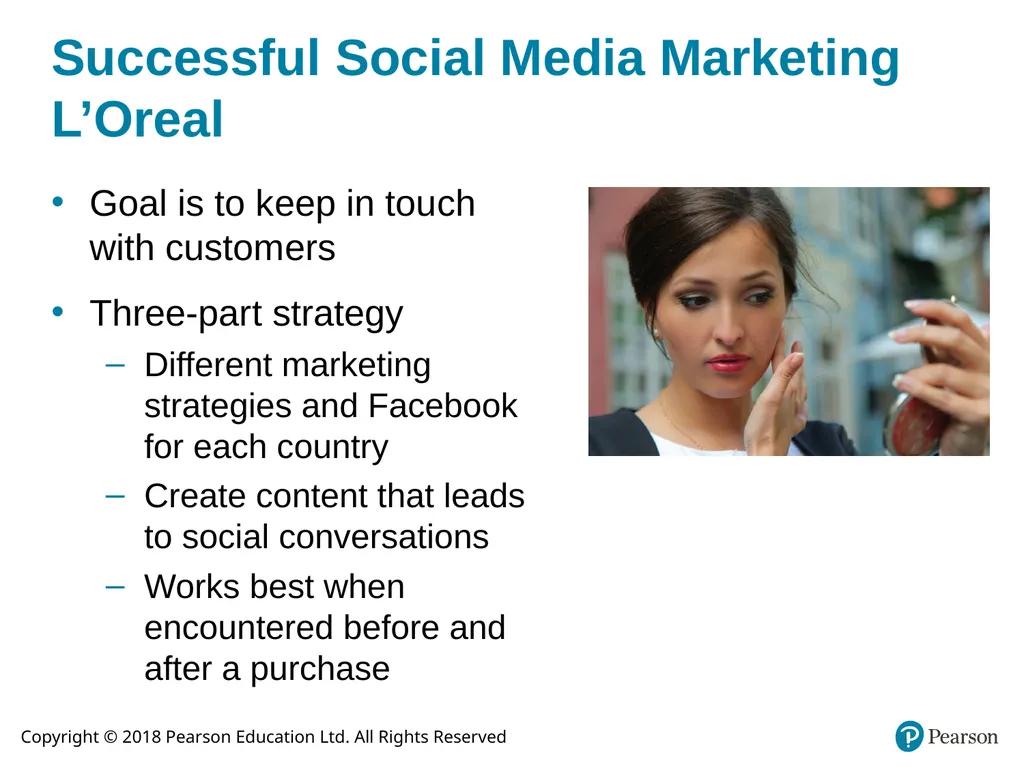
L’Oreal Goal is to keep in touch with customers
Three-part strategy
Different marketing strategies and Facebook for each country
Create content that leads to social conversations
Works best when encountered before and after a purchase<br>
Three-part strategy
Different marketing strategies and Facebook for each country
Create content that leads to social conversations
Works best when encountered before and after a purchase<br>
24
Figure 9.7 Building a Social Media Presence Determine social media goals
Determine online personality
Decide on social media platforms
Develop social media strategies
Develop an analytical feedback loop<br>
Determine online personality
Decide on social media platforms
Develop social media strategies
Develop an analytical feedback loop<br>
25
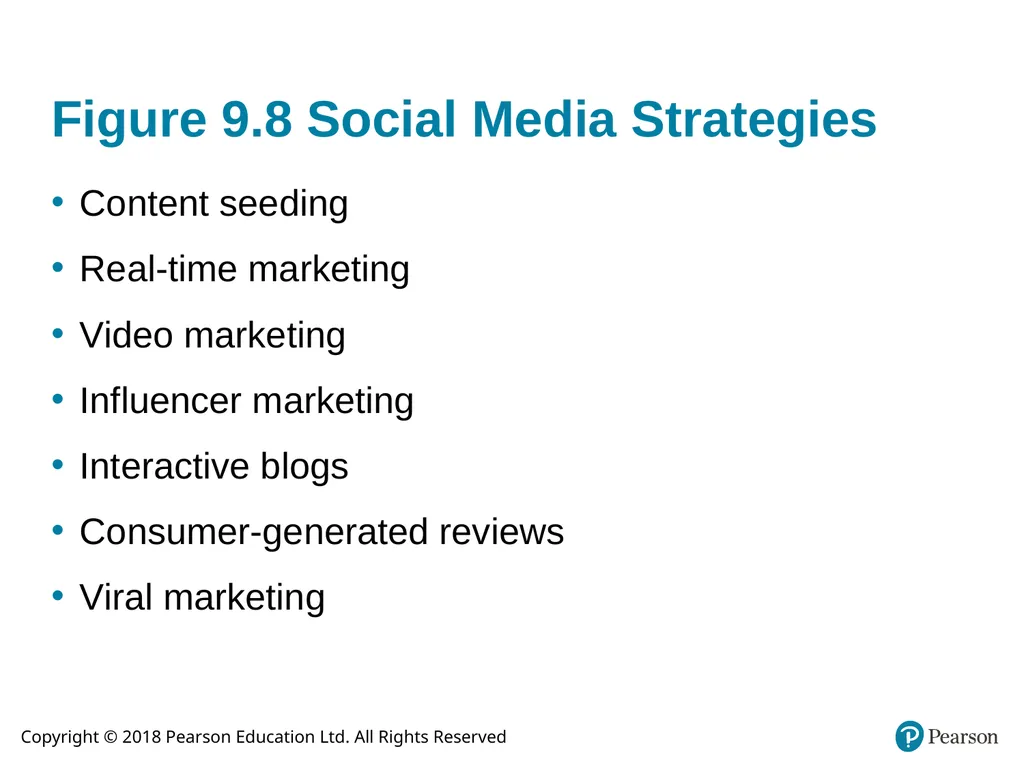
Figure 9.8 Social Media Strategies Content seeding
Real-time marketing
Video marketing
Influencer marketing
Interactive blogs
Consumer-generated reviews
Viral marketing<br>
Real-time marketing
Video marketing
Influencer marketing
Interactive blogs
Consumer-generated reviews
Viral marketing<br>
26
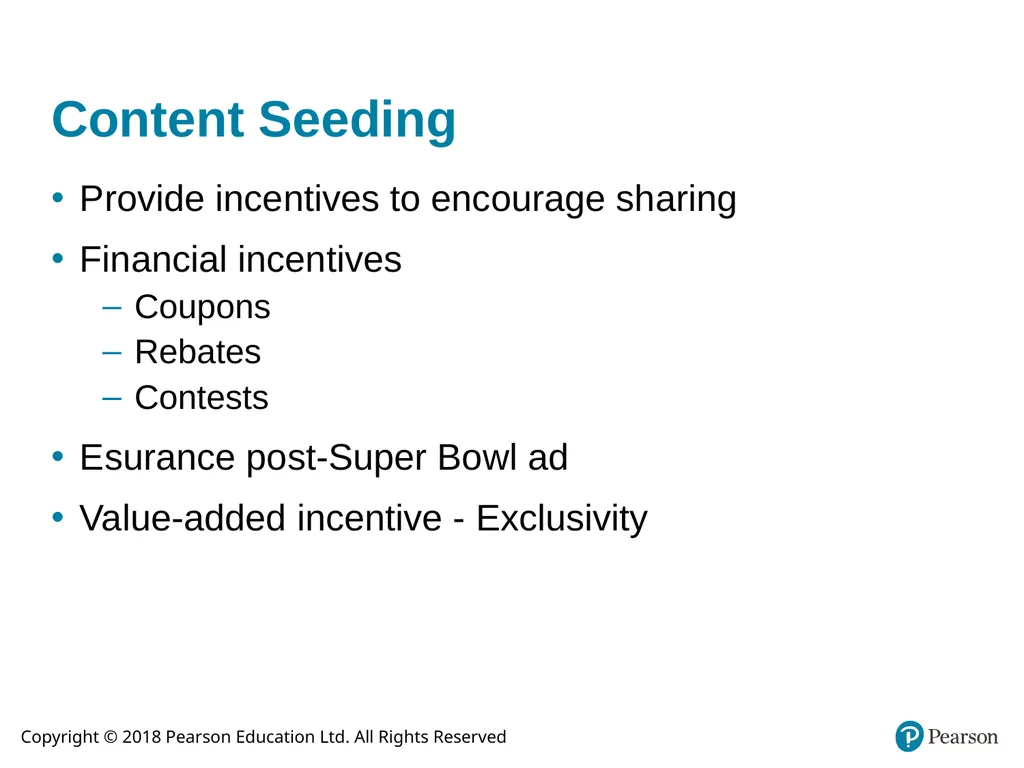
Content Seeding Provide incentives to encourage sharing
Financial incentives
Coupons
Rebates
Contests
Esurance post-Super Bowl ad
Value-added incentive - Exclusivity<br>
Financial incentives
Coupons
Rebates
Contests
Esurance post-Super Bowl ad
Value-added incentive - Exclusivity<br>
27
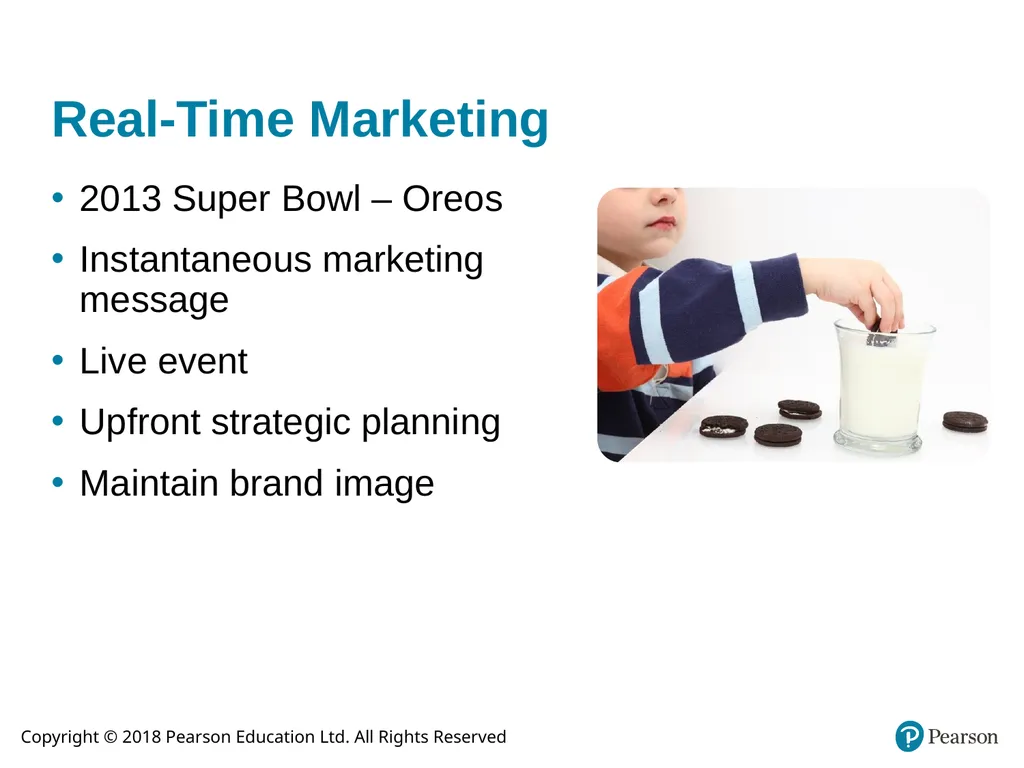
Real-Time Marketing 2013 Super Bowl – Oreos
Instantaneous marketing message
Live event
Upfront strategic planning
Maintain brand image<br>
Instantaneous marketing message
Live event
Upfront strategic planning
Maintain brand image<br>
28
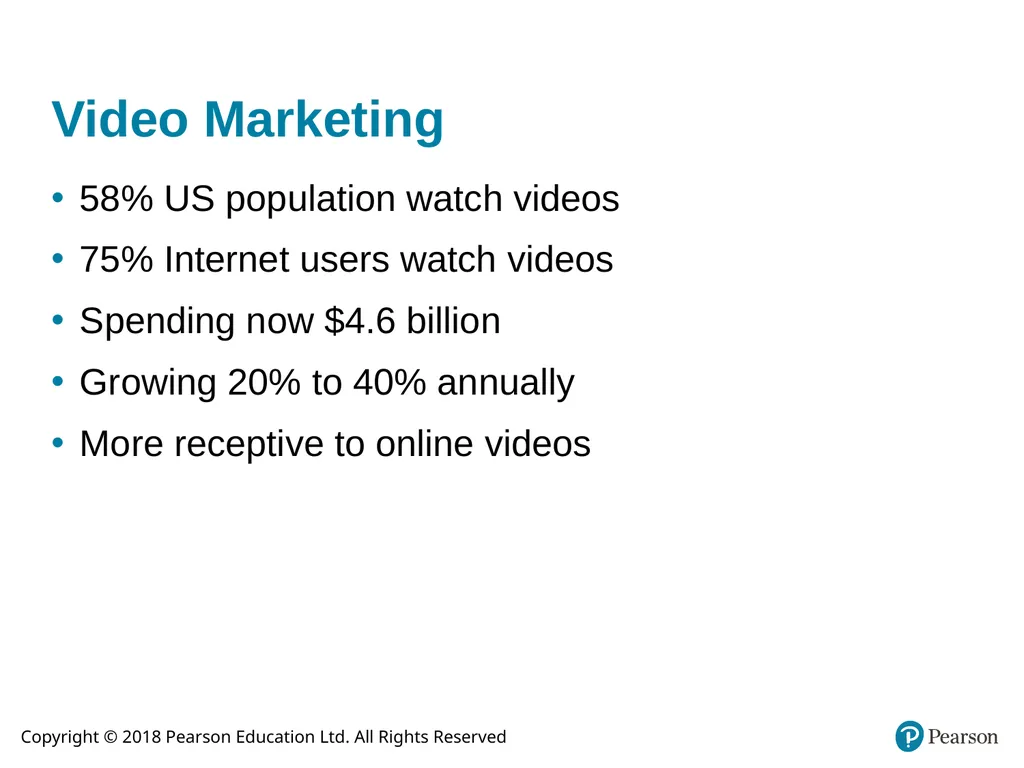
Video Marketing 58% US population watch videos
75% Internet users watch videos
Spending now $4.6 billion
Growing 20% to 40% annually
More receptive to online videos<br>
75% Internet users watch videos
Spending now $4.6 billion
Growing 20% to 40% annually
More receptive to online videos<br>
29
Figure 9.9 Video Marketing Advertising on videos
Posting of television ads
Informational videos
Cause-related videos
Product reviews
Vloggers<br>
Posting of television ads
Informational videos
Cause-related videos
Product reviews
Vloggers<br>
30
Location of Video Ads Pre-roll
Higher impressions
Enhance recall
Mid-roll
Higher completion rate
Enhance brand recognition, brand image
Post-roll
Higher click-through rate
Direct response, call to action ads<br>
Higher impressions
Enhance recall
Mid-roll
Higher completion rate
Enhance brand recognition, brand image
Post-roll
Higher click-through rate
Direct response, call to action ads<br>
31
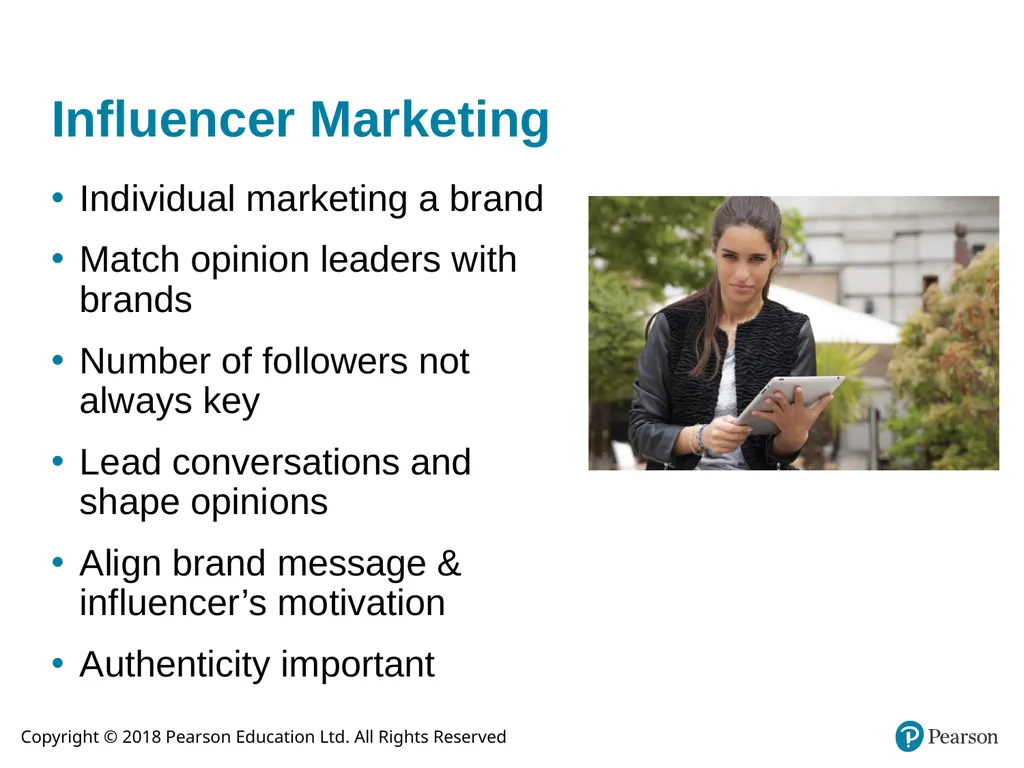
Influencer Marketing Individual marketing a brand
Match opinion leaders with brands
Number of followers not always key
Lead conversations and shape opinions
Align brand message & influencer’s motivation
Authenticity important<br>
Match opinion leaders with brands
Number of followers not always key
Lead conversations and shape opinions
Align brand message & influencer’s motivation
Authenticity important<br>
32
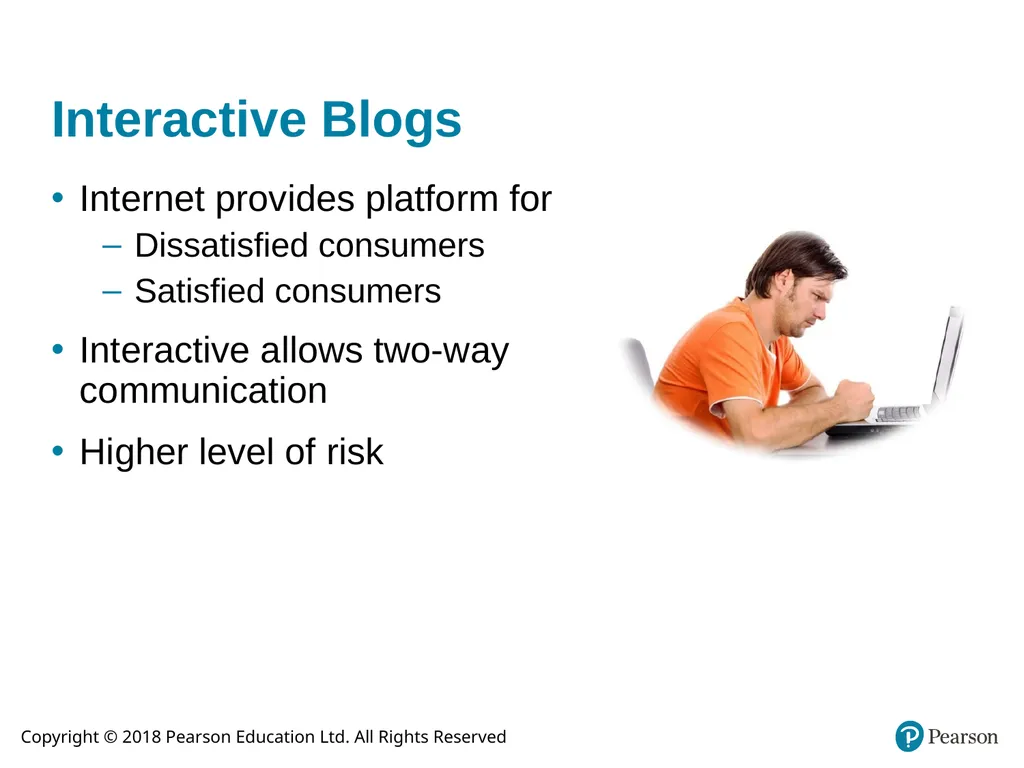
Interactive Blogs Internet provides platform for
Dissatisfied consumers
Satisfied consumers
Interactive allows two-way communication
Higher level of risk<br>
Dissatisfied consumers
Satisfied consumers
Interactive allows two-way communication
Higher level of risk<br>
33
Figure 9.11 Types of Interactive Blogs Brand blog
Individuals sponsored by a brand
Individual speaking about a brand<br>
Individuals sponsored by a brand
Individual speaking about a brand<br>
34
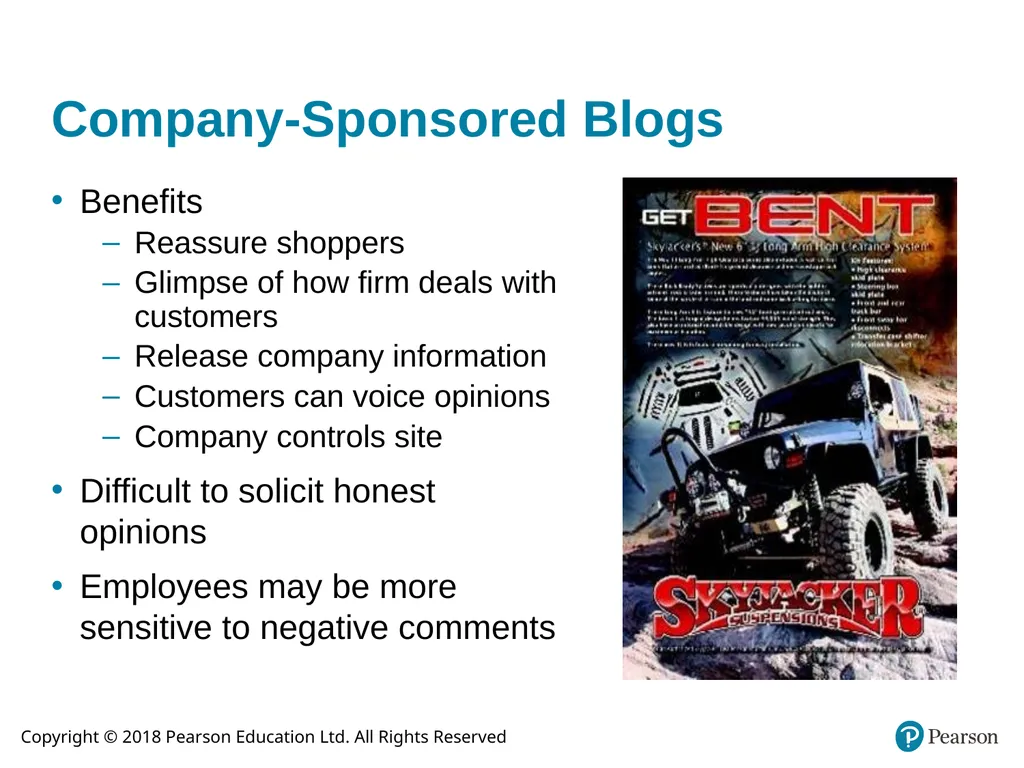
Company-Sponsored Blogs Benefits
Reassure shoppers
Glimpse of how firm deals with customers
Release company information
Customers can voice opinions
Company controls site
Difficult to solicit honest opinions
Employees may be more sensitive to negative comments<br>
Reassure shoppers
Glimpse of how firm deals with customers
Release company information
Customers can voice opinions
Company controls site
Difficult to solicit honest opinions
Employees may be more sensitive to negative comments<br>
35
Personal Blogs Sponsored by brands
New FTC regulations
Limited freedom since blog is sponsored
Visitors’ comments may be tempered
Individuals speak about brands
No financial connection
Visitors feel more comfortable in commenting
Brands can learn
Brands can post comments or questions<br>
New FTC regulations
Limited freedom since blog is sponsored
Visitors’ comments may be tempered
Individuals speak about brands
No financial connection
Visitors feel more comfortable in commenting
Brands can learn
Brands can post comments or questions<br>
36
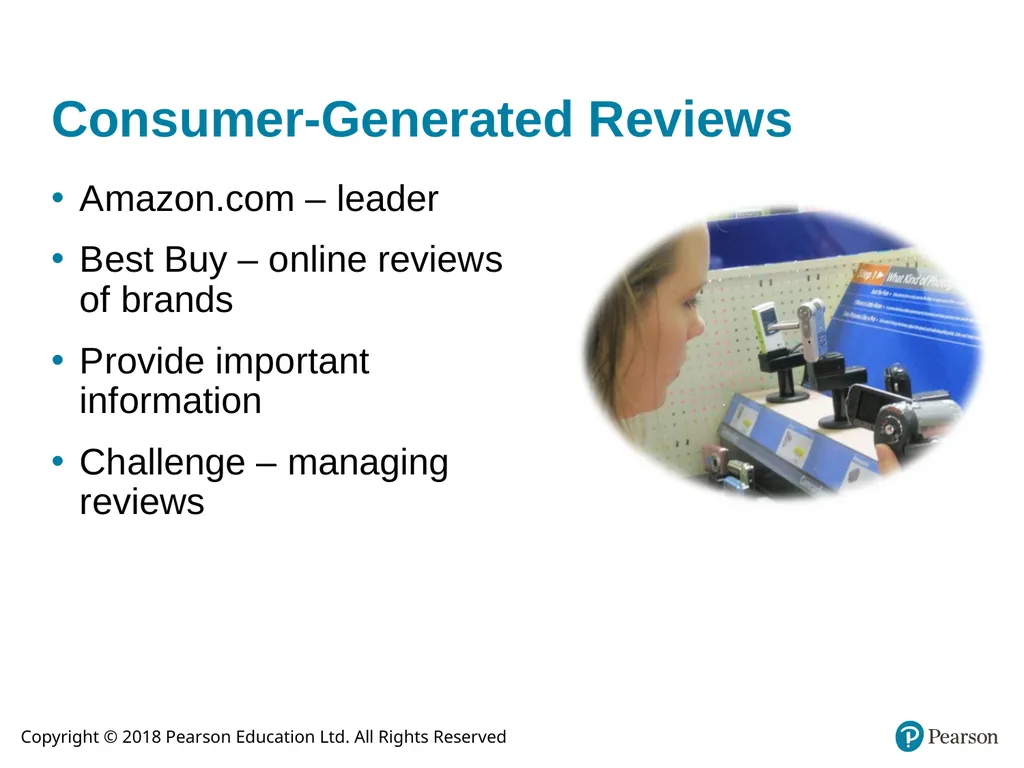
Consumer-Generated Reviews Amazon.com – leader
Best Buy – online reviews of brands
Provide important information
Challenge – managing reviews<br>
Best Buy – online reviews of brands
Provide important information
Challenge – managing reviews<br>
37
Viral Marketing Message passed from one consumer to another
E-mail
Blogs
Form of advocacy or word-of-mouth endorsement
Viral marketing messages
Advertisements
Hyperlinked promotions
Online newsletters
Streaming videos
Games<br>
Blogs
Form of advocacy or word-of-mouth endorsement
Viral marketing messages
Advertisements
Hyperlinked promotions
Online newsletters
Streaming videos
Games<br>
38
Figure 9.12 Keys to Successful Viral Marketing Focus on the product or business
Determine why individuals would want to share the message
Offer an incentive
Make it personal
Track the results and analyze the data<br>
Determine why individuals would want to share the message
Offer an incentive
Make it personal
Track the results and analyze the data<br>
39
Figure 9.13 Why Consumers Follow Brands Keep up with activities
Learn about products or services
Sweepstakes or promotion
Provide feedback
Join community of fans
Make purchases
To complain Source: Based on Lenna Garibian, “Digital Influence: Blogs Beat Social Networks for Driving Purchases,” MarketingProfs, http://www.marketingprofs.com/charts/2013/10336/digital-influence-blogs-beat-social-networks-for-driving-purchases, March 18, 2013.<br>
Learn about products or services
Sweepstakes or promotion
Provide feedback
Join community of fans
Make purchases
To complain Source: Based on Lenna Garibian, “Digital Influence: Blogs Beat Social Networks for Driving Purchases,” MarketingProfs, http://www.marketingprofs.com/charts/2013/10336/digital-influence-blogs-beat-social-networks-for-driving-purchases, March 18, 2013.<br>
40
International Implications Social media worldwide
Most Facebook users outside U.S.
Language differences
Social norms
Technological issues<br>
Most Facebook users outside U.S.
Language differences
Social norms
Technological issues<br>
41
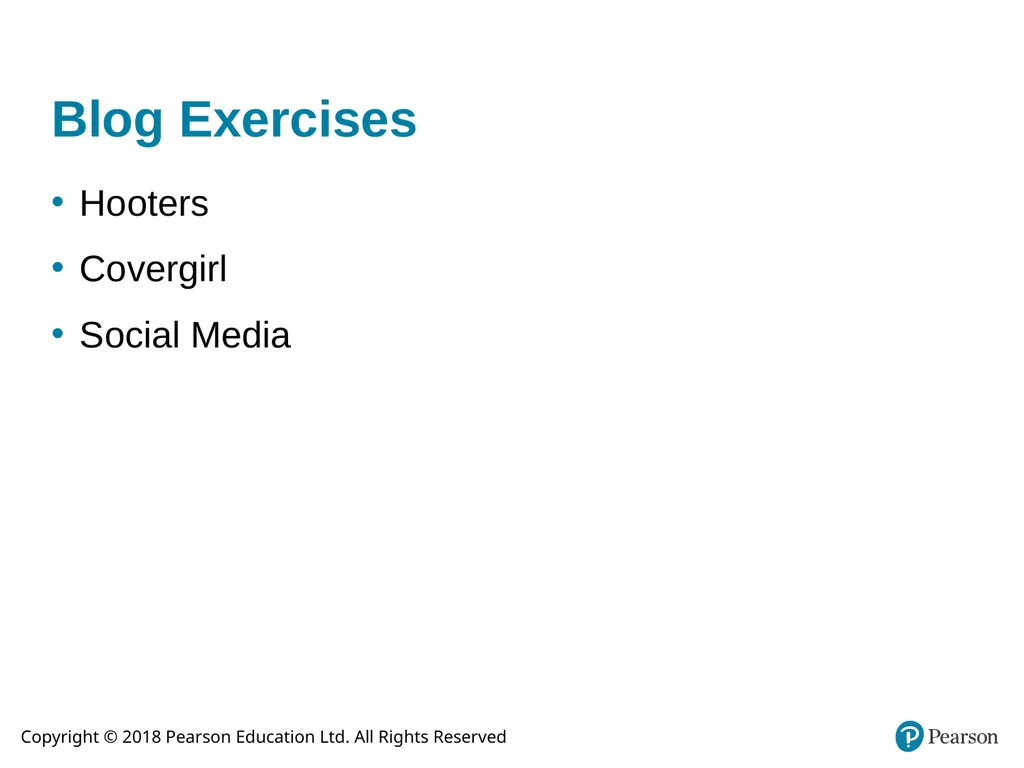
Blog Exercises Hooters
Covergirl
Social Media<br>
Covergirl
Social Media<br>
42
Copyright<br>