Jaundice (Hyperbilirubinemia) Lecturer Assistant Kareem AL-Khafajy Objectives: At the end of the lecture the student will be able to: Describe the concept of bilirubinemia Recognize the causes of bilirubinemia 3. Evaluate the prognosis of
"Jaundice (Hyperbilirubinemia) Lecturer Assistant" is the property of its rightful owner. Permission is granted to
download and print the materials on this website for personal, non-commercial use only, and to display it
on your personal computer provided you do not modify the materials and that you retain all copyright
notices contained in the materials. By downloading content from our website, you accept the terms of this
agreement.
Objectives: At the end of the lecture the student will be able to:
Describe the concept of bilirubinemia
Recognize the causes of bilirubinemia
3. Evaluate the prognosis of the condition of the infant receiving the different types of therapy for hyperbilirubinemia e.g. phototherapy and exchange blood transfusion
4. Develop awareness for the serious side effects of hyperbilirubinemia<br>
03
Definition of Hyperbilirubinemia Refers to the increased level of
accumulated bilirubin in the blood & characterized by jaundice.
Normally there is balance between the destruction of RBCs and secretion of it’s products Kareem AL-Khafajy<br>
04
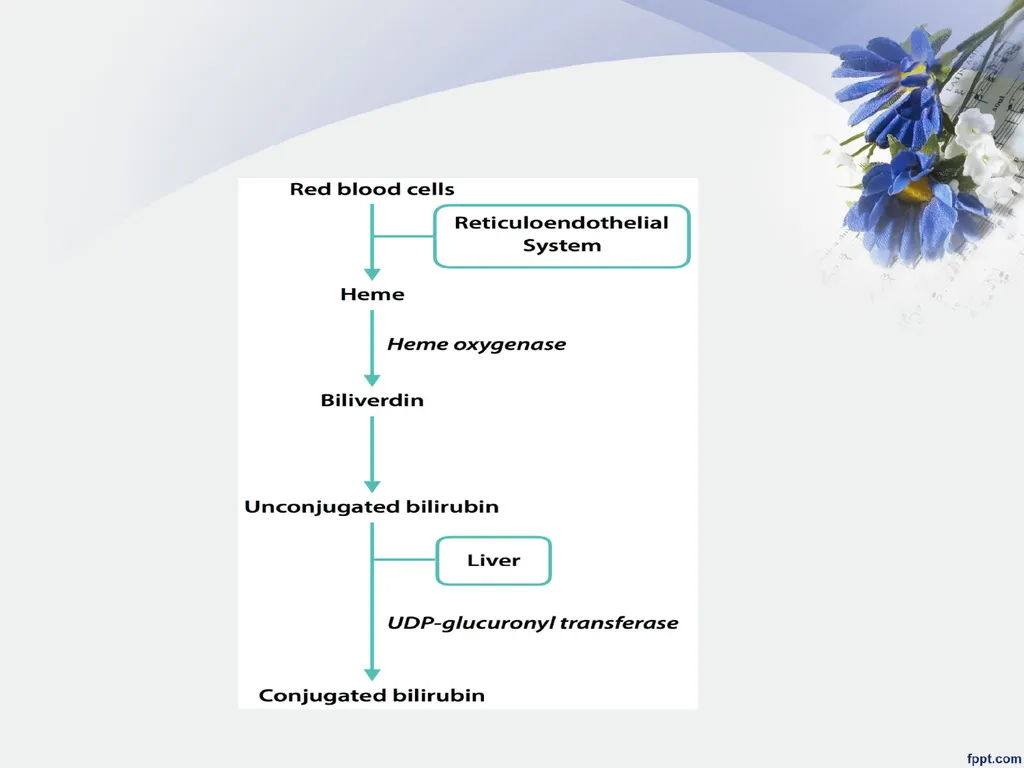
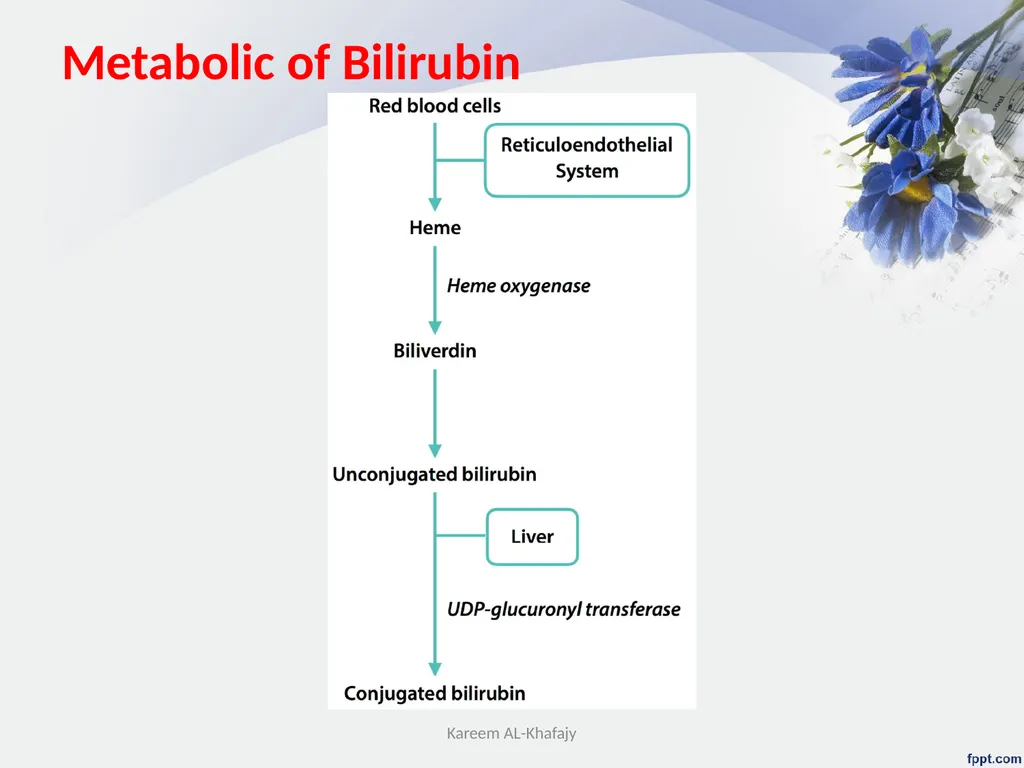
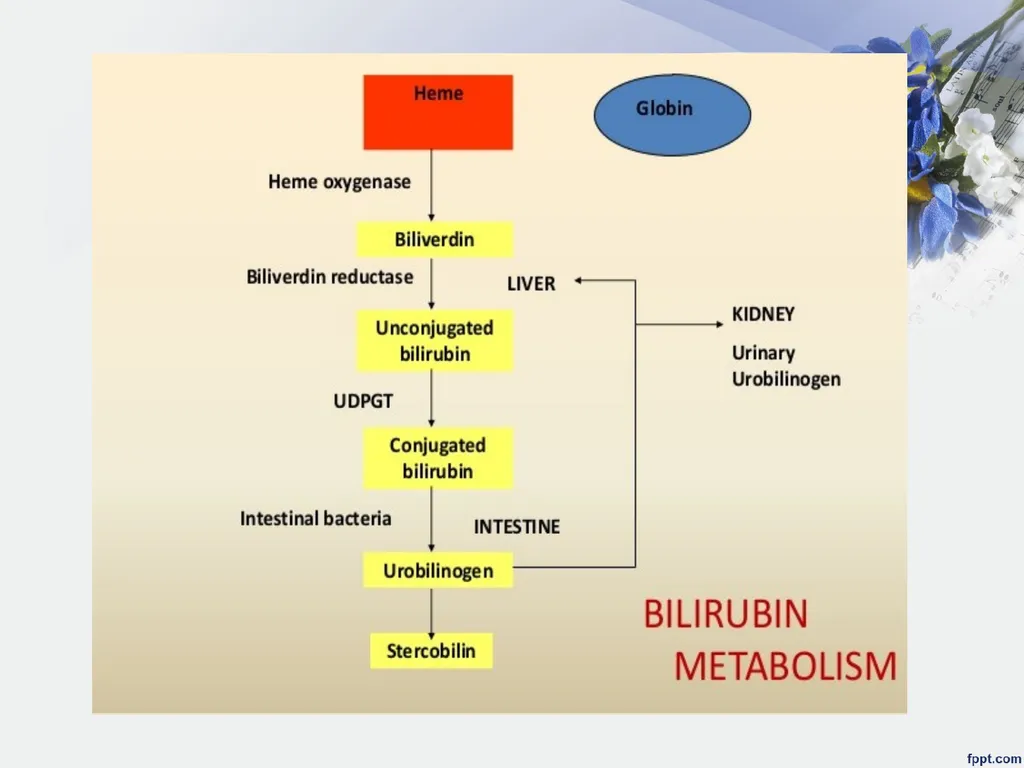
Metabolic of Bilirubin Kareem AL-Khafajy<br>
05
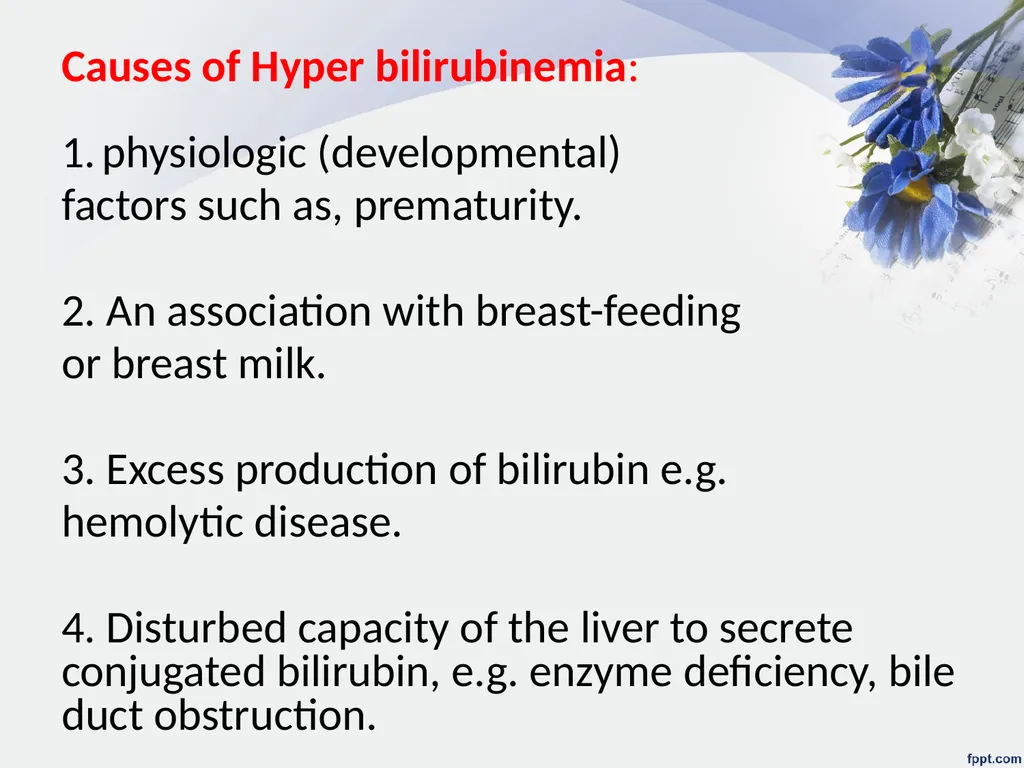
Causes of Hyper bilirubinemia: physiologic (developmental)
factors such as, prematurity.
2. An association with breast-feeding
or breast milk.
3. Excess production of bilirubin e.g.
hemolytic disease.
4. Disturbed capacity of the liver to secrete conjugated bilirubin, e.g. enzyme deficiency, bile duct obstruction.<br>
06
Physiologic jaundice:
( NON pathologic )
Is the most common cause and is
Relatively mild self-limited. It appears on 2nd or 3rd day and peaks on 4th or 5th and decreases on the 6th day to 7th day<br>
07
Causes Higher concentration of circulating RBCs
Immature liver
Absence of intestinal flora in the newborn which is responsible for reducing urobilinogen to be excreted by feces.
The ↓ intestinal motility if feeding is delayed Kareem AL-Khafajy<br>
08
Complications of hyperbilirubinemia:
Unconjugated bilirubin is highly toxic to neurons.
sever damage of the brain, which occurs when the serum concentrations reaches toxic levels & crosses the blood-brain barrier in the newborn causing irreversible brain damage.<br>
09
Anemia in this condition is caused by the destruction of the RBCs which stimulate the increase production of +++ RBC leading to
more hemolysis.
Hyperbilirubinemia in the first 24hrs after birth result of:
Erythroblastosis fetalis in which there is an abnormally rapid rate of RBCs destruction.
The major cause of erythrocyte destruction is:
Rh & ABO incompatibility.<br>
10
Signs of bilirubin encephalopathy: Rigid extension of all limbs
Lethargic
Poor feeding
Irritability
Cry
Seizures
Discoloration of skin and eyes<br>
11
Diagnostic evaluation: Amniocentesis & analysis of bilirubin
Levels in the amniotic fluid if it is
Increasing then there is progressive hemolysis
Rh-antibody tiers in the maternal blood can be evaluated (indirect coombs test)
can be confirmed by detecting antibodies attached to the circulating RBCs in the infant’s blood (direct coombs test).<br>
12
Therapeutic management:- Primary goals are to prevent bilirubin encephalopathy.
Early Initiation of br. Or bottle feeding.
Phototherapy.
Early initiation of feeding (breast feeding)
if bilirubin is 17mg /dl stop breast feeding for 24 hours and resume when it decreases.<br>
13
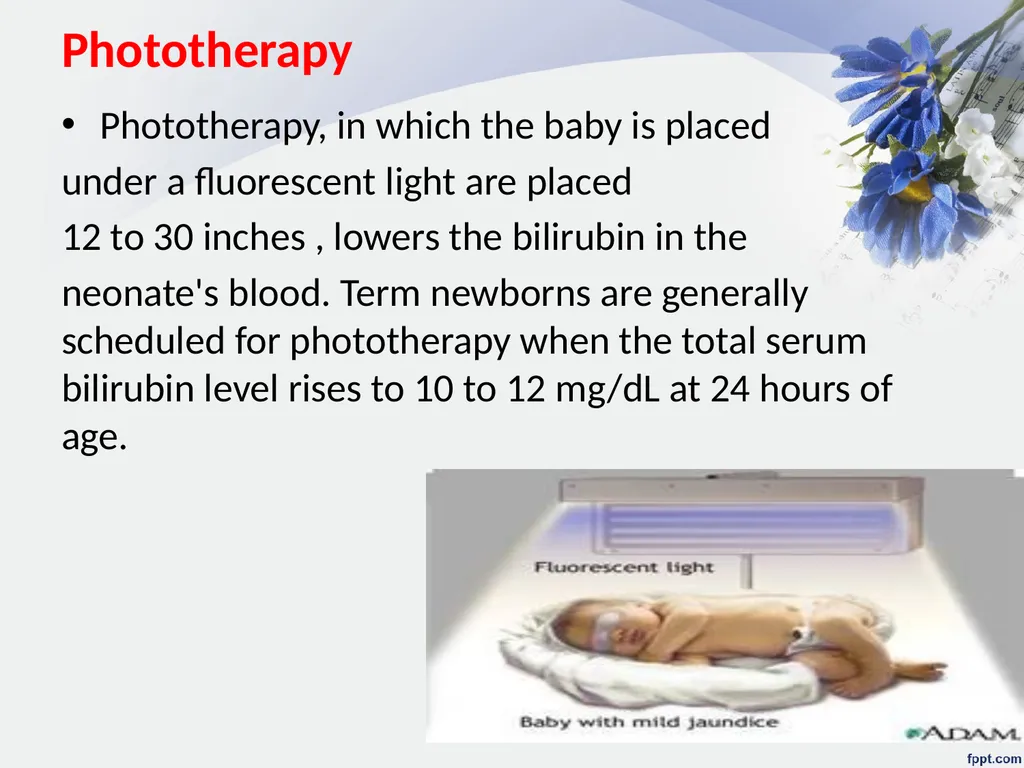
Phototherapy Phototherapy, in which the baby is placed
under a fluorescent light are placed
12 to 30 inches , lowers the bilirubin in the
neonate's blood. Term newborns are generally scheduled for phototherapy when the total serum bilirubin level rises to 10 to 12 mg/dL at 24 hours of age.<br>
14
Blood Exchange: this will help to: Remove the sensitized RBCs
Decrease the serum bilirubin level to prevent brain damage
Correct anemia
Prevent cardiac failure<br>