KHATRA ADIBASI MAHAVIDYALAYA E-CONTENT DEPARTMENT
Description: KHATRA ADIBASI MAHAVIDYALAYA E-CONTENT DEPARTMENT OF EDUCATION SEMESTER-IV (PROGRAMME) SESSION: 2021-22 SUBJECT: EDUCATION COURSE TITLE: DEVELOPMENT OF EDUCATION IN INDIA COURSE CODE: APEDN401C-1D TOPIC: MACAULAY MINUETS (1835) NAME OF
Related Topics
Download Presentation
"KHATRA ADIBASI MAHAVIDYALAYA E-CONTENT DEPARTMENT" is the property of its rightful owner. Permission is granted to download and print the materials on this website for personal, non-commercial use only, and to display it on your personal computer provided you do not modify the materials and that you retain all copyright notices contained in the materials. By downloading content from our website, you accept the terms of this agreement.
Presentation Transcript
slide1. KHATRA ADIBASI MAHAVIDYALAYA
E-CONTENTDEPARTMENT OF EDUCATION
SEMESTER-IV (PROGRAMME)SESSION: 2021-22
SUBJECT: EDUCATION
COURSE TITLE: DEVELOPMENT OF EDUCATION IN INDIA
COURSE CODE: AP/EDN/401C-1D
TOPIC: MACAULAY MINUETS (1835)
NAME OF THE TEACHER: RABIN BANERJEE<br>
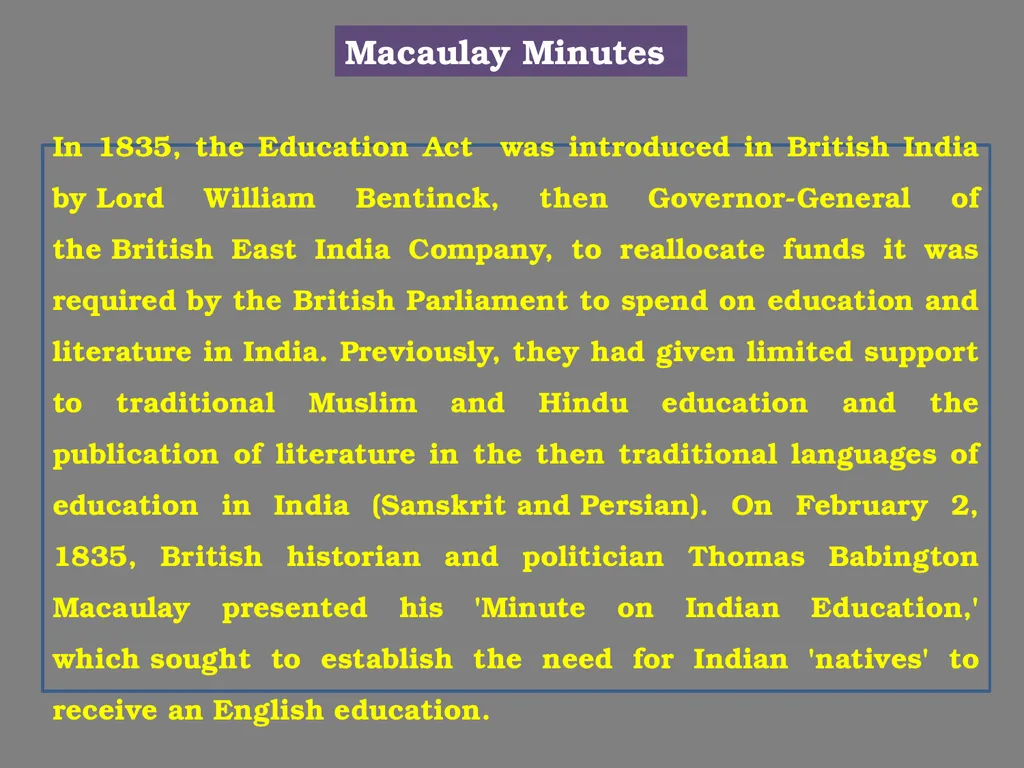
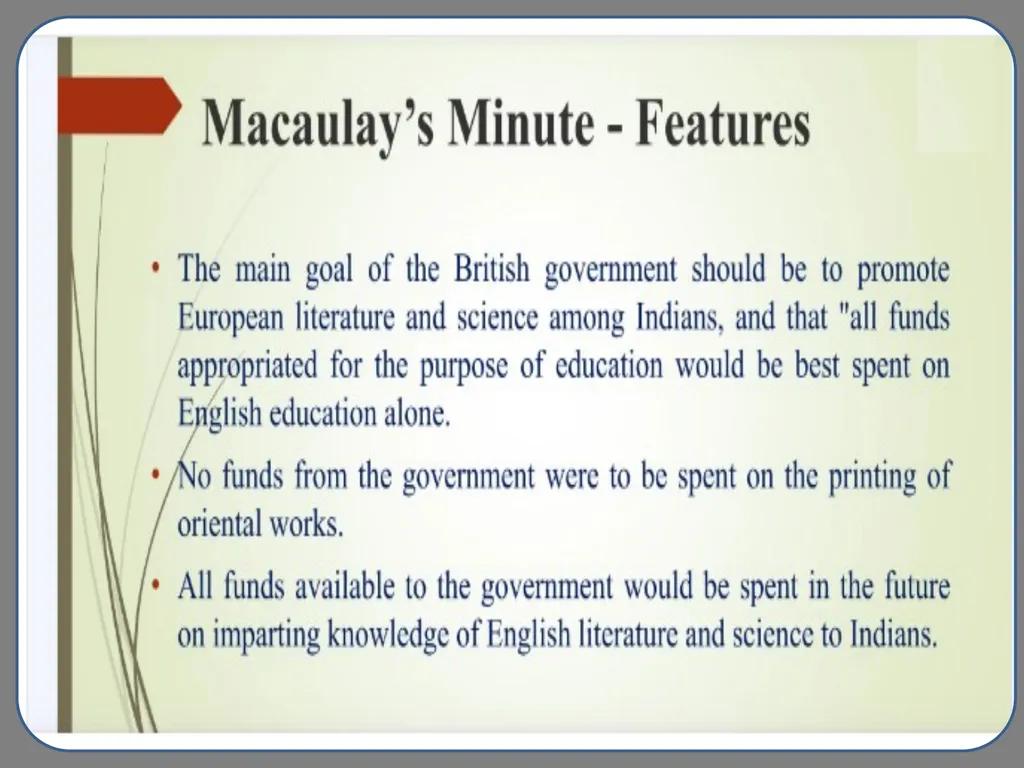
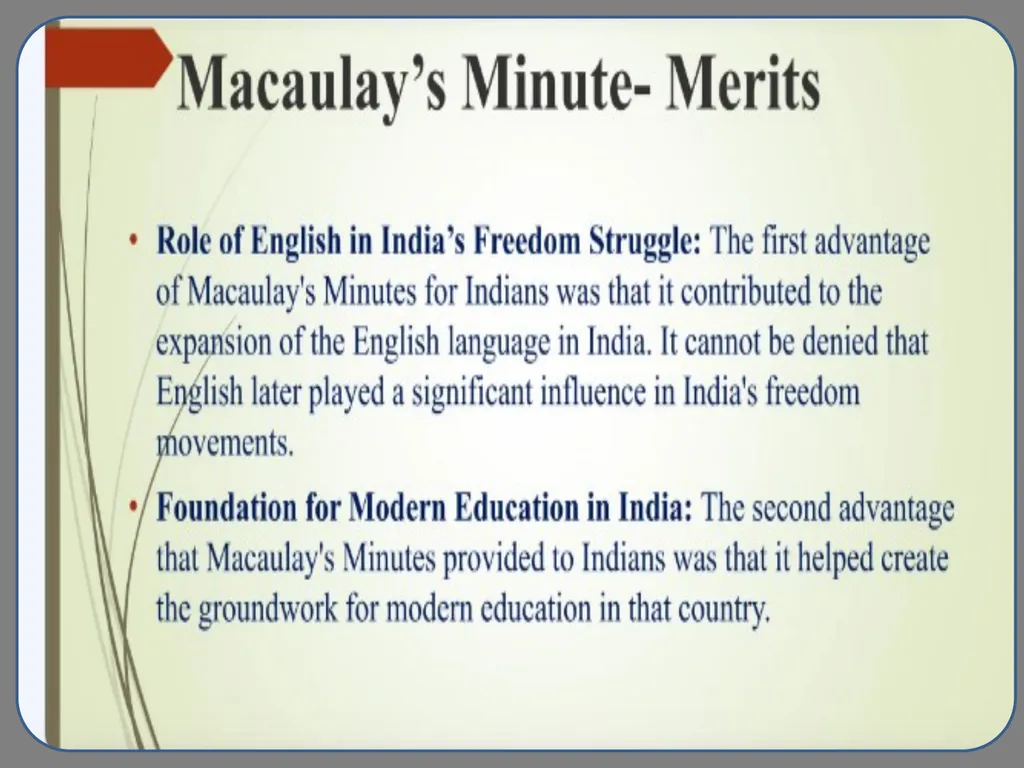
slide2. Macaulay Minutes In 1835, the Education Act was introduced in British India by Lord William Bentinck, then Governor-General of the British East India Company, to reallocate funds it was required by the British Parliament to spend on education and literature in India. Previously, they had given limited support to traditional Muslim and Hindu education and the publication of literature in the then traditional languages of education in India (Sanskrit and Persian). On February 2, 1835, British historian and politician Thomas Babington Macaulay presented his 'Minute on Indian Education,' which sought to establish the need for Indian 'natives' to receive an English education.<br>
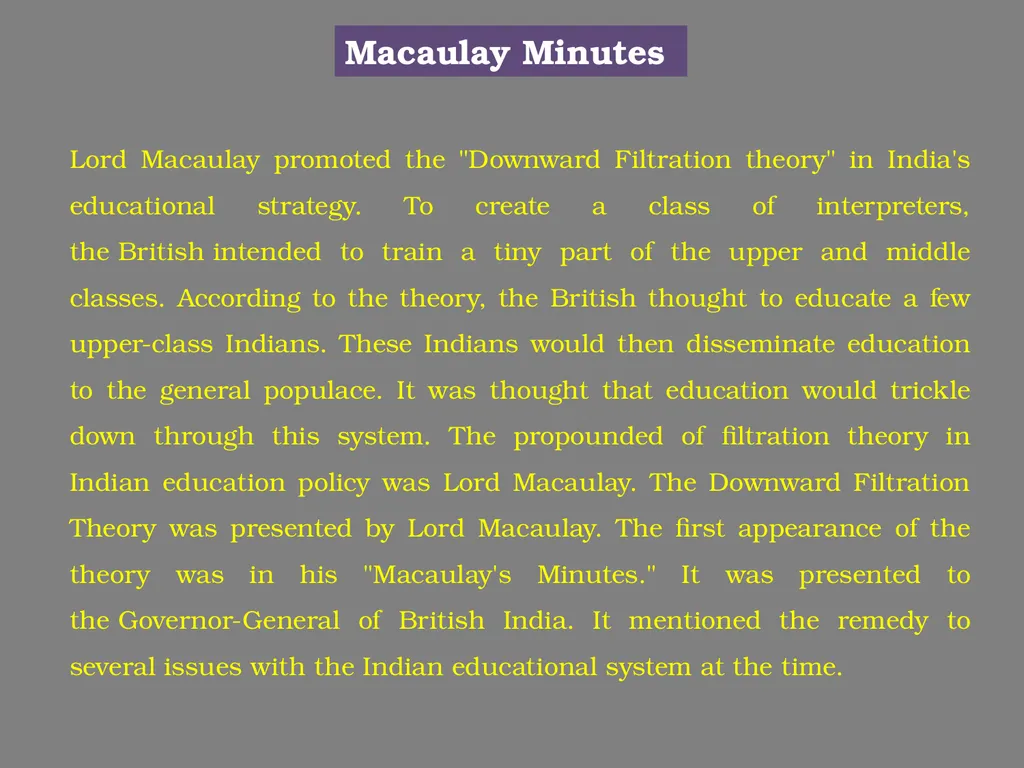
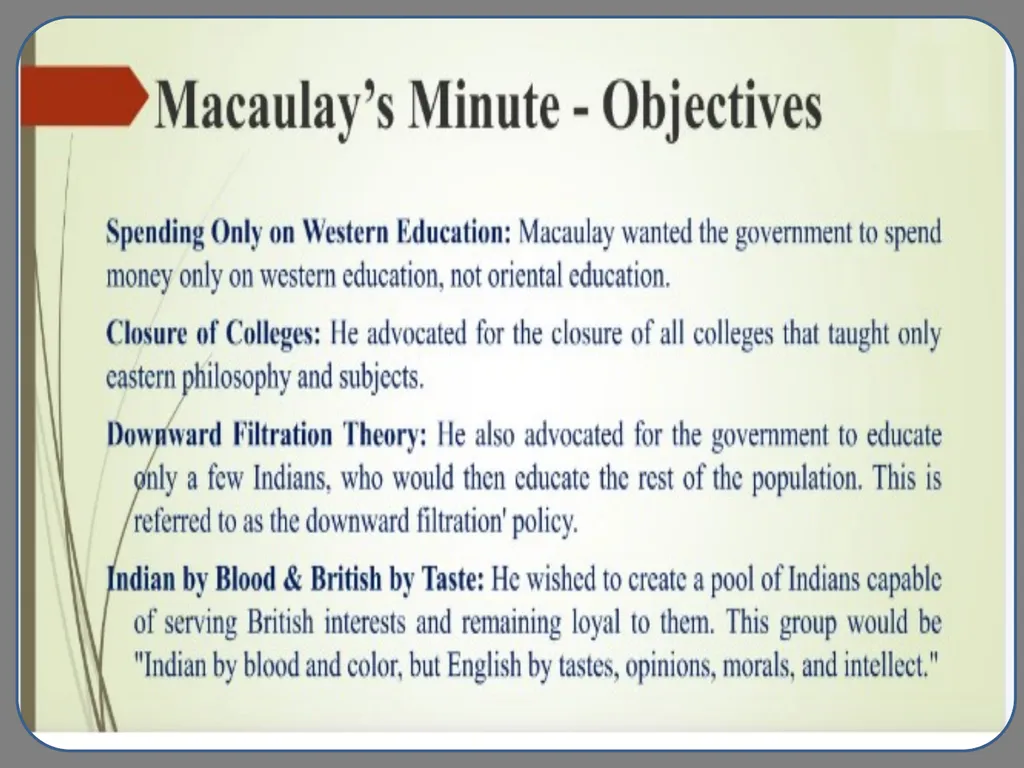
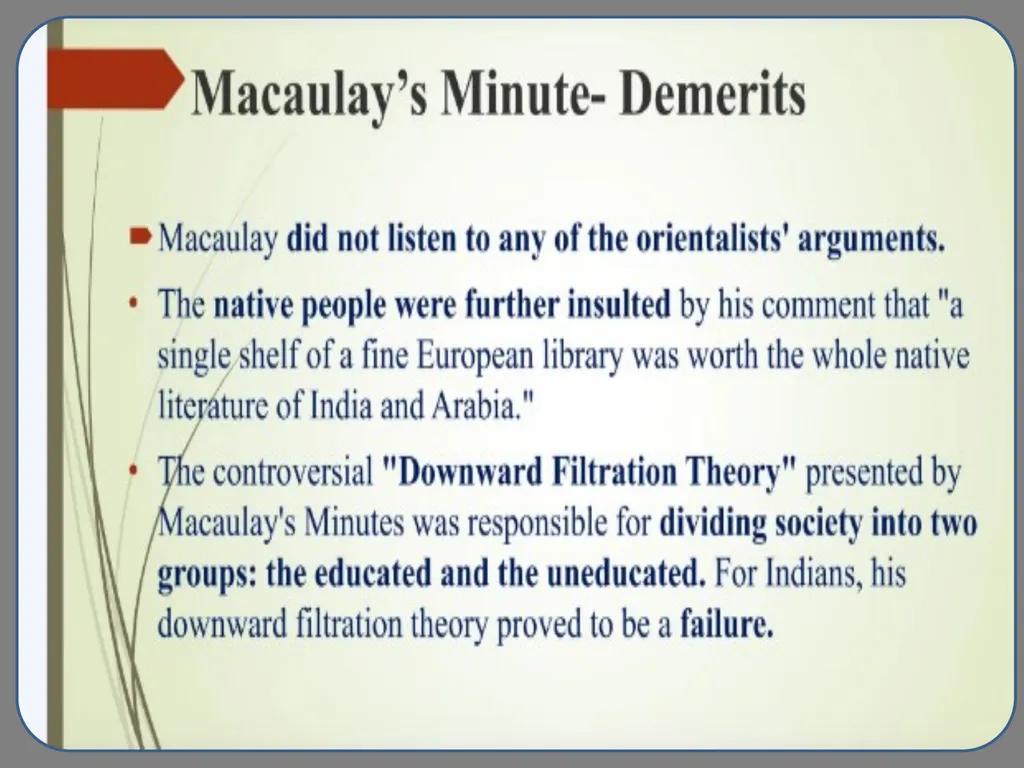
slide3. Lord Macaulay promoted the "Downward Filtration theory" in India's educational strategy. To create a class of interpreters, the British intended to train a tiny part of the upper and middle classes. According to the theory, the British thought to educate a few upper-class Indians. These Indians would then disseminate education to the general populace. It was thought that education would trickle down through this system. The propounded of filtration theory in Indian education policy was Lord Macaulay. The Downward Filtration Theory was presented by Lord Macaulay. The first appearance of the theory was in his "Macaulay's Minutes." It was presented to the Governor-General of British India. It mentioned the remedy to several issues with the Indian educational system at the time. Macaulay Minutes<br>
slide8. THANK YOU<br>
E-CONTENTDEPARTMENT OF EDUCATION
SEMESTER-IV (PROGRAMME)SESSION: 2021-22
SUBJECT: EDUCATION
COURSE TITLE: DEVELOPMENT OF EDUCATION IN INDIA
COURSE CODE: AP/EDN/401C-1D
TOPIC: MACAULAY MINUETS (1835)
NAME OF THE TEACHER: RABIN BANERJEE<br>
slide2. Macaulay Minutes In 1835, the Education Act was introduced in British India by Lord William Bentinck, then Governor-General of the British East India Company, to reallocate funds it was required by the British Parliament to spend on education and literature in India. Previously, they had given limited support to traditional Muslim and Hindu education and the publication of literature in the then traditional languages of education in India (Sanskrit and Persian). On February 2, 1835, British historian and politician Thomas Babington Macaulay presented his 'Minute on Indian Education,' which sought to establish the need for Indian 'natives' to receive an English education.<br>
slide3. Lord Macaulay promoted the "Downward Filtration theory" in India's educational strategy. To create a class of interpreters, the British intended to train a tiny part of the upper and middle classes. According to the theory, the British thought to educate a few upper-class Indians. These Indians would then disseminate education to the general populace. It was thought that education would trickle down through this system. The propounded of filtration theory in Indian education policy was Lord Macaulay. The Downward Filtration Theory was presented by Lord Macaulay. The first appearance of the theory was in his "Macaulay's Minutes." It was presented to the Governor-General of British India. It mentioned the remedy to several issues with the Indian educational system at the time. Macaulay Minutes<br>
slide8. THANK YOU<br>