"Knowledge Organisers: AQA Language Paper 1 –" is the property of its rightful owner. Permission is granted to
download and print the materials on this website for personal, non-commercial use only, and to display it
on your personal computer provided you do not modify the materials and that you retain all copyright
notices contained in the materials. By downloading content from our website, you accept the terms of this
agreement.
Presentation Transcript
01
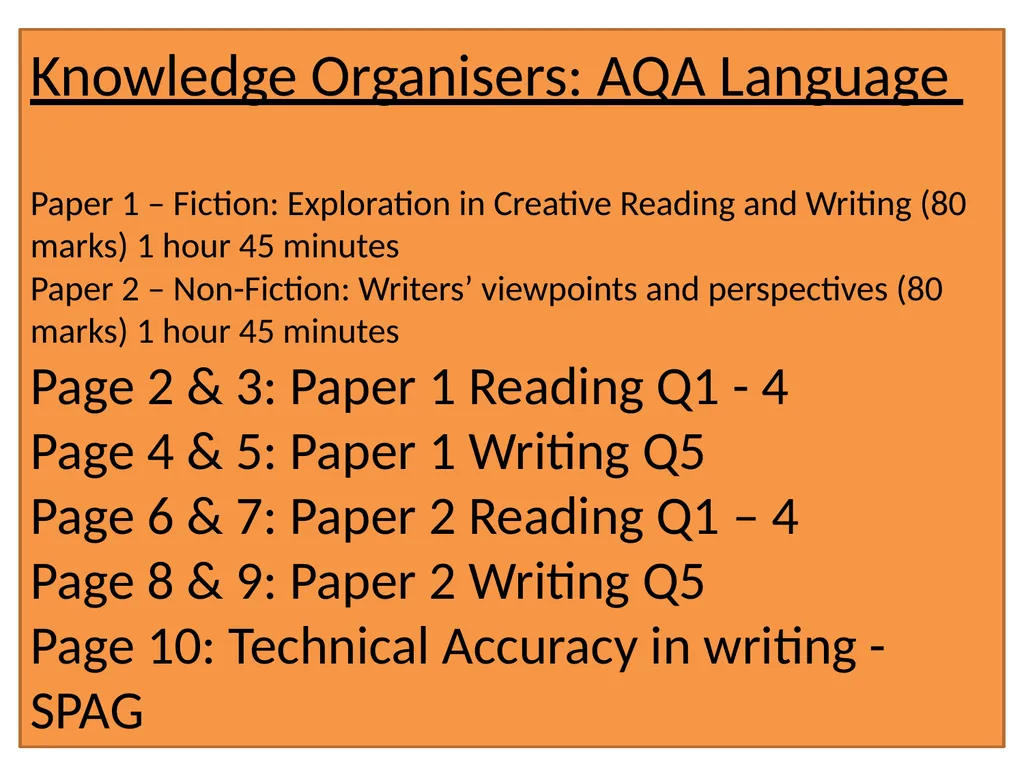
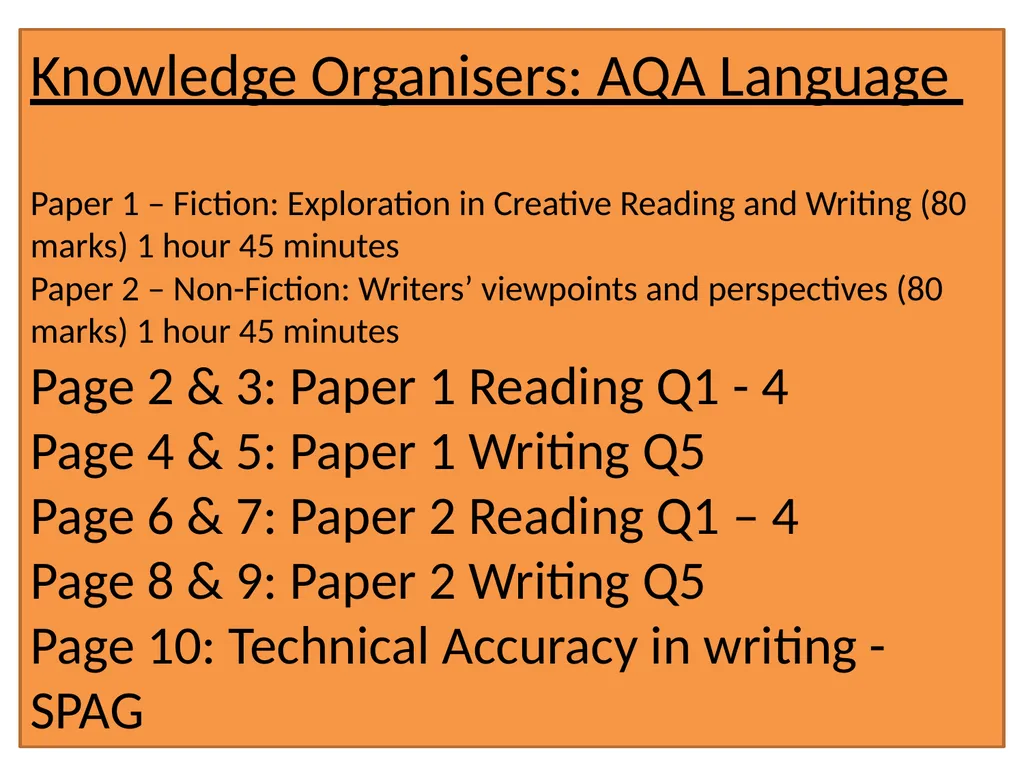
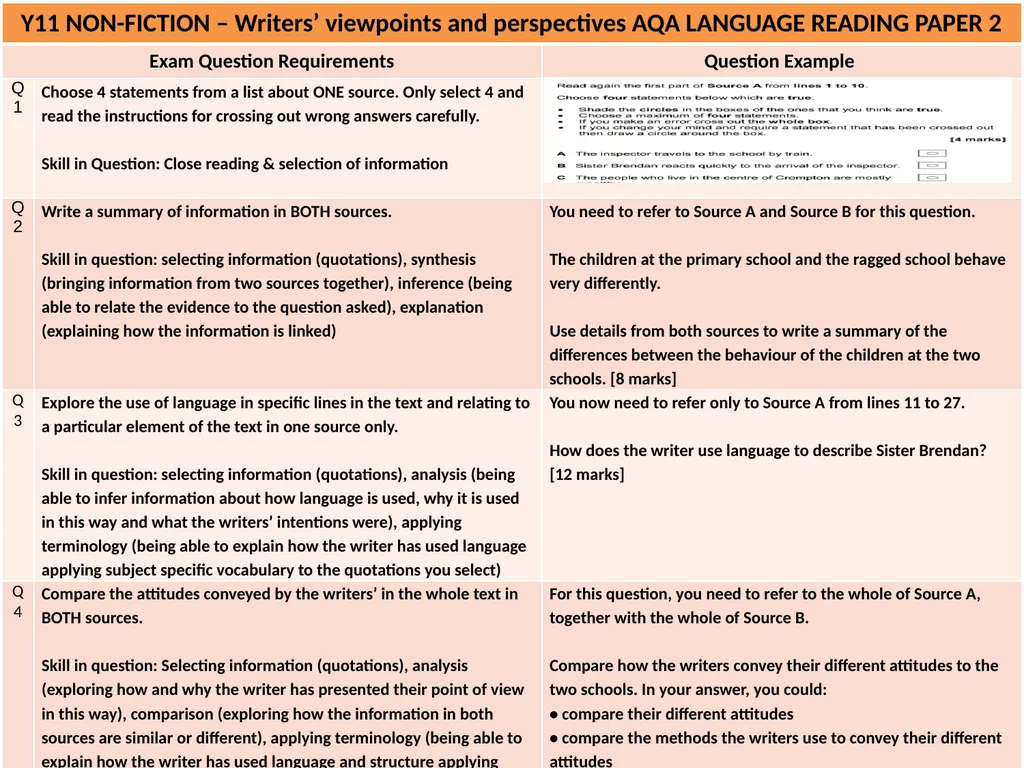
Knowledge Organisers: AQA Language Paper 1 – Fiction: Exploration in Creative Reading and Writing (80 marks) 1 hour 45 minutes Paper 2 – Non-Fiction: Writers’ viewpoints and perspectives (80 marks) 1 hour 45 minutes Page 2 & 3: Paper 1 Reading Q1 - 4 Page 4 & 5: Paper 1 Writing Q5 Page 6 & 7: Paper 2 Reading Q1 – 4 Page 8 & 9: Paper 2 Writing Q5 Page 10: Technical Accuracy in writing - SPAG<br>
02
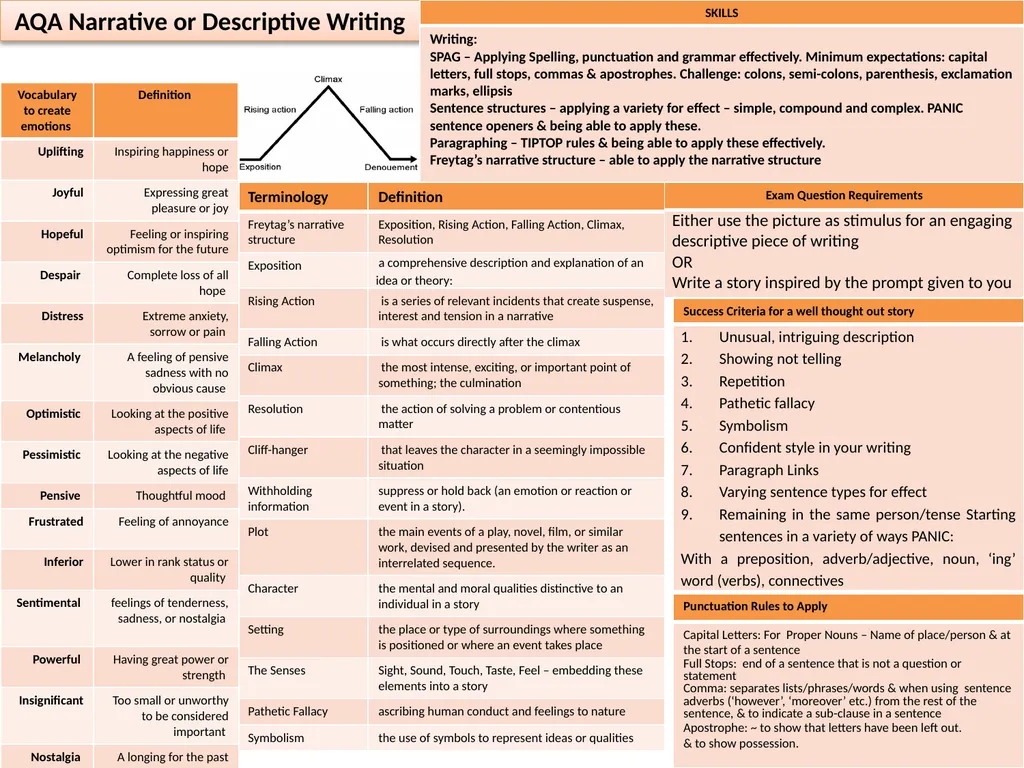
AQA Narrative or Descriptive Writing<br>
03
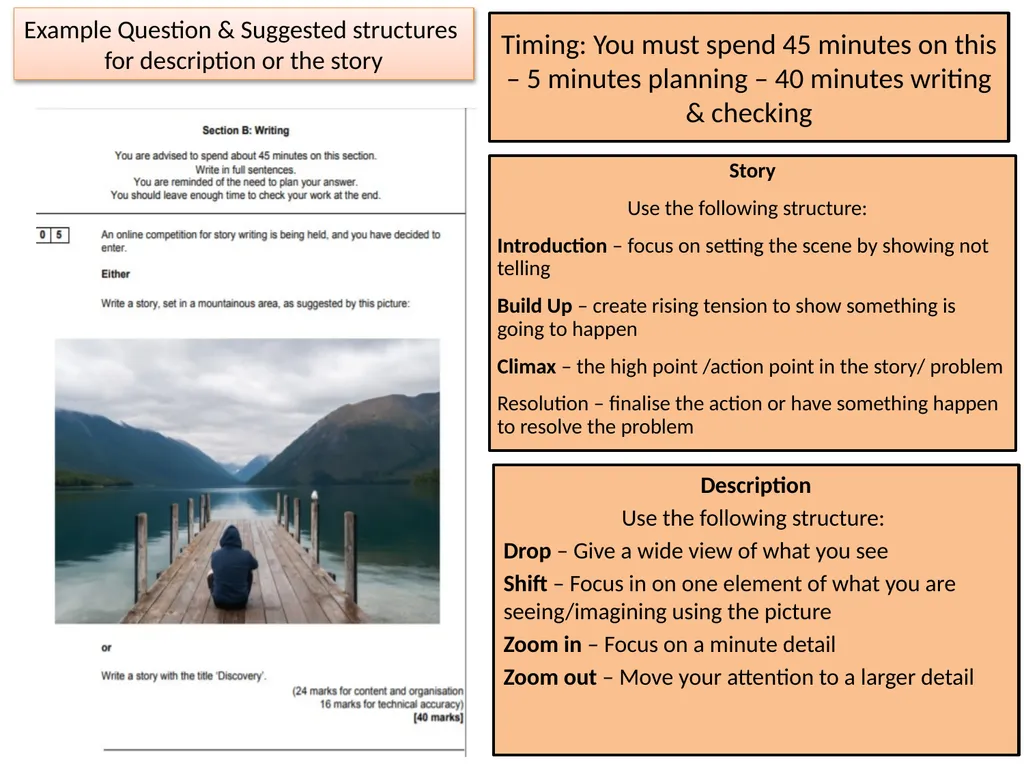
Timing: You must spend 45 minutes on this – 5 minutes planning – 40 minutes writing & checking Description
Use the following structure:
Drop – Give a wide view of what you see
Shift – Focus in on one element of what you are seeing/imagining using the picture
Zoom in – Focus on a minute detail
Zoom out – Move your attention to a larger detail Story
Use the following structure:
Introduction – focus on setting the scene by showing not telling
Build Up – create rising tension to show something is going to happen
Climax – the high point /action point in the story/ problem
Resolution – finalise the action or have something happen to resolve the problem Example Question & Suggested structures
for description or the story<br>
04
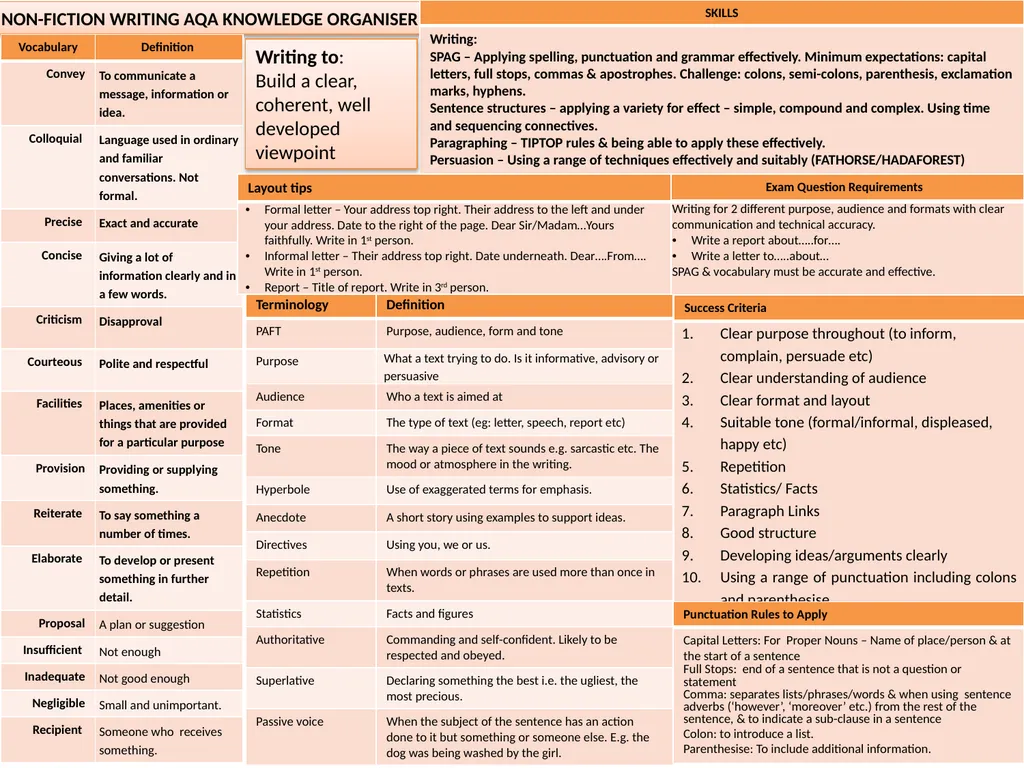
NON-FICTION WRITING AQA KNOWLEDGE ORGANISER Writing to:
Build a clear, coherent, well developed viewpoint<br>
05
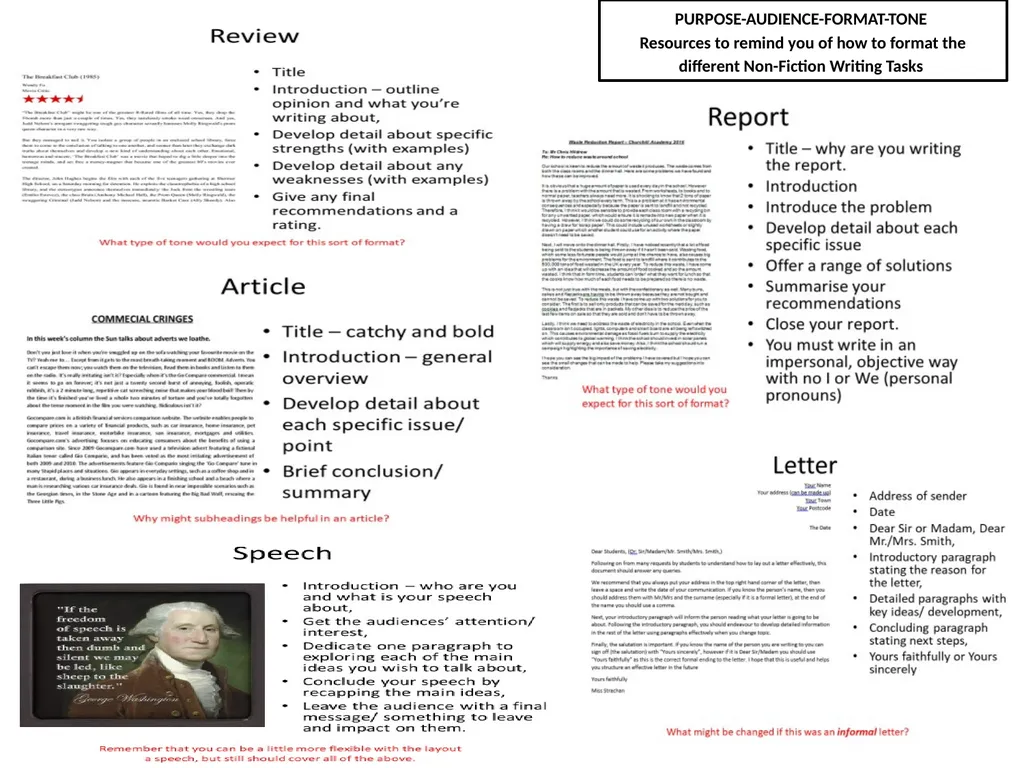
PURPOSE-AUDIENCE-FORMAT-TONE
Resources to remind you of how to format the different Non-Fiction Writing Tasks<br>
06
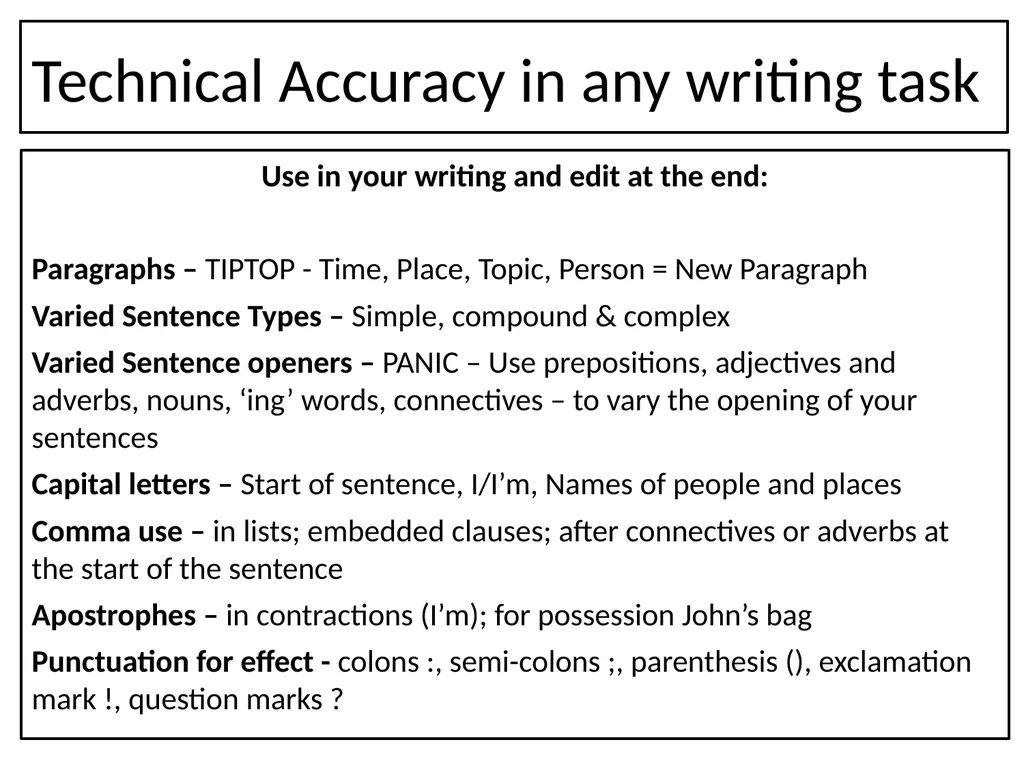
Technical Accuracy in any writing task Use in your writing and edit at the end:
Paragraphs – TIPTOP - Time, Place, Topic, Person = New Paragraph
Varied Sentence Types – Simple, compound & complex
Varied Sentence openers – PANIC – Use prepositions, adjectives and adverbs, nouns, ‘ing’ words, connectives – to vary the opening of your sentences
Capital letters – Start of sentence, I/I’m, Names of people and places
Comma use – in lists; embedded clauses; after connectives or adverbs at the start of the sentence
Apostrophes – in contractions (I’m); for possession John’s bag
Punctuation for effect - colons :, semi-colons ;, parenthesis (), exclamation mark !, question marks ?<br>