Lab Standards Documentation Committee June 2, 2015 Root Cause Analysis Definition Root cause analysis (RCA) is a class of problem solving methods aimed at identifying the root causes of problems or events. RCA is based on the belief that
"Lab Standards + Documentation Committee June 2," is the property of its rightful owner. Permission is granted to
download and print the materials on this website for personal, non-commercial use only, and to display it
on your personal computer provided you do not modify the materials and that you retain all copyright
notices contained in the materials. By downloading content from our website, you accept the terms of this
agreement.
Presentation Transcript
01
Lab Standards + Documentation Committee June 2, 2015<br>
02
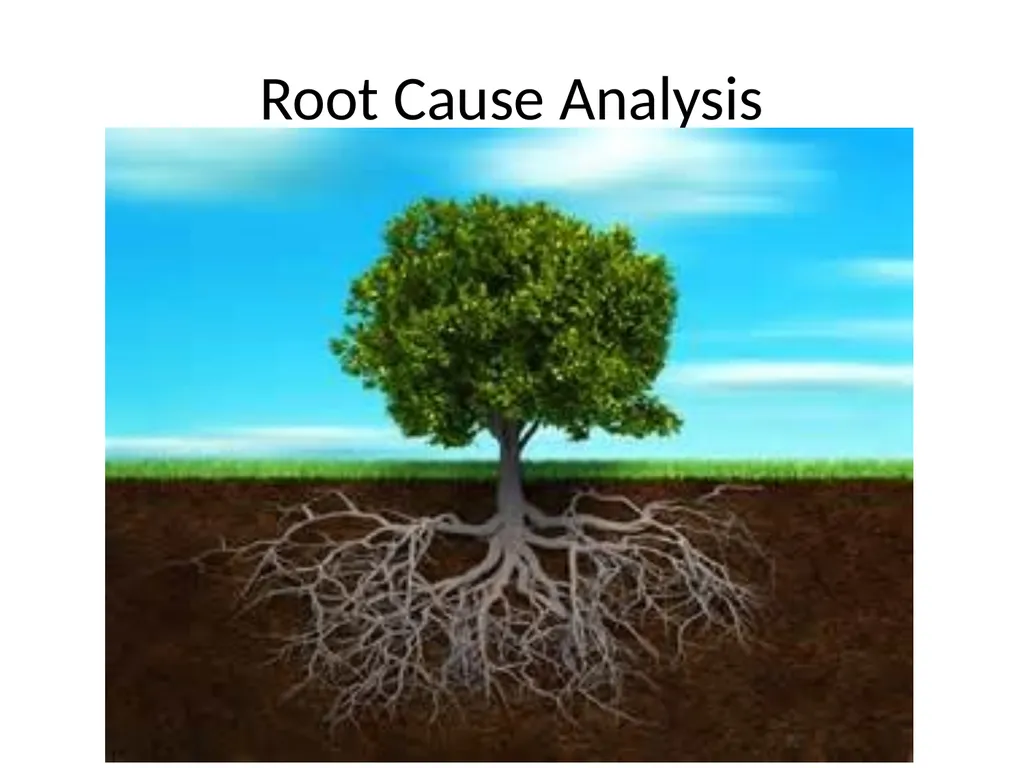
Root Cause Analysis<br>
03
Definition Root cause analysis (RCA) is a class of problem solving methods aimed at identifying the root causes of problems or events.
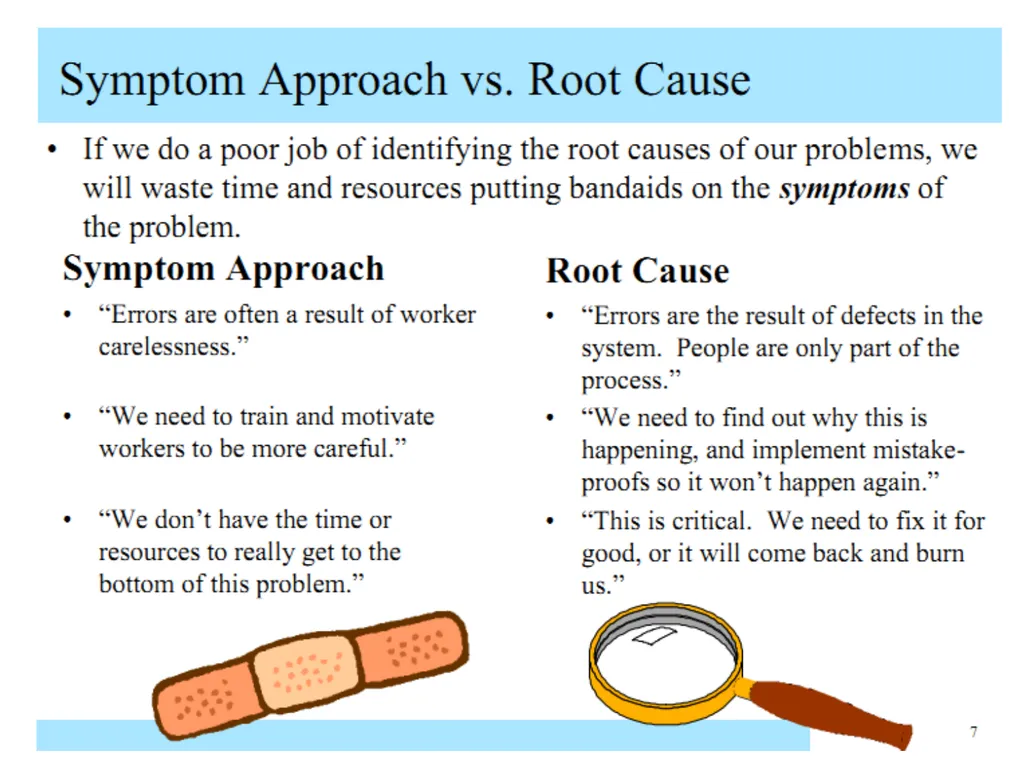
RCA is based on the belief that problems are best solved by attempting to correct or eliminate root causes, as opposed to merely addressing the immediately obvious symptoms.<br>
04
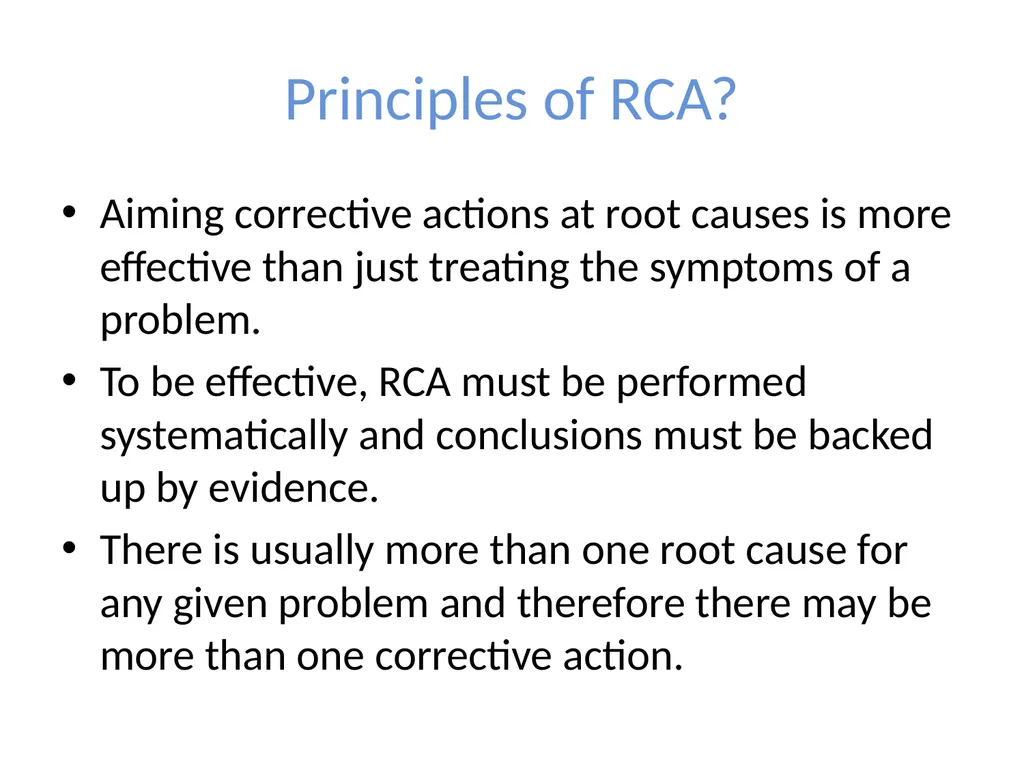
Principles of RCA? Aiming corrective actions at root causes is more effective than just treating the symptoms of a problem.
To be effective, RCA must be performed systematically and conclusions must be backed up by evidence.
There is usually more than one root cause for any given problem and therefore there may be more than one corrective action.<br>
05
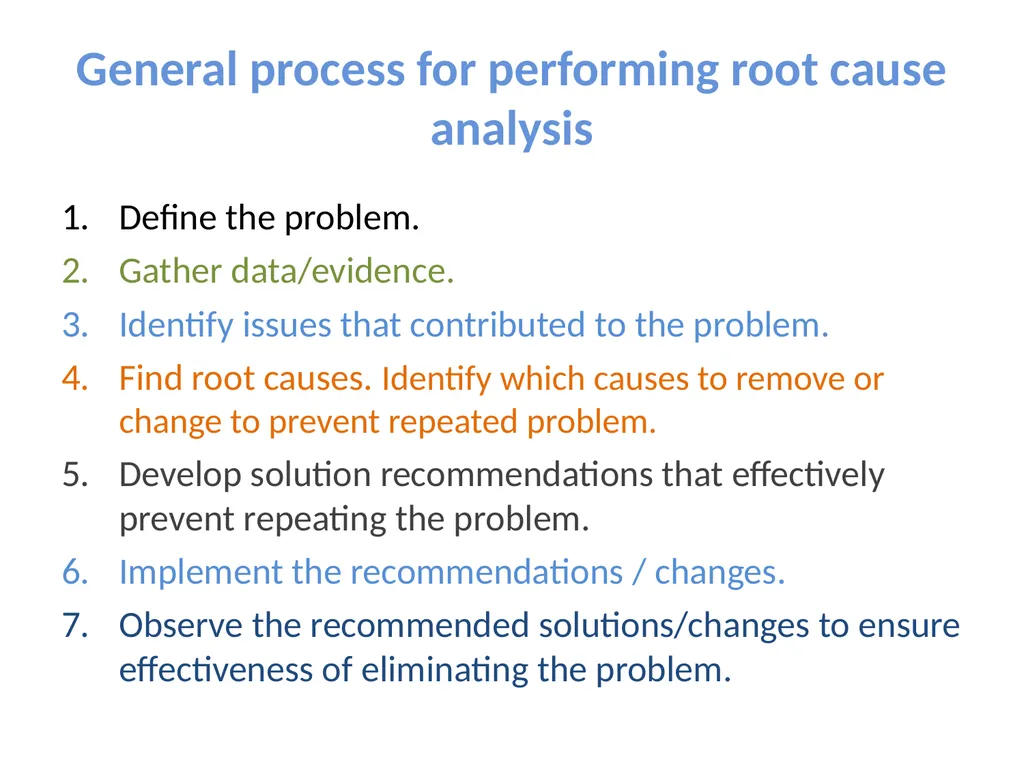
General process for performing root cause analysis Define the problem.
Gather data/evidence.
Identify issues that contributed to the problem.
Find root causes. Identify which causes to remove or change to prevent repeated problem.
Develop solution recommendations that effectively prevent repeating the problem.
Implement the recommendations / changes.
Observe the recommended solutions/changes to ensure effectiveness of eliminating the problem.<br>
06
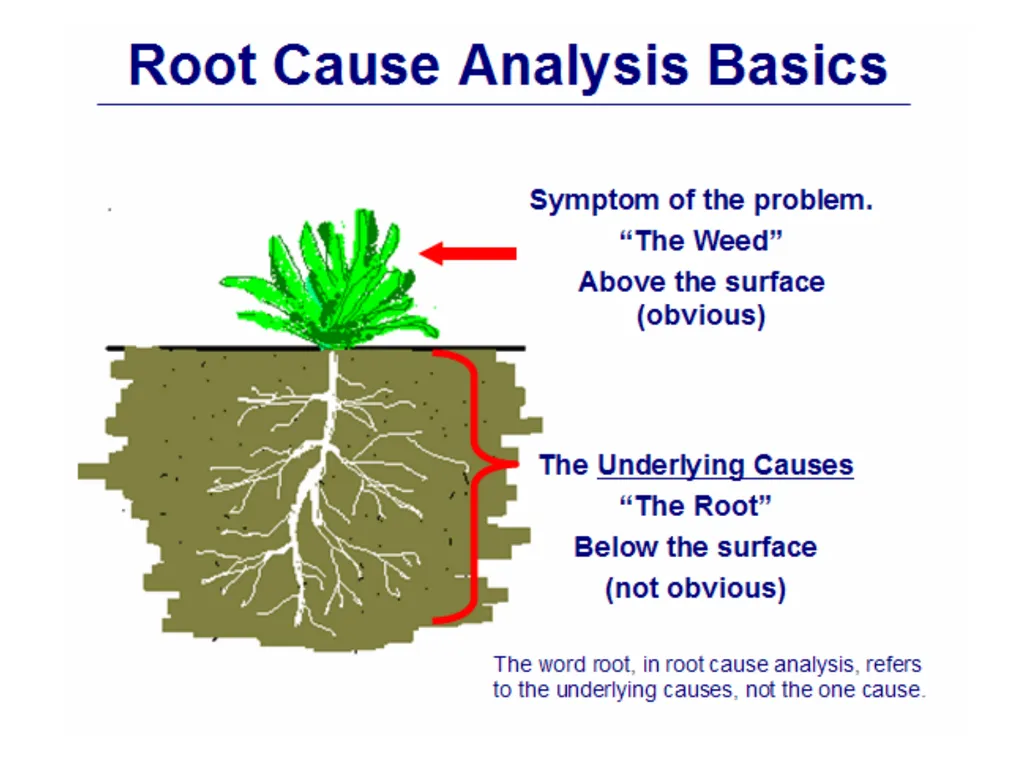
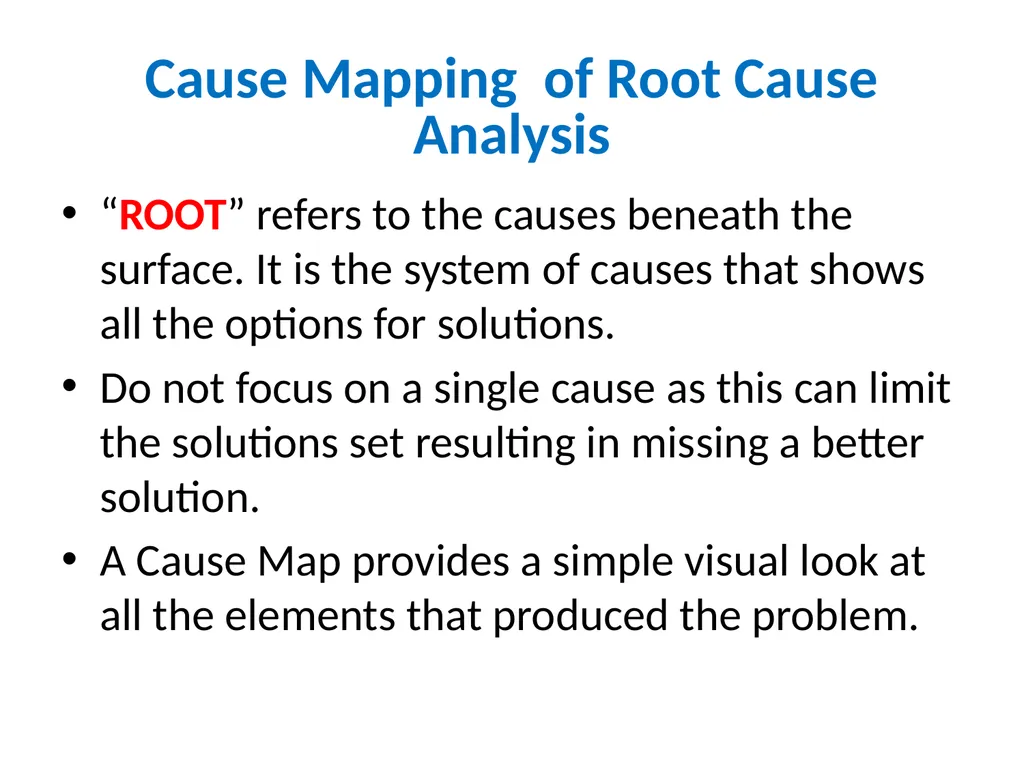
Cause Mapping of Root Cause Analysis “ROOT” refers to the causes beneath the surface. It is the system of causes that shows all the options for solutions.
Do not focus on a single cause as this can limit the solutions set resulting in missing a better solution.
A Cause Map provides a simple visual look at all the elements that produced the problem.<br>
07
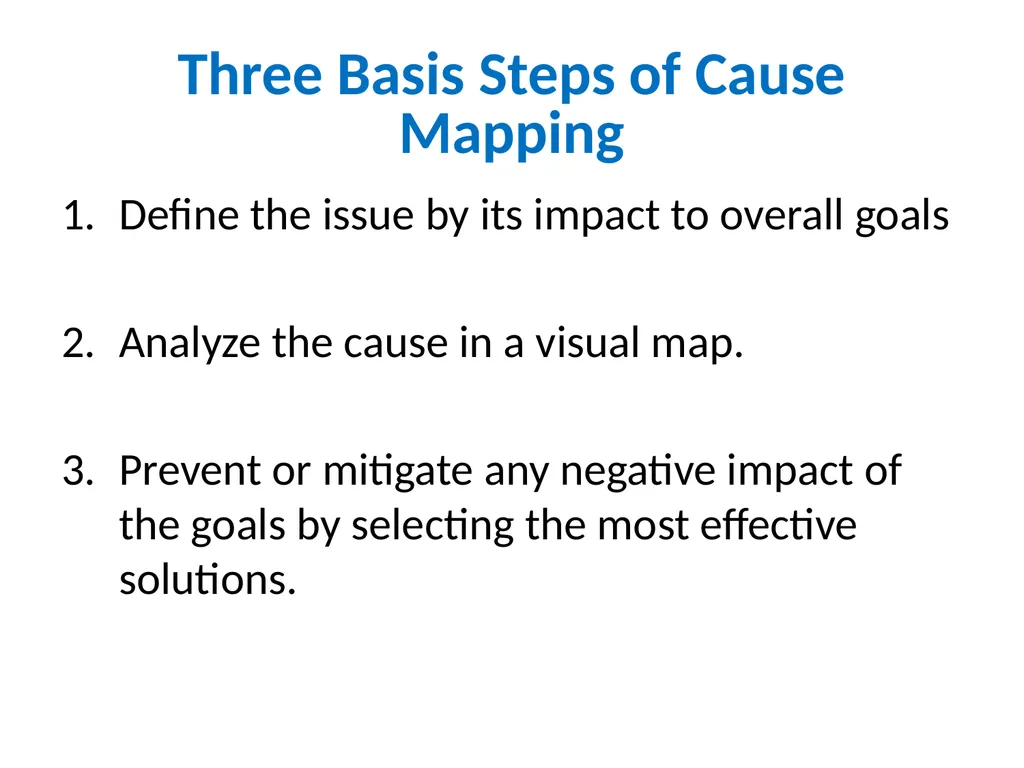
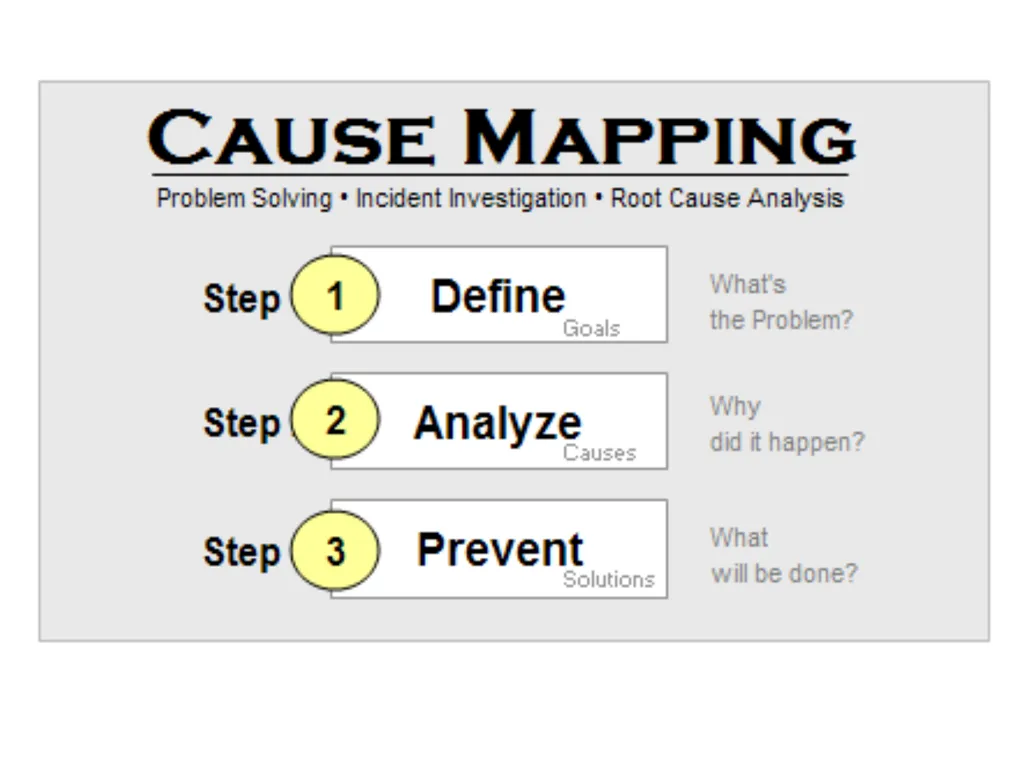
Three Basis Steps of Cause Mapping Define the issue by its impact to overall goals
Analyze the cause in a visual map.
Prevent or mitigate any negative impact of the goals by selecting the most effective solutions.<br>
08
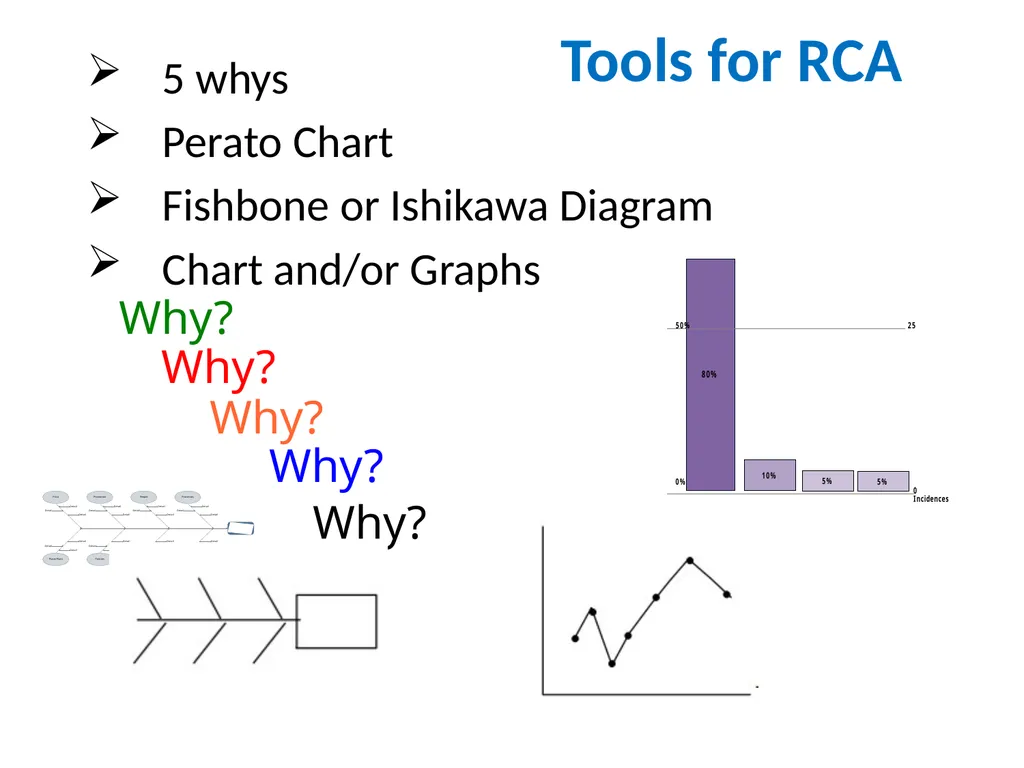
5 whys
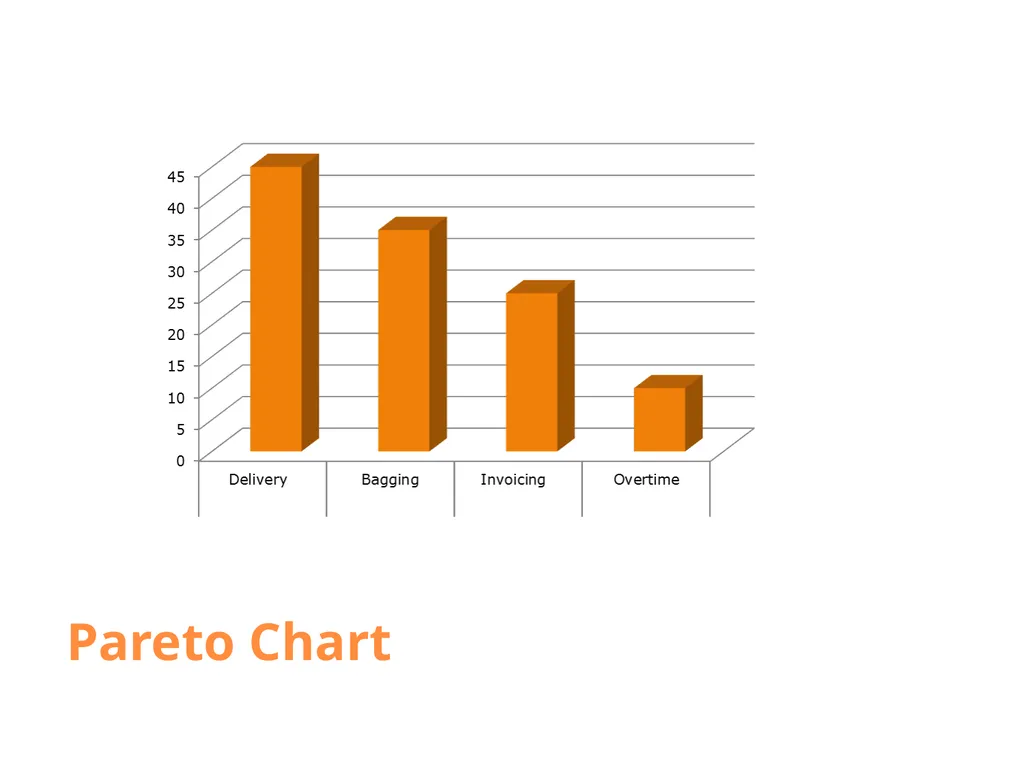
Perato Chart
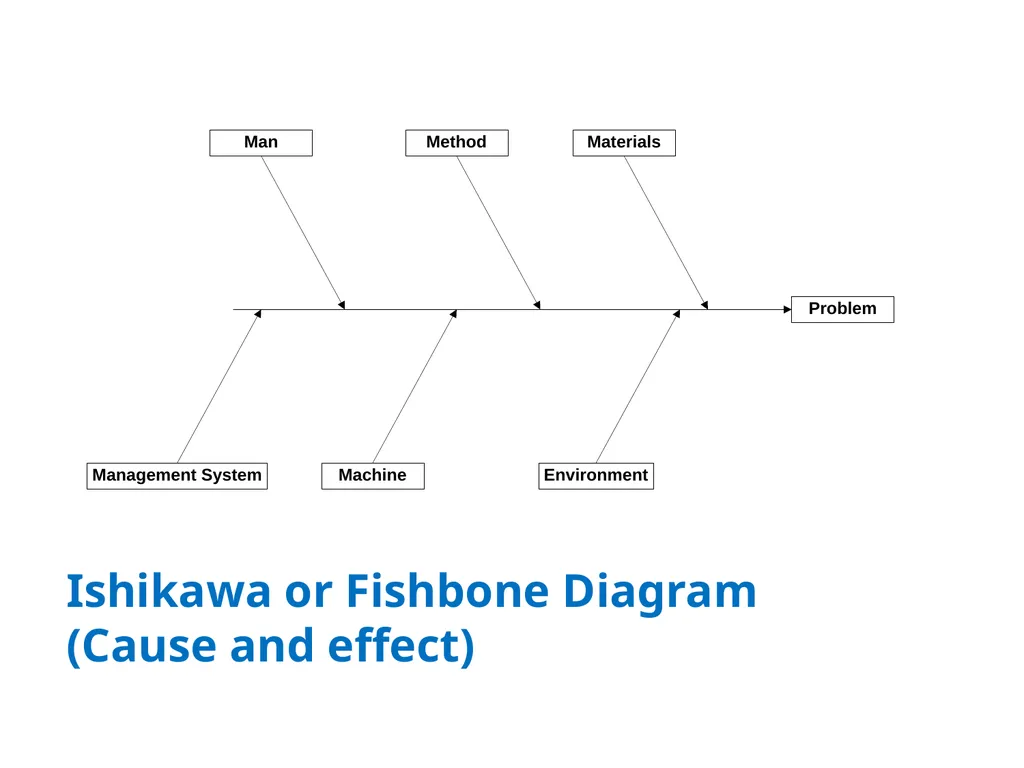
Fishbone or Ishikawa Diagram
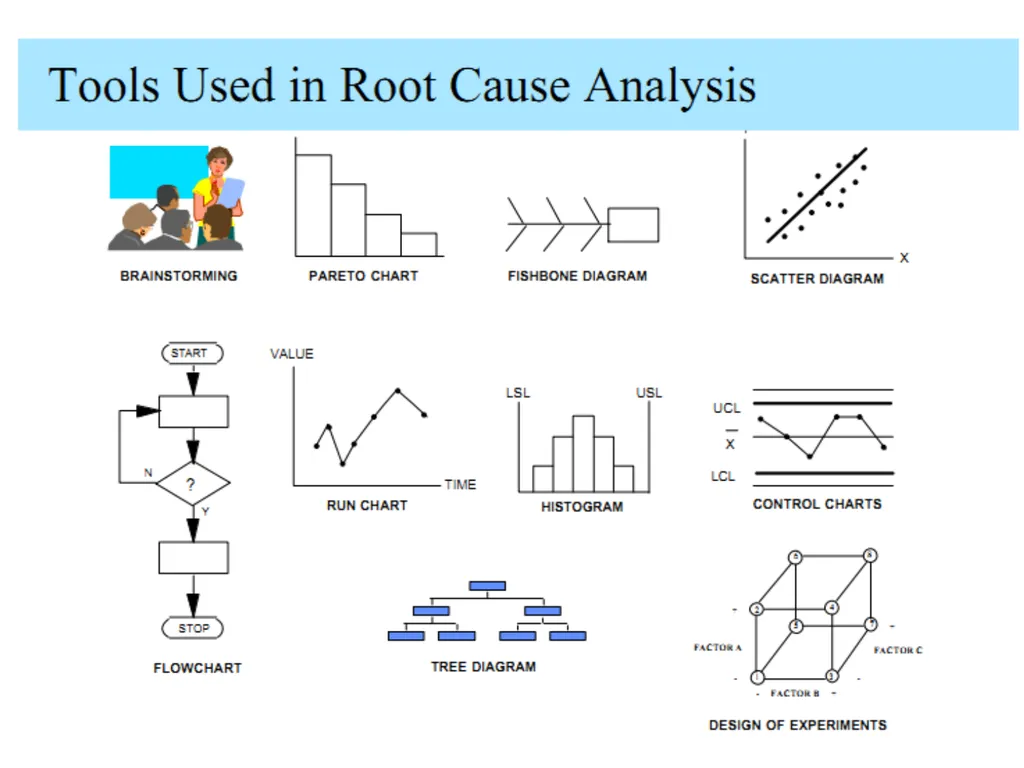
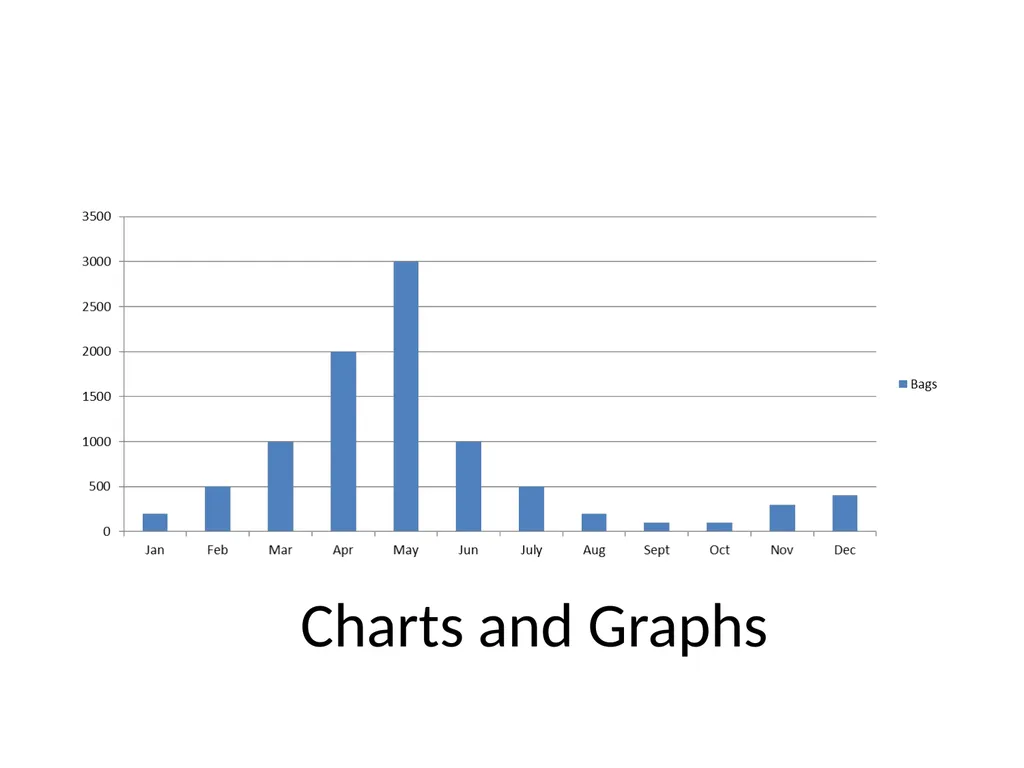
Chart and/or Graphs Why? Why? Why? Why? Why? Tools for RCA<br>
09
Ishikawa or Fishbone Diagram (Cause and effect)<br>
10
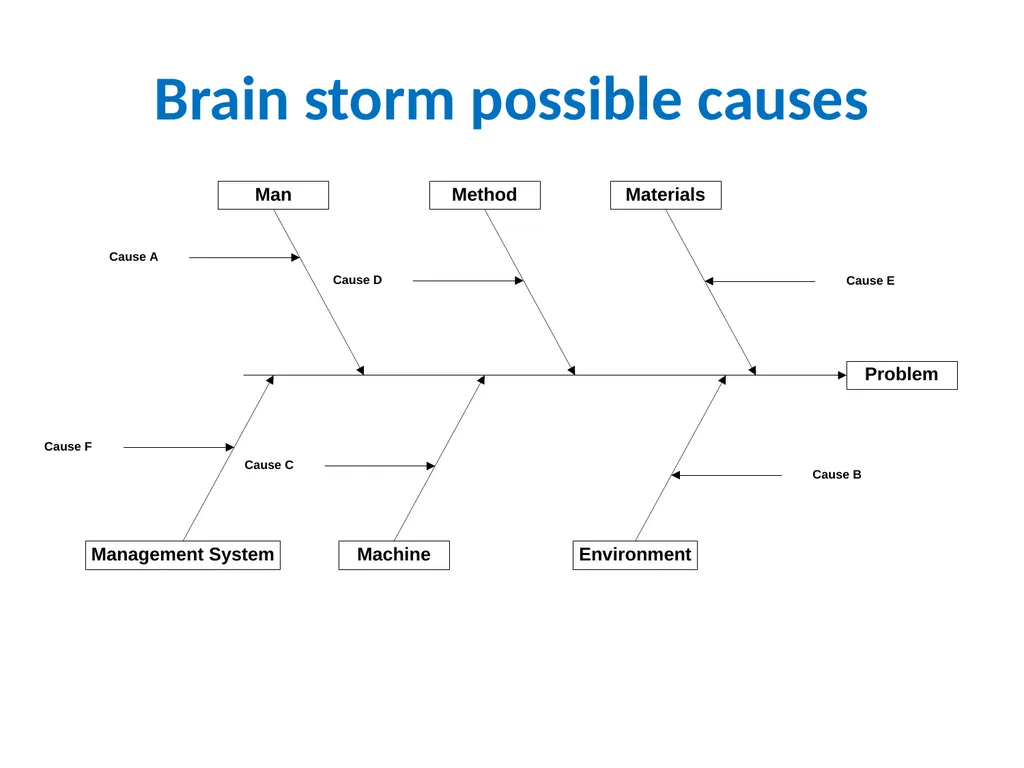
Brain storm possible causes<br>
11
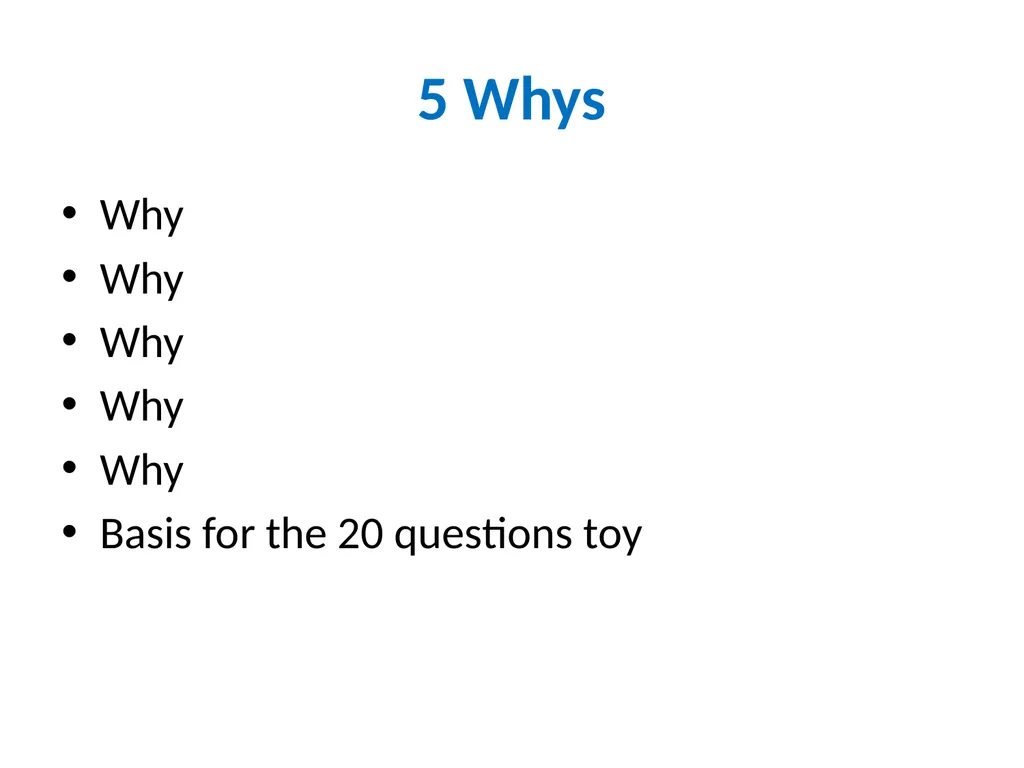
5 Whys Why
Why
Why
Why
Why
Basis for the 20 questions toy<br>
12
Pareto Chart<br>
13
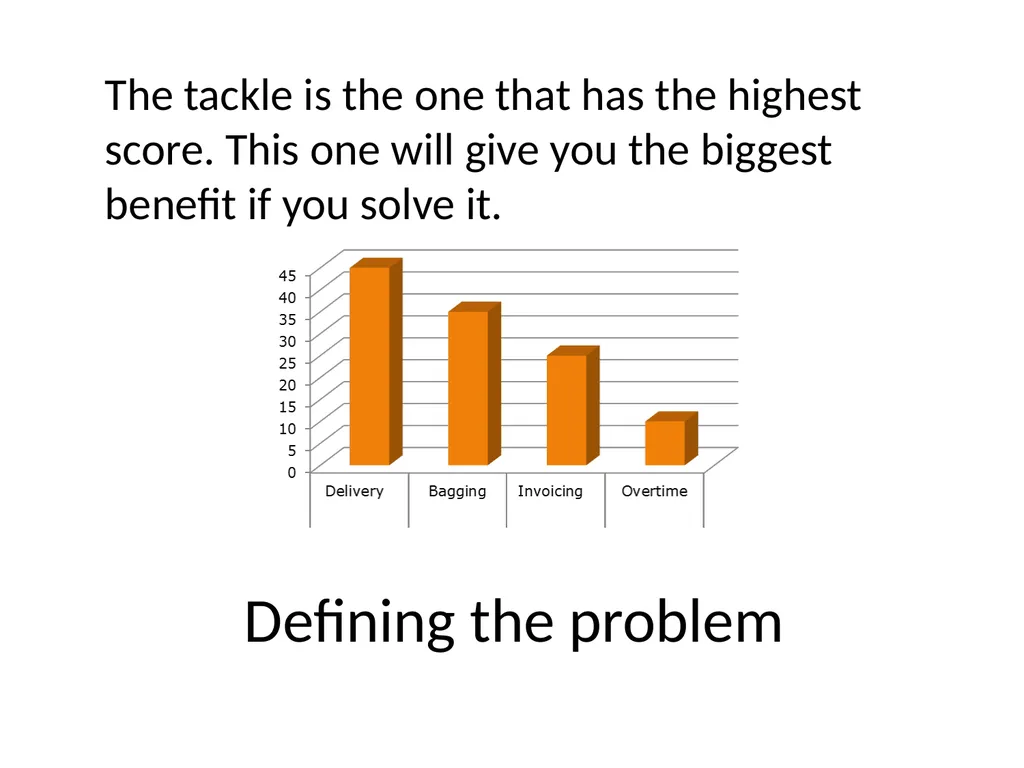
Defining the problem The tackle is the one that has the highest score. This one will give you the biggest benefit if you solve it.<br>
14
Charts and Graphs<br>
15
7 Best Practices to Remember Your root cause analysis is only as good as the info you collect.
Your knowledge (or lack of it) can get in the way of a good root cause analysis.
You have to understand what happened before you can understand why it happened.
Interviews are not about asking questions.
You can’t solve all human performance problems with discipline, training, and procedures.
Often people can’t see effective corrective actions even if they can find the root cause.
All investigations do not need to be equal (but some steps can’t be skipped.<br>