Lavender Production Lavender This pretty plant known for its soothing scent stars at farms throughout the Midwest. Midwest Native to hot, dry, Mediterranean climates. Hardy small shrub adapts to the challenging growing conditions of the
"Lavender Production Lavender This pretty plant" is the property of its rightful owner. Permission is granted to
download and print the materials on this website for personal, non-commercial use only, and to display it
on your personal computer provided you do not modify the materials and that you retain all copyright
notices contained in the materials. By downloading content from our website, you accept the terms of this
agreement.
Presentation Transcript
01
Lavender Production<br>
02
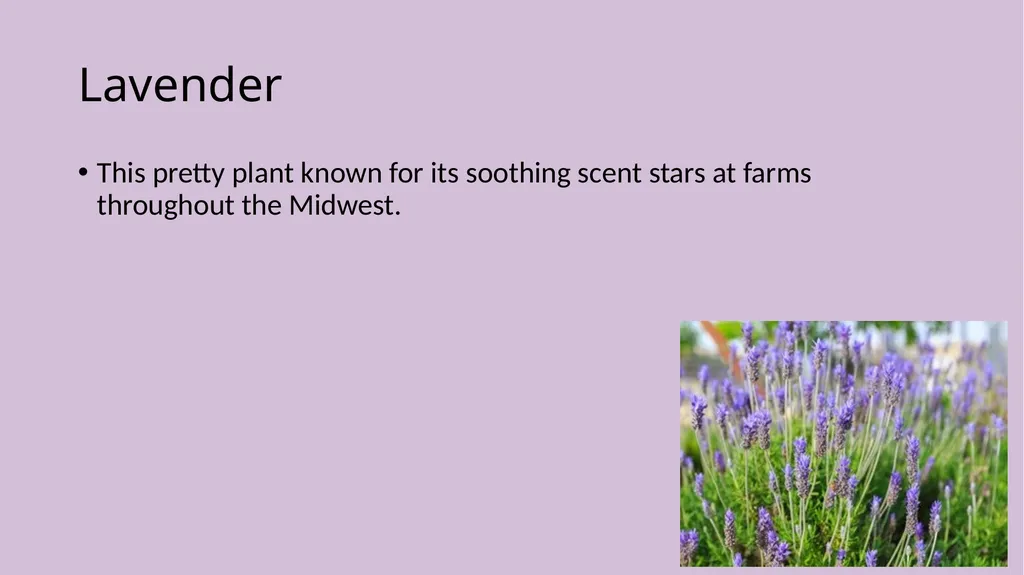
Lavender This pretty plant known for its soothing scent stars at farms throughout the Midwest.<br>
03
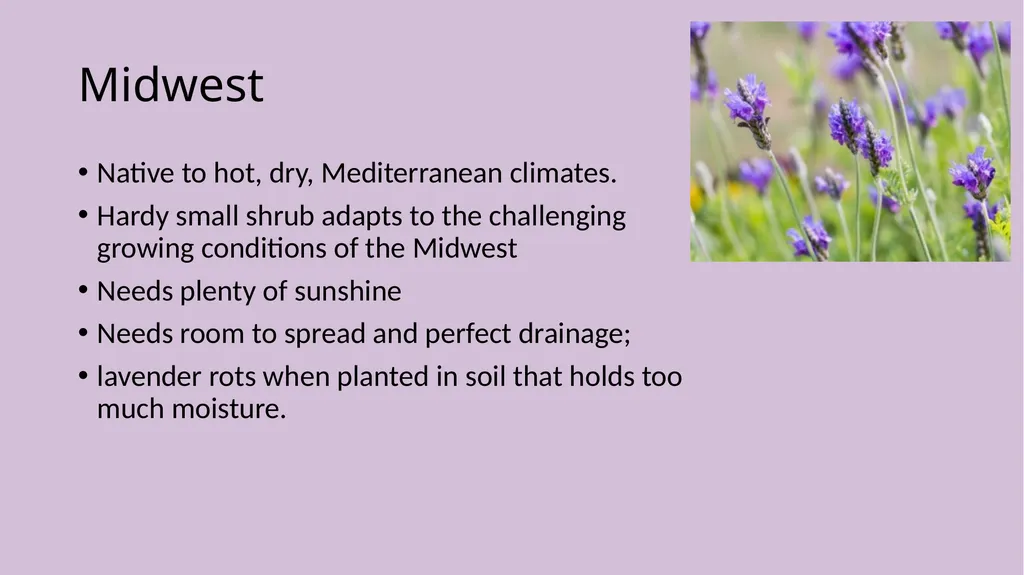
Midwest Native to hot, dry, Mediterranean climates.
Hardy small shrub adapts to the challenging growing conditions of the Midwest
Needs plenty of sunshine
Needs room to spread and perfect drainage;
lavender rots when planted in soil that holds too much moisture.<br>
04
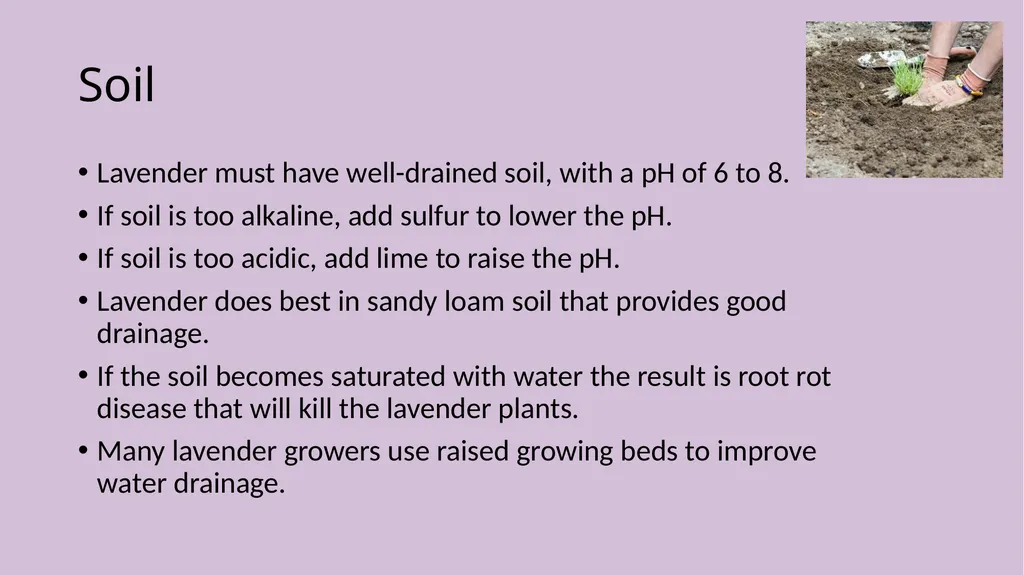
Soil Lavender must have well-drained soil, with a pH of 6 to 8.
If soil is too alkaline, add sulfur to lower the pH.
If soil is too acidic, add lime to raise the pH.
Lavender does best in sandy loam soil that provides good drainage.
If the soil becomes saturated with water the result is root rot disease that will kill the lavender plants.
Many lavender growers use raised growing beds to improve water drainage.<br>
05
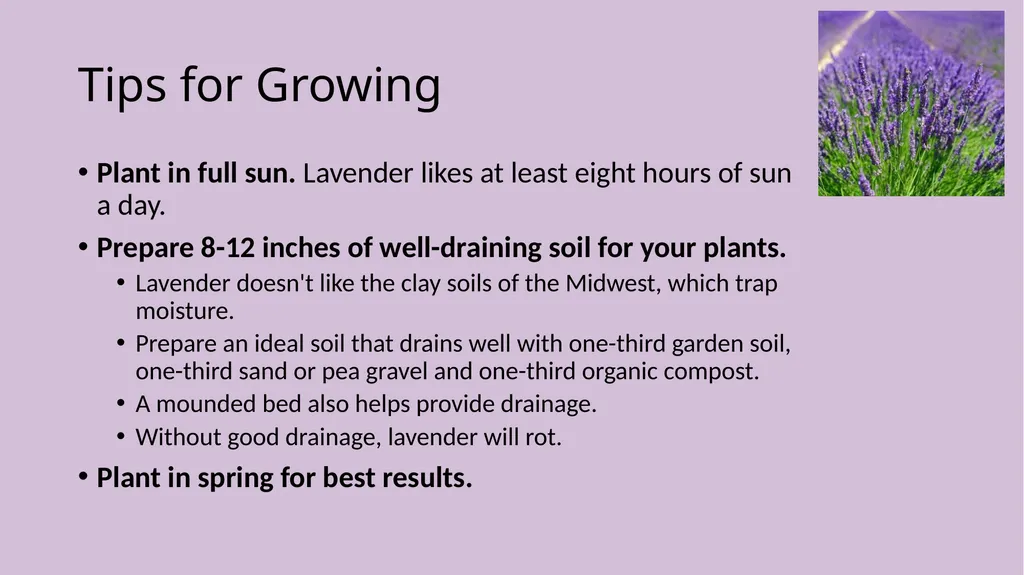
Tips for Growing Plant in full sun. Lavender likes at least eight hours of sun a day.
Prepare 8-12 inches of well-draining soil for your plants.
Lavender doesn't like the clay soils of the Midwest, which trap moisture.
Prepare an ideal soil that drains well with one-third garden soil, one-third sand or pea gravel and one-third organic compost.
A mounded bed also helps provide drainage.
Without good drainage, lavender will rot.
Plant in spring for best results.<br>
06
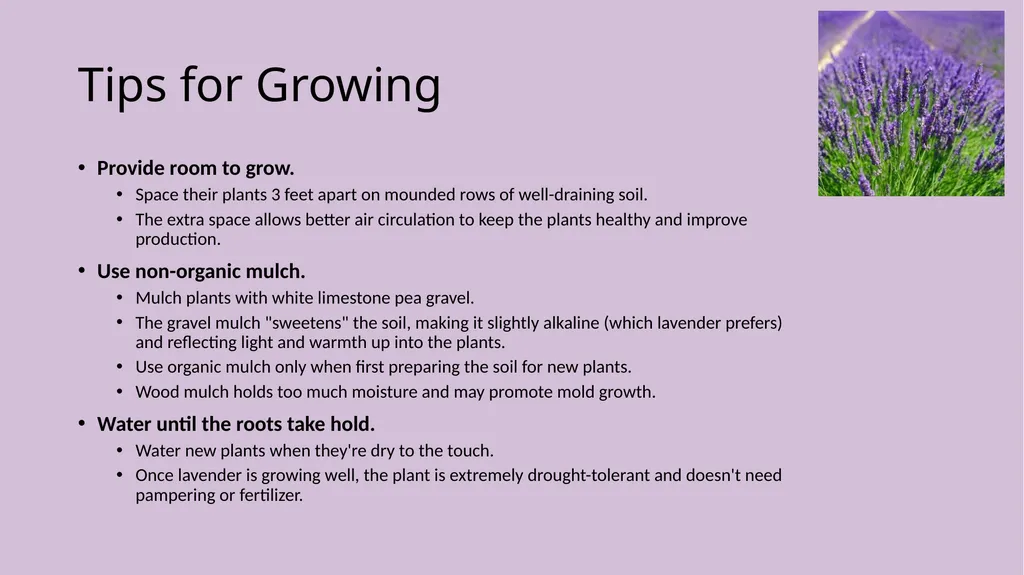
Tips for Growing Provide room to grow.
Space their plants 3 feet apart on mounded rows of well-draining soil.
The extra space allows better air circulation to keep the plants healthy and improve production.
Use non-organic mulch.
Mulch plants with white limestone pea gravel.
The gravel mulch "sweetens" the soil, making it slightly alkaline (which lavender prefers) and reflecting light and warmth up into the plants.
Use organic mulch only when first preparing the soil for new plants.
Wood mulch holds too much moisture and may promote mold growth.
Water until the roots take hold.
Water new plants when they're dry to the touch.
Once lavender is growing well, the plant is extremely drought-tolerant and doesn't need pampering or fertilizer.<br>
07
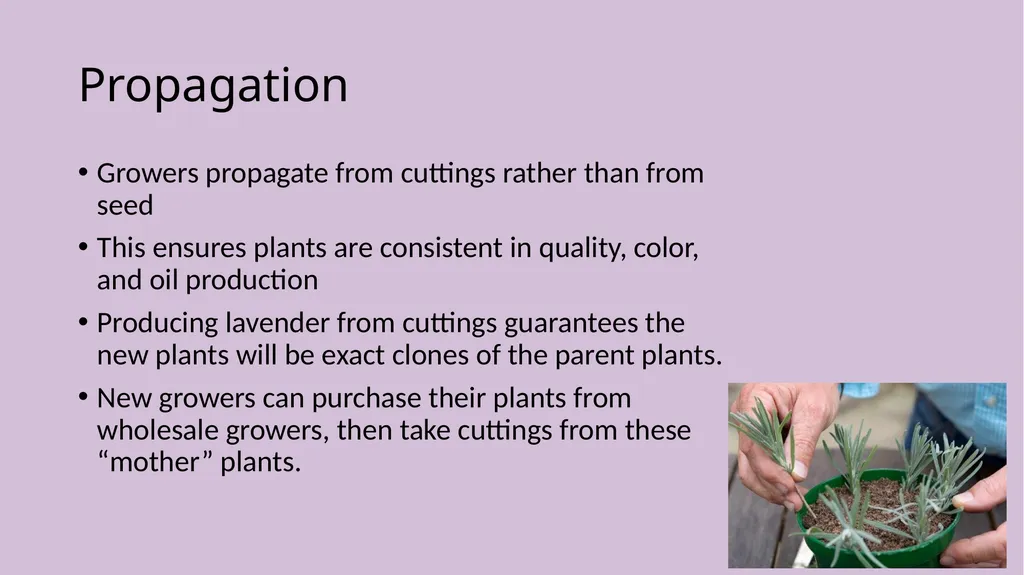
Propagation Growers propagate from cuttings rather than from seed
This ensures plants are consistent in quality, color, and oil production
Producing lavender from cuttings guarantees the new plants will be exact clones of the parent plants.
New growers can purchase their plants from wholesale growers, then take cuttings from these “mother” plants.<br>
08
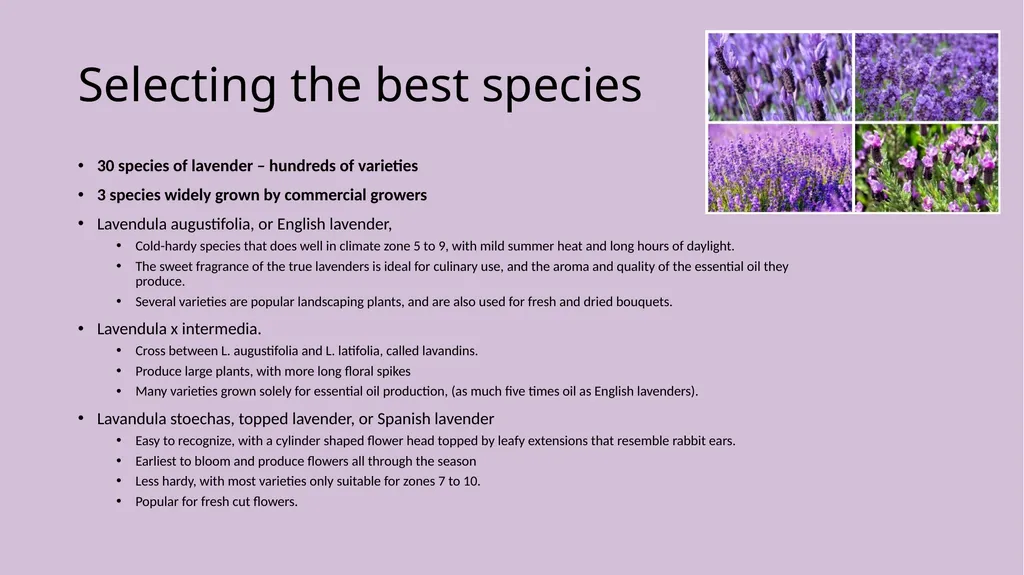
Selecting the best species 30 species of lavender – hundreds of varieties
3 species widely grown by commercial growers
Lavendula augustifolia, or English lavender,
Cold-hardy species that does well in climate zone 5 to 9, with mild summer heat and long hours of daylight.
The sweet fragrance of the true lavenders is ideal for culinary use, and the aroma and quality of the essential oil they produce.
Several varieties are popular landscaping plants, and are also used for fresh and dried bouquets.
Lavendula x intermedia.
Cross between L. augustifolia and L. latifolia, called lavandins.
Produce large plants, with more long floral spikes
Many varieties grown solely for essential oil production, (as much five times oil as English lavenders).
Lavandula stoechas, topped lavender, or Spanish lavender
Easy to recognize, with a cylinder shaped flower head topped by leafy extensions that resemble rabbit ears.
Earliest to bloom and produce flowers all through the season
Less hardy, with most varieties only suitable for zones 7 to 10.
Popular for fresh cut flowers.<br>
09
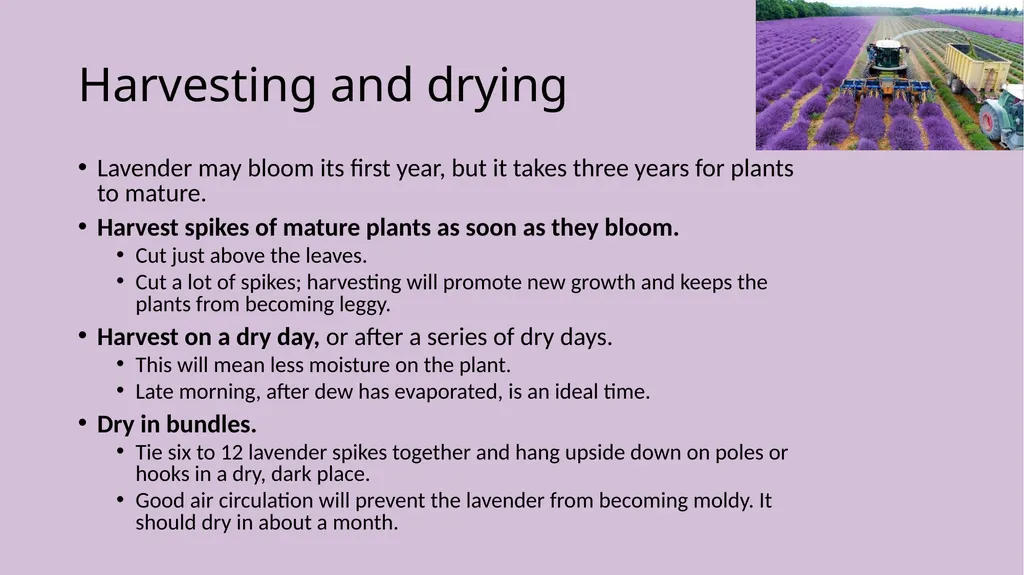
Harvesting and drying Lavender may bloom its first year, but it takes three years for plants to mature.
Harvest spikes of mature plants as soon as they bloom.
Cut just above the leaves.
Cut a lot of spikes; harvesting will promote new growth and keeps the plants from becoming leggy.
Harvest on a dry day, or after a series of dry days.
This will mean less moisture on the plant.
Late morning, after dew has evaporated, is an ideal time.
Dry in bundles.
Tie six to 12 lavender spikes together and hang upside down on poles or hooks in a dry, dark place.
Good air circulation will prevent the lavender from becoming moldy. It should dry in about a month.<br>
10
Lavender as a business Small growers tend a few dozen plants in their backyard and can make a few hundred dollars.
Larger operations on acreage can bring in hundreds of thousands, especially if they also produce and sell value-added products.
Purple Haze Farms, in Sequim, Washington, routinely grosses over a million dollars a year with about 8 acres of lavender.
Fresh lavender bouquets are a very profitable way to sell lavender.
Most growers sell direct to the retail public - garden or at the local farmer’s market.
Lavender bunches can sell for $6 each.
A 20′ x 20′ growing area can produce around 300 bunches each year, worth $1,800.
A quarter-acre can produce about 3,000 bunches, worth $18,000.
Unsold lavender bunches can be dried and sold to crafters and florists, who use the bunches for dried floral arrangements.
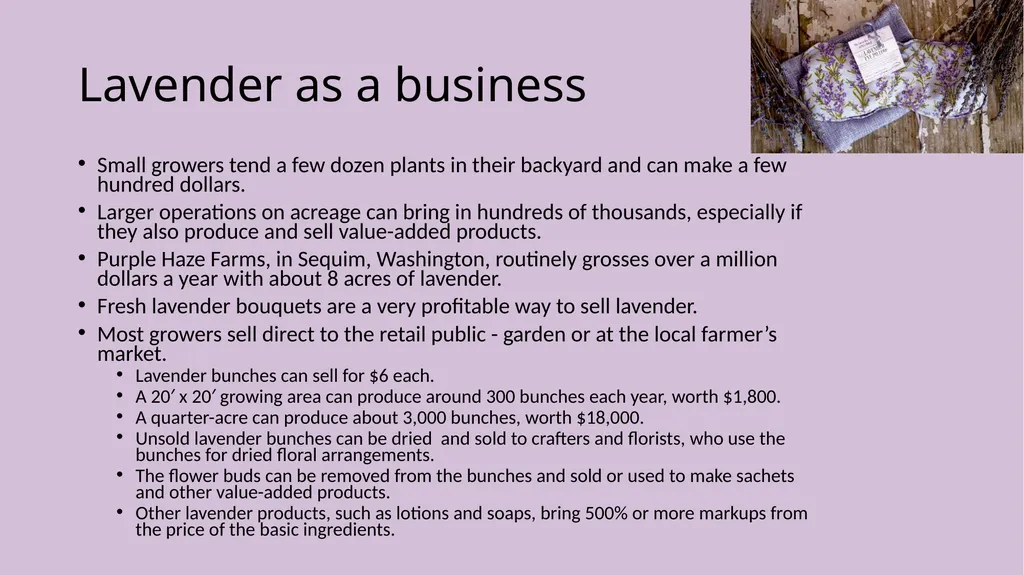
The flower buds can be removed from the bunches and sold or used to make sachets and other value-added products.
Other lavender products, such as lotions and soaps, bring 500% or more markups from the price of the basic ingredients.<br>
11
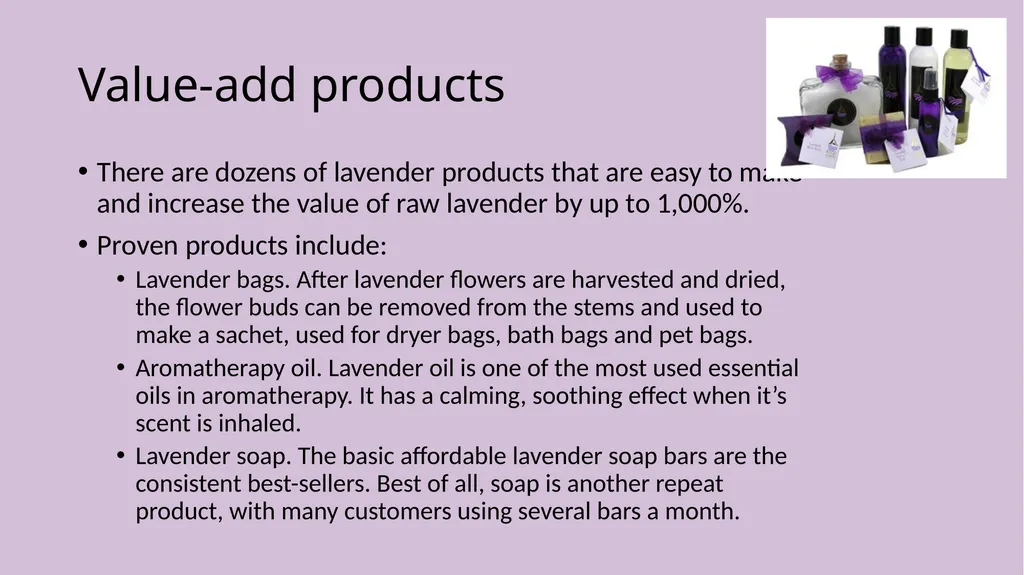
Value-add products There are dozens of lavender products that are easy to make and increase the value of raw lavender by up to 1,000%.
Proven products include:
Lavender bags. After lavender flowers are harvested and dried, the flower buds can be removed from the stems and used to make a sachet, used for dryer bags, bath bags and pet bags.
Aromatherapy oil. Lavender oil is one of the most used essential oils in aromatherapy. It has a calming, soothing effect when it’s scent is inhaled.
Lavender soap. The basic affordable lavender soap bars are the consistent best-sellers. Best of all, soap is another repeat product, with many customers using several bars a month.<br>
12
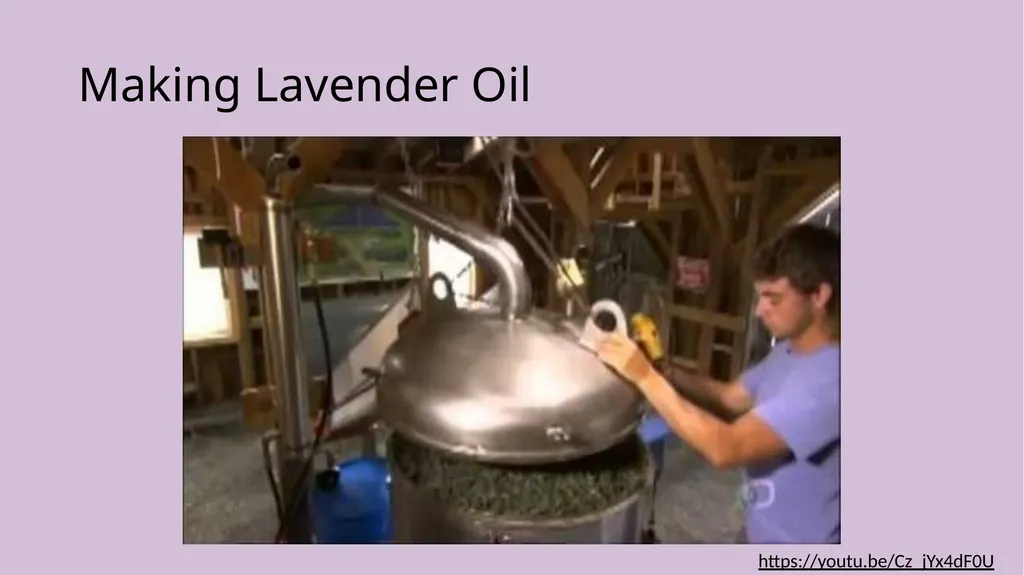
Making Lavender Oil https://youtu.be/Cz_jYx4dF0U<br>
13
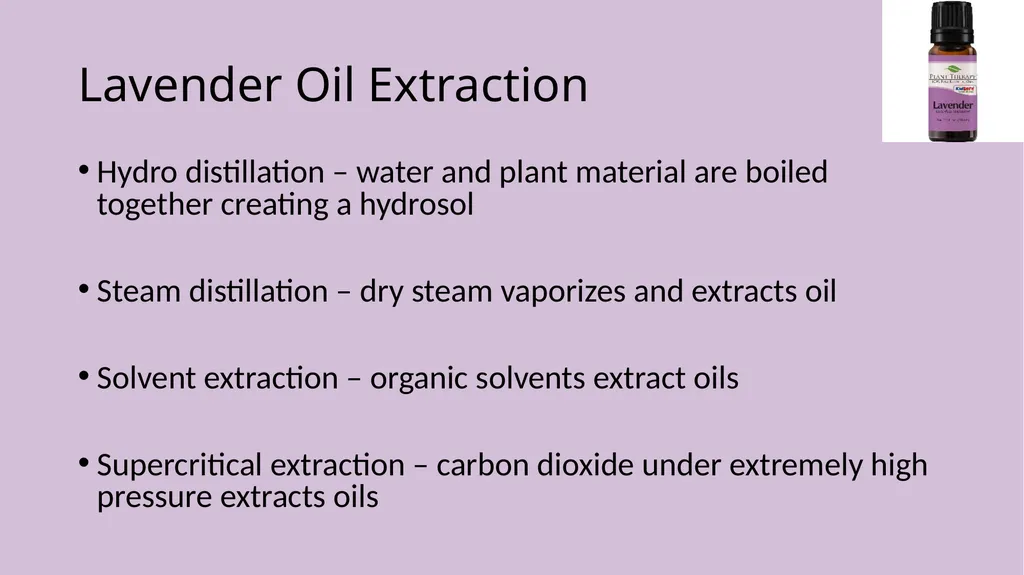
Lavender Oil Extraction Hydro distillation – water and plant material are boiled together creating a hydrosol
Steam distillation – dry steam vaporizes and extracts oil