
Leading the teaching of literacy The 5 Basic

Description: Leading the teaching of literacy The 5 Basic Skills 2 The 5 basic skills of Jolly Phonics are: Learning the letter sounds Learning letter formation Blending Identifying sounds in words Tricky words Letter Sounds Children learn in a fun,
Related Topics
Download Presentation
"Leading the teaching of literacy The 5 Basic" is the property of its rightful owner. Permission is granted to download and print the materials on this website for personal, non-commercial use only, and to display it on your personal computer provided you do not modify the materials and that you retain all copyright notices contained in the materials. By downloading content from our website, you accept the terms of this agreement.
Presentation Transcript
slide1. Leading the teaching of literacy<br>
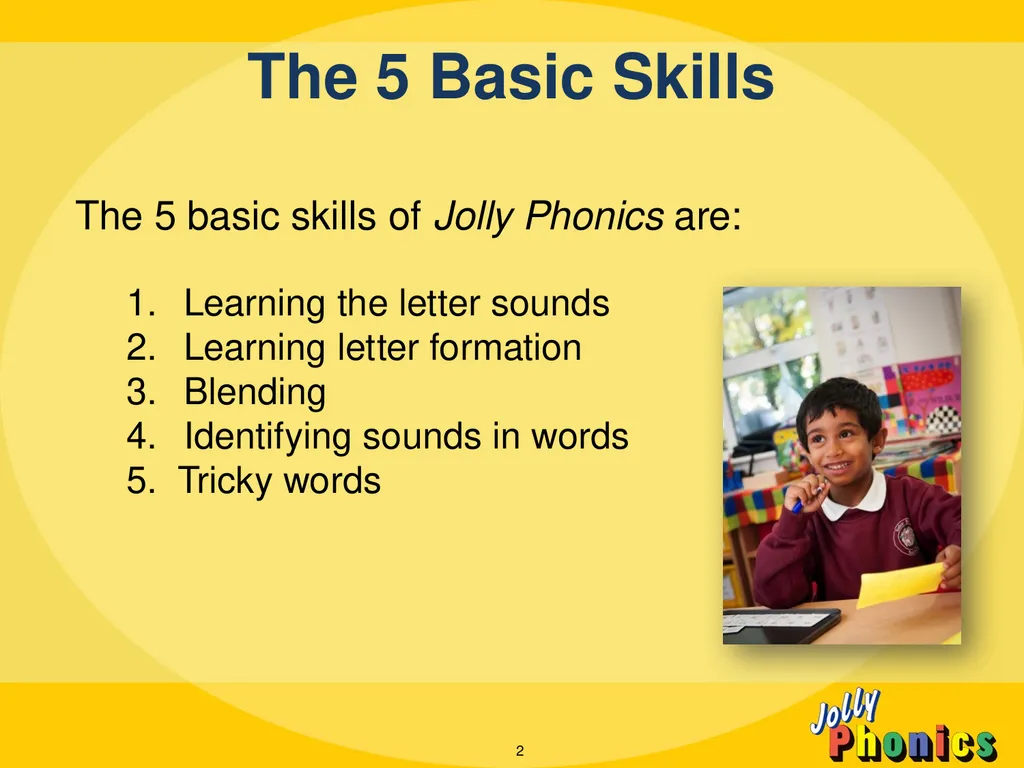
slide2. The 5 Basic Skills 2 The 5 basic skills of Jolly Phonics are:
Learning the letter sounds
Learning letter formation
Blending
Identifying sounds in words
Tricky words<br>
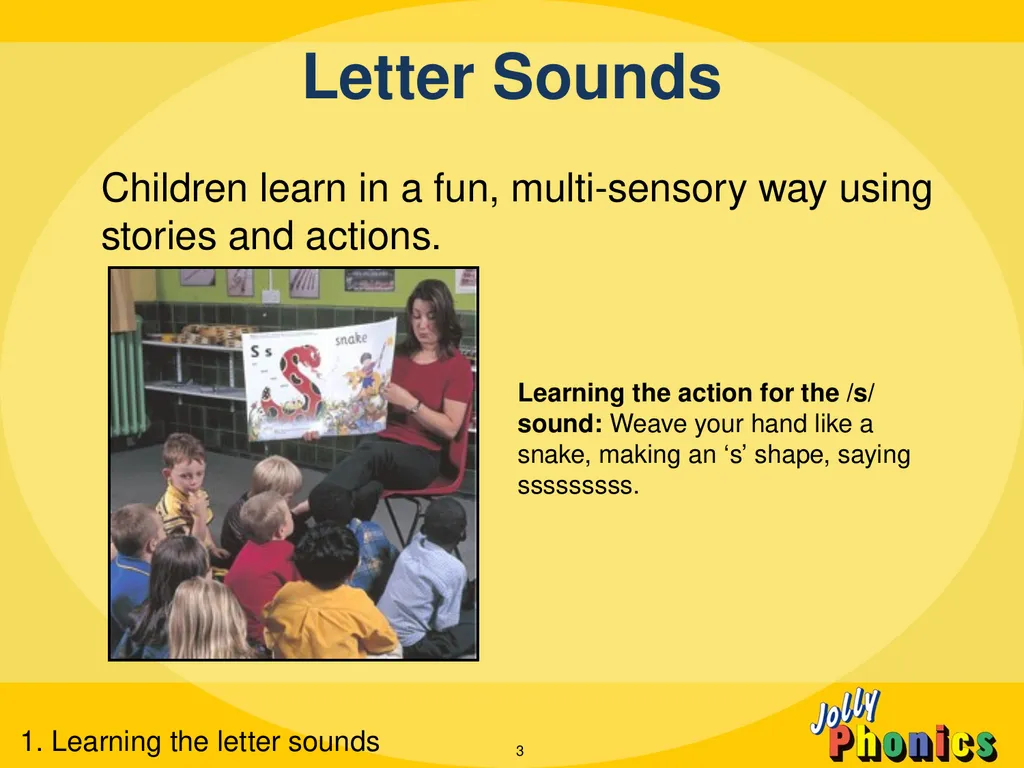
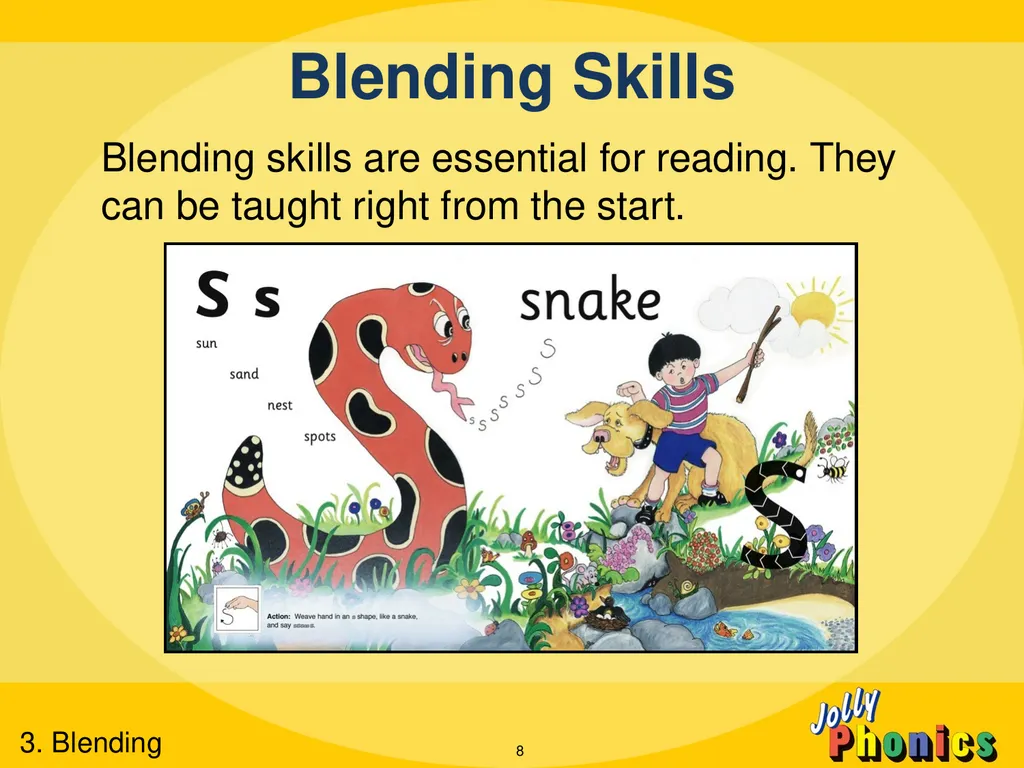
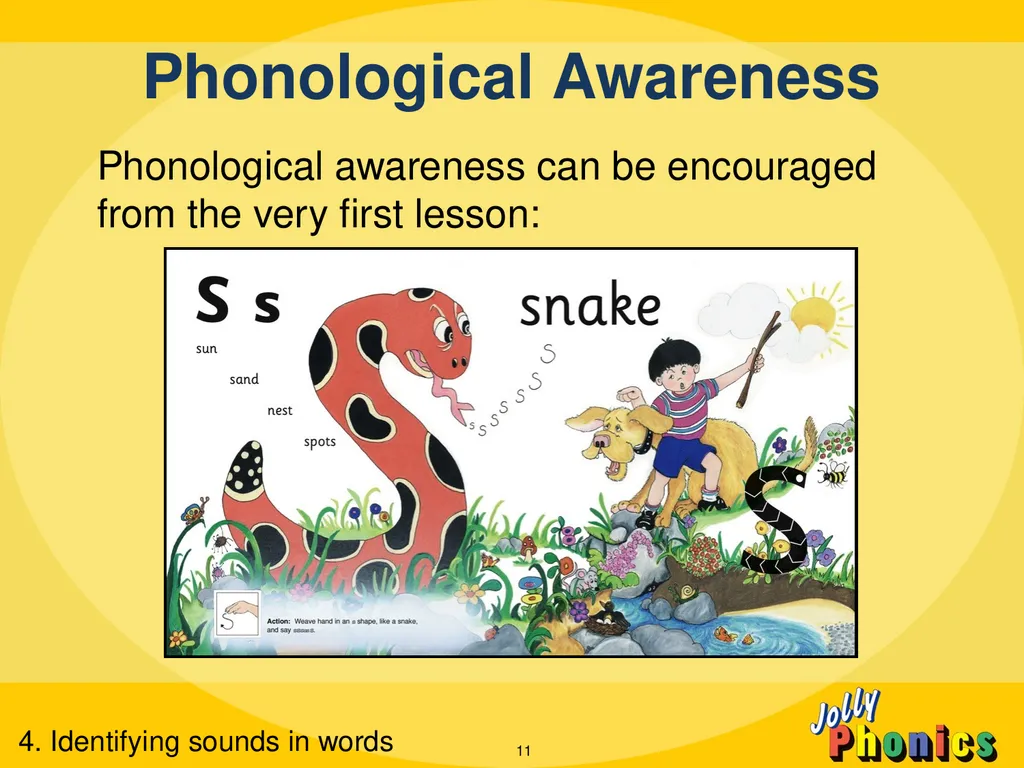
slide3. Letter Sounds Children learn in a fun, multi-sensory way using stories and actions. 3 1. Learning the letter sounds Learning the action for the /s/ sound: Weave your hand like a snake, making an ‘s’ shape, saying sssssssss.<br>
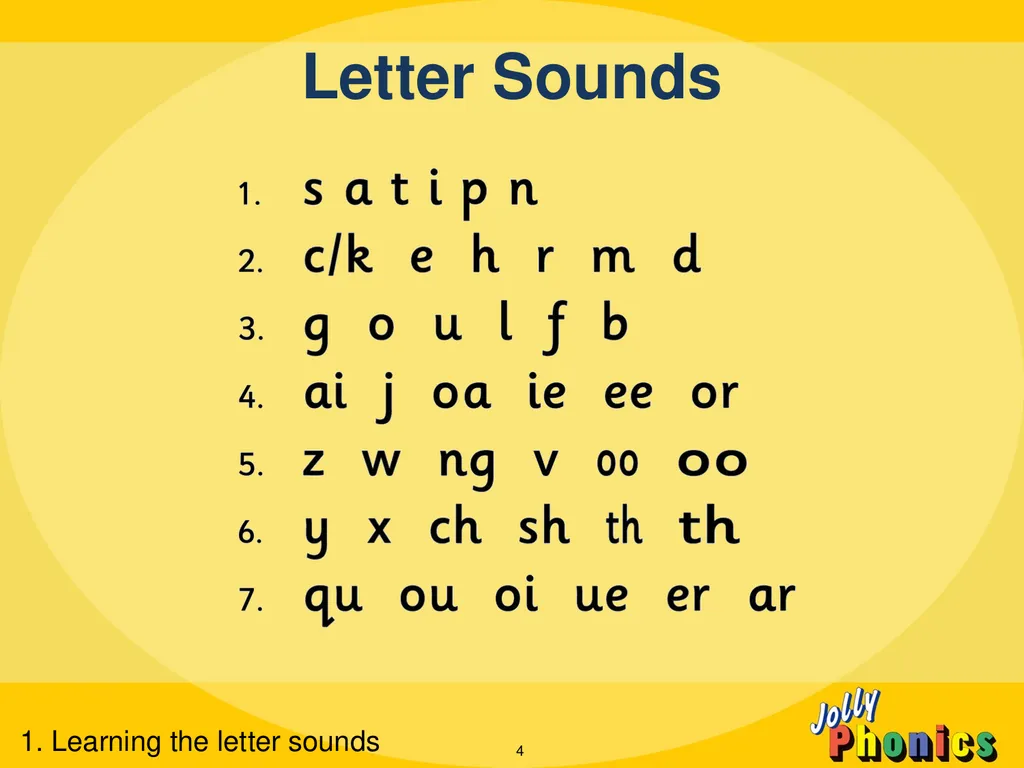
slide4. Letter Sounds 4 1. Learning the letter sounds<br>
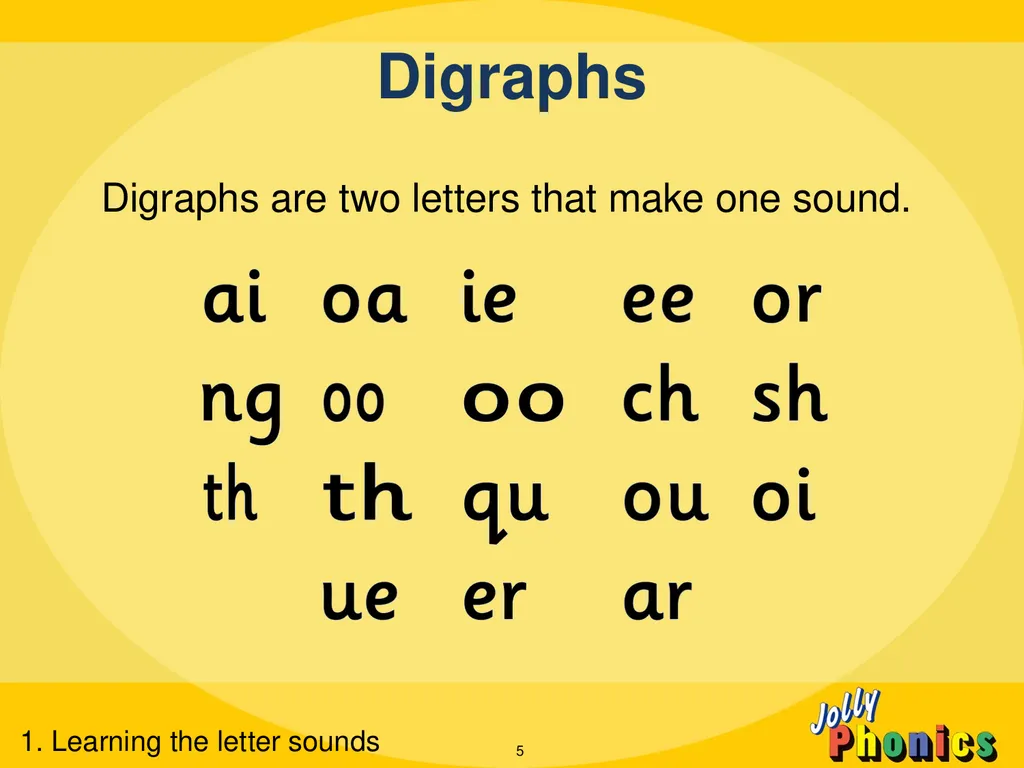
slide5. Digraphs Digraphs are two letters that make one sound. 5 1. Learning the letter sounds<br>
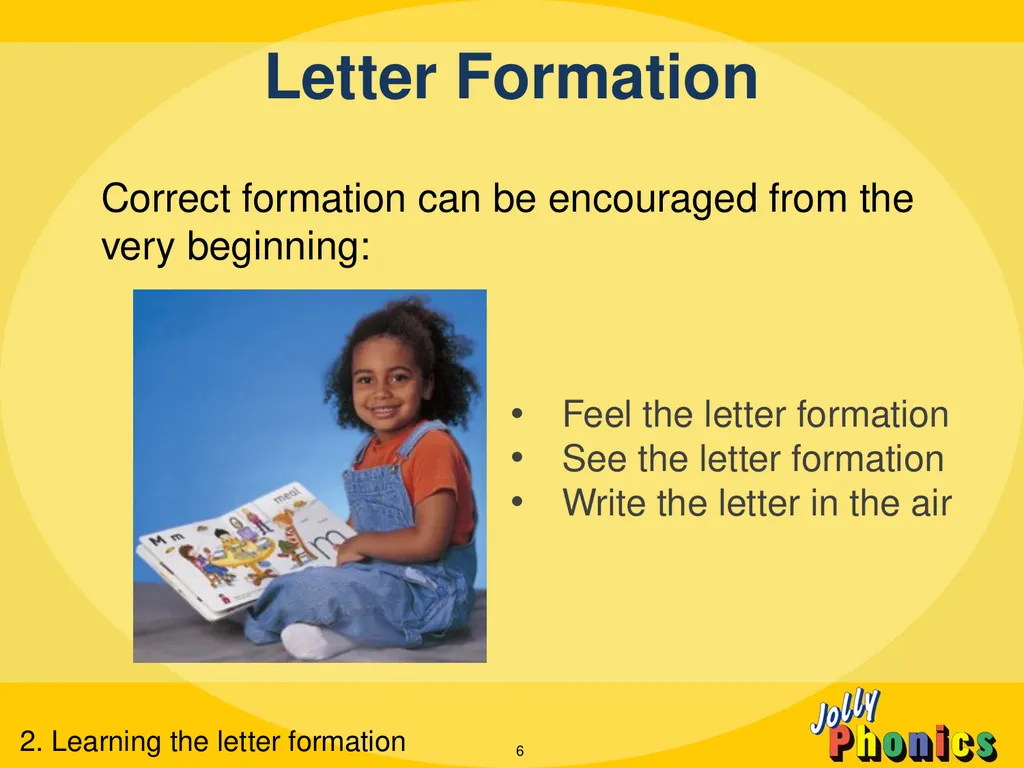
slide6. Letter Formation Correct formation can be encouraged from the very beginning:
Feel the letter formation
See the letter formation
Write the letter in the air 6 2. Learning the letter formation<br>
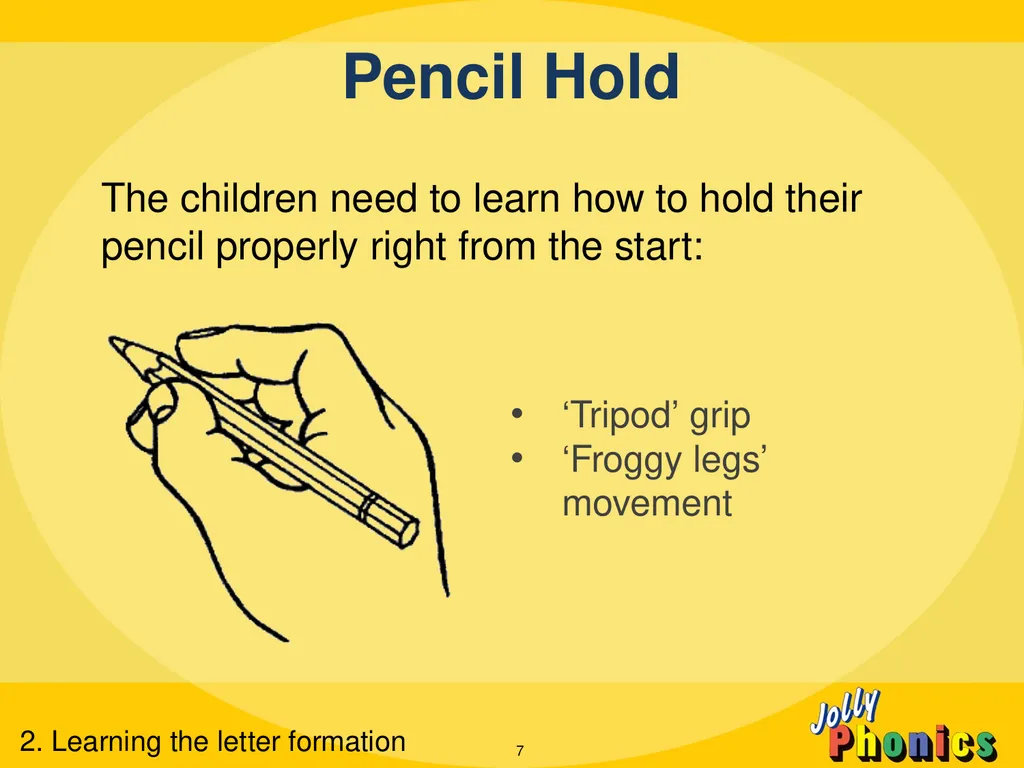
slide7. Pencil Hold The children need to learn how to hold their pencil properly right from the start:
‘Tripod’ grip
‘Froggy legs’ movement 7 2. Learning the letter formation<br>
slide8. Blending Skills Blending skills are essential for reading. They can be taught right from the start. 8 3. Blending<br>
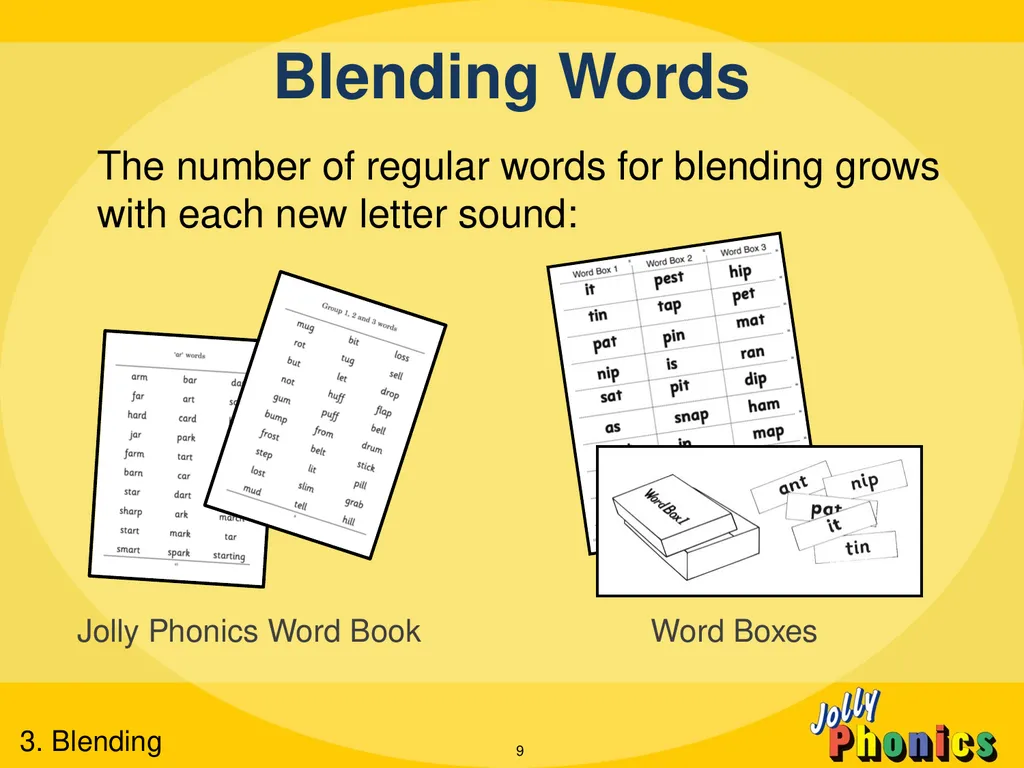
slide9. Blending Words The number of regular words for blending grows with each new letter sound: 9 Jolly Phonics Word Book Word Boxes 3. Blending<br>
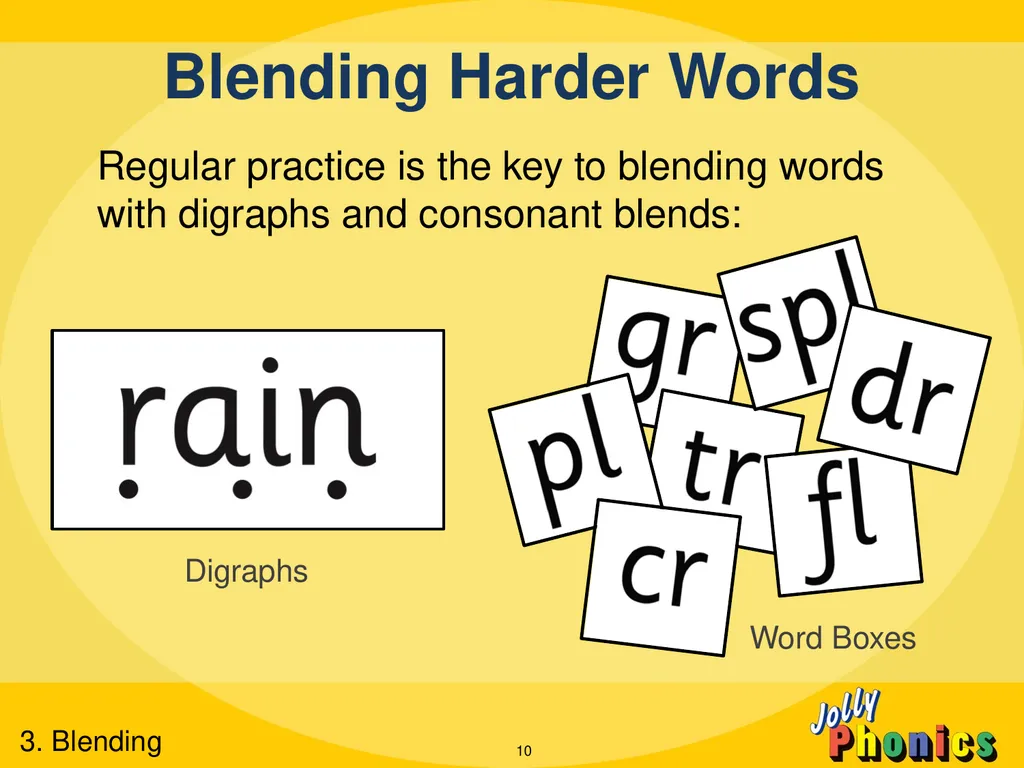
slide10. Blending Harder Words Regular practice is the key to blending words with digraphs and consonant blends: 10 3. Blending Digraphs Word Boxes<br>
slide11. Phonological Awareness Phonological awareness can be encouraged from the very first lesson: 11 4. Identifying sounds in words<br>
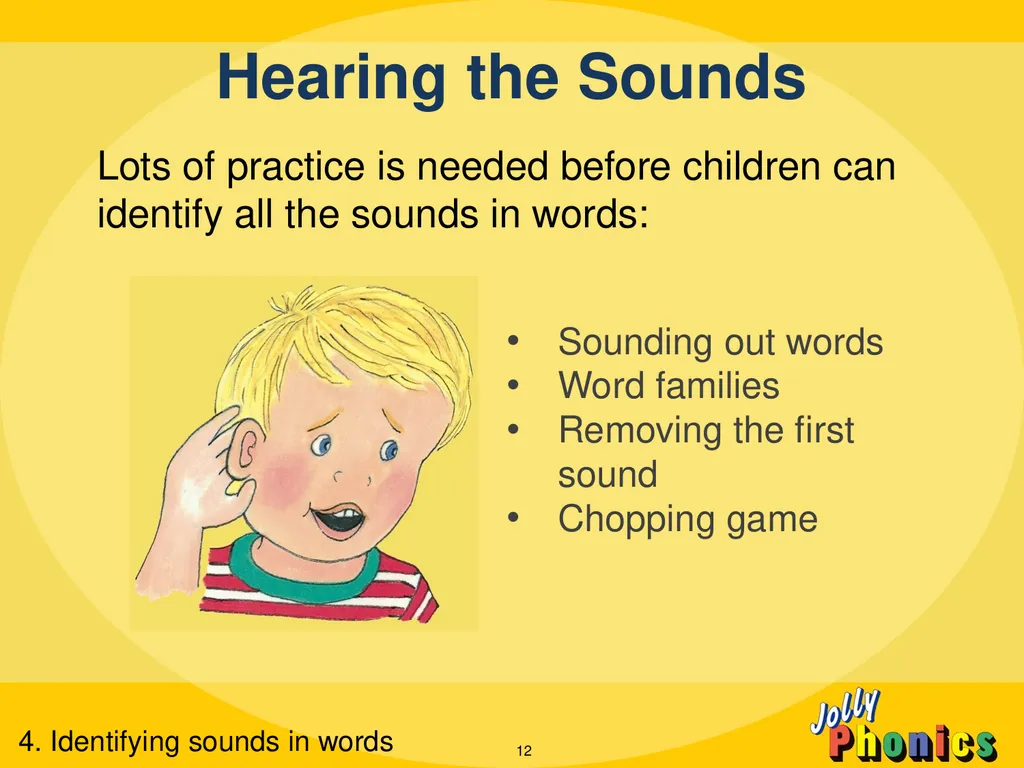
slide12. Hearing the Sounds Lots of practice is needed before children can identify all the sounds in words:
Sounding out words
Word families
Removing the first sound
Chopping game 12 4. Identifying sounds in words<br>
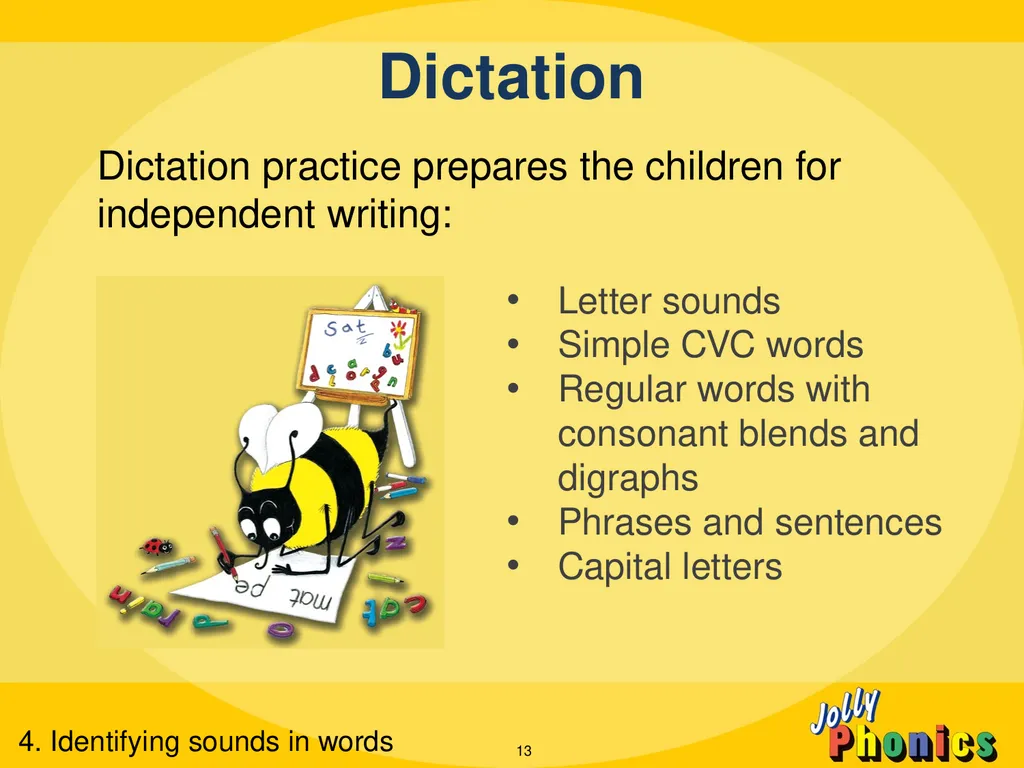
slide13. Dictation Dictation practice prepares the children for independent writing:
Letter sounds
Simple CVC words
Regular words with consonant blends and digraphs
Phrases and sentences
Capital letters 13 4. Identifying sounds in words<br>
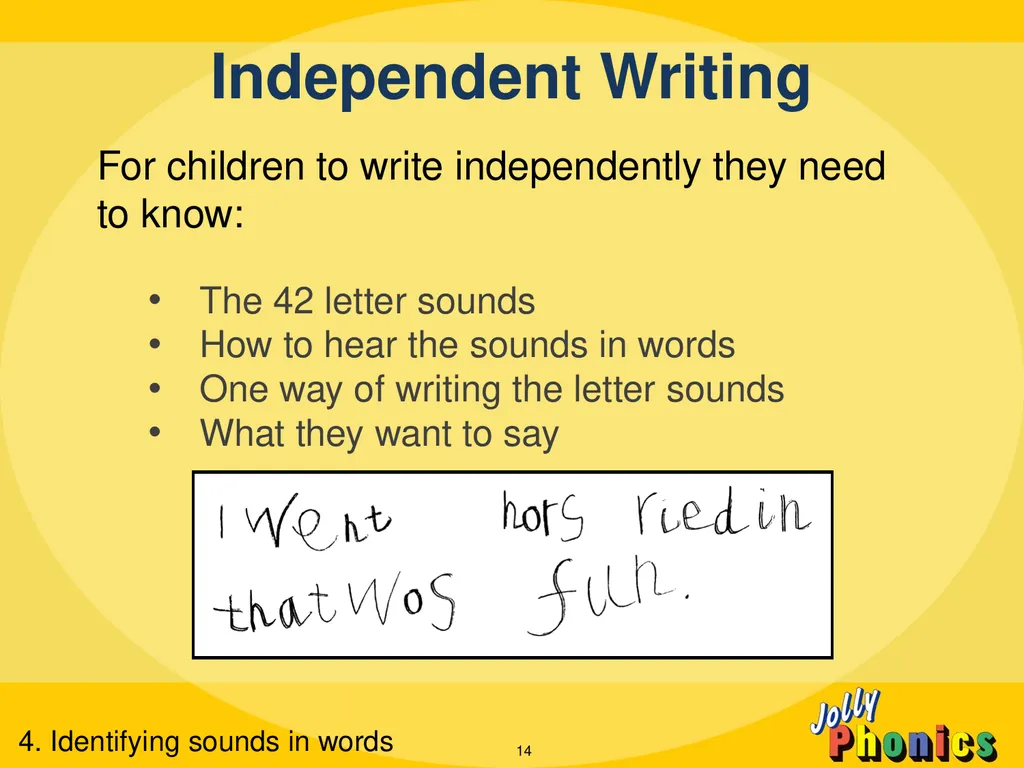
slide14. For children to write independently they need to know:
The 42 letter sounds
How to hear the sounds in words
One way of writing the letter sounds
What they want to say Independent Writing 14 4. Identifying sounds in words<br>
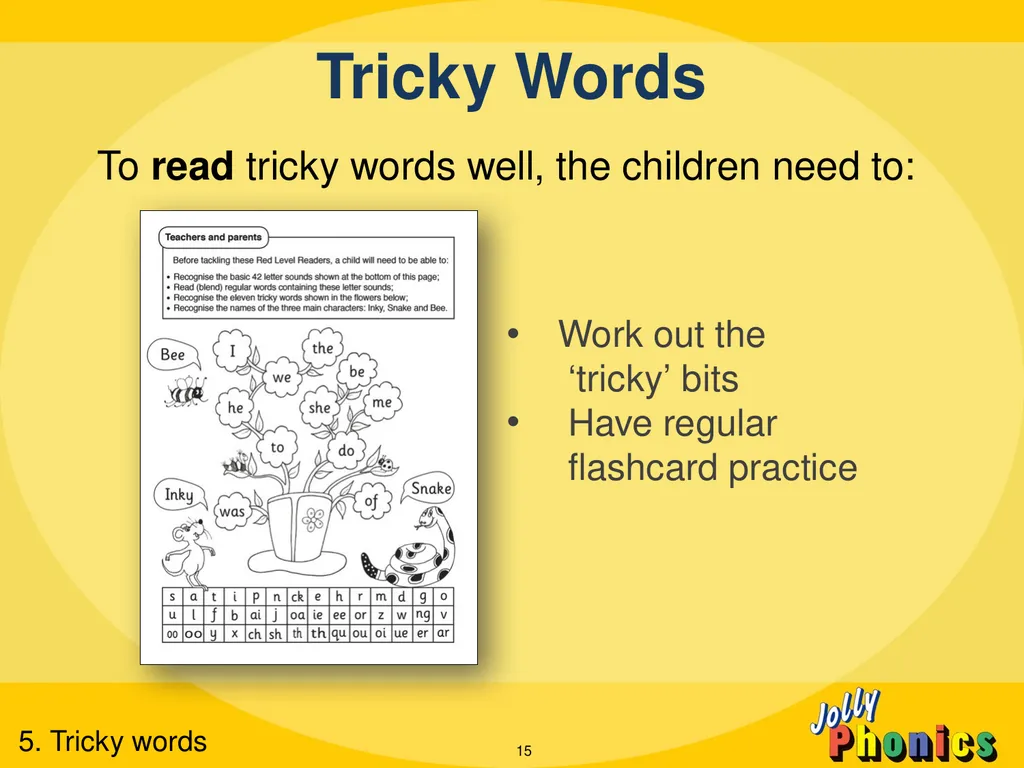
slide15. To read tricky words well, the children need to:
Work out the ‘tricky’ bits
Have regular flashcard practice Tricky Words 15 5. Tricky words<br>
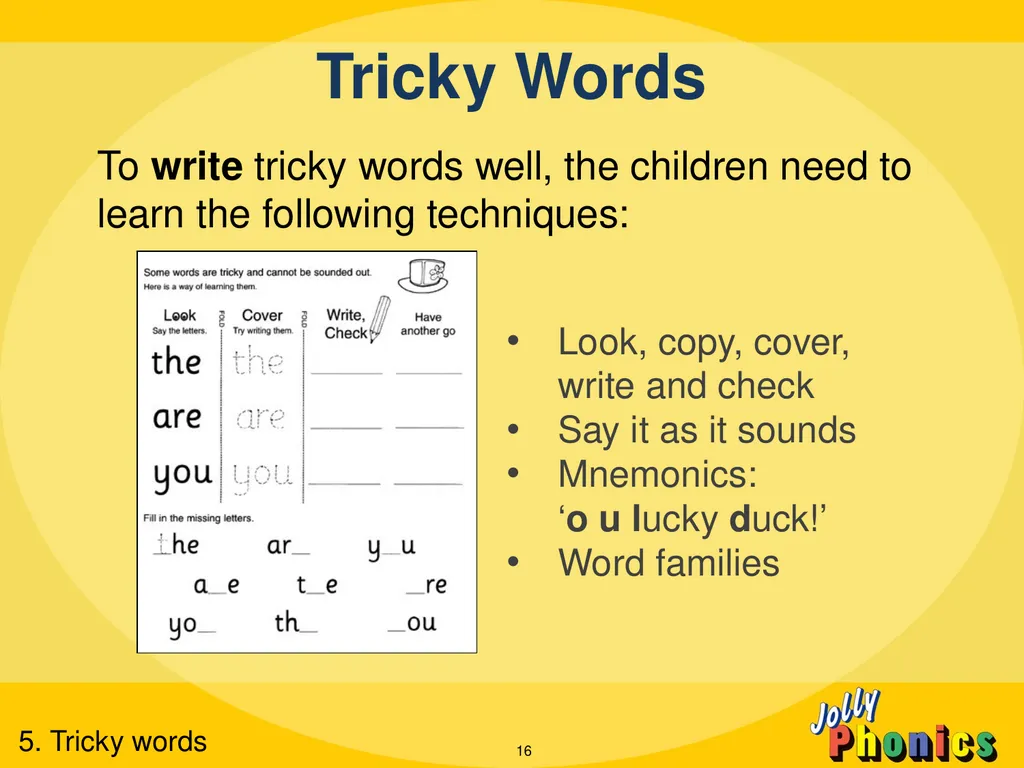
slide16. To write tricky words well, the children need to learn the following techniques:
Look, copy, cover, write and check
Say it as it sounds
Mnemonics: ‘o u lucky duck!’
Word families Tricky Words 16 5. Tricky words<br>
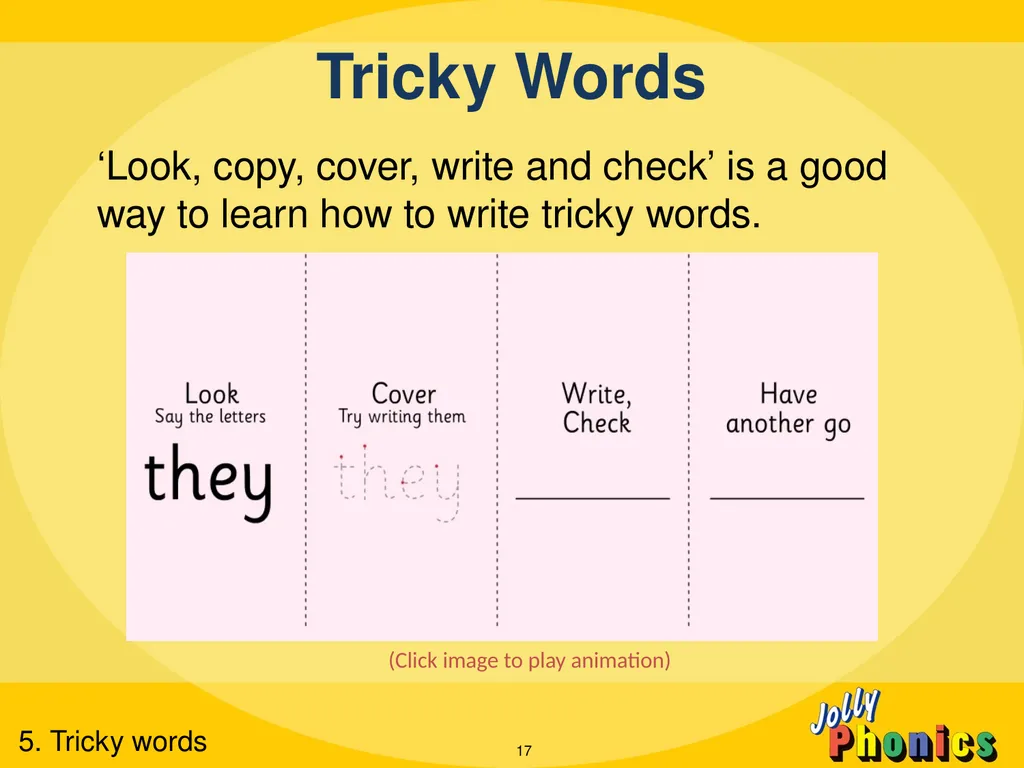
slide17. ‘Look, copy, cover, write and check’ is a good way to learn how to write tricky words.
(Click image to play animation) Tricky Words 17 5. Tricky words<br>
slide2. The 5 Basic Skills 2 The 5 basic skills of Jolly Phonics are:
Learning the letter sounds
Learning letter formation
Blending
Identifying sounds in words
Tricky words<br>
slide3. Letter Sounds Children learn in a fun, multi-sensory way using stories and actions. 3 1. Learning the letter sounds Learning the action for the /s/ sound: Weave your hand like a snake, making an ‘s’ shape, saying sssssssss.<br>
slide4. Letter Sounds 4 1. Learning the letter sounds<br>
slide5. Digraphs Digraphs are two letters that make one sound. 5 1. Learning the letter sounds<br>
slide6. Letter Formation Correct formation can be encouraged from the very beginning:
Feel the letter formation
See the letter formation
Write the letter in the air 6 2. Learning the letter formation<br>
slide7. Pencil Hold The children need to learn how to hold their pencil properly right from the start:
‘Tripod’ grip
‘Froggy legs’ movement 7 2. Learning the letter formation<br>
slide8. Blending Skills Blending skills are essential for reading. They can be taught right from the start. 8 3. Blending<br>
slide9. Blending Words The number of regular words for blending grows with each new letter sound: 9 Jolly Phonics Word Book Word Boxes 3. Blending<br>
slide10. Blending Harder Words Regular practice is the key to blending words with digraphs and consonant blends: 10 3. Blending Digraphs Word Boxes<br>
slide11. Phonological Awareness Phonological awareness can be encouraged from the very first lesson: 11 4. Identifying sounds in words<br>
slide12. Hearing the Sounds Lots of practice is needed before children can identify all the sounds in words:
Sounding out words
Word families
Removing the first sound
Chopping game 12 4. Identifying sounds in words<br>
slide13. Dictation Dictation practice prepares the children for independent writing:
Letter sounds
Simple CVC words
Regular words with consonant blends and digraphs
Phrases and sentences
Capital letters 13 4. Identifying sounds in words<br>
slide14. For children to write independently they need to know:
The 42 letter sounds
How to hear the sounds in words
One way of writing the letter sounds
What they want to say Independent Writing 14 4. Identifying sounds in words<br>
slide15. To read tricky words well, the children need to:
Work out the ‘tricky’ bits
Have regular flashcard practice Tricky Words 15 5. Tricky words<br>
slide16. To write tricky words well, the children need to learn the following techniques:
Look, copy, cover, write and check
Say it as it sounds
Mnemonics: ‘o u lucky duck!’
Word families Tricky Words 16 5. Tricky words<br>
slide17. ‘Look, copy, cover, write and check’ is a good way to learn how to write tricky words.
(Click image to play animation) Tricky Words 17 5. Tricky words<br>