
Learning Intentions to understand unfamiliar words
PM
Published · 67 slides · 0 views
1 / 1
Description
Learning Intentions to understand unfamiliar words and expressions to understand, use and evaluate the effects of similes, metaphors, personification, word choice and other language techniques to identify and evaluate the connotations in
Related Topics
Share
Embed code
Download this presentation From Below
"Learning Intentions to understand unfamiliar words" is the property of its rightful owner. Permission is granted to download and print the materials on this website for personal, non-commercial use only, and to display it on your personal computer provided you do not modify the materials and that you retain all copyright notices contained in the materials. By downloading content from our website, you accept the terms of this agreement.
Presentation Transcript
01
Learning Intentions
to understand unfamiliar words and expressions
to understand, use and evaluate the effects of similes, metaphors, personification, word choice and other language techniques
to identify and evaluate the connotations in images and word choice
to identify the main ideas of a text
to identify supporting evidence for these ideas
to make inferences from a text<br>
02
S1 - RUAE
Reading for Understanding, Analysis and Evaluation Areas of Study:
1 Understanding
2 Word Choice
3 Imagery
4 Context
5 Sentence Structure
6 Link Questions
7 Audience & Purpose<br>
1 Understanding
2 Word Choice
3 Imagery
4 Context
5 Sentence Structure
6 Link Questions
7 Audience & Purpose<br>
03
Part 1 – Understanding: means knowing what the passage is about.<br>
04
In your own words To test your understanding of the ideas and content you will be asked to answer the question using your own words.
In close reading we have to:
Identify the answer from the text + translate it into our own words.<br>
In close reading we have to:
Identify the answer from the text + translate it into our own words.<br>
05
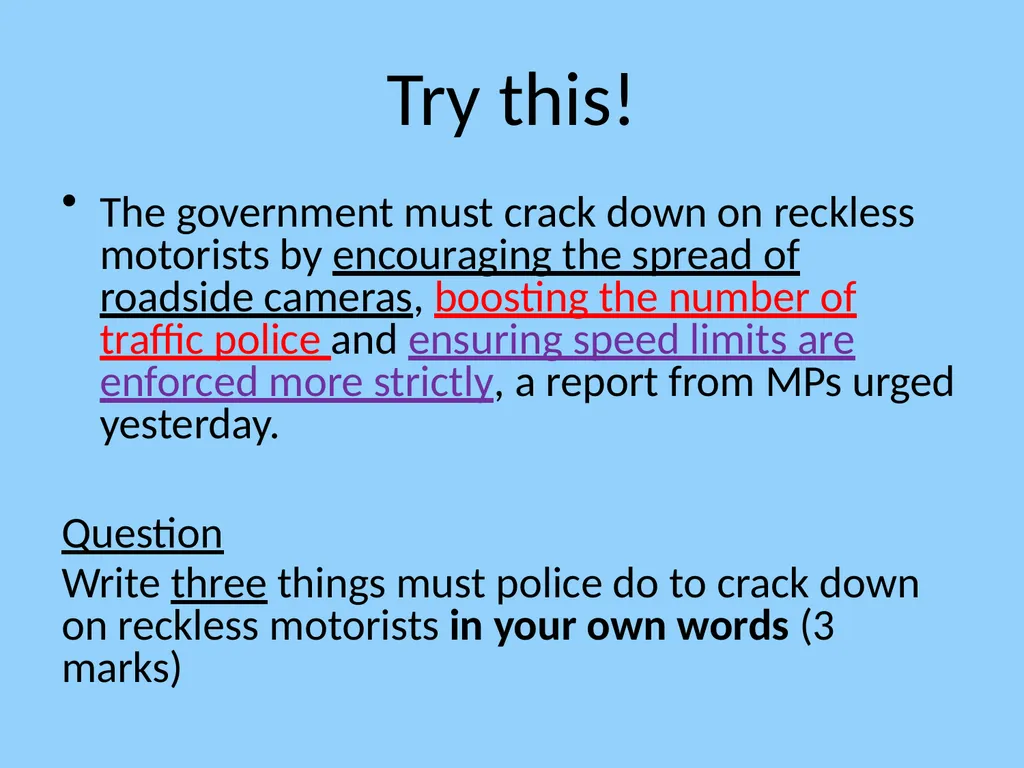
Try this! The government must crack down on reckless motorists by encouraging the spread of roadside cameras, boosting the number of traffic police and ensuring speed limits are enforced more strictly, a report from MPs urged yesterday.
Question
Write three things must police do to crack down on reckless motorists in your own words (3 marks)<br>
Question
Write three things must police do to crack down on reckless motorists in your own words (3 marks)<br>
06
Answers Increase the number of speed cameras
Encouraging more people to be traffic police
Make sure that people don’t speed and follow the laws<br>
Encouraging more people to be traffic police
Make sure that people don’t speed and follow the laws<br>
07
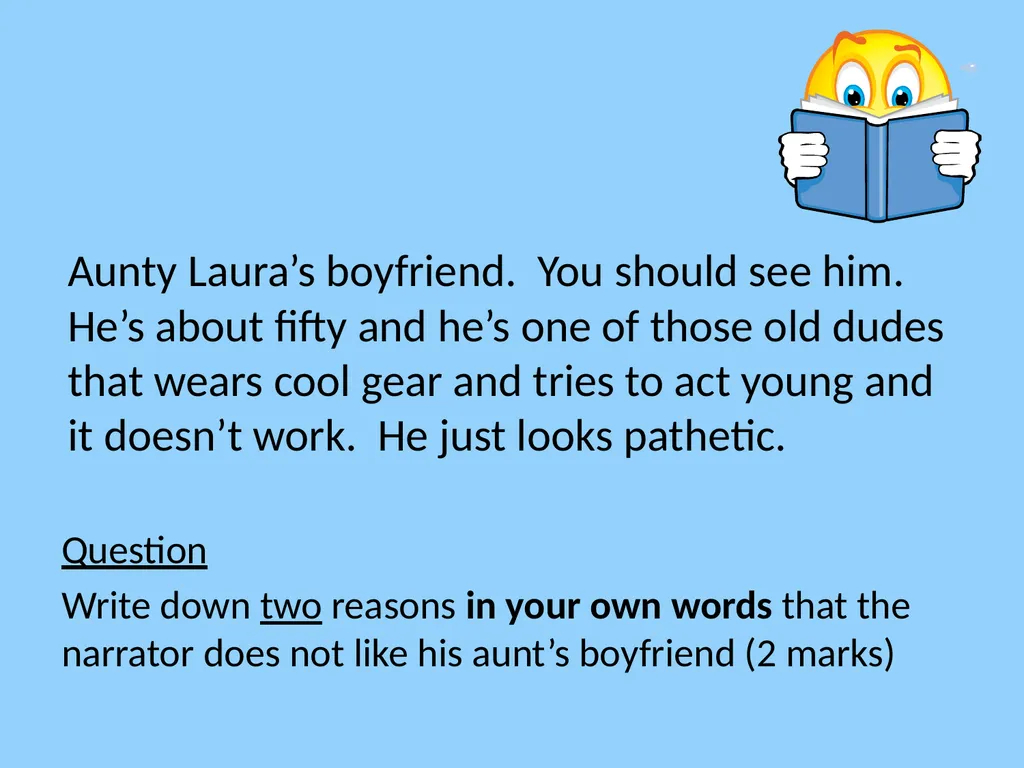
Aunty Laura’s boyfriend. You should see him. He’s about fifty and he’s one of those old dudes that wears cool gear and tries to act young and it doesn’t work. He just looks pathetic.
Question
Write down two reasons in your own words that the narrator does not like his aunt’s boyfriend (2 marks)<br>
Question
Write down two reasons in your own words that the narrator does not like his aunt’s boyfriend (2 marks)<br>
08
Answer He doesn’t act his age
He wears clothes that are too young for him
He looks stupid
He is embarrassing<br>
He wears clothes that are too young for him
He looks stupid
He is embarrassing<br>
09
Tips Own words question:
Scan for key words in the passage then read carefully to find the information to answer the question.
The number of marks tells you how many points to make.
You get 0 marks for copying straight from the passage.<br>
Scan for key words in the passage then read carefully to find the information to answer the question.
The number of marks tells you how many points to make.
You get 0 marks for copying straight from the passage.<br>
10
Starter Update your learning tracker booklet
Then pick one of the tasks below
Describe an interesting place in 30 words
If the answer is “paper”, what could the question be?
Read
Make as many words as you can out of the letters in: WORD CHOICE<br>
Then pick one of the tasks below
Describe an interesting place in 30 words
If the answer is “paper”, what could the question be?
Read
Make as many words as you can out of the letters in: WORD CHOICE<br>
11
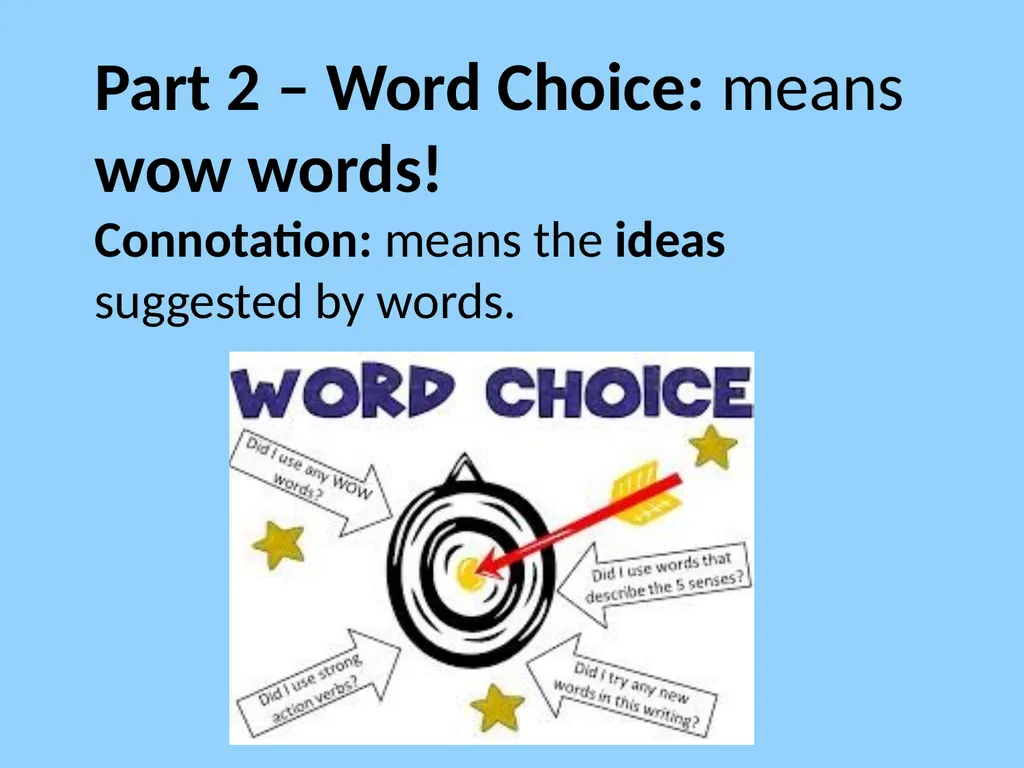
Part 2 – Word Choice: means wow words!
Connotation: means the ideas suggested by words.<br>
Connotation: means the ideas suggested by words.<br>
12
Word Choice Why did the writer use a word or phrase?
Say what the connotations of that word/phrase are –what does that word/phrase make you think about?
Then explain what this tells you<br>
Say what the connotations of that word/phrase are –what does that word/phrase make you think about?
Then explain what this tells you<br>
13
Word Choice Instead of walk a writer could use saunter, strut or amble.
What do each of these words tell you that walk does not?<br>
What do each of these words tell you that walk does not?<br>
14
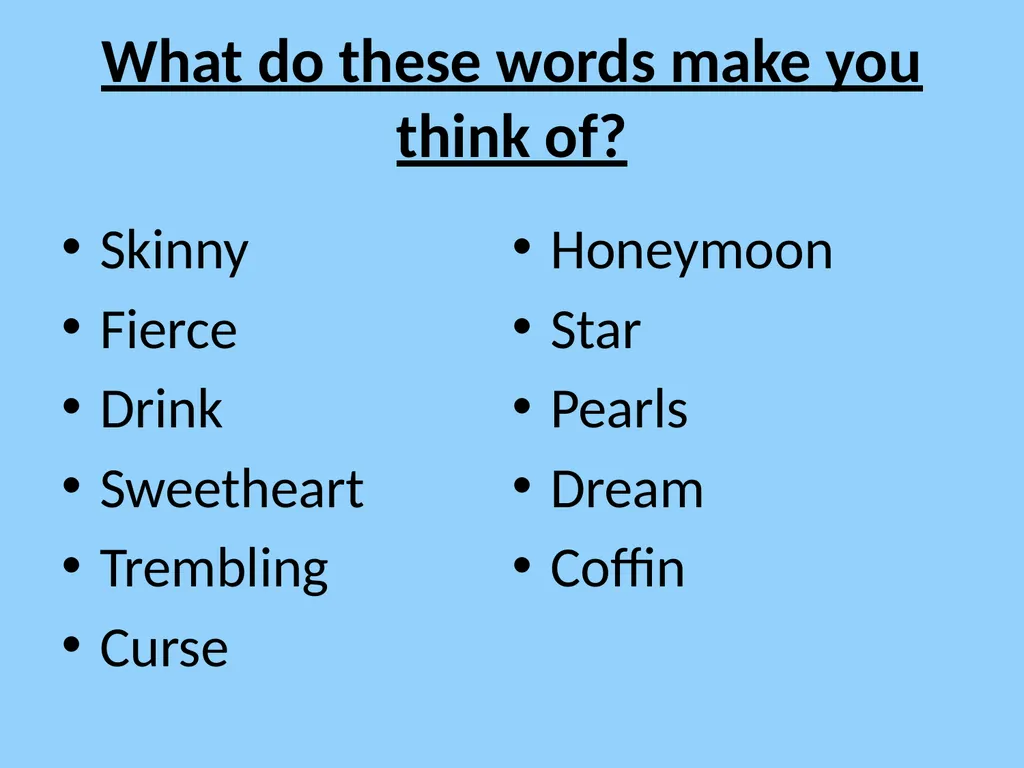
What do these words make you think of? Skinny
Fierce
Drink
Sweetheart
Trembling
Curse
Honeymoon
Star
Pearls
Dream
Coffin<br>
Fierce
Drink
Sweetheart
Trembling
Curse
Honeymoon
Star
Pearls
Dream
Coffin<br>
15
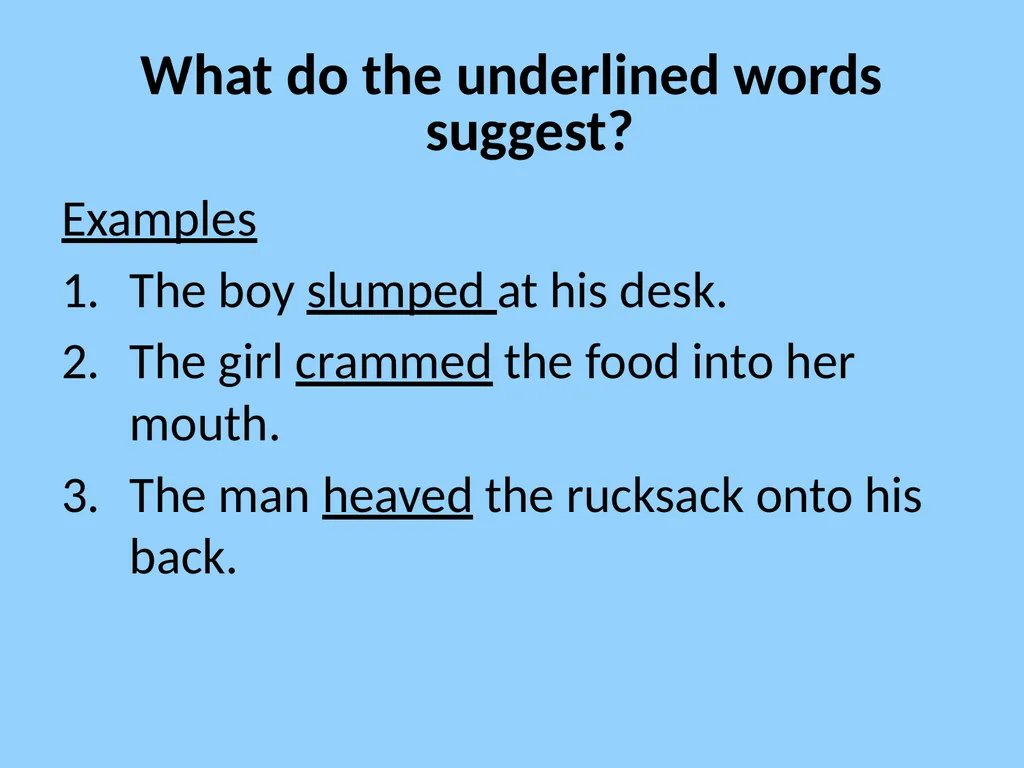
What do the underlined words suggest? Examples
The boy slumped at his desk.
The girl crammed the food into her mouth.
The man heaved the rucksack onto his back.<br>
The boy slumped at his desk.
The girl crammed the food into her mouth.
The man heaved the rucksack onto his back.<br>
16
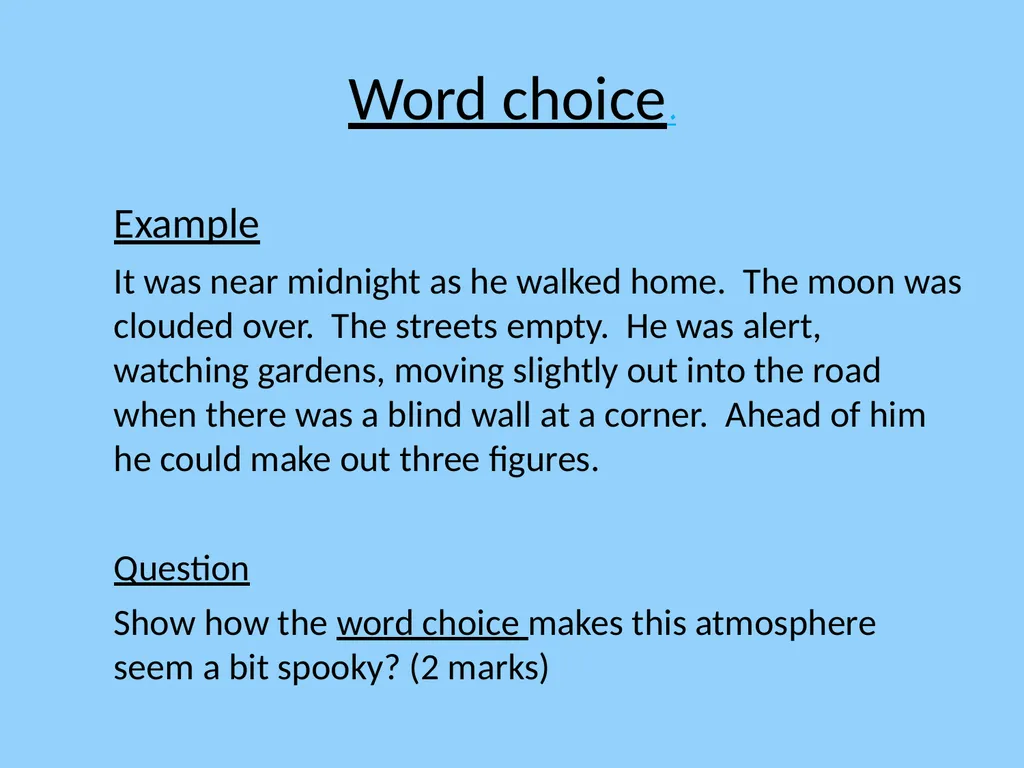
Word choice. Example
It was near midnight as he walked home. The moon was clouded over. The streets empty. He was alert, watching gardens, moving slightly out into the road when there was a blind wall at a corner. Ahead of him he could make out three figures.
Question
Show how the word choice makes this atmosphere seem a bit spooky? (2 marks)<br>
17
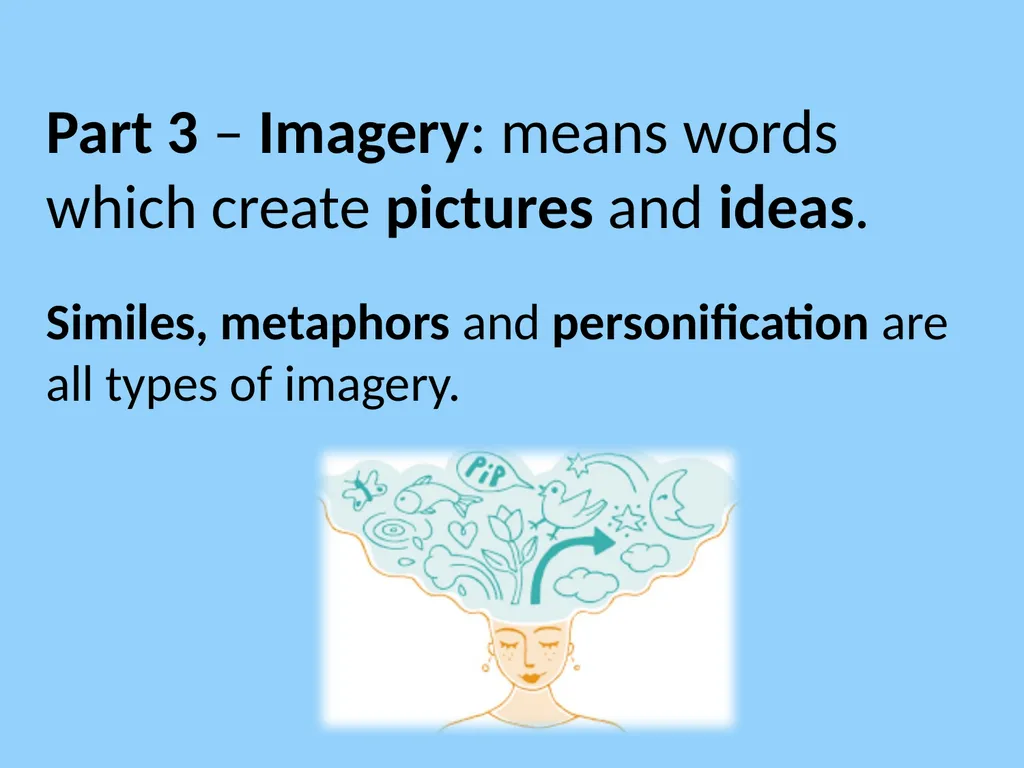
Part 3 – Imagery: means words which create pictures and ideas.
Similes, metaphors and personification are all types of imagery.<br>
Similes, metaphors and personification are all types of imagery.<br>
18
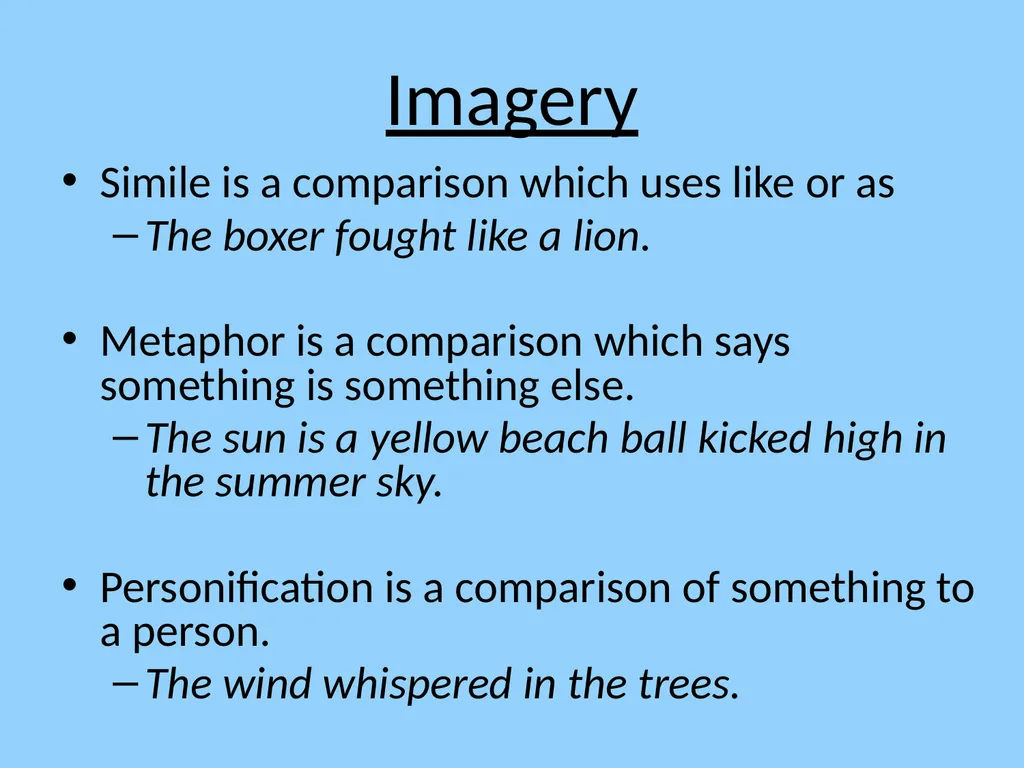
Imagery Simile is a comparison which uses like or as
The boxer fought like a lion.
Metaphor is a comparison which says something is something else.
The sun is a yellow beach ball kicked high in the summer sky.
Personification is a comparison of something to a person.
The wind whispered in the trees.<br>
The boxer fought like a lion.
Metaphor is a comparison which says something is something else.
The sun is a yellow beach ball kicked high in the summer sky.
Personification is a comparison of something to a person.
The wind whispered in the trees.<br>
19
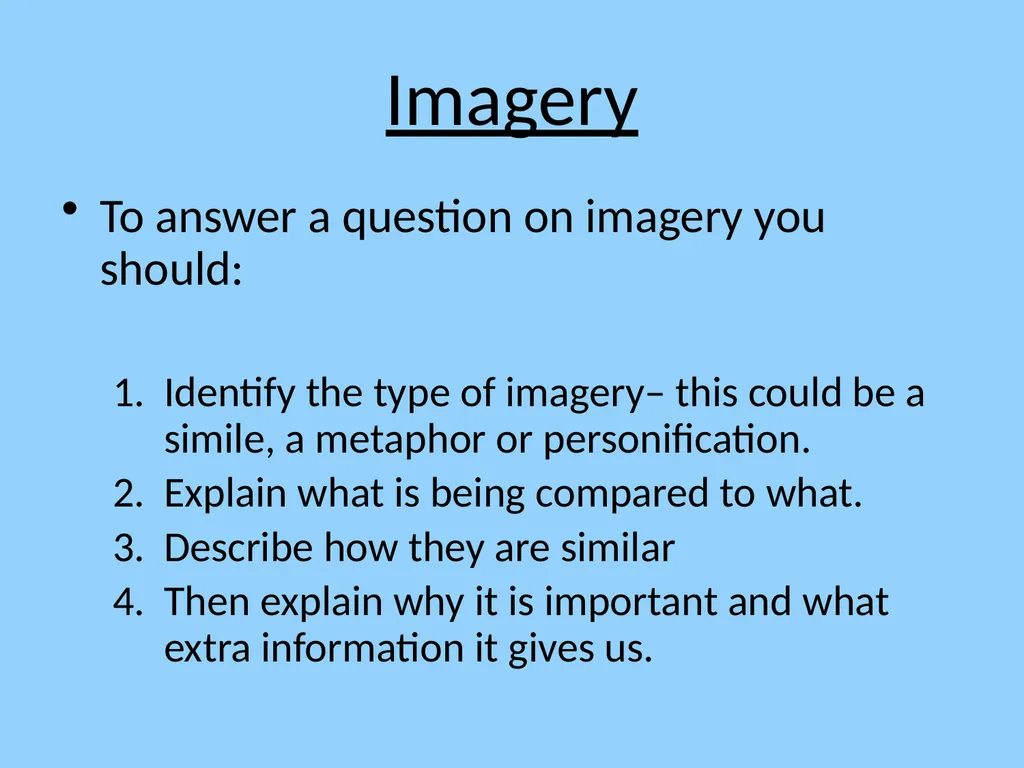
Imagery To answer a question on imagery you should:
Identify the type of imagery– this could be a simile, a metaphor or personification.
Explain what is being compared to what.
Describe how they are similar
Then explain why it is important and what extra information it gives us.<br>
Identify the type of imagery– this could be a simile, a metaphor or personification.
Explain what is being compared to what.
Describe how they are similar
Then explain why it is important and what extra information it gives us.<br>
20
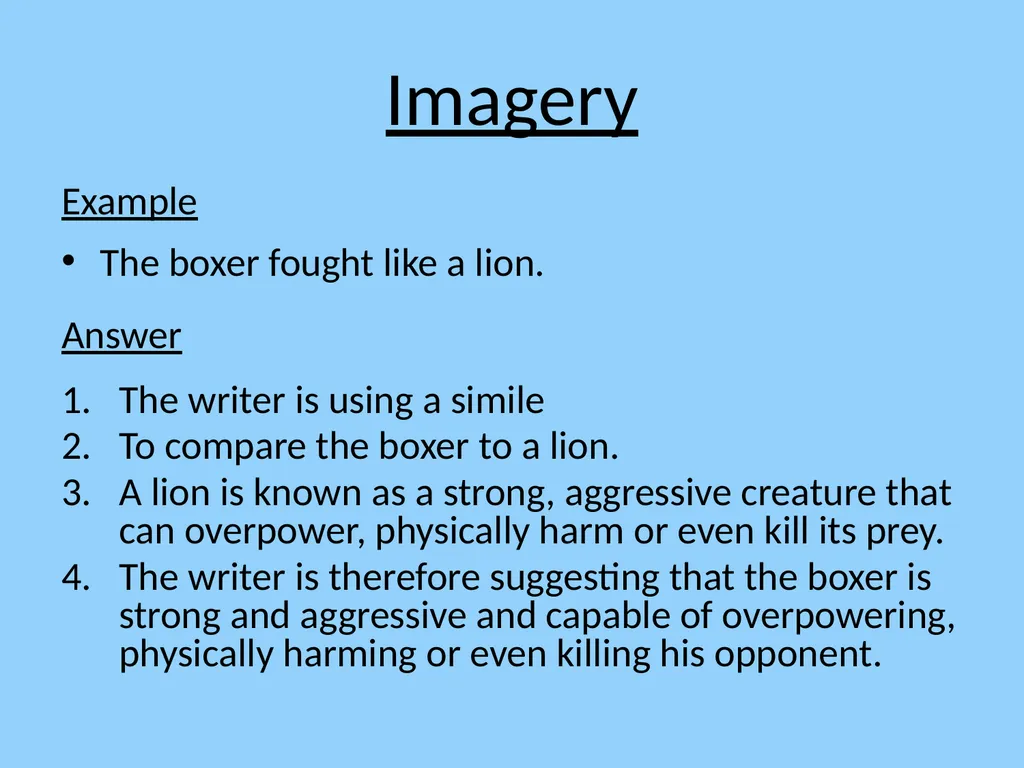
Imagery Example
The boxer fought like a lion.
Answer
The writer is using a simile
To compare the boxer to a lion.
A lion is known as a strong, aggressive creature that can overpower, physically harm or even kill its prey.
The writer is therefore suggesting that the boxer is strong and aggressive and capable of overpowering, physically harming or even killing his opponent.<br>
21
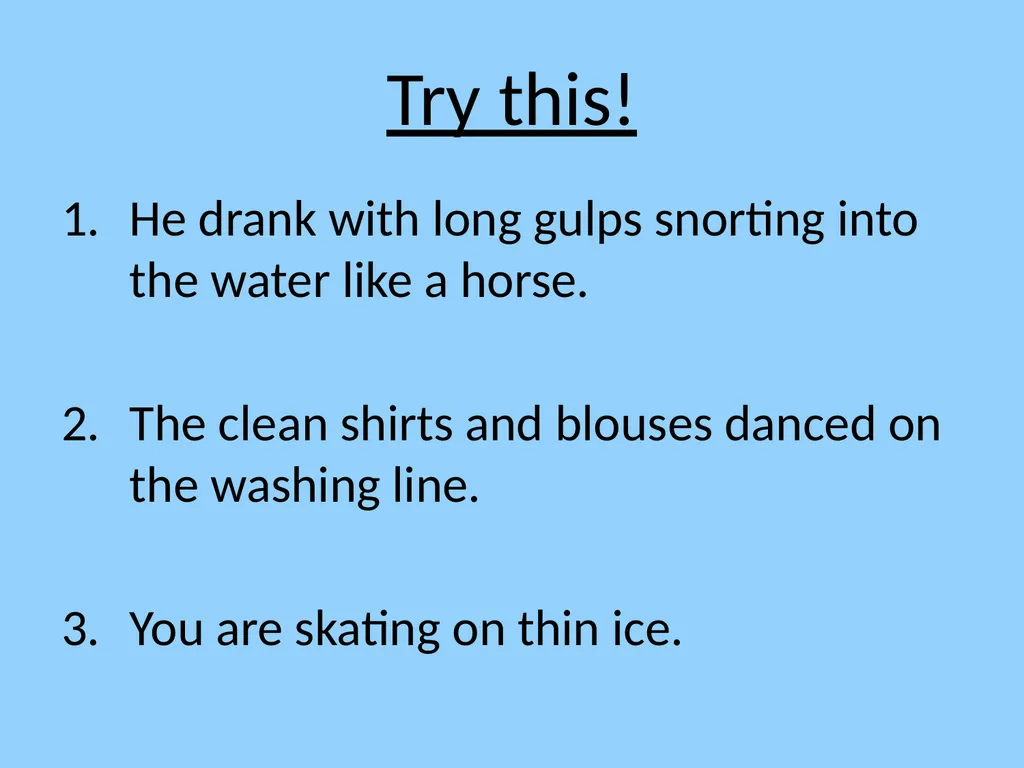
Try this! He drank with long gulps snorting into the water like a horse.
The clean shirts and blouses danced on the washing line.
You are skating on thin ice.<br>
The clean shirts and blouses danced on the washing line.
You are skating on thin ice.<br>
22
Part 4 – Context:
a) means working out what a word means, even if you don’t know it!
b) means working out what a word means in the sentence.<br>
a) means working out what a word means, even if you don’t know it!
b) means working out what a word means in the sentence.<br>
23
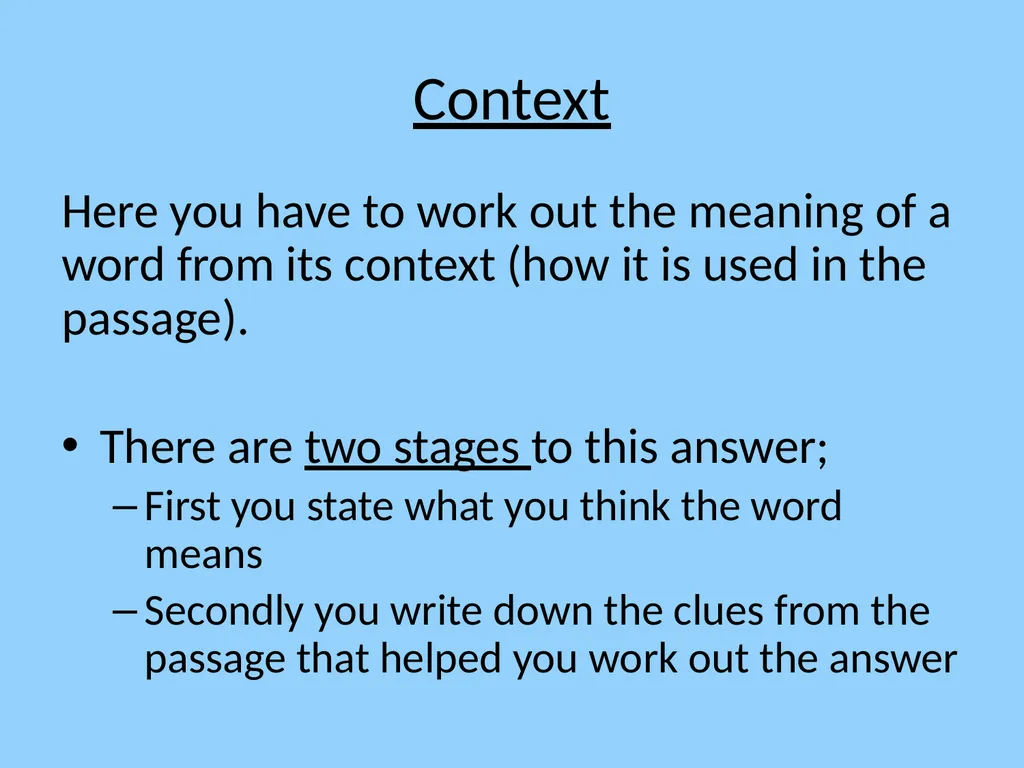
Context Here you have to work out the meaning of a word from its context (how it is used in the passage).
There are two stages to this answer;
First you state what you think the word means
Secondly you write down the clues from the passage that helped you work out the answer<br>
There are two stages to this answer;
First you state what you think the word means
Secondly you write down the clues from the passage that helped you work out the answer<br>
24
Example - I’m nocturnal. I love the moonlight, the shadows, the dark places…
Question - Show how the context helps you to understand the meaning of ‘nocturnal’.<br>
Question - Show how the context helps you to understand the meaning of ‘nocturnal’.<br>
25
Context Answer
Nocturnal means being active by night.
The writer refers to his preference for ‘moonlight’ and ‘dark’ which both suggest night-time.<br>
Nocturnal means being active by night.
The writer refers to his preference for ‘moonlight’ and ‘dark’ which both suggest night-time.<br>
26
Try this! Extract
“Ben quickly entered the didot and cleaned the various misturaes he had been using to repair the wuipit. He had often thought that this job was extremely yullning. However, he had to admit that this time things seemed to be a bit easier. When he finished, he put on his redick and went back to the study to relax. He took out his favourite pipe and settled into the beautiful new pogtry. What pogtry. Only 300 yagmas!
Questions
Identify unknown words in the first sentence.
What types of words are these? (Nouns, Adjectives, prepositions…)
Along with this identification, what else would help us to arrive at a meaning for these unknown words.<br>
27
Tips Focus on the first sentence, picking out other clue words which help to identify the meaning of the unknown words.
State meaning + Explain how surrounding sentences helped you to arrive at the meaning<br>
State meaning + Explain how surrounding sentences helped you to arrive at the meaning<br>
28
Part 5 – Sentence Structure: means the effect created by the way the sentence is put together.<br>
29
Sentence structure Describe the main features of sentence structure
Explain their effect.<br>
Explain their effect.<br>
30
Sentence Structure Statement
Tell you something. They end in a full stop. Writing which is made up of statements alone may have a CALM tone.
Example – It was just not meant to be.<br>
Tell you something. They end in a full stop. Writing which is made up of statements alone may have a CALM tone.
Example – It was just not meant to be.<br>
31
Sentence Structure Question
Ask you something. They always end with a question mark. Using questions may challenge the reader, or show uncertainty in the writer.
Example – Is this the best we can hope for?<br>
Ask you something. They always end with a question mark. Using questions may challenge the reader, or show uncertainty in the writer.
Example – Is this the best we can hope for?<br>
32
Sentence Structure Rhetorical Questions
Do not expect an answer. They aim to stir up strong feelings in the reader such as anger.
Example – Are you happy knowing how the animals that end up on your plate are treated?<br>
Do not expect an answer. They aim to stir up strong feelings in the reader such as anger.
Example – Are you happy knowing how the animals that end up on your plate are treated?<br>
33
Sentence Structure Exclamation
Expresses excitement or surprise. They end in an exclamation mark. They may create a dramatic or emotive tone.
Example – Blimey!<br>
Expresses excitement or surprise. They end in an exclamation mark. They may create a dramatic or emotive tone.
Example – Blimey!<br>
34
Sentence Structure Command
Tells you to do something. They are often used to persuade the reader.
Example – Just do it.<br>
Tells you to do something. They are often used to persuade the reader.
Example – Just do it.<br>
35
Sentence Structure Minor sentence
Does not contain a verb. Such sentences will be very short and might be used to create a TENSE or DRAMATIC mood. They are also typical of informal language
Example – It was night.<br>
Does not contain a verb. Such sentences will be very short and might be used to create a TENSE or DRAMATIC mood. They are also typical of informal language
Example – It was night.<br>
36
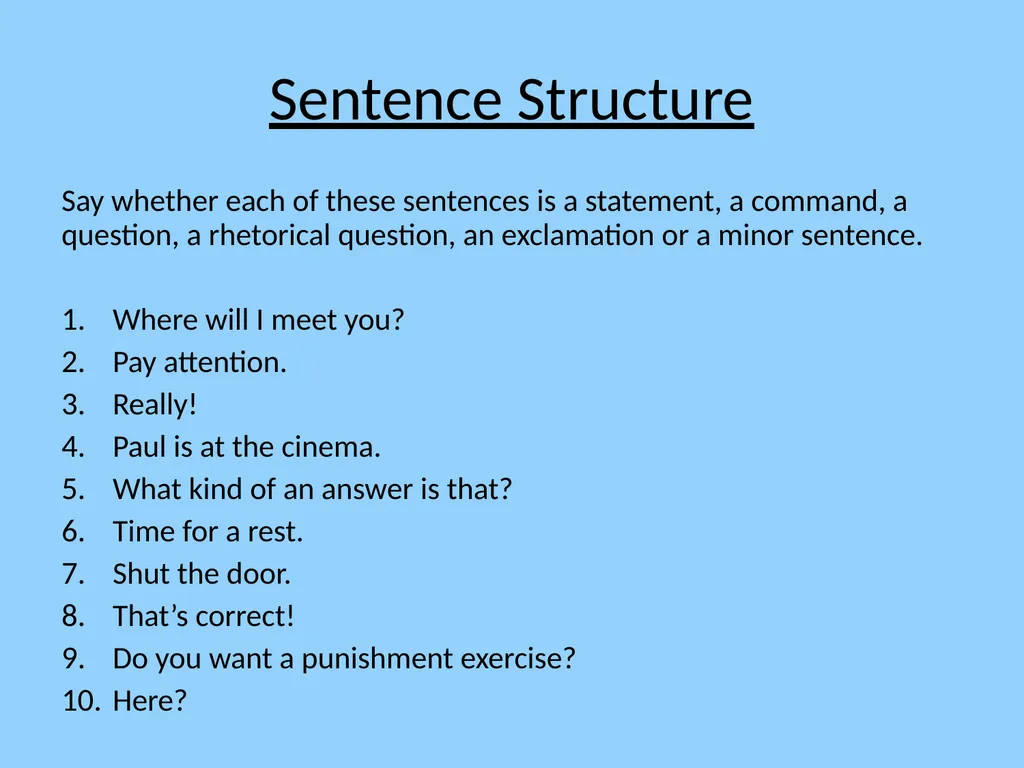
Sentence Structure Say whether each of these sentences is a statement, a command, a question, a rhetorical question, an exclamation or a minor sentence.
Where will I meet you?
Pay attention.
Really!
Paul is at the cinema.
What kind of an answer is that?
Time for a rest.
Shut the door.
That’s correct!
Do you want a punishment exercise?
Here?<br>
Where will I meet you?
Pay attention.
Really!
Paul is at the cinema.
What kind of an answer is that?
Time for a rest.
Shut the door.
That’s correct!
Do you want a punishment exercise?
Here?<br>
37
Sentence Structure Long - the more complex the sentence, the more formal the language. Long sentences can also suggest continuous on-going activity.<br>
38
Sentence Structure Short sentences are typical of speech and types of language that aim to communicate very quickly and very directly. Short sentences are sometimes used to create tension.<br>
39
Sentence Structure Short sentences can also suggest:
the action is over and done with and is in the past OR
the piece of information is important enough to stand on its own OR
to form a conclusion OR
something unexpected happens<br>
the action is over and done with and is in the past OR
the piece of information is important enough to stand on its own OR
to form a conclusion OR
something unexpected happens<br>
40
Sentence Structure INVERSION is where the normal word order of a sentence is reversed. This is done to change the emphasis onto a particular part of the sentence.
For example:
The flames went up and up.
Would become:
Up and up went the flames.
This puts emphasis on the movement of the flames rather than the flames themselves.<br>
For example:
The flames went up and up.
Would become:
Up and up went the flames.
This puts emphasis on the movement of the flames rather than the flames themselves.<br>
41
Sentence Structure Examples
Think about what difference the word order makes in the following sentences:
The girl hit the ball into the garden.
The ball was hit by the girl into the garden.
The garden was where the girl hit the ball.<br>
Think about what difference the word order makes in the following sentences:
The girl hit the ball into the garden.
The ball was hit by the girl into the garden.
The garden was where the girl hit the ball.<br>
42
Sentence Structure Lists - 3 or more adjectives, nouns or actions separated by commas. Used to suggest lots and lots of things happening at once or to describe a large number of different types, places, etc.
Repetition -
what is being repeated
work out why there is repetition
Writer wants you to pay attention to it.<br>
Repetition -
what is being repeated
work out why there is repetition
Writer wants you to pay attention to it.<br>
43
Sentence Structure Climax
Sometimes a writer will list things in a particular order with the list ending with the most powerful or dramatic word(s). This creates the effect of a sentence building to a climax.<br>
Sometimes a writer will list things in a particular order with the list ending with the most powerful or dramatic word(s). This creates the effect of a sentence building to a climax.<br>
44
Sentence Structure Colon (:) – can be used to introduce a list or a quotation or an explanation
My son is called Jamie: he is a pest.<br>
My son is called Jamie: he is a pest.<br>
45
Sentence Structure Semi colon (;) – can be used in between items in a list where the items are phrases or for a pause between two closely connected sentences instead of a conjunction.
It was a hot day; the sun blazed down.<br>
It was a hot day; the sun blazed down.<br>
46
Sentence Structure Brackets (…….) These are used to add extra information about something. Make sure you say what the extra information tells you.
Exclamation mark (!) – suggests surprise or shock or anger.
Ellipsis (…) – suggests a pause or that the writer cannot find the words to say how he feels or that the writer could go on and on.
Dash (-) – can function like a colon; two dashes can work like brackets.<br>
Exclamation mark (!) – suggests surprise or shock or anger.
Ellipsis (…) – suggests a pause or that the writer cannot find the words to say how he feels or that the writer could go on and on.
Dash (-) – can function like a colon; two dashes can work like brackets.<br>
47
Part 6 – Link Questions: means words which join one paragraph to the next.<br>
48
The linking question This type of question asks to show how a sentence links two parts of a text.
This is sometimes called the “link question”. You will be asked to show how one sentence provides a link in the discussion and joins one idea to the next.<br>
This is sometimes called the “link question”. You will be asked to show how one sentence provides a link in the discussion and joins one idea to the next.<br>
49
These questions are usually worth two marks:
1st mark = naming the previous topic AND quoting the part of the link sentence which relates back to it.
2nd mark = naming the topic about to be discussed AND quoting the part of the link sentence which relates forward to it.<br>
1st mark = naming the previous topic AND quoting the part of the link sentence which relates back to it.
2nd mark = naming the topic about to be discussed AND quoting the part of the link sentence which relates forward to it.<br>
50
Linking question tips To answer a link question you should:
Quote the words that link back to the previous paragraph and explain what that paragraph was about.
Quote the words that introduce the topic of the next paragraph and explain what the author is now talking about.
If words like ‘but’ or ‘however’ are used to introduce a change or a contrast you should state this.<br>
51
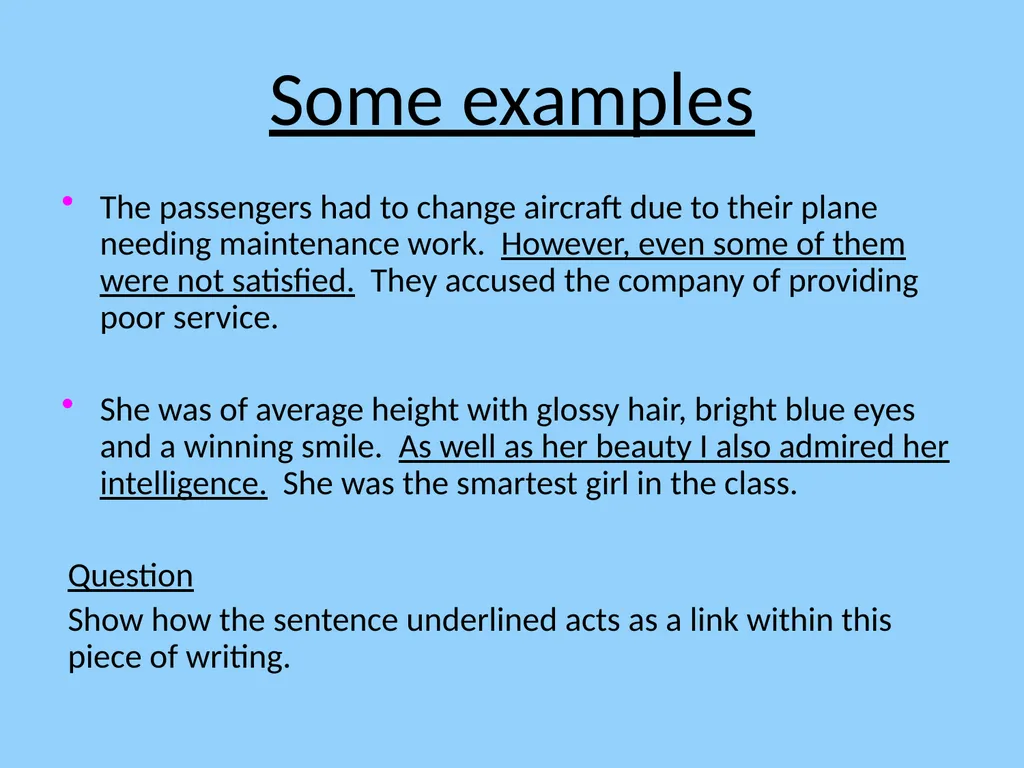
Some examples The passengers had to change aircraft due to their plane needing maintenance work. However, even some of them were not satisfied. They accused the company of providing poor service.
She was of average height with glossy hair, bright blue eyes and a winning smile. As well as her beauty I also admired her intelligence. She was the smartest girl in the class.
Question
Show how the sentence underlined acts as a link within this piece of writing.<br>
She was of average height with glossy hair, bright blue eyes and a winning smile. As well as her beauty I also admired her intelligence. She was the smartest girl in the class.
Question
Show how the sentence underlined acts as a link within this piece of writing.<br>
52
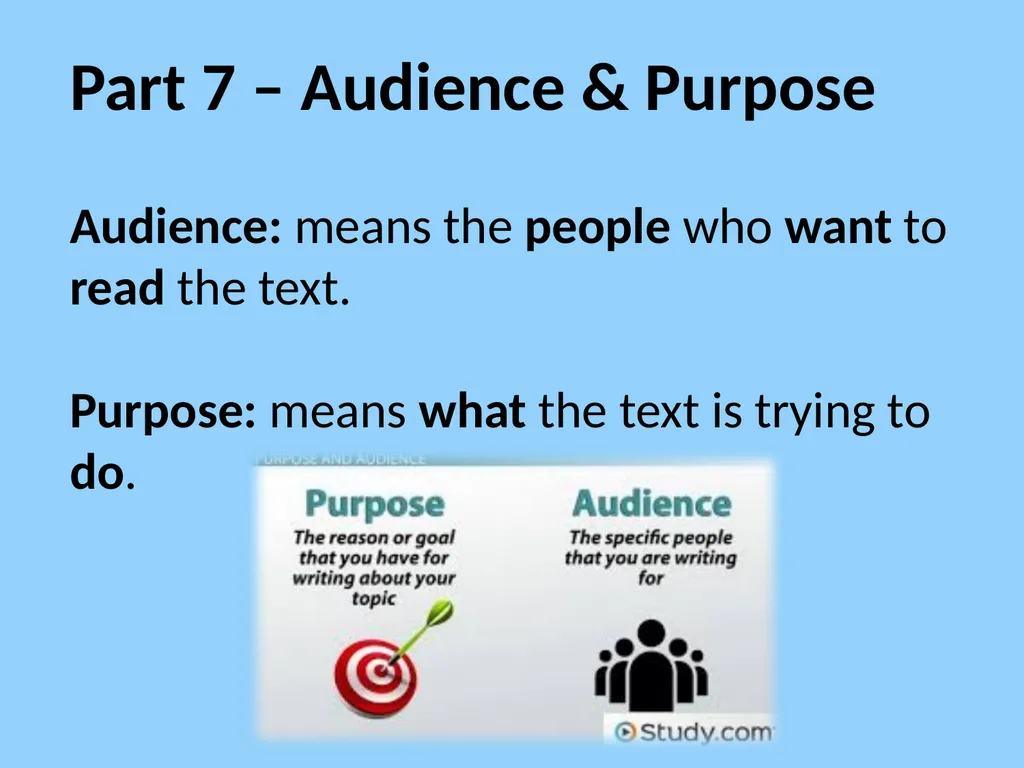
Part 7 – Audience & Purpose
Audience: means the people who want to read the text.
Purpose: means what the text is trying to do.<br>
Audience: means the people who want to read the text.
Purpose: means what the text is trying to do.<br>
53
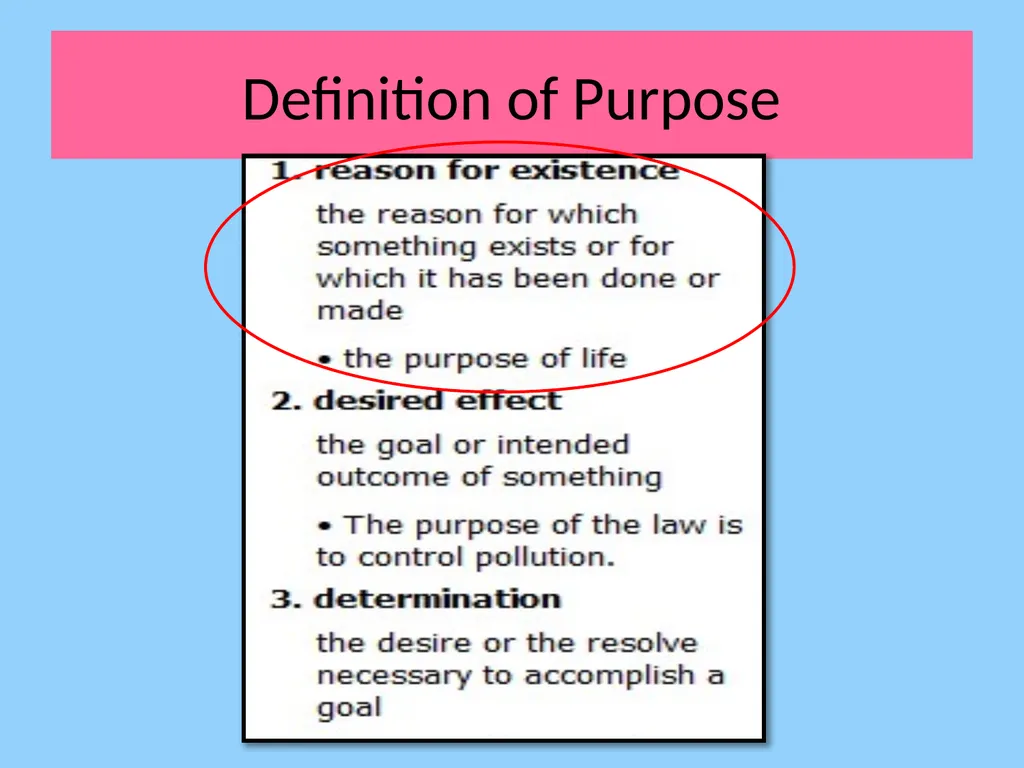
Definition of Purpose<br>
54
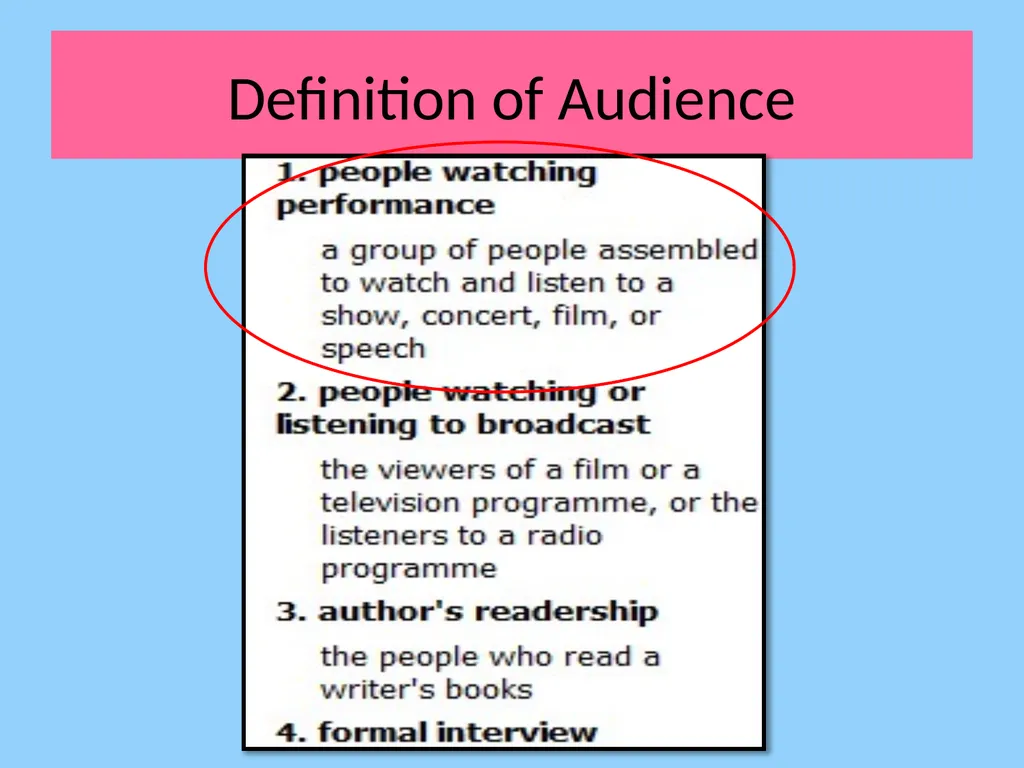
Definition of Audience<br>
55
Task 1 You are going to see a series of fiction extracts.
You will have 6 minutes to complete the tasks attached to each image.<br>
You will have 6 minutes to complete the tasks attached to each image.<br>
56
Harry Potter- J K Rowling Harry had always been small and skinny for his age… Harry had a thin face, knobbly knees, black hair and bright green eyes. He wore round glasses held together with a lot of cellotape because of all the times Dudley had punched him in the nose. The only thing Harry liked about his appearance was a very thin scar on his forehead which was shaped like a bolt of lightning. What do we learn about Harry from this description?
Which words were most helpful in giving you information?<br>
Which words were most helpful in giving you information?<br>
57
Mrs.Pratchett- Boy Roald Dahl Her name was Mrs. Pratchett. She was a small skinny old hag with a moustache on her upper lip and a mouth as sour as a green gooseberry. She never smiled. She never welcomed us when we went in. By far the most loathsome thing about Mrs. Pratchett was the filth that clung about her. Her apron was grey and greasy. Her blouse had bits of breakfast all over it, toast crumbs and tea stains and splotches of dried egg yolk. It was her hands , however, that disturbed us most. They were disgusting. They were black with dirt and grime. They looked as though they had been putting lumps of coal on the fire all day long. The mere sight of her grimy right hand with its black fingernails digging an ounce of Chocolate Fudge out of the jar would have caused a starving tramp to go running from the shop. Pick out 3 words that describe Mrs. Pratchett.
What does the speaker think about her?<br>
What does the speaker think about her?<br>
58
Calpurnia-To Kill a Mockingbird Harper Lee She was all angles and bones; she was nearsighted; she squinted; her hand was wide as a bed slat and twice as hard. She was always ordering me out of the kitchen, asking me why I couldn't behave as well as Jem when she knew he was older, and calling me home when I wasn't ready to come. Our battles were epic and one-sided. Calpurnia always won, mainly because Atticus always took her side. She had been with us ever since Jem was born, and I had felt her tyrannical presence as long as I could remember.
What does the word “tyrannical” tell us about Calpurnia?
What do you think about her?<br>
What does the word “tyrannical” tell us about Calpurnia?
What do you think about her?<br>
59
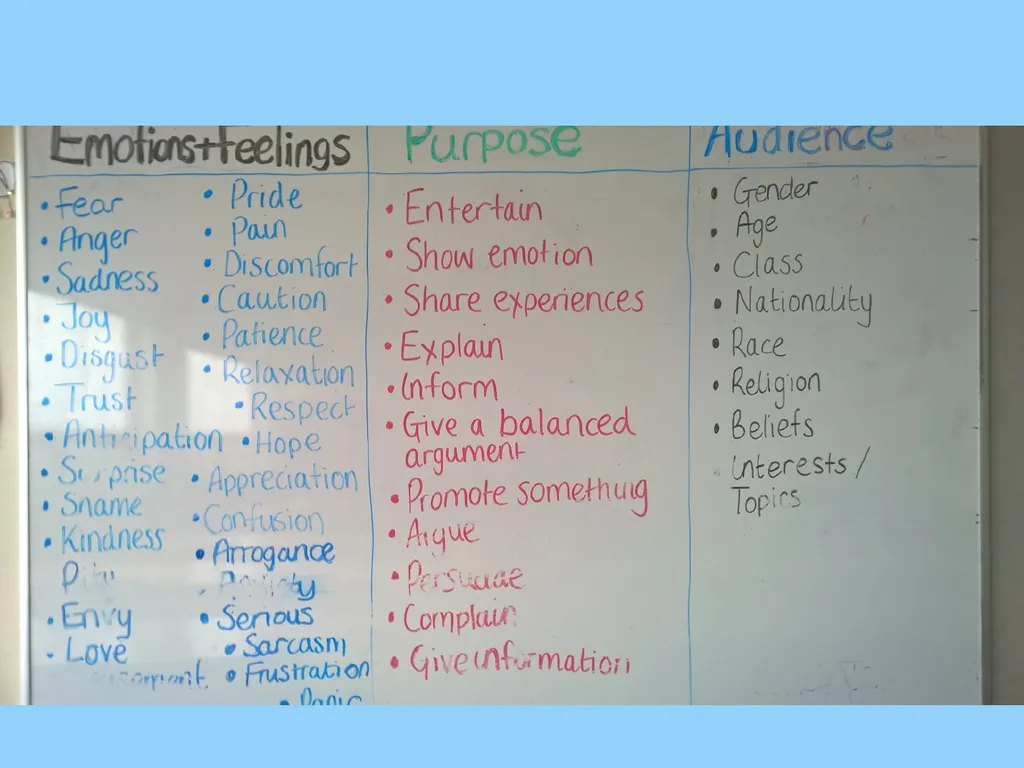
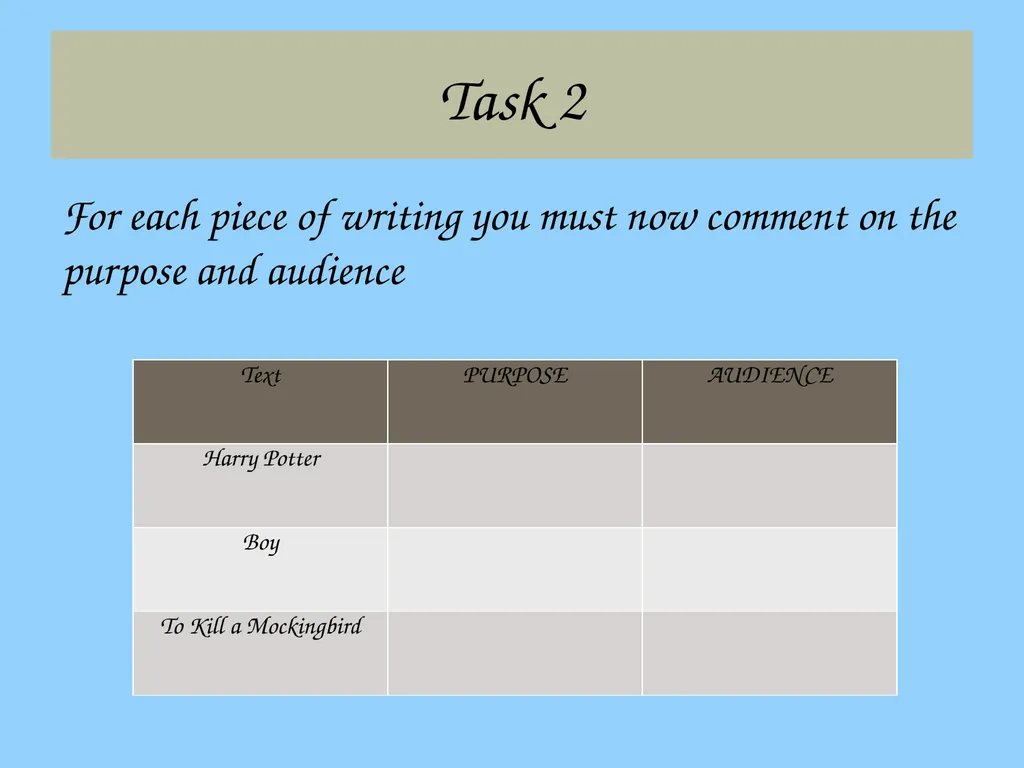
Task 2 For each piece of writing you must now comment on the purpose and audience<br>
60
Task 3 You are going to see a series of non fiction texts.
You will have 6 minutes to complete the tasks attached to each image.<br>
You will have 6 minutes to complete the tasks attached to each image.<br>
61
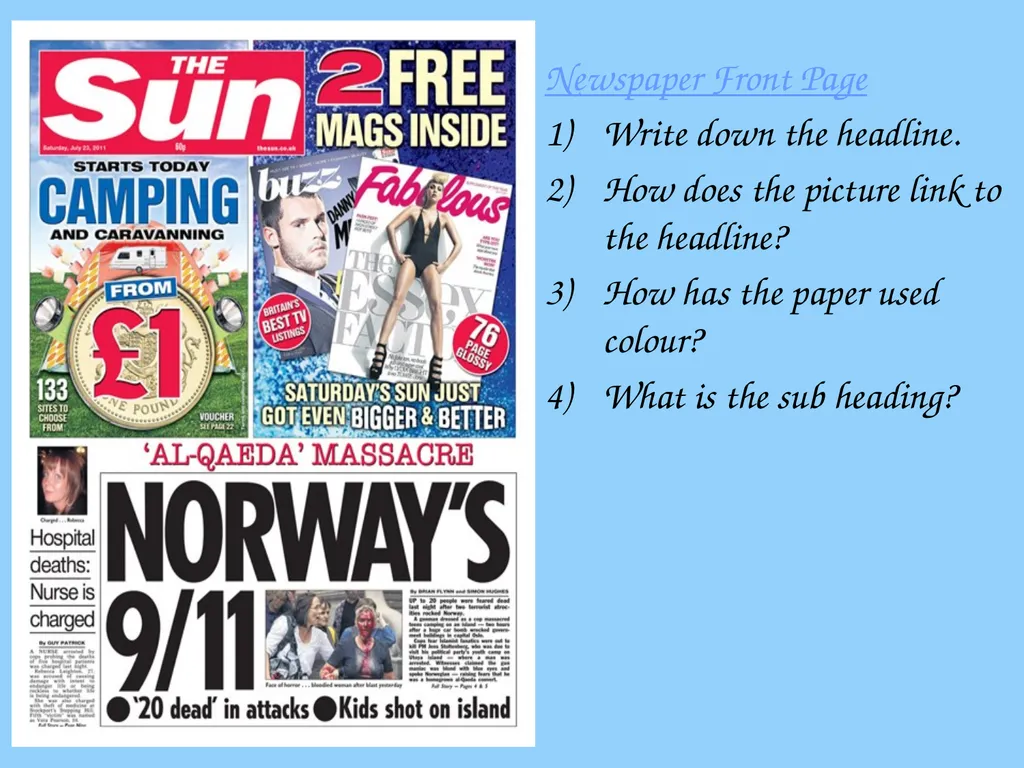
Newspaper Front Page
Write down the headline.
How does the picture link to the headline?
How has the paper used colour?
What is the sub heading?<br>
Write down the headline.
How does the picture link to the headline?
How has the paper used colour?
What is the sub heading?<br>
62
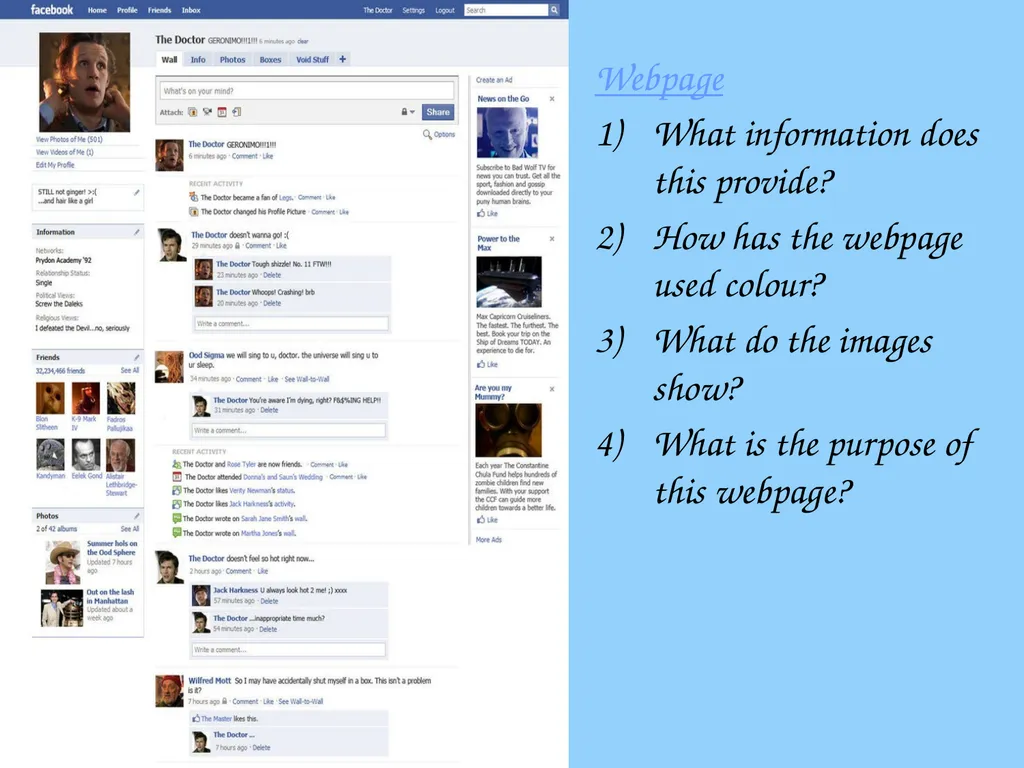
Webpage
What information does this provide?
How has the webpage used colour?
What do the images show?
What is the purpose of this webpage?<br>
What information does this provide?
How has the webpage used colour?
What do the images show?
What is the purpose of this webpage?<br>
63
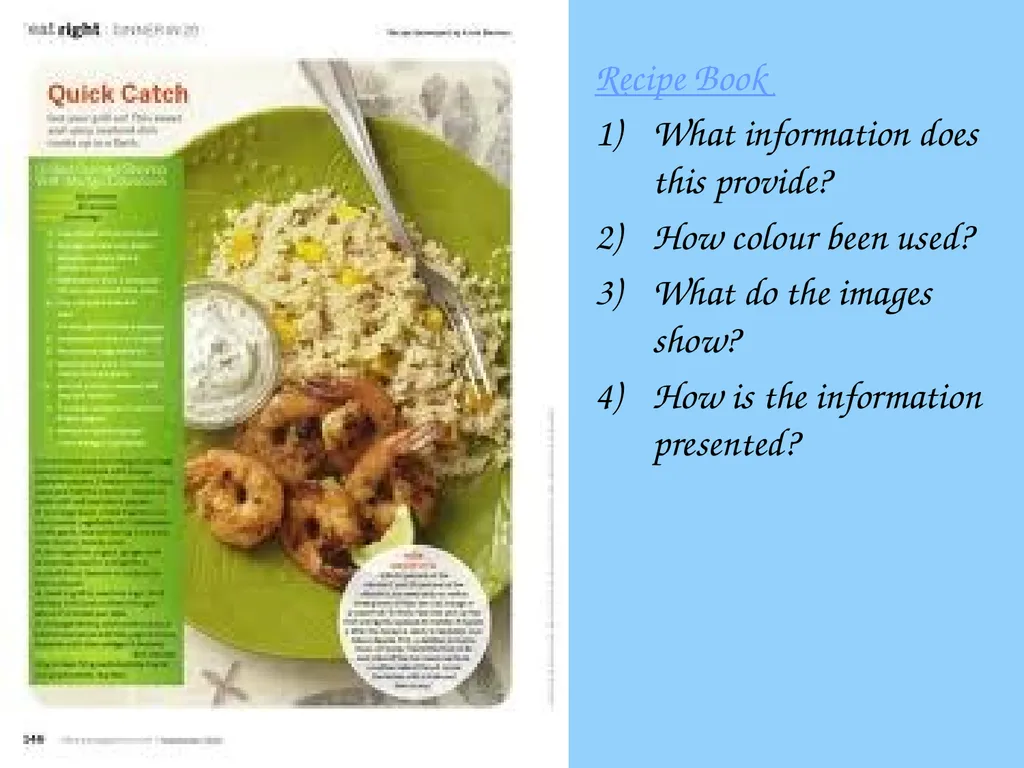
Recipe Book
What information does this provide?
How colour been used?
What do the images show?
How is the information presented?<br>
What information does this provide?
How colour been used?
What do the images show?
How is the information presented?<br>
64
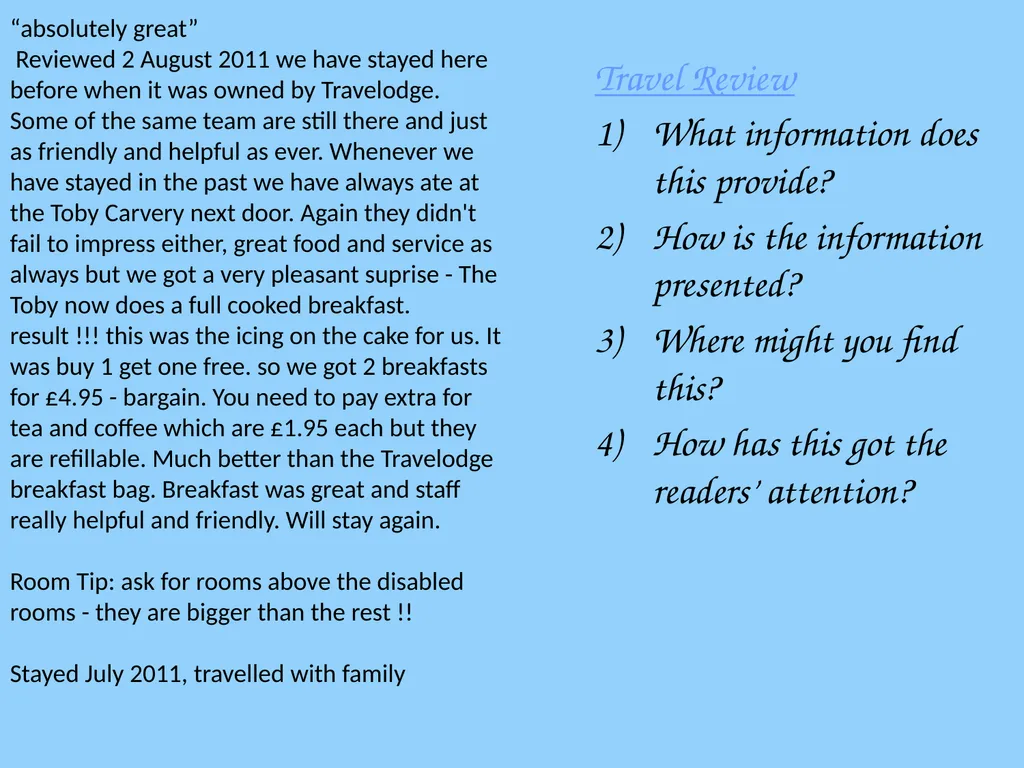
Travel Review
What information does this provide?
How is the information presented?
Where might you find this?
How has this got the readers’ attention? “absolutely great”
Reviewed 2 August 2011 we have stayed here before when it was owned by Travelodge. Some of the same team are still there and just as friendly and helpful as ever. Whenever we have stayed in the past we have always ate at the Toby Carvery next door. Again they didn't fail to impress either, great food and service as always but we got a very pleasant suprise - The Toby now does a full cooked breakfast. result !!! this was the icing on the cake for us. It was buy 1 get one free. so we got 2 breakfasts for £4.95 - bargain. You need to pay extra for tea and coffee which are £1.95 each but they are refillable. Much better than the Travelodge breakfast bag. Breakfast was great and staff really helpful and friendly. Will stay again.
Room Tip: ask for rooms above the disabled rooms - they are bigger than the rest !!
Stayed July 2011, travelled with family<br>
65
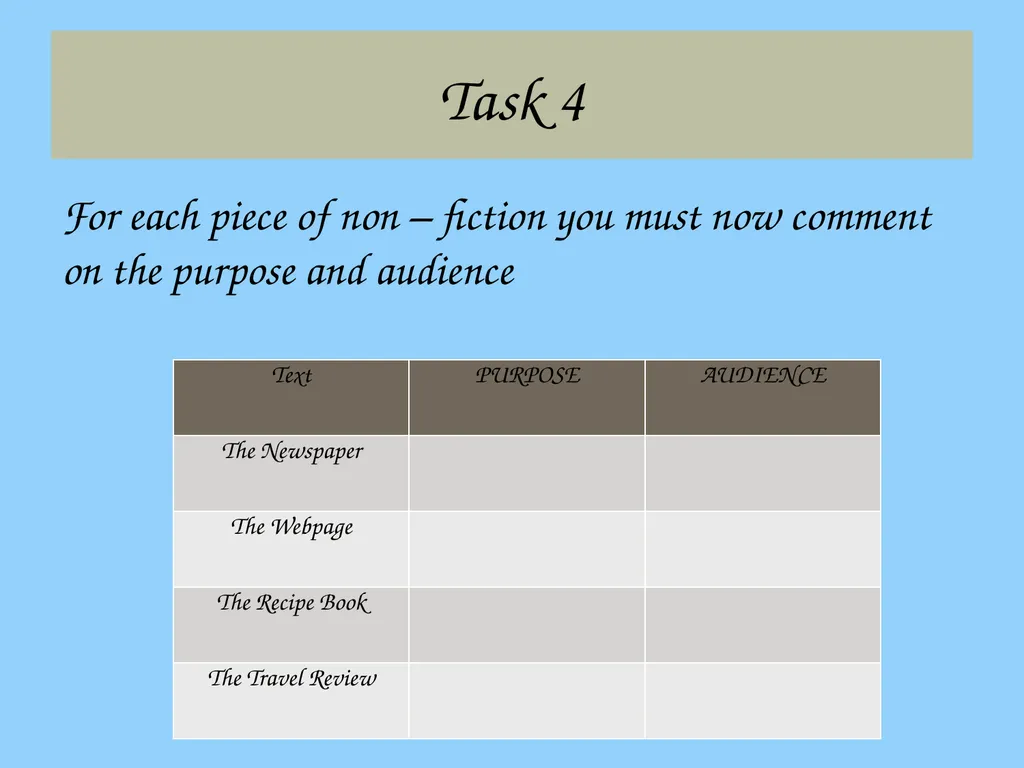
Task 4 For each piece of non – fiction you must now comment on the purpose and audience<br>
66
Task 5 Writing for a specific purpose
Show that a person is angry just by describing the way he/she buys three items at a supermarket.
Show that a person is afraid just by describing the way he/she starts a car and rives off.
Show that a person is worried just by describing the way he/she answers a ringing phone.
Show that a person is exhausted just by describing the way he/she arrives home.
Show that a person is shy just by describing the way he/she comes into a crowded room.<br>