Leaving no one behind: how do IFAD independent evaluations contribute? Simona Somma, Evaluation Officer, IOE Joint Conference RELAC-REDLACME-IDEAS Guanajuato, 6 December 2017 IFAD in the context of the Sustainable Development Agenda - 2 -
"Leaving no one behind: how do IFAD independent" is the property of its rightful owner. Permission is granted to
download and print the materials on this website for personal, non-commercial use only, and to display it
on your personal computer provided you do not modify the materials and that you retain all copyright
notices contained in the materials. By downloading content from our website, you accept the terms of this
agreement.
Presentation Transcript
01
Leaving no one behind: how do IFAD independent evaluations contribute? Simona Somma, Evaluation Officer, IOE
Joint Conference RELAC-REDLACME-IDEAS
Guanajuato, 6 December 2017<br>
02
IFAD in the context of the Sustainable Development Agenda - 2 - IFAD’s Mandate – to reduce rural poverty through investments in agriculture and rural development
IFAD 2016-2025 Strategic Framework: targeting is a principle of engagement
IFAD Policy on Targeting (2006):
IFAD’s target group: rural people living in poverty and food insecurity in developing countries. Reach the extremely poor people.
Targeting methods: geographic, self and direct<br>
03
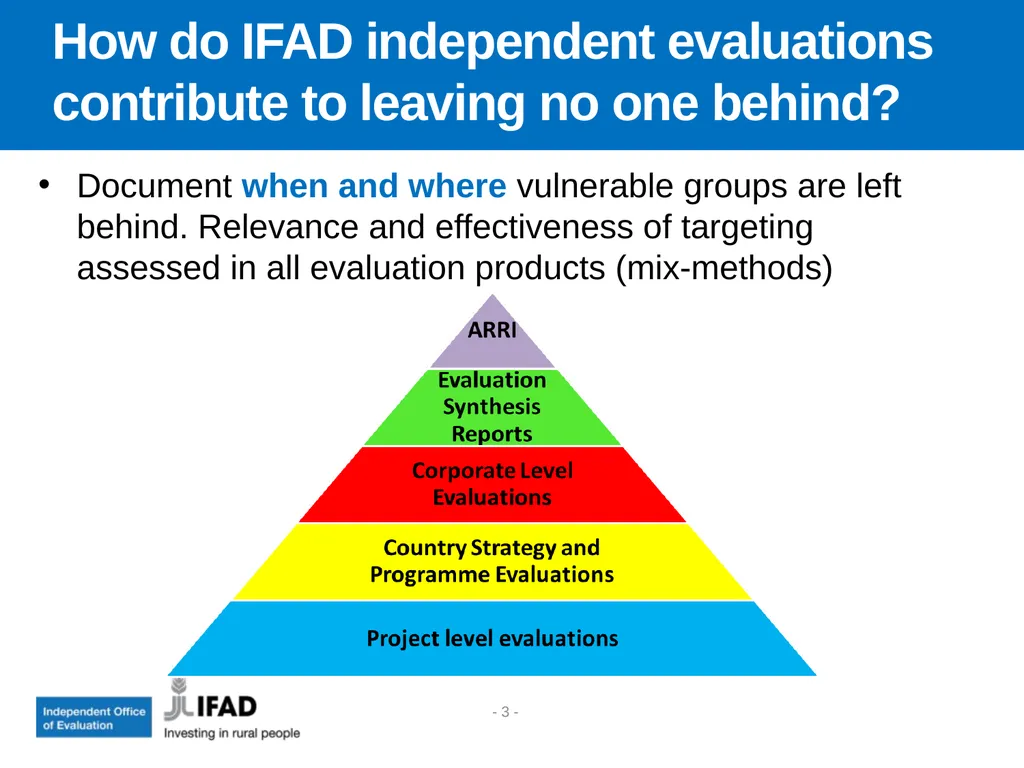
How do IFAD independent evaluations contribute to leaving no one behind? - 3 - Document when and where vulnerable groups are left behind. Relevance and effectiveness of targeting assessed in all evaluation products (mix-methods)<br>
04
How do IFAD independent evaluations contribute to leaving no one behind? (cont.) - 4 - Explain why they are left behind;
Provide lessons and recommendations on how to improve and what to do, so that they are not left behind.
IFAD’s Management Response System:
President’s Report on the Implementation Status of Evaluation Recommendations and Management Actions (PRISMA)<br>
05
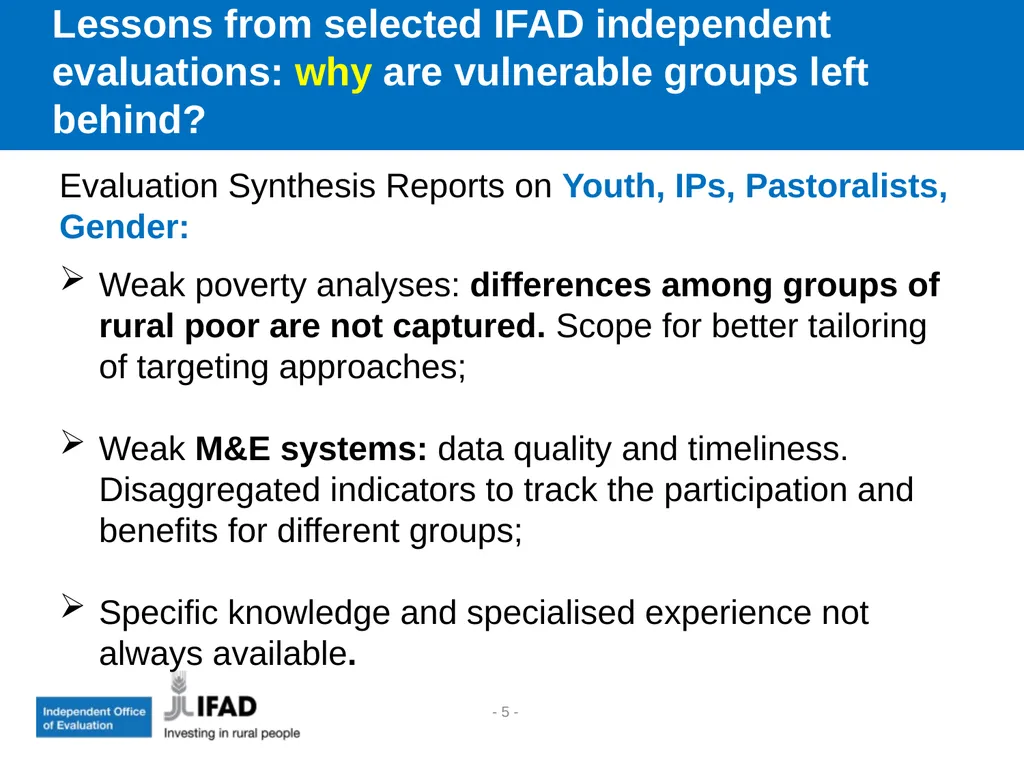
Lessons from selected IFAD independent evaluations: why are vulnerable groups left behind? - 5 - Evaluation Synthesis Reports on Youth, IPs, Pastoralists, Gender:
Weak poverty analyses: differences among groups of rural poor are not captured. Scope for better tailoring of targeting approaches;
Weak M&E systems: data quality and timeliness. Disaggregated indicators to track the participation and benefits for different groups;
Specific knowledge and specialised experience not always available.<br>
06
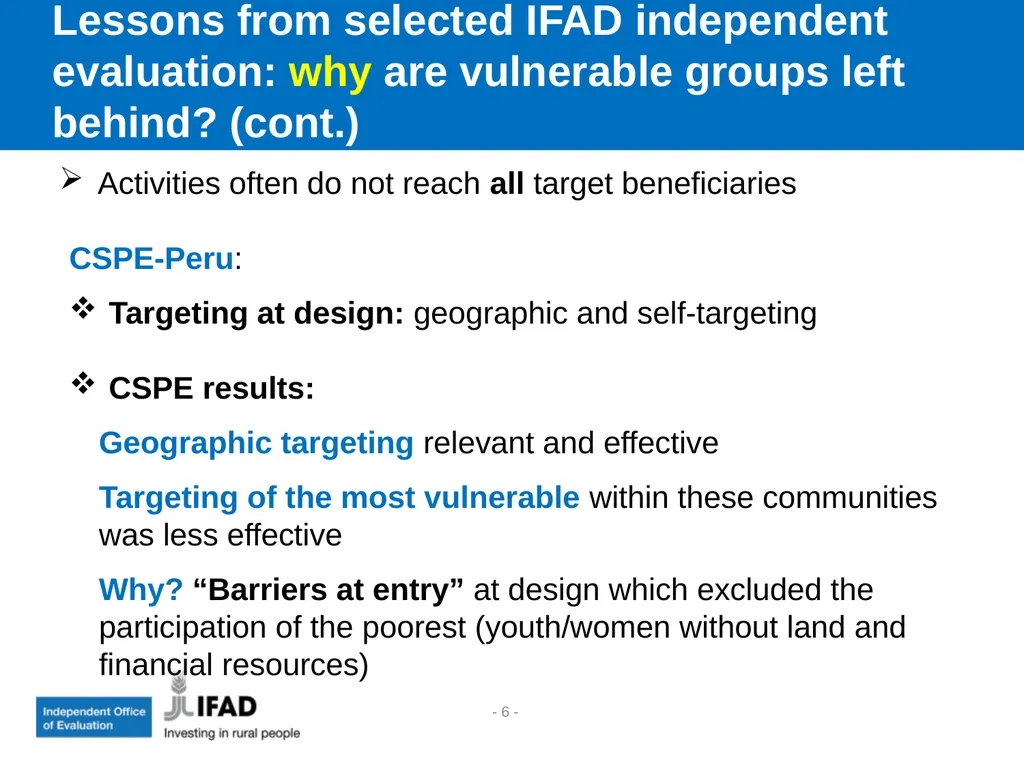
Lessons from selected IFAD independent evaluation: why are vulnerable groups left behind? (cont.) - 6 - Activities often do not reach all target beneficiaries
CSPE-Peru:
Targeting at design: geographic and self-targeting
CSPE results:
Geographic targeting relevant and effective
Targeting of the most vulnerable within these communities was less effective
Why? “Barriers at entry” at design which excluded the participation of the poorest (youth/women without land and financial resources)<br>
07
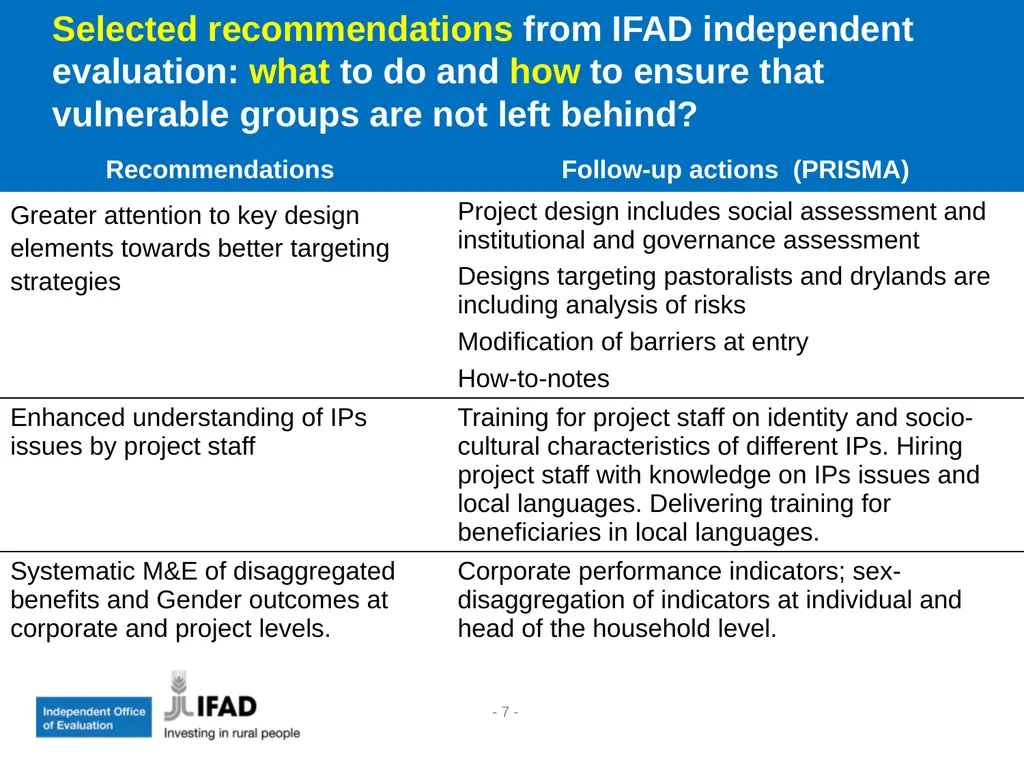
Selected recommendations from IFAD independent evaluation: what to do and how to ensure that vulnerable groups are not left behind? - 7 -<br>
08
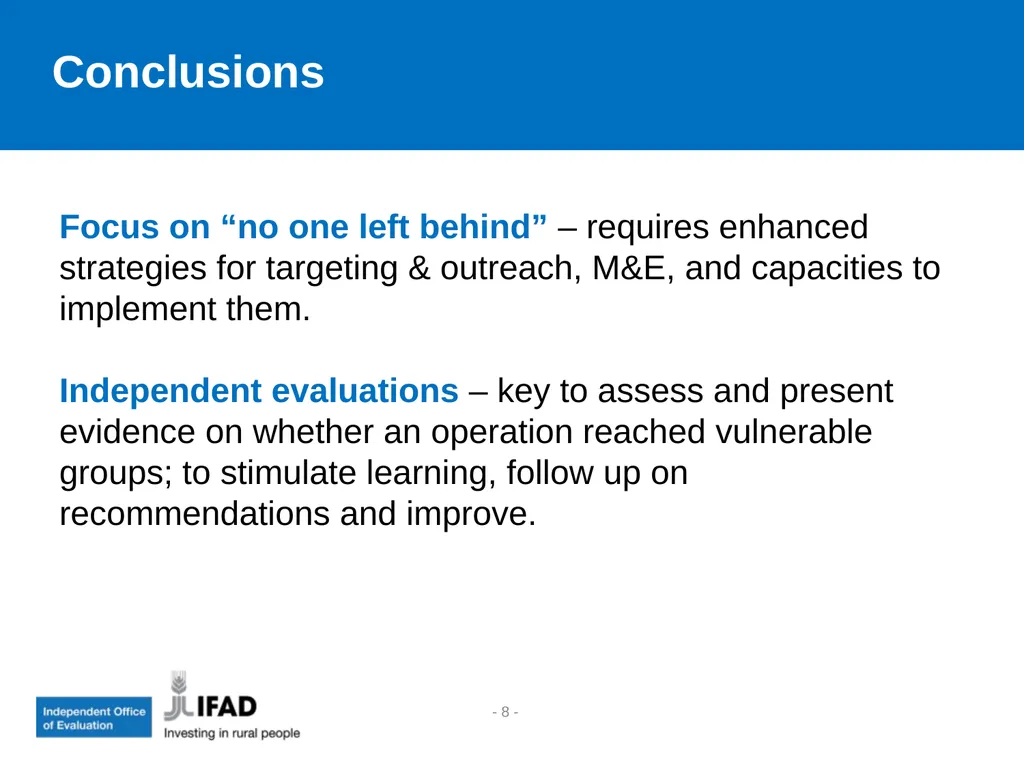
Conclusions - 8 - Focus on “no one left behind” – requires enhanced strategies for targeting & outreach, M&E, and capacities to implement them.
Independent evaluations – key to assess and present evidence on whether an operation reached vulnerable groups; to stimulate learning, follow up on recommendations and improve.<br>