
LECTURE NOTES SUBJECT: BASIC ELECTRONICS COURSE:
YM
Published · 104 slides · 0 views

1 / 1


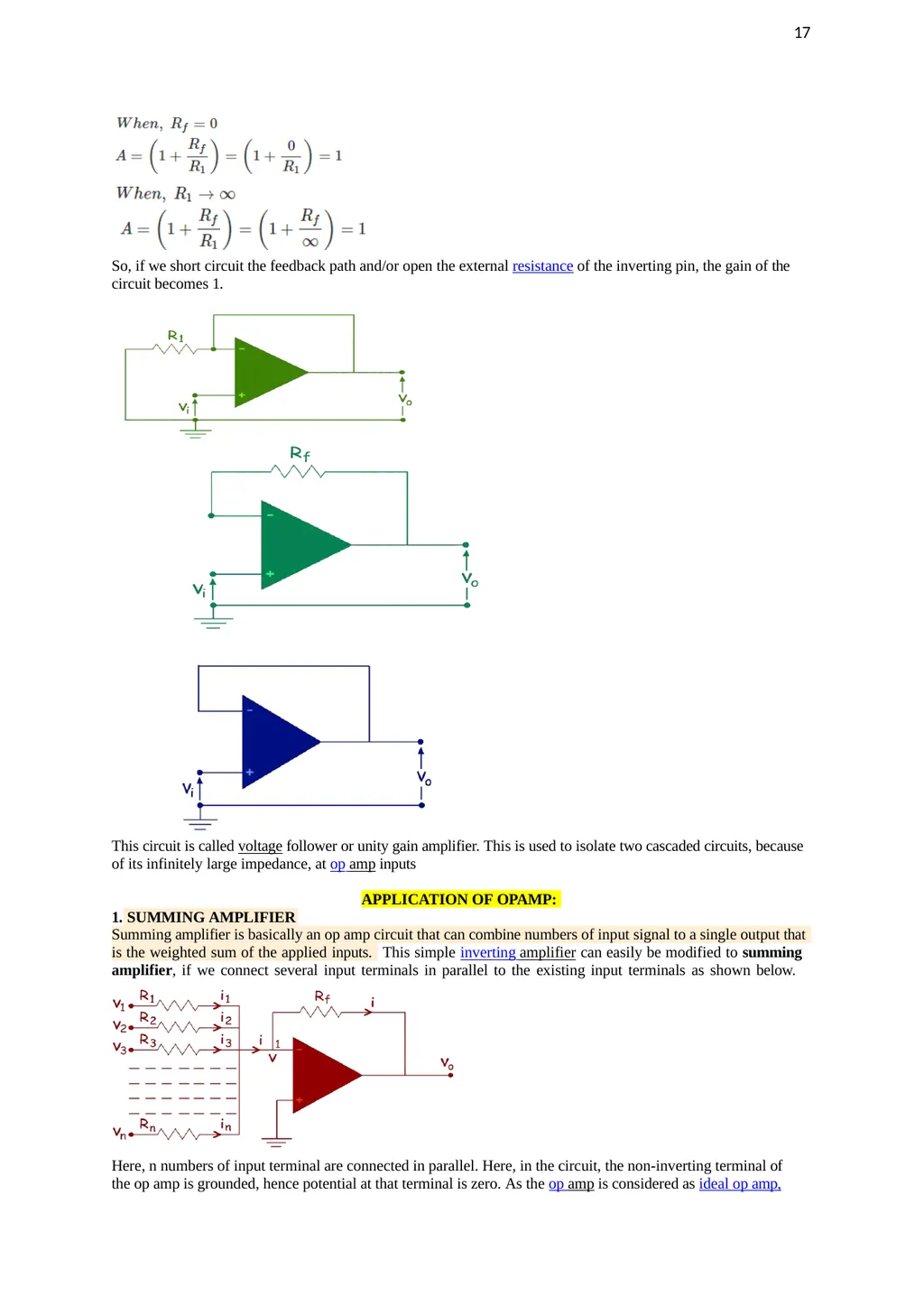
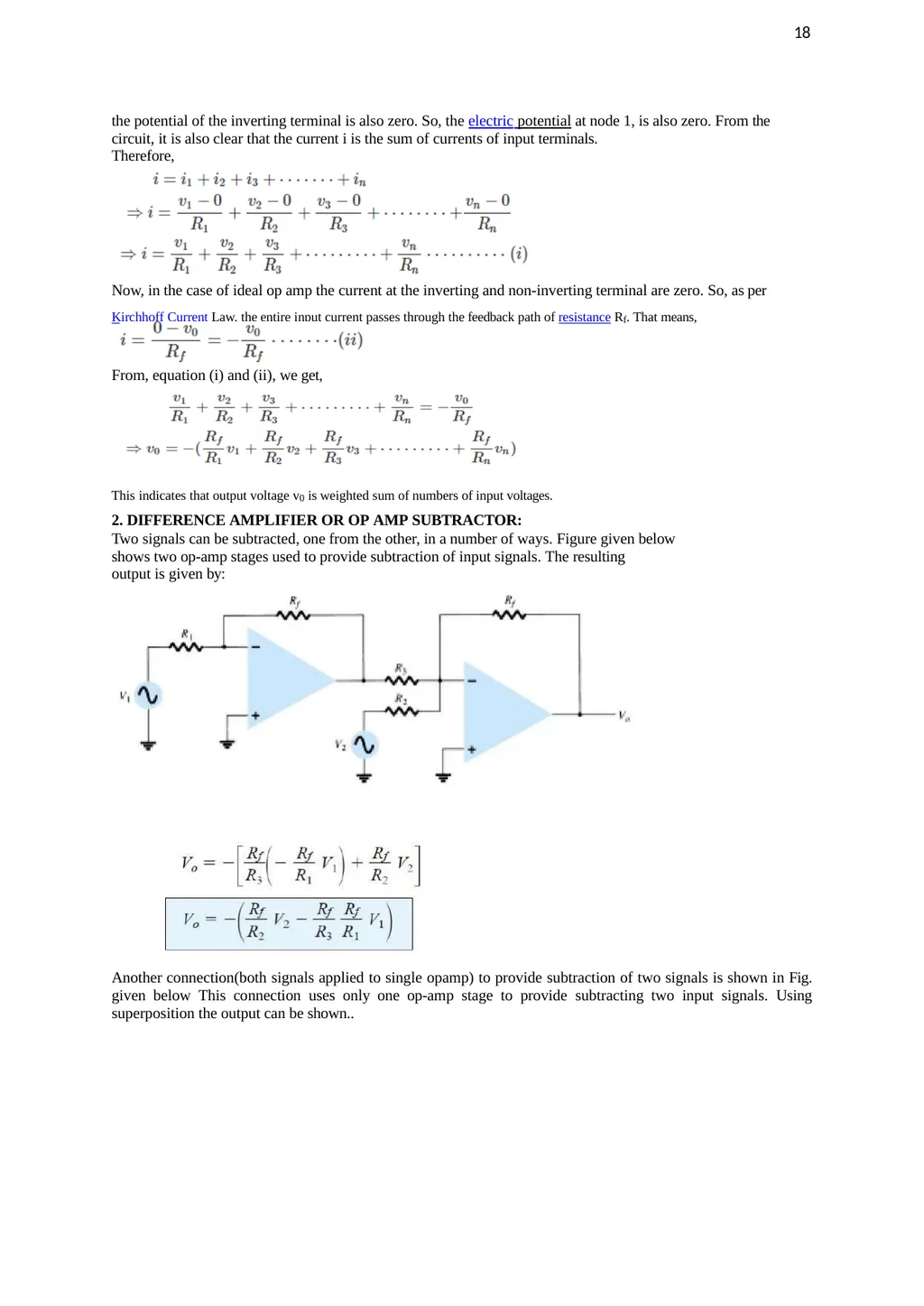
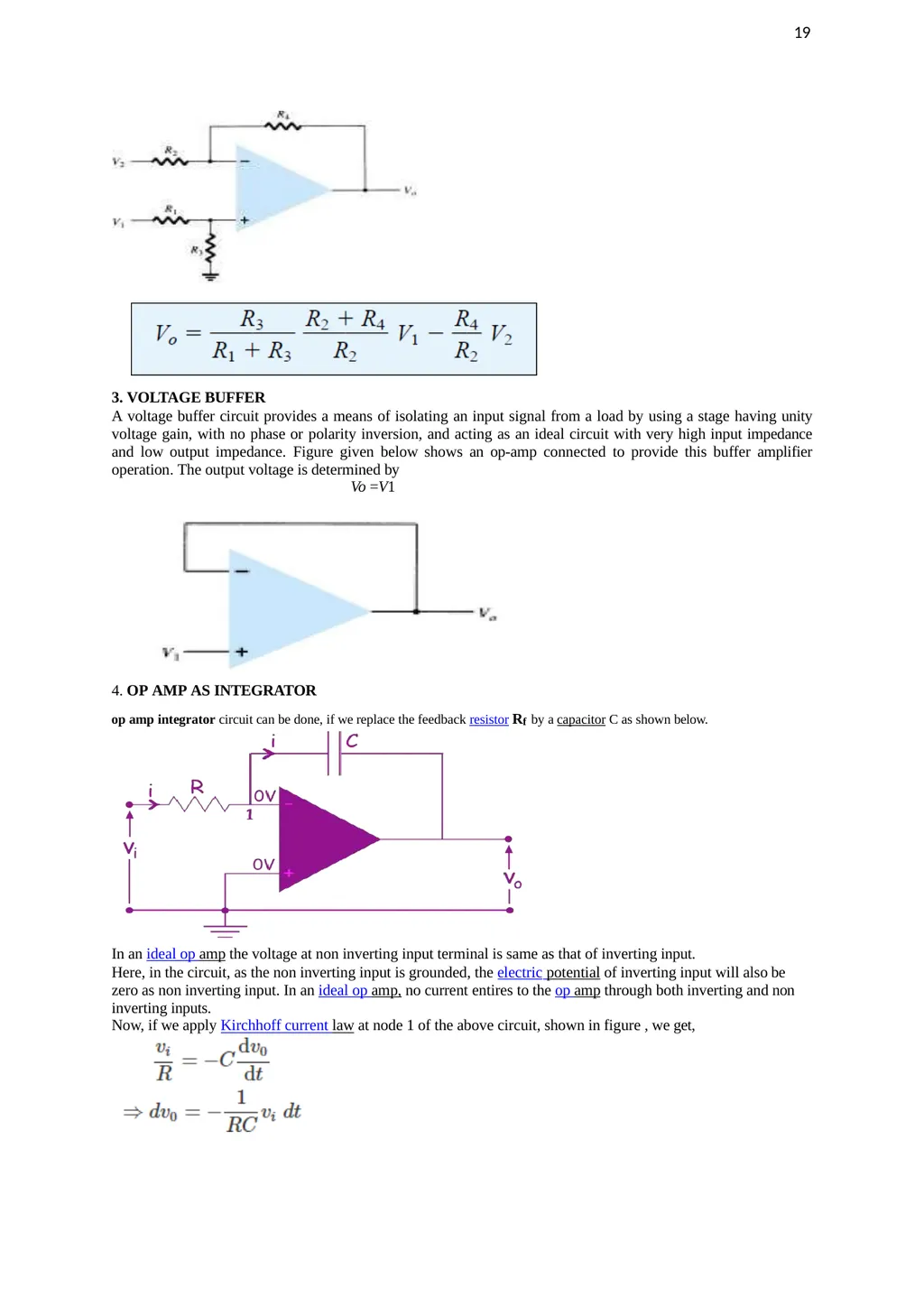
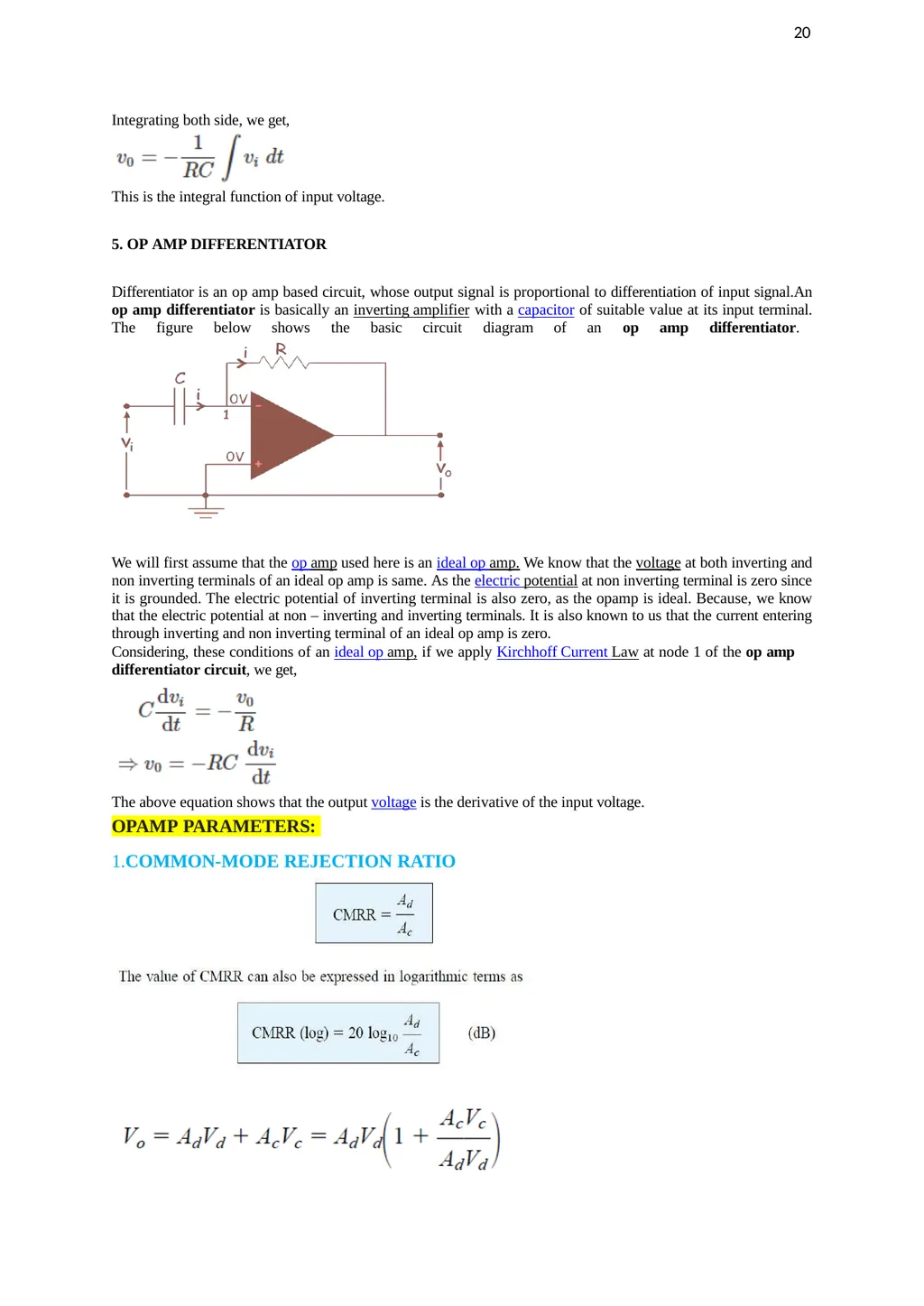

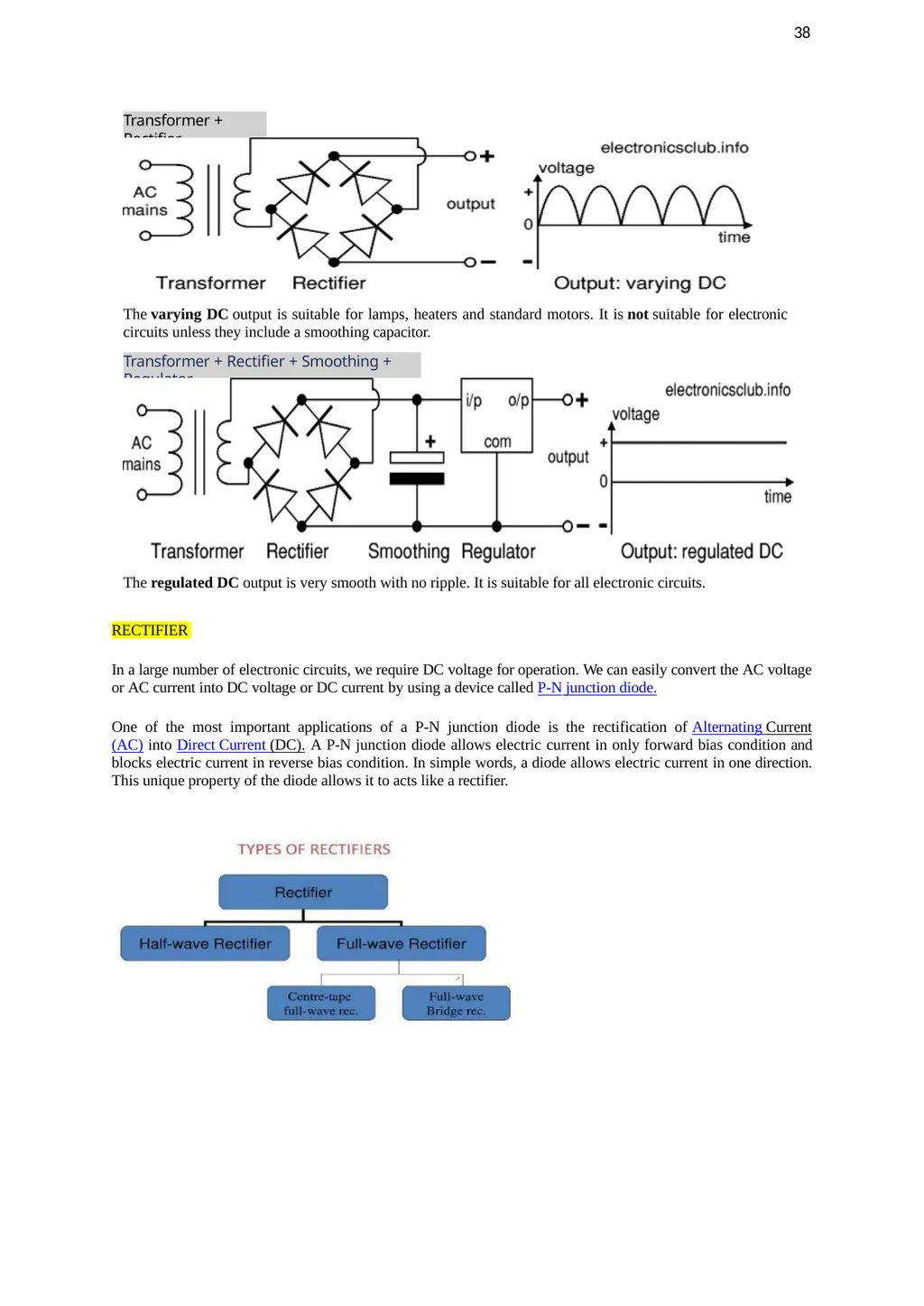
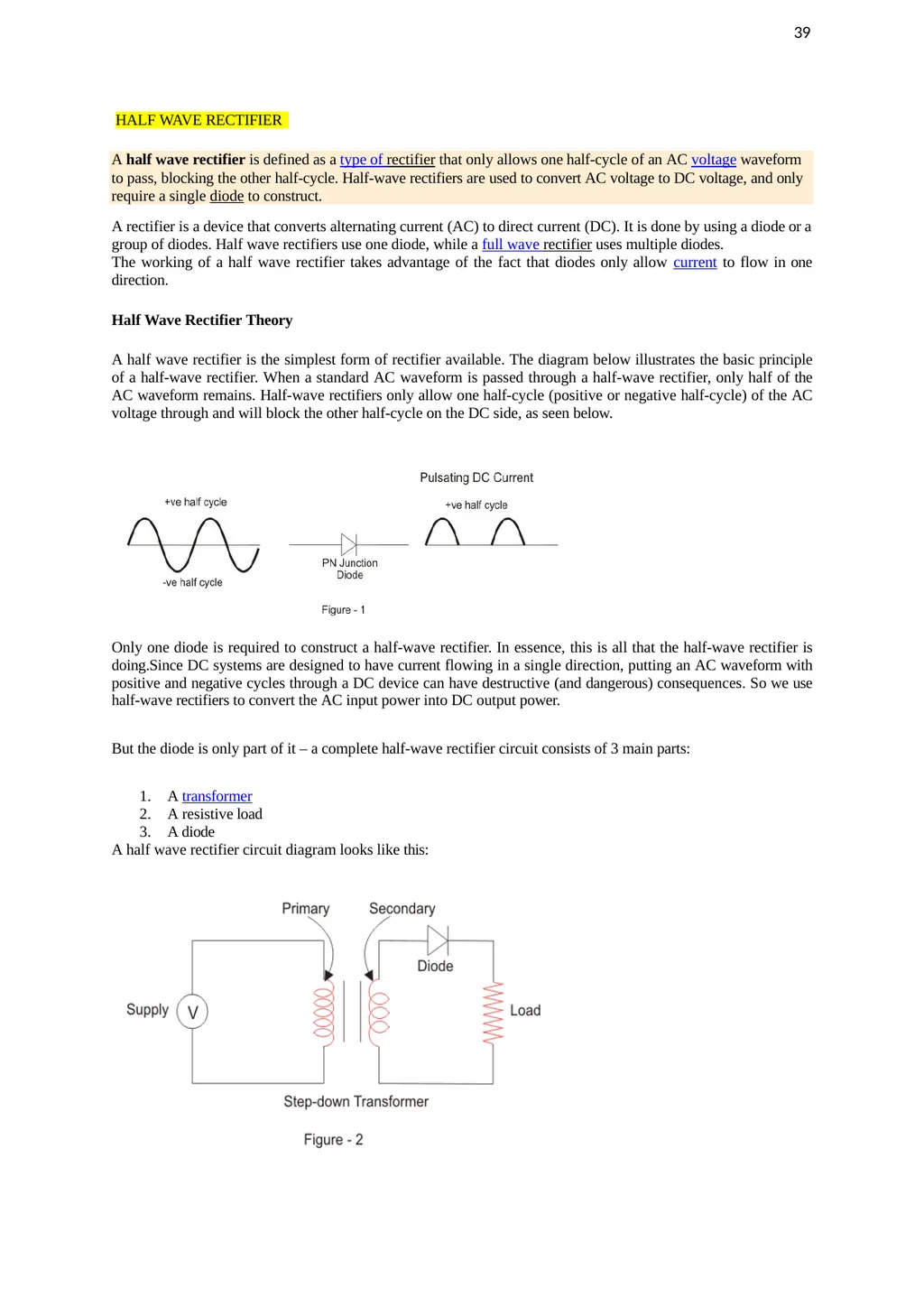
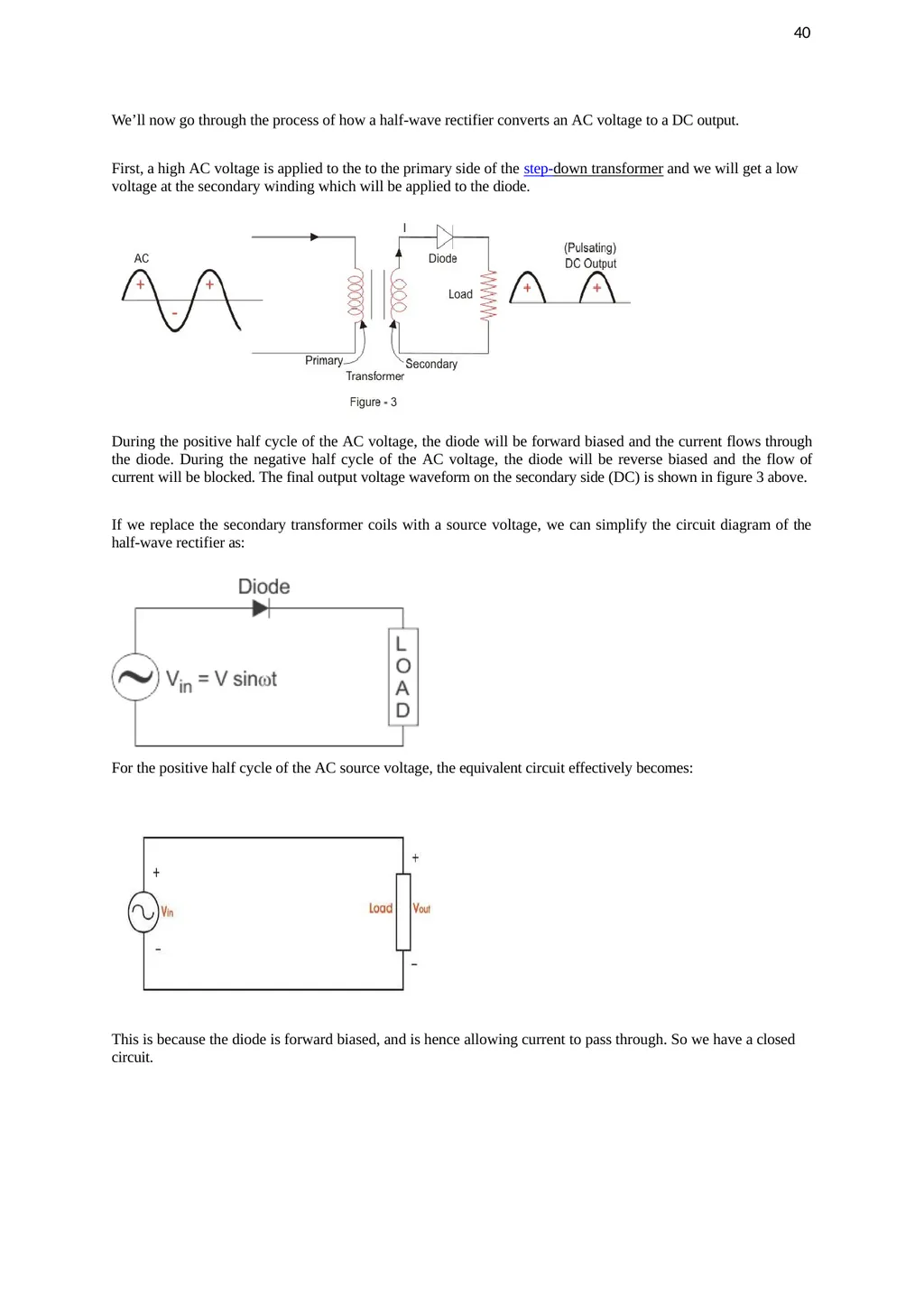
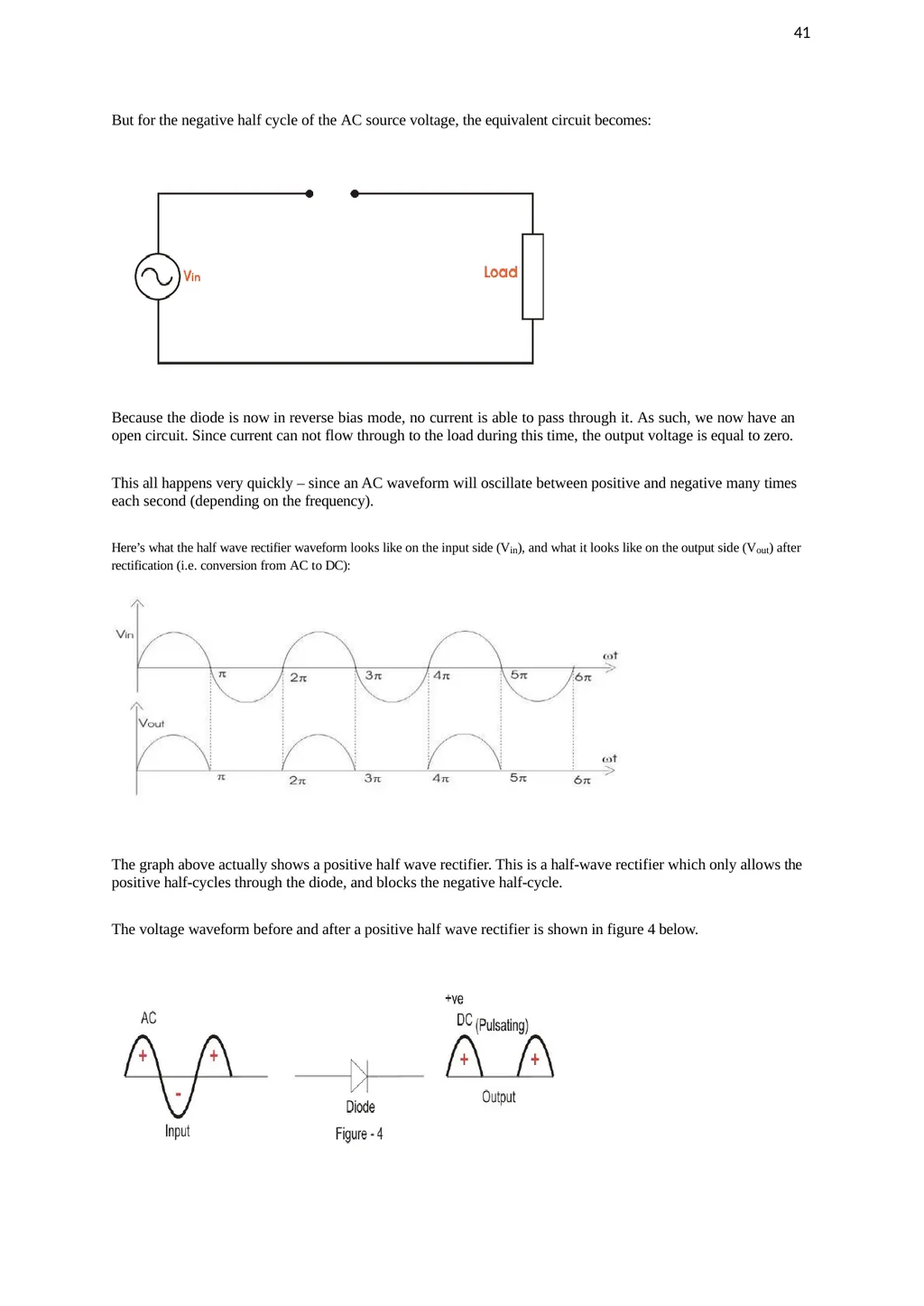
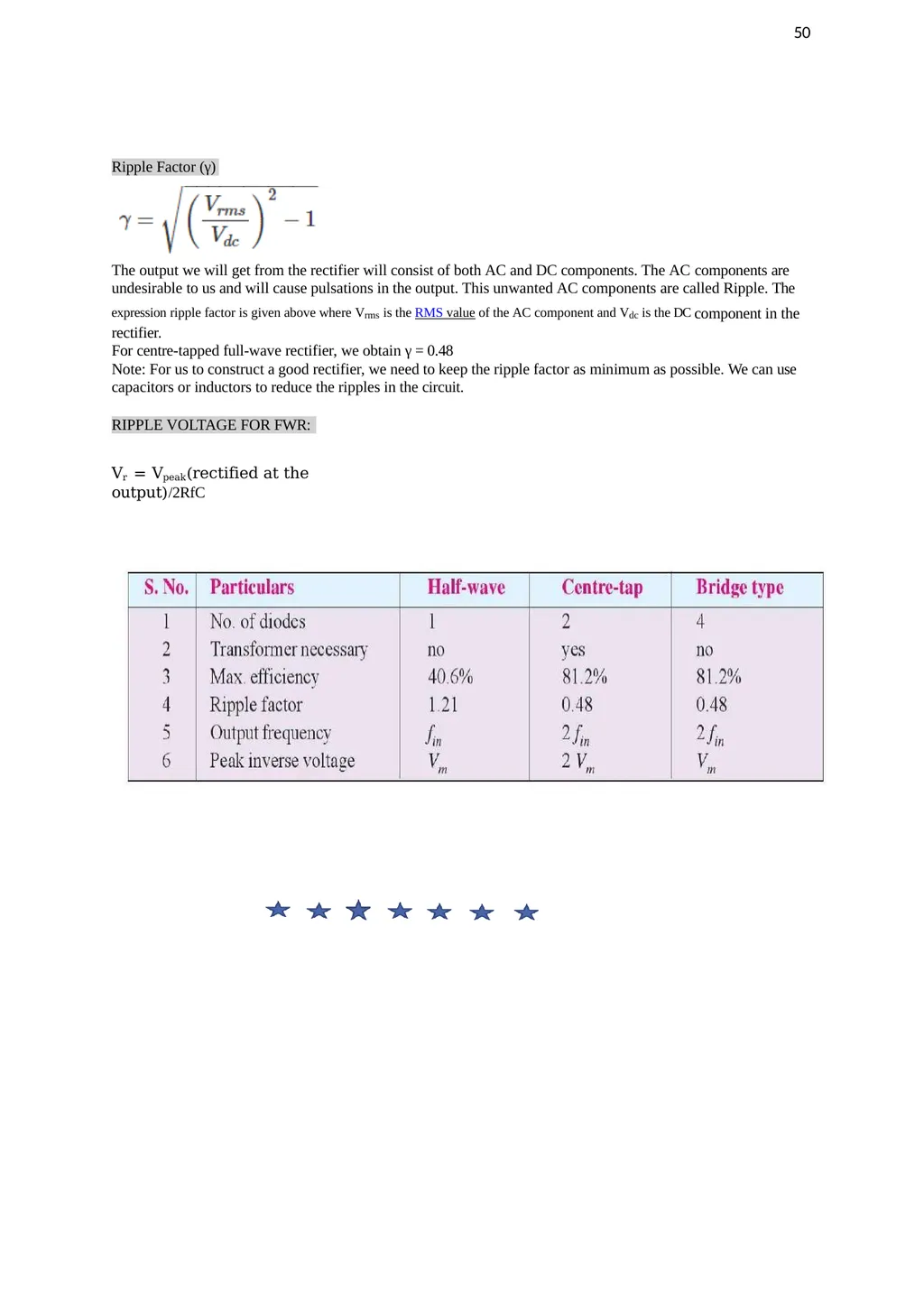
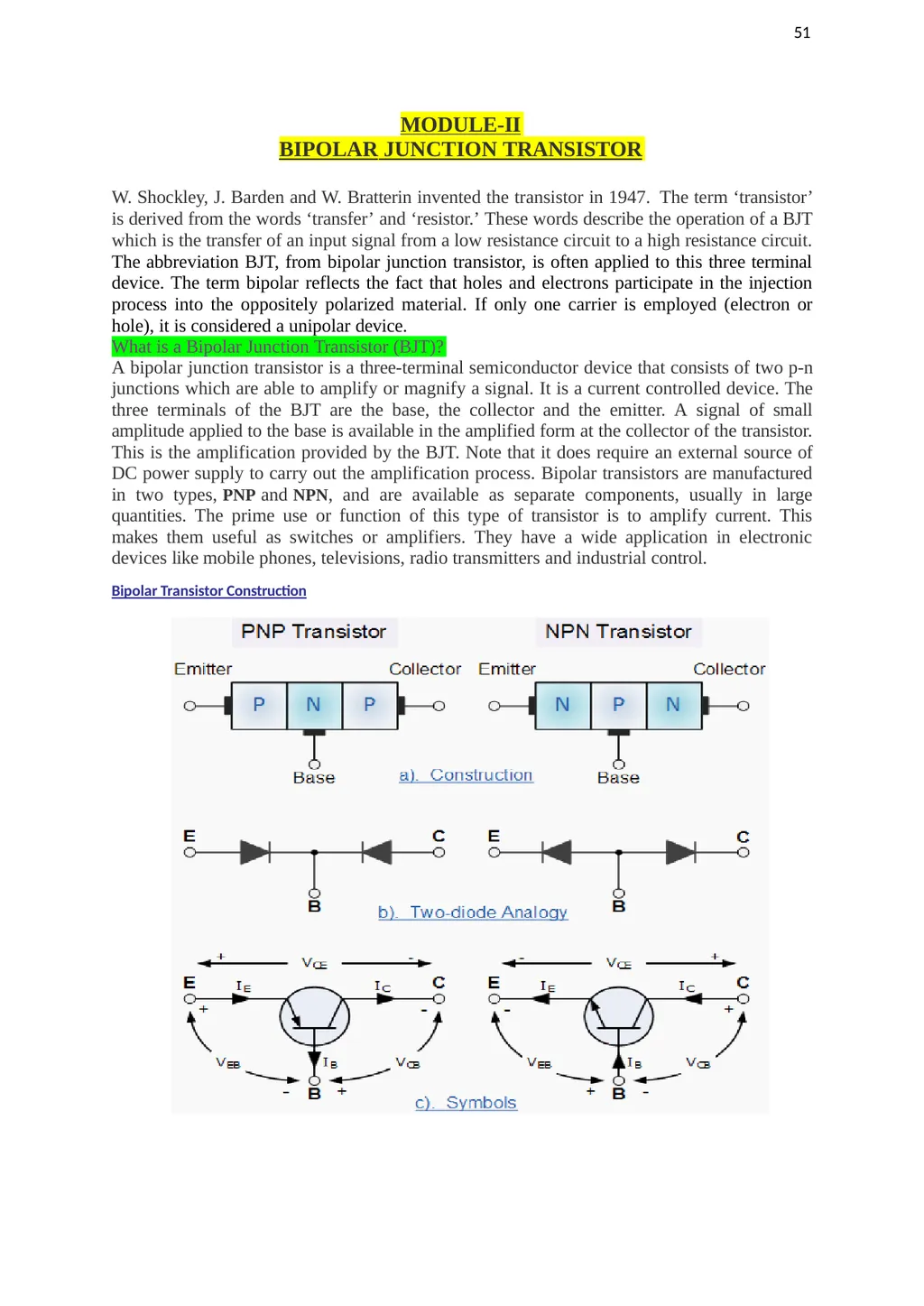
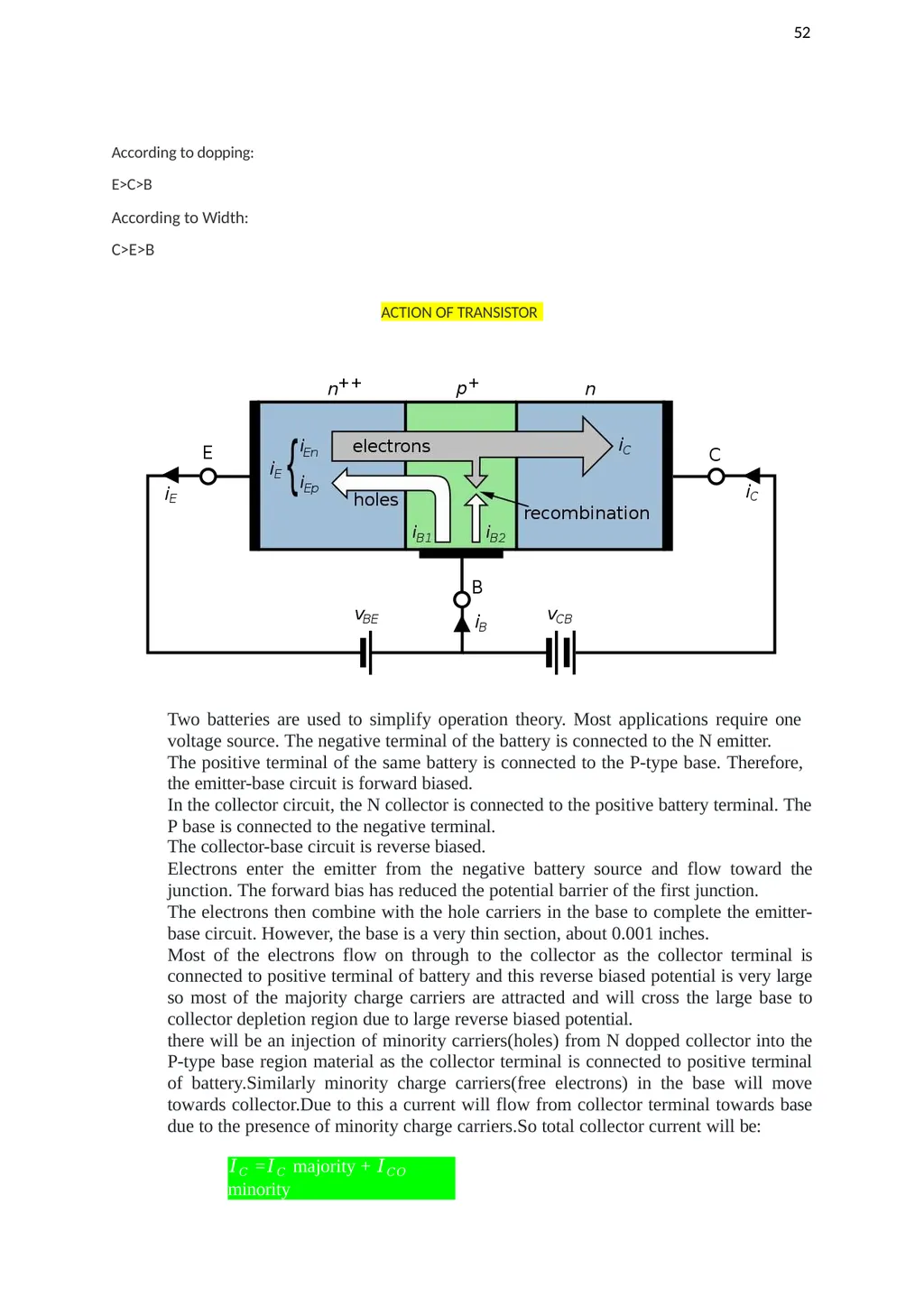
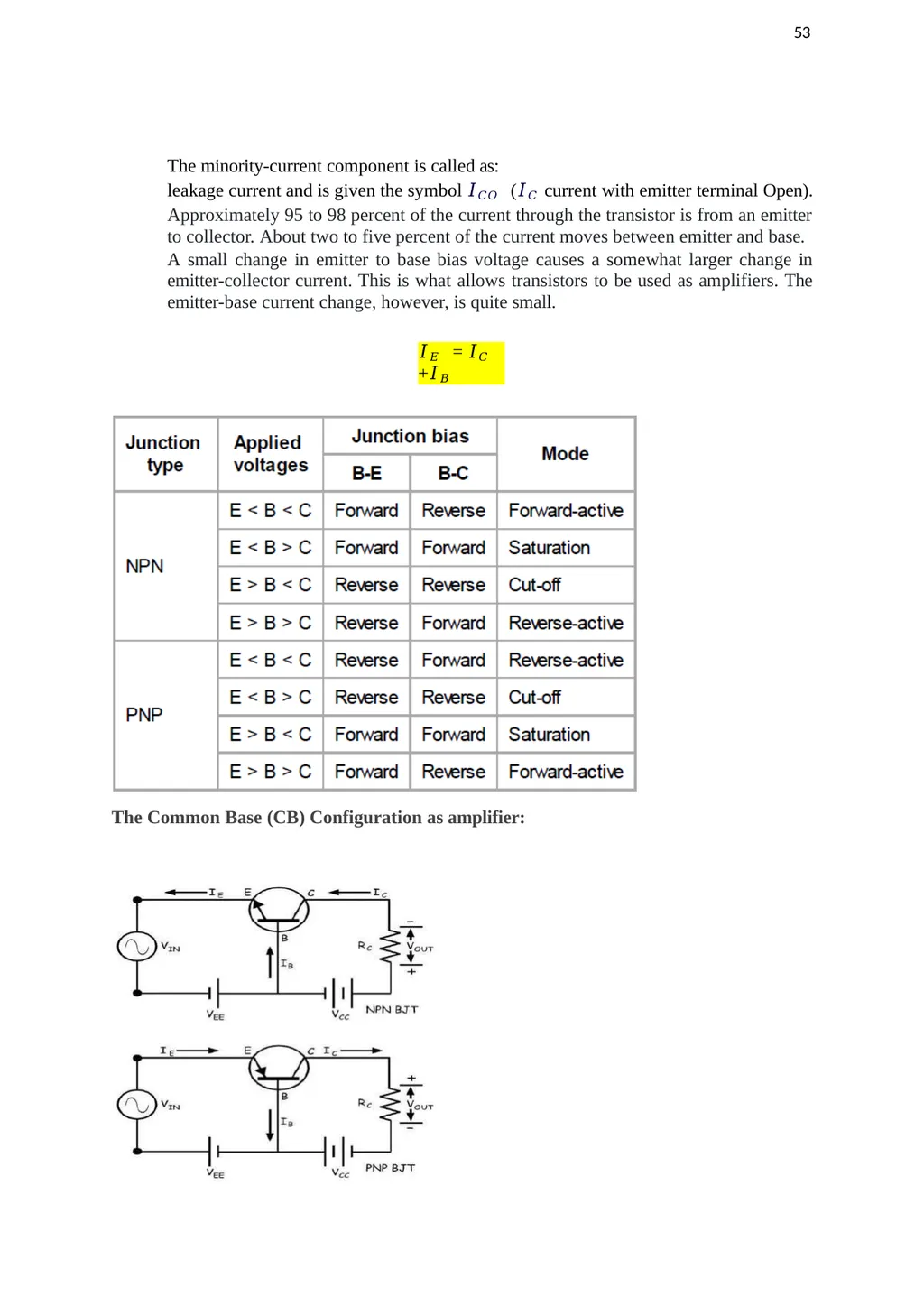
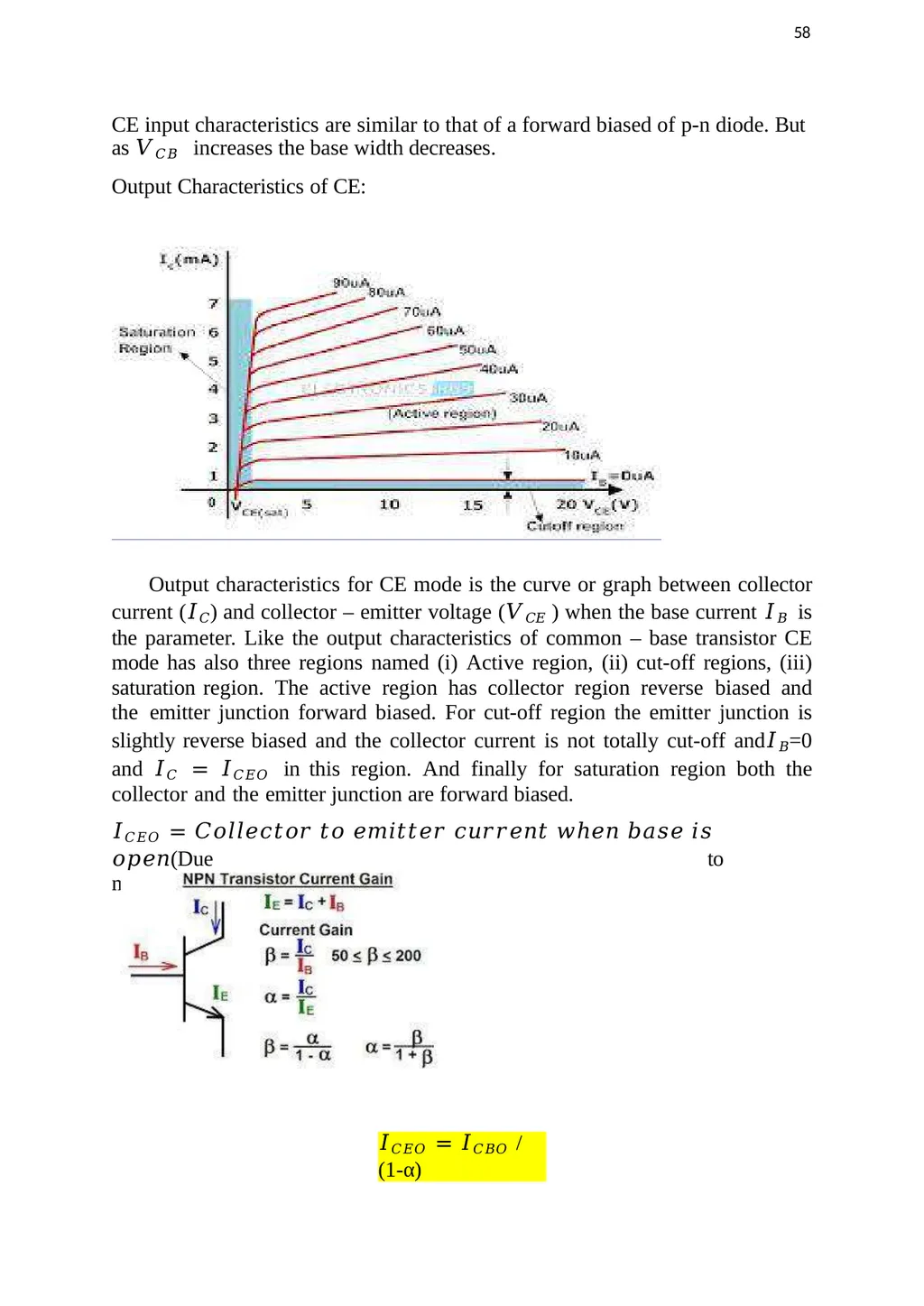
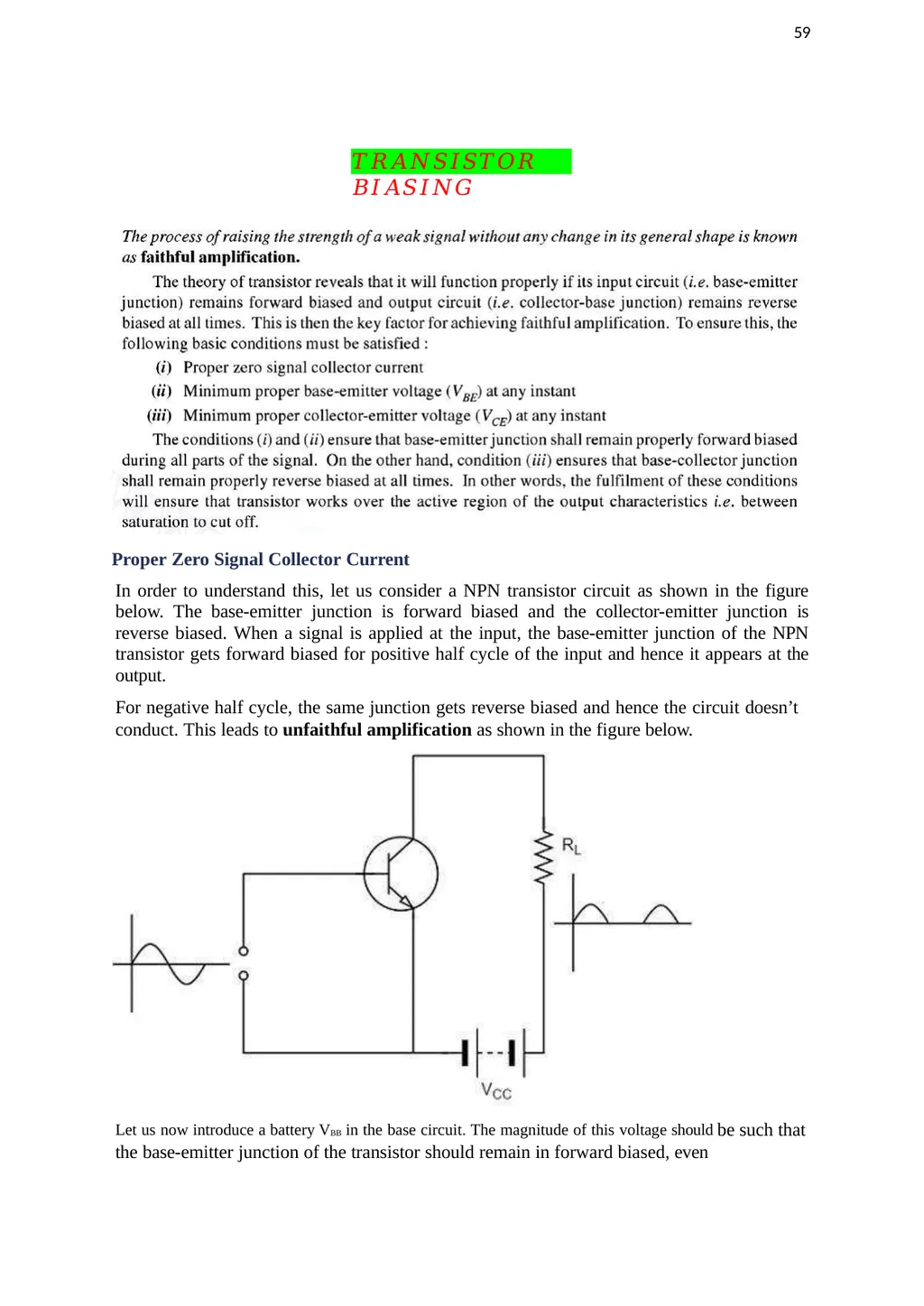
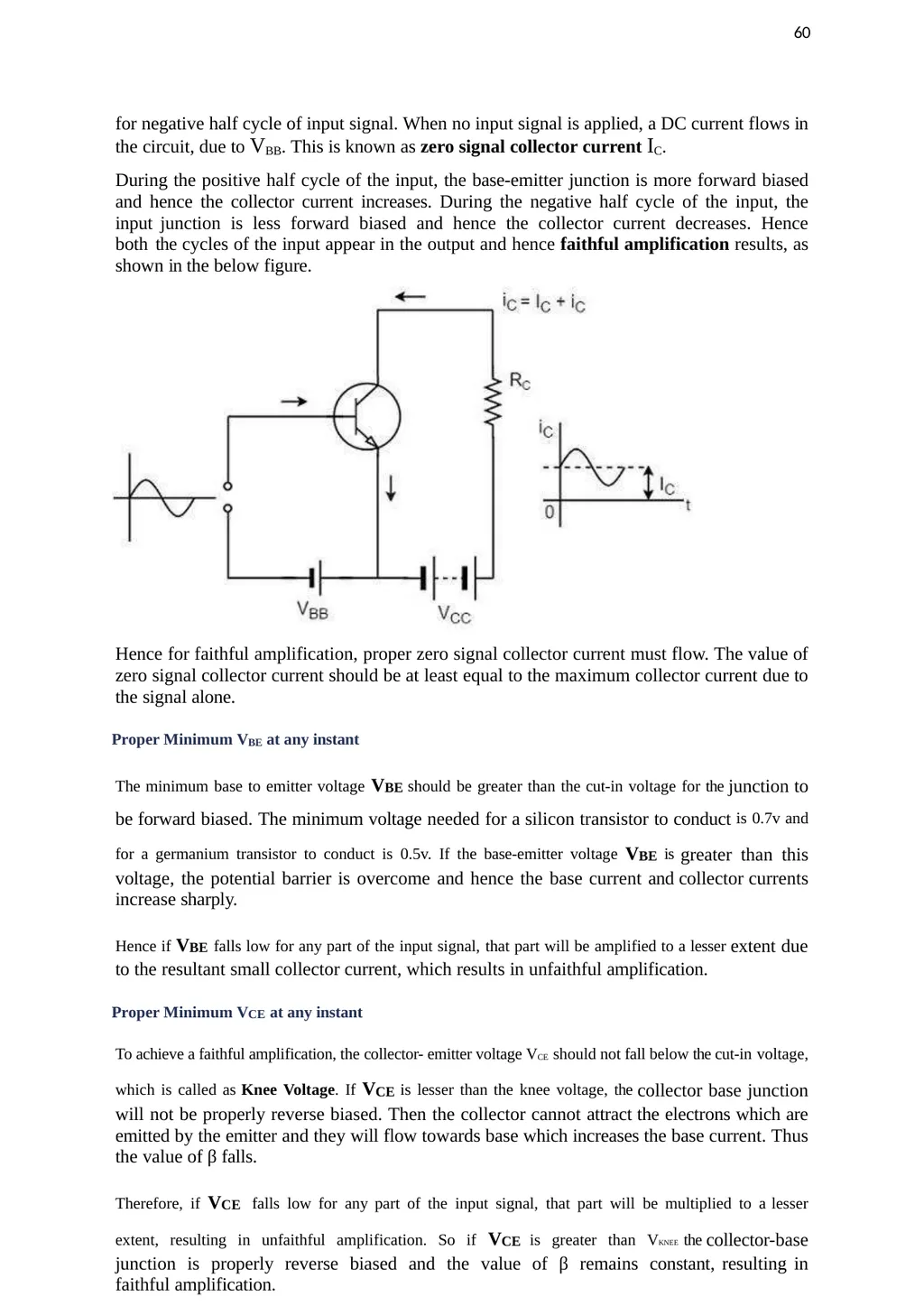
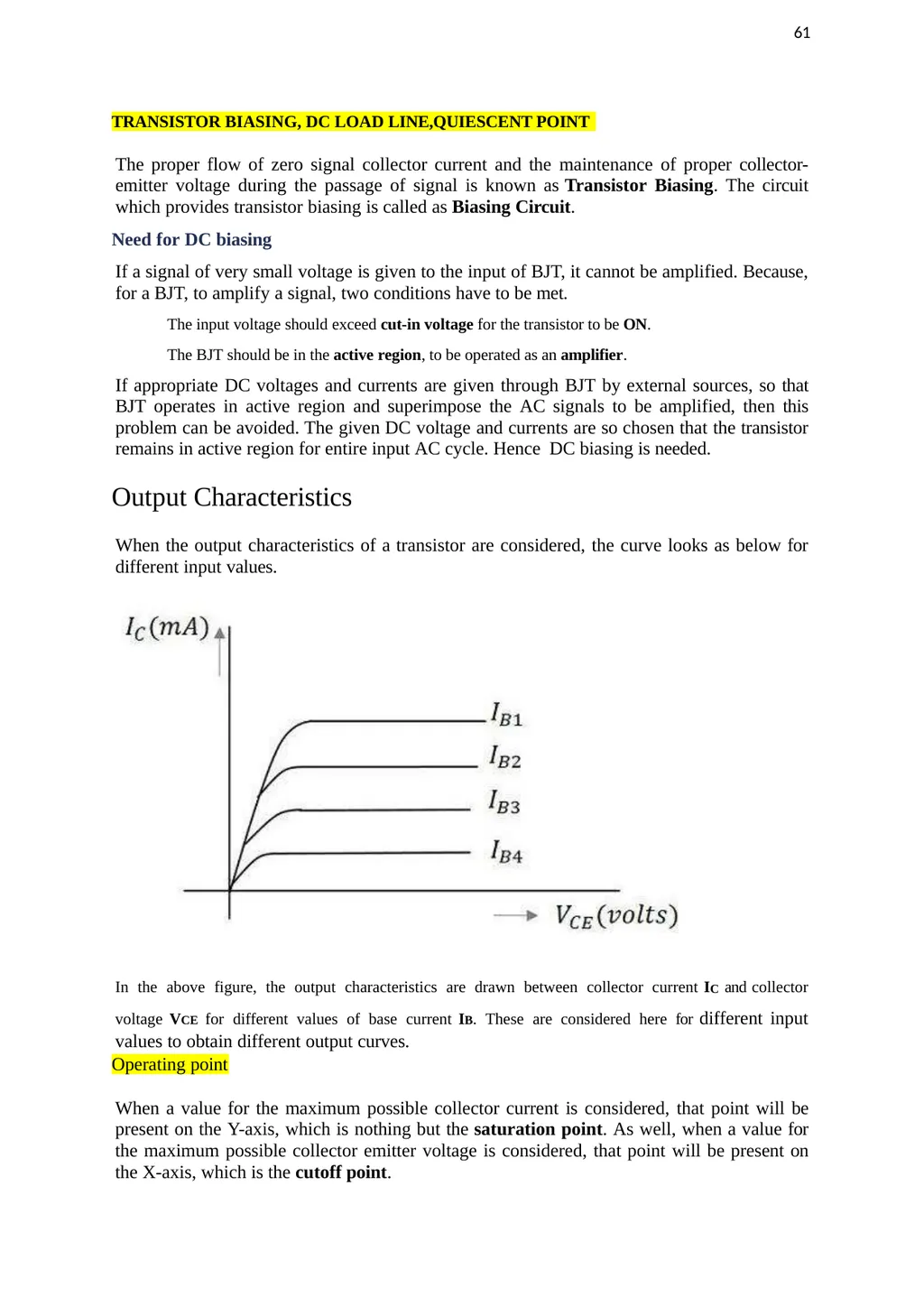
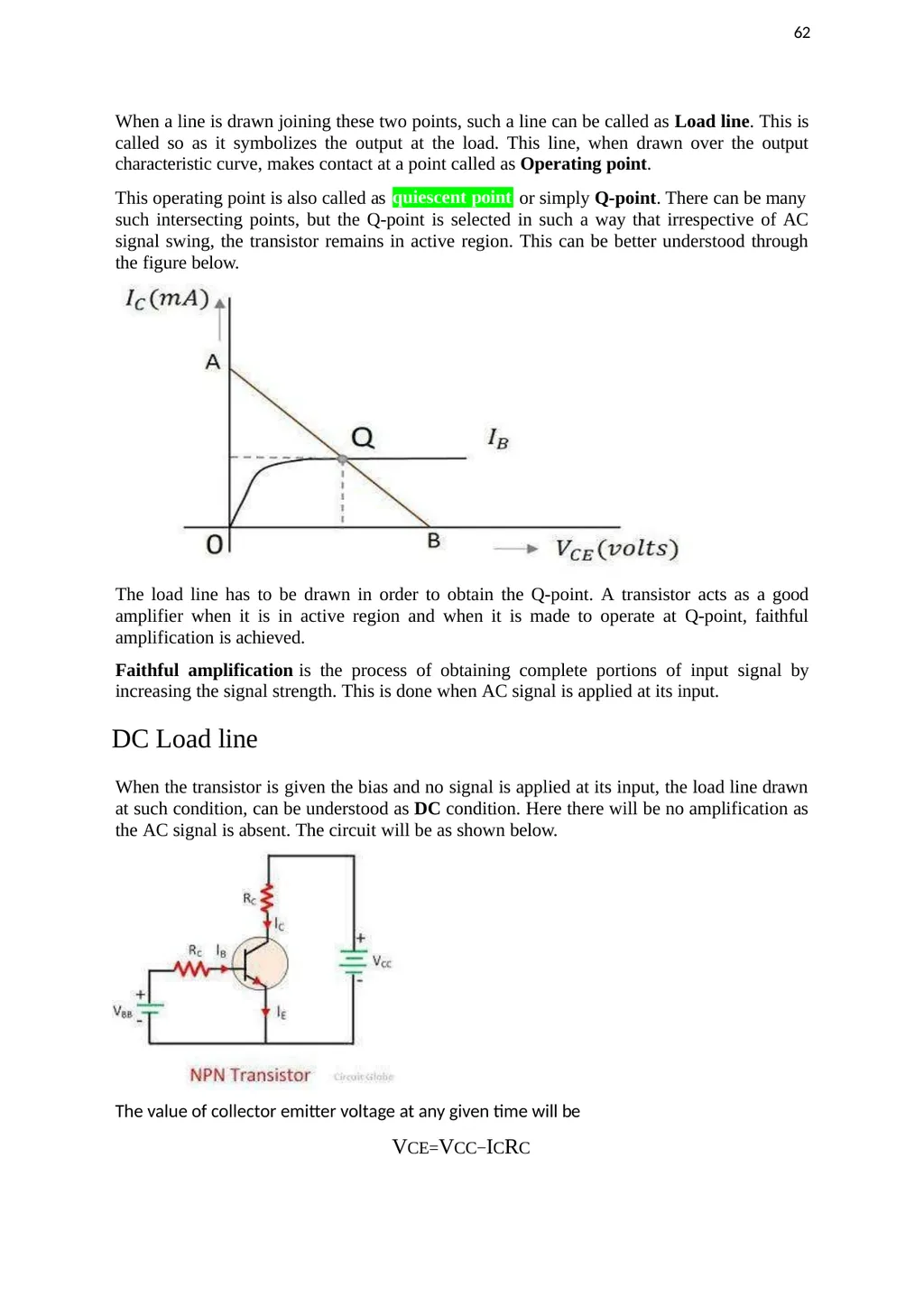
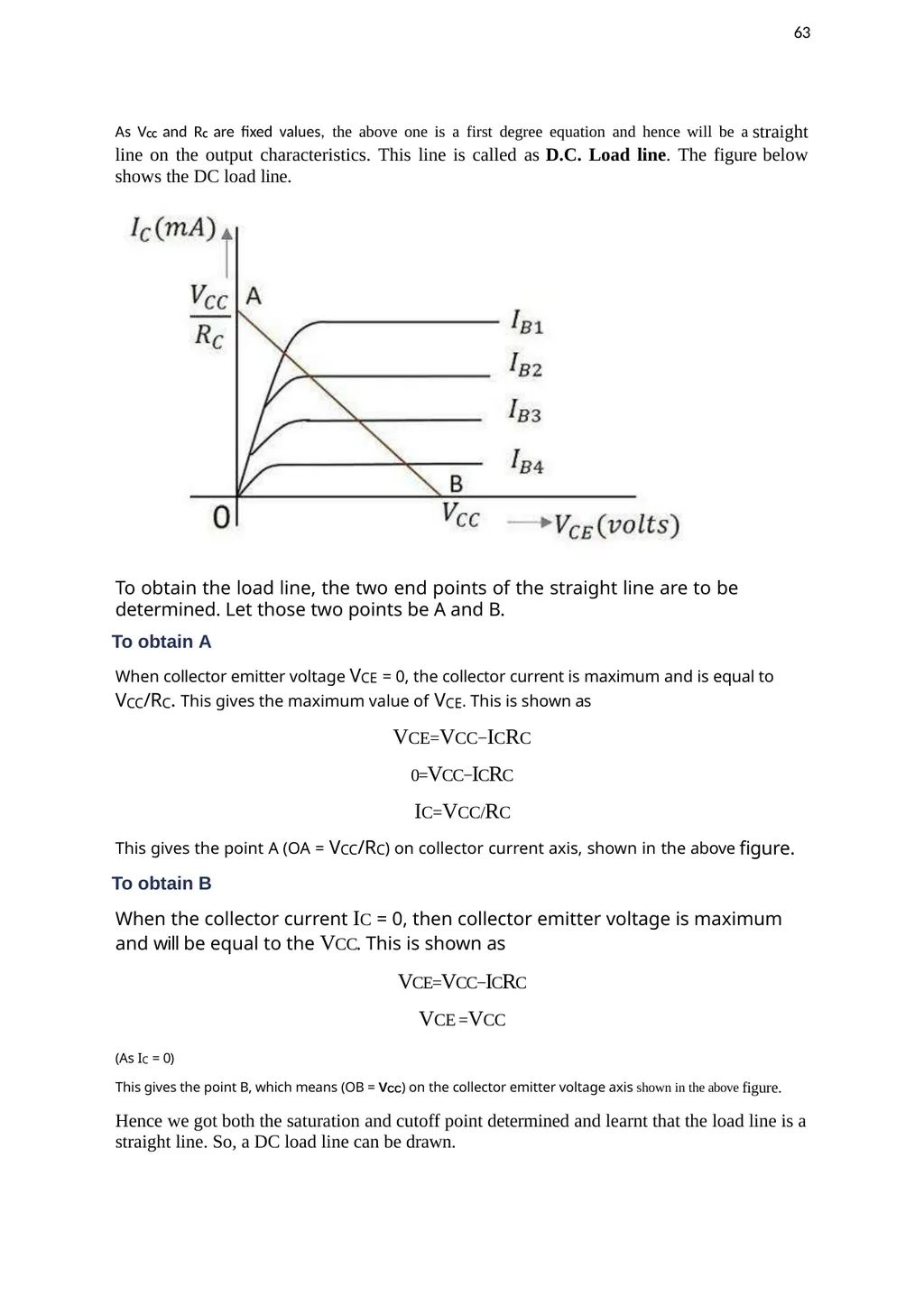
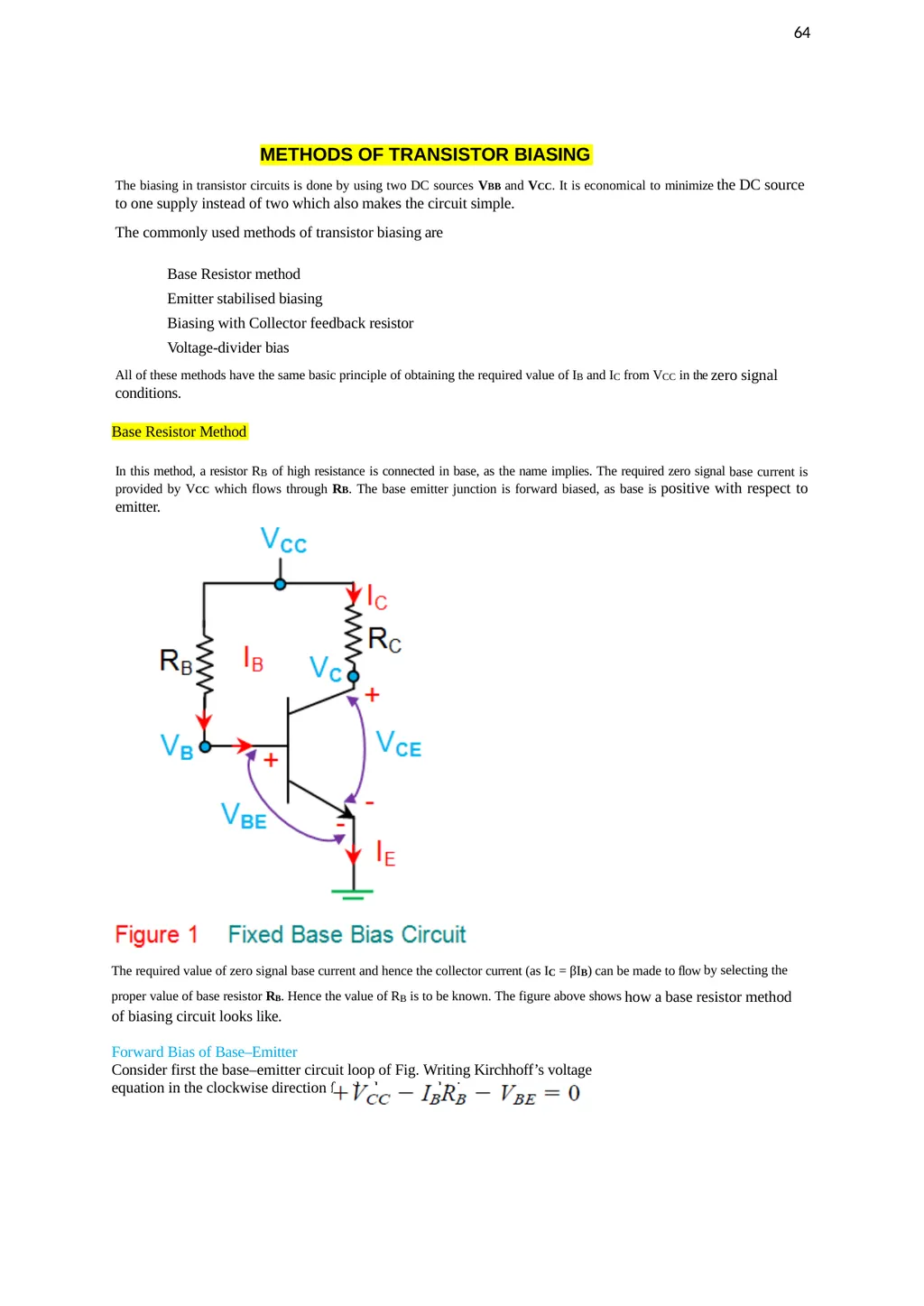
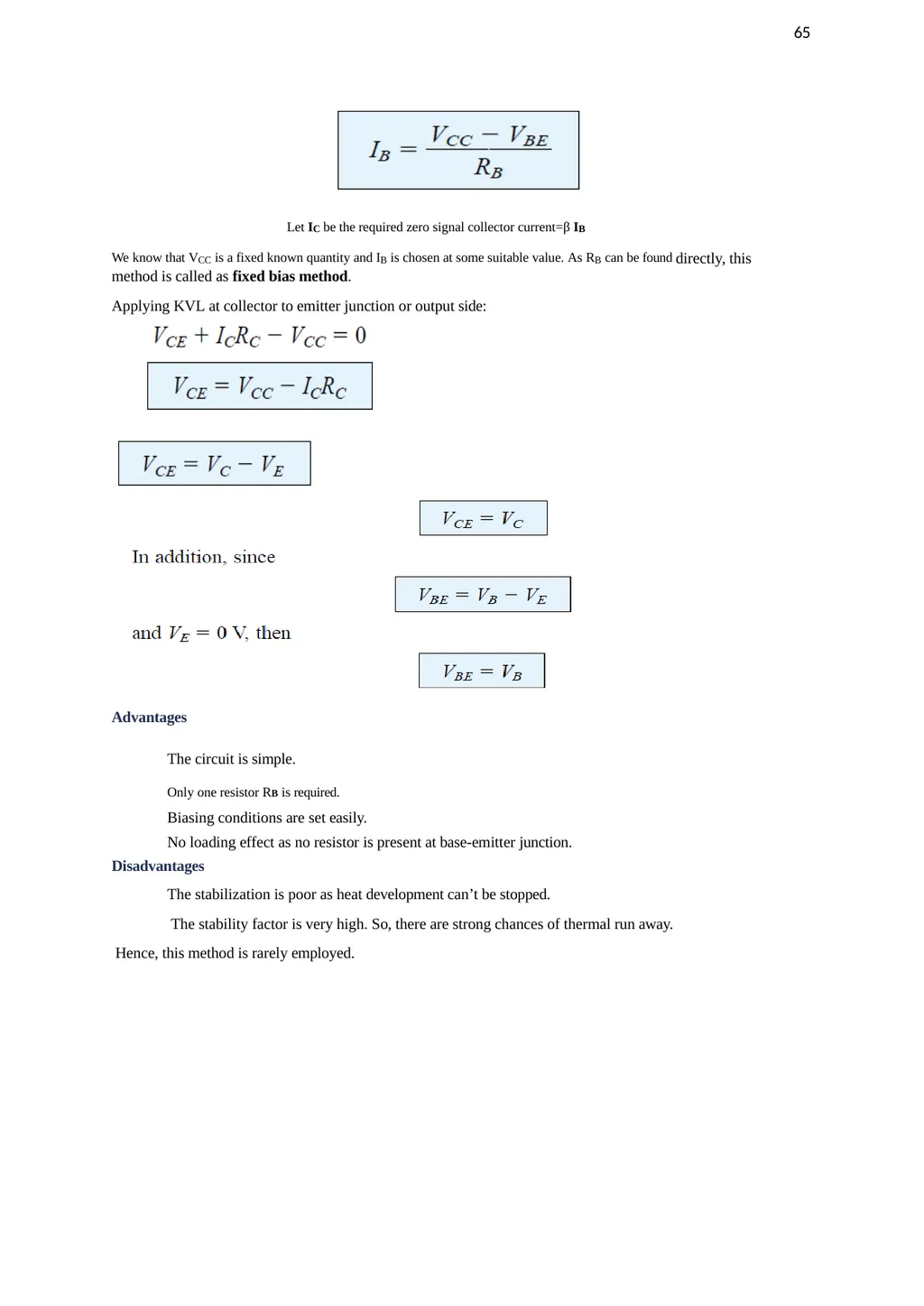
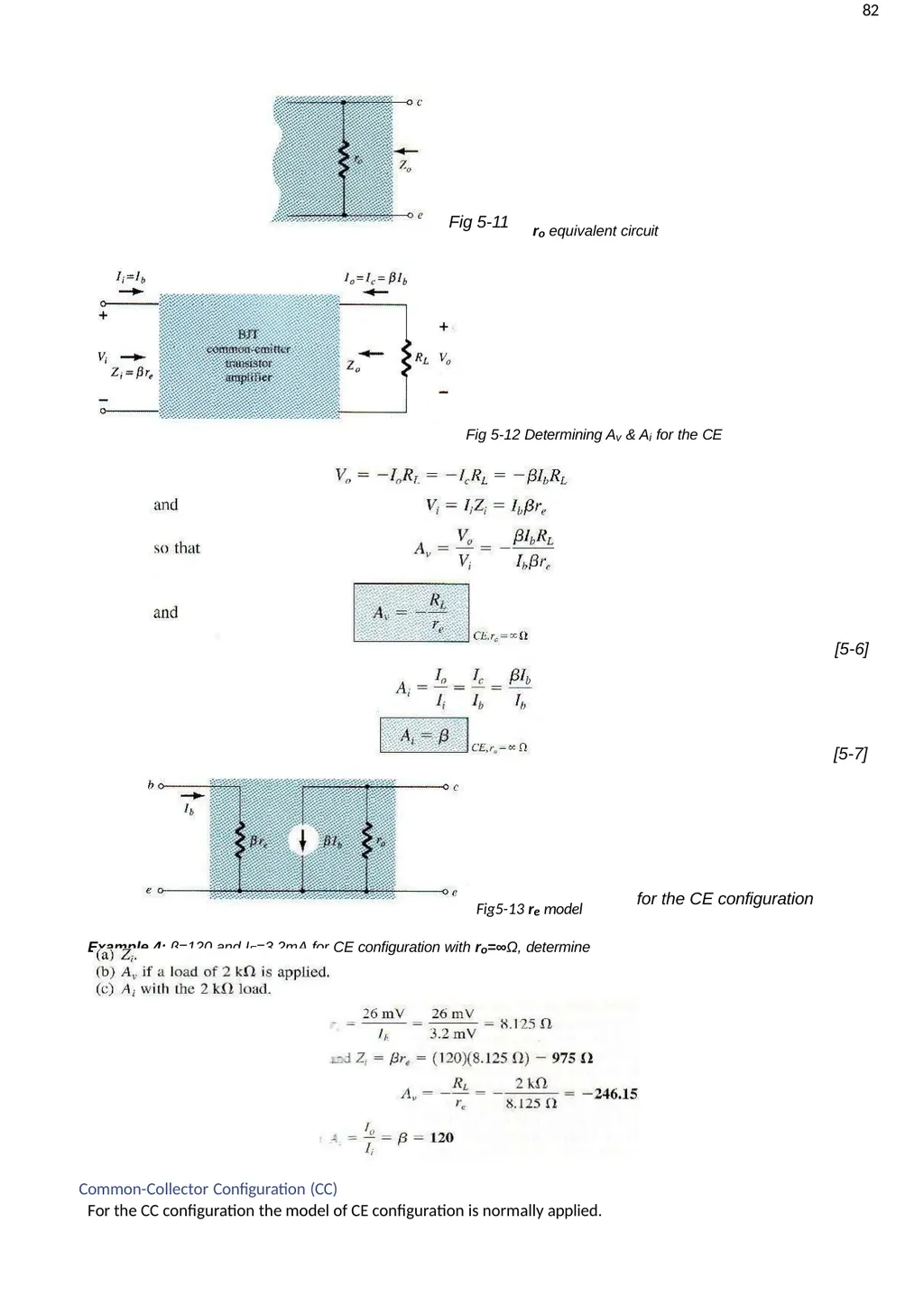
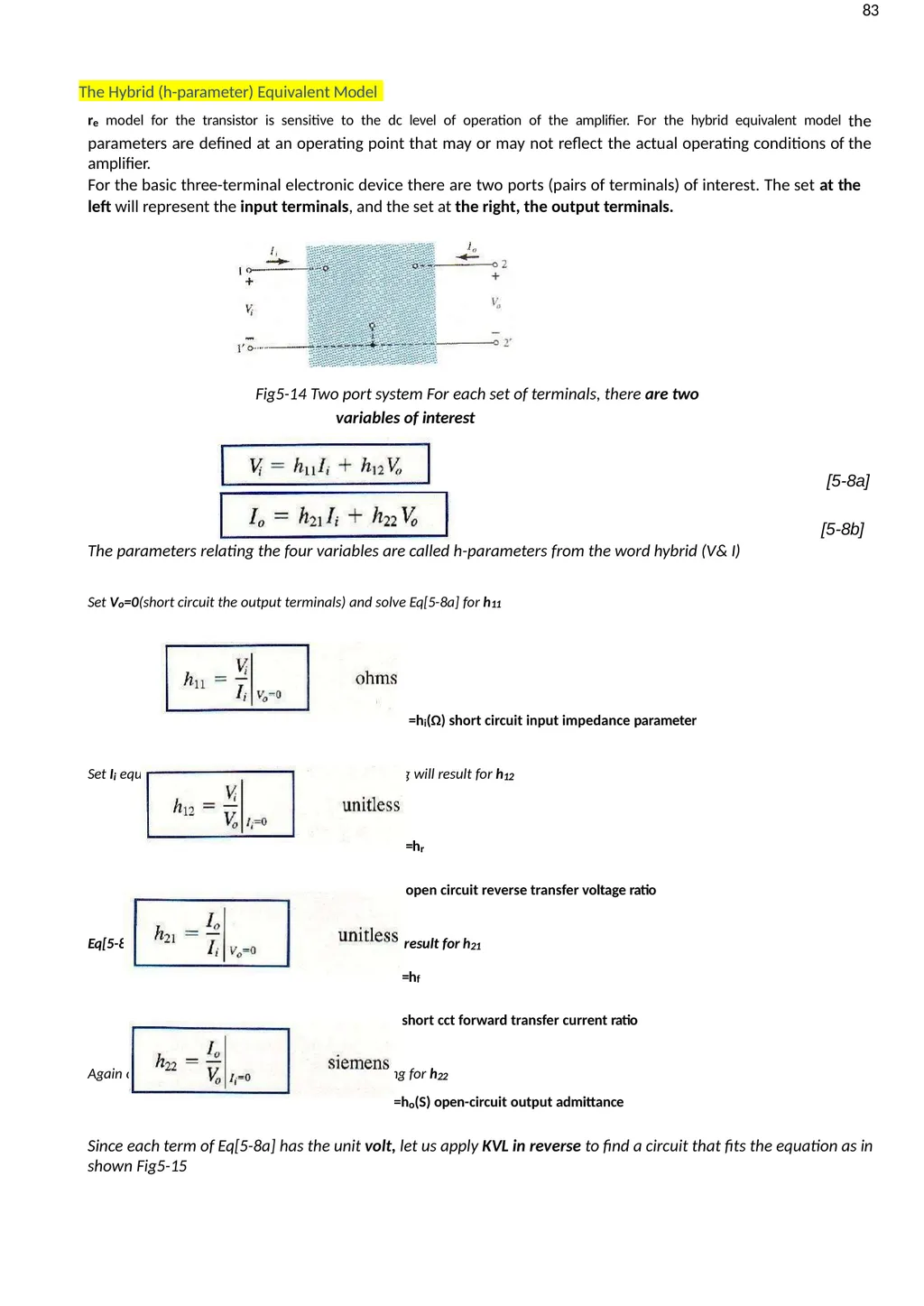
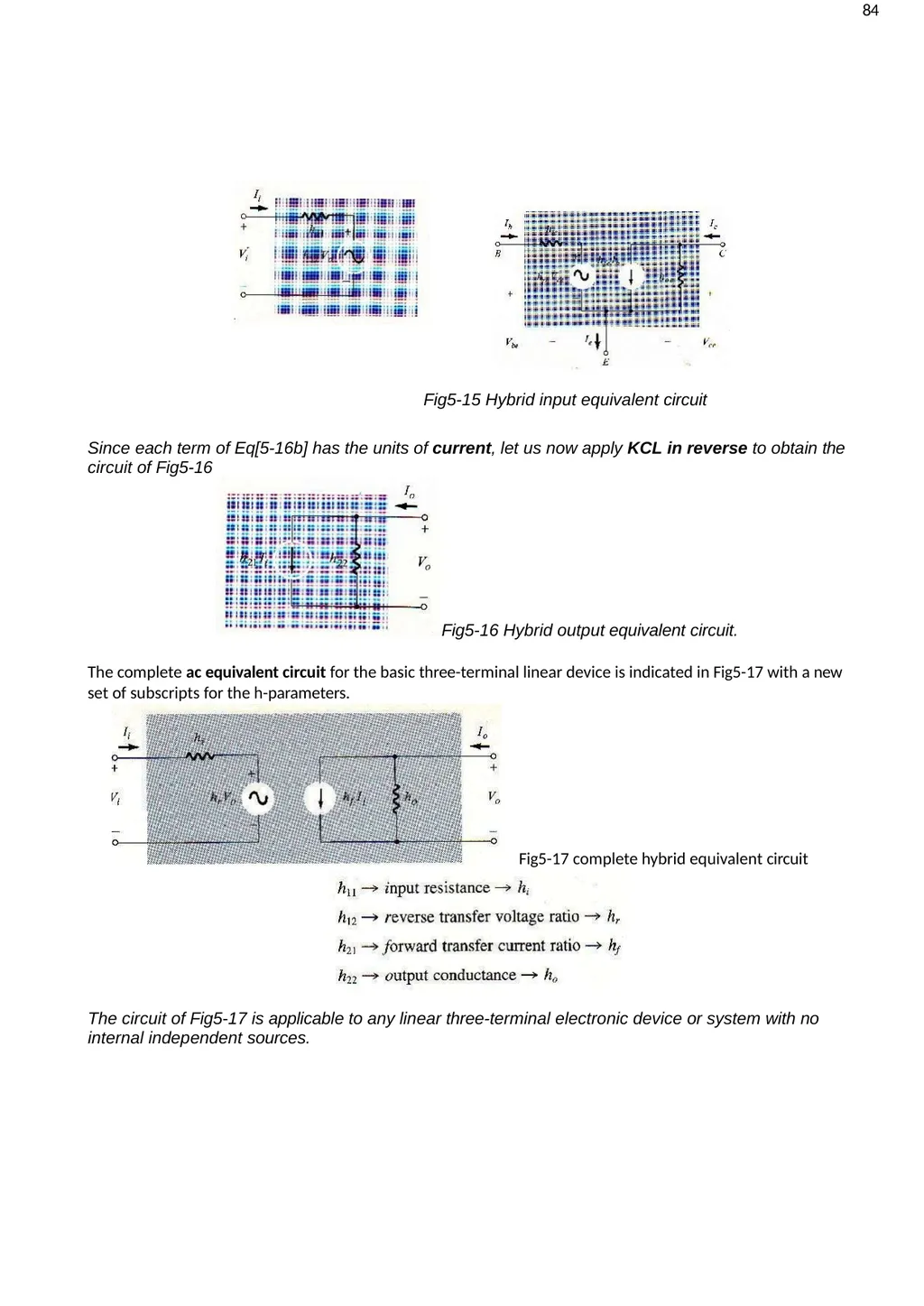
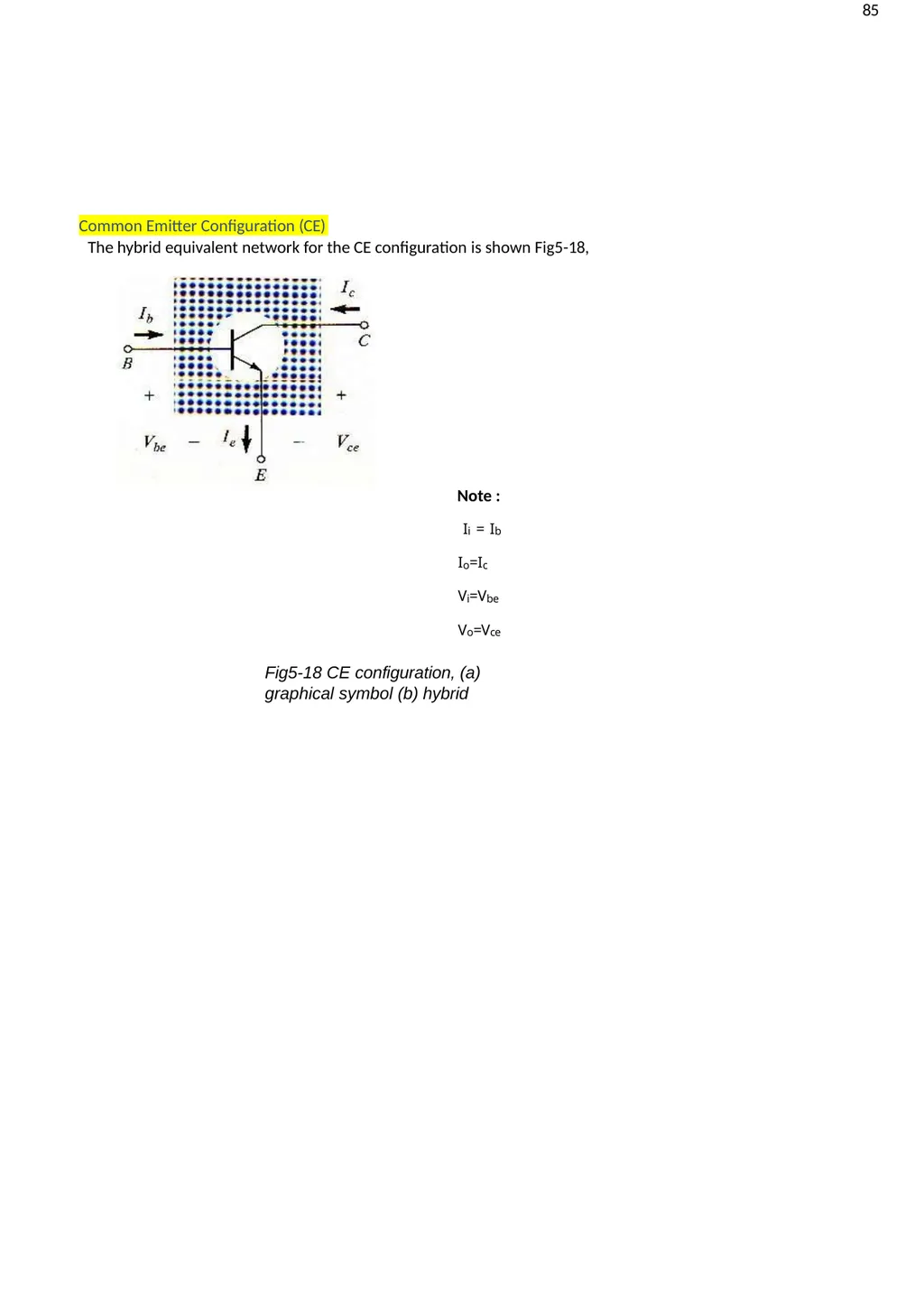
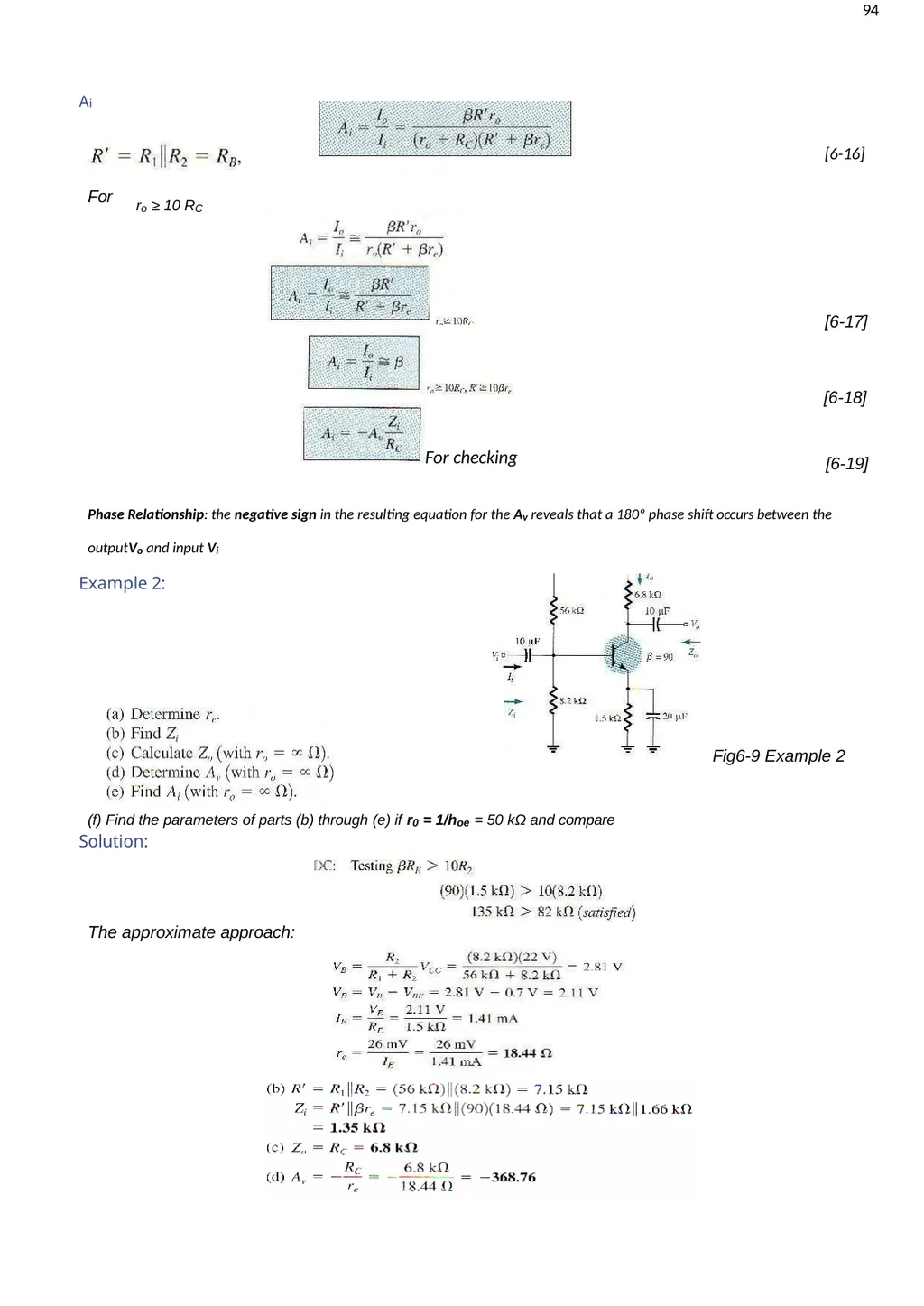
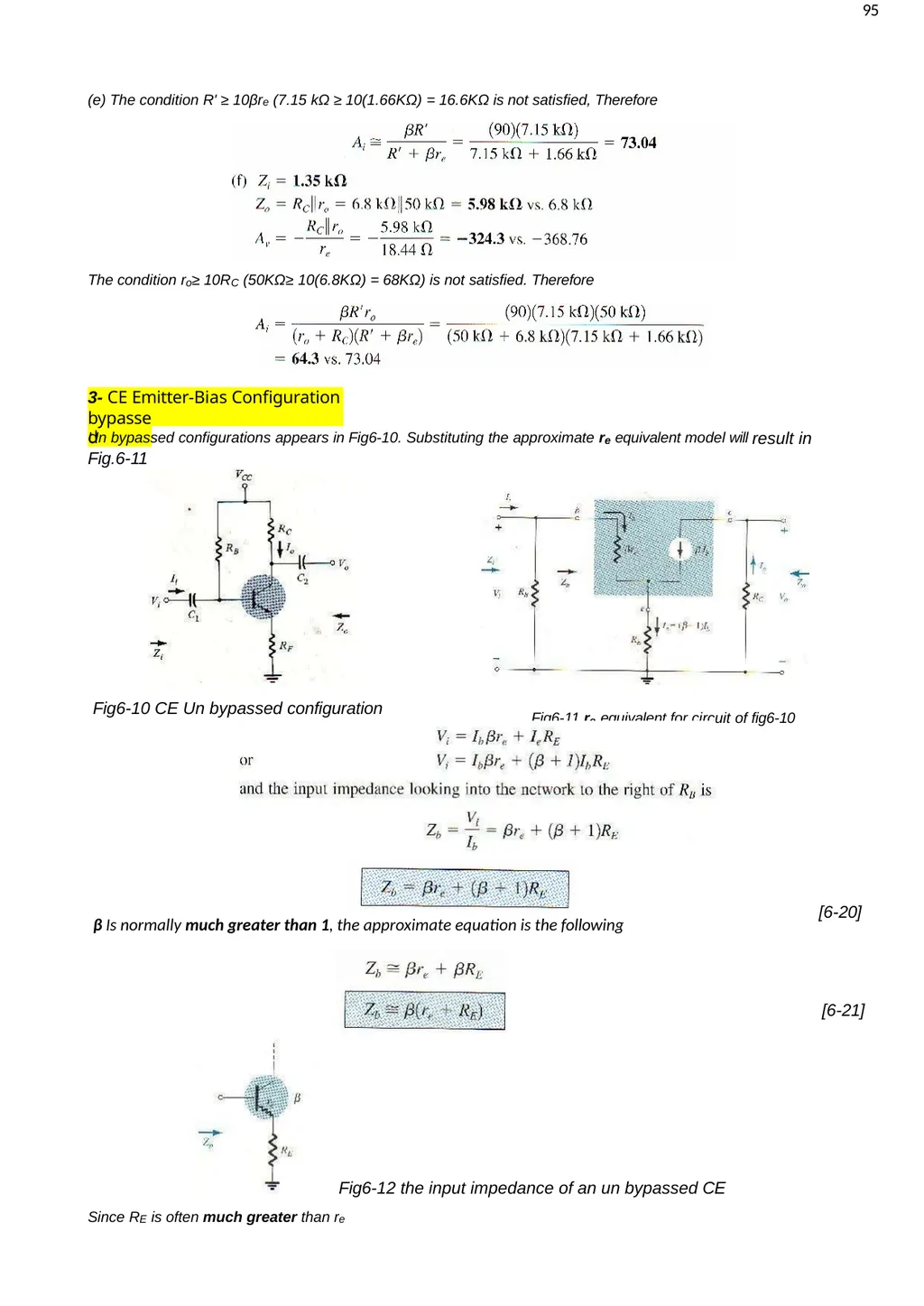
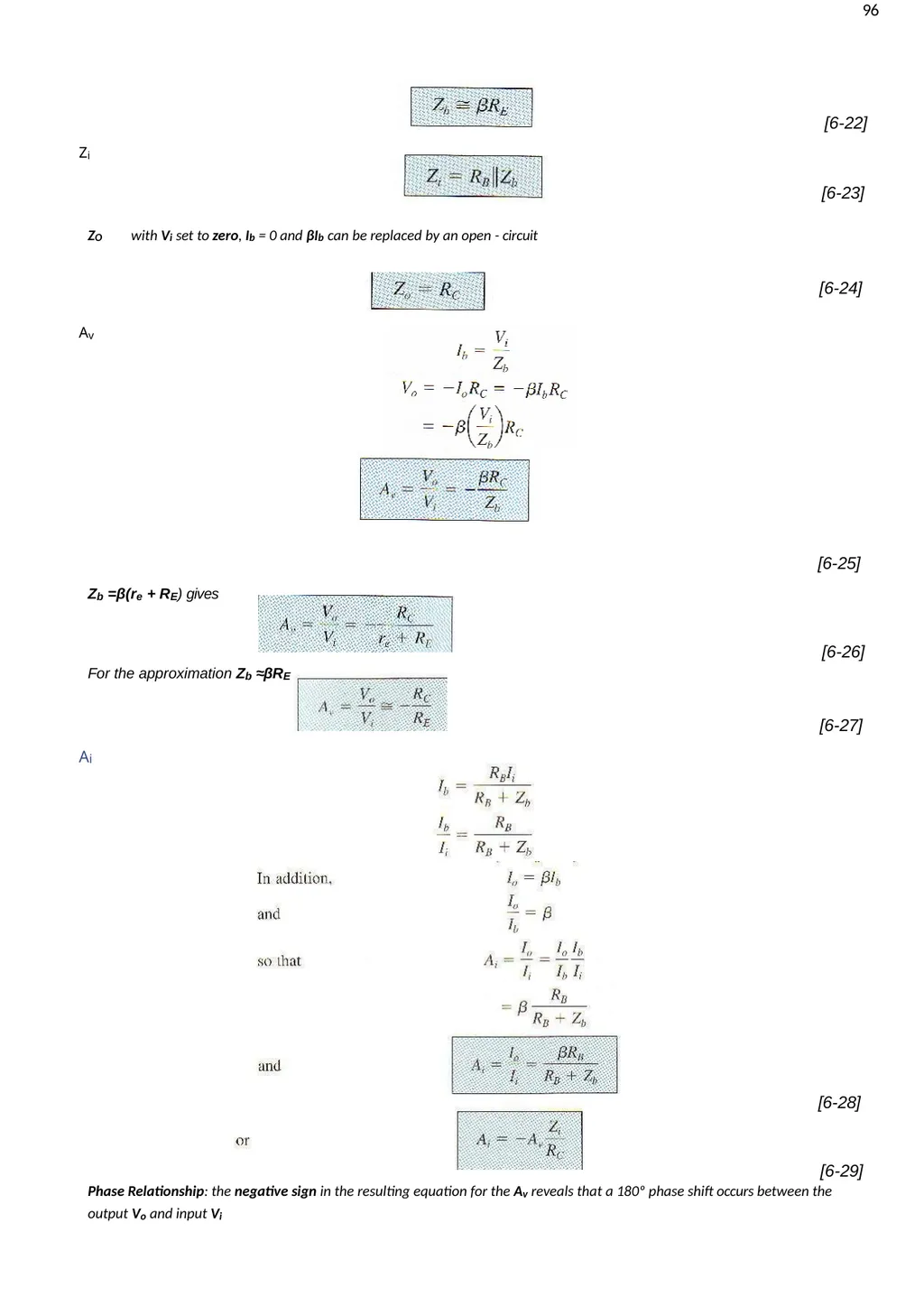
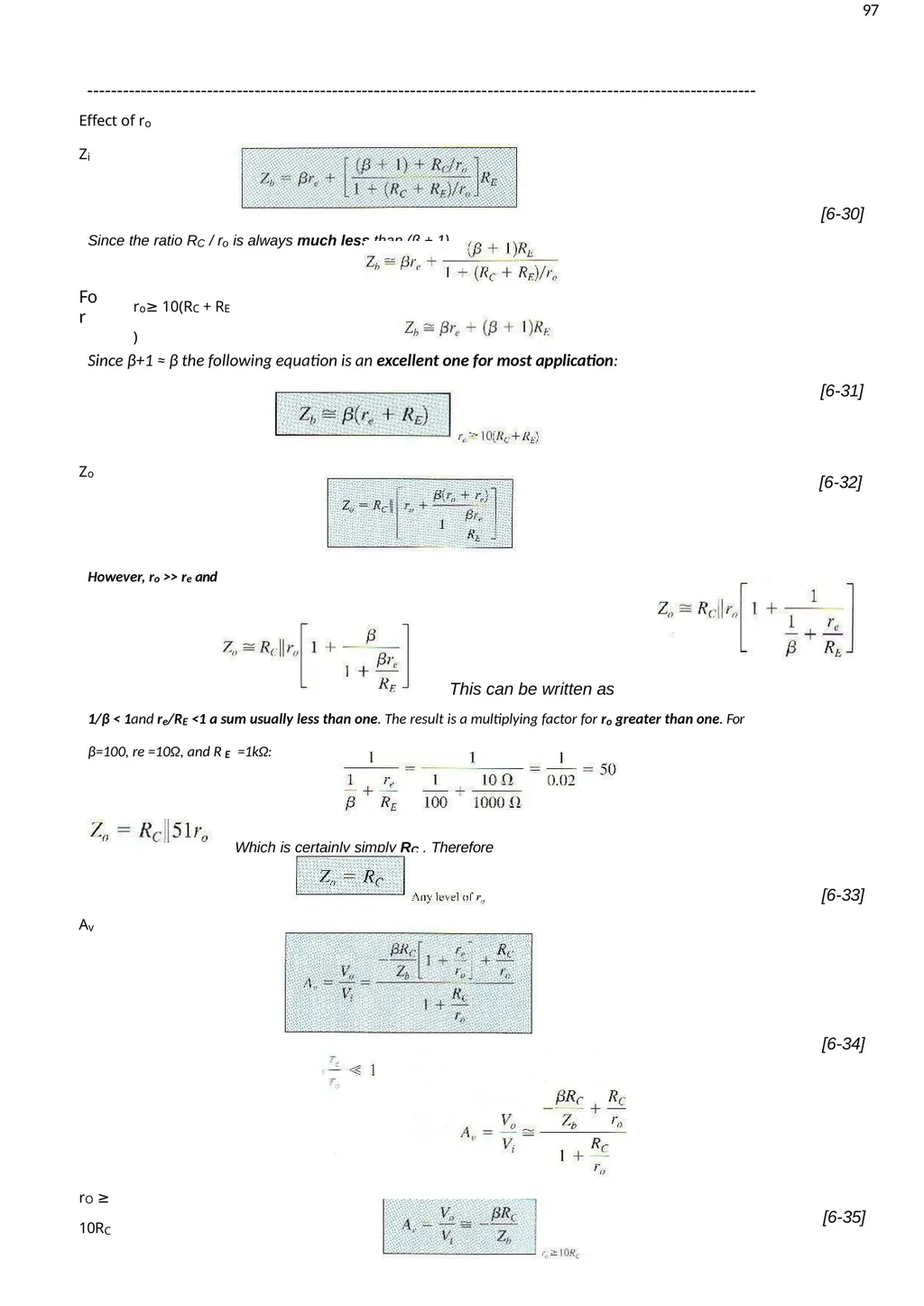
Description
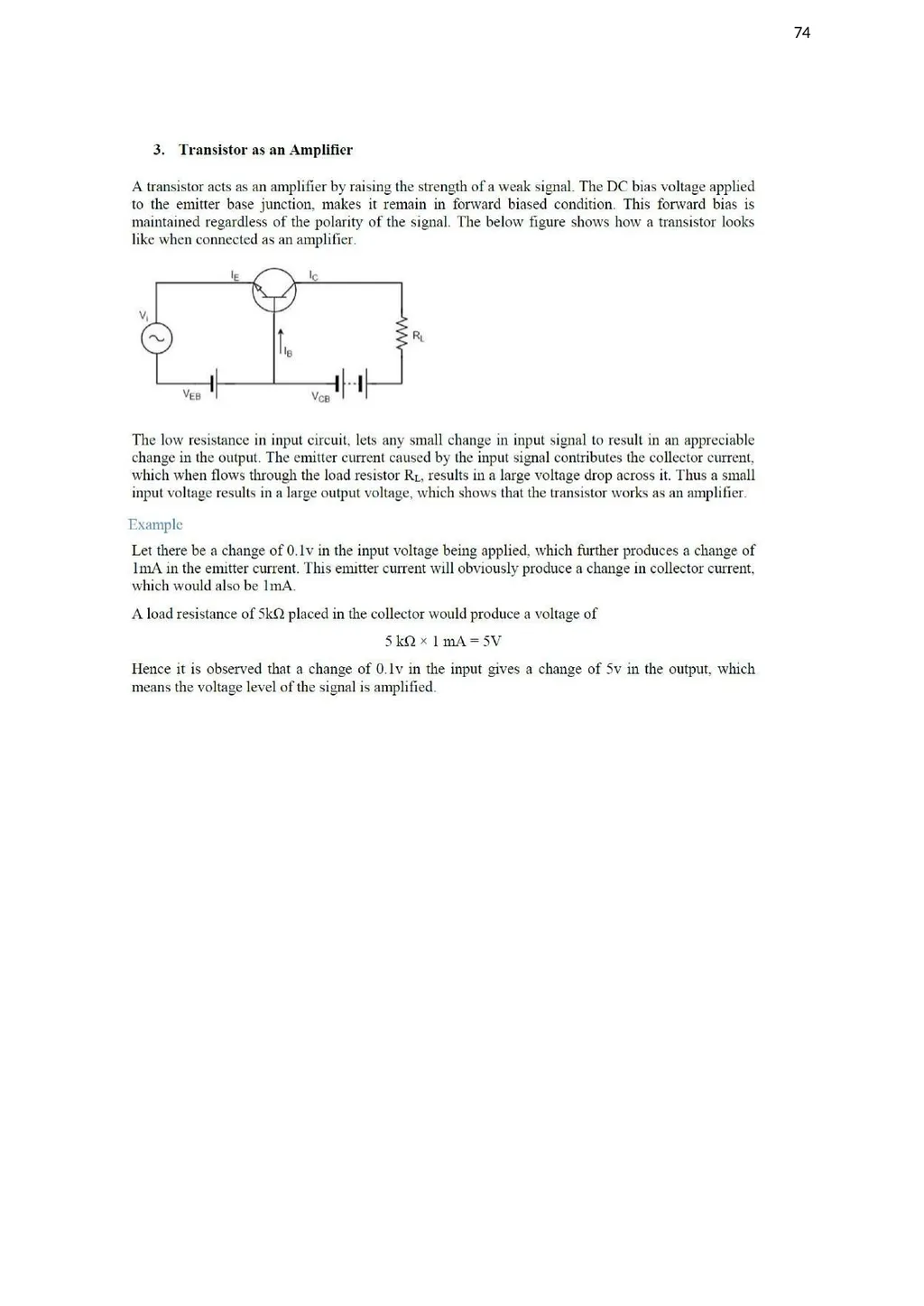
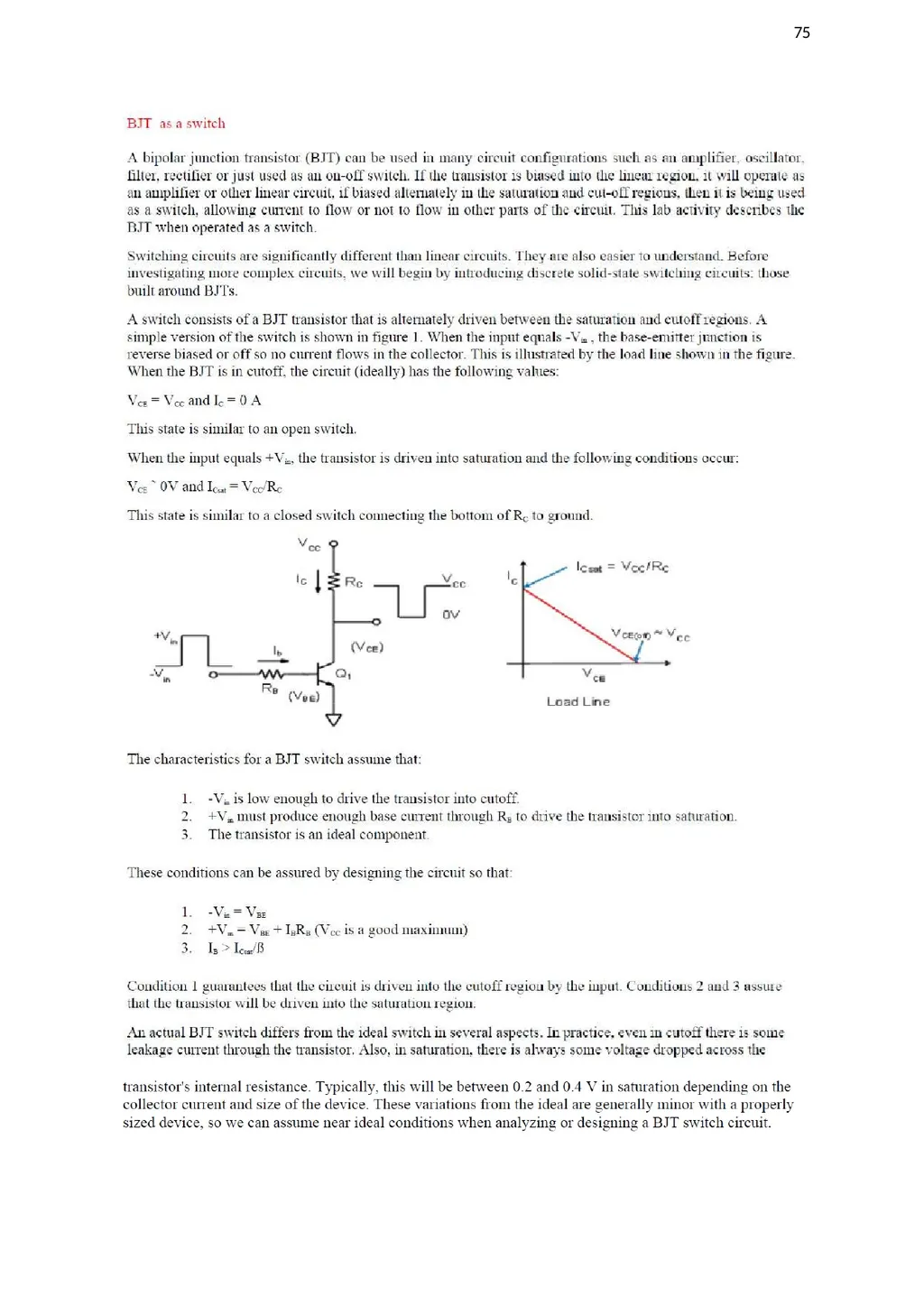
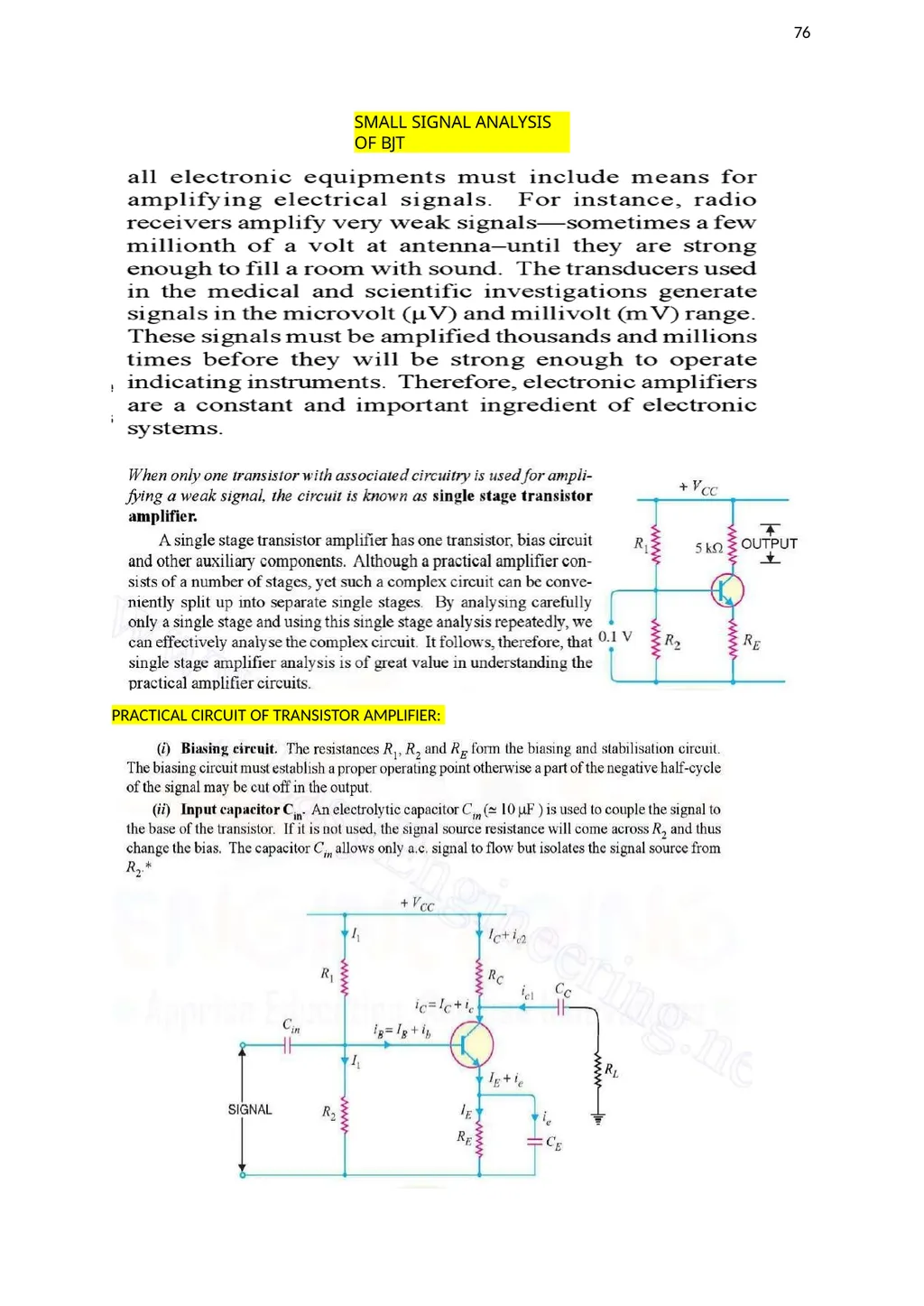
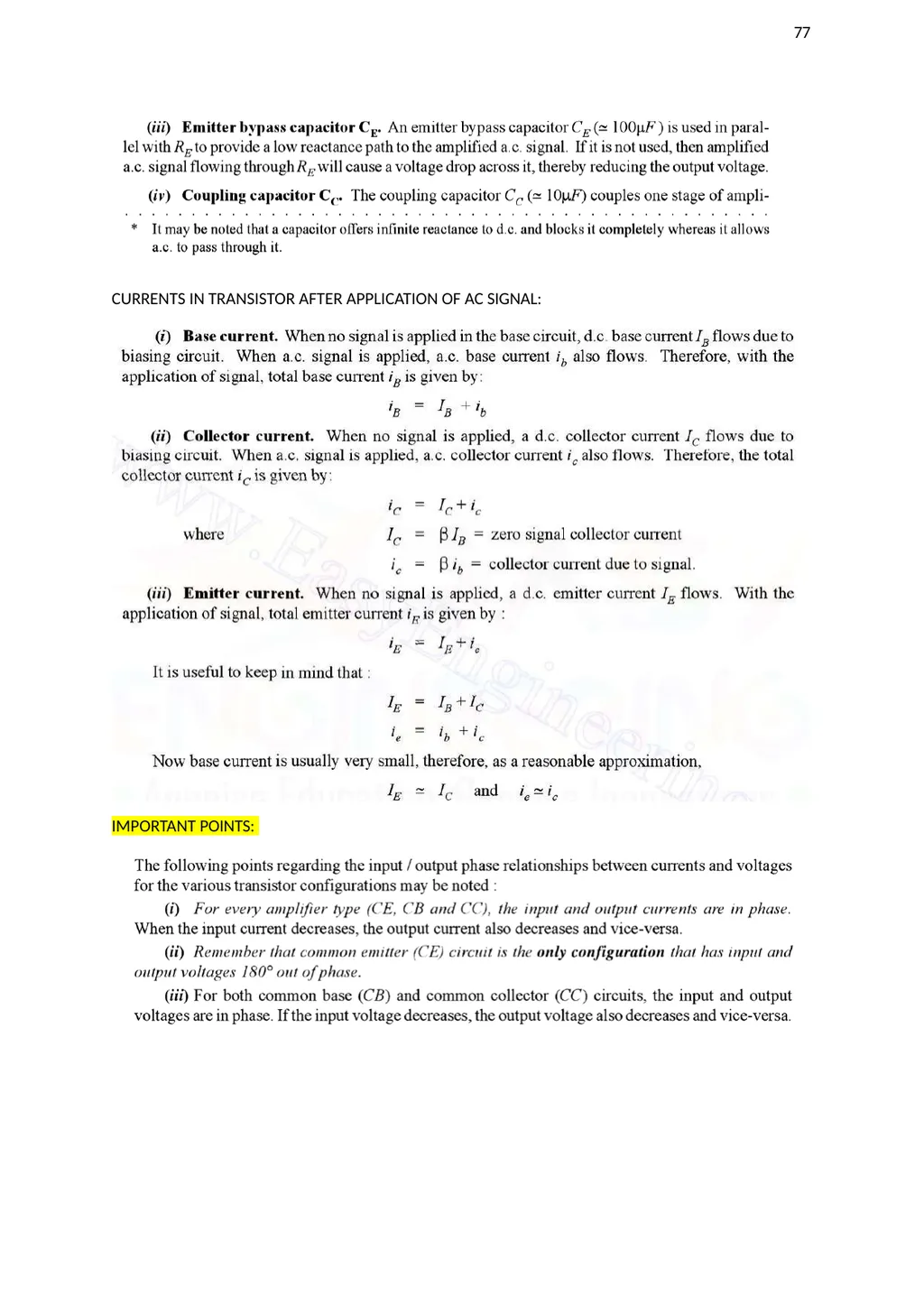
LECTURE NOTES SUBJECT: BASIC ELECTRONICS COURSE: BTECH SEMESTER: 2ND Dept.: EEE Dr. Santimoy Mandal NSU, JAMSHEDPUR NSU, JAMSHEDPUR 4 MODULE-I ELECTRONICS Electronics comprises the physics, engineering, technology and applications that deal
Related Topics
Share
Embed code
Download this presentation From Below
"LECTURE NOTES SUBJECT: BASIC ELECTRONICS COURSE:" is the property of its rightful owner. Permission is granted to download and print the materials on this website for personal, non-commercial use only, and to display it on your personal computer provided you do not modify the materials and that you retain all copyright notices contained in the materials. By downloading content from our website, you accept the terms of this agreement.
Presentation Transcript
01
LECTURE NOTES
SUBJECT: BASIC ELECTRONICS
COURSE: BTECH
SEMESTER: 2ND
Dept.: EEE Dr. Santimoy Mandal
NSU, JAMSHEDPUR NSU, JAMSHEDPUR<br>
NSU, JAMSHEDPUR NSU, JAMSHEDPUR<br>
02
4 MODULE-I ELECTRONICS Electronics comprises the physics, engineering, technology and applications that deal with the emission, flow and control of electrons in vacuum and matter.This distinguishes it from classical electrical engineering as it uses active devices to control electron flow by amplification and rectification rather than just using passive effects such as resistance, capacitance and inductance. INTRODUCTION TO SIGNAL Electric signals (in electronics) – different voltages and currents in the electric network called electric “circuit” or “device”, which can be further described as the process of changes a certain physical quantity or state of a physical object over certain period of time. They are used for the purpose of visualization, registration and transmission of messages (information). Signal can be a carrier of different information e.g. electric, magnetic and acoustic signals and contains the information parameter e.g. amplitude, frequency or pulse width. In electronics, the most important signals are the changes in electric charge, current, voltage and electromagnetic field. They are used to analyze the behavior of electronic circuits or to measure the changing electrical values.
What is Time Domain Analysis?
A time domain analysis is an analysis of physical signals, mathematical functions, or time series of economic or environmental data, in reference to time. Also, in the time domain, the signal or function's value is understood for all real numbers at various separate instances in the case of discrete-time or the case of continuous-time. Furthermore, an oscilloscope is a tool commonly used to see real-world signals in the time domain.
Moreover, a time-domain graph can show how a signal changes with time, whereas a frequency-domain graph will show how much of the signal lies within each given frequency band over a range of frequencies.
In general, when an analysis uses a unit of time, such as seconds or one of its multiples (minutes or hours) as a unit of measurement, then it is in the time domain. However, whenever an analysis concerns the units like Hertz, then it is in the frequency domain. Frequency Domain In physics, electronics, control systems engineering, and statistics, the frequency domain refers to the analysis of mathematical functions or signals with respect to frequency, rather than time. Put simply, a time-domain graph shows how a signal changes over time, whereas a frequency-domain graph shows how much of the signal lies within each given frequency band over a range of frequencies. A frequency-domain representation can also include information on the phase shift that must be applied to each sinusoid in order to be able to recombine the frequency components to recover the original time signal.
A given function or signal can be converted between the time and frequency domains with a pair of mathematical operators called transforms. An example is the Fourier transform, which converts a time function into a sum or integral of sine waves of different frequencies, each of which represents a frequency component. The "spectrum" of frequency components is the frequency-domain representation of the signal. The inverse Fourier transform converts the frequency-domain function back to the time function. A spectrum analyzer is a tool commonly used to visualize electronic signals in the frequency domain. How is Time Domain Analysis Different from Frequency Domain? Frequency domain is an analysis of signals or mathematical functions, in reference to frequency, instead of time. As stated earlier, a time-domain graph displays the changes in a signal over a span of time, and frequency domain displays how much of the signal exists within a given frequency band concerning a range of frequencies. Also, a NSU, JAMSHEDPUR<br>
What is Time Domain Analysis?
A time domain analysis is an analysis of physical signals, mathematical functions, or time series of economic or environmental data, in reference to time. Also, in the time domain, the signal or function's value is understood for all real numbers at various separate instances in the case of discrete-time or the case of continuous-time. Furthermore, an oscilloscope is a tool commonly used to see real-world signals in the time domain.
Moreover, a time-domain graph can show how a signal changes with time, whereas a frequency-domain graph will show how much of the signal lies within each given frequency band over a range of frequencies.
In general, when an analysis uses a unit of time, such as seconds or one of its multiples (minutes or hours) as a unit of measurement, then it is in the time domain. However, whenever an analysis concerns the units like Hertz, then it is in the frequency domain. Frequency Domain In physics, electronics, control systems engineering, and statistics, the frequency domain refers to the analysis of mathematical functions or signals with respect to frequency, rather than time. Put simply, a time-domain graph shows how a signal changes over time, whereas a frequency-domain graph shows how much of the signal lies within each given frequency band over a range of frequencies. A frequency-domain representation can also include information on the phase shift that must be applied to each sinusoid in order to be able to recombine the frequency components to recover the original time signal.
A given function or signal can be converted between the time and frequency domains with a pair of mathematical operators called transforms. An example is the Fourier transform, which converts a time function into a sum or integral of sine waves of different frequencies, each of which represents a frequency component. The "spectrum" of frequency components is the frequency-domain representation of the signal. The inverse Fourier transform converts the frequency-domain function back to the time function. A spectrum analyzer is a tool commonly used to visualize electronic signals in the frequency domain. How is Time Domain Analysis Different from Frequency Domain? Frequency domain is an analysis of signals or mathematical functions, in reference to frequency, instead of time. As stated earlier, a time-domain graph displays the changes in a signal over a span of time, and frequency domain displays how much of the signal exists within a given frequency band concerning a range of frequencies. Also, a NSU, JAMSHEDPUR<br>
03
5 frequency-domain representation can include information on the phase shift that must be applied to each sinusoid to be able to recombine the frequency components to recover the original time signal.
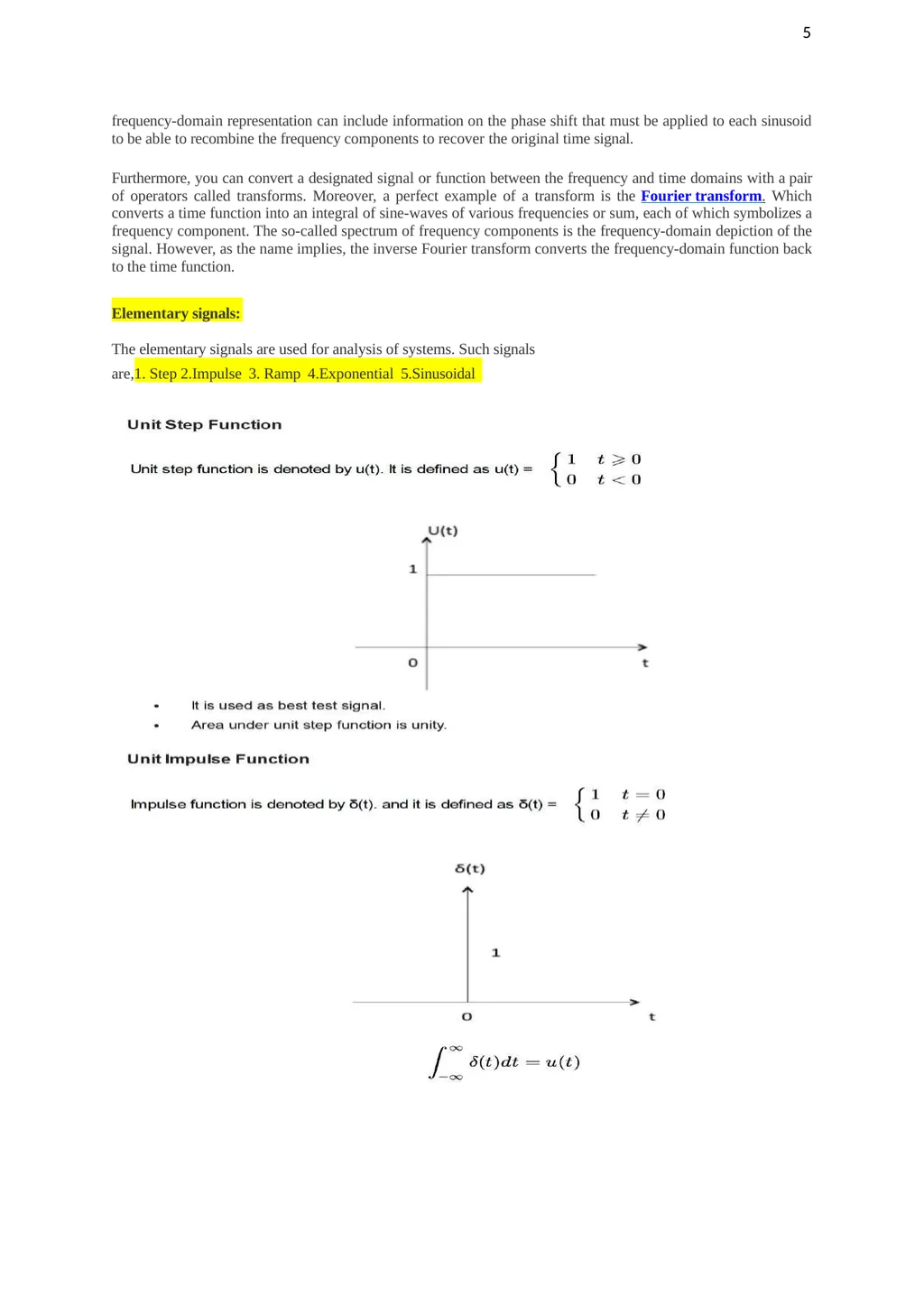
Furthermore, you can convert a designated signal or function between the frequency and time domains with a pair of operators called transforms. Moreover, a perfect example of a transform is the Fourier transform. Which converts a time function into an integral of sine-waves of various frequencies or sum, each of which symbolizes a frequency component. The so-called spectrum of frequency components is the frequency-domain depiction of the signal. However, as the name implies, the inverse Fourier transform converts the frequency-domain function back to the time function. Elementary signals: The elementary signals are used for analysis of systems. Such signals are,1. Step 2.Impulse 3. Ramp 4.Exponential 5.Sinusoidal NSU, JAMSHEDPUR<br>
Furthermore, you can convert a designated signal or function between the frequency and time domains with a pair of operators called transforms. Moreover, a perfect example of a transform is the Fourier transform. Which converts a time function into an integral of sine-waves of various frequencies or sum, each of which symbolizes a frequency component. The so-called spectrum of frequency components is the frequency-domain depiction of the signal. However, as the name implies, the inverse Fourier transform converts the frequency-domain function back to the time function. Elementary signals: The elementary signals are used for analysis of systems. Such signals are,1. Step 2.Impulse 3. Ramp 4.Exponential 5.Sinusoidal NSU, JAMSHEDPUR<br>
04
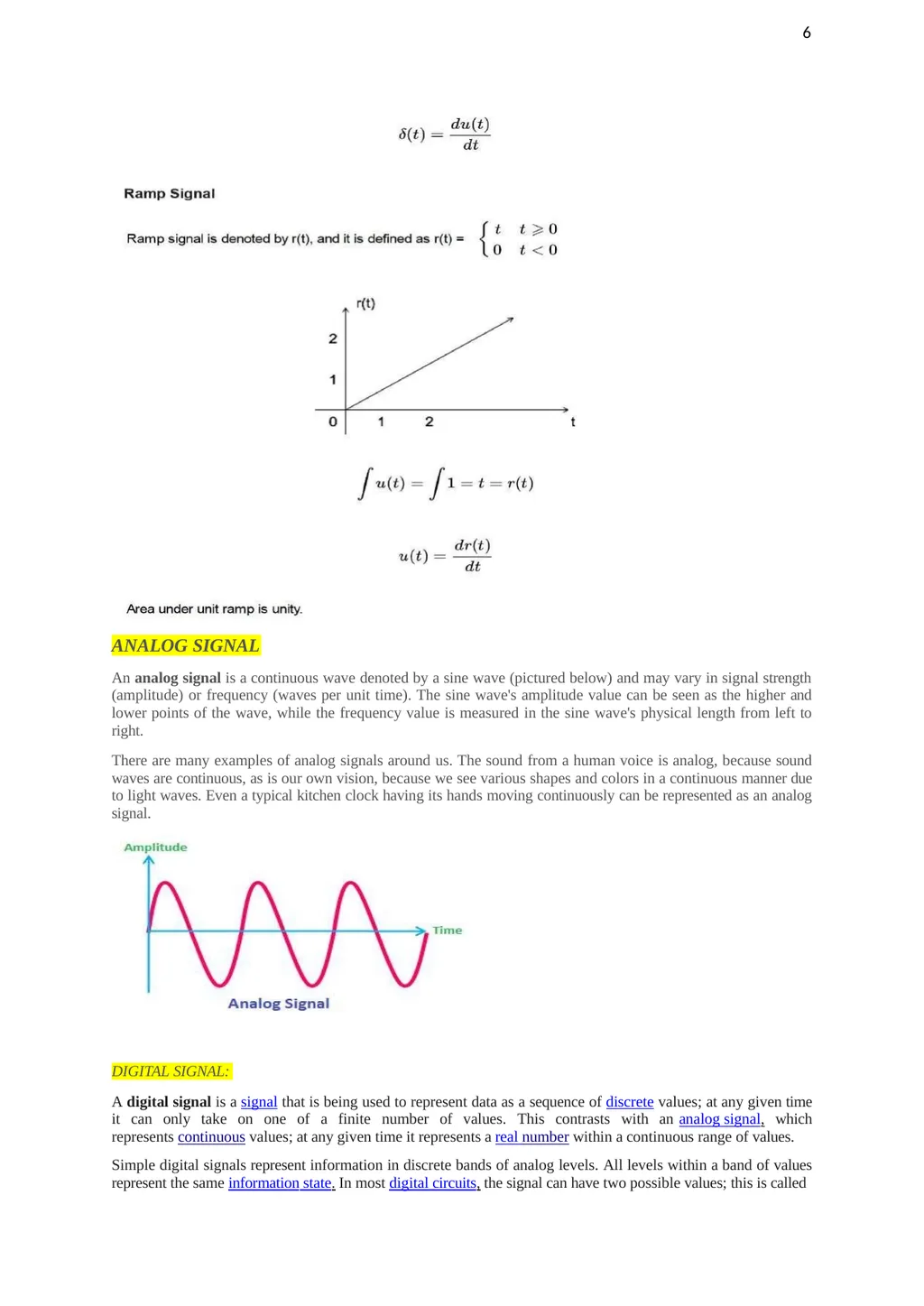
6 ANALOG SIGNAL An analog signal is a continuous wave denoted by a sine wave (pictured below) and may vary in signal strength (amplitude) or frequency (waves per unit time). The sine wave's amplitude value can be seen as the higher and lower points of the wave, while the frequency value is measured in the sine wave's physical length from left to right.
There are many examples of analog signals around us. The sound from a human voice is analog, because sound waves are continuous, as is our own vision, because we see various shapes and colors in a continuous manner due to light waves. Even a typical kitchen clock having its hands moving continuously can be represented as an analog signal. DIGITAL SIGNAL: A digital signal is a signal that is being used to represent data as a sequence of discrete values; at any given time it can only take on one of a finite number of values. This contrasts with an analog signal, which represents continuous values; at any given time it represents a real number within a continuous range of values.
Simple digital signals represent information in discrete bands of analog levels. All levels within a band of values represent the same information state. In most digital circuits, the signal can have two possible values; this is called NSU, JAMSHEDPUR<br>
There are many examples of analog signals around us. The sound from a human voice is analog, because sound waves are continuous, as is our own vision, because we see various shapes and colors in a continuous manner due to light waves. Even a typical kitchen clock having its hands moving continuously can be represented as an analog signal. DIGITAL SIGNAL: A digital signal is a signal that is being used to represent data as a sequence of discrete values; at any given time it can only take on one of a finite number of values. This contrasts with an analog signal, which represents continuous values; at any given time it represents a real number within a continuous range of values.
Simple digital signals represent information in discrete bands of analog levels. All levels within a band of values represent the same information state. In most digital circuits, the signal can have two possible values; this is called NSU, JAMSHEDPUR<br>
05
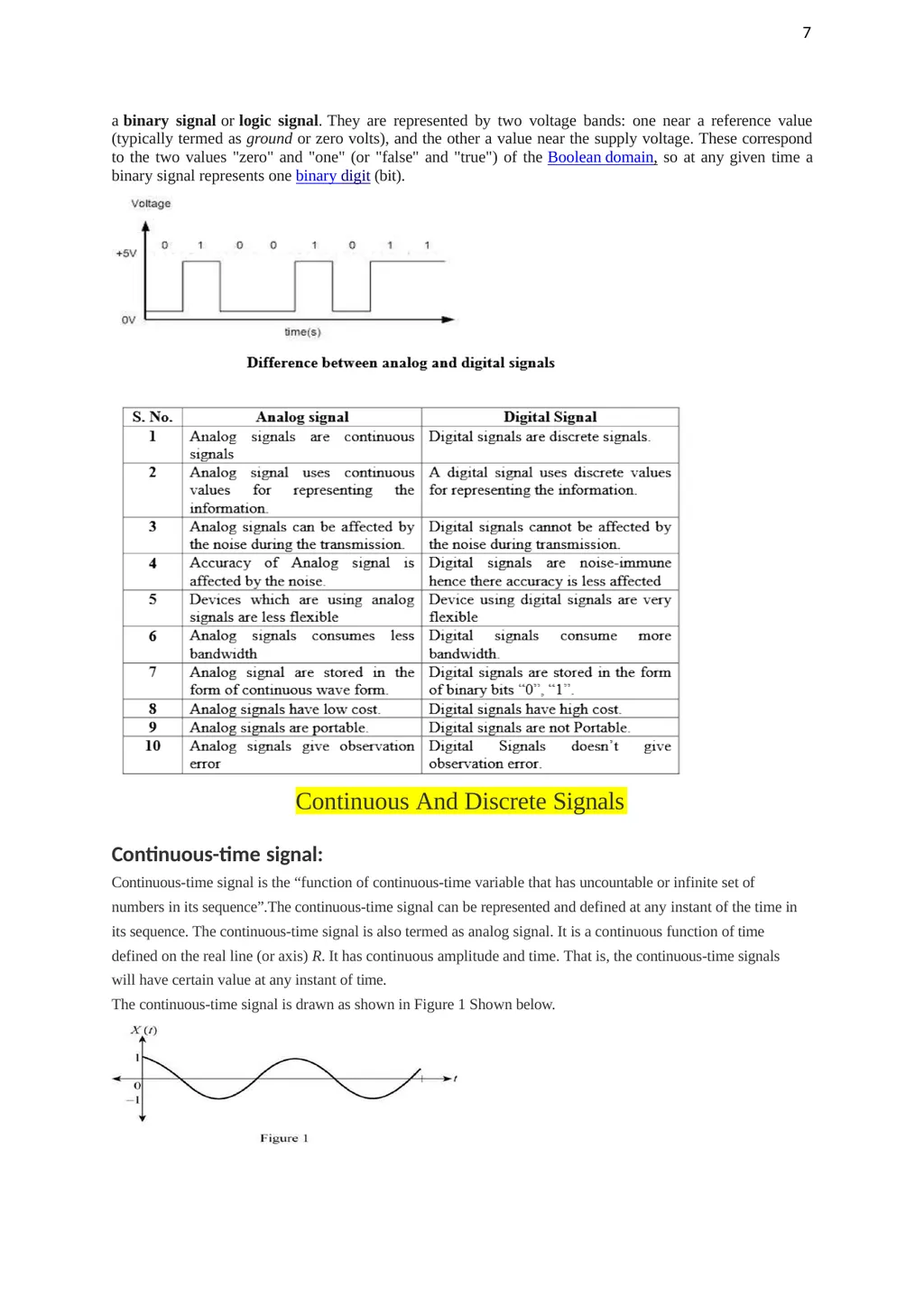
7 a binary signal or logic signal. They are represented by two voltage bands: one near a reference value (typically termed as ground or zero volts), and the other a value near the supply voltage. These correspond to the two values "zero" and "one" (or "false" and "true") of the Boolean domain, so at any given time a binary signal represents one binary digit (bit). Continuous And Discrete Signals Continuous-time signal:
Continuous-time signal is the “function of continuous-time variable that has uncountable or infinite set of numbers in its sequence”.The continuous-time signal can be represented and defined at any instant of the time in its sequence. The continuous-time signal is also termed as analog signal. It is a continuous function of time defined on the real line (or axis) R. It has continuous amplitude and time. That is, the continuous-time signals will have certain value at any instant of time.
The continuous-time signal is drawn as shown in Figure 1 Shown below. NSU, JAMSHEDPUR<br>
Continuous-time signal is the “function of continuous-time variable that has uncountable or infinite set of numbers in its sequence”.The continuous-time signal can be represented and defined at any instant of the time in its sequence. The continuous-time signal is also termed as analog signal. It is a continuous function of time defined on the real line (or axis) R. It has continuous amplitude and time. That is, the continuous-time signals will have certain value at any instant of time.
The continuous-time signal is drawn as shown in Figure 1 Shown below. NSU, JAMSHEDPUR<br>
06
8 The examples for continuous-time signals are sine waves, cosine waves, triangular waves, and so on. The electrical signals also behave as continuous-time signals when these are derived in proportion with the physical parameters such as pressure, temperature, sound, and so on.
Discrete-time signal:
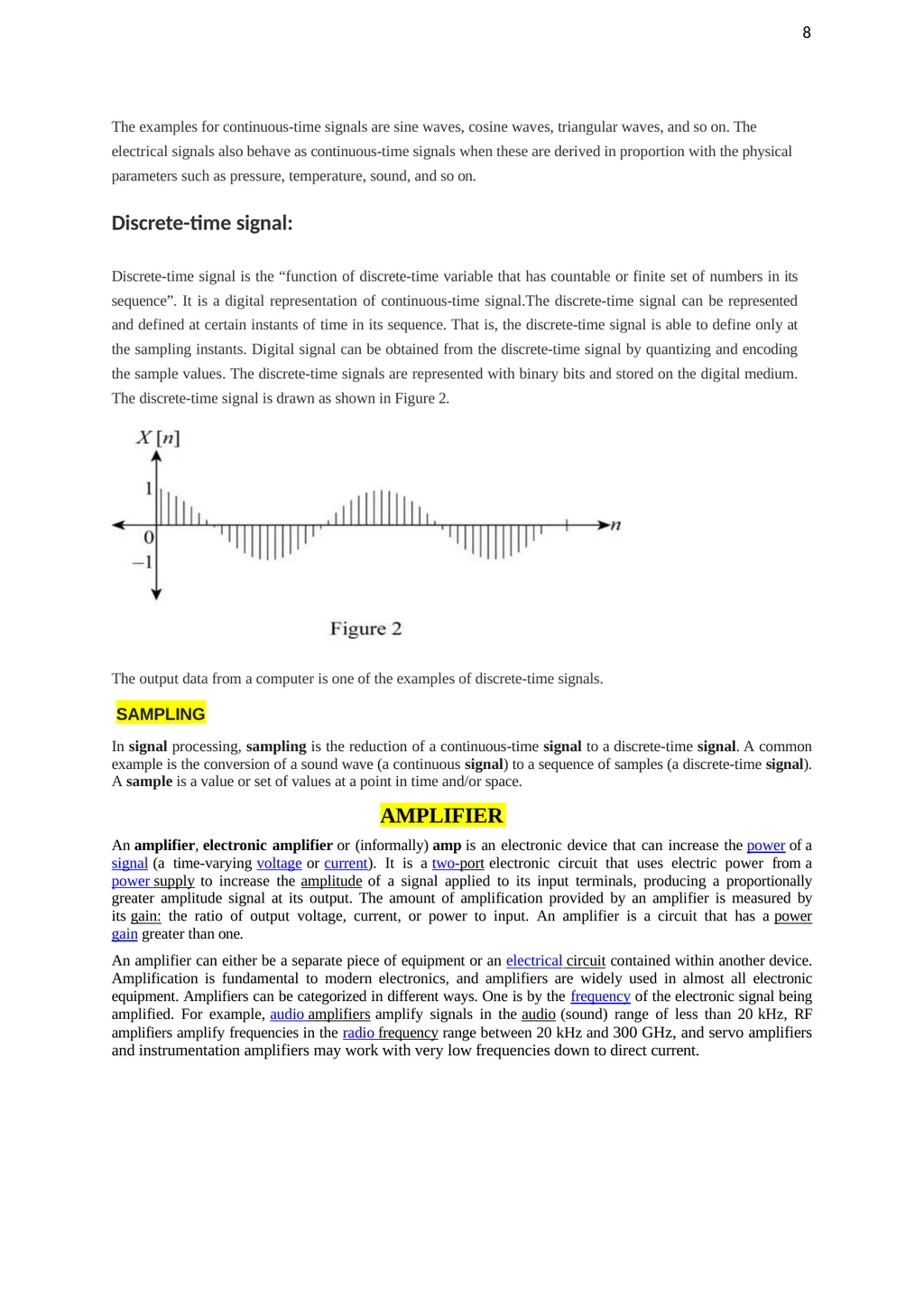
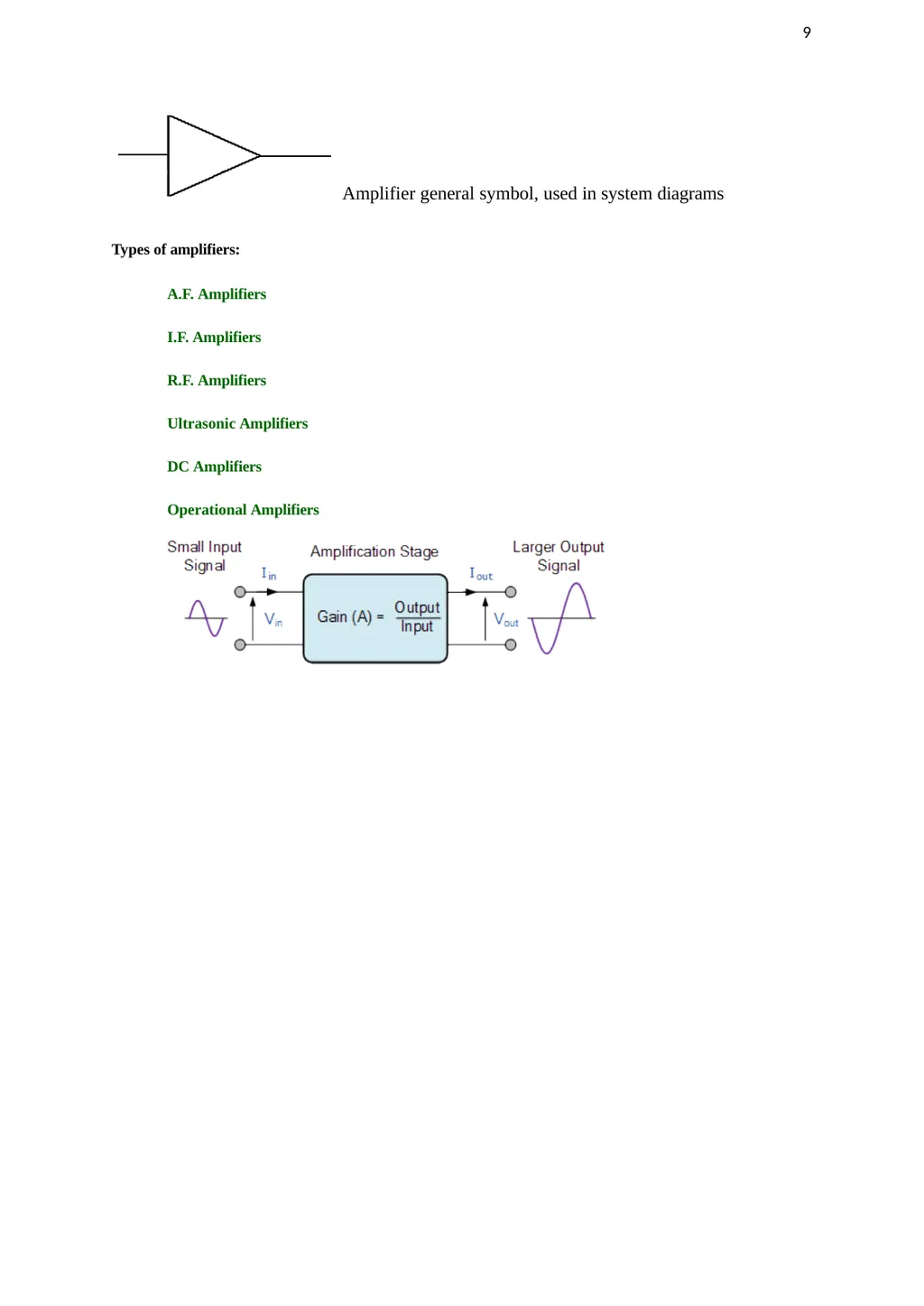
Discrete-time signal is the “function of discrete-time variable that has countable or finite set of numbers in its sequence”. It is a digital representation of continuous-time signal.The discrete-time signal can be represented and defined at certain instants of time in its sequence. That is, the discrete-time signal is able to define only at the sampling instants. Digital signal can be obtained from the discrete-time signal by quantizing and encoding the sample values. The discrete-time signals are represented with binary bits and stored on the digital medium. The discrete-time signal is drawn as shown in Figure 2. The output data from a computer is one of the examples of discrete-time signals. SAMPLING In signal processing, sampling is the reduction of a continuous-time signal to a discrete-time signal. A common example is the conversion of a sound wave (a continuous signal) to a sequence of samples (a discrete-time signal). A sample is a value or set of values at a point in time and/or space. AMPLIFIER An amplifier, electronic amplifier or (informally) amp is an electronic device that can increase the power of a signal (a time-varying voltage or current). It is a two-port electronic circuit that uses electric power from a power supply to increase the amplitude of a signal applied to its input terminals, producing a proportionally greater amplitude signal at its output. The amount of amplification provided by an amplifier is measured by its gain: the ratio of output voltage, current, or power to input. An amplifier is a circuit that has a power gain greater than one.
An amplifier can either be a separate piece of equipment or an electrical circuit contained within another device. Amplification is fundamental to modern electronics, and amplifiers are widely used in almost all electronic equipment. Amplifiers can be categorized in different ways. One is by the frequency of the electronic signal being amplified. For example, audio amplifiers amplify signals in the audio (sound) range of less than 20 kHz, RF amplifiers amplify frequencies in the radio frequency range between 20 kHz and 300 GHz, and servo amplifiers and instrumentation amplifiers may work with very low frequencies down to direct current. NSU, JAMSHEDPUR<br>
Discrete-time signal:
Discrete-time signal is the “function of discrete-time variable that has countable or finite set of numbers in its sequence”. It is a digital representation of continuous-time signal.The discrete-time signal can be represented and defined at certain instants of time in its sequence. That is, the discrete-time signal is able to define only at the sampling instants. Digital signal can be obtained from the discrete-time signal by quantizing and encoding the sample values. The discrete-time signals are represented with binary bits and stored on the digital medium. The discrete-time signal is drawn as shown in Figure 2. The output data from a computer is one of the examples of discrete-time signals. SAMPLING In signal processing, sampling is the reduction of a continuous-time signal to a discrete-time signal. A common example is the conversion of a sound wave (a continuous signal) to a sequence of samples (a discrete-time signal). A sample is a value or set of values at a point in time and/or space. AMPLIFIER An amplifier, electronic amplifier or (informally) amp is an electronic device that can increase the power of a signal (a time-varying voltage or current). It is a two-port electronic circuit that uses electric power from a power supply to increase the amplitude of a signal applied to its input terminals, producing a proportionally greater amplitude signal at its output. The amount of amplification provided by an amplifier is measured by its gain: the ratio of output voltage, current, or power to input. An amplifier is a circuit that has a power gain greater than one.
An amplifier can either be a separate piece of equipment or an electrical circuit contained within another device. Amplification is fundamental to modern electronics, and amplifiers are widely used in almost all electronic equipment. Amplifiers can be categorized in different ways. One is by the frequency of the electronic signal being amplified. For example, audio amplifiers amplify signals in the audio (sound) range of less than 20 kHz, RF amplifiers amplify frequencies in the radio frequency range between 20 kHz and 300 GHz, and servo amplifiers and instrumentation amplifiers may work with very low frequencies down to direct current. NSU, JAMSHEDPUR<br>
07
9 Amplifier general symbol, used in system diagrams Types of amplifiers:
A.F. Amplifiers
I.F. Amplifiers
R.F. Amplifiers
Ultrasonic Amplifiers
DC Amplifiers
Operational Amplifiers NSU, JAMSHEDPUR<br>
A.F. Amplifiers
I.F. Amplifiers
R.F. Amplifiers
Ultrasonic Amplifiers
DC Amplifiers
Operational Amplifiers NSU, JAMSHEDPUR<br>
08
10 OPERATIONAL AMPLIFIER An operational amplifier or op amp is a DC coupled voltage amplifier with a very high voltage gain. Op amp is basically a multistage amplifier in which a number of amplifier stages are interconnected to each other in a very complicated manner. Its internal circuit consists of many transistors, FETs and resistors. All this occupies a very little space.
So, it is packed in a small package and is available in the Integrated Circuit (IC) form. The term Op Amp is used to denote an amplifier which can be configured to perform various operations like amplification, subtraction, differentiation, addition, integration etc. An example is the very popular IC 741.
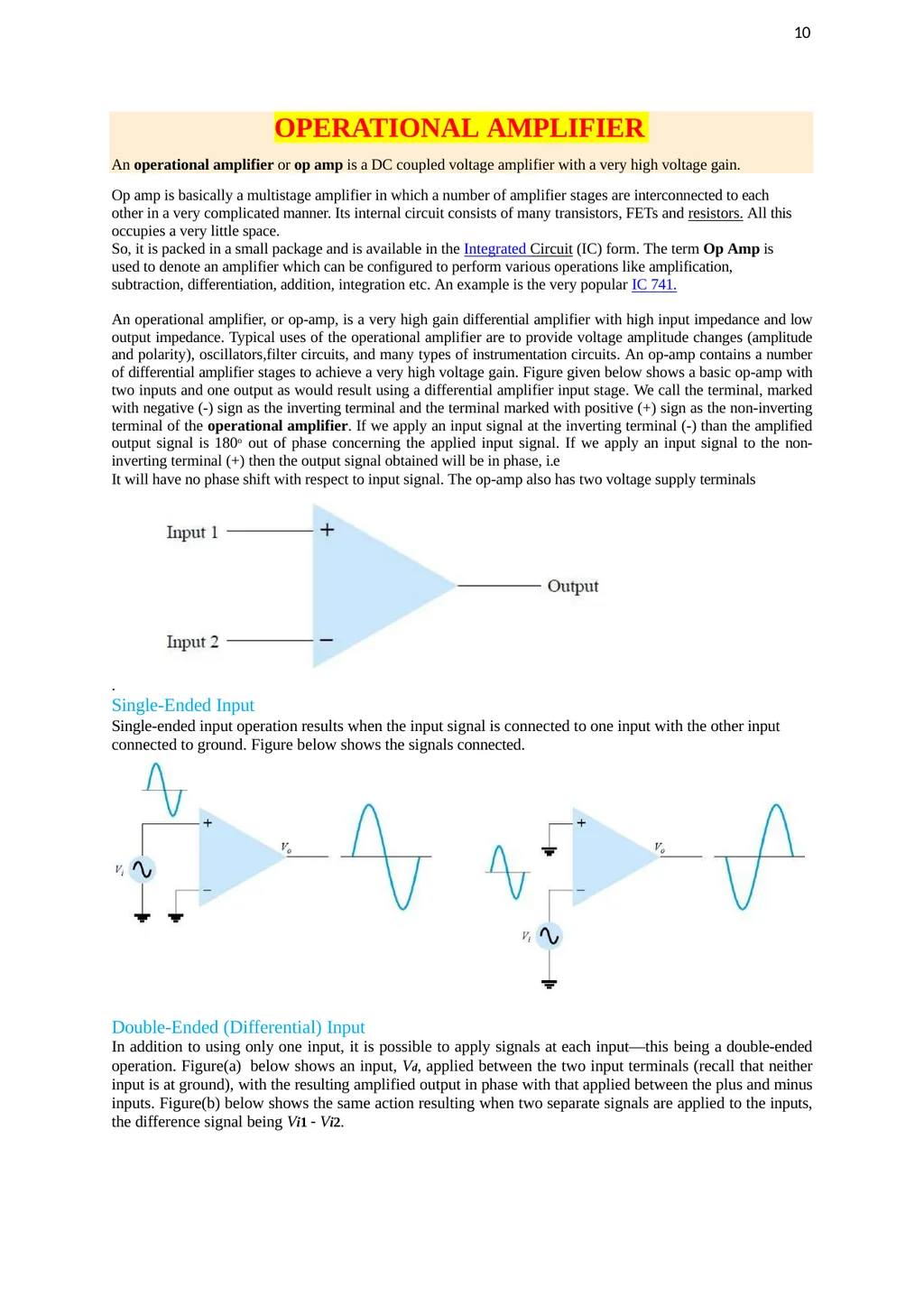
An operational amplifier, or op-amp, is a very high gain differential amplifier with high input impedance and low output impedance. Typical uses of the operational amplifier are to provide voltage amplitude changes (amplitude and polarity), oscillators,filter circuits, and many types of instrumentation circuits. An op-amp contains a number of differential amplifier stages to achieve a very high voltage gain. Figure given below shows a basic op-amp with two inputs and one output as would result using a differential amplifier input stage. We call the terminal, marked with negative (-) sign as the inverting terminal and the terminal marked with positive (+) sign as the non-inverting terminal of the operational amplifier. If we apply an input signal at the inverting terminal (-) than the amplified output signal is 180o out of phase concerning the applied input signal. If we apply an input signal to the non- inverting terminal (+) then the output signal obtained will be in phase, i.e
It will have no phase shift with respect to input signal. The op-amp also has two voltage supply terminals .
Single-Ended Input
Single-ended input operation results when the input signal is connected to one input with the other input connected to ground. Figure below shows the signals connected. Double-Ended (Differential) Input
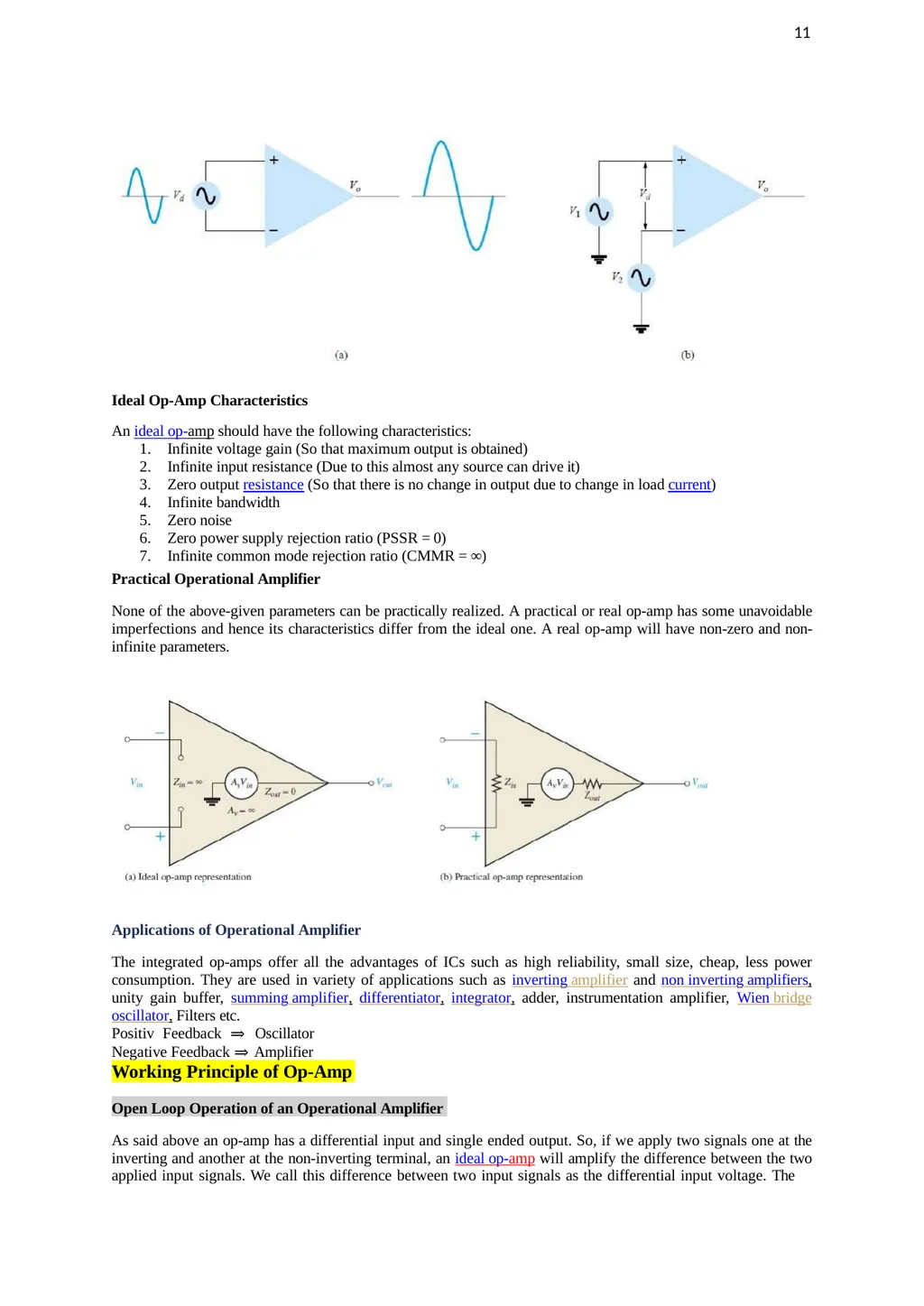
In addition to using only one input, it is possible to apply signals at each input—this being a double-ended operation. Figure(a) below shows an input, Vd, applied between the two input terminals (recall that neither input is at ground), with the resulting amplified output in phase with that applied between the plus and minus inputs. Figure(b) below shows the same action resulting when two separate signals are applied to the inputs, the difference signal being Vi1 - Vi2. NSU, JAMSHEDPUR<br>
So, it is packed in a small package and is available in the Integrated Circuit (IC) form. The term Op Amp is used to denote an amplifier which can be configured to perform various operations like amplification, subtraction, differentiation, addition, integration etc. An example is the very popular IC 741.
An operational amplifier, or op-amp, is a very high gain differential amplifier with high input impedance and low output impedance. Typical uses of the operational amplifier are to provide voltage amplitude changes (amplitude and polarity), oscillators,filter circuits, and many types of instrumentation circuits. An op-amp contains a number of differential amplifier stages to achieve a very high voltage gain. Figure given below shows a basic op-amp with two inputs and one output as would result using a differential amplifier input stage. We call the terminal, marked with negative (-) sign as the inverting terminal and the terminal marked with positive (+) sign as the non-inverting terminal of the operational amplifier. If we apply an input signal at the inverting terminal (-) than the amplified output signal is 180o out of phase concerning the applied input signal. If we apply an input signal to the non- inverting terminal (+) then the output signal obtained will be in phase, i.e
It will have no phase shift with respect to input signal. The op-amp also has two voltage supply terminals .
Single-Ended Input
Single-ended input operation results when the input signal is connected to one input with the other input connected to ground. Figure below shows the signals connected. Double-Ended (Differential) Input
In addition to using only one input, it is possible to apply signals at each input—this being a double-ended operation. Figure(a) below shows an input, Vd, applied between the two input terminals (recall that neither input is at ground), with the resulting amplified output in phase with that applied between the plus and minus inputs. Figure(b) below shows the same action resulting when two separate signals are applied to the inputs, the difference signal being Vi1 - Vi2. NSU, JAMSHEDPUR<br>
09
11 Ideal Op-Amp Characteristics
An ideal op-amp should have the following characteristics:
Infinite voltage gain (So that maximum output is obtained)
Infinite input resistance (Due to this almost any source can drive it)
Zero output resistance (So that there is no change in output due to change in load current)
Infinite bandwidth
Zero noise
Zero power supply rejection ratio (PSSR = 0)
Infinite common mode rejection ratio (CMMR = ∞)
Practical Operational Amplifier
None of the above-given parameters can be practically realized. A practical or real op-amp has some unavoidable imperfections and hence its characteristics differ from the ideal one. A real op-amp will have non-zero and non- infinite parameters. Applications of Operational Amplifier
The integrated op-amps offer all the advantages of ICs such as high reliability, small size, cheap, less power consumption. They are used in variety of applications such as inverting amplifier and non inverting amplifiers, unity gain buffer, summing amplifier, differentiator, integrator, adder, instrumentation amplifier, Wien bridge oscillator, Filters etc.
Positiv Feedback ⇒ Oscillator Negative Feedback ⇒ Amplifier Working Principle of Op-Amp Open Loop Operation of an Operational Amplifier As said above an op-amp has a differential input and single ended output. So, if we apply two signals one at the inverting and another at the non-inverting terminal, an ideal op-amp will amplify the difference between the two applied input signals. We call this difference between two input signals as the differential input voltage. The NSU, JAMSHEDPUR<br>
An ideal op-amp should have the following characteristics:
Infinite voltage gain (So that maximum output is obtained)
Infinite input resistance (Due to this almost any source can drive it)
Zero output resistance (So that there is no change in output due to change in load current)
Infinite bandwidth
Zero noise
Zero power supply rejection ratio (PSSR = 0)
Infinite common mode rejection ratio (CMMR = ∞)
Practical Operational Amplifier
None of the above-given parameters can be practically realized. A practical or real op-amp has some unavoidable imperfections and hence its characteristics differ from the ideal one. A real op-amp will have non-zero and non- infinite parameters. Applications of Operational Amplifier
The integrated op-amps offer all the advantages of ICs such as high reliability, small size, cheap, less power consumption. They are used in variety of applications such as inverting amplifier and non inverting amplifiers, unity gain buffer, summing amplifier, differentiator, integrator, adder, instrumentation amplifier, Wien bridge oscillator, Filters etc.
Positiv Feedback ⇒ Oscillator Negative Feedback ⇒ Amplifier Working Principle of Op-Amp Open Loop Operation of an Operational Amplifier As said above an op-amp has a differential input and single ended output. So, if we apply two signals one at the inverting and another at the non-inverting terminal, an ideal op-amp will amplify the difference between the two applied input signals. We call this difference between two input signals as the differential input voltage. The NSU, JAMSHEDPUR<br>
10
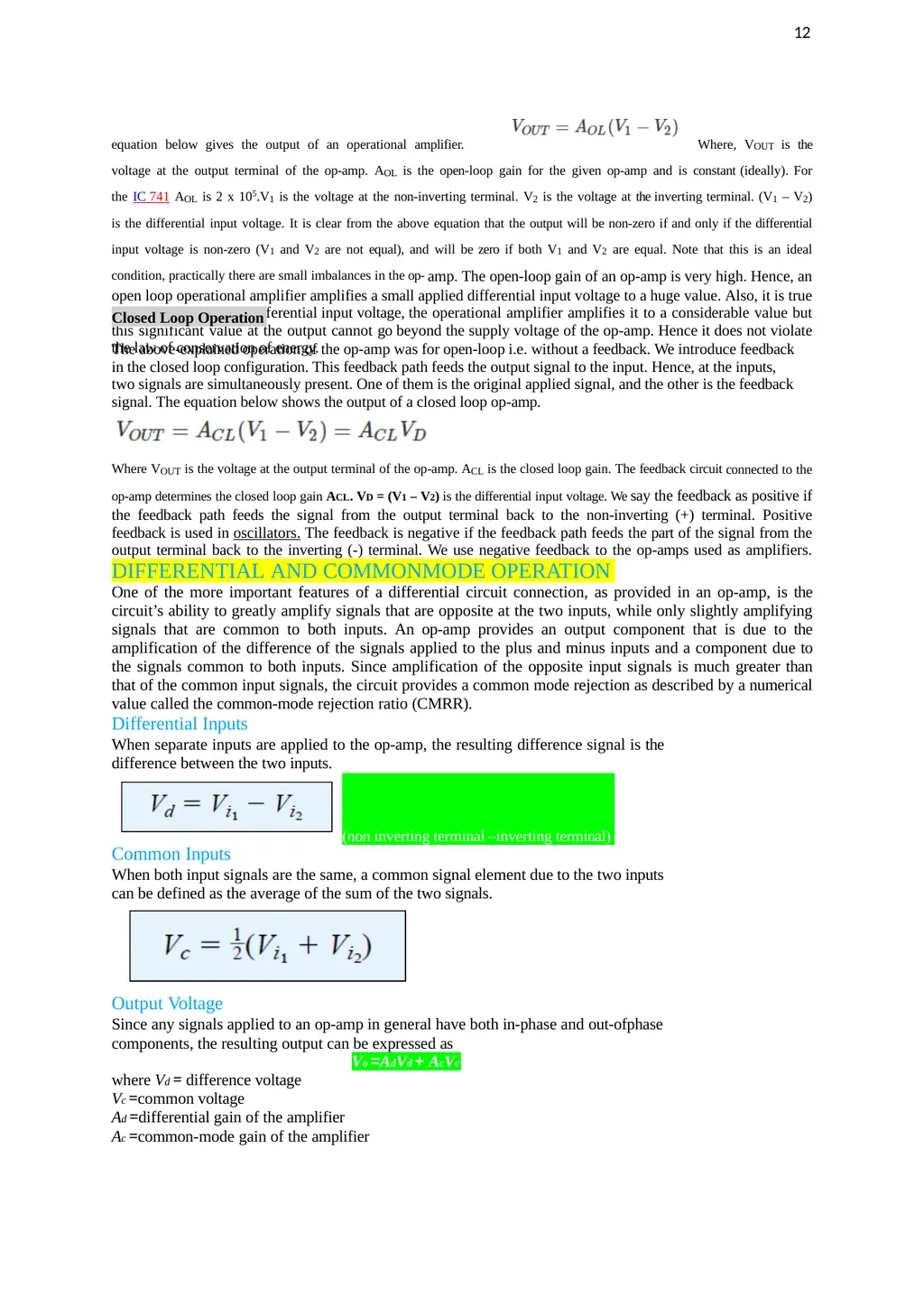
12 equation below gives the output of an operational amplifier. Where, VOUT is the voltage at the output terminal of the op-amp. AOL is the open-loop gain for the given op-amp and is constant (ideally). For the IC 741 AOL is 2 x 105.V1 is the voltage at the non-inverting terminal. V2 is the voltage at the inverting terminal. (V1 – V2) is the differential input voltage. It is clear from the above equation that the output will be non-zero if and only if the differential input voltage is non-zero (V1 and V2 are not equal), and will be zero if both V1 and V2 are equal. Note that this is an ideal condition, practically there are small imbalances in the op- amp. The open-loop gain of an op-amp is very high. Hence, an open loop operational amplifier amplifies a small applied differential input voltage to a huge value. Also, it is true that if we apply small differential input voltage, the operational amplifier amplifies it to a considerable value but this significant value at the output cannot go beyond the supply voltage of the op-amp. Hence it does not violate the law of conservation of energy. Closed Loop Operation The above-explained operation of the op-amp was for open-loop i.e. without a feedback. We introduce feedback in the closed loop configuration. This feedback path feeds the output signal to the input. Hence, at the inputs, two signals are simultaneously present. One of them is the original applied signal, and the other is the feedback signal. The equation below shows the output of a closed loop op-amp.
Where VOUT is the voltage at the output terminal of the op-amp. ACL is the closed loop gain. The feedback circuit connected to the op-amp determines the closed loop gain ACL. VD = (V1 – V2) is the differential input voltage. We say the feedback as positive if the feedback path feeds the signal from the output terminal back to the non-inverting (+) terminal. Positive feedback is used in oscillators. The feedback is negative if the feedback path feeds the part of the signal from the output terminal back to the inverting (-) terminal. We use negative feedback to the op-amps used as amplifiers. Each type of feedback, negative or positive has its advantages and disadvantages. DIFFERENTIAL AND COMMONMODE OPERATION One of the more important features of a differential circuit connection, as provided in an op-amp, is the circuit’s ability to greatly amplify signals that are opposite at the two inputs, while only slightly amplifying signals that are common to both inputs. An op-amp provides an output component that is due to the amplification of the difference of the signals applied to the plus and minus inputs and a component due to the signals common to both inputs. Since amplification of the opposite input signals is much greater than that of the common input signals, the circuit provides a common mode rejection as described by a numerical value called the common-mode rejection ratio (CMRR).
Differential Inputs
When separate inputs are applied to the op-amp, the resulting difference signal is the difference between the two inputs. (non inverting terminal –inverting terminal) Common Inputs
When both input signals are the same, a common signal element due to the two inputs can be defined as the average of the sum of the two signals. Output Voltage
Since any signals applied to an op-amp in general have both in-phase and out-ofphase components, the resulting output can be expressed as Vo =AdVd + AcVc where Vd = difference voltage
Vc =common voltage
Ad =differential gain of the amplifier
Ac =common-mode gain of the amplifier NSU, JAMSHEDPUR<br>
Where VOUT is the voltage at the output terminal of the op-amp. ACL is the closed loop gain. The feedback circuit connected to the op-amp determines the closed loop gain ACL. VD = (V1 – V2) is the differential input voltage. We say the feedback as positive if the feedback path feeds the signal from the output terminal back to the non-inverting (+) terminal. Positive feedback is used in oscillators. The feedback is negative if the feedback path feeds the part of the signal from the output terminal back to the inverting (-) terminal. We use negative feedback to the op-amps used as amplifiers. Each type of feedback, negative or positive has its advantages and disadvantages. DIFFERENTIAL AND COMMONMODE OPERATION One of the more important features of a differential circuit connection, as provided in an op-amp, is the circuit’s ability to greatly amplify signals that are opposite at the two inputs, while only slightly amplifying signals that are common to both inputs. An op-amp provides an output component that is due to the amplification of the difference of the signals applied to the plus and minus inputs and a component due to the signals common to both inputs. Since amplification of the opposite input signals is much greater than that of the common input signals, the circuit provides a common mode rejection as described by a numerical value called the common-mode rejection ratio (CMRR).
Differential Inputs
When separate inputs are applied to the op-amp, the resulting difference signal is the difference between the two inputs. (non inverting terminal –inverting terminal) Common Inputs
When both input signals are the same, a common signal element due to the two inputs can be defined as the average of the sum of the two signals. Output Voltage
Since any signals applied to an op-amp in general have both in-phase and out-ofphase components, the resulting output can be expressed as Vo =AdVd + AcVc where Vd = difference voltage
Vc =common voltage
Ad =differential gain of the amplifier
Ac =common-mode gain of the amplifier NSU, JAMSHEDPUR<br>
11
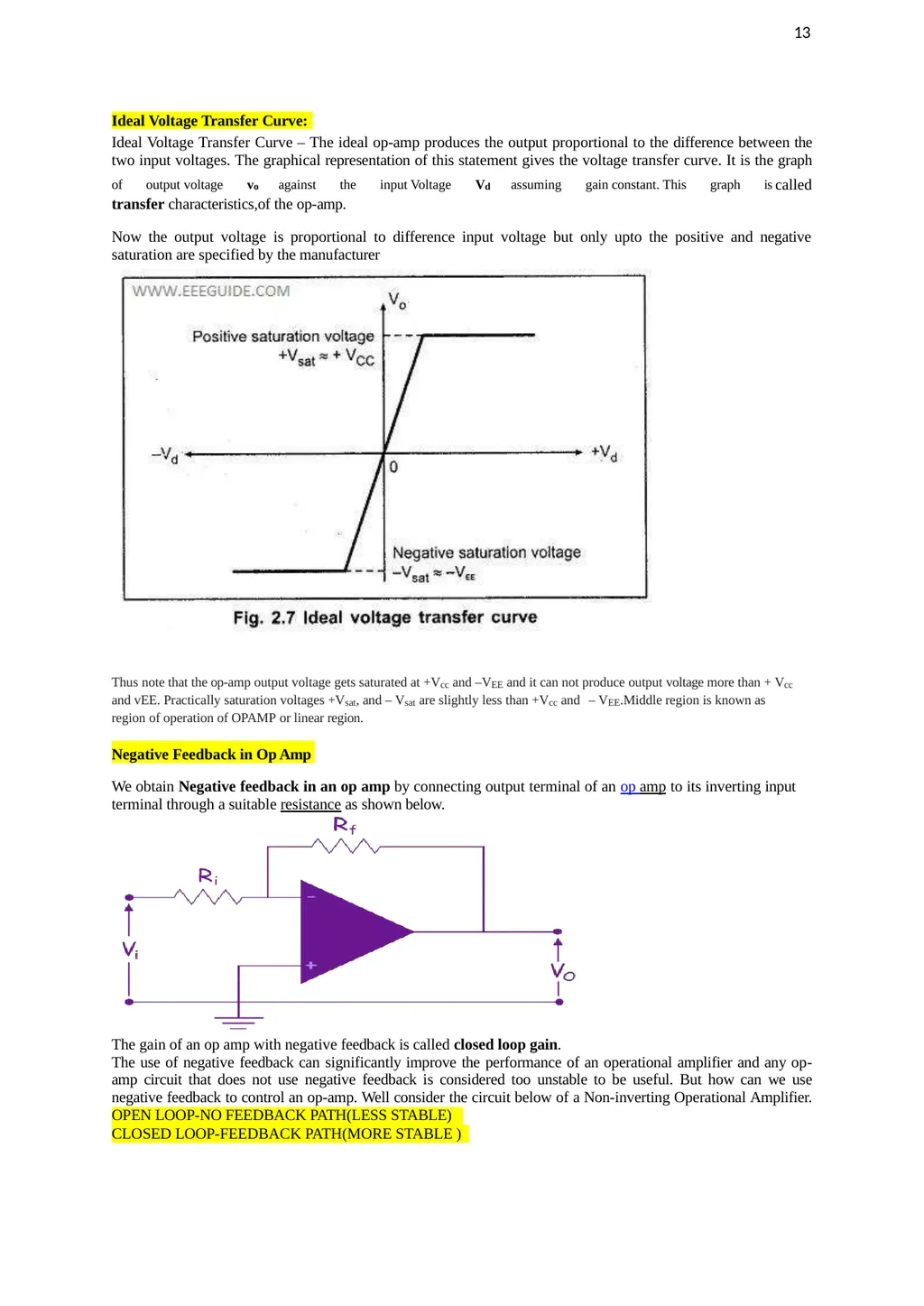
13 Ideal Voltage Transfer Curve: Ideal Voltage Transfer Curve – The ideal op-amp produces the output proportional to the difference between the two input voltages. The graphical representation of this statement gives the voltage transfer curve. It is the graph of output voltage vo against the input Voltage Vd assuming gain constant. This graph is called transfer characteristics,of the op-amp.
Now the output voltage is proportional to difference input voltage but only upto the positive and negative saturation are specified by the manufacturer Thus note that the op-amp output voltage gets saturated at +Vcc and –VEE and it can not produce output voltage more than + Vcc and vEE. Practically saturation voltages +Vsat, and – Vsat are slightly less than +Vcc and – VEE.Middle region is known as region of operation of OPAMP or linear region. Negative Feedback in Op Amp We obtain Negative feedback in an op amp by connecting output terminal of an op amp to its inverting input terminal through a suitable resistance as shown below. The gain of an op amp with negative feedback is called closed loop gain.
The use of negative feedback can significantly improve the performance of an operational amplifier and any op- amp circuit that does not use negative feedback is considered too unstable to be useful. But how can we use negative feedback to control an op-amp. Well consider the circuit below of a Non-inverting Operational Amplifier. OPEN LOOP-NO FEEDBACK PATH(LESS STABLE)
CLOSED LOOP-FEEDBACK PATH(MORE STABLE ) NSU, JAMSHEDPUR<br>
Now the output voltage is proportional to difference input voltage but only upto the positive and negative saturation are specified by the manufacturer Thus note that the op-amp output voltage gets saturated at +Vcc and –VEE and it can not produce output voltage more than + Vcc and vEE. Practically saturation voltages +Vsat, and – Vsat are slightly less than +Vcc and – VEE.Middle region is known as region of operation of OPAMP or linear region. Negative Feedback in Op Amp We obtain Negative feedback in an op amp by connecting output terminal of an op amp to its inverting input terminal through a suitable resistance as shown below. The gain of an op amp with negative feedback is called closed loop gain.
The use of negative feedback can significantly improve the performance of an operational amplifier and any op- amp circuit that does not use negative feedback is considered too unstable to be useful. But how can we use negative feedback to control an op-amp. Well consider the circuit below of a Non-inverting Operational Amplifier. OPEN LOOP-NO FEEDBACK PATH(LESS STABLE)
CLOSED LOOP-FEEDBACK PATH(MORE STABLE ) NSU, JAMSHEDPUR<br>
12
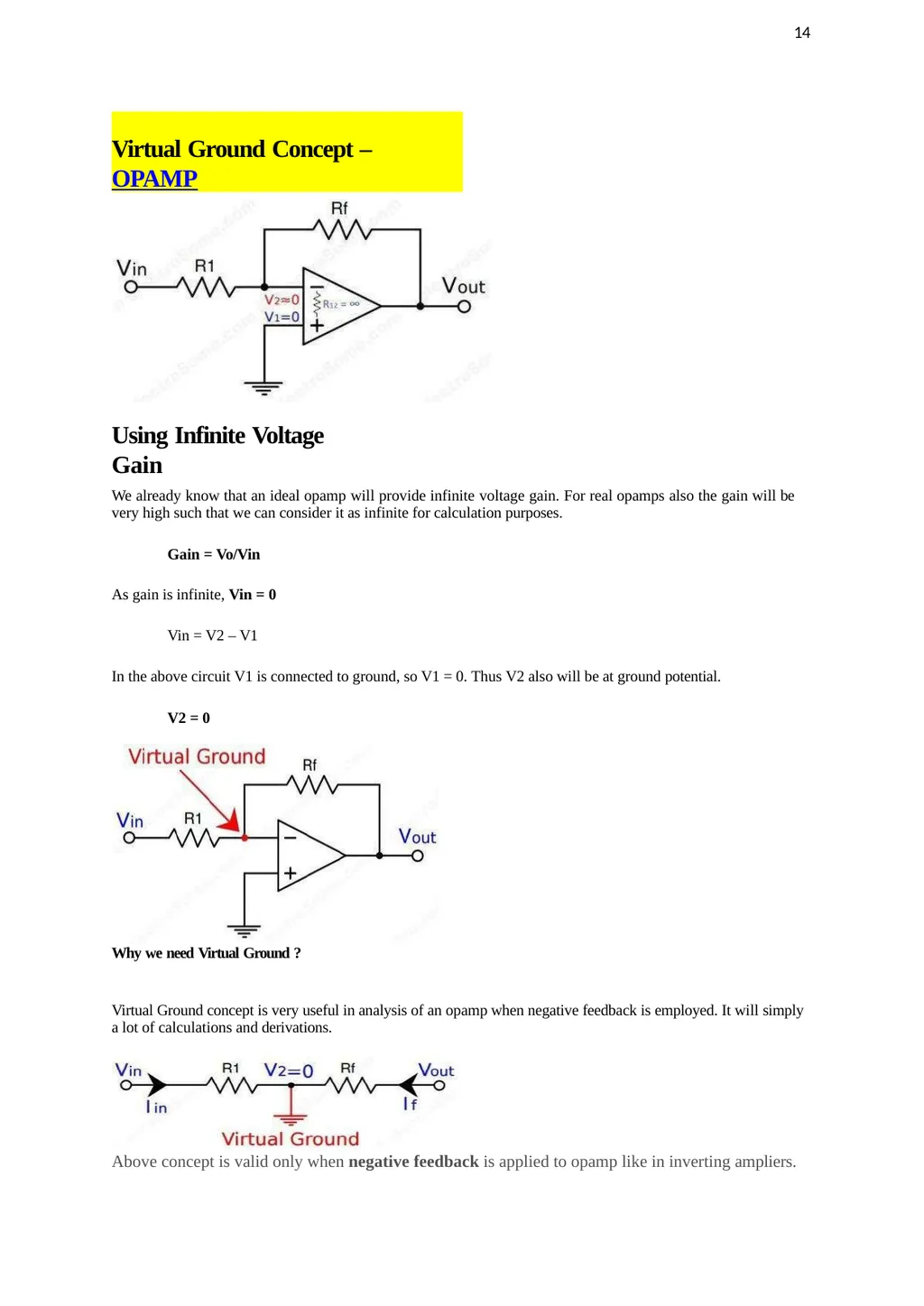
14 Virtual Ground Concept – OPAMP Using Infinite Voltage Gain We already know that an ideal opamp will provide infinite voltage gain. For real opamps also the gain will be very high such that we can consider it as infinite for calculation purposes.
Gain = Vo/Vin
As gain is infinite, Vin = 0
Vin = V2 – V1
In the above circuit V1 is connected to ground, so V1 = 0. Thus V2 also will be at ground potential.
V2 = 0 Why we need Virtual Ground ?
Virtual Ground concept is very useful in analysis of an opamp when negative feedback is employed. It will simply a lot of calculations and derivations. Above concept is valid only when negative feedback is applied to opamp like in inverting ampliers. NSU, JAMSHEDPUR<br>
Gain = Vo/Vin
As gain is infinite, Vin = 0
Vin = V2 – V1
In the above circuit V1 is connected to ground, so V1 = 0. Thus V2 also will be at ground potential.
V2 = 0 Why we need Virtual Ground ?
Virtual Ground concept is very useful in analysis of an opamp when negative feedback is employed. It will simply a lot of calculations and derivations. Above concept is valid only when negative feedback is applied to opamp like in inverting ampliers. NSU, JAMSHEDPUR<br>
13
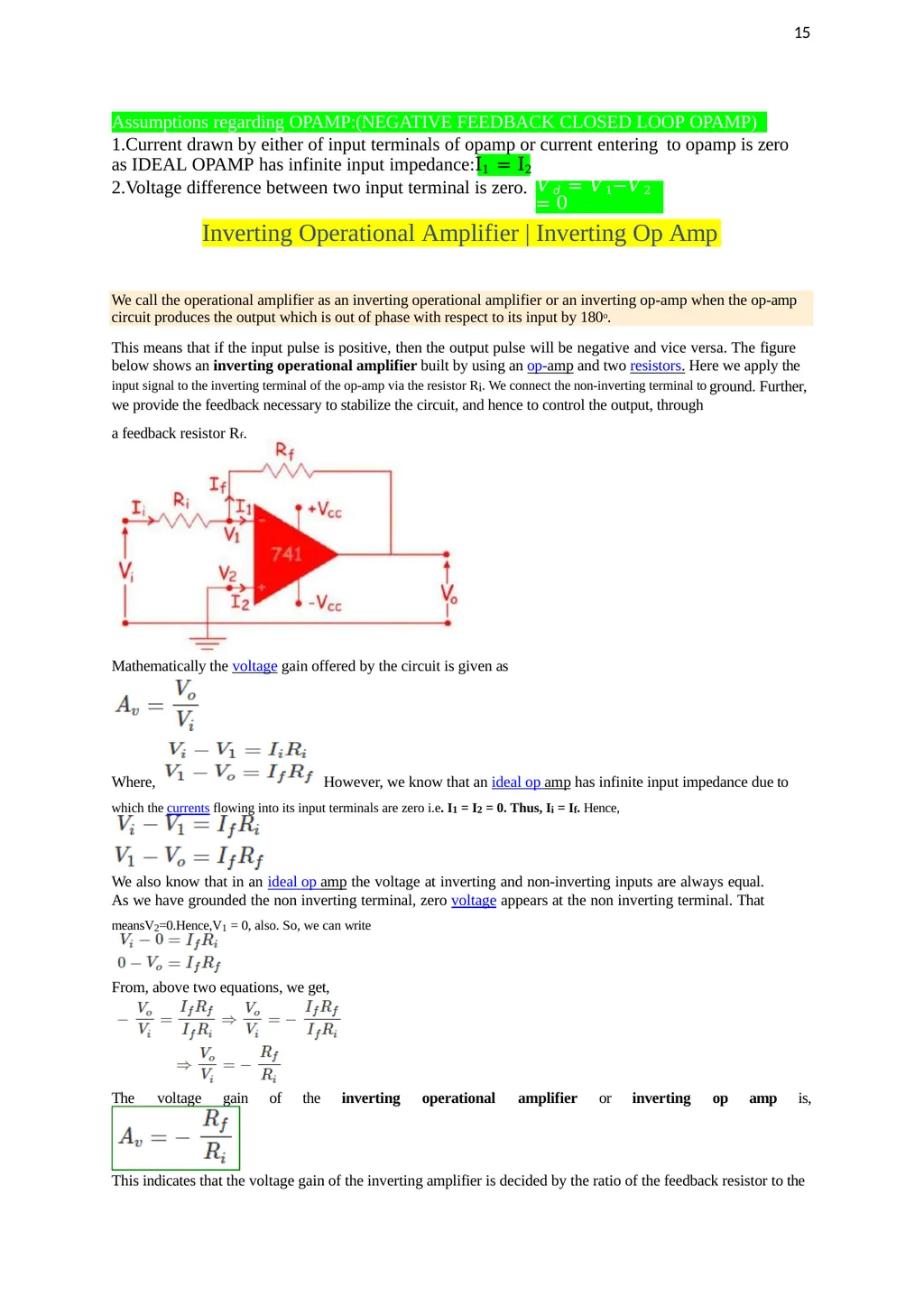
15 Assumptions regarding OPAMP:(NEGATIVE FEEDBACK CLOSED LOOP OPAMP) 1.Current drawn by either of input terminals of opamp or current entering to opamp is zero as IDEAL OPAMP has infinite input impedance:I1 = I2 2.Voltage difference between two input terminal is zero. 𝑉𝑑 = 𝑉1−𝑉2 = 0 Inverting Operational Amplifier | Inverting Op Amp We call the operational amplifier as an inverting operational amplifier or an inverting op-amp when the op-amp circuit produces the output which is out of phase with respect to its input by 180o. This means that if the input pulse is positive, then the output pulse will be negative and vice versa. The figure below shows an inverting operational amplifier built by using an op-amp and two resistors. Here we apply the
input signal to the inverting terminal of the op-amp via the resistor Ri. We connect the non-inverting terminal to ground. Further, we provide the feedback necessary to stabilize the circuit, and hence to control the output, through
a feedback resistor Rf. Mathematically the voltage gain offered by the circuit is given as Where, However, we know that an ideal op amp has infinite input impedance due to which the currents flowing into its input terminals are zero i.e. I1 = I2 = 0. Thus, Ii = If. Hence, We also know that in an ideal op amp the voltage at inverting and non-inverting inputs are always equal. As we have grounded the non inverting terminal, zero voltage appears at the non inverting terminal. That meansV2=0.Hence,V1 = 0, also. So, we can write From, above two equations, we get, The voltage gain of the inverting operational amplifier or inverting op amp is, This indicates that the voltage gain of the inverting amplifier is decided by the ratio of the feedback resistor to the NSU, JAMSHEDPUR<br>
input signal to the inverting terminal of the op-amp via the resistor Ri. We connect the non-inverting terminal to ground. Further, we provide the feedback necessary to stabilize the circuit, and hence to control the output, through
a feedback resistor Rf. Mathematically the voltage gain offered by the circuit is given as Where, However, we know that an ideal op amp has infinite input impedance due to which the currents flowing into its input terminals are zero i.e. I1 = I2 = 0. Thus, Ii = If. Hence, We also know that in an ideal op amp the voltage at inverting and non-inverting inputs are always equal. As we have grounded the non inverting terminal, zero voltage appears at the non inverting terminal. That meansV2=0.Hence,V1 = 0, also. So, we can write From, above two equations, we get, The voltage gain of the inverting operational amplifier or inverting op amp is, This indicates that the voltage gain of the inverting amplifier is decided by the ratio of the feedback resistor to the NSU, JAMSHEDPUR<br>
14
16 input resistor with the minus sign indicating the phase-reversal. Further, it is to be noted that the input impedance of the inverting amplifier is nothing but Ri.
Inverting amplifiers exhibit excellent linear characteristics which make them ideal as DC amplifiers. Moreover,
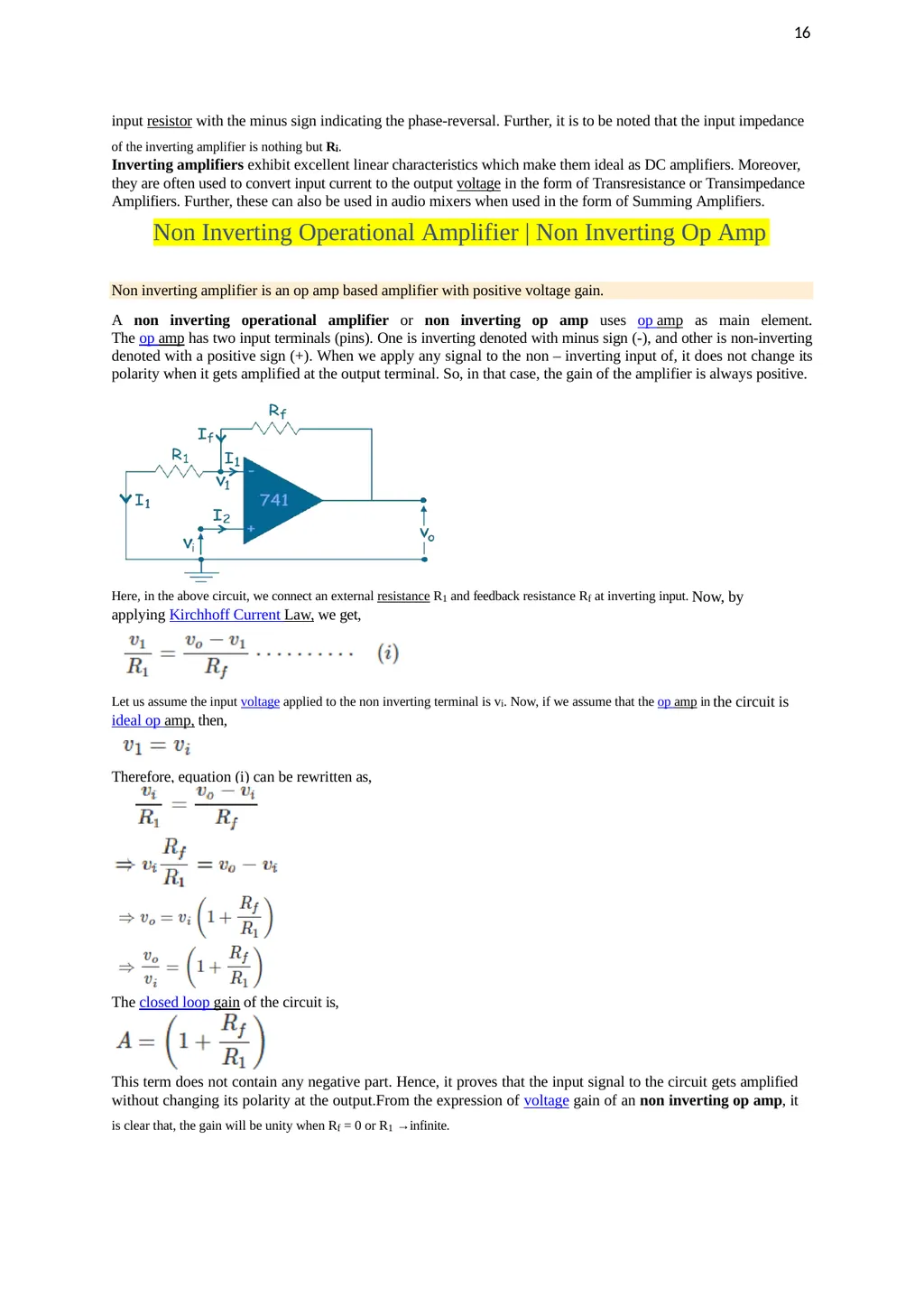
they are often used to convert input current to the output voltage in the form of Transresistance or Transimpedance Amplifiers. Further, these can also be used in audio mixers when used in the form of Summing Amplifiers. Non Inverting Operational Amplifier | Non Inverting Op Amp Non inverting amplifier is an op amp based amplifier with positive voltage gain. A non inverting operational amplifier or non inverting op amp uses op amp as main element. The op amp has two input terminals (pins). One is inverting denoted with minus sign (-), and other is non-inverting denoted with a positive sign (+). When we apply any signal to the non – inverting input of, it does not change its polarity when it gets amplified at the output terminal. So, in that case, the gain of the amplifier is always positive. Here, in the above circuit, we connect an external resistance R1 and feedback resistance Rf at inverting input. Now, by applying Kirchhoff Current Law, we get, Let us assume the input voltage applied to the non inverting terminal is vi. Now, if we assume that the op amp in the circuit is ideal op amp, then,
Therefore, equation (i) can be rewritten as, The closed loop gain of the circuit is, This term does not contain any negative part. Hence, it proves that the input signal to the circuit gets amplified without changing its polarity at the output.From the expression of voltage gain of an non inverting op amp, it is clear that, the gain will be unity when Rf = 0 or R1 →infinite. NSU, JAMSHEDPUR<br>
Inverting amplifiers exhibit excellent linear characteristics which make them ideal as DC amplifiers. Moreover,
they are often used to convert input current to the output voltage in the form of Transresistance or Transimpedance Amplifiers. Further, these can also be used in audio mixers when used in the form of Summing Amplifiers. Non Inverting Operational Amplifier | Non Inverting Op Amp Non inverting amplifier is an op amp based amplifier with positive voltage gain. A non inverting operational amplifier or non inverting op amp uses op amp as main element. The op amp has two input terminals (pins). One is inverting denoted with minus sign (-), and other is non-inverting denoted with a positive sign (+). When we apply any signal to the non – inverting input of, it does not change its polarity when it gets amplified at the output terminal. So, in that case, the gain of the amplifier is always positive. Here, in the above circuit, we connect an external resistance R1 and feedback resistance Rf at inverting input. Now, by applying Kirchhoff Current Law, we get, Let us assume the input voltage applied to the non inverting terminal is vi. Now, if we assume that the op amp in the circuit is ideal op amp, then,
Therefore, equation (i) can be rewritten as, The closed loop gain of the circuit is, This term does not contain any negative part. Hence, it proves that the input signal to the circuit gets amplified without changing its polarity at the output.From the expression of voltage gain of an non inverting op amp, it is clear that, the gain will be unity when Rf = 0 or R1 →infinite. NSU, JAMSHEDPUR<br>
15
17 So, if we short circuit the feedback path and/or open the external resistance of the inverting pin, the gain of the circuit becomes 1. This circuit is called voltage follower or unity gain amplifier. This is used to isolate two cascaded circuits, because of its infinitely large impedance, at op amp inputs APPLICATION OF OPAMP: 1. SUMMING AMPLIFIER Summing amplifier is basically an op amp circuit that can combine numbers of input signal to a single output that is the weighted sum of the applied inputs. This simple inverting amplifier can easily be modified to summing amplifier, if we connect several input terminals in parallel to the existing input terminals as shown below. Here, n numbers of input terminal are connected in parallel. Here, in the circuit, the non-inverting terminal of the op amp is grounded, hence potential at that terminal is zero. As the op amp is considered as ideal op amp, NSU, JAMSHEDPUR<br>
16
18 the potential of the inverting terminal is also zero. So, the electric potential at node 1, is also zero. From the circuit, it is also clear that the current i is the sum of currents of input terminals.
Therefore, Now, in the case of ideal op amp the current at the inverting and non-inverting terminal are zero. So, as per Kirchhoff Current Law, the entire input current passes through the feedback path of resistance Rf. That means, From, equation (i) and (ii), we get, This indicates that output voltage v0 is weighted sum of numbers of input voltages.
2. DIFFERENCE AMPLIFIER OR OP AMP SUBTRACTOR:
Two signals can be subtracted, one from the other, in a number of ways. Figure given below shows two op-amp stages used to provide subtraction of input signals. The resulting
output is given by: Another connection(both signals applied to single opamp) to provide subtraction of two signals is shown in Fig. given below This connection uses only one op-amp stage to provide subtracting two input signals. Using superposition the output can be shown.. NSU, JAMSHEDPUR<br>
Therefore, Now, in the case of ideal op amp the current at the inverting and non-inverting terminal are zero. So, as per Kirchhoff Current Law, the entire input current passes through the feedback path of resistance Rf. That means, From, equation (i) and (ii), we get, This indicates that output voltage v0 is weighted sum of numbers of input voltages.
2. DIFFERENCE AMPLIFIER OR OP AMP SUBTRACTOR:
Two signals can be subtracted, one from the other, in a number of ways. Figure given below shows two op-amp stages used to provide subtraction of input signals. The resulting
output is given by: Another connection(both signals applied to single opamp) to provide subtraction of two signals is shown in Fig. given below This connection uses only one op-amp stage to provide subtracting two input signals. Using superposition the output can be shown.. NSU, JAMSHEDPUR<br>
17
19 3. VOLTAGE BUFFER
A voltage buffer circuit provides a means of isolating an input signal from a load by using a stage having unity voltage gain, with no phase or polarity inversion, and acting as an ideal circuit with very high input impedance and low output impedance. Figure given below shows an op-amp connected to provide this buffer amplifier operation. The output voltage is determined by
Vo =V1 4. OP AMP AS INTEGRATOR
op amp integrator circuit can be done, if we replace the feedback resistor Rf by a capacitor C as shown below. In an ideal op amp the voltage at non inverting input terminal is same as that of inverting input.
Here, in the circuit, as the non inverting input is grounded, the electric potential of inverting input will also be zero as non inverting input. In an ideal op amp, no current entires to the op amp through both inverting and non inverting inputs.
Now, if we apply Kirchhoff current law at node 1 of the above circuit, shown in figure , we get, NSU, JAMSHEDPUR<br>
A voltage buffer circuit provides a means of isolating an input signal from a load by using a stage having unity voltage gain, with no phase or polarity inversion, and acting as an ideal circuit with very high input impedance and low output impedance. Figure given below shows an op-amp connected to provide this buffer amplifier operation. The output voltage is determined by
Vo =V1 4. OP AMP AS INTEGRATOR
op amp integrator circuit can be done, if we replace the feedback resistor Rf by a capacitor C as shown below. In an ideal op amp the voltage at non inverting input terminal is same as that of inverting input.
Here, in the circuit, as the non inverting input is grounded, the electric potential of inverting input will also be zero as non inverting input. In an ideal op amp, no current entires to the op amp through both inverting and non inverting inputs.
Now, if we apply Kirchhoff current law at node 1 of the above circuit, shown in figure , we get, NSU, JAMSHEDPUR<br>
18
20 Integrating both side, we get, This is the integral function of input voltage.
5. OP AMP DIFFERENTIATOR
Differentiator is an op amp based circuit, whose output signal is proportional to differentiation of input signal.An op amp differentiator is basically an inverting amplifier with a capacitor of suitable value at its input terminal. The figure below shows the basic circuit diagram of an op amp differentiator. We will first assume that the op amp used here is an ideal op amp. We know that the voltage at both inverting and non inverting terminals of an ideal op amp is same. As the electric potential at non inverting terminal is zero since it is grounded. The electric potential of inverting terminal is also zero, as the opamp is ideal. Because, we know that the electric potential at non – inverting and inverting terminals. It is also known to us that the current entering through inverting and non inverting terminal of an ideal op amp is zero.
Considering, these conditions of an ideal op amp, if we apply Kirchhoff Current Law at node 1 of the op amp differentiator circuit, we get, The above equation shows that the output voltage is the derivative of the input voltage. OPAMP PARAMETERS: 1.COMMON-MODE REJECTION RATIO NSU, JAMSHEDPUR<br>
5. OP AMP DIFFERENTIATOR
Differentiator is an op amp based circuit, whose output signal is proportional to differentiation of input signal.An op amp differentiator is basically an inverting amplifier with a capacitor of suitable value at its input terminal. The figure below shows the basic circuit diagram of an op amp differentiator. We will first assume that the op amp used here is an ideal op amp. We know that the voltage at both inverting and non inverting terminals of an ideal op amp is same. As the electric potential at non inverting terminal is zero since it is grounded. The electric potential of inverting terminal is also zero, as the opamp is ideal. Because, we know that the electric potential at non – inverting and inverting terminals. It is also known to us that the current entering through inverting and non inverting terminal of an ideal op amp is zero.
Considering, these conditions of an ideal op amp, if we apply Kirchhoff Current Law at node 1 of the op amp differentiator circuit, we get, The above equation shows that the output voltage is the derivative of the input voltage. OPAMP PARAMETERS: 1.COMMON-MODE REJECTION RATIO NSU, JAMSHEDPUR<br>
19
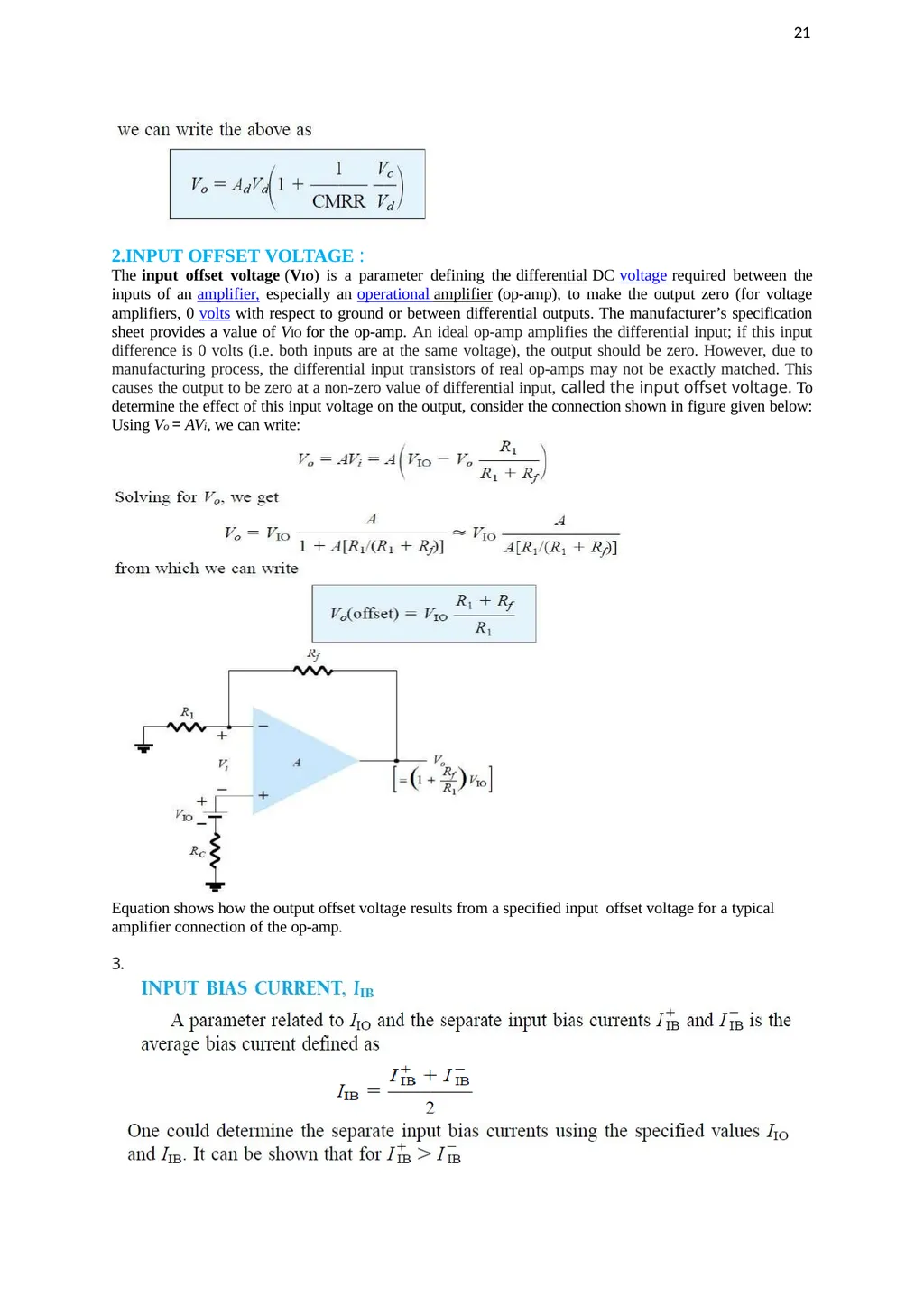
21 2.INPUT OFFSET VOLTAGE :
The input offset voltage (VIO) is a parameter defining the differential DC voltage required between the inputs of an amplifier, especially an operational amplifier (op-amp), to make the output zero (for voltage amplifiers, 0 volts with respect to ground or between differential outputs. The manufacturer’s specification sheet provides a value of VIO for the op-amp. An ideal op-amp amplifies the differential input; if this input difference is 0 volts (i.e. both inputs are at the same voltage), the output should be zero. However, due to manufacturing process, the differential input transistors of real op-amps may not be exactly matched. This causes the output to be zero at a non-zero value of differential input, called the input offset voltage. To determine the effect of this input voltage on the output, consider the connection shown in figure given below: Using Vo = AVi, we can write: Equation shows how the output offset voltage results from a specified input offset voltage for a typical amplifier connection of the op-amp.
3. NSU, JAMSHEDPUR<br>
The input offset voltage (VIO) is a parameter defining the differential DC voltage required between the inputs of an amplifier, especially an operational amplifier (op-amp), to make the output zero (for voltage amplifiers, 0 volts with respect to ground or between differential outputs. The manufacturer’s specification sheet provides a value of VIO for the op-amp. An ideal op-amp amplifies the differential input; if this input difference is 0 volts (i.e. both inputs are at the same voltage), the output should be zero. However, due to manufacturing process, the differential input transistors of real op-amps may not be exactly matched. This causes the output to be zero at a non-zero value of differential input, called the input offset voltage. To determine the effect of this input voltage on the output, consider the connection shown in figure given below: Using Vo = AVi, we can write: Equation shows how the output offset voltage results from a specified input offset voltage for a typical amplifier connection of the op-amp.
3. NSU, JAMSHEDPUR<br>
20
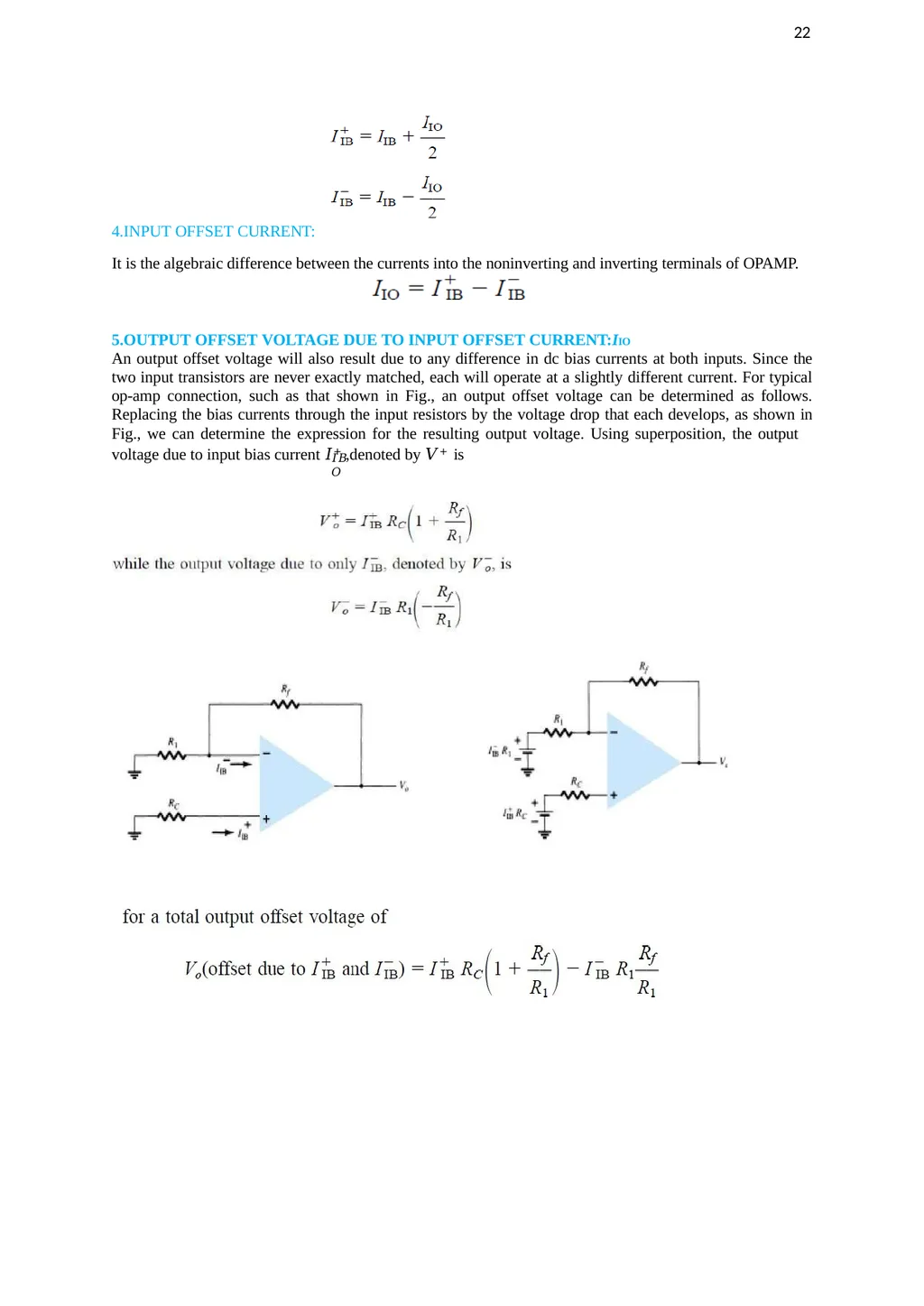
22 4.INPUT OFFSET CURRENT:
It is the algebraic difference between the currents into the noninverting and inverting terminals of OPAMP. 5.OUTPUT OFFSET VOLTAGE DUE TO INPUT OFFSET CURRENT:IIO
An output offset voltage will also result due to any difference in dc bias currents at both inputs. Since the two input transistors are never exactly matched, each will operate at a slightly different current. For typical op-amp connection, such as that shown in Fig., an output offset voltage can be determined as follows. Replacing the bias currents through the input resistors by the voltage drop that each develops, as shown in Fig., we can determine the expression for the resulting output voltage. Using superposition, the output 𝐼𝐵 𝑂 voltage due to input bias current 𝐼+ ,denoted by 𝑉+ is NSU, JAMSHEDPUR<br>
It is the algebraic difference between the currents into the noninverting and inverting terminals of OPAMP. 5.OUTPUT OFFSET VOLTAGE DUE TO INPUT OFFSET CURRENT:IIO
An output offset voltage will also result due to any difference in dc bias currents at both inputs. Since the two input transistors are never exactly matched, each will operate at a slightly different current. For typical op-amp connection, such as that shown in Fig., an output offset voltage can be determined as follows. Replacing the bias currents through the input resistors by the voltage drop that each develops, as shown in Fig., we can determine the expression for the resulting output voltage. Using superposition, the output 𝐼𝐵 𝑂 voltage due to input bias current 𝐼+ ,denoted by 𝑉+ is NSU, JAMSHEDPUR<br>
21
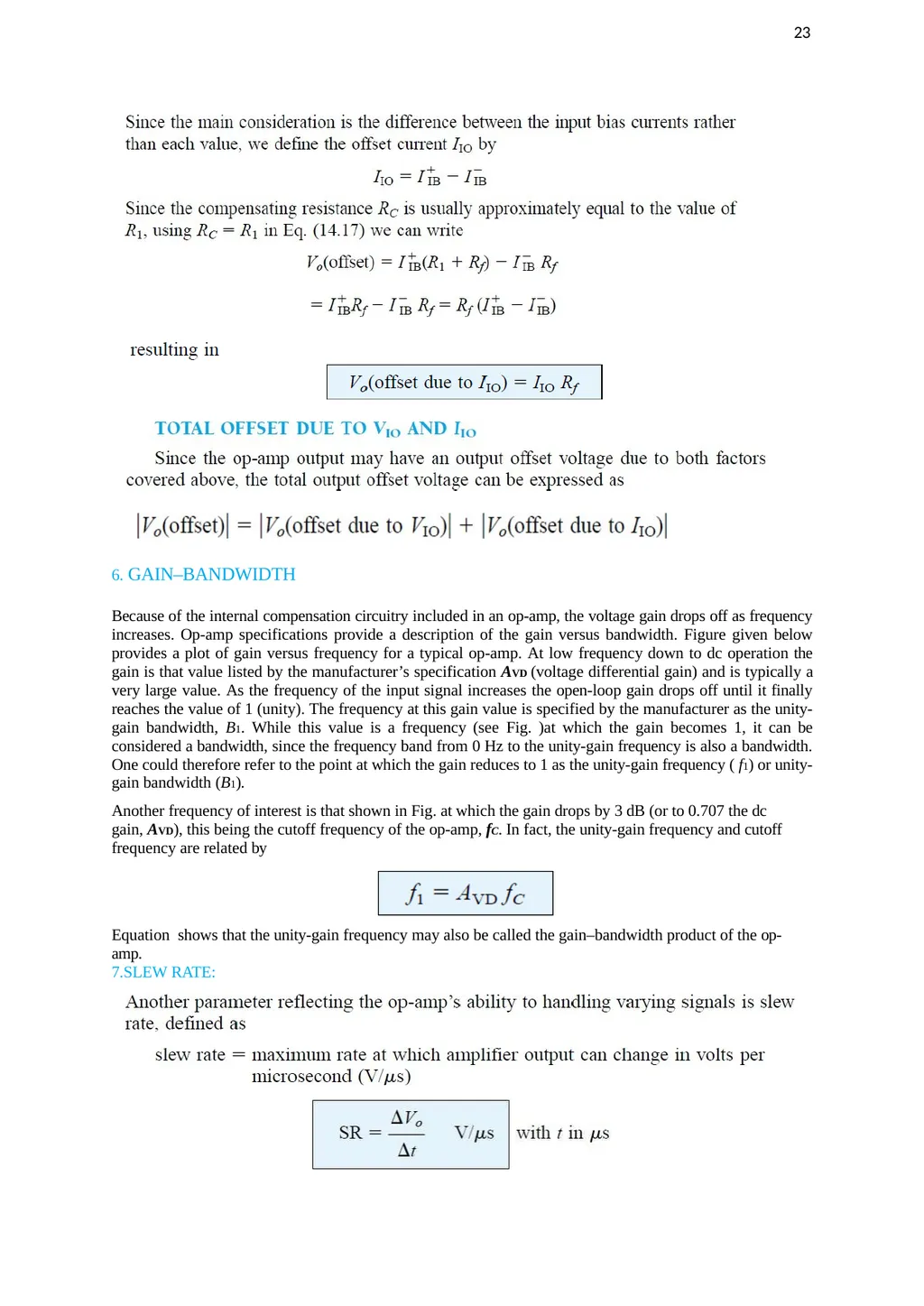
23 6. GAIN–BANDWIDTH
Because of the internal compensation circuitry included in an op-amp, the voltage gain drops off as frequency increases. Op-amp specifications provide a description of the gain versus bandwidth. Figure given below provides a plot of gain versus frequency for a typical op-amp. At low frequency down to dc operation the gain is that value listed by the manufacturer’s specification AVD (voltage differential gain) and is typically a very large value. As the frequency of the input signal increases the open-loop gain drops off until it finally reaches the value of 1 (unity). The frequency at this gain value is specified by the manufacturer as the unity- gain bandwidth, B1. While this value is a frequency (see Fig. )at which the gain becomes 1, it can be considered a bandwidth, since the frequency band from 0 Hz to the unity-gain frequency is also a bandwidth. One could therefore refer to the point at which the gain reduces to 1 as the unity-gain frequency ( f1) or unity- gain bandwidth (B1).
Another frequency of interest is that shown in Fig. at which the gain drops by 3 dB (or to 0.707 the dc gain, AVD), this being the cutoff frequency of the op-amp, fC. In fact, the unity-gain frequency and cutoff frequency are related by Equation shows that the unity-gain frequency may also be called the gain–bandwidth product of the op- amp.
7.SLEW RATE: NSU, JAMSHEDPUR<br>
Because of the internal compensation circuitry included in an op-amp, the voltage gain drops off as frequency increases. Op-amp specifications provide a description of the gain versus bandwidth. Figure given below provides a plot of gain versus frequency for a typical op-amp. At low frequency down to dc operation the gain is that value listed by the manufacturer’s specification AVD (voltage differential gain) and is typically a very large value. As the frequency of the input signal increases the open-loop gain drops off until it finally reaches the value of 1 (unity). The frequency at this gain value is specified by the manufacturer as the unity- gain bandwidth, B1. While this value is a frequency (see Fig. )at which the gain becomes 1, it can be considered a bandwidth, since the frequency band from 0 Hz to the unity-gain frequency is also a bandwidth. One could therefore refer to the point at which the gain reduces to 1 as the unity-gain frequency ( f1) or unity- gain bandwidth (B1).
Another frequency of interest is that shown in Fig. at which the gain drops by 3 dB (or to 0.707 the dc gain, AVD), this being the cutoff frequency of the op-amp, fC. In fact, the unity-gain frequency and cutoff frequency are related by Equation shows that the unity-gain frequency may also be called the gain–bandwidth product of the op- amp.
7.SLEW RATE: NSU, JAMSHEDPUR<br>
22
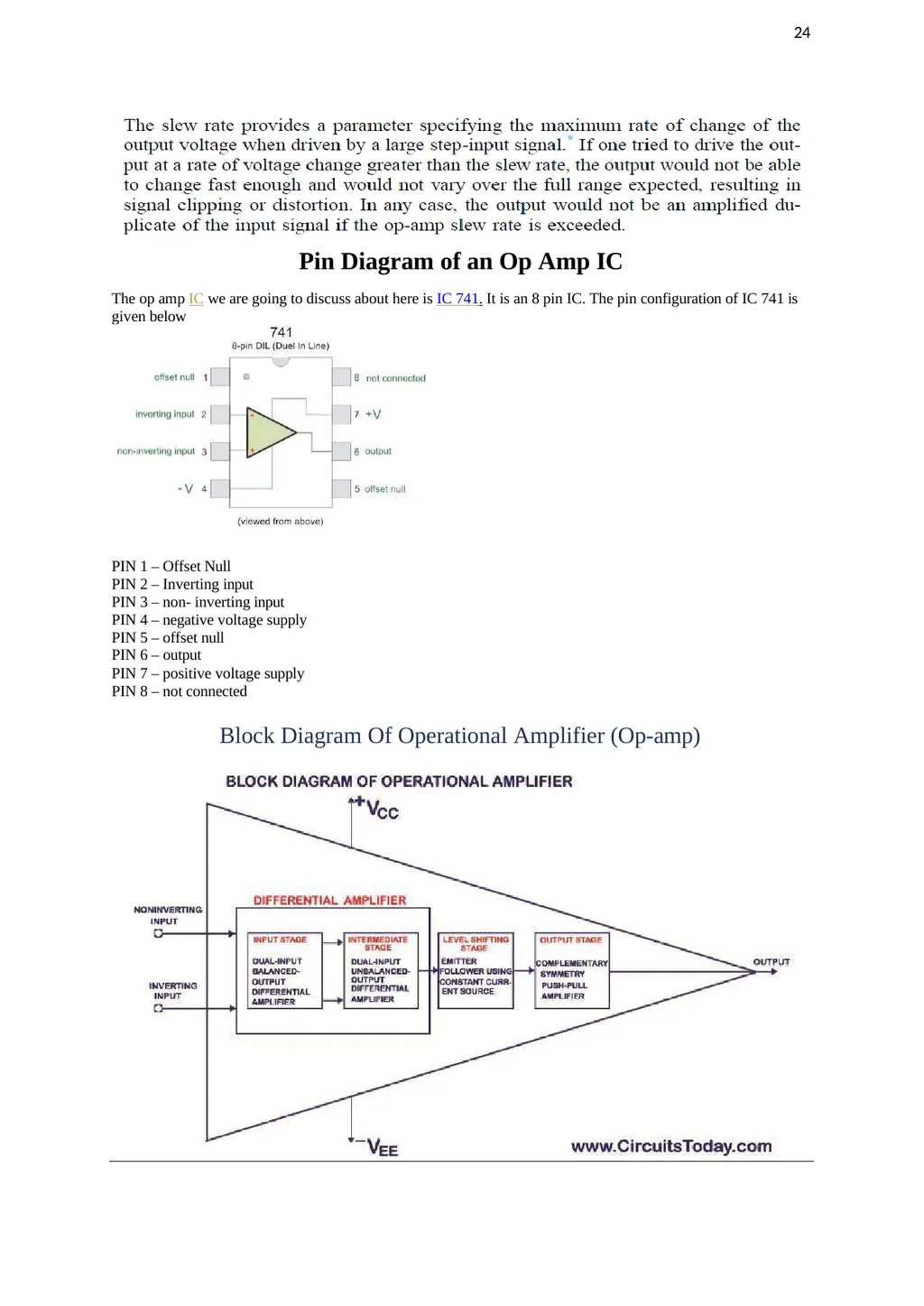
24 Pin Diagram of an Op Amp IC
The op amp IC we are going to discuss about here is IC 741. It is an 8 pin IC. The pin configuration of IC 741 is given below PIN 1 – Offset Null PIN 2 – Inverting input
PIN 3 – non- inverting input PIN 4 – negative voltage supply PIN 5 – offset null
PIN 6 – output
PIN 7 – positive voltage supply PIN 8 – not connected Block Diagram Of Operational Amplifier (Op-amp) NSU, JAMSHEDPUR<br>
The op amp IC we are going to discuss about here is IC 741. It is an 8 pin IC. The pin configuration of IC 741 is given below PIN 1 – Offset Null PIN 2 – Inverting input
PIN 3 – non- inverting input PIN 4 – negative voltage supply PIN 5 – offset null
PIN 6 – output
PIN 7 – positive voltage supply PIN 8 – not connected Block Diagram Of Operational Amplifier (Op-amp) NSU, JAMSHEDPUR<br>
23
25 The op-amp begins with a differential amplifier stage, which operates in the differential mode. Thus the inputs
noted with ‘+’ & ‘- ‘ .
The positive sign is for the non-inverting input and negative is for the inverting input. The non-inverting input is the ac signal (or dc) applied to the differential amplifier which produces the same polarity of the signal at the output of op-amp. The inverting signal input is the ac signal (or dc) applied to the differential amplifier. This produces a 180 degrees out of phase signal at the output.
The inverting and non-inverting inputs are provided to the input stage which is a dual input, balanced output differential amplifier. The voltage gain required for the amplifier is provided in this stage along with the input resistance for the op-amp. The output of the initial stage is given to the intermediate stage, which is driven by the output of the input stage.
In this stage direct coupling is used, which makes the dc voltage at the output of the intermediate stage above ground potential. Therefore, the dc level at its output must be shifted down to 0Volts with respect to the ground. For this, the level shifting stage is used where usually an emitter follower with the constant current source is applied. The level shifted signal is then given to the output stage where a push-pull amplifier increases the output voltage swing of the signal and also increases the current supplying capability of the op-amp. NSU, JAMSHEDPUR<br>
noted with ‘+’ & ‘- ‘ .
The positive sign is for the non-inverting input and negative is for the inverting input. The non-inverting input is the ac signal (or dc) applied to the differential amplifier which produces the same polarity of the signal at the output of op-amp. The inverting signal input is the ac signal (or dc) applied to the differential amplifier. This produces a 180 degrees out of phase signal at the output.
The inverting and non-inverting inputs are provided to the input stage which is a dual input, balanced output differential amplifier. The voltage gain required for the amplifier is provided in this stage along with the input resistance for the op-amp. The output of the initial stage is given to the intermediate stage, which is driven by the output of the input stage.
In this stage direct coupling is used, which makes the dc voltage at the output of the intermediate stage above ground potential. Therefore, the dc level at its output must be shifted down to 0Volts with respect to the ground. For this, the level shifting stage is used where usually an emitter follower with the constant current source is applied. The level shifted signal is then given to the output stage where a push-pull amplifier increases the output voltage swing of the signal and also increases the current supplying capability of the op-amp. NSU, JAMSHEDPUR<br>
24
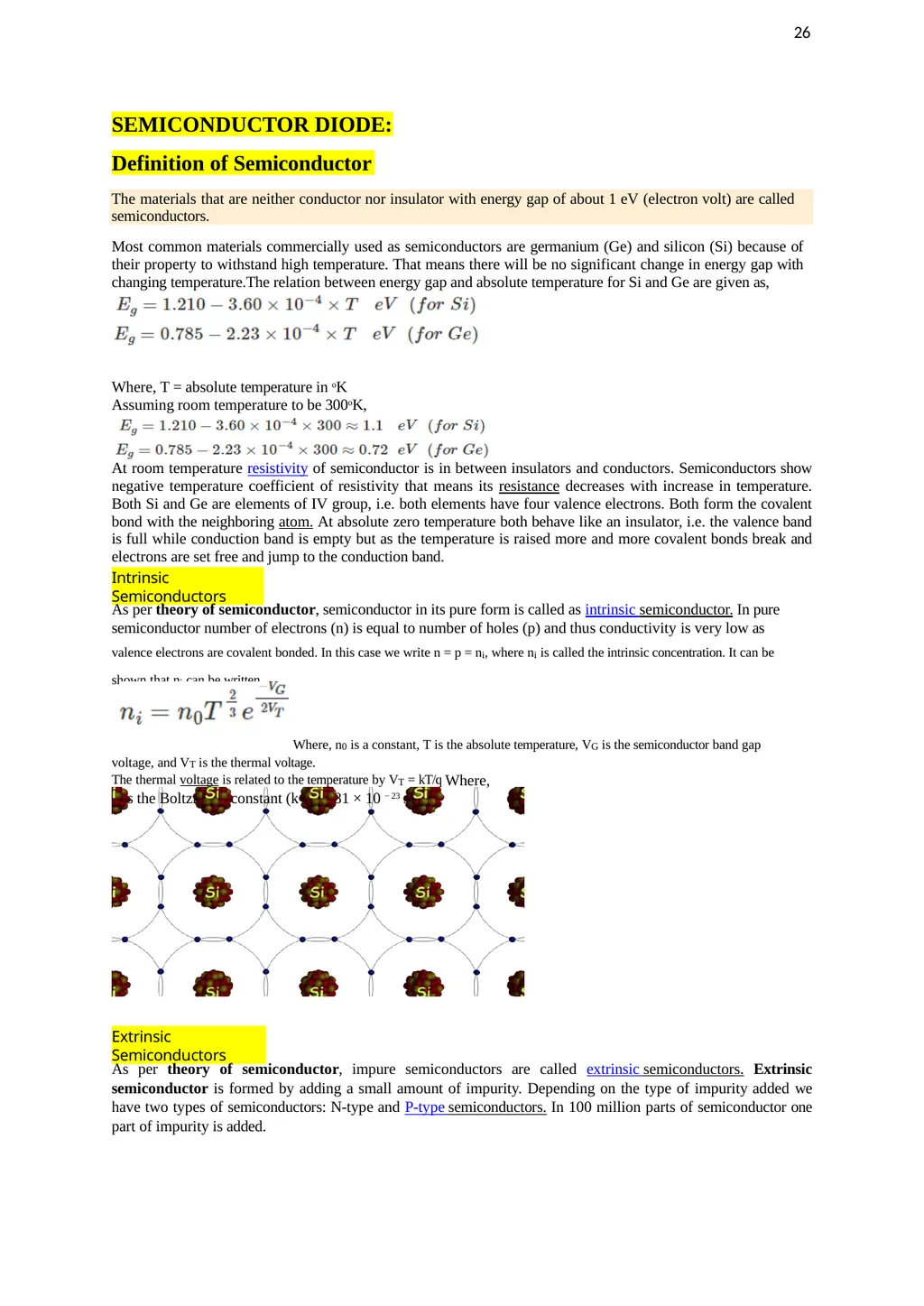
26 SEMICONDUCTOR DIODE: Definition of Semiconductor The materials that are neither conductor nor insulator with energy gap of about 1 eV (electron volt) are called semiconductors. Most common materials commercially used as semiconductors are germanium (Ge) and silicon (Si) because of their property to withstand high temperature. That means there will be no significant change in energy gap with changing temperature.The relation between energy gap and absolute temperature for Si and Ge are given as, Where, T = absolute temperature in oK Assuming room temperature to be 300oK, At room temperature resistivity of semiconductor is in between insulators and conductors. Semiconductors show negative temperature coefficient of resistivity that means its resistance decreases with increase in temperature. Both Si and Ge are elements of IV group, i.e. both elements have four valence electrons. Both form the covalent bond with the neighboring atom. At absolute zero temperature both behave like an insulator, i.e. the valence band is full while conduction band is empty but as the temperature is raised more and more covalent bonds break and electrons are set free and jump to the conduction band. Intrinsic Semiconductors As per theory of semiconductor, semiconductor in its pure form is called as intrinsic semiconductor. In pure semiconductor number of electrons (n) is equal to number of holes (p) and thus conductivity is very low as valence electrons are covalent bonded. In this case we write n = p = ni, where ni is called the intrinsic concentration. It can be shown that ni can be written
Where, n0 is a constant, T is the absolute temperature, VG is the semiconductor band gap voltage, and VT is the thermal voltage.
The thermal voltage is related to the temperature by VT = kT/q Where, k is the Boltzmann constant (k = 1.381 × 10 − 23 J/K). Extrinsic Semiconductors As per theory of semiconductor, impure semiconductors are called extrinsic semiconductors. Extrinsic semiconductor is formed by adding a small amount of impurity. Depending on the type of impurity added we have two types of semiconductors: N-type and P-type semiconductors. In 100 million parts of semiconductor one part of impurity is added. NSU, JAMSHEDPUR<br>
Where, n0 is a constant, T is the absolute temperature, VG is the semiconductor band gap voltage, and VT is the thermal voltage.
The thermal voltage is related to the temperature by VT = kT/q Where, k is the Boltzmann constant (k = 1.381 × 10 − 23 J/K). Extrinsic Semiconductors As per theory of semiconductor, impure semiconductors are called extrinsic semiconductors. Extrinsic semiconductor is formed by adding a small amount of impurity. Depending on the type of impurity added we have two types of semiconductors: N-type and P-type semiconductors. In 100 million parts of semiconductor one part of impurity is added. NSU, JAMSHEDPUR<br>
25
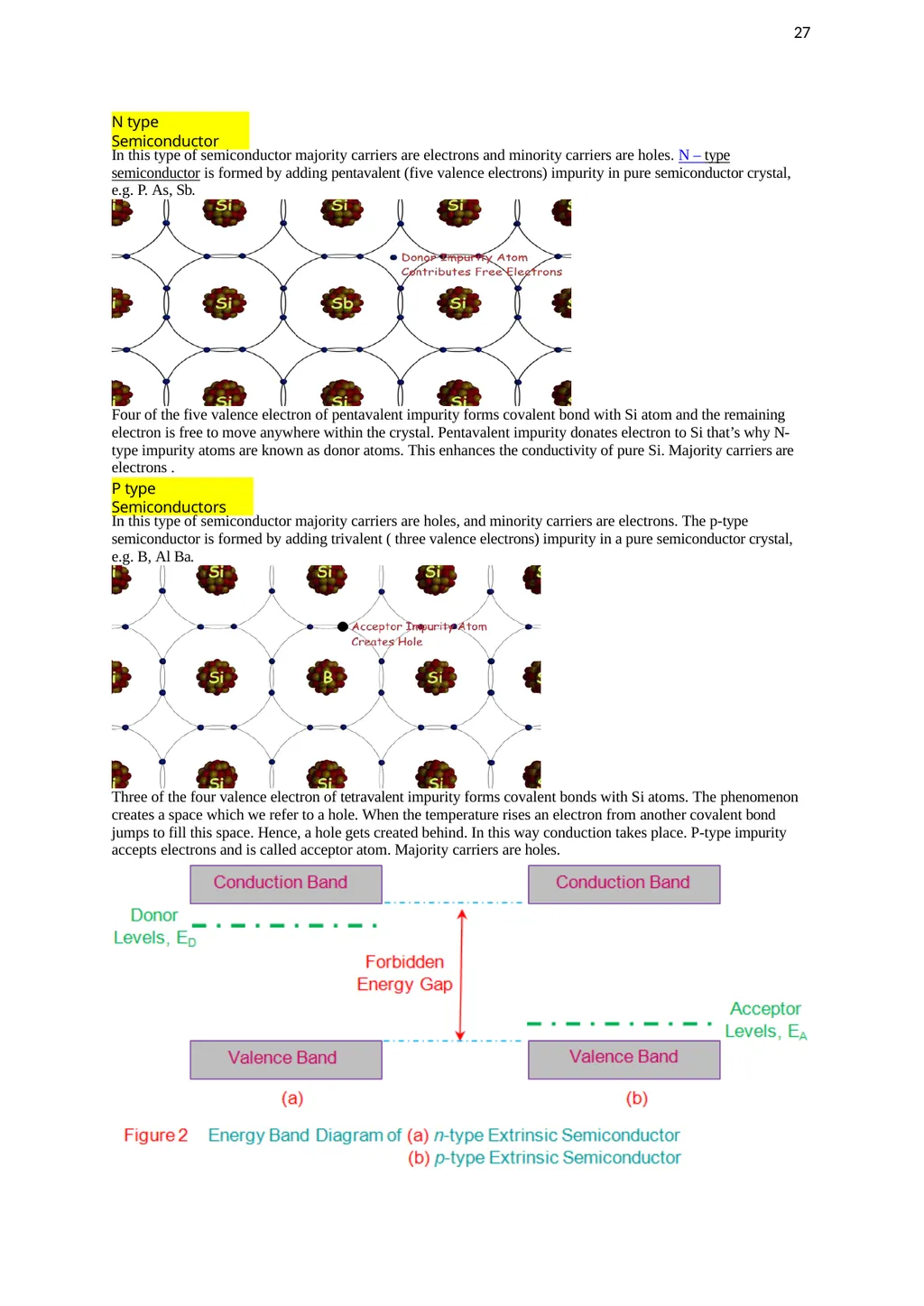
27 N type Semiconductor In this type of semiconductor majority carriers are electrons and minority carriers are holes. N – type semiconductor is formed by adding pentavalent (five valence electrons) impurity in pure semiconductor crystal,
e.g. P. As, Sb. Four of the five valence electron of pentavalent impurity forms covalent bond with Si atom and the remaining electron is free to move anywhere within the crystal. Pentavalent impurity donates electron to Si that’s why N- type impurity atoms are known as donor atoms. This enhances the conductivity of pure Si. Majority carriers are electrons . P type Semiconductors In this type of semiconductor majority carriers are holes, and minority carriers are electrons. The p-type semiconductor is formed by adding trivalent ( three valence electrons) impurity in a pure semiconductor crystal,
e.g. B, Al Ba. Three of the four valence electron of tetravalent impurity forms covalent bonds with Si atoms. The phenomenon creates a space which we refer to a hole. When the temperature rises an electron from another covalent bond jumps to fill this space. Hence, a hole gets created behind. In this way conduction takes place. P-type impurity accepts electrons and is called acceptor atom. Majority carriers are holes. NSU, JAMSHEDPUR<br>
e.g. P. As, Sb. Four of the five valence electron of pentavalent impurity forms covalent bond with Si atom and the remaining electron is free to move anywhere within the crystal. Pentavalent impurity donates electron to Si that’s why N- type impurity atoms are known as donor atoms. This enhances the conductivity of pure Si. Majority carriers are electrons . P type Semiconductors In this type of semiconductor majority carriers are holes, and minority carriers are electrons. The p-type semiconductor is formed by adding trivalent ( three valence electrons) impurity in a pure semiconductor crystal,
e.g. B, Al Ba. Three of the four valence electron of tetravalent impurity forms covalent bonds with Si atoms. The phenomenon creates a space which we refer to a hole. When the temperature rises an electron from another covalent bond jumps to fill this space. Hence, a hole gets created behind. In this way conduction takes place. P-type impurity accepts electrons and is called acceptor atom. Majority carriers are holes. NSU, JAMSHEDPUR<br>
26
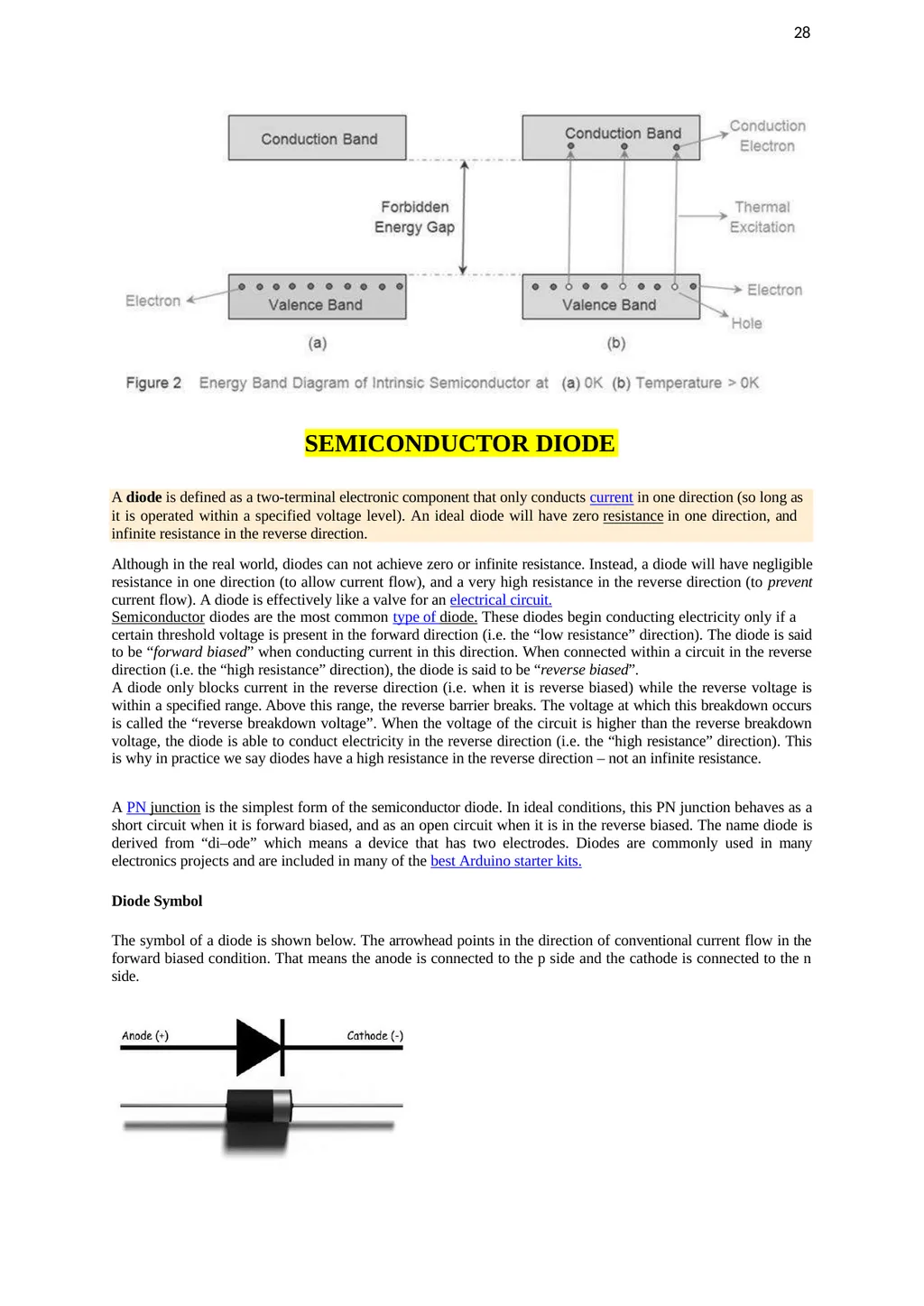
28 SEMICONDUCTOR DIODE A diode is defined as a two-terminal electronic component that only conducts current in one direction (so long as
it is operated within a specified voltage level). An ideal diode will have zero resistance in one direction, and infinite resistance in the reverse direction. Although in the real world, diodes can not achieve zero or infinite resistance. Instead, a diode will have negligible resistance in one direction (to allow current flow), and a very high resistance in the reverse direction (to prevent current flow). A diode is effectively like a valve for an electrical circuit.
Semiconductor diodes are the most common type of diode. These diodes begin conducting electricity only if a
certain threshold voltage is present in the forward direction (i.e. the “low resistance” direction). The diode is said to be “forward biased” when conducting current in this direction. When connected within a circuit in the reverse direction (i.e. the “high resistance” direction), the diode is said to be “reverse biased”.
A diode only blocks current in the reverse direction (i.e. when it is reverse biased) while the reverse voltage is within a specified range. Above this range, the reverse barrier breaks. The voltage at which this breakdown occurs is called the “reverse breakdown voltage”. When the voltage of the circuit is higher than the reverse breakdown voltage, the diode is able to conduct electricity in the reverse direction (i.e. the “high resistance” direction). This is why in practice we say diodes have a high resistance in the reverse direction – not an infinite resistance.
A PN junction is the simplest form of the semiconductor diode. In ideal conditions, this PN junction behaves as a short circuit when it is forward biased, and as an open circuit when it is in the reverse biased. The name diode is derived from “di–ode” which means a device that has two electrodes. Diodes are commonly used in many electronics projects and are included in many of the best Arduino starter kits.
Diode Symbol
The symbol of a diode is shown below. The arrowhead points in the direction of conventional current flow in the forward biased condition. That means the anode is connected to the p side and the cathode is connected to the n side. NSU, JAMSHEDPUR<br>
it is operated within a specified voltage level). An ideal diode will have zero resistance in one direction, and infinite resistance in the reverse direction. Although in the real world, diodes can not achieve zero or infinite resistance. Instead, a diode will have negligible resistance in one direction (to allow current flow), and a very high resistance in the reverse direction (to prevent current flow). A diode is effectively like a valve for an electrical circuit.
Semiconductor diodes are the most common type of diode. These diodes begin conducting electricity only if a
certain threshold voltage is present in the forward direction (i.e. the “low resistance” direction). The diode is said to be “forward biased” when conducting current in this direction. When connected within a circuit in the reverse direction (i.e. the “high resistance” direction), the diode is said to be “reverse biased”.
A diode only blocks current in the reverse direction (i.e. when it is reverse biased) while the reverse voltage is within a specified range. Above this range, the reverse barrier breaks. The voltage at which this breakdown occurs is called the “reverse breakdown voltage”. When the voltage of the circuit is higher than the reverse breakdown voltage, the diode is able to conduct electricity in the reverse direction (i.e. the “high resistance” direction). This is why in practice we say diodes have a high resistance in the reverse direction – not an infinite resistance.
A PN junction is the simplest form of the semiconductor diode. In ideal conditions, this PN junction behaves as a short circuit when it is forward biased, and as an open circuit when it is in the reverse biased. The name diode is derived from “di–ode” which means a device that has two electrodes. Diodes are commonly used in many electronics projects and are included in many of the best Arduino starter kits.
Diode Symbol
The symbol of a diode is shown below. The arrowhead points in the direction of conventional current flow in the forward biased condition. That means the anode is connected to the p side and the cathode is connected to the n side. NSU, JAMSHEDPUR<br>
27
29 We can create a simple PN junction diode by doping pentavalent or donor impurity in one portion and trivalent or acceptor impurity in other portion of silicon or germanium crystal block. These dopings make a PN junction at the middle part of the block. We can also form a PN junction by joining a p-type and n-type semiconductor together with a special fabrication technique. The terminal connected to the p-type is the anode. The terminal connected to the n-type side is the cathode. Working Principle of Diode A diode’s working principle depends on the interaction of n-type and p-type semiconductors. An n-type semiconductor has plenty of free electrons and a very few numbers of holes. In other words, we can say that the concentration of free electrons is high and that of holes is very low in an n-type semiconductor. Free electrons in the n-type semiconductor are referred as majority charge carriers, and holes in the n-type semiconductor are referred to as minority charge carriers.
A p-type semiconductor has a high concentration of holes and a low concentration of free electrons. Holes in the p-type semiconductor are majority charge carriers, and free electrons in the p-type semiconductor are minority charge carriers. Unbiased Diode Now let us see what happens when one n-type region and one p-type region come in contact. Here due to concentration differences, majority carriers diffuse from one side to another. As the concentration of holes is high in the p-type region and it is low in the n-type region, the holes start diffusing from the p-type region to the n-type region.Again the concentration of free electrons is high in the n-type region and it is low in the p-type region and due to this reason, free electrons start diffusing from the n-type region to the p-type region.
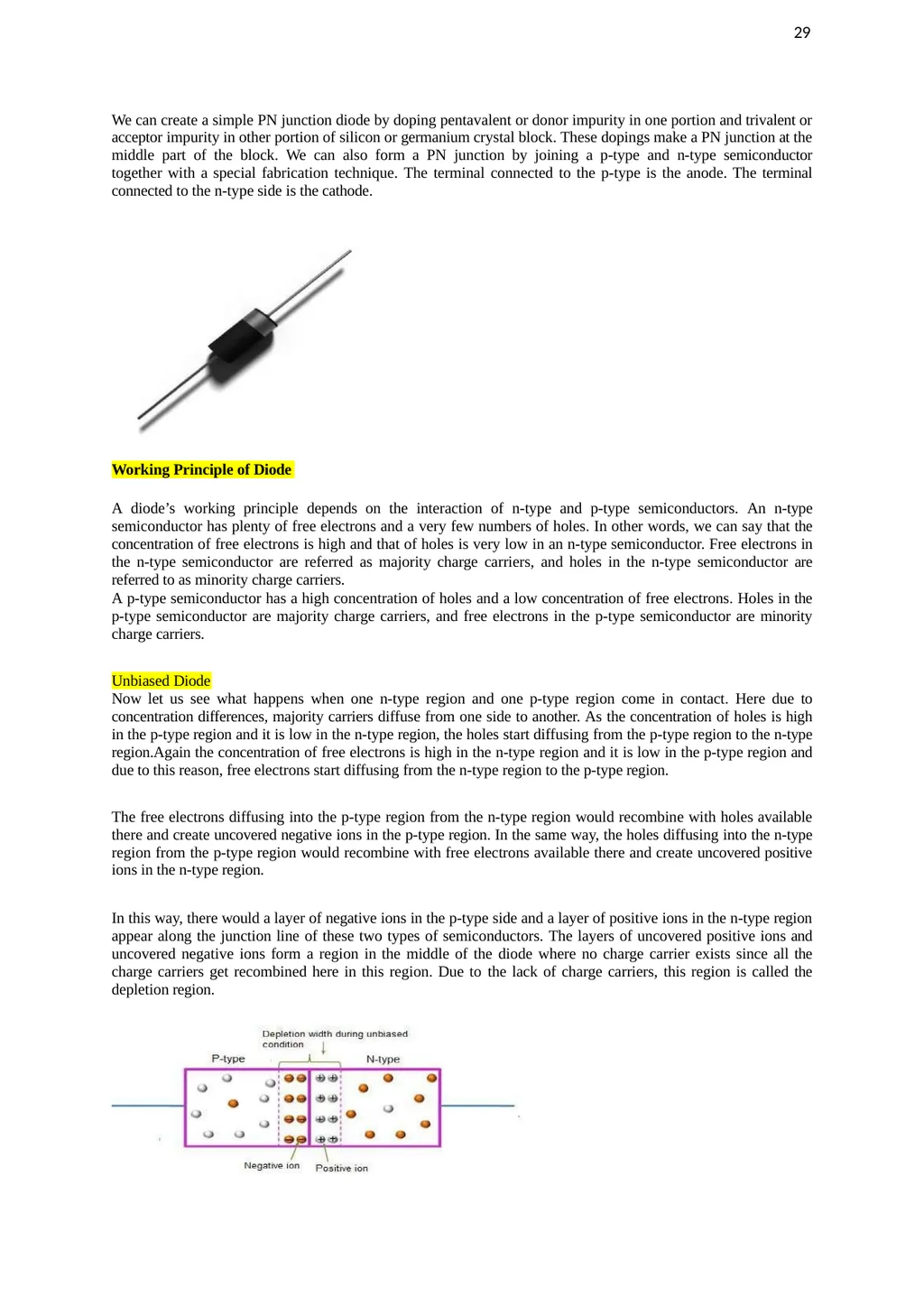
The free electrons diffusing into the p-type region from the n-type region would recombine with holes available there and create uncovered negative ions in the p-type region. In the same way, the holes diffusing into the n-type region from the p-type region would recombine with free electrons available there and create uncovered positive ions in the n-type region.
In this way, there would a layer of negative ions in the p-type side and a layer of positive ions in the n-type region appear along the junction line of these two types of semiconductors. The layers of uncovered positive ions and uncovered negative ions form a region in the middle of the diode where no charge carrier exists since all the charge carriers get recombined here in this region. Due to the lack of charge carriers, this region is called the depletion region. NSU, JAMSHEDPUR<br>
A p-type semiconductor has a high concentration of holes and a low concentration of free electrons. Holes in the p-type semiconductor are majority charge carriers, and free electrons in the p-type semiconductor are minority charge carriers. Unbiased Diode Now let us see what happens when one n-type region and one p-type region come in contact. Here due to concentration differences, majority carriers diffuse from one side to another. As the concentration of holes is high in the p-type region and it is low in the n-type region, the holes start diffusing from the p-type region to the n-type region.Again the concentration of free electrons is high in the n-type region and it is low in the p-type region and due to this reason, free electrons start diffusing from the n-type region to the p-type region.
The free electrons diffusing into the p-type region from the n-type region would recombine with holes available there and create uncovered negative ions in the p-type region. In the same way, the holes diffusing into the n-type region from the p-type region would recombine with free electrons available there and create uncovered positive ions in the n-type region.
In this way, there would a layer of negative ions in the p-type side and a layer of positive ions in the n-type region appear along the junction line of these two types of semiconductors. The layers of uncovered positive ions and uncovered negative ions form a region in the middle of the diode where no charge carrier exists since all the charge carriers get recombined here in this region. Due to the lack of charge carriers, this region is called the depletion region. NSU, JAMSHEDPUR<br>
28
30 After the formation of the depletion region, there is no more diffusion of charge carriers from one side to another in the diode. This is due to the electric field appeared across the depletion region will prevent further migration of charge carriers from one side to another.
The potential of the layer of uncovered positive ions in the n-type side would repeal the holes in the p-type side and the potential of the layer of uncovered negative ions in the p-type side would repeal the free electrons in the n-type side. That means a potential barrier is created across the junction to prevent further diffusion of charge carriers. Forward Biased Diode Now let us see what happens if a positive terminal of a source is connected to the p-type side and the negative terminal of the source is connected to the n-type side of the diode and if we increase the voltage of this source slowly from zero.
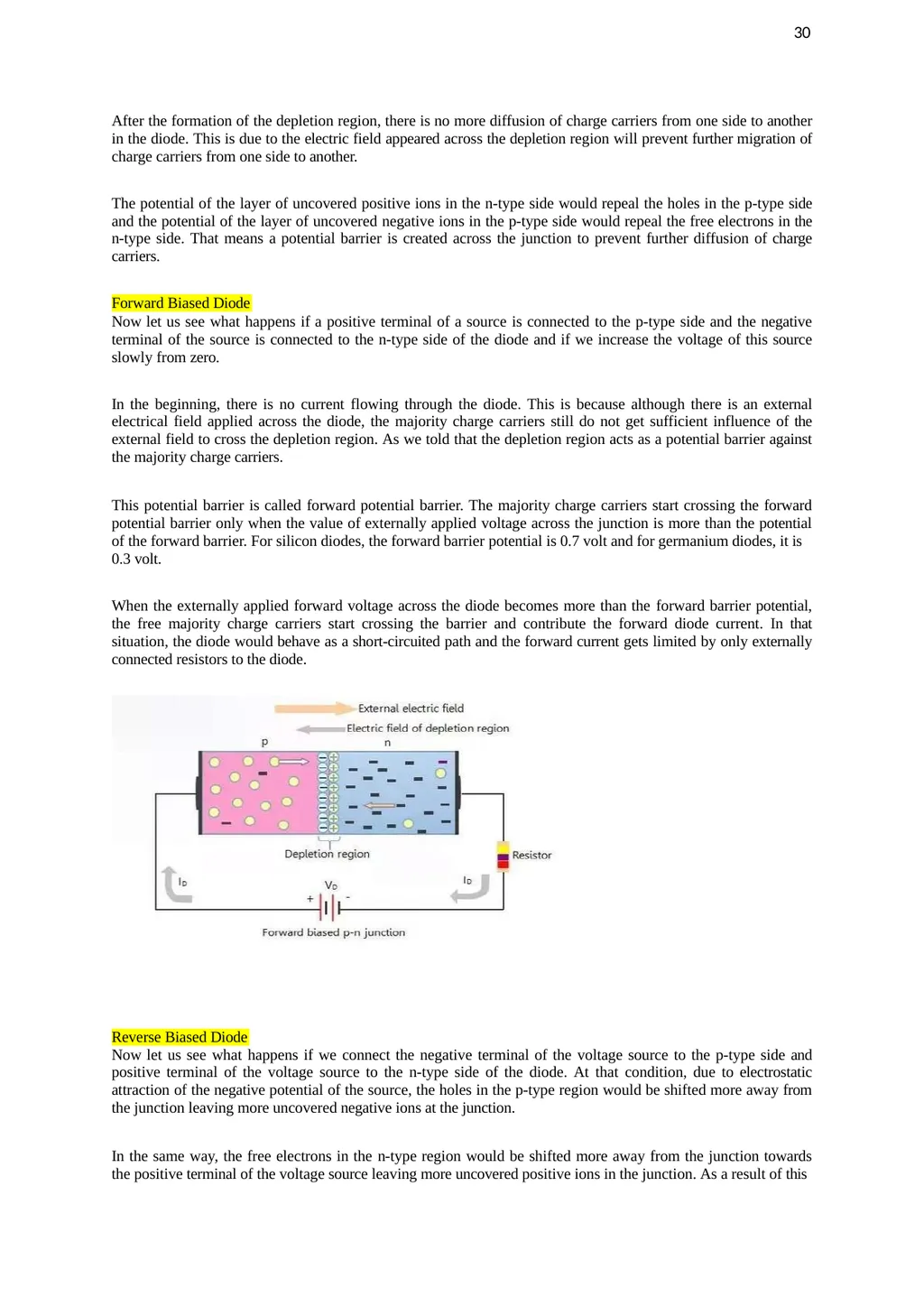
In the beginning, there is no current flowing through the diode. This is because although there is an external electrical field applied across the diode, the majority charge carriers still do not get sufficient influence of the external field to cross the depletion region. As we told that the depletion region acts as a potential barrier against the majority charge carriers.
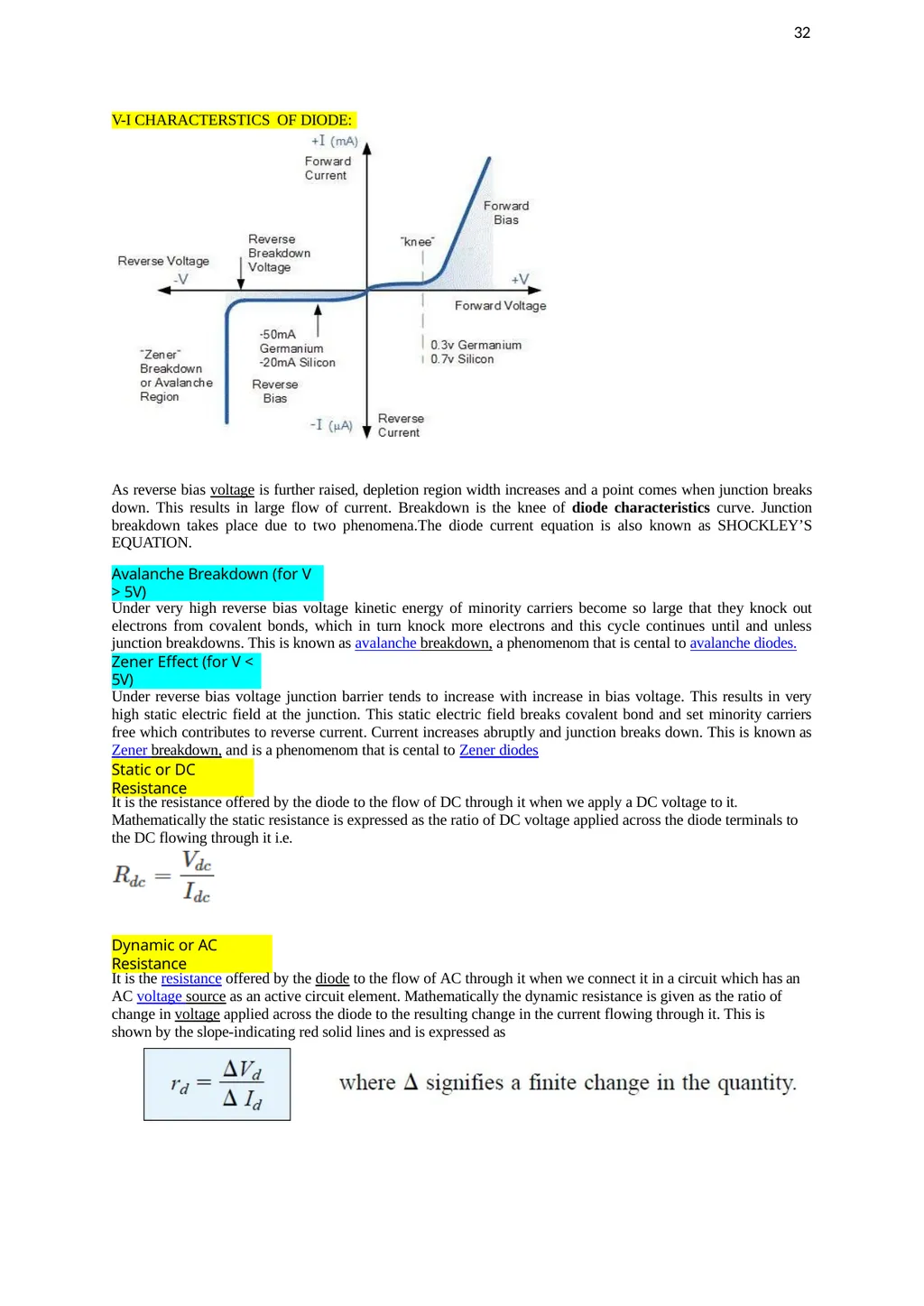
This potential barrier is called forward potential barrier. The majority charge carriers start crossing the forward potential barrier only when the value of externally applied voltage across the junction is more than the potential of the forward barrier. For silicon diodes, the forward barrier potential is 0.7 volt and for germanium diodes, it is
0.3 volt.
When the externally applied forward voltage across the diode becomes more than the forward barrier potential, the free majority charge carriers start crossing the barrier and contribute the forward diode current. In that situation, the diode would behave as a short-circuited path and the forward current gets limited by only externally connected resistors to the diode. Reverse Biased Diode Now let us see what happens if we connect the negative terminal of the voltage source to the p-type side and positive terminal of the voltage source to the n-type side of the diode. At that condition, due to electrostatic attraction of the negative potential of the source, the holes in the p-type region would be shifted more away from the junction leaving more uncovered negative ions at the junction.
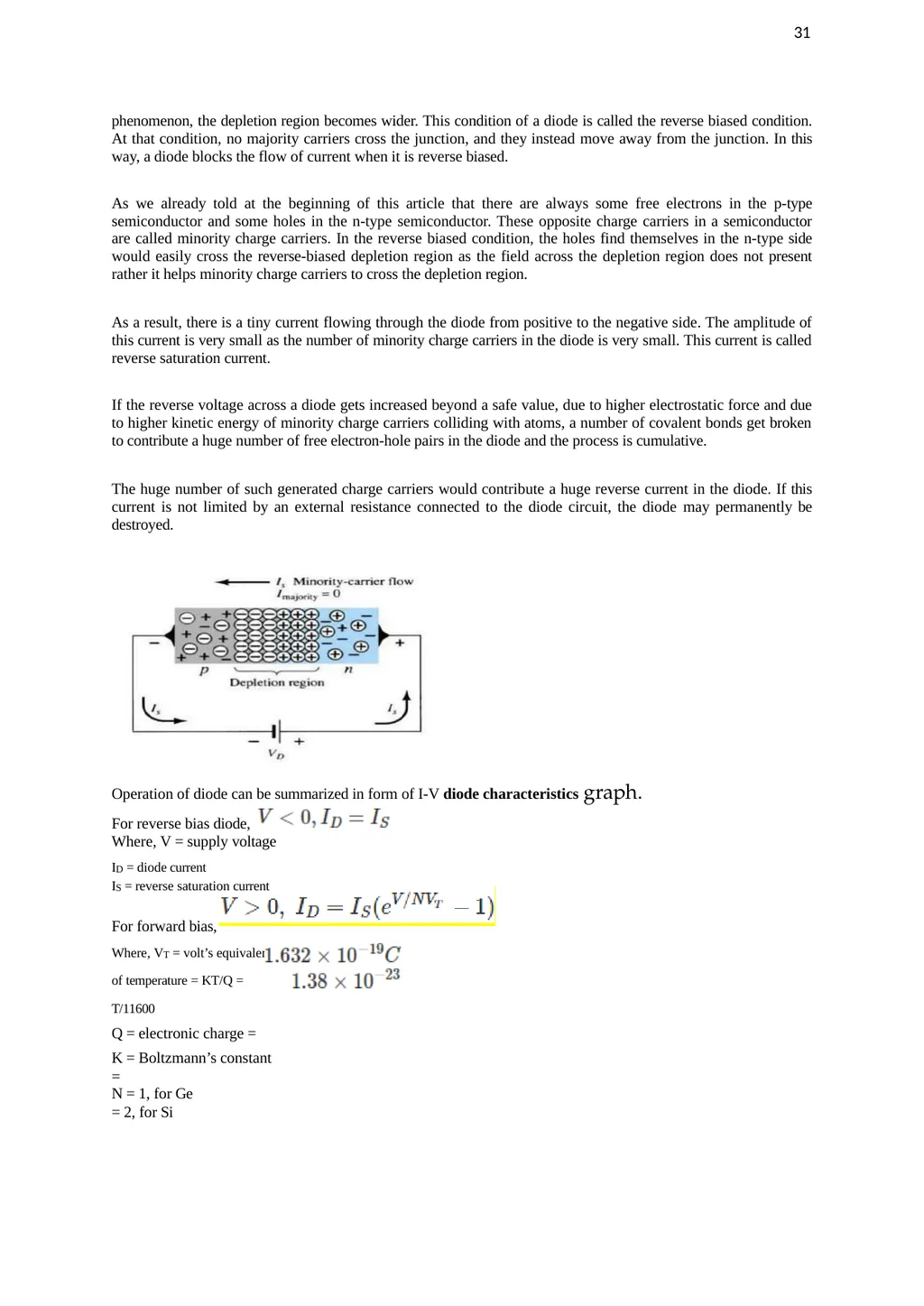
In the same way, the free electrons in the n-type region would be shifted more away from the junction towards the positive terminal of the voltage source leaving more uncovered positive ions in the junction. As a result of this NSU, JAMSHEDPUR<br>
The potential of the layer of uncovered positive ions in the n-type side would repeal the holes in the p-type side and the potential of the layer of uncovered negative ions in the p-type side would repeal the free electrons in the n-type side. That means a potential barrier is created across the junction to prevent further diffusion of charge carriers. Forward Biased Diode Now let us see what happens if a positive terminal of a source is connected to the p-type side and the negative terminal of the source is connected to the n-type side of the diode and if we increase the voltage of this source slowly from zero.
In the beginning, there is no current flowing through the diode. This is because although there is an external electrical field applied across the diode, the majority charge carriers still do not get sufficient influence of the external field to cross the depletion region. As we told that the depletion region acts as a potential barrier against the majority charge carriers.
This potential barrier is called forward potential barrier. The majority charge carriers start crossing the forward potential barrier only when the value of externally applied voltage across the junction is more than the potential of the forward barrier. For silicon diodes, the forward barrier potential is 0.7 volt and for germanium diodes, it is
0.3 volt.
When the externally applied forward voltage across the diode becomes more than the forward barrier potential, the free majority charge carriers start crossing the barrier and contribute the forward diode current. In that situation, the diode would behave as a short-circuited path and the forward current gets limited by only externally connected resistors to the diode. Reverse Biased Diode Now let us see what happens if we connect the negative terminal of the voltage source to the p-type side and positive terminal of the voltage source to the n-type side of the diode. At that condition, due to electrostatic attraction of the negative potential of the source, the holes in the p-type region would be shifted more away from the junction leaving more uncovered negative ions at the junction.
In the same way, the free electrons in the n-type region would be shifted more away from the junction towards the positive terminal of the voltage source leaving more uncovered positive ions in the junction. As a result of this NSU, JAMSHEDPUR<br>
29
31 phenomenon, the depletion region becomes wider. This condition of a diode is called the reverse biased condition. At that condition, no majority carriers cross the junction, and they instead move away from the junction. In this way, a diode blocks the flow of current when it is reverse biased.
As we already told at the beginning of this article that there are always some free electrons in the p-type semiconductor and some holes in the n-type semiconductor. These opposite charge carriers in a semiconductor are called minority charge carriers. In the reverse biased condition, the holes find themselves in the n-type side would easily cross the reverse-biased depletion region as the field across the depletion region does not present rather it helps minority charge carriers to cross the depletion region.
As a result, there is a tiny current flowing through the diode from positive to the negative side. The amplitude of this current is very small as the number of minority charge carriers in the diode is very small. This current is called reverse saturation current.
If the reverse voltage across a diode gets increased beyond a safe value, due to higher electrostatic force and due to higher kinetic energy of minority charge carriers colliding with atoms, a number of covalent bonds get broken to contribute a huge number of free electron-hole pairs in the diode and the process is cumulative.
The huge number of such generated charge carriers would contribute a huge reverse current in the diode. If this current is not limited by an external resistance connected to the diode circuit, the diode may permanently be destroyed. Operation of diode can be summarized in form of I-V diode characteristics graph.
For reverse bias diode, Where, V = supply voltage ID = diode current
IS = reverse saturation current
For forward bias,
Where, VT = volt’s equivalent of temperature = KT/Q = T/11600
Q = electronic charge =
K = Boltzmann’s constant =
N = 1, for Ge
= 2, for Si NSU, JAMSHEDPUR<br>
As we already told at the beginning of this article that there are always some free electrons in the p-type semiconductor and some holes in the n-type semiconductor. These opposite charge carriers in a semiconductor are called minority charge carriers. In the reverse biased condition, the holes find themselves in the n-type side would easily cross the reverse-biased depletion region as the field across the depletion region does not present rather it helps minority charge carriers to cross the depletion region.
As a result, there is a tiny current flowing through the diode from positive to the negative side. The amplitude of this current is very small as the number of minority charge carriers in the diode is very small. This current is called reverse saturation current.
If the reverse voltage across a diode gets increased beyond a safe value, due to higher electrostatic force and due to higher kinetic energy of minority charge carriers colliding with atoms, a number of covalent bonds get broken to contribute a huge number of free electron-hole pairs in the diode and the process is cumulative.
The huge number of such generated charge carriers would contribute a huge reverse current in the diode. If this current is not limited by an external resistance connected to the diode circuit, the diode may permanently be destroyed. Operation of diode can be summarized in form of I-V diode characteristics graph.
For reverse bias diode, Where, V = supply voltage ID = diode current
IS = reverse saturation current
For forward bias,
Where, VT = volt’s equivalent of temperature = KT/Q = T/11600
Q = electronic charge =
K = Boltzmann’s constant =
N = 1, for Ge
= 2, for Si NSU, JAMSHEDPUR<br>
30
32 V-I CHARACTERSTICS OF DIODE: As reverse bias voltage is further raised, depletion region width increases and a point comes when junction breaks down. This results in large flow of current. Breakdown is the knee of diode characteristics curve. Junction breakdown takes place due to two phenomena.The diode current equation is also known as SHOCKLEY’S EQUATION. Avalanche Breakdown (for V > 5V) Under very high reverse bias voltage kinetic energy of minority carriers become so large that they knock out electrons from covalent bonds, which in turn knock more electrons and this cycle continues until and unless junction breakdowns. This is known as avalanche breakdown, a phenomenom that is cental to avalanche diodes. Zener Effect (for V < 5V) Under reverse bias voltage junction barrier tends to increase with increase in bias voltage. This results in very high static electric field at the junction. This static electric field breaks covalent bond and set minority carriers free which contributes to reverse current. Current increases abruptly and junction breaks down. This is known as Zener breakdown, and is a phenomenom that is cental to Zener diodes Static or DC Resistance It is the resistance offered by the diode to the flow of DC through it when we apply a DC voltage to it. Mathematically the static resistance is expressed as the ratio of DC voltage applied across the diode terminals to the DC flowing through it i.e. Dynamic or AC Resistance It is the resistance offered by the diode to the flow of AC through it when we connect it in a circuit which has an AC voltage source as an active circuit element. Mathematically the dynamic resistance is given as the ratio of change in voltage applied across the diode to the resulting change in the current flowing through it. This is shown by the slope-indicating red solid lines and is expressed as NSU, JAMSHEDPUR<br>
31
33 ZENER DIODE Zener diode is basically like an ordinary PN junction diode but normally operated in reverse biased condition. But
ordinary PN junction diode connected in reverse biased condition is not used as Zener diode practically. A Zener diode is a specially designed, highly doped PN junction diode. NSU, JAMSHEDPUR<br>
ordinary PN junction diode connected in reverse biased condition is not used as Zener diode practically. A Zener diode is a specially designed, highly doped PN junction diode. NSU, JAMSHEDPUR<br>
32
34 Working Principle of Zener Diode:
When a PN junction diode is reverse biased, the depletion layer becomes wider. If this reverse biased voltage across the diode is increased continually, the depletion layer becomes more and more wider. At the same time, there will be a constant reverse saturation current due to minority carriers.
After certain reverse voltage across the junction, the minority carriers get sufficient kinetic energy due to the
strong electric field. Free electrons with sufficient kinetic energy collide with stationary ions of the depletion layer and knock out more free electrons. These newly created free electrons also get sufficient kinetic energy due to the same electric field, and they create more free electrons by collision cumulatively. Due to this commutative phenomenon, very soon, huge free electrons get created in the depletion layer, and the entire diode will become conductive. This type of breakdown of the depletion layer is known as avalanche breakdown, but this breakdown is not quite sharp. There is another type of breakdown in depletion layer which is sharper compared to avalanche breakdown, and this is called Zener breakdown. When a PN junction is diode is highly doped, the concentration of impurity atoms will be high in the crystal. This higher concentration of impurity atoms causes the higher concentration of ions in the depletion layer hence for same applied reverse biased voltage, the width of the depletion layer becomes thinner than that in a normally doped diode.
Due to this thinner depletion layer, voltage gradient or electric field strength across the depletion layer is quite high. If the reverse voltage is continued to increase, after a certain applied voltage, the electrons from the covalent bonds within the depletion region come out and make the depletion region conductive. This breakdown is called Zener breakdown. The voltage at which this breakdown occurs is called Zener voltage. If the applied reverse voltage across the diode is more than Zener voltage, the diode provides a conductive path to the current through it hence, there is no chance of further avalanche breakdown in it. Theoretically, Zener breakdown occurs at a lower voltage level then avalanche breakdown in a diode, especially doped for Zener breakdown. The Zener breakdown is much sharper than avalanche breakdown. The Zener voltage of the diode gets adjusted during manufacturing with the help of required and proper doping. When a zener diode is connected across a voltage source, and the source voltage is more than Zener voltage, the voltage across a Zener diode remain fixed irrespective of the source voltage. Although at that condition current through the diode can be of any value depending on the load connected with the diode. That is why we use a Zener diode mainly for controlling voltage in different circuits.
The circuit symbol of a Zener diode is also shown below. Characteristics of a Zener Diode Now, discussing about the diode circuits we should look through the graphical representation of the operation of the zener diode. Normally, it is called the V-I characteristics of a Zener diode. NSU, JAMSHEDPUR<br>
When a PN junction diode is reverse biased, the depletion layer becomes wider. If this reverse biased voltage across the diode is increased continually, the depletion layer becomes more and more wider. At the same time, there will be a constant reverse saturation current due to minority carriers.
After certain reverse voltage across the junction, the minority carriers get sufficient kinetic energy due to the
strong electric field. Free electrons with sufficient kinetic energy collide with stationary ions of the depletion layer and knock out more free electrons. These newly created free electrons also get sufficient kinetic energy due to the same electric field, and they create more free electrons by collision cumulatively. Due to this commutative phenomenon, very soon, huge free electrons get created in the depletion layer, and the entire diode will become conductive. This type of breakdown of the depletion layer is known as avalanche breakdown, but this breakdown is not quite sharp. There is another type of breakdown in depletion layer which is sharper compared to avalanche breakdown, and this is called Zener breakdown. When a PN junction is diode is highly doped, the concentration of impurity atoms will be high in the crystal. This higher concentration of impurity atoms causes the higher concentration of ions in the depletion layer hence for same applied reverse biased voltage, the width of the depletion layer becomes thinner than that in a normally doped diode.
Due to this thinner depletion layer, voltage gradient or electric field strength across the depletion layer is quite high. If the reverse voltage is continued to increase, after a certain applied voltage, the electrons from the covalent bonds within the depletion region come out and make the depletion region conductive. This breakdown is called Zener breakdown. The voltage at which this breakdown occurs is called Zener voltage. If the applied reverse voltage across the diode is more than Zener voltage, the diode provides a conductive path to the current through it hence, there is no chance of further avalanche breakdown in it. Theoretically, Zener breakdown occurs at a lower voltage level then avalanche breakdown in a diode, especially doped for Zener breakdown. The Zener breakdown is much sharper than avalanche breakdown. The Zener voltage of the diode gets adjusted during manufacturing with the help of required and proper doping. When a zener diode is connected across a voltage source, and the source voltage is more than Zener voltage, the voltage across a Zener diode remain fixed irrespective of the source voltage. Although at that condition current through the diode can be of any value depending on the load connected with the diode. That is why we use a Zener diode mainly for controlling voltage in different circuits.
The circuit symbol of a Zener diode is also shown below. Characteristics of a Zener Diode Now, discussing about the diode circuits we should look through the graphical representation of the operation of the zener diode. Normally, it is called the V-I characteristics of a Zener diode. NSU, JAMSHEDPUR<br>
33
35 The above diagram shows the V-I characteristics of a zener diode. When the diode is connected in forward bias, this diode acts as a normal diode but when the reverse bias voltage is greater than zener voltage, a sharp breakdown takes place. In the V-I characteristics above Vz is the zener voltage. It is also the knee voltage because at this point the current increases very rapidly. Operation of Zener Diode Voltage Regulator A rectifier with an appropriate filter serves as a good source of d.c. output. However, the major disadvantage of such a power supply is that the output voltage changes with the variations in the input voltage or load. Thus, if the input voltage increases, the d.c. output voltage of the rectifier also increases. Similarly, if the load current increases, the output voltage falls due to the voltage drop in the rectifying element, filter chokes, transformer winding etc. In many electronic applications, it is desired that the output voltage should remain constant regardless of the variations in the input voltage or load. In order to ensure this, a voltage stabilising device, called voltage stabiliser is used. Several stabilising circuits have been designed but only zener diode as a voltage stabiliser.
A zener diode can be used as a voltage regulator to provide a constant voltage from a source whose voltage may vary over sufficient range. The circuit arrangement is shown in Fig (i). The zener diode of zener voltage Vz is reverse connected across the load RL across which constant output is desired. The series resistance R absorbs the output voltage fluctuations so as to maintain constant voltage across the load. It may be noted that the zener will maintain a constant voltage Vz (= E0) across the load so long as the input voltage does not fall below Vz
fig (i) Fig- (ii) NSU, JAMSHEDPUR<br>
A zener diode can be used as a voltage regulator to provide a constant voltage from a source whose voltage may vary over sufficient range. The circuit arrangement is shown in Fig (i). The zener diode of zener voltage Vz is reverse connected across the load RL across which constant output is desired. The series resistance R absorbs the output voltage fluctuations so as to maintain constant voltage across the load. It may be noted that the zener will maintain a constant voltage Vz (= E0) across the load so long as the input voltage does not fall below Vz
fig (i) Fig- (ii) NSU, JAMSHEDPUR<br>
34
36 When the circuit is properly designed, the load voltage E0 remains essentially constant (equal to Vz) even though the input voltage Ei and load resistance RL may vary over a wide range.
Suppose the input voltage increases. Since the zener is in the breakdown region, the zener diode is equivalent
to a battery VZ as shown in Fig (ii). It is clear that output voltage remains constant at VZ (= E0). The excess voltage is dropped across the series resistance R. This will cause an increase in the value of total current I. The zener will conduct the increase of current in I while the load current remains constant. Hence, output voltage E0 remains constant irrespective of the changes in the input voltage Ei.
Now suppose that input voltage is constant but the load resistance RL decreases. This will cause an increase in load current. The extra current cannot come from the source because drop in R (and hence source current I) will
not change as the zener is within its regulating range. The additional load current will come from a decrease in zener current IZ. Consequently, the output voltage stays at constant value. Voltage drop across R = Ei − E0 Current through R, I = IZ + IL Applying Ohm’s law, we have Light Emitting Diode (LED): A Light Emitting Diode (LED) is a special type of PN junction diode. The light emitting diode is specially doped and made of a special type of semiconductor. This diode can emit light when it is in the forward biased state.
Aluminum indium gallium phosphide (AlInGaP) and indium gallium nitride (InGaN) are two of the most commonly used semiconductors for LED technologies. Older LED technologies used gallium arsenide phosphide (GaAsP), gallium phosphide (GaP), and aluminum gallium arsenide (AlGaAs). LEDs generate visible radiation by electroluminescence phenomenon when a low- voltage direct current is applied to a suitably doped crystal containing a p-n junction, as shown in the diagram.
The doping is typically carried out with elements from column III and V of the periodic table. When a forward biased current, IF, energizes the p-n junction, it emits light at a wavelength defined by the active region energy gap, Eg.
When the forward biased current IF is applied through the p-n junction of the diode, minority carrier electrons are injected into the p-region and corresponding minority carrier electrons are injected into the n-region. Photon emission occurs due to electron-hole recombination in the p-region.
Color of an LED
The color of an LED device is expressed in terms of the dominant wavelength emitted, λd (in nm). AlInGaP LEDs produce the colors red (626 to 630 nm), red-orange (615 to 621 nm), orange (605 nm), and amber (590 to 592 nm). InGaN LEDs produce the colors green (525 nm), blue green (498 to 505 nm), and blue (470 nm). The color and forward voltage of AlInGaP LEDs depend on the temperature of the LED p-n junction.
"Liquid Crystal Display"- LCD:
Stands for "Liquid Crystal Display." LCD is a flat panel display technology commonly used in TVs and computer monitors. It is also used in screens for mobile devices, such as laptops, tablets, and smartphones. NSU, JAMSHEDPUR<br>
Suppose the input voltage increases. Since the zener is in the breakdown region, the zener diode is equivalent
to a battery VZ as shown in Fig (ii). It is clear that output voltage remains constant at VZ (= E0). The excess voltage is dropped across the series resistance R. This will cause an increase in the value of total current I. The zener will conduct the increase of current in I while the load current remains constant. Hence, output voltage E0 remains constant irrespective of the changes in the input voltage Ei.
Now suppose that input voltage is constant but the load resistance RL decreases. This will cause an increase in load current. The extra current cannot come from the source because drop in R (and hence source current I) will
not change as the zener is within its regulating range. The additional load current will come from a decrease in zener current IZ. Consequently, the output voltage stays at constant value. Voltage drop across R = Ei − E0 Current through R, I = IZ + IL Applying Ohm’s law, we have Light Emitting Diode (LED): A Light Emitting Diode (LED) is a special type of PN junction diode. The light emitting diode is specially doped and made of a special type of semiconductor. This diode can emit light when it is in the forward biased state.
Aluminum indium gallium phosphide (AlInGaP) and indium gallium nitride (InGaN) are two of the most commonly used semiconductors for LED technologies. Older LED technologies used gallium arsenide phosphide (GaAsP), gallium phosphide (GaP), and aluminum gallium arsenide (AlGaAs). LEDs generate visible radiation by electroluminescence phenomenon when a low- voltage direct current is applied to a suitably doped crystal containing a p-n junction, as shown in the diagram.
The doping is typically carried out with elements from column III and V of the periodic table. When a forward biased current, IF, energizes the p-n junction, it emits light at a wavelength defined by the active region energy gap, Eg.
When the forward biased current IF is applied through the p-n junction of the diode, minority carrier electrons are injected into the p-region and corresponding minority carrier electrons are injected into the n-region. Photon emission occurs due to electron-hole recombination in the p-region.
Color of an LED
The color of an LED device is expressed in terms of the dominant wavelength emitted, λd (in nm). AlInGaP LEDs produce the colors red (626 to 630 nm), red-orange (615 to 621 nm), orange (605 nm), and amber (590 to 592 nm). InGaN LEDs produce the colors green (525 nm), blue green (498 to 505 nm), and blue (470 nm). The color and forward voltage of AlInGaP LEDs depend on the temperature of the LED p-n junction.
"Liquid Crystal Display"- LCD:
Stands for "Liquid Crystal Display." LCD is a flat panel display technology commonly used in TVs and computer monitors. It is also used in screens for mobile devices, such as laptops, tablets, and smartphones. NSU, JAMSHEDPUR<br>
35
37 LCD displays don't just look different than bulky CRT monitors, the way they operate is significantly different as well. Instead of firing electrons at a glass screen, an LCD has backlight that provides light to individual pixels arranged in a rectangular grid. Each pixel has a red, green, and blue RGB sub-pixel that can be turned on or off. When all of a pixel's sub-pixels are turned off, it appears black. When all the sub-pixels are turned on 100%, it appears white. By adjusting the individual levels of red, green, and blue light, millions of color combinations are possible. How an LCD works The backlight in liquid crystal display provides an even light source behind the screen. This light is polarized, meaning only half of the light shines through to the liquid crystal layer. The liquid crystals are made up of a part solid, part liquid substance that can be "twisted" by applying electrical voltage to them. They block the polarized light when they are off, but reflect red, green, or blue light when activated.
Each LCD screen contains a matrix of pixels that display the image on the screen. Early LCDs had passive- matrix screens, which controlled individual pixels by sending a charge to their row and column. Since a limited number of electrical charges could be sent each second, passive-matrix screens were known for appearing blurry when images moved quickly on the screen. Modern LCDs typically use active-matrix technology, which contain thin film transistors, or TFTs. These transistors include capacitors that enable individual pixels to "actively" retain their charge. Therefore, active-matrix LCDs are more efficient and appear more responsive than passive-matrix displays.
NOTE: An LCD's backlight may either be a traditional bulb or LED light. An "LED display" is simply an LCD screen with an LED backlight. This is different than an OLED display, which lights up individual LEDs for each pixel. While the liquid crystals block most of an LCD's backlight when they are off, some of the light may still shine through (which might be noticeable in a dark room). Therefore OLEDs typically have darker black levels than LCDs. RECTIFIER DC Power Supply There are many types of power supply. Most are designed to convert high voltage AC mains electricity to a suitable low voltage supply for electronics circuits and other devices. A power supply can by broken down into a series of blocks, each of which performs a particular function.
For example a 5V regulated supply: Transformer - steps down high voltage AC mains to low voltage AC. Rectifier - converts AC to DC, but the DC output is varying. Smoothing - smooths the DC from varying greatly to a small ripple.
Regulator - eliminates ripple by setting DC output to a fixed voltage. NSU, JAMSHEDPUR<br>
Each LCD screen contains a matrix of pixels that display the image on the screen. Early LCDs had passive- matrix screens, which controlled individual pixels by sending a charge to their row and column. Since a limited number of electrical charges could be sent each second, passive-matrix screens were known for appearing blurry when images moved quickly on the screen. Modern LCDs typically use active-matrix technology, which contain thin film transistors, or TFTs. These transistors include capacitors that enable individual pixels to "actively" retain their charge. Therefore, active-matrix LCDs are more efficient and appear more responsive than passive-matrix displays.
NOTE: An LCD's backlight may either be a traditional bulb or LED light. An "LED display" is simply an LCD screen with an LED backlight. This is different than an OLED display, which lights up individual LEDs for each pixel. While the liquid crystals block most of an LCD's backlight when they are off, some of the light may still shine through (which might be noticeable in a dark room). Therefore OLEDs typically have darker black levels than LCDs. RECTIFIER DC Power Supply There are many types of power supply. Most are designed to convert high voltage AC mains electricity to a suitable low voltage supply for electronics circuits and other devices. A power supply can by broken down into a series of blocks, each of which performs a particular function.
For example a 5V regulated supply: Transformer - steps down high voltage AC mains to low voltage AC. Rectifier - converts AC to DC, but the DC output is varying. Smoothing - smooths the DC from varying greatly to a small ripple.
Regulator - eliminates ripple by setting DC output to a fixed voltage. NSU, JAMSHEDPUR<br>
36
38 Transformer + Rectifier The varying DC output is suitable for lamps, heaters and standard motors. It is not suitable for electronic circuits unless they include a smoothing capacitor. Transformer + Rectifier + Smoothing + Regulator The regulated DC output is very smooth with no ripple. It is suitable for all electronic circuits. RECTIFIER In a large number of electronic circuits, we require DC voltage for operation. We can easily convert the AC voltage or AC current into DC voltage or DC current by using a device called P-N junction diode.
One of the most important applications of a P-N junction diode is the rectification of Alternating Current (AC) into Direct Current (DC). A P-N junction diode allows electric current in only forward bias condition and blocks electric current in reverse bias condition. In simple words, a diode allows electric current in one direction. This unique property of the diode allows it to acts like a rectifier. NSU, JAMSHEDPUR<br>
One of the most important applications of a P-N junction diode is the rectification of Alternating Current (AC) into Direct Current (DC). A P-N junction diode allows electric current in only forward bias condition and blocks electric current in reverse bias condition. In simple words, a diode allows electric current in one direction. This unique property of the diode allows it to acts like a rectifier. NSU, JAMSHEDPUR<br>
37
39 HALF WAVE RECTIFIER A half wave rectifier is defined as a type of rectifier that only allows one half-cycle of an AC voltage waveform
to pass, blocking the other half-cycle. Half-wave rectifiers are used to convert AC voltage to DC voltage, and only require a single diode to construct. A rectifier is a device that converts alternating current (AC) to direct current (DC). It is done by using a diode or a group of diodes. Half wave rectifiers use one diode, while a full wave rectifier uses multiple diodes.
The working of a half wave rectifier takes advantage of the fact that diodes only allow current to flow in one direction.
Half Wave Rectifier Theory
A half wave rectifier is the simplest form of rectifier available. The diagram below illustrates the basic principle of a half-wave rectifier. When a standard AC waveform is passed through a half-wave rectifier, only half of the AC waveform remains. Half-wave rectifiers only allow one half-cycle (positive or negative half-cycle) of the AC voltage through and will block the other half-cycle on the DC side, as seen below. Only one diode is required to construct a half-wave rectifier. In essence, this is all that the half-wave rectifier is doing.Since DC systems are designed to have current flowing in a single direction, putting an AC waveform with positive and negative cycles through a DC device can have destructive (and dangerous) consequences. So we use half-wave rectifiers to convert the AC input power into DC output power.
But the diode is only part of it – a complete half-wave rectifier circuit consists of 3 main parts:
A transformer
A resistive load
A diode
A half wave rectifier circuit diagram looks like this: NSU, JAMSHEDPUR<br>
to pass, blocking the other half-cycle. Half-wave rectifiers are used to convert AC voltage to DC voltage, and only require a single diode to construct. A rectifier is a device that converts alternating current (AC) to direct current (DC). It is done by using a diode or a group of diodes. Half wave rectifiers use one diode, while a full wave rectifier uses multiple diodes.
The working of a half wave rectifier takes advantage of the fact that diodes only allow current to flow in one direction.
Half Wave Rectifier Theory
A half wave rectifier is the simplest form of rectifier available. The diagram below illustrates the basic principle of a half-wave rectifier. When a standard AC waveform is passed through a half-wave rectifier, only half of the AC waveform remains. Half-wave rectifiers only allow one half-cycle (positive or negative half-cycle) of the AC voltage through and will block the other half-cycle on the DC side, as seen below. Only one diode is required to construct a half-wave rectifier. In essence, this is all that the half-wave rectifier is doing.Since DC systems are designed to have current flowing in a single direction, putting an AC waveform with positive and negative cycles through a DC device can have destructive (and dangerous) consequences. So we use half-wave rectifiers to convert the AC input power into DC output power.
But the diode is only part of it – a complete half-wave rectifier circuit consists of 3 main parts:
A transformer
A resistive load
A diode
A half wave rectifier circuit diagram looks like this: NSU, JAMSHEDPUR<br>
38
40 We’ll now go through the process of how a half-wave rectifier converts an AC voltage to a DC output.
First, a high AC voltage is applied to the to the primary side of the step-down transformer and we will get a low voltage at the secondary winding which will be applied to the diode. During the positive half cycle of the AC voltage, the diode will be forward biased and the current flows through the diode. During the negative half cycle of the AC voltage, the diode will be reverse biased and the flow of current will be blocked. The final output voltage waveform on the secondary side (DC) is shown in figure 3 above.
If we replace the secondary transformer coils with a source voltage, we can simplify the circuit diagram of the half-wave rectifier as: For the positive half cycle of the AC source voltage, the equivalent circuit effectively becomes: This is because the diode is forward biased, and is hence allowing current to pass through. So we have a closed circuit. NSU, JAMSHEDPUR<br>
First, a high AC voltage is applied to the to the primary side of the step-down transformer and we will get a low voltage at the secondary winding which will be applied to the diode. During the positive half cycle of the AC voltage, the diode will be forward biased and the current flows through the diode. During the negative half cycle of the AC voltage, the diode will be reverse biased and the flow of current will be blocked. The final output voltage waveform on the secondary side (DC) is shown in figure 3 above.
If we replace the secondary transformer coils with a source voltage, we can simplify the circuit diagram of the half-wave rectifier as: For the positive half cycle of the AC source voltage, the equivalent circuit effectively becomes: This is because the diode is forward biased, and is hence allowing current to pass through. So we have a closed circuit. NSU, JAMSHEDPUR<br>
39
41 But for the negative half cycle of the AC source voltage, the equivalent circuit becomes: Because the diode is now in reverse bias mode, no current is able to pass through it. As such, we now have an open circuit. Since current can not flow through to the load during this time, the output voltage is equal to zero.
This all happens very quickly – since an AC waveform will oscillate between positive and negative many times each second (depending on the frequency).
Here’s what the half wave rectifier waveform looks like on the input side (Vin), and what it looks like on the output side (Vout) after rectification (i.e. conversion from AC to DC): The graph above actually shows a positive half wave rectifier. This is a half-wave rectifier which only allows the positive half-cycles through the diode, and blocks the negative half-cycle.
The voltage waveform before and after a positive half wave rectifier is shown in figure 4 below. NSU, JAMSHEDPUR<br>
This all happens very quickly – since an AC waveform will oscillate between positive and negative many times each second (depending on the frequency).
Here’s what the half wave rectifier waveform looks like on the input side (Vin), and what it looks like on the output side (Vout) after rectification (i.e. conversion from AC to DC): The graph above actually shows a positive half wave rectifier. This is a half-wave rectifier which only allows the positive half-cycles through the diode, and blocks the negative half-cycle.
The voltage waveform before and after a positive half wave rectifier is shown in figure 4 below. NSU, JAMSHEDPUR<br>
40
42 Conversely, a negative half-wave rectifier will only allow negative half-cycles through the diode and will block the positive half-cycle. The only difference between a positive and negative half wave rectifier is the direction of current or voltage of the diode.As you can see in figure 5 below, the diode is now in the opposite direction. Hence the diode will now be forward biased only when the AC waveform is in its negative half cycle. Output frequency of rectifier is always equal to input frequency. NSU, JAMSHEDPUR<br>
41
43 Peak Inverse Voltage (PIV) is the maximum voltage that the diode can withstand during reverse bias condition. If a voltage is applied more than the PIV, the diode will be destroyed. FULL WAVE RECTIFIERS If rectifiers rectify both the positive and negative half cycles of an input alternating waveform, the rectifiers are referred as full wave rectifiers. Alternatively, we can say, a rectifier is a device that converts alternating current (AC) to direct current (DC). It does it by using a diode or a group of diodes. CENTERTAPPED FULL WAVE RECTIFIER The Center Tapped Full Wave Rectifier employs a transformer with the secondary winding AB tapped at the centre point C. It converts the AC input voltage into DC voltage The two diode D1, and D2 are connected in the circuit as shown in the circuit diagram below. Each diode uses one-half cycle of the input AC voltage. The diode D1 utilises the AC voltage appearing across the upper half (AC) of the secondary winding for rectification. The diode D2 uses the lower half (CB) of the secondary winding. NSU, JAMSHEDPUR<br>
42
44 Operation of the Center Tapped Full Wave Rectifier When AC supply is switched ON the alternating voltage, Vin appears across the terminals AB of the secondary winding of the STEPDOWN transformer. During the positive half cycle of the secondary voltage, the end A becomes positive, and end B becomes negative. Thus, the diode D1 becomes forward biased, and diode D2 becomes reversed biased.STEPDOWN TRANSFORMER is used to convert high value of AC voltage to lower AC values.The two diodes conduct simultaneously. Therefore, when the diode D1 conducts, the diode D2 does not conduct and vice versa.
When the Diode D1 is conducting, the current (i) flows through the diode D1 load resistor RL (from M to L) and the upper half of the secondary winding as shown in the circuit diagram marked by the red colour arrow heads. During the negative half cycle, the end B becomes positive and end A becomes negative. This makes the diode D2 forward biased, and diode D1 reverse biased.
When the diode D2 conducts while the diode D1 does not. The current (i) flows through the diode D2 load resistor RL (from M to L) and the lower half of the secondary winding as shown by the red dotted arrows.
The current flowing through the load resistor RL is in the same direction (i.e., from M to L) during both the positive as well as the negative half cycle of the input. Hence, the DC output voltage (Vout = i RL) is obtained across the load resistor. FULL WAVE BRIDGE RECTIFIER In Full Wave Bridge Rectifier, an ordinary transformer is used in place of a center tapped transformer. The circuit forms a bridge connecting the four diodes D1, D2, D3, and D4. The circuit diagram of Full Wave Bridge Rectifier is shown below. STEPDOWN TRANSFORMER is used to convert high value of AC voltage to lower AC values. The AC supply which is to be rectified is applied diagonally to the opposite ends of the bridge. Whereas, the load resistor RL is connected across the remaining two diagonals of the opposite ends of the bridge. NSU, JAMSHEDPUR<br>
When the Diode D1 is conducting, the current (i) flows through the diode D1 load resistor RL (from M to L) and the upper half of the secondary winding as shown in the circuit diagram marked by the red colour arrow heads. During the negative half cycle, the end B becomes positive and end A becomes negative. This makes the diode D2 forward biased, and diode D1 reverse biased.
When the diode D2 conducts while the diode D1 does not. The current (i) flows through the diode D2 load resistor RL (from M to L) and the lower half of the secondary winding as shown by the red dotted arrows.
The current flowing through the load resistor RL is in the same direction (i.e., from M to L) during both the positive as well as the negative half cycle of the input. Hence, the DC output voltage (Vout = i RL) is obtained across the load resistor. FULL WAVE BRIDGE RECTIFIER In Full Wave Bridge Rectifier, an ordinary transformer is used in place of a center tapped transformer. The circuit forms a bridge connecting the four diodes D1, D2, D3, and D4. The circuit diagram of Full Wave Bridge Rectifier is shown below. STEPDOWN TRANSFORMER is used to convert high value of AC voltage to lower AC values. The AC supply which is to be rectified is applied diagonally to the opposite ends of the bridge. Whereas, the load resistor RL is connected across the remaining two diagonals of the opposite ends of the bridge. NSU, JAMSHEDPUR<br>
43
45 Operation of Full Wave Bridge Rectifier When an AC supply is switched ON, the alternating voltage Vin appears across the terminals AB of the secondary winding of the transformer which needs rectification. During the positive half cycle of the secondary voltage, the end A becomes positive, and end B becomes negative as shown in the figure below. The diodes D1 and D3 are forward biased and the diodes D2 and D4 is reversed biased. Therefore, diode D1 and D3 conduct and diode D2 and D4 does not conduct. The current (i) flows through diode D1, load resistor RL (from M to L), diode D3 and the transformer secondary. The waveform of the full wave bridge rectifier is shown above. During the negative half cycle, the end A becomes negative and end B positive as shown in the figure below. From the above diagram, it is seen that the diode D2 and D4 are under forward bias and the diodes D1 and D3 are reverse bias. Therefore, diode D2 and D4 conduct while diodes D1 and D3 does not conduct. Thus, current (i) flows through the diode D2, load resistor RL (from M to L), diode D4 and the transformer secondary.
The current flows through the load resistor RL in the same direction (M to L) during both the half cycles. Hence, a DC output voltage Vout is obtained across the load resistor. NSU, JAMSHEDPUR<br>
The current flows through the load resistor RL in the same direction (M to L) during both the half cycles. Hence, a DC output voltage Vout is obtained across the load resistor. NSU, JAMSHEDPUR<br>
44
46 Average value of Full wave rectifier In a full wave rectifier, the negative polarity of the wave will be converted to positive polarity. So the average value can be found by taking the average of one positive half cycle.
Derivation for average current of a full wave rectifier, Average voltage equation for a full wave rectifier is VDC = 2Vm/π. So during calculations, the average voltage can be obtained by substituting the value of maximum voltage in the equation for VDC. RMS value of current for full wave rectifier: NSU, JAMSHEDPUR<br>
Derivation for average current of a full wave rectifier, Average voltage equation for a full wave rectifier is VDC = 2Vm/π. So during calculations, the average voltage can be obtained by substituting the value of maximum voltage in the equation for VDC. RMS value of current for full wave rectifier: NSU, JAMSHEDPUR<br>
45
47 Advantages of Full Wave Rectifiers Full wave rectifiers have higher rectifying efficiency than half-wave rectifiers. This means that they convert AC to DC more efficiently.
They have low power loss because no voltage signal is wasted in the rectification process.
The output voltage of centre-tapped full wave rectifier has lower ripples than a halfwave rectifiers. Disadvantages of Full Wave Rectifiers The centre-tapped rectifier is more expensive than half-wave rectifier and tends to occupy a lot of space. CAPACITOR-INPUT FILTER A half-wave rectifier with a capacitor-input filter is shown in Figure below. The filter is simply a capacitor connected from the rectifier output to ground. RL represents the equivalent resistance of a load. We will use the half-wave rectifier to illustrate the basic principle and then expand the concept to full-wave rectification.Both capacitor and load resistor are parallel. During the positive first quarter-cycle of the input, the diode is forward- biased, allowing the capacitor to charge to within 0.7 V of the input peak, as illustrated in Figure (a).
When the input begins to decrease below its peak, as shown in part (b), the capacitor retains its charge and the diode becomes reverse-biased because the cathode is more positive than the anode. During the remaining part of the cycle, the capacitor can discharge only
through the load resistance at a rate determined by the RLC time constant, which is normally long compared to
the period of the input. The larger the time constant, the less the capacitor will discharge. During the first quarter of the next cycle, as illustrated in part (c), the diode will again become forward-biased when the input voltage exceeds the capacitor voltage by approximately 0.7 V(Si) NSU, JAMSHEDPUR<br>
They have low power loss because no voltage signal is wasted in the rectification process.
The output voltage of centre-tapped full wave rectifier has lower ripples than a halfwave rectifiers. Disadvantages of Full Wave Rectifiers The centre-tapped rectifier is more expensive than half-wave rectifier and tends to occupy a lot of space. CAPACITOR-INPUT FILTER A half-wave rectifier with a capacitor-input filter is shown in Figure below. The filter is simply a capacitor connected from the rectifier output to ground. RL represents the equivalent resistance of a load. We will use the half-wave rectifier to illustrate the basic principle and then expand the concept to full-wave rectification.Both capacitor and load resistor are parallel. During the positive first quarter-cycle of the input, the diode is forward- biased, allowing the capacitor to charge to within 0.7 V of the input peak, as illustrated in Figure (a).
When the input begins to decrease below its peak, as shown in part (b), the capacitor retains its charge and the diode becomes reverse-biased because the cathode is more positive than the anode. During the remaining part of the cycle, the capacitor can discharge only
through the load resistance at a rate determined by the RLC time constant, which is normally long compared to
the period of the input. The larger the time constant, the less the capacitor will discharge. During the first quarter of the next cycle, as illustrated in part (c), the diode will again become forward-biased when the input voltage exceeds the capacitor voltage by approximately 0.7 V(Si) NSU, JAMSHEDPUR<br>
46
48 Ripple Factor of Half Wave Rectifier ‘Ripple’ is the unwanted AC component remaining when converting the AC voltage waveform into a DC waveform. Even though we try out best to remove all AC components, there is still some small amount left on the output side which pulsates the DC waveform. This undesirable AC component is called ‘ripple’. NSU, JAMSHEDPUR<br>
47
49 To quantify how well the half-wave rectifier can convert the AC voltage into DC voltage, we use what is known as the ripple factor (represented by γ or r). The ripple factor is the ratio between the RMS value of the AC voltage (on the input side) and the DC voltage (on the output side) of the rectifier.
The formula for ripple factor is: Which can also be rearranged to equal: The ripple factor of half wave rectifier is equal to 1.21 (i.e. γ = 1.21).
Note that for us to construct a good rectifier, we want to keep the ripple factor as low as possible. This is why we use capacitors and inductors as filters to reduce the ripples in the circuit.
Ripple voltage for HWR: Vr = Vpeak(rectified at the output)/RfC Filter Circuit for centre tapped FWR: Filter Circuit for bridge FWR NSU, JAMSHEDPUR<br>
The formula for ripple factor is: Which can also be rearranged to equal: The ripple factor of half wave rectifier is equal to 1.21 (i.e. γ = 1.21).
Note that for us to construct a good rectifier, we want to keep the ripple factor as low as possible. This is why we use capacitors and inductors as filters to reduce the ripples in the circuit.
Ripple voltage for HWR: Vr = Vpeak(rectified at the output)/RfC Filter Circuit for centre tapped FWR: Filter Circuit for bridge FWR NSU, JAMSHEDPUR<br>
48
50 Ripple Factor (γ) The output we will get from the rectifier will consist of both AC and DC components. The AC components are undesirable to us and will cause pulsations in the output. This unwanted AC components are called Ripple. The expression ripple factor is given above where Vrms is the RMS value of the AC component and Vdc is the DC component in the rectifier.
For centre-tapped full-wave rectifier, we obtain γ = 0.48
Note: For us to construct a good rectifier, we need to keep the ripple factor as minimum as possible. We can use capacitors or inductors to reduce the ripples in the circuit. RIPPLE VOLTAGE FOR FWR: Vr = Vpeak(rectified at the output)/2RfC NSU, JAMSHEDPUR<br>
For centre-tapped full-wave rectifier, we obtain γ = 0.48
Note: For us to construct a good rectifier, we need to keep the ripple factor as minimum as possible. We can use capacitors or inductors to reduce the ripples in the circuit. RIPPLE VOLTAGE FOR FWR: Vr = Vpeak(rectified at the output)/2RfC NSU, JAMSHEDPUR<br>
49
51 MODULE-II BIPOLAR JUNCTION TRANSISTOR W. Shockley, J. Barden and W. Bratterin invented the transistor in 1947. The term ‘transistor’ is derived from the words ‘transfer’ and ‘resistor.’ These words describe the operation of a BJT which is the transfer of an input signal from a low resistance circuit to a high resistance circuit. The abbreviation BJT, from bipolar junction transistor, is often applied to this three terminal device. The term bipolar reflects the fact that holes and electrons participate in the injection process into the oppositely polarized material. If only one carrier is employed (electron or hole), it is considered a unipolar device. What is a Bipolar Junction Transistor (BJT)? A bipolar junction transistor is a three-terminal semiconductor device that consists of two p-n junctions which are able to amplify or magnify a signal. It is a current controlled device. The three terminals of the BJT are the base, the collector and the emitter. A signal of small amplitude applied to the base is available in the amplified form at the collector of the transistor. This is the amplification provided by the BJT. Note that it does require an external source of DC power supply to carry out the amplification process. Bipolar transistors are manufactured in two types, PNP and NPN, and are available as separate components, usually in large quantities. The prime use or function of this type of transistor is to amplify current. This makes them useful as switches or amplifiers. They have a wide application in electronic devices like mobile phones, televisions, radio transmitters and industrial control.
Bipolar Transistor Construction NSU, JAMSHEDPUR<br>
Bipolar Transistor Construction NSU, JAMSHEDPUR<br>
50
52 According to dopping:
E>C>B
According to Width: C>E>B ACTION OF TRANSISTOR Two batteries are used to simplify operation theory. Most applications require one voltage source. The negative terminal of the battery is connected to the N emitter.
The positive terminal of the same battery is connected to the P-type base. Therefore, the emitter-base circuit is forward biased.
In the collector circuit, the N collector is connected to the positive battery terminal. The P base is connected to the negative terminal.
The collector-base circuit is reverse biased.
Electrons enter the emitter from the negative battery source and flow toward the junction. The forward bias has reduced the potential barrier of the first junction.
The electrons then combine with the hole carriers in the base to complete the emitter- base circuit. However, the base is a very thin section, about 0.001 inches.
Most of the electrons flow on through to the collector as the collector terminal is connected to positive terminal of battery and this reverse biased potential is very large so most of the majority charge carriers are attracted and will cross the large base to collector depletion region due to large reverse biased potential.
there will be an injection of minority carriers(holes) from N dopped collector into the P-type base region material as the collector terminal is connected to positive terminal of battery.Similarly minority charge carriers(free electrons) in the base will move towards collector.Due to this a current will flow from collector terminal towards base due to the presence of minority charge carriers.So total collector current will be: 𝐼𝐶 =𝐼𝐶 majority + 𝐼𝐶𝑂 minority NSU, JAMSHEDPUR<br>
E>C>B
According to Width: C>E>B ACTION OF TRANSISTOR Two batteries are used to simplify operation theory. Most applications require one voltage source. The negative terminal of the battery is connected to the N emitter.
The positive terminal of the same battery is connected to the P-type base. Therefore, the emitter-base circuit is forward biased.
In the collector circuit, the N collector is connected to the positive battery terminal. The P base is connected to the negative terminal.
The collector-base circuit is reverse biased.
Electrons enter the emitter from the negative battery source and flow toward the junction. The forward bias has reduced the potential barrier of the first junction.
The electrons then combine with the hole carriers in the base to complete the emitter- base circuit. However, the base is a very thin section, about 0.001 inches.
Most of the electrons flow on through to the collector as the collector terminal is connected to positive terminal of battery and this reverse biased potential is very large so most of the majority charge carriers are attracted and will cross the large base to collector depletion region due to large reverse biased potential.
there will be an injection of minority carriers(holes) from N dopped collector into the P-type base region material as the collector terminal is connected to positive terminal of battery.Similarly minority charge carriers(free electrons) in the base will move towards collector.Due to this a current will flow from collector terminal towards base due to the presence of minority charge carriers.So total collector current will be: 𝐼𝐶 =𝐼𝐶 majority + 𝐼𝐶𝑂 minority NSU, JAMSHEDPUR<br>
51
53 The minority-current component is called as:
leakage current and is given the symbol 𝐼𝐶𝑂 (𝐼𝐶 current with emitter terminal Open).
Approximately 95 to 98 percent of the current through the transistor is from an emitter to collector. About two to five percent of the current moves between emitter and base.
A small change in emitter to base bias voltage causes a somewhat larger change in emitter-collector current. This is what allows transistors to be used as amplifiers. The emitter-base current change, however, is quite small. 𝐼𝐸 = 𝐼𝐶 +𝐼𝐵 The Common Base (CB) Configuration as amplifier: NSU, JAMSHEDPUR<br>
leakage current and is given the symbol 𝐼𝐶𝑂 (𝐼𝐶 current with emitter terminal Open).
Approximately 95 to 98 percent of the current through the transistor is from an emitter to collector. About two to five percent of the current moves between emitter and base.
A small change in emitter to base bias voltage causes a somewhat larger change in emitter-collector current. This is what allows transistors to be used as amplifiers. The emitter-base current change, however, is quite small. 𝐼𝐸 = 𝐼𝐶 +𝐼𝐵 The Common Base (CB) Configuration as amplifier: NSU, JAMSHEDPUR<br>
52
54 Current amplification factor/current gain: Total collector current in active region: The Common Emitter Amplifier Circuit Current amplification factor/current gain: Total collector current in active region:
𝑰𝑪 = 𝜷𝑰𝑩 + 𝑰𝑪𝑬𝑶 NSU, JAMSHEDPUR<br>
𝑰𝑪 = 𝜷𝑰𝑩 + 𝑰𝑪𝑬𝑶 NSU, JAMSHEDPUR<br>
53
55 The Common Collector Transistor Circuit Current amplification factor/current gain:
𝛾 = 𝐼𝐸/𝐼𝐵
Input Characteristics of CB: For p-n-p transistor, the input current is the emitter current (𝐼𝐸) and the input voltage is the collector emitter voltage (𝑉𝐵𝐸 ). As the emitter – base junction is forward biased, therefore the graph of 𝐼𝐸 Vs 𝑉𝐵𝐸 is similar to the forward characteristics of a p-n diode. 𝐼𝐸 increases for fixed 𝑉𝐶𝐵 when 𝑉𝐵𝐸 increases. NSU, JAMSHEDPUR<br>
𝛾 = 𝐼𝐸/𝐼𝐵
Input Characteristics of CB: For p-n-p transistor, the input current is the emitter current (𝐼𝐸) and the input voltage is the collector emitter voltage (𝑉𝐵𝐸 ). As the emitter – base junction is forward biased, therefore the graph of 𝐼𝐸 Vs 𝑉𝐵𝐸 is similar to the forward characteristics of a p-n diode. 𝐼𝐸 increases for fixed 𝑉𝐶𝐵 when 𝑉𝐵𝐸 increases. NSU, JAMSHEDPUR<br>
54
56 BASE WIDTH MODULATION/EARLY EFFECT: Due to increase in reverse biasing potential across C-B junction the Input characteristics graph is shifted towards Y-axis or 𝐼𝐸 increases.According to dopping base is lightly dopped as compared to collector.
In N dopped collector majority charge carriers are free electrons,so free electrons will try to move to P dopped Base leaving immobile positive ions near the junction.
As collector is heavily dopped and due to the presecnce of more free electrons, free electrons in collector will try to fill these immobile positive ions.
Due to this the width of depletion region across collector decreases and as the base is lightly dopped so the depletion region is shifted more towards the base and the effective width which is responsible for base current will decrease due to the increase in reverse biasing potential across C-B.
As the effective width of base will decrease then base current will also decrease.
With the increase in reverse biasing potential the concentration gradient of charge carriers(holes) in the effective width of base will increase and more charge carriers from emitter will try to move to this area and 𝐼𝐸 increases.This effect is known as BASE WIDTH MODULATION.
Output Characteristics of CB:
The output characteristics shows the relation between output voltage𝑉𝐶𝐵 and output current. 𝐼𝐶 , here the emitter current 𝐼𝐸 is the input current which works as the parameter. CE mode has also three regions named (i) Active region, (ii) cut-off regions, (iii) saturation region.For cutoff region 𝐼𝐸=0 and 𝐼𝐶 = 𝐼𝐶𝐵𝑂 in this region.
𝐼𝐶𝐵𝑂 = 𝐶𝑜𝑙𝑙𝑒𝑐𝑡𝑜𝑟 𝑡𝑜 𝑏𝑎𝑠𝑒 𝑐𝑢𝑟𝑟𝑒𝑛𝑡 𝑤ℎ𝑒𝑛 𝑒𝑚𝑖𝑡𝑡𝑒𝑟 𝑖𝑠 𝑜𝑝𝑒𝑛(Due to minority charge carriers) NSU, JAMSHEDPUR<br>
In N dopped collector majority charge carriers are free electrons,so free electrons will try to move to P dopped Base leaving immobile positive ions near the junction.
As collector is heavily dopped and due to the presecnce of more free electrons, free electrons in collector will try to fill these immobile positive ions.
Due to this the width of depletion region across collector decreases and as the base is lightly dopped so the depletion region is shifted more towards the base and the effective width which is responsible for base current will decrease due to the increase in reverse biasing potential across C-B.
As the effective width of base will decrease then base current will also decrease.
With the increase in reverse biasing potential the concentration gradient of charge carriers(holes) in the effective width of base will increase and more charge carriers from emitter will try to move to this area and 𝐼𝐸 increases.This effect is known as BASE WIDTH MODULATION.
Output Characteristics of CB:
The output characteristics shows the relation between output voltage𝑉𝐶𝐵 and output current. 𝐼𝐶 , here the emitter current 𝐼𝐸 is the input current which works as the parameter. CE mode has also three regions named (i) Active region, (ii) cut-off regions, (iii) saturation region.For cutoff region 𝐼𝐸=0 and 𝐼𝐶 = 𝐼𝐶𝐵𝑂 in this region.
𝐼𝐶𝐵𝑂 = 𝐶𝑜𝑙𝑙𝑒𝑐𝑡𝑜𝑟 𝑡𝑜 𝑏𝑎𝑠𝑒 𝑐𝑢𝑟𝑟𝑒𝑛𝑡 𝑤ℎ𝑒𝑛 𝑒𝑚𝑖𝑡𝑡𝑒𝑟 𝑖𝑠 𝑜𝑝𝑒𝑛(Due to minority charge carriers) NSU, JAMSHEDPUR<br>
55
57 Input Characteristics of CE: 𝐼𝐵 (Base Current) is the input current, 𝑉𝐵𝐸 (Base – Emitter Voltage) is the input voltage for CE (Common Emitter) mode. So, the input characteristics for CE mode will be the relation between 𝐼𝐵 and 𝑉𝐵𝐸 with 𝑉𝐶𝐸 as parameter. The typical NSU, JAMSHEDPUR<br>
56
58 CE input characteristics are similar to that of a forward biased of p-n diode. But as 𝑉𝐶𝐵 increases the base width decreases.
Output Characteristics of CE: Output characteristics for CE mode is the curve or graph between collector current (𝐼𝐶) and collector – emitter voltage (𝑉𝐶𝐸 ) when the base current 𝐼𝐵 is the parameter. Like the output characteristics of common – base transistor CE mode has also three regions named (i) Active region, (ii) cut-off regions, (iii) saturation region. The active region has collector region reverse biased and the emitter junction forward biased. For cut-off region the emitter junction is slightly reverse biased and the collector current is not totally cut-off and𝐼𝐵=0 and 𝐼𝐶 = 𝐼𝐶𝐸𝑂 in this region. And finally for saturation region both the collector and the emitter junction are forward biased.
𝐼𝐶𝐸𝑂 = 𝐶𝑜𝑙𝑙𝑒𝑐𝑡𝑜𝑟 𝑡𝑜 𝑒𝑚𝑖𝑡𝑡𝑒𝑟 𝑐𝑢𝑟𝑟𝑒𝑛𝑡 𝑤ℎ𝑒𝑛 𝑏𝑎𝑠𝑒 𝑖𝑠 𝑜𝑝𝑒𝑛(Due to minority charge carriers) 𝐼𝐶𝐸𝑂 = 𝐼𝐶𝐵𝑂 / (1-α) NSU, JAMSHEDPUR<br>
Output Characteristics of CE: Output characteristics for CE mode is the curve or graph between collector current (𝐼𝐶) and collector – emitter voltage (𝑉𝐶𝐸 ) when the base current 𝐼𝐵 is the parameter. Like the output characteristics of common – base transistor CE mode has also three regions named (i) Active region, (ii) cut-off regions, (iii) saturation region. The active region has collector region reverse biased and the emitter junction forward biased. For cut-off region the emitter junction is slightly reverse biased and the collector current is not totally cut-off and𝐼𝐵=0 and 𝐼𝐶 = 𝐼𝐶𝐸𝑂 in this region. And finally for saturation region both the collector and the emitter junction are forward biased.
𝐼𝐶𝐸𝑂 = 𝐶𝑜𝑙𝑙𝑒𝑐𝑡𝑜𝑟 𝑡𝑜 𝑒𝑚𝑖𝑡𝑡𝑒𝑟 𝑐𝑢𝑟𝑟𝑒𝑛𝑡 𝑤ℎ𝑒𝑛 𝑏𝑎𝑠𝑒 𝑖𝑠 𝑜𝑝𝑒𝑛(Due to minority charge carriers) 𝐼𝐶𝐸𝑂 = 𝐼𝐶𝐵𝑂 / (1-α) NSU, JAMSHEDPUR<br>
57
59 𝑇𝑅𝐴𝑁𝑆𝐼𝑆𝑇𝑂𝑅 𝐵𝐼𝐴𝑆𝐼𝑁𝐺 Proper Zero Signal Collector Current
In order to understand this, let us consider a NPN transistor circuit as shown in the figure below. The base-emitter junction is forward biased and the collector-emitter junction is reverse biased. When a signal is applied at the input, the base-emitter junction of the NPN transistor gets forward biased for positive half cycle of the input and hence it appears at the output.
For negative half cycle, the same junction gets reverse biased and hence the circuit doesn’t
conduct. This leads to unfaithful amplification as shown in the figure below. Let us now introduce a battery VBB in the base circuit. The magnitude of this voltage should be such that the base-emitter junction of the transistor should remain in forward biased, even NSU, JAMSHEDPUR<br>
In order to understand this, let us consider a NPN transistor circuit as shown in the figure below. The base-emitter junction is forward biased and the collector-emitter junction is reverse biased. When a signal is applied at the input, the base-emitter junction of the NPN transistor gets forward biased for positive half cycle of the input and hence it appears at the output.
For negative half cycle, the same junction gets reverse biased and hence the circuit doesn’t
conduct. This leads to unfaithful amplification as shown in the figure below. Let us now introduce a battery VBB in the base circuit. The magnitude of this voltage should be such that the base-emitter junction of the transistor should remain in forward biased, even NSU, JAMSHEDPUR<br>
58
60 for negative half cycle of input signal. When no input signal is applied, a DC current flows in the circuit, due to VBB. This is known as zero signal collector current IC.
During the positive half cycle of the input, the base-emitter junction is more forward biased and hence the collector current increases. During the negative half cycle of the input, the input junction is less forward biased and hence the collector current decreases. Hence both the cycles of the input appear in the output and hence faithful amplification results, as shown in the below figure. Hence for faithful amplification, proper zero signal collector current must flow. The value of zero signal collector current should be at least equal to the maximum collector current due to the signal alone.
Proper Minimum VBE at any instant
The minimum base to emitter voltage VBE should be greater than the cut-in voltage for the junction to be forward biased. The minimum voltage needed for a silicon transistor to conduct is 0.7v and for a germanium transistor to conduct is 0.5v. If the base-emitter voltage VBE is greater than this voltage, the potential barrier is overcome and hence the base current and collector currents increase sharply.
Hence if VBE falls low for any part of the input signal, that part will be amplified to a lesser extent due to the resultant small collector current, which results in unfaithful amplification.
Proper Minimum VCE at any instant
To achieve a faithful amplification, the collector- emitter voltage VCE should not fall below the cut-in voltage, which is called as Knee Voltage. If VCE is lesser than the knee voltage, the collector base junction will not be properly reverse biased. Then the collector cannot attract the electrons which are emitted by the emitter and they will flow towards base which increases the base current. Thus the value of β falls.
Therefore, if VCE falls low for any part of the input signal, that part will be multiplied to a lesser extent, resulting in unfaithful amplification. So if VCE is greater than VKNEE the collector-base junction is properly reverse biased and the value of β remains constant, resulting in faithful amplification. NSU, JAMSHEDPUR<br>
During the positive half cycle of the input, the base-emitter junction is more forward biased and hence the collector current increases. During the negative half cycle of the input, the input junction is less forward biased and hence the collector current decreases. Hence both the cycles of the input appear in the output and hence faithful amplification results, as shown in the below figure. Hence for faithful amplification, proper zero signal collector current must flow. The value of zero signal collector current should be at least equal to the maximum collector current due to the signal alone.
Proper Minimum VBE at any instant
The minimum base to emitter voltage VBE should be greater than the cut-in voltage for the junction to be forward biased. The minimum voltage needed for a silicon transistor to conduct is 0.7v and for a germanium transistor to conduct is 0.5v. If the base-emitter voltage VBE is greater than this voltage, the potential barrier is overcome and hence the base current and collector currents increase sharply.
Hence if VBE falls low for any part of the input signal, that part will be amplified to a lesser extent due to the resultant small collector current, which results in unfaithful amplification.
Proper Minimum VCE at any instant
To achieve a faithful amplification, the collector- emitter voltage VCE should not fall below the cut-in voltage, which is called as Knee Voltage. If VCE is lesser than the knee voltage, the collector base junction will not be properly reverse biased. Then the collector cannot attract the electrons which are emitted by the emitter and they will flow towards base which increases the base current. Thus the value of β falls.
Therefore, if VCE falls low for any part of the input signal, that part will be multiplied to a lesser extent, resulting in unfaithful amplification. So if VCE is greater than VKNEE the collector-base junction is properly reverse biased and the value of β remains constant, resulting in faithful amplification. NSU, JAMSHEDPUR<br>
59
61 TRANSISTOR BIASING, DC LOAD LINE,QUIESCENT POINT The proper flow of zero signal collector current and the maintenance of proper collector- emitter voltage during the passage of signal is known as Transistor Biasing. The circuit which provides transistor biasing is called as Biasing Circuit.
Need for DC biasing
If a signal of very small voltage is given to the input of BJT, it cannot be amplified. Because, for a BJT, to amplify a signal, two conditions have to be met.
The input voltage should exceed cut-in voltage for the transistor to be ON.
The BJT should be in the active region, to be operated as an amplifier.
If appropriate DC voltages and currents are given through BJT by external sources, so that BJT operates in active region and superimpose the AC signals to be amplified, then this problem can be avoided. The given DC voltage and currents are so chosen that the transistor remains in active region for entire input AC cycle. Hence DC biasing is needed.
Output Characteristics
When the output characteristics of a transistor are considered, the curve looks as below for different input values. In the above figure, the output characteristics are drawn between collector current IC and collector voltage VCE for different values of base current IB. These are considered here for different input values to obtain different output curves. Operating point When a value for the maximum possible collector current is considered, that point will be present on the Y-axis, which is nothing but the saturation point. As well, when a value for the maximum possible collector emitter voltage is considered, that point will be present on the X-axis, which is the cutoff point. NSU, JAMSHEDPUR<br>
Need for DC biasing
If a signal of very small voltage is given to the input of BJT, it cannot be amplified. Because, for a BJT, to amplify a signal, two conditions have to be met.
The input voltage should exceed cut-in voltage for the transistor to be ON.
The BJT should be in the active region, to be operated as an amplifier.
If appropriate DC voltages and currents are given through BJT by external sources, so that BJT operates in active region and superimpose the AC signals to be amplified, then this problem can be avoided. The given DC voltage and currents are so chosen that the transistor remains in active region for entire input AC cycle. Hence DC biasing is needed.
Output Characteristics
When the output characteristics of a transistor are considered, the curve looks as below for different input values. In the above figure, the output characteristics are drawn between collector current IC and collector voltage VCE for different values of base current IB. These are considered here for different input values to obtain different output curves. Operating point When a value for the maximum possible collector current is considered, that point will be present on the Y-axis, which is nothing but the saturation point. As well, when a value for the maximum possible collector emitter voltage is considered, that point will be present on the X-axis, which is the cutoff point. NSU, JAMSHEDPUR<br>
60
62 When a line is drawn joining these two points, such a line can be called as Load line. This is called so as it symbolizes the output at the load. This line, when drawn over the output characteristic curve, makes contact at a point called as Operating point. quiescent point This operating point is also called as or simply Q-point. There can be many such intersecting points, but the Q-point is selected in such a way that irrespective of AC signal swing, the transistor remains in active region. This can be better understood through the figure below. The load line has to be drawn in order to obtain the Q-point. A transistor acts as a good amplifier when it is in active region and when it is made to operate at Q-point, faithful amplification is achieved.
Faithful amplification is the process of obtaining complete portions of input signal by increasing the signal strength. This is done when AC signal is applied at its input.
DC Load line
When the transistor is given the bias and no signal is applied at its input, the load line drawn at such condition, can be understood as DC condition. Here there will be no amplification as the AC signal is absent. The circuit will be as shown below. The value of collector emitter voltage at any given time will be
Vce=Vcc−IcRc NSU, JAMSHEDPUR<br>
Faithful amplification is the process of obtaining complete portions of input signal by increasing the signal strength. This is done when AC signal is applied at its input.
DC Load line
When the transistor is given the bias and no signal is applied at its input, the load line drawn at such condition, can be understood as DC condition. Here there will be no amplification as the AC signal is absent. The circuit will be as shown below. The value of collector emitter voltage at any given time will be
Vce=Vcc−IcRc NSU, JAMSHEDPUR<br>
61
63 As VCC and RC are fixed values, the above one is a first degree equation and hence will be a straight line on the output characteristics. This line is called as D.C. Load line. The figure below shows the DC load line. To obtain the load line, the two end points of the straight line are to be determined. Let those two points be A and B.
To obtain A
When collector emitter voltage VCE = 0, the collector current is maximum and is equal to VCC/RC. This gives the maximum value of VCE. This is shown as
Vce=Vcc−IcRc
0=Vcc−IcRc Ic=Vcc/Rc
This gives the point A (OA = VCC/RC) on collector current axis, shown in the above figure.
To obtain B
When the collector current Ic = 0, then collector emitter voltage is maximum and will be equal to the Vcc. This is shown as
Vce=Vcc−IcRc Vce =Vcc
(As IC = 0)
This gives the point B, which means (OB = VCC) on the collector emitter voltage axis shown in the above figure.
Hence we got both the saturation and cutoff point determined and learnt that the load line is a straight line. So, a DC load line can be drawn. NSU, JAMSHEDPUR<br>
To obtain A
When collector emitter voltage VCE = 0, the collector current is maximum and is equal to VCC/RC. This gives the maximum value of VCE. This is shown as
Vce=Vcc−IcRc
0=Vcc−IcRc Ic=Vcc/Rc
This gives the point A (OA = VCC/RC) on collector current axis, shown in the above figure.
To obtain B
When the collector current Ic = 0, then collector emitter voltage is maximum and will be equal to the Vcc. This is shown as
Vce=Vcc−IcRc Vce =Vcc
(As IC = 0)
This gives the point B, which means (OB = VCC) on the collector emitter voltage axis shown in the above figure.
Hence we got both the saturation and cutoff point determined and learnt that the load line is a straight line. So, a DC load line can be drawn. NSU, JAMSHEDPUR<br>
62
64 METHODS OF TRANSISTOR BIASING The biasing in transistor circuits is done by using two DC sources VBB and VCC. It is economical to minimize the DC source to one supply instead of two which also makes the circuit simple.
The commonly used methods of transistor biasing are
Base Resistor method
Emitter stabilised biasing
Biasing with Collector feedback resistor
Voltage-divider bias
All of these methods have the same basic principle of obtaining the required value of IB and IC from VCC in the zero signal conditions. Base Resistor Method In this method, a resistor RB of high resistance is connected in base, as the name implies. The required zero signal base current is provided by VCC which flows through RB. The base emitter junction is forward biased, as base is positive with respect to emitter. The required value of zero signal base current and hence the collector current (as IC = βIB) can be made to flow by selecting the proper value of base resistor RB. Hence the value of RB is to be known. The figure above shows how a base resistor method of biasing circuit looks like.
Forward Bias of Base–Emitter
Consider first the base–emitter circuit loop of Fig. Writing Kirchhoff’s voltage
equation in the clockwise direction for the loop, we obtain NSU, JAMSHEDPUR<br>
The commonly used methods of transistor biasing are
Base Resistor method
Emitter stabilised biasing
Biasing with Collector feedback resistor
Voltage-divider bias
All of these methods have the same basic principle of obtaining the required value of IB and IC from VCC in the zero signal conditions. Base Resistor Method In this method, a resistor RB of high resistance is connected in base, as the name implies. The required zero signal base current is provided by VCC which flows through RB. The base emitter junction is forward biased, as base is positive with respect to emitter. The required value of zero signal base current and hence the collector current (as IC = βIB) can be made to flow by selecting the proper value of base resistor RB. Hence the value of RB is to be known. The figure above shows how a base resistor method of biasing circuit looks like.
Forward Bias of Base–Emitter
Consider first the base–emitter circuit loop of Fig. Writing Kirchhoff’s voltage
equation in the clockwise direction for the loop, we obtain NSU, JAMSHEDPUR<br>
63
65 Let IC be the required zero signal collector current=β IB
We know that VCC is a fixed known quantity and IB is chosen at some suitable value. As RB can be found directly, this method is called as fixed bias method.
Applying KVL at collector to emitter junction or output side: Advantages
The circuit is simple.
Only one resistor RB is required.
Biasing conditions are set easily.
No loading effect as no resistor is present at base-emitter junction.
Disadvantages
The stabilization is poor as heat development can’t be stopped.
The stability factor is very high. So, there are strong chances of thermal run away. Hence, this method is rarely employed. NSU, JAMSHEDPUR<br>
We know that VCC is a fixed known quantity and IB is chosen at some suitable value. As RB can be found directly, this method is called as fixed bias method.
Applying KVL at collector to emitter junction or output side: Advantages
The circuit is simple.
Only one resistor RB is required.
Biasing conditions are set easily.
No loading effect as no resistor is present at base-emitter junction.
Disadvantages
The stabilization is poor as heat development can’t be stopped.
The stability factor is very high. So, there are strong chances of thermal run away. Hence, this method is rarely employed. NSU, JAMSHEDPUR<br>
64
66 Emitter stabilised biasing this biasing circuit is nothing but a fixed bias network with an additional emitter resistor, RE. Here, if IC rises due to an increase in temperature, then the IE also increases which further increases the voltage drop across RE. This results in the reduction of VC, causing a decrease in IB which in turn brings IC back to its normal value. Thus this kind of biasing network is seen to offer better stability when compared to fixed base bias network. However the
presence of RE reduces the voltage gain of the amplifier as it results in unwanted AC feedback. In this circuit, the mathematical equations for different voltages and current are given as
Applying KVL at I/P loop: Putting the value of emitter current: NSU, JAMSHEDPUR<br>
presence of RE reduces the voltage gain of the amplifier as it results in unwanted AC feedback. In this circuit, the mathematical equations for different voltages and current are given as
Applying KVL at I/P loop: Putting the value of emitter current: NSU, JAMSHEDPUR<br>
65
67 Applying KVL At output circuit: NSU, JAMSHEDPUR<br>
66
68 Voltage-divider bias: EXACT ANALYSIS: CONDITION: 𝛽𝑅𝐸 < 10𝑅2 NSU, JAMSHEDPUR<br>
67
69 CIRCUIT FOR EXACT ANALYSIS Applying KVL at the for the input thevenin loop: NSU, JAMSHEDPUR<br>
68
70 2.APPROXIMATE ANALYSIS: CONDITION: 𝛽𝑅𝐸 ≥ 10𝑅2 NSU, JAMSHEDPUR<br>
69
71 ADVANTAGES OF VOLTAGE DIVIDER BIASING: Operating point is almost independent of β variation.
Operating point stabilized against shift in temperature. NSU, JAMSHEDPUR<br>
Operating point stabilized against shift in temperature. NSU, JAMSHEDPUR<br>
70
72 Biasing with Collector feedback resistor An improved level of stability can also be obtained by introducing a feedback path from collector to base as shown in Fig. below.Although the Q-point is not totally independent of beta (even under approximate conditions), the sensitivity to changes in beta or temperature variations is normally less than encountered for the fixed-bias or emitter-biased configurations. The analysis will again be performed by first analysing the base–emitter loop with the results applied to the collector–emitter loop NSU, JAMSHEDPUR<br>
71
73 NSU, JAMSHEDPUR<br>
72
74 NSU, JAMSHEDPUR<br>
73
75 NSU, JAMSHEDPUR<br>
74
76 SMALL SIGNAL ANALYSIS OF BJT PRACTICAL CIRCUIT OF TRANSISTOR AMPLIFIER: NSU, JAMSHEDPUR<br>
75
77 CURRENTS IN TRANSISTOR AFTER APPLICATION OF AC SIGNAL: IMPORTANT POINTS: NSU, JAMSHEDPUR<br>
76
78 BJT TRANSISTOR MODELING The key to the small-signal approach is the use of ac equivalent circuits or models. Here are two models discussed.
Re-MODEL
HYBRID-Π MODEL
A model is the combination of circuit elements, properly chosen, that best approximates the actual behavior of BJT under specific operating conditions, In summary the ac equivalent circuit of BJT amplifier is obtained by:
1- Setting all dc sources to zero-potential equivalent and replacing them by a short circuit connection to ground. Fig 5-1 Transistor circuit under examination the network of Fig5-1 the short circuit equivalent 3-Removing all element bypassed by the short circuit equivalents introduced by steps 1 & 2 4-Redrawing the circuit in a more convenient and logical forms (Fig5-3). Fig 5-3 small-signal ac analysis 5- use the hybrid or re equivalent circuit of the BJT to complete the equivalent circuit of the amplifier
6- Finally, the following important parameters are determined for the amplifier:
Input impedance Zi
Output impedance Zo
Voltage gain Av
Current gain Ai
phase relationship (θ) Fig 5-2
2-replacing all capacitors short circuit equivalent. NSU, JAMSHEDPUR<br>
Re-MODEL
HYBRID-Π MODEL
A model is the combination of circuit elements, properly chosen, that best approximates the actual behavior of BJT under specific operating conditions, In summary the ac equivalent circuit of BJT amplifier is obtained by:
1- Setting all dc sources to zero-potential equivalent and replacing them by a short circuit connection to ground. Fig 5-1 Transistor circuit under examination the network of Fig5-1 the short circuit equivalent 3-Removing all element bypassed by the short circuit equivalents introduced by steps 1 & 2 4-Redrawing the circuit in a more convenient and logical forms (Fig5-3). Fig 5-3 small-signal ac analysis 5- use the hybrid or re equivalent circuit of the BJT to complete the equivalent circuit of the amplifier
6- Finally, the following important parameters are determined for the amplifier:
Input impedance Zi
Output impedance Zo
Voltage gain Av
Current gain Ai
phase relationship (θ) Fig 5-2
2-replacing all capacitors short circuit equivalent. NSU, JAMSHEDPUR<br>
77
79 The re Transistor Model The re model employs a diode and controlled current source to duplicate the behavior of a transistor. A current- controlled current Sources is one where the parameters of the current source are controlled by a current else where in the network, in general BJT transistor amplifiers are referred to as current-controlled device. Common-Base Configuration (CB) Fig 5-4(a) CB BJT transistor (b) re Model for the configuration of (a)
. ac resistance of a diode can be determined by the equation rac=26mV / ID
Same equation can be used to find the ac resistance of the diode of Fig5-4(a) if we simply substitute the emitter
current as follows: e of re was chosen to emphasize that it is the dc level of emitter current that determines the ac level of the resistance of the diode of Fig 5-4(b). Substituting the resulting value of re in Fig 5- 4(b) will result in the very useful model of fig 5-5 Fig 5-5 CB re equivalent circuit
For the CB, Zi range from a few ohms to a maximum of about 50 Ω
If we set the signal to zero (Vi=0) then Ie = 0A and Ic = αIe = α (0A) = 0A,Resulting in an open-circuit equivalence at the output terminals For the CB configuration, values of Zo are in MΩ range for CB the input
impedance is relatively small and the output impedance quite high NSU, JAMSHEDPUR<br>
. ac resistance of a diode can be determined by the equation rac=26mV / ID
Same equation can be used to find the ac resistance of the diode of Fig5-4(a) if we simply substitute the emitter
current as follows: e of re was chosen to emphasize that it is the dc level of emitter current that determines the ac level of the resistance of the diode of Fig 5-4(b). Substituting the resulting value of re in Fig 5- 4(b) will result in the very useful model of fig 5-5 Fig 5-5 CB re equivalent circuit
For the CB, Zi range from a few ohms to a maximum of about 50 Ω
If we set the signal to zero (Vi=0) then Ie = 0A and Ic = αIe = α (0A) = 0A,Resulting in an open-circuit equivalence at the output terminals For the CB configuration, values of Zo are in MΩ range for CB the input
impedance is relatively small and the output impedance quite high NSU, JAMSHEDPUR<br>
78
80 [5-1] [5-2] Fig 5-6 Av=Vo/Vi for CB Fig 5-7 approximate model for a CB npn transistor configuration
Example 3: CB configuration with IE=4mA, α=0.98, and an ac of 2mV applied between the base and emitter. Determine the Zi . Calculate Av if a load of 0.56kΩ is connected to the output terminals, find the Zo and Ai
Solution: NSU, JAMSHEDPUR<br>
Example 3: CB configuration with IE=4mA, α=0.98, and an ac of 2mV applied between the base and emitter. Determine the Zi . Calculate Av if a load of 0.56kΩ is connected to the output terminals, find the Zo and Ai
Solution: NSU, JAMSHEDPUR<br>
79
81 Common-Emitter Configuration (CE) For the CE configuration the emitter is common between input and output ports of amplifier. Substituting the re
equivalent ckt for npn transistor will result in fig5-8, IB is the input current while IC is the output current [5-3] CE BJT (b) approximate model [5-4] Fig5-10 re on input impedance For the CE configuration Zi defined by βre ranges from a few hundred ohms to the kΩ range, with maximums of
about 6-7 kΩ
[5-5] Fig5-8(a) Fig 5-9 Zi using NSU, JAMSHEDPUR<br>
equivalent ckt for npn transistor will result in fig5-8, IB is the input current while IC is the output current [5-3] CE BJT (b) approximate model [5-4] Fig5-10 re on input impedance For the CE configuration Zi defined by βre ranges from a few hundred ohms to the kΩ range, with maximums of
about 6-7 kΩ
[5-5] Fig5-8(a) Fig 5-9 Zi using NSU, JAMSHEDPUR<br>
80
82 Fig 5-11 ro equivalent circuit Fig 5-12 Determining Av & Ai for the CE [5-6] [5-7] for the CE configuration Example 4: β=120 and IE=3.2mA for CE configuration with ro=∞Ω, determine Common-Collector Configuration (CC)
For the CC configuration the model of CE configuration is normally applied. Fig5-13 re model NSU, JAMSHEDPUR<br>
For the CC configuration the model of CE configuration is normally applied. Fig5-13 re model NSU, JAMSHEDPUR<br>
81
83 The Hybrid (h-parameter) Equivalent Model re model for the transistor is sensitive to the dc level of operation of the amplifier. For the hybrid equivalent model the parameters are defined at an operating point that may or may not reflect the actual operating conditions of the amplifier.
For the basic three-terminal electronic device there are two ports (pairs of terminals) of interest. The set at the
left will represent the input terminals, and the set at the right, the output terminals. Fig5-14 Two port system For each set of terminals, there are two variables of interest [5-8a]
[5-8b]
The parameters relating the four variables are called h-parameters from the word hybrid (V& I)
Set Vo=0(short circuit the output terminals) and solve Eq[5-8a] for h11 =hi(Ω) short circuit input impedance parameter
Set Ii equal to zero by opening the input, the following will result for h12 =hr open circuit reverse transfer voltage ratio
Eq[5-8b] Vo=0 by shorting the output terminals, will result for h21 =hf short cct forward transfer current ratio
Again opening the input leads by set Ii =0 and solving for h22 =ho(S) open-circuit output admittance
Since each term of Eq[5-8a] has the unit volt, let us apply KVL in reverse to find a circuit that fits the equation as in shown Fig5-15 NSU, JAMSHEDPUR<br>
For the basic three-terminal electronic device there are two ports (pairs of terminals) of interest. The set at the
left will represent the input terminals, and the set at the right, the output terminals. Fig5-14 Two port system For each set of terminals, there are two variables of interest [5-8a]
[5-8b]
The parameters relating the four variables are called h-parameters from the word hybrid (V& I)
Set Vo=0(short circuit the output terminals) and solve Eq[5-8a] for h11 =hi(Ω) short circuit input impedance parameter
Set Ii equal to zero by opening the input, the following will result for h12 =hr open circuit reverse transfer voltage ratio
Eq[5-8b] Vo=0 by shorting the output terminals, will result for h21 =hf short cct forward transfer current ratio
Again opening the input leads by set Ii =0 and solving for h22 =ho(S) open-circuit output admittance
Since each term of Eq[5-8a] has the unit volt, let us apply KVL in reverse to find a circuit that fits the equation as in shown Fig5-15 NSU, JAMSHEDPUR<br>
82
84 Fig5-15 Hybrid input equivalent circuit
Since each term of Eq[5-16b] has the units of current, let us now apply KCL in reverse to obtain the circuit of Fig5-16 Fig5-16 Hybrid output equivalent circuit.
The complete ac equivalent circuit for the basic three-terminal linear device is indicated in Fig5-17 with a new set of subscripts for the h-parameters. Fig5-17 complete hybrid equivalent circuit The circuit of Fig5-17 is applicable to any linear three-terminal electronic device or system with no internal independent sources. NSU, JAMSHEDPUR<br>
Since each term of Eq[5-16b] has the units of current, let us now apply KCL in reverse to obtain the circuit of Fig5-16 Fig5-16 Hybrid output equivalent circuit.
The complete ac equivalent circuit for the basic three-terminal linear device is indicated in Fig5-17 with a new set of subscripts for the h-parameters. Fig5-17 complete hybrid equivalent circuit The circuit of Fig5-17 is applicable to any linear three-terminal electronic device or system with no internal independent sources. NSU, JAMSHEDPUR<br>
83
85 Common Emitter Configuration (CE) The hybrid equivalent network for the CE configuration is shown Fig5-18, Note :
Ii = Ib Io=Ic Vi=Vbe Vo=Vce
Fig5-18 CE configuration, (a) graphical symbol (b) hybrid NSU, JAMSHEDPUR<br>
Ii = Ib Io=Ic Vi=Vbe Vo=Vce
Fig5-18 CE configuration, (a) graphical symbol (b) hybrid NSU, JAMSHEDPUR<br>
84
86 Common Base Configuration (CB) The hybrid equivalent network for the CB configuration is shown Fig5-19, Note that:
Ii = Ie
Io=Ic Vi=Veb Vo=Vcb Fig5-19 CB configuration (a) graphical symbol (b) hybrid
The networks of Figs 5-18 & 5-19 are applicable for pnp or npn transistors. There are three different sets of h- parameters (Table 5-1). Table5-2 lists typical parameter values in each of the three transistor configurations Approximate CE & CB hybrid equivalent circuit
Since hre & hrb are normally small quantity, their removal is approximated by hre ~ 0 and hreVo = 0, resulting in a short-circuit equivalent for the feedback element as shown in Fig5-20 The resistance determined by 1/hoe & 1/hob are large enough to be ignored, in comparison to a parallel load, which can be replaced by an open circuit equivalent for the CE and CB models, Fig5-20 Effect of removing hre & hoe
The resulting equivalent circuit (fig5-21) is quite similar to the general structure of the CB & CE Fig5-21 approximate hybrid model NSU, JAMSHEDPUR<br>
Ii = Ie
Io=Ic Vi=Veb Vo=Vcb Fig5-19 CB configuration (a) graphical symbol (b) hybrid
The networks of Figs 5-18 & 5-19 are applicable for pnp or npn transistors. There are three different sets of h- parameters (Table 5-1). Table5-2 lists typical parameter values in each of the three transistor configurations Approximate CE & CB hybrid equivalent circuit
Since hre & hrb are normally small quantity, their removal is approximated by hre ~ 0 and hreVo = 0, resulting in a short-circuit equivalent for the feedback element as shown in Fig5-20 The resistance determined by 1/hoe & 1/hob are large enough to be ignored, in comparison to a parallel load, which can be replaced by an open circuit equivalent for the CE and CB models, Fig5-20 Effect of removing hre & hoe
The resulting equivalent circuit (fig5-21) is quite similar to the general structure of the CB & CE Fig5-21 approximate hybrid model NSU, JAMSHEDPUR<br>
85
87 Hybrid versus re model CE configuration Hybrid versus re model CB configuration
Fig5-22 Hybrid versus re model (a) CE configuration (b) CB configuration
[5-9]
[5-10]
[5-11]
[5-12]
Note that the minus sign in Eq[5-12] account for the fact that the current source of the standard hybrid equivalent circuit is pointing down rather than in the actual direction as shown in the re model of fig 5-22b
Example 5: Solution: Fig5-23 CE hybrid ckt for Ex 5: NSU, JAMSHEDPUR<br>
Fig5-22 Hybrid versus re model (a) CE configuration (b) CB configuration
[5-9]
[5-10]
[5-11]
[5-12]
Note that the minus sign in Eq[5-12] account for the fact that the current source of the standard hybrid equivalent circuit is pointing down rather than in the actual direction as shown in the re model of fig 5-22b
Example 5: Solution: Fig5-23 CE hybrid ckt for Ex 5: NSU, JAMSHEDPUR<br>
86
88 Fig5-24 CB re model of Ex 5:
SUMMARY
Amplification in the ac domain cannot be obtained without the application of dc biasing level.
For most applications the BJT amplifier can be considered linear, permitting the use of the superposition theorem to separate the dc and ac analyses and designs.
A model is the combination of circuit elements, carefully chosen, that best approximates the behavior of a BJT for a particular set of operating conditions.
When introducing the ac model for a BJT:
all dc sources are set to zero and replaced by a short circuit connection to ground.
all capacitors are replaced by a short-circuit equivalent.
all elements in parallel with an introduced short-circuit equivalent should be removed from the network.
the network should be redrawn as often as possible.
The input impedance of an ac network cannot be measured with an ohm-meter.
The output impedance of an amplifier is measured with the applied signal set to zero. It cannot be measured with an ohmmeter.
For all transistor amplifiers, the no-load gain is always greater than the loaded gain.
The gain from source to load is always reduced by the internal resistance of the source
The current gain of an amplifier is very sensitive to the input impedance of the amplifier and the applied load.
The re model for a transistor is very sensitive to the dc biasing network of the amplifier.
An output impedance for the re model can be included only if obtained from a data sheet or from a graphical measurement from the characteristic curves.
For the common-base configuration, the input impedance is generally quite small and the output impedance quite large. In addition, the voltage gain can be quite large, but the current gain is always very close to 1.
For the common-emitter configuration, the input impedance generally is approximately a few kilohms, and the output impedance is relatively large. In addition, the common-emitter configuration can a have a relatively high voltage and current gain. NSU, JAMSHEDPUR<br>
SUMMARY
Amplification in the ac domain cannot be obtained without the application of dc biasing level.
For most applications the BJT amplifier can be considered linear, permitting the use of the superposition theorem to separate the dc and ac analyses and designs.
A model is the combination of circuit elements, carefully chosen, that best approximates the behavior of a BJT for a particular set of operating conditions.
When introducing the ac model for a BJT:
all dc sources are set to zero and replaced by a short circuit connection to ground.
all capacitors are replaced by a short-circuit equivalent.
all elements in parallel with an introduced short-circuit equivalent should be removed from the network.
the network should be redrawn as often as possible.
The input impedance of an ac network cannot be measured with an ohm-meter.
The output impedance of an amplifier is measured with the applied signal set to zero. It cannot be measured with an ohmmeter.
For all transistor amplifiers, the no-load gain is always greater than the loaded gain.
The gain from source to load is always reduced by the internal resistance of the source
The current gain of an amplifier is very sensitive to the input impedance of the amplifier and the applied load.
The re model for a transistor is very sensitive to the dc biasing network of the amplifier.
An output impedance for the re model can be included only if obtained from a data sheet or from a graphical measurement from the characteristic curves.
For the common-base configuration, the input impedance is generally quite small and the output impedance quite large. In addition, the voltage gain can be quite large, but the current gain is always very close to 1.
For the common-emitter configuration, the input impedance generally is approximately a few kilohms, and the output impedance is relatively large. In addition, the common-emitter configuration can a have a relatively high voltage and current gain. NSU, JAMSHEDPUR<br>
87
89 14- The parameters of a hybrid equivalent model for a transistor are provided for a particular set of dc operating conditions. However, four parameters are provided rather than the two that normally appear for the re model. For some applications the reverse transfer voltage ratio and the typical output impedance normally found in the re model can be quite important.
Equation NSU, JAMSHEDPUR<br>
Equation NSU, JAMSHEDPUR<br>
88
90 6-BJT small signal Analysis 1-Common-Emitter Fixed-Bias Configuration (CE)
Input signal Vi is applied to the base of the transistor , recognized that the input current Ii is not the base current but the source current, while the output current Io is the collector current.
The small-signal ac analysis begins by:
1- Removing the dc effects of Vcc and replacing the dc blocking capacitors Cl and C2 by short- circuit equivalents, resulting in the network of Fig6-2.
Note in Fig6-2 that the common ground of the dc supply and the emitter resistor permits the relocation of RB and RC in parallel with the input and output sections of the transistor Fig 6-1CE fixed bias configuration Fig6-2 removal of effects of VCC, C1, C2 2-Substituting the approximate re small-signal equivalent circuit for the transistor of Fig6-2 will result in the network of Fig6-3 performing following results Fig6-3 re model to the network
3- The next step is to determine β, re, and ro
The magnitude of β obtained from a specification sheet
The magnitude of re determine from a dc analysis of the system The magnitude of ro
obtained from a specification sheet
Zi from fig6-3 If RB>>10 βre then [6-1] [6-2] Zo
fig 6-4 Determined when Vi=0 , Ii = Ib=0 , resulting in an open-circuit equivalence for the current source, the result is shown in Fig6-4 Determining Zo for the network NSU, JAMSHEDPUR<br>
Input signal Vi is applied to the base of the transistor , recognized that the input current Ii is not the base current but the source current, while the output current Io is the collector current.
The small-signal ac analysis begins by:
1- Removing the dc effects of Vcc and replacing the dc blocking capacitors Cl and C2 by short- circuit equivalents, resulting in the network of Fig6-2.
Note in Fig6-2 that the common ground of the dc supply and the emitter resistor permits the relocation of RB and RC in parallel with the input and output sections of the transistor Fig 6-1CE fixed bias configuration Fig6-2 removal of effects of VCC, C1, C2 2-Substituting the approximate re small-signal equivalent circuit for the transistor of Fig6-2 will result in the network of Fig6-3 performing following results Fig6-3 re model to the network
3- The next step is to determine β, re, and ro
The magnitude of β obtained from a specification sheet
The magnitude of re determine from a dc analysis of the system The magnitude of ro
obtained from a specification sheet
Zi from fig6-3 If RB>>10 βre then [6-1] [6-2] Zo
fig 6-4 Determined when Vi=0 , Ii = Ib=0 , resulting in an open-circuit equivalence for the current source, the result is shown in Fig6-4 Determining Zo for the network NSU, JAMSHEDPUR<br>
89
91 [6-3] If ro ≥ 10 RC Av the resistor ro and RC are in parallel, and But So that And If ro ≥ 10 RC Ai With [6-4] [6-5] [6-6] [6-7] If ro ≥ 10 RC and RB ≥ 10 βre For checking [6-8] [6-9]
Phase Relationship: the negative sign in the resulting equation for the Av reveals that a 180º phase shift occurs between the input and output signals, as shown in fig6-5 NSU, JAMSHEDPUR<br>
Phase Relationship: the negative sign in the resulting equation for the Av reveals that a 180º phase shift occurs between the input and output signals, as shown in fig6-5 NSU, JAMSHEDPUR<br>
90
92 Fig6-5 180º phase shift between input & output The simplicity of moving from one model to other by: hfe = β and hie = β re
Example 1: For the network of Fig 6-6 Fig 6-6 Solution: ( f ) Zo Av Ai As a check Ai NSU, JAMSHEDPUR<br>
Example 1: For the network of Fig 6-6 Fig 6-6 Solution: ( f ) Zo Av Ai As a check Ai NSU, JAMSHEDPUR<br>
91
93 2- Voltage Divider Bias (bypassed CE configuration) Fig6-7 voltage divider bias Configuration Substituting the approximate re equivalent circuit will result the network of Fig7-8. Fig6-8 substituting the re equivalent circuit into the ac equivalent network
[6-10] Zi Zo with Vi = 0V resulting in Ib = 0 μA and βIb = 0μA If ro ≥ 10 RC Av since RC and ro are in parallel For ro≥ 10RC [6-11] [6-12] [6-13] [6-14] [6-15] NSU, JAMSHEDPUR<br>
[6-10] Zi Zo with Vi = 0V resulting in Ib = 0 μA and βIb = 0μA If ro ≥ 10 RC Av since RC and ro are in parallel For ro≥ 10RC [6-11] [6-12] [6-13] [6-14] [6-15] NSU, JAMSHEDPUR<br>
92
94 Ai [6-16] For ro ≥ 10 RC [6-17] [6-18] [6-19] Phase Relationship: the negative sign in the resulting equation for the Av reveals that a 180º phase shift occurs between the outputVo and input Vi
Example 2: Fig6-9 Example 2
(f) Find the parameters of parts (b) through (e) if r0 = 1/hoe = 50 kΩ and compare
Solution: The approximate approach: For checking NSU, JAMSHEDPUR<br>
Example 2: Fig6-9 Example 2
(f) Find the parameters of parts (b) through (e) if r0 = 1/hoe = 50 kΩ and compare
Solution: The approximate approach: For checking NSU, JAMSHEDPUR<br>
93
95 (e) The condition R' ≥ 10βre (7.15 kΩ ≥ 10(1.66KΩ) = 16.6KΩ is not satisfied, Therefore The condition ro≥ 10RC (50KΩ≥ 10(6.8KΩ) = 68KΩ) is not satisfied. Therefore 3- CE Emitter-Bias Configuration a- Un bypassed Un bypassed configurations appears in Fig6-10. Substituting the approximate re equivalent model will result in Fig.6-11 Fig6-10 CE Un bypassed configuration Fig6-11 re equivalent for circuit of fig6-10 β Is normally much greater than 1, the approximate equation is the following Fig6-12 the input impedance of an un bypassed CE Since RE is often much greater than re [6-20] [6-21] NSU, JAMSHEDPUR<br>
94
96 [6-22] Zi ZO with Vi set to zero, Ib = 0 and βIb can be replaced by an open - circuit Av [6-23] [6-24] [6-25] Zb =β(re + RE) gives For the approximation Zb ≈βRE Ai [6-26] [6-27] [6-28]
[6-29]
Phase Relationship: the negative sign in the resulting equation for the Av reveals that a 180º phase shift occurs between the output Vo and input Vi NSU, JAMSHEDPUR<br>
[6-29]
Phase Relationship: the negative sign in the resulting equation for the Av reveals that a 180º phase shift occurs between the output Vo and input Vi NSU, JAMSHEDPUR<br>
95
97 Effect of ro Zi Since the ratio RC / ro is always much less than (β + 1) For ro≥ 10(RC + RE ) Since β+1 ≈ β the following equation is an excellent one for most application: Zo However, ro >> re and [6-30] [6-31] [6-32] This can be written as
1/β < 1and re/RE <1 a sum usually less than one. The result is a multiplying factor for ro greater than one. For
β=100, re =10Ω, and R E =1kΩ: Which is certainly simply RC . Therefore [6-33] Av [6-34] rO ≥ 10RC [6-35] NSU, JAMSHEDPUR<br>
1/β < 1and re/RE <1 a sum usually less than one. The result is a multiplying factor for ro greater than one. For
β=100, re =10Ω, and R E =1kΩ: Which is certainly simply RC . Therefore [6-33] Av [6-34] rO ≥ 10RC [6-35] NSU, JAMSHEDPUR<br>
96
98 Ai [6-36] b- Bypassed CE configuration If RE of fig6-7 is bypassed by an emitter capacitor CE the complete re equivalent model can be substituted resulting the same equivalent network as for fig 6-8
Example 3: For the network of fig6-13, without CE (un bypassed) determine: Fig6-13 Example 3: Solution: Therefore rO ≥ 10RC is satisfied. Therefore
Av Compared to -3.93 using Av ≈ -RC/RE
Ai Compared to 104.85 using Ai ≈ βRB / (RB + Zb ) NSU, JAMSHEDPUR<br>
Example 3: For the network of fig6-13, without CE (un bypassed) determine: Fig6-13 Example 3: Solution: Therefore rO ≥ 10RC is satisfied. Therefore
Av Compared to -3.93 using Av ≈ -RC/RE
Ai Compared to 104.85 using Ai ≈ βRB / (RB + Zb ) NSU, JAMSHEDPUR<br>
97
99 Example 4: Repeat the analysis of Example: 3 with CE in place
Solution: Example 5: For the network of fig6-14, determine (using appropriate approximation) Fig6-14 Example5: Solution: (b) The ac equivalent circuit is provided in fig6-15. The resulting configuration is now different from fig6- 11 only by the fact that now Fig6-15 ac equivalent
Testing condition of ro ≥ 10(RC + RE) and ro ≥ 10RC are both satisfied. Using appropriate approximations yields NSU, JAMSHEDPUR<br>
Solution: Example 5: For the network of fig6-14, determine (using appropriate approximation) Fig6-14 Example5: Solution: (b) The ac equivalent circuit is provided in fig6-15. The resulting configuration is now different from fig6- 11 only by the fact that now Fig6-15 ac equivalent
Testing condition of ro ≥ 10(RC + RE) and ro ≥ 10RC are both satisfied. Using appropriate approximations yields NSU, JAMSHEDPUR<br>
98
100 Repeat Example 5: with CE in place 4- Emitter-Follower Configuration Since the output is taken from the emitter terminal of the transistor as shown in Fig6-16, the network is emitter-follower. The output voltage is always slightly less than the input signal due to the drop from base to emitter, but the approximation Av ≈ 1. The fact that Vo "follows" the magnitude of Vi with an in-phase relationship for the emitter-follower. The emitter-follower configuration used for impedance-matching purposes, it presents high impedance at the input and low impedance at the output Fig 6-16 Emitter-follower configuration NSU, JAMSHEDPUR<br>
99
101 Fig6-17 re model for network of fig 6-16 NSU, JAMSHEDPUR<br>
100
102 Zi [6-37]
[6-38]
[6-39]
[6-40] Zo [6-41]
Construct the network defined by the equation above; the configuration of fig 6-18 will result Fig6-18 the output impedance for Emitter-follower With Vi set to zero [6-42]
Since RE is typically much greater than re, the following approximation is
[6-43] Av the voltage divider rules [6-44] Since RE is usually much greater than re, (RE + re ) ≈ RE and [6-45] NSU, JAMSHEDPUR<br>
[6-38]
[6-39]
[6-40] Zo [6-41]
Construct the network defined by the equation above; the configuration of fig 6-18 will result Fig6-18 the output impedance for Emitter-follower With Vi set to zero [6-42]
Since RE is typically much greater than re, the following approximation is
[6-43] Av the voltage divider rules [6-44] Since RE is usually much greater than re, (RE + re ) ≈ RE and [6-45] NSU, JAMSHEDPUR<br>
101
103 Ai [6-46] [6-47]
Phase Relationship: the resulting equation for the Av reveals that the output Vo and input Vi
are in phase for the emitter-follower configuration
Effect of r0 Zi [6-48] Ro ≥10RE is satisfied ro≥ 10RE [6-49] Zo [6-50] ro>> re [6-51] Av [6-52] Ro ≥10RE is satisfied and we use the approximation β +1≈ β NSU, JAMSHEDPUR<br>
Phase Relationship: the resulting equation for the Av reveals that the output Vo and input Vi
are in phase for the emitter-follower configuration
Effect of r0 Zi [6-48] Ro ≥10RE is satisfied ro≥ 10RE [6-49] Zo [6-50] ro>> re [6-51] Av [6-52] Ro ≥10RE is satisfied and we use the approximation β +1≈ β NSU, JAMSHEDPUR<br>
102
104 [6-53] Example 7: For the emitter-follower network of Fig6-19 determine; Fig6-19 example 7:
Repeat part (b) through (e) with ro = 25KΩ and compare result
Solution: NSU, JAMSHEDPUR<br>
Repeat part (b) through (e) with ro = 25KΩ and compare result
Solution: NSU, JAMSHEDPUR<br>
103
105 NSU, JAMSHEDPUR<br>
104
106 Matching the earlier result
Therefore, a good approximation for the actual results can be obtained by simply ignoring the effects of ro for this configuration.
The network of fig6-20 equations changed only by replacing RB by R' = R1 ║R2
Fig6-21 will also provide the input/output characteristics of an emitter-follower but includes a collector resistor RC.
In this case RB is again replaced by the parallel combination of R1 and R2. The input impedance Zi and output impedance Zo are unaffected by RC since it is not ret1ected into the base or emitter equivalent. In fact, the only effect of RC will be to determine the Q-point of operation Fig6-20E-follower with voltage divider Fig6-21 E-follower with RC NSU, JAMSHEDPUR<br>
Therefore, a good approximation for the actual results can be obtained by simply ignoring the effects of ro for this configuration.
The network of fig6-20 equations changed only by replacing RB by R' = R1 ║R2
Fig6-21 will also provide the input/output characteristics of an emitter-follower but includes a collector resistor RC.
In this case RB is again replaced by the parallel combination of R1 and R2. The input impedance Zi and output impedance Zo are unaffected by RC since it is not ret1ected into the base or emitter equivalent. In fact, the only effect of RC will be to determine the Q-point of operation Fig6-20E-follower with voltage divider Fig6-21 E-follower with RC NSU, JAMSHEDPUR<br>