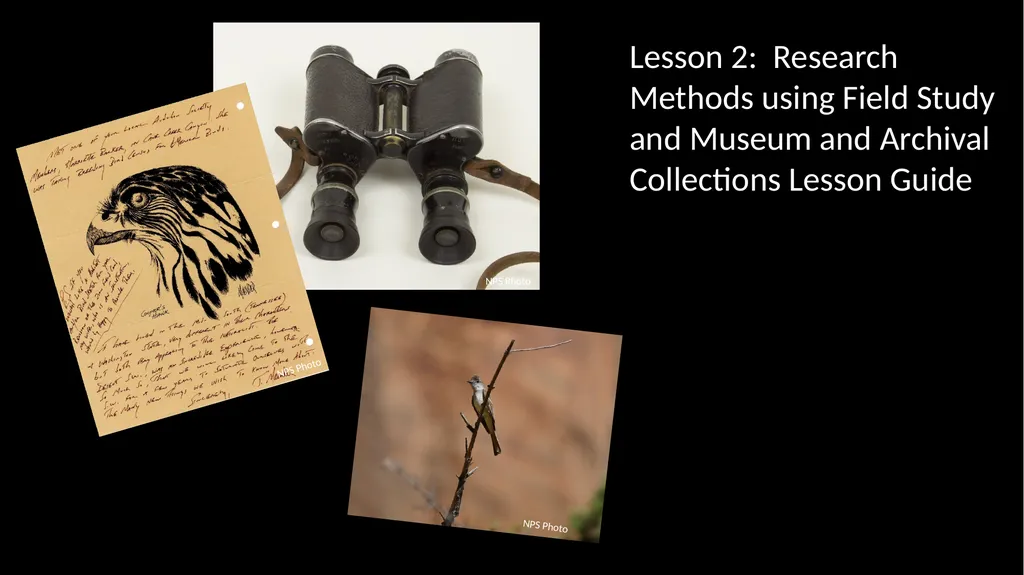
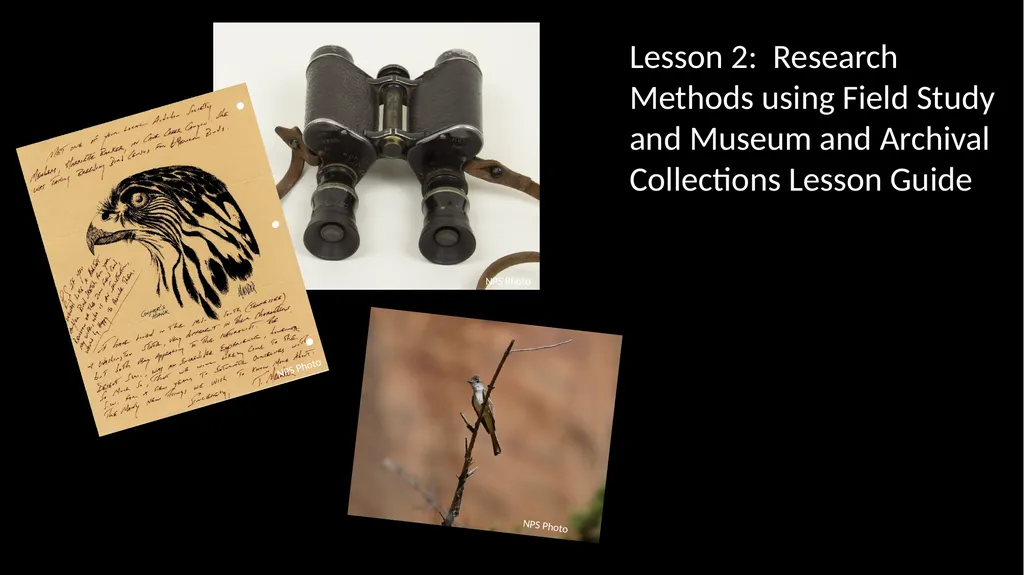
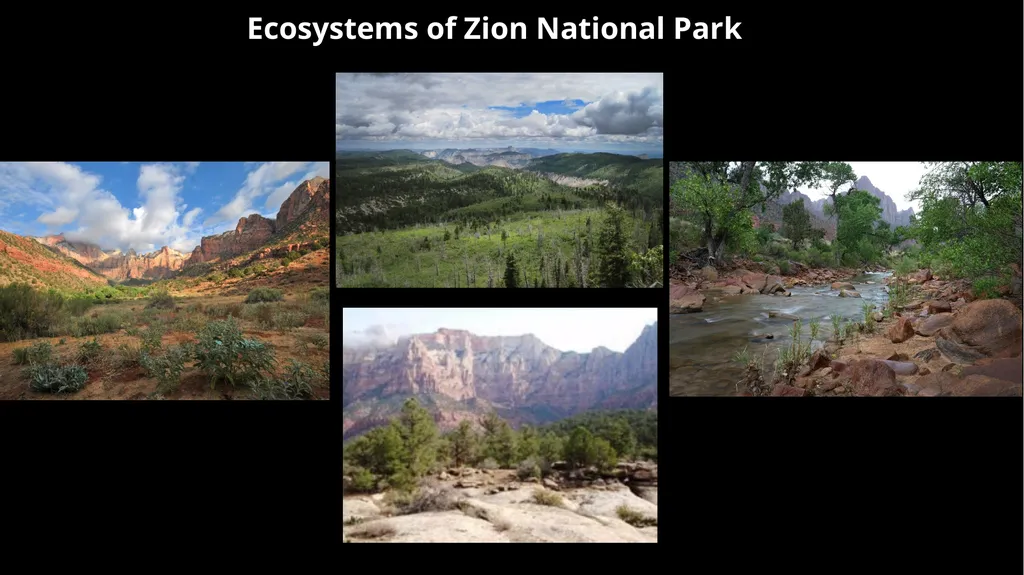
Lesson 2: Research Methods using Field Study and Museum and Archival Collections Lesson Guide NPS Photo Lesson 2 Introductory Slide NPS Photo NPS Photo Ecosystems of Zion National Park The Four Major Ecosystems of Zion Biodiversity in Zion
"Lesson 2: Research Methods using Field Study and" is the property of its rightful owner. Permission is granted to
download and print the materials on this website for personal, non-commercial use only, and to display it
on your personal computer provided you do not modify the materials and that you retain all copyright
notices contained in the materials. By downloading content from our website, you accept the terms of this
agreement.
Presentation Transcript
01
Lesson 2: Research Methods using Field Study and Museum and Archival Collections Lesson Guide NPS Photo Lesson 2 Introductory Slide NPS Photo NPS Photo<br>
02
Ecosystems of Zion National Park The Four Major Ecosystems of Zion<br>
03
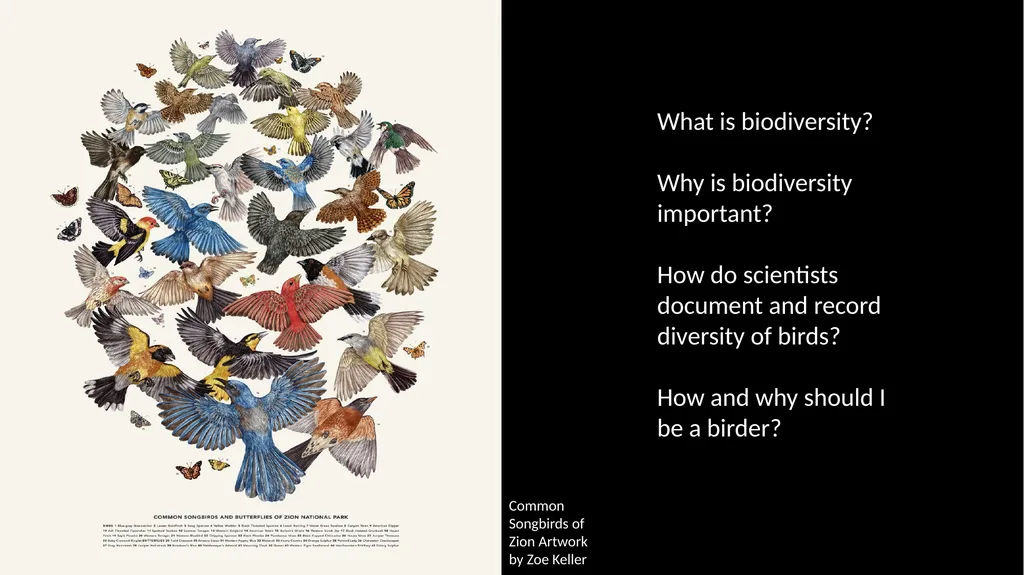
Biodiversity in Zion Common Songbirds of Zion Artwork by Zoe Keller What is biodiversity?
Why is biodiversity important?
How do scientists document and record diversity of birds?
How and why should I be a birder?<br>
04
Cooperative Field Study- Birders and Scientists<br>
05
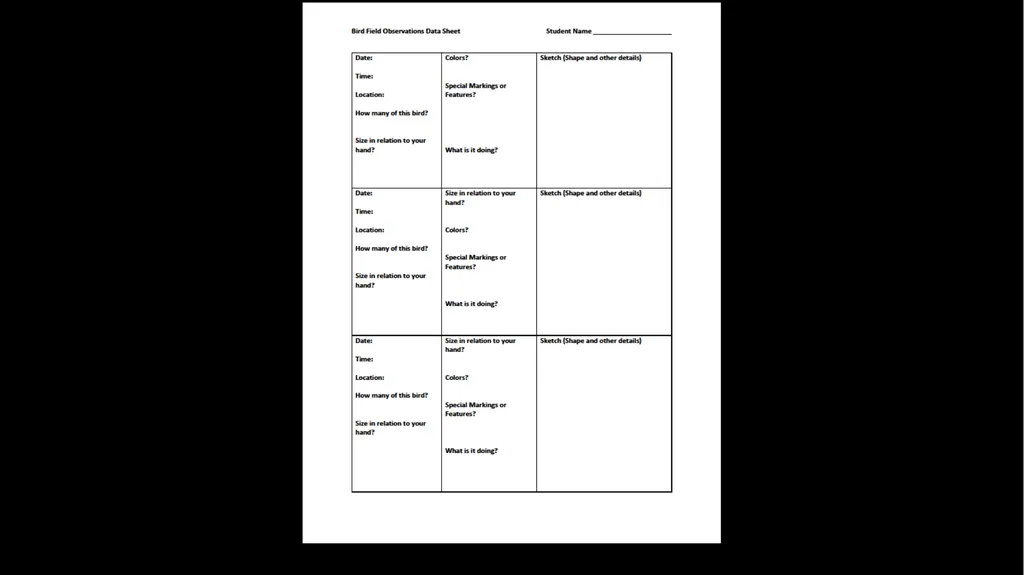
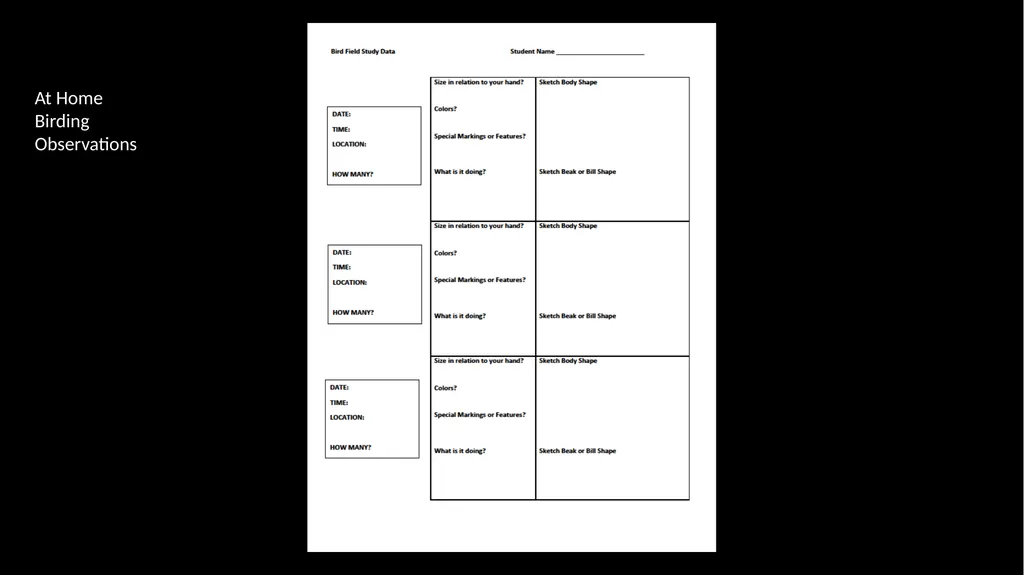
Field Study Observation and Data Sheet<br>
06
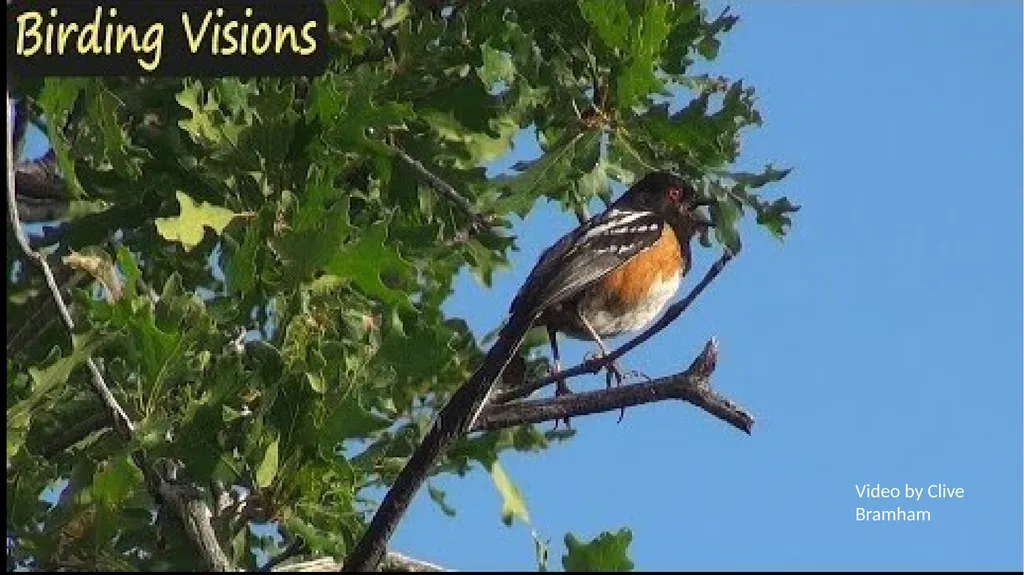
Field Study 1: Spotted Towhee Video by Clive Bramham<br>
07
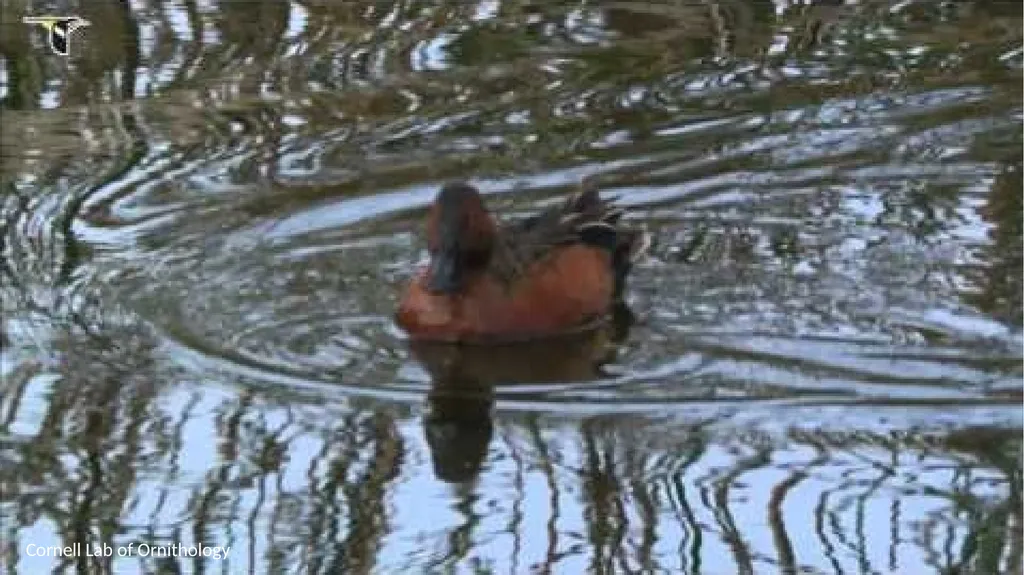
Field Study 2: Cinnamon Teal Cornell Lab of Ornithology<br>
08
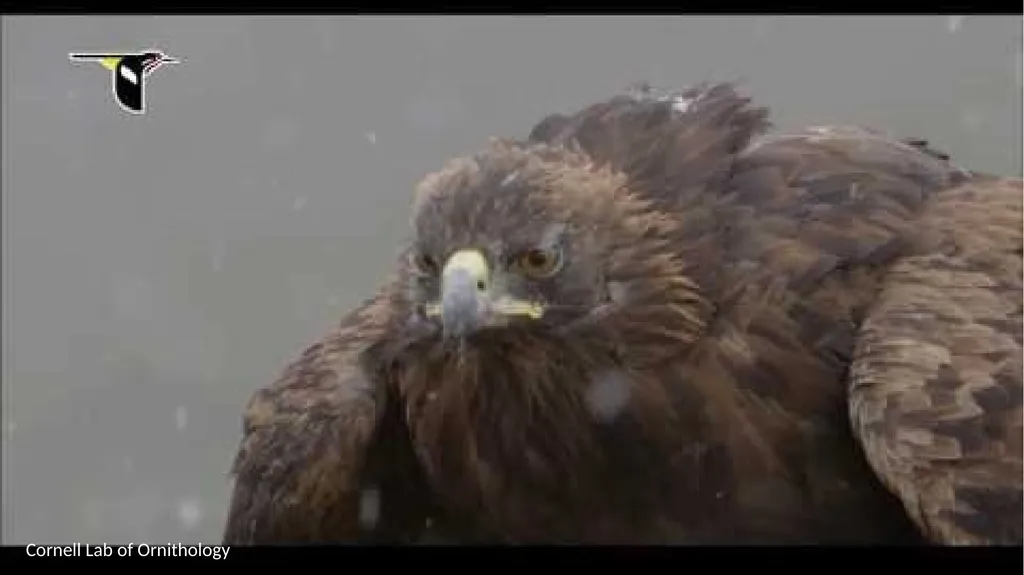
Field Study 3: Golden Eagle Cornell Lab of Ornithology<br>
09
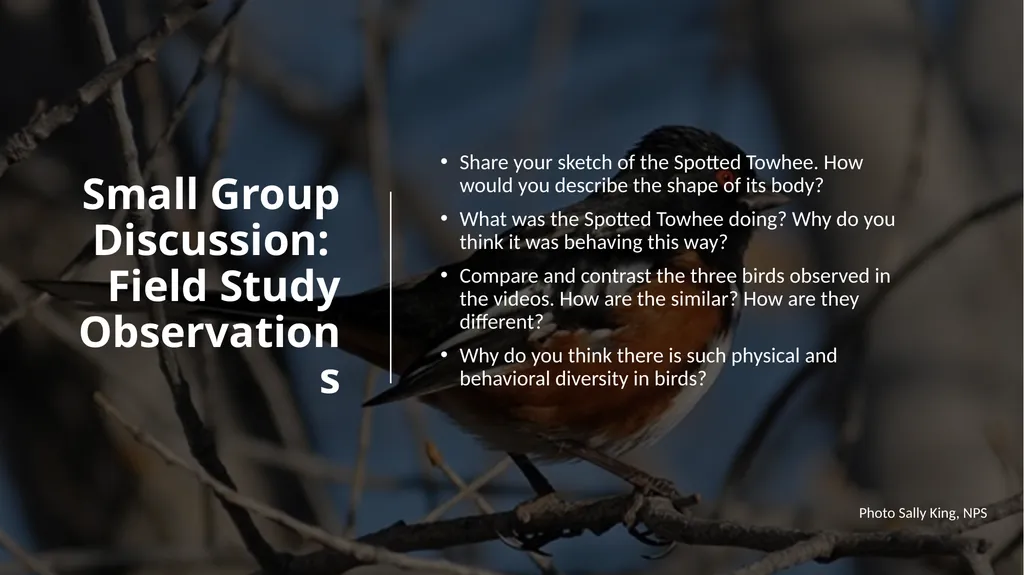
Photo Sally King, NPS Small Group Discussion: Field Study Observations Share your sketch of the Spotted Towhee. How would you describe the shape of its body?
What was the Spotted Towhee doing? Why do you think it was behaving this way?
Compare and contrast the three birds observed in the videos. How are the similar? How are they different?
Why do you think there is such physical and behavioral diversity in birds?<br>
10
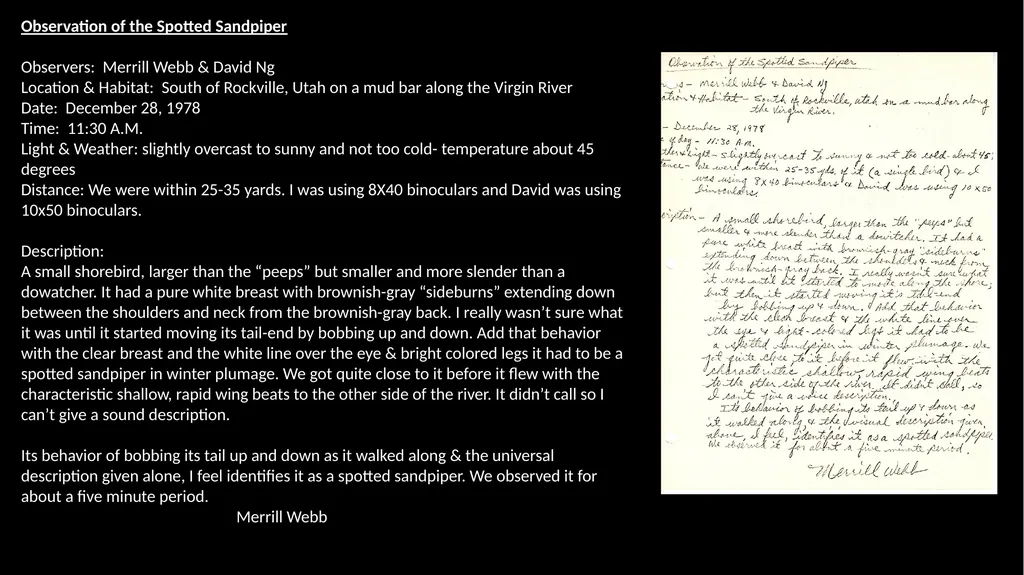
Archived Historical Document Observation of the Spotted Sandpiper
Observers: Merrill Webb & David Ng
Location & Habitat: South of Rockville, Utah on a mud bar along the Virgin River
Date: December 28, 1978
Time: 11:30 A.M.
Light & Weather: slightly overcast to sunny and not too cold- temperature about 45 degrees
Distance: We were within 25-35 yards. I was using 8X40 binoculars and David was using 10x50 binoculars.
Description:
A small shorebird, larger than the “peeps” but smaller and more slender than a dowatcher. It had a pure white breast with brownish-gray “sideburns” extending down between the shoulders and neck from the brownish-gray back. I really wasn’t sure what it was until it started moving its tail-end by bobbing up and down. Add that behavior with the clear breast and the white line over the eye & bright colored legs it had to be a spotted sandpiper in winter plumage. We got quite close to it before it flew with the characteristic shallow, rapid wing beats to the other side of the river. It didn’t call so I can’t give a sound description.
Its behavior of bobbing its tail up and down as it walked along & the universal description given alone, I feel identifies it as a spotted sandpiper. We observed it for about a five minute period.
Merrill Webb<br>
11
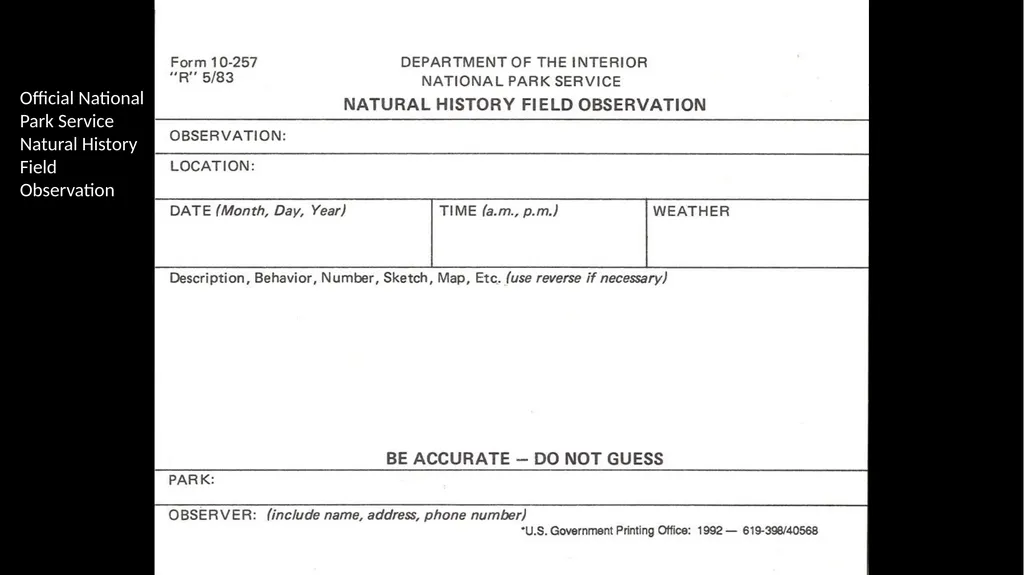
NPS Official Field Observation Form Official National Park Service Natural History Field Observation<br>
12
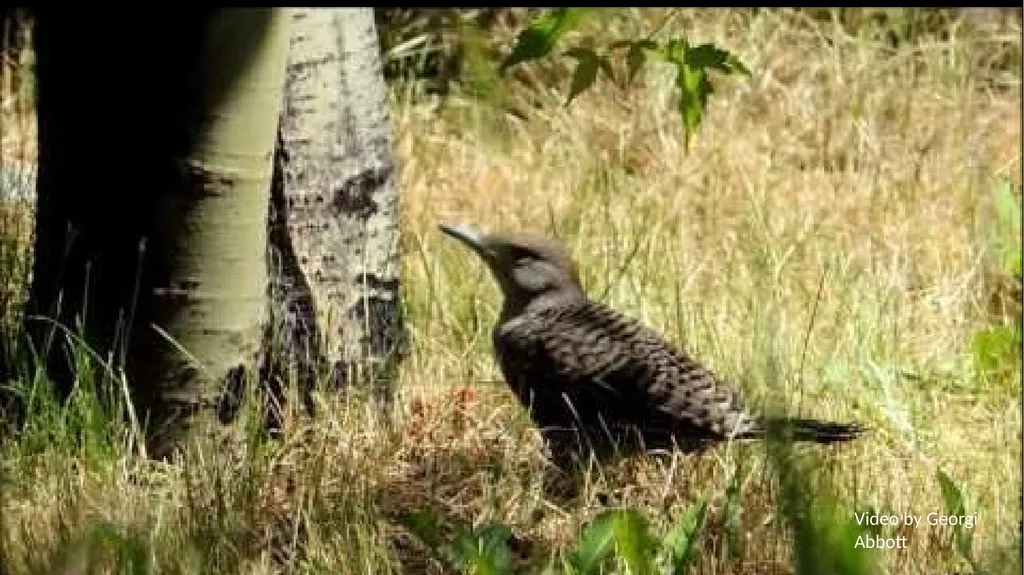
Northern Flicker Field Video Field Study 4: Northern Flicker Video by Georgi Abbott<br>
13
Home Field Study Assignment At Home Birding Observations<br>
14
Extension Activity Video: Day in the Life of a Field Researcher<br>