Literature on electronics as distractions 90-97.5 of students report texting in class; Over 99 while studying 97 report noticing other students misusing phones andor laptops 75 report phones in class are mostly a distraction 10
"Literature on electronics as distractions 90-97.5%" is the property of its rightful owner. Permission is granted to
download and print the materials on this website for personal, non-commercial use only, and to display it
on your personal computer provided you do not modify the materials and that you retain all copyright
notices contained in the materials. By downloading content from our website, you accept the terms of this
agreement.
Presentation Transcript
01
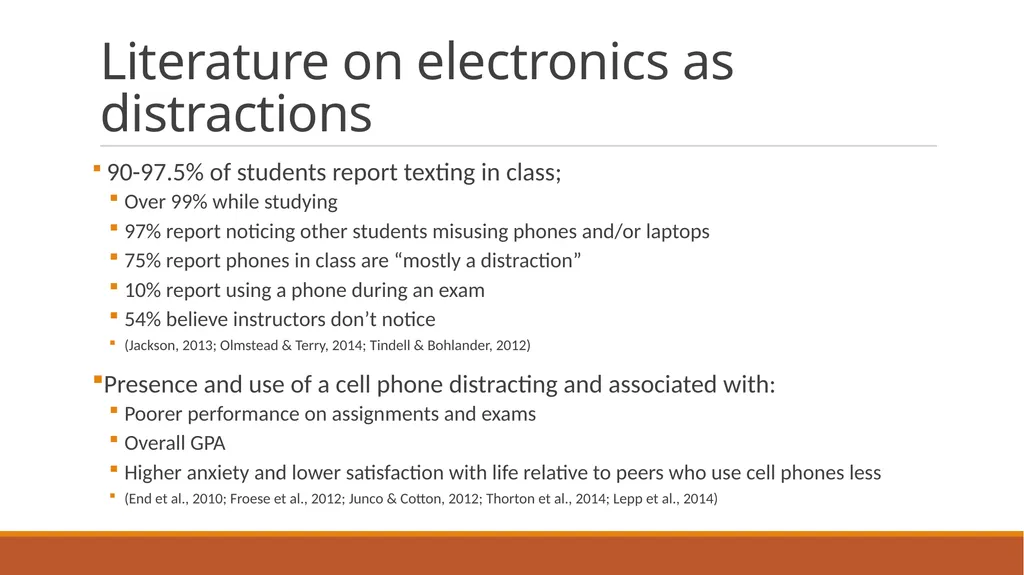
Literature on electronics as distractions 90-97.5% of students report texting in class;
Over 99% while studying
97% report noticing other students misusing phones and/or laptops
75% report phones in class are “mostly a distraction”
10% report using a phone during an exam
54% believe instructors don’t notice
(Jackson, 2013; Olmstead & Terry, 2014; Tindell & Bohlander, 2012)
Presence and use of a cell phone distracting and associated with:
Poorer performance on assignments and exams
Overall GPA
Higher anxiety and lower satisfaction with life relative to peers who use cell phones less
(End et al., 2010; Froese et al., 2012; Junco & Cotton, 2012; Thorton et al., 2014; Lepp et al., 2014)<br>
02
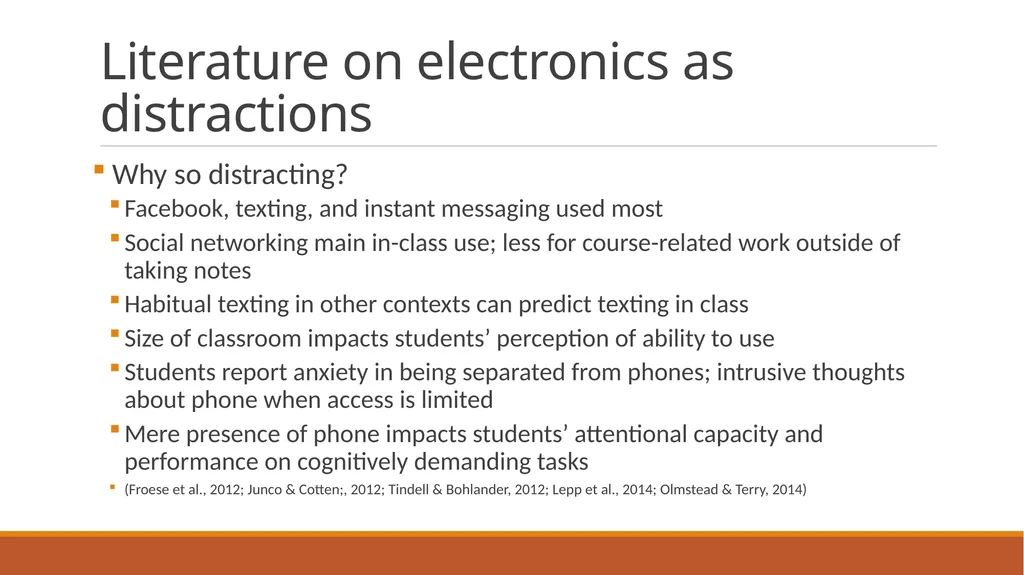
Literature on electronics as distractions Why so distracting?
Facebook, texting, and instant messaging used most
Social networking main in-class use; less for course-related work outside of taking notes
Habitual texting in other contexts can predict texting in class
Size of classroom impacts students’ perception of ability to use
Students report anxiety in being separated from phones; intrusive thoughts about phone when access is limited
Mere presence of phone impacts students’ attentional capacity and performance on cognitively demanding tasks
(Froese et al., 2012; Junco & Cotten;, 2012; Tindell & Bohlander, 2012; Lepp et al., 2014; Olmstead & Terry, 2014)<br>
03
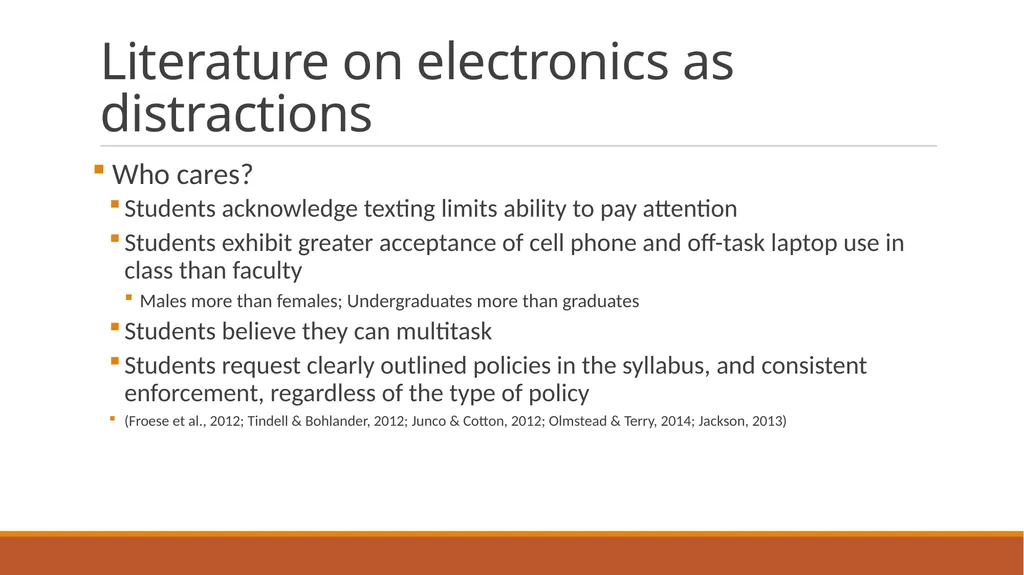
Literature on electronics as distractions Who cares?
Students acknowledge texting limits ability to pay attention
Students exhibit greater acceptance of cell phone and off-task laptop use in class than faculty
Males more than females; Undergraduates more than graduates
Students believe they can multitask
Students request clearly outlined policies in the syllabus, and consistent enforcement, regardless of the type of policy
(Froese et al., 2012; Tindell & Bohlander, 2012; Junco & Cotton, 2012; Olmstead & Terry, 2014; Jackson, 2013)<br>
04
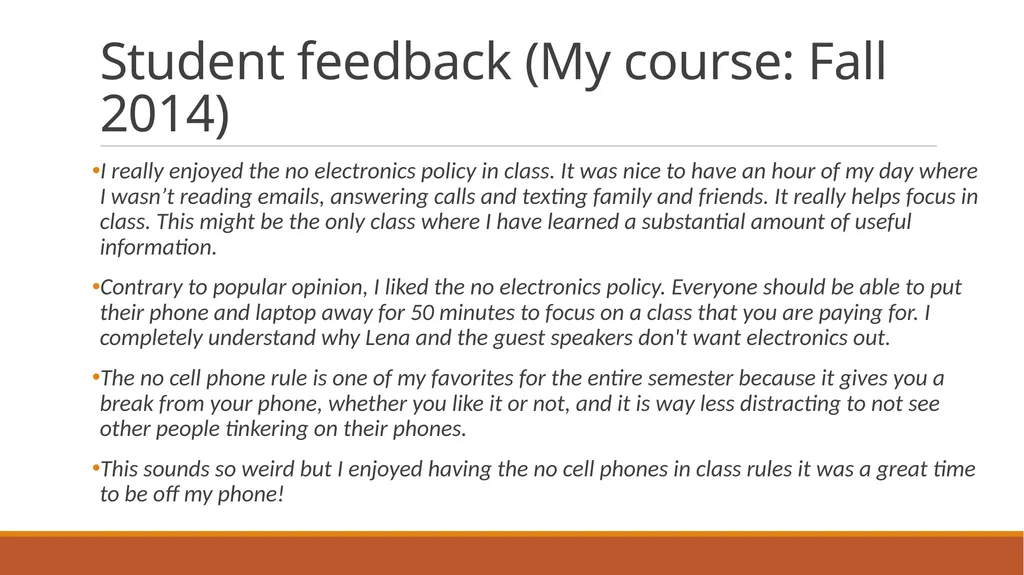
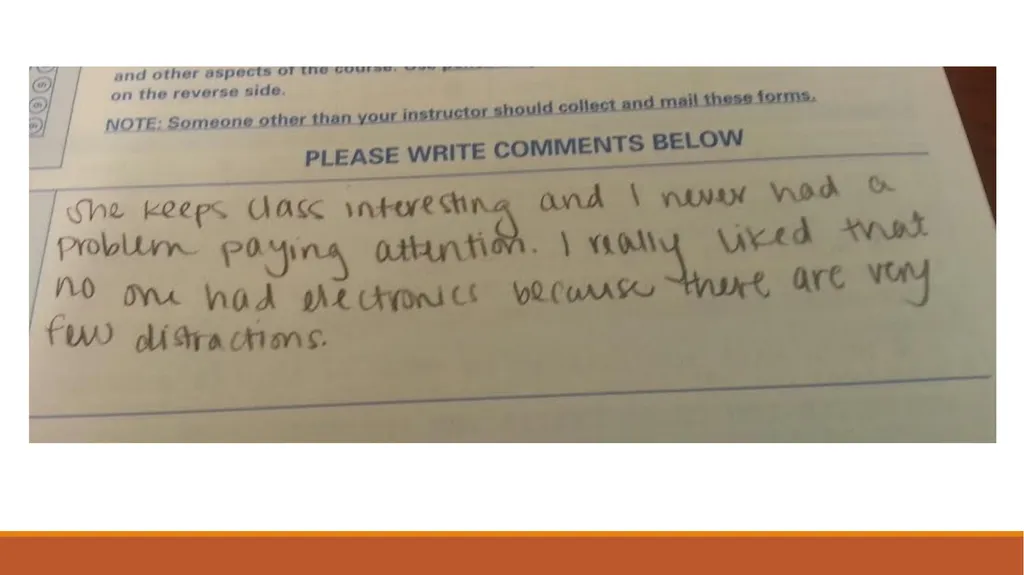
Student feedback (My course: Fall 2014) I really enjoyed the no electronics policy in class. It was nice to have an hour of my day where I wasn’t reading emails, answering calls and texting family and friends. It really helps focus in class. This might be the only class where I have learned a substantial amount of useful information.
Contrary to popular opinion, I liked the no electronics policy. Everyone should be able to put their phone and laptop away for 50 minutes to focus on a class that you are paying for. I completely understand why Lena and the guest speakers don't want electronics out.
The no cell phone rule is one of my favorites for the entire semester because it gives you a break from your phone, whether you like it or not, and it is way less distracting to not see other people tinkering on their phones.
This sounds so weird but I enjoyed having the no cell phones in class rules it was a great time to be off my phone!<br>
05
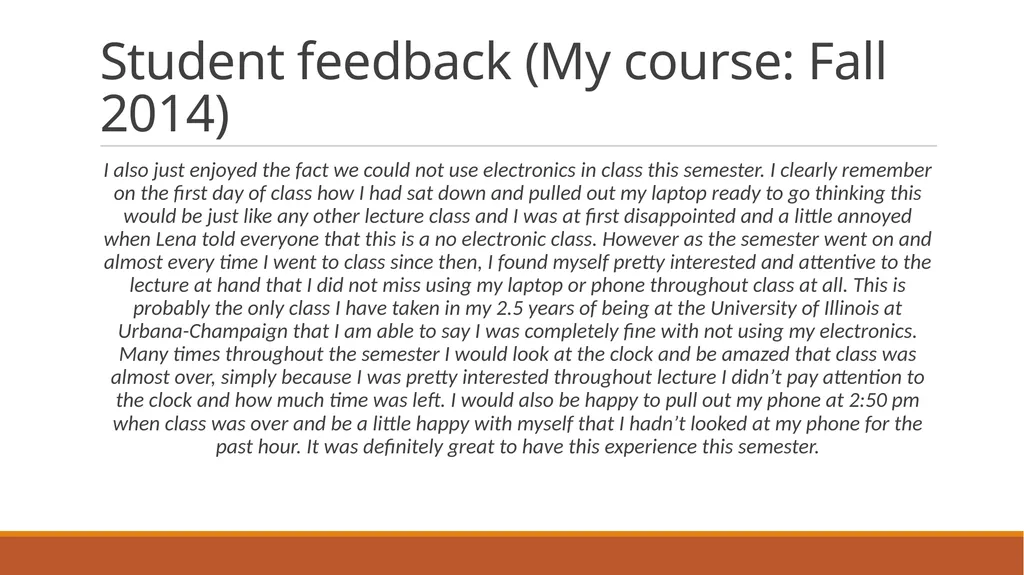
Student feedback (My course: Fall 2014) I also just enjoyed the fact we could not use electronics in class this semester. I clearly remember on the first day of class how I had sat down and pulled out my laptop ready to go thinking this would be just like any other lecture class and I was at first disappointed and a little annoyed when Lena told everyone that this is a no electronic class. However as the semester went on and almost every time I went to class since then, I found myself pretty interested and attentive to the lecture at hand that I did not miss using my laptop or phone throughout class at all. This is probably the only class I have taken in my 2.5 years of being at the University of Illinois at Urbana-Champaign that I am able to say I was completely fine with not using my electronics. Many times throughout the semester I would look at the clock and be amazed that class was almost over, simply because I was pretty interested throughout lecture I didn’t pay attention to the clock and how much time was left. I would also be happy to pull out my phone at 2:50 pm when class was over and be a little happy with myself that I hadn’t looked at my phone for the past hour. It was definitely great to have this experience this semester.<br>
06
Before you prohibit electronics Do you have control over the syllabus and in-class structure?
How large is your class?
Who will implement and enforce this policy?
Do you have quizzes or exams?
How should students take notes?
What is your teaching style?
Do you use electronics in meetings, workshops and classes?<br>
07
Removing electronics: Stay positive Don’t be punitive or adversarial
Frame within benefits for the students and class culture
Have clear reasons for removing electronics
Incorporate into your syllabus and other course materials
Revise your teaching strategies and anticipated goals
Announce and define expectations and consequences
Be a role model
Reward good behavior<br>