Location-Aware and Budget-Constrained Application Replication and Deployment in Multi-Cloud Environment Tao Shi, Hui Ma, Gang Chen School of Engineering and Computer Science Victoria University of Wellington, New Zealand Sven Hartmann
"Location-Aware and Budget-Constrained Application" is the property of its rightful owner. Permission is granted to
download and print the materials on this website for personal, non-commercial use only, and to display it
on your personal computer provided you do not modify the materials and that you retain all copyright
notices contained in the materials. By downloading content from our website, you accept the terms of this
agreement.
Presentation Transcript
01
Location-Aware and Budget-Constrained Application Replication and Deployment in Multi-Cloud Environment Tao Shi, Hui Ma, Gang Chen
School of Engineering and Computer Science
Victoria University of Wellington, New Zealand
Sven Hartmann
Department of Informatics
Clausthal University of Technology, Germany IEEE ICWS 2020<br>
02
Overview Background
Related Work
Problem Description
Proposed Approach
Evaluation
Conclusions 2<br>
03
Background<br>
04
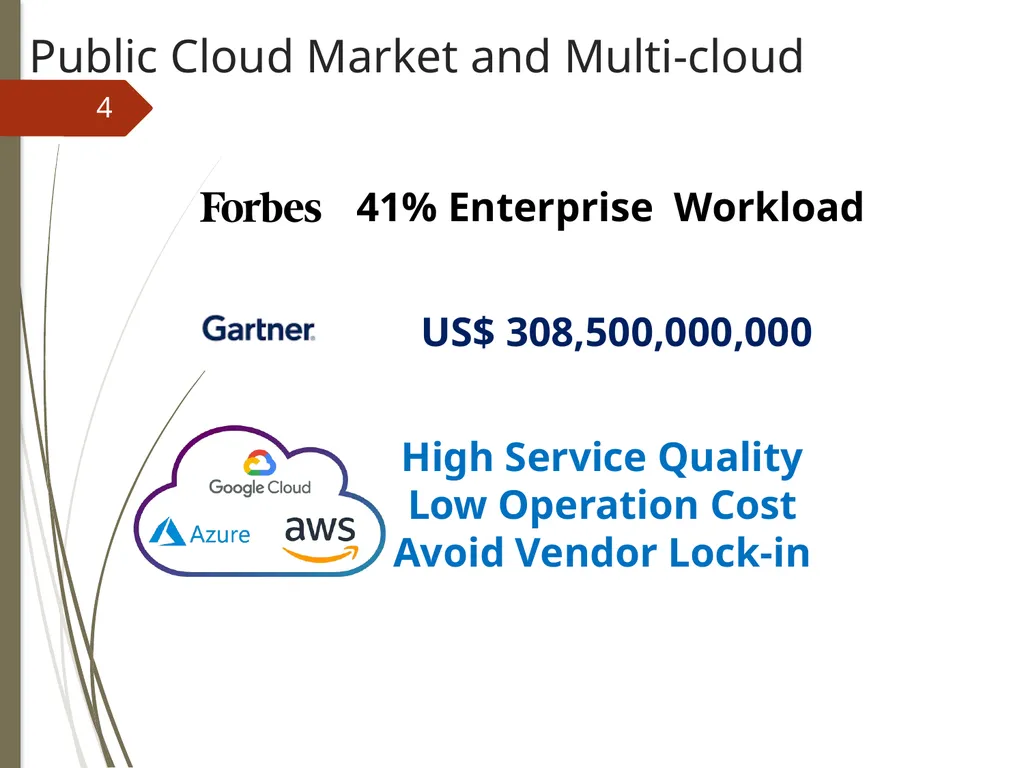
Public Cloud Market and Multi-cloud 4 41% Enterprise Workload US$ 308,500,000,000 High Service Quality
Low Operation Cost
Avoid Vendor Lock-in<br>
05
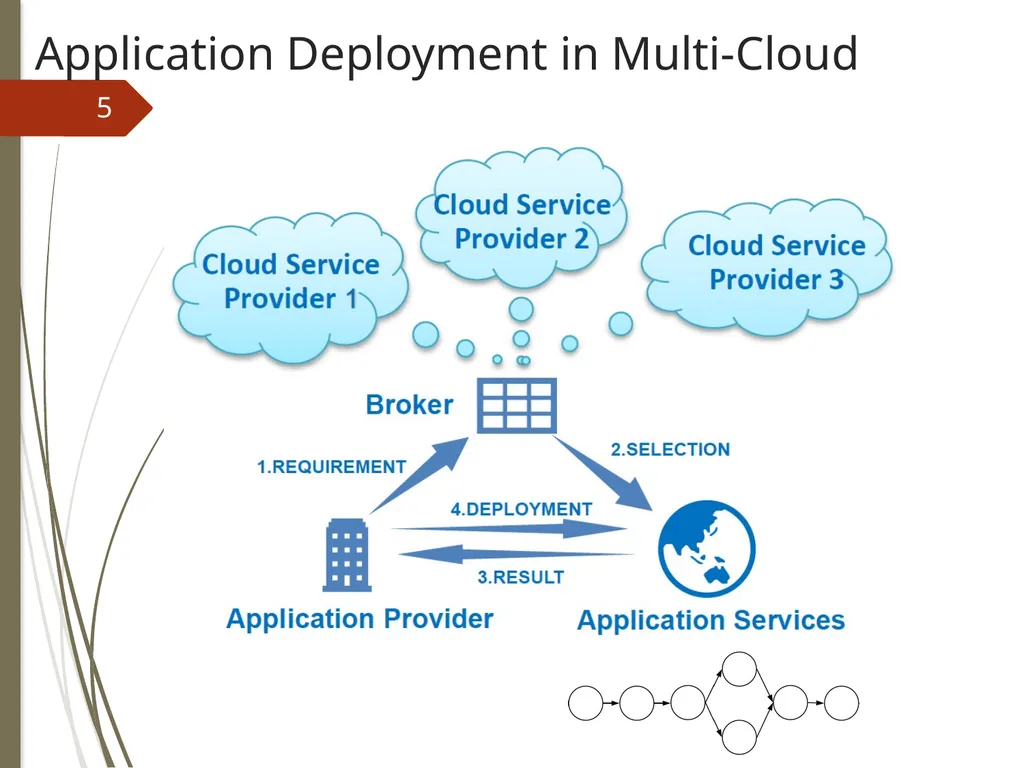
Application Deployment in Multi-Cloud 5<br>
06
Related Work<br>
07
Application Replication and Deployment Brazil South
$0.134/hour East US
$0.0832/hour Azure VM B2MS South Africa West
$0.14/hour Australia East
$0.106/hour Japan East
$0.12/hour France Central
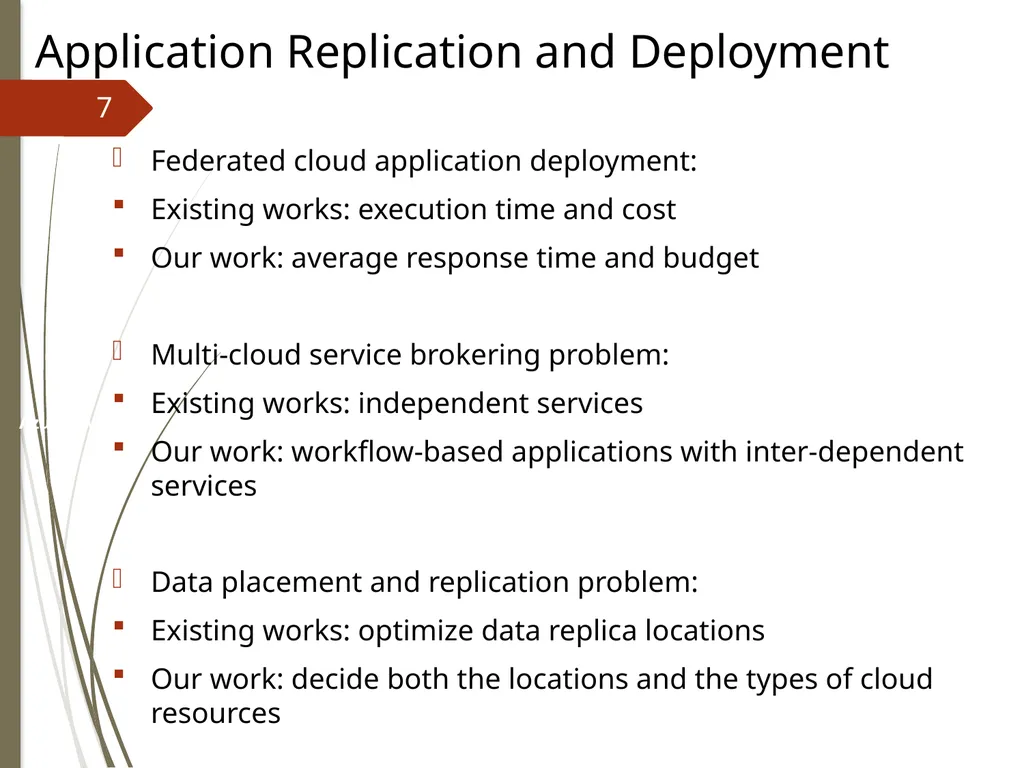
$0.104/hour Federated cloud application deployment:
Existing works: execution time and cost
Our work: average response time and budget
Multi-cloud service brokering problem:
Existing works: independent services
Our work: workflow-based applications with inter-dependent services
Data placement and replication problem:
Existing works: optimize data replica locations
Our work: decide both the locations and the types of cloud resources 7<br>
08
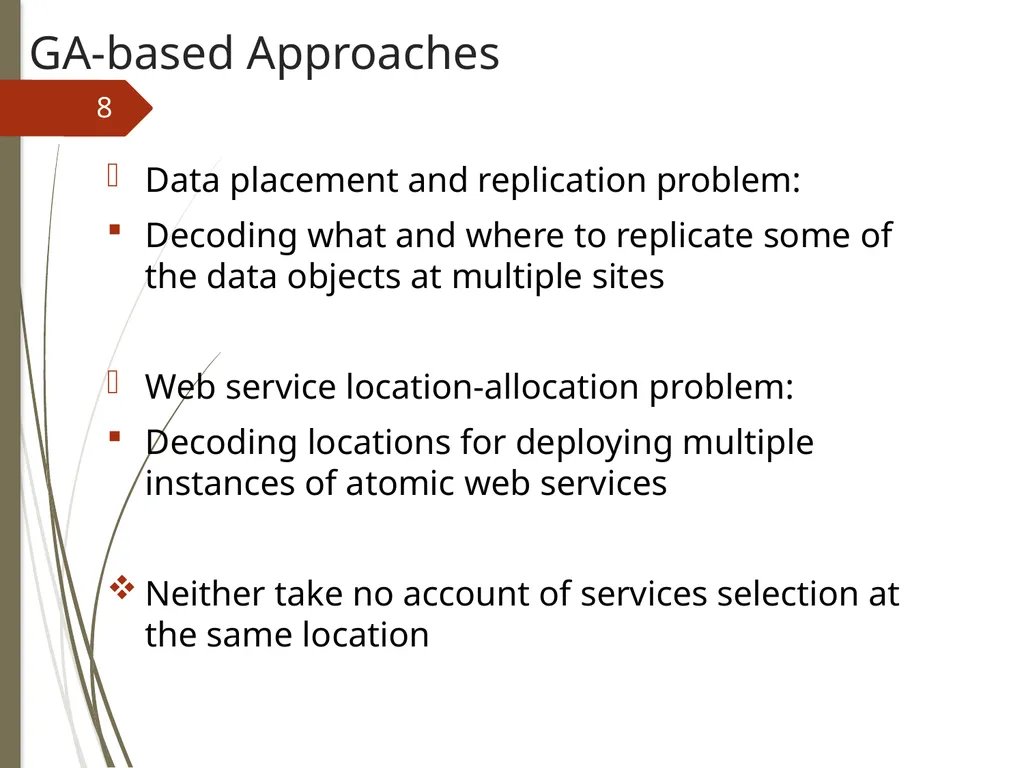
GA-based Approaches Data placement and replication problem:
Decoding what and where to replicate some of the data objects at multiple sites
Web service location-allocation problem:
Decoding locations for deploying multiple instances of atomic web services
Neither take no account of services selection at the same location 8<br>
09
Problem Description<br>
10
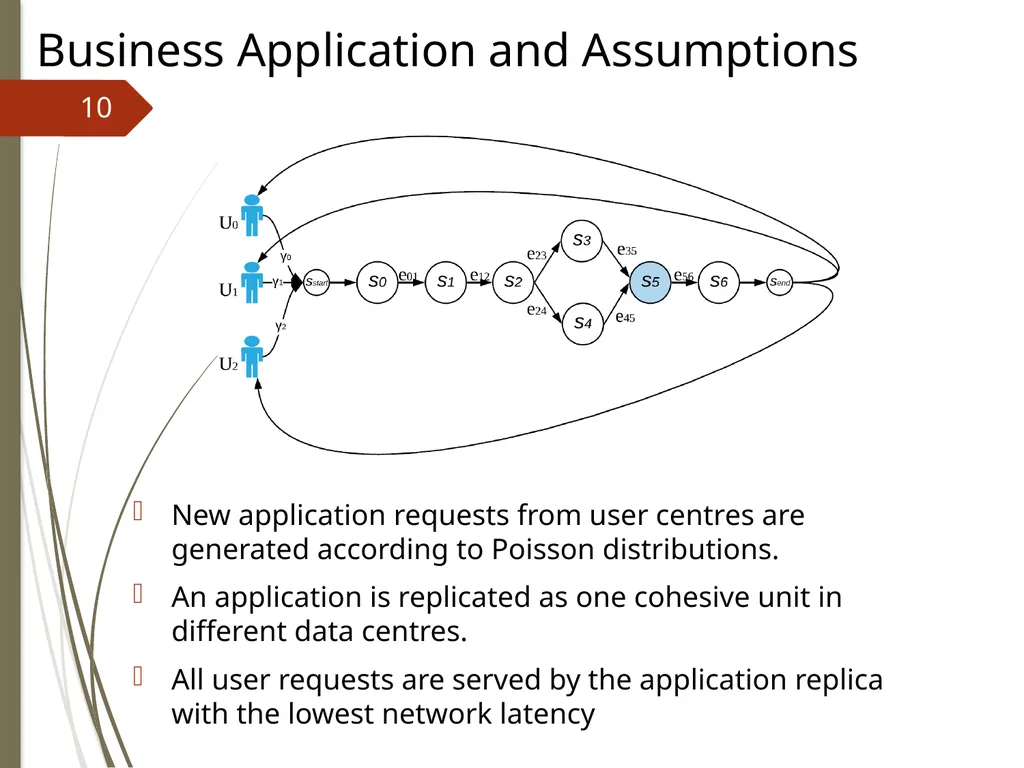
Business Application and Assumptions 10 New application requests from user centres are generated according to Poisson distributions.
An application is replicated as one cohesive unit in different data centres.
All user requests are served by the application replica with the lowest network latency<br>
11
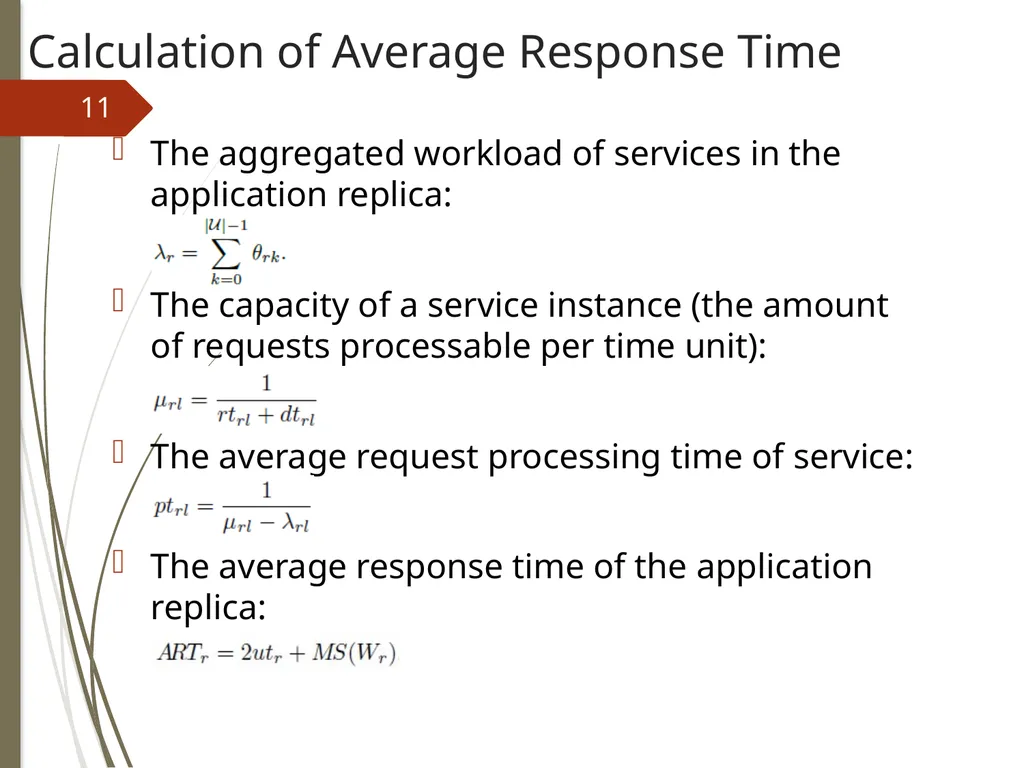
Calculation of Average Response Time The aggregated workload of services in the application replica:
The capacity of a service instance (the amount of requests processable per time unit):
The average request processing time of service:
The average response time of the application replica: 11<br>
12
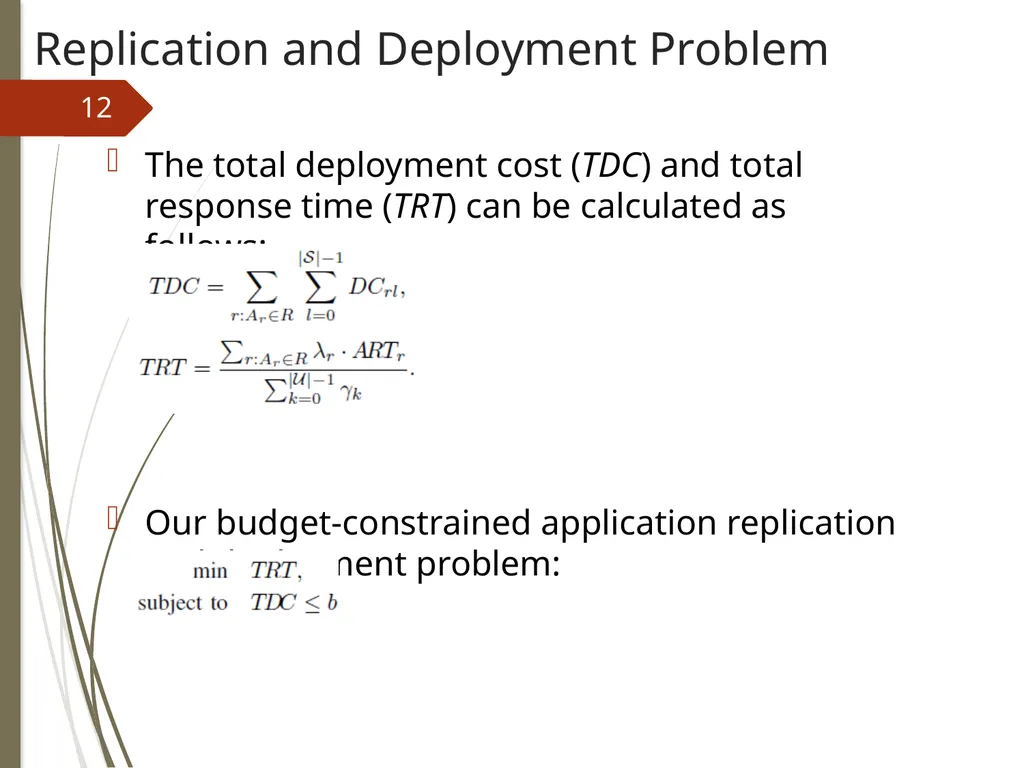
The total deployment cost (TDC) and total response time (TRT) can be calculated as follows:
Our budget-constrained application replication and deployment problem: Replication and Deployment Problem 12<br>
13
Proposed Approach<br>
14
Challenges to Effectively Apply GA First need to determine the application replication plan, including both the amount and the locations of application replicas.
Then cloud resources selection for service deployment involves large and complex search space.
Randomly generated initial population of GAs cannot produce high-quality final solutions reliably in our experiments. 14<br>
15
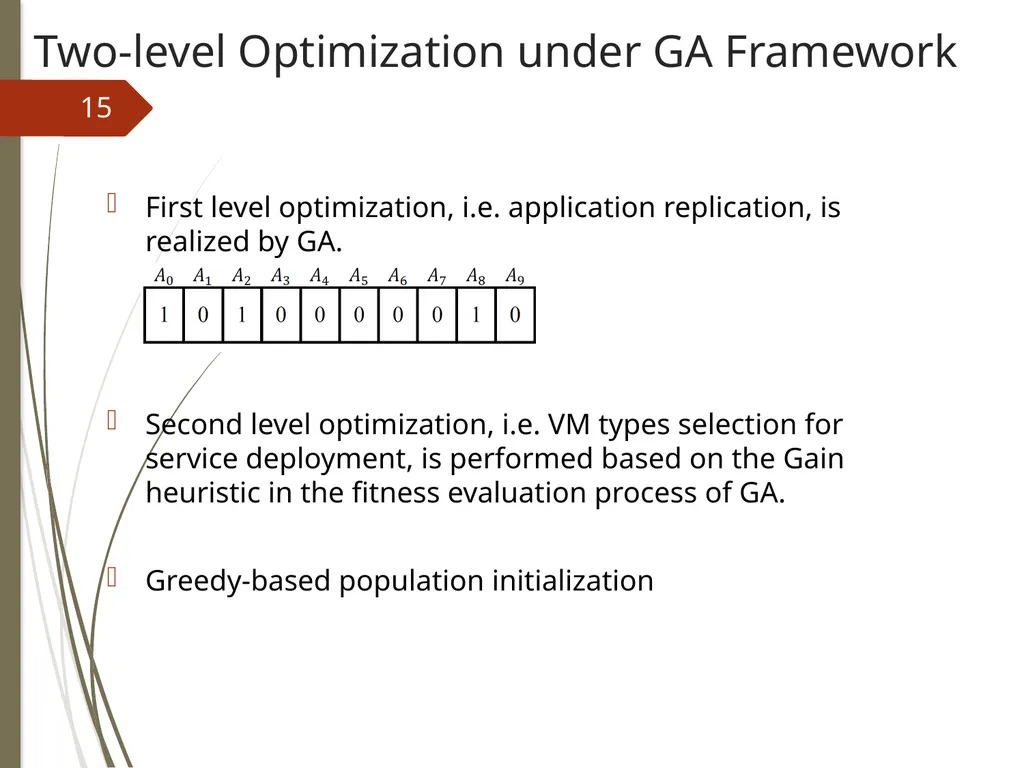
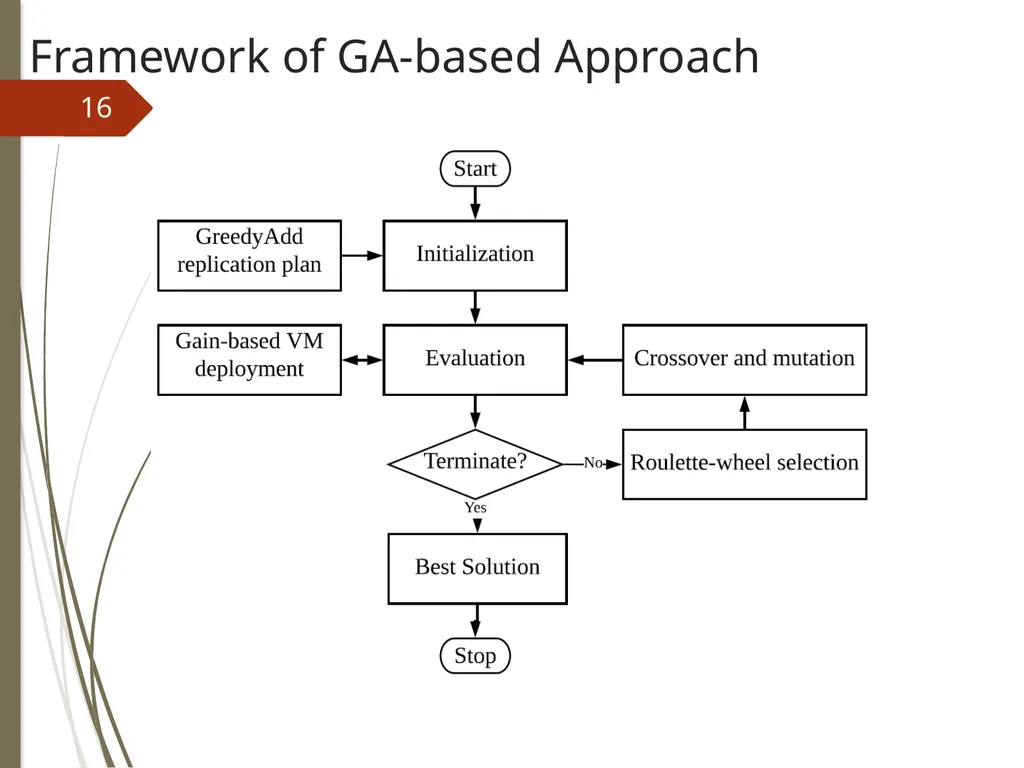
Two-level Optimization under GA Framework First level optimization, i.e. application replication, is realized by GA.
Second level optimization, i.e. VM types selection for service deployment, is performed based on the Gain heuristic in the fitness evaluation process of GA.
Greedy-based population initialization 15<br>
16
Framework of GA-based Approach 16<br>
17
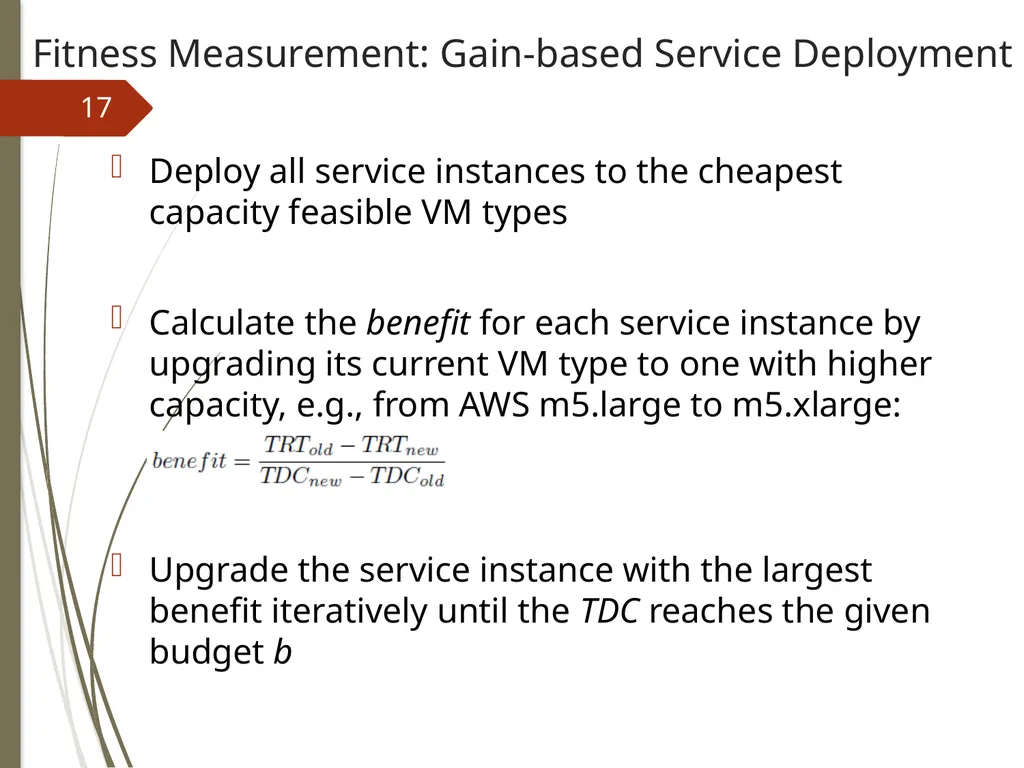
Fitness Measurement: Gain-based Service Deployment Deploy all service instances to the cheapest capacity feasible VM types
Calculate the benefit for each service instance by upgrading its current VM type to one with higher capacity, e.g., from AWS m5.large to m5.xlarge:
Upgrade the service instance with the largest benefit iteratively until the TDC reaches the given budget b 17<br>
18
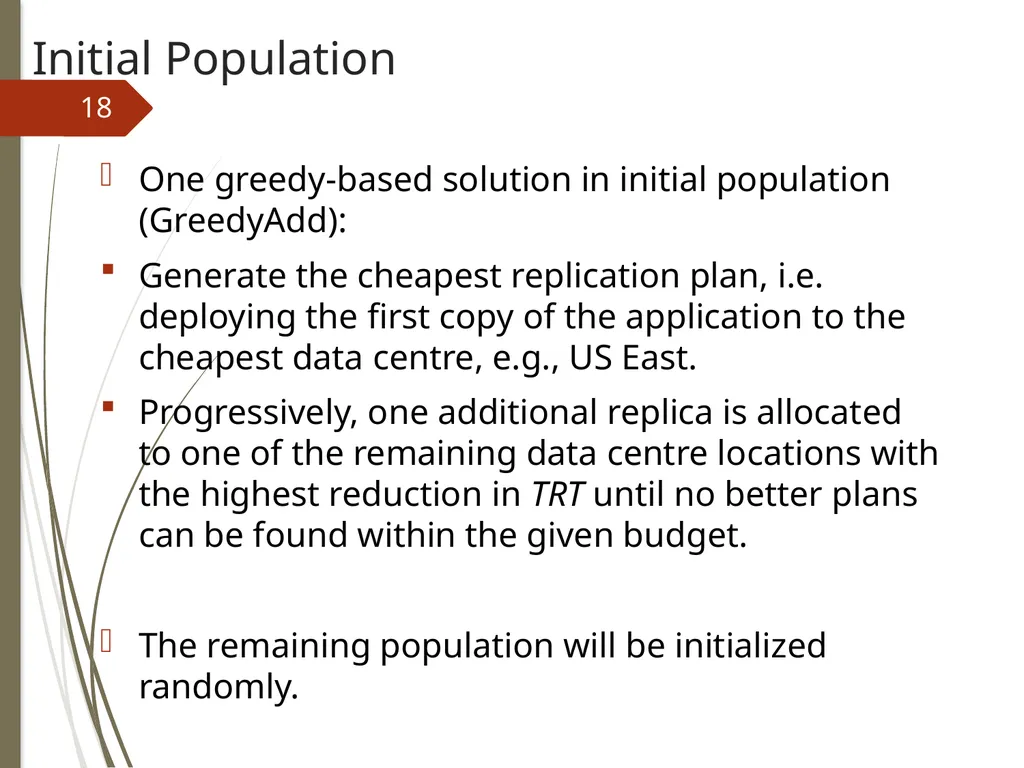
Initial Population One greedy-based solution in initial population (GreedyAdd):
Generate the cheapest replication plan, i.e. deploying the first copy of the application to the cheapest data centre, e.g., US East.
Progressively, one additional replica is allocated to one of the remaining data centre locations with the highest reduction in TRT until no better plans can be found within the given budget.
The remaining population will be initialized randomly. 18<br>
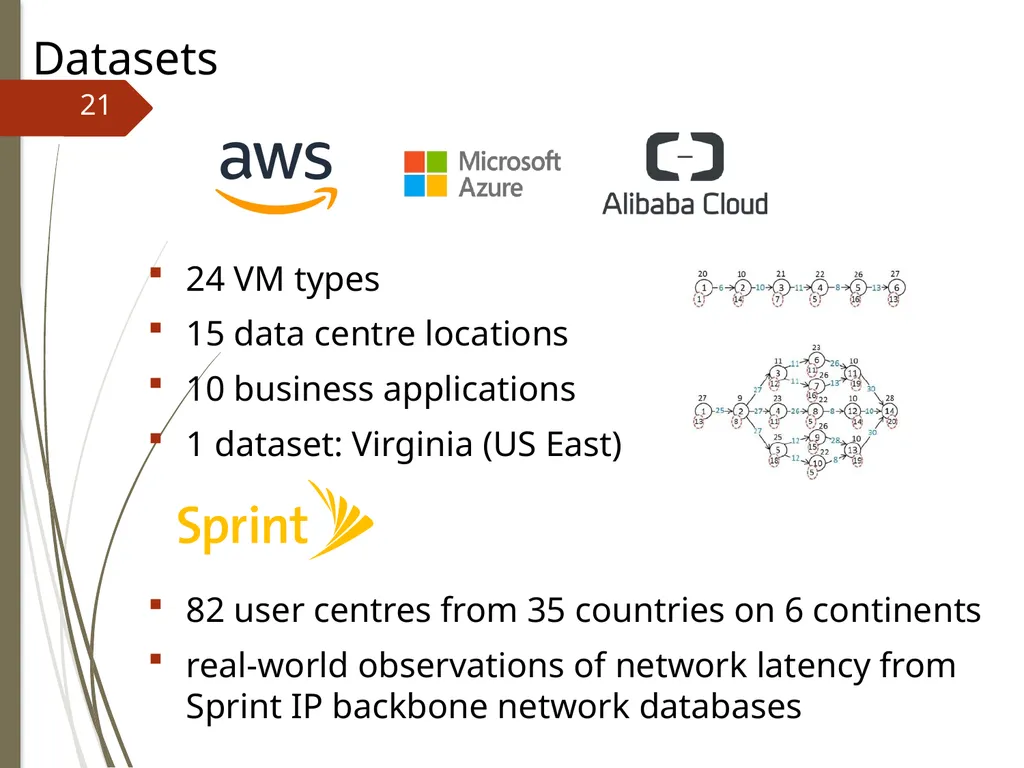
Datasets 24 VM types
15 data centre locations
10 business applications
1 dataset: Virginia (US East)
82 user centres from 35 countries on 6 continents
real-world observations of network latency from Sprint IP backbone network databases 21<br>
22
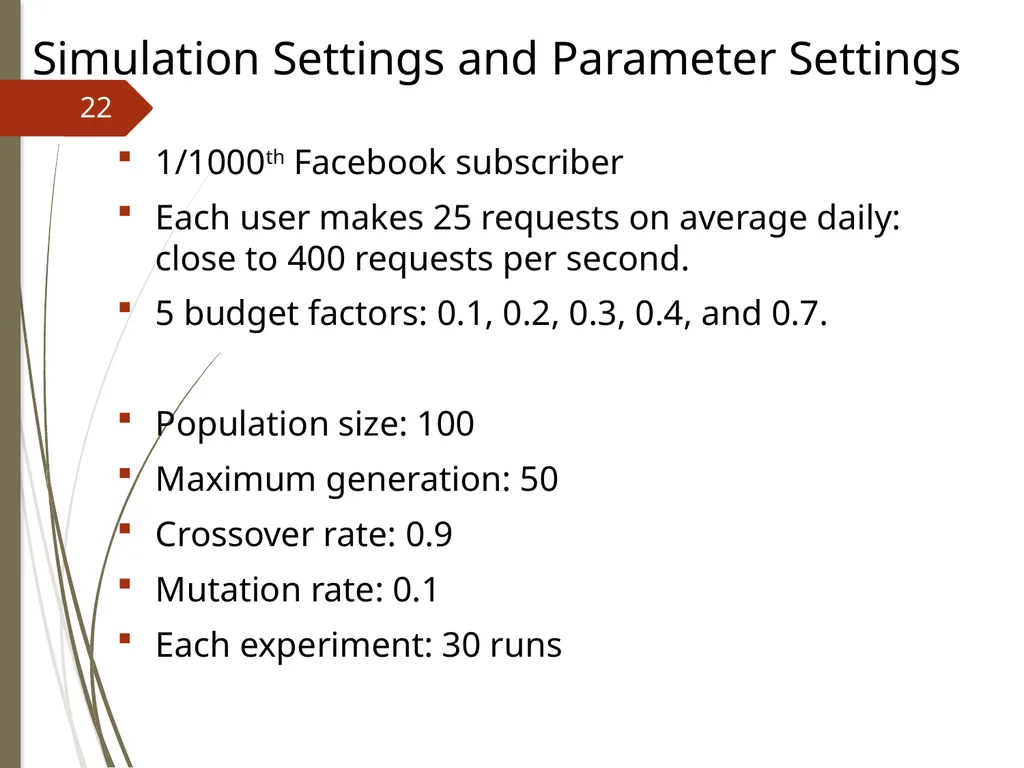
Simulation Settings and Parameter Settings 1/1000th Facebook subscriber
Each user makes 25 requests on average daily: close to 400 requests per second.
5 budget factors: 0.1, 0.2, 0.3, 0.4, and 0.7.
Population size: 100
Maximum generation: 50
Crossover rate: 0.9
Mutation rate: 0.1
Each experiment: 30 runs 22<br>
23
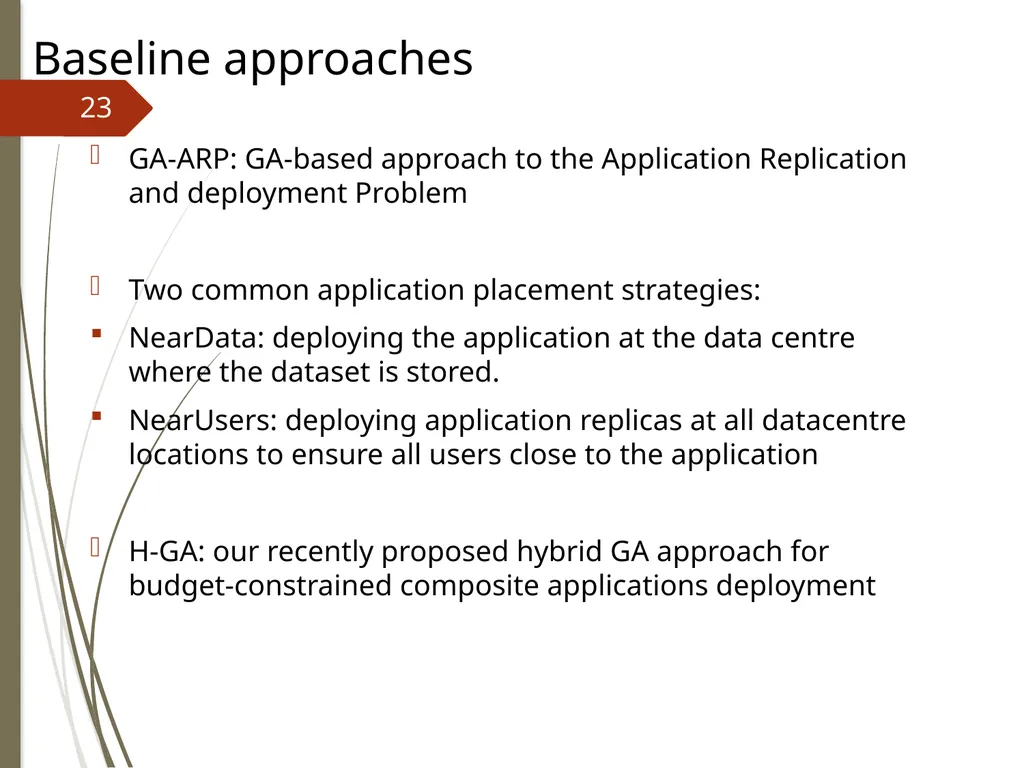
Baseline approaches 23 GA-ARP: GA-based approach to the Application Replication and deployment Problem
Two common application placement strategies:
NearData: deploying the application at the data centre where the dataset is stored.
NearUsers: deploying application replicas at all datacentre locations to ensure all users close to the application
H-GA: our recently proposed hybrid GA approach for budget-constrained composite applications deployment<br>
24
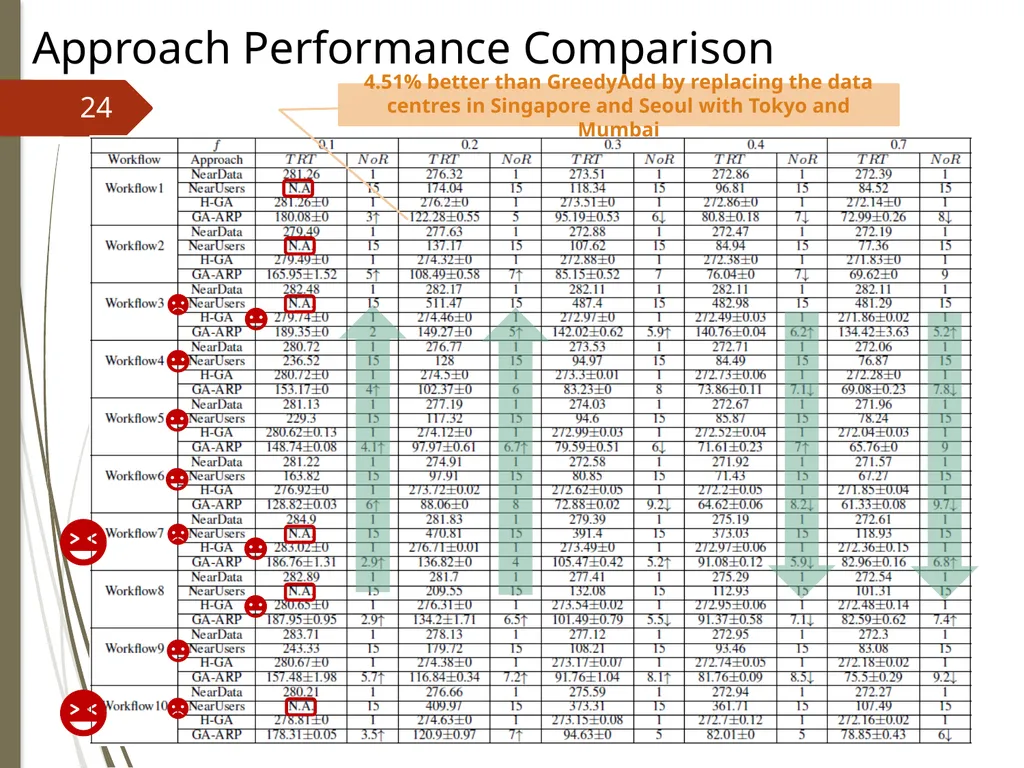
Approach Performance Comparison 24 4.51% better than GreedyAdd by replacing the data centres in Singapore and Seoul with Tokyo and Mumbai<br>
25
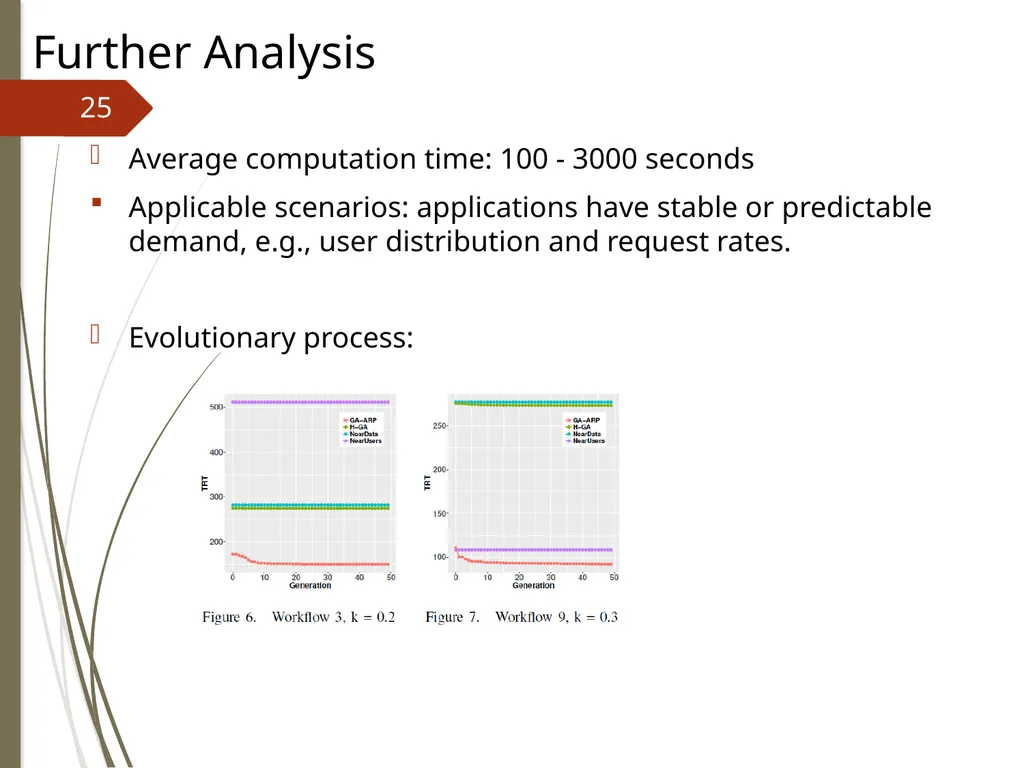
Further Analysis 25 Average computation time: 100 - 3000 seconds
Applicable scenarios: applications have stable or predictable demand, e.g., user distribution and request rates.
Evolutionary process:<br>
26
Conclusions<br>
27
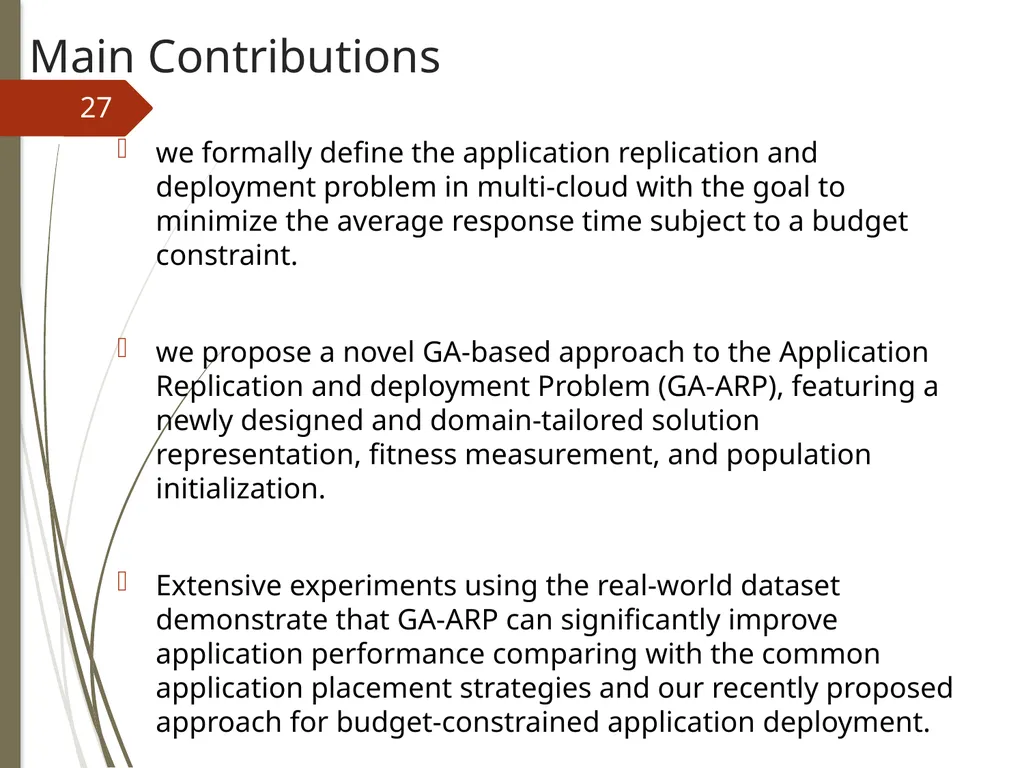
Main Contributions we formally define the application replication and deployment problem in multi-cloud with the goal to minimize the average response time subject to a budget constraint.
we propose a novel GA-based approach to the Application Replication and deployment Problem (GA-ARP), featuring a newly designed and domain-tailored solution representation, fitness measurement, and population initialization.
Extensive experiments using the real-world dataset demonstrate that GA-ARP can significantly improve application performance comparing with the common application placement strategies and our recently proposed approach for budget-constrained application deployment. 27<br>