01
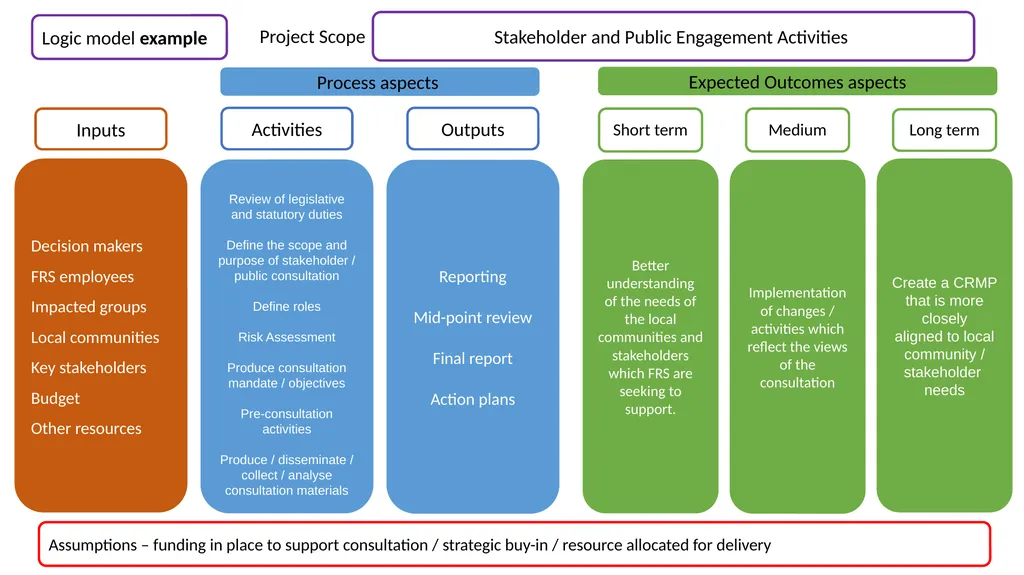
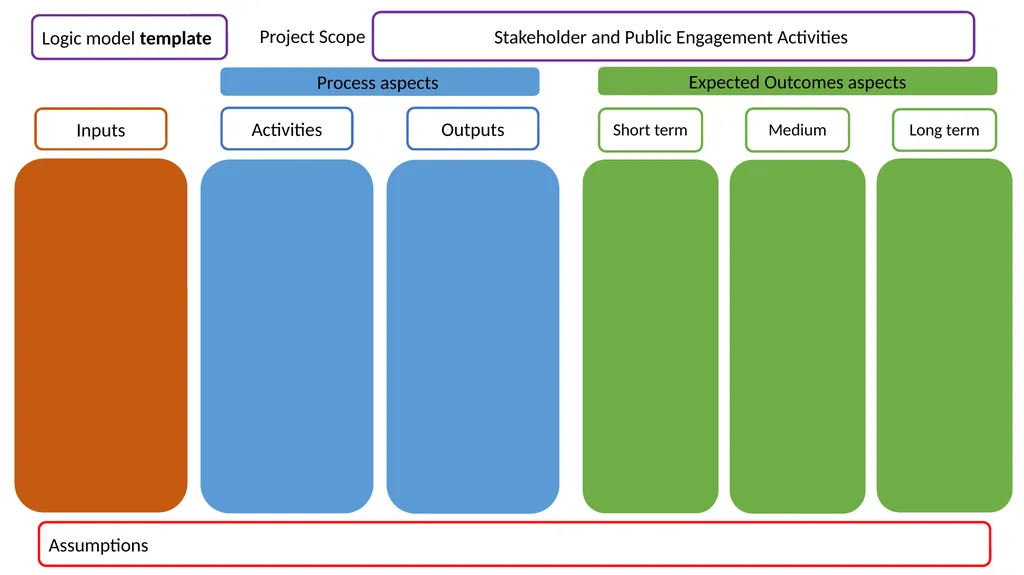
Logic model instructions - a logic model will help shape evaluation by setting out the relationships and assumptions of a project, e.g. what the CRMP (or components within it), aim to do, what and who is involved, and what changes are expected to be observed. Consult the specific guidance related to each component in populating respective logic models. An example in relation to ‘stakeholder and public engagement’ is provided for reference – however, this is quite general and specific reference will need to be added by those individuals charged with scoping an project / evaluation. This example is followed by a template which can be completed (with as much detail as possible) by applying the step-by-step guidance below). 1. Populate the logic model template with details of the scope, inputs, activities, outputs and outcomes associated with the CRMP (or aspect of the CRMP) 2. In the inputs box, include short descriptions of what will be invested in the aspect(s) of the CRMP that will require evaluating - this should include things like funding (cost / source), staff, equipment, buildings, and any other resources utilised. 3. Define the activities you expect to conduct in delivering your evaluation – i.e. what will need to happen in delivering CRMP Strategic Framework. You can add in to these any quantities (e.g. 100 interviews) and who might be tasked with carrying out an activity. 4. In the outputs box, document the direct results that are expected from carrying out the activities. These could include things like reports; tools; manuals; data etc. 5. Outcomes are the intended results you expect to see from delivering the CRMP Strategic Framework’s outputs, and the benefits that will be realised from these outcomes: things like improved service, or community safety. 6. Every project works from a series of assumptions – consider things such as imperatives that will condition the success of the project. be clear about It is important to be clear about what these are, so that risks can be managed. 7. Capture any external factors that might impact on the project - it is important to acknowledge these so that they can be mitigated for.<br>
02
Stakeholder and Public Engagement Activities Project Scope Logic model example Decision makers
FRS employees
Impacted groups
Local communities
Key stakeholders
Budget
Other resources Review of legislative and statutory duties
Define the scope and purpose of stakeholder / public consultation
Define roles
Risk Assessment
Produce consultation mandate / objectives
Pre-consultation activities
Produce / disseminate / collect / analyse consultation materials Reporting
Mid-point review
Final report
Action plans Better understanding
of the needs of the local communities and stakeholders which FRS are seeking to support. Assumptions – funding in place to support consultation / strategic buy-in / resource allocated for delivery Process aspects Expected Outcomes aspects Inputs Activities Outputs Short term Medium Long term Implementation of changes / activities which reflect the views of the consultation Create a CRMP that is more closely
aligned to local community / stakeholder needs<br>
03
Stakeholder and Public Engagement Activities Project Scope Logic model template Assumptions Process aspects Expected Outcomes aspects Inputs Activities Outputs Short term Medium Long term<br>