Mainstreaming Genomic Medicine post 100,000 Genomes Project Update Haem SSG Nov 2018 Contents Genetics and genomics Background to 100,000 Genomes Project Project progress What next? Mainstreaming Genomic Medicine 2 Genetics vs Genomics
"Mainstreaming Genomic Medicine post 100,000" is the property of its rightful owner. Permission is granted to
download and print the materials on this website for personal, non-commercial use only, and to display it
on your personal computer provided you do not modify the materials and that you retain all copyright
notices contained in the materials. By downloading content from our website, you accept the terms of this
agreement.
Presentation Transcript
01
Mainstreaming Genomic Medicine post 100,000 Genomes Project Update – Haem SSG
Nov 2018<br>
02
Contents Genetics and genomics
Background to 100,000 Genomes Project
Project progress
What next? Mainstreaming Genomic Medicine 2<br>
03
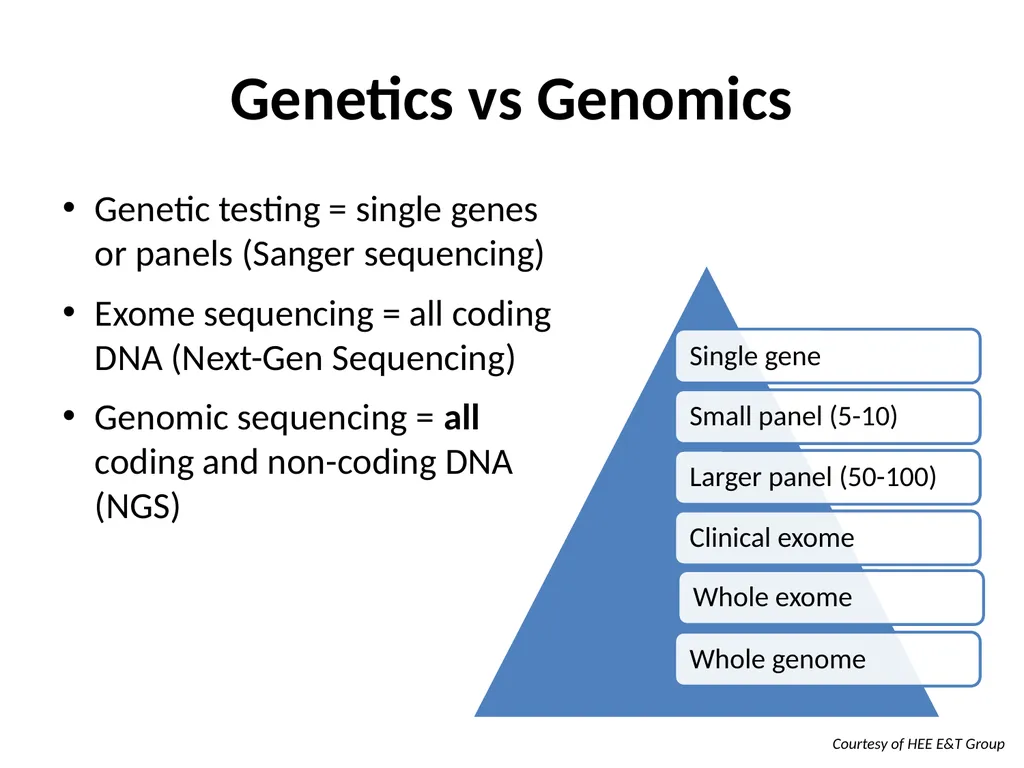
Genetics vs Genomics Genetic testing = single genes or panels (Sanger sequencing)
Exome sequencing = all coding DNA (Next-Gen Sequencing)
Genomic sequencing = all coding and non-coding DNA (NGS) Courtesy of HEE E&T Group<br>
04
Contents Genetics and genomics
Background to 100,000 Genomes Project
Project progress
What next? Mainstreaming Genomic Medicine 4<br>
05
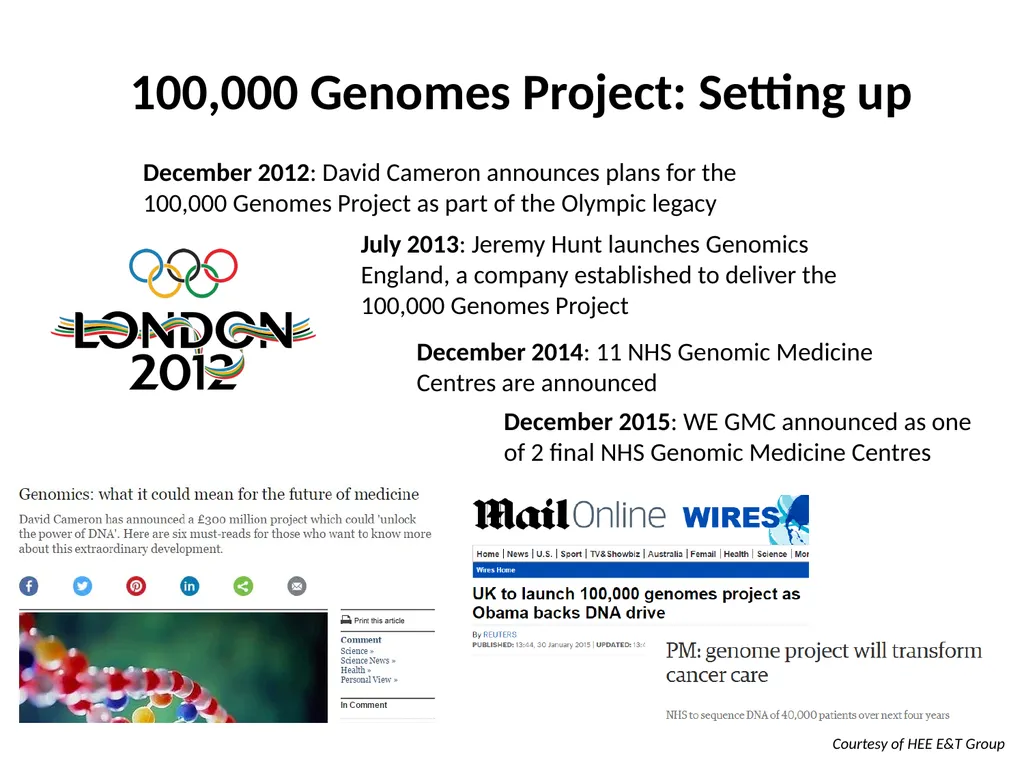
100,000 Genomes Project: Setting up December 2012: David Cameron announces plans for the 100,000 Genomes Project as part of the Olympic legacy December 2014: 11 NHS Genomic Medicine Centres are announced July 2013: Jeremy Hunt launches Genomics England, a company established to deliver the 100,000 Genomes Project December 2015: WE GMC announced as one of 2 final NHS Genomic Medicine Centres Courtesy of HEE E&T Group<br>
06
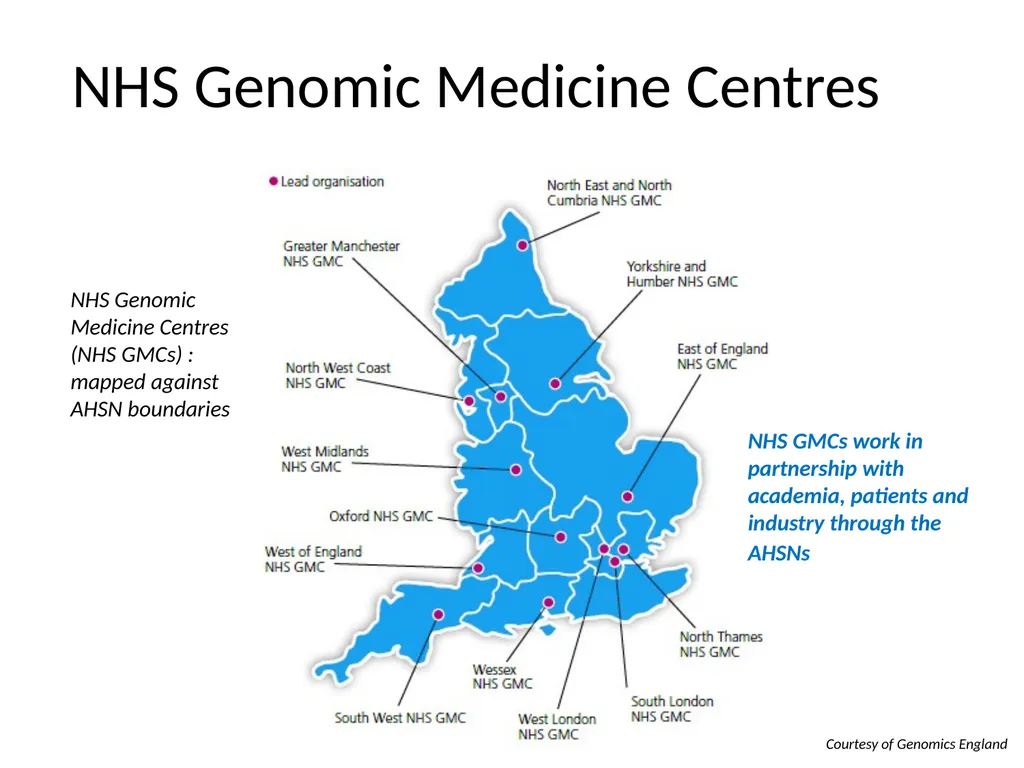
NHS Genomic Medicine Centres NHS Genomic Medicine Centres (NHS GMCs) : mapped against AHSN boundaries NHS GMCs work in partnership with academia, patients and industry through the AHSNs Courtesy of Genomics England<br>
07
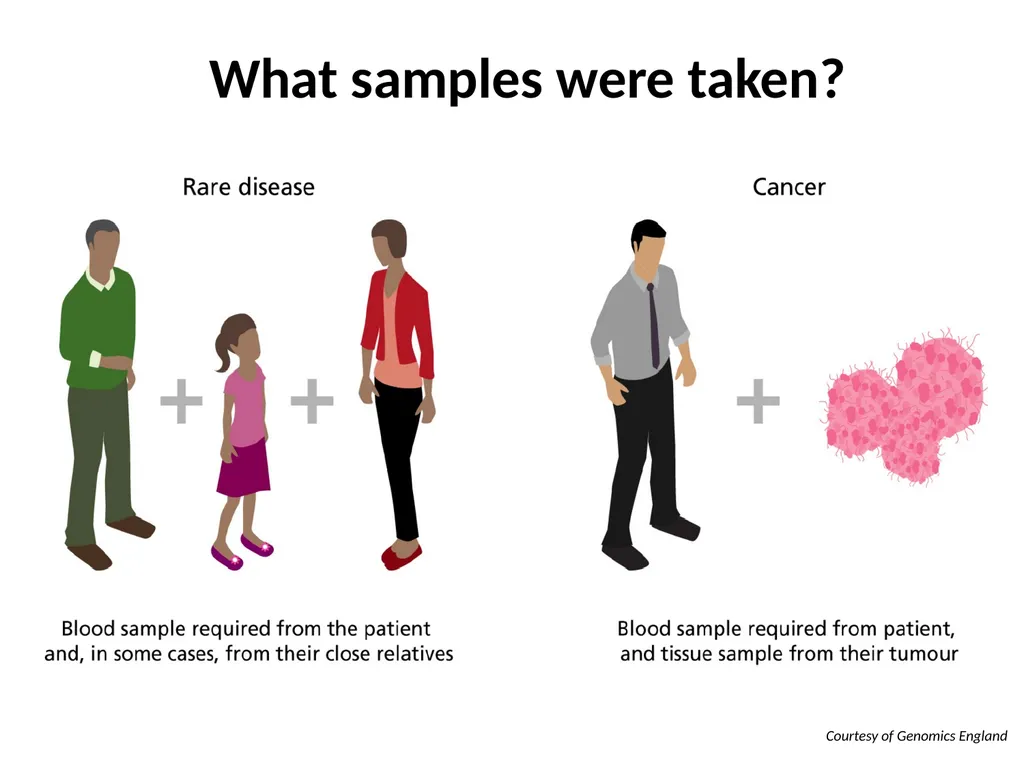
What samples were taken? Courtesy of Genomics England<br>
08
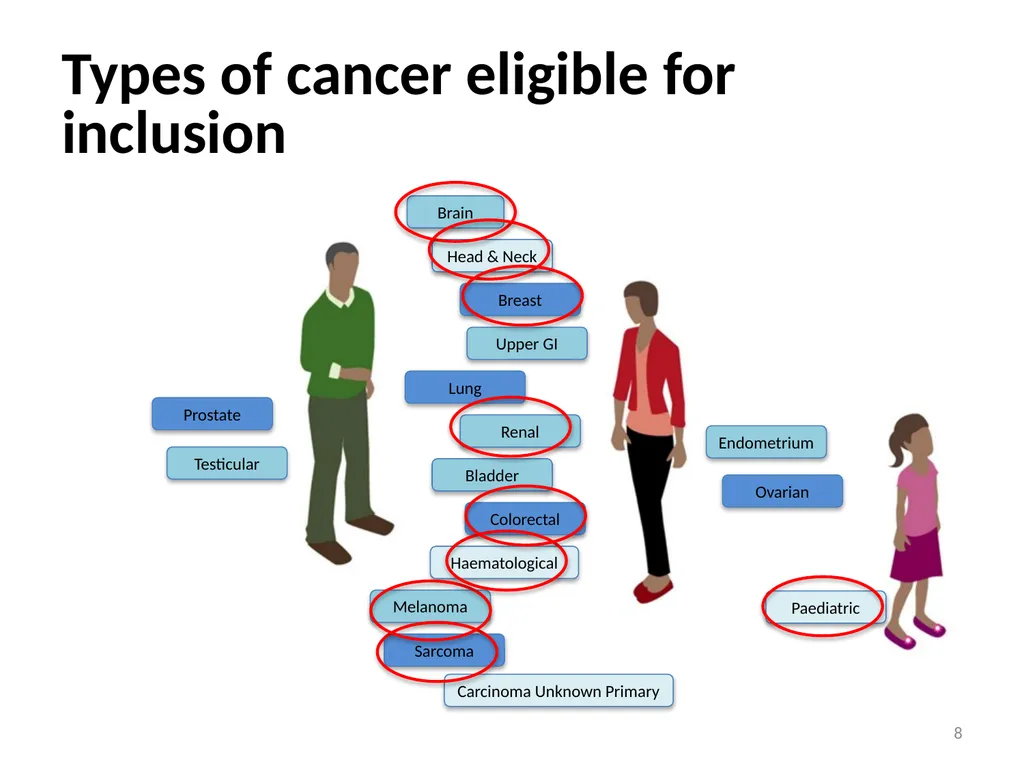
Types of cancer eligible for inclusion Brain Head & Neck Prostate Lung Ovarian Testicular Breast Endometrium Colorectal Sarcoma Renal Bladder Upper GI Melanoma Haematological 8 Paediatric Carcinoma Unknown Primary<br>
09
Contents Genetics and genomics
Background to 100,000 Genomes Project
Project progress
What next? Mainstreaming Genomic Medicine 9<br>
10
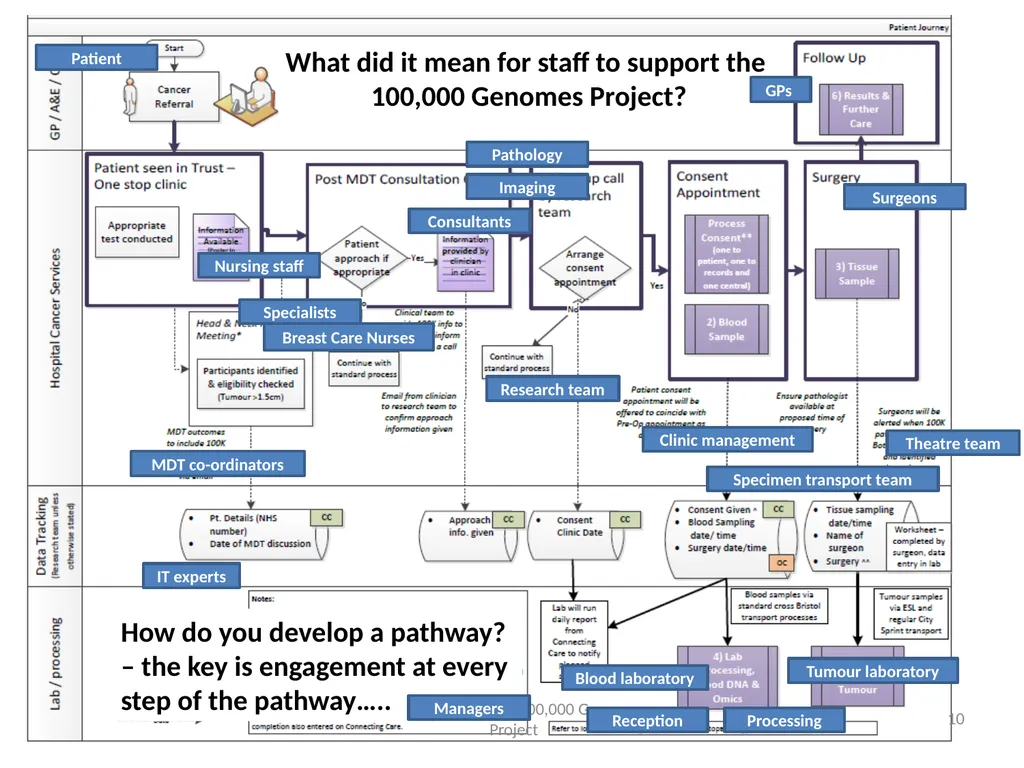
10 What did it mean for staff to support the 100,000 Genomes Project? Patient Introduction to the 100,000 Genomes Project How do you develop a pathway? – the key is engagement at every step of the pathway….. Nursing staff Consultants Research team Theatre team Clinic management IT experts Blood laboratory Tumour laboratory Specimen transport team GPs Imaging Pathology Managers MDT co-ordinators Specialists Breast Care Nurses Reception Processing Surgeons 10<br>
11
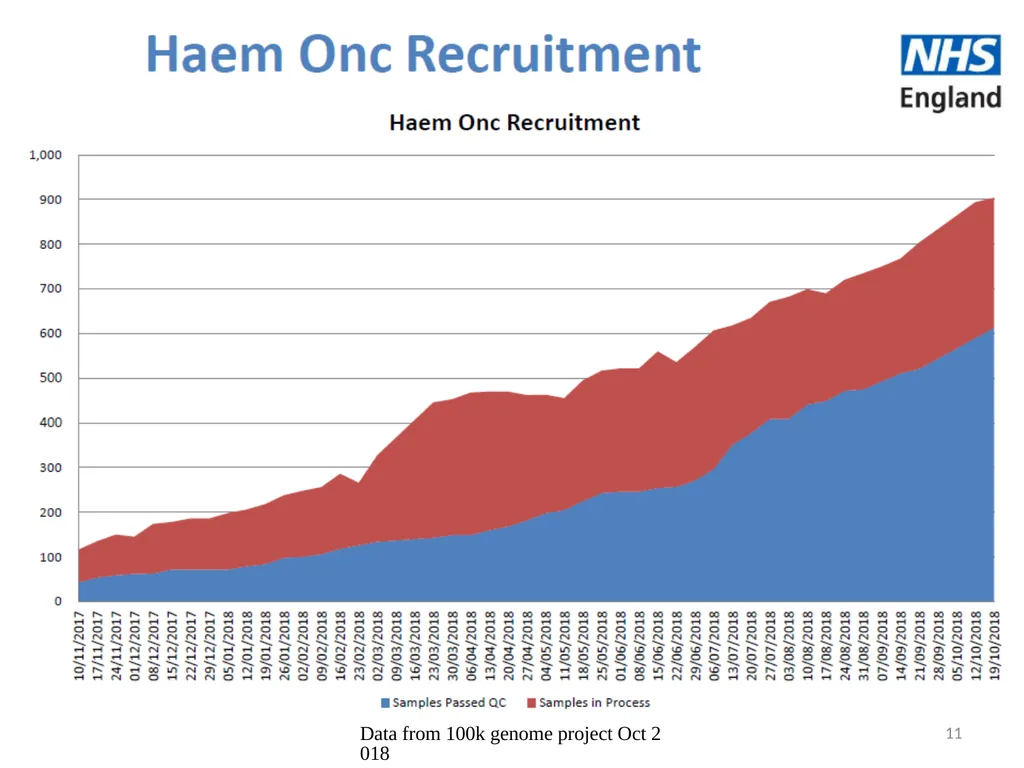
Data from 100k genome project Oct 2018 11 Recruitment<br>
12
Contents Genetics and genomics
Background to 100,000 Genomes Project
Project progress
What next? Mainstreaming Genomic Medicine 12<br>
13
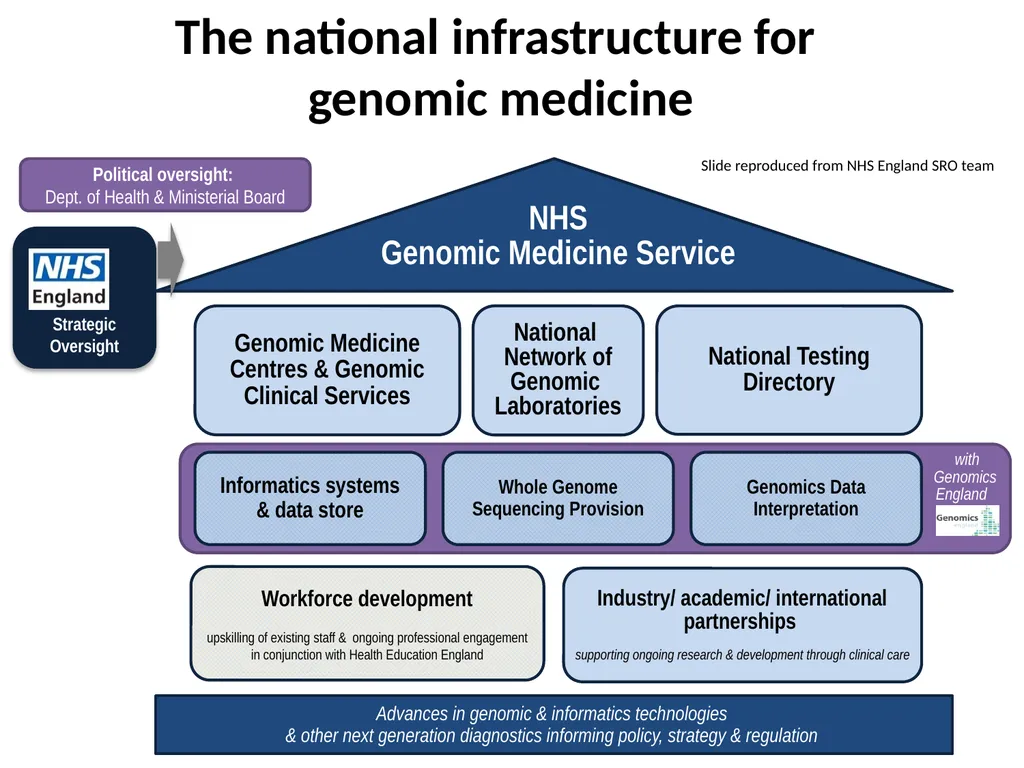
The national infrastructure for genomic medicine Political oversight: Dept. of Health & Ministerial Board Slide reproduced from NHS England SRO team<br>
14
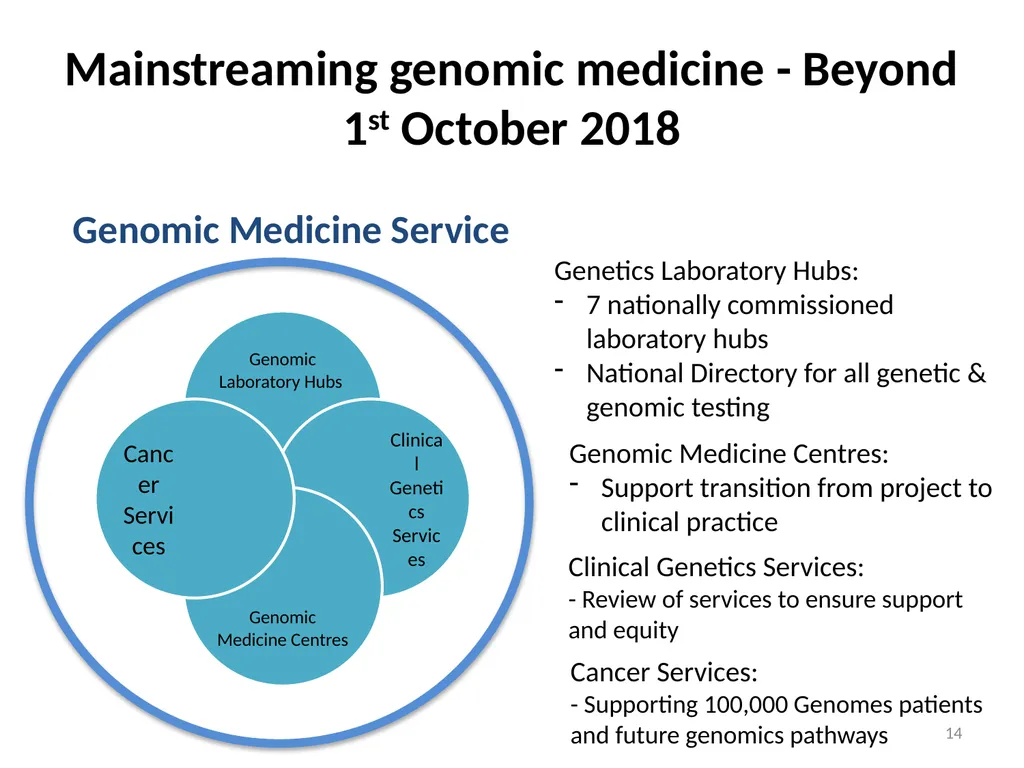
Mainstreaming genomic medicine - Beyond 1st October 2018 14 Genomic Medicine Service Genetics Laboratory Hubs:
7 nationally commissioned laboratory hubs
National Directory for all genetic & genomic testing Genomic Medicine Centres:
Support transition from project to clinical practice Clinical Genetics Services:
- Review of services to ensure support and equity Cancer Services:
- Supporting 100,000 Genomes patients and future genomics pathways<br>
15
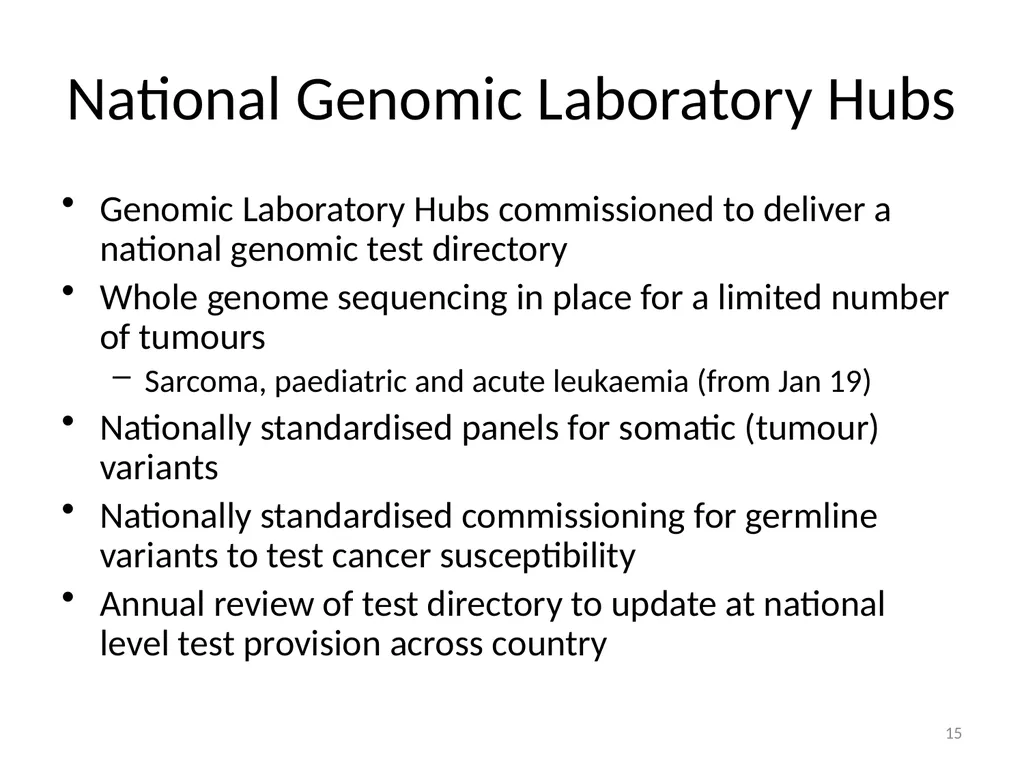
National Genomic Laboratory Hubs Genomic Laboratory Hubs commissioned to deliver a national genomic test directory
Whole genome sequencing in place for a limited number of tumours
Sarcoma, paediatric and acute leukaemia (from Jan 19)
Nationally standardised panels for somatic (tumour) variants
Nationally standardised commissioning for germline variants to test cancer susceptibility
Annual review of test directory to update at national level test provision across country 15<br>
16
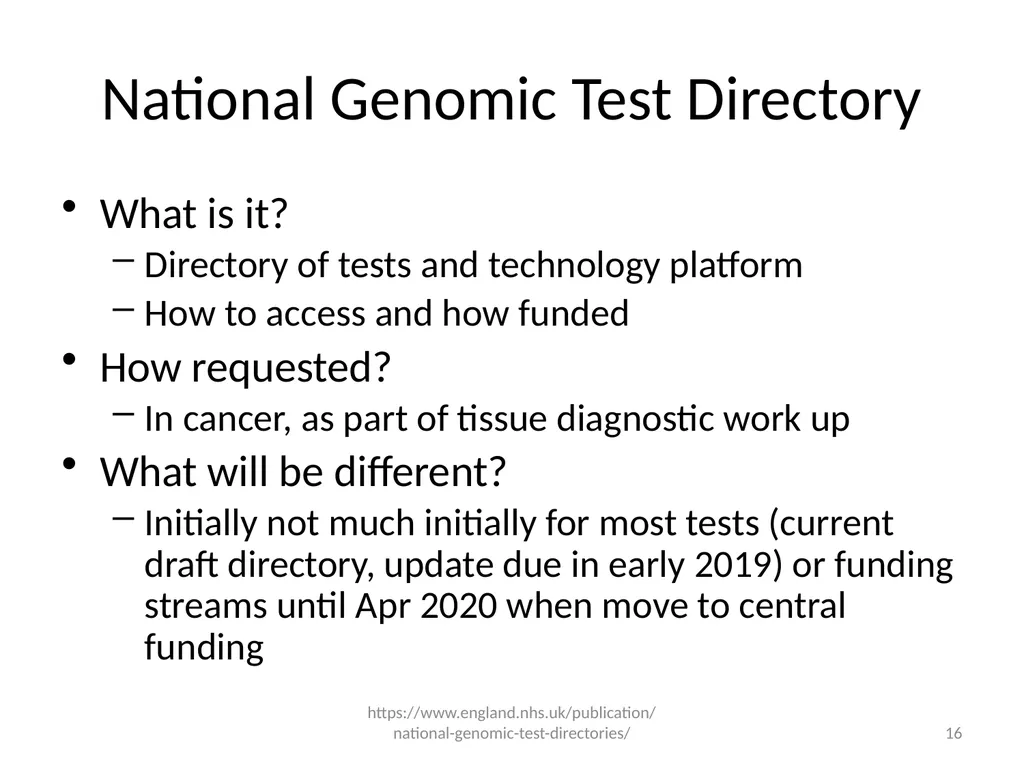
National Genomic Test Directory What is it?
Directory of tests and technology platform
How to access and how funded
How requested?
In cancer, as part of tissue diagnostic work up
What will be different?
Initially not much initially for most tests (current draft directory, update due in early 2019) or funding streams until Apr 2020 when move to central funding https://www.england.nhs.uk/publication/national-genomic-test-directories/ 16<br>
17
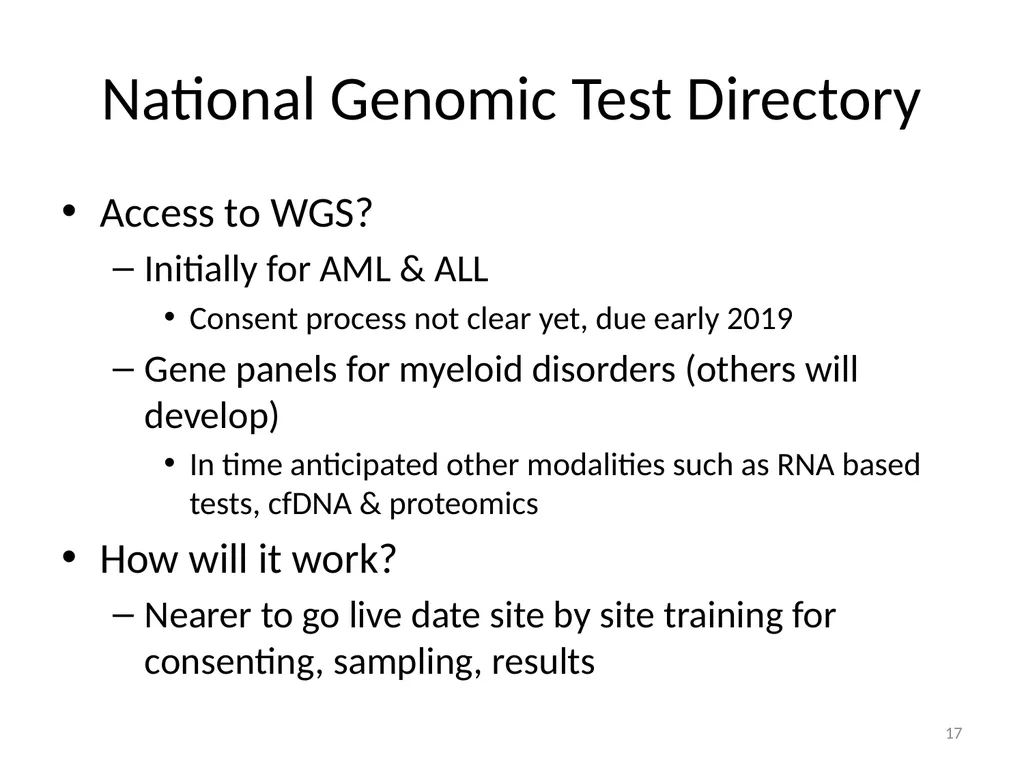
National Genomic Test Directory Access to WGS?
Initially for AML & ALL
Consent process not clear yet, due early 2019
Gene panels for myeloid disorders (others will develop)
In time anticipated other modalities such as RNA based tests, cfDNA & proteomics
How will it work?
Nearer to go live date site by site training for consenting, sampling, results 17<br>
18
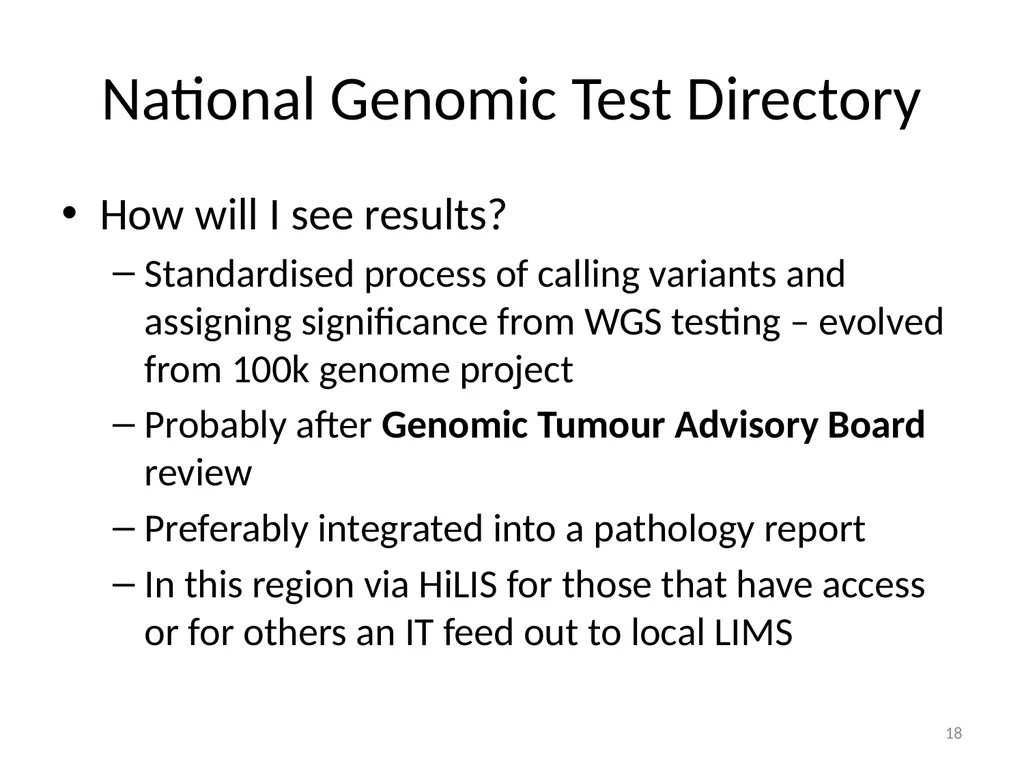
National Genomic Test Directory How will I see results?
Standardised process of calling variants and assigning significance from WGS testing – evolved from 100k genome project
Probably after Genomic Tumour Advisory Board review
Preferably integrated into a pathology report
In this region via HiLIS for those that have access or for others an IT feed out to local LIMS 18<br>
19
Thanks and any questions Catherine Carpenter-Clawson
Programme Manager, WE GMC
07732 561067
Catherine.Carpenter-Clawson@nbt.nhs.uk
or
Ubh-tr.wegmc@nhs.net 19<br>