Making Friends and Building Relationships Community Connections Understand the movement from institutions toward community inclusion. Understanding how to support people to develop soft skills that help them make friends and navigate
"Making Friends and Building Relationships" is the property of its rightful owner. Permission is granted to
download and print the materials on this website for personal, non-commercial use only, and to display it
on your personal computer provided you do not modify the materials and that you retain all copyright
notices contained in the materials. By downloading content from our website, you accept the terms of this
agreement.
Presentation Transcript
01
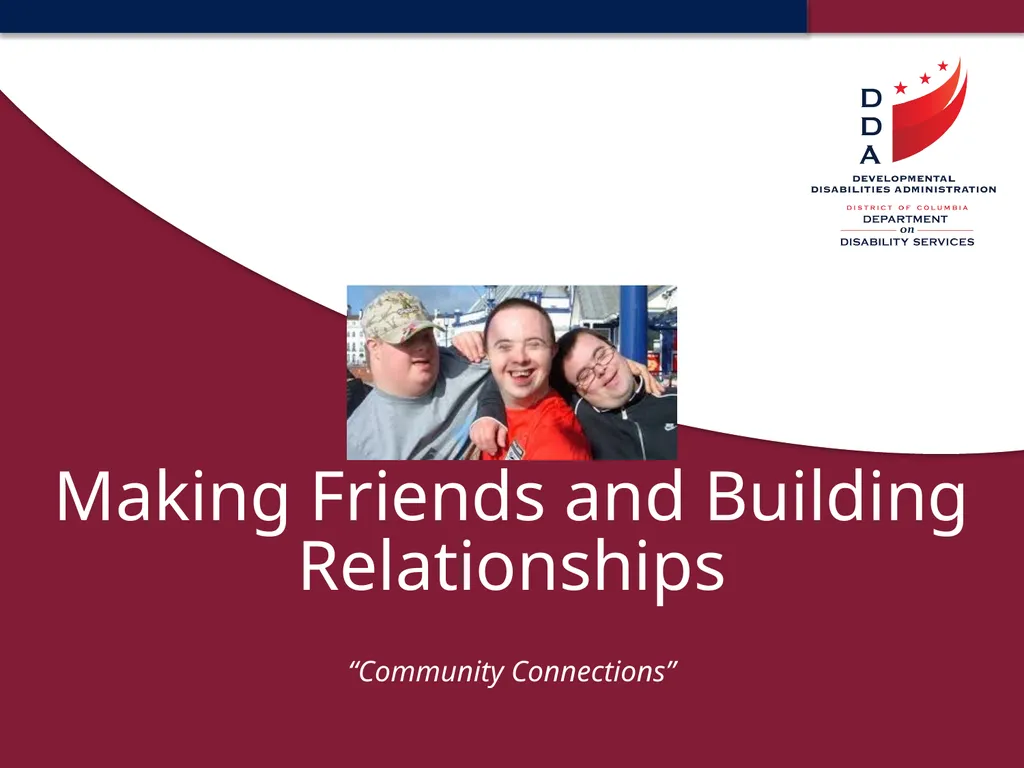
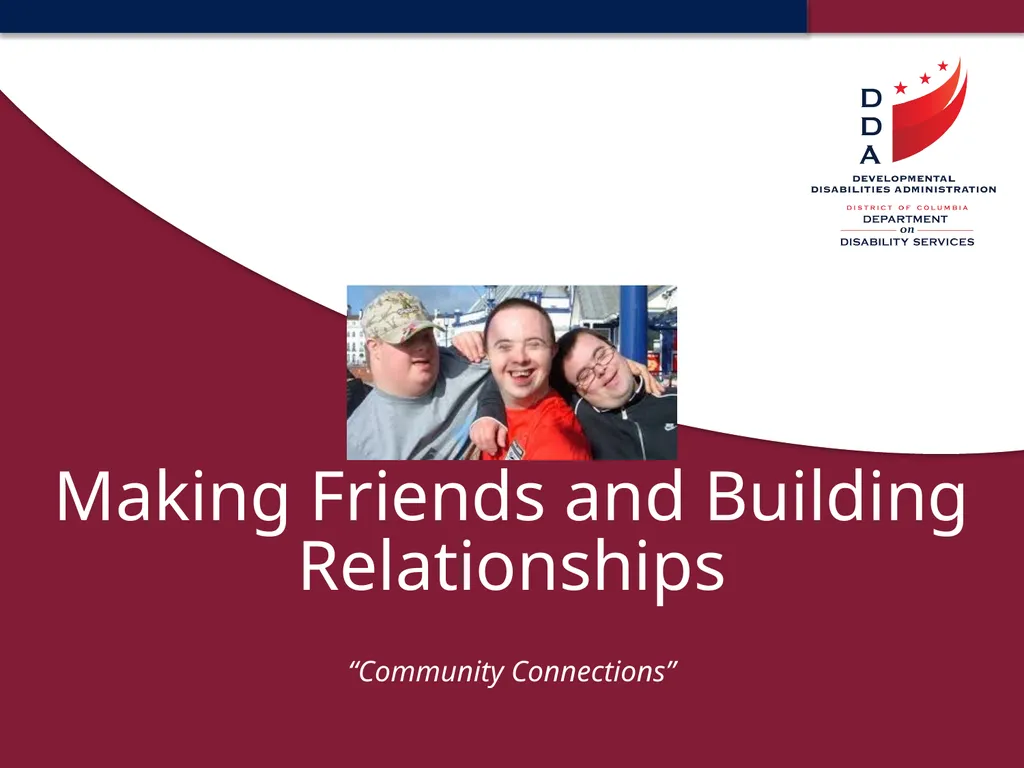
Making Friends and Building Relationships “Community Connections”<br>
02
Understand the movement from institutions toward community inclusion.
Understanding how to support people to develop soft skills that help them make friends and navigate their community.
Understand your role as a DSP in promoting community exposure.
Understand how to support people with disabilities in advocating for themselves. Training Objectives<br>
03
Historical Context for people with ID and DD Through most of the 20th century people with ID/DD did not grow up with their families, but were placed in institutions at the urging of the medical community.<br>
04
Beyond Forest Haven<br>
05
People have friends.
People have hobbies.
People belong to churches, clubs, fitness centers, teams, neighborhoods. Where are we today? People live, work, and play within their own communities.<br>
06
You are the bridge to connect people to the community!
You help people navigate their current neighborhood, have new experiences, and develop new relationships. What is your role? To make these things happen for the person you support.<br>
07
This is a catch all term referring to various actions that help people work and socialize well with others. In short they are good manners, cultural norms, and personality traits needed to get along with others and build positive relationships. One way to support people is to help them develop “soft skill”<br>
08
Success in life is greatly determined by how we interact socially. We often take these skills for granted. It is hard to define these skills. It is easier to spot the absence of these skills than to detect the presence of them. These skills are usually learned by exposure and observation. Many people have social skills that need continued improvement. Providing opportunities to have meaningful relationships and modeling appropriate behavior is the key to this development. Soft Skills Help Support Meaningful Relationships!<br>
09
Understanding and honoring the standards of dress and decorum at different social occasions;
The acceptable forms of social interaction for different social occasions;
Knowing when to make eye contact and when to avert the eyes;
Determining when physical contact is acceptable and what type (e.g. a handshake versus a hug);
Being able to politely start and stop conversations;
Being able to make small talk;
Understanding how to notice and respond to non-verbal body language;
Appreciating social nuance such as sarcasm and humor;
Understanding the differences between literal and figurative speech;
Being able to express feelings and respond to the feelings of others Some Examples<br>
10
How to be a good listener
How to initiate small talk
How to start conversations
How to maintain eye contact Supporting/Teaching Soft Skills For Making Friends Staff should demonstrate:<br>
11
Join organizations with people who share common interest
Join sports team
Take a class
Volunteer
Talk to your neighbors Tips for Meeting People and Making Friends<br>
12
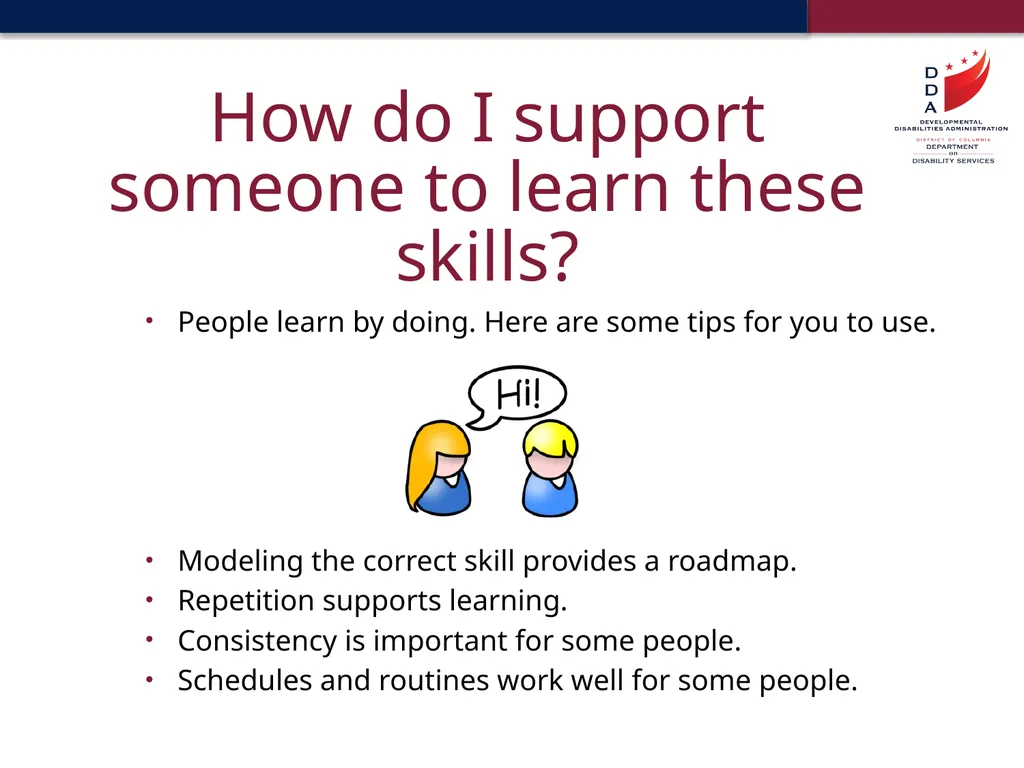
People learn by doing. Here are some tips for you to use.
Modeling the correct skill provides a roadmap.
Repetition supports learning.
Consistency is important for some people.
Schedules and routines work well for some people. How do I support someone to learn these skills?<br>
13
Skills should be taught in the environment in which they typically occur.
Since we are supporting people to be part of their community, practicing soft skills should be done in the appropriate community setting.
For Example: If you are teaching “waiting your turn”; you might want to practice this when waiting in line at the movie theatre to purchase a ticket. Where are these skills best taught?<br>
14
Break down each learning task into small steps
Once the first step is reasonably mastered, the next step is ready to be introduced.
Most people are kinesthetic learners. This means they learn best by doing a task "hands-on."
Offer immediate positive feedback, even if they have not mastered the skill at a 100%. Teaching Strategies<br>
15
Expose people to a variety of new community experiences.
Perhaps nothing reveals so much about a person as how they choose to play - how they invest their time and energy for leisure time. Community Activities Promote Opportunities for Practicing These Skills!<br>
16
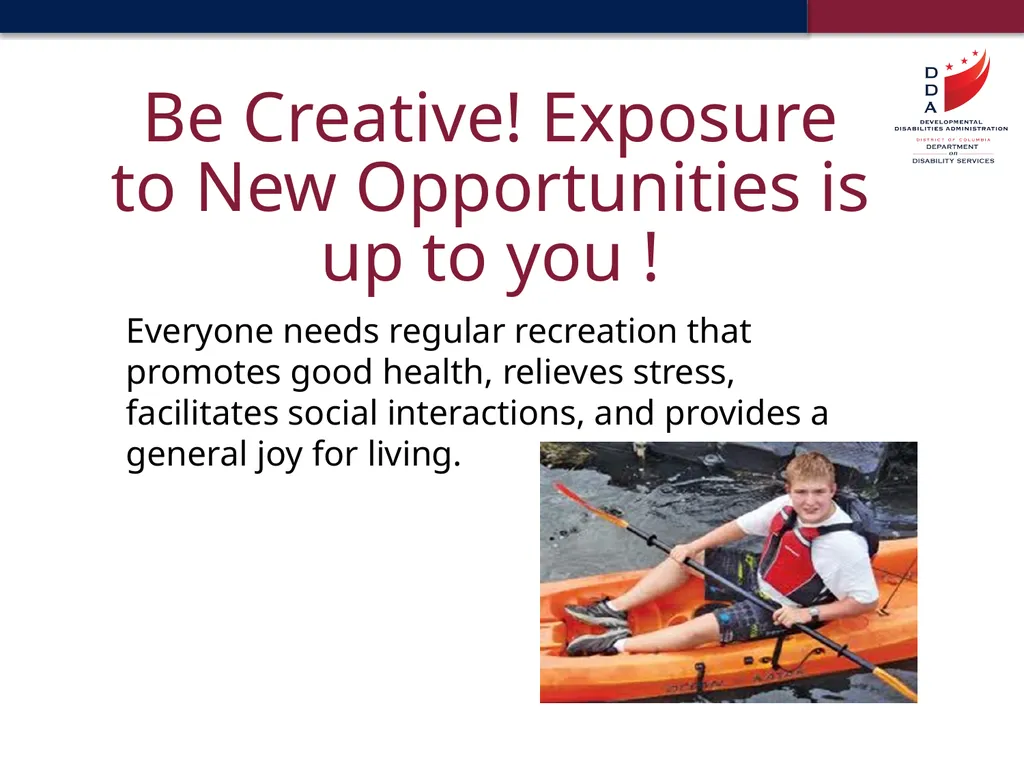
Everyone needs regular recreation that promotes good health, relieves stress, facilitates social interactions, and provides a general joy for living. Be Creative! Exposure to New Opportunities is up to you !<br>
17
What activities are important to them?
Good readers read – Join a book club.
Athletes seek sports' activities – Join a team
Musicians lose themselves in music – Attend a concert
Visual artists paint or draw – Take an art class.
Craftspeople create – Find others with shared interest.
Social people like to engage in group activities. Pay Attention to a Person’s Preferences!<br>
18
People have friends that are not paid staff
People discover new interests
People are happy
People learn new skills
People develop an understanding of how things are related or connected in the world
People develop an understanding of self and develop self confidence
People have more control of their life
People are valued Benefit of people being in the community and having friends<br>
19
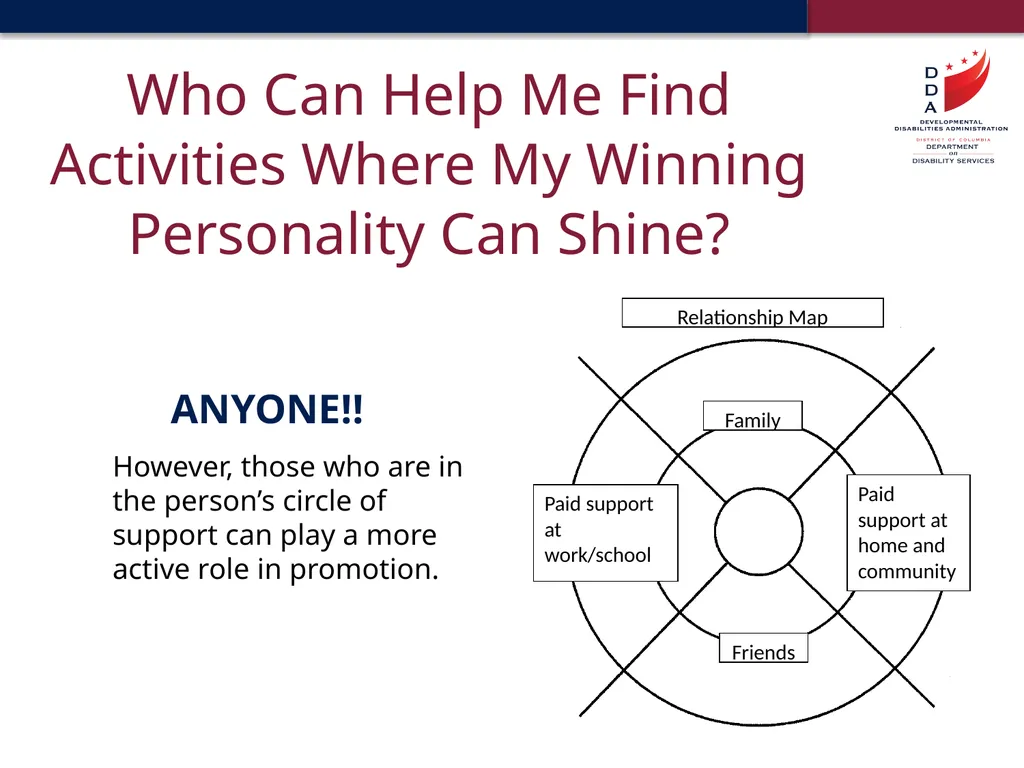
ANYONE!! However, those who are in the person’s circle of support can play a more active role in promotion. Who Can Help Me Find Activities Where My Winning Personality Can Shine?<br>
20
Advocacy is the act of speaking on behalf of or arguing in favor of something that is important to you.
When a person feels empowered and is part of their community they are their own best advocate! Developing Self Advocacy is one key to Community Connections<br>
21
Encourage people to speak up.
Encourage people to exercise choices.
Use language that can easily be understood.
Educate people of things they are interested in.
Encourage people to be civic minded.
Support finding like minded people. How to Support Advocacy<br>
22
The following District agencies support or provide advocacy services for people with developmental disabilities:
DC Advocacy Partners
Project ACTION!
TASH
Quality Trust for Individuals with Disabilities
ULS (Universal Legal Services) Advocacy Groups & Organizations<br>
23
How services moved from the institution to the community
The skills people to need to be successful in the community.
The role the DSP plays to support community inclusion.
How to encourage self advocacy. What we learned today<br>