04
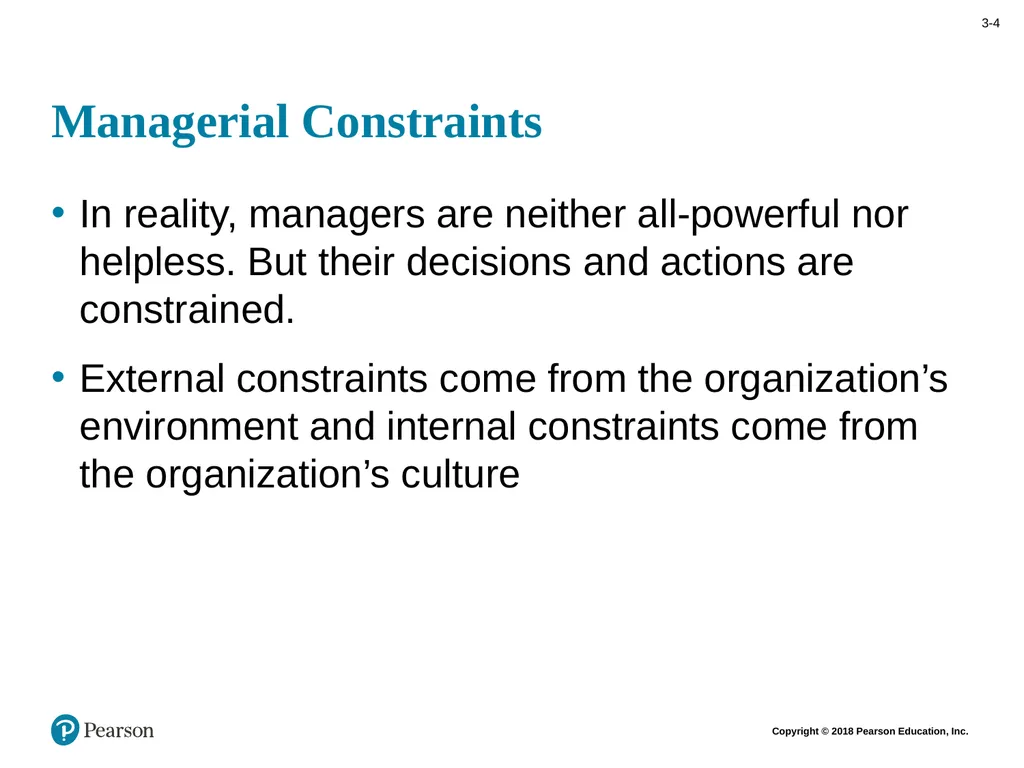
Managerial Constraints In reality, managers are neither all-powerful nor helpless. But their decisions and actions are constrained.
External constraints come from the organization’s environment and internal constraints come from the organization’s culture<br>
05
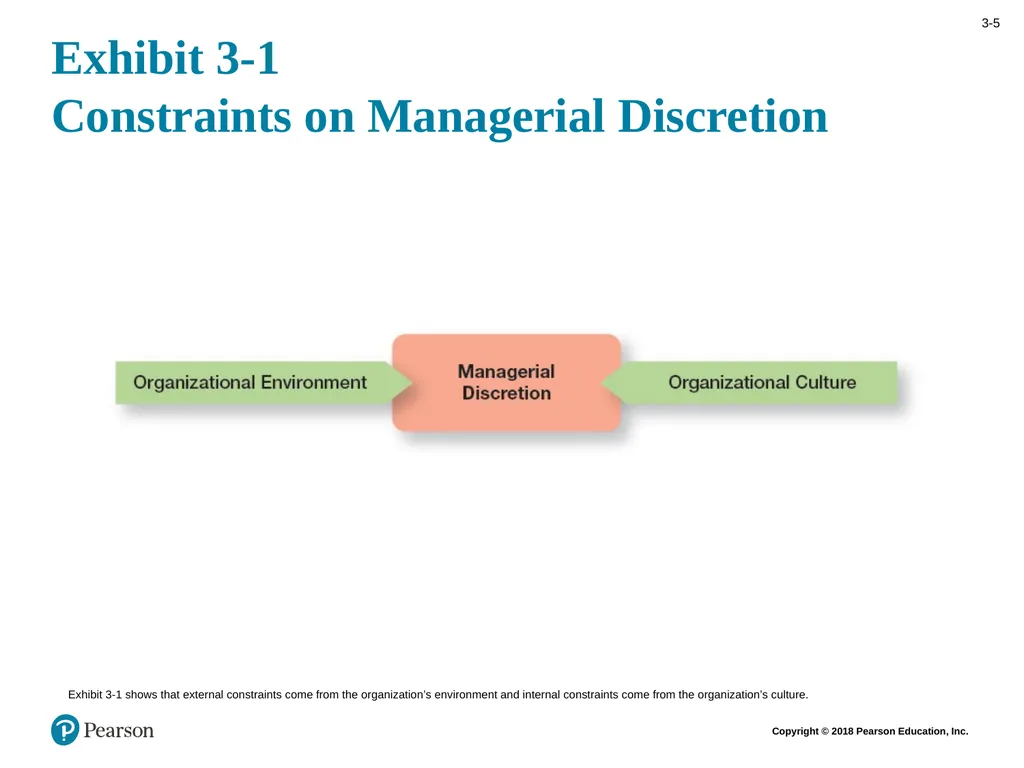
Exhibit 3-1�Constraints on Managerial Discretion Exhibit 3-1 shows that external constraints come from the organization’s environment and internal constraints come from the organization’s culture.<br>
06
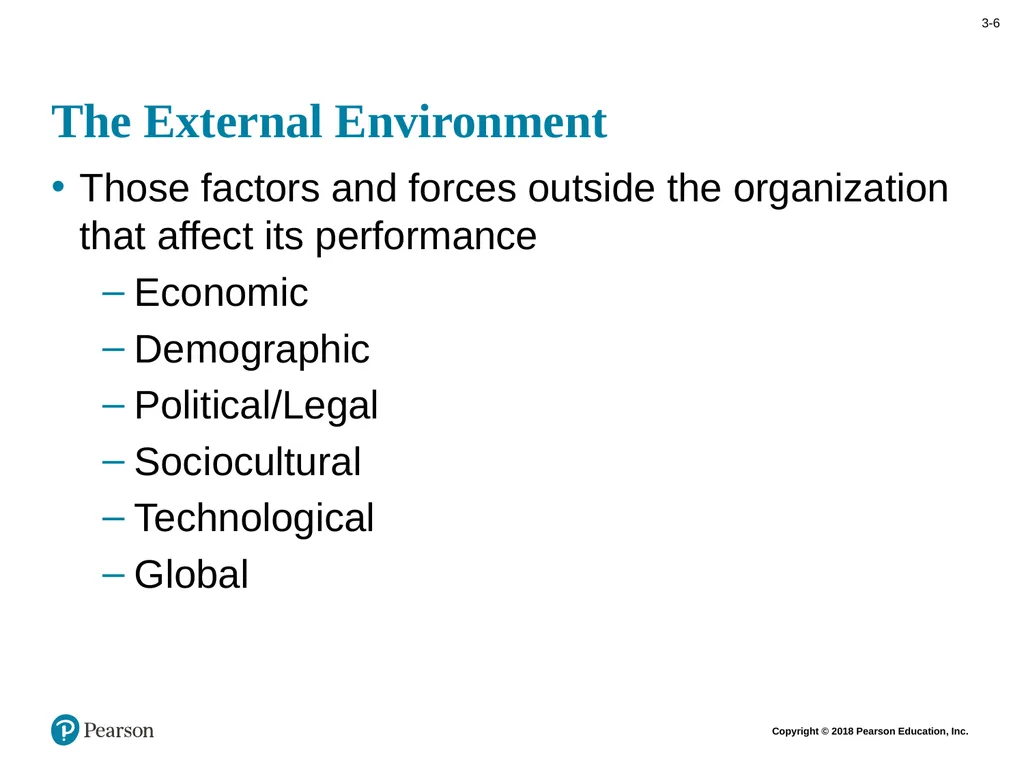
The External Environment Those factors and forces outside the organization that affect its performance
Economic
Demographic
Political/Legal
Sociocultural
Technological
Global<br>
07
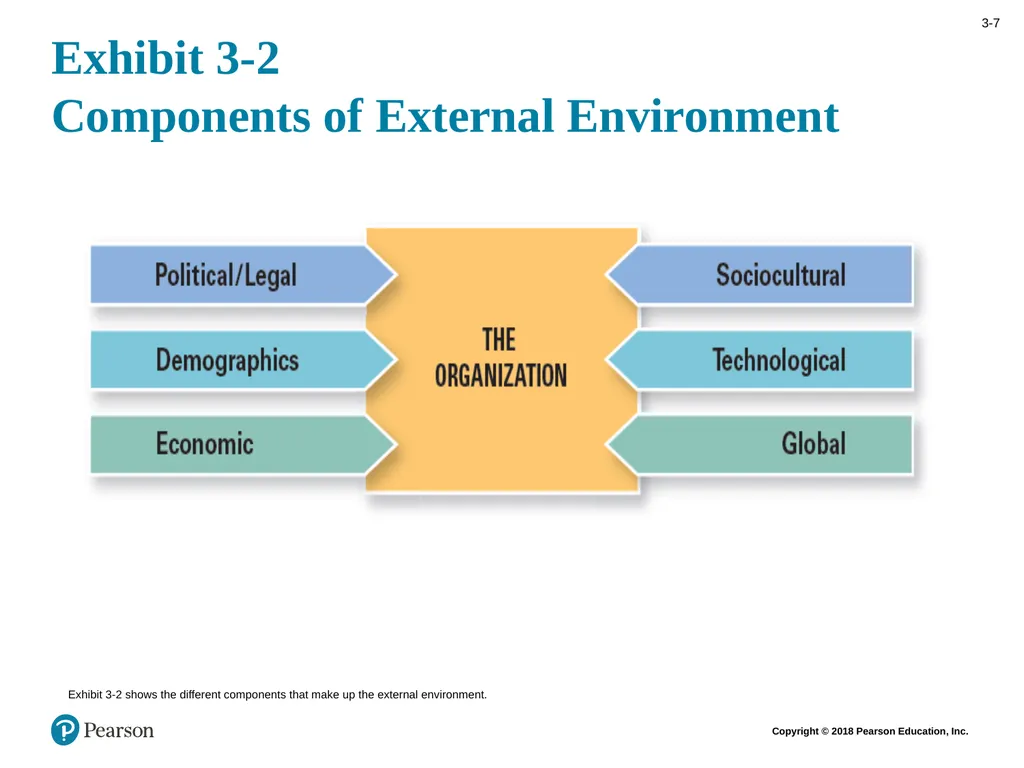
Exhibit 3-2�Components of External Environment Exhibit 3-2 shows the different components that make up the external environment.<br>
08
The Economic Environment Managers need to be aware of the economic context so they can make the best decisions for their organizations.
Change in $, interest rates, unemployment, ….<br>
09
The Global Economy and the Economic Context The lingering global economic challenges began with the turmoil in the U.S. housing market.<br>
10
Economic Inequality and the Economic Context Polls show that in many countries, people believe that the gap between the rich and poor is problematic.<br>
11
The Demographic Environment Age is a particularly important demographic since the workplace often has different age groups all working together
Baby Boomers
Gen Y (Millennials)
Post-Millennials<br>
12
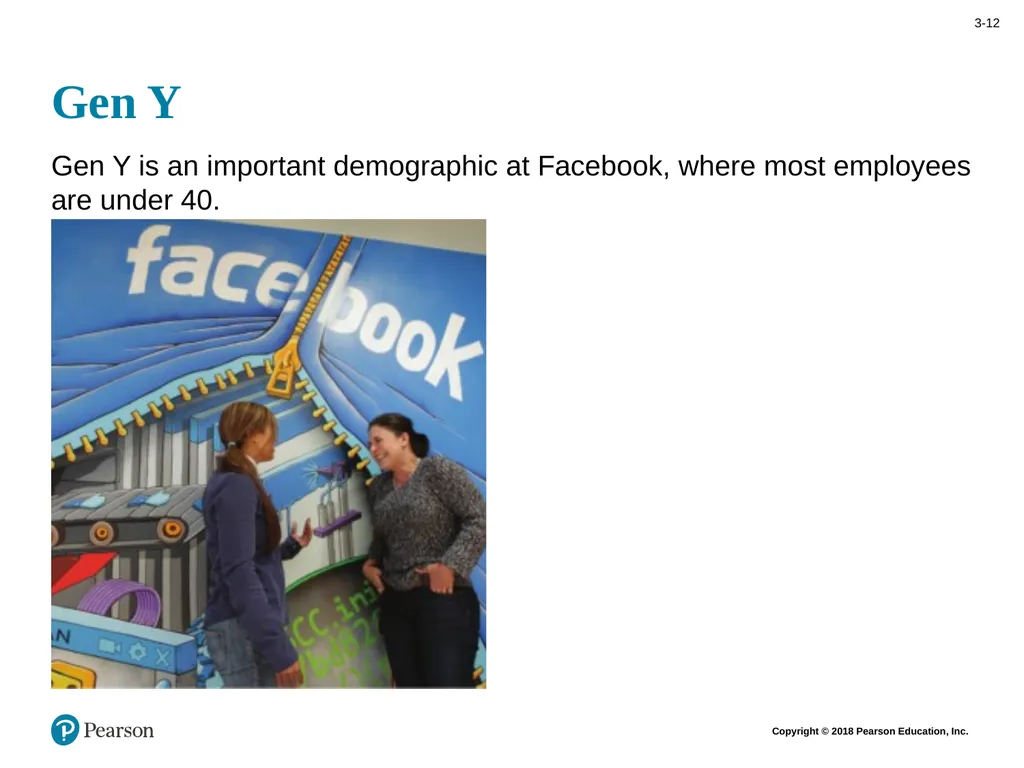
Gen Y Gen Y is an important demographic at Facebook, where most employees are under 40.<br>
13
How the External Environment Affects Managers Jobs and Employment: the impact of external factors on jobs and employment is one of the most powerful constraints managers face<br>
14
Assessing Environmental Uncertainty Environmental uncertainty: the degree of change and complexity in an organization’s environment
Change: stable to dynamic
Complexity: simple to complex<br>
15
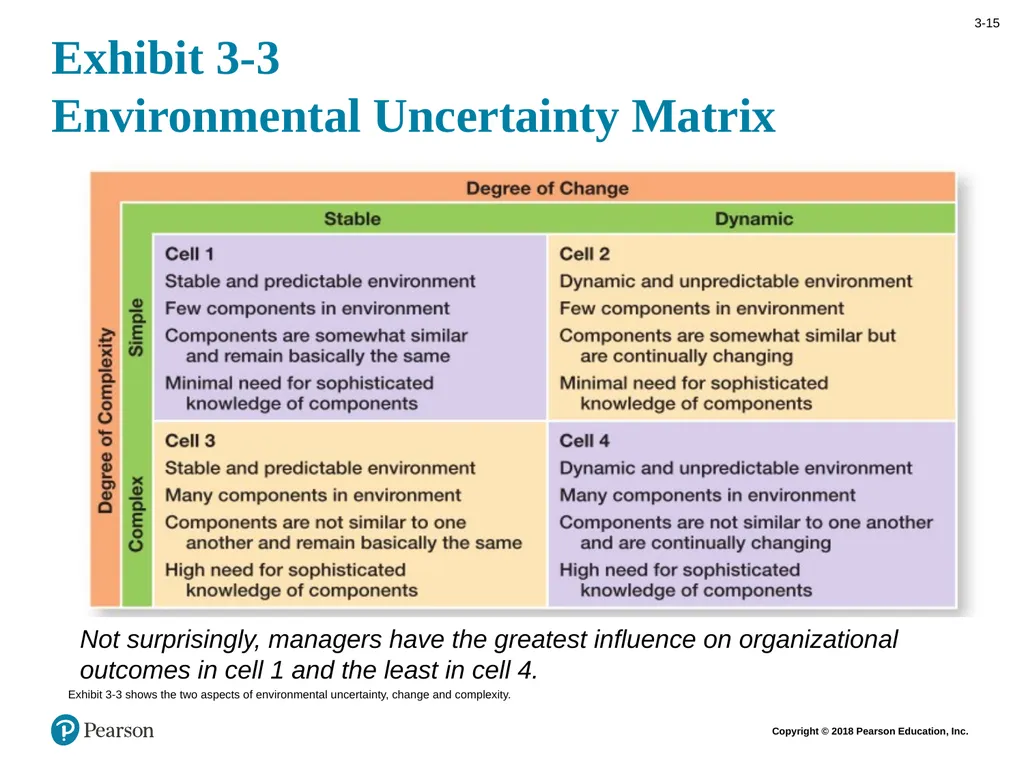
Exhibit 3-3�Environmental Uncertainty Matrix Exhibit 3-3 shows the two aspects of environmental uncertainty, change and complexity. Not surprisingly, managers have the greatest influence on organizational outcomes in cell 1 and the least in cell 4.<br>
16
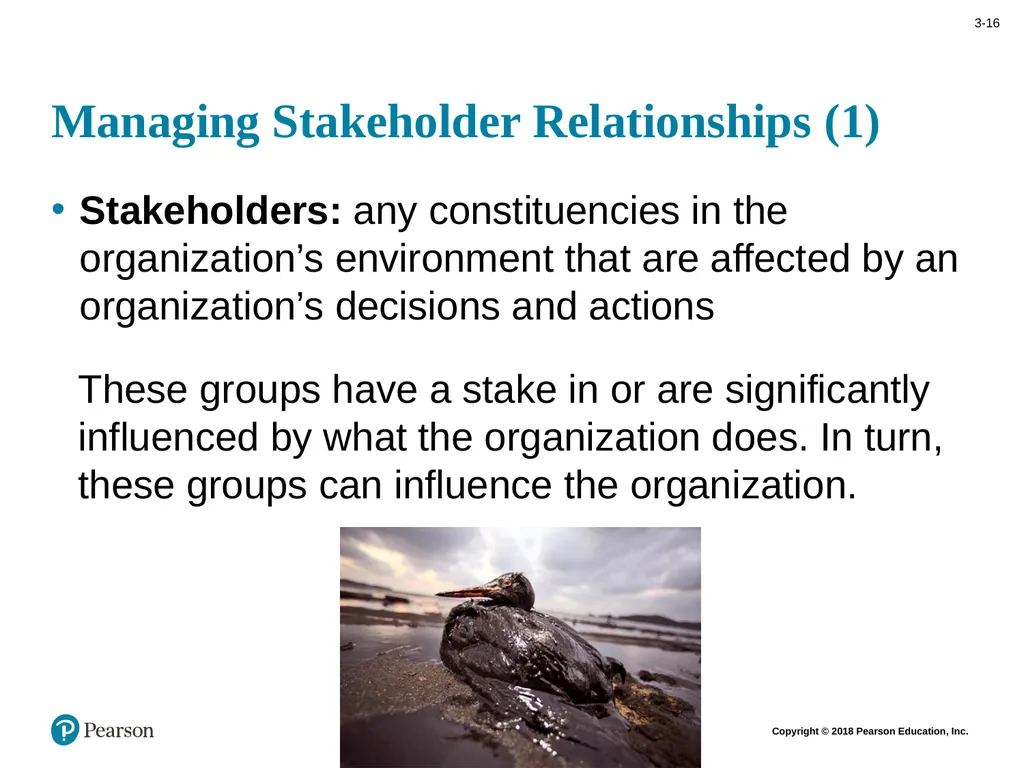
Managing Stakeholder Relationships (1) Stakeholders: any constituencies in the organization’s environment that are affected by an organization’s decisions and actions These groups have a stake in or are significantly influenced by what the organization does. In turn, these groups can influence the organization.<br>
17
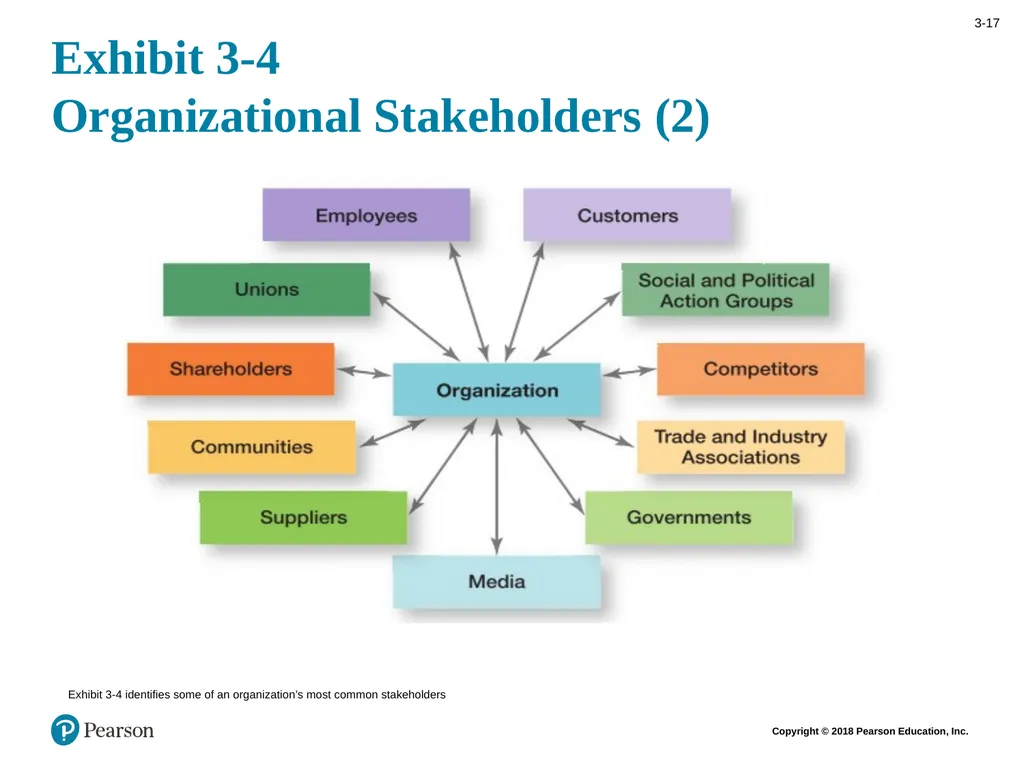
Exhibit 3-4�Organizational Stakeholders (2) Exhibit 3-4 identifies some of an organization’s most common stakeholders<br>
18
Benefits of Good Stakeholder Relationships Improved predictability of environmental changes
Increased successful innovations
Increased trust among stakeholders
Greater organizational flexibility to reduce the impact of change<br>
19
Organizational Culture Just as each individual has a unique personality, an organization, too, has a personality.
An organization’s culture can make employees feel included, empowered, and supported or it can make them feel the opposite.<br>
20
What is Organizational Culture? Organizational culture: the shared values, principles, traditions, and ways of doing things that influence the way organizational members act and that distinguish the organization from other organizations<br>
21
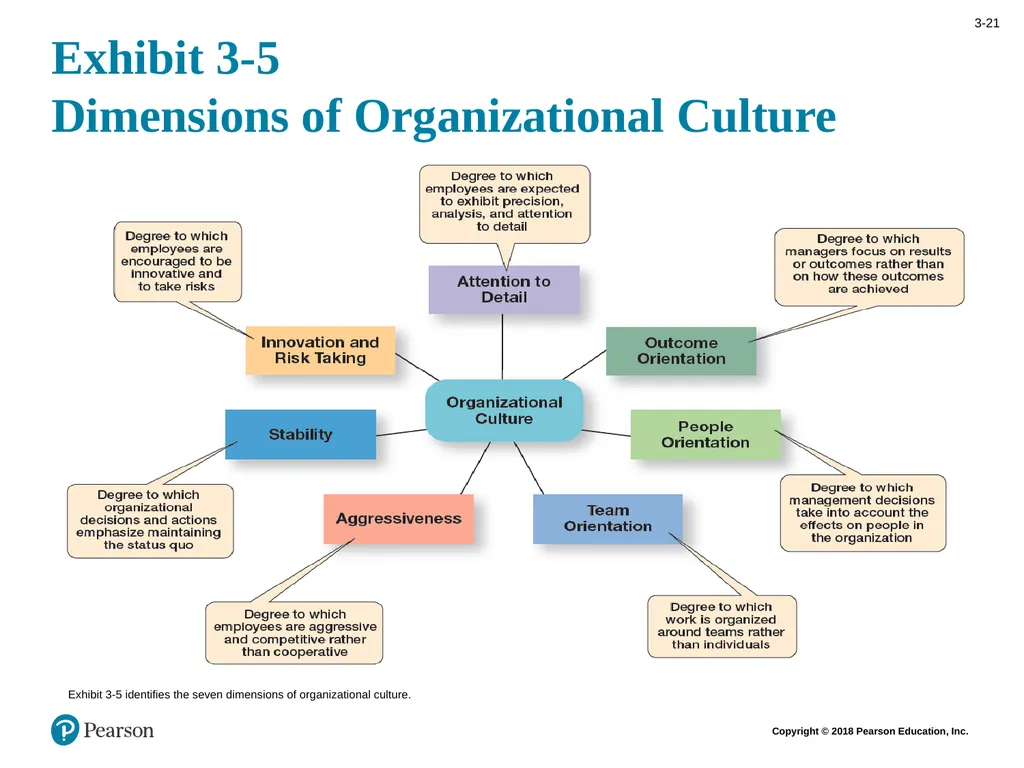
Exhibit 3-5�Dimensions of Organizational Culture Exhibit 3-5 identifies the seven dimensions of organizational culture.<br>
22
Contrasting Organizational Culture At Tesla Motors, the focus is product innovation (innovation and risk taking).
In contrast, Southwest Airlines has made its employees a central part of its culture.<br>
23
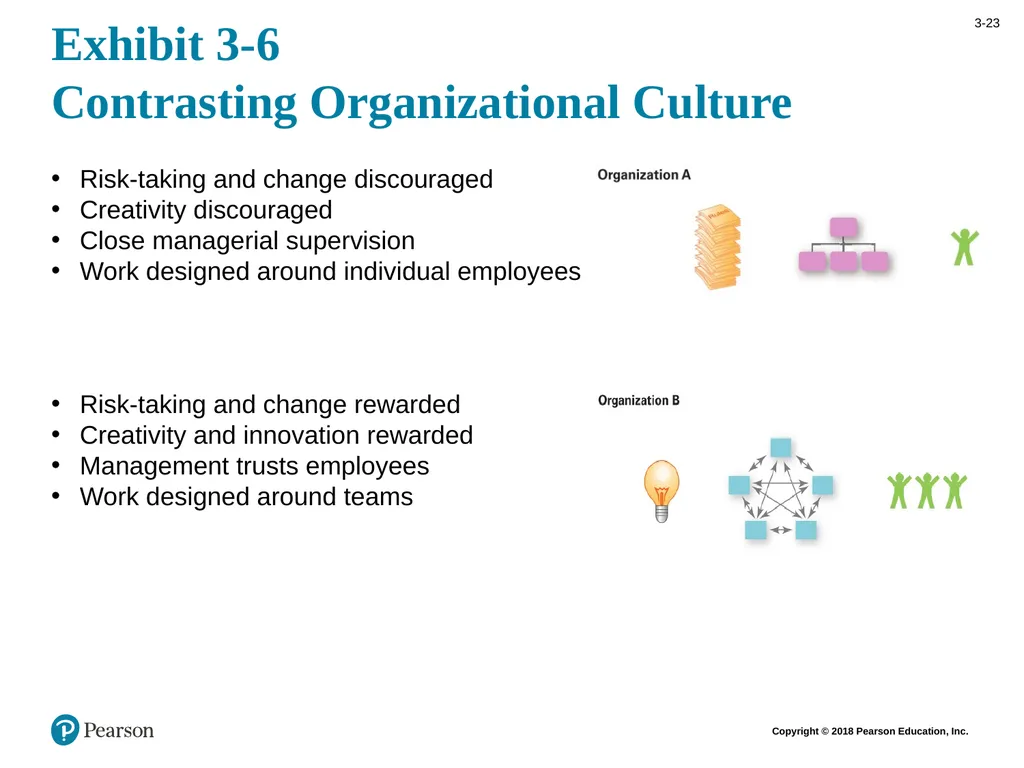
Exhibit 3-6�Contrasting Organizational Culture Risk-taking and change discouraged
Creativity discouraged
Close managerial supervision
Work designed around individual employees
Risk-taking and change rewarded
Creativity and innovation rewarded
Management trusts employees
Work designed around teams<br>
24
Strong Cultures Strong cultures: organizational cultures in which the key values are intensely held and widely shared<br>
25
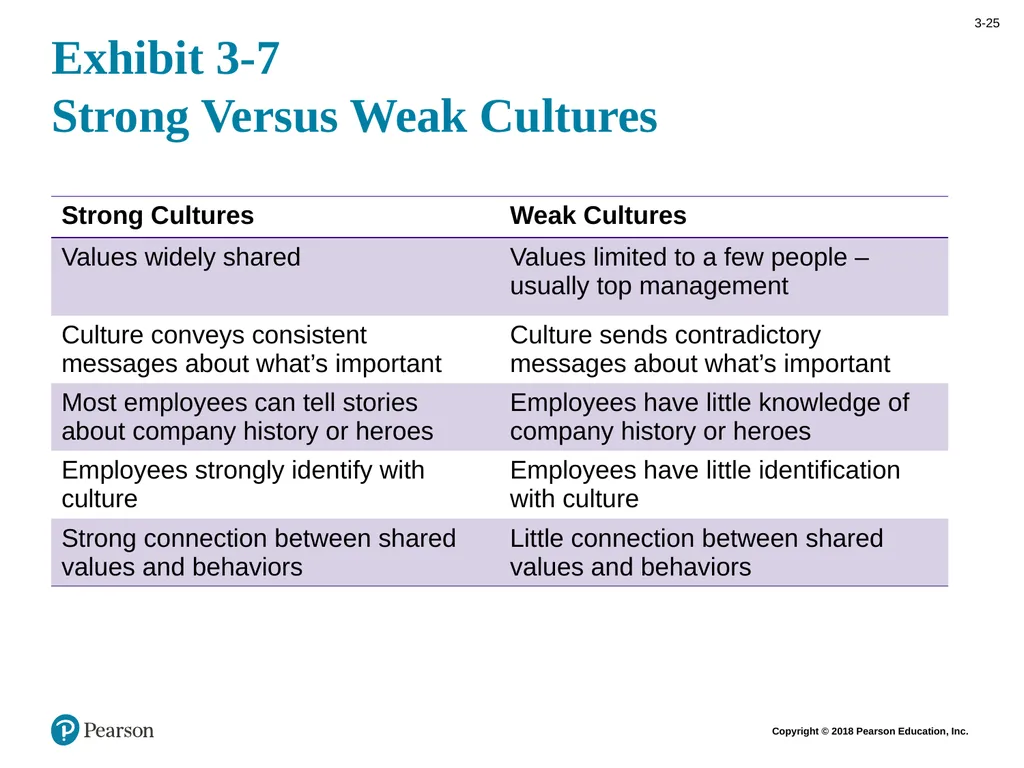
Exhibit 3-7�Strong Versus Weak Cultures<br>
26
Where Culture Comes From and How it Continues The original source of the culture usually reflects the vision of the founders.
Once the culture is in place, certain organizational practices help maintain it.
The actions of top managers also have a major impact on the organization’s culture.<br>
27
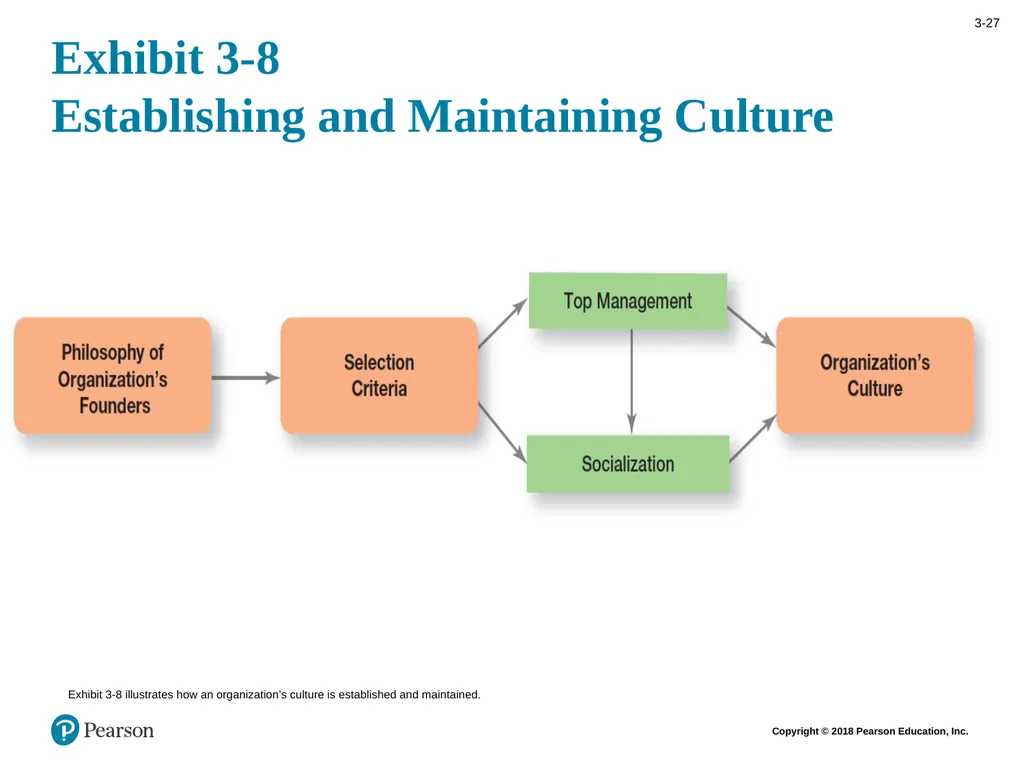
Exhibit 3-8�Establishing and Maintaining Culture Exhibit 3-8 illustrates how an organization’s culture is established and maintained.<br>
28
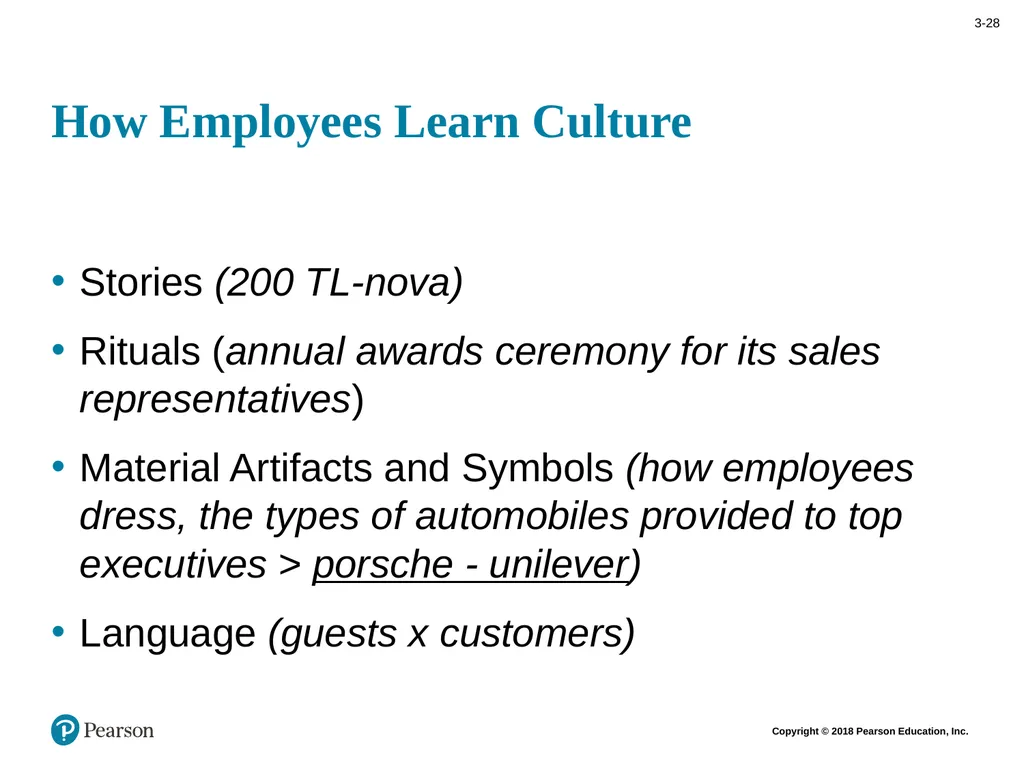
How Employees Learn Culture Stories (200 TL-nova)
Rituals (annual awards ceremony for its sales representatives)
Material Artifacts and Symbols (how employees dress, the types of automobiles provided to top executives > porsche - unilever)
Language (guests x customers)<br>
29
How Culture Affects Managers Because an organization’s culture constrains what they can and cannot do and how they manage, it’s particularly relevant to managers.<br>
30
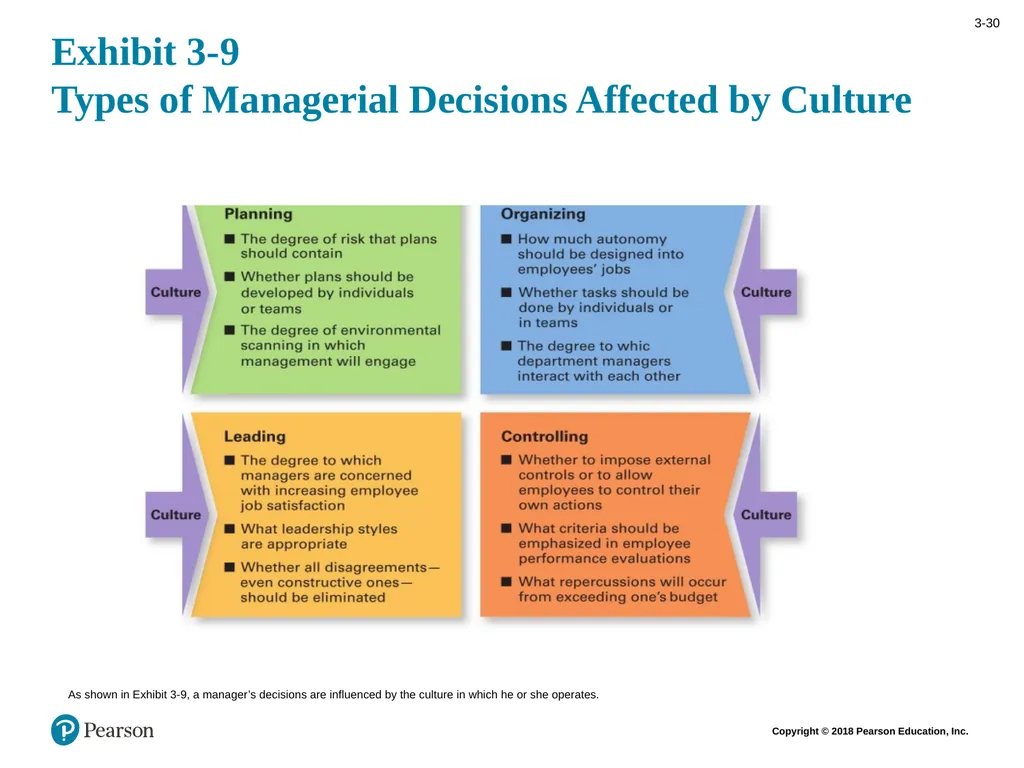
Exhibit 3-9�Types of Managerial Decisions Affected by Culture As shown in Exhibit 3-9, a manager’s decisions are influenced by the culture in which he or she operates.<br>
31
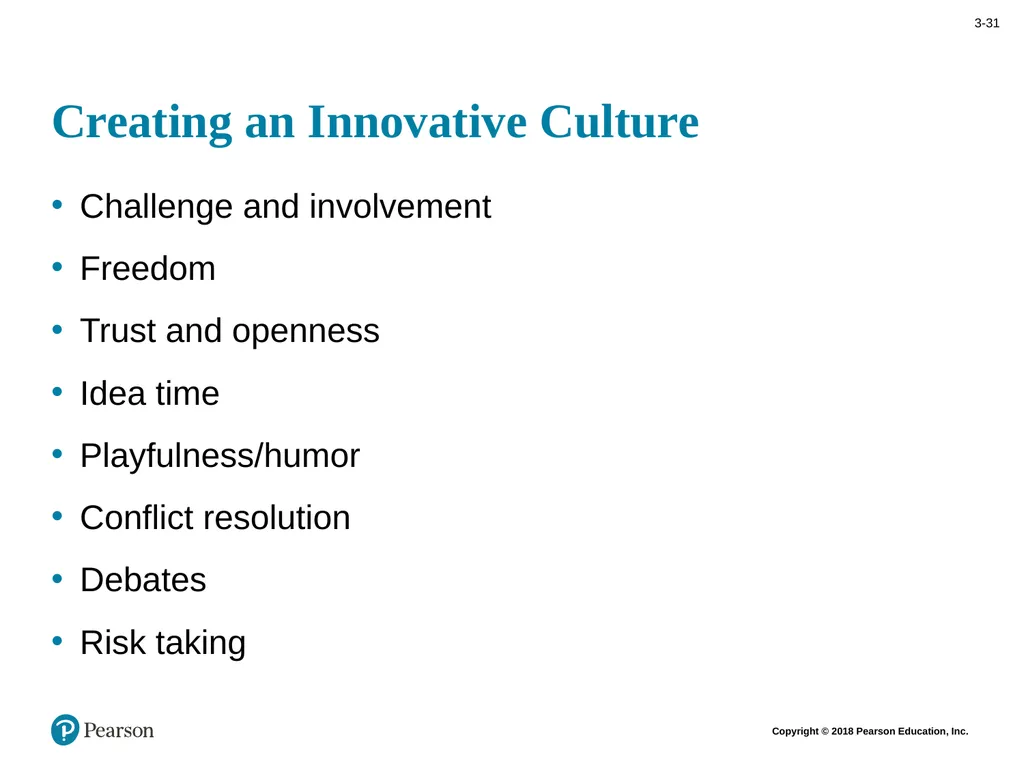
Creating an Innovative Culture Challenge and involvement
Freedom
Trust and openness
Idea time
Playfulness/humor
Conflict resolution
Debates
Risk taking<br>
32
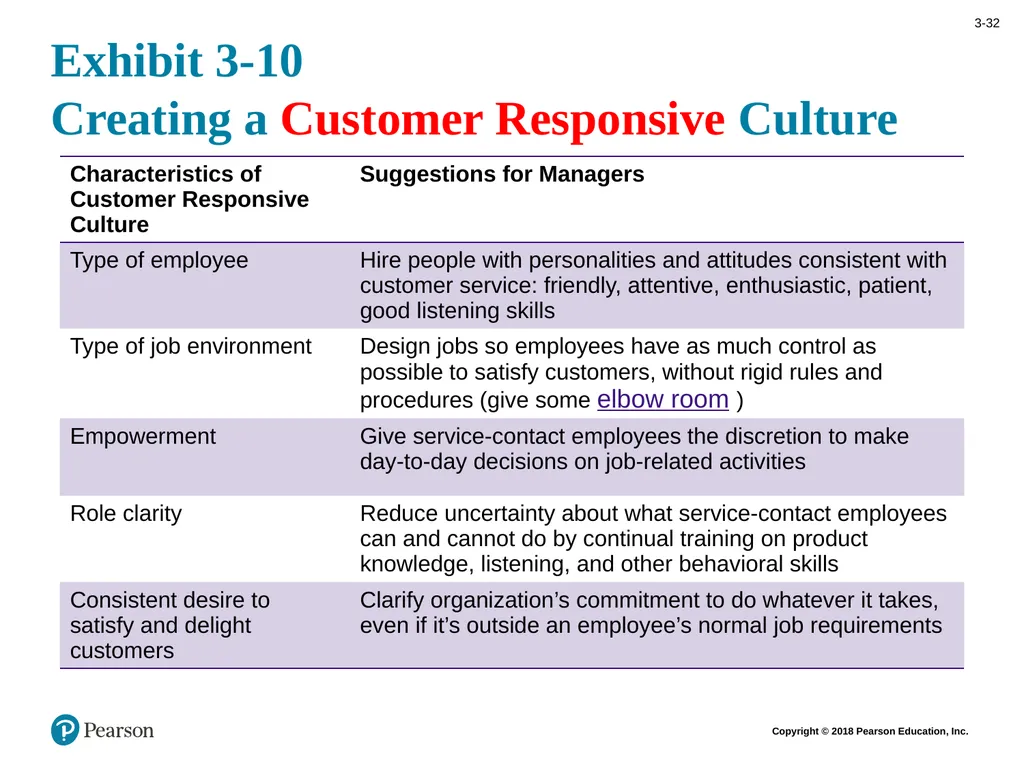
Exhibit 3-10�Creating a Customer Responsive Culture<br>
33
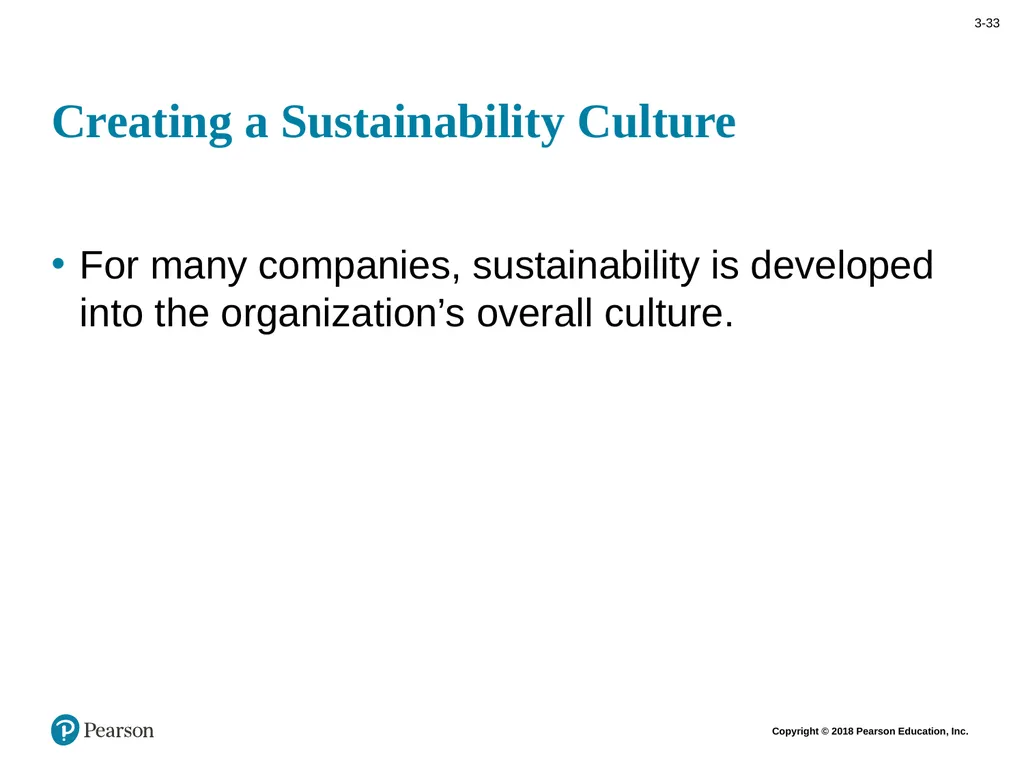
Creating a Sustainability Culture For many companies, sustainability is developed into the organization’s overall culture.<br>
34
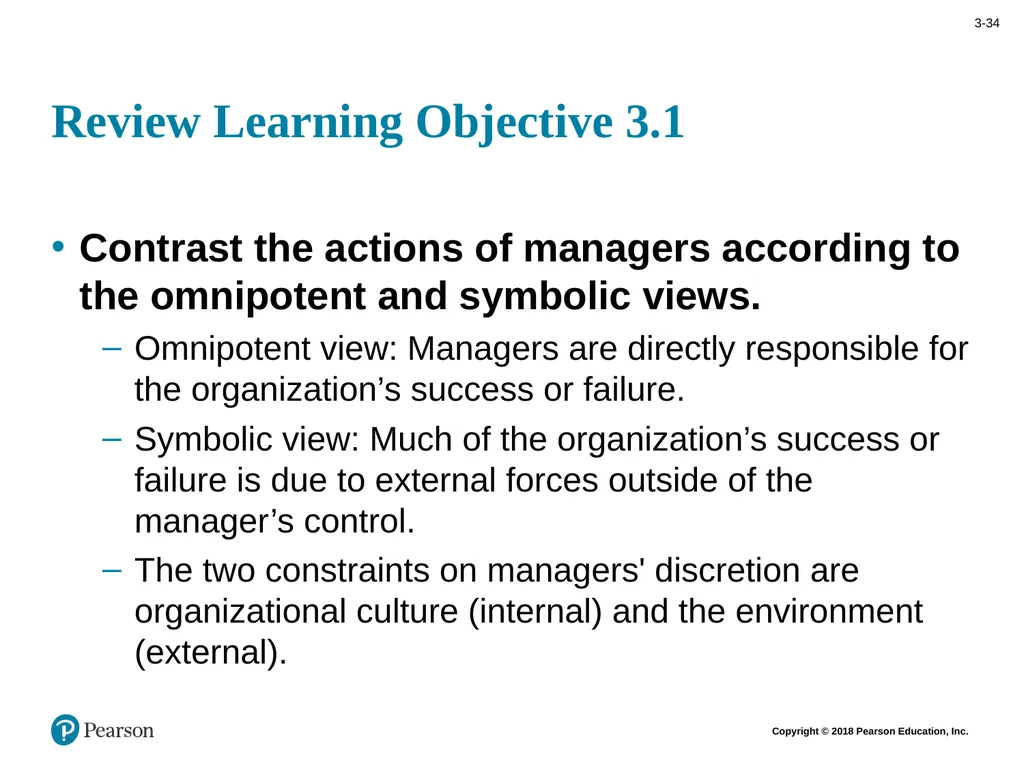
Review Learning Objective 3.1 Contrast the actions of managers according to the omnipotent and symbolic views.
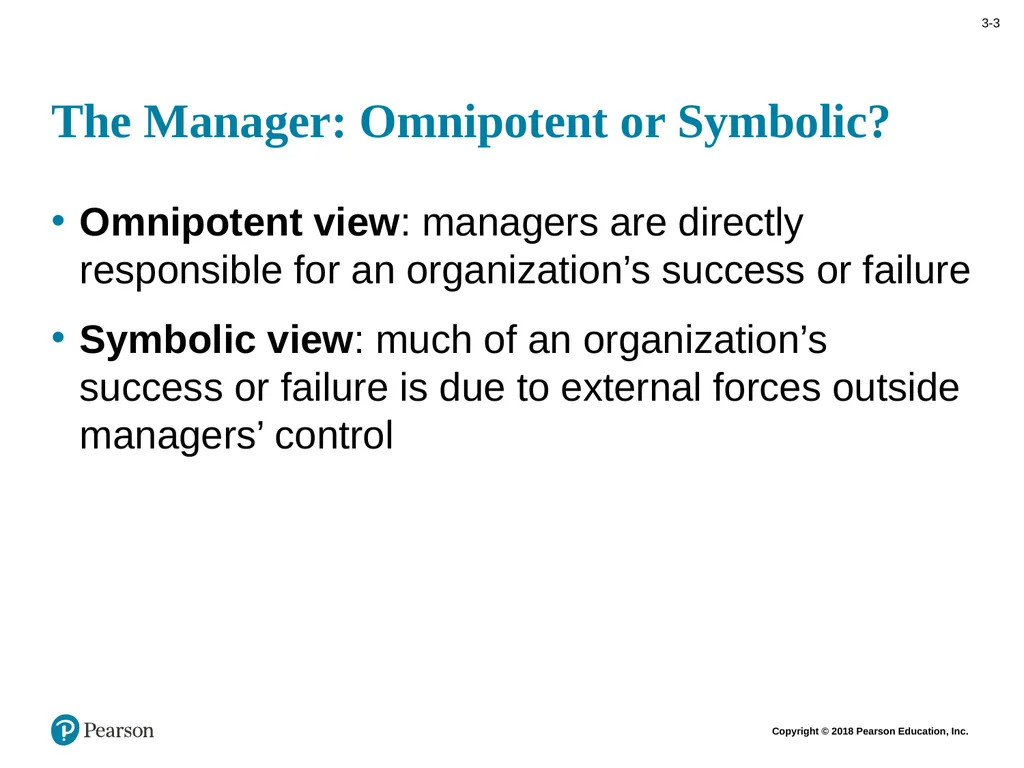
Omnipotent view: Managers are directly responsible for the organization’s success or failure.
Symbolic view: Much of the organization’s success or failure is due to external forces outside of the manager’s control.
The two constraints on managers' discretion are organizational culture (internal) and the environment (external).<br>
35
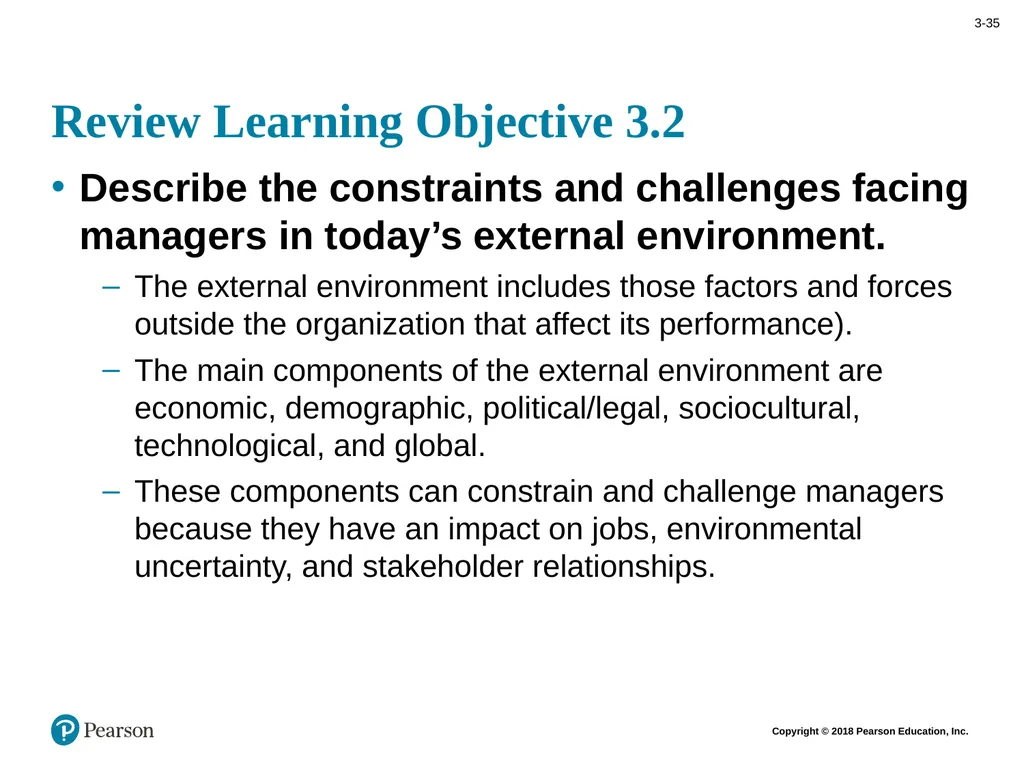
Review Learning Objective 3.2 Describe the constraints and challenges facing managers in today’s external environment.
The external environment includes those factors and forces outside the organization that affect its performance).
The main components of the external environment are economic, demographic, political/legal, sociocultural, technological, and global.
These components can constrain and challenge managers because they have an impact on jobs, environmental uncertainty, and stakeholder relationships.<br>
36
Review Learning Objective 3.3 Discuss the characteristics and importance of organizational culture.
The seven dimensions of culture are: attention to detail, outcome orientation, people orientation, team orientation, aggressiveness, stability, innovation, and risk taking.
The stronger the culture, the greater the impact on the way managers plan, organize, lead, and control.
The original source of the organizational culture reflects the founder’s vision.
Culture is transmitted through stories, rituals, material symbols, and language.<br>
37
Review Learning Objective 3.4 Describe current issues in organizational culture.
The characteristics of an innovative culture are challenge and involvement, freedom, trust and openness, idea time, playfulness/humor, conflict resolution, debates, and risk taking.
A customer responsive culture has five characteristics: outgoing and friendly employees; jobs with few rigid rules, procedures, and regulations; empowerment; clear roles and expectations; and employees who are conscientious in their desire to please the customer.
Companies that achieve business goals and increase long-term share-holder value by integrating economic, environmental, and social opportunities into business strategies may develop sustainability into the organization’s overall culture.<br>