Managing Conflict Images by Freepik.com Mary
Description: Managing Conflict Images by Freepik.com Mary Dixson, PhD What is Conflict? What is conflict? An expressed struggle between at least two interdependent people who perceive incompatible goals, scarce resources and interference from others to
Related Topics
Download Presentation
"Managing Conflict Images by Freepik.com Mary" is the property of its rightful owner. Permission is granted to download and print the materials on this website for personal, non-commercial use only, and to display it on your personal computer provided you do not modify the materials and that you retain all copyright notices contained in the materials. By downloading content from our website, you accept the terms of this agreement.
Presentation Transcript
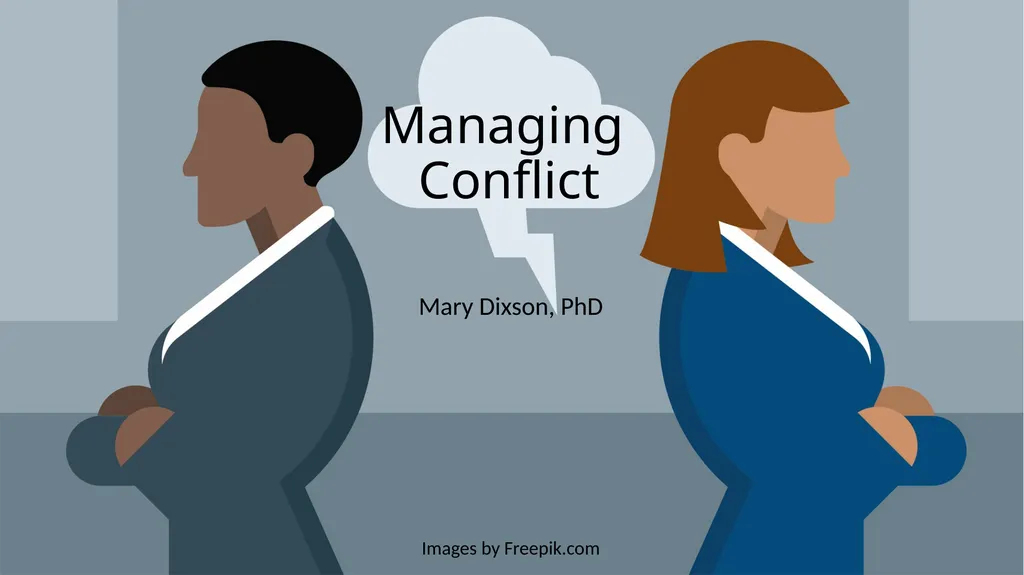
slide1. Managing Conflict Images by Freepik.com Mary Dixson, PhD<br>
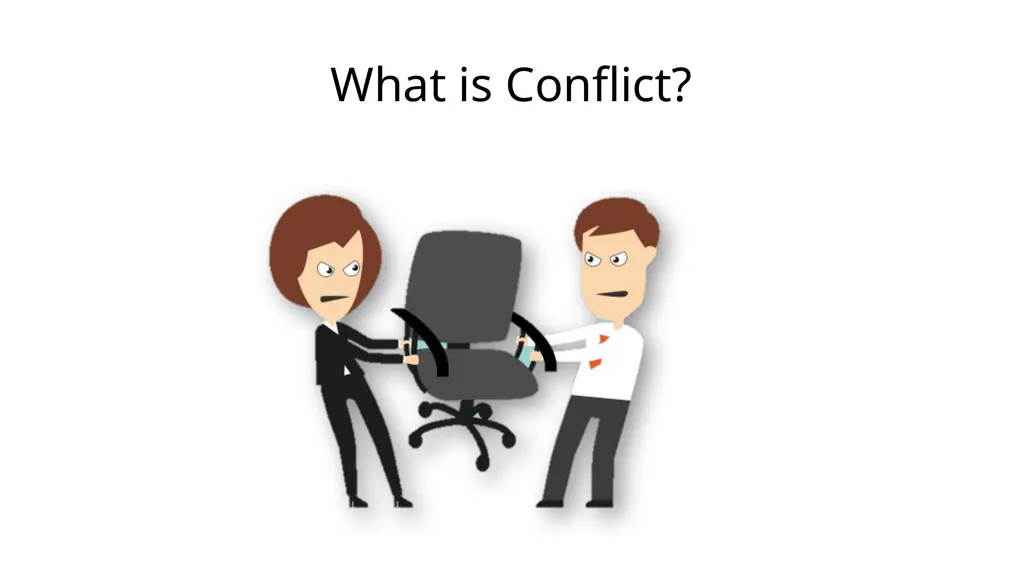
slide2. What is Conflict?<br>
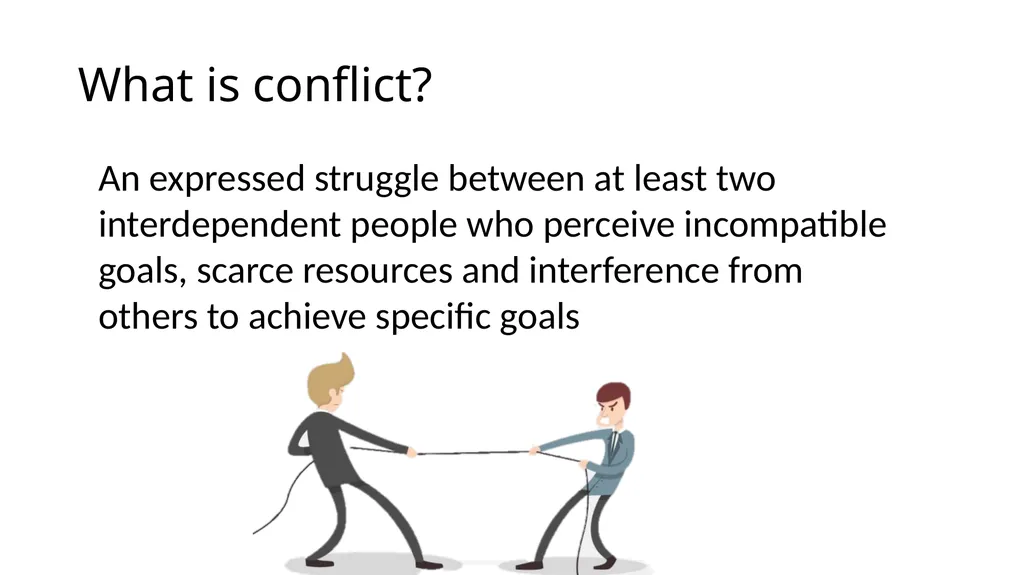
slide3. What is conflict? An expressed struggle between at least two interdependent people who perceive incompatible goals, scarce resources and interference from others to achieve specific goals<br>
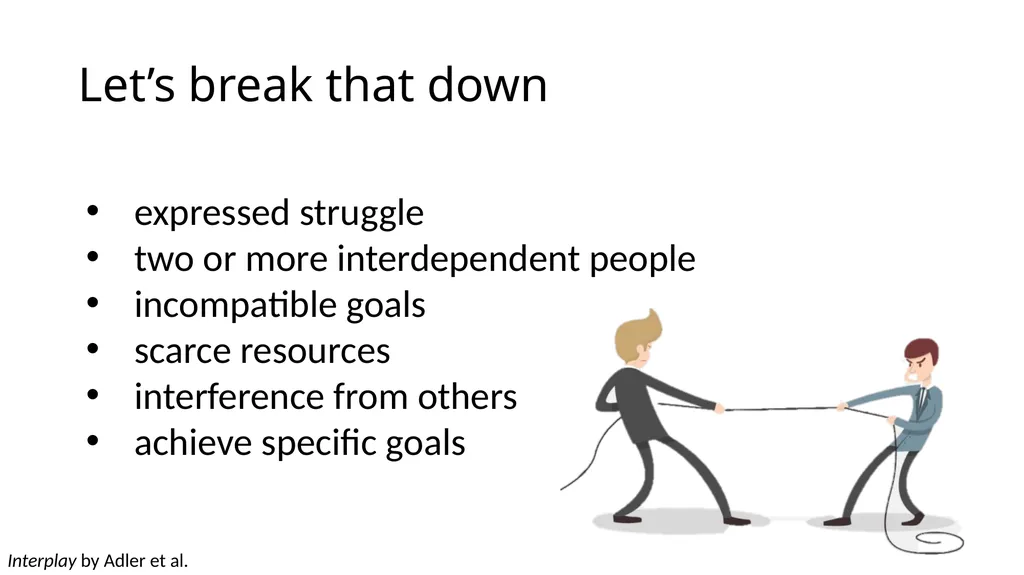
slide4. Let’s break that down expressed struggle
two or more interdependent people
incompatible goals
scarce resources
interference from others
achieve specific goals Interplay by Adler et al.<br>
slide5. Misconceptions Conflict must be avoided
Conflict exists because people don’t understand each other
Conflict can always be resolved
People who really like each other don’t have conflicts<br>
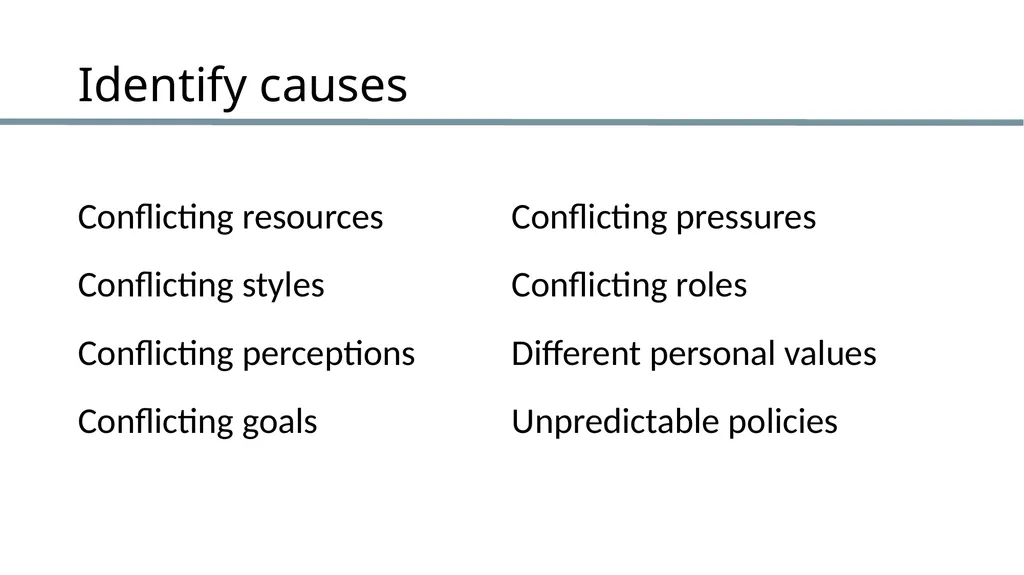
slide6. Identify causes Conflicting resources
Conflicting styles
Conflicting perceptions
Conflicting goals
Conflicting pressures
Conflicting roles
Different personal values
Unpredictable policies<br>
slide7. Avoid Misunderstandings Ask others what they mean by their terms or phrases
Establish supportive rather than defensive climate
Become an active listener<br>
slide8. Manage Issue Disagreement Clarify each other’s perception of message
Focus discussion on issues, not personalities
Use facts, not opinions
Tackle one issue at a time
Find areas of agreement<br>
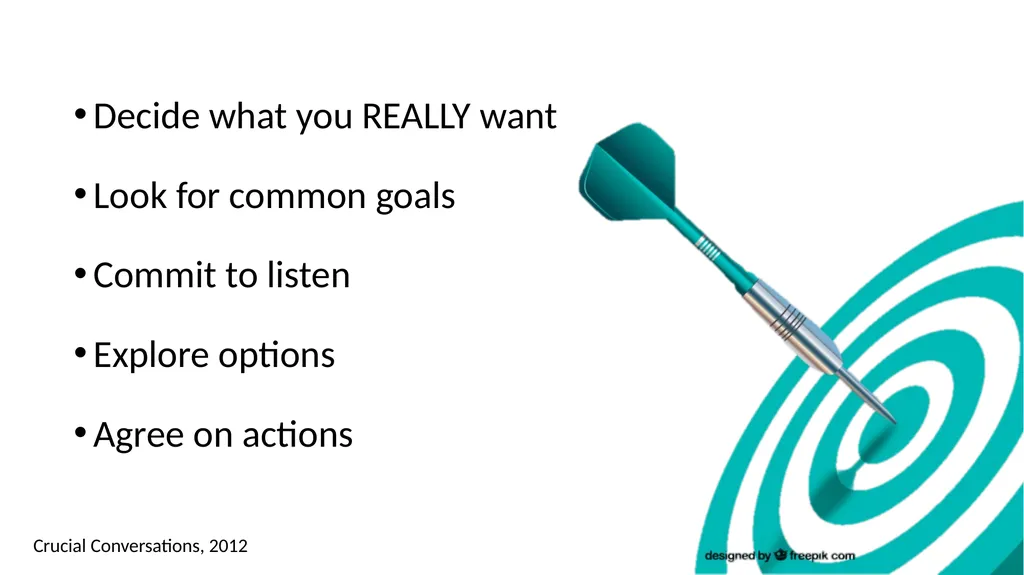
slide9. Decide what you REALLY want
Look for common goals
Commit to listen
Explore options
Agree on actions Crucial Conversations, 2012<br>
slide10. Managing Personality Clashes Stay aware of emotion and defensiveness
Encourage active listening
Focus problem to be solved, rather than a conflict to win
Seek a cool, calm climate
Be descriptive rather than judgmental
Agree to disagree and return to areas of agreement<br>
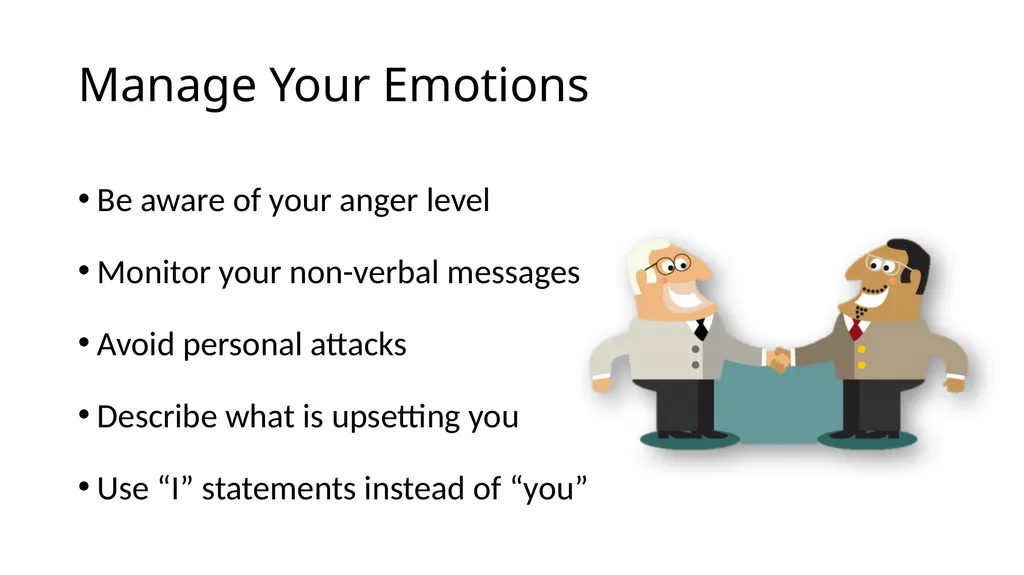
slide11. Manage Your Emotions Be aware of your anger level
Monitor your non-verbal messages
Avoid personal attacks
Describe what is upsetting you
Use “I” statements instead of “you”<br>
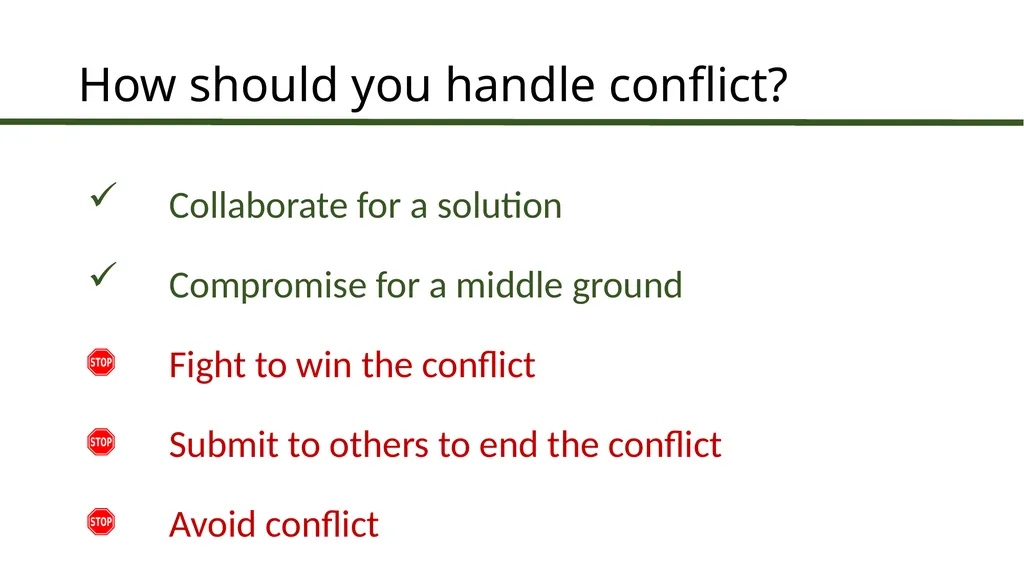
slide12. How should you handle conflict? Collaborate for a solution
Compromise for a middle ground
Fight to win the conflict
Submit to others to end the conflict
Avoid conflict<br>
slide2. What is Conflict?<br>
slide3. What is conflict? An expressed struggle between at least two interdependent people who perceive incompatible goals, scarce resources and interference from others to achieve specific goals<br>
slide4. Let’s break that down expressed struggle
two or more interdependent people
incompatible goals
scarce resources
interference from others
achieve specific goals Interplay by Adler et al.<br>
slide5. Misconceptions Conflict must be avoided
Conflict exists because people don’t understand each other
Conflict can always be resolved
People who really like each other don’t have conflicts<br>
slide6. Identify causes Conflicting resources
Conflicting styles
Conflicting perceptions
Conflicting goals
Conflicting pressures
Conflicting roles
Different personal values
Unpredictable policies<br>
slide7. Avoid Misunderstandings Ask others what they mean by their terms or phrases
Establish supportive rather than defensive climate
Become an active listener<br>
slide8. Manage Issue Disagreement Clarify each other’s perception of message
Focus discussion on issues, not personalities
Use facts, not opinions
Tackle one issue at a time
Find areas of agreement<br>
slide9. Decide what you REALLY want
Look for common goals
Commit to listen
Explore options
Agree on actions Crucial Conversations, 2012<br>
slide10. Managing Personality Clashes Stay aware of emotion and defensiveness
Encourage active listening
Focus problem to be solved, rather than a conflict to win
Seek a cool, calm climate
Be descriptive rather than judgmental
Agree to disagree and return to areas of agreement<br>
slide11. Manage Your Emotions Be aware of your anger level
Monitor your non-verbal messages
Avoid personal attacks
Describe what is upsetting you
Use “I” statements instead of “you”<br>
slide12. How should you handle conflict? Collaborate for a solution
Compromise for a middle ground
Fight to win the conflict
Submit to others to end the conflict
Avoid conflict<br>