Material Handling This material was produced under grant SH22236SH1from the Occupational Safety and Health Administration, U.S. Department of Labor. It does not necessarily reflect the views or policies of the U.S. Department of Labor,
"Material Handling This material was produced under" is the property of its rightful owner. Permission is granted to
download and print the materials on this website for personal, non-commercial use only, and to display it
on your personal computer provided you do not modify the materials and that you retain all copyright
notices contained in the materials. By downloading content from our website, you accept the terms of this
agreement.
Presentation Transcript
01
Material Handling This material was produced under grant [SH22236SH1]from the Occupational Safety and Health Administration, U.S. Department of Labor. It does not necessarily reflect the views or policies of the U.S. Department of Labor, nor does mention of trade names, commercial
products, or organizations imply endorsement by the U.S. Government<br>
02
This is an awareness class only. This will not make you a licensed operator.<br>
03
Manual Material Handling:
Carrying
Lifting
Lowering
Machine Material Handling:
Forklift<br>
04
Possible Injuries Lifting, Carrying and Lowering of Material can cause lower back injuries along with neck and shoulder strain
Material Handling with Forklifts can cause struck-by and caught between injuries.
Forklifts can roll-over<br>
05
Hazards Improper lifting, carrying or handling loads that are awkward or heavy
Struck by materials that are stored improperly or by forklifts that are carrying loads
Struck by products that are not properly loaded on the pallet or the load has shifted in transit to the store.
Trying to exit machine while rolling over
Improperly cutting shrink wrap from pallet<br>
06
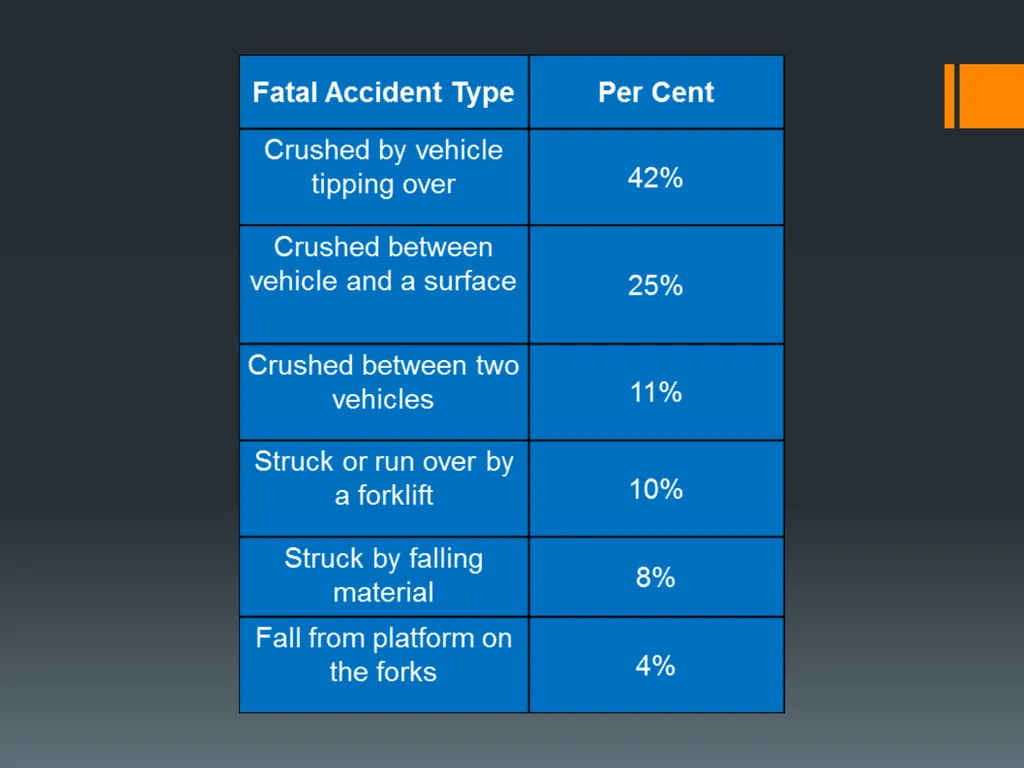
Never exit forklift if it starts to rollover Forklifts can weigh anywhere from 3000lbs-15000lbs. If you attempt to get off when the machine starts to flip, you might get crushed<br>
07
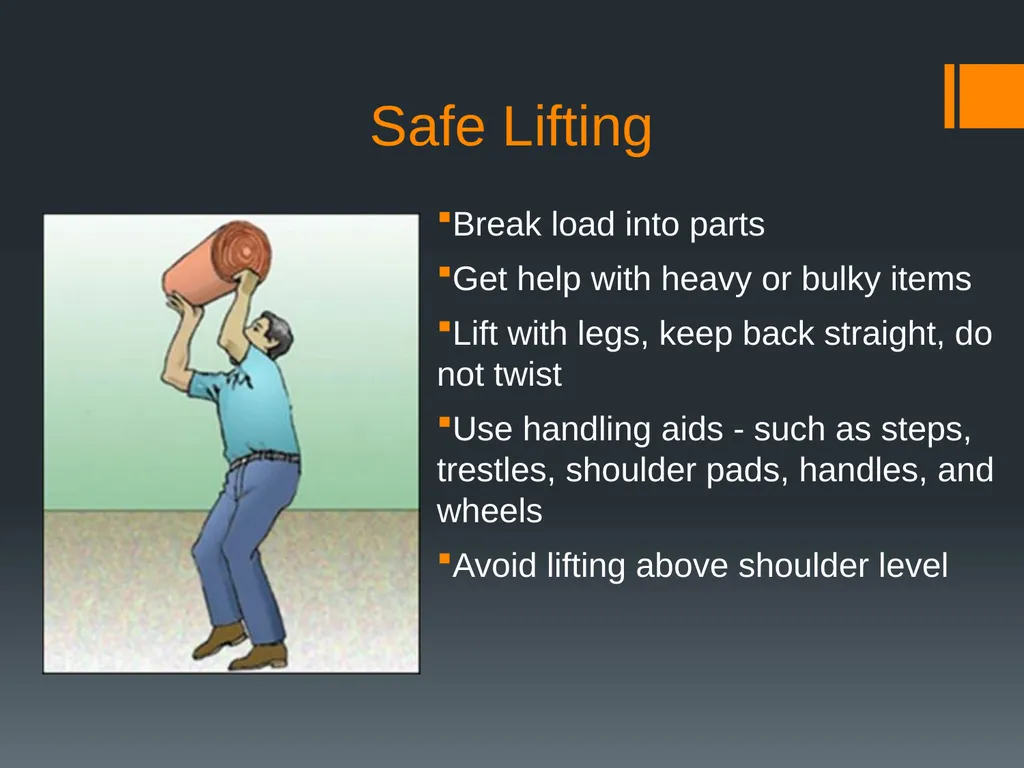
Safe Lifting Break load into parts
Get help with heavy or bulky items
Lift with legs, keep back straight, do not twist
Use handling aids - such as steps, trestles, shoulder pads, handles, and wheels
Avoid lifting above shoulder level<br>
08
Safe Lifting Training What should be taught:
How to lift safely
How to avoid unnecessary physical stress and strain
What you can comfortably handle without undue strain
Proper use of equipment
Recognizing potential hazards and how to prevent / correct them<br>
09
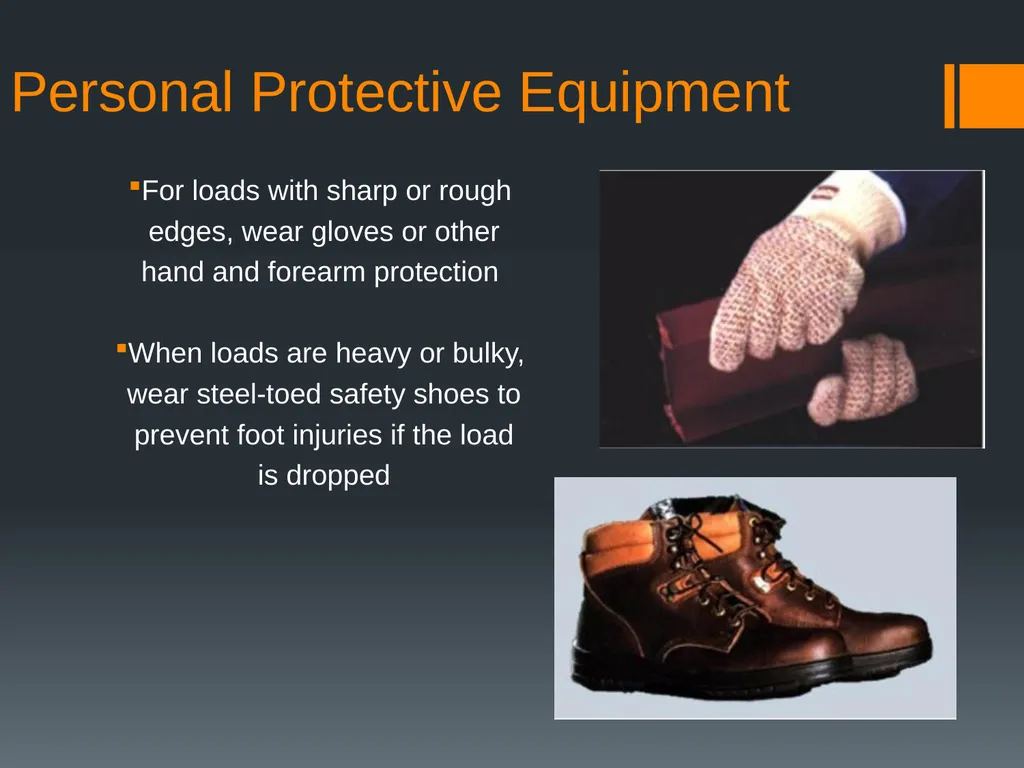
Personal Protective Equipment For loads with sharp or rough
edges, wear gloves or other
hand and forearm protection
When loads are heavy or bulky,
wear steel-toed safety shoes to
prevent foot injuries if the load
is dropped<br>
10
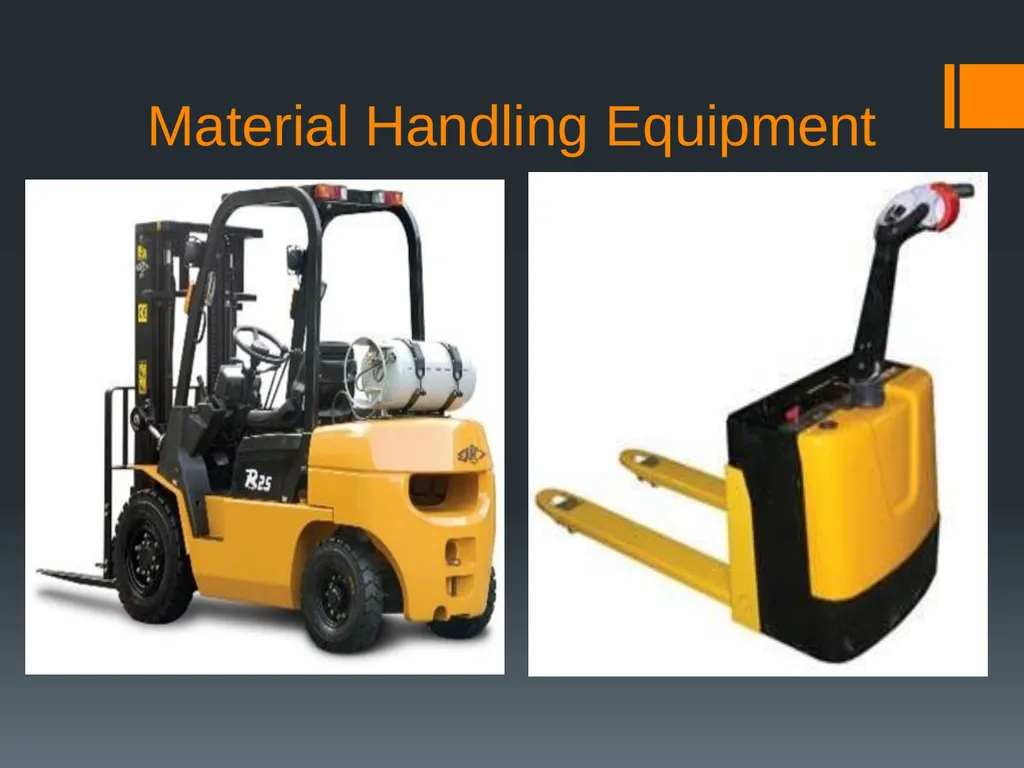
Material Handling Equipment<br>
11
All employees must be trained before using Material Handling Equipment and they must demonstrate how to use the equipment Equipment Training<br>
12
The risk of ignoring forklift safety Forklifts are extremely useful in a variety of workplaces, but there is great risk of property damage, injury or death if you:
are not trained on forklift safety
- are not familiar with the specific forklift vehicle
- operate the forklift in an unsafe manner
- operate a forklift with a defect or missing parts Source: New Zealand Dept. of Labor Source: RiteHite Doors Source: WorksafeBC<br>
13
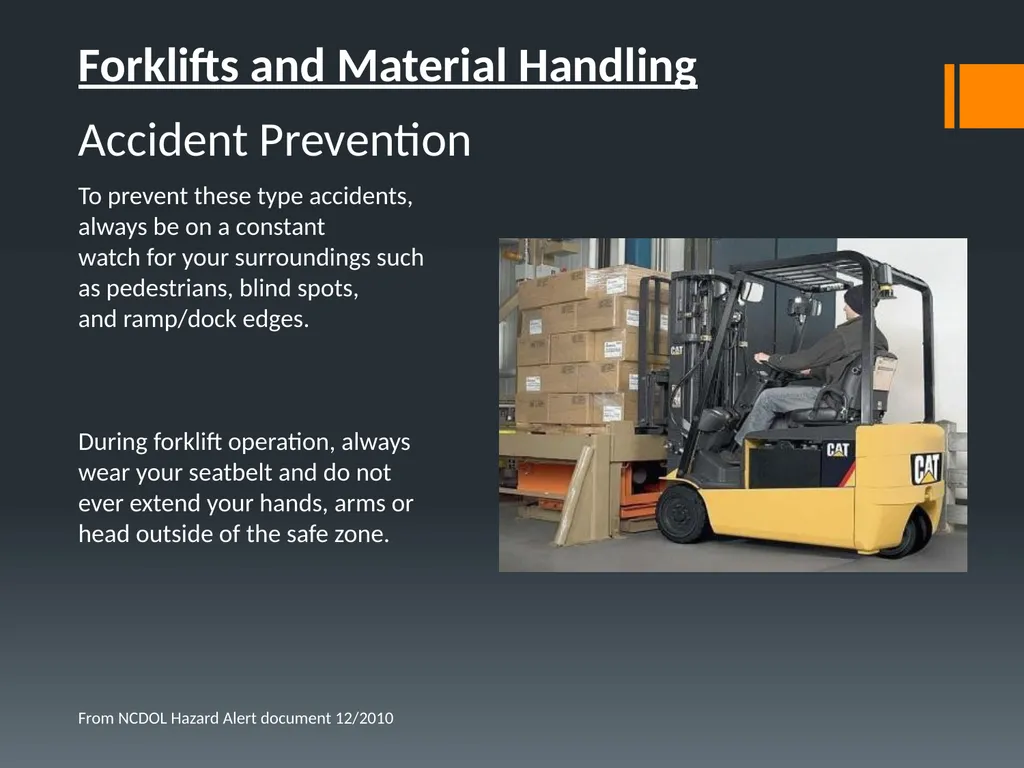
Accident Prevention From NCDOL Hazard Alert document 12/2010 Forklifts and Material Handling To prevent these type accidents, always be on a constant
watch for your surroundings such as pedestrians, blind spots,
and ramp/dock edges.
During forklift operation, always wear your seatbelt and do not ever extend your hands, arms or head outside of the safe zone.<br>
14
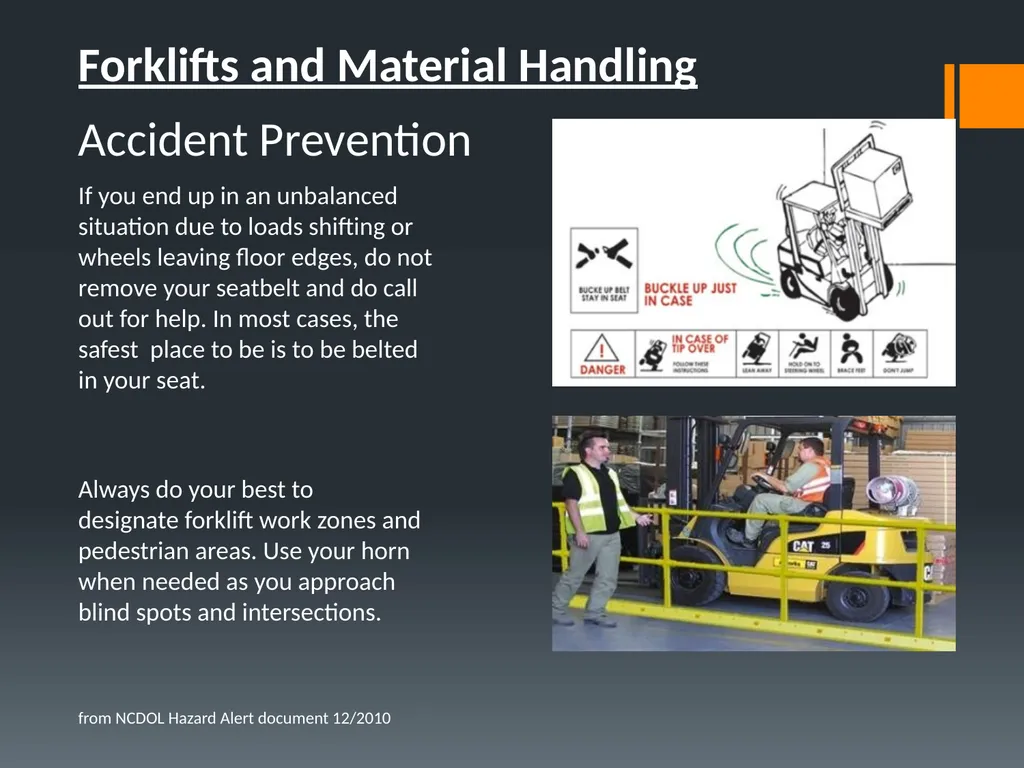
from NCDOL Hazard Alert document 12/2010 Forklifts and Material Handling If you end up in an unbalanced situation due to loads shifting or wheels leaving floor edges, do not remove your seatbelt and do call out for help. In most cases, the safest place to be is to be belted in your seat.
Always do your best to
designate forklift work zones and pedestrian areas. Use your horn
when needed as you approach blind spots and intersections. Accident Prevention<br>
15
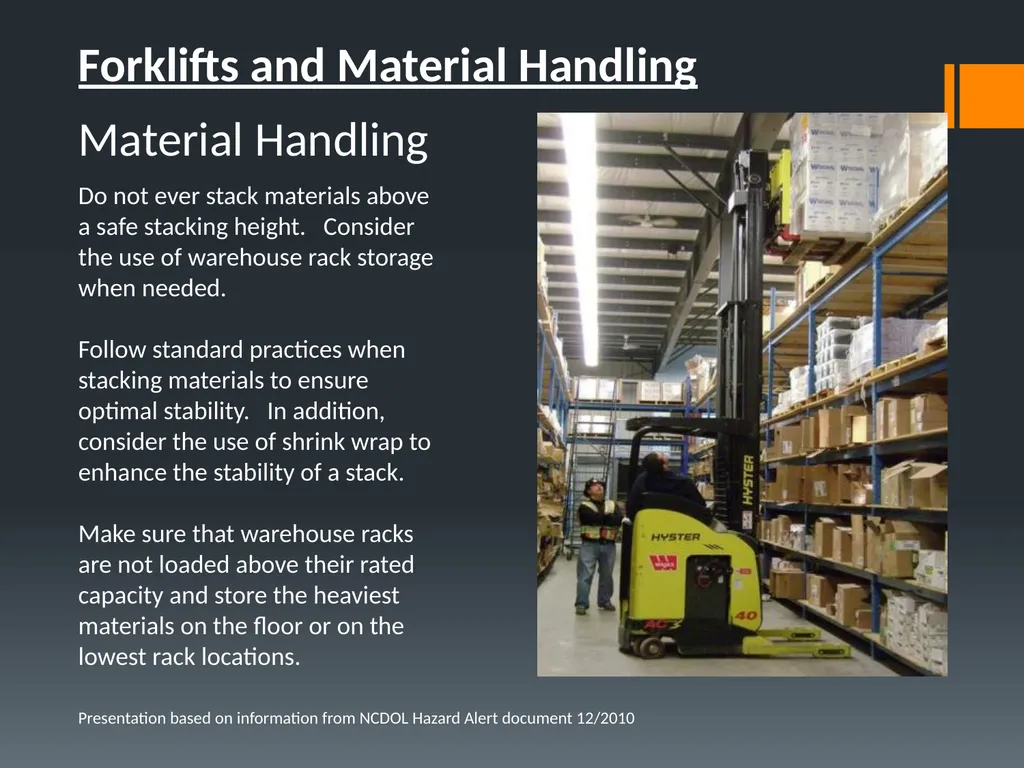
Presentation based on information from NCDOL Hazard Alert document 12/2010 Forklifts and Material Handling Do not ever stack materials above a safe stacking height. Consider the use of warehouse rack storage when needed.
Follow standard practices when stacking materials to ensure
optimal stability. In addition, consider the use of shrink wrap to enhance the stability of a stack.
Make sure that warehouse racks are not loaded above their rated capacity and store the heaviest materials on the floor or on the lowest rack locations. Material Handling<br>
16
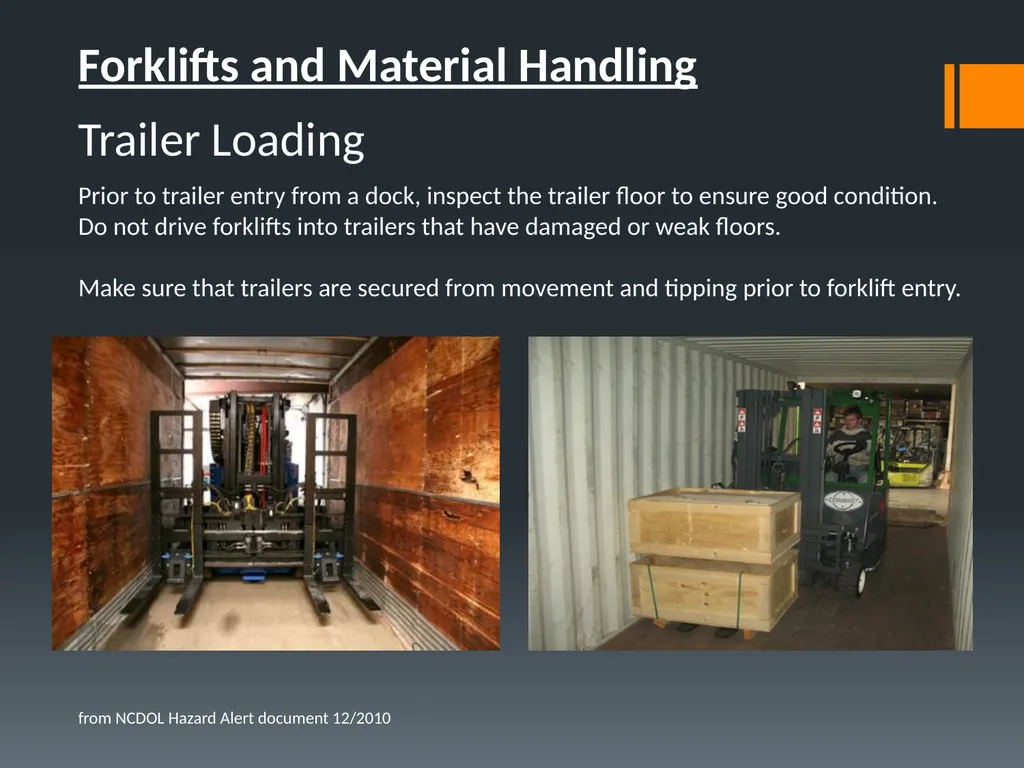
from NCDOL Hazard Alert document 12/2010 Forklifts and Material Handling Prior to trailer entry from a dock, inspect the trailer floor to ensure good condition. Do not drive forklifts into trailers that have damaged or weak floors.
Make sure that trailers are secured from movement and tipping prior to forklift entry. Trailer Loading<br>
17
Forklift Safety Checklist
• Make sure the operator’s manual is on the lift and the load capacity is posted
• Check that steps are free from mud, oil, and grease and that the windows are clean
• Make sure overhead protection is in place (All forklifts must have a cage that the operator sits in)<br>
18
Check all hydraulic cylinders, hoses, and connectors for leaks
• Inspect the tires
• Make sure the forklift has a fire extinguisher on board, that it’s fully charged, and that it has an up to date inspection tag<br>
19
Verify that the seatbelt works
• Be sure the seat bottom and back are secure
• Adjust the mirrors to the correct positions<br>
20
• Test the horn lights and back up alarm
• After starting the forklift, make sure that all gauges are in normal range
• Test the brakes and parking brake to ensure there is no movement when they are applied<br>
21
• Move the lift forward and backward, and left and right to make sure it maneuvers properly. Listen for loud or unusual noises
• After you’ve moved the lift, check the ground underneath for signs of fluid leaks<br>
22
A FORKLIFT IS NOT AN AERIAL LIFT. NO ONE IS EVER ALLOWED TO USE THE FORKS OR A PALLET AS AN ELEVATED WORK PLATFORM.<br>