
Mindfulness provides a tool for profound life
LO
Published · 103 slides · 0 views

1 / 1





Description
Mindfulness provides a tool for profound life change. Mindfulness Online Training To be able to guide a mindfulness session we need to recognise that you have a direct experience of the mindful state of being- that is you have a
Related Topics
Share
Embed code
Download this presentation From Below
"Mindfulness provides a tool for profound life" is the property of its rightful owner. Permission is granted to download and print the materials on this website for personal, non-commercial use only, and to display it on your personal computer provided you do not modify the materials and that you retain all copyright notices contained in the materials. By downloading content from our website, you accept the terms of this agreement.
Presentation Transcript
01
Mindfulness provides
a tool for profound life change. © Mindfulness Online Training<br>
02
To be able to ‘guide’ a mindfulness session we need to recognise that you have a direct experience of the mindful state of being- that is you have a practice yourself where much of the understanding of why and how mindfulness leads to self-calming, self-regulation and increased self-awareness is experienced first-hand- not something you read about by observing your own mental and emotional activity.
In a sense, you can’t teach mindfulness. What you can do is co-create the conditions where the people you are ‘guiding’ can have a direct experience of their own states of being; thoughts and feelings.<br>
03
Mindfulness is both a practice and a way of being in your life; alert and aware to shifts and changes we all experience throughout the day- especially when we are going into anxious and overthinking.
You make a choice to self-regulate and become skilled at managing your inner life, rather than let stress build and go unchecked, we train ourselves to intervene and breathe ourselves back to steady calm presence.<br>
04
Mindfulness is: Intentional—purposefully cultivating an awareness of present moment reality and the choices available to us.
Experiential—focusing directly on present moment experience rather than being preoccupied by distractions
3. Non-judgmental—it allows us to see things as
they actually are without critical labels to our
thoughts, feelings and perceptions.
Shows us we do not have to stay stuck in repetitive thinking and behaving patterns;
We have a choice where to direct our attention. Practicing mindfulness (attention training) Strengthens our attention muscle to become more present and resilient and aware when our thoughts and feelings are becoming overwhelming and problematic. © Mindfulness Online Training<br>
Experiential—focusing directly on present moment experience rather than being preoccupied by distractions
3. Non-judgmental—it allows us to see things as
they actually are without critical labels to our
thoughts, feelings and perceptions.
Shows us we do not have to stay stuck in repetitive thinking and behaving patterns;
We have a choice where to direct our attention. Practicing mindfulness (attention training) Strengthens our attention muscle to become more present and resilient and aware when our thoughts and feelings are becoming overwhelming and problematic. © Mindfulness Online Training<br>
05
Benefits decreases stress and anxiety
improves focus, attention, memory
improves executive function
improves impulse control
builds resilience
improves sleep quality
cultivates kindness and compassion © Mindfulness Online Training<br>
improves focus, attention, memory
improves executive function
improves impulse control
builds resilience
improves sleep quality
cultivates kindness and compassion © Mindfulness Online Training<br>
06
We are developing the ‘attention muscle’ so that we are more present in our lives - less mind wandering, speculating, catastrophising, engaging in mental behaviours that are unhelpful ( judging, wanting, trying to get outcomes we want) and know when to intentionally shift attention, and self-calm through focused breathing or body scanning.
It’s the regular daily practice that heals and strengthens our nervous system and restores balance and calm- even when the pressure is on.<br>
07
Evidence-based research confirms that when we put our attention on one object: breath, body sensations, sounds- our nervous system calms down and relaxes, the body relaxes, breathing returns to full breaths not shallow breathing.
Done repeatedly, as a daily self-care strategy, we not only heal a stressed nervous system we also build resilience for coping with the inevitable life challenges.<br>
08
Formal Mindfulness Practices:
1. Breathing
2. Body Scan – sensation awareness
3. Listening<br>
09
INFORMAL PRACTICES:
drinking tea or coffee
showering
brushing teeth
eating
walking
exercise; yoga, pilates, polyvagal exercises to de-stress.<br>
10
Attention Training
‘Training our attention is our most important form of self-regulation and self-control’
B.Allan Wallace- The Attention Revolution<br>
‘Training our attention is our most important form of self-regulation and self-control’
B.Allan Wallace- The Attention Revolution<br>
11
Mindfulness - attention training - offers a restorative practice to return body and mind to connection, balance, awareness and presence.
Reconnecting with ourselves, others and the world around us offers a sense of balance, safety and a normally functioning nervous system as well as healing the’ learned’ stress state so many people are in- even young children.
Humans rely on social connection to survive as well as physical connection. We co-regulate with each other simply by making eye contact with others, speaking together, eating together while not distracted. Our bodies are ‘reading’ each other at an unconscious level- looking for signals of connection or disconnection. Being fully present (no mind wandering and critical inner thinking) is an important part of making healthy connections.<br>
Reconnecting with ourselves, others and the world around us offers a sense of balance, safety and a normally functioning nervous system as well as healing the’ learned’ stress state so many people are in- even young children.
Humans rely on social connection to survive as well as physical connection. We co-regulate with each other simply by making eye contact with others, speaking together, eating together while not distracted. Our bodies are ‘reading’ each other at an unconscious level- looking for signals of connection or disconnection. Being fully present (no mind wandering and critical inner thinking) is an important part of making healthy connections.<br>
12
It’s well known in the 21st Century humans have been trained to believe every minute should be active. We have become a race of human doing’s no longer human beings. We are over-stimulated, living in a device, light and noise filled environments where the expectation is to be active, excited and ‘on’ all the time.
This race to get more, achieve more, connect more, be ‘on’ more has led to many people experiencing burnout, disconnection, chronic distraction and generally lower state of wellbeing mentally and physically. We live in disruptive times.
Even a simple practice of listening to the sounds of nature, looking at the blue sky, watching the ocean can be soothing to the over-stimulated nervous system. As we co-regulate with other people making eye contact is important, we co-regulate with the natural world.<br>
This race to get more, achieve more, connect more, be ‘on’ more has led to many people experiencing burnout, disconnection, chronic distraction and generally lower state of wellbeing mentally and physically. We live in disruptive times.
Even a simple practice of listening to the sounds of nature, looking at the blue sky, watching the ocean can be soothing to the over-stimulated nervous system. As we co-regulate with other people making eye contact is important, we co-regulate with the natural world.<br>
13
Many people have lost purpose and meaning in their lives and live day to day on auto-pilot in the world of doing and not being present - never taking time to stop for even as little as 5 minutes, reflect and recharge.
Daily, recognizing and naming your purpose and meaning encourages a deeper connection and aligns your choices with something bigger than yourself. Having regular 5 minute brain-breaks throughout the day is known to encourage higher engagement, productivity and a balanced mental and physical state.<br>
Daily, recognizing and naming your purpose and meaning encourages a deeper connection and aligns your choices with something bigger than yourself. Having regular 5 minute brain-breaks throughout the day is known to encourage higher engagement, productivity and a balanced mental and physical state.<br>
14
When we recognise changes are needed with our mental and emotional behaviours to limit the robotic behaviours we too often fall into, we are establishing a new way of being; being alert, present and aware, accepting and welcoming the present moment with whatever it brings with calm and equanimity.<br>
15
What You Will Learn With regular daily practice, you will learn:
• How to recognise and become aware of unhelpful stress and anxiety.
• How to ‘read’ the sensations of the body. ( body scans)
• How to train your attention, self-care and be
kind to yourself and accept all the flaws.
We train ourselves to accept ourselves with love and kindness. © Mindfulness Online Training<br>
• How to recognise and become aware of unhelpful stress and anxiety.
• How to ‘read’ the sensations of the body. ( body scans)
• How to train your attention, self-care and be
kind to yourself and accept all the flaws.
We train ourselves to accept ourselves with love and kindness. © Mindfulness Online Training<br>
16
Getting the most from this training • There is no ‘right’ or ‘wrong’ when we
practice mindfulness.
• The ‘material’ you have to work with is
your own thoughts and feelings.
• Keep an open mind (curious) and just give it a go before judging its effectiveness. © Mindfulness Online Training<br>
practice mindfulness.
• The ‘material’ you have to work with is
your own thoughts and feelings.
• Keep an open mind (curious) and just give it a go before judging its effectiveness. © Mindfulness Online Training<br>
17
Cultivating Emotional Regulation Developing awareness of thoughts, emotions
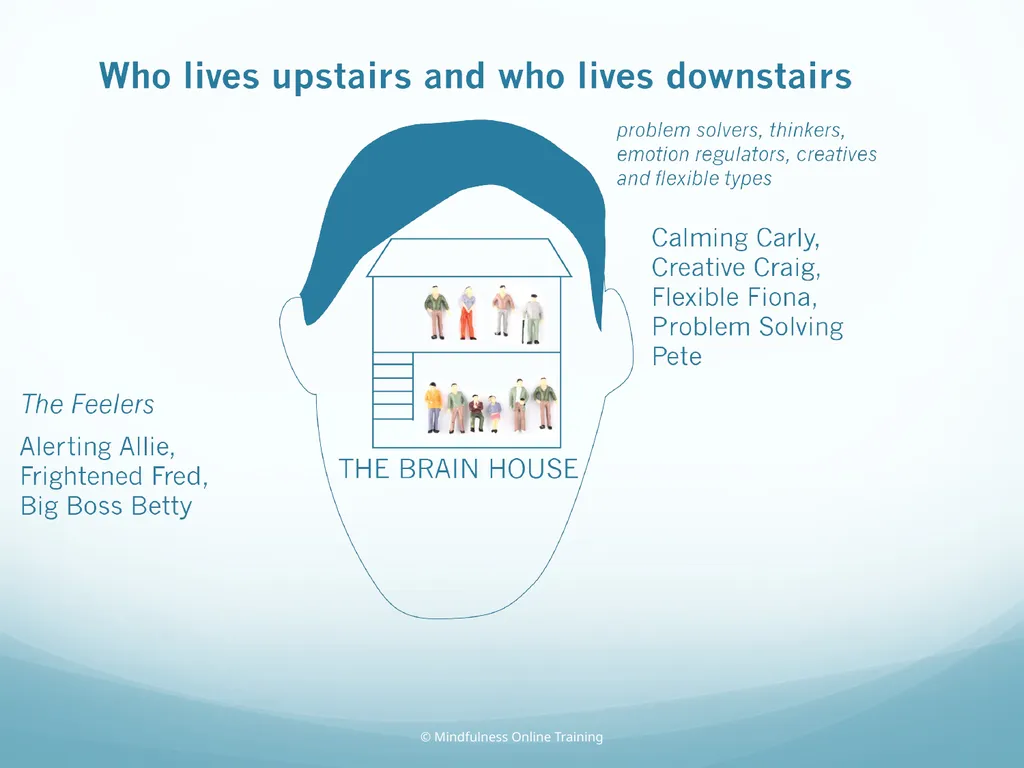
Understanding brain function: The Brain House
Normalising what it is to be human - recognising the shifting emotional states throughout the day (daily inner weather reporting).
Expanding vocabulary of emotions and feelings
Recognising unhelpful thoughts and feelings and knowing we have the ability to shift our attention © Mindfulness Online Training<br>
Understanding brain function: The Brain House
Normalising what it is to be human - recognising the shifting emotional states throughout the day (daily inner weather reporting).
Expanding vocabulary of emotions and feelings
Recognising unhelpful thoughts and feelings and knowing we have the ability to shift our attention © Mindfulness Online Training<br>
18
Cultivating Emotional Intelligence Learning strategies to self-regulate (S.T.O.P. breathe,
body awareness, glitter jar, listening).
New models: regular 'brain-breaks' throughout the day to refresh and recharge, introducing a 'quiet corner for timeout/rejuvenate when needed.
Regular attention training exercises; breathing, listening, progressive body relaxation, nature safari. © Mindfulness Online Training<br>
New models: regular 'brain-breaks' throughout the day to refresh and recharge, introducing a 'quiet corner for timeout/rejuvenate when needed.
Regular attention training exercises; breathing, listening, progressive body relaxation, nature safari. © Mindfulness Online Training<br>
19
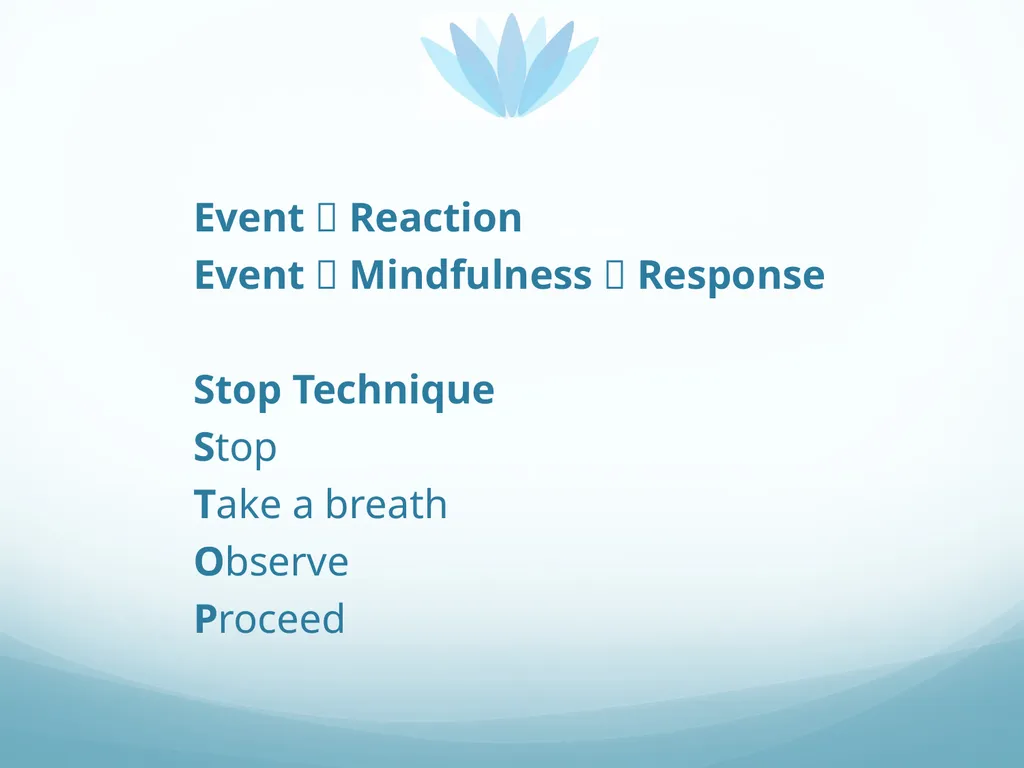
© Mindfulness Online Training Event Reaction
Event Mindfulness Response
Stop Technique
Stop
Take a breath
Observe
Proceed<br>
20
Mindfulness ‘Paying attention in a particular way; on purpose in the present moment, non–judgmentally’.
Jon Kabat – Zinn © Mindfulness Online Training<br>
Jon Kabat – Zinn © Mindfulness Online Training<br>
21
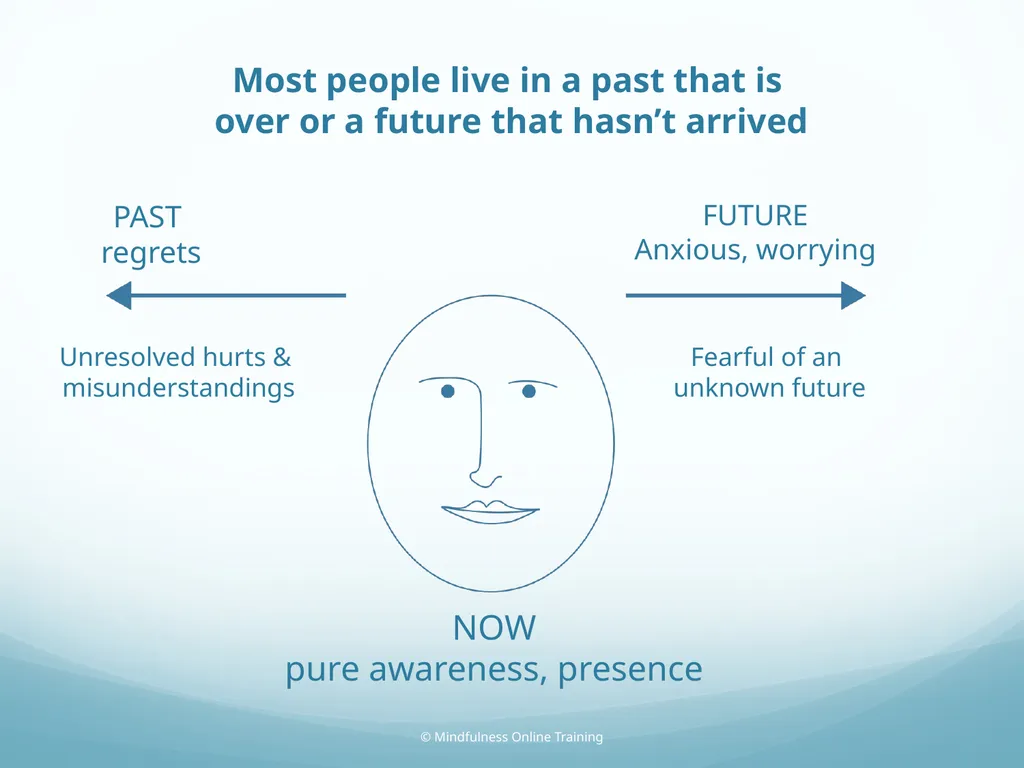
PAST
regrets FUTURE
Anxious, worrying Unresolved hurts &
misunderstandings NOW
pure awareness, presence Fearful of an unknown future Most people live in a past that is over or a future that hasn’t arrived © Mindfulness Online Training<br>
Anxious, worrying Unresolved hurts &
misunderstandings NOW
pure awareness, presence Fearful of an unknown future Most people live in a past that is over or a future that hasn’t arrived © Mindfulness Online Training<br>
22
© Mindfulness Online Training<br>
23
Thoughts Thoughts are mental events that cross the screen of our minds. We are not our thoughts. Our thoughts are separate to who we are.
How do we observe our thoughts?
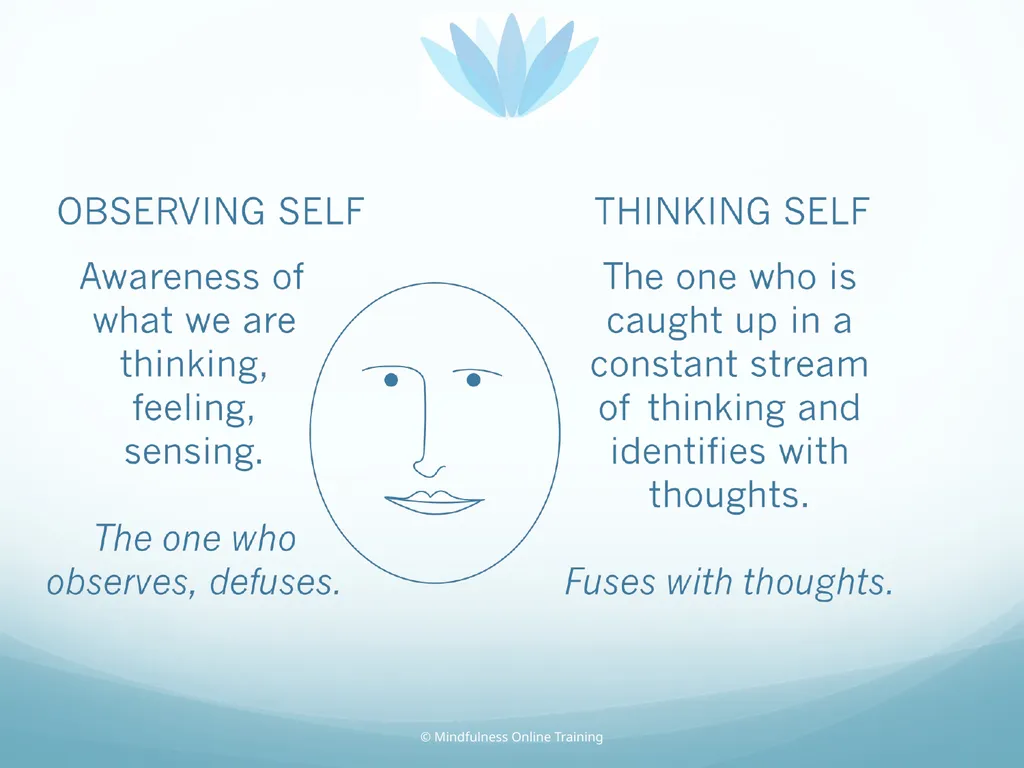
In mindfulness we recognize the consciousness (awareness) is the ‘observer’ that acknowledges our thoughts and feelings.
We train ourselves to observe our thoughts knowing we have the ability to not be trapped by them, not become our thoughts.<br>
How do we observe our thoughts?
In mindfulness we recognize the consciousness (awareness) is the ‘observer’ that acknowledges our thoughts and feelings.
We train ourselves to observe our thoughts knowing we have the ability to not be trapped by them, not become our thoughts.<br>
24
Negative Bias Why do humans have so many negative thoughts?
Research shows that our brains evolved to react much more strongly to negative experiences than positive ones. It kept us safe from danger. But in modern days, where physical danger is minimal, it often just gets in the way and creates catastrophic thoughts where there is no actual danger. It's called the negativity bias.<br>
Research shows that our brains evolved to react much more strongly to negative experiences than positive ones. It kept us safe from danger. But in modern days, where physical danger is minimal, it often just gets in the way and creates catastrophic thoughts where there is no actual danger. It's called the negativity bias.<br>
25
© Mindfulness Online Training<br>
26
The human brain thinks between 12,000-50,000 thoughts a day. The majority of these thoughts (80%) are said to be negative. Why is that?
The reason given is the human surveillance system or ‘alarm system’ tends to favour negative perception on stimulus (thoughts, sounds, actions) rather than positive and this is linked to our survival instincts.
When we train ourselves to observe our thoughts, sensations and reactions we become more present and aware when they are moving towards the negative and we purposefully intervene, recognize what happening and shift our attention so that we don’t ‘feed’ the negativity F.E.A.R (false events appearing real), unconsciously multiplying it. Having periods of stillness and emptiness is also very refreshing- than a continuous stream of draining, troublesome thinking.<br>
The reason given is the human surveillance system or ‘alarm system’ tends to favour negative perception on stimulus (thoughts, sounds, actions) rather than positive and this is linked to our survival instincts.
When we train ourselves to observe our thoughts, sensations and reactions we become more present and aware when they are moving towards the negative and we purposefully intervene, recognize what happening and shift our attention so that we don’t ‘feed’ the negativity F.E.A.R (false events appearing real), unconsciously multiplying it. Having periods of stillness and emptiness is also very refreshing- than a continuous stream of draining, troublesome thinking.<br>
27
How to overcome negative bias cont. Start paying attention to the type of thoughts that the mind constantly throws up. After an event takes place, you might find yourself thinking things like “I shouldn’t have done that.” This negative self-talk shapes how you think about yourself and others.
Instead of going over and over past mistakes that cannot be changed, consider what you have learned and how you might apply that in the future. Remember we are all humans and all make mistakes so recognizing that helps prevent deep shame becoming embedded.<br>
Instead of going over and over past mistakes that cannot be changed, consider what you have learned and how you might apply that in the future. Remember we are all humans and all make mistakes so recognizing that helps prevent deep shame becoming embedded.<br>
28
F.L.EX
Feel It – come in contact with the sensations in the body Let it be ( allow the thoughts and feelings to be
there without turning away) Expand – make room, expand awareness Execute – choose and carry out workable values based action<br>
Feel It – come in contact with the sensations in the body Let it be ( allow the thoughts and feelings to be
there without turning away) Expand – make room, expand awareness Execute – choose and carry out workable values based action<br>
29
There are three basic components to any emotion that arises within us:
i) The thoughts or the stories behind the emotion
ii) The physical sensations that reflect how the emotion manifests itself in the body and
iii) The emotional moods or feeling tones in the mind. Feeling tones can be pleasant, unpleasant or neutral.
It is the feeling tone keeps us hooked into our conditioned behavior of wanting what we see as good and not wanting what we see as bad. FEELING TONES<br>
i) The thoughts or the stories behind the emotion
ii) The physical sensations that reflect how the emotion manifests itself in the body and
iii) The emotional moods or feeling tones in the mind. Feeling tones can be pleasant, unpleasant or neutral.
It is the feeling tone keeps us hooked into our conditioned behavior of wanting what we see as good and not wanting what we see as bad. FEELING TONES<br>
30
We like whatever has a pleasant feeling tone, dislike whatever has an unpleasant feeling tone and are unaware of anything that has a neutral feeling tone.
Consequently, we take actions based on our likes and dislikes.
By simply acknowledging, naming and allowing the feeling, you will notice it loses its hold over you and reduces and disappears- unless you hold onto the feeling, tell yourself a story about and deepen and extend the attachment (to suffering- self-induced). FEELING TONES cont.<br>
Consequently, we take actions based on our likes and dislikes.
By simply acknowledging, naming and allowing the feeling, you will notice it loses its hold over you and reduces and disappears- unless you hold onto the feeling, tell yourself a story about and deepen and extend the attachment (to suffering- self-induced). FEELING TONES cont.<br>
31
We begin to see it is our own mental behaviors that either entrap and extend suffering or acknowledge allow and let it pass away as it naturally will. No feeling- good or bad- stays forever- unless we allow it. This is one of the key insights into understanding the function of the human mind- we can begin to take responsibility for ourselves more and more as we become familiar with these habits of mind. FEELING TONES cont.<br>
32
© Mindfulness in New Zealand Turning towards difficult thoughts and feelings
● recognise the feeling ● name it- research confirms 50% reduced ● allow it to just be there without turning away
(people will usually do anything but focus on uncomfortable feelings and thoughts- bear in mind this the garden-variety discomfort. When dealing with trauma a different strategy is applied.)
Usually, after holding the thought or feeling without reacting, it will lose its hold over you.<br>
● recognise the feeling ● name it- research confirms 50% reduced ● allow it to just be there without turning away
(people will usually do anything but focus on uncomfortable feelings and thoughts- bear in mind this the garden-variety discomfort. When dealing with trauma a different strategy is applied.)
Usually, after holding the thought or feeling without reacting, it will lose its hold over you.<br>
33
NEUROPLASTICITY
Scientists believed that once a person reaches adulthood, their cognitive abilities are set. Beginning in the early twentieth century, that theory was contested by evidence suggesting that the brain’s abilities are in fact malleable and plastic. © Mindfulness Online Training<br>
Scientists believed that once a person reaches adulthood, their cognitive abilities are set. Beginning in the early twentieth century, that theory was contested by evidence suggesting that the brain’s abilities are in fact malleable and plastic. © Mindfulness Online Training<br>
34
According to this principle of
neuroplasticity, the brain is constantly changing in response to various experiences, creating new
neural pathways. © Mindfulness Online Training<br>
neural pathways. © Mindfulness Online Training<br>
35
Our brain continuously makes adjustments to our system in response to feedback.
Some vital functions reach our conscious eg hunger but we can also eat when we get stressed.
When the system out of balance we have to re-establish connection.
Process of healing our minds and body depends on the quality of our attention.
While it happens automatically PURPOSEFULLY INTENTIONALLY driving the system towards CONNECTION restores regulation and order. Mindfulness Online Training<br>
Some vital functions reach our conscious eg hunger but we can also eat when we get stressed.
When the system out of balance we have to re-establish connection.
Process of healing our minds and body depends on the quality of our attention.
While it happens automatically PURPOSEFULLY INTENTIONALLY driving the system towards CONNECTION restores regulation and order. Mindfulness Online Training<br>
36
When an integrated system loses connection between feedback loops-dynamic stability and balance is lost:
disattention > disconnection > disregulation > disorder > disease
Works the other way attention > connection > regulation > order > ease. . © Mindfulness Online Training<br>
Works the other way attention > connection > regulation > order > ease. . © Mindfulness Online Training<br>
37
Our nervous system can be likened to the operating system in a computer- we need to understand how it works, recognize signals, take action and respond accordingly.
The nervous system is designed to default to negative interpretation of external and internal stimuli as a means of survival. In other words, humans think negatively more than positively. We can retrain ourselves to observe this and make a choice to override the negative and shift our perspective- to be quicker than the negative thought or interpretation but we first have to recognize this pattern and make a conscious effort to retrain our brains.
Mindfulness strategies (attention training) is evidence-based so we know that if we practice regularly- daily we will eventually have results of; alert awareness, presence, calmer mind/body, less anxious and reactive, better sleep, better communication and improved relationships Learning to navigate your nervous system<br>
The nervous system is designed to default to negative interpretation of external and internal stimuli as a means of survival. In other words, humans think negatively more than positively. We can retrain ourselves to observe this and make a choice to override the negative and shift our perspective- to be quicker than the negative thought or interpretation but we first have to recognize this pattern and make a conscious effort to retrain our brains.
Mindfulness strategies (attention training) is evidence-based so we know that if we practice regularly- daily we will eventually have results of; alert awareness, presence, calmer mind/body, less anxious and reactive, better sleep, better communication and improved relationships Learning to navigate your nervous system<br>
38
- stop struggling and multiplying misery by being trapped in ‘the story’ fueling it over and over by reliving, retelling.
- training ourselves to accept what is- breaks the cycle and the struggle and frees us to be fully present here and now to enjoy life moment to moment and not be trapped by an unhappy past.
Regularly anchor yourself cultivate connection to your body -not mind of thoughts. This anchor is a reliable, steady, present moment awareness that will help you shift the focus from unhelpful thoughts and feelings. Learning to navigate your nervous system cont.<br>
- training ourselves to accept what is- breaks the cycle and the struggle and frees us to be fully present here and now to enjoy life moment to moment and not be trapped by an unhappy past.
Regularly anchor yourself cultivate connection to your body -not mind of thoughts. This anchor is a reliable, steady, present moment awareness that will help you shift the focus from unhelpful thoughts and feelings. Learning to navigate your nervous system cont.<br>
39
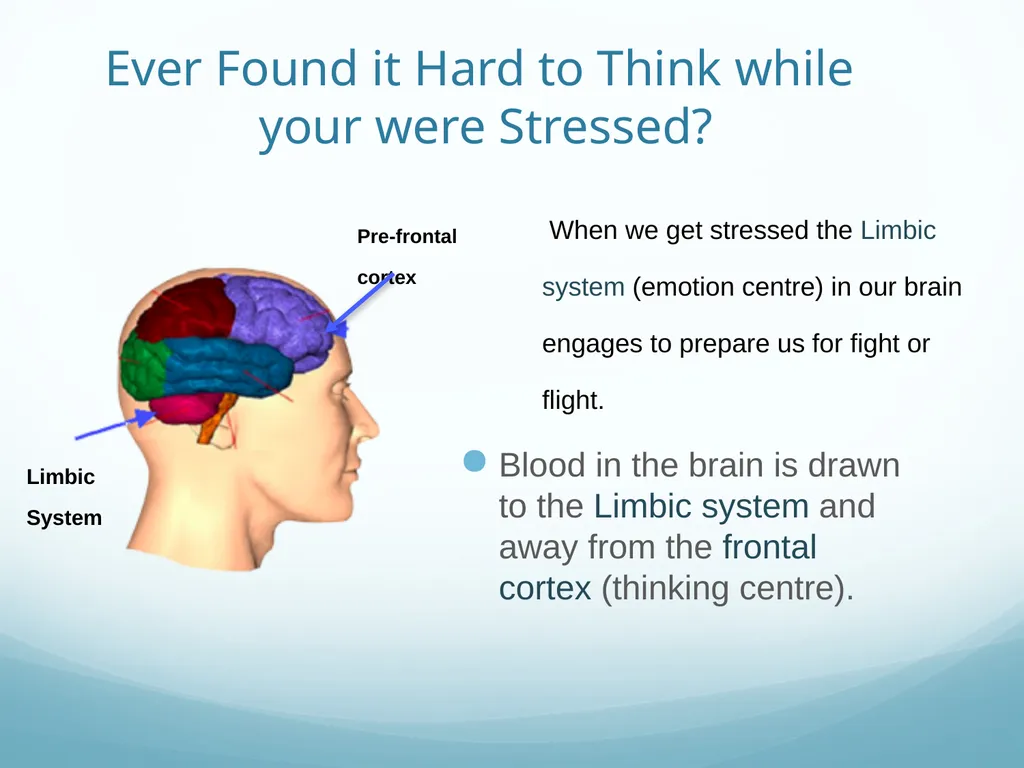
Ever Found it Hard to Think while
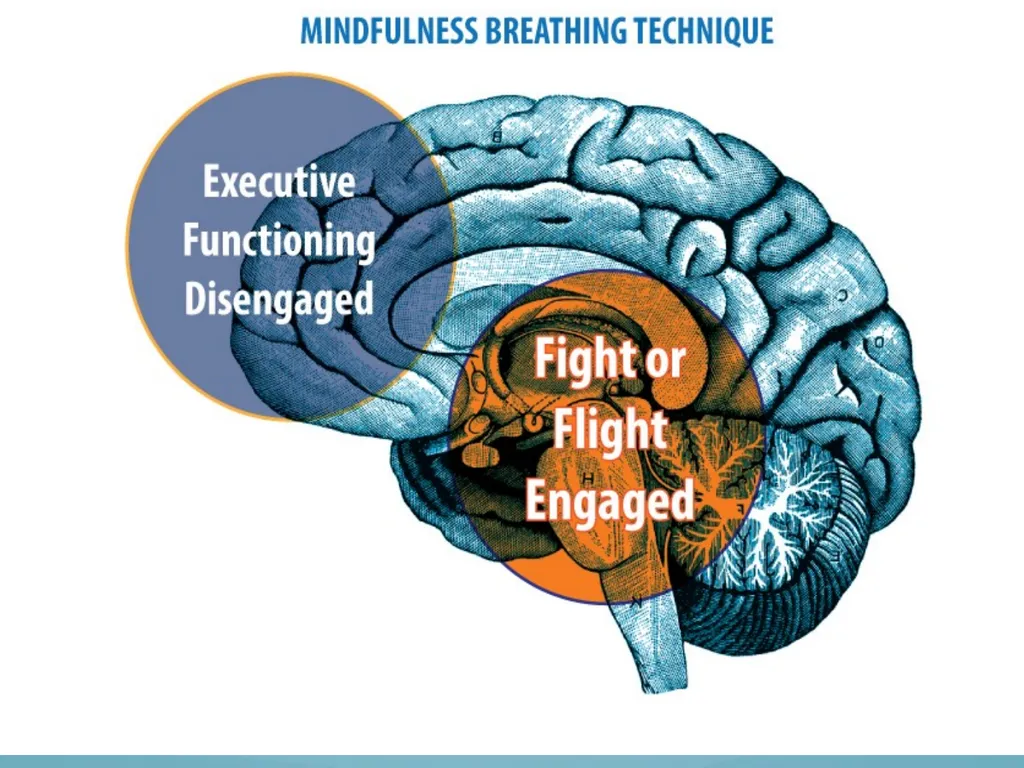
your were Stressed? When we get stressed the Limbic system (emotion centre) in our brain engages to prepare us for fight or flight. Blood in the brain is drawn to the Limbic system and away from the frontal cortex (thinking centre). Limbic System Pre-frontal
cortex<br>
your were Stressed? When we get stressed the Limbic system (emotion centre) in our brain engages to prepare us for fight or flight. Blood in the brain is drawn to the Limbic system and away from the frontal cortex (thinking centre). Limbic System Pre-frontal
cortex<br>
40
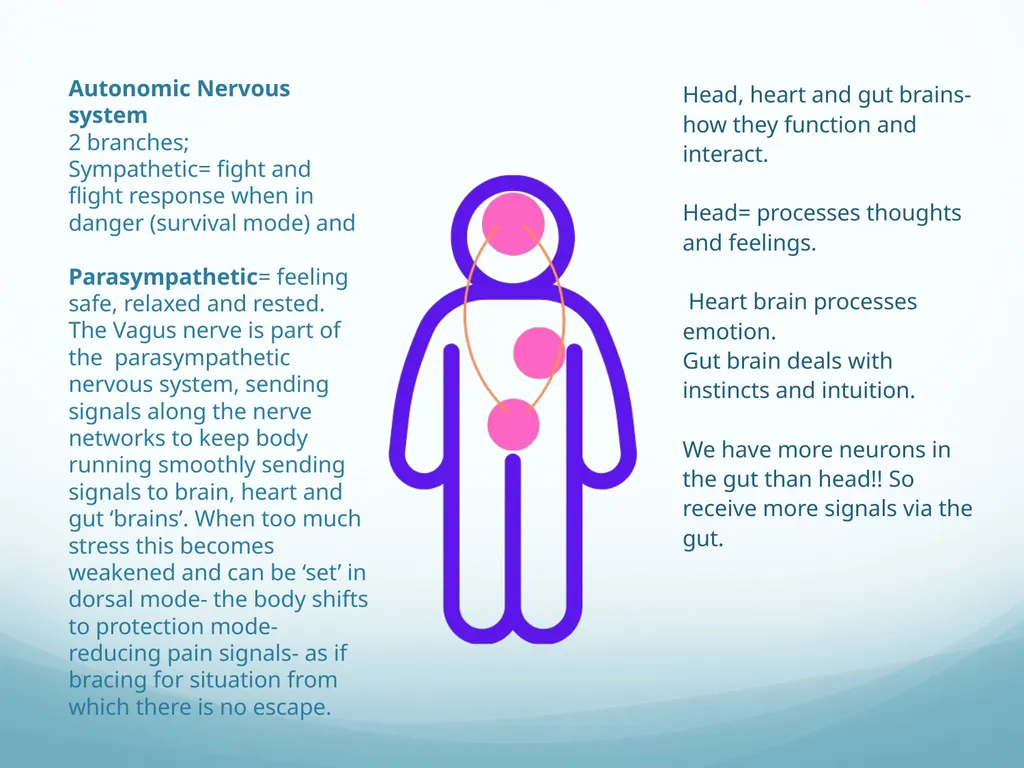
Autonomic Nervous system
2 branches;
Sympathetic= fight and flight response when in danger (survival mode) and
Parasympathetic= feeling safe, relaxed and rested.
The Vagus nerve is part of the parasympathetic nervous system, sending signals along the nerve networks to keep body running smoothly sending signals to brain, heart and gut ‘brains’. When too much stress this becomes weakened and can be ‘set’ in dorsal mode- the body shifts to protection mode- reducing pain signals- as if bracing for situation from which there is no escape. Head, heart and gut brains-how they function and interact.
Head= processes thoughts and feelings.
Heart brain processes emotion.
Gut brain deals with instincts and intuition.
We have more neurons in the gut than head!! So receive more signals via the gut.<br>
Head= processes thoughts and feelings.
Heart brain processes emotion.
Gut brain deals with instincts and intuition.
We have more neurons in the gut than head!! So receive more signals via the gut.<br>
41
Becoming aware of sensations and reactions through the day offers opportunities for everyday mini-practices to heal and nurture the nervous system.
Your nervous system, when trained, can support safety and connection and interrupt learned inability to NOT regulate automatic reactions. Mindfulness Online Training<br>
Your nervous system, when trained, can support safety and connection and interrupt learned inability to NOT regulate automatic reactions. Mindfulness Online Training<br>
42
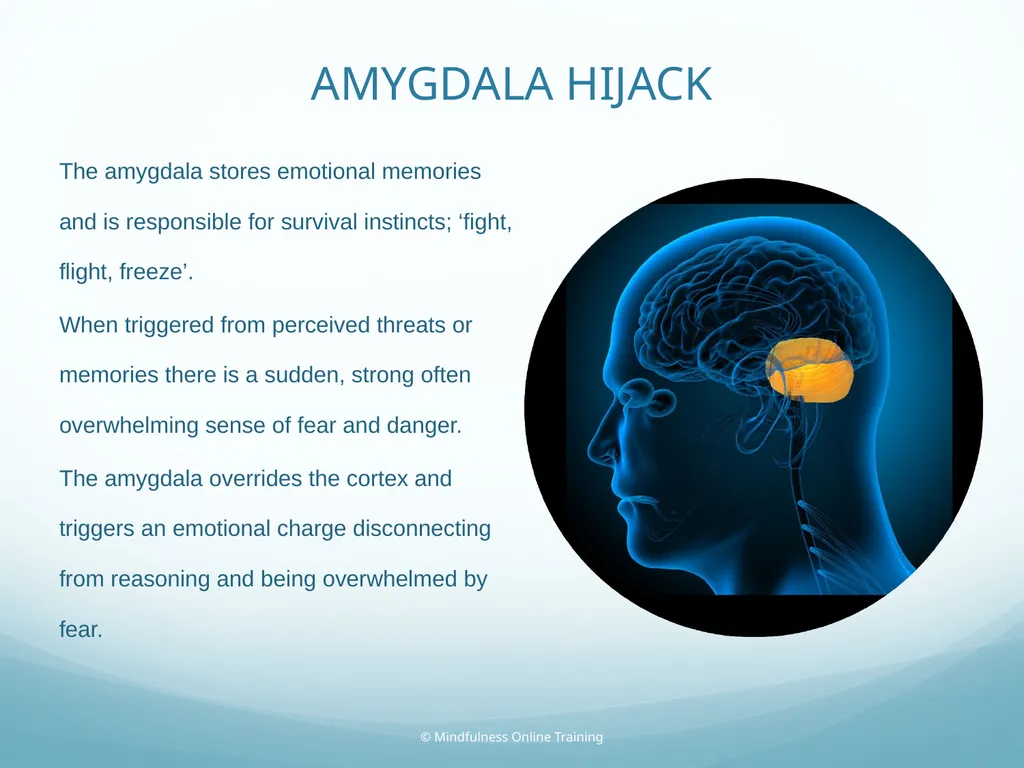
AMYGDALA HIJACK The amygdala stores emotional memories and is responsible for survival instincts; ‘fight, flight, freeze’.
When triggered from perceived threats or memories there is a sudden, strong often overwhelming sense of fear and danger.
The amygdala overrides the cortex and triggers an emotional charge disconnecting from reasoning and being overwhelmed by fear. © Mindfulness Online Training<br>
When triggered from perceived threats or memories there is a sudden, strong often overwhelming sense of fear and danger.
The amygdala overrides the cortex and triggers an emotional charge disconnecting from reasoning and being overwhelmed by fear. © Mindfulness Online Training<br>
43
PHYSIOLOGY OF BREATHING
By changing our breathing pattern we indirectly change our physiology. © Mindfulness Online Training<br>
44
When we breathe in, we activate the sympathetic nervous system -the
FLIGHT AND FRIGHT response in the body - the stress response; heart rate goes up, sweat increases, blood vessels constrict and our digestive system slows down and tension increases. © Mindfulness Online Training<br>
45
When we breath out we activate the parasympathetic nervous system which is responsible for REST AND DIGEST response; heart rate slows down, intestinal and glandular activity increases and generally we feel more relaxed. © Mindfulness Online Training<br>
46
By extending the length of the out-breath ever so slightly this can
de-activate stress and anxiety.
. © Mindfulness Online Training<br>
47
© Mindfulness Online Training By purposefully activating the rest and digest part of the nervous system, through mindful breath-focused practices, you are communicating to every cell of your body that you are safe and as a result you are able to maintain inner equilibrium.
.<br>
48
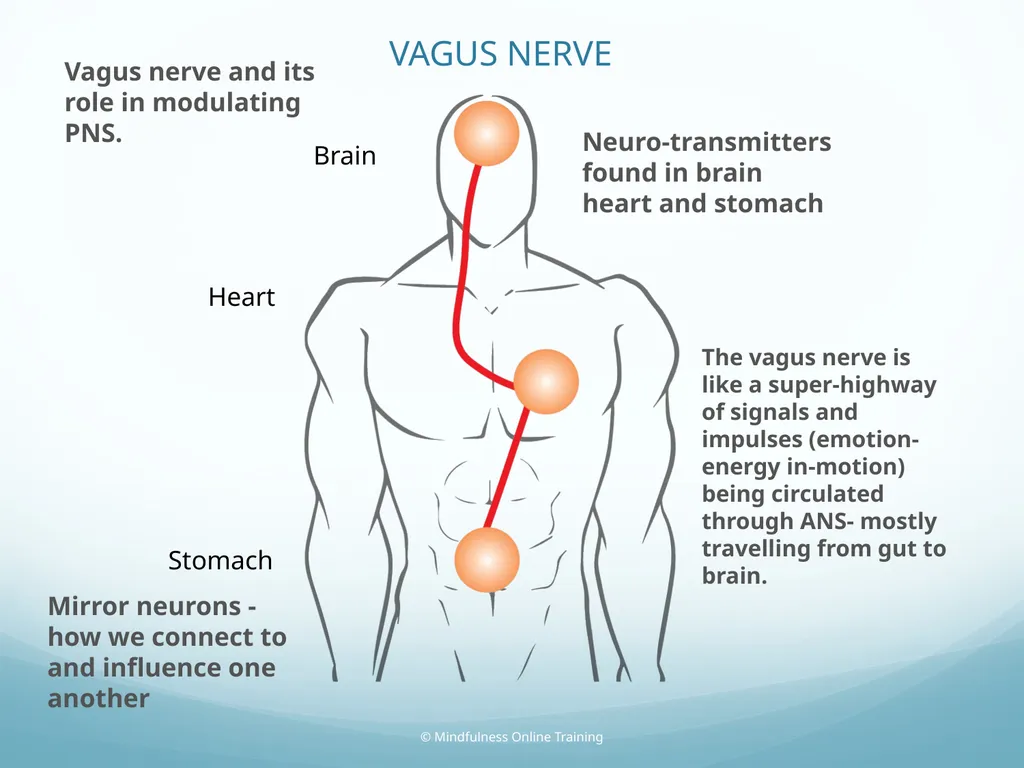
VAGUS NERVE © Mindfulness Online Training Neuro-transmitters found in brain heart and stomach Brain Heart Stomach The vagus nerve is like a super-highway of signals and impulses (emotion- energy in-motion) being circulated through ANS- mostly travelling from gut to brain. Vagus nerve and its role in modulating PNS. Mirror neurons - how we connect to and influence one another<br>
49
HOW DOES IT WORK?
The vagus nerve is like a super-highway connecting the brain, heart and gut. Impulses and signals alert the control centres of the brain when adjustments need to be made or information processed that assist keeping the smooth operating of the human nervous system ( heartbeat, pulse, metabolism, heat/cooling, water flow etc) Included is the human surveillance mechanism- the flight/fight response built into the emotional centre, the amygdala that includes the reptilian brain. The human brain tends to read the environment more for negative signals than positive said to be connected to the survival mechanism. Watching out for bears, lions, floods etc kept people alive in often hostile environments. We no longer need to be so ultra-cautious yet the same mechanism is still active. Mindfulness Online Training<br>
The vagus nerve is like a super-highway connecting the brain, heart and gut. Impulses and signals alert the control centres of the brain when adjustments need to be made or information processed that assist keeping the smooth operating of the human nervous system ( heartbeat, pulse, metabolism, heat/cooling, water flow etc) Included is the human surveillance mechanism- the flight/fight response built into the emotional centre, the amygdala that includes the reptilian brain. The human brain tends to read the environment more for negative signals than positive said to be connected to the survival mechanism. Watching out for bears, lions, floods etc kept people alive in often hostile environments. We no longer need to be so ultra-cautious yet the same mechanism is still active. Mindfulness Online Training<br>
50
Thanks to the work of Stephen Porges and Bessel Van de Kolk, it is now well known, through evidence-based research, that focused breathing exercises, putting the attention on the body’s sensations ( breath, tightness, warmth, softness etc) and many others simple practices including place the arms across the chest and gently tapping the arms, pressing feet into the floor, tapping finger tips- can intervene in the rising escalation of stress and anxiety and de-regulates the traumatic nervous system response bringing the nervous system back to a sense of calm, safety and connection away from fear for life and disconnection. Mindfulness Online Training<br>
51
Polyvagal Theory Polyvagal Theory, developed by Dr Stephen Porges, is a theory of how the autonomic nervous system (ANS) responds to stress, safety and social connections.
It expands on the traditional fight or flight model by identifying three (states) involved in emotional regulation, stress responses and social behaviour<br>
It expands on the traditional fight or flight model by identifying three (states) involved in emotional regulation, stress responses and social behaviour<br>
52
Three Nervous System States
The Theory proposes three main states, based on how the vagus nerve operates
VENTRAL VAGAL STATE – (safe & social) Represents feelings of safety, calm and connection. In this state, individuals are socially engaged, able to think clearly, and experience positive emotions.
SYMPATHETIC STATE – (Flight or Fight) Triggered by perceived threats, leading to increased heart rate, rapid breathing, and heightened awareness. This state prepares the body to confront or escape danger.
DORSAL VAGAL – (Shutdown/Freeze) Occurs when the body perceives extreme danger, leading to immobilization. Individuals may feel numb, disconnected or dissociated as the body conserves energy in response to overwhelming stress. Mindfulness Online Training<br>
The Theory proposes three main states, based on how the vagus nerve operates
VENTRAL VAGAL STATE – (safe & social) Represents feelings of safety, calm and connection. In this state, individuals are socially engaged, able to think clearly, and experience positive emotions.
SYMPATHETIC STATE – (Flight or Fight) Triggered by perceived threats, leading to increased heart rate, rapid breathing, and heightened awareness. This state prepares the body to confront or escape danger.
DORSAL VAGAL – (Shutdown/Freeze) Occurs when the body perceives extreme danger, leading to immobilization. Individuals may feel numb, disconnected or dissociated as the body conserves energy in response to overwhelming stress. Mindfulness Online Training<br>
53
Understanding these states can aid in recognising how our bodies respond to stress and how we can work towards achieving a balanced and regulated nervous system
A key idea of Polyvagal Theory is neuroception – the nervous systems automatic ability to detect safety or danger in the environment without conscious awareness
Deep slow breathing activates the Ventral (Safe & Social) Vagal System Awareness is Key<br>
54
DEALING WITH RESISTANCE
Breaking habits of mind (and body) are never easy. Humans are creatures of habit and changing that habit is well known to have an in-built resistance.
When we adopt mindfulness (intentionally training our attention on one object) resistance can be even greater. It is in overcoming the resistance we start to experience and benefit from the many well-documented outcomes from regular mindfulness practice. Mindfulness Online Training<br>
Breaking habits of mind (and body) are never easy. Humans are creatures of habit and changing that habit is well known to have an in-built resistance.
When we adopt mindfulness (intentionally training our attention on one object) resistance can be even greater. It is in overcoming the resistance we start to experience and benefit from the many well-documented outcomes from regular mindfulness practice. Mindfulness Online Training<br>
55
1. Notice the thoughts of resistance
as they arise.
2. Acknowledge and name it; ‘ I am
resisting these instructions/
practice.
3. Notice yourself observing
resistance.
4. Just accept resistance. It will
usually lose some or all of it’s
hold over your attention. Mindfulness Online Training<br>
as they arise.
2. Acknowledge and name it; ‘ I am
resisting these instructions/
practice.
3. Notice yourself observing
resistance.
4. Just accept resistance. It will
usually lose some or all of it’s
hold over your attention. Mindfulness Online Training<br>
56
self-regulation and resilience Identify emotions and correct vocabulary to express them
Name feelings as a coping strategy
Identify the impact stress and worries can have on our body and brain
Recognise triggers for stress and worries
Read the body and recognise body clues when big emotions occur
Use coping strategies to self-regulate ( see exercises)
Use mindfulness to calm their body and mind ( breathing, listening, body scanning)
Build a growth mindset<br>
Name feelings as a coping strategy
Identify the impact stress and worries can have on our body and brain
Recognise triggers for stress and worries
Read the body and recognise body clues when big emotions occur
Use coping strategies to self-regulate ( see exercises)
Use mindfulness to calm their body and mind ( breathing, listening, body scanning)
Build a growth mindset<br>
57
IDENTIFYING UNHELPFUL THINKING PATTERNS
When we purposefully put the spotlight of attention on our inner world of thoughts and feelings we quickly become aware of robotic patterns of thinking, reacting and beliefs that we reinforce with negative thinking. This is the beginning of reclaiming self-regulation as well as self-esteem and shifting from reinforcing negative views about ourselves to positive acceptance. Mindfulness Online Training<br>
When we purposefully put the spotlight of attention on our inner world of thoughts and feelings we quickly become aware of robotic patterns of thinking, reacting and beliefs that we reinforce with negative thinking. This is the beginning of reclaiming self-regulation as well as self-esteem and shifting from reinforcing negative views about ourselves to positive acceptance. Mindfulness Online Training<br>
58
HOW?
By not believing every thought or feeling that they experience. By stepping back and observing what is happening without hooking into it and allowing the mind and emotions to run amok leading to emotional dysregulation. By not catastrophising the future unknown.
It takes time and practice and there is a high percentage of people with the normal garden-variety brain that will respond positively and maintain emotional resilience with regular practice. Mindfulness Online Training<br>
By not believing every thought or feeling that they experience. By stepping back and observing what is happening without hooking into it and allowing the mind and emotions to run amok leading to emotional dysregulation. By not catastrophising the future unknown.
It takes time and practice and there is a high percentage of people with the normal garden-variety brain that will respond positively and maintain emotional resilience with regular practice. Mindfulness Online Training<br>
59
Train the brain to the positive Because it takes more effort for positive experiences to be remembered, it is important to give extra attention to good things that happen.
Negative thoughts are transferred and stored in your long-term memory, you need to make more of an effort to get the same effect from happy moments. Embed positive thoughts, gratitude as a default activity.
So when something great happens, take a moment to really focus on it. Replay the moment several times in your memory and focus on the wonderful feelings the memory evokes.<br>
Negative thoughts are transferred and stored in your long-term memory, you need to make more of an effort to get the same effect from happy moments. Embed positive thoughts, gratitude as a default activity.
So when something great happens, take a moment to really focus on it. Replay the moment several times in your memory and focus on the wonderful feelings the memory evokes.<br>
60
© Mindfulness Online Training<br>
61
Dr. Dan Siegel & Tina Bryson © Mindfulness Online Training<br>
62
The ability to respond and recover from the challenges of daily living is a marker of wellbeing and depends on the actions of the autonomic nervous system.
The ability to return to regulation is the essence of resilience
We are training ourselves to ‘listen’ inside of ourselves- be aware of energy shifts and movement.
- scanning the environment outside
- sensing the connection to others
- being aware of inner shifts, thoughts, reactions.<br>
The ability to return to regulation is the essence of resilience
We are training ourselves to ‘listen’ inside of ourselves- be aware of energy shifts and movement.
- scanning the environment outside
- sensing the connection to others
- being aware of inner shifts, thoughts, reactions.<br>
63
DAY 2
Mindfulness provides
a tool for profound life change. Mindfulness Online Training<br>
64
Trauma-sensitive mindfulness Trauma; unprocessed effects of traumatic events stored in body. Nervous system adapts to feeling unsafe, adapts to trauma circumstances until person left with a baseline of feeling unsafe and a ever-present sense of doom. Trauma is not a disorder but an adaptation.
Principles to assist trauma survivors avoid reaction extremes of dis-regulation arousal (lost ability to manage mind, feelings) during practice.
1. Window of tolerance- (term coined by Dan Siegal) stay within and take action when going outside the zone.
-engage in self-care- deliberate interventions that support ongoing wellbeing;
-monitor emotions regularly
-have a daily regime of self-care; exercise, diet, contact with nature, social contacts exercise, regular breathing practices.<br>
Principles to assist trauma survivors avoid reaction extremes of dis-regulation arousal (lost ability to manage mind, feelings) during practice.
1. Window of tolerance- (term coined by Dan Siegal) stay within and take action when going outside the zone.
-engage in self-care- deliberate interventions that support ongoing wellbeing;
-monitor emotions regularly
-have a daily regime of self-care; exercise, diet, contact with nature, social contacts exercise, regular breathing practices.<br>
65
Trauma-sensitive mindfulness cont. 2. Learning to recognise hyper- and hypo arousal ( threshold of tolerance); feeling foggy, listless and numb( hypo-) hyper-vigilant, anxious, heart racing - hyper. Noticing signs that you are approaching the threshold of tolerance.
Use a mindful gauge to keep ahead of rising emotions/reactivity/ memories; cultivate awareness of sensations and check in regular to 'read the body'.
3. Have a range of interventions that if memories, flashbacks etc overcome us; open the eyes and look around the room, tapping fingers, pressing feet into ground, shifting attention to breath, or physical sensations mindfully walking in nature, awareness of heat, wind, sound.<br>
Use a mindful gauge to keep ahead of rising emotions/reactivity/ memories; cultivate awareness of sensations and check in regular to 'read the body'.
3. Have a range of interventions that if memories, flashbacks etc overcome us; open the eyes and look around the room, tapping fingers, pressing feet into ground, shifting attention to breath, or physical sensations mindfully walking in nature, awareness of heat, wind, sound.<br>
66
Trauma-sensitive mindfulness cont. As the facilitator, before commencing a session - always remind all participants that if they begin to experience overwhelming unpleasant memories, sensation etc that they can at anytime open their eyes, take a few slow, deep breaths, engage in soothing self-touch ( arms in cross across chest), focus on sounds (interventions). As the guide, you can always put the brakes on a session if you notice anyone displaying signs of dis-regulation.
You can track participants inner state by awareness of any shifts; excessive sweating, fast breathing (rate of breathing is a barometer of our inner state), facial expression, posture, tears, skin tone, muscle rigidity, speech.<br>
You can track participants inner state by awareness of any shifts; excessive sweating, fast breathing (rate of breathing is a barometer of our inner state), facial expression, posture, tears, skin tone, muscle rigidity, speech.<br>
67
Trauma-sensitive mindfulness cont. If you notice someone going outside their window of tolerance, gently guide and invite the person back into contact with a resource that is safe, soothing and nourishing for them.
In time, mindfulness can help trauma survivors increase their capacity to stay present with trauma stimuli, which in time can lead to trauma resolution.
This is done slowly and monitored carefully so as dis-regulation is avoided.
MINDFULNESS TRAINING QUESTIONNAIRE
Have you practiced mindfulness or meditation before?
Can you list dates and length of practice time?
What do you hope to get out of this course?
What is your current level of stress on a scale of 1-10 (1 being least - 10 being most).<br>
In time, mindfulness can help trauma survivors increase their capacity to stay present with trauma stimuli, which in time can lead to trauma resolution.
This is done slowly and monitored carefully so as dis-regulation is avoided.
MINDFULNESS TRAINING QUESTIONNAIRE
Have you practiced mindfulness or meditation before?
Can you list dates and length of practice time?
What do you hope to get out of this course?
What is your current level of stress on a scale of 1-10 (1 being least - 10 being most).<br>
68
Trauma-sensitive mindfulness cont. MINDFULNESS TRAINING QUESTIONNAIRE (CONT.)
Have you had a significant trauma that still impact on your wellbeing? (flashbacks, nightmares, difficulty with attention?)
Are you currently receiving counselling or taking medication for psychological conditions?
Do you have any other physical or mental conditions we should be aware of?
Is there anything else you would like to share with us?<br>
Have you had a significant trauma that still impact on your wellbeing? (flashbacks, nightmares, difficulty with attention?)
Are you currently receiving counselling or taking medication for psychological conditions?
Do you have any other physical or mental conditions we should be aware of?
Is there anything else you would like to share with us?<br>
69
Guiding the group
Place. Time. Attitude
Place: Comfortable, safe space, preferably no/low a noise.
Time; to be decided
Attitude: commitment to practice, practice with presence, kindness, non-judgment.
Instruction: Mindful Body
Awareness of breath is both subtle
and profound. Mindfulness Online Training<br>
Place. Time. Attitude
Place: Comfortable, safe space, preferably no/low a noise.
Time; to be decided
Attitude: commitment to practice, practice with presence, kindness, non-judgment.
Instruction: Mindful Body
Awareness of breath is both subtle
and profound. Mindfulness Online Training<br>
70
‘as you practice, allow the connection to the breath, without force, trying or struggle. Can the breath simply hold you?”
As the participants respond to experiences the teacher responds in the moment- no pre-planned
Response.
‘If you feel discomfit- turn towards that and just observe the sensations without judgments.’ Mindfulness Online Training<br>
As the participants respond to experiences the teacher responds in the moment- no pre-planned
Response.
‘If you feel discomfit- turn towards that and just observe the sensations without judgments.’ Mindfulness Online Training<br>
71
Creating Unique content for target groups.
Teaching intentions: eg. meeting loneliness
Cultivating observing: self-enquiry
Noticing: when and where the mind has discovered capacity to detect inner experience.
Moving towards acceptance: allowing what is without judgment
Cultivating compassion; first for self then others
Guiding enquiry; questions to assist participants be able to articulate inner experiences. Mindfulness Online Training<br>
Teaching intentions: eg. meeting loneliness
Cultivating observing: self-enquiry
Noticing: when and where the mind has discovered capacity to detect inner experience.
Moving towards acceptance: allowing what is without judgment
Cultivating compassion; first for self then others
Guiding enquiry; questions to assist participants be able to articulate inner experiences. Mindfulness Online Training<br>
72
OUTCOME
• Awareness of observing consciousness that is
both part of and apart from the experience. • I am not my thoughts • Relationship to SELF and EXPERIENCE DECENTERING = the ability to view experience from outside. (habitual modes and perceptions are suspended) Mindfulness Online Training<br>
both part of and apart from the experience. • I am not my thoughts • Relationship to SELF and EXPERIENCE DECENTERING = the ability to view experience from outside. (habitual modes and perceptions are suspended) Mindfulness Online Training<br>
73
Contact with the Present Moment
• Being centered in the present moment
• Be here now
• Paying attention
• Bring attention back
• Gentle, non-judging, beginner’s mind
• Promotes ability to make workable decisions Mindfulness Online Training<br>
74
Mindfulness is about developing forms of awareness that are non-verbal (meta-cognition-thinking about thinking, higher-order thinking). i.e. being aware of impulses, thoughts feelings as they arise in the body. It is a sometimes an elusive process which lies, in a sense, beneath thoughts & words. (J. Kabat-Zin) Mindfulness Online Training<br>
75
Running classes, groups one to one sessions
1. Give the session context.
2. Practices
3. Enquiry
4. Questions
5. Close with reminder of commitment to daily practice to experience the many benefits. Mindfulness Online Training<br>
76
PURPOSE OF PRACTICES
To anchor to the present moment through body sensations
Dealing skilfully with mind wandering
Learning gentleness, encouraging curiosity, learning acceptance.
Mindfulness of ‘feel of things’ (pleasant /unpleasant/neutral).
Noticing aversion.
Learning to consciously widen and narrow the focus of attention.
Mindfulness of the natural flux of experience ( the natural cycle of the breath, thoughts and emotion.) Mindfulness Online Training<br>
77
Mindfulness helps us change our relationship with our inner private experiences (thoughts, feelings, memories, bodily sensations) so they no longer entangle us. Mindfulness Online Training<br>
78
4 main components of mindfulness training:
1. Regulation of attention (learning to choose
what to pay attention to)
2. Regulation of emotions ( paying attention to feelings with curiosity and kindness)
3. Self-awareness: thoughts and feelings
4. Developing awareness of sensations. Mindfulness Online Training<br>
2. Regulation of emotions ( paying attention to feelings with curiosity and kindness)
3. Self-awareness: thoughts and feelings
4. Developing awareness of sensations. Mindfulness Online Training<br>
79
Finding one’s own authority as a teacher can be and is challenging. We ask ourselves ‘Who am I to teach? What do I know? Do I know enough to teach?
This is quite normal as the facilitator you are not immune to the shifting states of mind. While guiding groups it’s not uncommon to to have to face yourself. Mindfulness Online Training<br>
This is quite normal as the facilitator you are not immune to the shifting states of mind. While guiding groups it’s not uncommon to to have to face yourself. Mindfulness Online Training<br>
80
2 Key developmental areas:
Inward learning: (personal practice): for deeper awareness, contemplation, self-reflection, self-knowledge and through continued cultivation of non-judgmental observation, active listening, flexibility, presence, insight and compassion.
Outward learning: attaining skills and competencies for guiding groups or one to one mindfulness training and applying these in a variety of settings.
Teaching mindfulness requires an intellectual understanding as well as science-based understanding and the ability to communicate these ideas simple, clearly
and memorably and authentically. Mindfulness Online Training<br>
Inward learning: (personal practice): for deeper awareness, contemplation, self-reflection, self-knowledge and through continued cultivation of non-judgmental observation, active listening, flexibility, presence, insight and compassion.
Outward learning: attaining skills and competencies for guiding groups or one to one mindfulness training and applying these in a variety of settings.
Teaching mindfulness requires an intellectual understanding as well as science-based understanding and the ability to communicate these ideas simple, clearly
and memorably and authentically. Mindfulness Online Training<br>
81
KEY REQUIREMENTS;
-To ‘teach/guide’ means that you have learnt to ground yourself in this reflective practice. You have ( or will) attended multiple day silent retreats and reached a level of self-awareness that you are able to observe the changes that emerge for you throughout this uncovering process.
-You have established a clear view ( insight) into the workings of your own mind: attachments, aversions, judgments, not listening fully etc. Mindfulness Online Training<br>
-To ‘teach/guide’ means that you have learnt to ground yourself in this reflective practice. You have ( or will) attended multiple day silent retreats and reached a level of self-awareness that you are able to observe the changes that emerge for you throughout this uncovering process.
-You have established a clear view ( insight) into the workings of your own mind: attachments, aversions, judgments, not listening fully etc. Mindfulness Online Training<br>
82
This training offers you the opportunity to;
-Practice guiding mindfulness
-Develop and integrate personal and professional qualities needed to support authentic mindfulness guiding
-Understand and practice the key competencies and cultivate the skills to lead groups
-Become skilled at Enquiry questions that assist and deepen participants unique experience
-Set up groups for ongoing practice. Mindfulness Online Training<br>
-Practice guiding mindfulness
-Develop and integrate personal and professional qualities needed to support authentic mindfulness guiding
-Understand and practice the key competencies and cultivate the skills to lead groups
-Become skilled at Enquiry questions that assist and deepen participants unique experience
-Set up groups for ongoing practice. Mindfulness Online Training<br>
83
Authenticity, Authority, Friendship Commitment to regular practice. From this you know people have what is needed inside them to become more of what they are with guidance.
Trace the journey that brought you here;
you bring your life experience as authority- knowing deeply, not a sense of fixing things.
Friendship is genuinely caring for people- meeting people where they are Mindfulness Online Training<br>
Trace the journey that brought you here;
you bring your life experience as authority- knowing deeply, not a sense of fixing things.
Friendship is genuinely caring for people- meeting people where they are Mindfulness Online Training<br>
84
KEY POINTS FOR EFFECTIVE TEACHING
• Commitment to personal practice. • Key teaching points; Language, orientating, voice, pacing, content • Reflection diary • Mentoring– a time to share reflections, difficulties, observations and noting areas to improve.
• Dealing with difficulties that arise in groups/classes. Mindfulness Online Training<br>
• Commitment to personal practice. • Key teaching points; Language, orientating, voice, pacing, content • Reflection diary • Mentoring– a time to share reflections, difficulties, observations and noting areas to improve.
• Dealing with difficulties that arise in groups/classes. Mindfulness Online Training<br>
85
> LANGUAGE
> ALLOWING
> ORIENTATING
> EMBODYING Effective Meditation Guidance Requires Control of Four Interdependent Dimensions Mindfulness Online Training<br>
86
Word choice can have a profound effect and using a particular style helps participants overcome resistance.
Using the …ing form minimizes teacher/student hierarchy e.g.. Instead of ‘breathe in’ ‘breathing in’. People don’t like commands- use suggestions. Mindfulness Online Training<br>
Using the …ing form minimizes teacher/student hierarchy e.g.. Instead of ‘breathe in’ ‘breathing in’. People don’t like commands- use suggestions. Mindfulness Online Training<br>
87
Language: using language to help participants articulate their insights. ‘What was it like for you?’, ‘Can you say a little more about that?’, ‘ Is there more you noticed?’
These questions require reflection and help put the spotlight on our inner process’ and help participants to a greater understanding. Mindfulness Online Training<br>
These questions require reflection and help put the spotlight on our inner process’ and help participants to a greater understanding. Mindfulness Online Training<br>
88
Leading: Mindfulness is experiential and
a co-creation. The teacher and participants work together to create a space where mindfulness can happen- where people can come into deeper contact with who they really are by surrendering to the present moment continually, exactly as it is, without an agenda or expected outcome. Mindfulness Online Training<br>
a co-creation. The teacher and participants work together to create a space where mindfulness can happen- where people can come into deeper contact with who they really are by surrendering to the present moment continually, exactly as it is, without an agenda or expected outcome. Mindfulness Online Training<br>
89
The core model of enquiry is listening, not speaking. This involves observing one’s own reactivity, urges to comment, contradict, one-up the other fix or give advice or consolation. The focus is on the practices themselves. Mindfulness Online Training<br>
90
Problems identified when teaching/guiding:
Striving- as if in “if you did this long enough you’d be better.”
Idealising- I know this better and I am going to teach you
Fixing- there’s something wrong with you that needs fixing.
Dualism- as in there is an observer and an observed. Mindfulness Online Training<br>
Striving- as if in “if you did this long enough you’d be better.”
Idealising- I know this better and I am going to teach you
Fixing- there’s something wrong with you that needs fixing.
Dualism- as in there is an observer and an observed. Mindfulness Online Training<br>
91
Guiding/ Allowing
There is no right or wrong, everything is allowed. There is no ‘required experience.’
Use of language is a great way to offer suggestions.
e.g. ‘Noticing any tightness or softness in the muscles perhaps there’s nothing and that’s OK. It’s simply your experience in this moment. Mindfulness Online Training<br>
There is no right or wrong, everything is allowed. There is no ‘required experience.’
Use of language is a great way to offer suggestions.
e.g. ‘Noticing any tightness or softness in the muscles perhaps there’s nothing and that’s OK. It’s simply your experience in this moment. Mindfulness Online Training<br>
92
Orientating
Guiding participants towards their own direct experience. Mindfulness Online Training<br>
Guiding participants towards their own direct experience. Mindfulness Online Training<br>
93
Using repeated refrains, a recurring structure that suggests stability e.g. During expanded awareness ask,
‘Where is your attention now,’ or ‘If your attention has wandered from the task, gently, without judgment, turn you attention back to….”
Ongoing elaboration of a concept; e.g. During breathing exercises introduce principle of kindness to oneself and then elaborate practice of cultivating a loving response to one’s distraction then gently redirecting attention back to task. Incorporating events arising, sounds, into the practice. “What’s happening in you as the siren gets close?” Mindfulness Online Training<br>
‘Where is your attention now,’ or ‘If your attention has wandered from the task, gently, without judgment, turn you attention back to….”
Ongoing elaboration of a concept; e.g. During breathing exercises introduce principle of kindness to oneself and then elaborate practice of cultivating a loving response to one’s distraction then gently redirecting attention back to task. Incorporating events arising, sounds, into the practice. “What’s happening in you as the siren gets close?” Mindfulness Online Training<br>
94
The Voice
Given the majority of a mindfulness session is done with eyes closed, the voice is a very important tool. Speaking from a place of embodied experience, with a gentle, warm, clear tone is important to reach participants in a way where they feel safe and secure in your ability to guide. Mindfulness Online Training<br>
Given the majority of a mindfulness session is done with eyes closed, the voice is a very important tool. Speaking from a place of embodied experience, with a gentle, warm, clear tone is important to reach participants in a way where they feel safe and secure in your ability to guide. Mindfulness Online Training<br>
95
Embodying- the teacher is engaged with practice moment to moment, it’s not a performance.
The language used is rooted in the teachers own experience.
Word choice, tone of voice, confidence of expression- all express authenticity when the teacher/guide is embodying the practice.
This all helps participants to shape their experience. Mindfulness Online Training<br>
96
Enquiring; curiosity about participants experiences.
An ongoing dialogue between teacher/guide and participants can assist ‘cultivating observation’ and ‘moving towards acceptance. An enquiry into participants subjective experience, their pre-semantic ’knowing’, in the moment with the intention to make more conscious meanings that are then available for further investigation. Mindfulness Online Training<br>
97
NOTICING SENSATIONS, THOUGHTS FEELINGS
(direct experience within self)
Areas of exploration/questioning include;
• What did you notice? (physical sensations, including
sounds, feelings, movement)
• How did it feel?
• Where were these occurring (specific location or through
whole body)
• Did the sensations change or were they constant?
• What emotions/feelings/thoughts were connected to them?
• Thoughts about the past/present/future.
• Thoughts: memories, worries, planning, time, food.
• Sensations: restlessness, pain, hot/cold.
• Emotions: sad, angry, fearful, happy, secure, loving Mindfulness Online Training<br>
98
DEVELOPING COMPETENCE AS A
MINDFULNESS TEACHER
The following points need to be identified as key areas to be considered in the delivery of Mindfulness classes;
Coverage, pacing and organisation of teaching material. Mindfulness Online Training<br>
99
Mindfulness Online Training<br>