Modified Diets Vegetarian Diet Test Your Knowledge True or False Q1. Coeliac disease is a lifelong autoimmune condition. True or False Q2. Abdominal pain and diarrhoea are possible symptoms of coeliac disease. True or False Q3. Gluten
Related Topics
Share
Embed code
Download this presentation From Below
"Modified Diets Vegetarian Diet Test Your Knowledge" is the property of its rightful owner. Permission is granted to
download and print the materials on this website for personal, non-commercial use only, and to display it
on your personal computer provided you do not modify the materials and that you retain all copyright
notices contained in the materials. By downloading content from our website, you accept the terms of this
agreement.
Presentation Transcript
01
Modified Diets Vegetarian Diet<br>
02
Test Your Knowledge True or False
Q1. Coeliac disease is a lifelong autoimmune condition. True or False
Q2. Abdominal pain and diarrhoea are possible symptoms of coeliac disease. True or False
Q3. Gluten causes the body’s defence system to form hormones which mistakenly attack the villi of the small intestine. True or False
Q4. Rye is a naturally gluten-free food. True or False
Q5. Corn(maize) and rice should be avoided by individuals with coeliac disease. True or False<br>
03
Modified Diets (HL) Definition
Any diet altered to include or exclude certain foods or nutrients
Reasons for modifying a diet?
● Personal Choice – vegetarianism
● Health reasons – diabetes; obesity; bowel disorders<br>
04
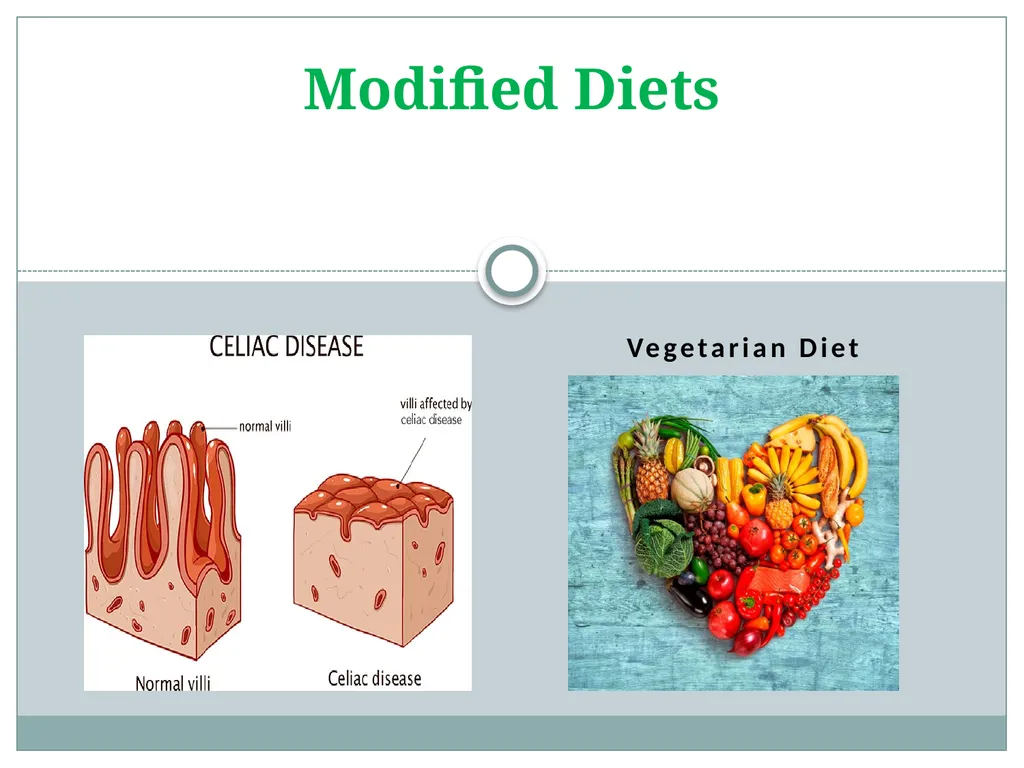
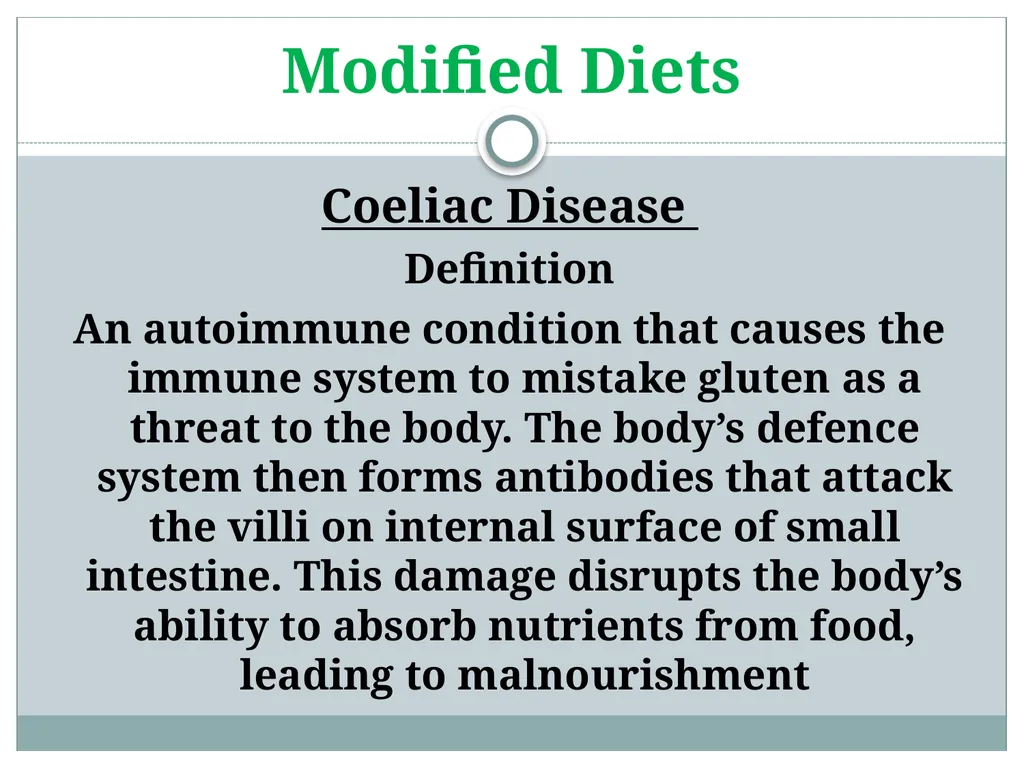
Modified Diets Coeliac Disease
Definition
An autoimmune condition that causes the immune system to mistake gluten as a threat to the body. The body’s defence system then forms antibodies that attack the villi on internal surface of small intestine. This damage disrupts the body’s ability to absorb nutrients from food, leading to malnourishment<br>
05
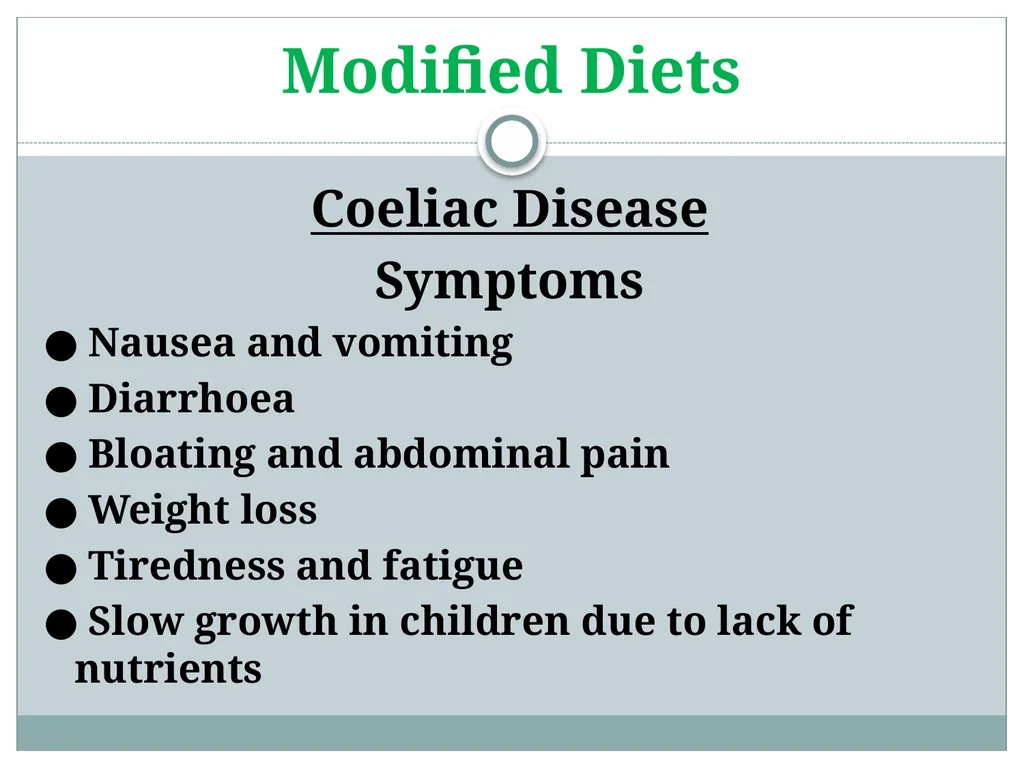
Modified Diets Coeliac Disease
Symptoms
● Nausea and vomiting
● Diarrhoea
● Bloating and abdominal pain
● Weight loss
● Tiredness and fatigue
● Slow growth in children due to lack of nutrients<br>
06
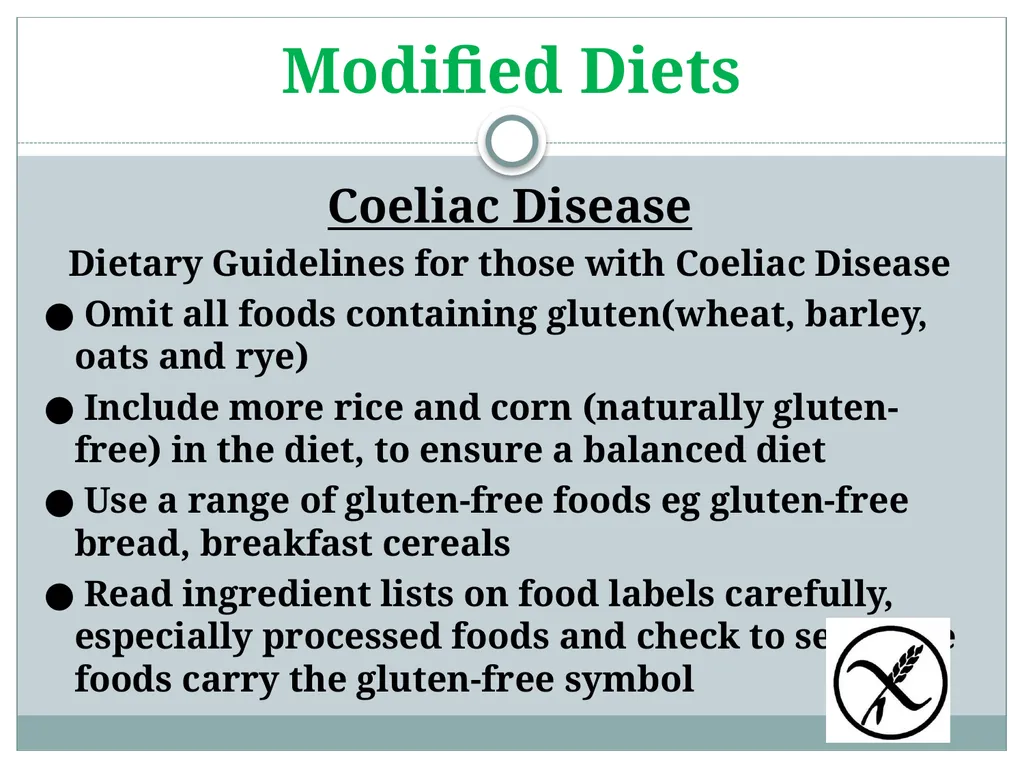
Modified Diets Coeliac Disease
Dietary Guidelines for those with Coeliac Disease
● Omit all foods containing gluten(wheat, barley, oats and rye)
● Include more rice and corn (naturally gluten-free) in the diet, to ensure a balanced diet
● Use a range of gluten-free foods eg gluten-free bread, breakfast cereals
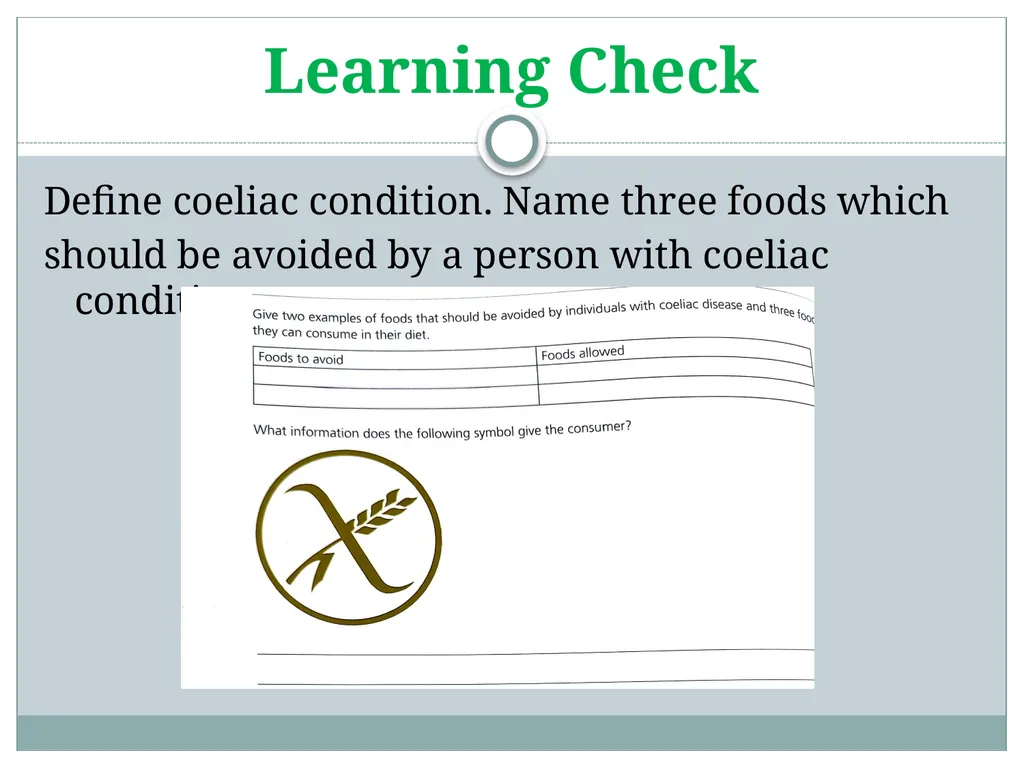
● Read ingredient lists on food labels carefully, especially processed foods and check to see if the foods carry the gluten-free symbol<br>
07
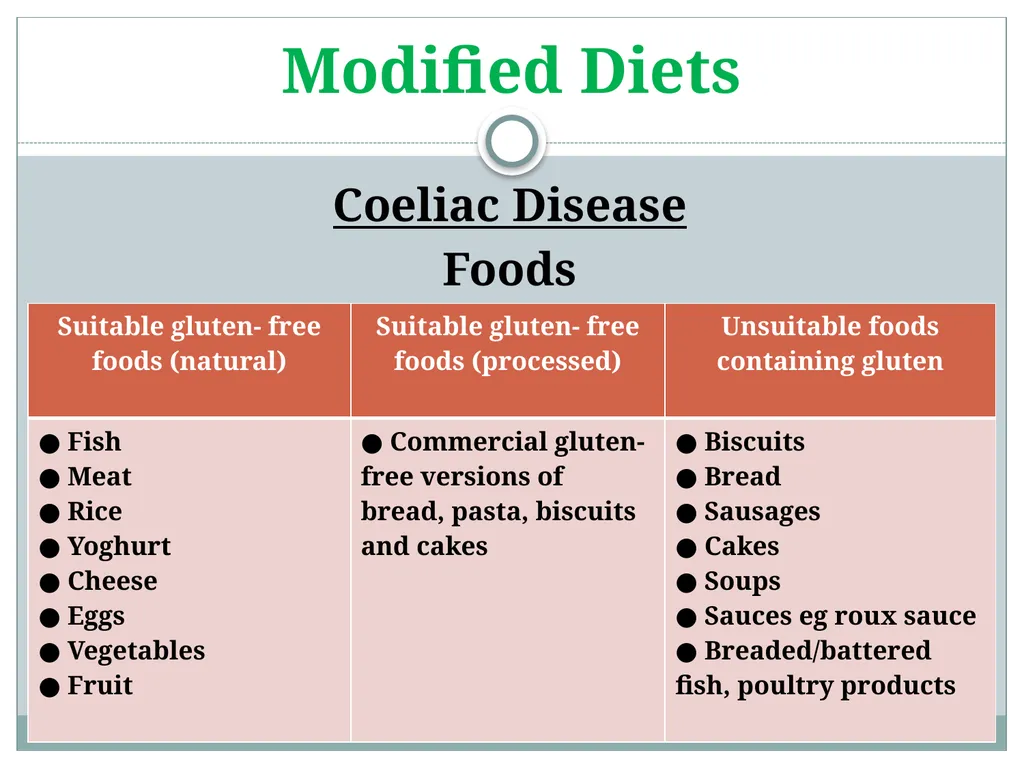
Modified Diets Coeliac Disease
Foods<br>
08
Learning Check Define coeliac condition. Name three foods which
should be avoided by a person with coeliac condition.<br>
09
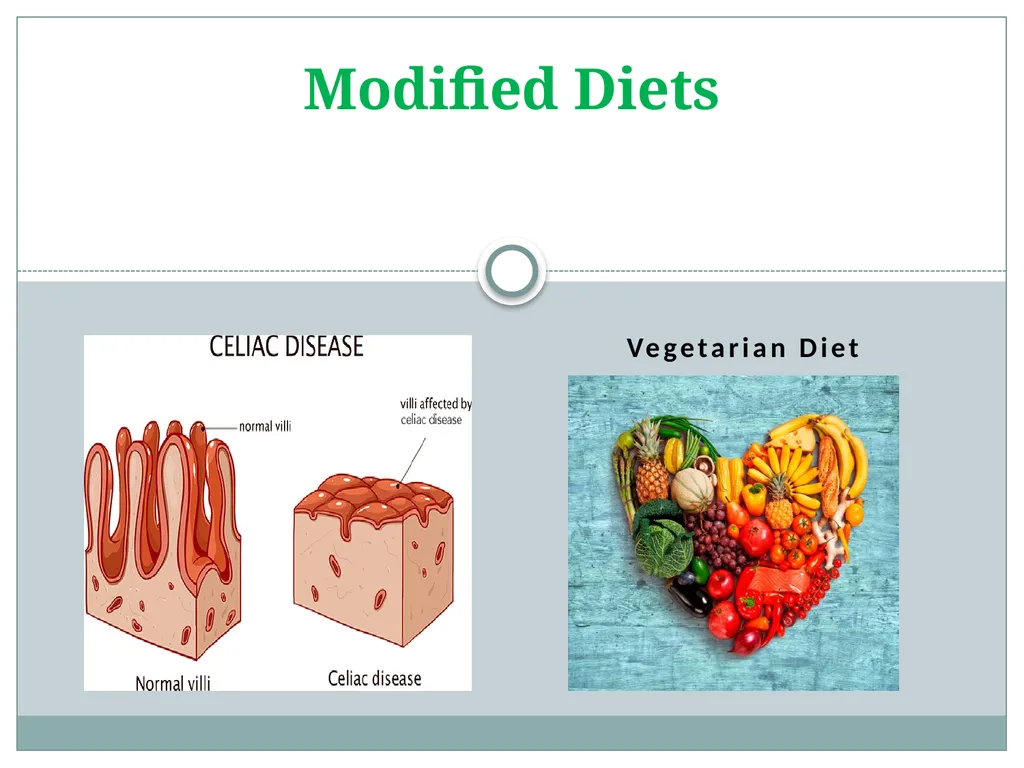
Modified Diets Vegetarianism
Definition
The practice of not eating meat or fish, especially for moral, religious, or health reasons<br>
10
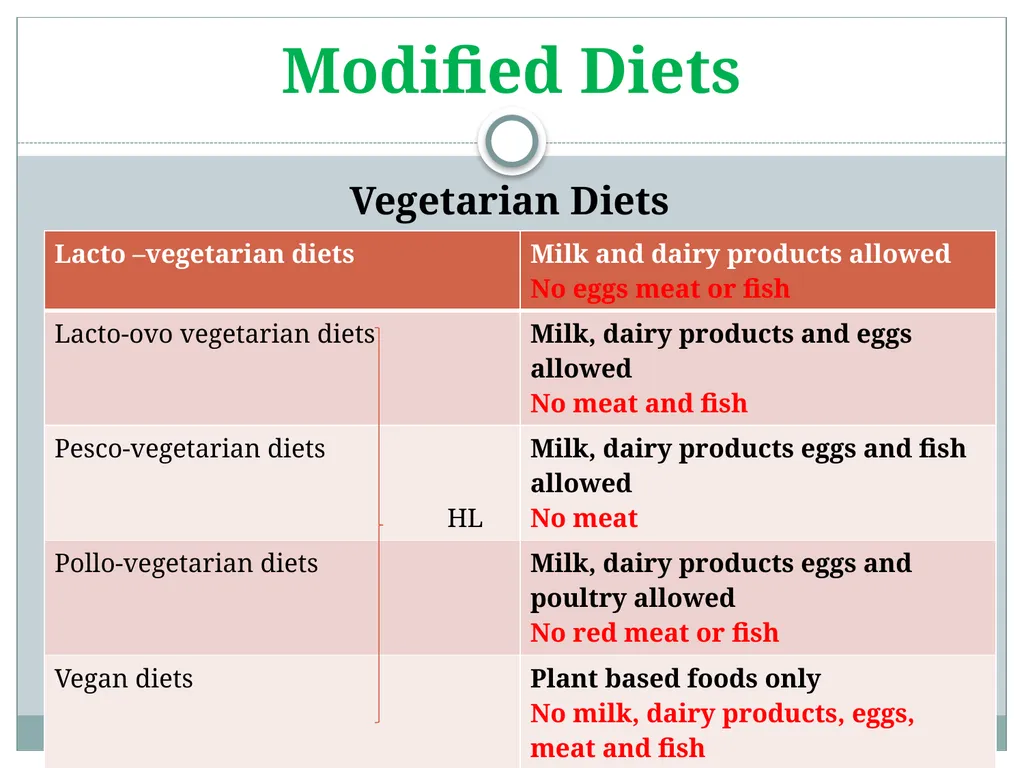
Modified Diets Vegetarian Diets<br>
11
Modified Diets Vegetarian Diet
Reasons for choice
● Health – low in saturated fat, higher in dietary fibre
● Religion/culture – Buddists follow a vegetarian diet (believe killing animals is wrong)
● Sensory factors – some people do not like th smell, appearance, taste and texture of meat and fish
● Economic – cheaper as meat and fish excluded from diet
● Family – a person may have adapted eating habits as a child as a result of other family members practicing a vegetarian diet
● Ethics – wrong to kill/harm animals; disagree with intensive farming practices eg. caged hens<br>
12
Modified Diets Vegetarian Diet
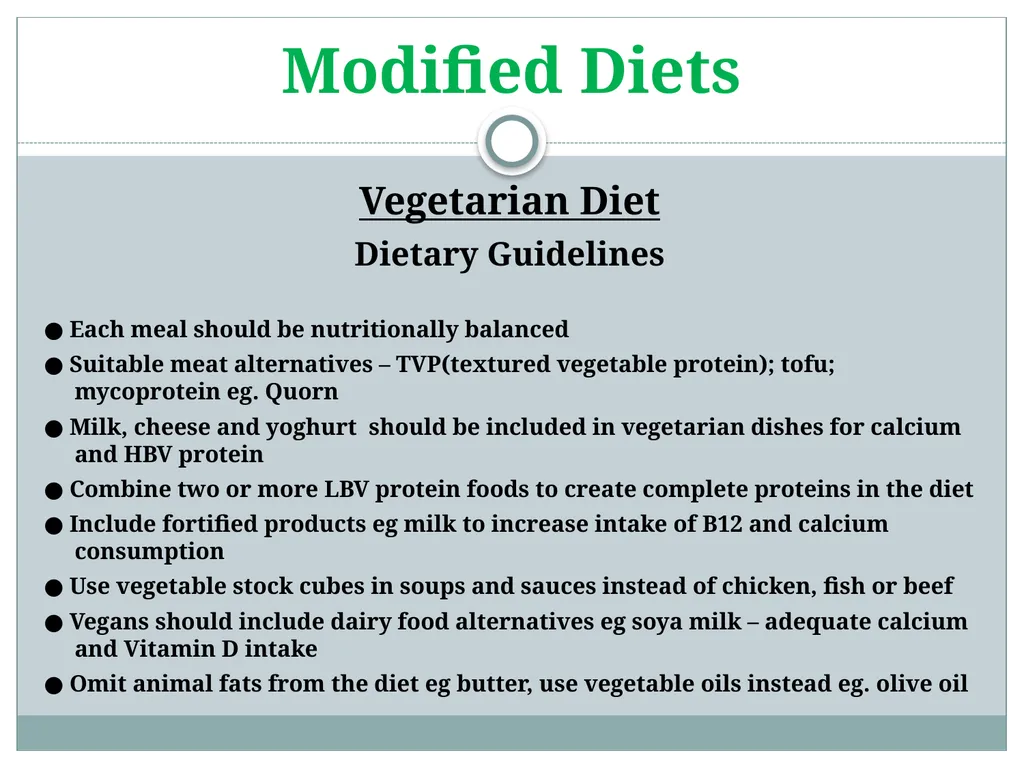
Dietary Guidelines
● Each meal should be nutritionally balanced
● Suitable meat alternatives – TVP(textured vegetable protein); tofu; mycoprotein eg. Quorn
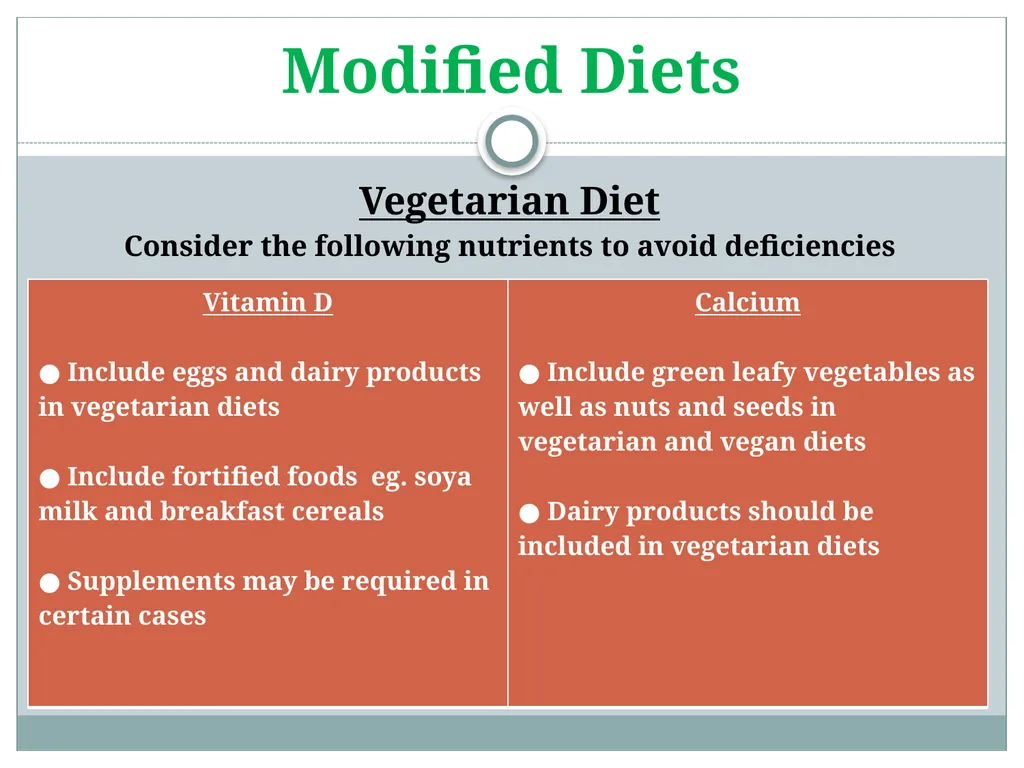
● Milk, cheese and yoghurt should be included in vegetarian dishes for calcium and HBV protein
● Combine two or more LBV protein foods to create complete proteins in the diet
● Include fortified products eg milk to increase intake of B12 and calcium consumption
● Use vegetable stock cubes in soups and sauces instead of chicken, fish or beef
● Vegans should include dairy food alternatives eg soya milk – adequate calcium and Vitamin D intake
● Omit animal fats from the diet eg butter, use vegetable oils instead eg. olive oil<br>
13
Modified Diets Vegetarian Diet
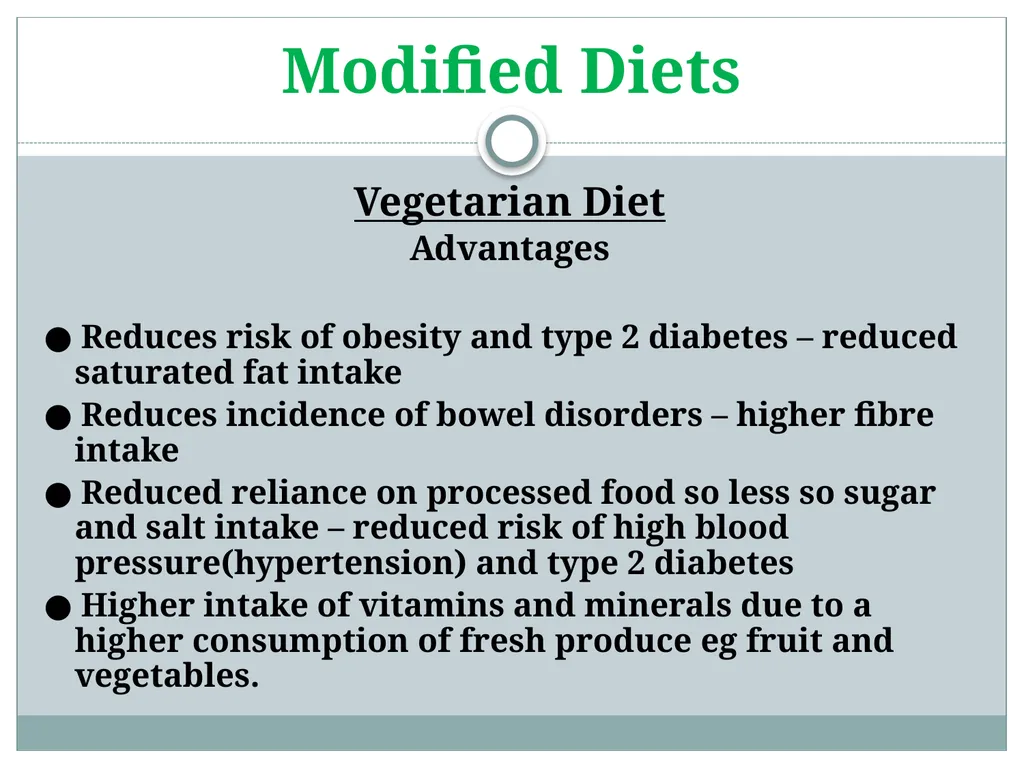
Advantages
● Reduces risk of obesity and type 2 diabetes – reduced saturated fat intake
● Reduces incidence of bowel disorders – higher fibre intake
● Reduced reliance on processed food so less so sugar and salt intake – reduced risk of high blood pressure(hypertension) and type 2 diabetes
● Higher intake of vitamins and minerals due to a higher consumption of fresh produce eg fruit and vegetables.<br>
14
Modified Diets Vegetarian Diet
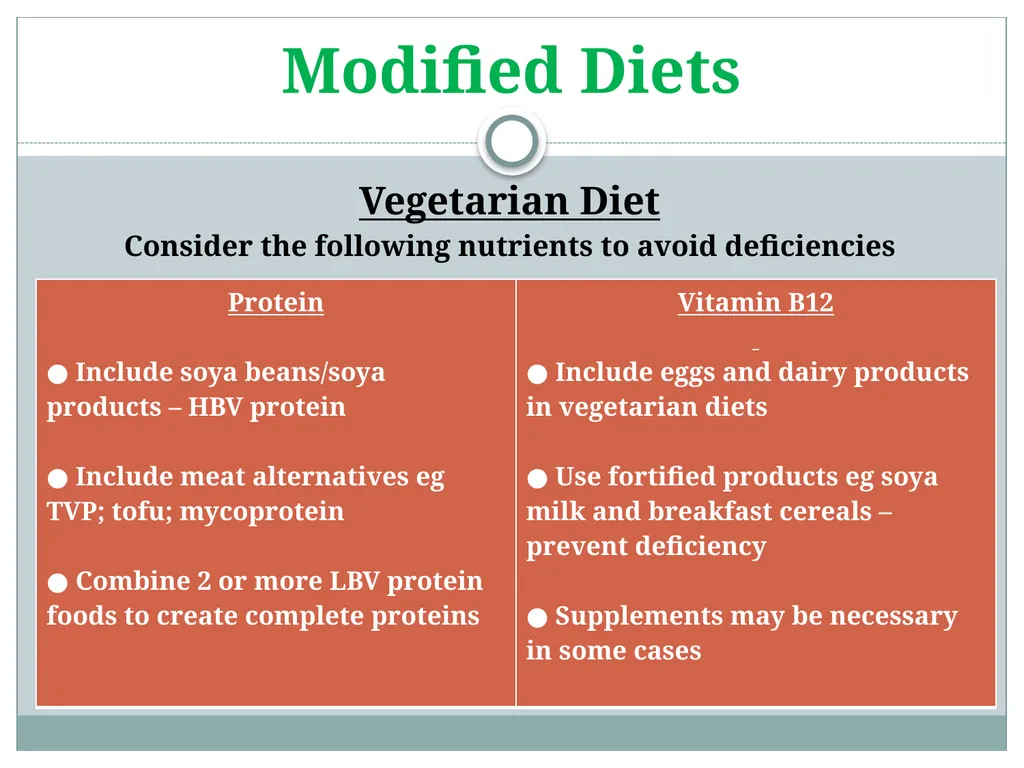
Consider the following nutrients to avoid deficiencies<br>
15
Modified Diets Vegetarian Diet
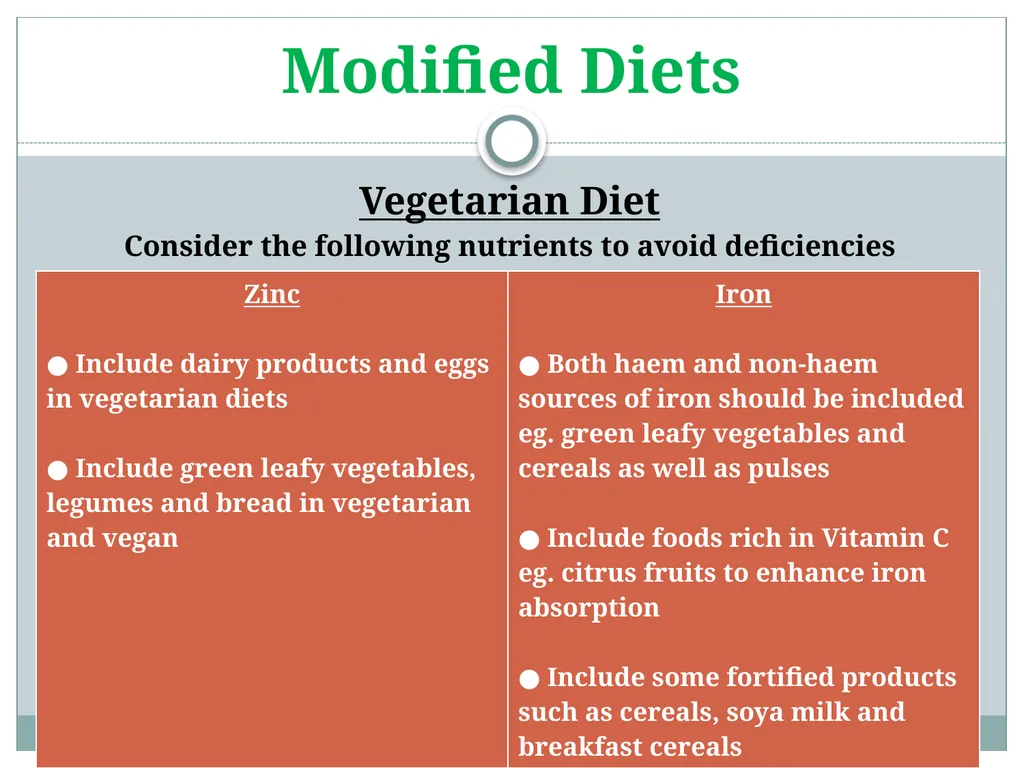
Consider the following nutrients to avoid deficiencies<br>
16
Modified Diets Vegetarian Diet
Consider the following nutrients to avoid deficiencies<br>
17
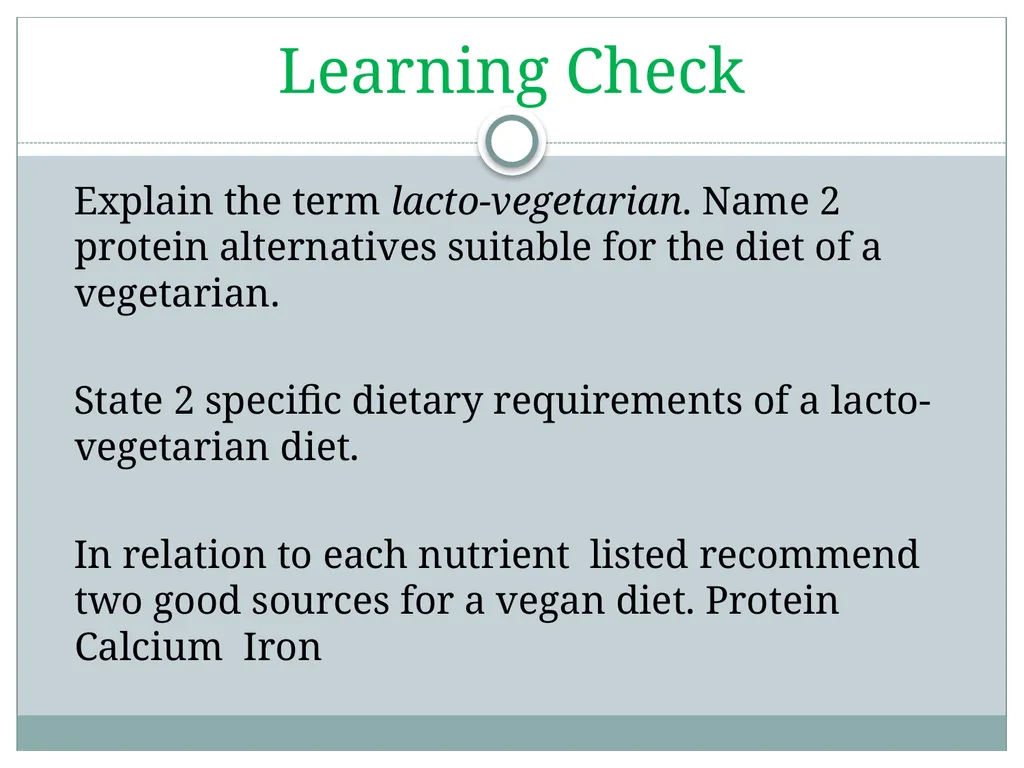
Learning Check Explain the term lacto-vegetarian. Name 2 protein alternatives suitable for the diet of a vegetarian.
State 2 specific dietary requirements of a lacto-vegetarian diet.
In relation to each nutrient listed recommend two good sources for a vegan diet. Protein Calcium Iron<br>