Module 3: Individual Peacekeeping Personnel Relevance Be aware: High-risk areas or crisis operations Need to carry out work without adverse effect Worklife balance UN Core Pre-Deployment Training Materials 2017 Learning Outcomes Learners
"Module 3: Individual Peacekeeping Personnel" is the property of its rightful owner. Permission is granted to
download and print the materials on this website for personal, non-commercial use only, and to display it
on your personal computer provided you do not modify the materials and that you retain all copyright
notices contained in the materials. By downloading content from our website, you accept the terms of this
agreement.
Presentation Transcript
01
Module 3: Individual Peacekeeping Personnel<br>
02
Relevance
Be aware:
High-risk areas or crisis operations
Need to carry out work without adverse effect
Work/life balance UN Core Pre-Deployment Training Materials 2017<br>
03
Learning Outcomes
Learners will:
Identify symptoms of negative stress
List sources of stress
Explain different types of stress
Describe stress management techniques and coping methods UN Core Pre-Deployment Training Materials 2017<br>
04
Lesson Overview
Definition of Stress
Useful versus Harmful Stress – Positive versus Negative Stress
Sources of Stress
Types of Stress
Coping with Stress UN Core Pre-Deployment Training Materials 2017<br>
05
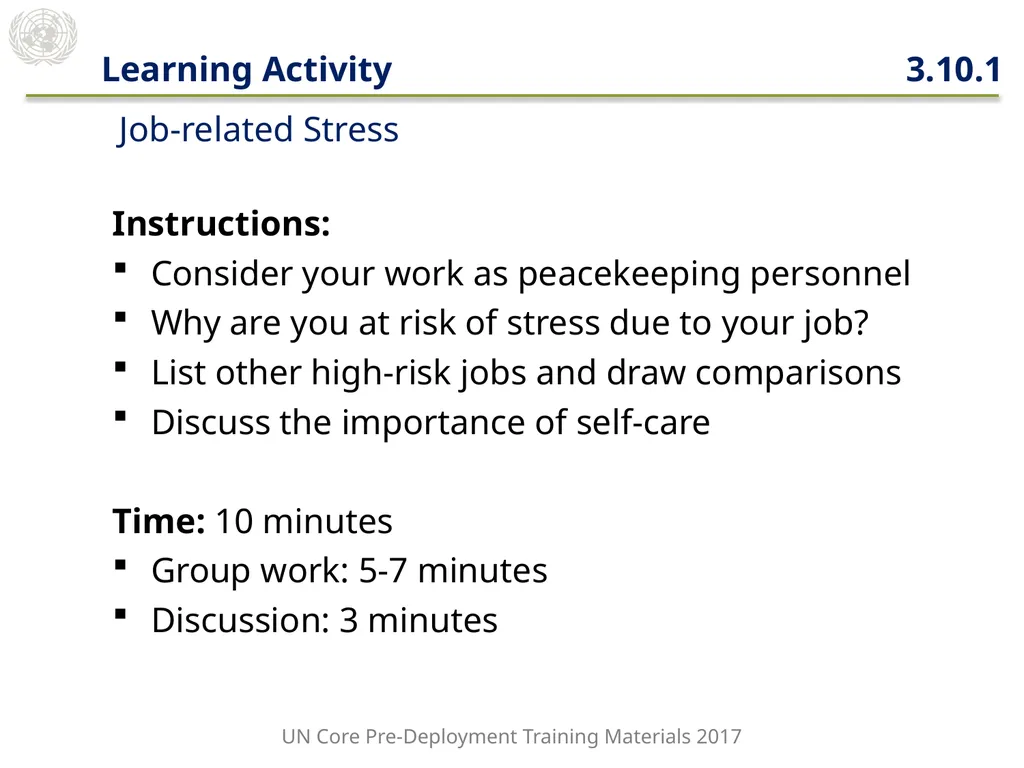
UN Core Pre-Deployment Training Materials 2017 Instructions:
Consider your work as peacekeeping personnel
Why are you at risk of stress due to your job?
List other high-risk jobs and draw comparisons
Discuss the importance of self-care
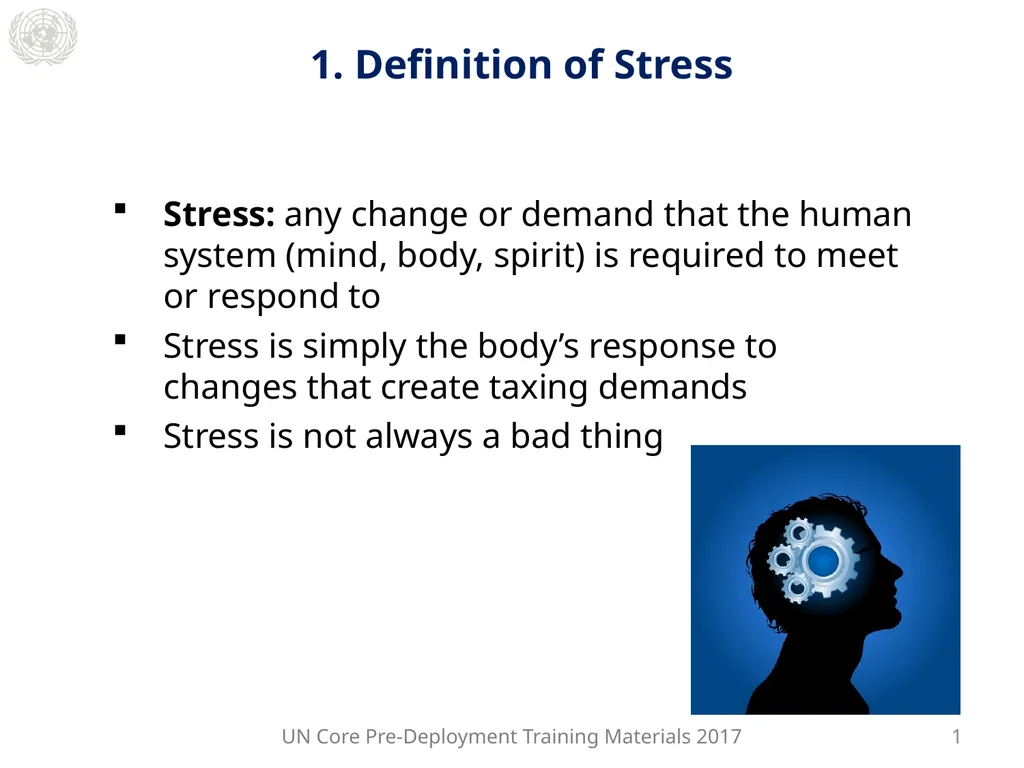
1. Definition of Stress Stress: any change or demand that the human system (mind, body, spirit) is required to meet or respond to
Stress is simply the body’s response to changes that create taxing demands
Stress is not always a bad thing 1 UN Core Pre-Deployment Training Materials 2017<br>
07
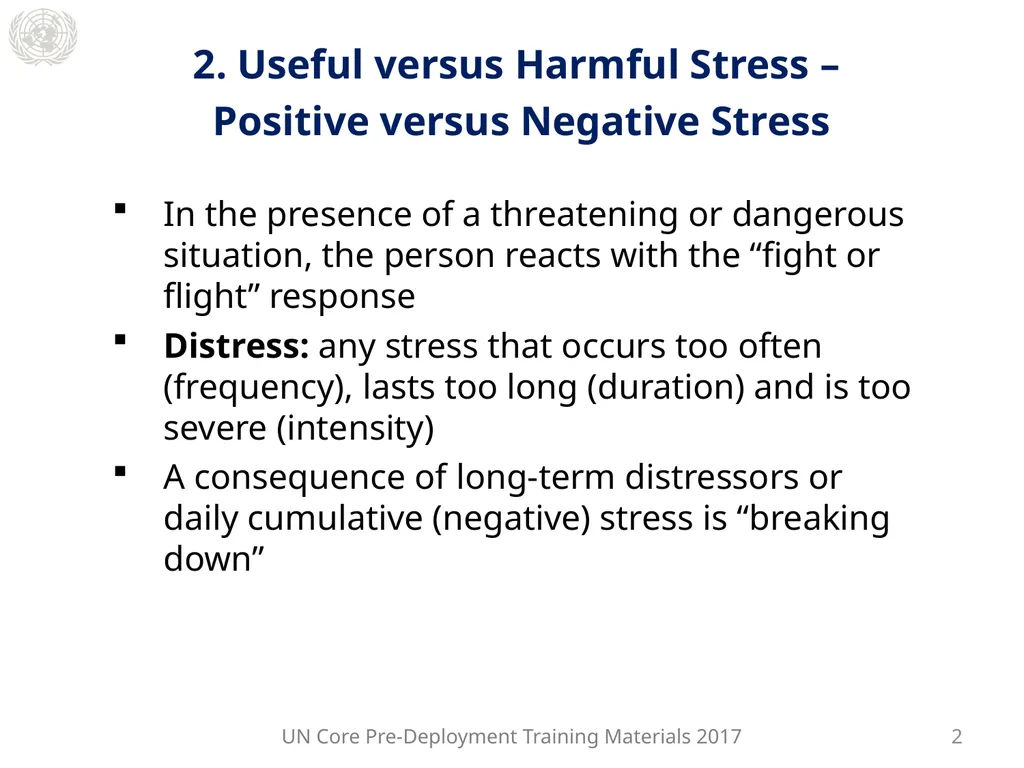
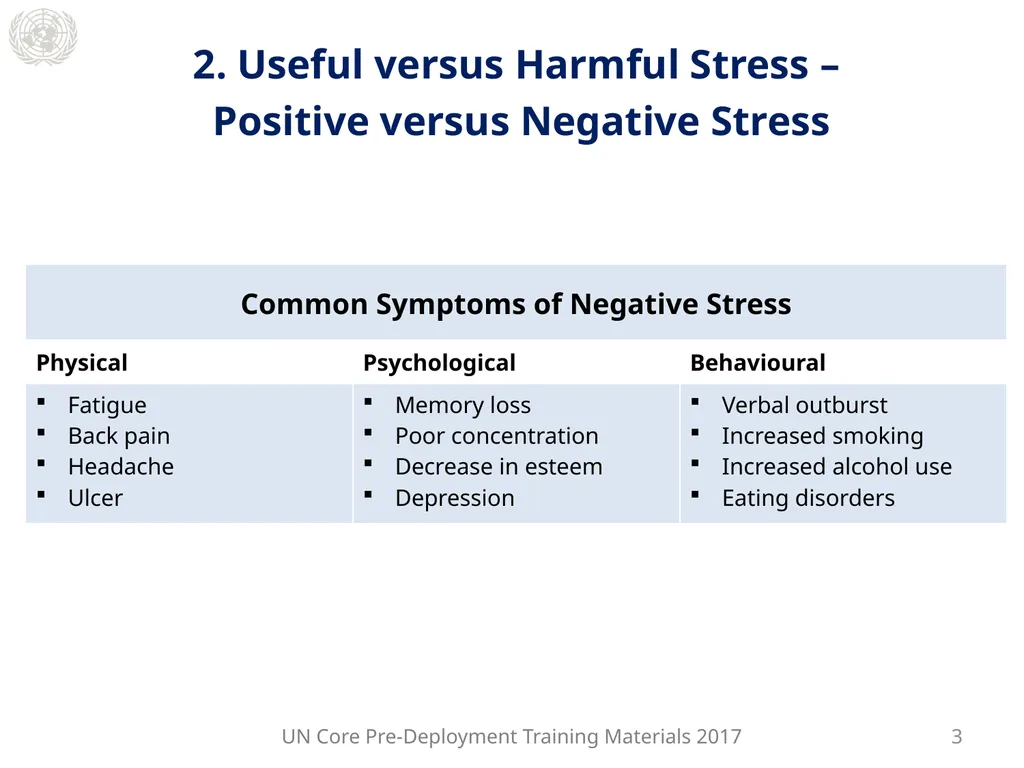
2. Useful versus Harmful Stress –
Positive versus Negative Stress In the presence of a threatening or dangerous situation, the person reacts with the “fight or flight” response
Distress: any stress that occurs too often (frequency), lasts too long (duration) and is too severe (intensity)
A consequence of long-term distressors or daily cumulative (negative) stress is “breaking down” 2 UN Core Pre-Deployment Training Materials 2017<br>
08
2. Useful versus Harmful Stress –
Positive versus Negative Stress 3 UN Core Pre-Deployment Training Materials 2017<br>
09
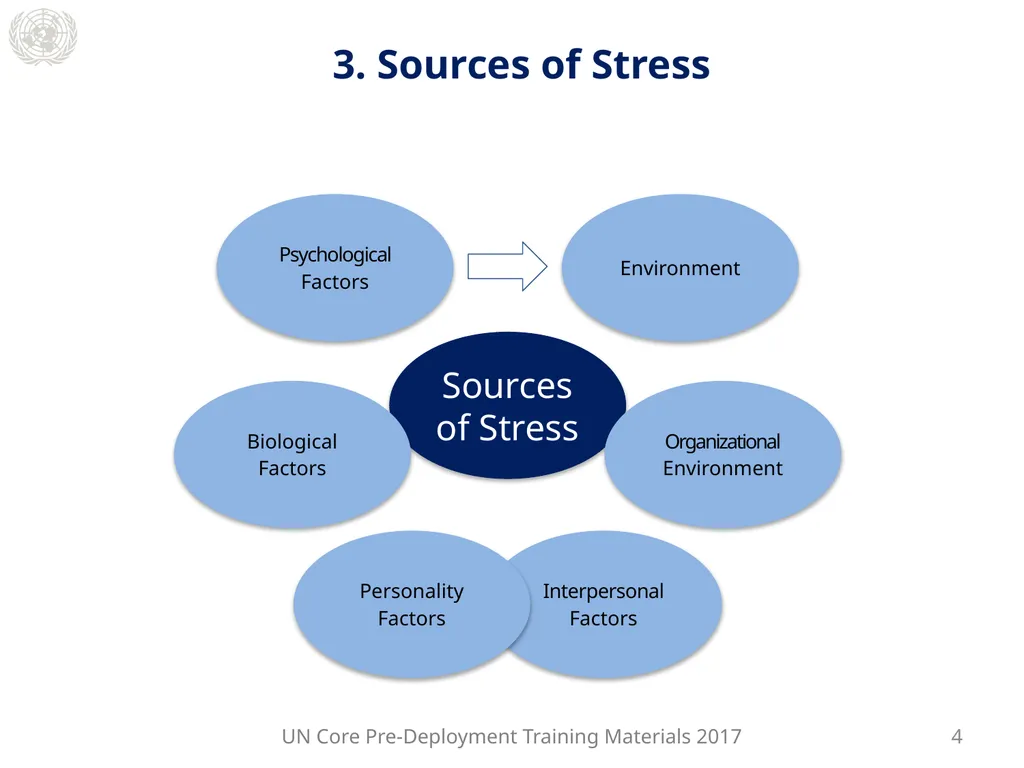
4 UN Core Pre-Deployment Training Materials 2017 3. Sources of Stress<br>
10
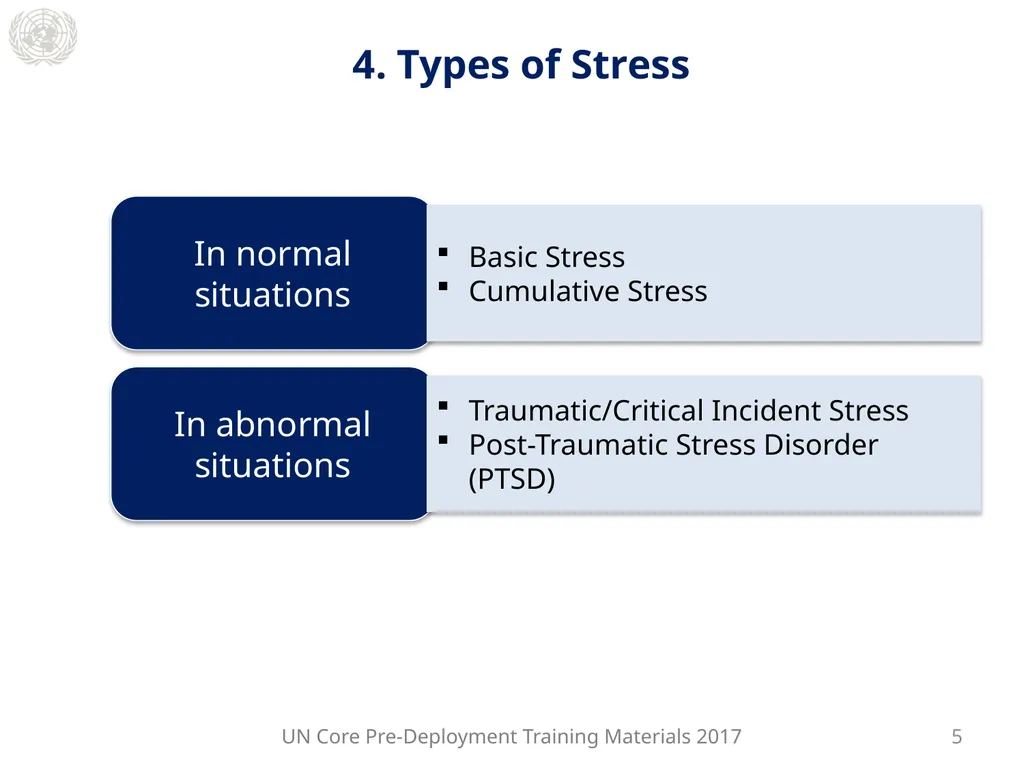
4. Types of Stress 5 UN Core Pre-Deployment Training Materials 2017 In normal situations In abnormal situations Basic Stress
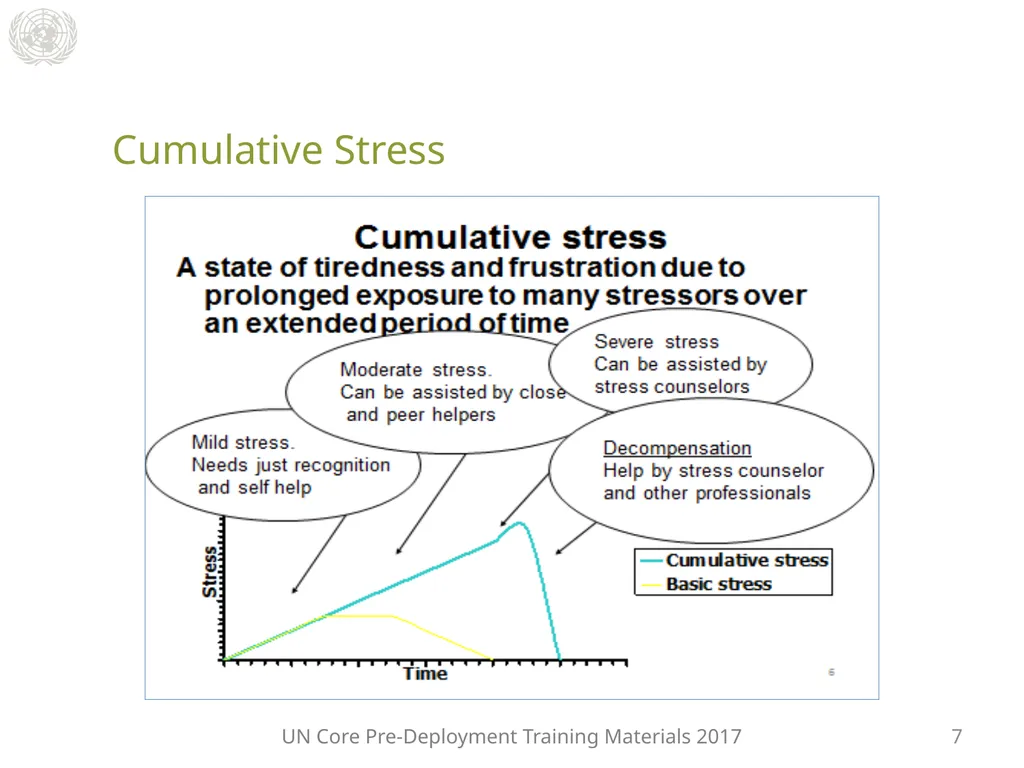
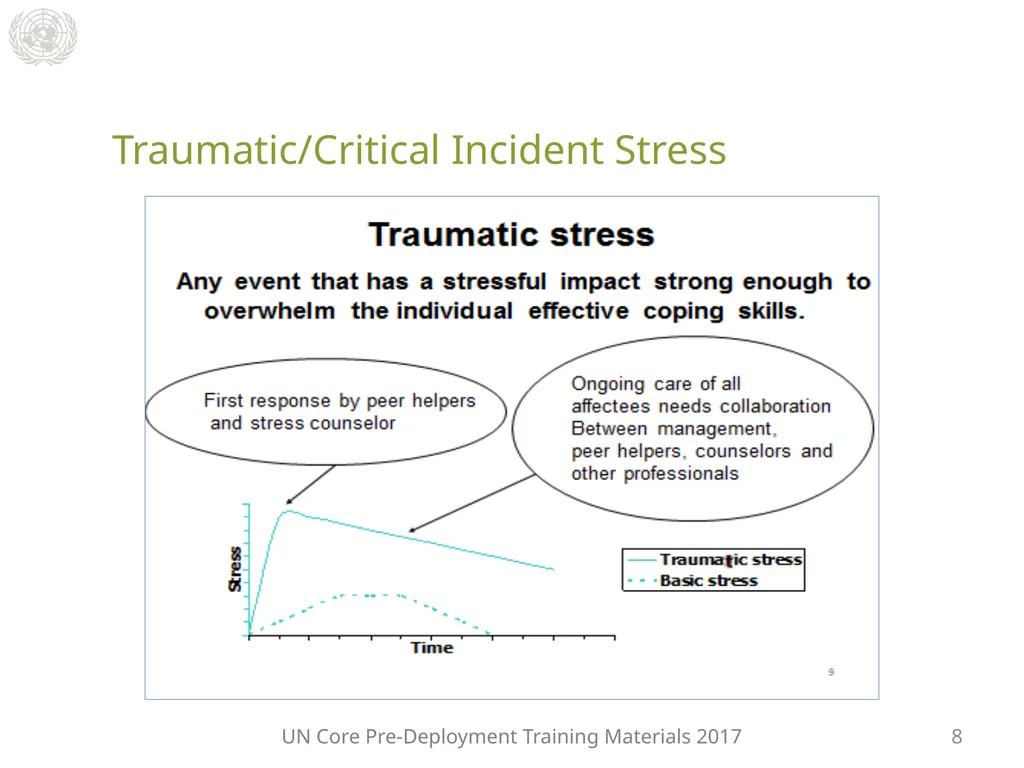
Cumulative Stress Traumatic/Critical Incident Stress
Post-Traumatic Stress Disorder (PTSD)<br>
11
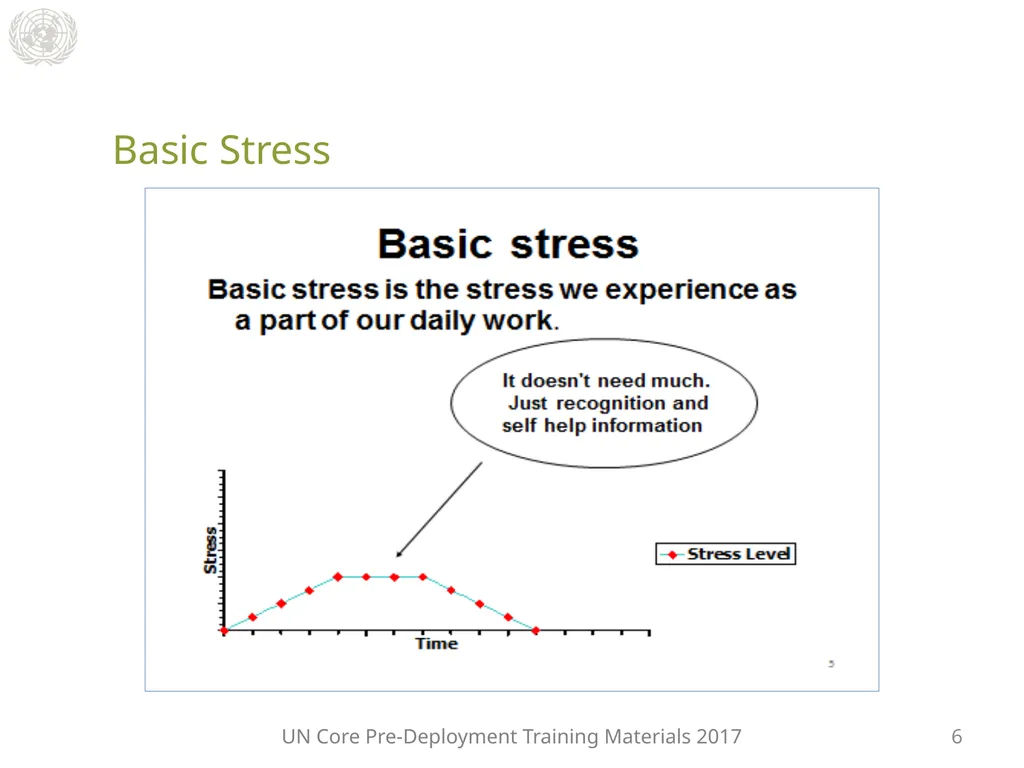
6 UN Core Pre-Deployment Training Materials 2017 Basic Stress<br>
12
7 UN Core Pre-Deployment Training Materials 2017 Cumulative Stress<br>
13
8 UN Core Pre-Deployment Training Materials 2017 Traumatic/Critical Incident Stress<br>
14
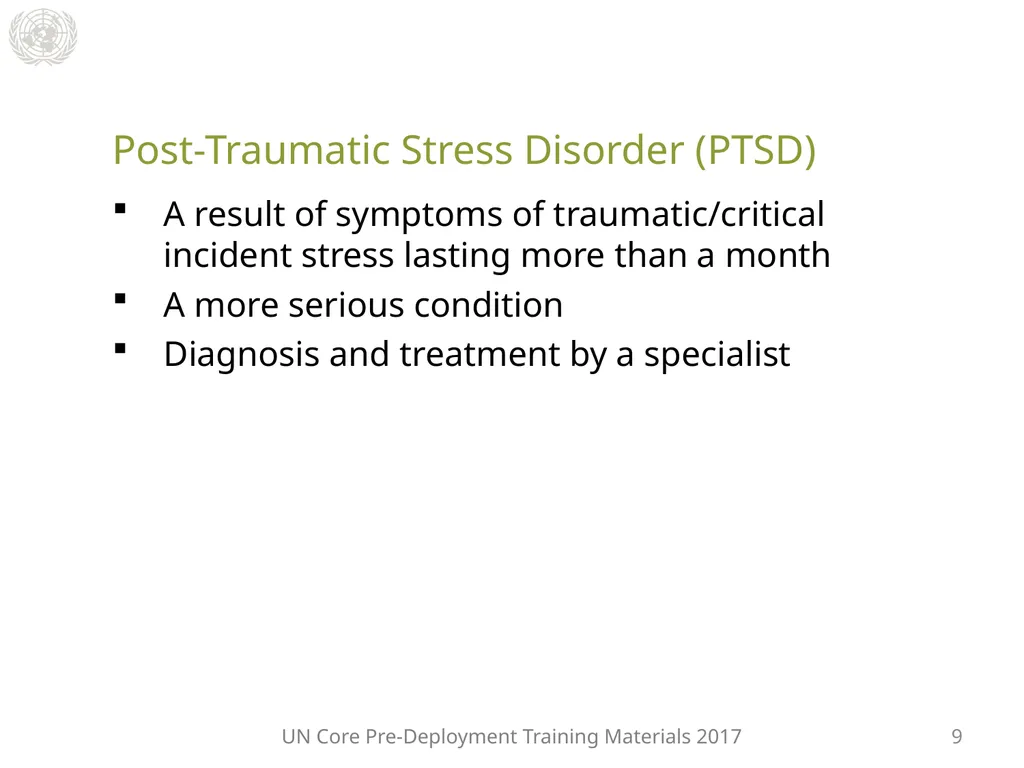
A result of symptoms of traumatic/critical incident stress lasting more than a month
A more serious condition
Diagnosis and treatment by a specialist 9 UN Core Pre-Deployment Training Materials 2017 Post-Traumatic Stress Disorder (PTSD)<br>
15
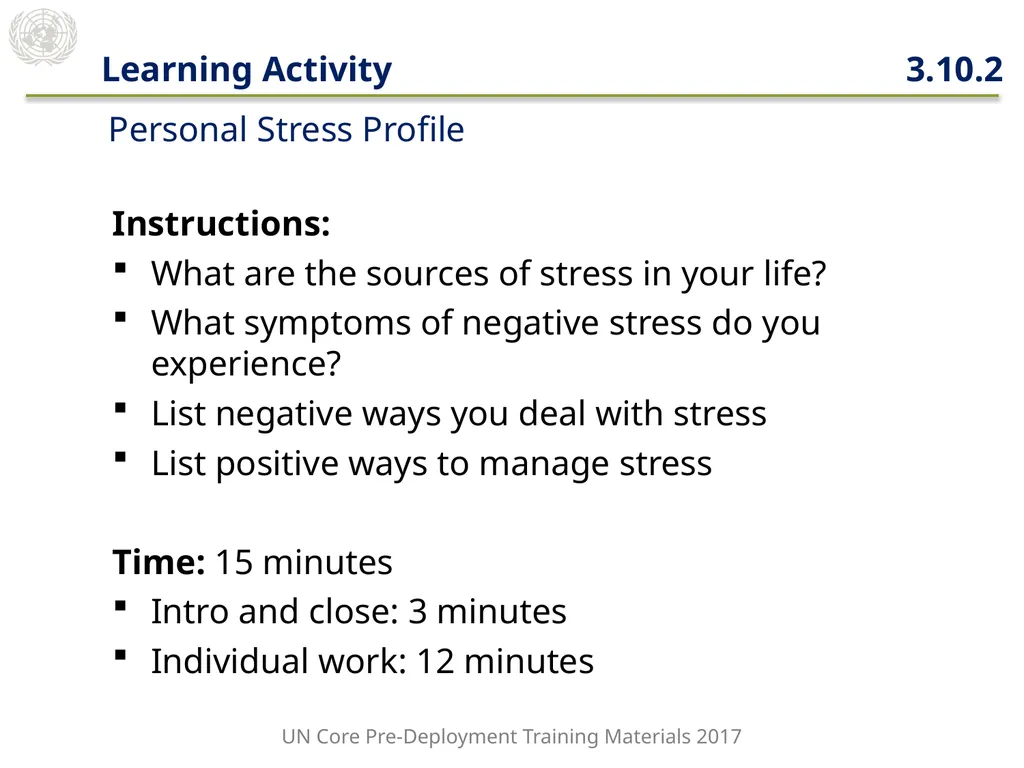
UN Core Pre-Deployment Training Materials 2017 Instructions:
What are the sources of stress in your life?
What symptoms of negative stress do you experience?
List negative ways you deal with stress
List positive ways to manage stress
Time: 15 minutes
Intro and close: 3 minutes
Individual work: 12 minutes Learning Activity 3.10.2 Personal Stress Profile<br>
16
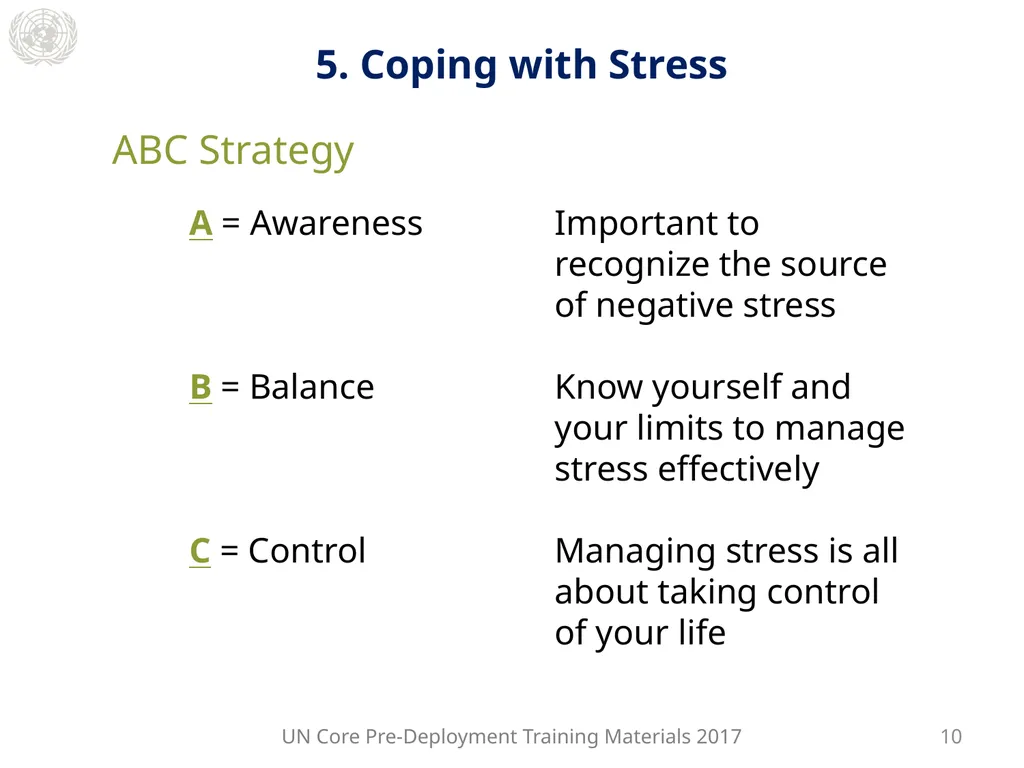
A = Awareness
B = Balance
C = Control
Important to recognize the source of negative stress
Know yourself and your limits to manage stress effectively
Managing stress is all about taking control of your life 5. Coping with Stress 10 UN Core Pre-Deployment Training Materials 2017 ABC Strategy<br>
17
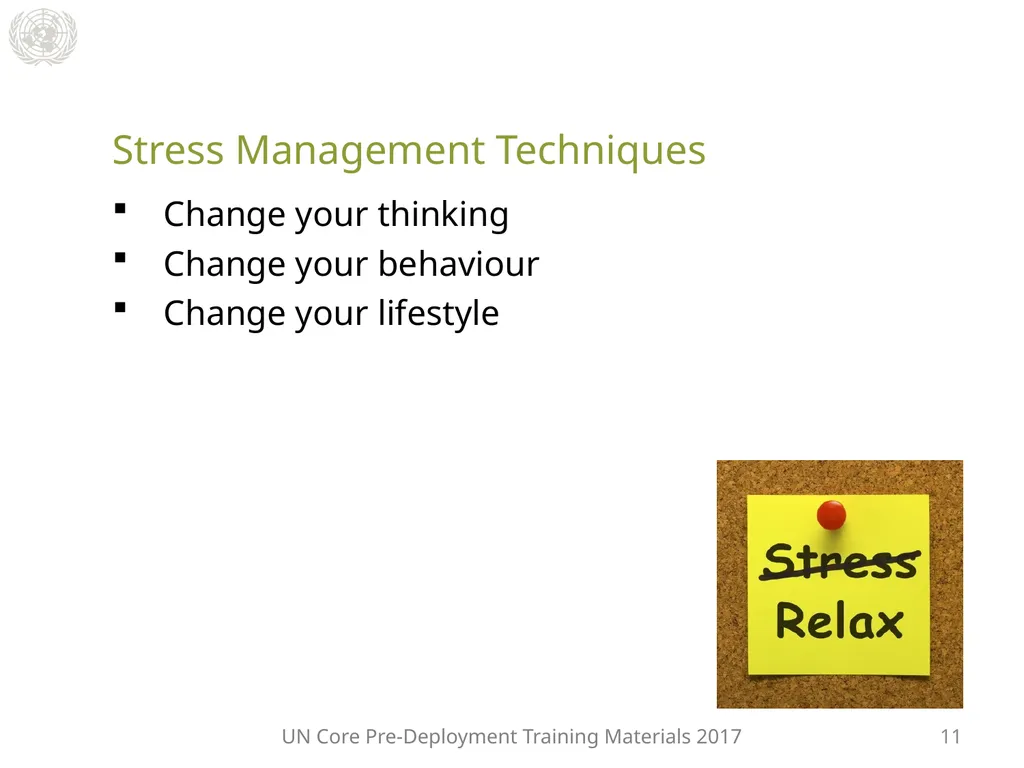
Change your thinking
Change your behaviour
Change your lifestyle 11 UN Core Pre-Deployment Training Materials 2017 Stress Management Techniques<br>
18
Occurs when normal coping mechanisms do not work or when stress is inappropriately dealt with
Damaging to our health and welfare in the long run
Substance abuse (drugs, self-prescribed medicine, alcohol, coffee) and behavioural modification (stress sex, overeating) 12 UN Core Pre-Deployment Training Materials 2017 Maladaptive Coping<br>
19
Contact your staff counselor, medical service, UN examining physician and peer support personnel
Discuss with a trusted friend and/or family member
Managers should be aware
Work as a team with your colleagues 13 UN Core Pre-Deployment Training Materials 2017 Additional Help & Resources<br>
20
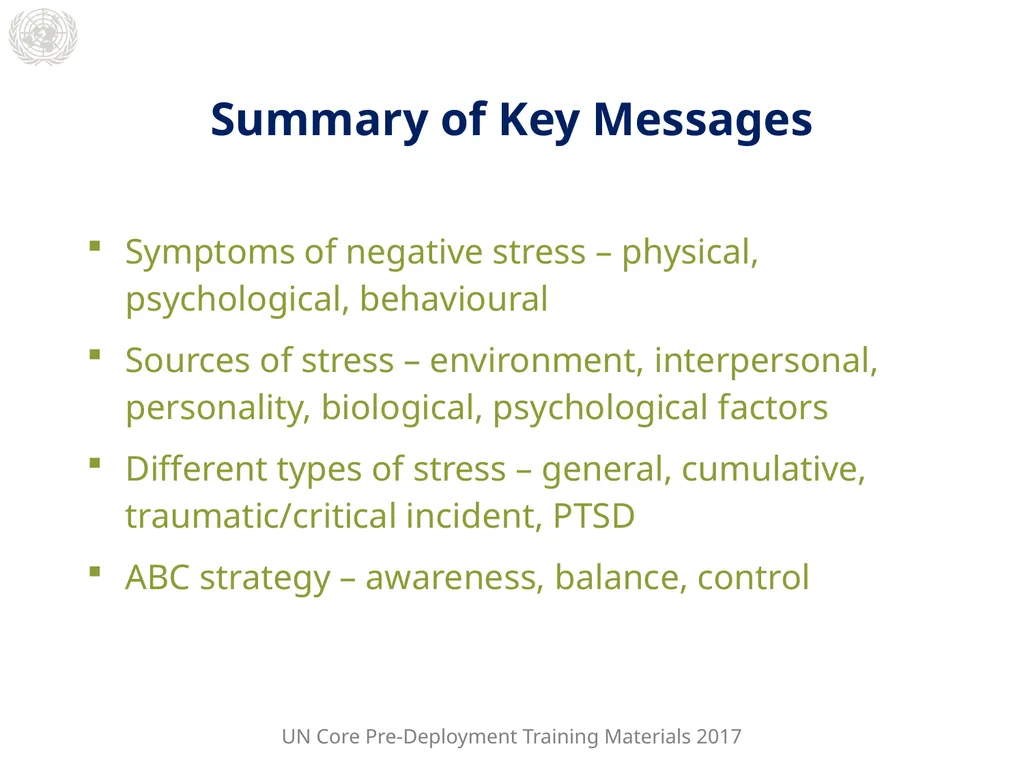
Summary of Key Messages
Symptoms of negative stress – physical, psychological, behavioural
Sources of stress – environment, interpersonal, personality, biological, psychological factors
Different types of stress – general, cumulative, traumatic/critical incident, PTSD
ABC strategy – awareness, balance, control UN Core Pre-Deployment Training Materials 2017<br>
21
Questions UN Core Pre-Deployment Training Materials 2017<br>
22
Learning Activity
Learning Evaluation UN Core Pre-Deployment Training Materials 2017<br>