04
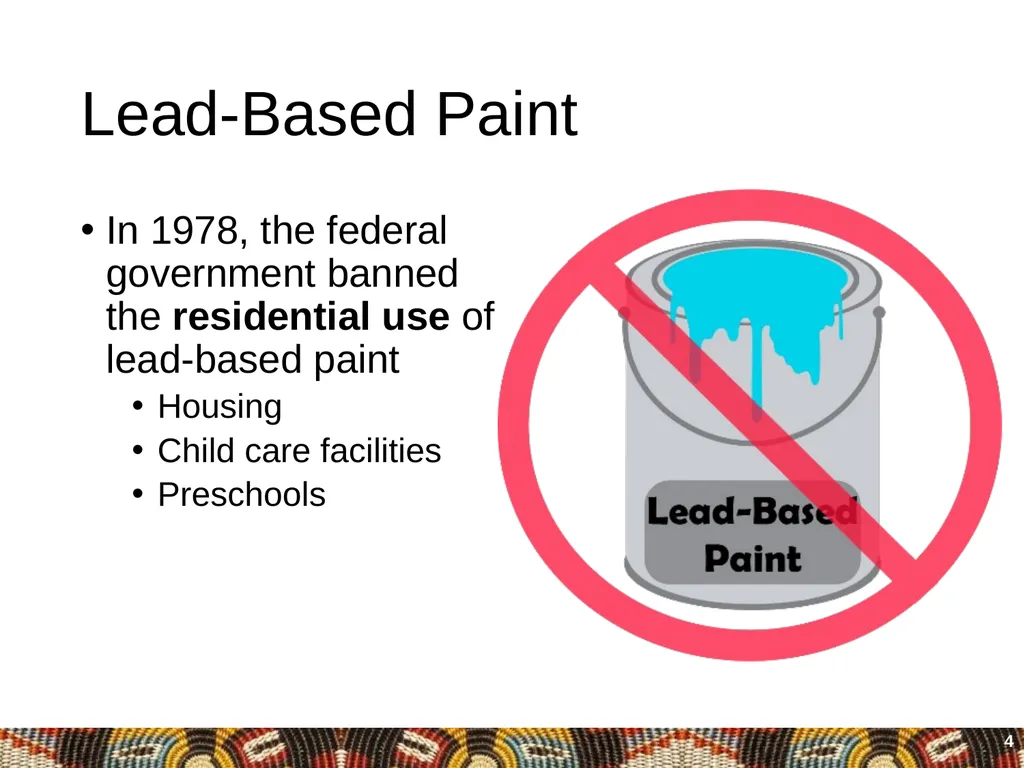
Lead-Based Paint In 1978, the federal government banned the residential use of lead-based paint
Housing
Child care facilities
Preschools 4<br>
05
Has anyone ever heard that you should hire a certified lead professional to do work on your home? 5<br>
06
When should we hire certified lead professionals? 6<br>
07
How can you tell if your home has lead-based paint and you might need to hire a certified lead professional? 7<br>
08
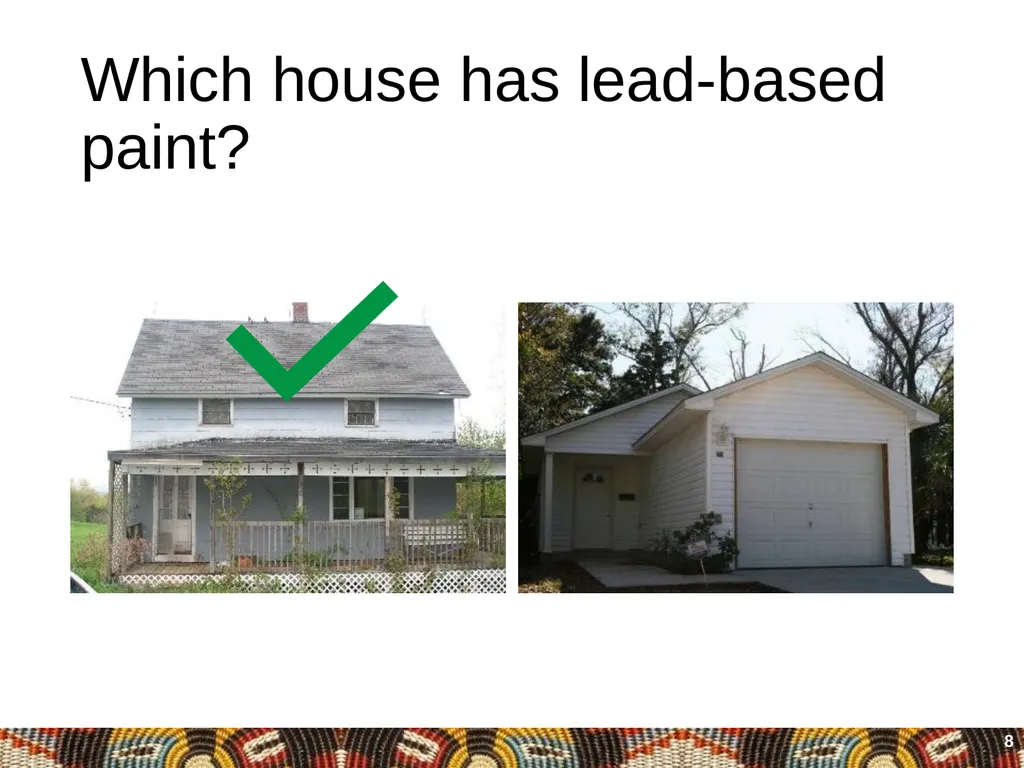
Which house has lead-based paint? 8<br>
09
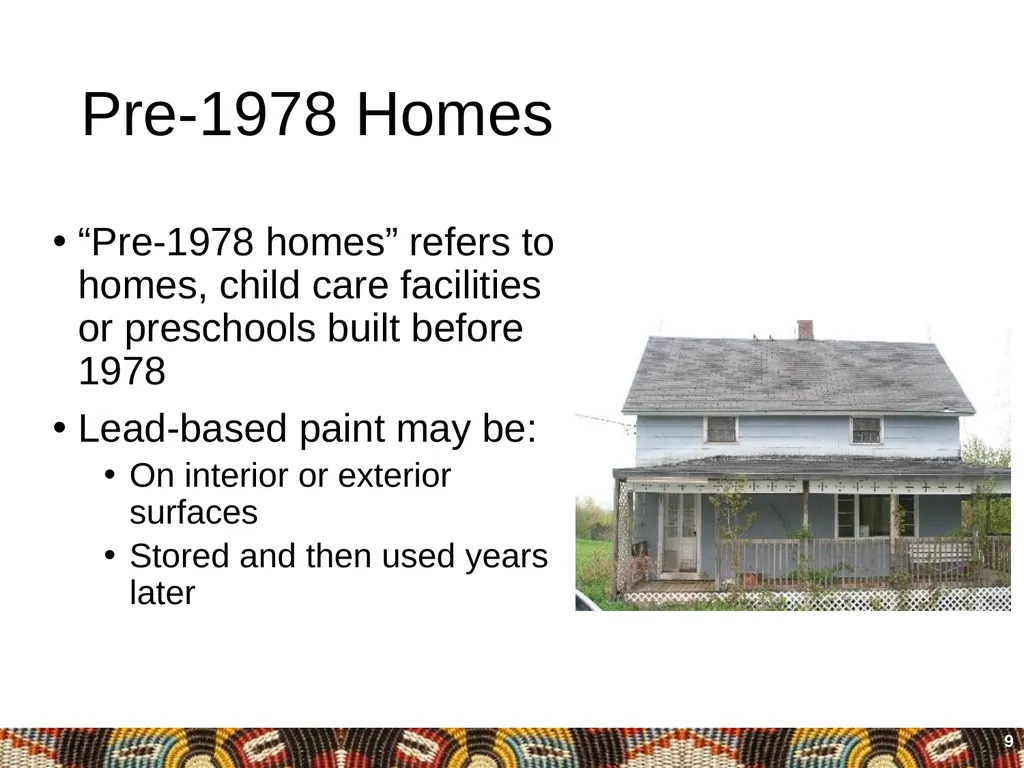
Pre-1978 Homes “Pre-1978 homes” refers to homes, child care facilities or preschools built before 1978
Lead-based paint may be:
On interior or exterior surfaces
Stored and then used years later 9<br>
10
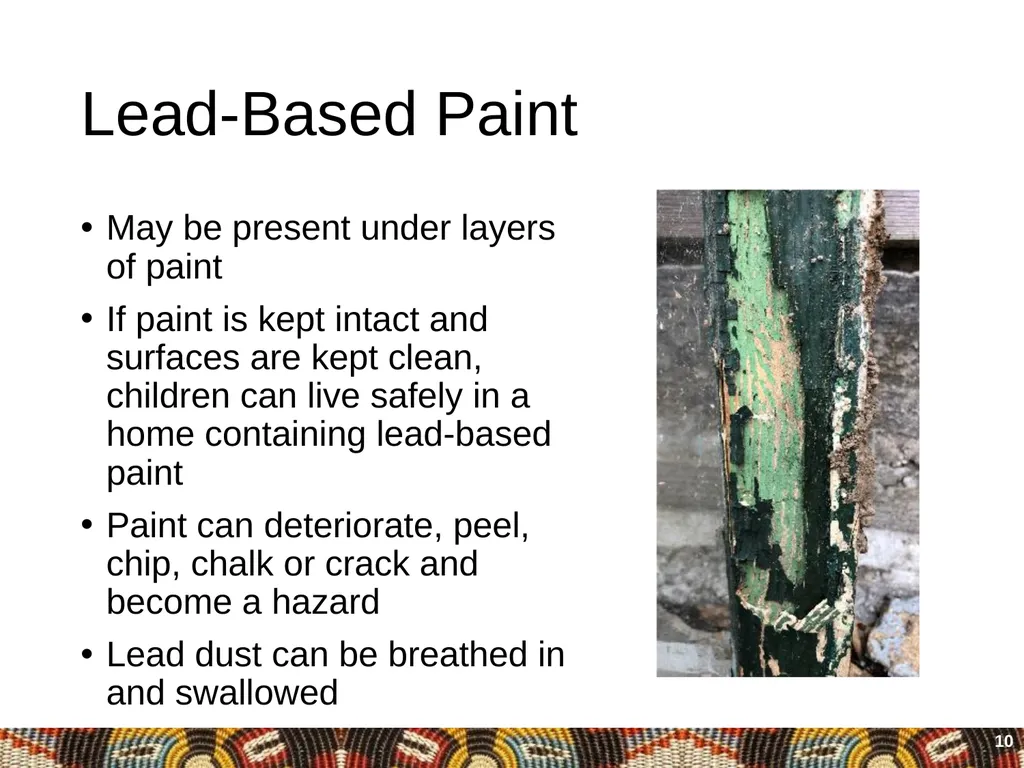
Lead-Based Paint May be present under layers of paint
If paint is kept intact and surfaces are kept clean, children can live safely in a home containing lead-based paint
Paint can deteriorate, peel, chip, chalk or crack and become a hazard
Lead dust can be breathed in and swallowed 10<br>
11
If painted surfaces are deteriorating and you are concerned that they may contain lead-based paint, what would be the first step to take to reduce potential exposure to lead in your home? 11<br>
12
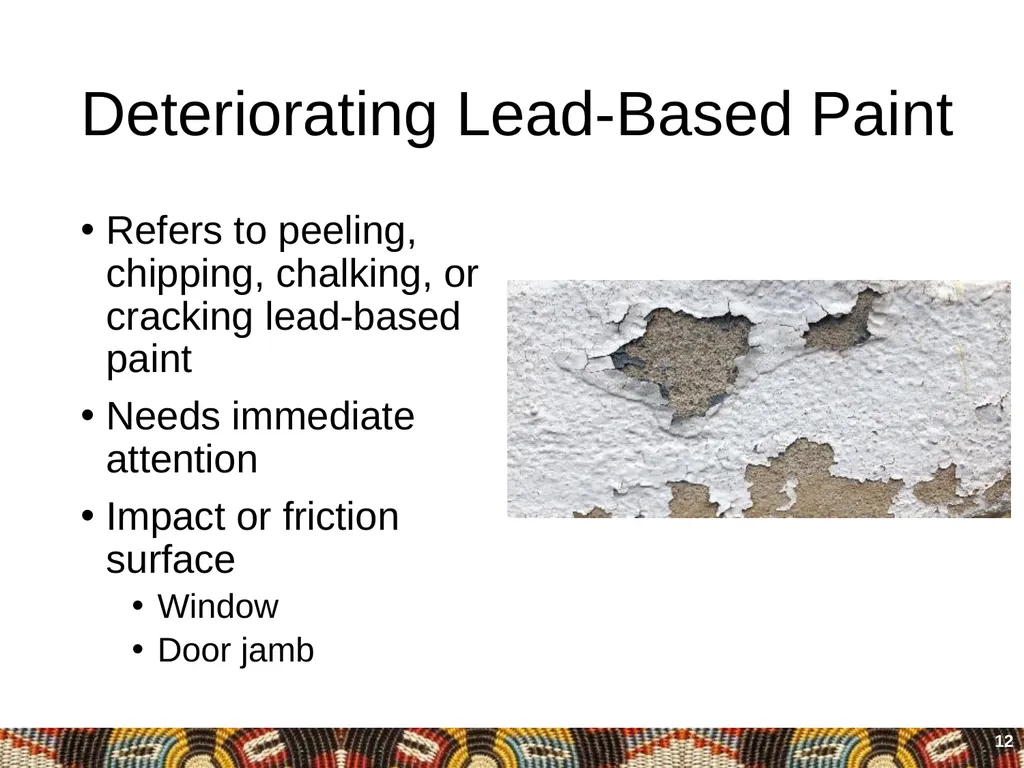
Deteriorating Lead-Based Paint Refers to peeling, chipping, chalking, or cracking lead-based paint
Needs immediate attention
Impact or friction surface
Window
Door jamb 12<br>
13
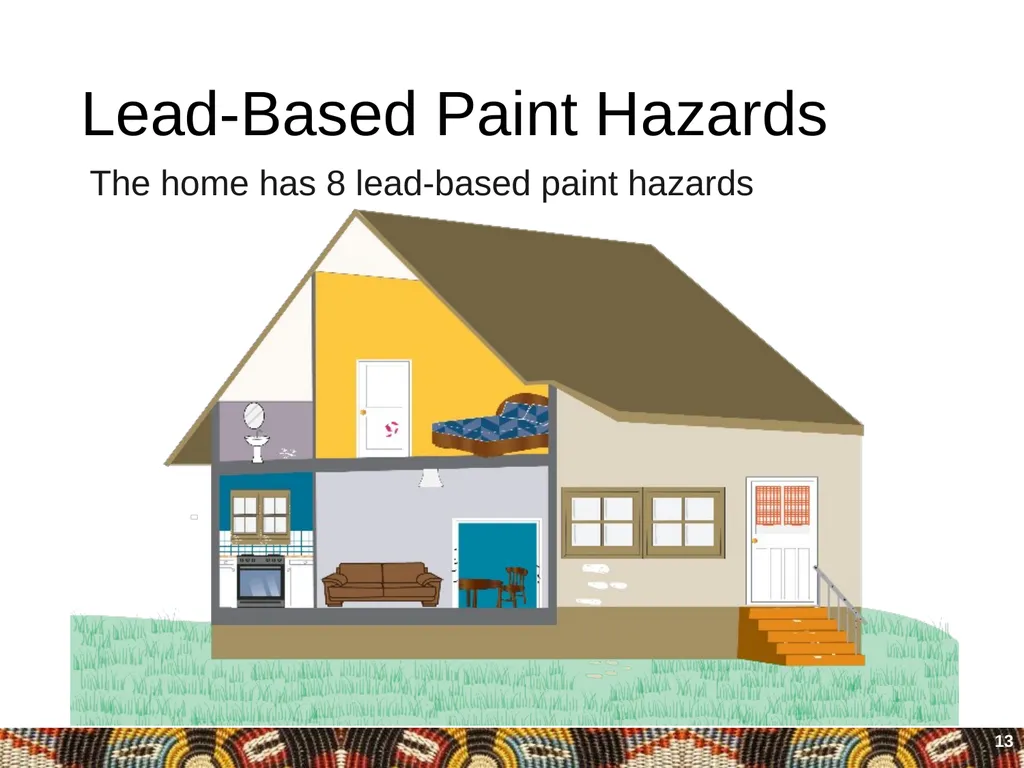
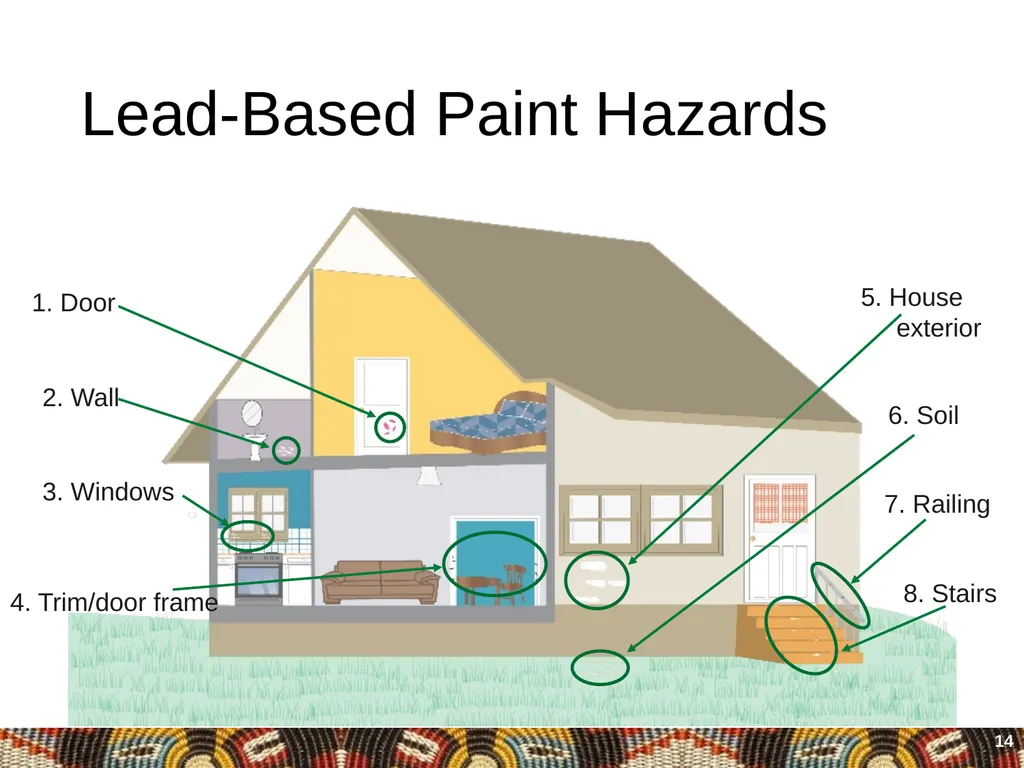
Lead-Based Paint Hazards The home has 8 lead-based paint hazards 13<br>
14
Lead-Based Paint Hazards 14<br>
15
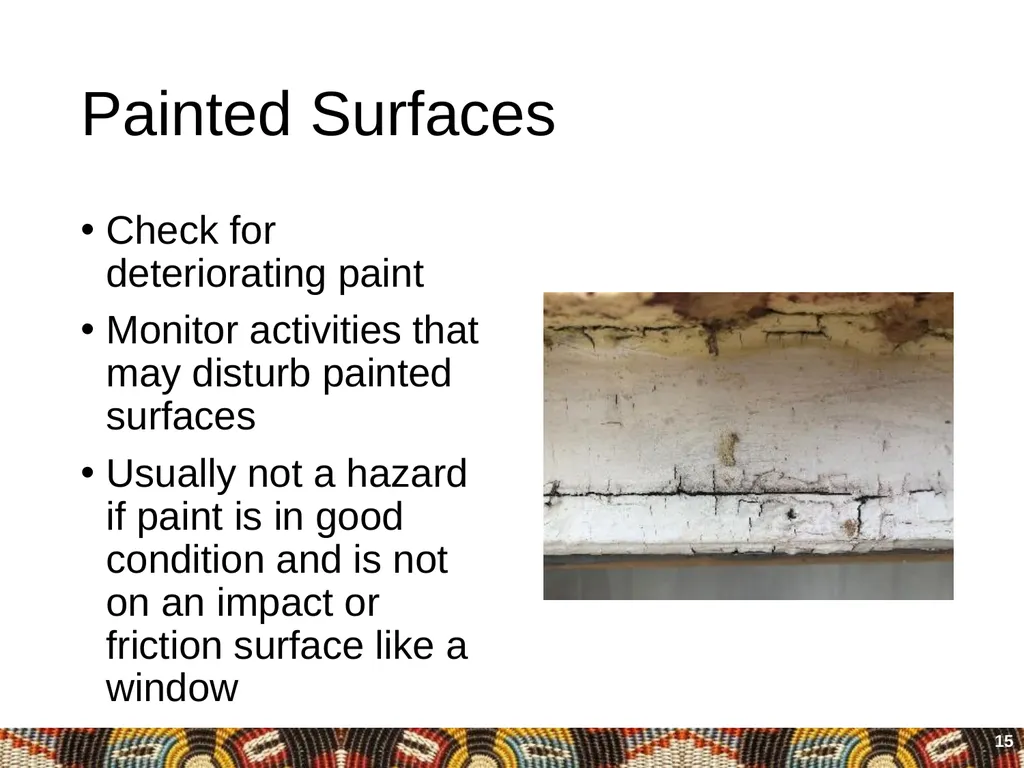
Painted Surfaces Check for deteriorating paint
Monitor activities that may disturb painted surfaces
Usually not a hazard if paint is in good condition and is not on an impact or friction surface like a window 15<br>
16
Has anyone had their home tested for lead-based paint? 16<br>
17
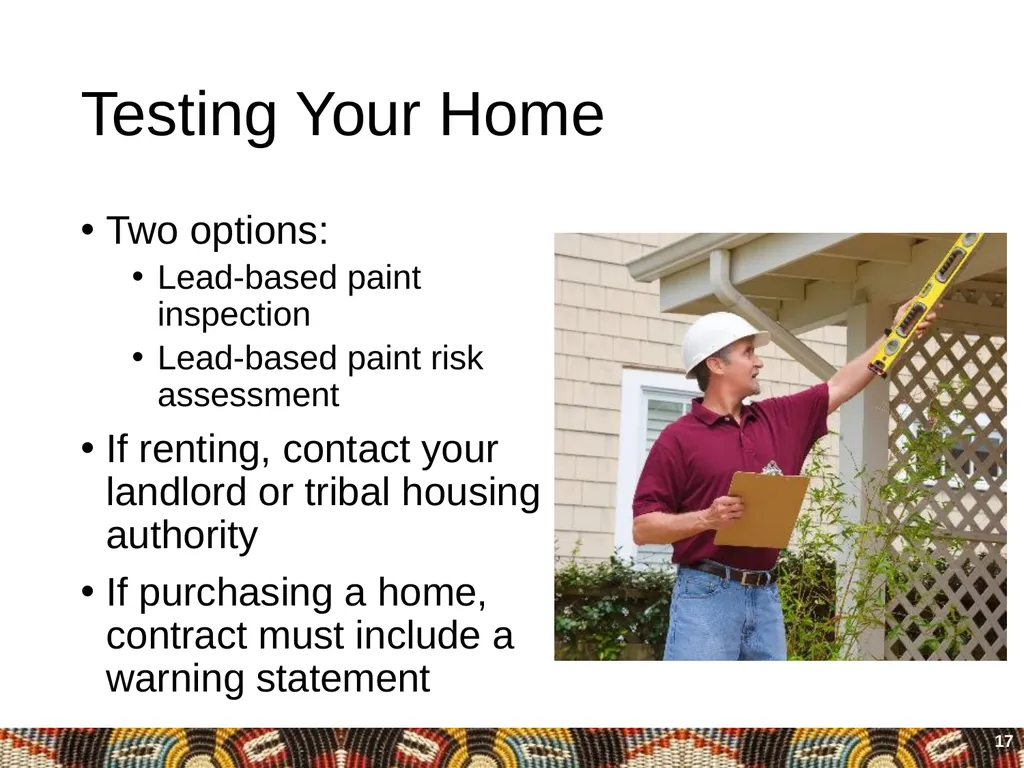
Testing Your Home Two options:
Lead-based paint inspection
Lead-based paint risk assessment
If renting, contact your landlord or tribal housing authority
If purchasing a home, contract must include a warning statement 17<br>
18
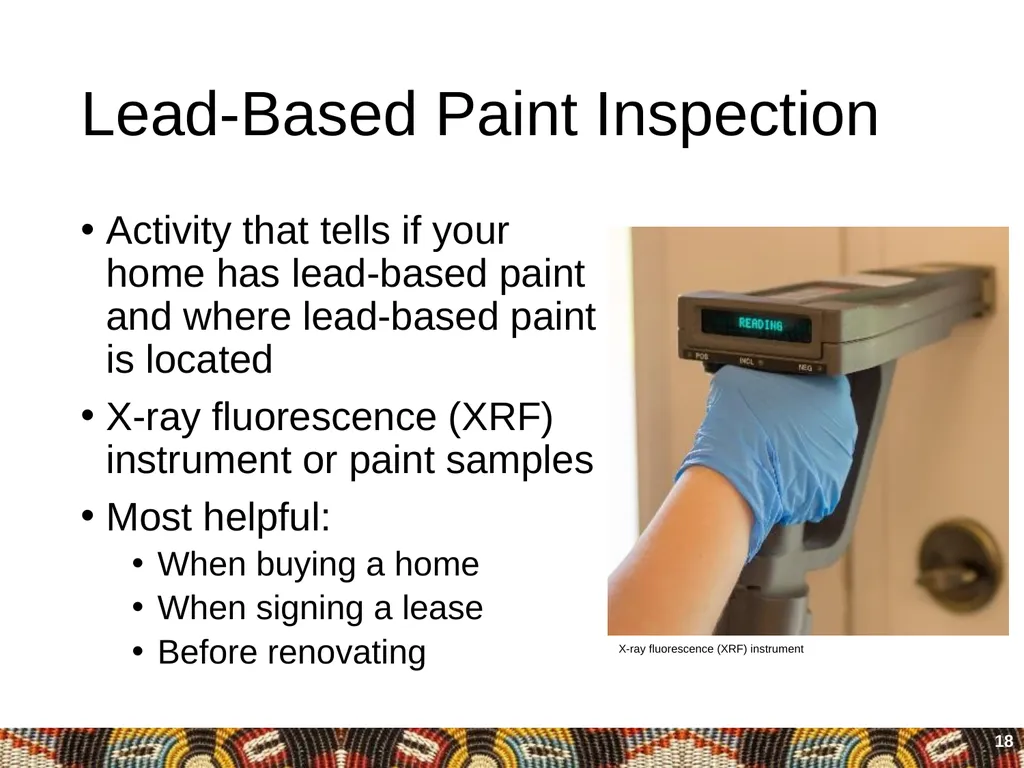
Lead-Based Paint Inspection Activity that tells if your home has lead-based paint and where lead-based paint is located
X-ray fluorescence (XRF) instrument or paint samples
Most helpful:
When buying a home
When signing a lease
Before renovating 18<br>
19
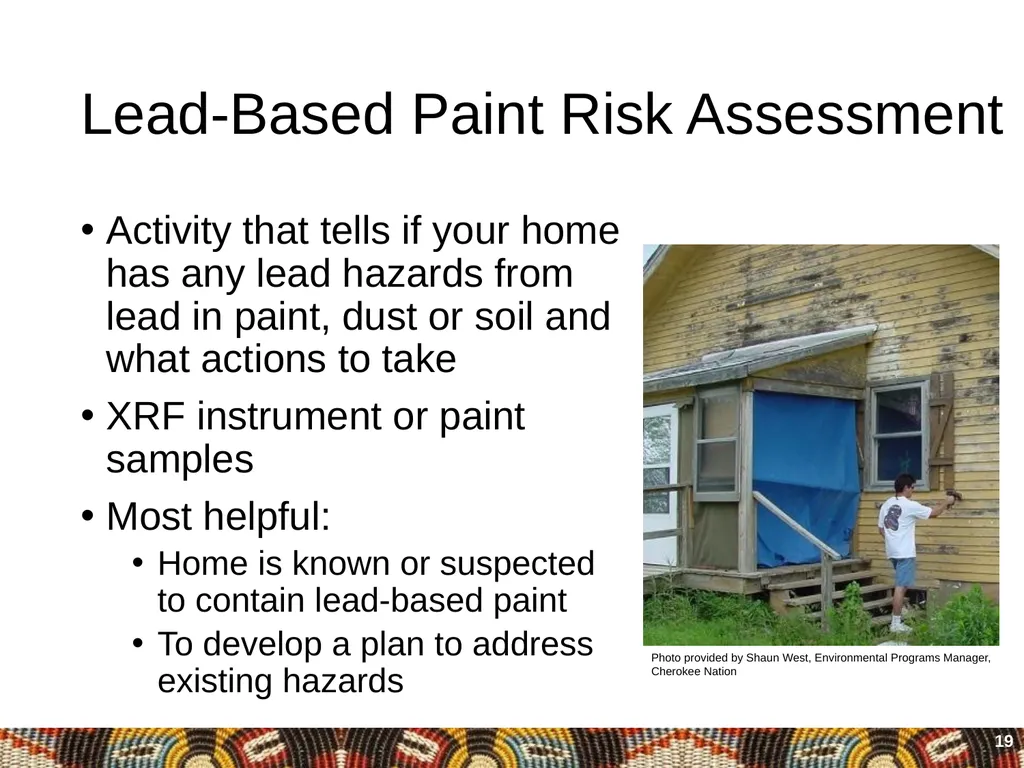
Lead-Based Paint Risk Assessment Activity that tells if your home has any lead hazards from lead in paint, dust or soil and what actions to take
XRF instrument or paint samples
Most helpful:
Home is known or suspected to contain lead-based paint
To develop a plan to address existing hazards 19<br>
20
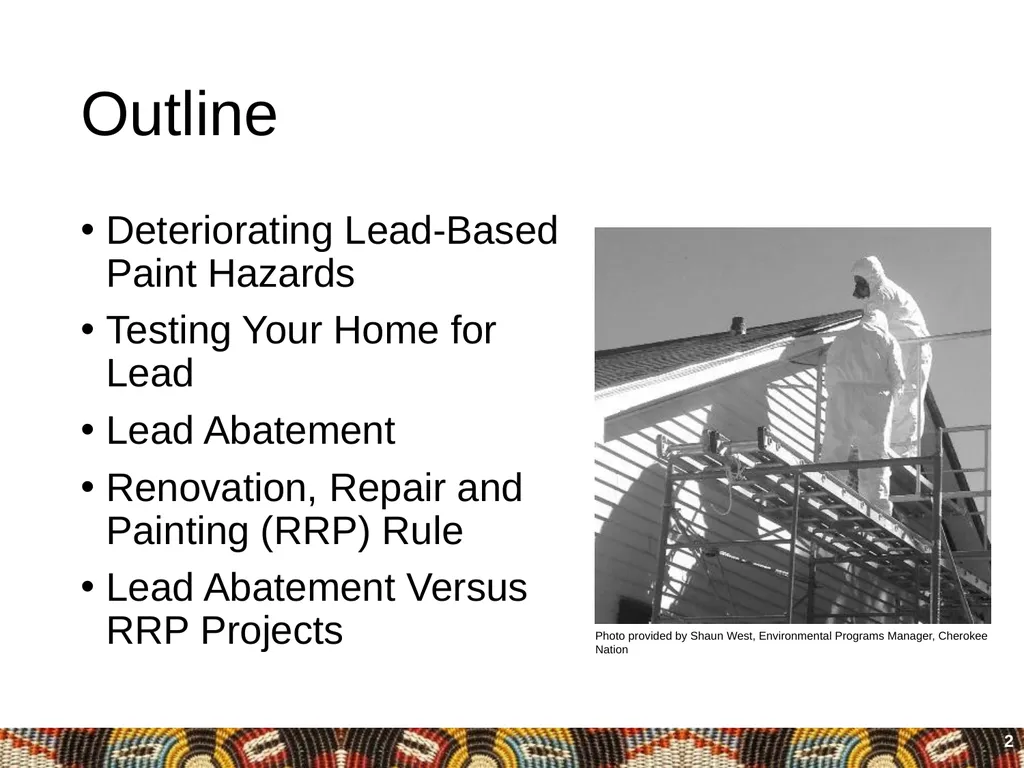
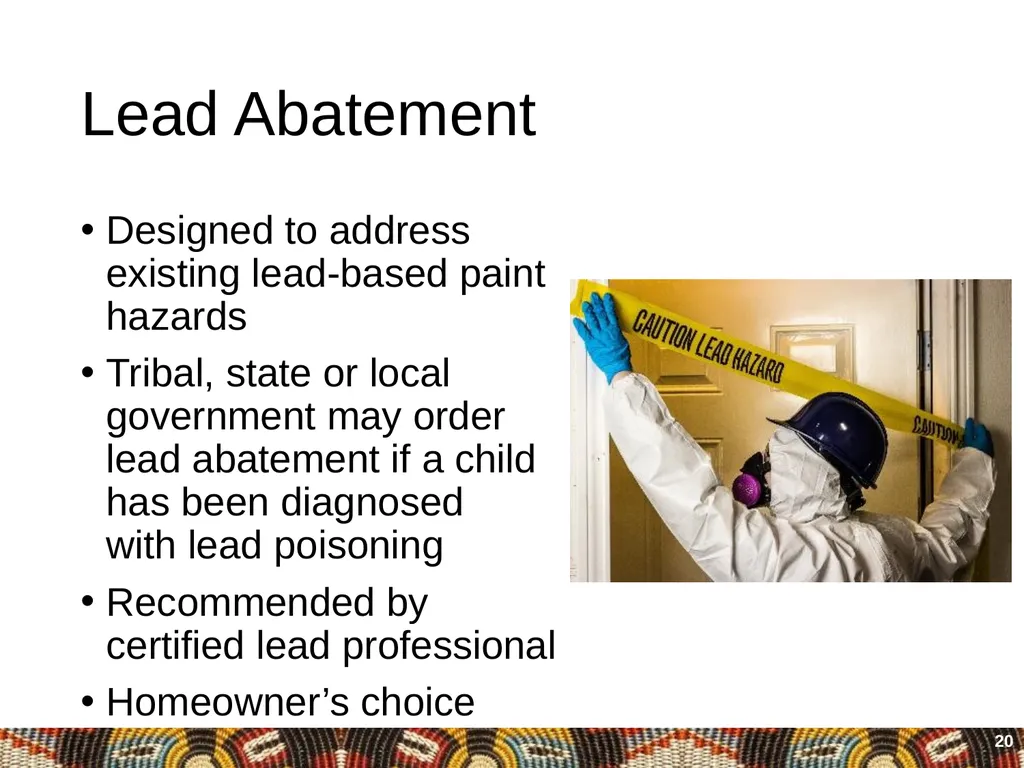
Lead Abatement Designed to address existing lead-based paint hazards
Tribal, state or local government may order lead abatement if a child has been diagnosed with lead poisoning
Recommended by certified lead professional
Homeowner’s choice 20<br>
21
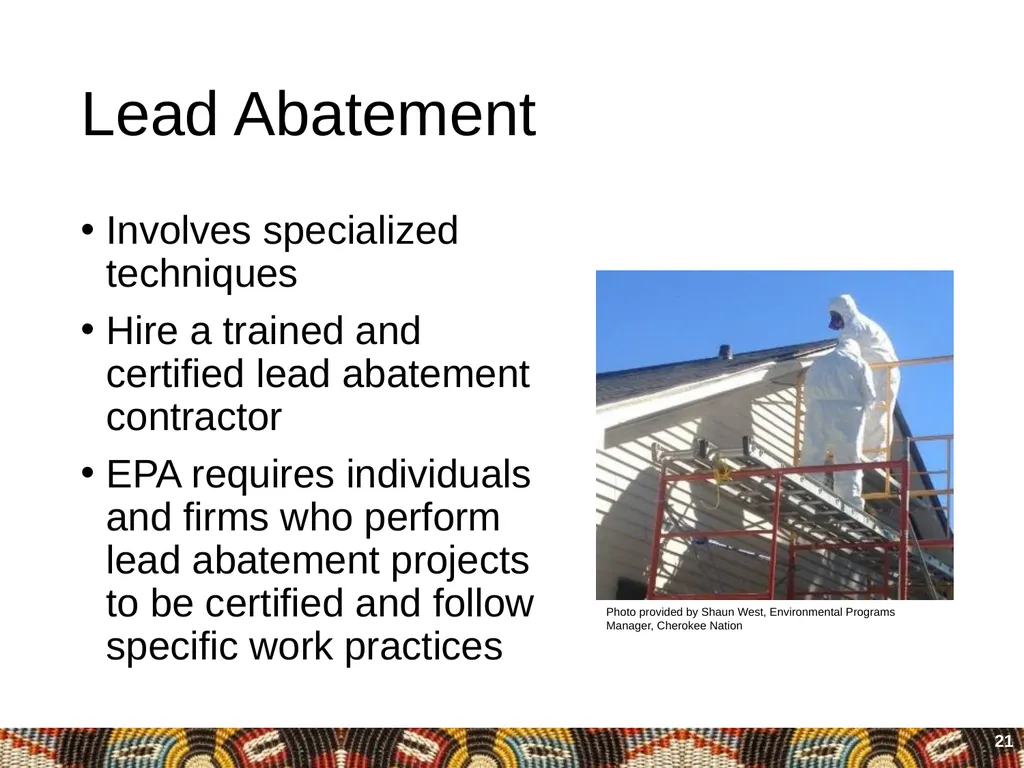
Lead Abatement Involves specialized techniques
Hire a trained and certified lead abatement contractor
EPA requires individuals and firms who perform lead abatement projects to be certified and follow specific work practices 21<br>
22
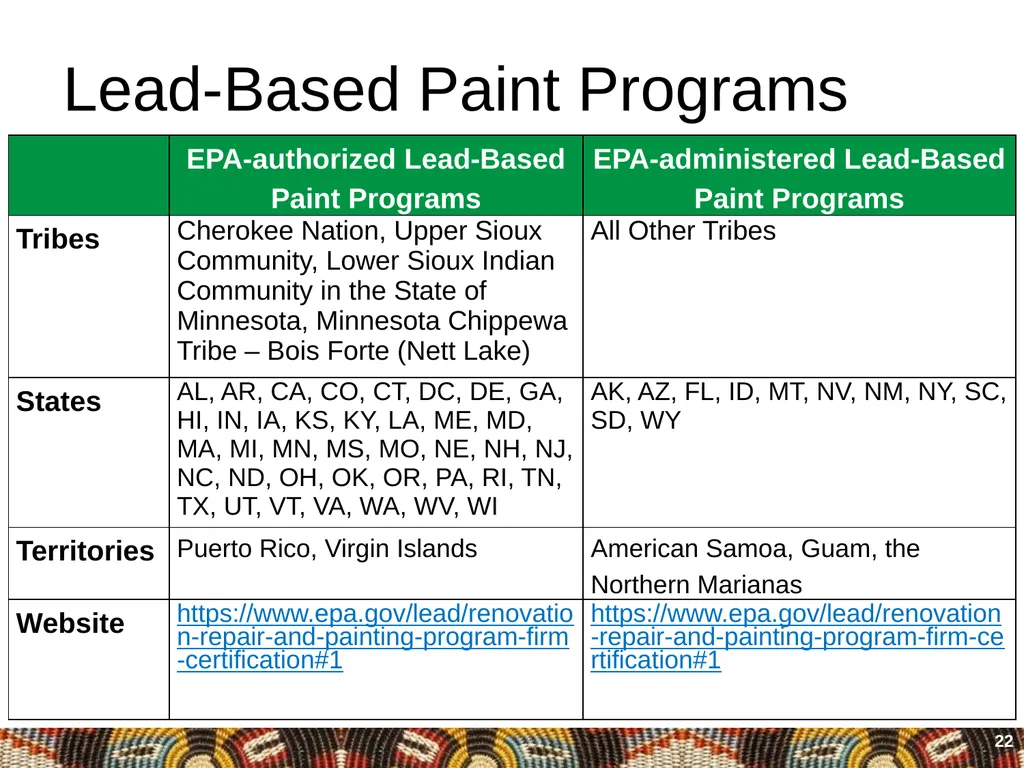
Lead-Based Paint Programs 22<br>
23
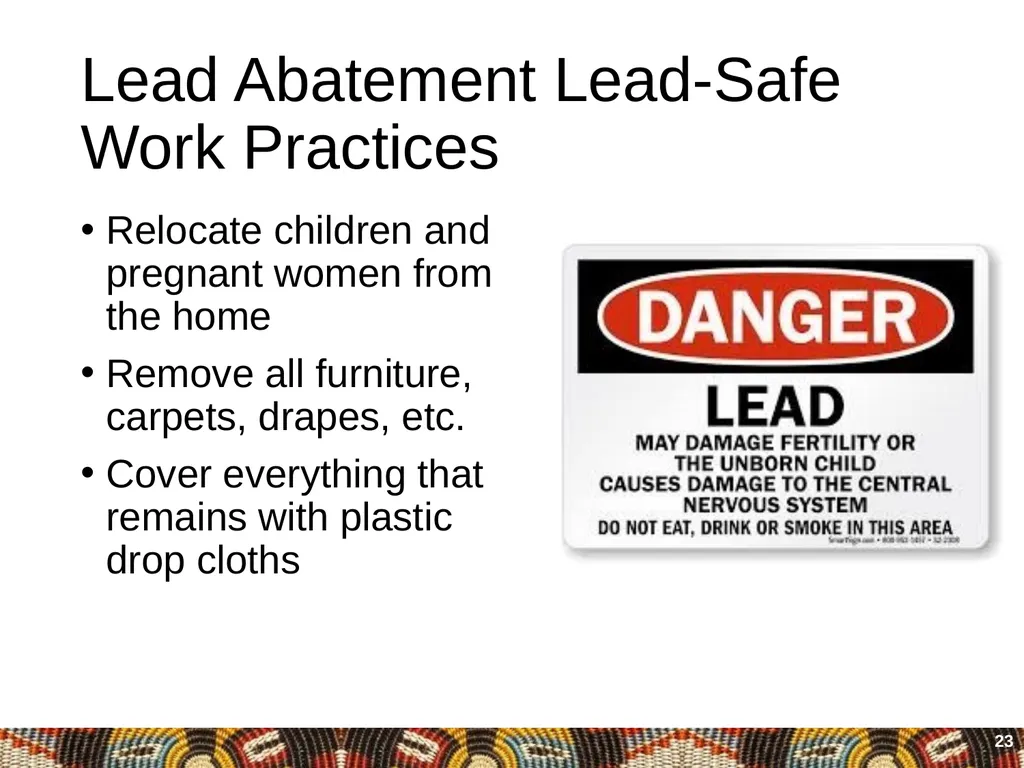
Lead Abatement Lead-Safe Work Practices Relocate children and pregnant women from the home
Remove all furniture, carpets, drapes, etc.
Cover everything that remains with plastic drop cloths 23<br>
24
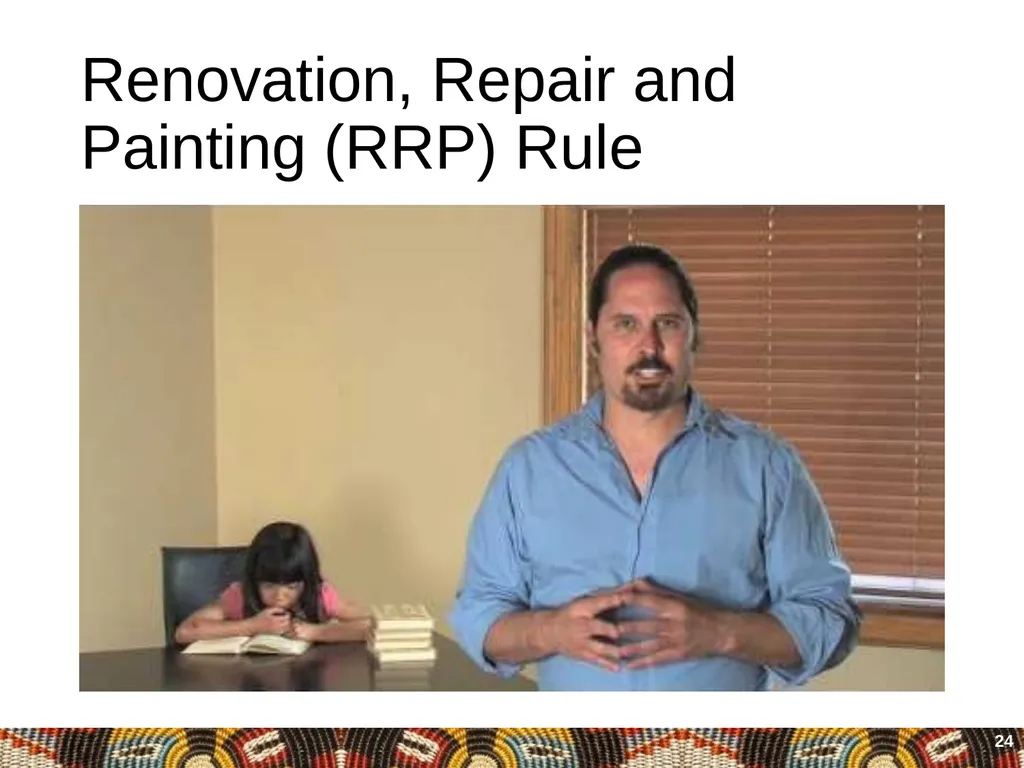
Renovation, Repair and Painting (RRP) Rule 24<br>
25
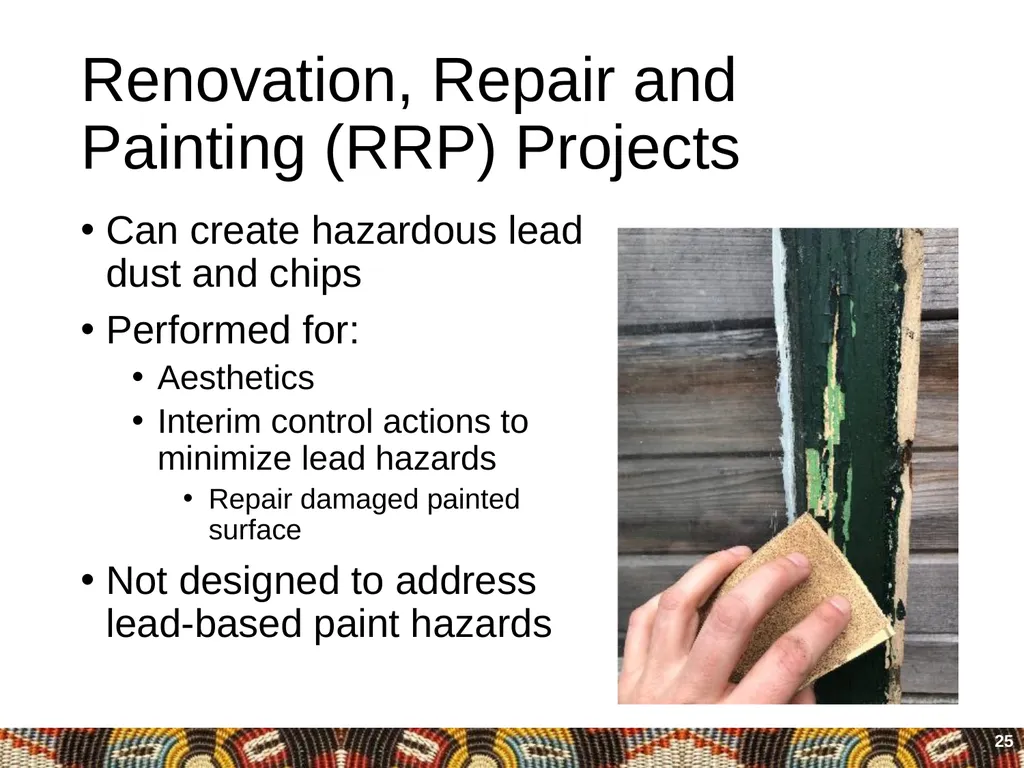
Renovation, Repair and Painting (RRP) Projects Can create hazardous lead dust and chips
Performed for:
Aesthetics
Interim control actions to minimize lead hazards
Repair damaged painted surface
Not designed to address lead-based paint hazards 25<br>
26
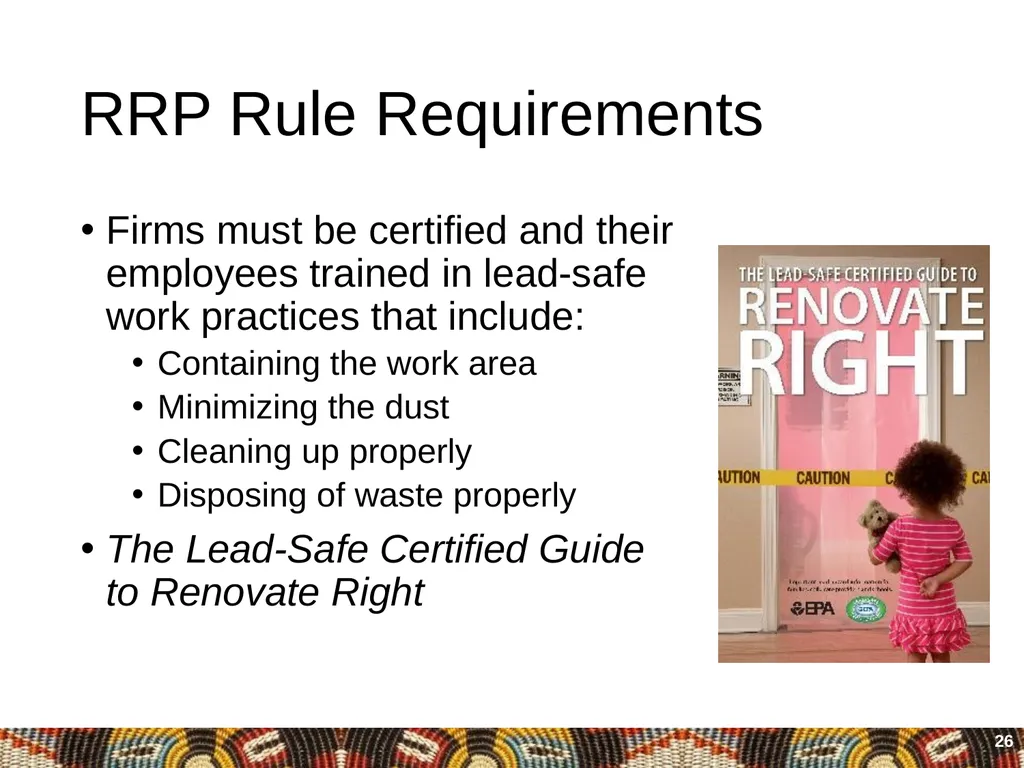
RRP Rule Requirements Firms must be certified and their employees trained in lead-safe work practices that include:
Containing the work area
Minimizing the dust
Cleaning up properly
Disposing of waste properly
The Lead-Safe Certified Guide to Renovate Right 26<br>
27
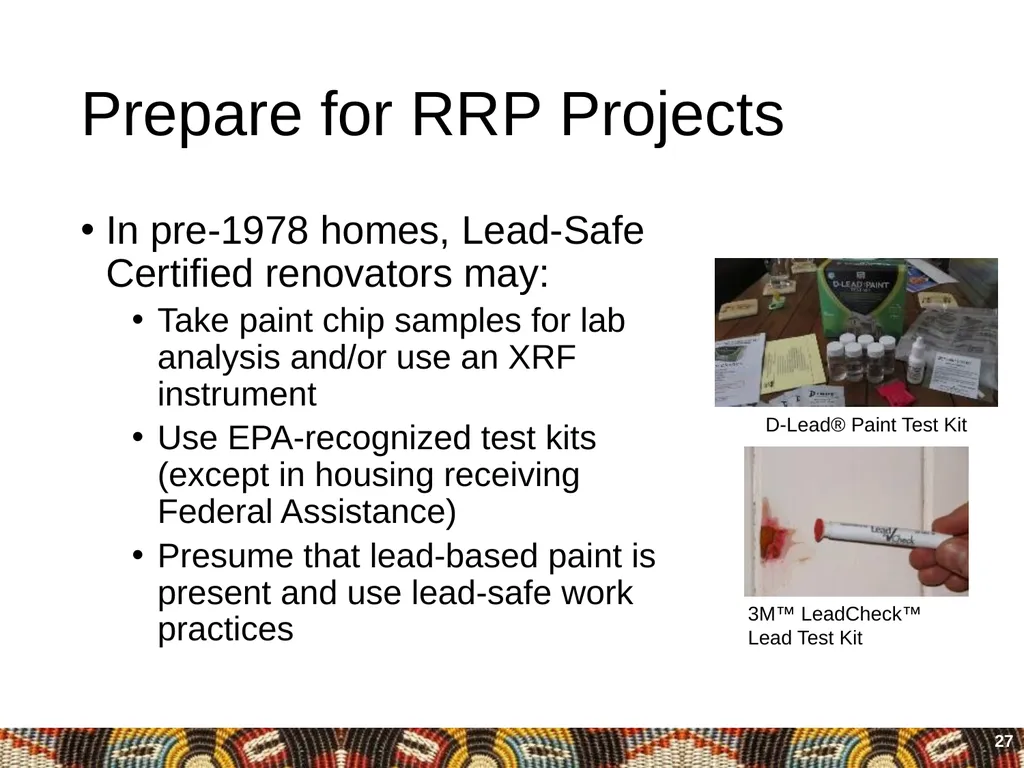
Prepare for RRP Projects In pre-1978 homes, Lead-Safe Certified renovators may:
Take paint chip samples for lab analysis and/or use an XRF instrument
Use EPA-recognized test kits (except in housing receiving Federal Assistance)
Presume that lead-based paint is present and use lead-safe work practices 27<br>
29
EPA’s Lead-Safe Certified Firm Logo 29<br>
30
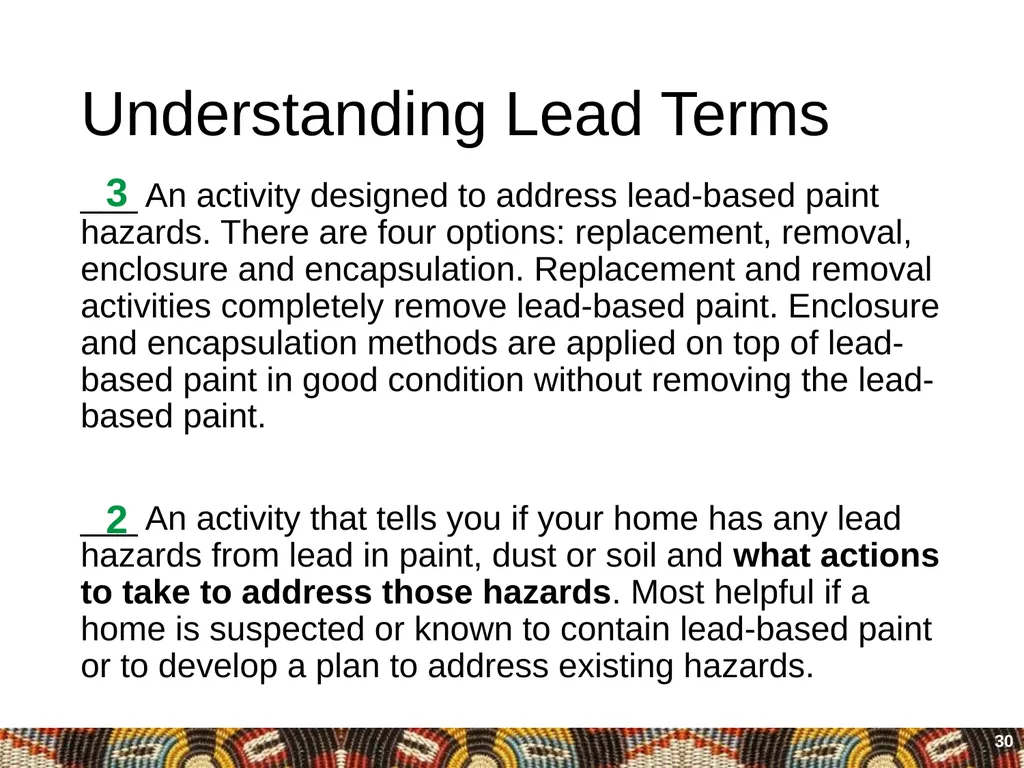
Understanding Lead Terms ___ An activity designed to address lead-based paint hazards. There are four options: replacement, removal, enclosure and encapsulation. Replacement and removal activities completely remove lead-based paint. Enclosure and encapsulation methods are applied on top of lead-based paint in good condition without removing the lead-based paint.
___ An activity that tells you if your home has any lead hazards from lead in paint, dust or soil and what actions to take to address those hazards. Most helpful if a home is suspected or known to contain lead-based paint or to develop a plan to address existing hazards. 3 2 30<br>
31
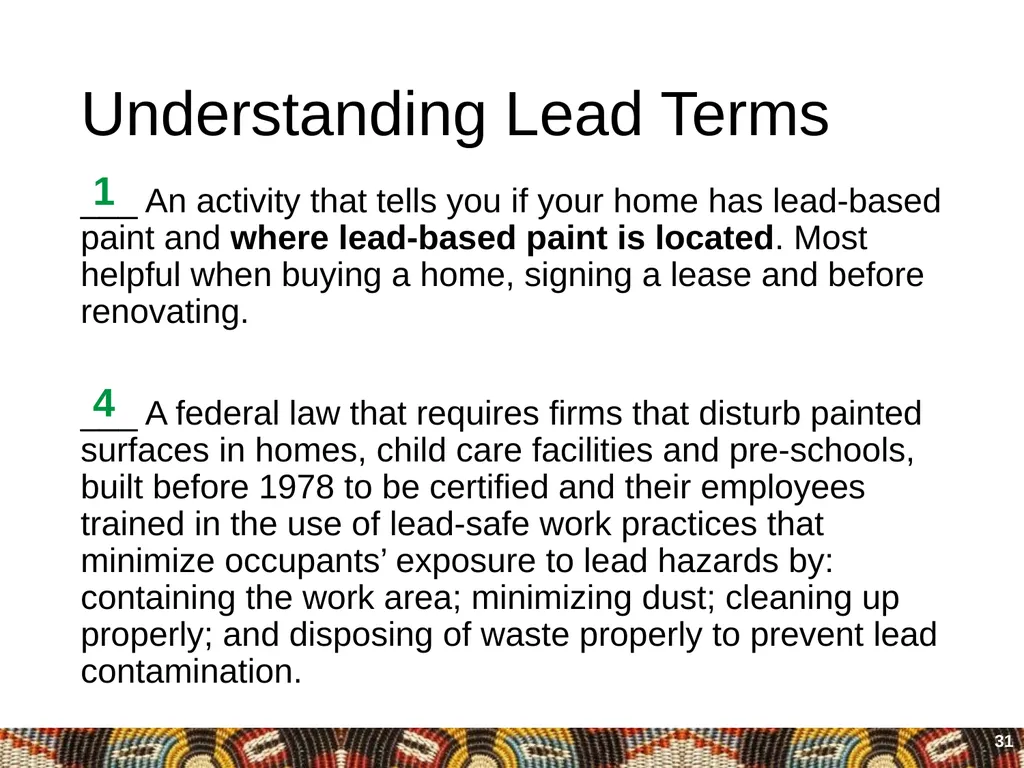
Understanding Lead Terms ___ An activity that tells you if your home has lead-based paint and where lead-based paint is located. Most helpful when buying a home, signing a lease and before renovating.
___ A federal law that requires firms that disturb painted surfaces in homes, child care facilities and pre-schools, built before 1978 to be certified and their employees trained in the use of lead-safe work practices that minimize occupants’ exposure to lead hazards by: containing the work area; minimizing dust; cleaning up properly; and disposing of waste properly to prevent lead contamination. 1 4 31<br>
32
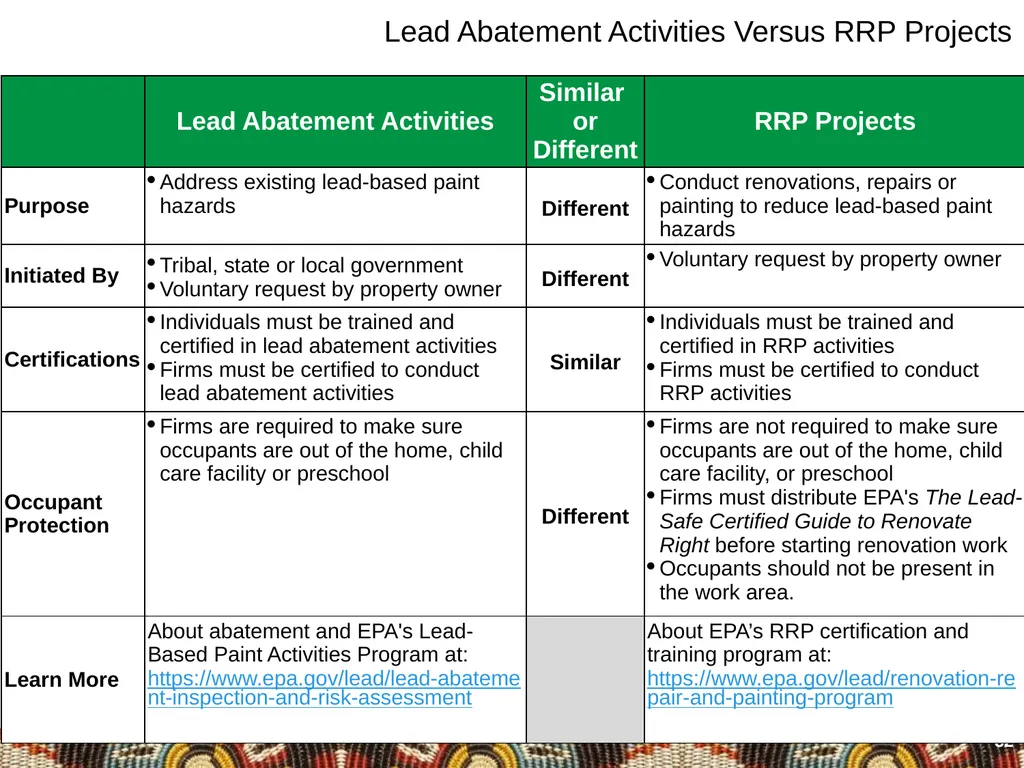
Lead Abatement Activities Versus RRP Projects 32<br>
33
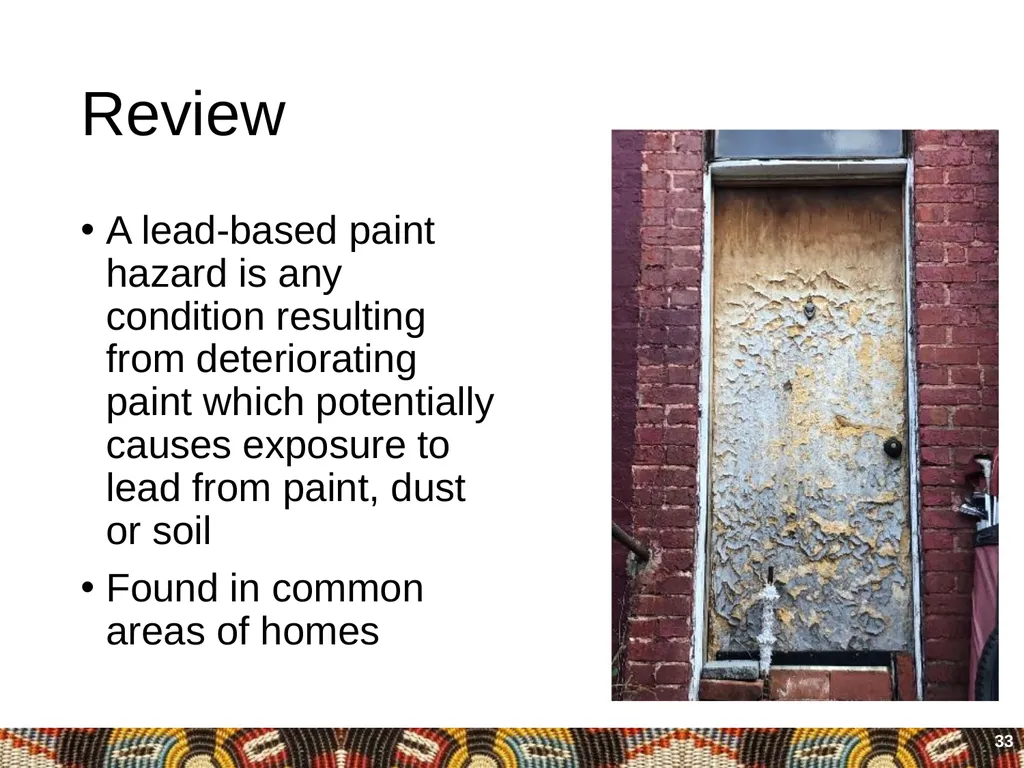
Review A lead-based paint hazard is any condition resulting from deteriorating paint which potentially causes exposure to lead from paint, dust or soil
Found in common areas of homes 33<br>
34
What are lead-based paint activities? 34<br>
35
What are lead abatement activities? 35<br>
36
What are RRP projects? 36<br>
37
National Lead Information Center 1 (800) 424-LEAD [5323]
Provides the public and professionals with information about lead, lead hazards and prevention
Ask an Information Specialist questions about lead
Monday to Friday, 8:00 am to 6:00 pm ET (except federal holidays)
Hearing- or speech-challenged individuals may access this number through TTY by calling the Federal Relay Service at 1-800-877-8339 37<br>
38
Thank You! Module 4: Hiring Certified Lead Professionals take-home resources include, the:
Worksheet;
Key messages; and
Kids activity sheet. 38<br>