Module 6 will cover: - Next Generation Sequencing (NGS) - An overview of the technology - Analysis software - Fetal fraction (FF) - What is fetal fraction? - Why fetal fraction is used - Dynamic fetal fraction Module 6: NGS and Fetal
"Module 6 will cover: - Next Generation Sequencing" is the property of its rightful owner. Permission is granted to
download and print the materials on this website for personal, non-commercial use only, and to display it
on your personal computer provided you do not modify the materials and that you retain all copyright
notices contained in the materials. By downloading content from our website, you accept the terms of this
agreement.
Presentation Transcript
01
Module 6 will cover: - Next Generation Sequencing (NGS) - An overview of the technology - Analysis software - Fetal fraction (FF) - What is fetal fraction? - Why fetal fraction is used - Dynamic fetal fraction Module 6: NGS and Fetal Fraction<br>
02
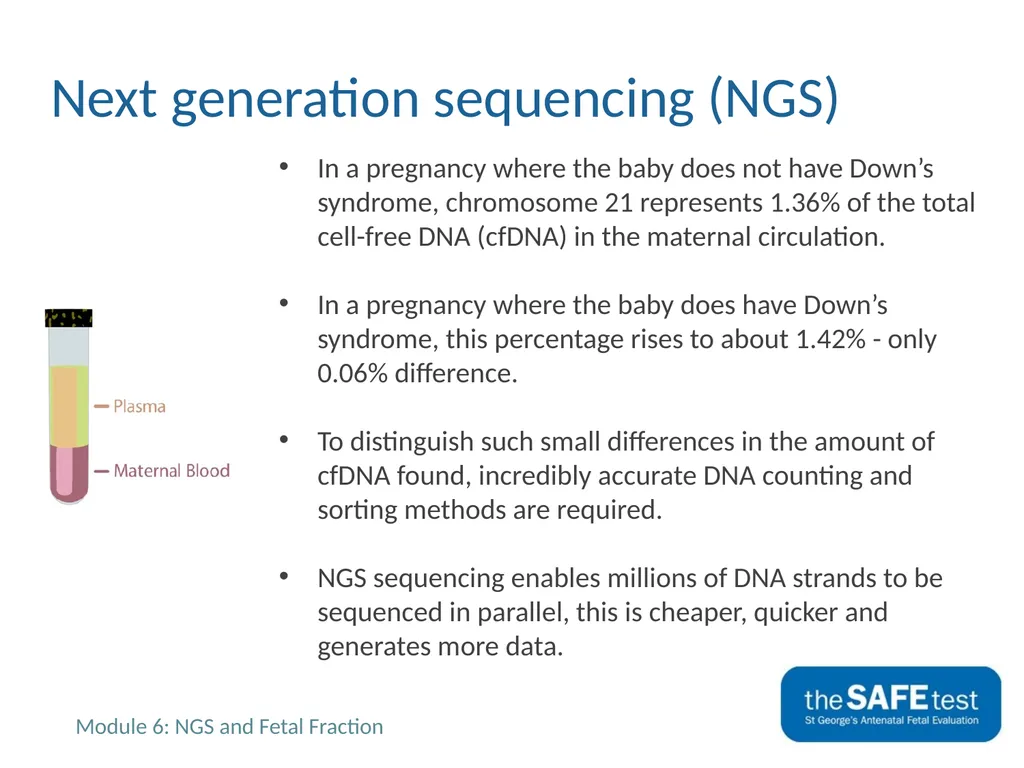
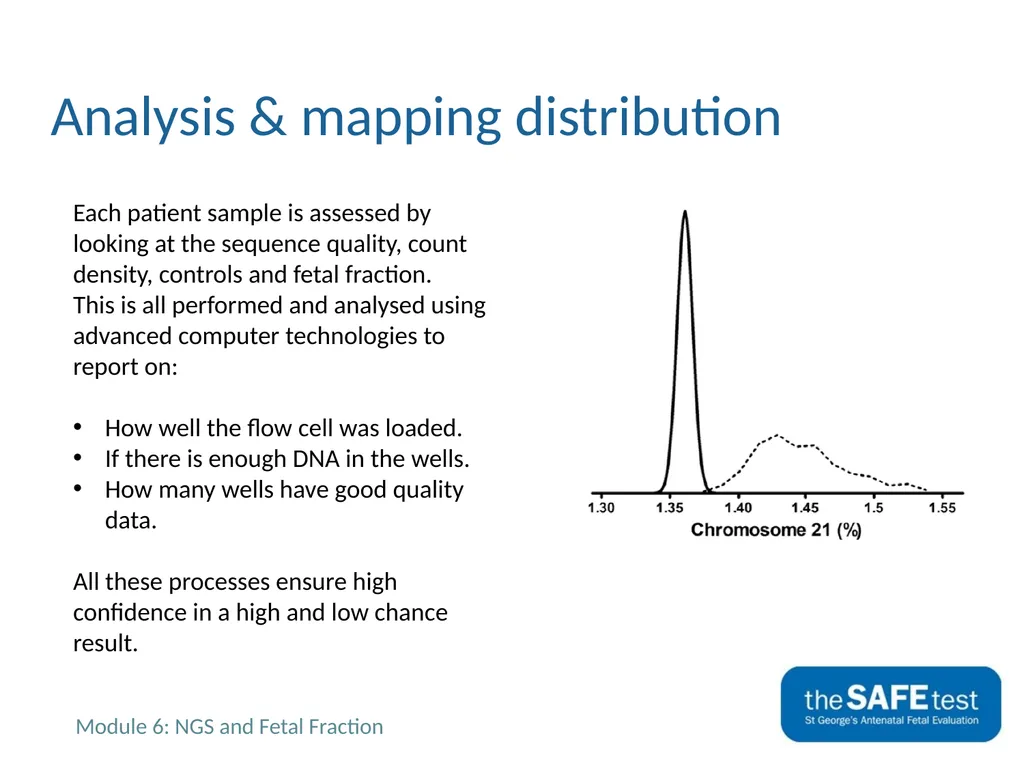
Next generation sequencing (NGS) In a pregnancy where the baby does not have Down’s syndrome, chromosome 21 represents 1.36% of the total cell-free DNA (cfDNA) in the maternal circulation.
In a pregnancy where the baby does have Down’s syndrome, this percentage rises to about 1.42% - only 0.06% difference.
To distinguish such small differences in the amount of cfDNA found, incredibly accurate DNA counting and sorting methods are required.
NGS sequencing enables millions of DNA strands to be sequenced in parallel, this is cheaper, quicker and generates more data.<br>
03
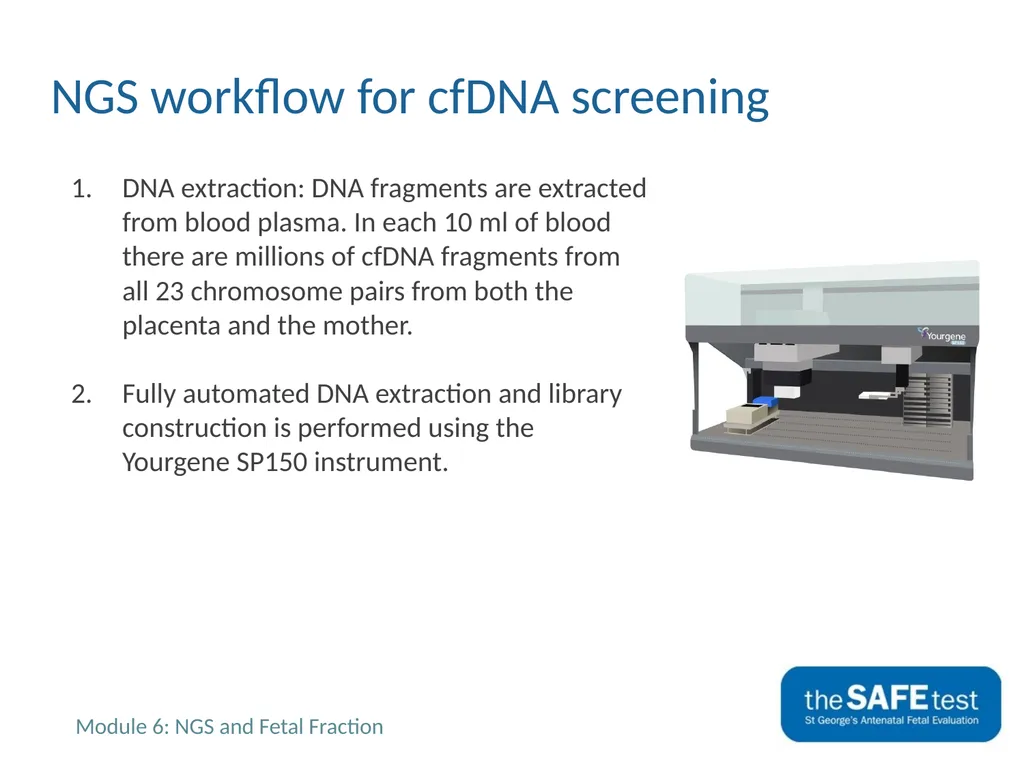
NGS workflow for cfDNA screening DNA extraction: DNA fragments are extracted from blood plasma. In each 10 ml of blood there are millions of cfDNA fragments from all 23 chromosome pairs from both the placenta and the mother.
Fully automated DNA extraction and library construction is performed using the Yourgene SP150 instrument.<br>
04
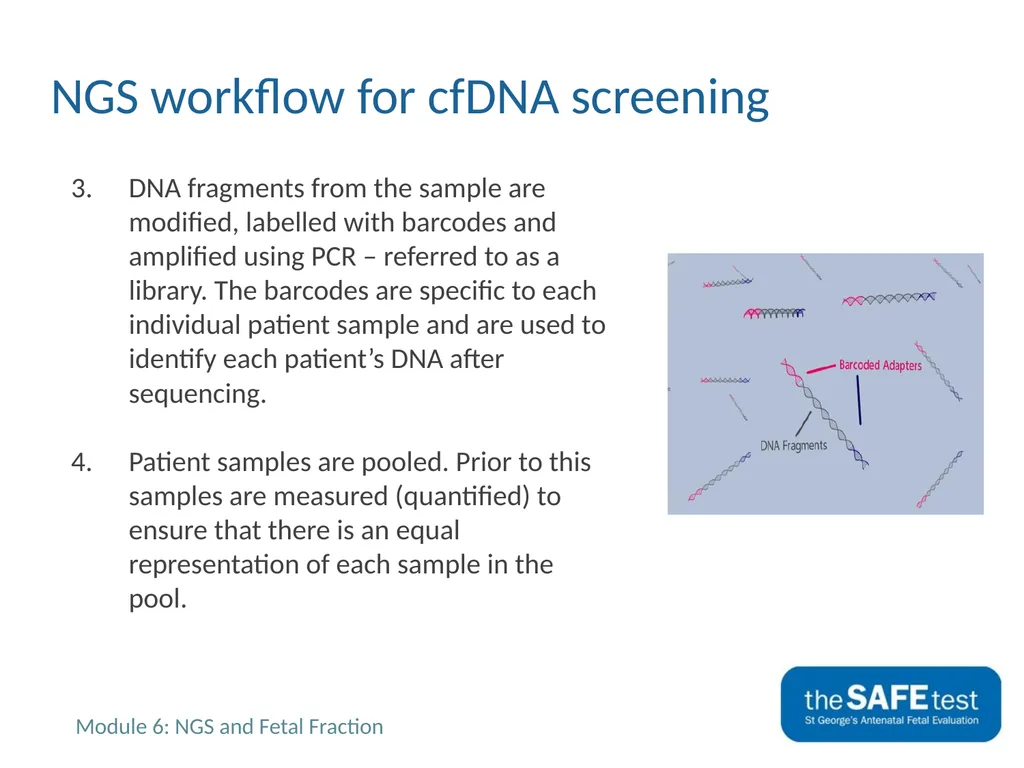
NGS workflow for cfDNA screening DNA fragments from the sample are modified, labelled with barcodes and amplified using PCR – referred to as a library. The barcodes are specific to each individual patient sample and are used to identify each patient’s DNA after sequencing.
Patient samples are pooled. Prior to this samples are measured (quantified) to ensure that there is an equal representation of each sample in the pool.<br>
05
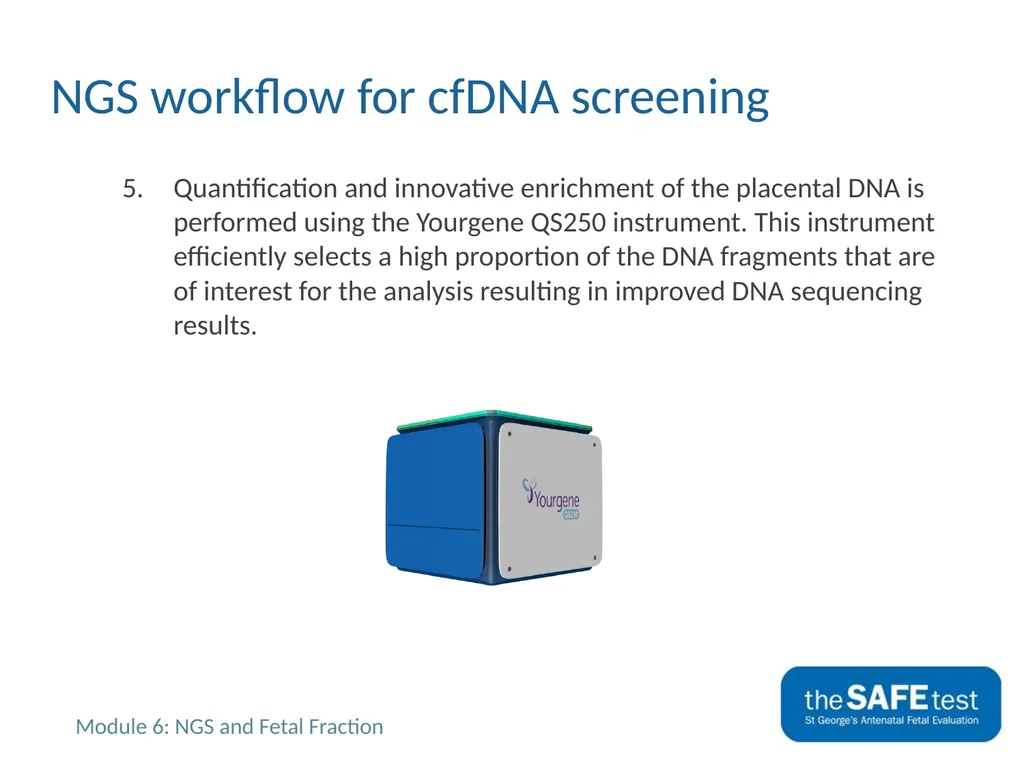
NGS workflow for cfDNA screening Quantification and innovative enrichment of the placental DNA is performed using the Yourgene QS250 instrument. This instrument efficiently selects a high proportion of the DNA fragments that are of interest for the analysis resulting in improved DNA sequencing results.<br>
06
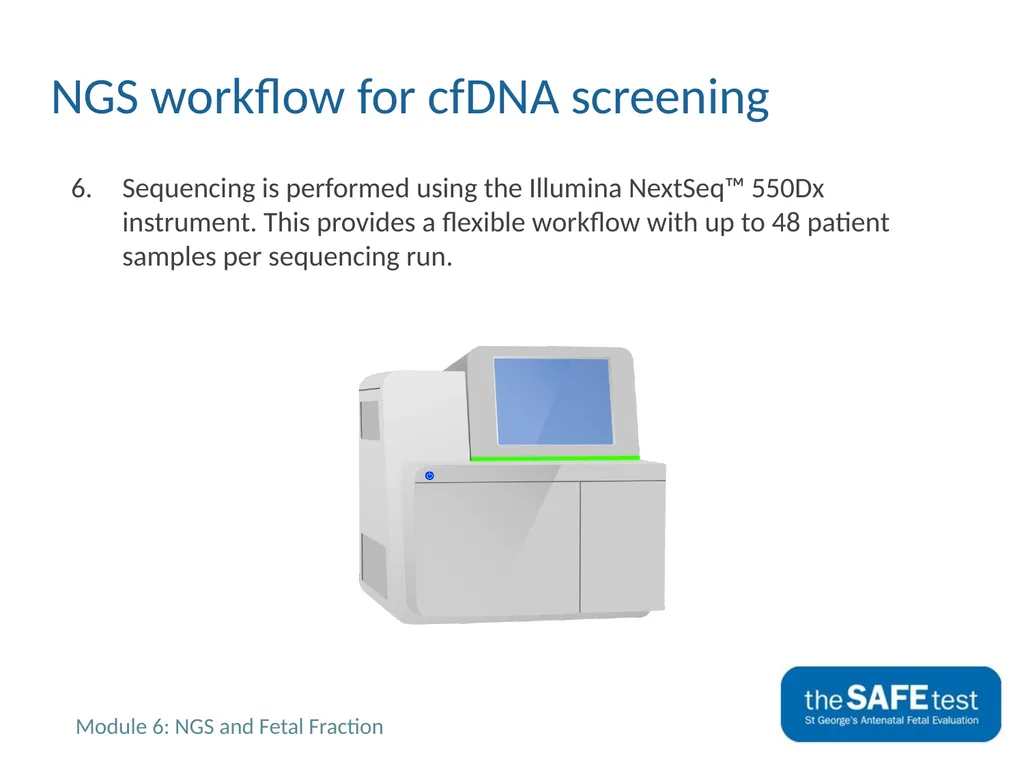
NGS workflow for cfDNA screening Sequencing is performed using the Illumina NextSeq™ 550Dx instrument. This provides a flexible workflow with up to 48 patient samples per sequencing run.<br>
07
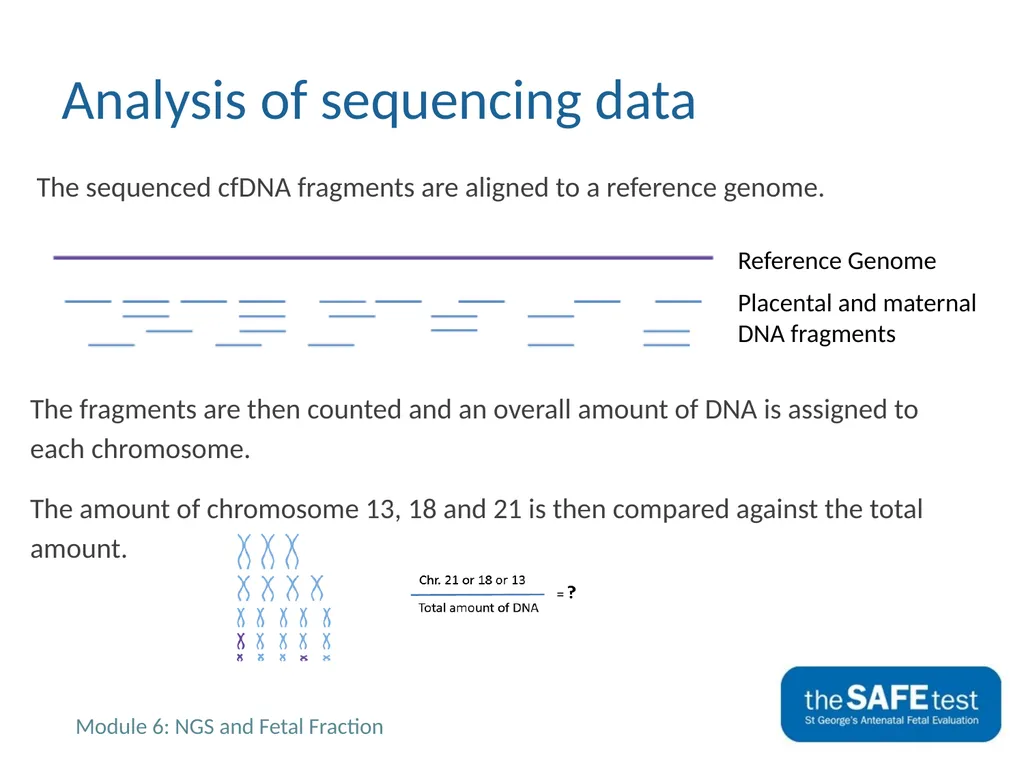
Analysis of sequencing data The sequenced cfDNA fragments are aligned to a reference genome. The fragments are then counted and an overall amount of DNA is assigned to each chromosome.
The amount of chromosome 13, 18 and 21 is then compared against the total amount. Reference Genome
Placental and maternal DNA fragments<br>
08
Analysis & mapping distribution Each patient sample is assessed by looking at the sequence quality, count density, controls and fetal fraction.
This is all performed and analysed using advanced computer technologies to report on:
How well the flow cell was loaded.
If there is enough DNA in the wells.
How many wells have good quality data.
All these processes ensure high confidence in a high and low chance result.<br>
09
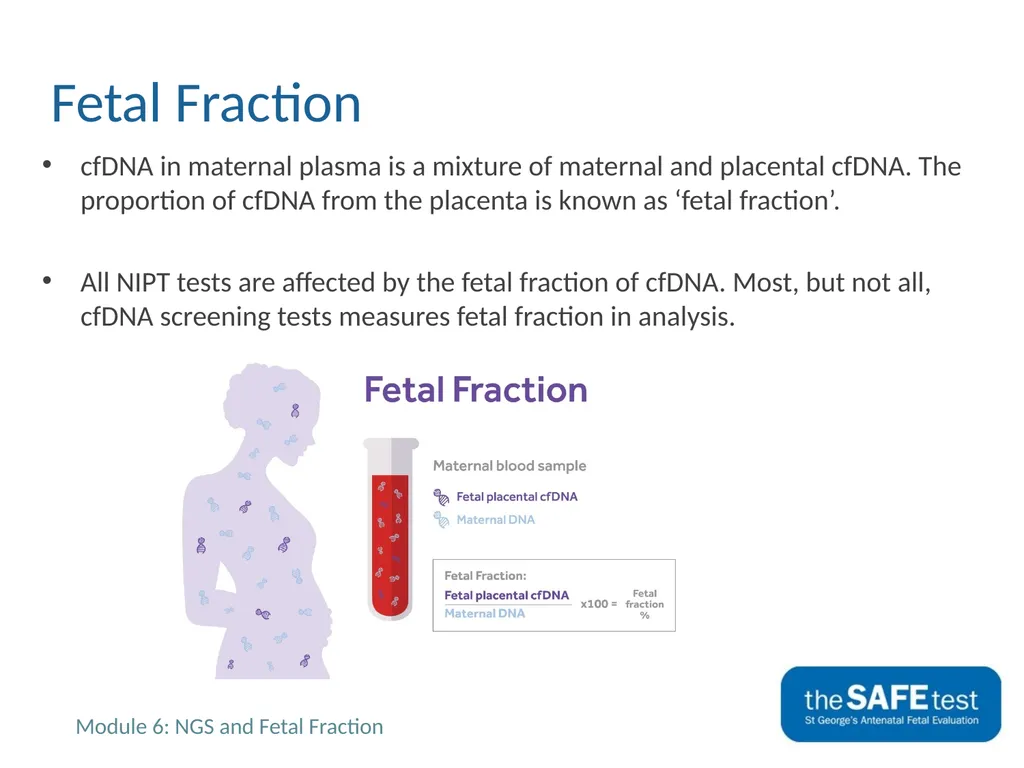
Fetal Fraction cfDNA in maternal plasma is a mixture of maternal and placental cfDNA. The proportion of cfDNA from the placenta is known as ‘fetal fraction’.
All NIPT tests are affected by the fetal fraction of cfDNA. Most, but not all, cfDNA screening tests measures fetal fraction in analysis.<br>
10
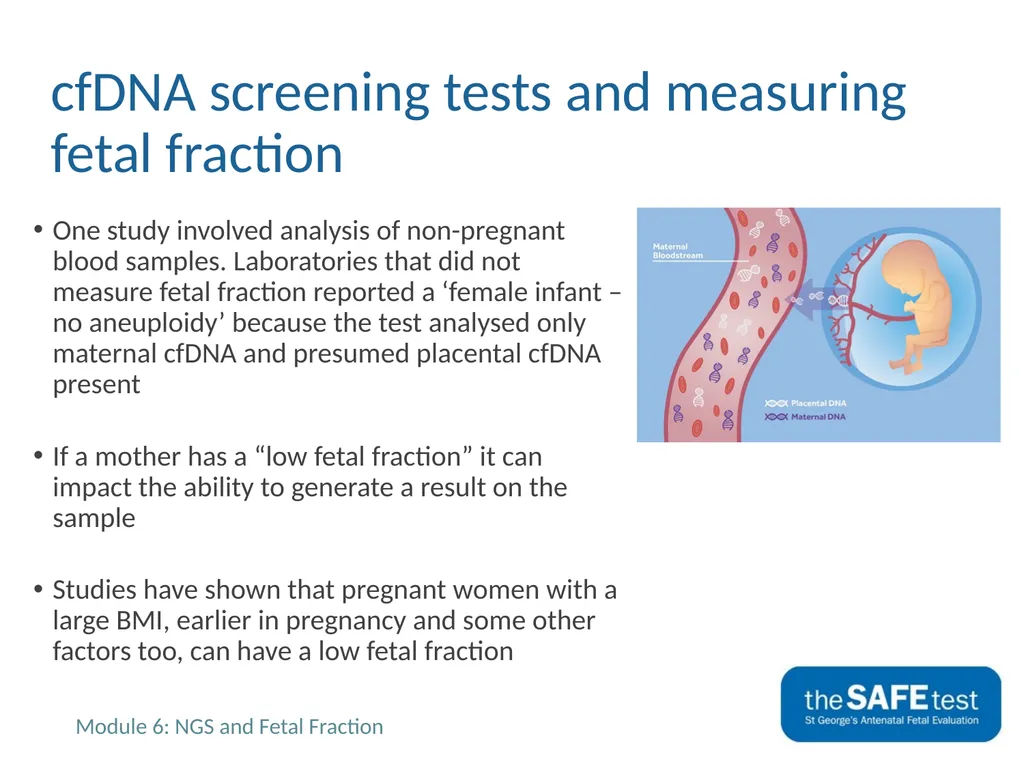
One study involved analysis of non-pregnant blood samples. Laboratories that did not measure fetal fraction reported a ‘female infant – no aneuploidy’ because the test analysed only maternal cfDNA and presumed placental cfDNA present
If a mother has a “low fetal fraction” it can impact the ability to generate a result on the sample
Studies have shown that pregnant women with a large BMI, earlier in pregnancy and some other factors too, can have a low fetal fraction cfDNA screening tests and measuring fetal fraction<br>
11
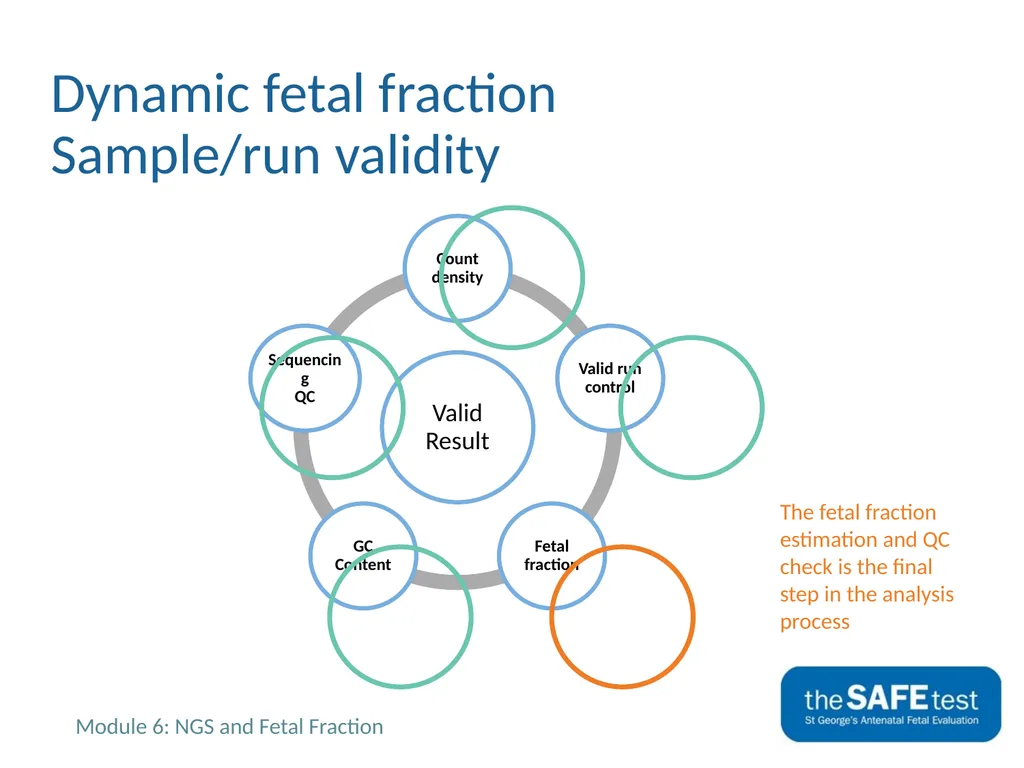
Dynamic fetal fraction Sample/run validity The fetal fraction estimation and QC check is the final step in the analysis process<br>
12
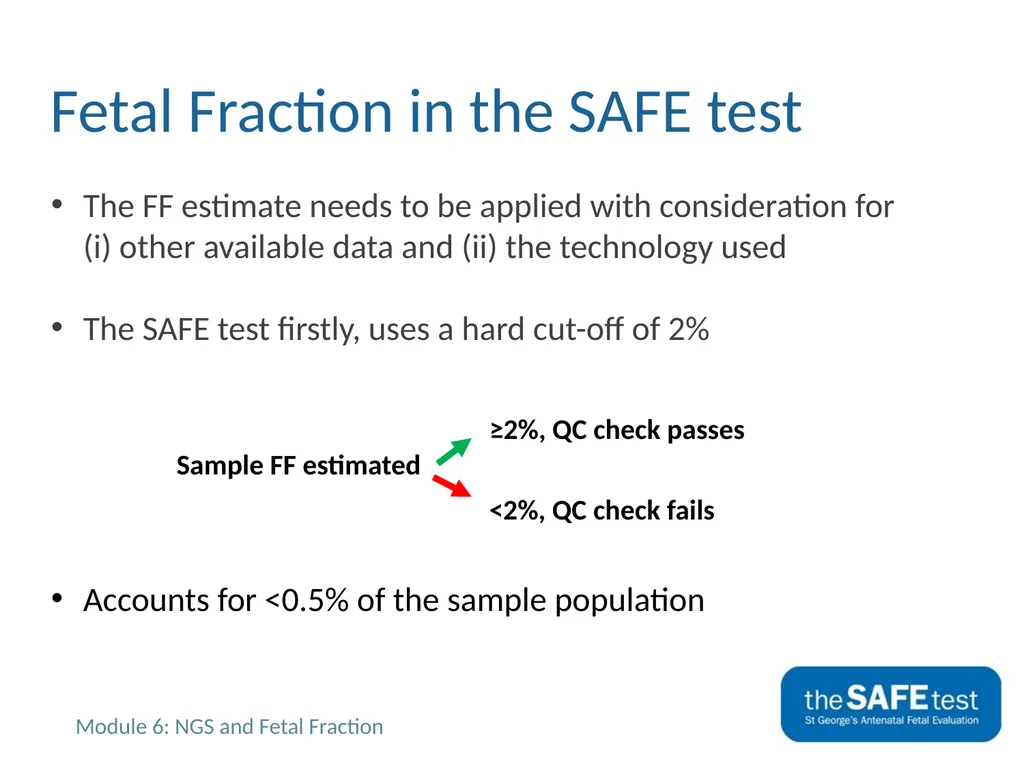
The FF estimate needs to be applied with consideration for (i) other available data and (ii) the technology used
The SAFE test firstly, uses a hard cut-off of 2% Fetal Fraction in the SAFE test Accounts for <0.5% of the sample population<br>
13
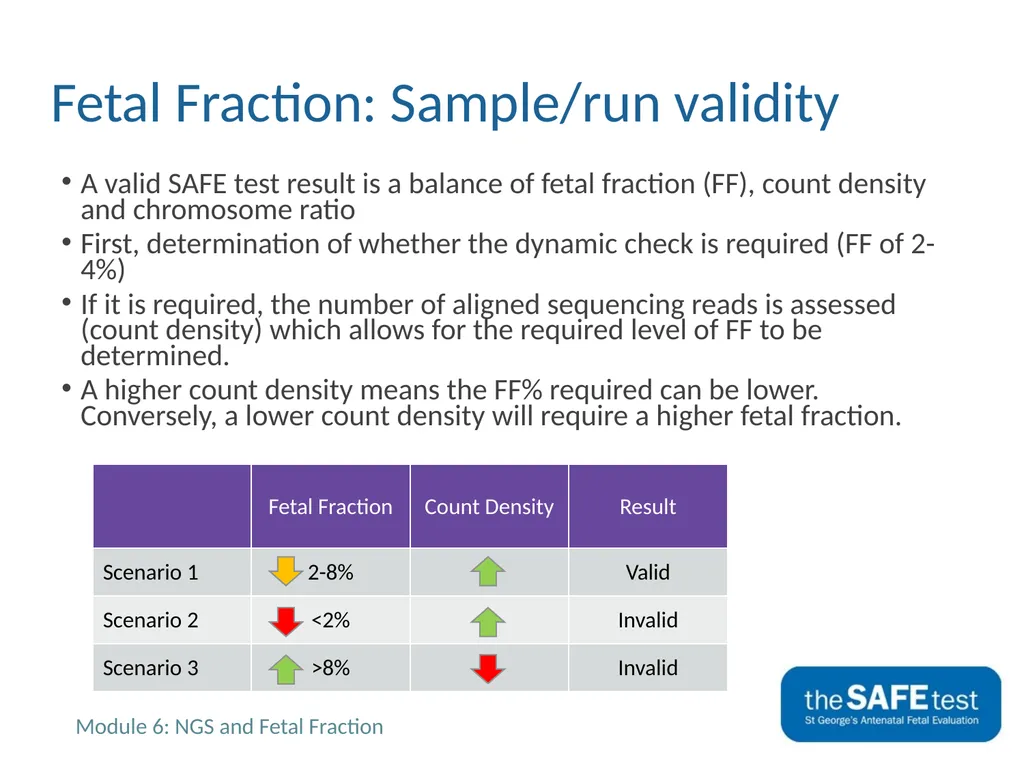
A valid SAFE test result is a balance of fetal fraction (FF), count density and chromosome ratio
First, determination of whether the dynamic check is required (FF of 2-4%)
If it is required, the number of aligned sequencing reads is assessed (count density) which allows for the required level of FF to be determined.
A higher count density means the FF% required can be lower. Conversely, a lower count density will require a higher fetal fraction. Fetal Fraction: Sample/run validity<br>