
Montgomery County Public Schools School-Wide


Description: Montgomery County Public Schools School-Wide Positive Behavioral Interventions Supports Positive Behavioral Interventions and Supports (PBIS) at Home How Parents Can Support Positive Behavior at Home Mike Muempfer PBIS Specialist
Related Topics
Download Presentation
"Montgomery County Public Schools School-Wide" is the property of its rightful owner. Permission is granted to download and print the materials on this website for personal, non-commercial use only, and to display it on your personal computer provided you do not modify the materials and that you retain all copyright notices contained in the materials. By downloading content from our website, you accept the terms of this agreement.
Presentation Transcript
slide1. Montgomery County Public Schools
School-Wide Positive Behavioral Interventions & Supports
Positive Behavioral Interventions and Supports (PBIS) at Home
How Parents Can Support Positive Behavior at Home Mike Muempfer
PBIS Specialist
Montgomery County Public Schools
michael_j_muempfer@mcpsmd.org<br>
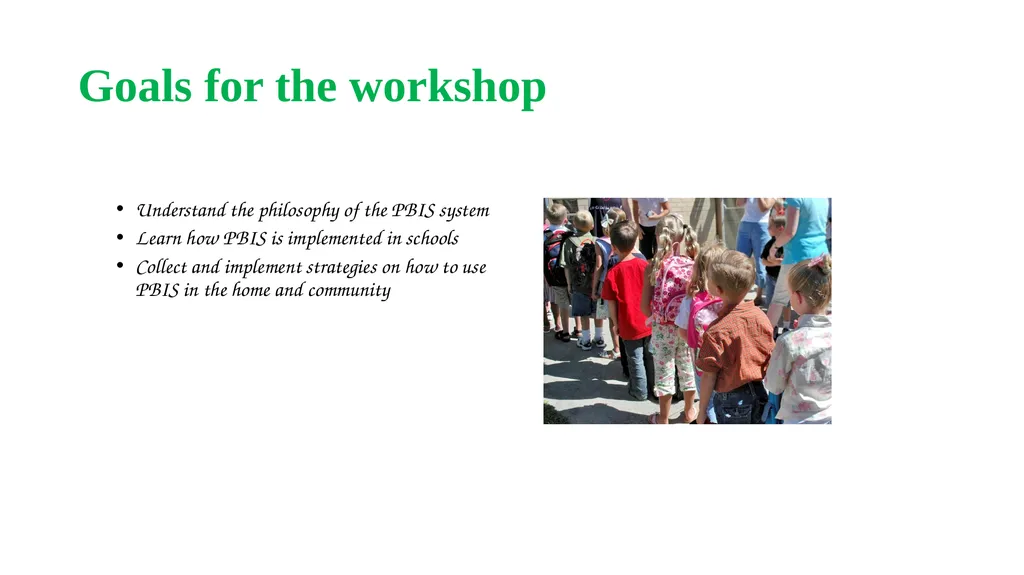
slide2. Goals for the workshop Understand the philosophy of the PBIS system
Learn how PBIS is implemented in schools
Collect and implement strategies on how to use PBIS in the home and community<br>
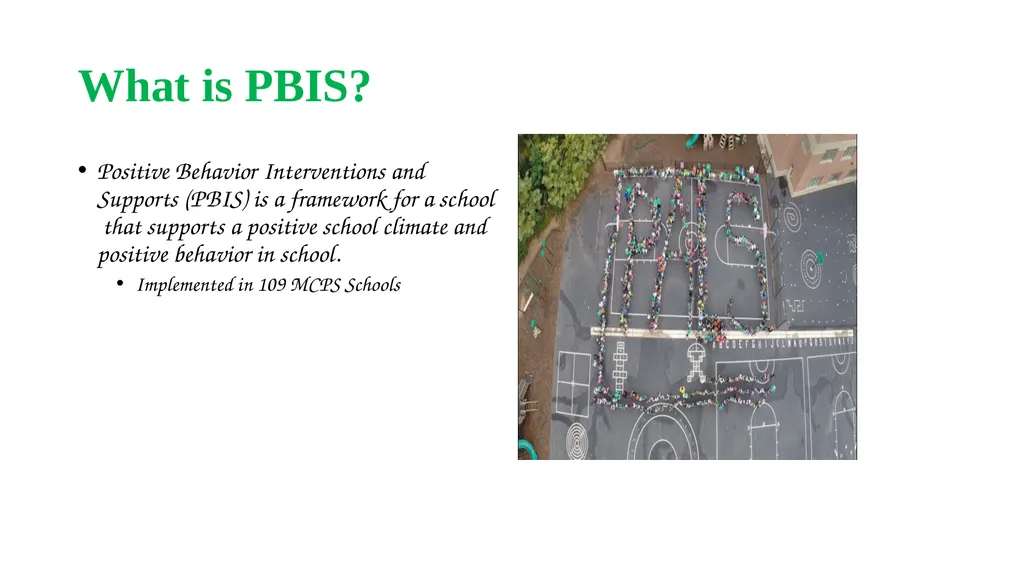
slide3. What is PBIS? Positive Behavior Interventions and Supports (PBIS) is a framework for a school that supports a positive school climate and positive behavior in school.
Implemented in 109 MCPS Schools<br>
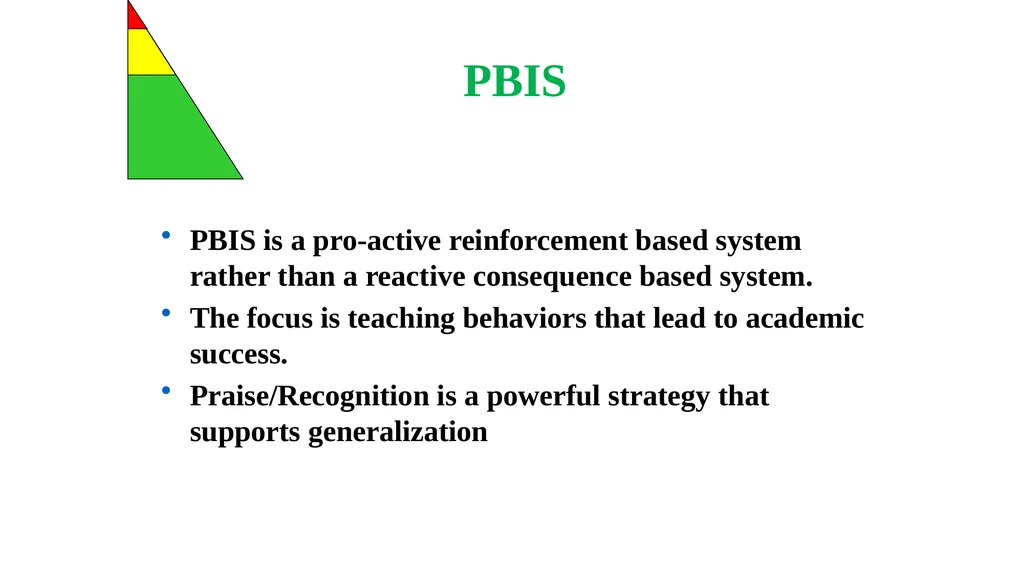
slide4. PBIS PBIS is a pro-active reinforcement based system rather than a reactive consequence based system.
The focus is teaching behaviors that lead to academic success.
Praise/Recognition is a powerful strategy that supports generalization<br>
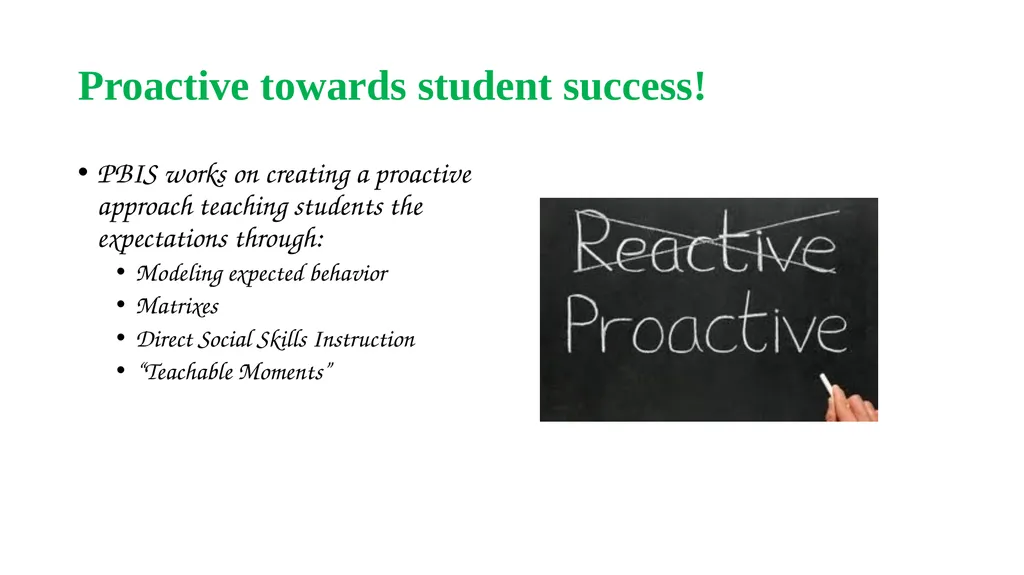
slide5. Proactive towards student success! PBIS works on creating a proactive approach teaching students the expectations through:
Modeling expected behavior
Matrixes
Direct Social Skills Instruction
“Teachable Moments”<br>
slide6. Can we MAKE students behave? We can’t make kids learn or behave, but we have the power to increase the likelihood by creating a positive environment and teaching. In other words, PBIS aims to improve school climate.<br>
slide7. The Basics Behavior is learned
Do not assume children know your rules, expectations, or social skills
Every social interaction you have with a child teaches him/her something<br>
slide8. The Basics Behavior communicates need:
Children engage in behavior(s) to "get" what they find reinforcing or to "avoid" what they find aversive<br>
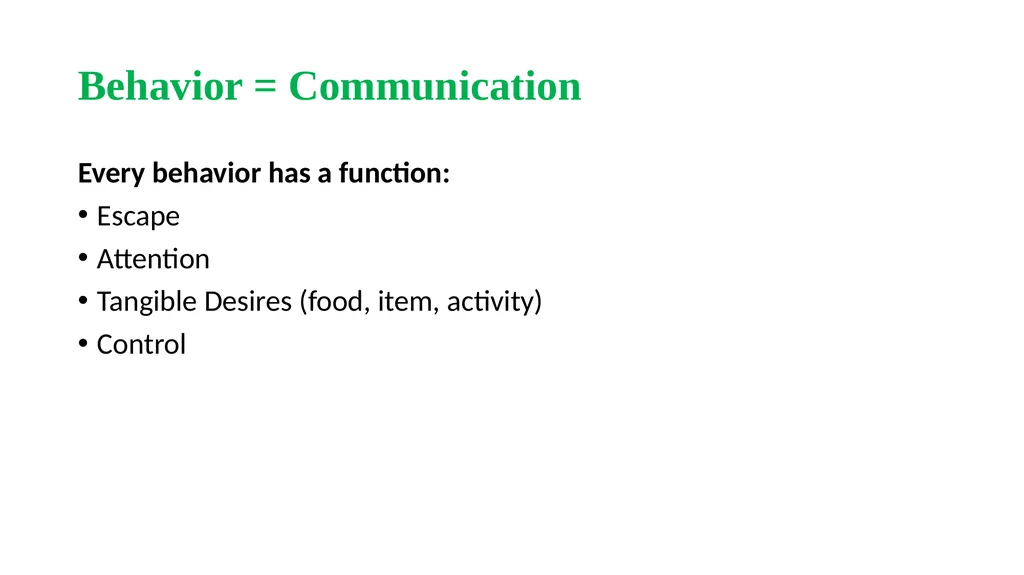
slide9. Behavior = Communication Every behavior has a function:
Escape
Attention
Tangible Desires (food, item, activity)
Control<br>
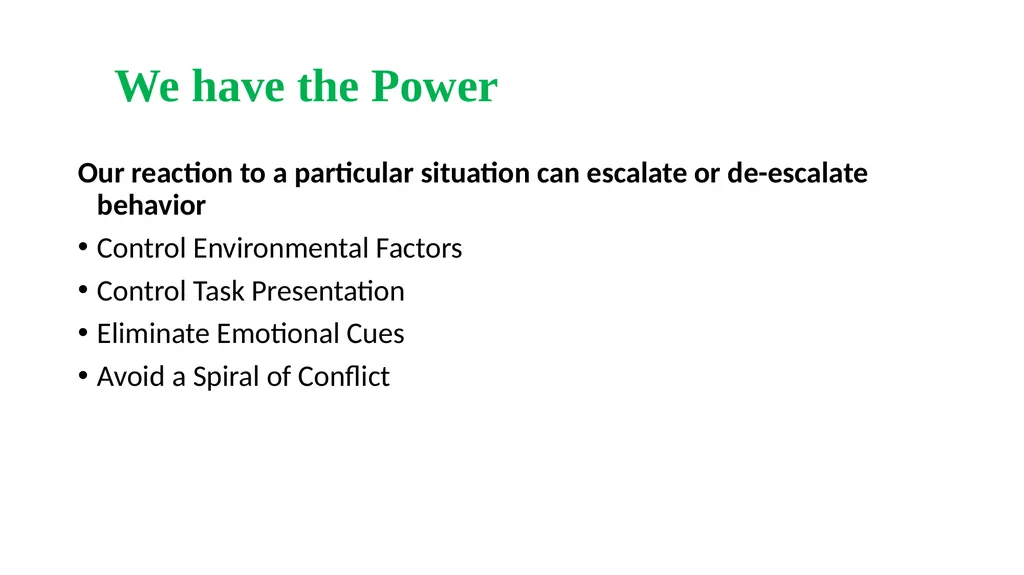
slide10. We have the Power Our reaction to a particular situation can escalate or de-escalate behavior
Control Environmental Factors
Control Task Presentation
Eliminate Emotional Cues
Avoid a Spiral of Conflict<br>
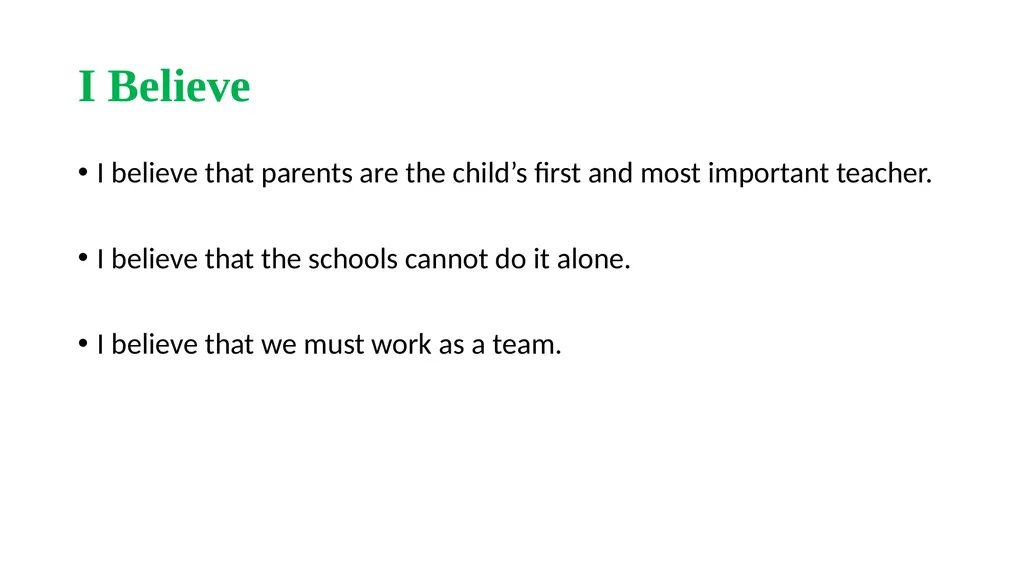
slide11. I Believe I believe that parents are the child’s first and most important teacher.
I believe that the schools cannot do it alone.
I believe that we must work as a team.<br>
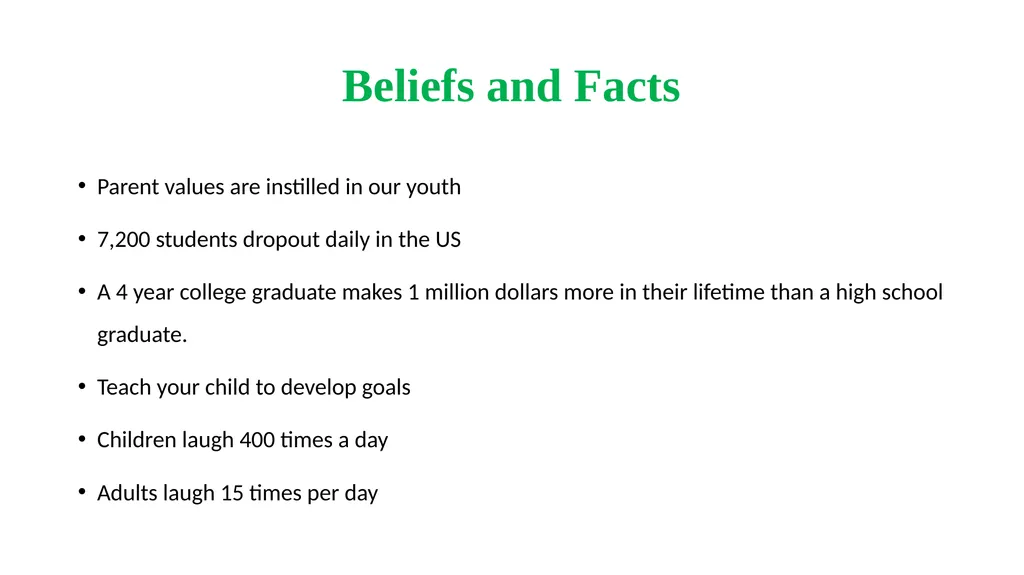
slide12. Beliefs and Facts Parent values are instilled in our youth
7,200 students dropout daily in the US
A 4 year college graduate makes 1 million dollars more in their lifetime than a high school graduate.
Teach your child to develop goals
Children laugh 400 times a day
Adults laugh 15 times per day<br>
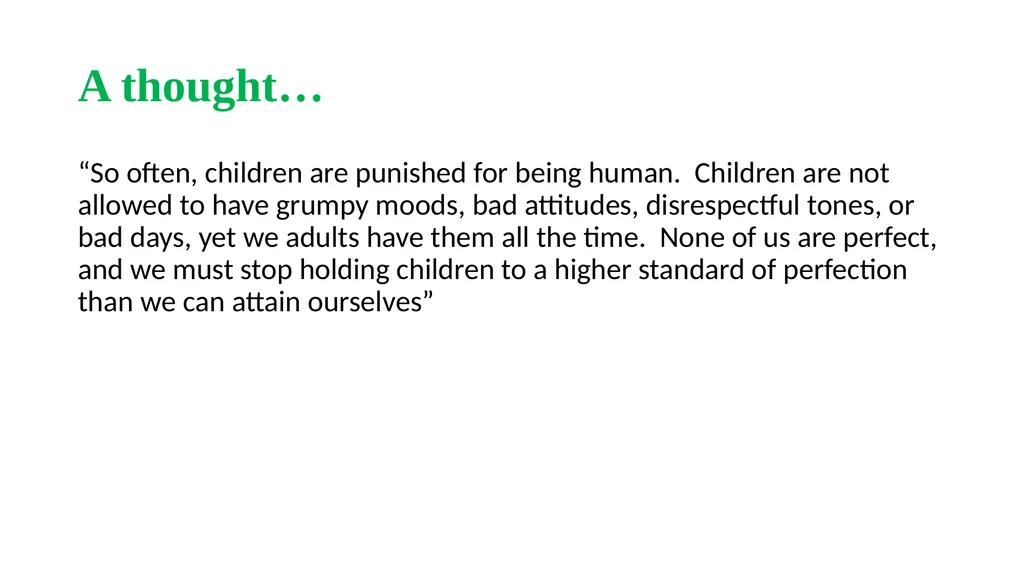
slide13. A thought… “So often, children are punished for being human. Children are not allowed to have grumpy moods, bad attitudes, disrespectful tones, or bad days, yet we adults have them all the time. None of us are perfect, and we must stop holding children to a higher standard of perfection than we can attain ourselves”<br>
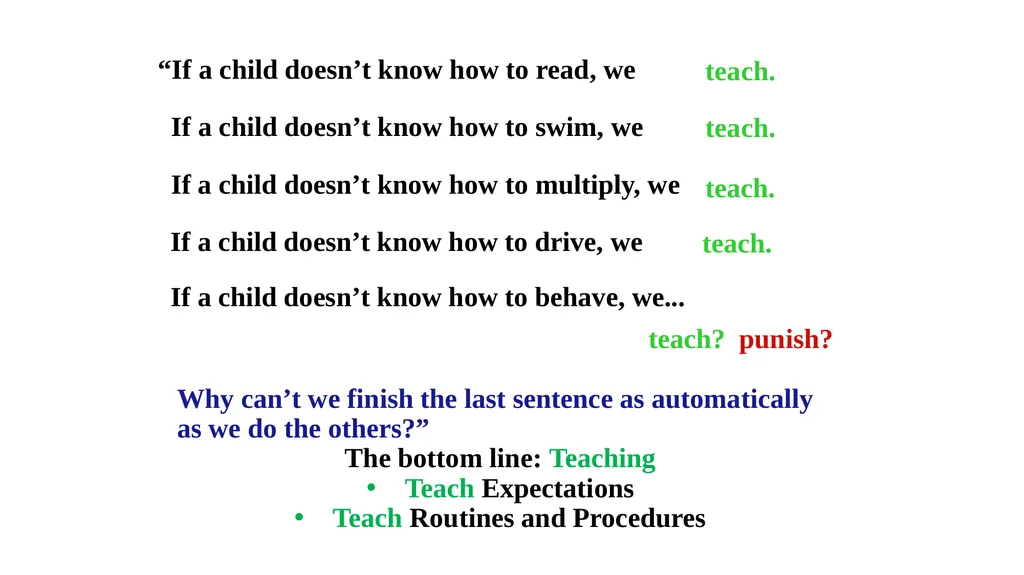
slide14. “If a child doesn’t know how to read, we If a child doesn’t know how to swim, we If a child doesn’t know how to multiply, we If a child doesn’t know how to drive, we If a child doesn’t know how to behave, we... Why can’t we finish the last sentence as automatically as we do the others?”
The bottom line: Teaching
Teach Expectations
Teach Routines and Procedures teach. teach. teach. teach. teach? punish?<br>
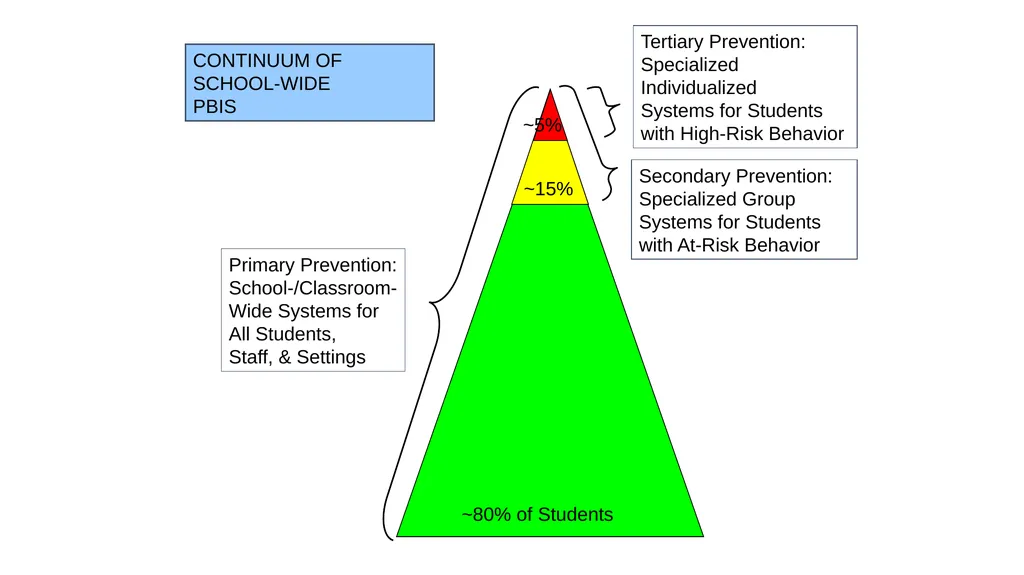
slide15. Primary Prevention:
School-/Classroom-
Wide Systems for
All Students,
Staff, & Settings Secondary Prevention:
Specialized Group
Systems for Students with At-Risk Behavior Tertiary Prevention:
Specialized
Individualized
Systems for Students with High-Risk Behavior ~80% of Students ~15% ~5% CONTINUUM OF
SCHOOL-WIDE
PBIS<br>
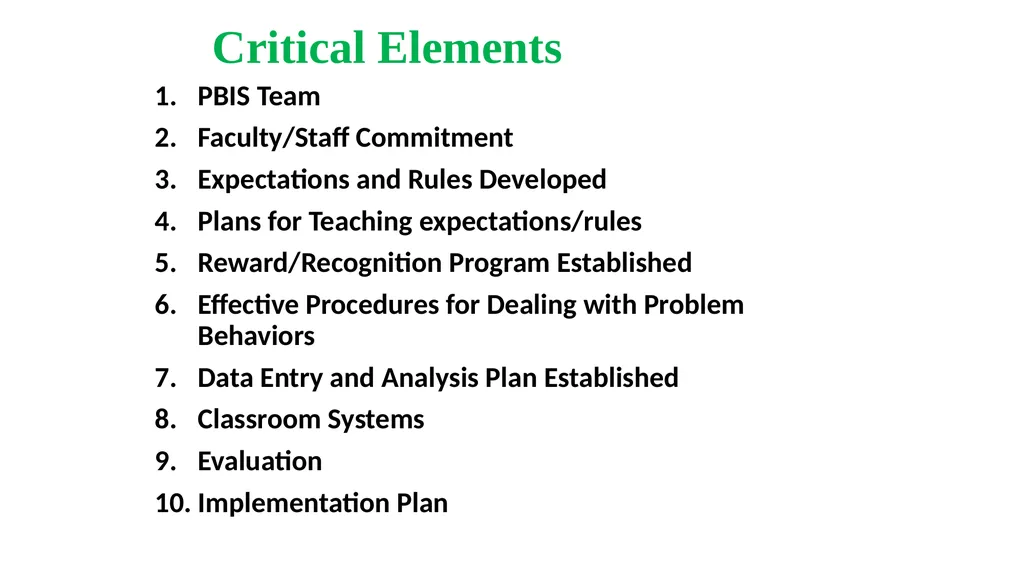
slide16. Critical Elements PBIS Team
Faculty/Staff Commitment
Expectations and Rules Developed
Plans for Teaching expectations/rules
Reward/Recognition Program Established
Effective Procedures for Dealing with Problem Behaviors
Data Entry and Analysis Plan Established
Classroom Systems
Evaluation
Implementation Plan<br>
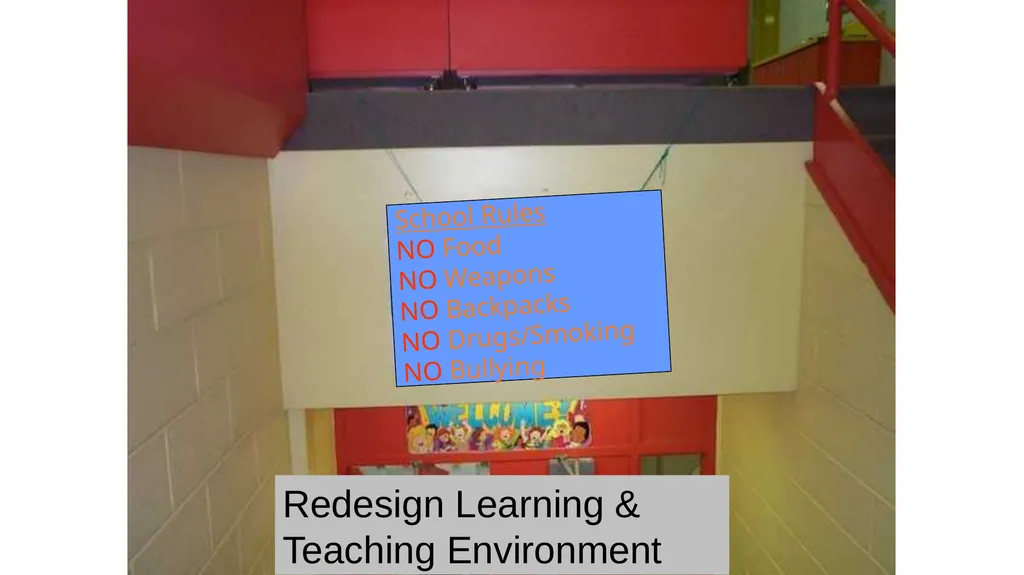
slide17. School Rules
NO Food
NO Weapons
NO Backpacks
NO Drugs/Smoking
NO Bullying Redesign Learning & Teaching Environment<br>
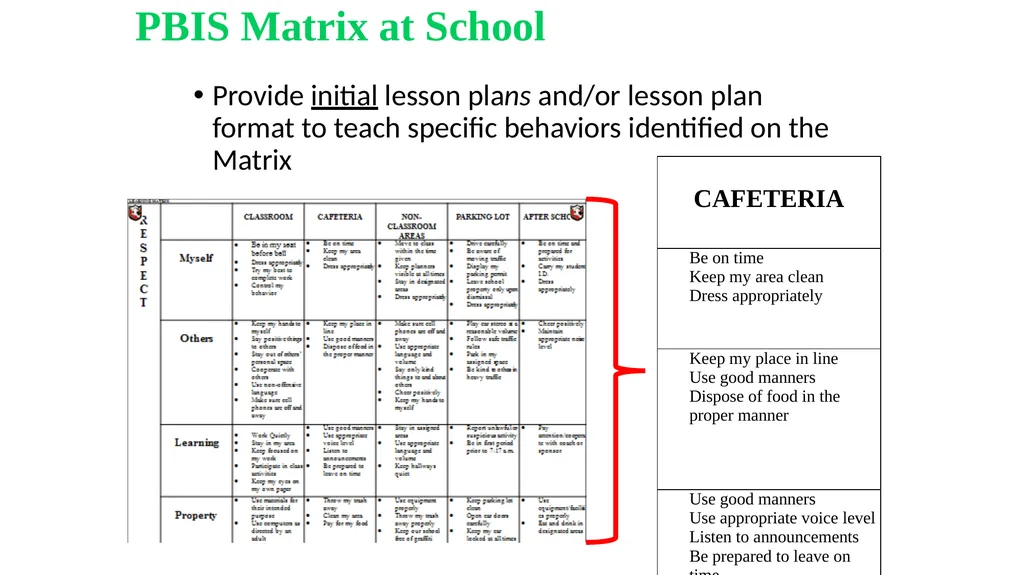
slide18. PBIS Matrix at School Provide initial lesson plans and/or lesson plan format to teach specific behaviors identified on the Matrix<br>
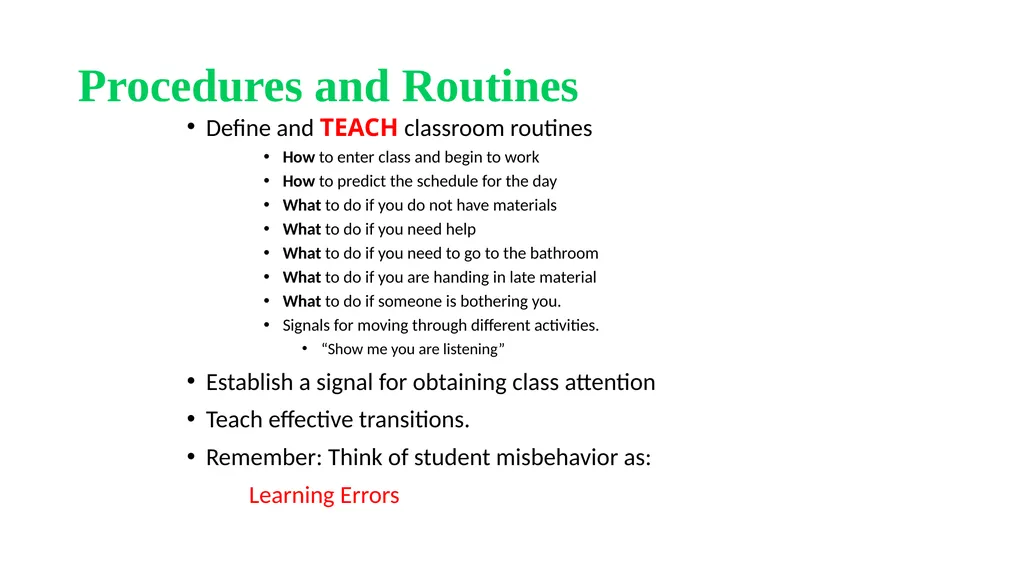
slide19. Define and TEACH classroom routines
How to enter class and begin to work
How to predict the schedule for the day
What to do if you do not have materials
What to do if you need help
What to do if you need to go to the bathroom
What to do if you are handing in late material
What to do if someone is bothering you.
Signals for moving through different activities.
“Show me you are listening”
Establish a signal for obtaining class attention
Teach effective transitions.
Remember: Think of student misbehavior as:
Learning Errors Procedures and Routines<br>
slide21. Doing this creates a safe and predictable environment
Allows for prefrontal cortex activity
Disengages the amygdala
Helps to foster authentic relationships with students (you can’t do this if the amygdala is overactive)
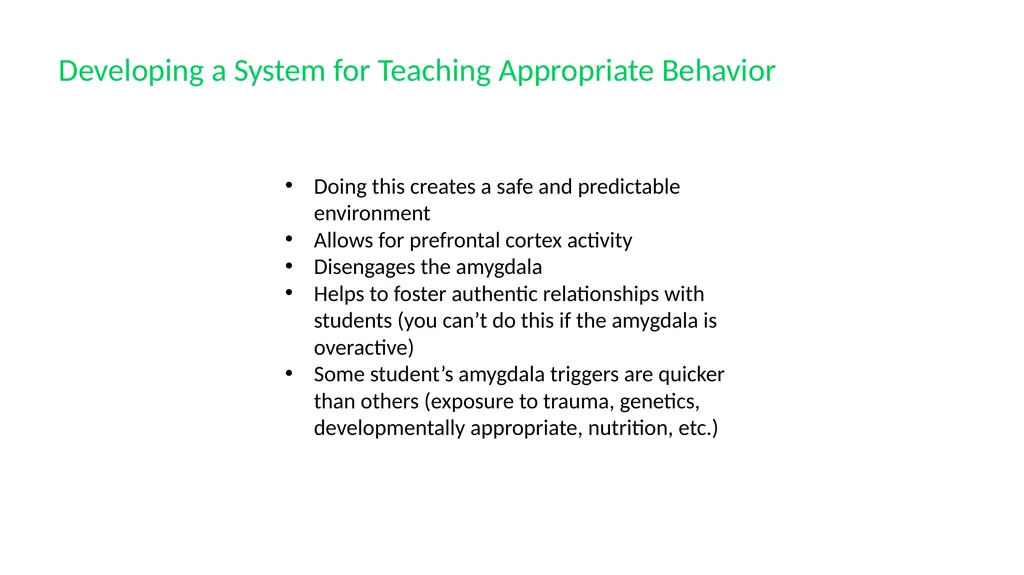
Some student’s amygdala triggers are quicker than others (exposure to trauma, genetics, developmentally appropriate, nutrition, etc.) Developing a System for Teaching Appropriate Behavior<br>
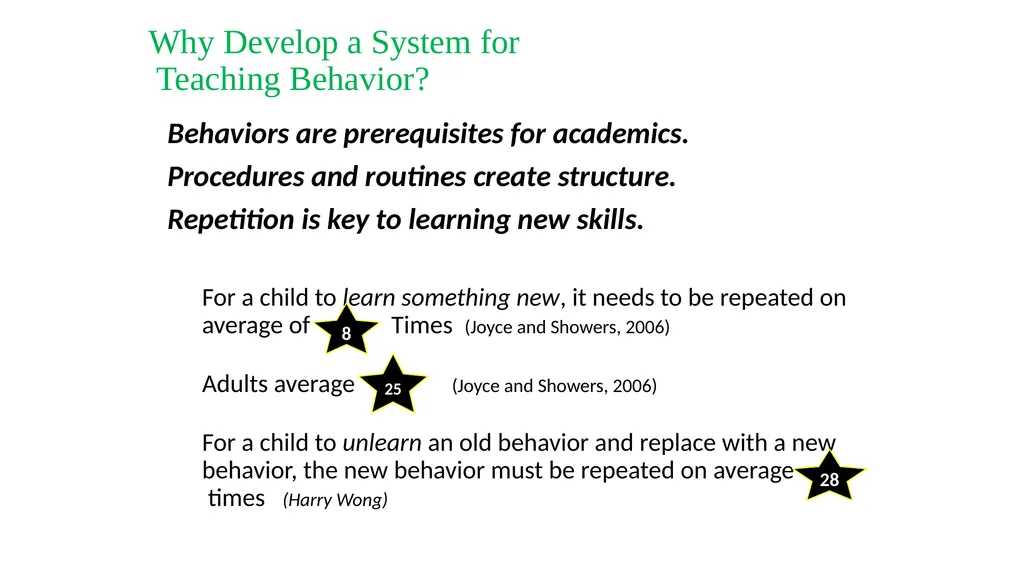
slide22. Why Develop a System for Teaching Behavior? Behaviors are prerequisites for academics.
Procedures and routines create structure.
Repetition is key to learning new skills.
For a child to learn something new, it needs to be repeated on average of ? Times (Joyce and Showers, 2006)
Adults average ? (Joyce and Showers, 2006)
For a child to unlearn an old behavior and replace with a new behavior, the new behavior must be repeated on average ? times (Harry Wong) 8 25 28<br>
slide23. Routines signals safety to
the Amygdala Routines
dampen fear and anxiety reactions Re-teaching of expectations encode memory of predictability and safety Alarm circuits increase in Locus Coeruleus by using harsh actions/exclusionary discipline Dopamine synthesized in VTA
associated with Self-Regulation (VTA shrinks during adolescence) Copyright © 2011-13, PAXIS Institute. Only for use by accredited PAX GBG Coaches and licensed by PAXIS. Pre/Adolescent Brain…<br>
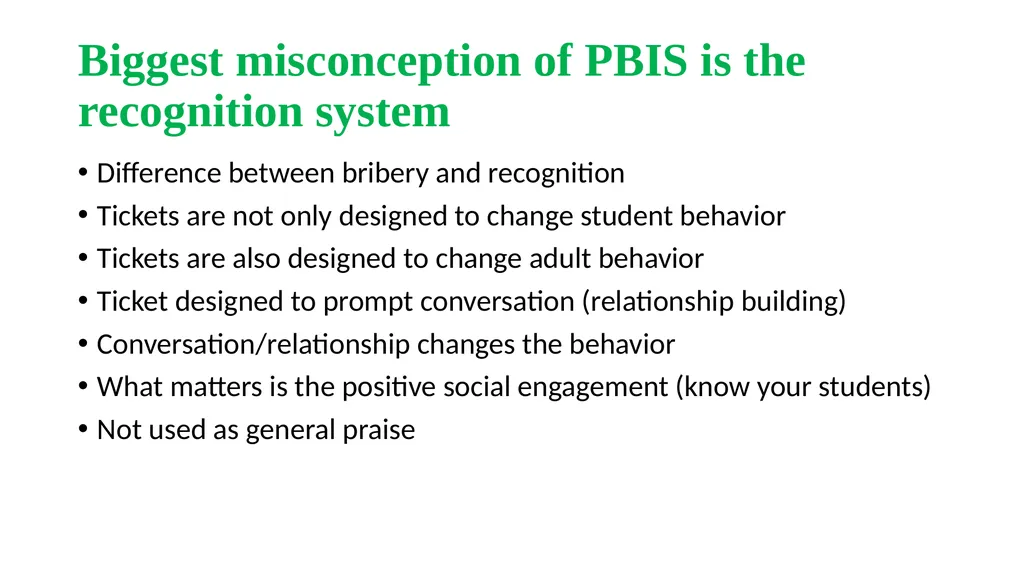
slide24. Biggest misconception of PBIS is the recognition system Difference between bribery and recognition
Tickets are not only designed to change student behavior
Tickets are also designed to change adult behavior
Ticket designed to prompt conversation (relationship building)
Conversation/relationship changes the behavior
What matters is the positive social engagement (know your students)
Not used as general praise<br>
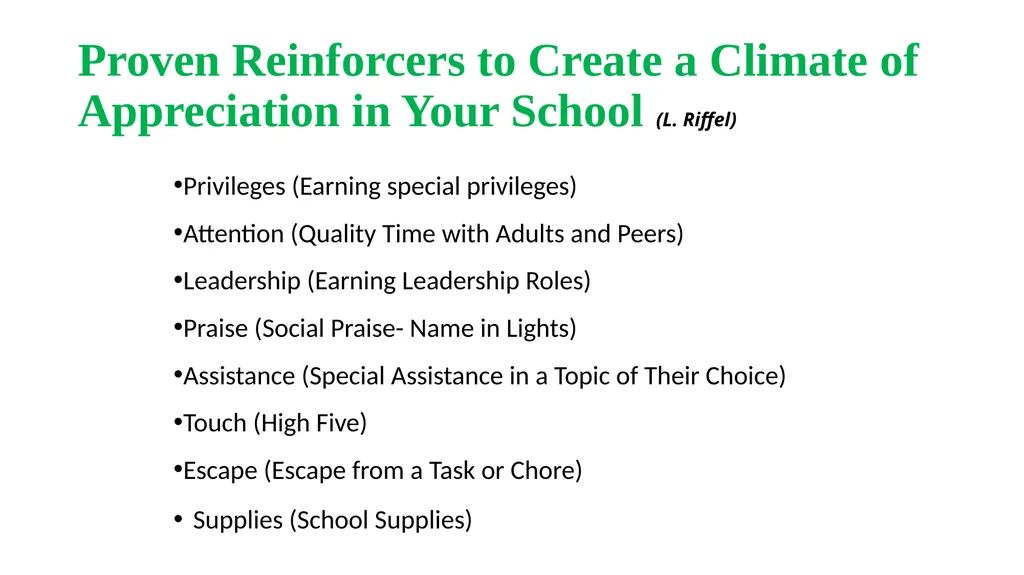
slide25. Proven Reinforcers to Create a Climate of Appreciation in Your School (L. Riffel) Privileges (Earning special privileges)
Attention (Quality Time with Adults and Peers)
Leadership (Earning Leadership Roles)
Praise (Social Praise- Name in Lights)
Assistance (Special Assistance in a Topic of Their Choice)
Touch (High Five)
Escape (Escape from a Task or Chore)
Supplies (School Supplies)<br>
slide26. Why Implement PBIS? Learning Environment:
Less reactive, aversive, dangerous, and exclusionary
More engaging, responsive, preventive, and productive
Address classroom management and disciplinary issues (attendance, tardiness, antisocial behavior)
Improve supports for students whose behaviors require more specialized assistance (emotional and behavioral disorders, mental health)
Maximize academic engagement and achievement for all students<br>
slide27. PBIS at Home Helps to build a school and home connection
Teaching and re-teaching behavioral expectations
Positive acknowledgment
Improved behavioral outcomes<br>
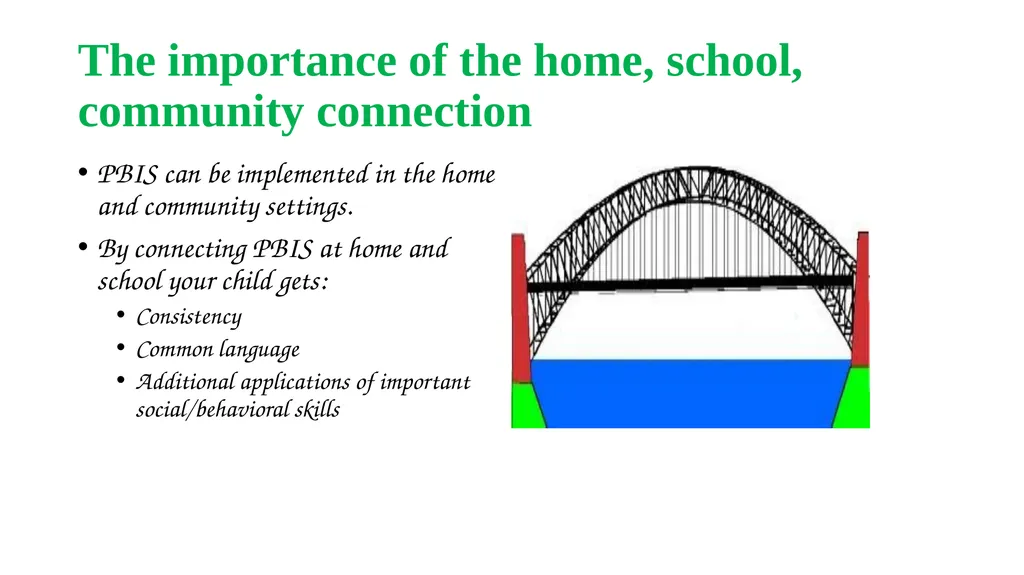
slide28. The importance of the home, school, community connection PBIS can be implemented in the home and community settings.
By connecting PBIS at home and school your child gets:
Consistency
Common language
Additional applications of important social/behavioral skills<br>
slide29. PBIS at Home Breakdown To implement PBIS in the home and community, follow these four steps:
1. Set expectations in advance
2.Communicate/teach the expectations
3.Positively reinforce when expectations are met
4. Have a plan to give additional support when expectations are not met<br>
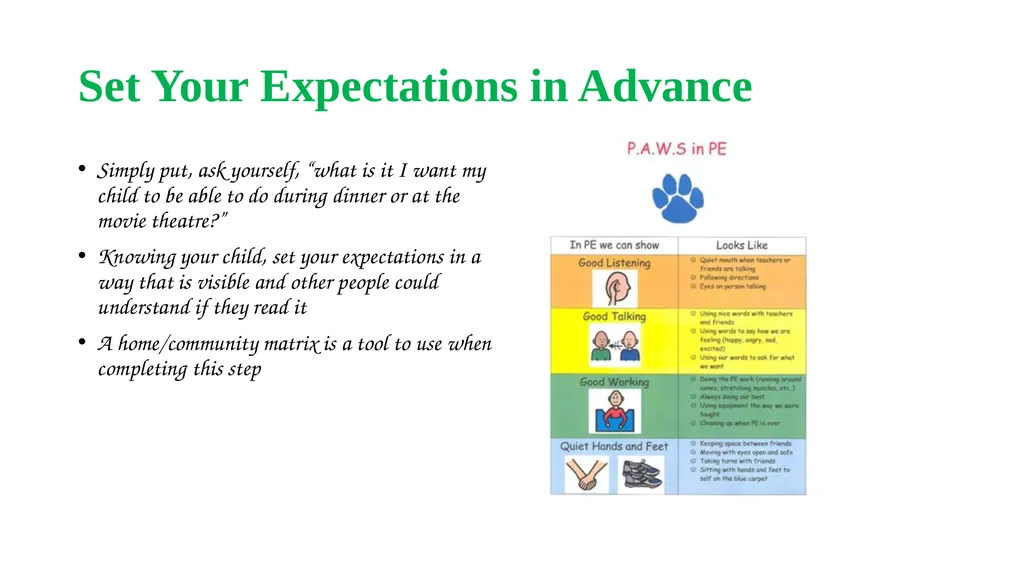
slide30. Set Your Expectations in Advance Simply put, ask yourself, “what is it I want my child to be able to do during dinner or at the movie theatre?”
Knowing your child, set your expectations in a way that is visible and other people could understand if they read it
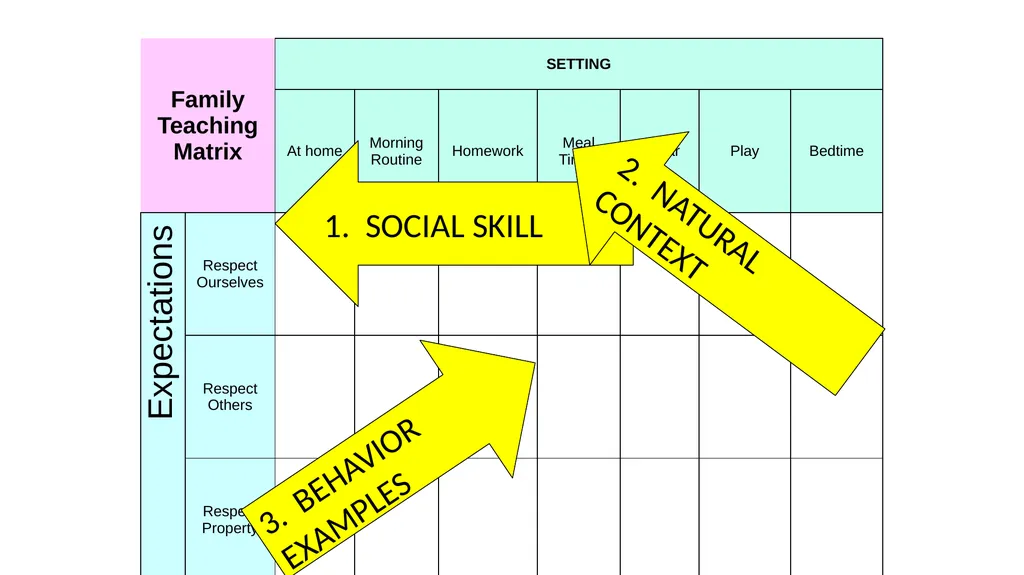
A home/community matrix is a tool to use when completing this step<br>
slide31. Expectations 1. SOCIAL SKILL 2. NATURAL CONTEXT 3. BEHAVIOR EXAMPLES<br>
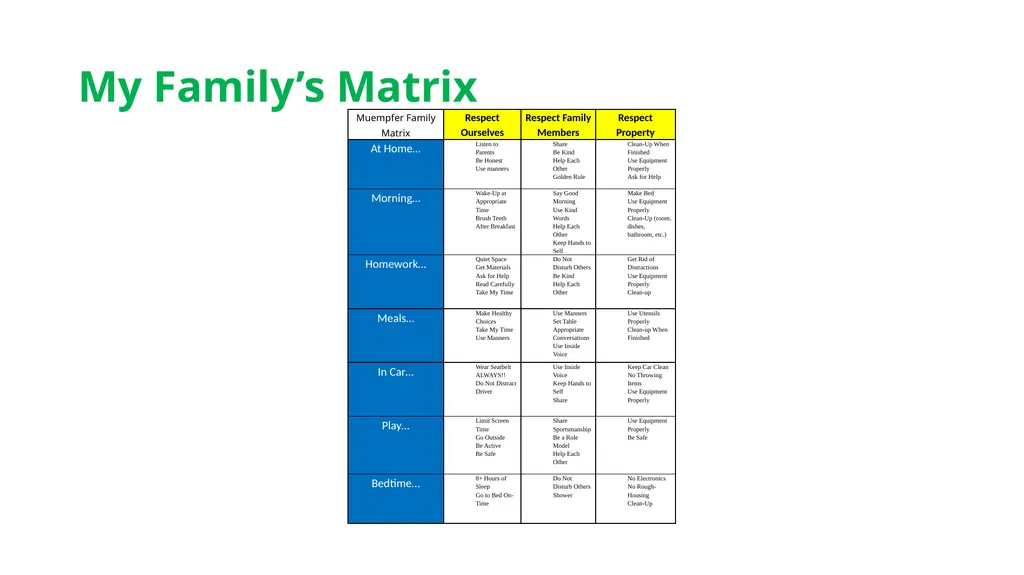
slide32. My Family’s Matrix<br>
slide33. Communicate/Teach the Expectations Just like any other skill, we must teach our expectations to our children
The most effective and usually easiest way to teach expectations is through modeling them ourselves
Some other methods to use are:
Social stories or books
You Tube or other videos
Siblings/other children modeling
Use the additional community resources for help with this step<br>
slide34. Positive Reinforcement when Expectations are Met We want to hear when we did a good job and so do our children
Two big areas to plan and practice are:
What reinforcers should you use
How often should you reinforce (frequency)<br>
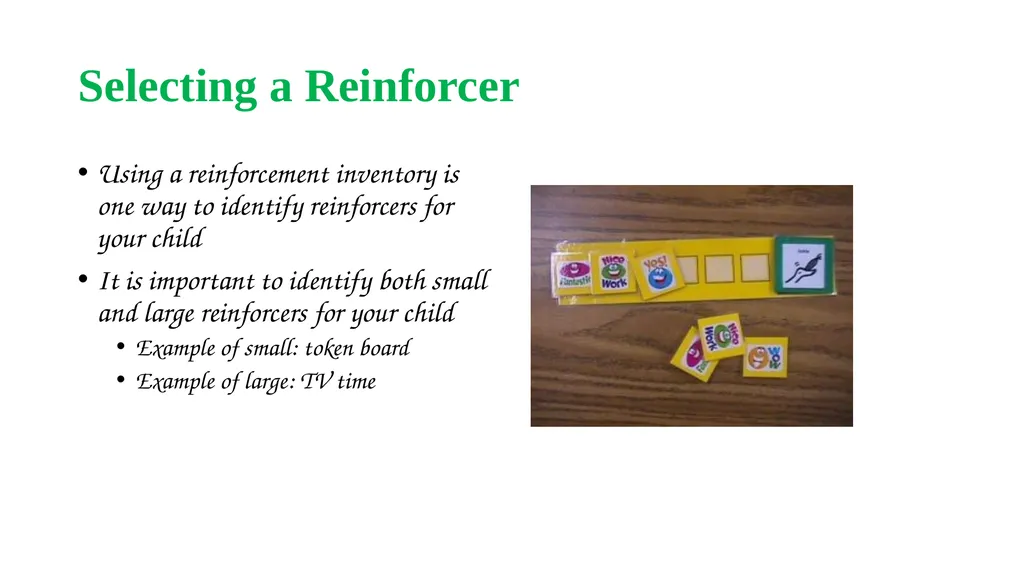
slide35. Selecting a Reinforcer Using a reinforcement inventory is one way to identify reinforcers for your child
It is important to identify both small and large reinforcers for your child
Example of small: token board
Example of large: TV time<br>
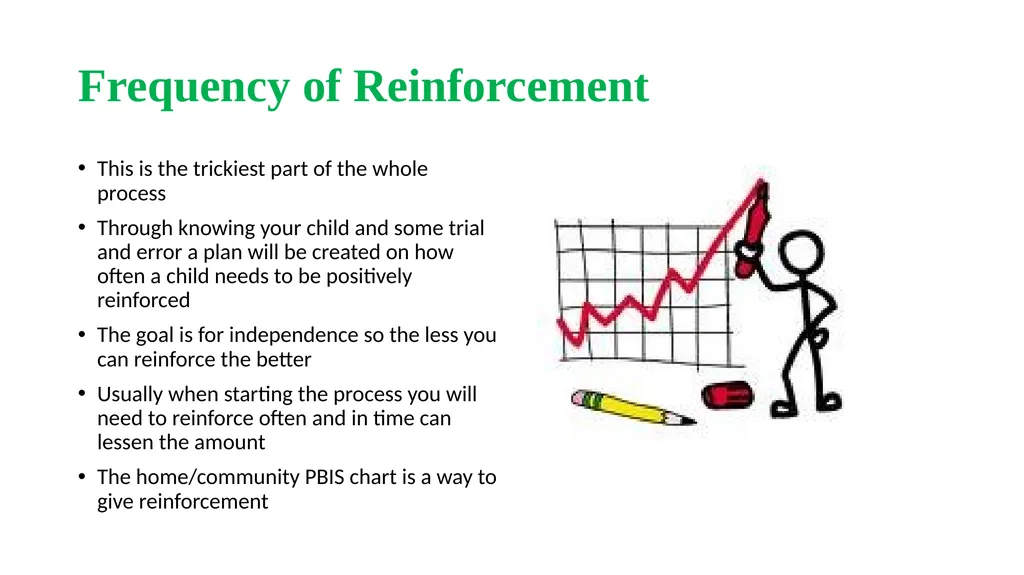
slide36. Frequency of Reinforcement This is the trickiest part of the whole process
Through knowing your child and some trial and error a plan will be created on how often a child needs to be positively reinforced
The goal is for independence so the less you can reinforce the better
Usually when starting the process you will need to reinforce often and in time can lessen the amount
The home/community PBIS chart is a way to give reinforcement<br>
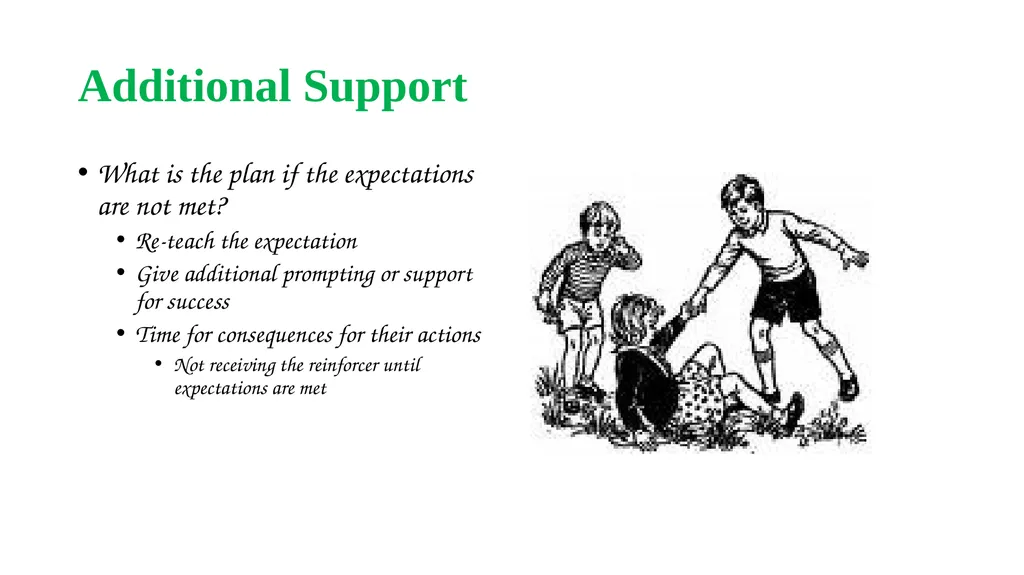
slide37. Additional Support What is the plan if the expectations are not met?
Re-teach the expectation
Give additional prompting or support for success
Time for consequences for their actions
Not receiving the reinforcer until expectations are met<br>
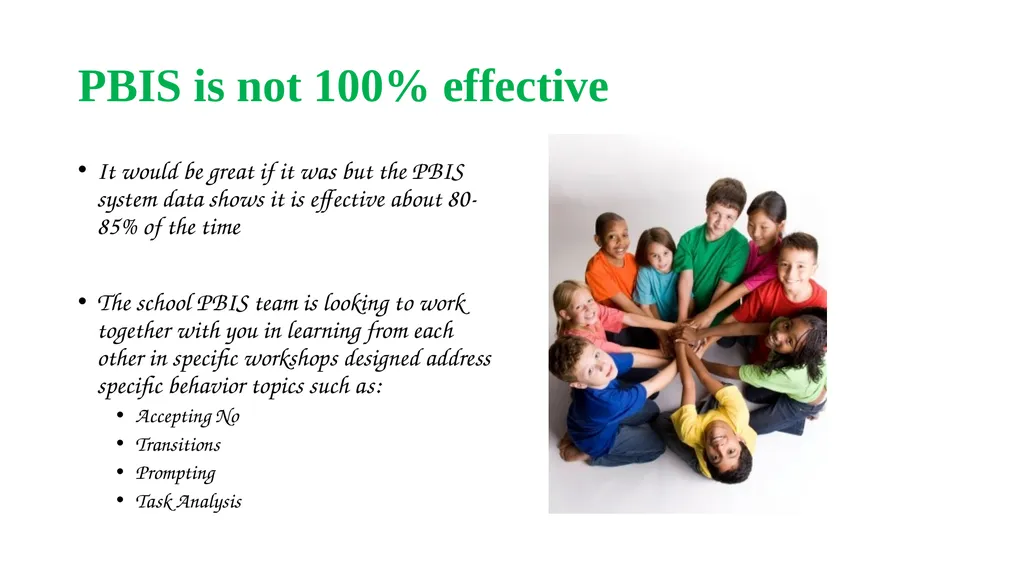
slide38. PBIS is not 100% effective It would be great if it was but the PBIS system data shows it is effective about 80-85% of the time
The school PBIS team is looking to work together with you in learning from each other in specific workshops designed address specific behavior topics such as:
Accepting No
Transitions
Prompting
Task Analysis<br>
slide39. A Final Thought… “People often say that motivation doesn’t last. Well, neither does bathing. That’s why we recommend it daily.”
Zig Zigler<br>
slide40. Questions<br>
slide41. Resources www.pbis.org
www.pbismaryland.org
www.montgomeryschoolsmd.org
Michael_J_Muempfer@mcpsmd.org<br>
slide42. Thank you!<br>
slide43. Please Provide Feedback Your feedback is important to us! Please take a few moments to complete an evaluation for this Coaches’ Meeting.
Use your computer or mobile devise now by entering the following URL: goo.gl/NLk1VM
Please provide an evaluation for EACH session you attended
Be sure to provide feedback on the 4 items at the end of the evaluation – we will use this feedback to inform how we plan future event
Only complete once: the evaluation form will also be emailed to each participant.<br>
PBIS Specialist
Montgomery County Public Schools
michael_j_muempfer@mcpsmd.org<br>
slide2. Goals for the workshop Understand the philosophy of the PBIS system
Learn how PBIS is implemented in schools
Collect and implement strategies on how to use PBIS in the home and community<br>
slide3. What is PBIS? Positive Behavior Interventions and Supports (PBIS) is a framework for a school that supports a positive school climate and positive behavior in school.
Implemented in 109 MCPS Schools<br>
slide4. PBIS PBIS is a pro-active reinforcement based system rather than a reactive consequence based system.
The focus is teaching behaviors that lead to academic success.
Praise/Recognition is a powerful strategy that supports generalization<br>
slide5. Proactive towards student success! PBIS works on creating a proactive approach teaching students the expectations through:
Modeling expected behavior
Matrixes
Direct Social Skills Instruction
“Teachable Moments”<br>
slide6. Can we MAKE students behave? We can’t make kids learn or behave, but we have the power to increase the likelihood by creating a positive environment and teaching. In other words, PBIS aims to improve school climate.<br>
slide7. The Basics Behavior is learned
Do not assume children know your rules, expectations, or social skills
Every social interaction you have with a child teaches him/her something<br>
slide8. The Basics Behavior communicates need:
Children engage in behavior(s) to "get" what they find reinforcing or to "avoid" what they find aversive<br>
slide9. Behavior = Communication Every behavior has a function:
Escape
Attention
Tangible Desires (food, item, activity)
Control<br>
slide10. We have the Power Our reaction to a particular situation can escalate or de-escalate behavior
Control Environmental Factors
Control Task Presentation
Eliminate Emotional Cues
Avoid a Spiral of Conflict<br>
slide11. I Believe I believe that parents are the child’s first and most important teacher.
I believe that the schools cannot do it alone.
I believe that we must work as a team.<br>
slide12. Beliefs and Facts Parent values are instilled in our youth
7,200 students dropout daily in the US
A 4 year college graduate makes 1 million dollars more in their lifetime than a high school graduate.
Teach your child to develop goals
Children laugh 400 times a day
Adults laugh 15 times per day<br>
slide13. A thought… “So often, children are punished for being human. Children are not allowed to have grumpy moods, bad attitudes, disrespectful tones, or bad days, yet we adults have them all the time. None of us are perfect, and we must stop holding children to a higher standard of perfection than we can attain ourselves”<br>
slide14. “If a child doesn’t know how to read, we If a child doesn’t know how to swim, we If a child doesn’t know how to multiply, we If a child doesn’t know how to drive, we If a child doesn’t know how to behave, we... Why can’t we finish the last sentence as automatically as we do the others?”
The bottom line: Teaching
Teach Expectations
Teach Routines and Procedures teach. teach. teach. teach. teach? punish?<br>
slide15. Primary Prevention:
School-/Classroom-
Wide Systems for
All Students,
Staff, & Settings Secondary Prevention:
Specialized Group
Systems for Students with At-Risk Behavior Tertiary Prevention:
Specialized
Individualized
Systems for Students with High-Risk Behavior ~80% of Students ~15% ~5% CONTINUUM OF
SCHOOL-WIDE
PBIS<br>
slide16. Critical Elements PBIS Team
Faculty/Staff Commitment
Expectations and Rules Developed
Plans for Teaching expectations/rules
Reward/Recognition Program Established
Effective Procedures for Dealing with Problem Behaviors
Data Entry and Analysis Plan Established
Classroom Systems
Evaluation
Implementation Plan<br>
slide17. School Rules
NO Food
NO Weapons
NO Backpacks
NO Drugs/Smoking
NO Bullying Redesign Learning & Teaching Environment<br>
slide18. PBIS Matrix at School Provide initial lesson plans and/or lesson plan format to teach specific behaviors identified on the Matrix<br>
slide19. Define and TEACH classroom routines
How to enter class and begin to work
How to predict the schedule for the day
What to do if you do not have materials
What to do if you need help
What to do if you need to go to the bathroom
What to do if you are handing in late material
What to do if someone is bothering you.
Signals for moving through different activities.
“Show me you are listening”
Establish a signal for obtaining class attention
Teach effective transitions.
Remember: Think of student misbehavior as:
Learning Errors Procedures and Routines<br>
slide21. Doing this creates a safe and predictable environment
Allows for prefrontal cortex activity
Disengages the amygdala
Helps to foster authentic relationships with students (you can’t do this if the amygdala is overactive)
Some student’s amygdala triggers are quicker than others (exposure to trauma, genetics, developmentally appropriate, nutrition, etc.) Developing a System for Teaching Appropriate Behavior<br>
slide22. Why Develop a System for Teaching Behavior? Behaviors are prerequisites for academics.
Procedures and routines create structure.
Repetition is key to learning new skills.
For a child to learn something new, it needs to be repeated on average of ? Times (Joyce and Showers, 2006)
Adults average ? (Joyce and Showers, 2006)
For a child to unlearn an old behavior and replace with a new behavior, the new behavior must be repeated on average ? times (Harry Wong) 8 25 28<br>
slide23. Routines signals safety to
the Amygdala Routines
dampen fear and anxiety reactions Re-teaching of expectations encode memory of predictability and safety Alarm circuits increase in Locus Coeruleus by using harsh actions/exclusionary discipline Dopamine synthesized in VTA
associated with Self-Regulation (VTA shrinks during adolescence) Copyright © 2011-13, PAXIS Institute. Only for use by accredited PAX GBG Coaches and licensed by PAXIS. Pre/Adolescent Brain…<br>
slide24. Biggest misconception of PBIS is the recognition system Difference between bribery and recognition
Tickets are not only designed to change student behavior
Tickets are also designed to change adult behavior
Ticket designed to prompt conversation (relationship building)
Conversation/relationship changes the behavior
What matters is the positive social engagement (know your students)
Not used as general praise<br>
slide25. Proven Reinforcers to Create a Climate of Appreciation in Your School (L. Riffel) Privileges (Earning special privileges)
Attention (Quality Time with Adults and Peers)
Leadership (Earning Leadership Roles)
Praise (Social Praise- Name in Lights)
Assistance (Special Assistance in a Topic of Their Choice)
Touch (High Five)
Escape (Escape from a Task or Chore)
Supplies (School Supplies)<br>
slide26. Why Implement PBIS? Learning Environment:
Less reactive, aversive, dangerous, and exclusionary
More engaging, responsive, preventive, and productive
Address classroom management and disciplinary issues (attendance, tardiness, antisocial behavior)
Improve supports for students whose behaviors require more specialized assistance (emotional and behavioral disorders, mental health)
Maximize academic engagement and achievement for all students<br>
slide27. PBIS at Home Helps to build a school and home connection
Teaching and re-teaching behavioral expectations
Positive acknowledgment
Improved behavioral outcomes<br>
slide28. The importance of the home, school, community connection PBIS can be implemented in the home and community settings.
By connecting PBIS at home and school your child gets:
Consistency
Common language
Additional applications of important social/behavioral skills<br>
slide29. PBIS at Home Breakdown To implement PBIS in the home and community, follow these four steps:
1. Set expectations in advance
2.Communicate/teach the expectations
3.Positively reinforce when expectations are met
4. Have a plan to give additional support when expectations are not met<br>
slide30. Set Your Expectations in Advance Simply put, ask yourself, “what is it I want my child to be able to do during dinner or at the movie theatre?”
Knowing your child, set your expectations in a way that is visible and other people could understand if they read it
A home/community matrix is a tool to use when completing this step<br>
slide31. Expectations 1. SOCIAL SKILL 2. NATURAL CONTEXT 3. BEHAVIOR EXAMPLES<br>
slide32. My Family’s Matrix<br>
slide33. Communicate/Teach the Expectations Just like any other skill, we must teach our expectations to our children
The most effective and usually easiest way to teach expectations is through modeling them ourselves
Some other methods to use are:
Social stories or books
You Tube or other videos
Siblings/other children modeling
Use the additional community resources for help with this step<br>
slide34. Positive Reinforcement when Expectations are Met We want to hear when we did a good job and so do our children
Two big areas to plan and practice are:
What reinforcers should you use
How often should you reinforce (frequency)<br>
slide35. Selecting a Reinforcer Using a reinforcement inventory is one way to identify reinforcers for your child
It is important to identify both small and large reinforcers for your child
Example of small: token board
Example of large: TV time<br>
slide36. Frequency of Reinforcement This is the trickiest part of the whole process
Through knowing your child and some trial and error a plan will be created on how often a child needs to be positively reinforced
The goal is for independence so the less you can reinforce the better
Usually when starting the process you will need to reinforce often and in time can lessen the amount
The home/community PBIS chart is a way to give reinforcement<br>
slide37. Additional Support What is the plan if the expectations are not met?
Re-teach the expectation
Give additional prompting or support for success
Time for consequences for their actions
Not receiving the reinforcer until expectations are met<br>
slide38. PBIS is not 100% effective It would be great if it was but the PBIS system data shows it is effective about 80-85% of the time
The school PBIS team is looking to work together with you in learning from each other in specific workshops designed address specific behavior topics such as:
Accepting No
Transitions
Prompting
Task Analysis<br>
slide39. A Final Thought… “People often say that motivation doesn’t last. Well, neither does bathing. That’s why we recommend it daily.”
Zig Zigler<br>
slide40. Questions<br>
slide41. Resources www.pbis.org
www.pbismaryland.org
www.montgomeryschoolsmd.org
Michael_J_Muempfer@mcpsmd.org<br>
slide42. Thank you!<br>
slide43. Please Provide Feedback Your feedback is important to us! Please take a few moments to complete an evaluation for this Coaches’ Meeting.
Use your computer or mobile devise now by entering the following URL: goo.gl/NLk1VM
Please provide an evaluation for EACH session you attended
Be sure to provide feedback on the 4 items at the end of the evaluation – we will use this feedback to inform how we plan future event
Only complete once: the evaluation form will also be emailed to each participant.<br>