
Mucoskeletal problems What you need to know Age





Description: Mucoskeletal problems What you need to know Age Child, adult, older people Symptoms Pain, swelling, site and duration History Injury Medical conditions Medication Sprains A sprain injury involves the overstretching of ligaments andor the
Related Topics
Download Presentation
"Mucoskeletal problems What you need to know Age" is the property of its rightful owner. Permission is granted to download and print the materials on this website for personal, non-commercial use only, and to display it on your personal computer provided you do not modify the materials and that you retain all copyright notices contained in the materials. By downloading content from our website, you accept the terms of this agreement.
Presentation Transcript
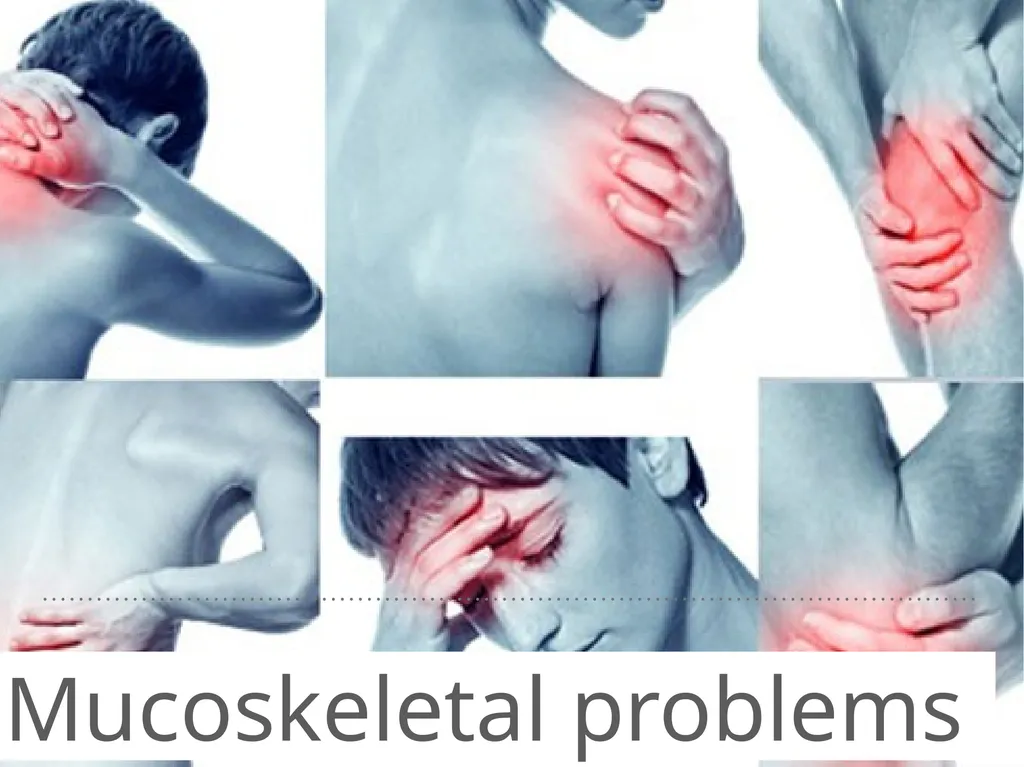
slide1. Mucoskeletal problems<br>
slide2. What you need to know Age Child, adult, older people
Symptoms Pain, swelling, site and duration
History
Injury
Medical conditions
Medication<br>
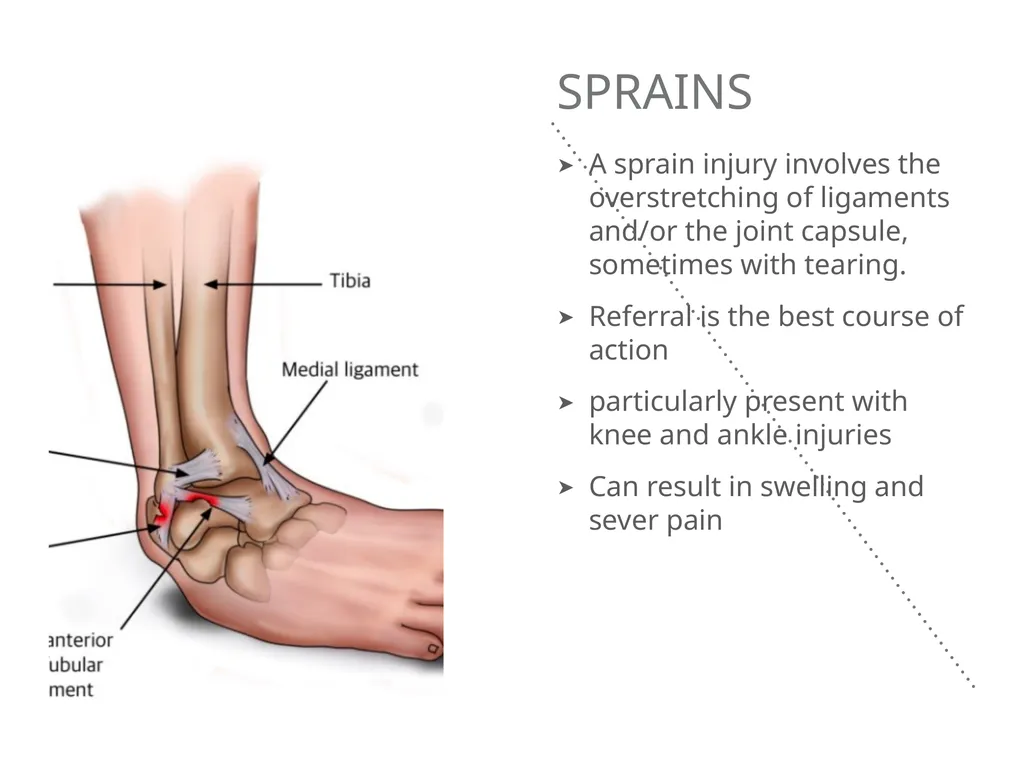
slide3. Sprains A sprain injury involves the overstretching of ligaments and/or the joint capsule, sometimes with tearing.
Referral is the best course of action
particularly present with knee and ankle injuries
Can result in swelling and sever pain<br>
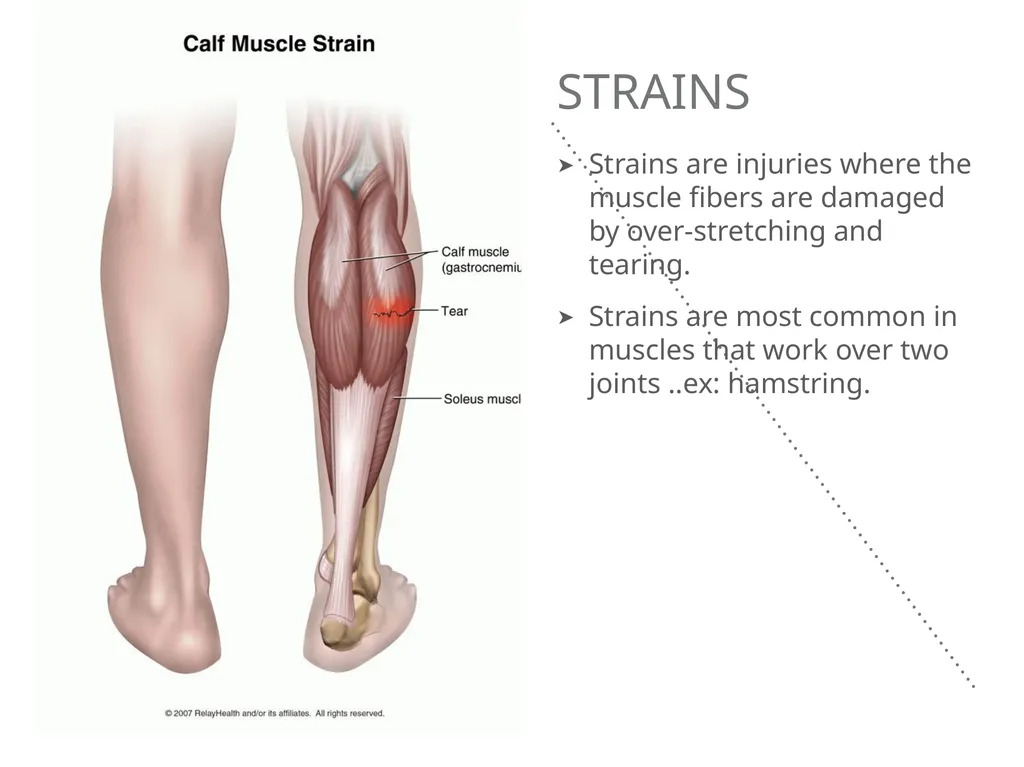
slide4. Strains Strains are injuries where the muscle fibers are damaged by over-stretching and tearing.
Strains are most common in muscles that work over two joints ..ex: hamstring.<br>
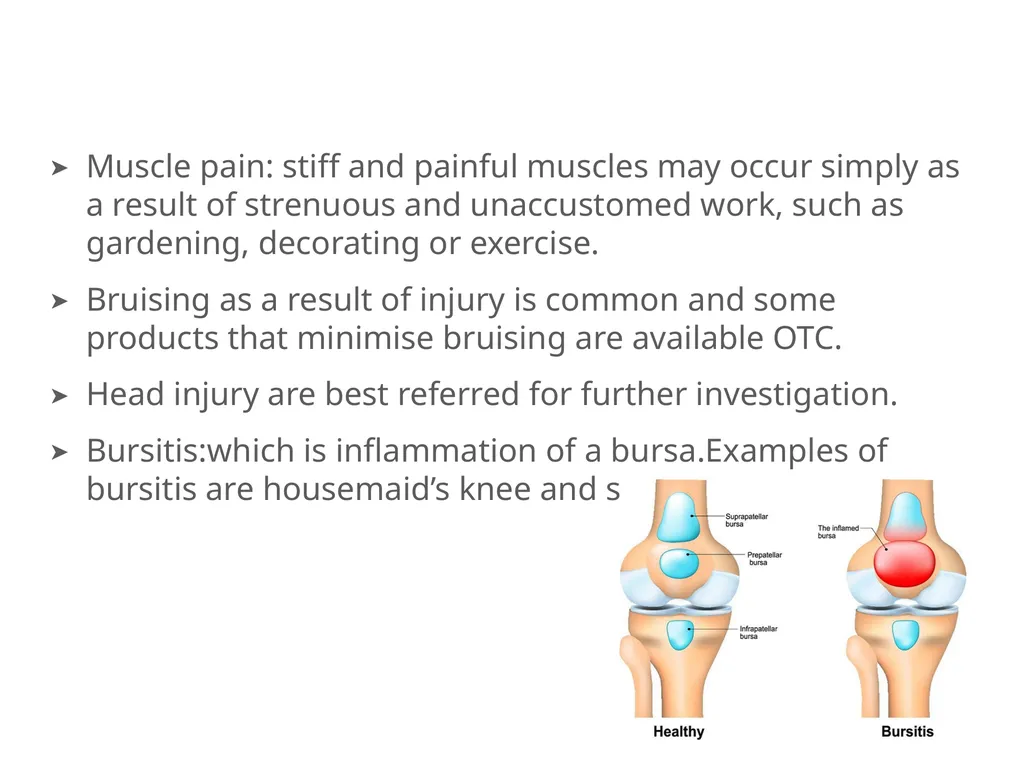
slide5. Muscle pain: stiff and painful muscles may occur simply as a result of strenuous and unaccustomed work, such as gardening, decorating or exercise.
Bruising as a result of injury is common and some products that minimise bruising are available OTC.
Head injury are best referred for further investigation.
Bursitis:which is inflammation of a bursa.Examples of bursitis are housemaid’s knee and student’s elbow.<br>
slide6. Fibromyalgia refers to chronic widespread pain affecting the muscles but not the joints.This condition may be precipitated by psychological distress and physical trauma.
Referral to a GP for assessment would be advisable.
Medication (e.g.tricyclics,NSAIDs and gabapentin) is of limited benefit in these situations,and often ‘talking therapies’ like cognitive behavioral therapy have more to offer.<br>
slide7. Frozen shoulder is a common condition where the shoulder is stiff and painful. It is more prevalent in older patients.referral to the GP surgery for accurate assessment and to arrange treatment (e.g. physiotherapy) is advisable.
Painful joints may be due to arthritis,The pain may be associated with swelling, overlying inflammation, stiffness, limitation of movement and deformity of the joint.osteoarthritis (OA)or rheumatoid arthritis (RA)it is necessary to refer to the doctor.<br>
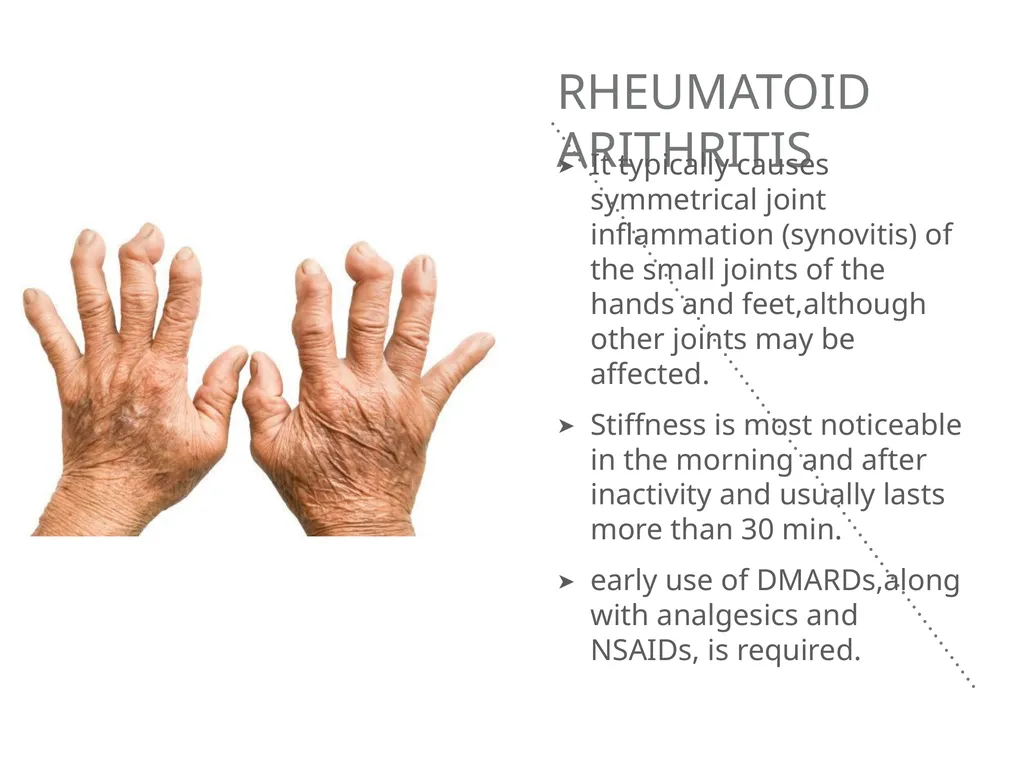
slide8. It typically causes symmetrical joint inflammation (synovitis) of the small joints of the hands and feet,although other joints may be affected.<br>
slide9. Rheumatoid arithritis It typically causes symmetrical joint inflammation (synovitis) of the small joints of the hands and feet,although other joints may be affected.
Stiffness is most noticeable in the morning and after inactivity and usually lasts more than 30 min.
early use of DMARDs,along with analgesics and NSAIDs, is required.<br>
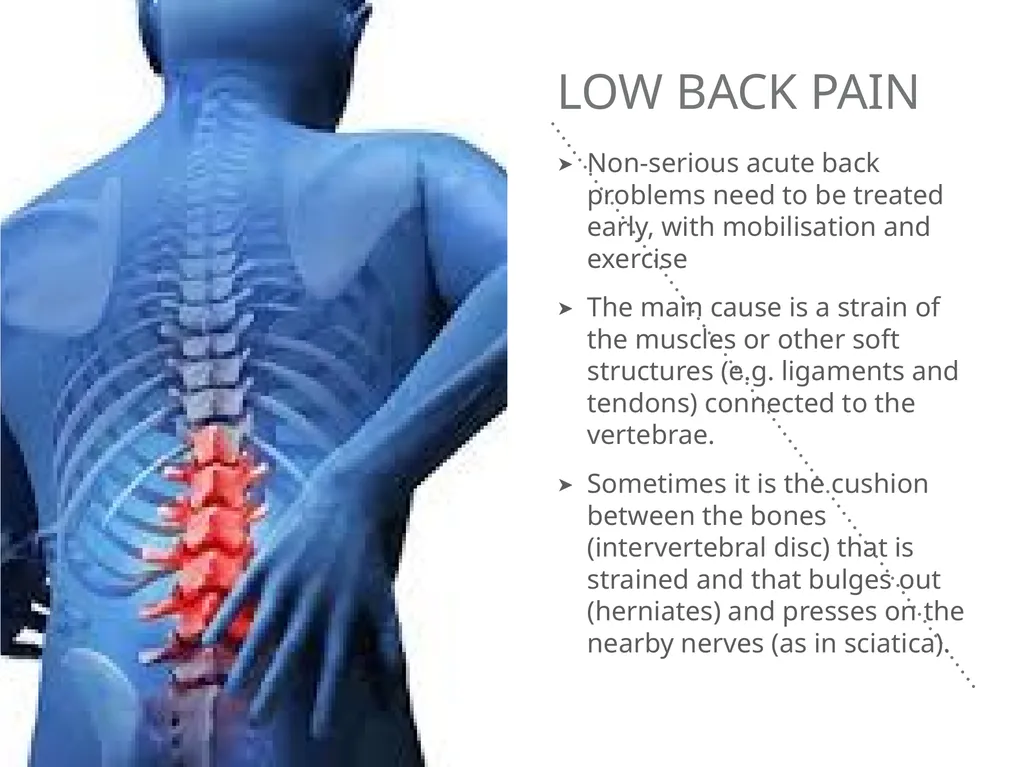
slide10. Low back pain Non-serious acute back problems need to be treated early, with mobilisation and exercise
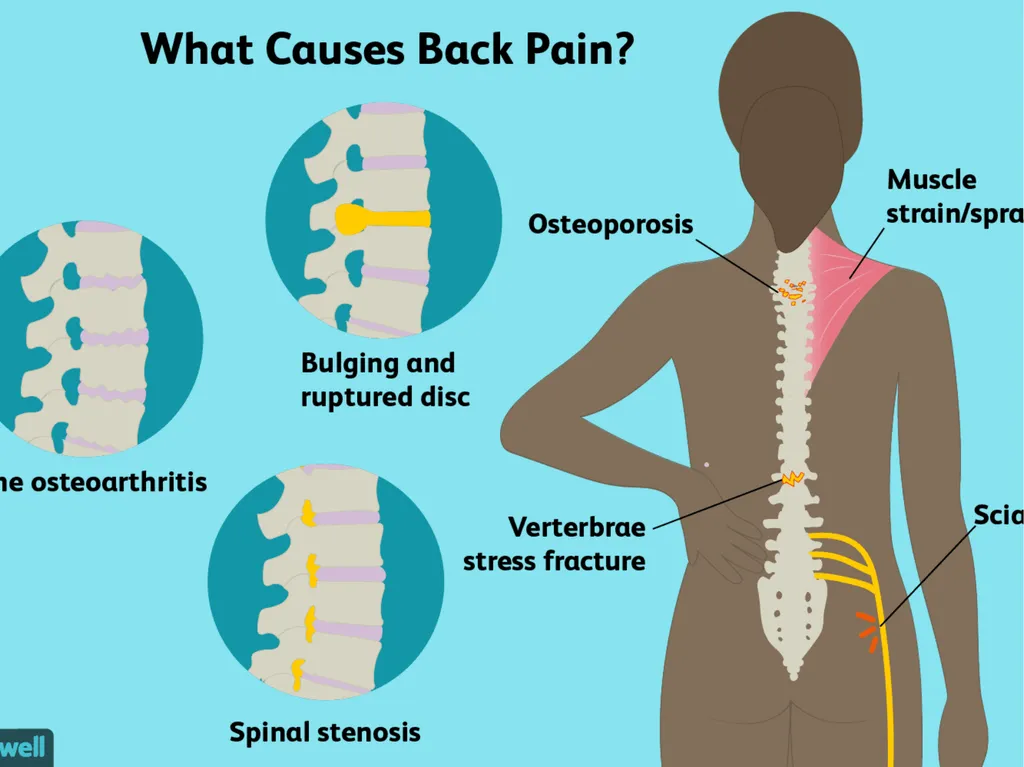
The main cause is a strain of the muscles or other soft structures (e.g. ligaments and tendons) connected to the vertebrae.
Sometimes it is the cushion between the bones (intervertebral disc) that is strained and that bulges out (herniates) and presses on the nearby nerves (as in sciatica).<br>
slide12. Lower back pain that is not too severe or debilitating and comes on after gardening, awkward lifting or bending may be due to muscular strain (lumbago).
bed rest is not recommended for simple low back pain and is to be avoided
stay active results in faster recovery, reduced pain, reduced disability and reduced time off work compared with advice to rest<br>
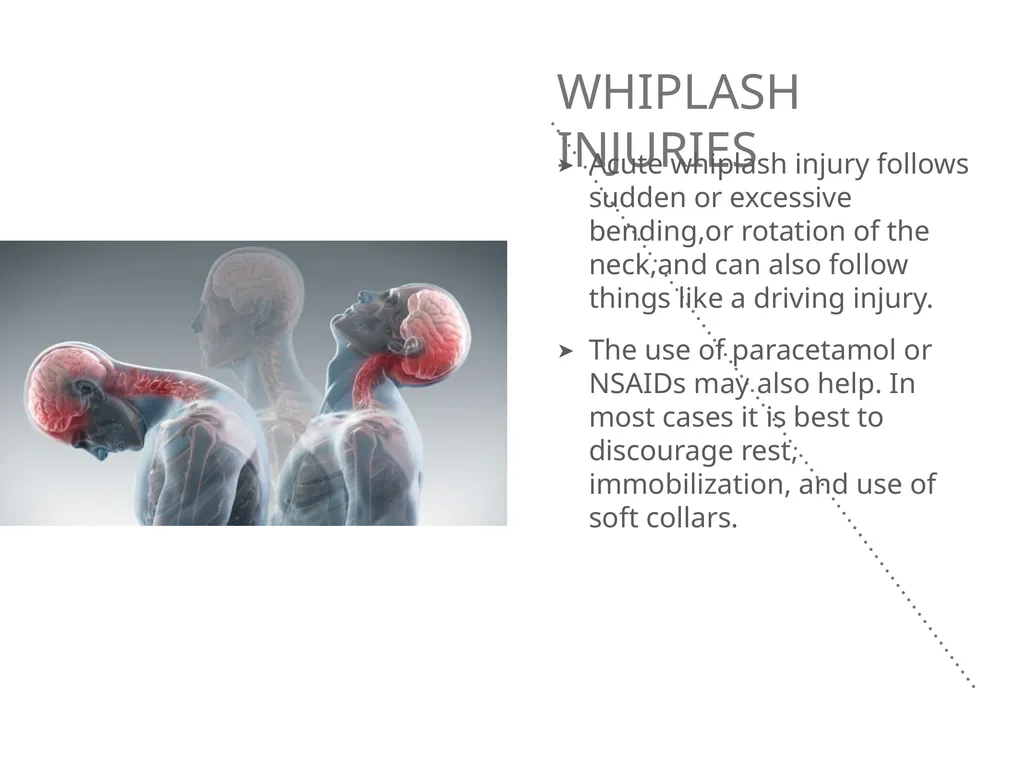
slide13. Whiplash injuries Acute whiplash injury follows sudden or excessive bending,or rotation of the neck,and can also follow things like a driving injury.
The use of paracetamol or NSAIDs may also help. In most cases it is best to discourage rest, immobilization, and use of soft collars.<br>
slide14. When to refer Suspected fracture
Possible adverse drug reaction: falls or bruising
Head injury
Whiplash injuries
Medication failure
Suspected arthritis
Severe or prolonged back pain
Back pain (and/or pins and needles/numbness) radiating to leg
Back pain in the middle/upper back (especially in the older patient)<br>
slide15. Musculoskeletal conditions should respond to treatment within a few days. A maximum of 5 days treatment should be recommended, after which patients should see their doctor.<br>
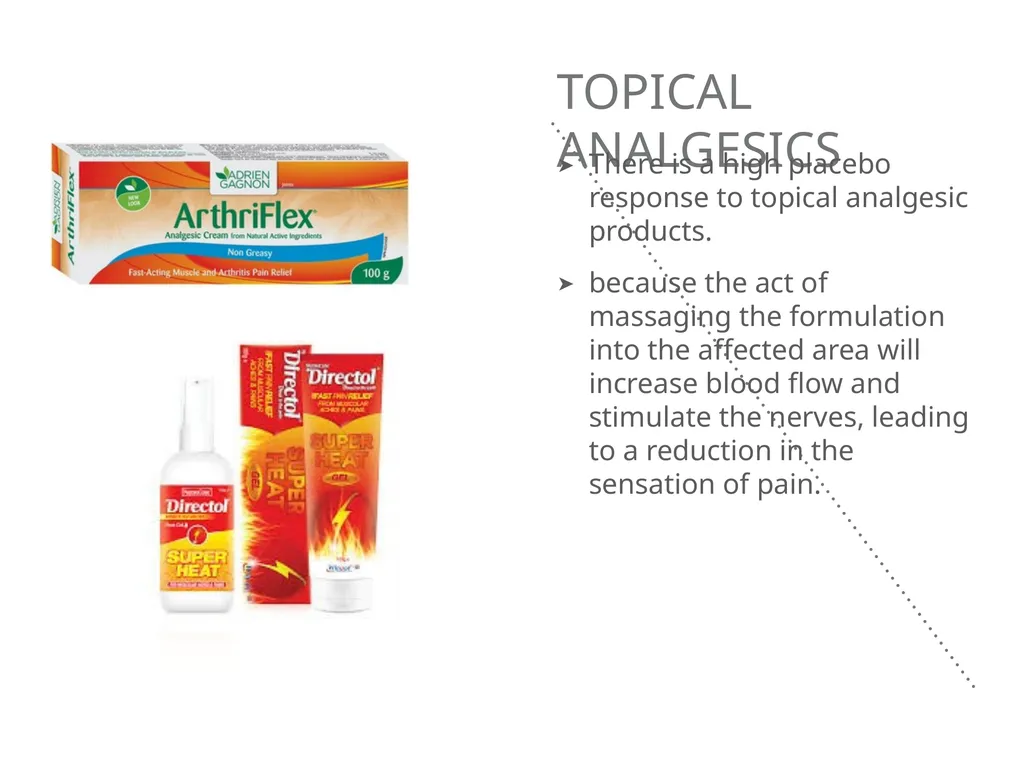
slide16. Topical analgesics There is a high placebo response to topical analgesic products.
because the act of massaging the formulation into the affected area will increase blood flow and stimulate the nerves, leading to a reduction in the sensation of pain.<br>
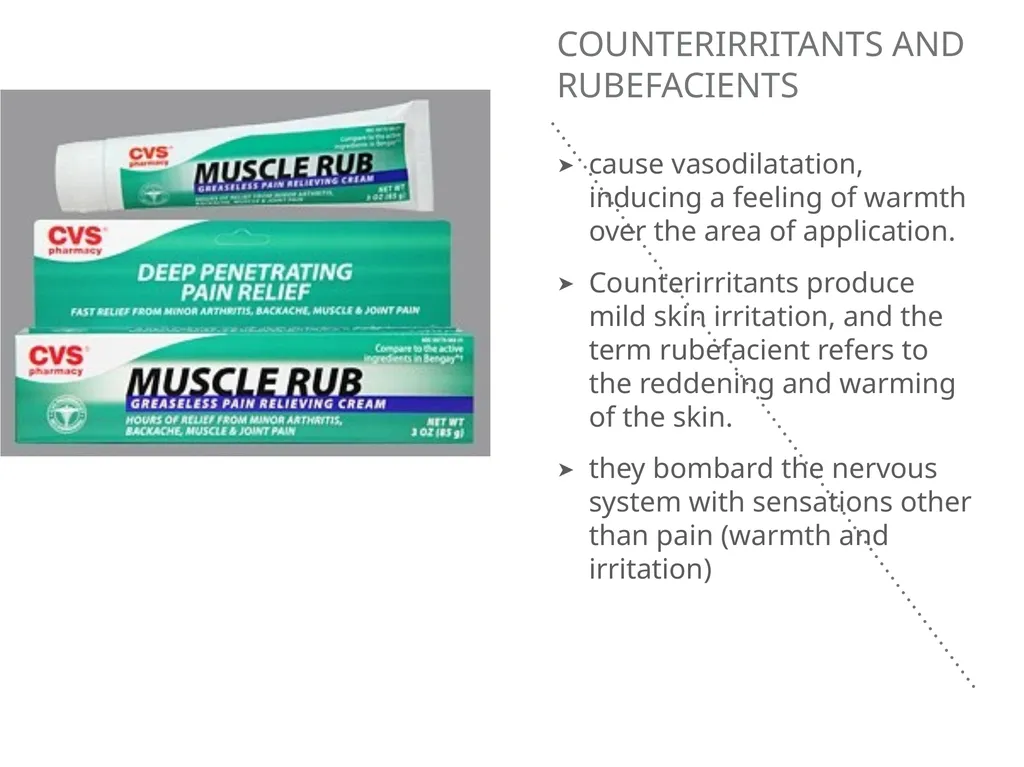
slide17. Counterirritants and rubefacients cause vasodilatation, inducing a feeling of warmth over the area of application.
Counterirritants produce mild skin irritation, and the term rubefacient refers to the reddening and warming of the skin.
they bombard the nervous system with sensations other than pain (warmth and irritation)<br>
slide18. The mode of action of topical analgesics is therefore twofold: one effect relying on absorption of the agent through the skin, while the other on the benefit of the massage.
patients can be advised to use topical analgesic products up to four times a day, as required.<br>
slide19. Methyl salicylate
Nicotinates
Menthol
Capsaicin/capsicum
Preparations containing topical analgesics should always be kept well away from the eyes, mouth and mucous membranes and should not be applied on broken skin.<br>
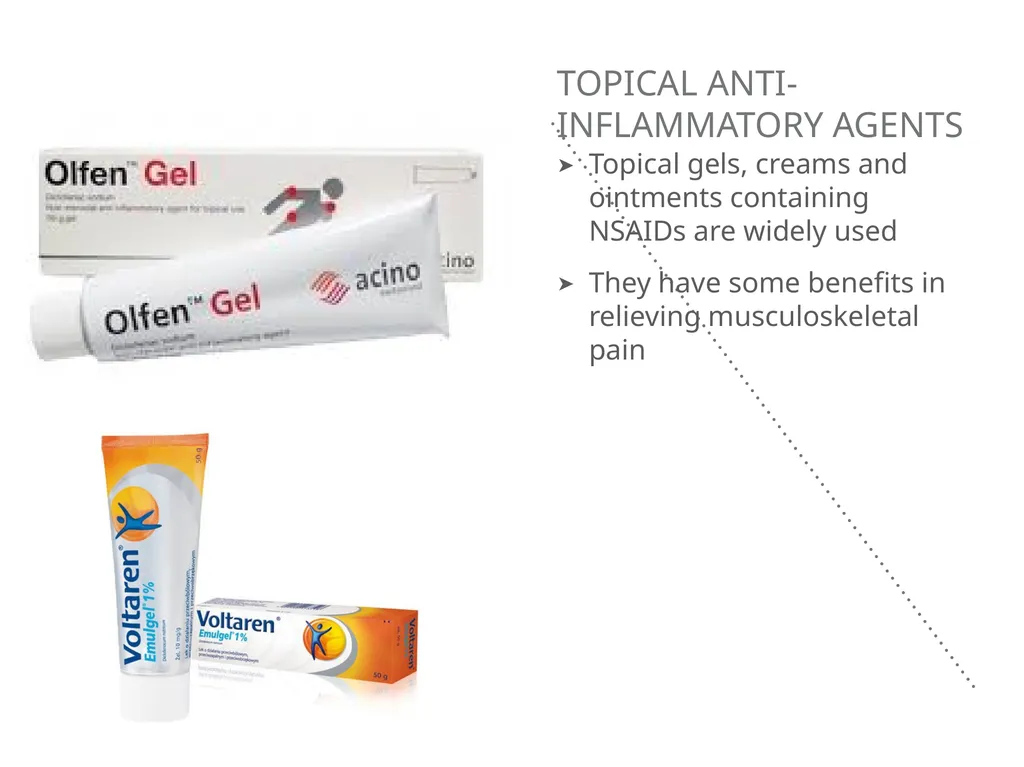
slide20. Topical anti-inflammatory agents Topical gels, creams and ointments containing NSAIDs are widely used
They have some benefits in relieving musculoskeletal pain<br>
slide21. Heparinoid and hyaluronidase are enzymes that may help to disperse oedematous fluid in swollen areas.
A reduction in swelling and bruising may therefore be achieved.
Products containing heparinoid or hyaluronidase are used in the treatment of bruises, strains and sprains.<br>
slide22. Glucosamine and chondroitin There is some limited evidence that the ‘nutriceuticals’, glucosamine sulphate and chondroitin, improve the symptoms of OA<br>
slide23. First-aid treatment of sprains and strains apply compression, cooling and elevation immediately
The aim of the treatment is to prevent swelling
Ice packs by themselves will reduce metabolic needs of the tissues, reduce blood flow and result in less tissue damage and swelling, but will not prevent hemorrhage.
applying a simple elastic bandage or elasticated tubular bandage, which should be snug but not tight
the affected limb should be elevated to reduce blood flow into the damaged area
Finally, the injured limb should be rested to facilitate recovery.<br>
slide24. The application of heat can be effective in reducing pain
heat should never be applied immediately after an injury has occurred, because heat application at the acute stage will dilate blood vessels and increase blood flow into the affected area
After the acute phase is over (1 or 2 days after the injury), heat can be useful.
The application of heat can be both comforting and effective on chronic conditions such as back pain.<br>
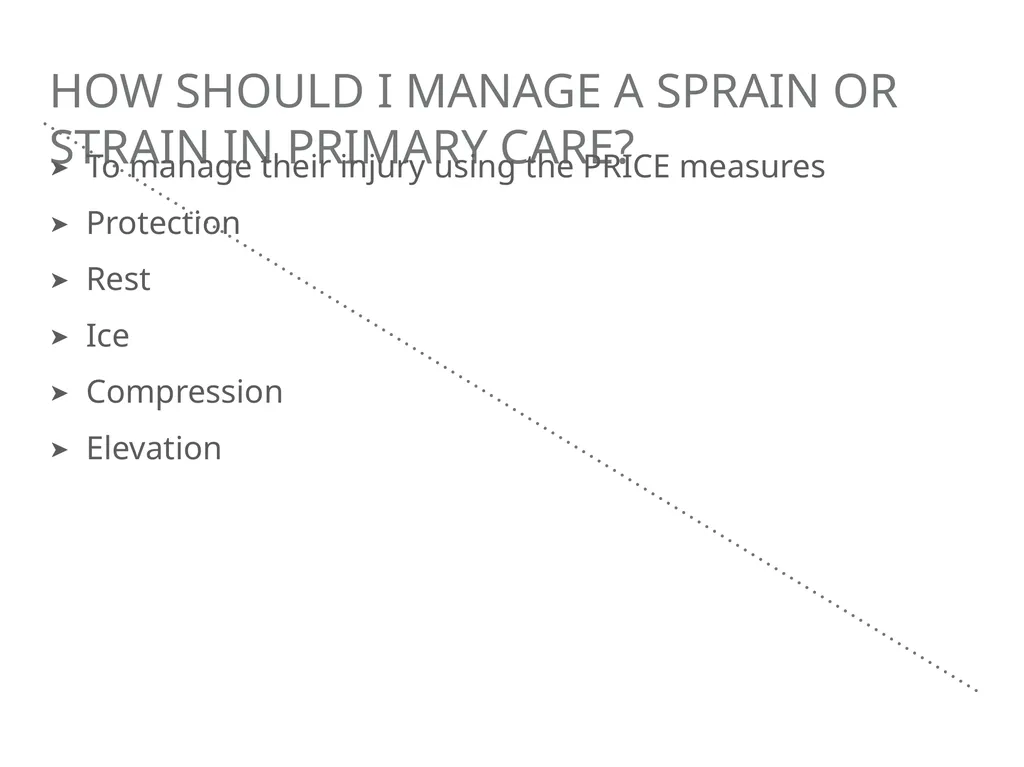
slide25. How should I manage a sprain or strain in primary care? To manage their injury using the PRICE measures
Protection
Rest
Ice
Compression
Elevation<br>
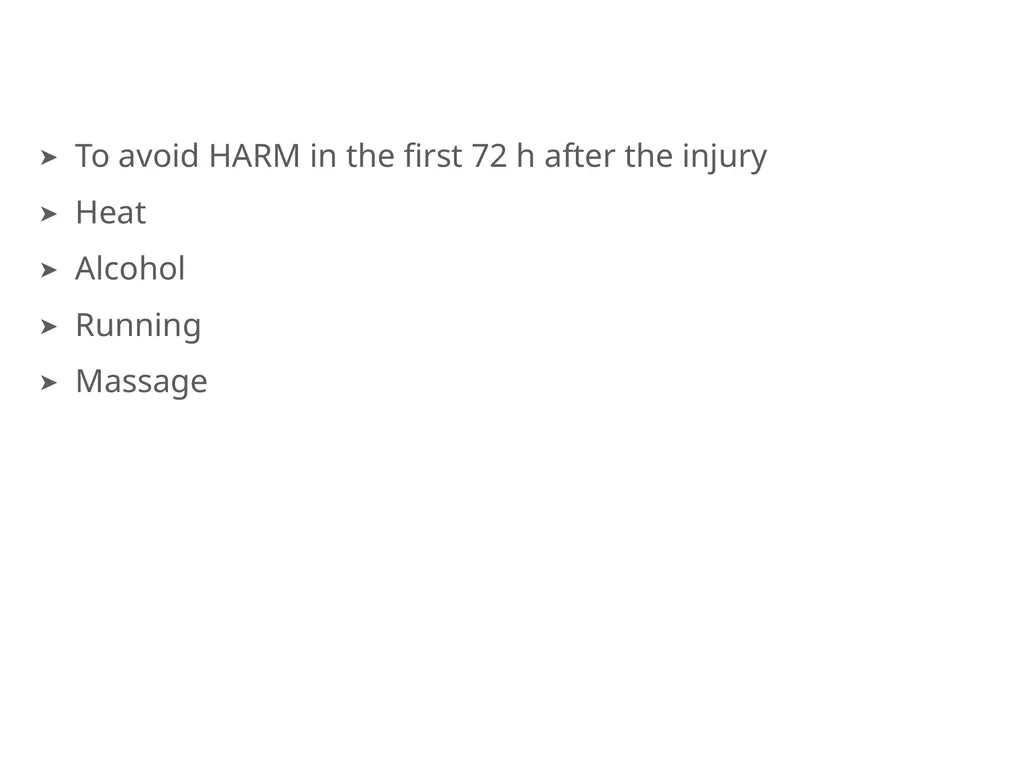
slide26. To avoid HARM in the first 72 h after the injury
Heat
Alcohol
Running
Massage<br>
slide2. What you need to know Age Child, adult, older people
Symptoms Pain, swelling, site and duration
History
Injury
Medical conditions
Medication<br>
slide3. Sprains A sprain injury involves the overstretching of ligaments and/or the joint capsule, sometimes with tearing.
Referral is the best course of action
particularly present with knee and ankle injuries
Can result in swelling and sever pain<br>
slide4. Strains Strains are injuries where the muscle fibers are damaged by over-stretching and tearing.
Strains are most common in muscles that work over two joints ..ex: hamstring.<br>
slide5. Muscle pain: stiff and painful muscles may occur simply as a result of strenuous and unaccustomed work, such as gardening, decorating or exercise.
Bruising as a result of injury is common and some products that minimise bruising are available OTC.
Head injury are best referred for further investigation.
Bursitis:which is inflammation of a bursa.Examples of bursitis are housemaid’s knee and student’s elbow.<br>
slide6. Fibromyalgia refers to chronic widespread pain affecting the muscles but not the joints.This condition may be precipitated by psychological distress and physical trauma.
Referral to a GP for assessment would be advisable.
Medication (e.g.tricyclics,NSAIDs and gabapentin) is of limited benefit in these situations,and often ‘talking therapies’ like cognitive behavioral therapy have more to offer.<br>
slide7. Frozen shoulder is a common condition where the shoulder is stiff and painful. It is more prevalent in older patients.referral to the GP surgery for accurate assessment and to arrange treatment (e.g. physiotherapy) is advisable.
Painful joints may be due to arthritis,The pain may be associated with swelling, overlying inflammation, stiffness, limitation of movement and deformity of the joint.osteoarthritis (OA)or rheumatoid arthritis (RA)it is necessary to refer to the doctor.<br>
slide8. It typically causes symmetrical joint inflammation (synovitis) of the small joints of the hands and feet,although other joints may be affected.<br>
slide9. Rheumatoid arithritis It typically causes symmetrical joint inflammation (synovitis) of the small joints of the hands and feet,although other joints may be affected.
Stiffness is most noticeable in the morning and after inactivity and usually lasts more than 30 min.
early use of DMARDs,along with analgesics and NSAIDs, is required.<br>
slide10. Low back pain Non-serious acute back problems need to be treated early, with mobilisation and exercise
The main cause is a strain of the muscles or other soft structures (e.g. ligaments and tendons) connected to the vertebrae.
Sometimes it is the cushion between the bones (intervertebral disc) that is strained and that bulges out (herniates) and presses on the nearby nerves (as in sciatica).<br>
slide12. Lower back pain that is not too severe or debilitating and comes on after gardening, awkward lifting or bending may be due to muscular strain (lumbago).
bed rest is not recommended for simple low back pain and is to be avoided
stay active results in faster recovery, reduced pain, reduced disability and reduced time off work compared with advice to rest<br>
slide13. Whiplash injuries Acute whiplash injury follows sudden or excessive bending,or rotation of the neck,and can also follow things like a driving injury.
The use of paracetamol or NSAIDs may also help. In most cases it is best to discourage rest, immobilization, and use of soft collars.<br>
slide14. When to refer Suspected fracture
Possible adverse drug reaction: falls or bruising
Head injury
Whiplash injuries
Medication failure
Suspected arthritis
Severe or prolonged back pain
Back pain (and/or pins and needles/numbness) radiating to leg
Back pain in the middle/upper back (especially in the older patient)<br>
slide15. Musculoskeletal conditions should respond to treatment within a few days. A maximum of 5 days treatment should be recommended, after which patients should see their doctor.<br>
slide16. Topical analgesics There is a high placebo response to topical analgesic products.
because the act of massaging the formulation into the affected area will increase blood flow and stimulate the nerves, leading to a reduction in the sensation of pain.<br>
slide17. Counterirritants and rubefacients cause vasodilatation, inducing a feeling of warmth over the area of application.
Counterirritants produce mild skin irritation, and the term rubefacient refers to the reddening and warming of the skin.
they bombard the nervous system with sensations other than pain (warmth and irritation)<br>
slide18. The mode of action of topical analgesics is therefore twofold: one effect relying on absorption of the agent through the skin, while the other on the benefit of the massage.
patients can be advised to use topical analgesic products up to four times a day, as required.<br>
slide19. Methyl salicylate
Nicotinates
Menthol
Capsaicin/capsicum
Preparations containing topical analgesics should always be kept well away from the eyes, mouth and mucous membranes and should not be applied on broken skin.<br>
slide20. Topical anti-inflammatory agents Topical gels, creams and ointments containing NSAIDs are widely used
They have some benefits in relieving musculoskeletal pain<br>
slide21. Heparinoid and hyaluronidase are enzymes that may help to disperse oedematous fluid in swollen areas.
A reduction in swelling and bruising may therefore be achieved.
Products containing heparinoid or hyaluronidase are used in the treatment of bruises, strains and sprains.<br>
slide22. Glucosamine and chondroitin There is some limited evidence that the ‘nutriceuticals’, glucosamine sulphate and chondroitin, improve the symptoms of OA<br>
slide23. First-aid treatment of sprains and strains apply compression, cooling and elevation immediately
The aim of the treatment is to prevent swelling
Ice packs by themselves will reduce metabolic needs of the tissues, reduce blood flow and result in less tissue damage and swelling, but will not prevent hemorrhage.
applying a simple elastic bandage or elasticated tubular bandage, which should be snug but not tight
the affected limb should be elevated to reduce blood flow into the damaged area
Finally, the injured limb should be rested to facilitate recovery.<br>
slide24. The application of heat can be effective in reducing pain
heat should never be applied immediately after an injury has occurred, because heat application at the acute stage will dilate blood vessels and increase blood flow into the affected area
After the acute phase is over (1 or 2 days after the injury), heat can be useful.
The application of heat can be both comforting and effective on chronic conditions such as back pain.<br>
slide25. How should I manage a sprain or strain in primary care? To manage their injury using the PRICE measures
Protection
Rest
Ice
Compression
Elevation<br>
slide26. To avoid HARM in the first 72 h after the injury
Heat
Alcohol
Running
Massage<br>