
Music My Learning, My Future Where can studying



Description: Music My Learning, My Future Where can studying Music take you? Highlighting the relevance of Music to future careers and opportunities Connects cultures and communities Builds confidence and discipline Why study Music? Encourages
Related Topics
Download Presentation
"Music My Learning, My Future Where can studying" is the property of its rightful owner. Permission is granted to download and print the materials on this website for personal, non-commercial use only, and to display it on your personal computer provided you do not modify the materials and that you retain all copyright notices contained in the materials. By downloading content from our website, you accept the terms of this agreement.
Presentation Transcript
slide1. Music
My Learning, My Future
Where can studying Music take you? Highlighting the relevance of Music to future careers and opportunities<br>
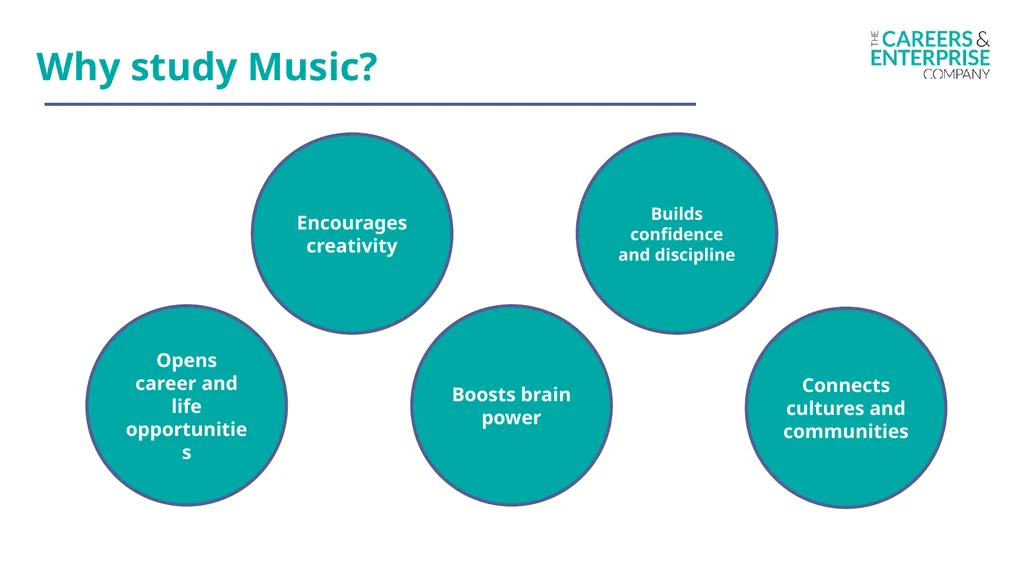
slide2. Connects cultures and communities Builds confidence and discipline Why study Music? Encourages creativity Boosts brain power Opens career and life opportunities<br>
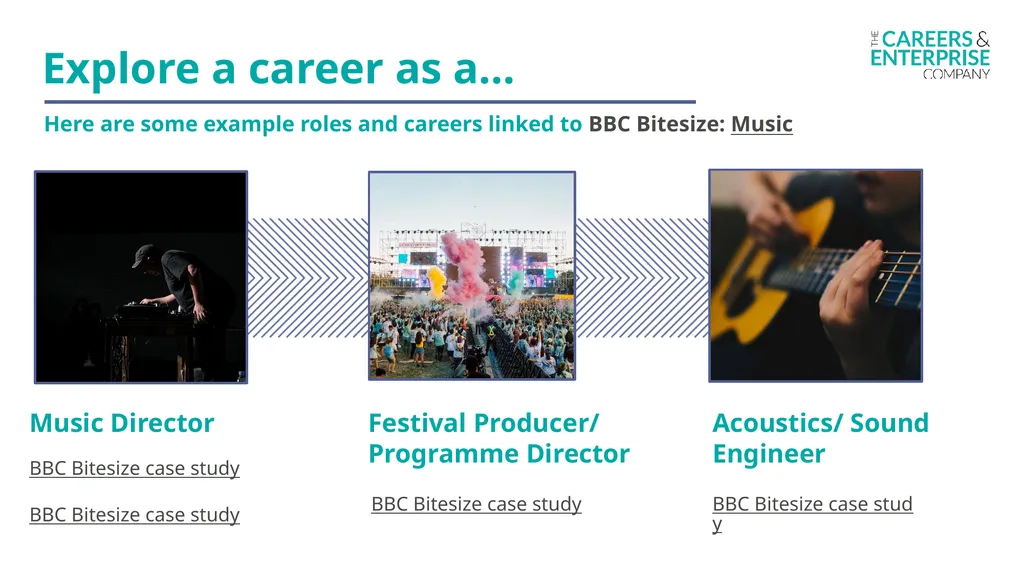
slide3. Explore a career as a… Music Director Festival Producer/ Programme Director Acoustics/ Sound Engineer Here are some example roles and careers linked to BBC Bitesize: Music BBC Bitesize case study BBC Bitesize case study BBC Bitesize case study BBC Bitesize case study<br>
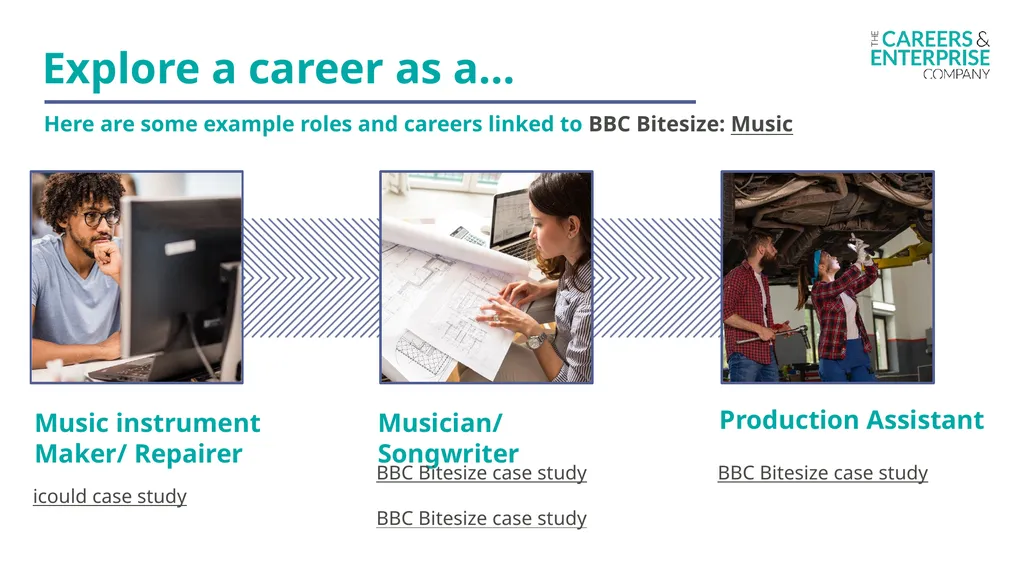
slide4. Musician/Songwriter Music instrument Maker/ Repairer Production Assistant Explore a career as a… Here are some example roles and careers linked to BBC Bitesize: Music BBC Bitesize case study icould case study BBC Bitesize case study BBC Bitesize case study<br>
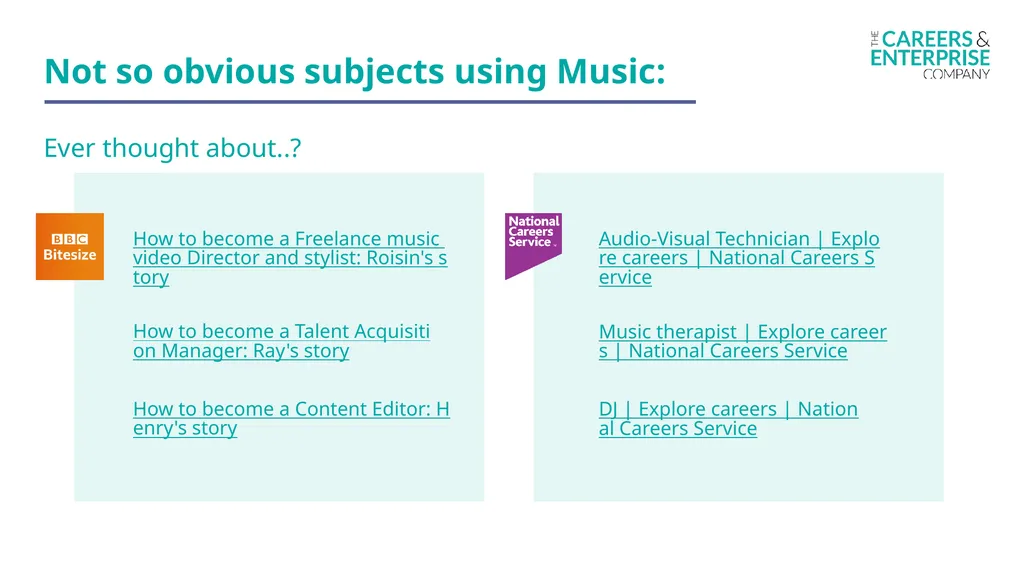
slide5. Not so obvious subjects using Music: Ever thought about..? How to become a Freelance music video Director and stylist: Roisin's story How to become a Talent Acquisition Manager: Ray's story How to become a Content Editor: Henry's story Music therapist | Explore careers | National Careers Service Audio-Visual Technician | Explore careers | National Careers Service DJ | Explore careers | National Careers Service<br>
slide6. MYPATH Job of the week (Music) Career Options Free Range Musician Music Industry Careers<br>
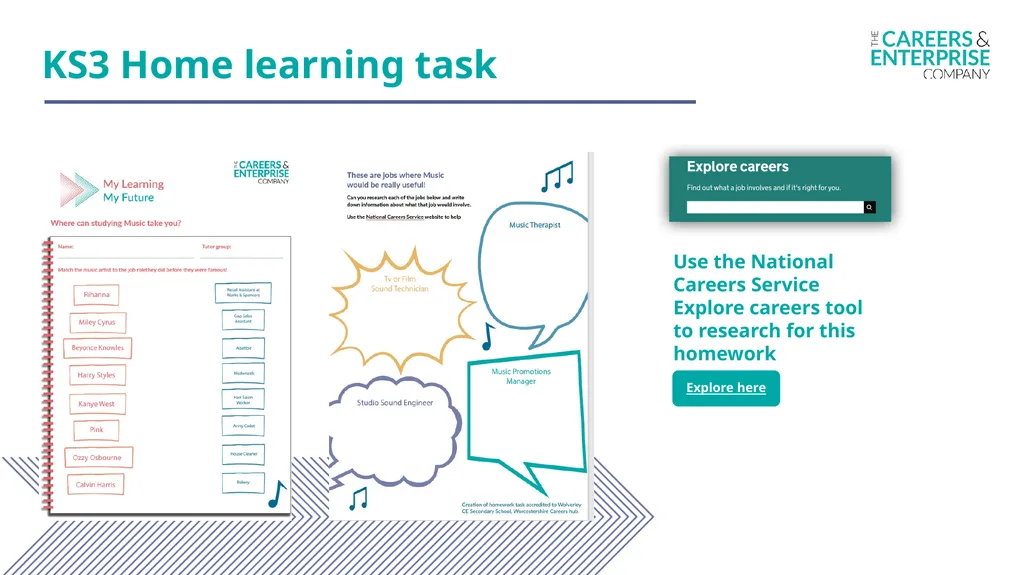
slide7. KS3 Home learning task Use the National Careers Service Explore careers tool to research for this homework Explore here<br>
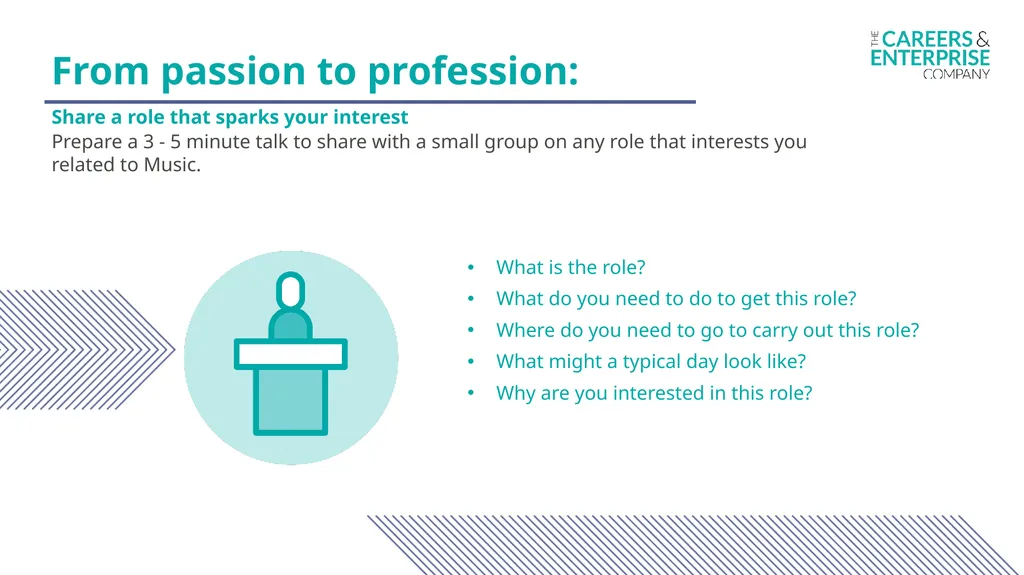
slide8. From passion to profession:
Share a role that sparks your interest
Prepare a 3 - 5 minute talk to share with a small group on any role that interests you related to Music. What is the role?
What do you need to do to get this role?
Where do you need to go to carry out this role?
What might a typical day look like?
Why are you interested in this role?<br>
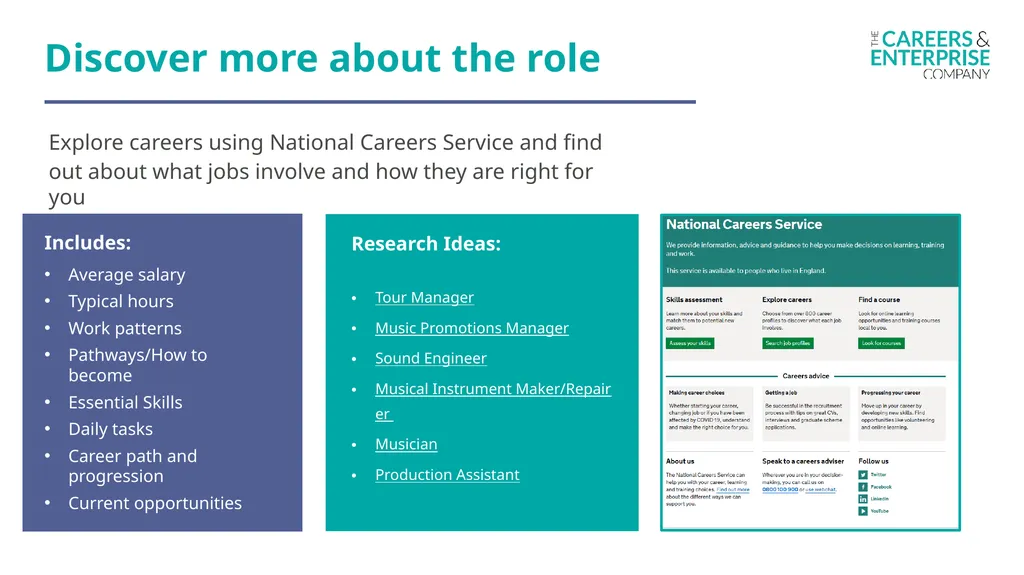
slide9. Discover more about the role Explore careers using National Careers Service and find out about what jobs involve and how they are right for you Includes:
Average salary
Typical hours
Work patterns
Pathways/How to become
Essential Skills
Daily tasks
Career path and progression
Current opportunities Research Ideas:
Tour Manager
Music Promotions Manager
Sound Engineer
Musical Instrument Maker/Repairer
Musician
Production Assistant<br>
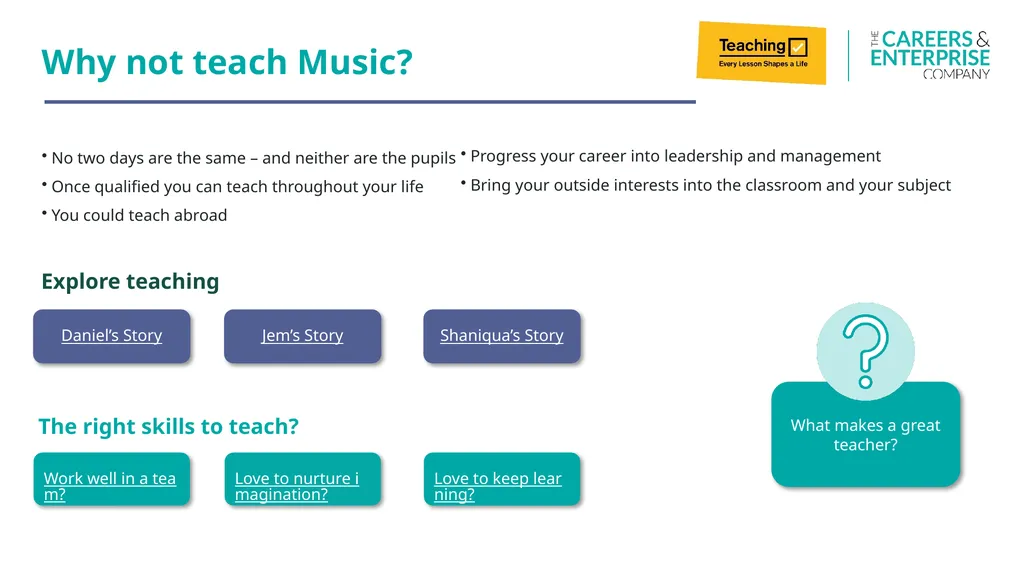
slide10. Why not teach Music? Explore teaching The right skills to teach? No two days are the same – and neither are the pupils
Once qualified you can teach throughout your life
You could teach abroad Daniel’s Story Jem’s Story Shaniqua’s Story Work well in a team? Love to nurture imagination? Love to keep learning? Progress your career into leadership and management
Bring your outside interests into the classroom and your subject What makes a great teacher?<br>
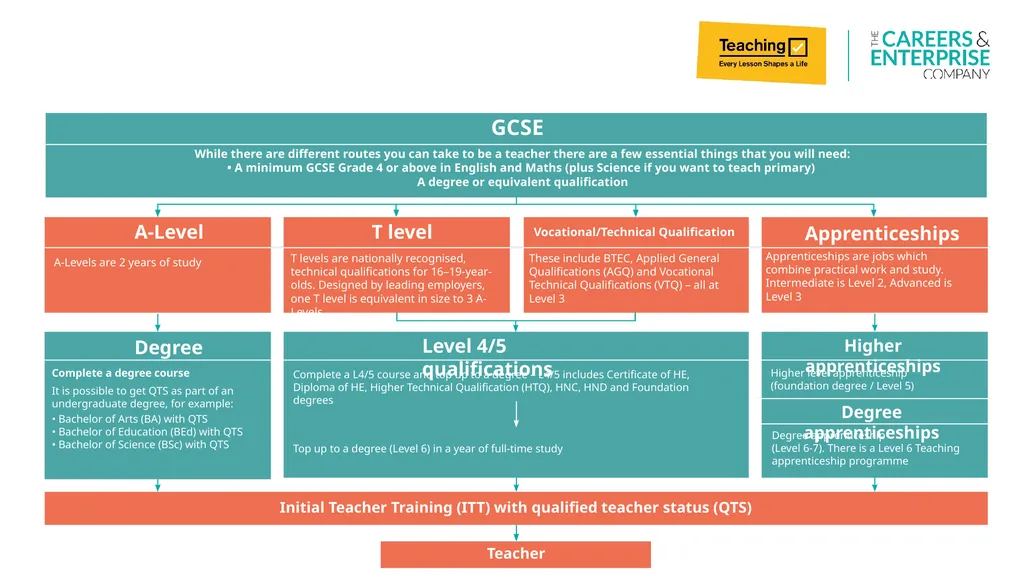
slide11. GCSE A-Level T level Vocational/Technical Qualification Apprenticeships Degree Level 4/5 qualifications Higher apprenticeships Degree apprenticeships Initial Teacher Training (ITT) with qualified teacher status (QTS) Teacher While there are different routes you can take to be a teacher there are a few essential things that you will need:
• A minimum GCSE Grade 4 or above in English and Maths (plus Science if you want to teach primary)
A degree or equivalent qualification A-Levels are 2 years of study T levels are nationally recognised, technical qualifications for 16–19-year-olds. Designed by leading employers, one T level is equivalent in size to 3 A-Levels These include BTEC, Applied General Qualifications (AGQ) and Vocational Technical Qualifications (VTQ) – all at Level 3 Apprenticeships are jobs which combine practical work and study. Intermediate is Level 2, Advanced is Level 3 Complete a degree course
It is possible to get QTS as part of an undergraduate degree, for example:
• Bachelor of Arts (BA) with QTS
• Bachelor of Education (BEd) with QTS
• Bachelor of Science (BSc) with QTS Complete a L4/5 course and top up to a degree – L4/5 includes Certificate of HE, Diploma of HE, Higher Technical Qualification (HTQ), HNC, HND and Foundation degrees
Top up to a degree (Level 6) in a year of full-time study Higher level apprenticeship (foundation degree / Level 5) Degree apprenticeship
(Level 6-7). There is a Level 6 Teaching apprenticeship programme<br>
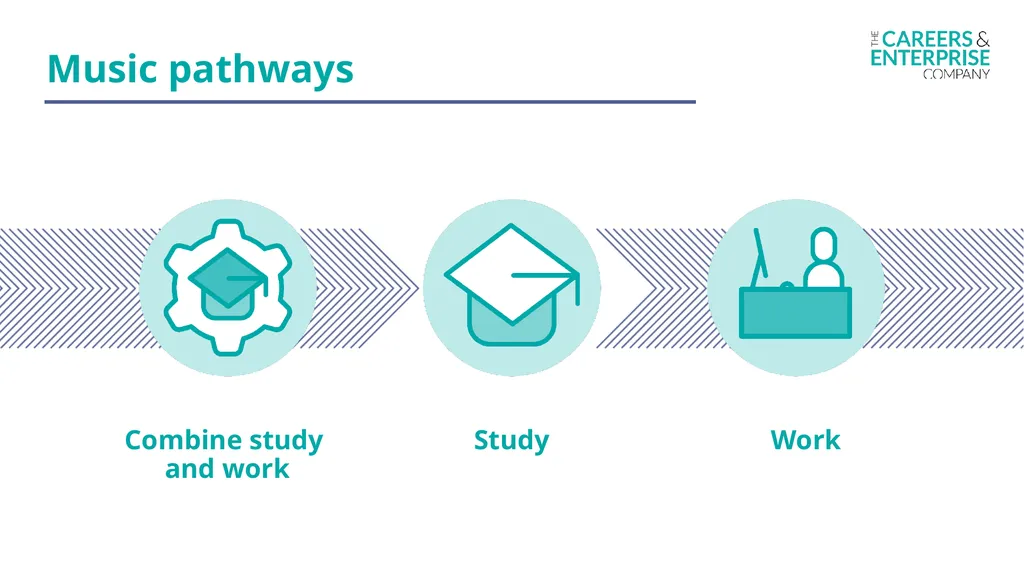
slide12. Music pathways Combine study and work Study Work<br>
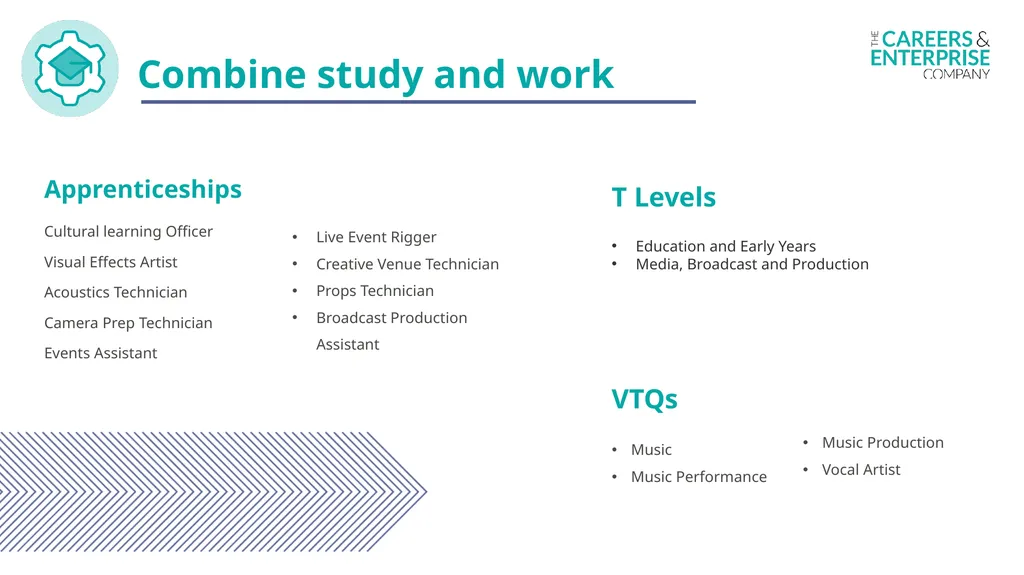
slide13. Combine study and work Apprenticeships
Cultural learning Officer
Visual Effects Artist
Acoustics Technician
Camera Prep Technician
Events Assistant VTQs
Music
Music Performance Live Event Rigger
Creative Venue Technician
Props Technician
Broadcast Production Assistant T Levels Music Production
Vocal Artist Education and Early Years
Media, Broadcast and Production<br>
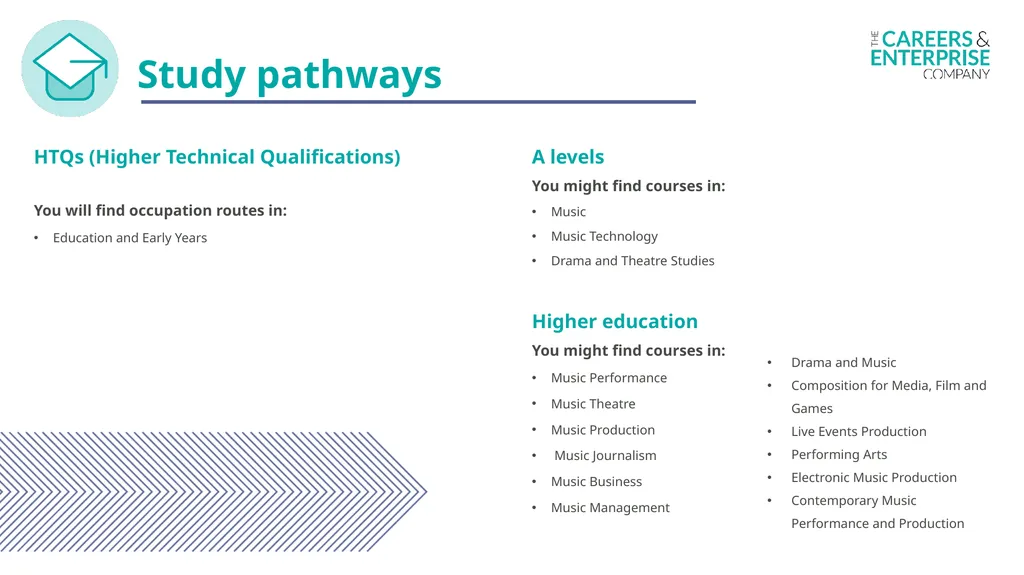
slide14. Study pathways HTQs (Higher Technical Qualifications)
You will find occupation routes in:
Education and Early Years A levels
You might find courses in:
Music
Music Technology
Drama and Theatre Studies Higher education
You might find courses in:
Music Performance
Music Theatre
Music Production
Music Journalism
Music Business
Music Management Drama and Music
Composition for Media, Film and Games
Live Events Production
Performing Arts
Electronic Music Production
Contemporary Music Performance and Production<br>
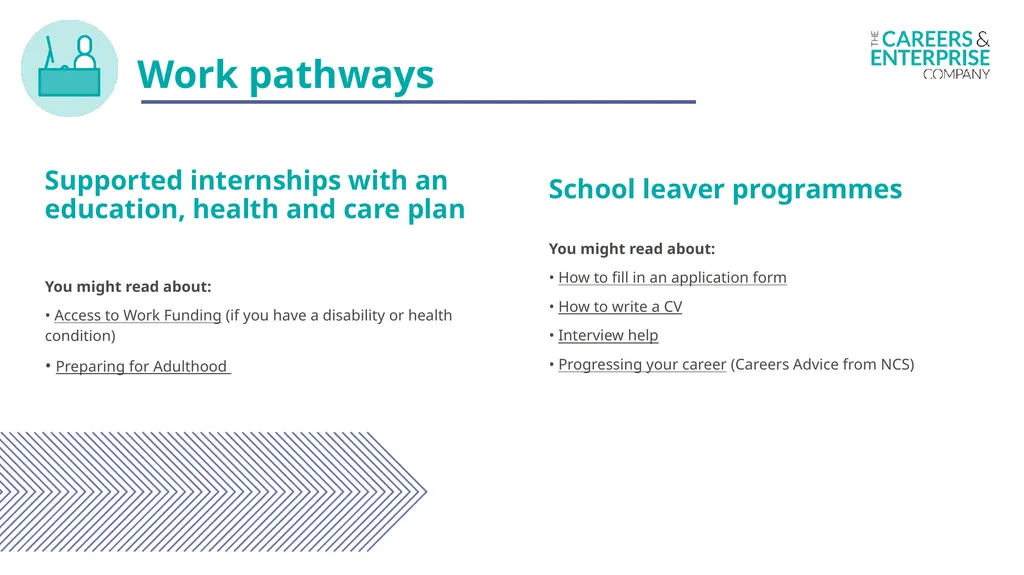
slide15. Work pathways Supported internships with an education, health and care plan
You might read about:
• Access to Work Funding (if you have a disability or health condition)
• Preparing for Adulthood School leaver programmes
You might read about:
• How to fill in an application form
• How to write a CV
• Interview help
• Progressing your career (Careers Advice from NCS)<br>
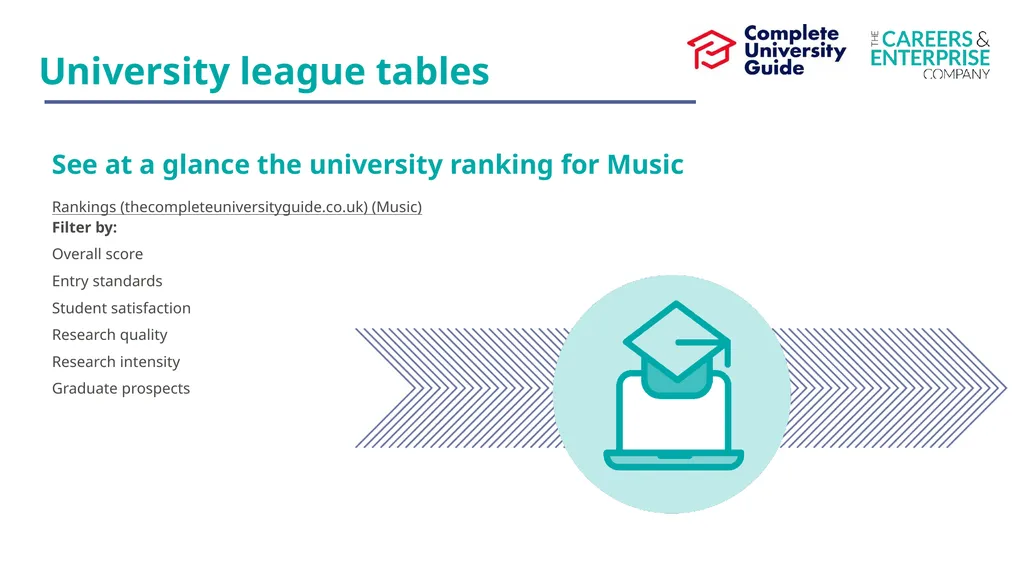
slide16. University league tables See at a glance the university ranking for Music
Rankings (thecompleteuniversityguide.co.uk) (Music)
Filter by:
Overall score
Entry standards
Student satisfaction
Research quality
Research intensity
Graduate prospects<br>
My Learning, My Future
Where can studying Music take you? Highlighting the relevance of Music to future careers and opportunities<br>
slide2. Connects cultures and communities Builds confidence and discipline Why study Music? Encourages creativity Boosts brain power Opens career and life opportunities<br>
slide3. Explore a career as a… Music Director Festival Producer/ Programme Director Acoustics/ Sound Engineer Here are some example roles and careers linked to BBC Bitesize: Music BBC Bitesize case study BBC Bitesize case study BBC Bitesize case study BBC Bitesize case study<br>
slide4. Musician/Songwriter Music instrument Maker/ Repairer Production Assistant Explore a career as a… Here are some example roles and careers linked to BBC Bitesize: Music BBC Bitesize case study icould case study BBC Bitesize case study BBC Bitesize case study<br>
slide5. Not so obvious subjects using Music: Ever thought about..? How to become a Freelance music video Director and stylist: Roisin's story How to become a Talent Acquisition Manager: Ray's story How to become a Content Editor: Henry's story Music therapist | Explore careers | National Careers Service Audio-Visual Technician | Explore careers | National Careers Service DJ | Explore careers | National Careers Service<br>
slide6. MYPATH Job of the week (Music) Career Options Free Range Musician Music Industry Careers<br>
slide7. KS3 Home learning task Use the National Careers Service Explore careers tool to research for this homework Explore here<br>
slide8. From passion to profession:
Share a role that sparks your interest
Prepare a 3 - 5 minute talk to share with a small group on any role that interests you related to Music. What is the role?
What do you need to do to get this role?
Where do you need to go to carry out this role?
What might a typical day look like?
Why are you interested in this role?<br>
slide9. Discover more about the role Explore careers using National Careers Service and find out about what jobs involve and how they are right for you Includes:
Average salary
Typical hours
Work patterns
Pathways/How to become
Essential Skills
Daily tasks
Career path and progression
Current opportunities Research Ideas:
Tour Manager
Music Promotions Manager
Sound Engineer
Musical Instrument Maker/Repairer
Musician
Production Assistant<br>
slide10. Why not teach Music? Explore teaching The right skills to teach? No two days are the same – and neither are the pupils
Once qualified you can teach throughout your life
You could teach abroad Daniel’s Story Jem’s Story Shaniqua’s Story Work well in a team? Love to nurture imagination? Love to keep learning? Progress your career into leadership and management
Bring your outside interests into the classroom and your subject What makes a great teacher?<br>
slide11. GCSE A-Level T level Vocational/Technical Qualification Apprenticeships Degree Level 4/5 qualifications Higher apprenticeships Degree apprenticeships Initial Teacher Training (ITT) with qualified teacher status (QTS) Teacher While there are different routes you can take to be a teacher there are a few essential things that you will need:
• A minimum GCSE Grade 4 or above in English and Maths (plus Science if you want to teach primary)
A degree or equivalent qualification A-Levels are 2 years of study T levels are nationally recognised, technical qualifications for 16–19-year-olds. Designed by leading employers, one T level is equivalent in size to 3 A-Levels These include BTEC, Applied General Qualifications (AGQ) and Vocational Technical Qualifications (VTQ) – all at Level 3 Apprenticeships are jobs which combine practical work and study. Intermediate is Level 2, Advanced is Level 3 Complete a degree course
It is possible to get QTS as part of an undergraduate degree, for example:
• Bachelor of Arts (BA) with QTS
• Bachelor of Education (BEd) with QTS
• Bachelor of Science (BSc) with QTS Complete a L4/5 course and top up to a degree – L4/5 includes Certificate of HE, Diploma of HE, Higher Technical Qualification (HTQ), HNC, HND and Foundation degrees
Top up to a degree (Level 6) in a year of full-time study Higher level apprenticeship (foundation degree / Level 5) Degree apprenticeship
(Level 6-7). There is a Level 6 Teaching apprenticeship programme<br>
slide12. Music pathways Combine study and work Study Work<br>
slide13. Combine study and work Apprenticeships
Cultural learning Officer
Visual Effects Artist
Acoustics Technician
Camera Prep Technician
Events Assistant VTQs
Music
Music Performance Live Event Rigger
Creative Venue Technician
Props Technician
Broadcast Production Assistant T Levels Music Production
Vocal Artist Education and Early Years
Media, Broadcast and Production<br>
slide14. Study pathways HTQs (Higher Technical Qualifications)
You will find occupation routes in:
Education and Early Years A levels
You might find courses in:
Music
Music Technology
Drama and Theatre Studies Higher education
You might find courses in:
Music Performance
Music Theatre
Music Production
Music Journalism
Music Business
Music Management Drama and Music
Composition for Media, Film and Games
Live Events Production
Performing Arts
Electronic Music Production
Contemporary Music Performance and Production<br>
slide15. Work pathways Supported internships with an education, health and care plan
You might read about:
• Access to Work Funding (if you have a disability or health condition)
• Preparing for Adulthood School leaver programmes
You might read about:
• How to fill in an application form
• How to write a CV
• Interview help
• Progressing your career (Careers Advice from NCS)<br>
slide16. University league tables See at a glance the university ranking for Music
Rankings (thecompleteuniversityguide.co.uk) (Music)
Filter by:
Overall score
Entry standards
Student satisfaction
Research quality
Research intensity
Graduate prospects<br>