Note Taking Skills University Advising Services
Description: Note Taking Skills University Advising Services Most Important Review your notes within 24 hours of taking them One hour spent studying soon after class will do as much as several hours of studying a few days later! Before Class Read

Related Topics
Download Presentation
"Note Taking Skills University Advising Services" is the property of its rightful owner. Permission is granted to download and print the materials on this website for personal, non-commercial use only, and to display it on your personal computer provided you do not modify the materials and that you retain all copyright notices contained in the materials. By downloading content from our website, you accept the terms of this agreement.
Presentation Transcript
slide1. Note Taking Skills University Advising Services<br>
slide2. Most Important* *Review your notes
within 24 hours of taking them<br>
slide3. One hour spent studying soon after class will do as much as several hours of studying a few days later!<br>
slide4. Before Class *Read assigned materials*
Write down any questions and prepare to ask them in class<br>
slide5. Before Class Always bring paper/pen/pencil
Have an organized notebook<br>
slide6. Before Class Just something to think about…
Laptops are becoming more accepted, but they are distracting to the presenter and other students.
Recording a lecture is time-consuming.
Rewriting notes is time-consuming.<br>
slide7. During Class Sit near or at the front of the classroom<br>
slide8. Techniques for Taking Notes Record only important ideas
Listen and look for cues“The main point is…” “In conclusion…” “Obviously…”<br>
slide9. During Class Write key words or short phrases
Leave space between topics<br>
slide10. During Class Write page numbers mentioned by the instructor
Write down your professor’s examples<br>
slide11. Techniques for Taking Notes Note what is on the board, power point, handout
Listen for answers to your prepared questions
Ask questions!!<br>
slide12. Techniques for Taking Notes Summary
Outline
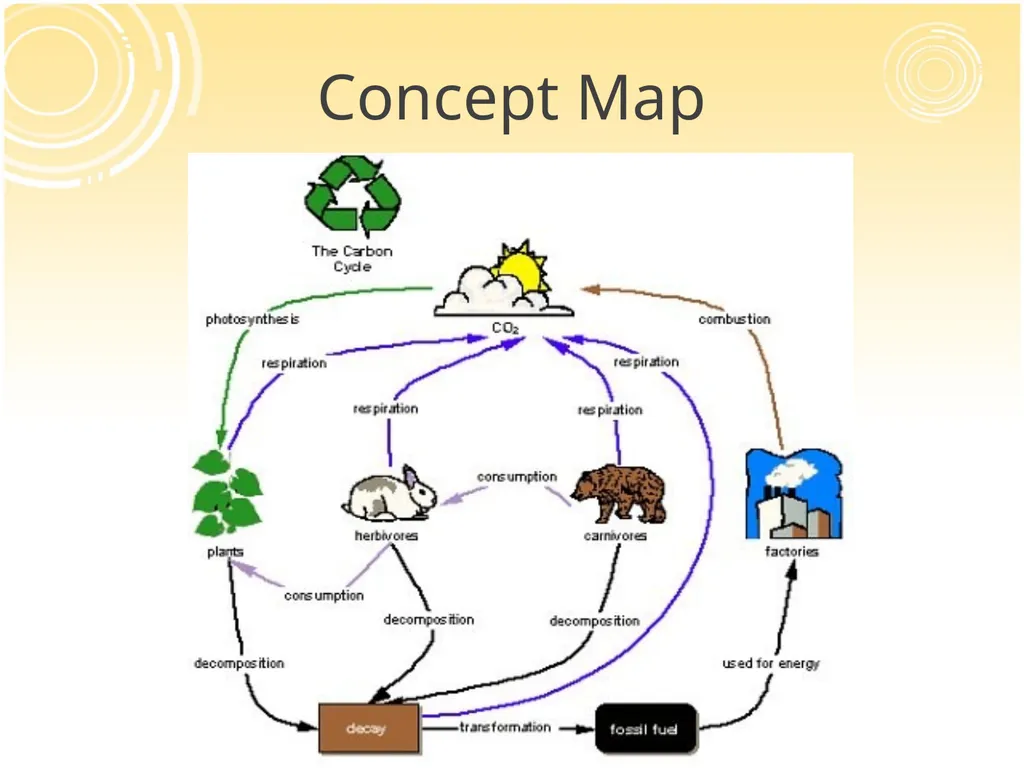
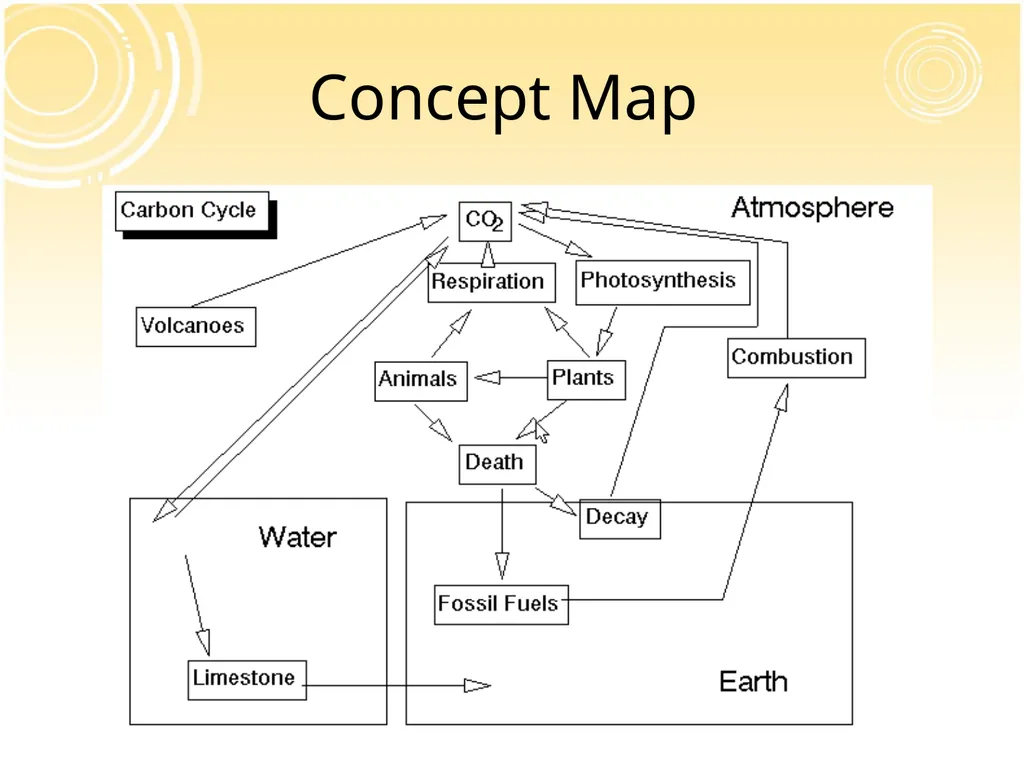
Concept Maps
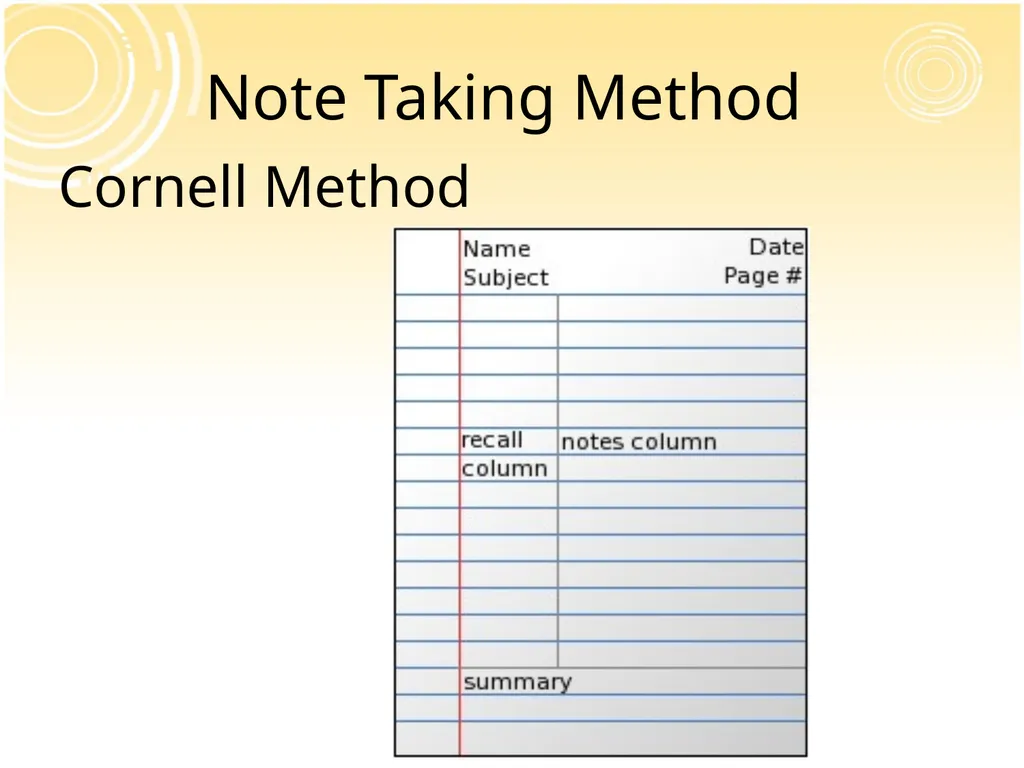
Cornell Method
Fishbone Diagrams<br>
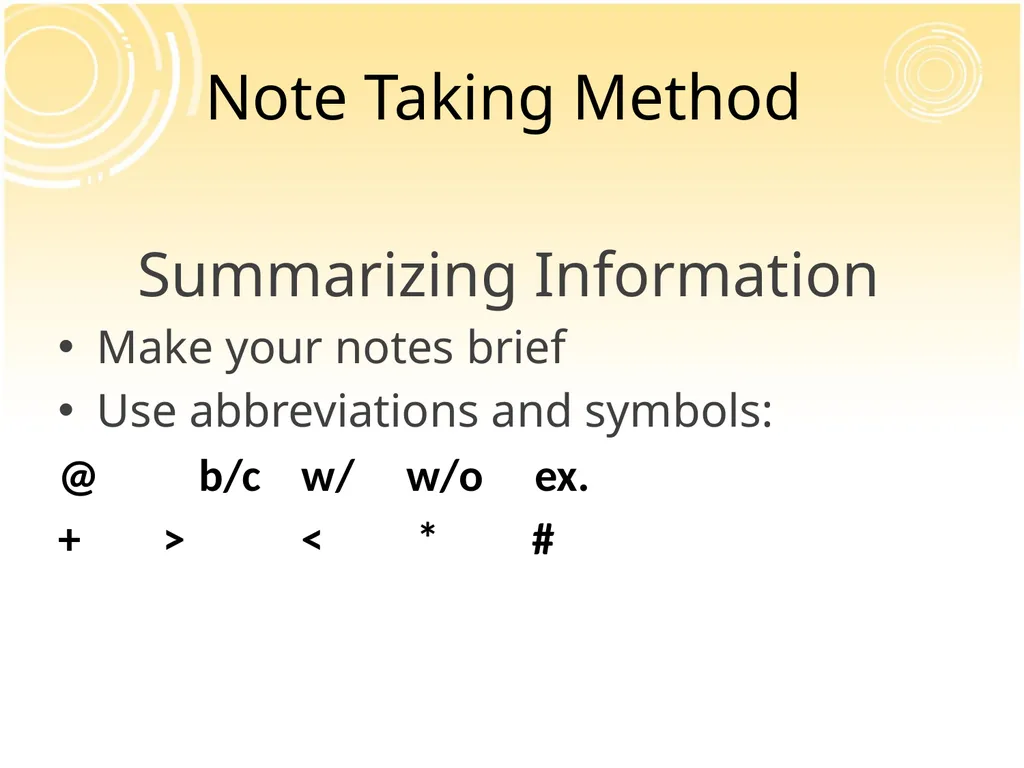
slide13. Note Taking Method Summarizing Information
Make your notes brief
Use abbreviations and symbols:
@ b/c w/ w/o ex.
+ > < * #<br>
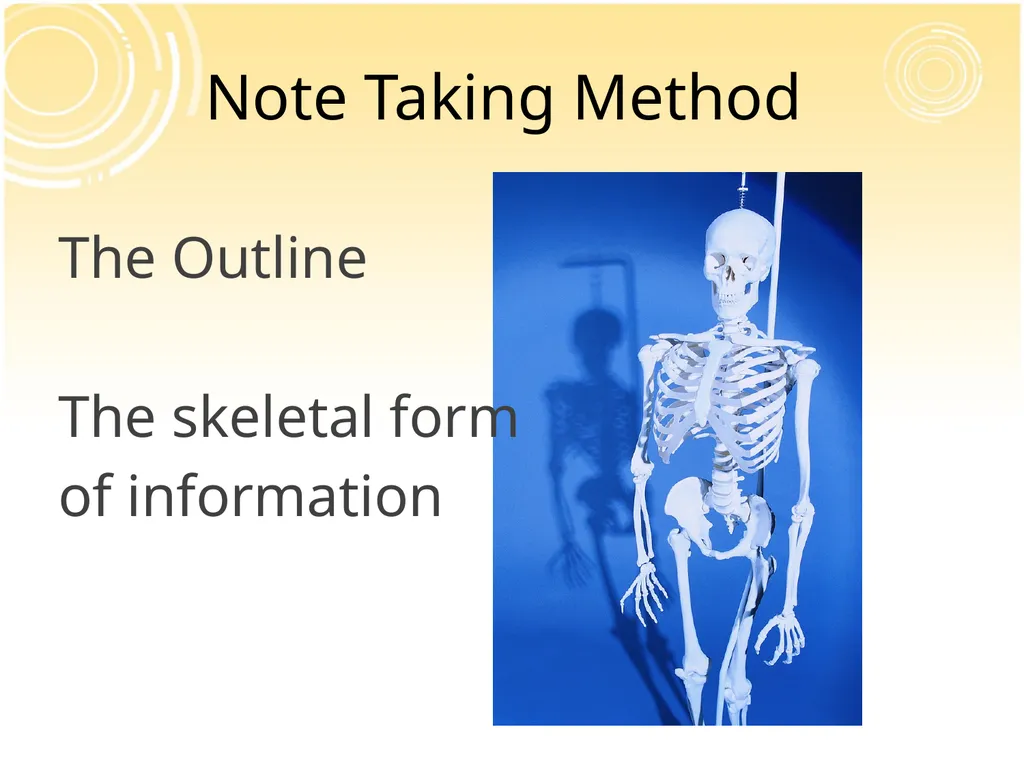
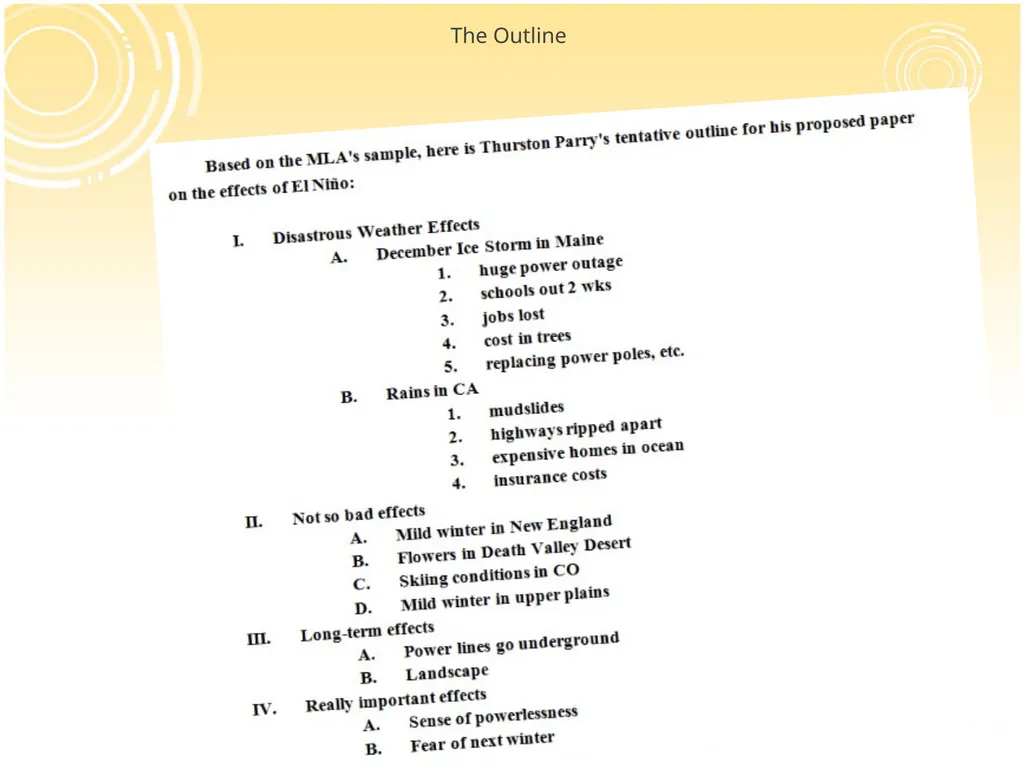
slide14. Note Taking Method The Outline
The skeletal form
of information<br>
slide15. The Outline<br>
slide16. Concept Map<br>
slide17. Concept Map<br>
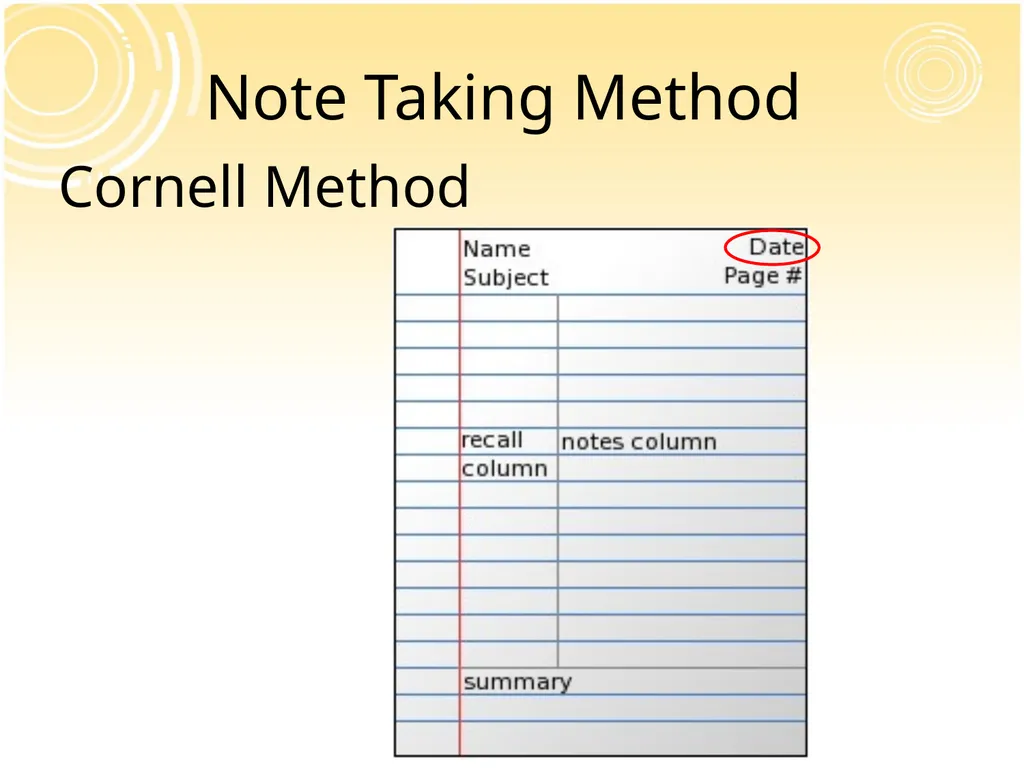
slide18. Note Taking Method Cornell Method<br>
slide19. Note Taking Method Cornell Method<br>
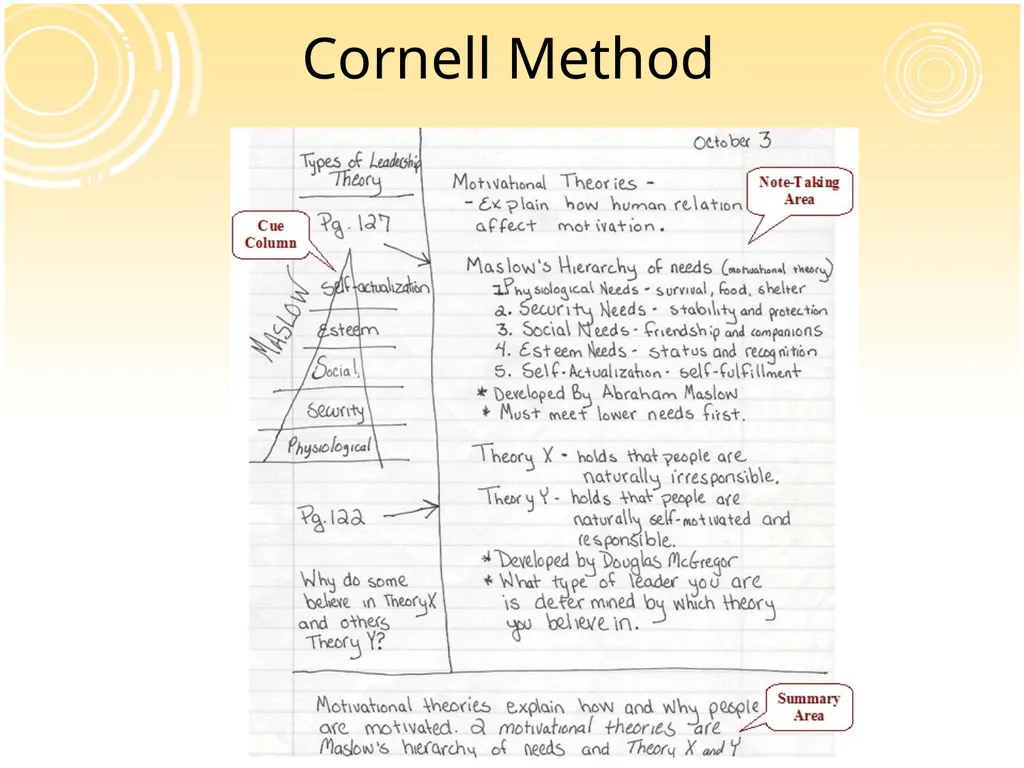
slide20. Cornell Method<br>
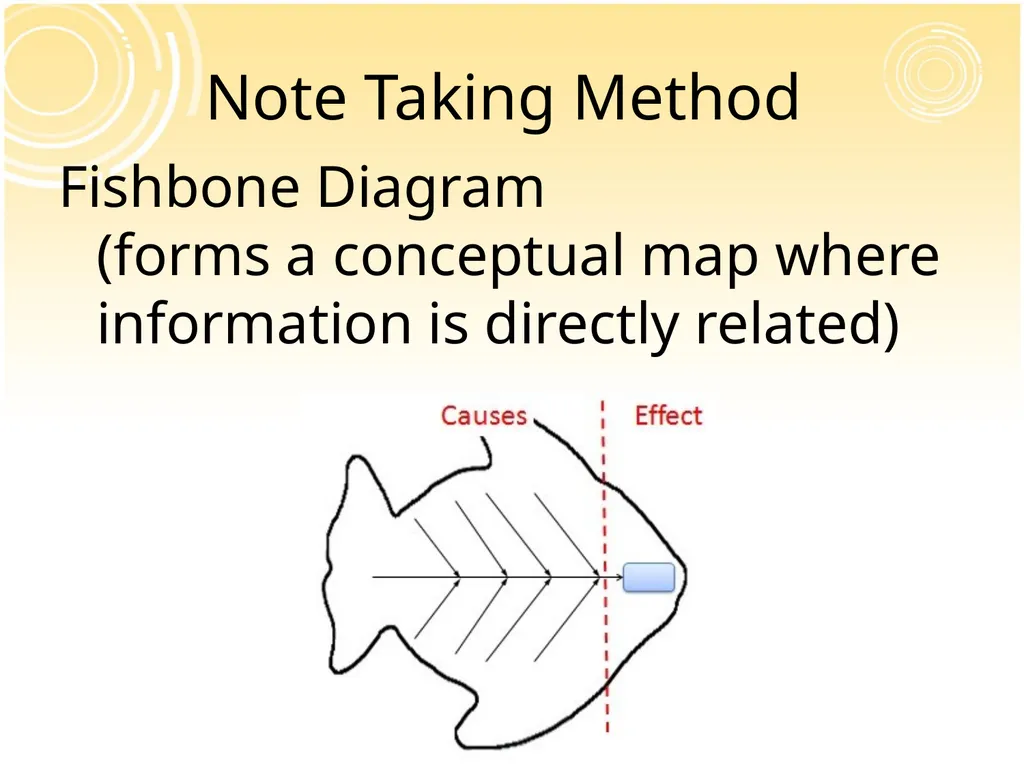
slide21. Note Taking Method Fishbone Diagram(forms a conceptual map where information is directly related)<br>
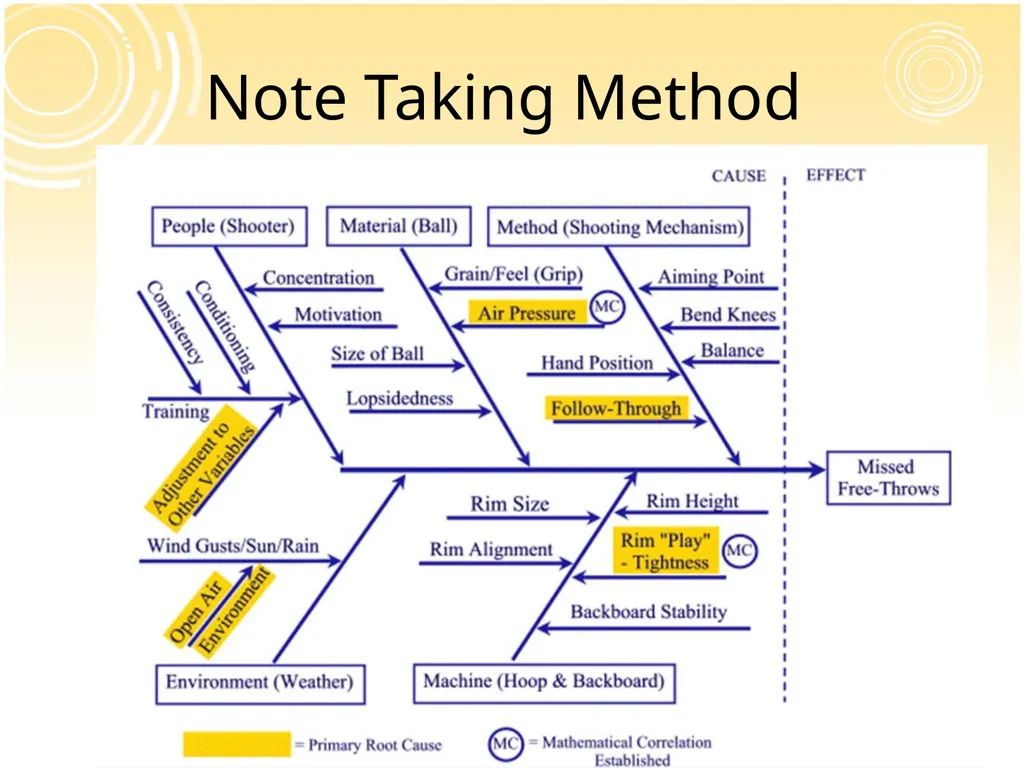
slide22. Note Taking Method<br>
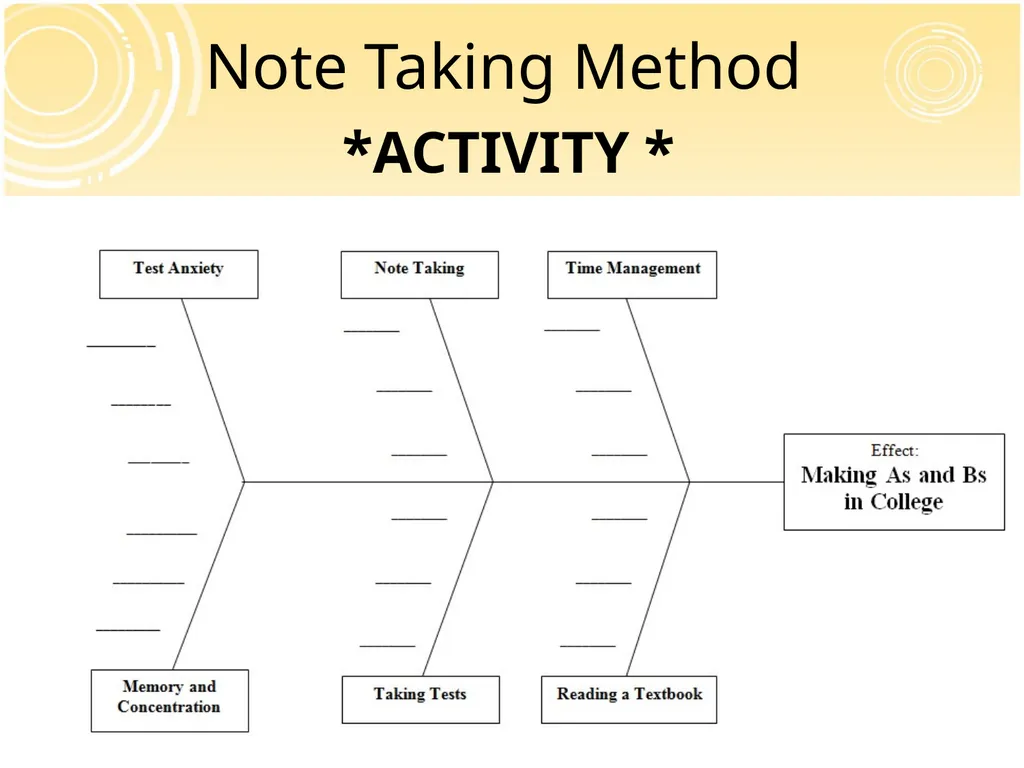
slide23. Note Taking Method *ACTIVITY *<br>
slide24. After Class Review your notes ASAP
Say important concepts and ideas out loud<br>
slide25. After Class Compare notes with classmates
Review your notes regularly<br>
slide26. Note Taking Method Dartmouth College. 2011. Academic Skills Center. Retrieved January 23, 2011from http://www.dartmouth.edu/~acskills/success/notes.html.
Downing, S. 2008. On course: Strategies for creating success in college and in life. 5th edition. Boston: Houghton Mifflin Co.
Walther, D. R. 1994. Toolkit for college success. Belmont: International Thomson Publishing.
Muskingum College. (2010). Learning Strategies Database. Retrieved January 16, 2011, from www.muskingum.edu/~cal/database/general/index.html.<br>
slide27. For More Information Contact: Dr. Matt PriceLearning Support Coordinator/Academic AdvisorUniversity of North Alabama
The Commons 220
256-765-5949
mprice2@una.edu<br>
slide2. Most Important* *Review your notes
within 24 hours of taking them<br>
slide3. One hour spent studying soon after class will do as much as several hours of studying a few days later!<br>
slide4. Before Class *Read assigned materials*
Write down any questions and prepare to ask them in class<br>
slide5. Before Class Always bring paper/pen/pencil
Have an organized notebook<br>
slide6. Before Class Just something to think about…
Laptops are becoming more accepted, but they are distracting to the presenter and other students.
Recording a lecture is time-consuming.
Rewriting notes is time-consuming.<br>
slide7. During Class Sit near or at the front of the classroom<br>
slide8. Techniques for Taking Notes Record only important ideas
Listen and look for cues“The main point is…” “In conclusion…” “Obviously…”<br>
slide9. During Class Write key words or short phrases
Leave space between topics<br>
slide10. During Class Write page numbers mentioned by the instructor
Write down your professor’s examples<br>
slide11. Techniques for Taking Notes Note what is on the board, power point, handout
Listen for answers to your prepared questions
Ask questions!!<br>
slide12. Techniques for Taking Notes Summary
Outline
Concept Maps
Cornell Method
Fishbone Diagrams<br>
slide13. Note Taking Method Summarizing Information
Make your notes brief
Use abbreviations and symbols:
@ b/c w/ w/o ex.
+ > < * #<br>
slide14. Note Taking Method The Outline
The skeletal form
of information<br>
slide15. The Outline<br>
slide16. Concept Map<br>
slide17. Concept Map<br>
slide18. Note Taking Method Cornell Method<br>
slide19. Note Taking Method Cornell Method<br>
slide20. Cornell Method<br>
slide21. Note Taking Method Fishbone Diagram(forms a conceptual map where information is directly related)<br>
slide22. Note Taking Method<br>
slide23. Note Taking Method *ACTIVITY *<br>
slide24. After Class Review your notes ASAP
Say important concepts and ideas out loud<br>
slide25. After Class Compare notes with classmates
Review your notes regularly<br>
slide26. Note Taking Method Dartmouth College. 2011. Academic Skills Center. Retrieved January 23, 2011from http://www.dartmouth.edu/~acskills/success/notes.html.
Downing, S. 2008. On course: Strategies for creating success in college and in life. 5th edition. Boston: Houghton Mifflin Co.
Walther, D. R. 1994. Toolkit for college success. Belmont: International Thomson Publishing.
Muskingum College. (2010). Learning Strategies Database. Retrieved January 16, 2011, from www.muskingum.edu/~cal/database/general/index.html.<br>
slide27. For More Information Contact: Dr. Matt PriceLearning Support Coordinator/Academic AdvisorUniversity of North Alabama
The Commons 220
256-765-5949
mprice2@una.edu<br>