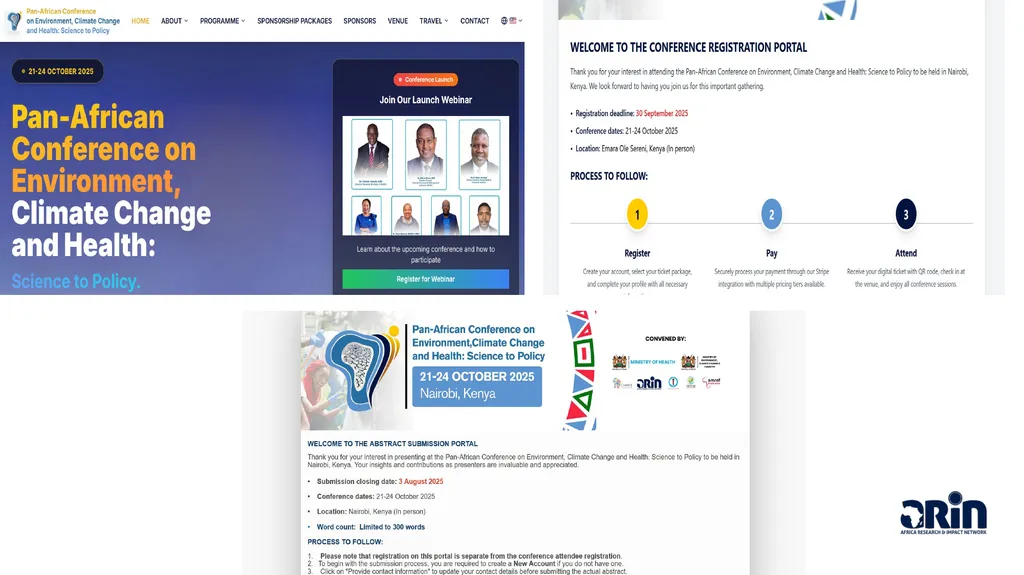
Pan-African Conference on Environment, Climate Change and Health: Science to Policy Theme: Harnessing Science, Policy and Partnerships for environmental sustainability and Climate-Health Resilience. Venue: Emara ole Sereni Convention Center
"Pan-African Conference on Environment, Climate" is the property of its rightful owner. Permission is granted to
download and print the materials on this website for personal, non-commercial use only, and to display it
on your personal computer provided you do not modify the materials and that you retain all copyright
notices contained in the materials. By downloading content from our website, you accept the terms of this
agreement.
Presentation Transcript
01
Pan-African Conference on Environment, Climate Change and Health: Science to Policy<br>
02
Theme: Harnessing Science, Policy and Partnerships for environmental sustainability and Climate-Health Resilience. Venue:
Emara ole Sereni Convention Center
Date:
21st – 24th October, 2025<br>
03
The conference serves as: 1. The 4th climate and health, science to policy conference by CHANCE network 2. The 2nd ARIN international climate and health and conference. 3. The 4th health and climate change scientific conference by ministry of health and KEMRI. 4. The inaugural national environment conference by ministry of environment, climate change and forestry (MOECC&F) and the national environment management authority (NEMA)<br>
04
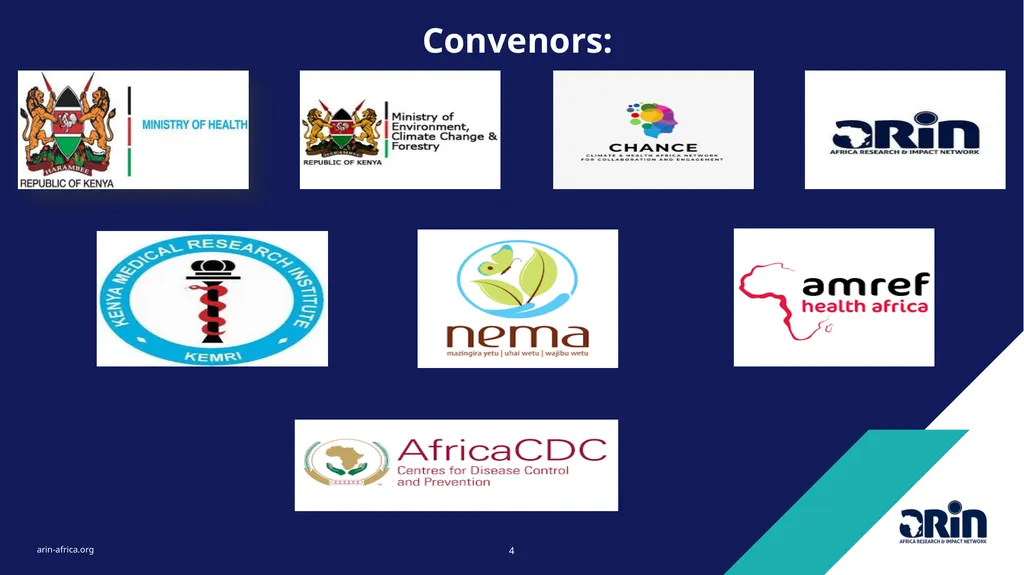
Convenors:<br>
05
Environment, Climate Change & Health in Africa: The urgency for action. - Developing countries, especially in Africa, are disproportionately impacted by climate change. - Vulnerable populations face worsening health, food insecurity, and economic instability. - Environmental issues like rising temperatures, erratic rainfall, and pollution drive disease outbreaks (e.g., Malaria, Cholera, Dengue). - Kenya faces intensifying climate-related health and socio-economic challenges. - There is an urgent need to translate scientific evidence into policies and action. - Stronger multisectoral collaboration and knowledge exchange are critical for effective adaptation and mitigation.<br>
06
Building on a strong foundation of science-policy engagement - Builds on prior CHANCE conferences: Pretoria (2022), Gaborone (2023), Harare (2024) - Builds on ARIN's 2024 climate & health conference (transdisciplinary research focus) - Leverages Kenya's ministry of health & KEMRI experience (Nairobi 2019, Kwale 2023, Machakos 2024) - Brings together researchers, policymakers, private sector, donors & civil society - Focus areas: science-policy translation, innovation showcase, capacity building - Promotes best practices for climate action, health resilience & economic growth - Includes community-led orgs to uplift climate-health literacy & indigenous knowledge<br>
07
Why this conference matters: from conversation to action - Drives measurable impact: moves beyond dialogue to trackable commitments and real-world implementation. - Launches research-policy labs: virtual labs where policymakers & researchers co-develop solutions to climate-health challenges. - Builds long-term partnerships: fosters a lasting ecosystem of science-policy-innovation collaborations. - Tracks policy progress: reviews outcomes from past conferences (MoH, ARIN, CHANCE, KEMRI, etc.) To inform the 2025 state of evidence report on Environment, Climate Change and Health in Africa. - Establishes a TWG: drives integration of health into environment and Climate Change policies, NDCs, and CoPs. - Strengthens financing & civil society alliances: supports joint advocacy and mobilization toward COP30–COP32, UNCBD COP16, UNCCD COP17. - Shapes future agendas, e.g CHAC 2026, CoP 32, biennial national environment conference, and post-CoP implementation plans. - Welcomes global partners: engages actors like UNEP, AGNs, and innovators to build skills for integrating health in climate negotiations.<br>
08
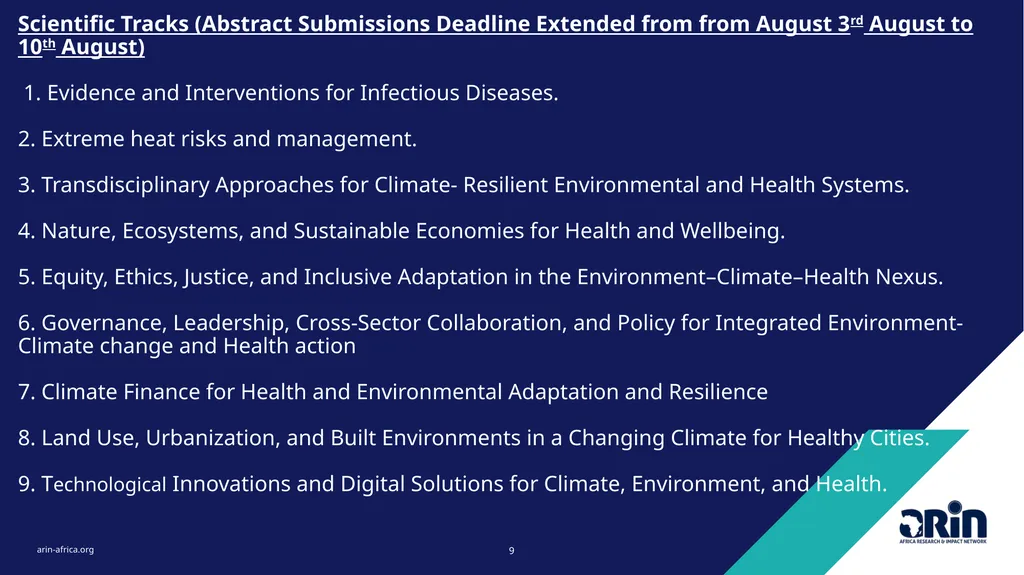
Scientific Tracks (Abstract Submissions Deadline Extended from from August 3rd August to 10th August) 1. Evidence and Interventions for Infectious Diseases. 2. Extreme heat risks and management. 3. Transdisciplinary Approaches for Climate- Resilient Environmental and Health Systems. 4. Nature, Ecosystems, and Sustainable Economies for Health and Wellbeing. 5. Equity, Ethics, Justice, and Inclusive Adaptation in the Environment–Climate–Health Nexus. 6. Governance, Leadership, Cross-Sector Collaboration, and Policy for Integrated Environment- Climate change and Health action 7. Climate Finance for Health and Environmental Adaptation and Resilience 8. Land Use, Urbanization, and Built Environments in a Changing Climate for Healthy Cities. 9. Technological Innovations and Digital Solutions for Climate, Environment, and Health.<br>
09
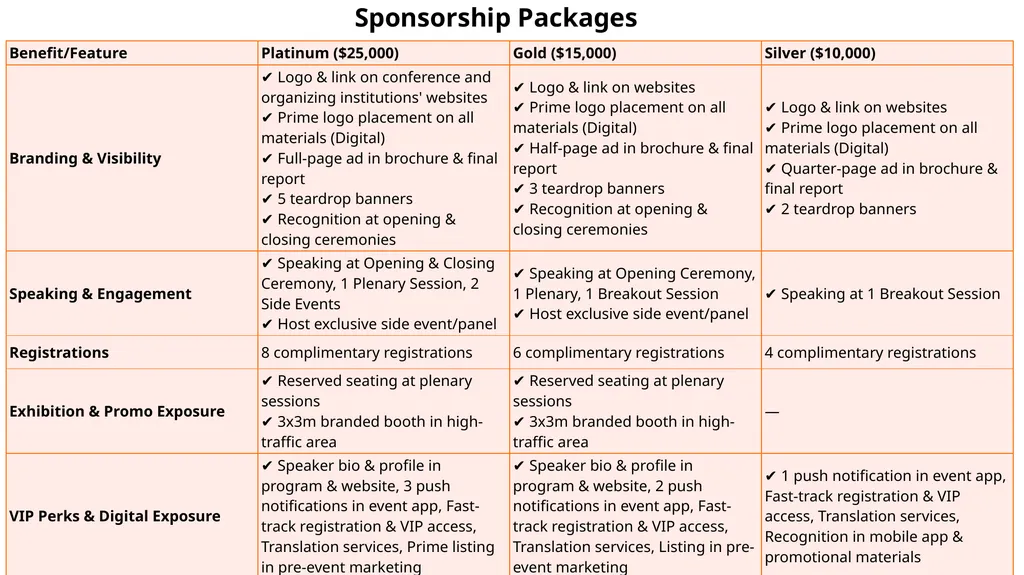
Sponsorship Packages<br>
10
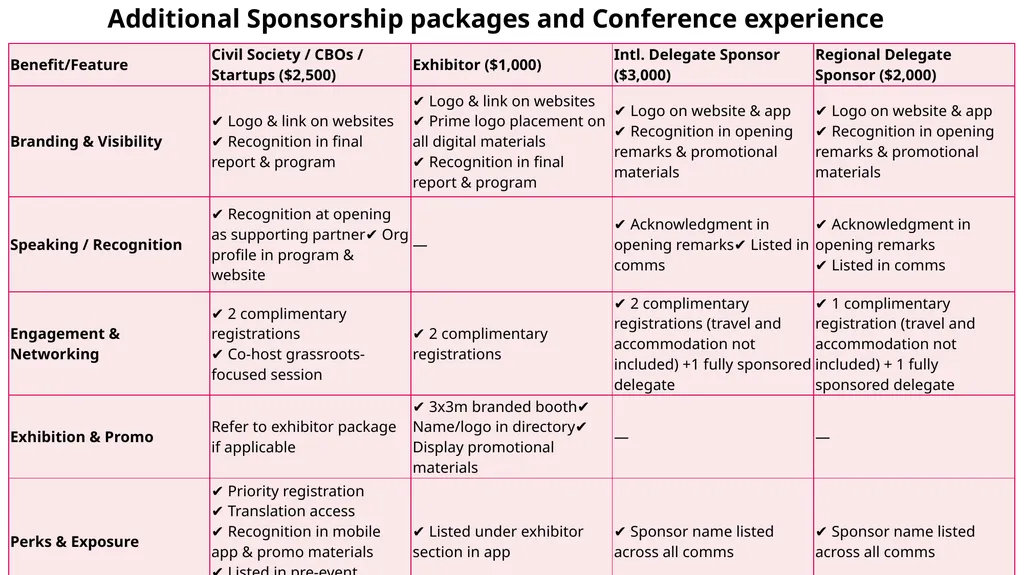
Additional Sponsorship packages and Conference experience<br>
11
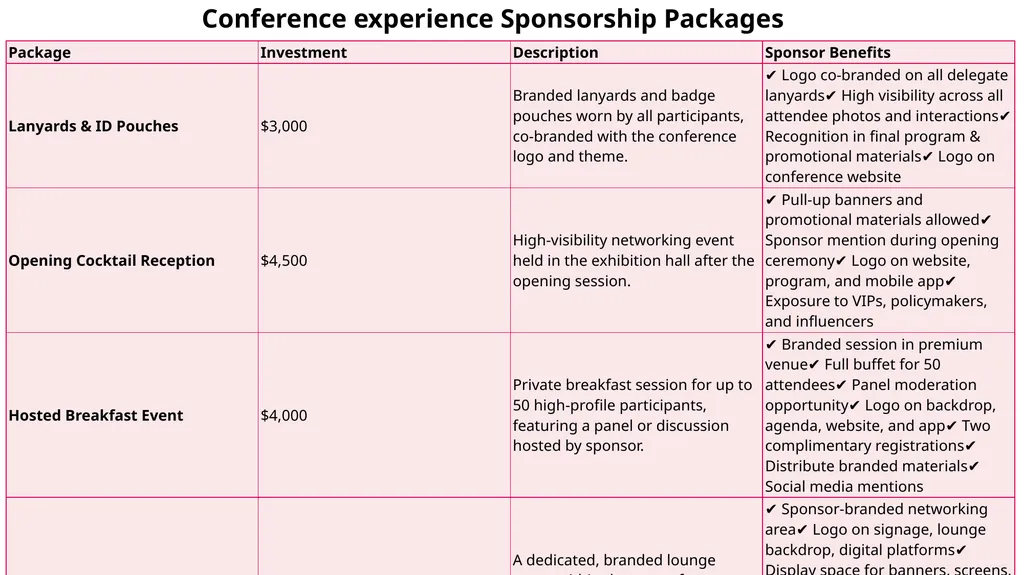
Conference experience Sponsorship Packages<br>
12
Sponsors & Partners<br>
13
Why technically support/sponsor this conference? - Be visibly aligned with Africa's foremost platform tackling the urgent intersections of climate change, health, and development. - Engage with ministers, UN agencies, development banks, and leading scientists influencing national and continental agendas. - Gain widespread brand exposure through multi-channel marketing; including websites, social media, mobile app, signage, and the final conference report. - Contribute thought leadership in plenaries, side events, and exclusive hosted sessions—driving real science-to-policy impact. - Showcase your organization’s contribution to achieving the sustainable development goals. - Build partnerships with a diverse community of funders, researchers, civil society, and the private sector committed to co-developing solutions for africa’s climate and health challenges. - Your sponsorship directly enables grassroots leaders, youth, and community-based actors from underserved regions to take part. -Beyond a single event, your support strengthens a growing movement driving transformative action across africa’s climate and health landscape.<br>