PBiS Lesson Planning for Student Understanding Presenters: Britney Johnson Chris Petriccione Cara Nelson Objectives for the Session By the end of the session, the learner will: Understand the differences between emerging, expanding, and
"PBiS Lesson Planning for Student Understanding" is the property of its rightful owner. Permission is granted to
download and print the materials on this website for personal, non-commercial use only, and to display it
on your personal computer provided you do not modify the materials and that you retain all copyright
notices contained in the materials. By downloading content from our website, you accept the terms of this
agreement.
Presentation Transcript
01
PBiS Lesson Planning for Student Understanding Presenters:
Britney Johnson
Chris Petriccione
Cara Nelson<br>
02
Objectives for the Session By the end of the session, the learner will:
Understand the differences between emerging, expanding, and bridging levels of implementation and beyond the simple lesson regarding staff-wide implementation
Analyze a lesson in which all three levels allow for maximum student learning of the skill
Create a sample of a lesson in which students are able to comprehensively understand the skill taught for the day<br>
03
Emerging Stages of Implementation The emerging stages of implementation will begin by students acquainting themselves with the skill for the day. Simple verbal /surface-level acquisition may include:
Cloze read
Cornell notes
Call and response
Sentence stems
Think/Pair/Share or write/pair/share
Quick write
Whip Around
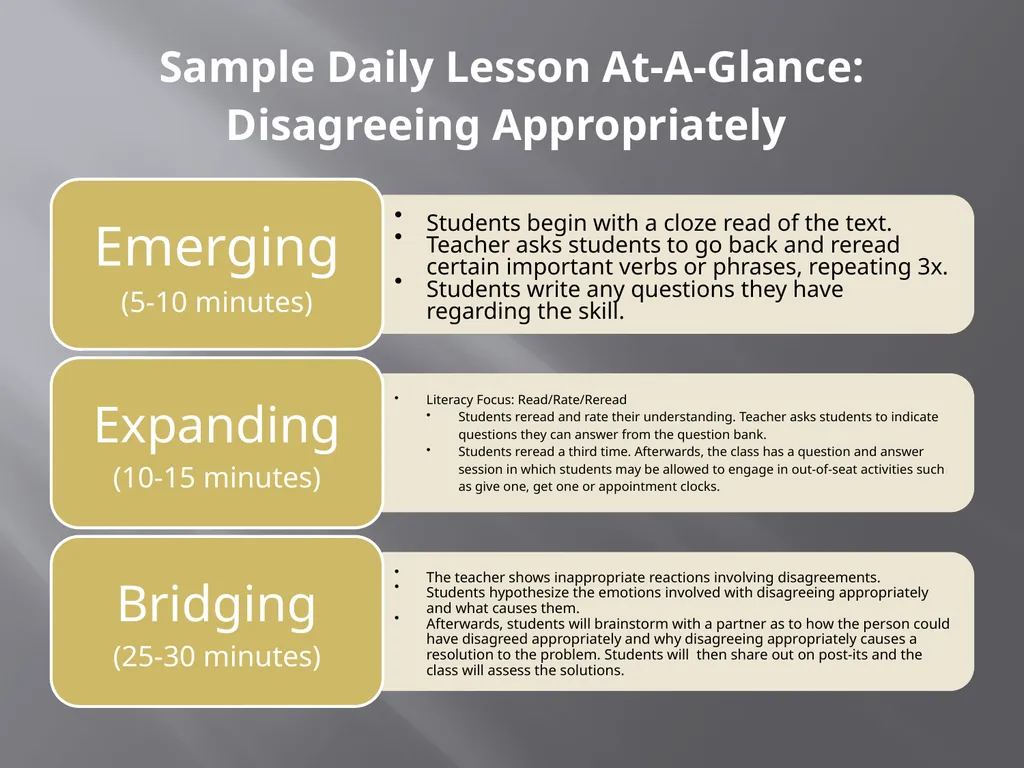
This would ideally take place in the first 5-10 minutes of class.<br>
04
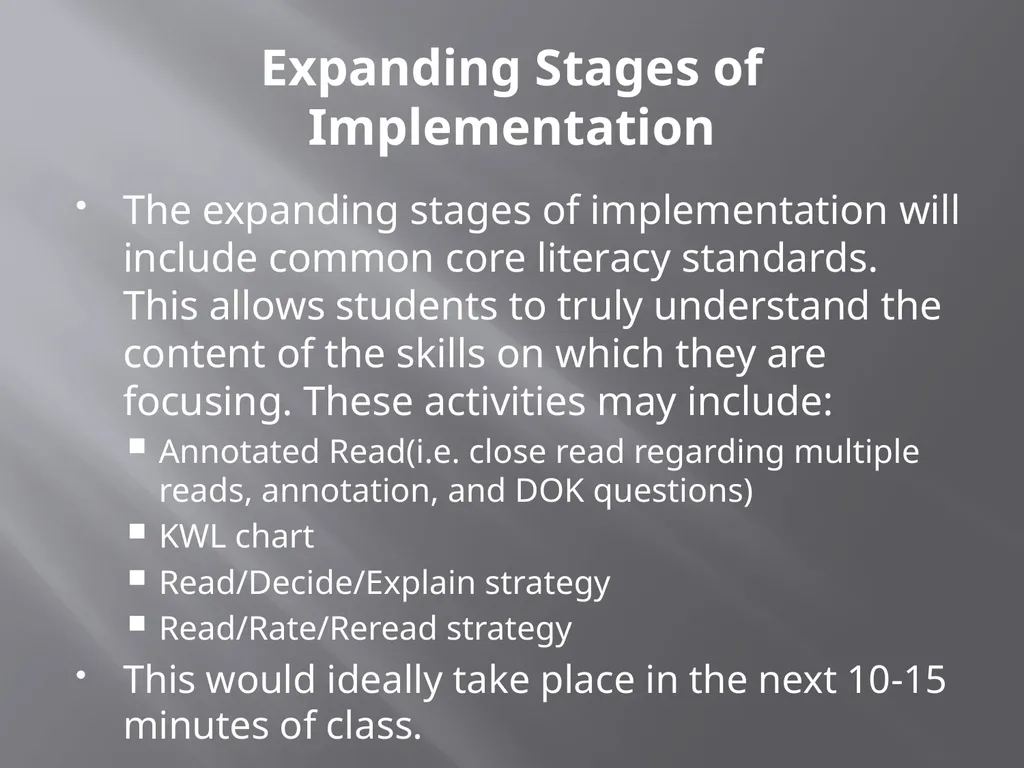
Expanding Stages of Implementation The expanding stages of implementation will include common core literacy standards. This allows students to truly understand the content of the skills on which they are focusing. These activities may include:
Annotated Read(i.e. close read regarding multiple reads, annotation, and DOK questions)
KWL chart
Read/Decide/Explain strategy
Read/Rate/Reread strategy
This would ideally take place in the next 10-15 minutes of class.<br>
05
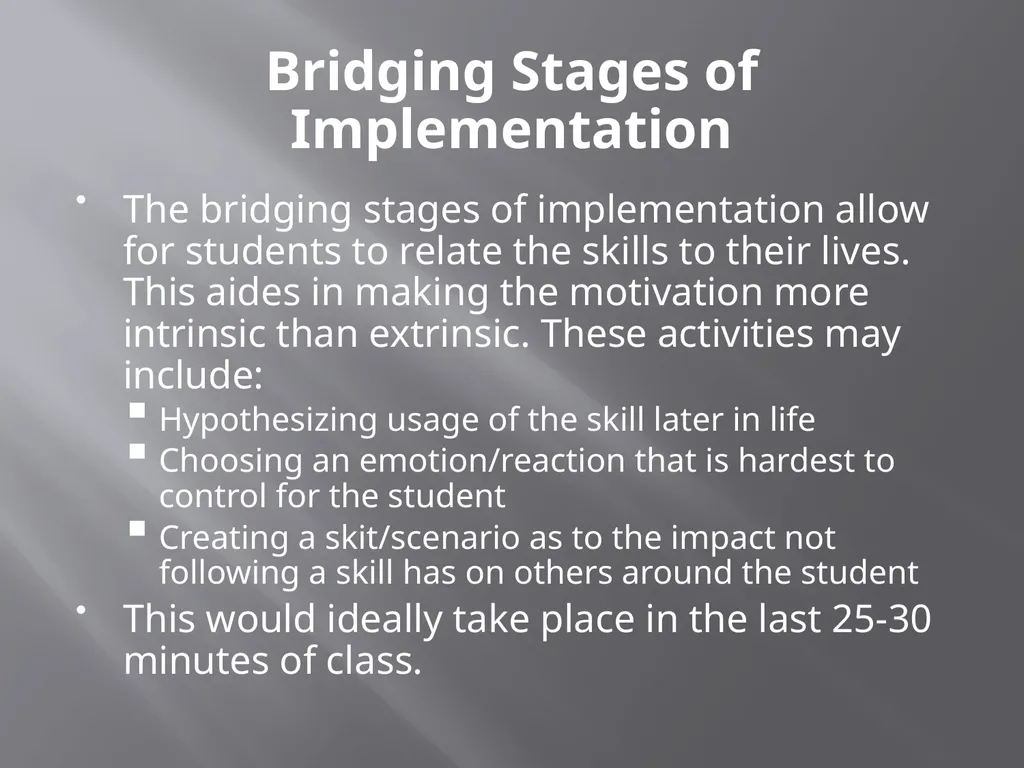
Bridging Stages of Implementation The bridging stages of implementation allow for students to relate the skills to their lives. This aides in making the motivation more intrinsic than extrinsic. These activities may include:
Hypothesizing usage of the skill later in life
Choosing an emotion/reaction that is hardest to control for the student
Creating a skit/scenario as to the impact not following a skill has on others around the student
This would ideally take place in the last 25-30 minutes of class.<br>
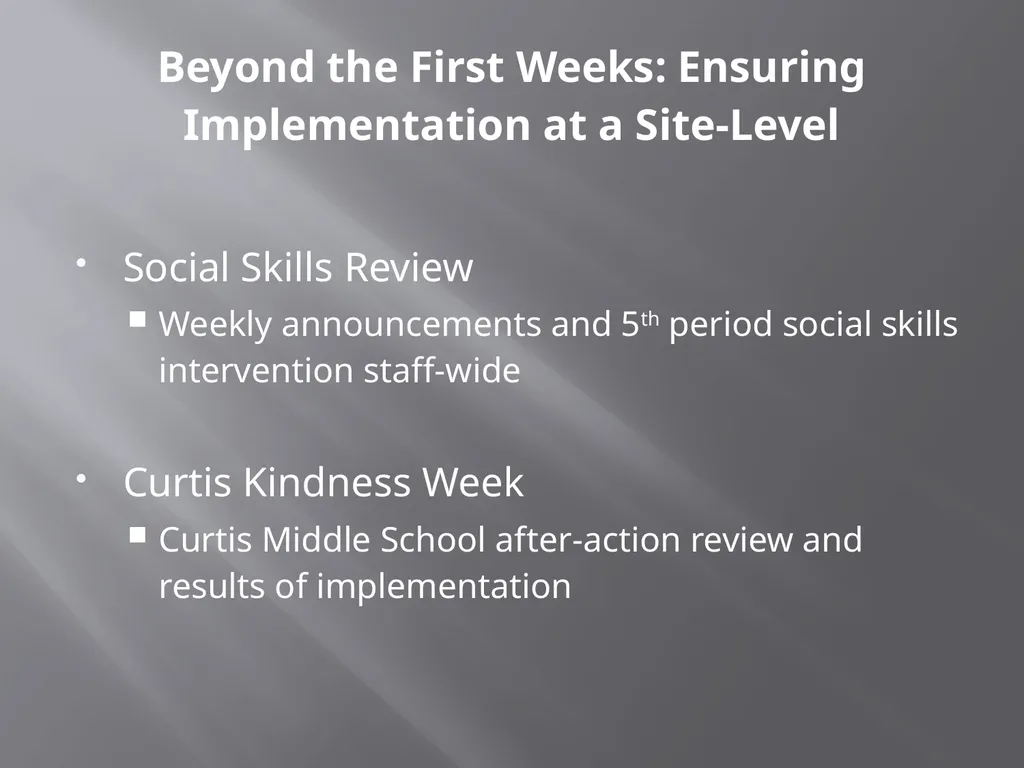
Beyond the First Weeks: Ensuring Implementation at a Site-Level Social Skills Review
Weekly announcements and 5th period social skills intervention staff-wide
Curtis Kindness Week
Curtis Middle School after-action review and results of implementation<br>