04
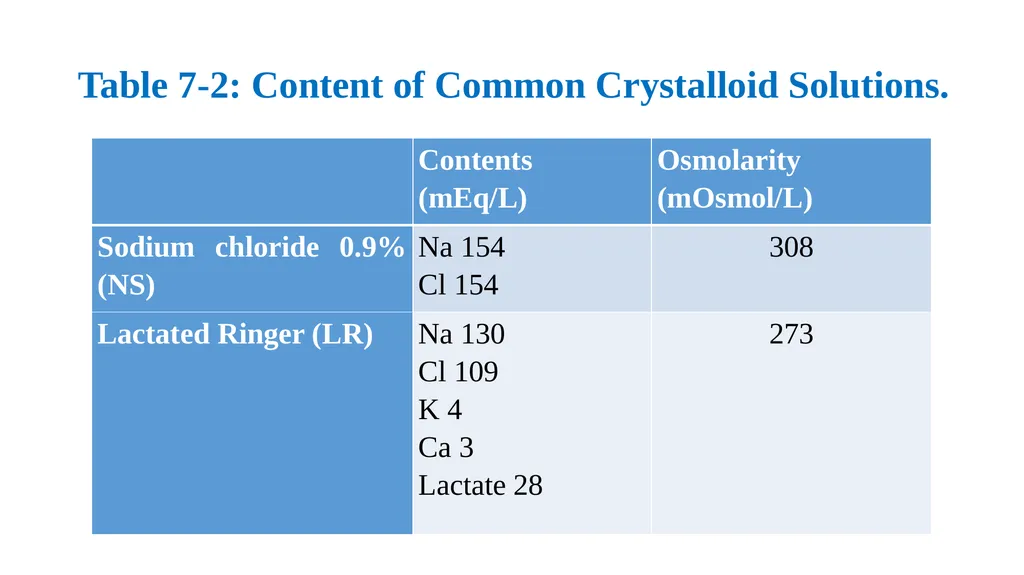
Table 7-2: Content of Common Crystalloid Solutions.<br>
05
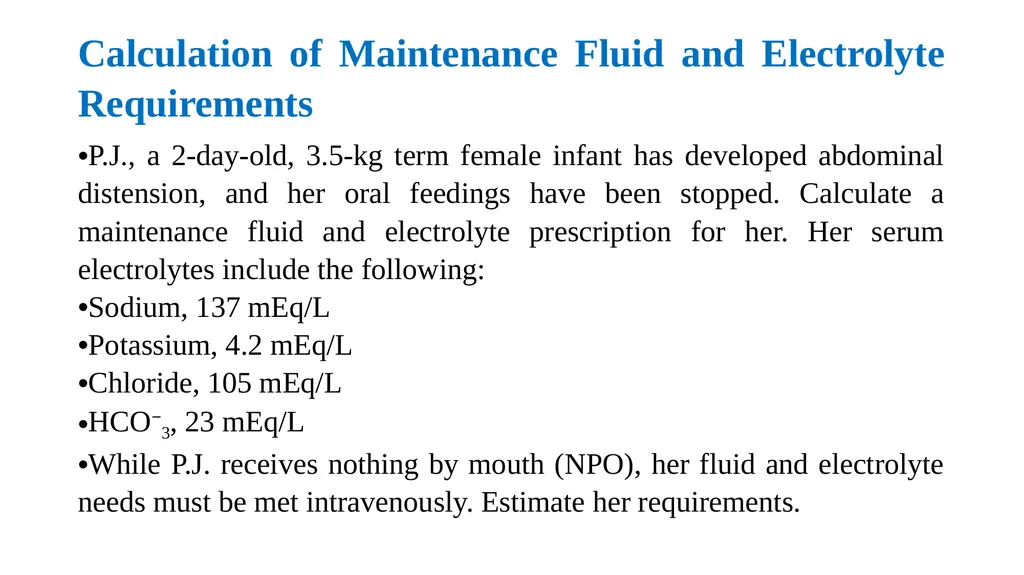
Calculation of Maintenance Fluid and Electrolyte Requirements P.J., a 2-day-old, 3.5-kg term female infant has developed abdominal distension, and her oral feedings have been stopped. Calculate a maintenance fluid and electrolyte prescription for her. Her serum electrolytes include the following:
Sodium, 137 mEq/L
Potassium, 4.2 mEq/L
Chloride, 105 mEq/L
HCO−3, 23 mEq/L
While P.J. receives nothing by mouth (NPO), her fluid and electrolyte needs must be met intravenously. Estimate her requirements.<br>
06
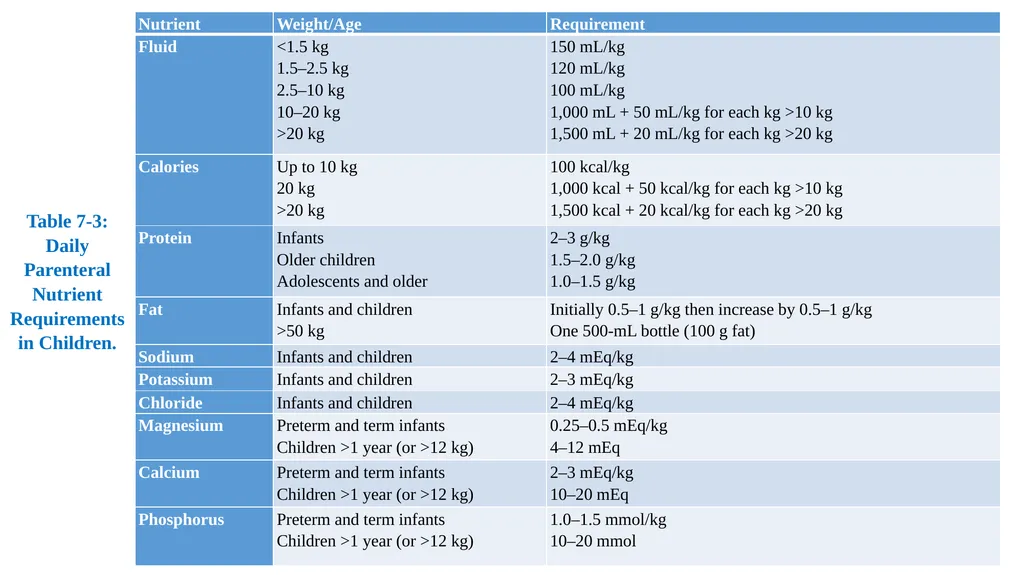
Calculation of Maintenance Fluid and Electrolyte Requirements Fluid, electrolyte, and nutrient requirements on the basis of weight are provided in Table 7-1. Although a commercially available intravenous solution will be used, each component of the solution can be calculated separately. Using the guidelines in Table 7-3, P.J.’s maintenance requirements can be estimated as follows:
Fluid 100 mL/kg/day × 3.5 kg = 350 mL/day or 15 mL/hour
Sodium 2–4 mEq/kg/day × 3.5 kg = 7–14 mEq/day
Potassium 2–3 mEq/kg/day × 3.5 kg = 7–10.5 mEq/day<br>
07
Calculation of Maintenance Fluid and Electrolyte Requirements Fluid and electrolyte requirements can be met by infusing a solution of 5% dextrose with one-quarter NS (38 mEq/L) and 20 mEq/L of KCl at 15 mL/hour. This provides 12 mEq (3.4 mEq/ kg/day) of NaCl and 7 mEq (2 mEq/kg/day) of KCl in 360 mL (103 mL/kg/day) of fluid per day.<br>
08
Table 7-3: Daily Parenteral Nutrient Requirements in Children.<br>
09
Dehydration H.S. is a 2-year-old lethargic girl with a 2-day history of vomiting and minimal oral intake. Yesterday, she required only three diaper changes instead of her usual eight and has needed only one change today. Her vital signs are as follows:
Temperature, 39°C
Pulse, 140 beats/minute (normal, 80–130 beats/minute)
Respiratory rate, 30 breaths/minute (normal, 30–35 breaths/minute)
Blood pressure (BP), 80/45 mm Hg (normal, 80–115 mm Hg systolic and 50–80 mm Hg diastolic)
On physical examination, her eyes appear sunken, her mucous membranes are dry, and her skin is dry and cool to touch. Although she is crying, there are no tears, and the skin over her sternum tents when pinched. Her weight today is 11.4 kg; 3 weeks ago, it was 12.9 kg. What do these findings represent? What immediate treatment should be provided?<br>
10
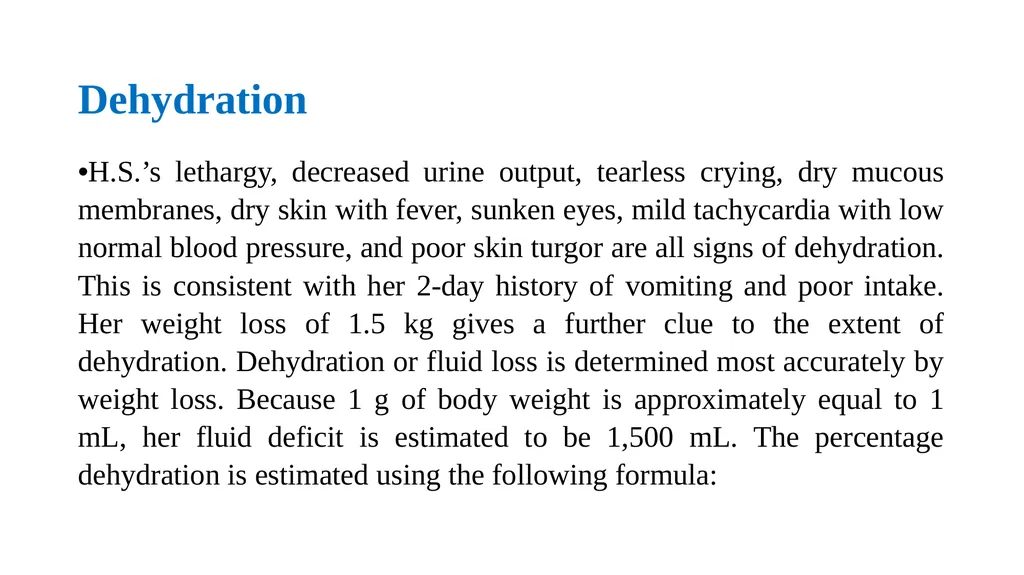
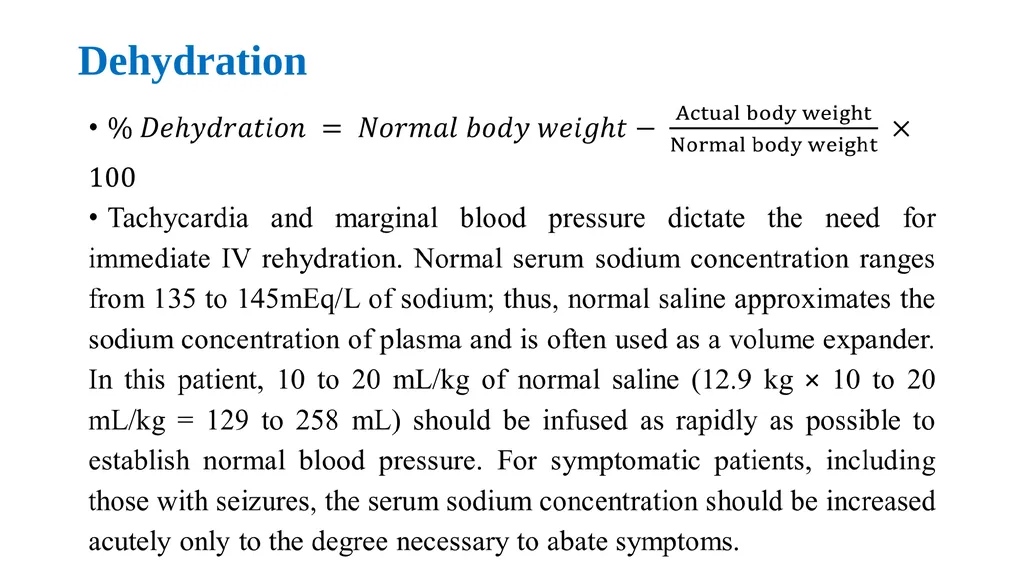
Dehydration H.S.’s lethargy, decreased urine output, tearless crying, dry mucous membranes, dry skin with fever, sunken eyes, mild tachycardia with low normal blood pressure, and poor skin turgor are all signs of dehydration. This is consistent with her 2-day history of vomiting and poor intake. Her weight loss of 1.5 kg gives a further clue to the extent of dehydration. Dehydration or fluid loss is determined most accurately by weight loss. Because 1 g of body weight is approximately equal to 1 mL, her fluid deficit is estimated to be 1,500 mL. The percentage dehydration is estimated using the following formula:<br>
12
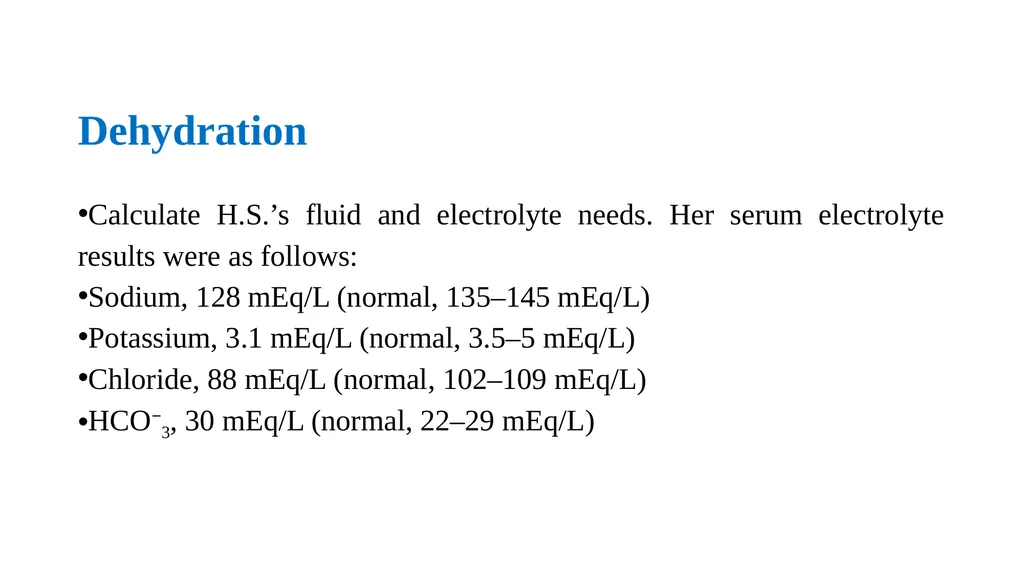
Dehydration Calculate H.S.’s fluid and electrolyte needs. Her serum electrolyte results were as follows:
Sodium, 128 mEq/L (normal, 135–145 mEq/L)
Potassium, 3.1 mEq/L (normal, 3.5–5 mEq/L)
Chloride, 88 mEq/L (normal, 102–109 mEq/L)
HCO−3, 30 mEq/L (normal, 22–29 mEq/L)<br>
13
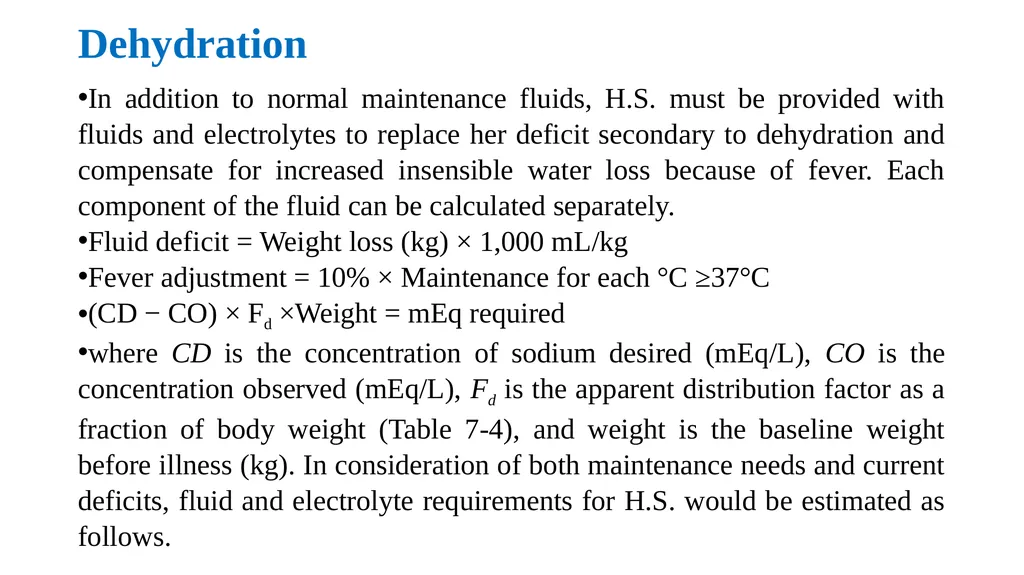
Dehydration In addition to normal maintenance fluids, H.S. must be provided with fluids and electrolytes to replace her deficit secondary to dehydration and compensate for increased insensible water loss because of fever. Each component of the fluid can be calculated separately.
Fluid deficit = Weight loss (kg) × 1,000 mL/kg
Fever adjustment = 10% × Maintenance for each °C ≥37°C
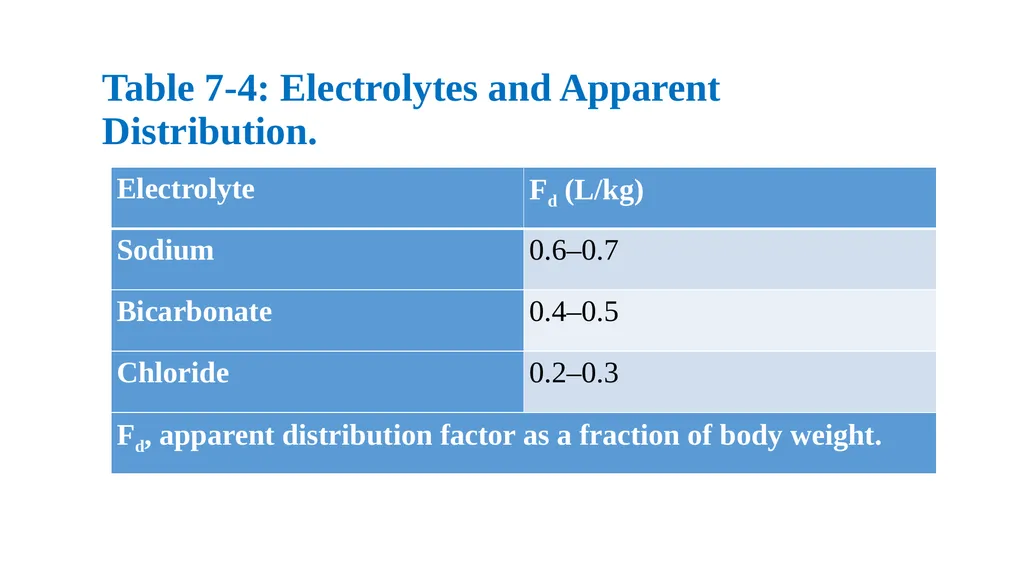
(CD − CO) × Fd ×Weight = mEq required
where CD is the concentration of sodium desired (mEq/L), CO is the concentration observed (mEq/L), Fd is the apparent distribution factor as a fraction of body weight (Table 7-4), and weight is the baseline weight before illness (kg). In consideration of both maintenance needs and current deficits, fluid and electrolyte requirements for H.S. would be estimated as follows.<br>
14
Table 7-4: Electrolytes and Apparent Distribution.<br>
15
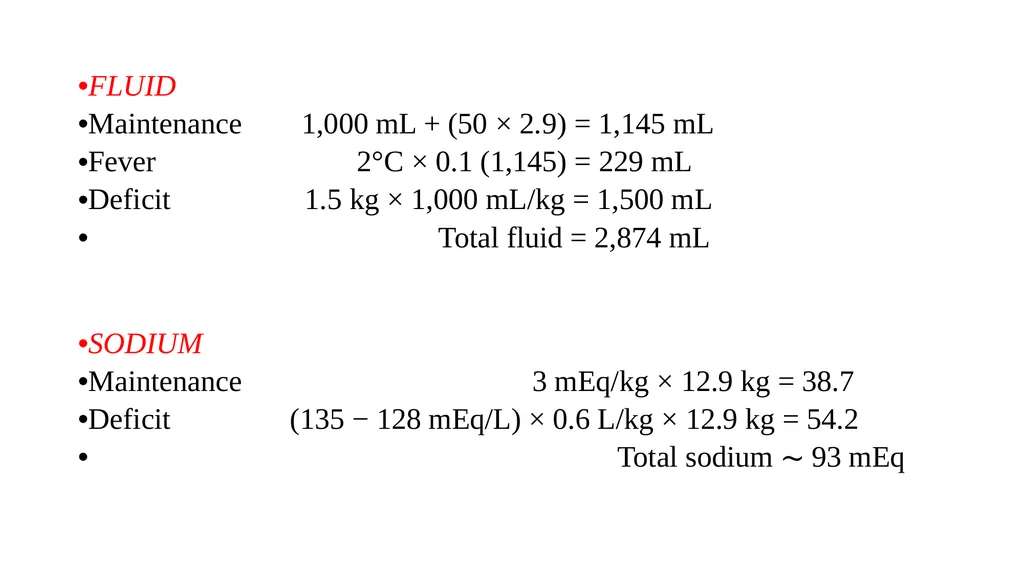
FLUID
Maintenance 1,000 mL + (50 × 2.9) = 1,145 mL
Fever 2°C × 0.1 (1,145) = 229 mL
Deficit 1.5 kg × 1,000 mL/kg = 1,500 mL
Total fluid = 2,874 mL
SODIUM
Maintenance 3 mEq/kg × 12.9 kg = 38.7
Deficit (135 − 128 mEq/L) × 0.6 L/kg × 12.9 kg = 54.2
Total sodium ∼ 93 mEq<br>
16
CHLORIDE
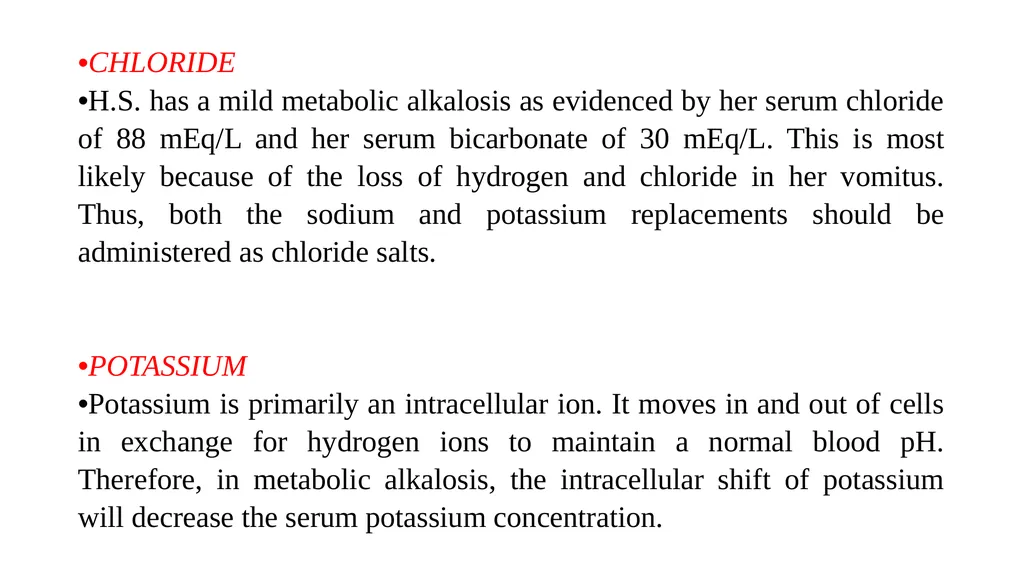
H.S. has a mild metabolic alkalosis as evidenced by her serum chloride of 88 mEq/L and her serum bicarbonate of 30 mEq/L. This is most likely because of the loss of hydrogen and chloride in her vomitus. Thus, both the sodium and potassium replacements should be administered as chloride salts.
POTASSIUM
Potassium is primarily an intracellular ion. It moves in and out of cells in exchange for hydrogen ions to maintain a normal blood pH. Therefore, in metabolic alkalosis, the intracellular shift of potassium will decrease the serum potassium concentration.<br>
17
POTASSIUM
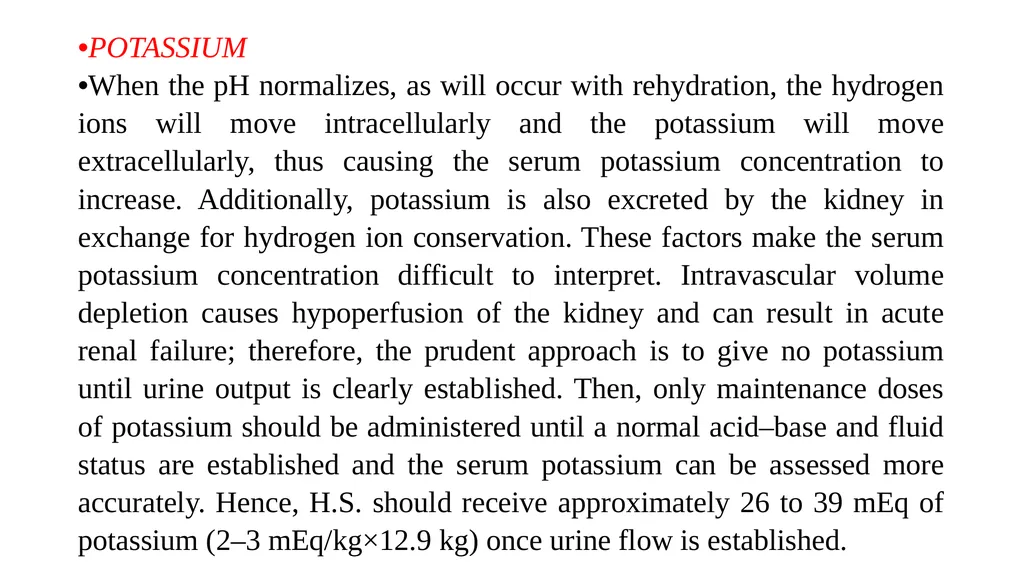
When the pH normalizes, as will occur with rehydration, the hydrogen ions will move intracellularly and the potassium will move extracellularly, thus causing the serum potassium concentration to increase. Additionally, potassium is also excreted by the kidney in exchange for hydrogen ion conservation. These factors make the serum potassium concentration difficult to interpret. Intravascular volume depletion causes hypoperfusion of the kidney and can result in acute renal failure; therefore, the prudent approach is to give no potassium until urine output is clearly established. Then, only maintenance doses of potassium should be administered until a normal acid–base and fluid status are established and the serum potassium can be assessed more accurately. Hence, H.S. should receive approximately 26 to 39 mEq of potassium (2–3 mEq/kg×12.9 kg) once urine flow is established.<br>
18
Administration of Fluid Requirements How should these calculated needs be given?
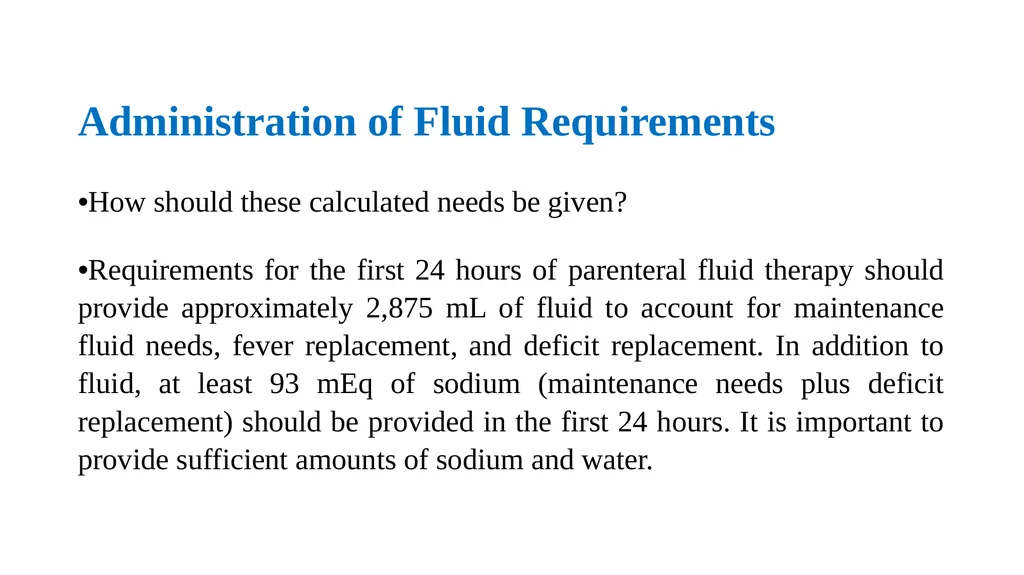
Requirements for the first 24 hours of parenteral fluid therapy should provide approximately 2,875 mL of fluid to account for maintenance fluid needs, fever replacement, and deficit replacement. In addition to fluid, at least 93 mEq of sodium (maintenance needs plus deficit replacement) should be provided in the first 24 hours. It is important to provide sufficient amounts of sodium and water.<br>
19
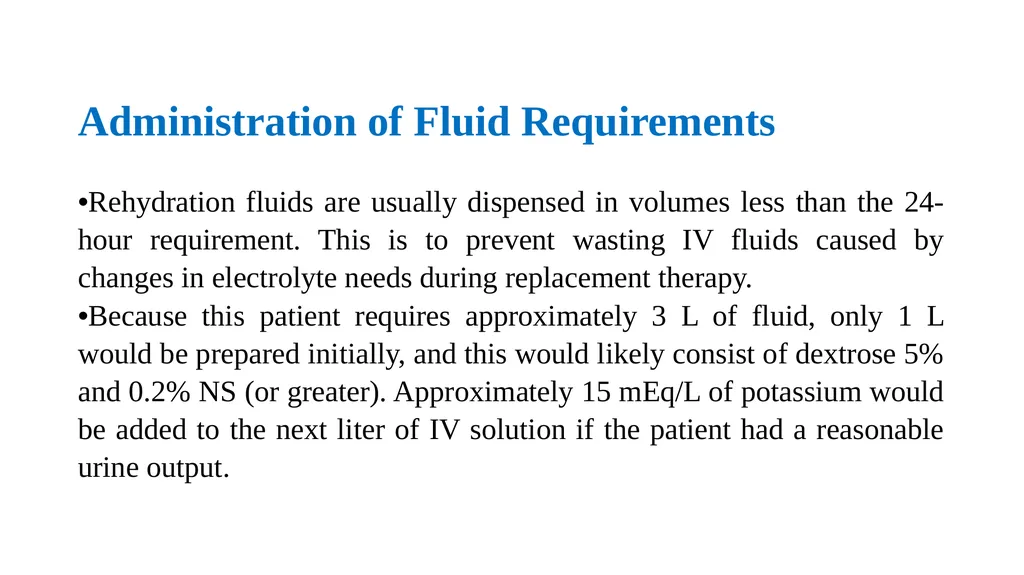
Administration of Fluid Requirements Rehydration fluids are usually dispensed in volumes less than the 24-hour requirement. This is to prevent wasting IV fluids caused by changes in electrolyte needs during replacement therapy.
Because this patient requires approximately 3 L of fluid, only 1 L would be prepared initially, and this would likely consist of dextrose 5% and 0.2% NS (or greater). Approximately 15 mEq/L of potassium would be added to the next liter of IV solution if the patient had a reasonable urine output.<br>
20
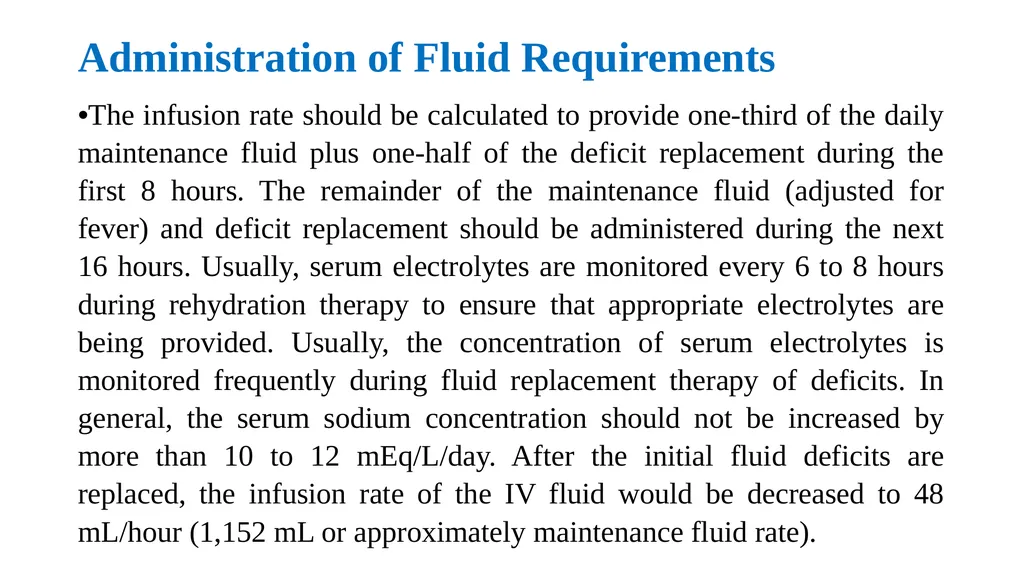
Administration of Fluid Requirements The infusion rate should be calculated to provide one-third of the daily maintenance fluid plus one-half of the deficit replacement during the first 8 hours. The remainder of the maintenance fluid (adjusted for fever) and deficit replacement should be administered during the next 16 hours. Usually, serum electrolytes are monitored every 6 to 8 hours during rehydration therapy to ensure that appropriate electrolytes are being provided. Usually, the concentration of serum electrolytes is monitored frequently during fluid replacement therapy of deficits. In general, the serum sodium concentration should not be increased by more than 10 to 12 mEq/L/day. After the initial fluid deficits are replaced, the infusion rate of the IV fluid would be decreased to 48 mL/hour (1,152 mL or approximately maintenance fluid rate).<br>