Peer Support Think about a time when you were included in a community or group. How did it make you feel? were excluded from a community or group. How did it make you feel? Connectedness Divide this pie into pieces to represent what peer
"Peer Support Think about a time when you… were" is the property of its rightful owner. Permission is granted to
download and print the materials on this website for personal, non-commercial use only, and to display it
on your personal computer provided you do not modify the materials and that you retain all copyright
notices contained in the materials. By downloading content from our website, you accept the terms of this
agreement.
Presentation Transcript
01
Peer Support<br>
02
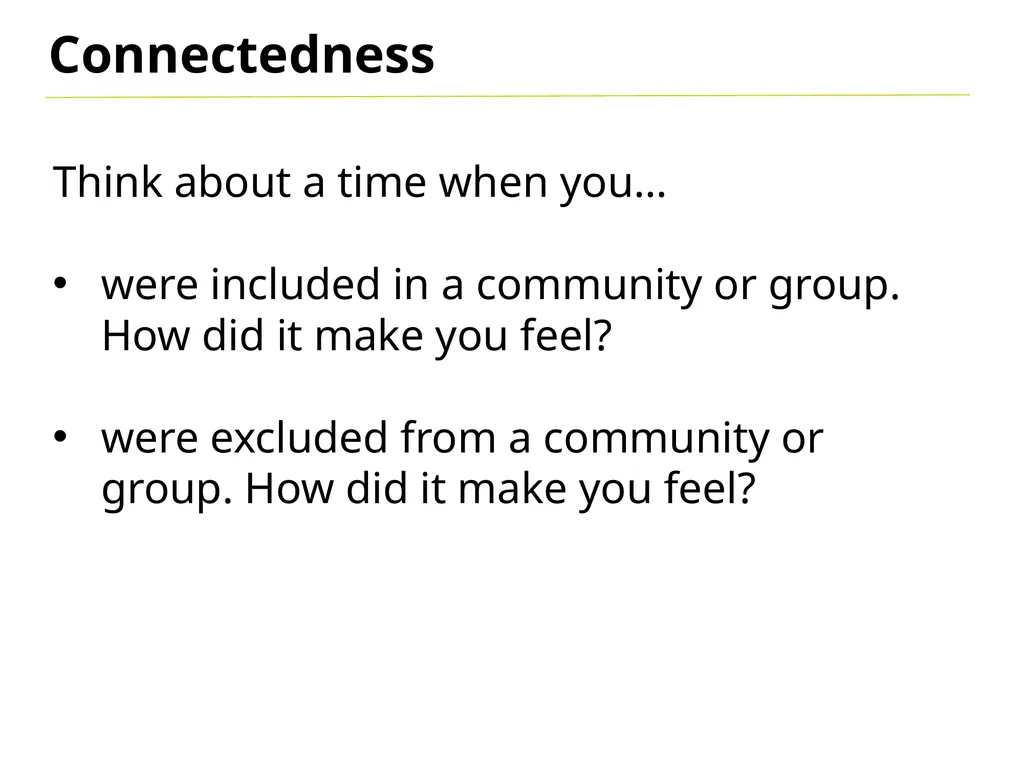
Think about a time when you…
were included in a community or group. How did it make you feel?
were excluded from a community or group. How did it make you feel? Connectedness<br>
03
Divide this pie into pieces to represent what peer support means to you. Peer Support pie chart<br>
04
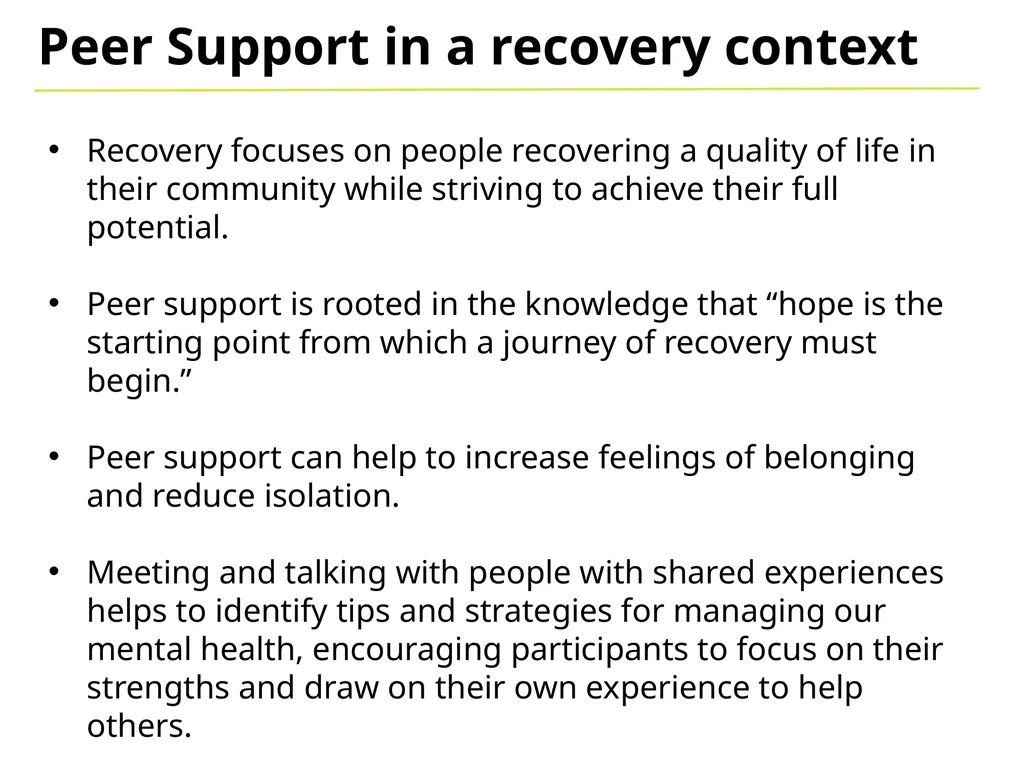
Peer Support in a recovery context Recovery focuses on people recovering a quality of life in their community while striving to achieve their full potential.
Peer support is rooted in the knowledge that “hope is the starting point from which a journey of recovery must begin.”
Peer support can help to increase feelings of belonging and reduce isolation.
Meeting and talking with people with shared experiences helps to identify tips and strategies for managing our mental health, encouraging participants to focus on their strengths and draw on their own experience to help others.<br>
05
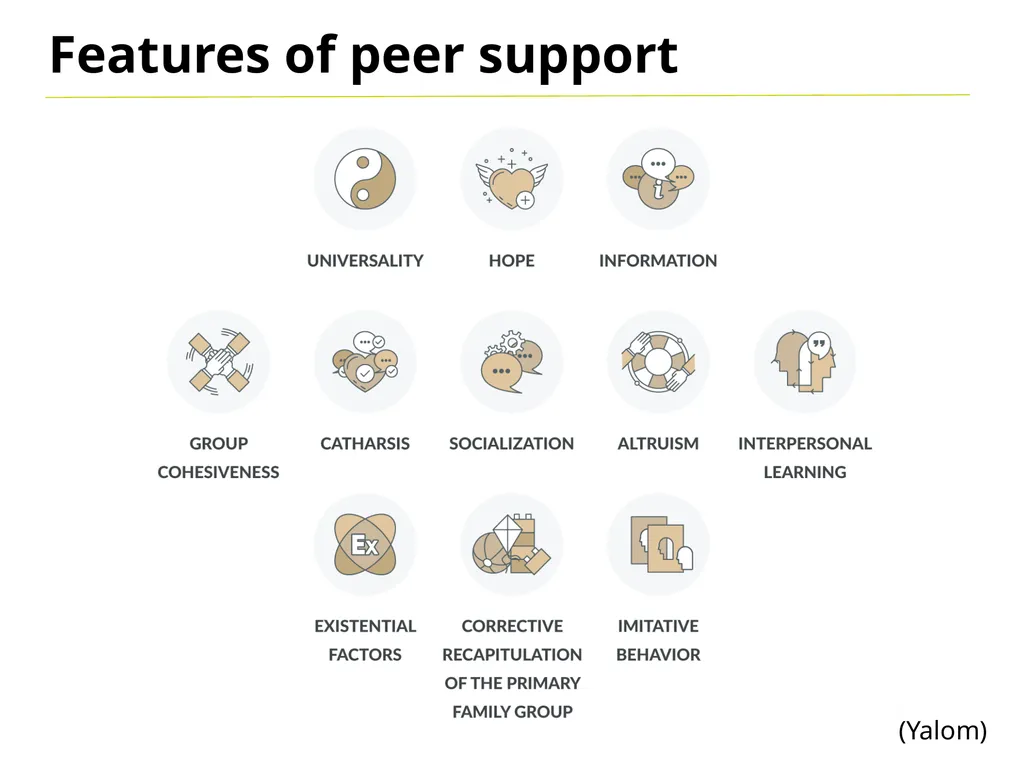
Features of peer support (Yalom)<br>
06
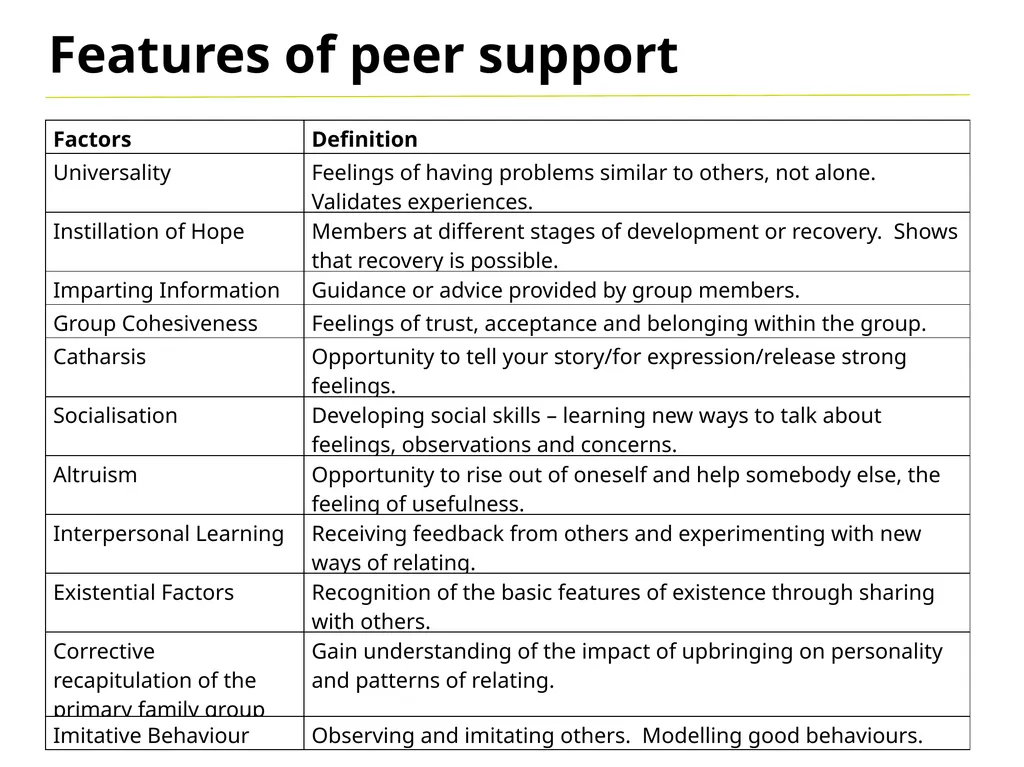
Features of peer support<br>
07
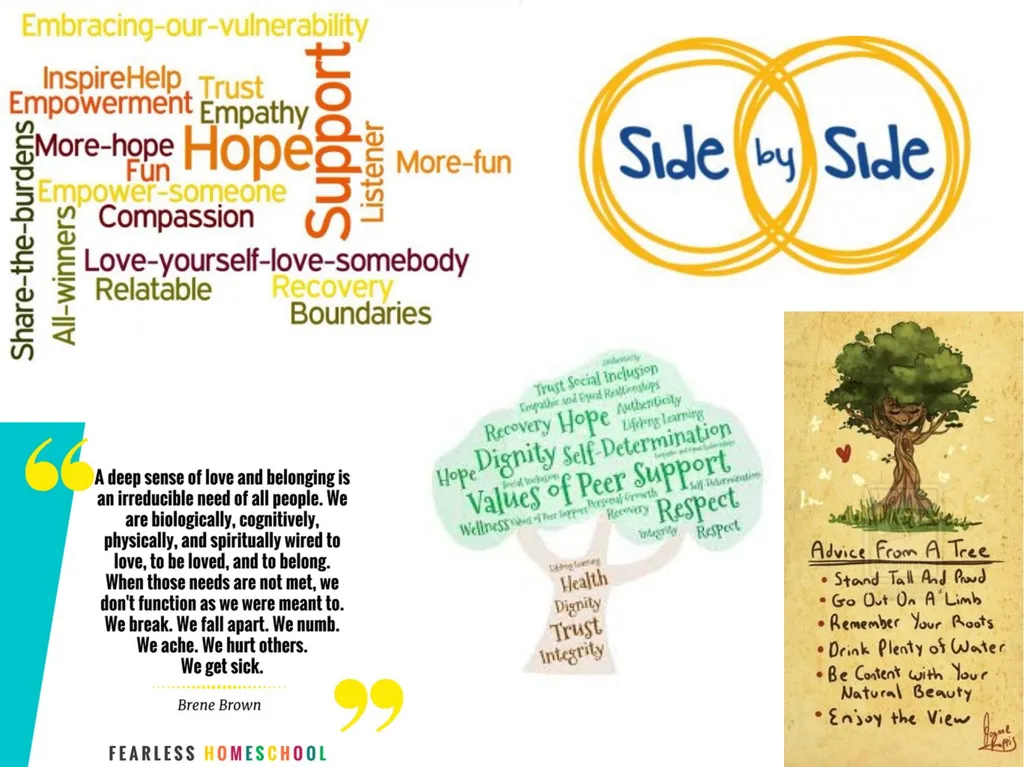
Benefits of peer support Meeting with people who speak your language
Learning from people who have been where you are
Sharing your experiences with others
Learning about yourself
No judgement
Boosting self-esteem/self-worth
Social skills
Hope and support
Sense of humour
Cooperation
Helping yourself by helping others<br>
08
Belonging is a natural human need.
It relies on both conformity and individuality.
Through belonging we develop new understandings of ourselves and the world around us.
Our sense of identity is stronger when we belong. Belonging<br>
09
Consider the following questions:
What does it mean to belong?
What is community?
In what communities do you have membership? Belonging<br>
10
A bit about “Connection” and “Belonging” from Brene Brown’s book The Gift of
Imperfection. One of the major themes in Brene’s work revolves around the difference between “Belonging” versus “Fitting In”. Often mistaken as synonyms, these two terms have very different meanings, as well as very different impacts on your life.
Fitting in is about assessing a situation and becoming who you need to be to be accepted. For example, think of a chameleon.
Belonging, on the other hand, doesn’t require us to CHANGE who we are. It requires us to BE who we are. Belonging is the innate human desire to have close, caring and intimate relationships with other people and to be part of something larger than us.
Because this yearning is so primal, we often try to acquire it by fitting in and by seeking approval. These strategies are not only hollow substitutes for belonging, but often barriers to it. Because true belonging only happens when we present our authentic, imperfect selves to the world, our sense of belonging can never be greater than our own level of self-acceptance; imperfections, flaws and all. Belonging vs Fitting in<br>
11
Attention
Acceptance
Appreciation
Affection
Allowing The 5 A’s<br>
12
Attention from others leads to self-respect. Acceptance engenders a sense of being inherently a good person. Appreciation generates a sense of self-worth. Affection makes us feel lovable. Allowing gives us the freedom to pursue our own deepest needs, values, and wishes. The 5 A’s<br>
13
Consider the following questions:
What have you learned about yourself and your recovery that could inspire others working on their recovery if you share the information?
What types of support have you developed and used?
How could you communicate your recovery story to others? Lived Experience<br>