04
Objectives-Performance Appraisal To effect promotions based on competence and performance
To confirm the services of probationary employees upon their completing the probationary period satisfactorily
To assess the training and development needs of employees
To decide upon a pay raise where (as in the unorganised sector) regular pay scales have not been fixed
To let the employees know where they stand insofar as their performance is concerned
To improve communication
Can be used to determine whether HR programmes such as selection, training, and transfers have been effective or not<br>
05
Purpose- Performance Appraisal Developmental uses
Administrative uses/ Decisions
Organisational Maintenance
Documentation<br>
06
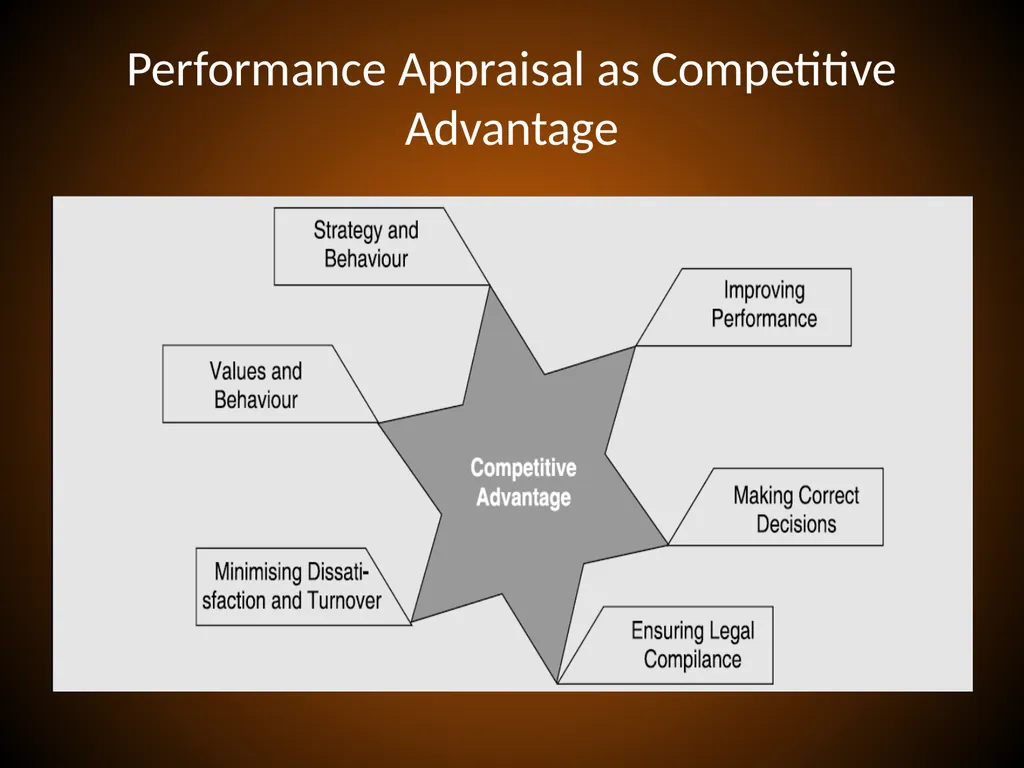
Performance Appraisal as Competitive Advantage<br>
07
Principles of Performance Management Corporate goals are translated into individual, team, departmental and divisional goals
It should not be linked with only financial rewards
Performance improvement is an ongoing process and improves over time
Consensus and co-operation needed, not control and coercion
Transparency is needed at every stage
Continuous feedback is essential
It should cover all employees
It is a system and not a piece of work
Make it simple and easy
Involvement of all stakeholders in designing formats, policies and procedures is needed<br>
09
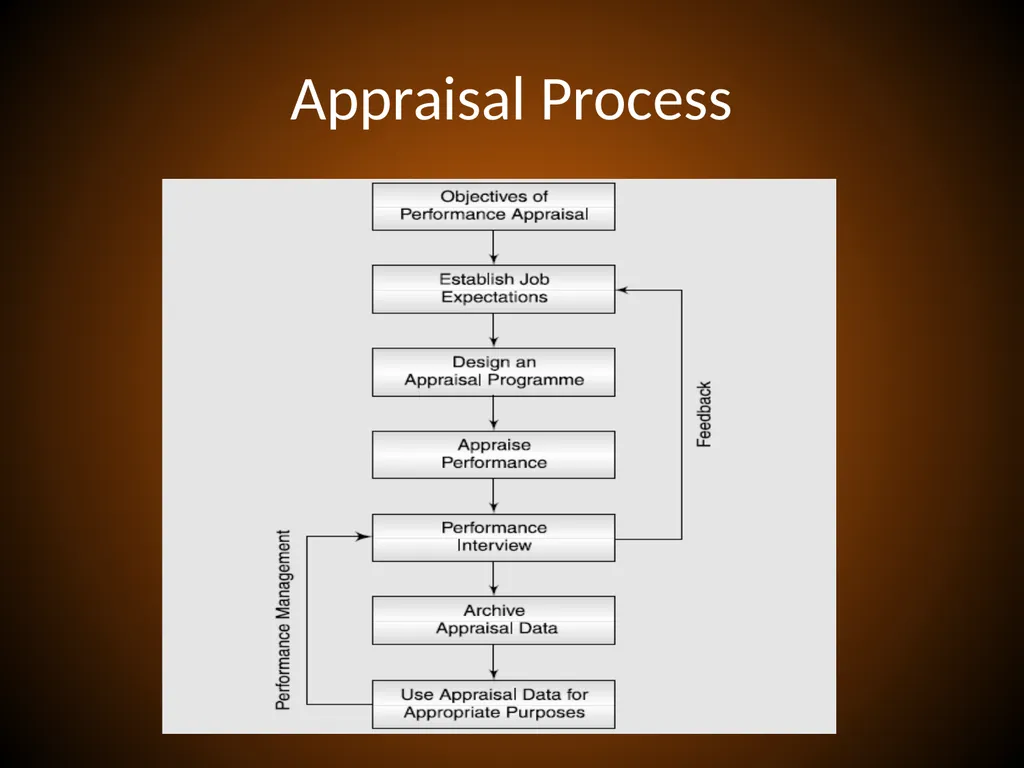
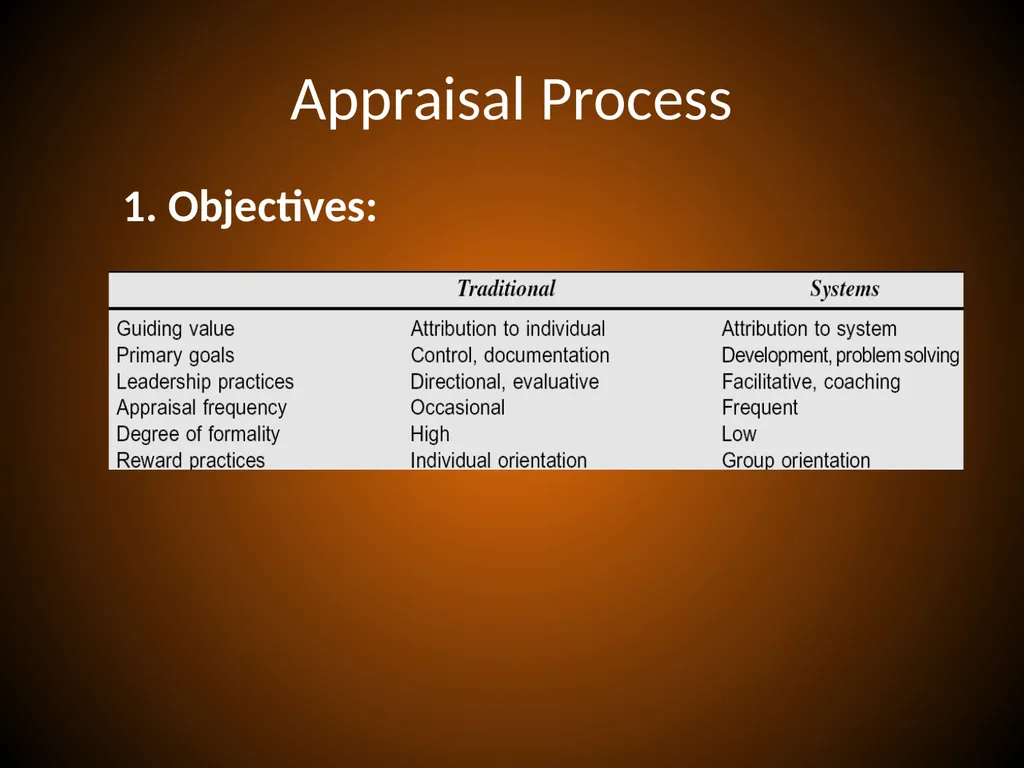
Appraisal Process 1. Objectives:<br>
10
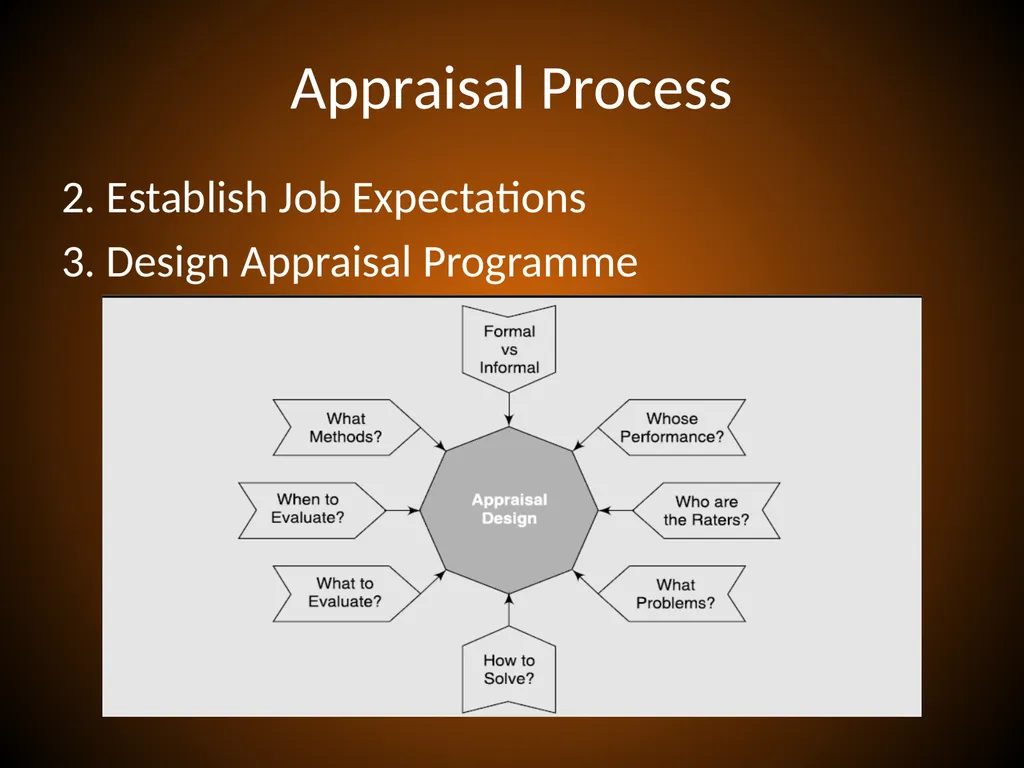
Appraisal Process 2. Establish Job Expectations
3. Design Appraisal Programme<br>
11
Appraisal Process Problems of Rating:
Leniency/Severity
Central Tendency
Halo Effect/ Horn Effect
Primacy/ Recency Effect
Stereotyping/ Perceptual set
Spillover Effect
Status Effect
Other errors- like, error of wishful thinking
Read Exhibit 9.2<br>
12
Appraisal Process Solution to Raters problems:
Factors that help improve accuracy:
The rater has observed and is familiar with behaviours to be appraised
The rater has documented behaviours to improve the recall
The rater has a checklist to obtain and review job-related information
The rater is aware of personal biases and is willing to take action to minimise their effect
Rating scores by raters of one group or organisation are summarised and compared with those by other raters
The rater focuses attention on performance-related behaviours over which the rater has better control than in other aspects of evaluation<br>
13
Appraisal Process Factors that help improve accuracy:
Higher levels of management are held accountable for reviewing all ratings
The rater’s own performance ratings are related to the quality of rating given and the performance of units
Performance factors are properly defined
Factors that may lower accuracy:
The rater rates ratees only when administrative actions are contemplated
The rater tends to inflate ratings when the ratees receive scores and results of appraisals
The rater tends to recall more behaviours known to be of particular interest to higher-level managers
The rater is unable to express himself or herself honestly and unambiguously
Appraisal systems, processes and instruments fail to support the rater
The rater is unaware of causes of rating errors
The rater has to rate employees on factors that are poorly defined<br>
14
Appraisal Process What should be rated??
Quality, quantity, timeliness, cost effectiveness, need for supervision, interpersonal impact & community services.
e.g. Mind Tree Consulting- CLASS<br>
15
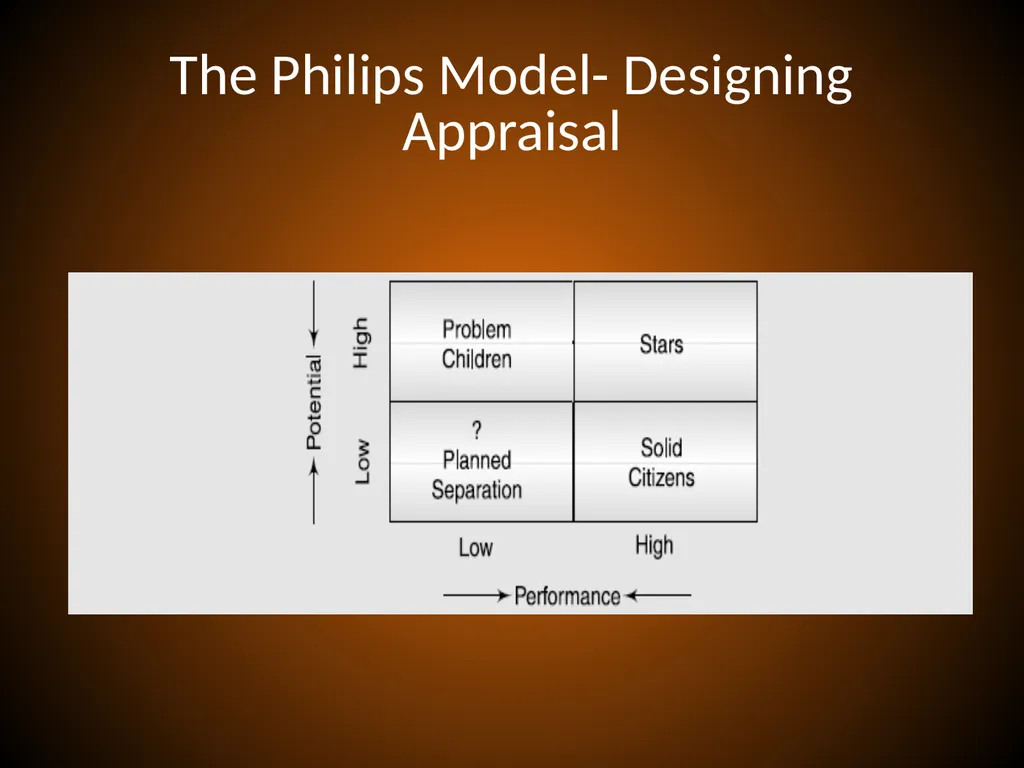
The Philips Model- Designing Appraisal<br>
16
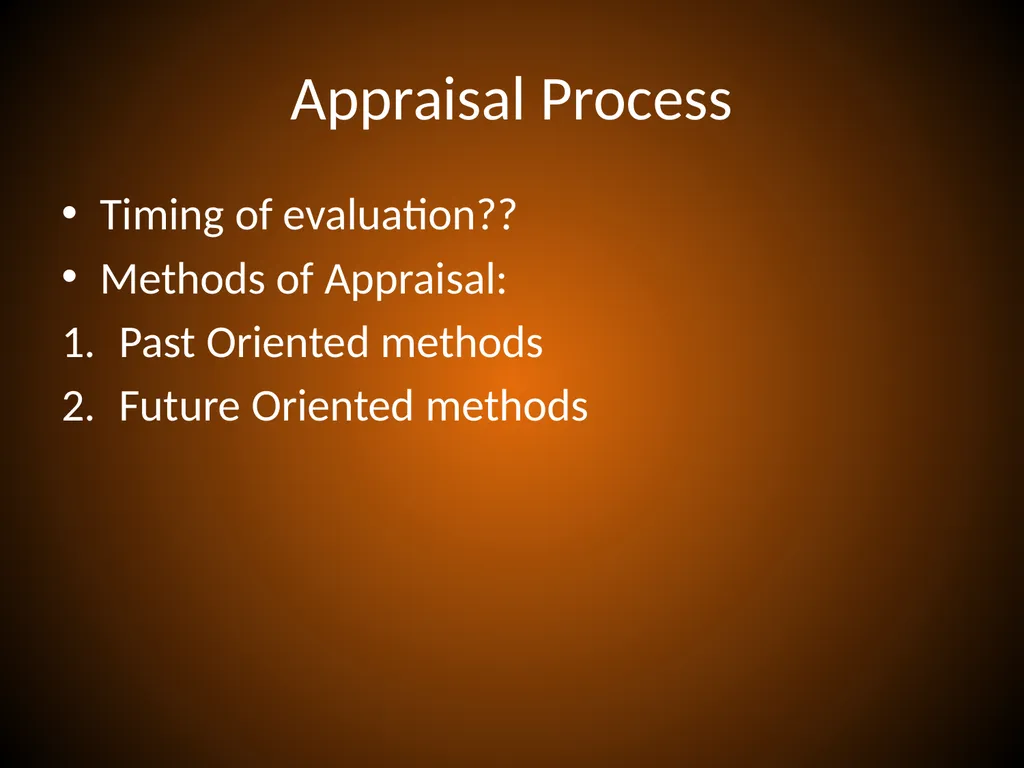
Appraisal Process Timing of evaluation??
Methods of Appraisal:
Past Oriented methods
Future Oriented methods<br>
17
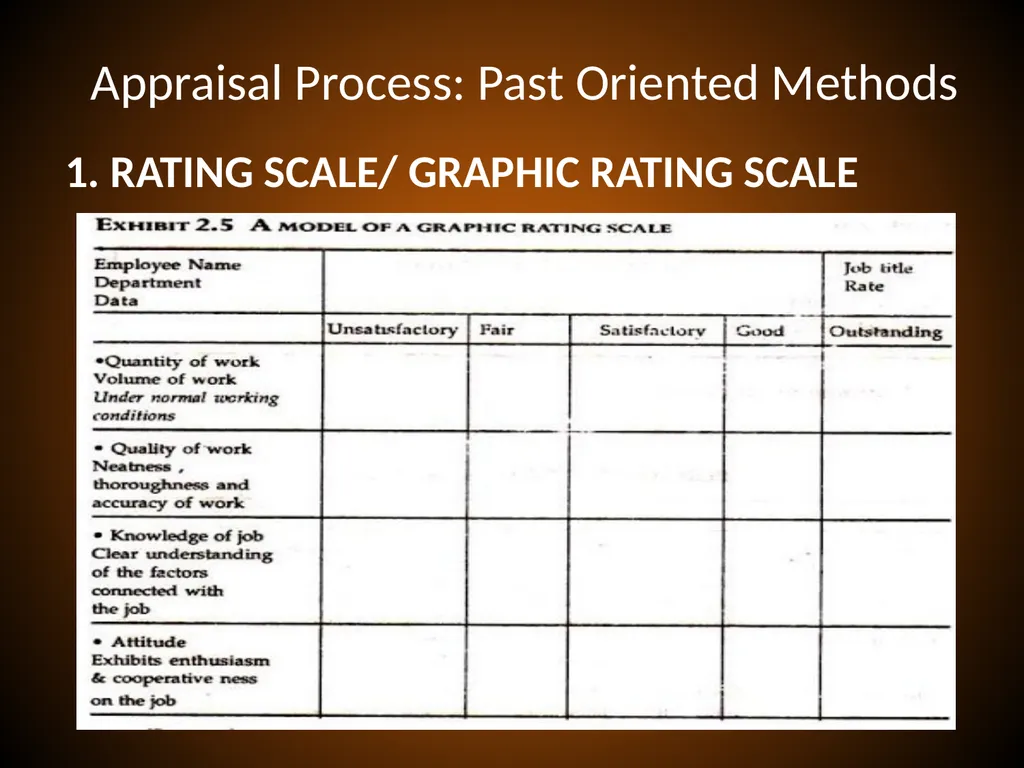
Appraisal Process: Past Oriented Methods 1. RATING SCALE/ GRAPHIC RATING SCALE<br>
18
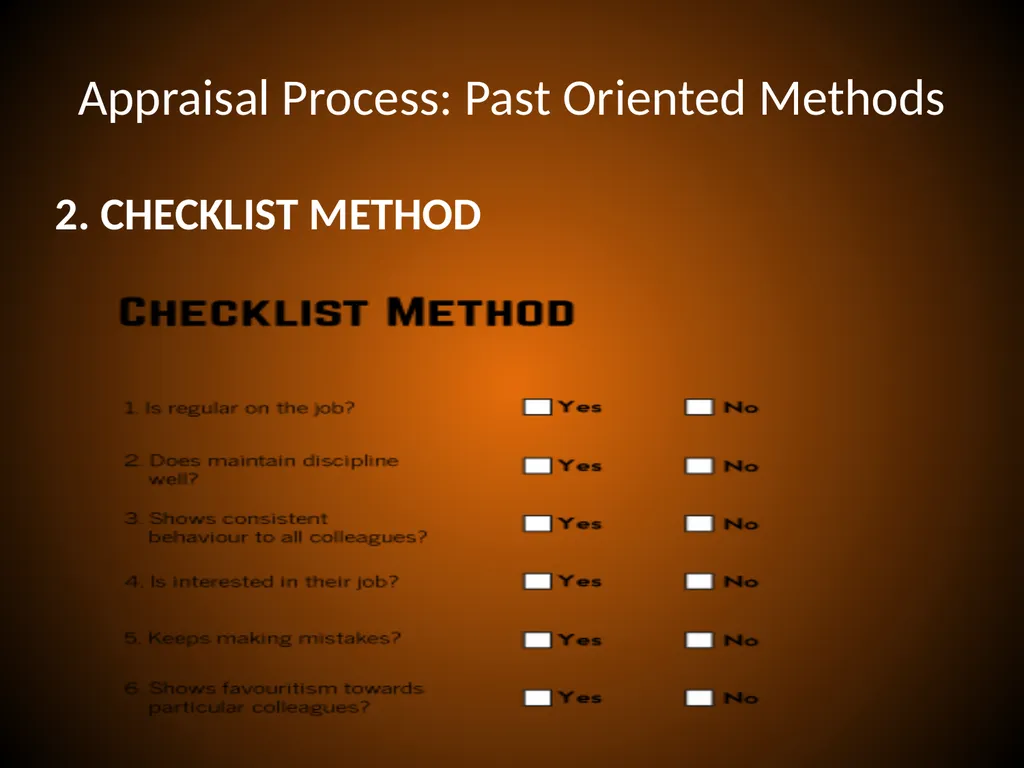
Appraisal Process: Past Oriented Methods 2. CHECKLIST METHOD<br>
19
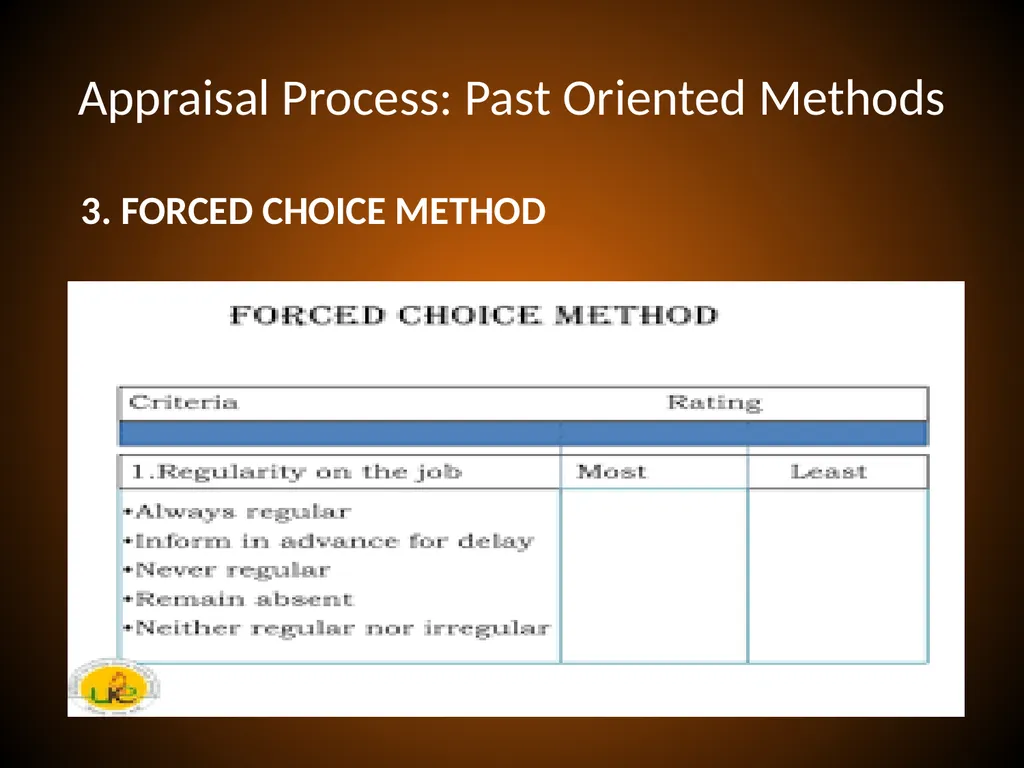
Appraisal Process: Past Oriented Methods 3. FORCED CHOICE METHOD<br>
20
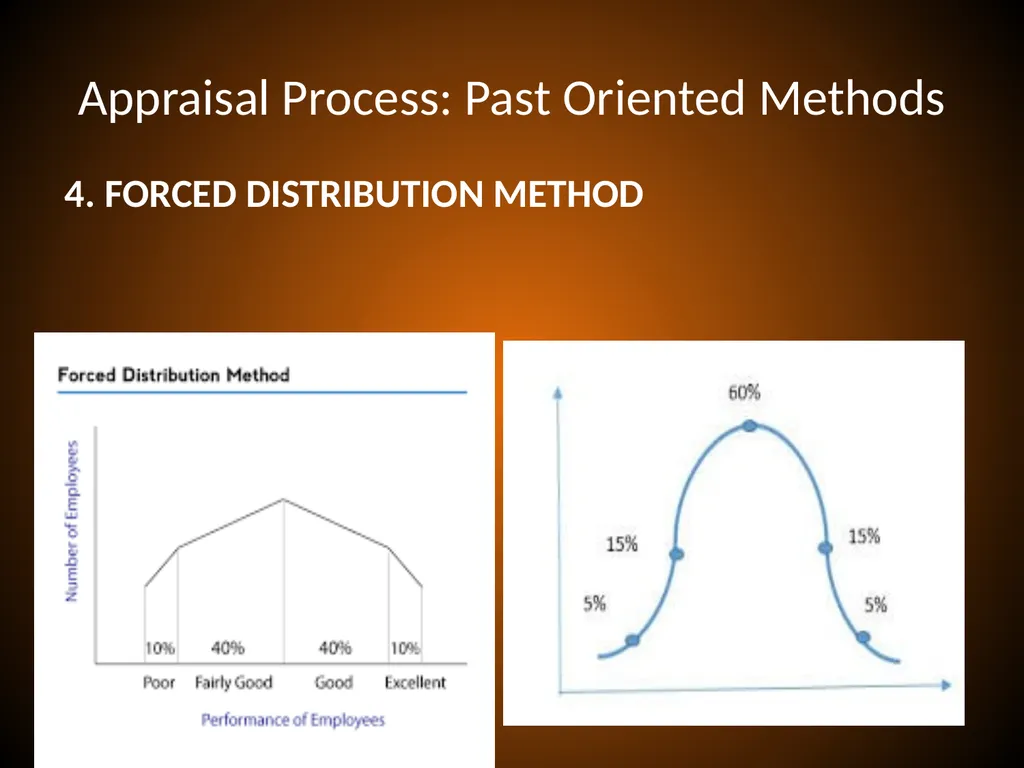
Appraisal Process: Past Oriented Methods 4. FORCED DISTRIBUTION METHOD<br>
21
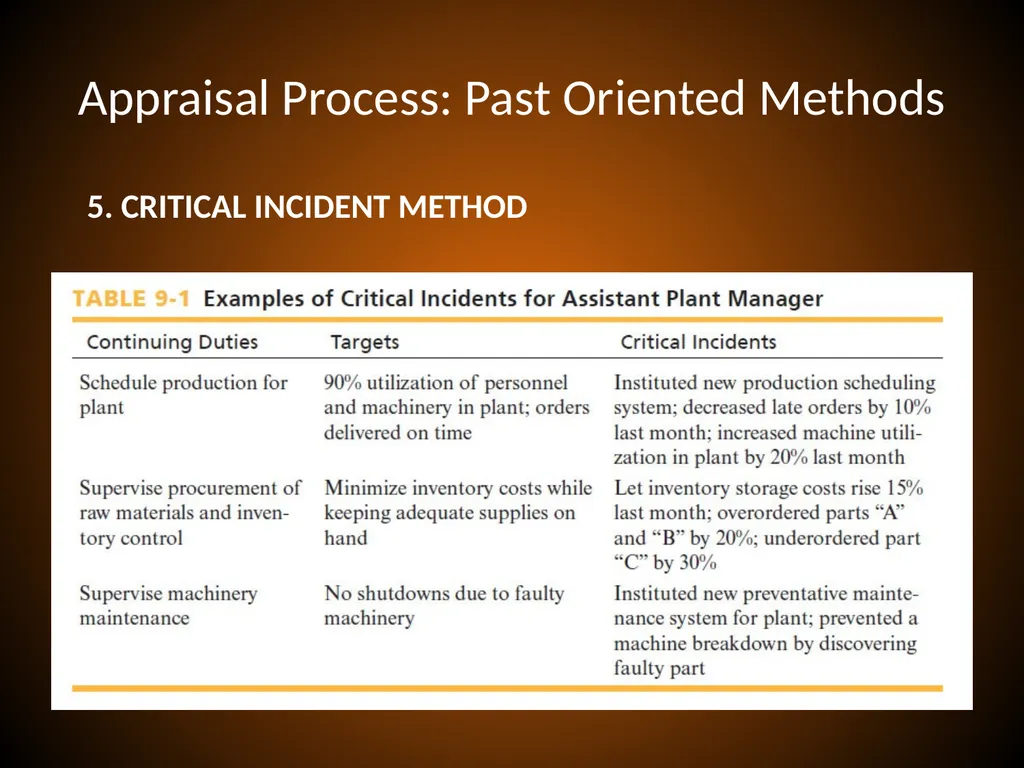
Appraisal Process: Past Oriented Methods 5. CRITICAL INCIDENT METHOD<br>
22
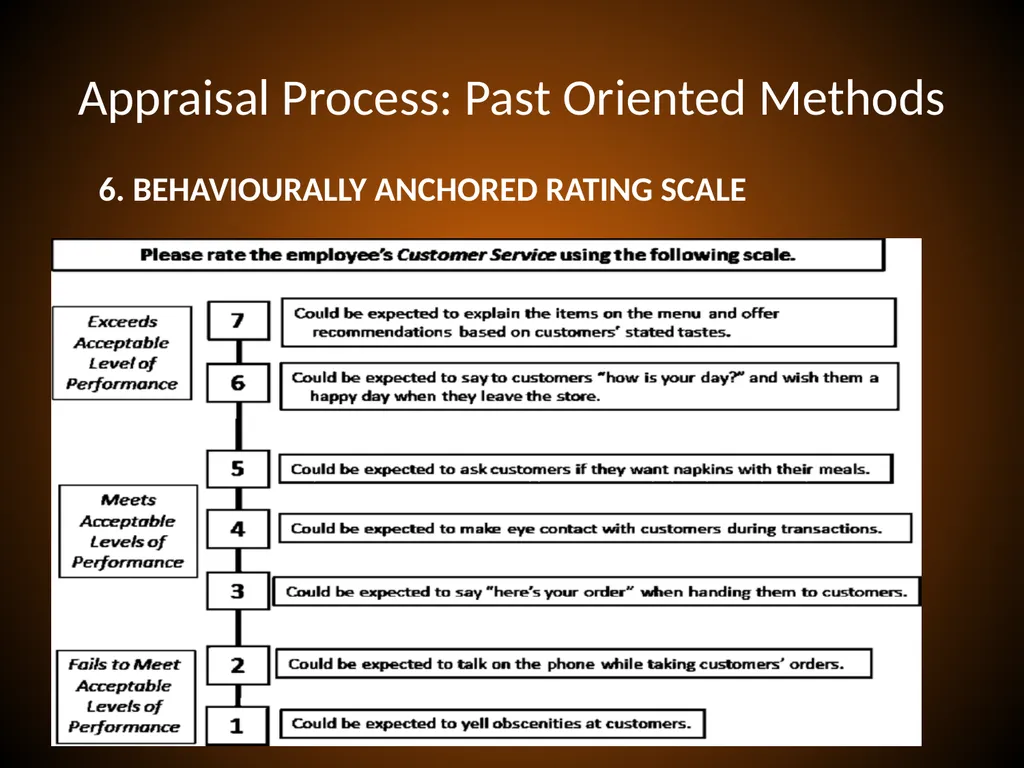
Appraisal Process: Past Oriented Methods 6. BEHAVIOURALLY ANCHORED RATING SCALE<br>
23
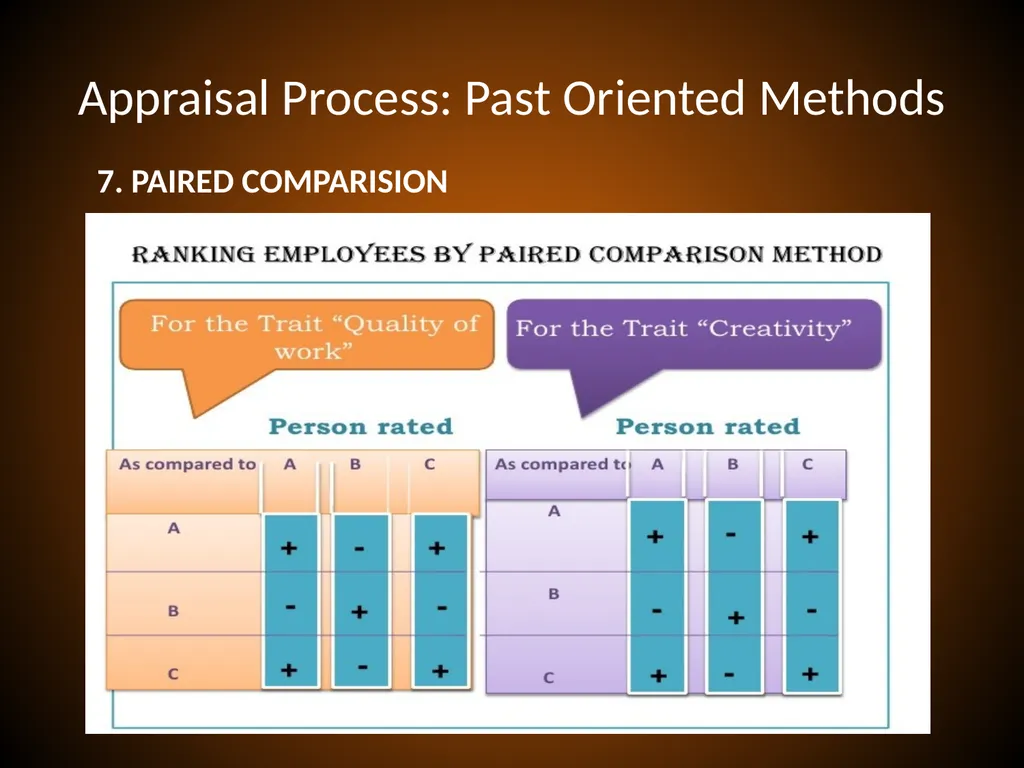
Appraisal Process: Past Oriented Methods 7. PAIRED COMPARISION<br>
24
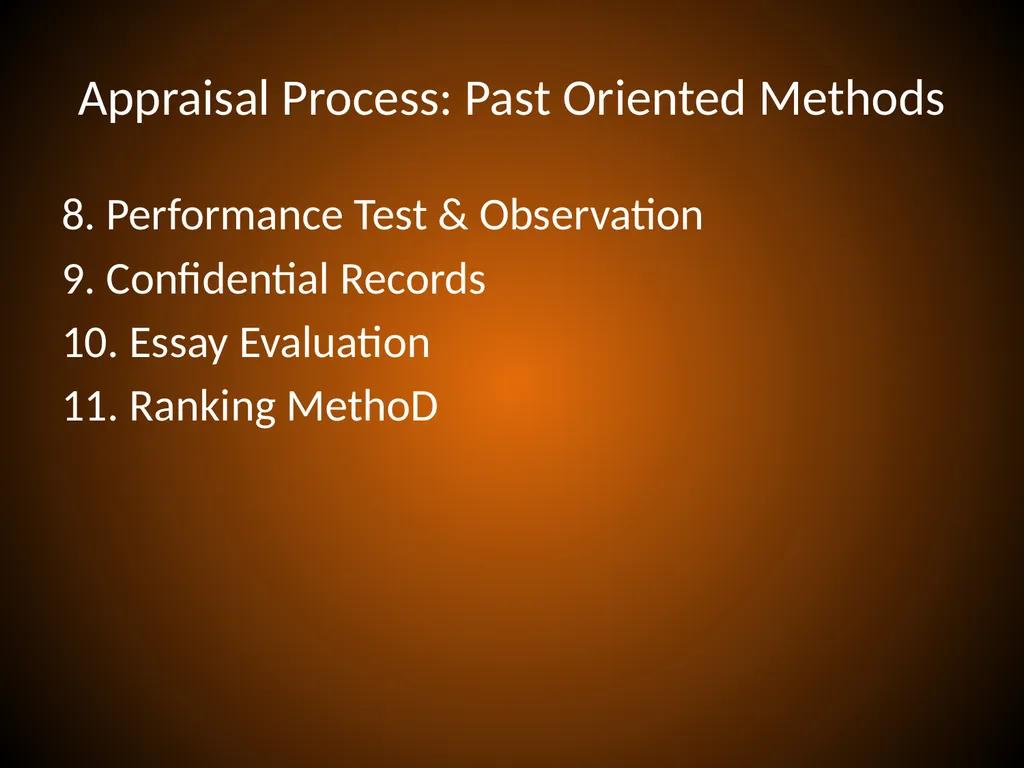
Appraisal Process: Past Oriented Methods 8. Performance Test & Observation
9. Confidential Records
10. Essay Evaluation
11. Ranking MethoD<br>
25
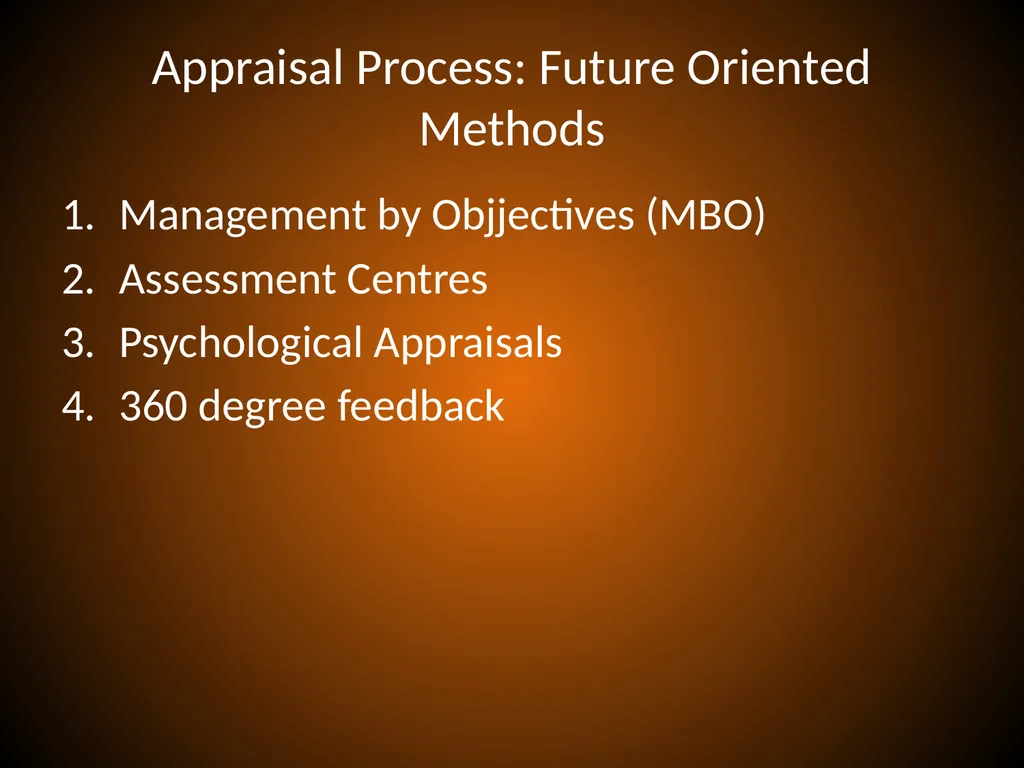
Appraisal Process: Future Oriented Methods Management by Objjectives (MBO)
Assessment Centres
Psychological Appraisals
360 degree feedback<br>
26
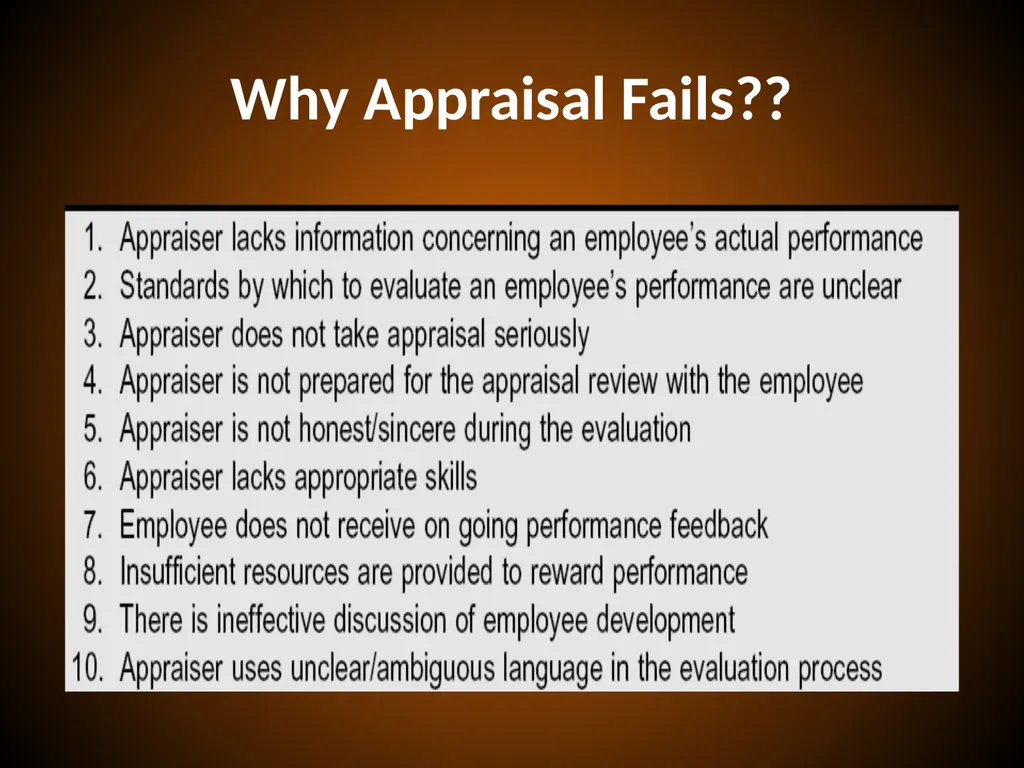
Why Appraisal Fails??<br>
27
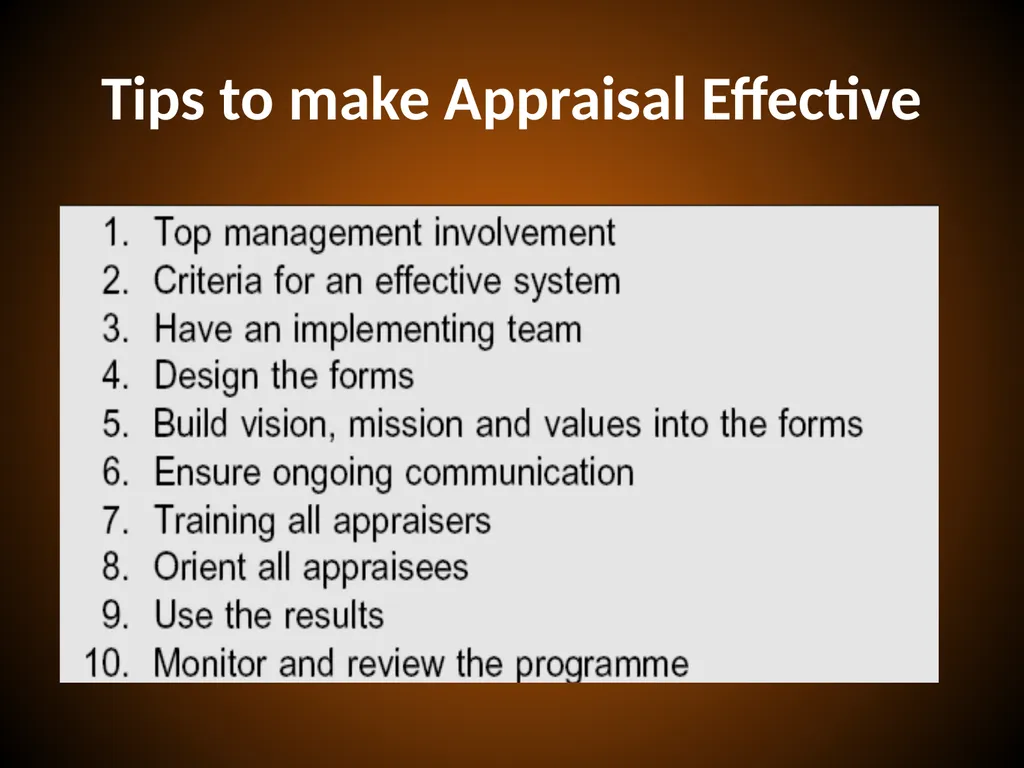
Tips to make Appraisal Effective<br>
28
Performance Management Performance appraisal only gives feedback
More is required in addition to this:
Performance interview
Archiving performance data
Use of appraisal data<br>
29
Performance Management<br>
30
Performance Management- Performance Interview Guidelines for Effective Appraisal Interview
Select a good time
Minimise interruptions
Welcome, set at ease
Start with something positive
Ask open-ended questions to encourage discussion
Listen
Manage eye contact and body language
Be specific
Rate behaviour, not personality
Layout development plan
Encourage subordinate participation
Complete form
Set mutually agreeable goals for improvement
End in a positive, encouraging note
Set time for any follow-up meetings<br>
31
Performance Management- Archiving Performance Data Organisations need to store the appraisal data so that at any point in future the information can be retrieved and used.<br>
32
Performance Management- Use of Appraisal Data In one way or another, data and information outputs of a performance-appraisal programme can critically influence these coveted employer–employee reward opportunities. Specifically, the data and information will be useful in the following areas of HRM:
Remuneration administration
Validation of selection programmes
Employee training and development programmes
Promotion, transfer and lay-off decisions
Grievance and discipline programmes
HR planning<br>