Personal hygiene Why is personal hygiene important? Your hands, hair, face, skin, clothing and jewellery can all be a source of bacteria which can be transferred onto food. This is known as cross-contamination. Good personal hygiene is
"Personal hygiene Why is personal hygiene" is the property of its rightful owner. Permission is granted to
download and print the materials on this website for personal, non-commercial use only, and to display it
on your personal computer provided you do not modify the materials and that you retain all copyright
notices contained in the materials. By downloading content from our website, you accept the terms of this
agreement.
Presentation Transcript
01
Personal hygiene<br>
02
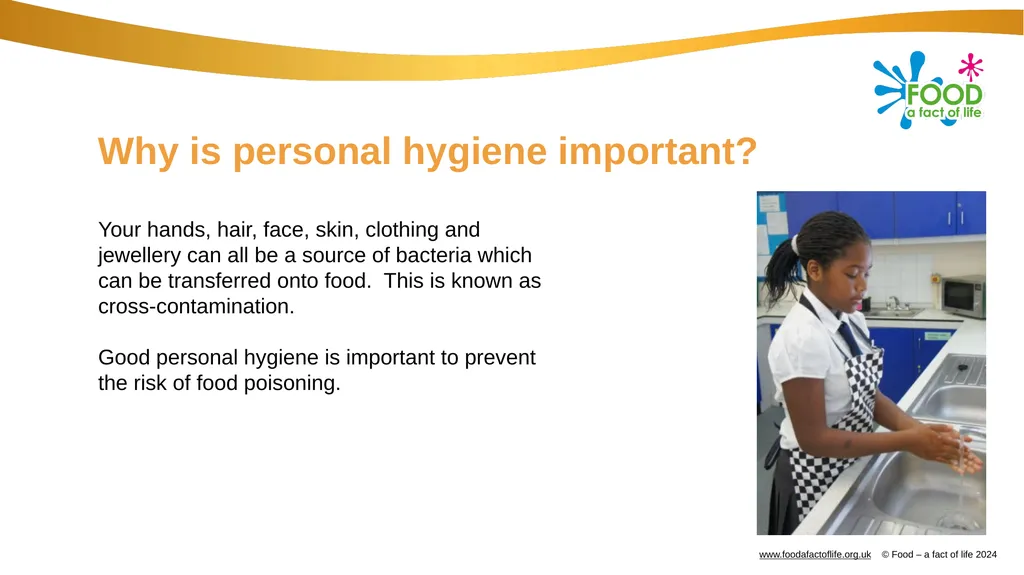
Why is personal hygiene important? Your hands, hair, face, skin, clothing and jewellery can all be a source of bacteria which can be transferred onto food. This is known as cross-contamination.
Good personal hygiene is important to prevent the risk of food poisoning.<br>
03
Getting ready to cook There are a number of steps that need to be taken before you start to cook to reduce the risk of food poisoning:
tie up long hair – bacteria can live on your hair and scalp and can easily be transferred onto food;
wear an apron – your clothes may have dirt, bacteria or hair on them;<br>
04
Getting ready to cook Remove jumpers and roll up long sleeves – jumpers and long sleeves may have dirt or bacteria on them;
Remove jewellery and watches – they can harbour dirt and bacteria which can get into food;
Wash hands with warm soapy water (and do not forget to dry them) – your hands may look clean but you can’t see bacteria. Remember to thoroughly dry them as bacteria can multiply more rapidly on damp hands.<br>
05
Effective hand washing It is important to wash your hands:
before starting to prepare food;
after touching raw meat, fish or poultry;
after touching raw egg;
after going to the toilet;
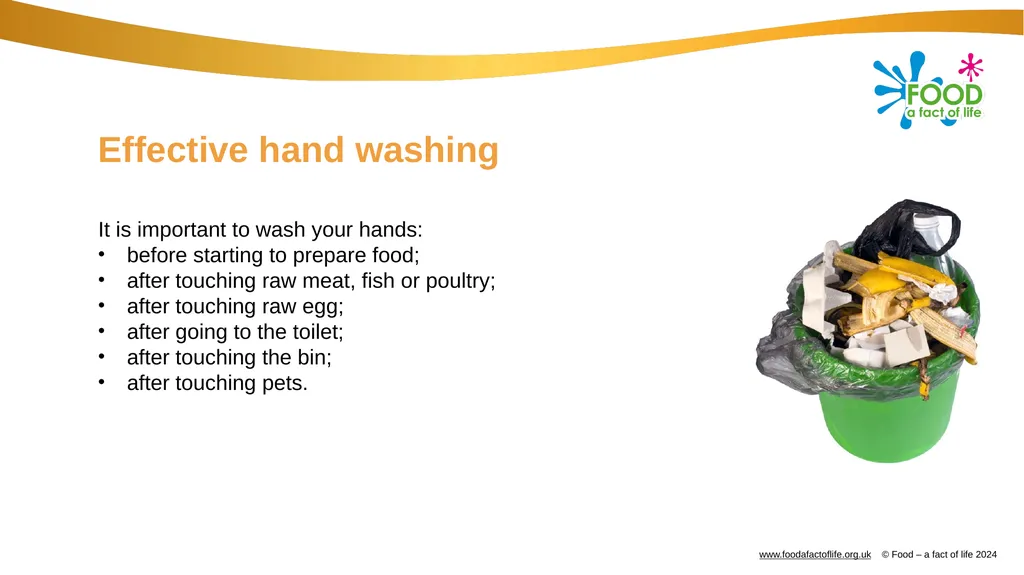
after touching the bin;
after touching pets.<br>
06
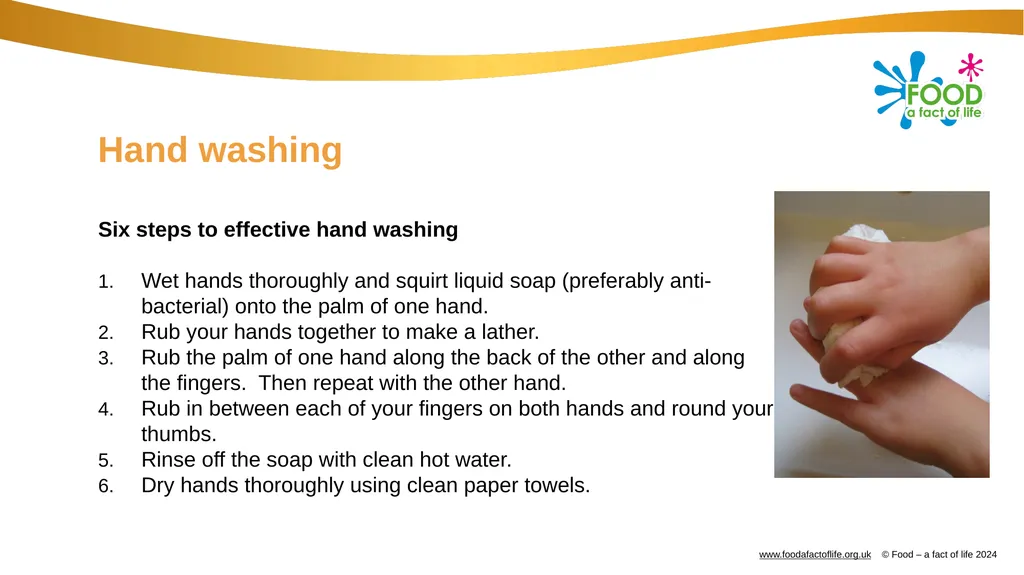
Hand washing Six steps to effective hand washing
Wet hands thoroughly and squirt liquid soap (preferably anti-bacterial) onto the palm of one hand.
Rub your hands together to make a lather.
Rub the palm of one hand along the back of the other and along the fingers. Then repeat with the other hand.
Rub in between each of your fingers on both hands and round your thumbs.
Rinse off the soap with clean hot water.
Dry hands thoroughly using clean paper towels.<br>
07
Preventing cross-contamination In order to prevent cross-contamination during food preparation and cooking, it is also important to:
avoid touching your face or hair;
wash your hands regularly when cooking, especially after handling raw food, blowing your nose, touching the bin and using the toilet;
do not cough or sneeze over food;
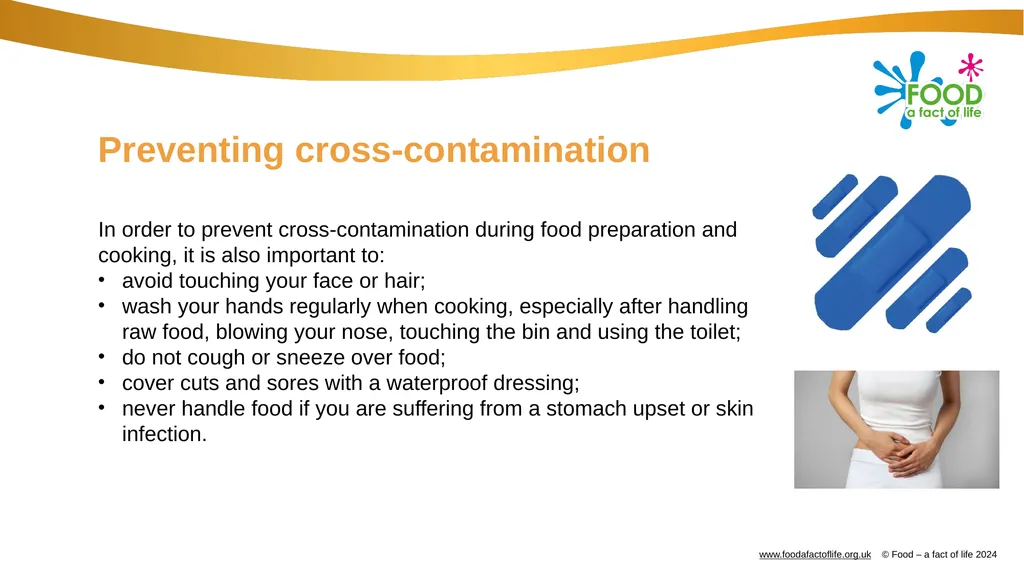
cover cuts and sores with a waterproof dressing;
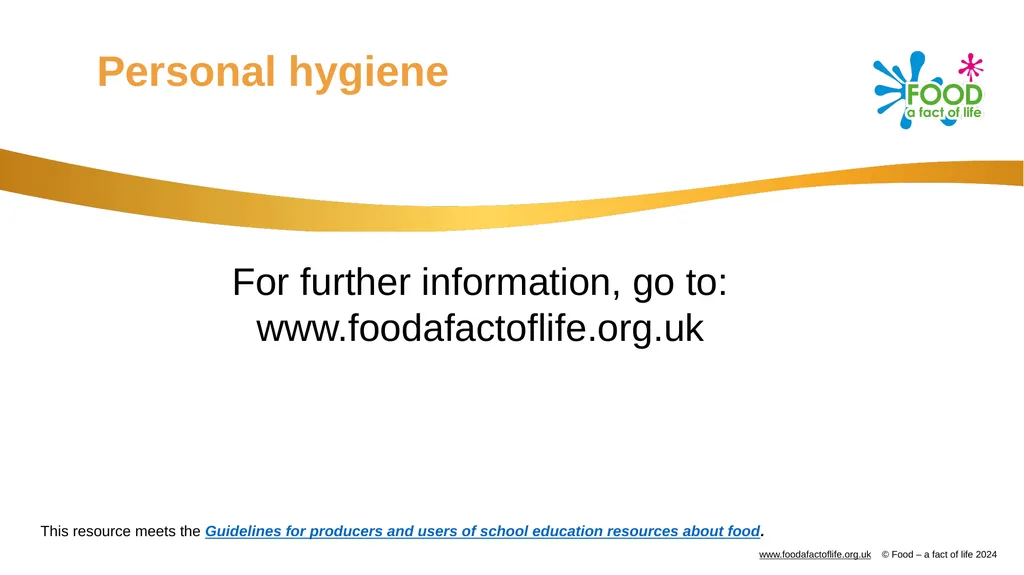
never handle food if you are suffering from a stomach upset or skin infection.<br>
08
Personal hygiene For further information, go to:
www.foodafactoflife.org.uk This resource meets the Guidelines for producers and users of school education resources about food.<br>