05
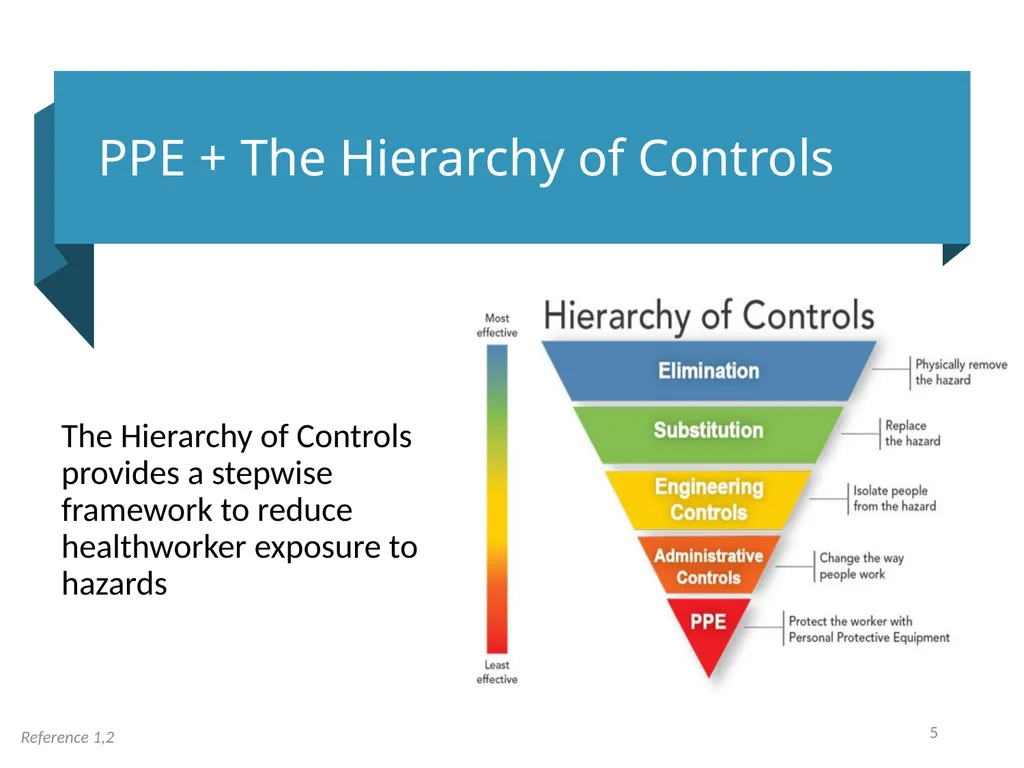
PPE + The Hierarchy of Controls The Hierarchy of Controls provides a stepwise framework to reduce healthworker exposure to hazards Reference 1,2 5<br>
06
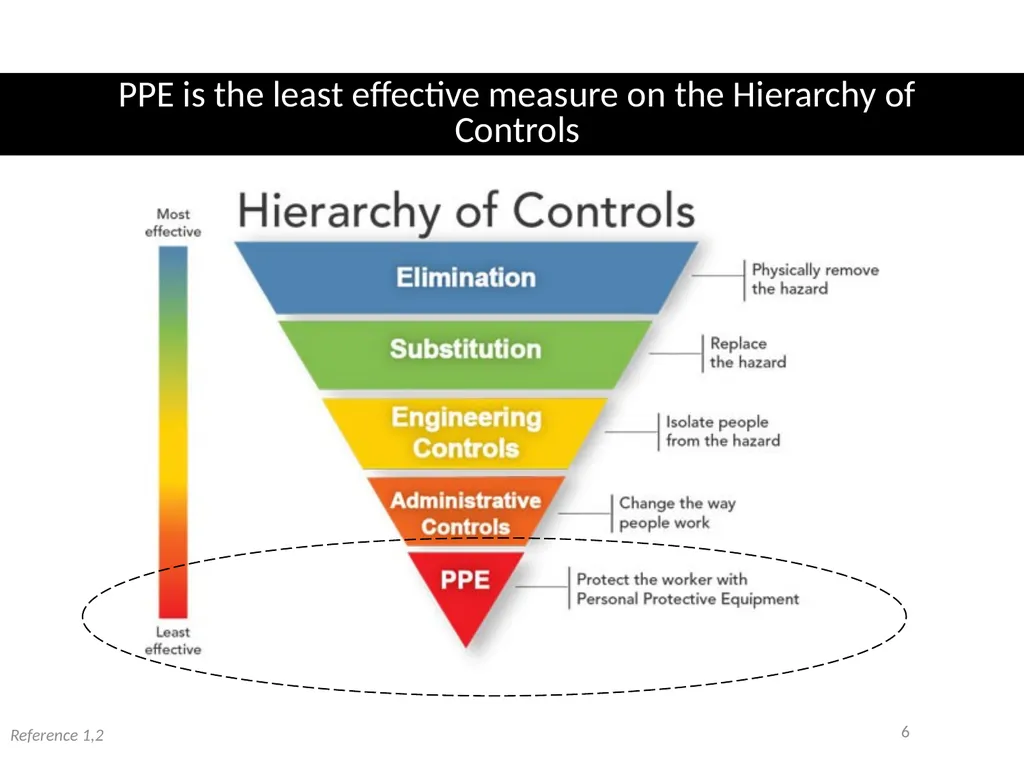
PPE is the least effective measure on the Hierarchy of Controls Reference 1,2 6<br>
07
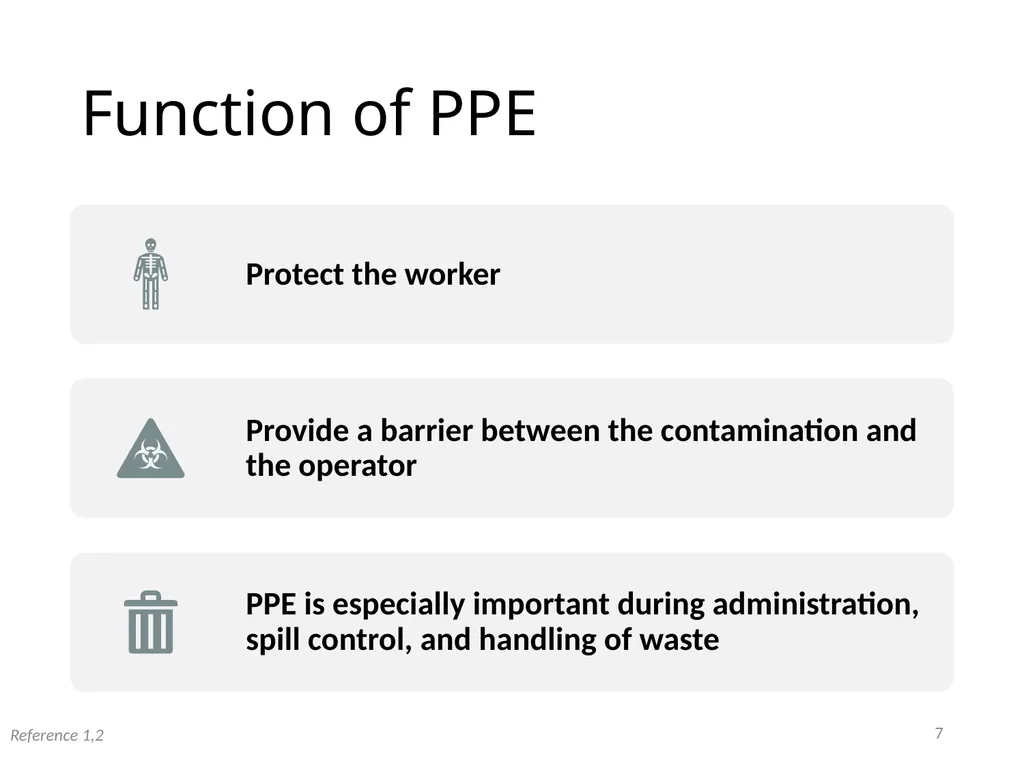
Function of PPE 7 Reference 1,2<br>
08
Important information about PPE and Administrative controls 8 Reference 1,2<br>
09
All personnel who handle HDs should be trained to wear full PPE and use a respirator. 9 Reference 3,4,5<br>
10
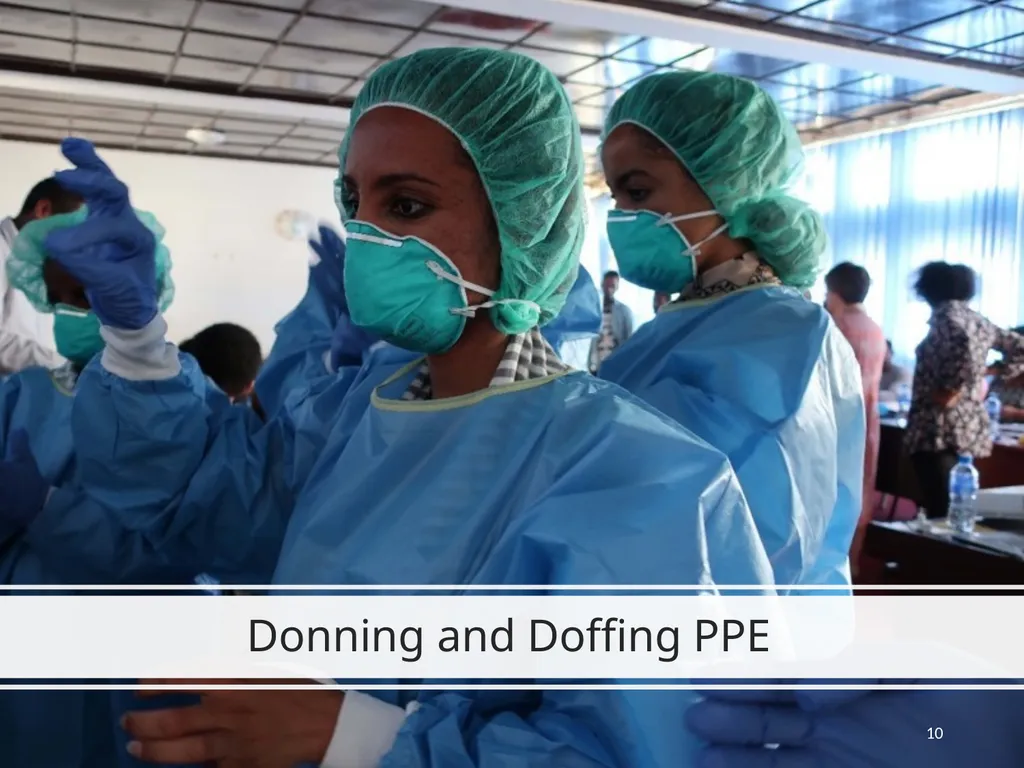
Donning and Doffing PPE 10<br>
11
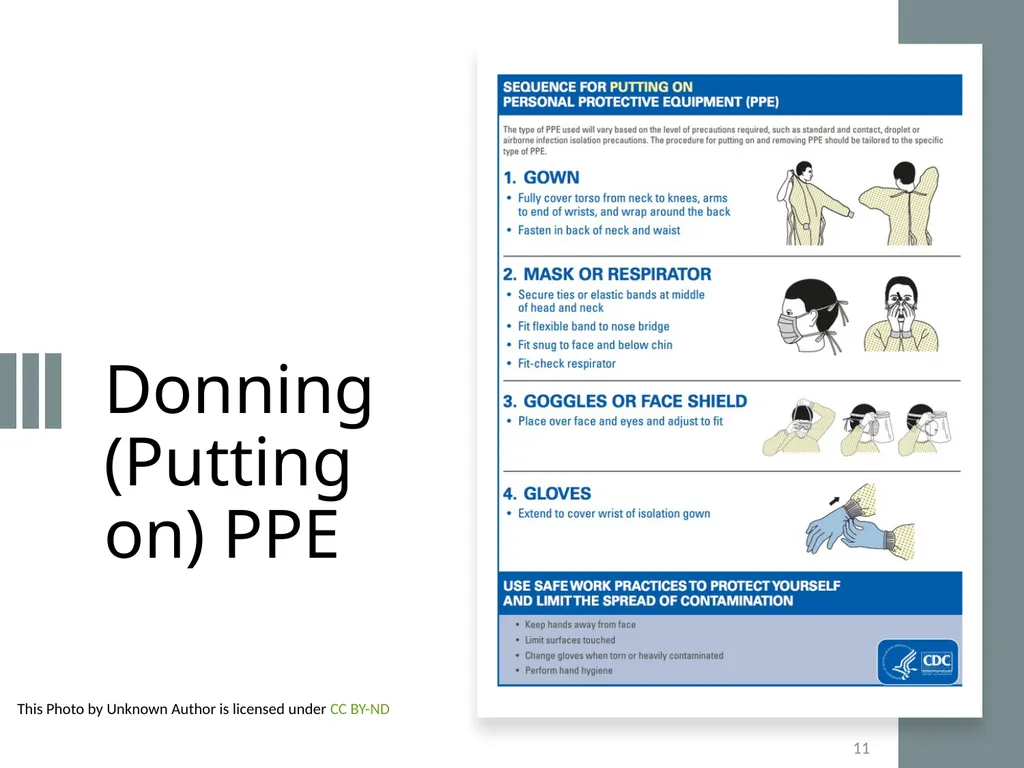
Donning�(Putting on) PPE 11 This Photo by Unknown Author is licensed under CC BY-ND<br>
13
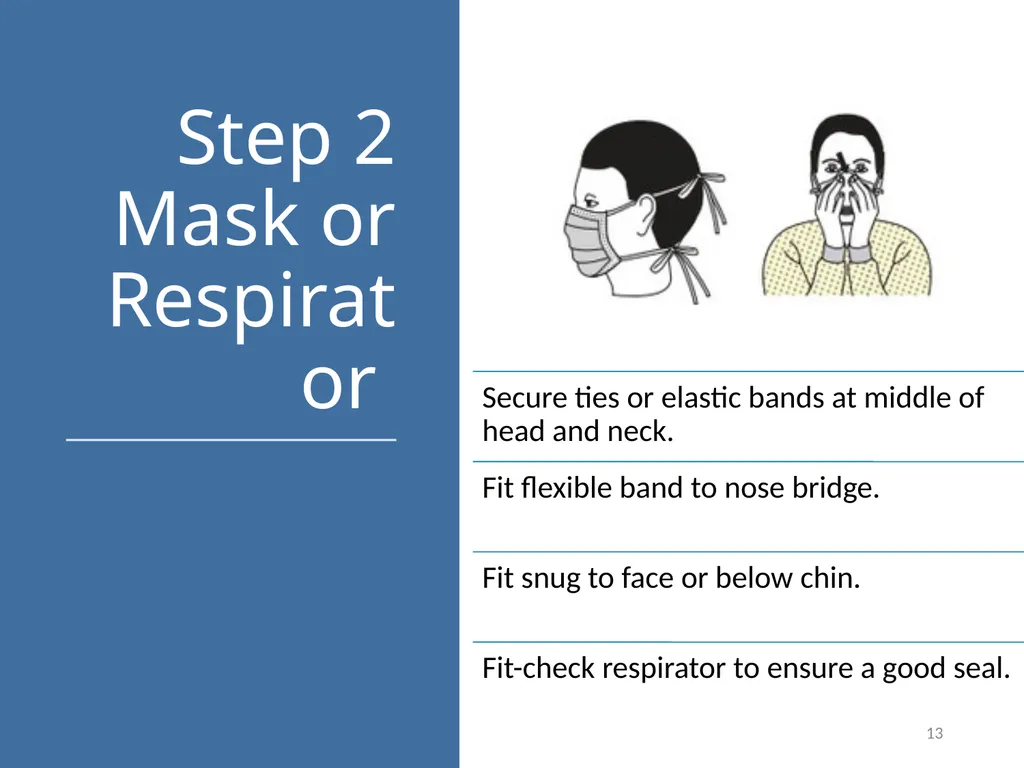
Step 2�Mask or Respirator 13<br>
14
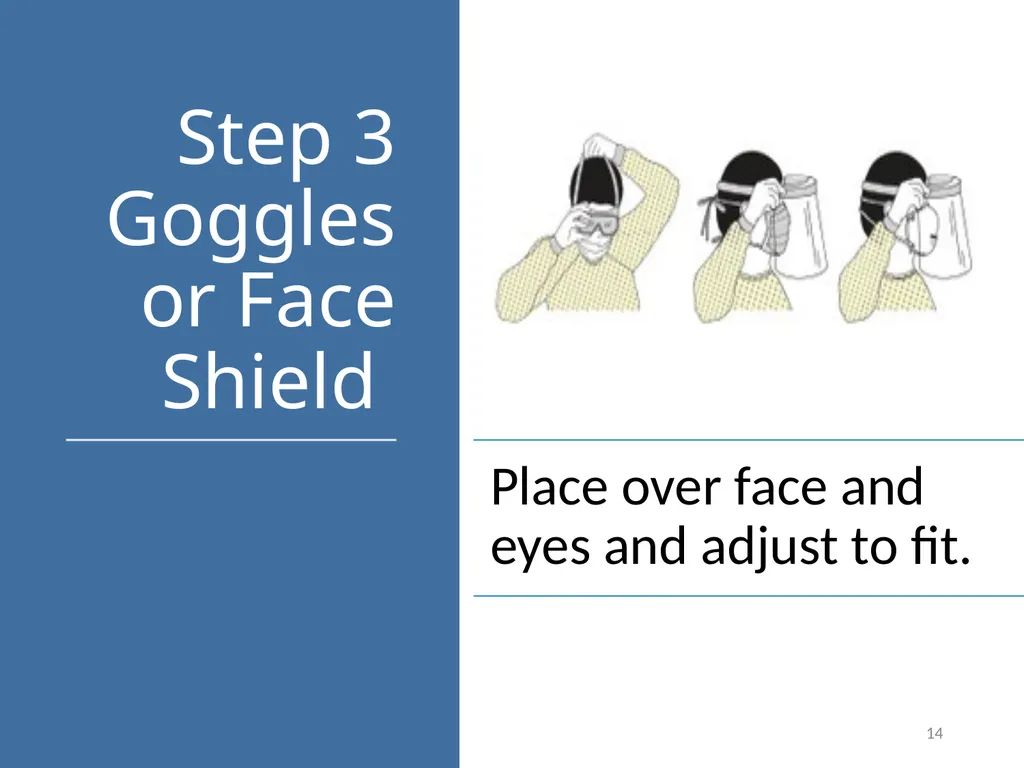
Step 3�Goggles or Face Shield 14<br>
16
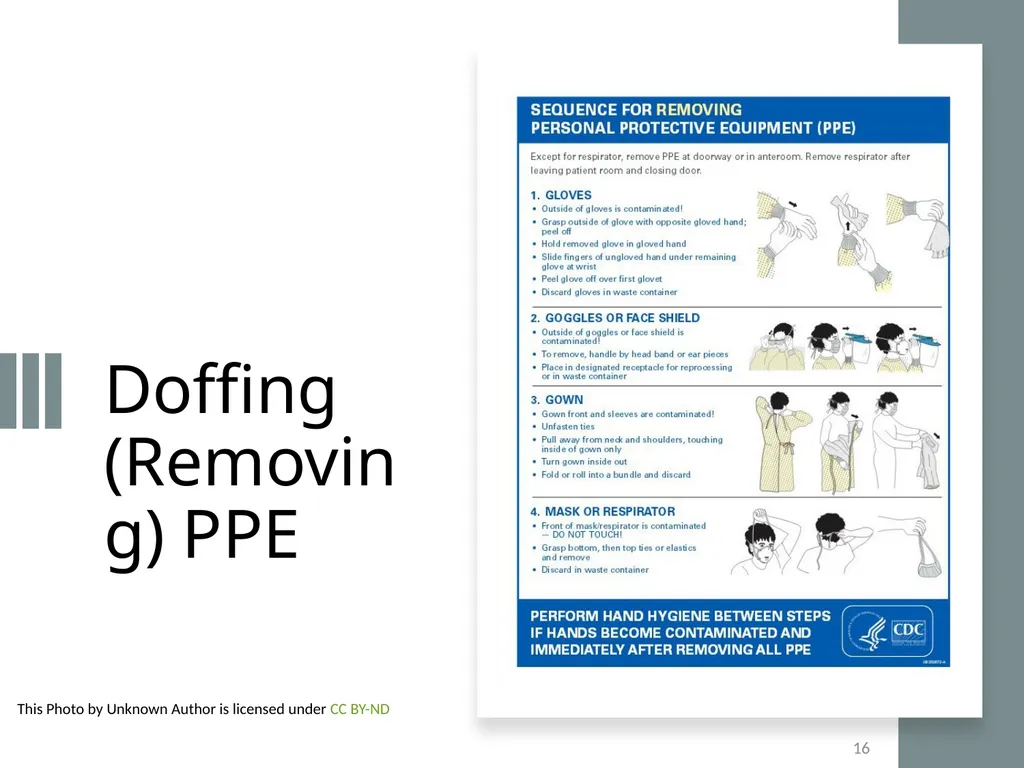
Doffing�(Removing) PPE 16 This Photo by Unknown Author is licensed under CC BY-ND<br>
18
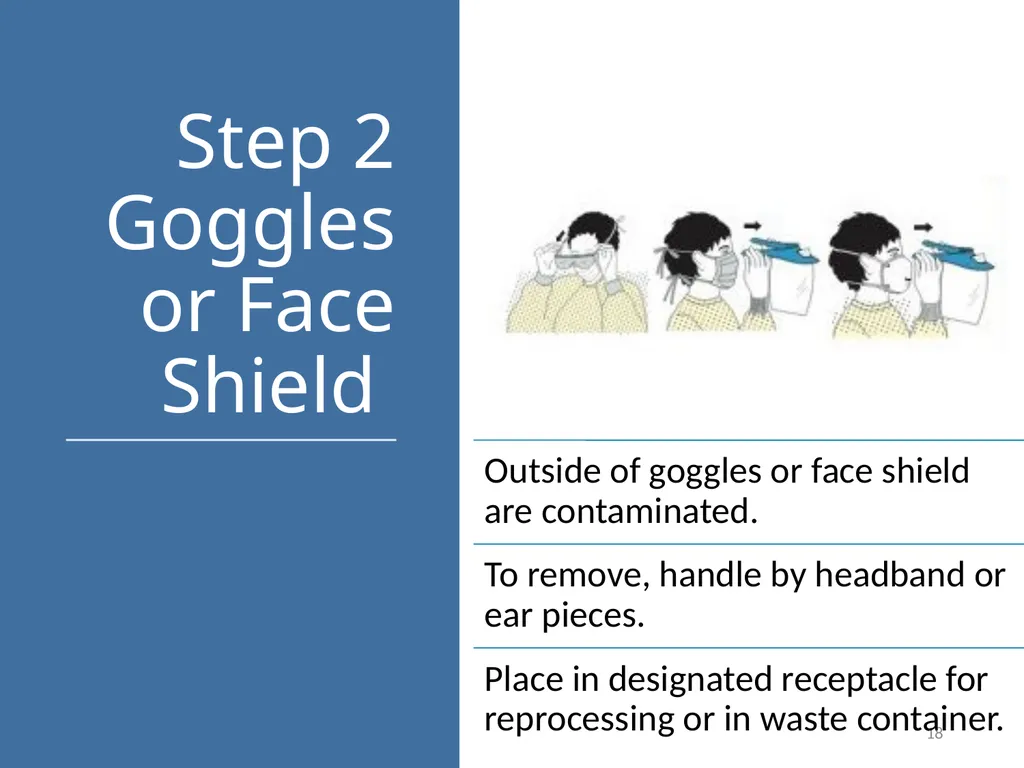
Step 2�Goggles or Face Shield 18<br>
20
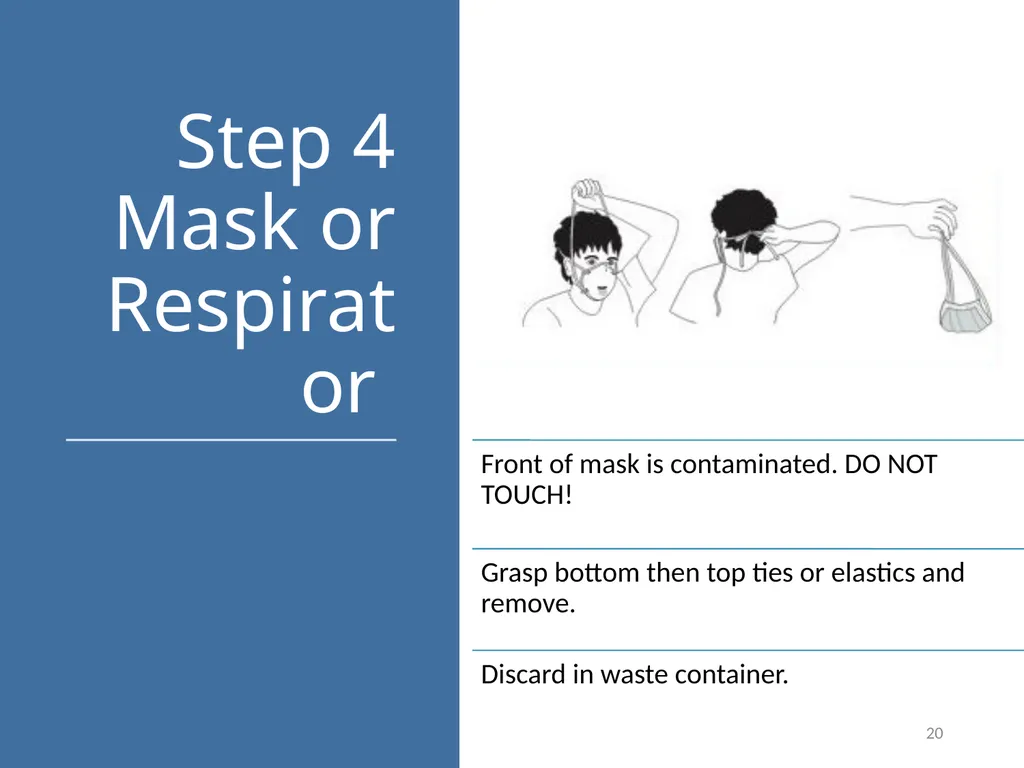
Step 4�Mask or Respirator 20<br>
21
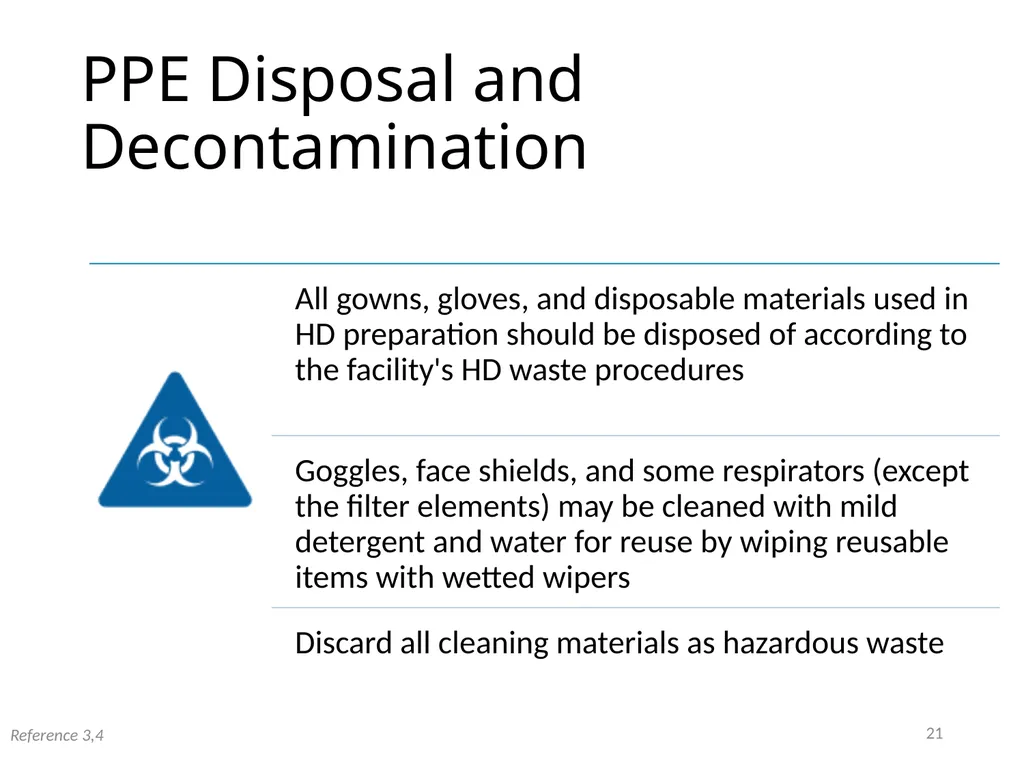
21 PPE Disposal and Decontamination Reference 3,4 21<br>
23
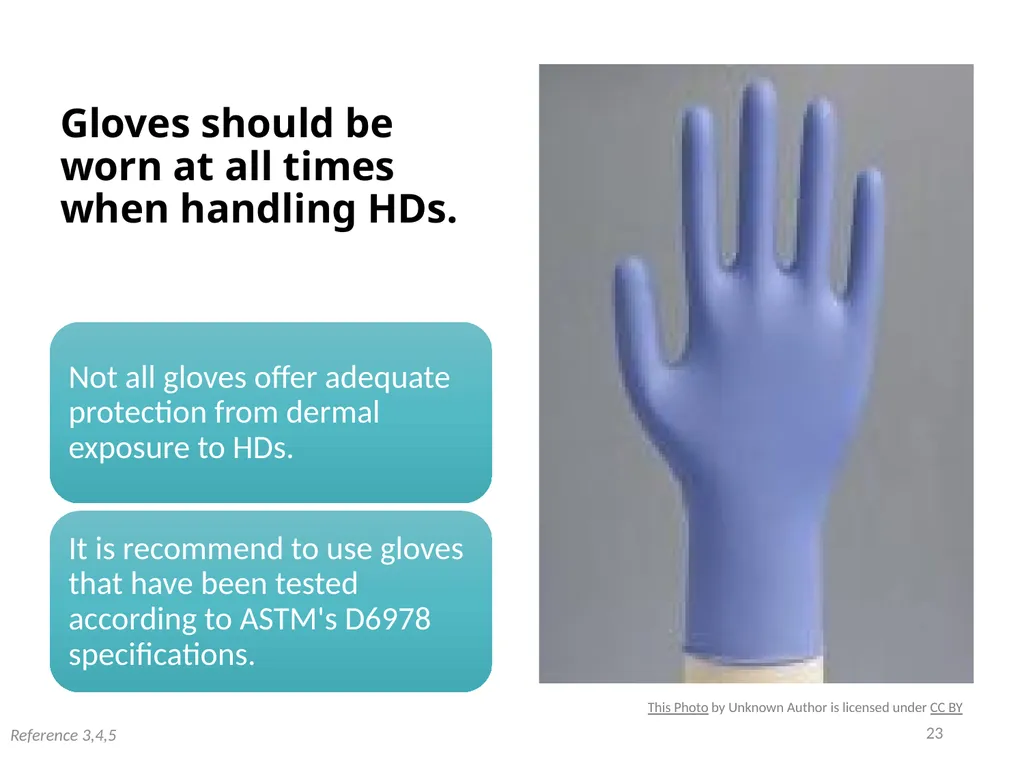
Gloves should be worn at all times when handling HDs. 23 This Photo by Unknown Author is licensed under CC BY Reference 3,4,5 23<br>
24
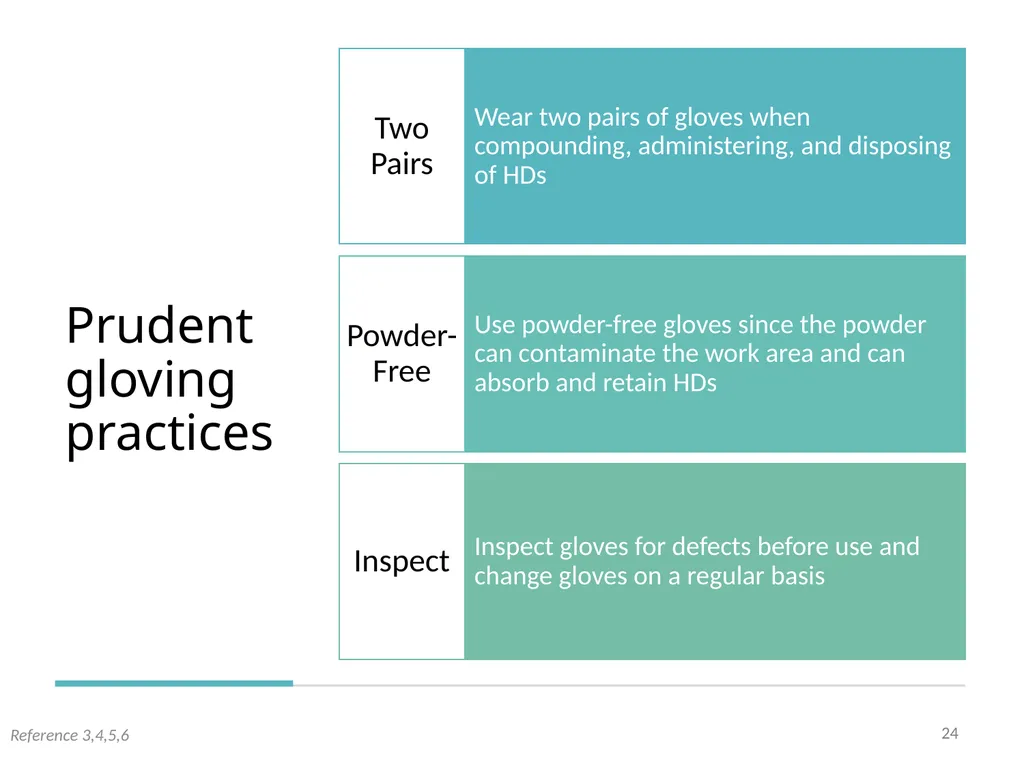
Prudent gloving practices 24 Reference 3,4,5,6<br>
25
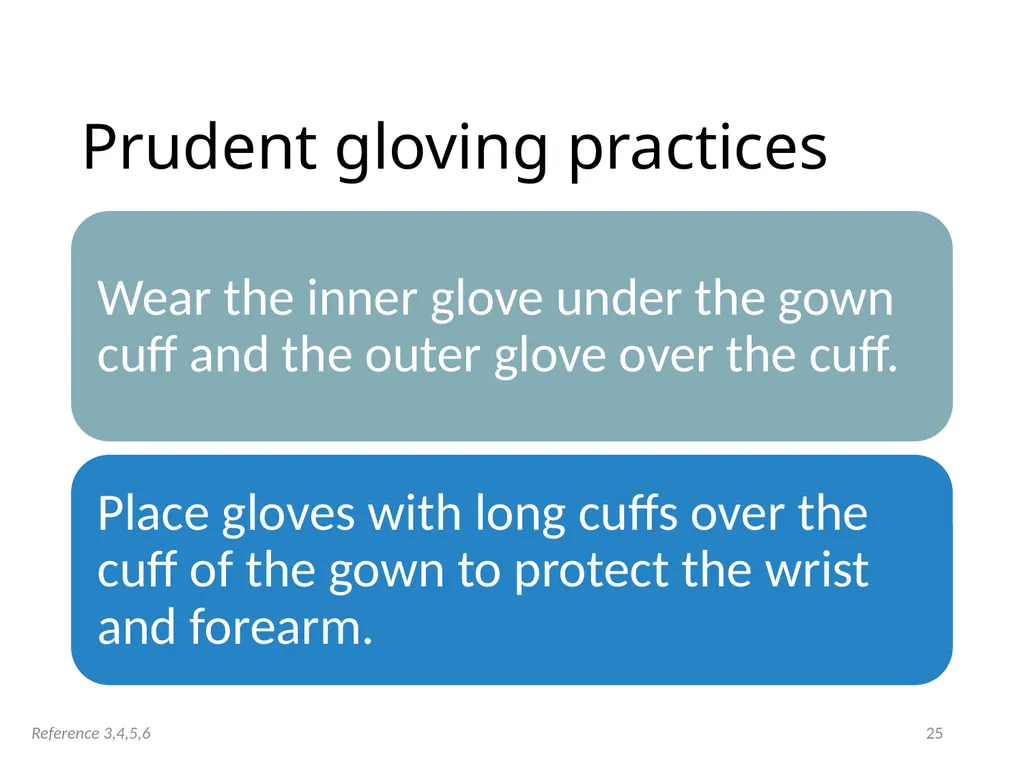
Prudent gloving practices Reference 3,4,5,6 25<br>
26
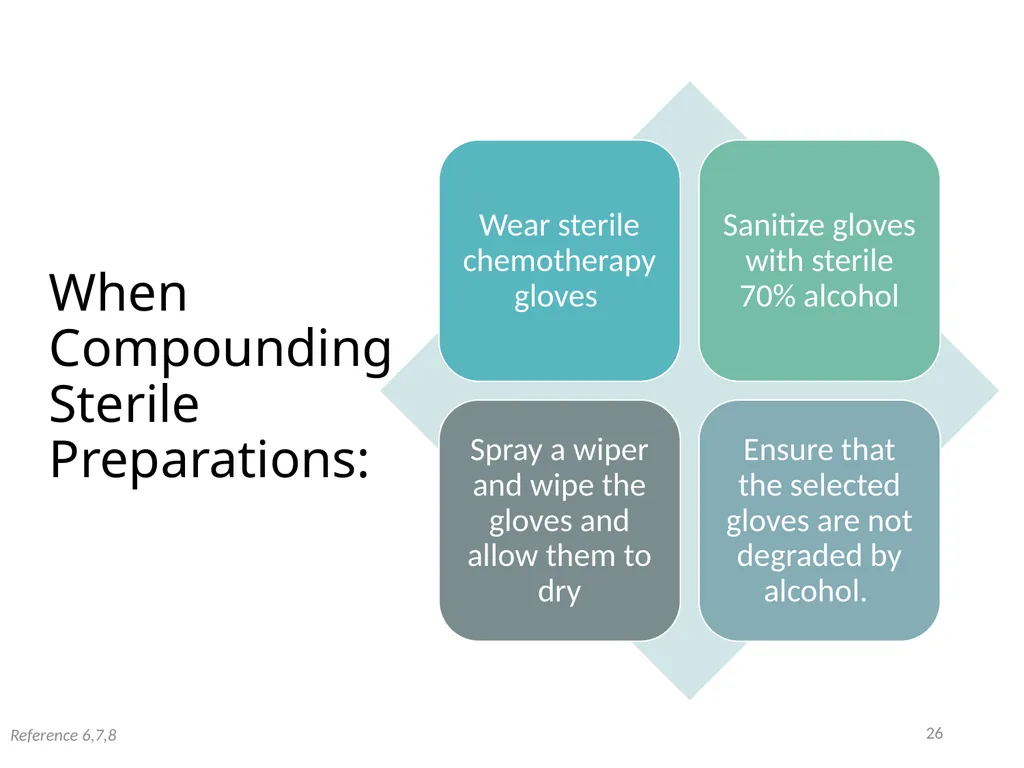
When Compounding Sterile Preparations: 26 Reference 6,7,8<br>
27
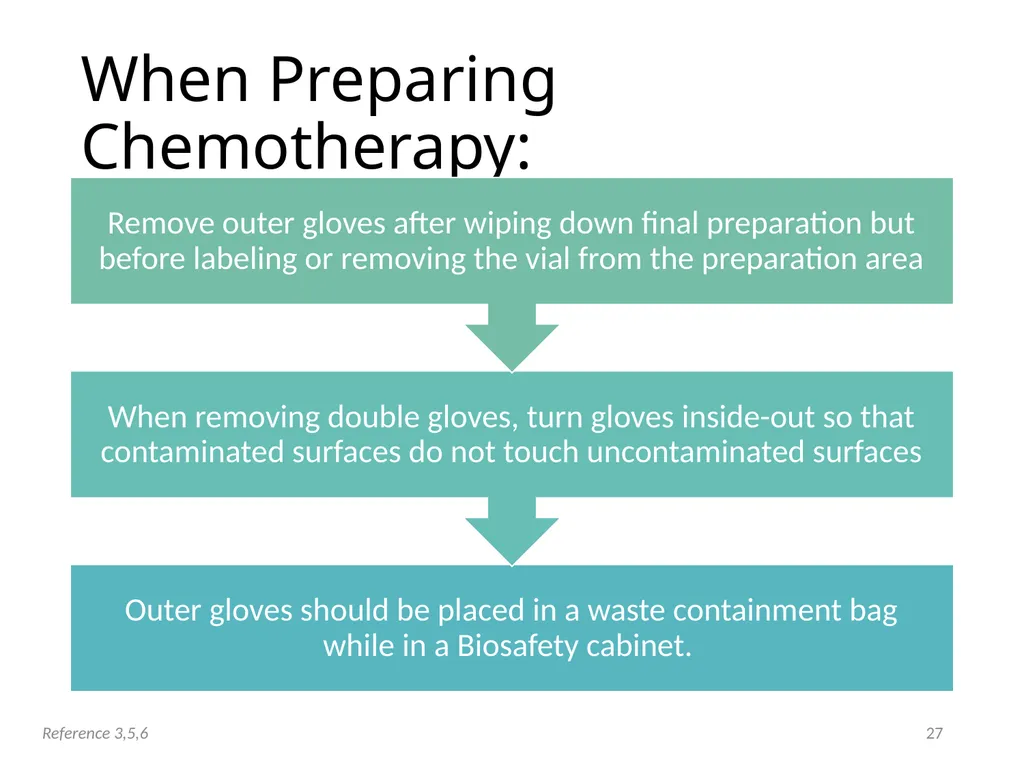
When Preparing Chemotherapy: Reference 3,5,6 27<br>
28
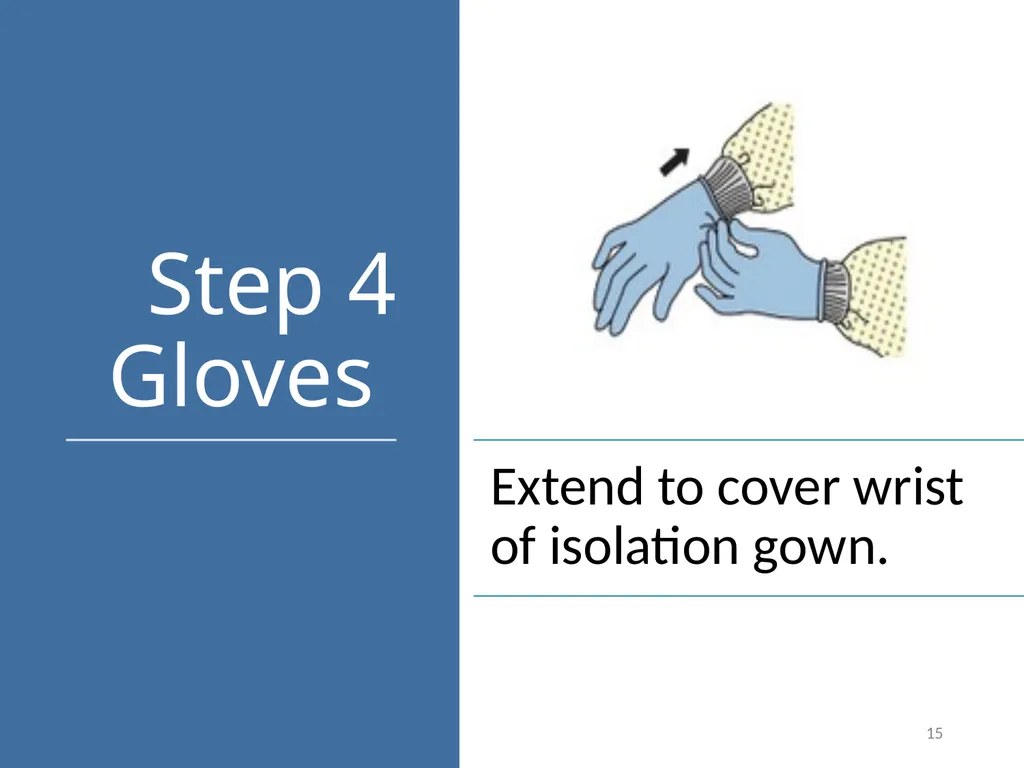
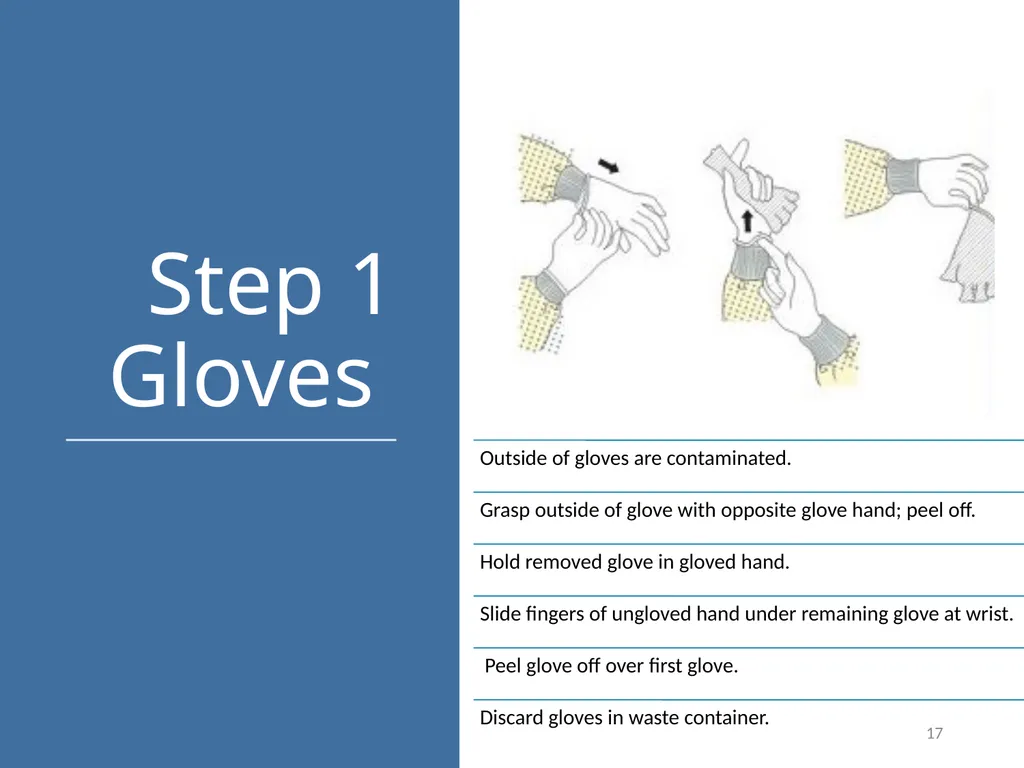
Disposal + Hygiene Dispose of gloves after each use as contaminated waste.
Wash hands thoroughly with soap and water both before donning and after removing gloves. Reference 3,5,6 28 This Photo by Unknown Author is licensed under CC BY-SA<br>
30
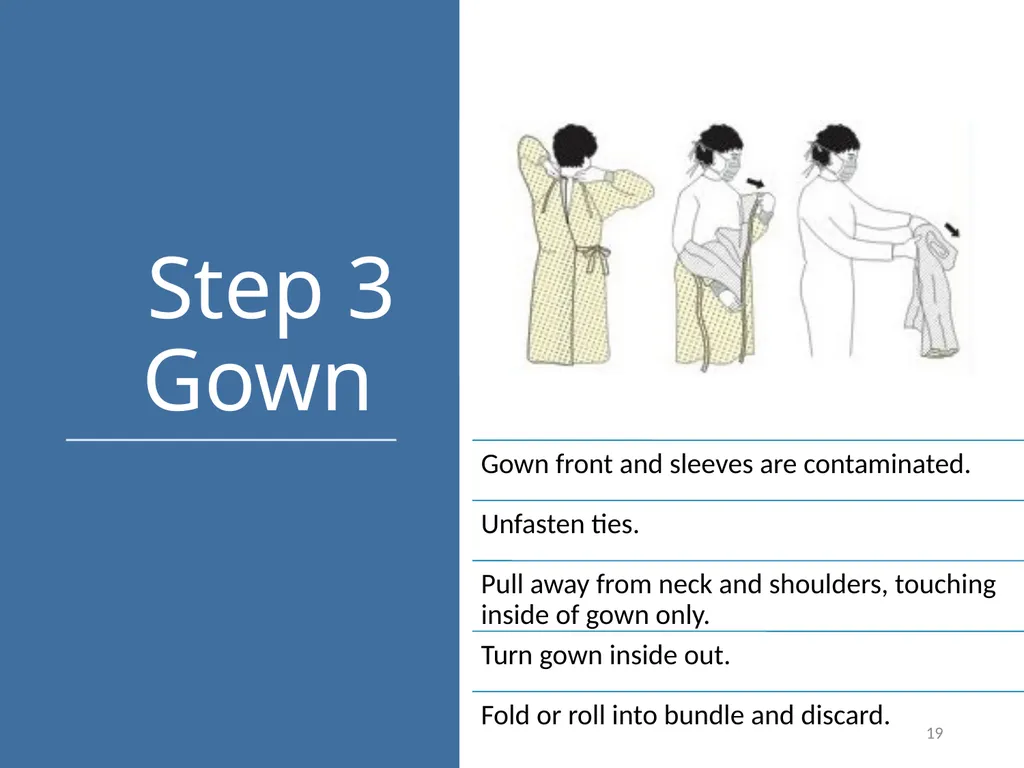
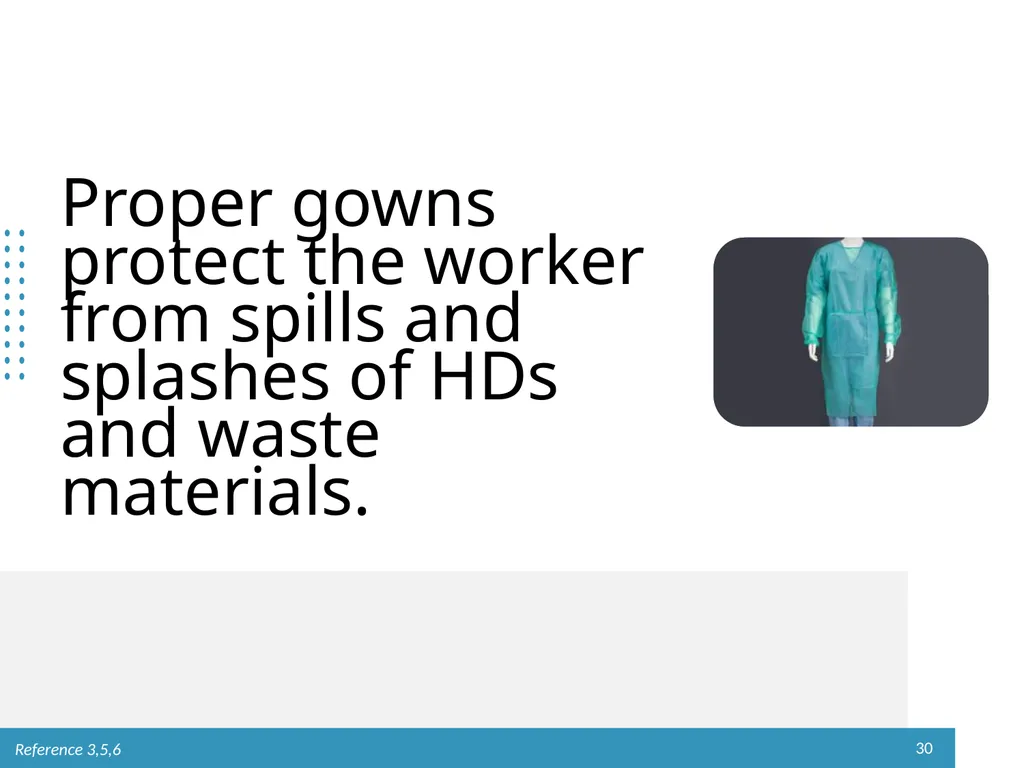
Proper gowns protect the worker from spills and splashes of HDs and waste materials. 30 Reference 3,5,6<br>
31
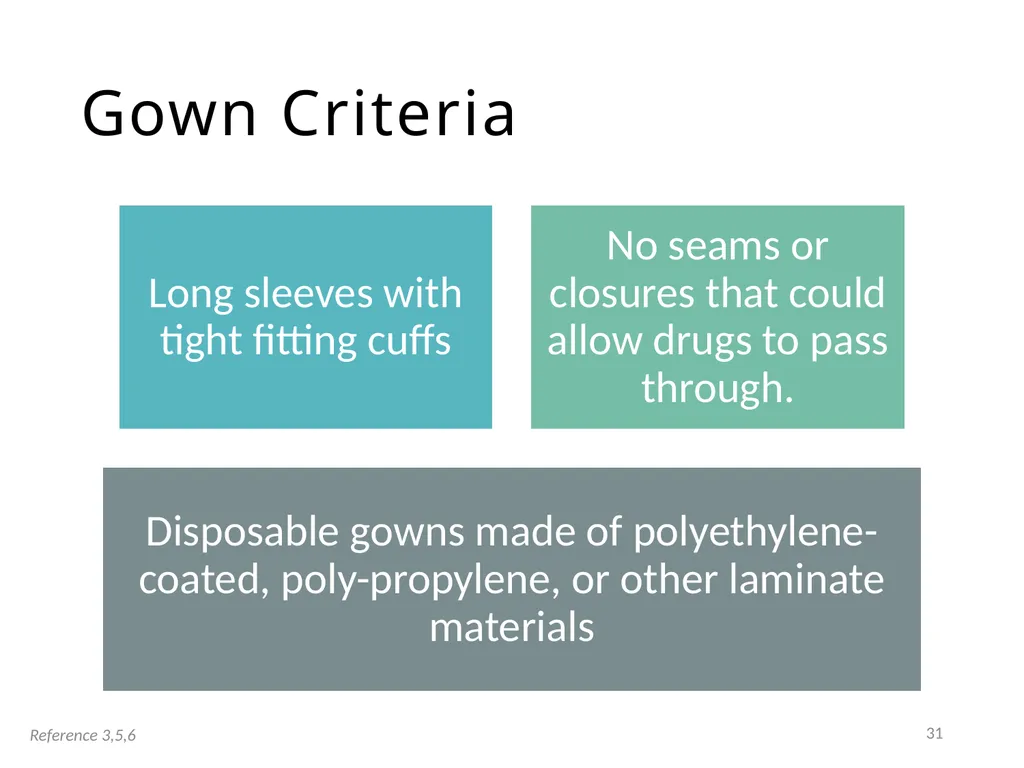
Gown Criteria 31 Reference 2,6 Reference 3,5,6<br>
32
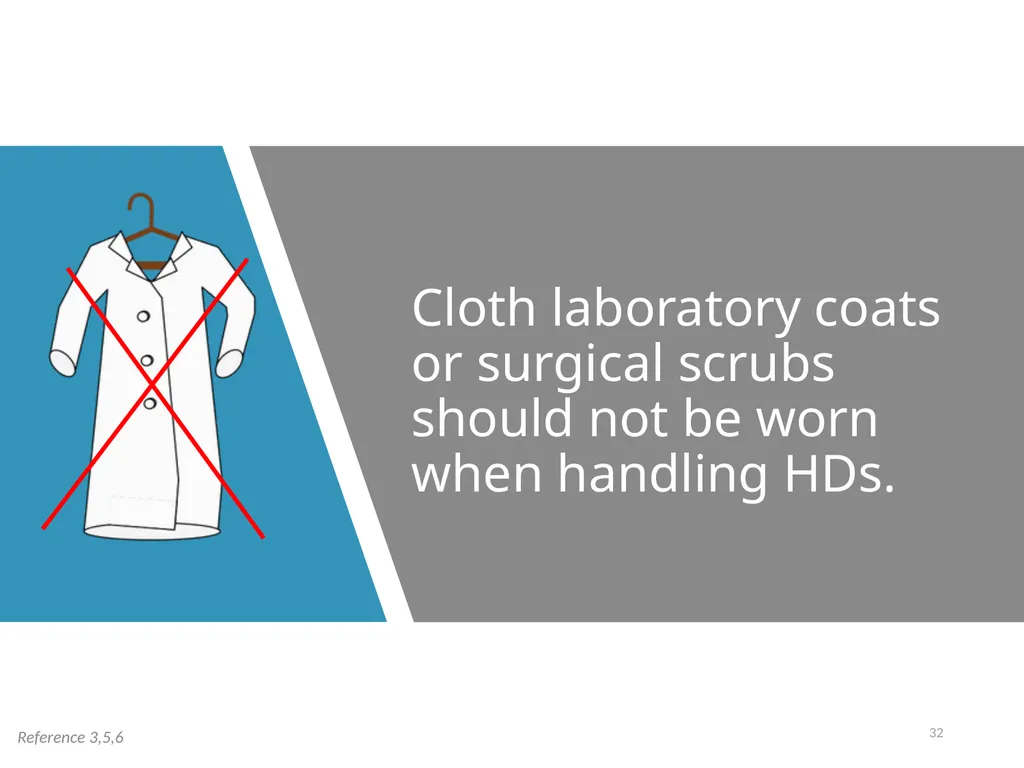
Cloth laboratory coats or surgical scrubs should not be worn when handling HDs. 32 Reference 3,5,6<br>
33
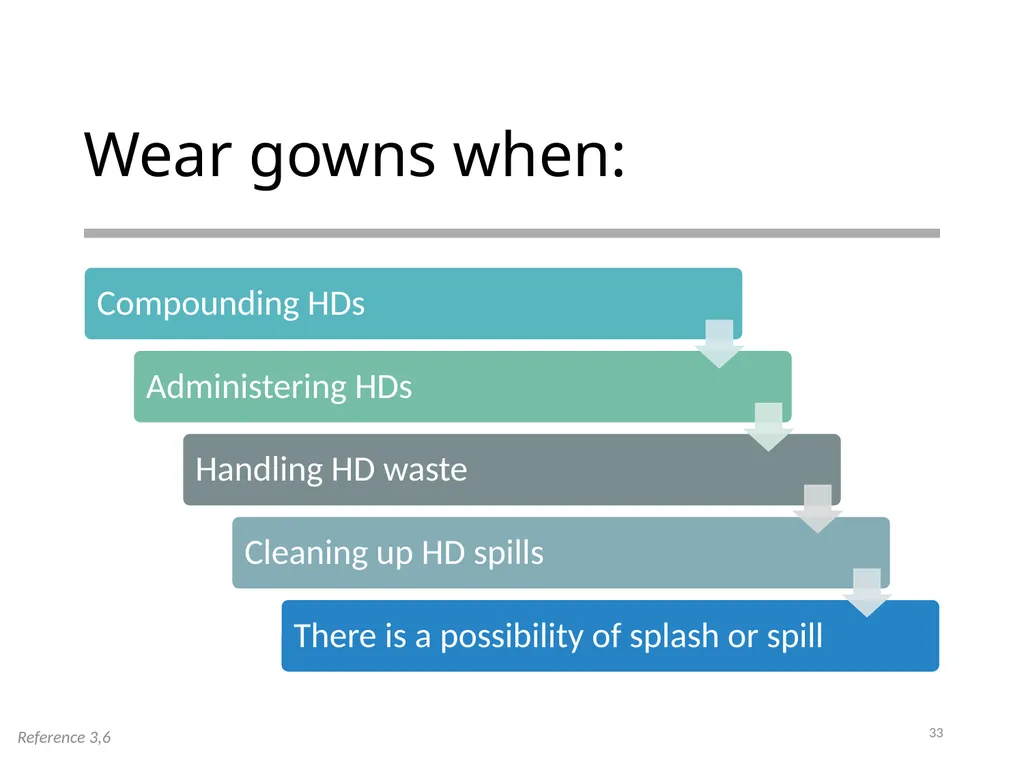
Wear gowns when: 33 Reference 3,6<br>
34
Do not wear gowns when leaving the compounding or administration area to avoid spreading drug contamination to other areas and possibly exposing non-protected workers. 34 Reference 3,6<br>
35
If no permeation information is available for the gowns in use, change them every 2 to 3 hours or immediately after a spill or splash. 35<br>
36
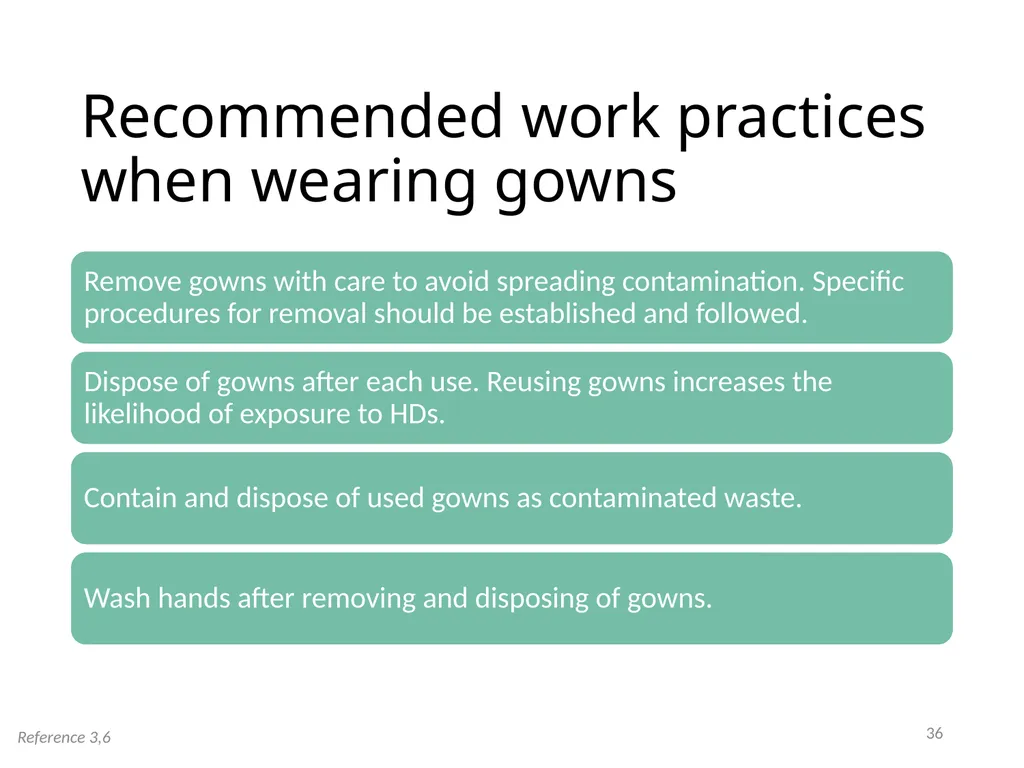
Recommended work practices when wearing gowns 36 Reference 3,6<br>
37
Respiratory Protection 4<br>
38
A respirator prevents harmful materials from entering the respiratory system, usually by filtering hazardous agents from the air ��An appropriate respirator must be used whenever there is a possibility of exposure from aerosolization of HDs 38 Reference 3<br>
39
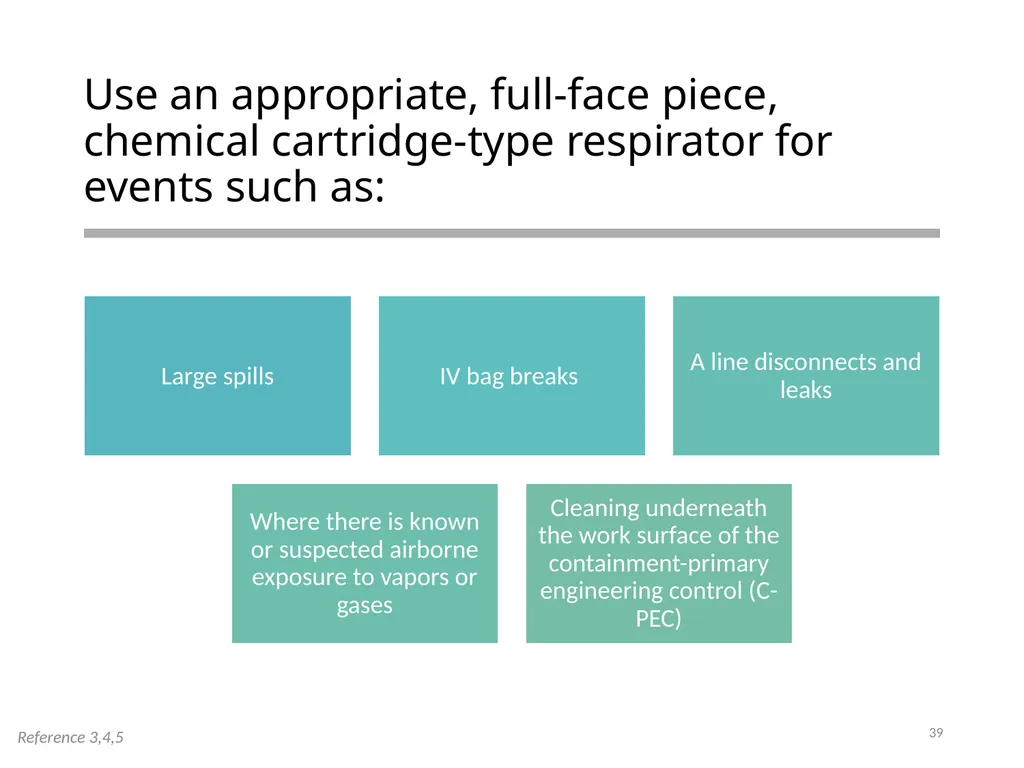
Use an appropriate, full-face piece, chemical cartridge-type respirator for events such as: 39 Reference 3,4,5<br>
40
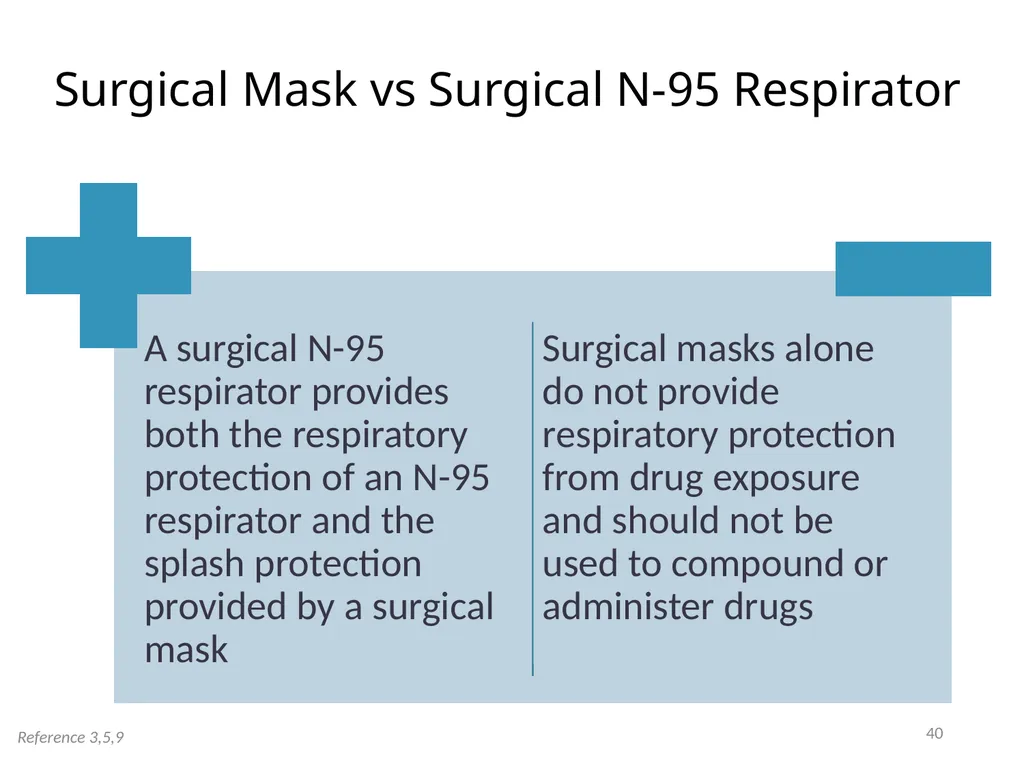
Surgical Mask vs Surgical N-95 Respirator 40 Reference 3,5,9<br>
41
Eye and Face Protection 5<br>
42
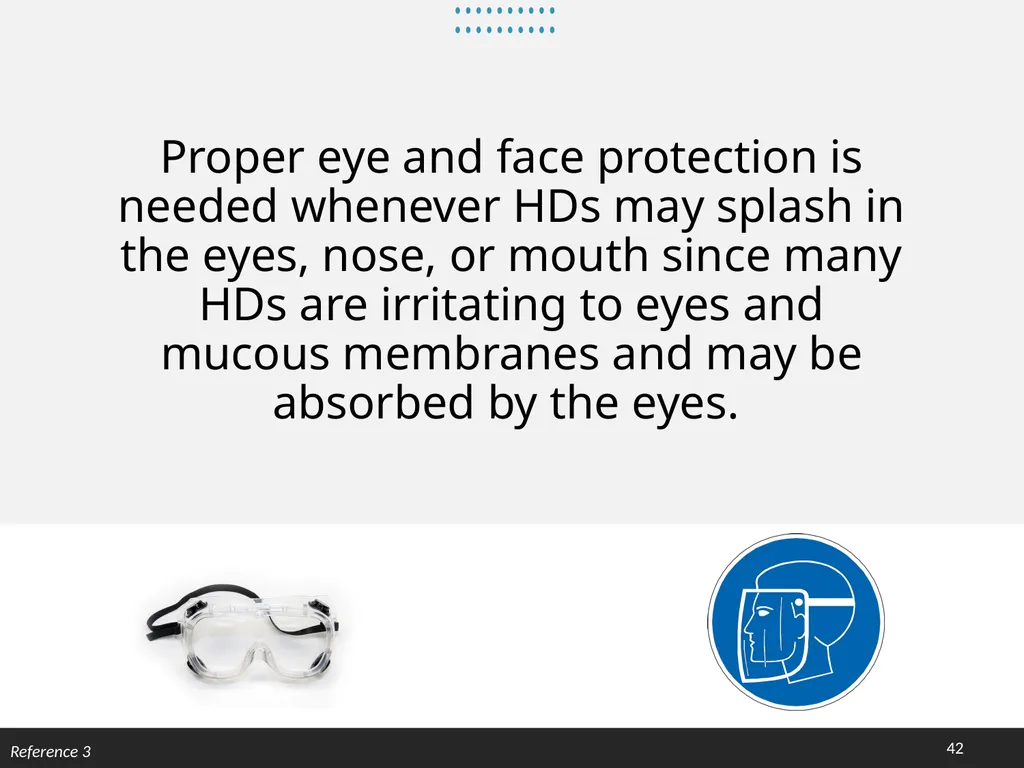
Proper eye and face protection is needed whenever HDs may splash in the eyes, nose, or mouth since many HDs are irritating to eyes and mucous membranes and may be absorbed by the eyes. 42 Reference 3<br>
43
NIOSH has recommended the following practices to provide eye and face protection to employees working with HDs 43 Reference 3,5,6<br>
44
Recommendations continued… 44 Reference 3,5,6<br>
45
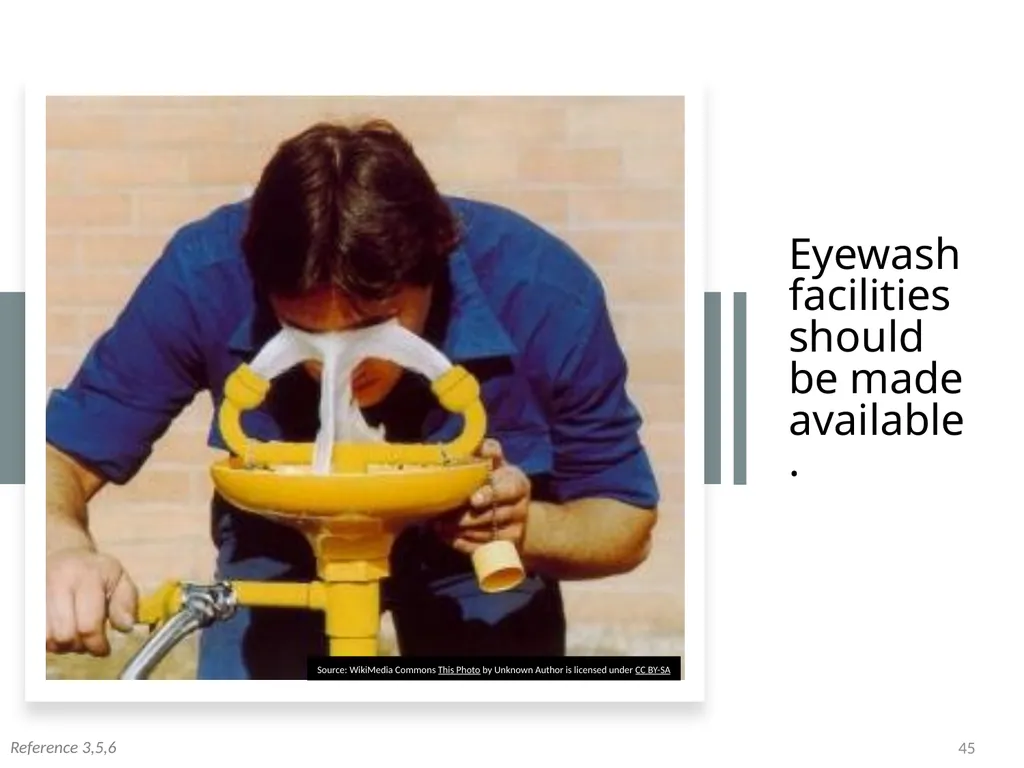
Eyewash facilities should be made available. 45 Source: WikiMedia Commons This Photo by Unknown Author is licensed under CC BY-SA Reference 3,5,6<br>
46
References 46 Connor T, McLauchlan R, Vandenbroucke J. ISOPP Standards of Practice: Safe Handling of Cytotoxics. J Oncol Pharm Pract. 2007;13(1)
CDC - Hierarchy of Controls - NIOSH Workplace Safety and Health Topic [Internet]. [cited 2018 Jul 9].
United States Occupational Safety and Health Administration. Controlling Occupational Exposure to Hazardous Drugs [Internet]. [cited 2018 May 5]
US Pharmacopeia. USP General Chapter <800> Hazardous Drugs-Handling in Healthcare Settings [Internet]. 2017 [cited 2018 May 7].
NIOSH. Personal Protective Equipment for Health Care Workers Who Work with Hazardous Drugs [Internet]. 2009 [cited 2018 May 17]
Chartier Y, Emanuel, Jorge, Pieper, Ute, Pruss, Annette, Rushbrook, Philip, Stringer, Ruth, et al., editors. Safe management of wastes from health-care activities [Internet]. 2nd ed. World Health Organization; [cited 2018 Apr 13]
US Pharmacopeia. USP General Chapter <795> Pharmaceutical compounding-nonsterile preparations. 2014
US Pharmacopeia. USP Chapter <797> Pharmaceutical compoundings-sterile preparations. The United States Pharmacopeial Convention; 2008
ASHP (American Society of Health System Pharmacists). Guidelines on handling hazardous drugs. Am J Health Syst Pharm. 2006;63:1172–93<br>