
Personality Disorder/ Complex Emotional Needs:

Description: Personality Disorder Complex Emotional Needs: Managing the clinical encounter in Primary Care Modular Training Programme Prepared by the CUSP Primary Care Training Group, DeanCross Service Commissioned by Transformation Partners in Health
Related Topics
Download Presentation
"Personality Disorder/ Complex Emotional Needs:" is the property of its rightful owner. Permission is granted to download and print the materials on this website for personal, non-commercial use only, and to display it on your personal computer provided you do not modify the materials and that you retain all copyright notices contained in the materials. By downloading content from our website, you accept the terms of this agreement.
Presentation Transcript
slide1. Personality Disorder/ Complex Emotional Needs:
Managing the clinical encounter in Primary Care
Modular Training Programme
Prepared by the CUSP Primary Care Training Group, DeanCross Service
Commissioned by Transformation Partners in Health and Care.<br>
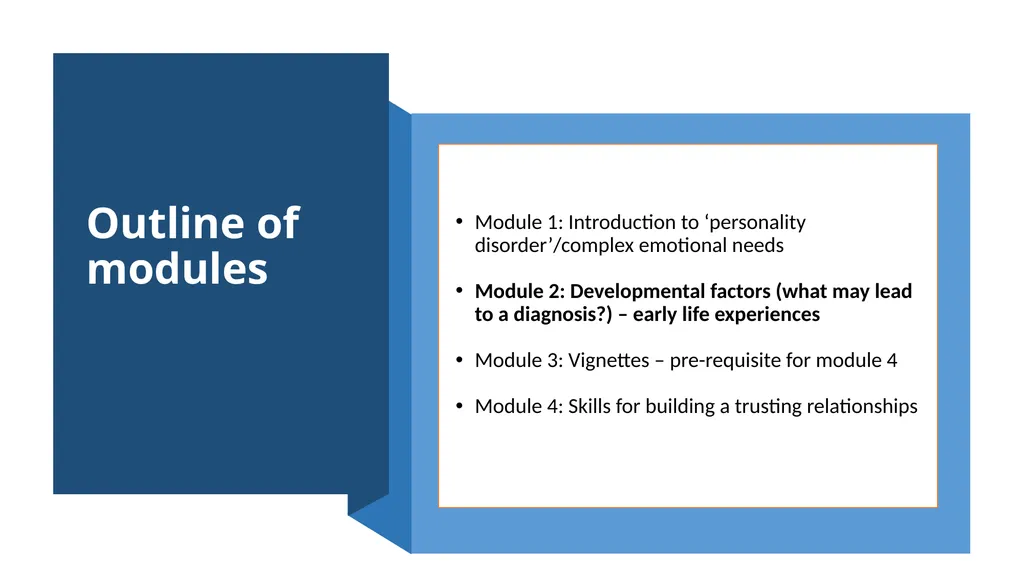
slide2. Outline of modules Module 1: Introduction to ‘personality disorder’/complex emotional needs
Module 2: Developmental factors (what may lead to a diagnosis?) – early life experiences
Module 3: Vignettes – pre-requisite for module 4
Module 4: Skills for building a trusting relationships<br>
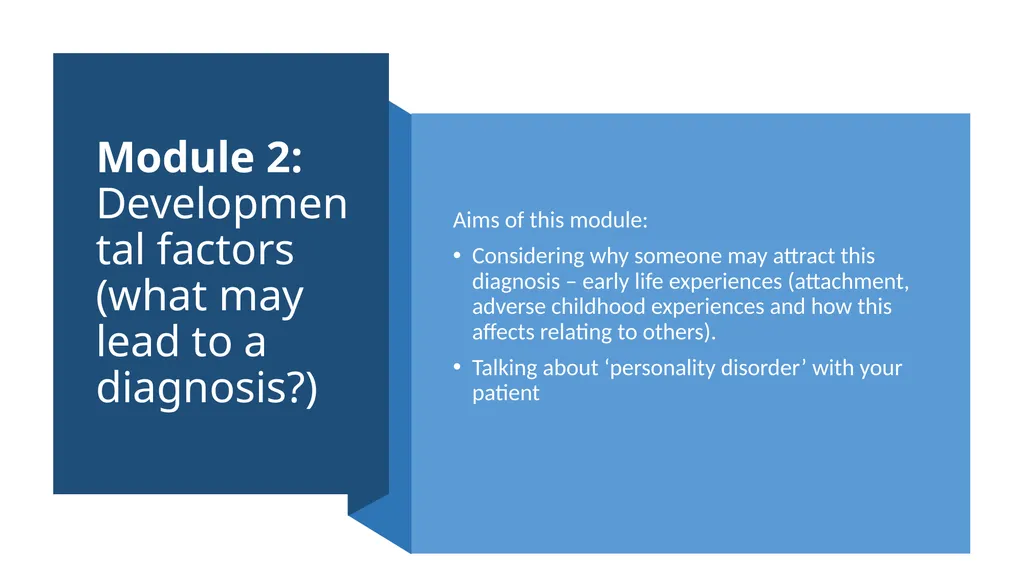
slide3. Module 2: Developmental factors (what may lead to a diagnosis?) Aims of this module:
Considering why someone may attract this diagnosis – early life experiences (attachment, adverse childhood experiences and how this affects relating to others).
Talking about ‘personality disorder’ with your patient<br>
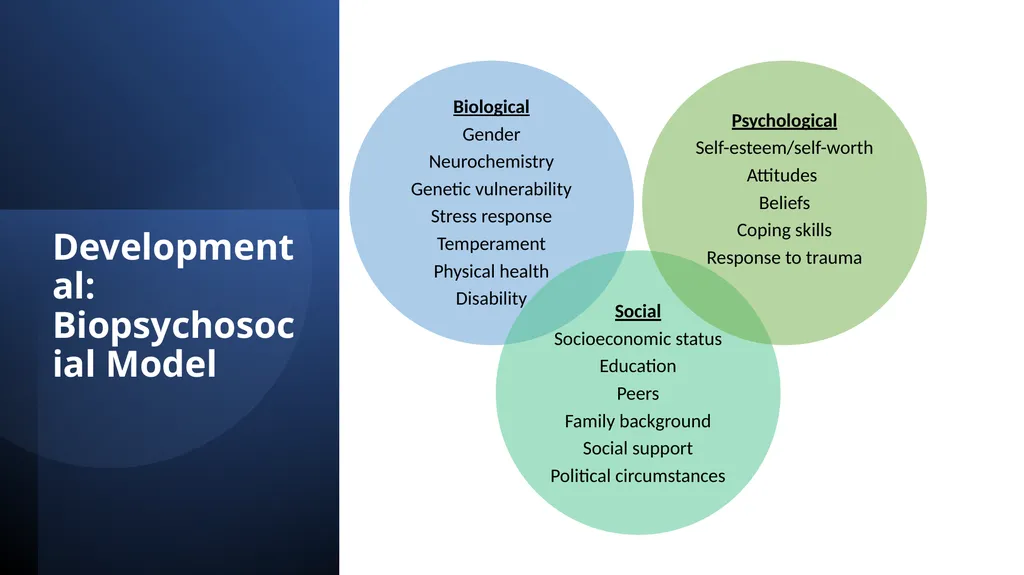
slide4. Developmental: Biopsychosocial Model<br>
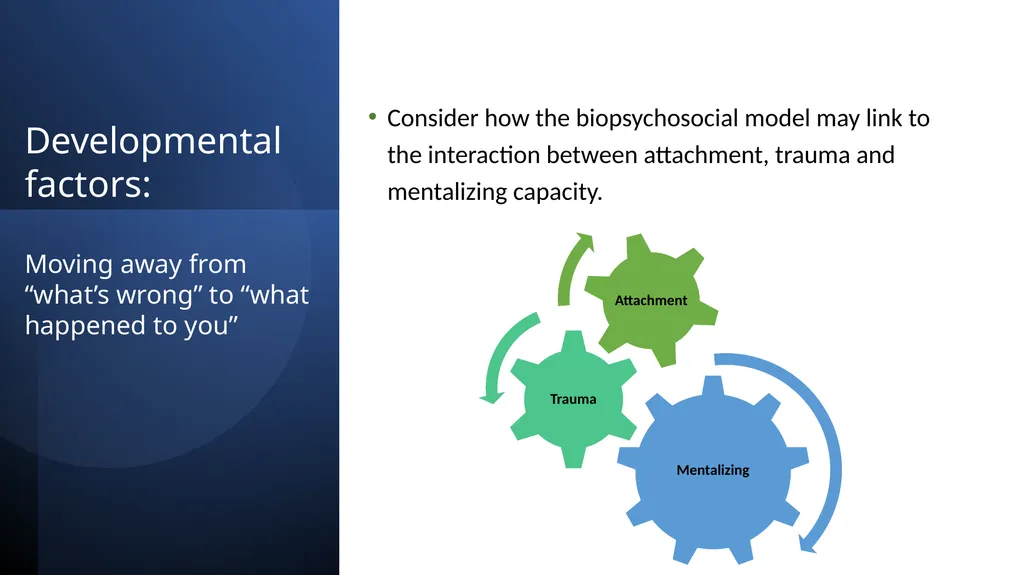
slide5. Developmental factors: Moving away from “what’s wrong” to “what happened to you” Consider how the biopsychosocial model may link to the interaction between attachment, trauma and mentalizing capacity.<br>
slide6. Attachment & Mentalizing Our earliest relationships with primary care givers is where we learn to understand our own thoughts and feelings and the mind and intentions of others (mentalizing).
John Bowlby describes attachment as a “lasting psychological connectedness between human beings”.
Bowlby believed that the earliest bonds formed by children and their caregivers have a tremendous impact that continue throughout life.
Ref: Bowlby, J. (1958) The nature of the child’s tie to his mother, The International Journal of Psychoanalysis, 39, 350-373.<br>
slide7. Attachment Prolonged difficulties in relationships with early care givers may lead to an insecure attachment (eg a disorganised or ambivalent or avoidant attachment style), which is associated with Personality Disorder<br>
slide8. Trauma and Adverse Childhood Experiences Trauma and Adverse Childhood Experiences (ACEs) have lasting psychological and physical impacts
Cumulative ACEs (4+) lead to increased risk
Wales ACEs video: https://www.youtube.com/watch?v=YiMjTzCnbNQ (6 minutes)
Support in childhood/adulthood, along with psychoeducation can change outcomes for the better<br>
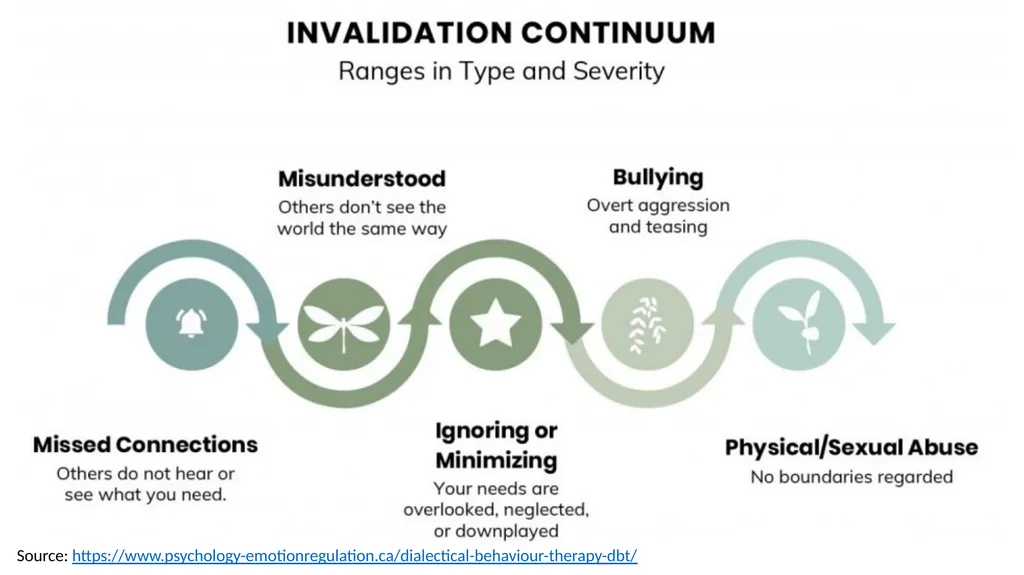
slide9. Source: https://www.psychology-emotionregulation.ca/dialectical-behaviour-therapy-dbt/<br>
slide2. Outline of modules Module 1: Introduction to ‘personality disorder’/complex emotional needs
Module 2: Developmental factors (what may lead to a diagnosis?) – early life experiences
Module 3: Vignettes – pre-requisite for module 4
Module 4: Skills for building a trusting relationships<br>
slide3. Module 2: Developmental factors (what may lead to a diagnosis?) Aims of this module:
Considering why someone may attract this diagnosis – early life experiences (attachment, adverse childhood experiences and how this affects relating to others).
Talking about ‘personality disorder’ with your patient<br>
slide4. Developmental: Biopsychosocial Model<br>
slide5. Developmental factors: Moving away from “what’s wrong” to “what happened to you” Consider how the biopsychosocial model may link to the interaction between attachment, trauma and mentalizing capacity.<br>
slide6. Attachment & Mentalizing Our earliest relationships with primary care givers is where we learn to understand our own thoughts and feelings and the mind and intentions of others (mentalizing).
John Bowlby describes attachment as a “lasting psychological connectedness between human beings”.
Bowlby believed that the earliest bonds formed by children and their caregivers have a tremendous impact that continue throughout life.
Ref: Bowlby, J. (1958) The nature of the child’s tie to his mother, The International Journal of Psychoanalysis, 39, 350-373.<br>
slide7. Attachment Prolonged difficulties in relationships with early care givers may lead to an insecure attachment (eg a disorganised or ambivalent or avoidant attachment style), which is associated with Personality Disorder<br>
slide8. Trauma and Adverse Childhood Experiences Trauma and Adverse Childhood Experiences (ACEs) have lasting psychological and physical impacts
Cumulative ACEs (4+) lead to increased risk
Wales ACEs video: https://www.youtube.com/watch?v=YiMjTzCnbNQ (6 minutes)
Support in childhood/adulthood, along with psychoeducation can change outcomes for the better<br>
slide9. Source: https://www.psychology-emotionregulation.ca/dialectical-behaviour-therapy-dbt/<br>