Personality Sixth edition Chapter 7 Cognitive and
Description: Personality Sixth edition Chapter 7 Cognitive and Social-Cognitive Aspects of Personality Modules (1 of 2) Introduction: Cognitive and Social-Cognitive Aspects of Personality 7.1: Roots of Cognitive Approaches 7.2: Cognitive and Perceptual
Related Topics
Download Presentation
"Personality Sixth edition Chapter 7 Cognitive and" is the property of its rightful owner. Permission is granted to download and print the materials on this website for personal, non-commercial use only, and to display it on your personal computer provided you do not modify the materials and that you retain all copyright notices contained in the materials. By downloading content from our website, you accept the terms of this agreement.
Presentation Transcript
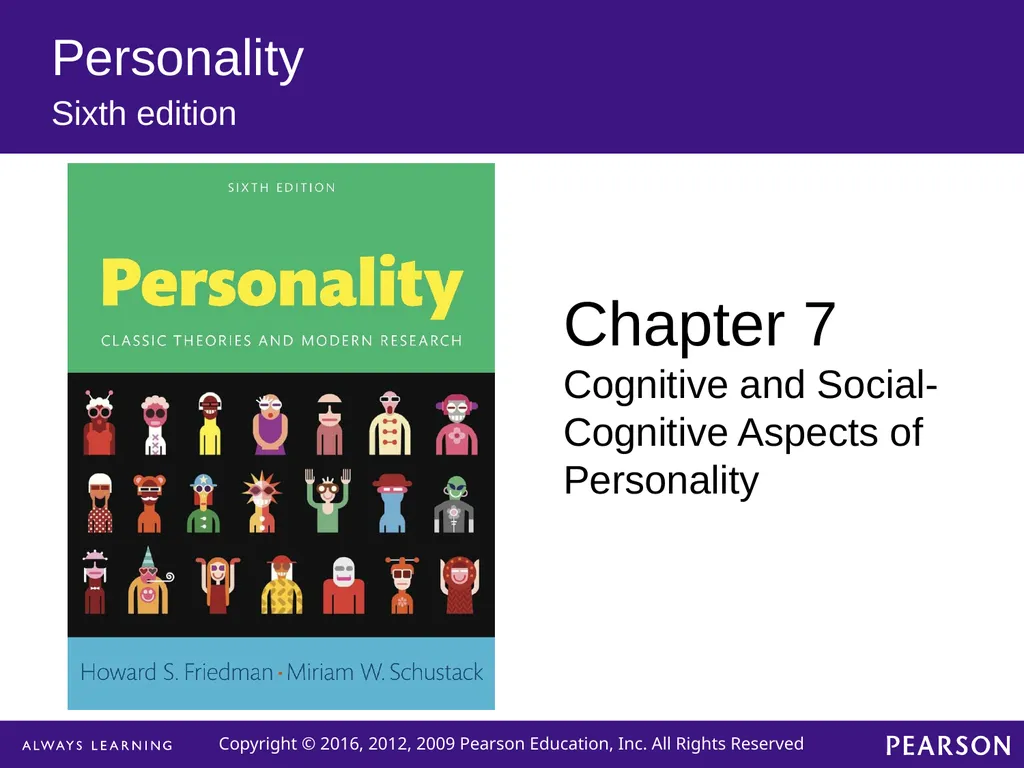
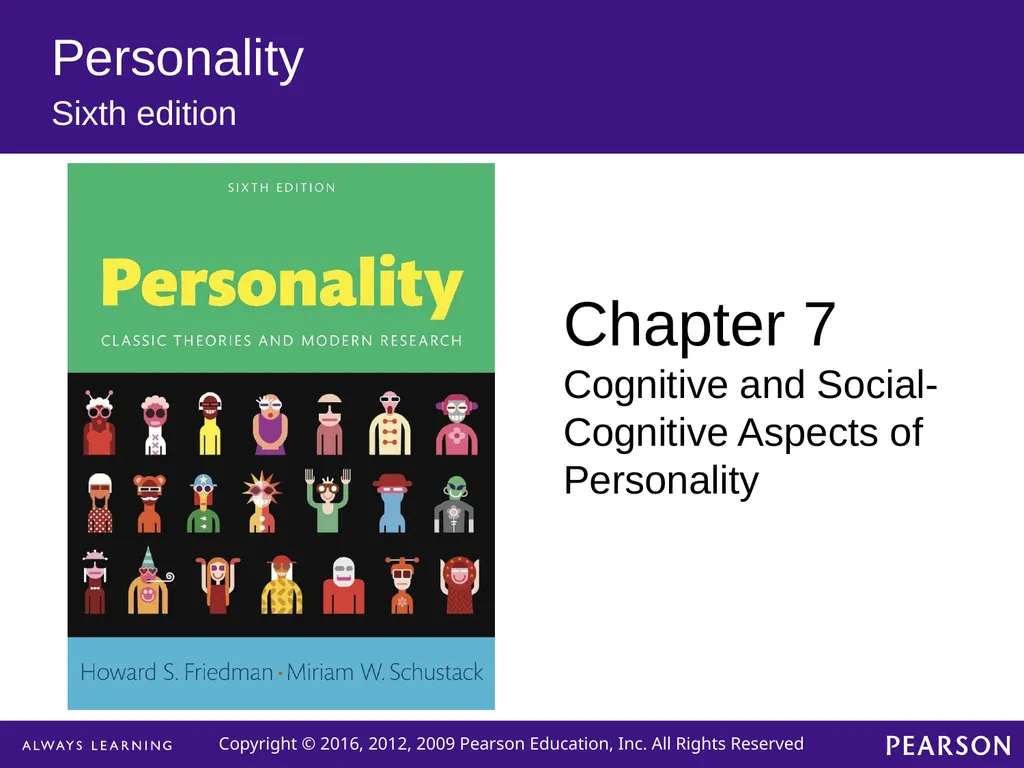
slide1. Personality Sixth edition Chapter 7 Cognitive and Social-Cognitive Aspects of Personality<br>
slide2. Modules (1 of 2) Introduction: Cognitive and Social-Cognitive Aspects of Personality
7.1: Roots of Cognitive Approaches
7.2: Cognitive and Perceptual Mechanisms
7.3: George Kelly’s Personal Construct Theory
7.4: Social Intelligence
7.5: Explanatory Style as a Personality Variable
7.6: Julian Rotter’s Locus of Control Approach<br>
slide3. Modules (2 of 2) 7.7: Albert Bandura’s Social-Cognitive Learning Theory
7.8: Humans as Computers
Conclusion: Cognitive and Social-Cognitive Aspects of Personality<br>
slide4. Learning Objectives (1 of 2) 7.1: Investigate different cognitive approaches to personality
7.2: Analyze the mechanisms of expecting, attending, and information processing
7.3: Express George Kelly's personal construct theory
7.4: Investigate how the concept of social, emotional, and multiple intelligence can be used to understand behavior<br>
slide5. Learning Objectives (2 of 2) 7.5: Discuss the concept of explanatory style as a cognitive personality variable
7.6: Analyze the work done by Julian Rotter
7.7: Describe Albert Bandura’s theory of social-cognitive learning
7.8: Evaluate the process of the creation of virtual personalities<br>
slide6. Introduction: Cognitive and Social-Cognitive Aspects of Personality Cognitive approaches to personality
Social-cognitive aspects of personality<br>
slide7. Objective: Investigate different cognitive approaches to personality Beginning of cognitive psychology
Influences on thinking 7.1: Roots of Cognitive Approaches<br>
slide8. 7.1.1: Roots in Gestalt Psychology Overview
Central tenets<br>
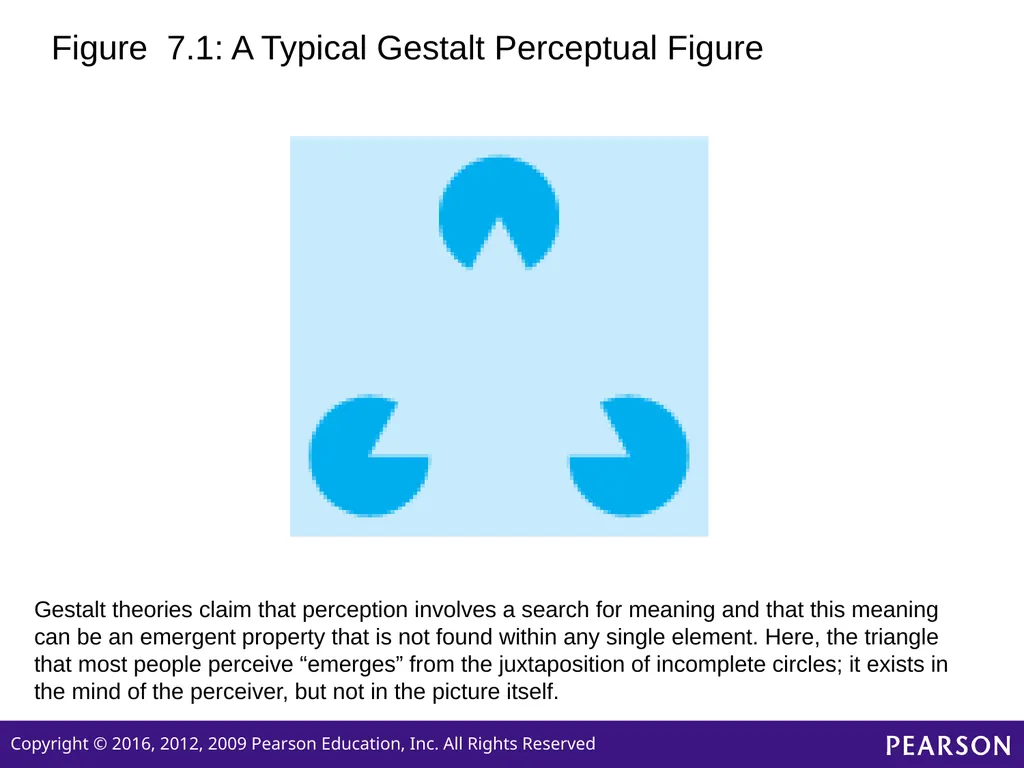
slide9. Figure 7.1: A Typical Gestalt Perceptual Figure Gestalt theories claim that perception involves a search for meaning and that this meaning can be an emergent property that is not found within any single element. Here, the triangle that most people perceive “emerges” from the juxtaposition of incomplete circles; it exists in the mind of the perceiver, but not in the picture itself.<br>
slide10. 7.1.2: Kurt Lewin’s Field Theory Notion of “field”
Focus<br>
slide11. 7.1.3: Cognitive Style Variables Field-dependent style
Field-independent style<br>
slide12. Objective: Analyze the mechanisms of expecting, attending, and information processing Cognitive aspects of personality
Piaget’s contributions 7.2: Cognitive and Perceptual Mechanisms<br>
slide13. 7.2.1: Schema Theory Concept of “schemas”
Activation of schema in given situations<br>
slide14. 7.2.2: Categorization Overview
Factors<br>
slide15. 7.2.3: Control of Attention Overview
Variations in people<br>
slide16. 7.2.4: Individual Differences in Attention Attention-deficit/hyperactivity disorder (ADHD)
Subtypes of ADHD<br>
slide17. 7.2.5: Cognitive Influences on Interpersonal Relationships Influences on people’s interactions
Rejection sensitivity<br>
slide18. Objective: Express George Kelly's personal construct theory Overview
Process 7.3: George Kelly’s Personal Construct Theory<br>
slide19. 7.3.1: Individuals as Amateur Personality Theorists Kelly’s theorizing
Uniqueness of Kelly’s theory<br>
slide20. 7.3.2: The Role Construct Repertory Test Overview
Modern social cognition approaches<br>
slide21. Objective: Investigate how the concept of social, emotional, and multiple intelligence can be used to understand behavior Overview
Emotional intelligence 7.4: Social Intelligence<br>
slide22. Objective: Discuss the concept of explanatory style as a cognitive personality variable Explanatory style
Variations in perspective 7.5: Explanatory Style as a Personality Variable<br>
slide23. 7.5.1: Optimism and Pessimism Optimistic style
Pessimistic style<br>
slide24. 7.5.2: Learned Helplessness and Learned Optimism Learned helplessness
Learned optimism<br>
slide25. Objective: Analyze the work done by Julian Rotter Social-cognitive theory
Rotter’s approach 7.6: Julian Rotter’s Locus of Control Approach<br>
slide26. 7.6.1: Generalized versus Specific Expectancies Specific expectancies
Generalized expectancies<br>
slide27. 7.6.2: The Role of Reinforcements and the Psychological Situation Rotter’s psychological needs
Psychological situation<br>
slide28. 7.6.3: Locus of Control Locus of control
Dimensions of locus of control<br>
slide29. Objective: Describe Albert Bandura’s theory of social-cognitive learning Albert Bandura
Bandura’s inspirations 7.7: Albert Bandura’s Social-Cognitive Learning Theory<br>
slide30. 7.7.1: The Self-System Factors affecting individuals
Bandura’s theory<br>
slide31. 7.7.2: Observational Learning Overview
Influencing factors<br>
slide32. 7.7.3: Self-Efficacy Overview
Four types of information<br>
slide33. 7.7.4: Self-Regulation Processes Process
Relevance<br>
slide34. Objective: Evaluate the process of the creation of virtual personalities Process
Attributions to machines 7.8: Humans as Computers<br>
slide35. Conclusion: Cognitive and Social-Cognitive Aspects of Personality Cognitive approaches to personality
Categorization processes
Personal construct theory
Social intelligence
Explanatory style<br>

slide2. Modules (1 of 2) Introduction: Cognitive and Social-Cognitive Aspects of Personality
7.1: Roots of Cognitive Approaches
7.2: Cognitive and Perceptual Mechanisms
7.3: George Kelly’s Personal Construct Theory
7.4: Social Intelligence
7.5: Explanatory Style as a Personality Variable
7.6: Julian Rotter’s Locus of Control Approach<br>
slide3. Modules (2 of 2) 7.7: Albert Bandura’s Social-Cognitive Learning Theory
7.8: Humans as Computers
Conclusion: Cognitive and Social-Cognitive Aspects of Personality<br>
slide4. Learning Objectives (1 of 2) 7.1: Investigate different cognitive approaches to personality
7.2: Analyze the mechanisms of expecting, attending, and information processing
7.3: Express George Kelly's personal construct theory
7.4: Investigate how the concept of social, emotional, and multiple intelligence can be used to understand behavior<br>
slide5. Learning Objectives (2 of 2) 7.5: Discuss the concept of explanatory style as a cognitive personality variable
7.6: Analyze the work done by Julian Rotter
7.7: Describe Albert Bandura’s theory of social-cognitive learning
7.8: Evaluate the process of the creation of virtual personalities<br>
slide6. Introduction: Cognitive and Social-Cognitive Aspects of Personality Cognitive approaches to personality
Social-cognitive aspects of personality<br>
slide7. Objective: Investigate different cognitive approaches to personality Beginning of cognitive psychology
Influences on thinking 7.1: Roots of Cognitive Approaches<br>
slide8. 7.1.1: Roots in Gestalt Psychology Overview
Central tenets<br>
slide9. Figure 7.1: A Typical Gestalt Perceptual Figure Gestalt theories claim that perception involves a search for meaning and that this meaning can be an emergent property that is not found within any single element. Here, the triangle that most people perceive “emerges” from the juxtaposition of incomplete circles; it exists in the mind of the perceiver, but not in the picture itself.<br>
slide10. 7.1.2: Kurt Lewin’s Field Theory Notion of “field”
Focus<br>
slide11. 7.1.3: Cognitive Style Variables Field-dependent style
Field-independent style<br>
slide12. Objective: Analyze the mechanisms of expecting, attending, and information processing Cognitive aspects of personality
Piaget’s contributions 7.2: Cognitive and Perceptual Mechanisms<br>
slide13. 7.2.1: Schema Theory Concept of “schemas”
Activation of schema in given situations<br>
slide14. 7.2.2: Categorization Overview
Factors<br>
slide15. 7.2.3: Control of Attention Overview
Variations in people<br>
slide16. 7.2.4: Individual Differences in Attention Attention-deficit/hyperactivity disorder (ADHD)
Subtypes of ADHD<br>
slide17. 7.2.5: Cognitive Influences on Interpersonal Relationships Influences on people’s interactions
Rejection sensitivity<br>
slide18. Objective: Express George Kelly's personal construct theory Overview
Process 7.3: George Kelly’s Personal Construct Theory<br>
slide19. 7.3.1: Individuals as Amateur Personality Theorists Kelly’s theorizing
Uniqueness of Kelly’s theory<br>
slide20. 7.3.2: The Role Construct Repertory Test Overview
Modern social cognition approaches<br>
slide21. Objective: Investigate how the concept of social, emotional, and multiple intelligence can be used to understand behavior Overview
Emotional intelligence 7.4: Social Intelligence<br>
slide22. Objective: Discuss the concept of explanatory style as a cognitive personality variable Explanatory style
Variations in perspective 7.5: Explanatory Style as a Personality Variable<br>
slide23. 7.5.1: Optimism and Pessimism Optimistic style
Pessimistic style<br>
slide24. 7.5.2: Learned Helplessness and Learned Optimism Learned helplessness
Learned optimism<br>
slide25. Objective: Analyze the work done by Julian Rotter Social-cognitive theory
Rotter’s approach 7.6: Julian Rotter’s Locus of Control Approach<br>
slide26. 7.6.1: Generalized versus Specific Expectancies Specific expectancies
Generalized expectancies<br>
slide27. 7.6.2: The Role of Reinforcements and the Psychological Situation Rotter’s psychological needs
Psychological situation<br>
slide28. 7.6.3: Locus of Control Locus of control
Dimensions of locus of control<br>
slide29. Objective: Describe Albert Bandura’s theory of social-cognitive learning Albert Bandura
Bandura’s inspirations 7.7: Albert Bandura’s Social-Cognitive Learning Theory<br>
slide30. 7.7.1: The Self-System Factors affecting individuals
Bandura’s theory<br>
slide31. 7.7.2: Observational Learning Overview
Influencing factors<br>
slide32. 7.7.3: Self-Efficacy Overview
Four types of information<br>
slide33. 7.7.4: Self-Regulation Processes Process
Relevance<br>
slide34. Objective: Evaluate the process of the creation of virtual personalities Process
Attributions to machines 7.8: Humans as Computers<br>
slide35. Conclusion: Cognitive and Social-Cognitive Aspects of Personality Cognitive approaches to personality
Categorization processes
Personal construct theory
Social intelligence
Explanatory style<br>