
Phase Five: Review and Reflection “During the PTR

Description: Phase Five: Review and Reflection During the PTR process, I had some huh? moments before aha! moments. However, now having gone through the process, I think that it can be effectively applied to other areas with valuable results. -
Related Topics
Download Presentation
"Phase Five: Review and Reflection “During the PTR" is the property of its rightful owner. Permission is granted to download and print the materials on this website for personal, non-commercial use only, and to display it on your personal computer provided you do not modify the materials and that you retain all copyright notices contained in the materials. By downloading content from our website, you accept the terms of this agreement.
Presentation Transcript
slide1. Phase Five: Review and Reflection<br>
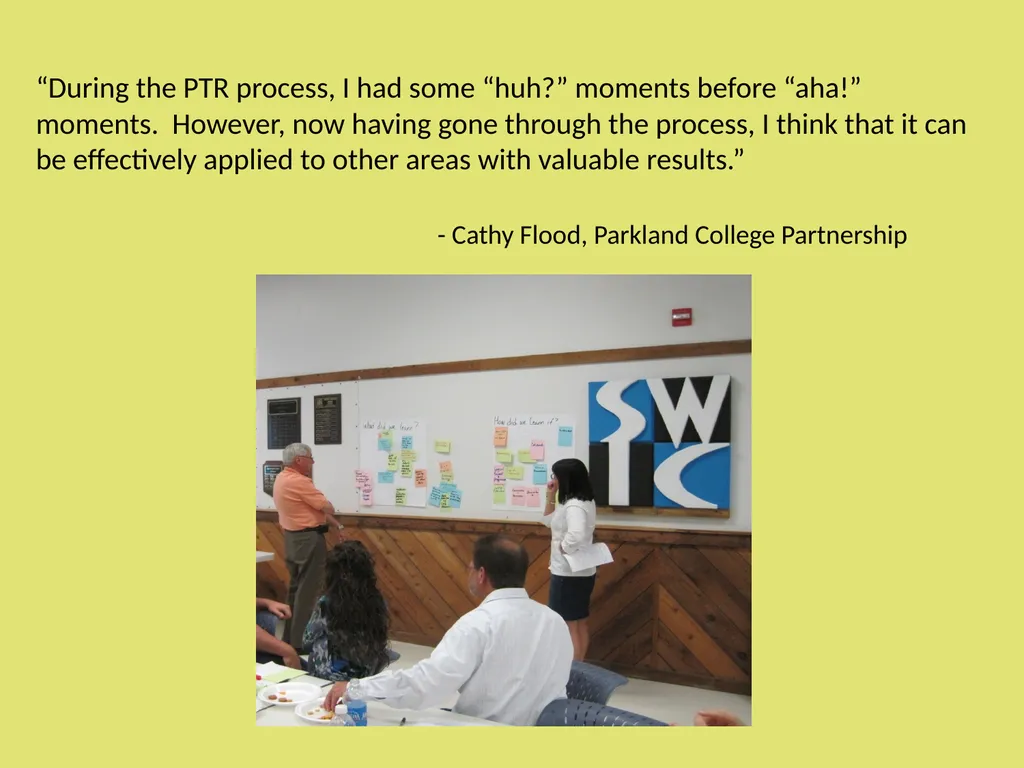
slide2. “During the PTR process, I had some “huh?” moments before “aha!” moments. However, now having gone through the process, I think that it can be effectively applied to other areas with valuable results.” - Cathy Flood, Parkland College Partnership<br>
slide3. Purpose and Goals To review and reflect on results of PTR
Document what individuals and team learned in the PTR process.
To identify ways PTR can be extended to other Programs of Study
To develop plans to sustain PTR solution<br>
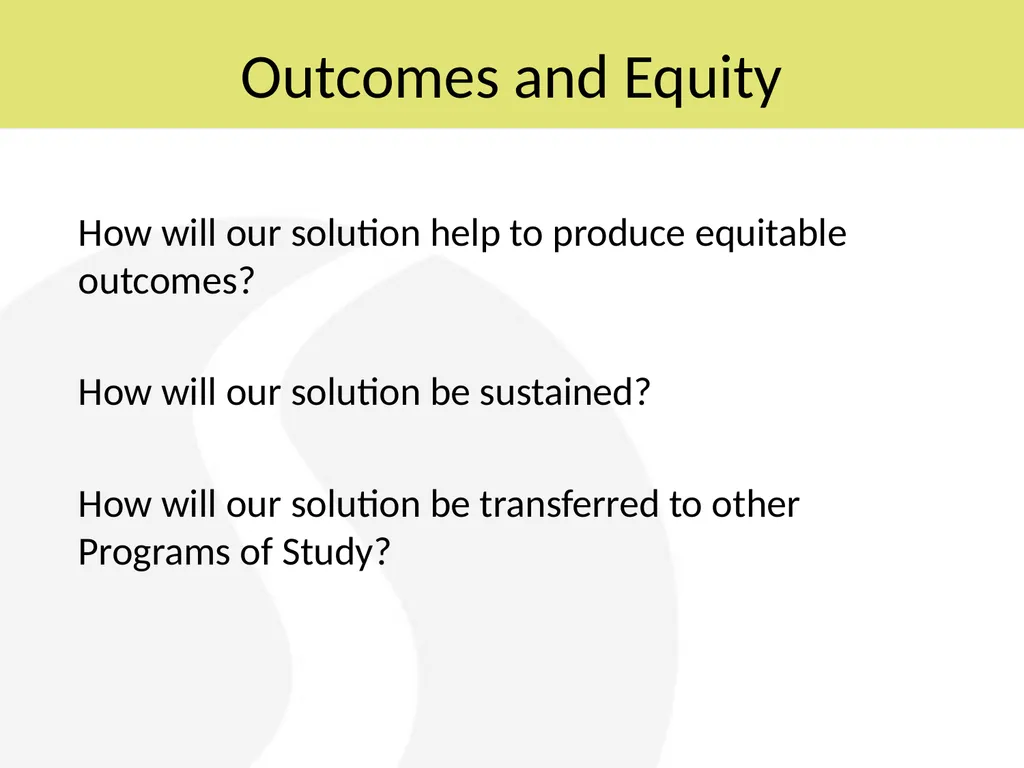
slide4. Outcomes and Equity How will our solution help to produce equitable outcomes?
How will our solution be sustained?
How will our solution be transferred to other Programs of Study?<br>
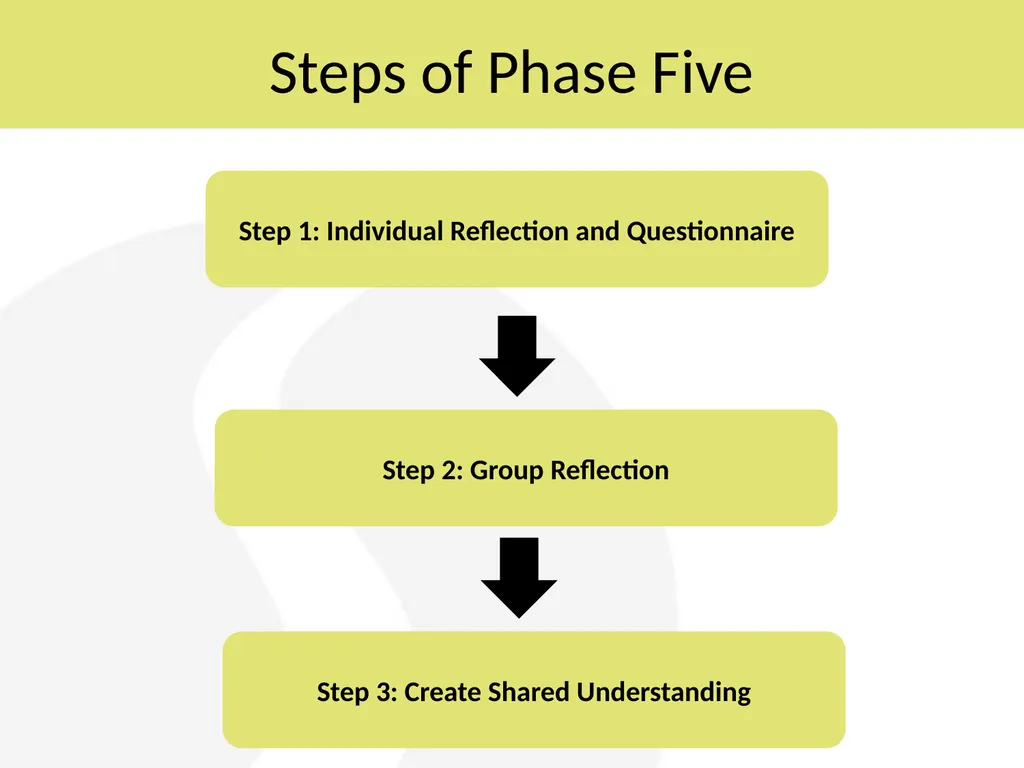
slide5. Step 1: Individual Reflection and Questionnaire Step 2: Group Reflection Steps of Phase Five Step 3: Create Shared Understanding<br>
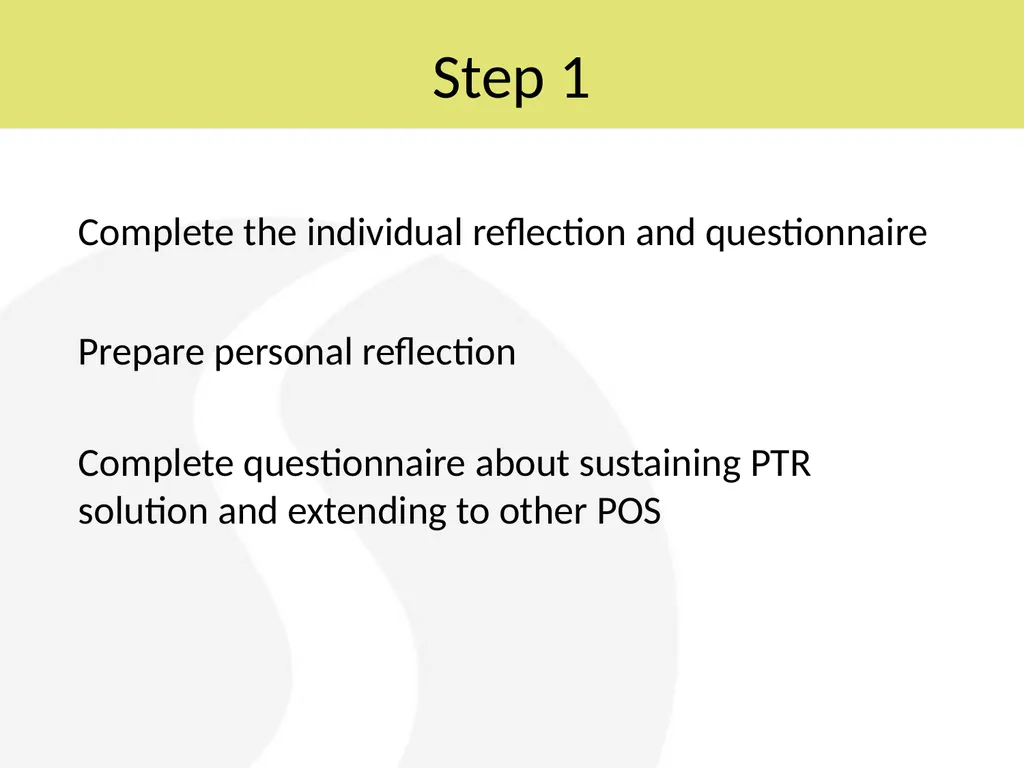
slide6. Step 1 Complete the individual reflection and questionnaire
Prepare personal reflection
Complete questionnaire about sustaining PTR solution and extending to other POS<br>
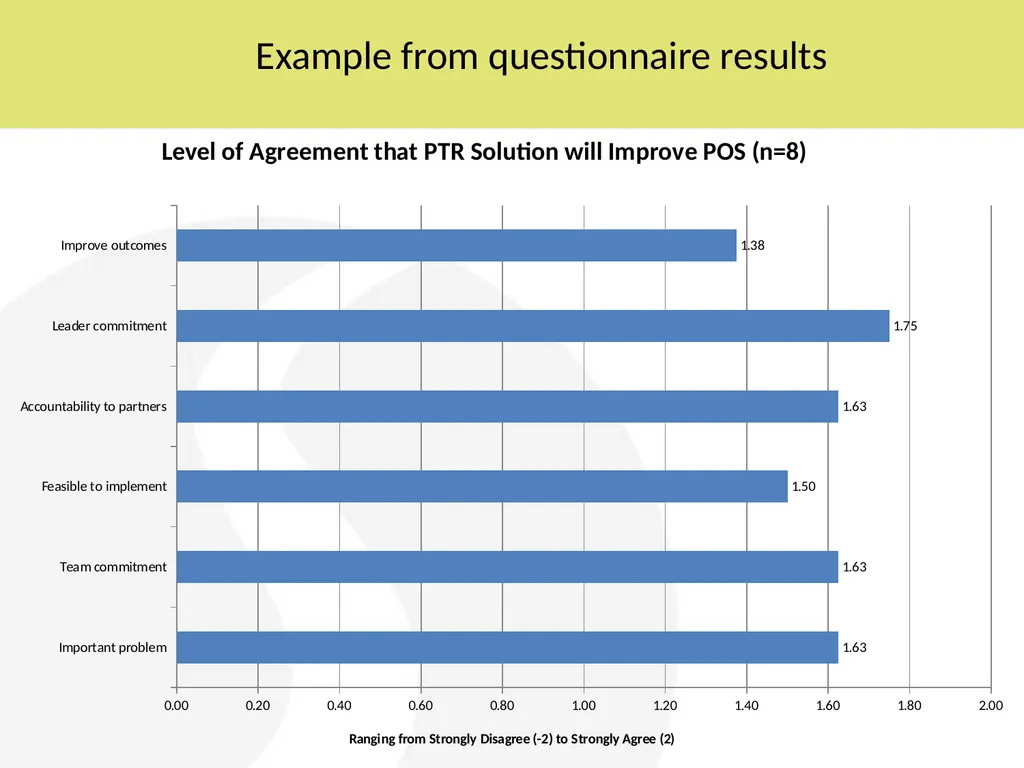
slide7. Example from questionnaire results<br>
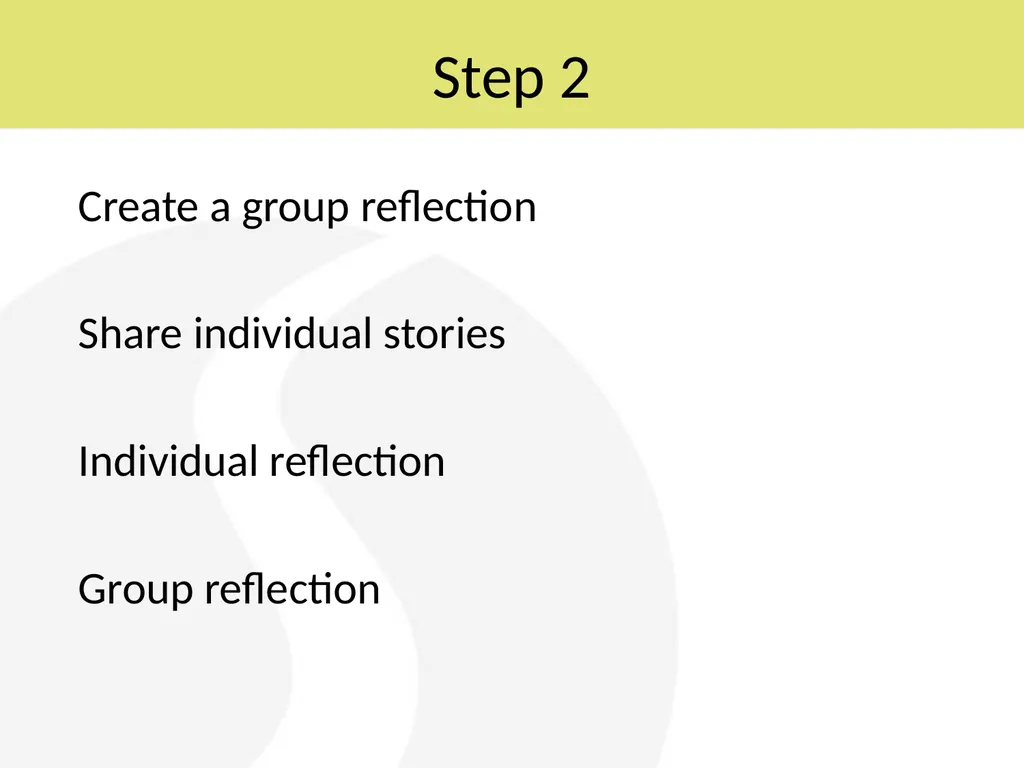
slide8. Step 2 Create a group reflection
Share individual stories
Individual reflection
Group reflection<br>
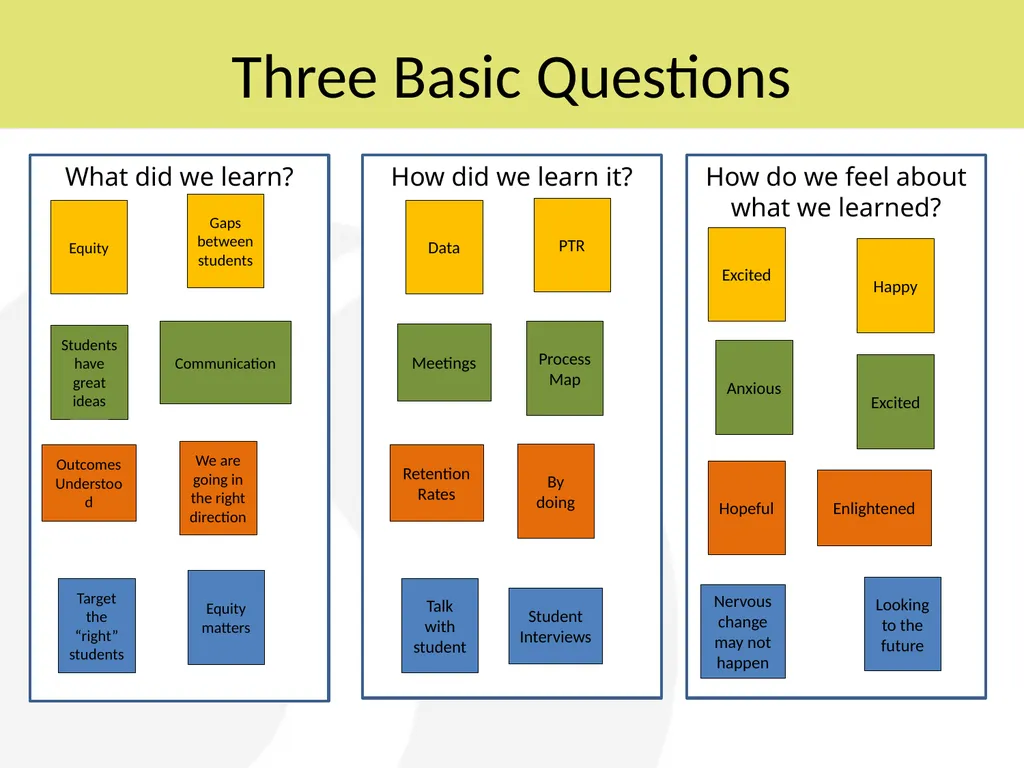
slide9. Three Basic Questions What did we learn? How did we learn it? How do we feel about what we learned? Students have great ideas Process Map Meetings Student Interviews By doing Retention Rates Talk with student We are going in the right direction Outcomes Understood Looking to the future Nervous change may not happen Enlightened Hopeful Excited Anxious Equity matters Target the “right” students PTR Data Happy Excited Communication Equity Gaps between students<br>
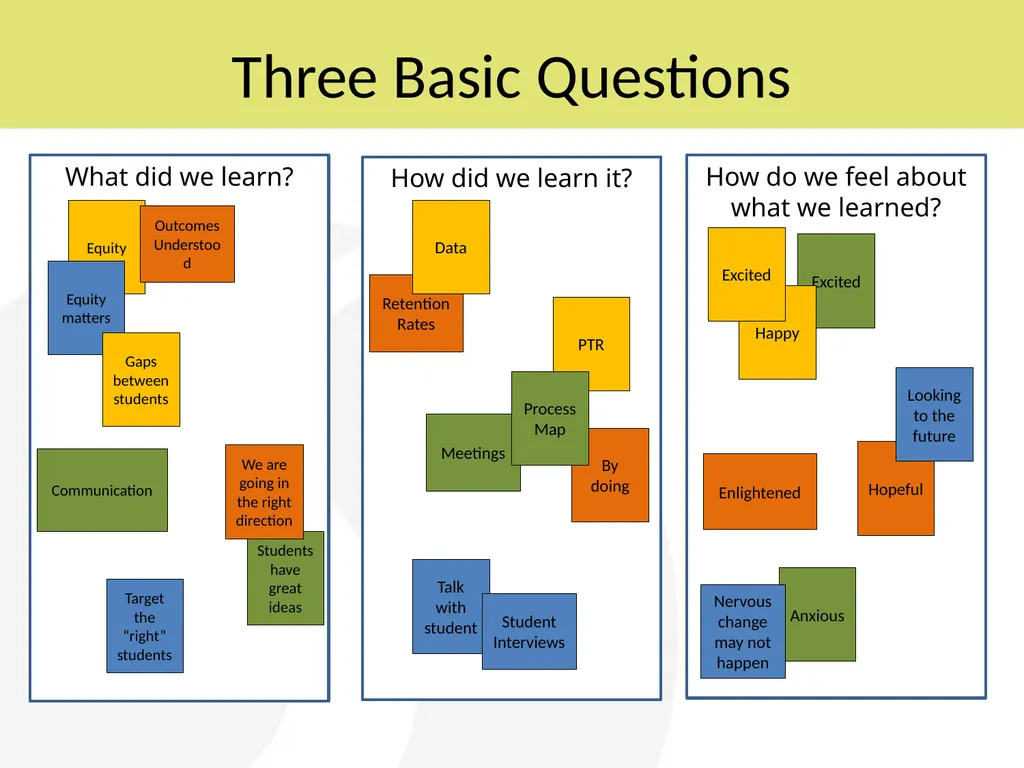
slide10. Three Basic Questions What did we learn? How did we learn it? How do we feel about what we learned? Students have great ideas Meetings By doing Retention Rates Talk with student We are going in the right direction Enlightened Hopeful Excited Anxious Target the “right” students PTR Data Happy Excited Communication Equity Equity matters Gaps between students Outcomes Understood Student Interviews Process Map Nervous change may not happen Looking to the future<br>
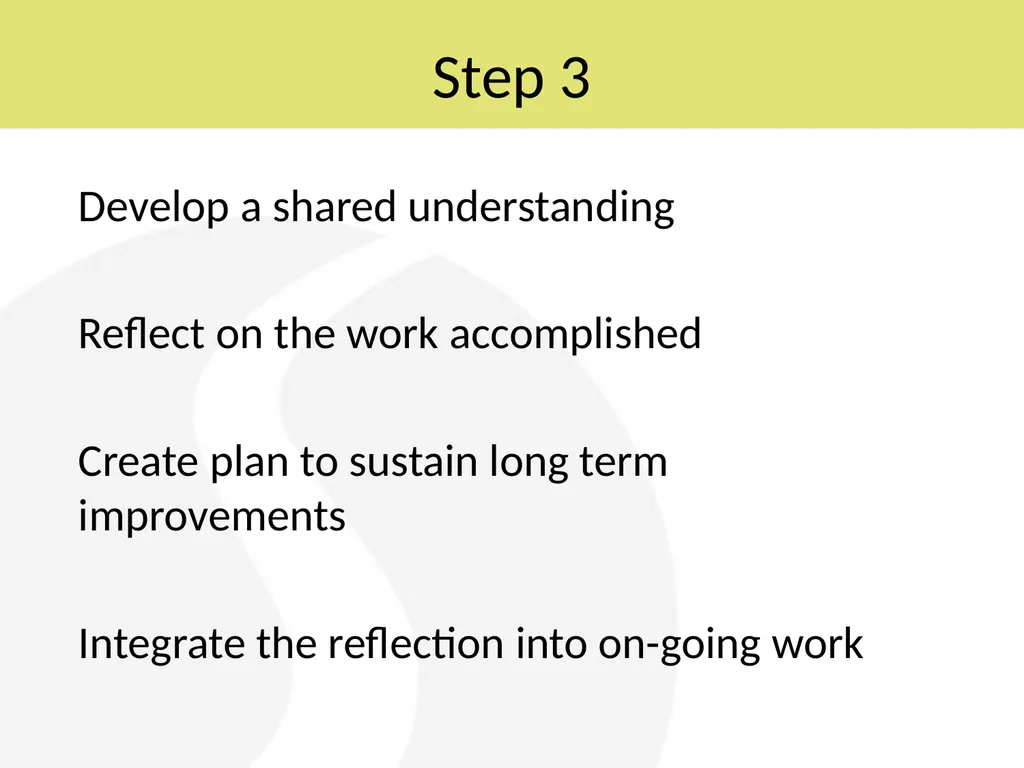
slide11. Step 3 Develop a shared understanding
Reflect on the work accomplished
Create plan to sustain long term improvements
Integrate the reflection into on-going work<br>
slide12. “It seemed that every meeting had a snowball effect. Review, revision, and
program improvement in one area had positive effects on another.”
- Sherry Hott, Southwestern Illinois College Partnership<br>
slide13. Phase 5 In Practice<br>
slide14. Phase Five Webpage This link takes you to tools and support materials that your team needs to complete Phase Five.
http://occrl.illinois.edu/projects/pathways/phases/5<br>
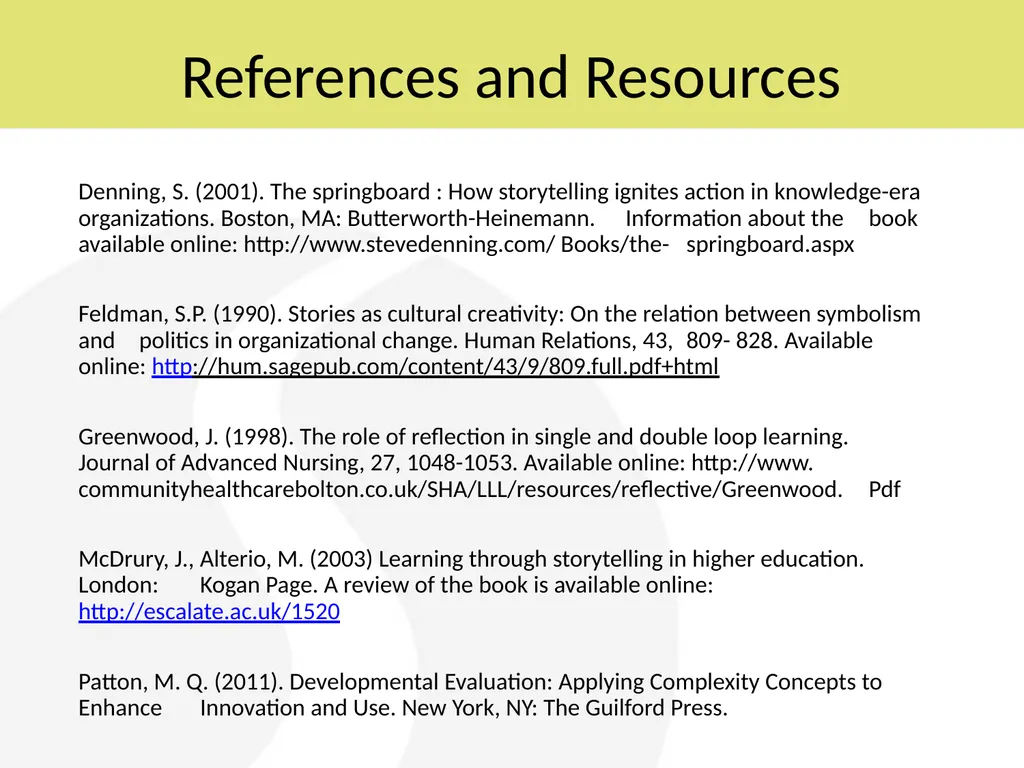
slide15. References and Resources Denning, S. (2001). The springboard : How storytelling ignites action in knowledge-era organizations. Boston, MA: Butterworth-Heinemann. Information about the book available online: http://www.stevedenning.com/ Books/the- springboard.aspx
Feldman, S.P. (1990). Stories as cultural creativity: On the relation between symbolism and politics in organizational change. Human Relations, 43, 809- 828. Available online: http://hum.sagepub.com/content/43/9/809.full.pdf+html
Greenwood, J. (1998). The role of reflection in single and double loop learning. Journal of Advanced Nursing, 27, 1048-1053. Available online: http://www. communityhealthcarebolton.co.uk/SHA/LLL/resources/reflective/Greenwood. Pdf
McDrury, J., Alterio, M. (2003) Learning through storytelling in higher education. London: Kogan Page. A review of the book is available online: http://escalate.ac.uk/1520
Patton, M. Q. (2011). Developmental Evaluation: Applying Complexity Concepts to Enhance Innovation and Use. New York, NY: The Guilford Press.<br>
slide16. OCCRL OCCRL – e-mail: occrl@illinois.edu
PH: 217-244-9390
Website: occrl.illinois.edu
PTR website: http://occrl.illinois.edu/projects/pathways<br>
slide2. “During the PTR process, I had some “huh?” moments before “aha!” moments. However, now having gone through the process, I think that it can be effectively applied to other areas with valuable results.” - Cathy Flood, Parkland College Partnership<br>
slide3. Purpose and Goals To review and reflect on results of PTR
Document what individuals and team learned in the PTR process.
To identify ways PTR can be extended to other Programs of Study
To develop plans to sustain PTR solution<br>
slide4. Outcomes and Equity How will our solution help to produce equitable outcomes?
How will our solution be sustained?
How will our solution be transferred to other Programs of Study?<br>
slide5. Step 1: Individual Reflection and Questionnaire Step 2: Group Reflection Steps of Phase Five Step 3: Create Shared Understanding<br>
slide6. Step 1 Complete the individual reflection and questionnaire
Prepare personal reflection
Complete questionnaire about sustaining PTR solution and extending to other POS<br>
slide7. Example from questionnaire results<br>
slide8. Step 2 Create a group reflection
Share individual stories
Individual reflection
Group reflection<br>
slide9. Three Basic Questions What did we learn? How did we learn it? How do we feel about what we learned? Students have great ideas Process Map Meetings Student Interviews By doing Retention Rates Talk with student We are going in the right direction Outcomes Understood Looking to the future Nervous change may not happen Enlightened Hopeful Excited Anxious Equity matters Target the “right” students PTR Data Happy Excited Communication Equity Gaps between students<br>
slide10. Three Basic Questions What did we learn? How did we learn it? How do we feel about what we learned? Students have great ideas Meetings By doing Retention Rates Talk with student We are going in the right direction Enlightened Hopeful Excited Anxious Target the “right” students PTR Data Happy Excited Communication Equity Equity matters Gaps between students Outcomes Understood Student Interviews Process Map Nervous change may not happen Looking to the future<br>
slide11. Step 3 Develop a shared understanding
Reflect on the work accomplished
Create plan to sustain long term improvements
Integrate the reflection into on-going work<br>
slide12. “It seemed that every meeting had a snowball effect. Review, revision, and
program improvement in one area had positive effects on another.”
- Sherry Hott, Southwestern Illinois College Partnership<br>
slide13. Phase 5 In Practice<br>
slide14. Phase Five Webpage This link takes you to tools and support materials that your team needs to complete Phase Five.
http://occrl.illinois.edu/projects/pathways/phases/5<br>
slide15. References and Resources Denning, S. (2001). The springboard : How storytelling ignites action in knowledge-era organizations. Boston, MA: Butterworth-Heinemann. Information about the book available online: http://www.stevedenning.com/ Books/the- springboard.aspx
Feldman, S.P. (1990). Stories as cultural creativity: On the relation between symbolism and politics in organizational change. Human Relations, 43, 809- 828. Available online: http://hum.sagepub.com/content/43/9/809.full.pdf+html
Greenwood, J. (1998). The role of reflection in single and double loop learning. Journal of Advanced Nursing, 27, 1048-1053. Available online: http://www. communityhealthcarebolton.co.uk/SHA/LLL/resources/reflective/Greenwood. Pdf
McDrury, J., Alterio, M. (2003) Learning through storytelling in higher education. London: Kogan Page. A review of the book is available online: http://escalate.ac.uk/1520
Patton, M. Q. (2011). Developmental Evaluation: Applying Complexity Concepts to Enhance Innovation and Use. New York, NY: The Guilford Press.<br>
slide16. OCCRL OCCRL – e-mail: occrl@illinois.edu
PH: 217-244-9390
Website: occrl.illinois.edu
PTR website: http://occrl.illinois.edu/projects/pathways<br>