PHONETICS Semester: V DSE:1A Unit-1 (SPEECH ORGAN) Introduction Phonetics is a component of linguistics that deals with the Articulation, Transmission and Reception of speech sounds The organs of our body that help us to speak can be
"PHONETICS Semester: V DSE:1A Unit-1 (SPEECH ORGAN)" is the property of its rightful owner. Permission is granted to
download and print the materials on this website for personal, non-commercial use only, and to display it
on your personal computer provided you do not modify the materials and that you retain all copyright
notices contained in the materials. By downloading content from our website, you accept the terms of this
agreement.
Presentation Transcript
01
PHONETICS Semester: V
DSE:1A
Unit-1 (SPEECH ORGAN)<br>
02
Introduction
Phonetics is a component of linguistics that deals with the Articulation, Transmission and Reception of speech sounds The organs of our body that help us to speak can be divided into three groups. Each group of human organs that help people to speak forms a system. The way in which these three system help us to speak is called the Speech Mechanism. These three systems are :
A): THE RESPIRATORY SYSTEM (Lies in the Trunk of body that is from the Neck to the Abdomen).
B) :THE ARTICULATORY SYSTEM (lies in the Head and Neck).
C) : THE PHONATORY SYSTEM(lies in the throat and Neck).<br>
03
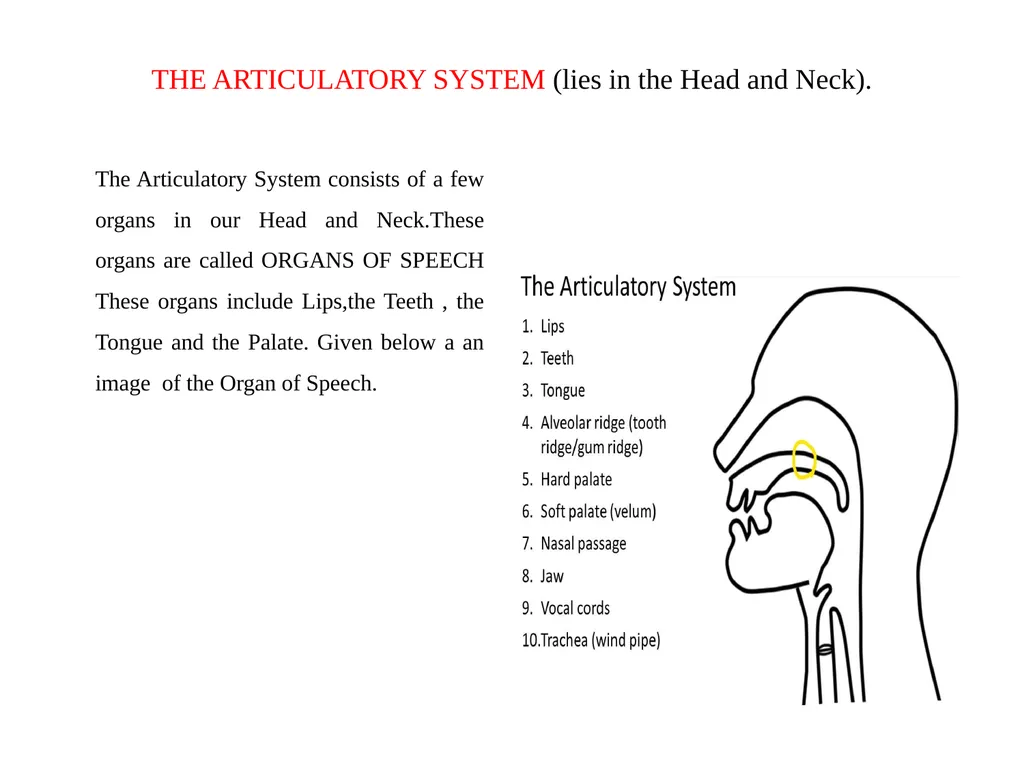
THE ARTICULATORY SYSTEM (lies in the Head and Neck). The Articulatory System consists of a few organs in our Head and Neck.These organs are called ORGANS OF SPEECH These organs include Lips,the Teeth , the Tongue and the Palate. Given below a an image of the Organ of Speech.<br>
04
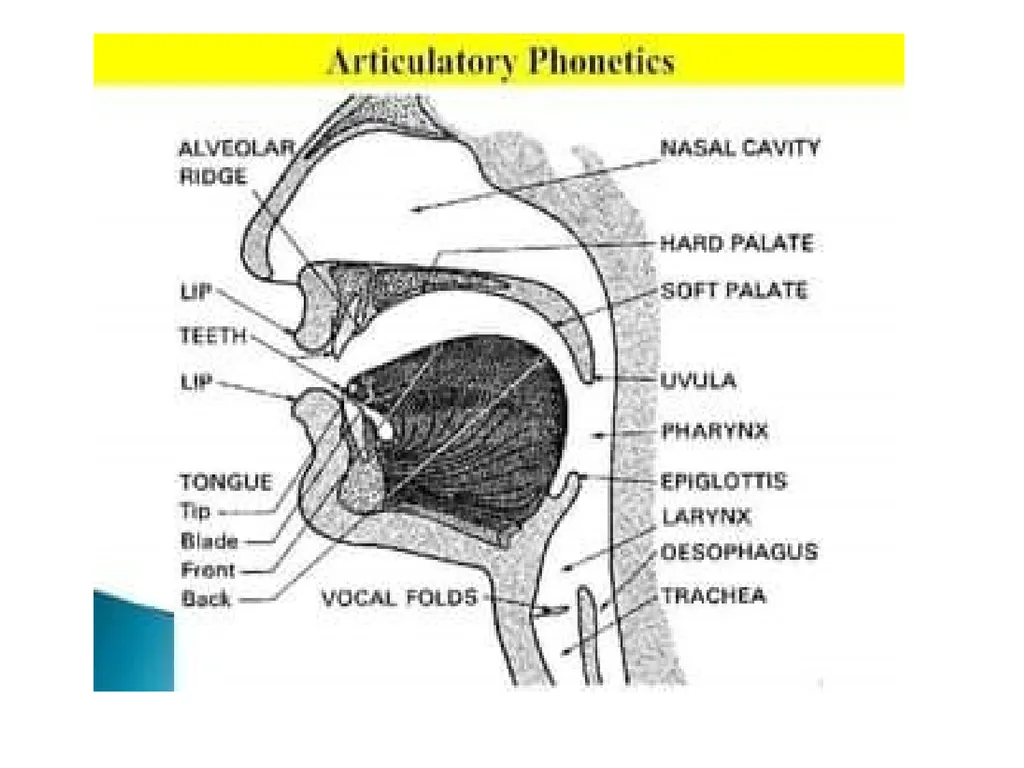
ROOF OF THE MOUTH In articulation, the part called the Roof of the Mouth is divided into four parts and the tongue is divided in six parts. The different parts of Roof of the Mouth and the tongue are given in figure three
Immediately after the front teeth ( in the upper row), there is a hard surface on the roof of the mouth. This is called Teeth Ridge or ALVEOUM. After the Teeth ridge the roof of the mouth changes its shape, but continues to be hard and bony. This part is called HARD PALATE. After this the roof of the mouth becomes soft and fleshy. This part is called SOFT PALATE or the VELUM. After the soft Palate there is soft, fleshy part hanging loose. This is called UVULA.<br>
05
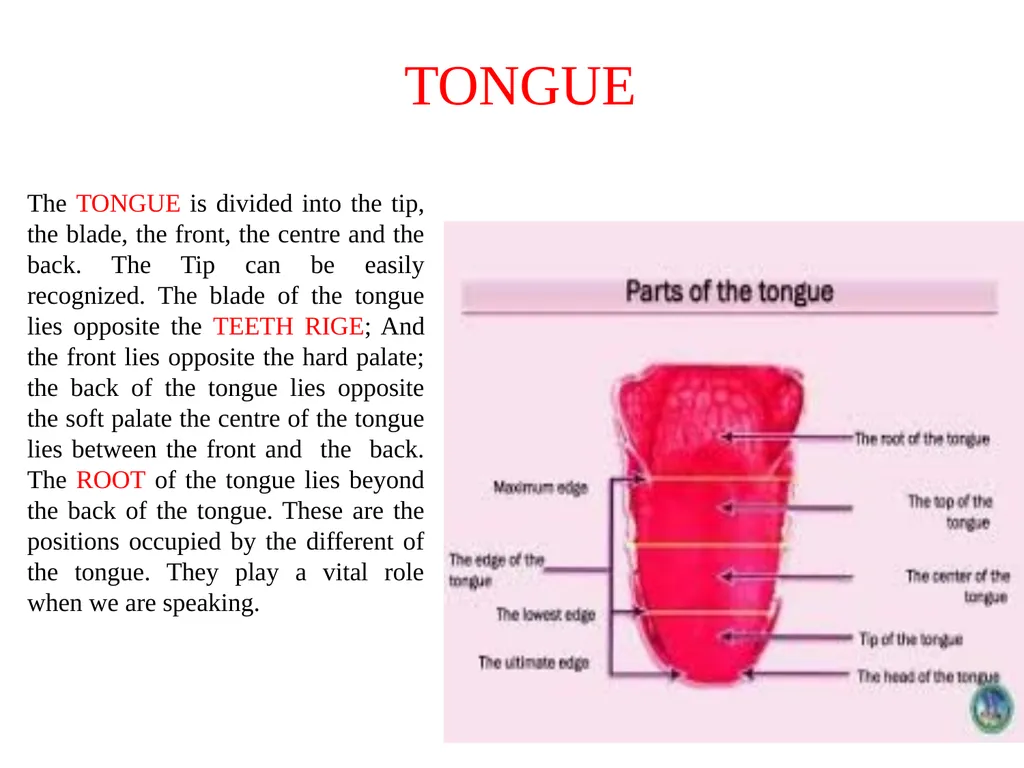
The TONGUE is divided into the tip, the blade, the front, the centre and the back. The Tip can be easily recognized. The blade of the tongue lies opposite the TEETH RIGE; And the front lies opposite the hard palate; the back of the tongue lies opposite the soft palate the centre of the tongue lies between the front and the back. The ROOT of the tongue lies beyond the back of the tongue. These are the positions occupied by the different of the tongue. They play a vital role when we are speaking. TONGUE<br>