Police Body-Worn Cameras (BWC): Practical, Policy, and Legal Implications Dr. Michael White Professor, Arizona State University Co-Director, Training and Technical Assistance, BJA BWC Policy and Implementation Program (PIP) Leadership
"Police Body-Worn Cameras (BWC): Practical, Policy," is the property of its rightful owner. Permission is granted to
download and print the materials on this website for personal, non-commercial use only, and to display it
on your personal computer provided you do not modify the materials and that you retain all copyright
notices contained in the materials. By downloading content from our website, you accept the terms of this
agreement.
Presentation Transcript
01
Police Body-Worn Cameras (BWC): Practical, Policy, and Legal Implications Dr. Michael White
Professor, Arizona State University
Co-Director, Training and Technical Assistance, BJA BWC Policy and Implementation Program (PIP)
Leadership Conference, National Association for Presiding Judges & Court Executive Officers
September 24-27, 2017, Scottsdale, AZ<br>
02
Presentation Overview The Backdrop: Why BWCs?
Primary Claims by Advocates and Critics
BWC Research: Four Key Findings
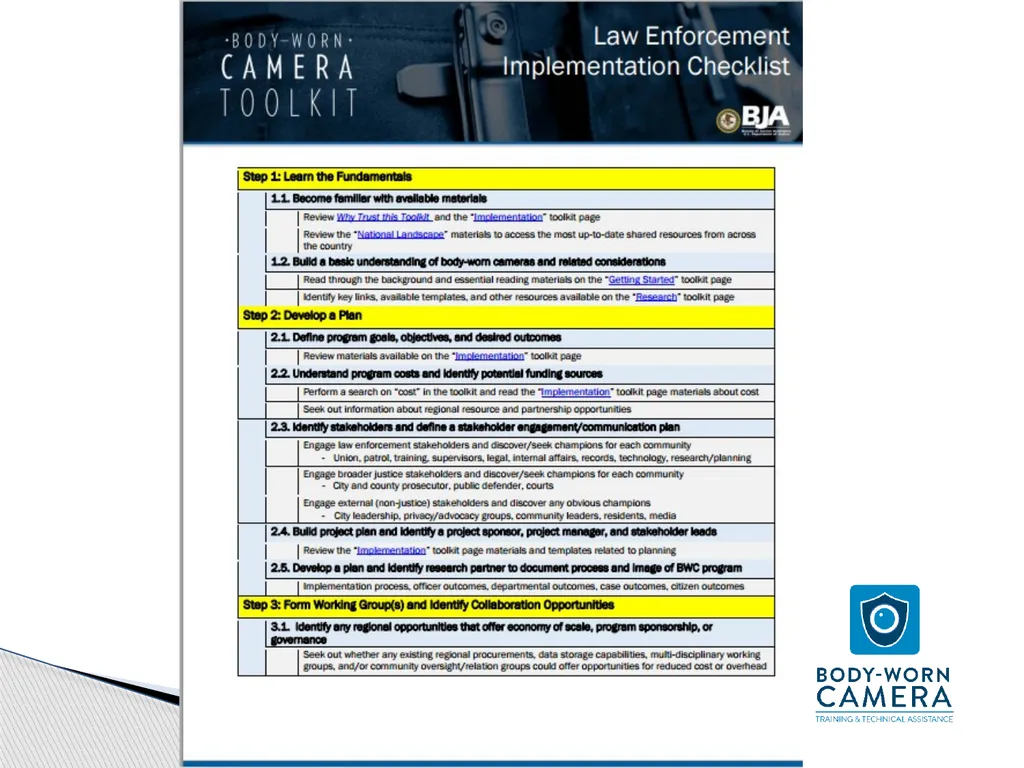
The BJA National BWC Toolkit & Other Resources<br>
03
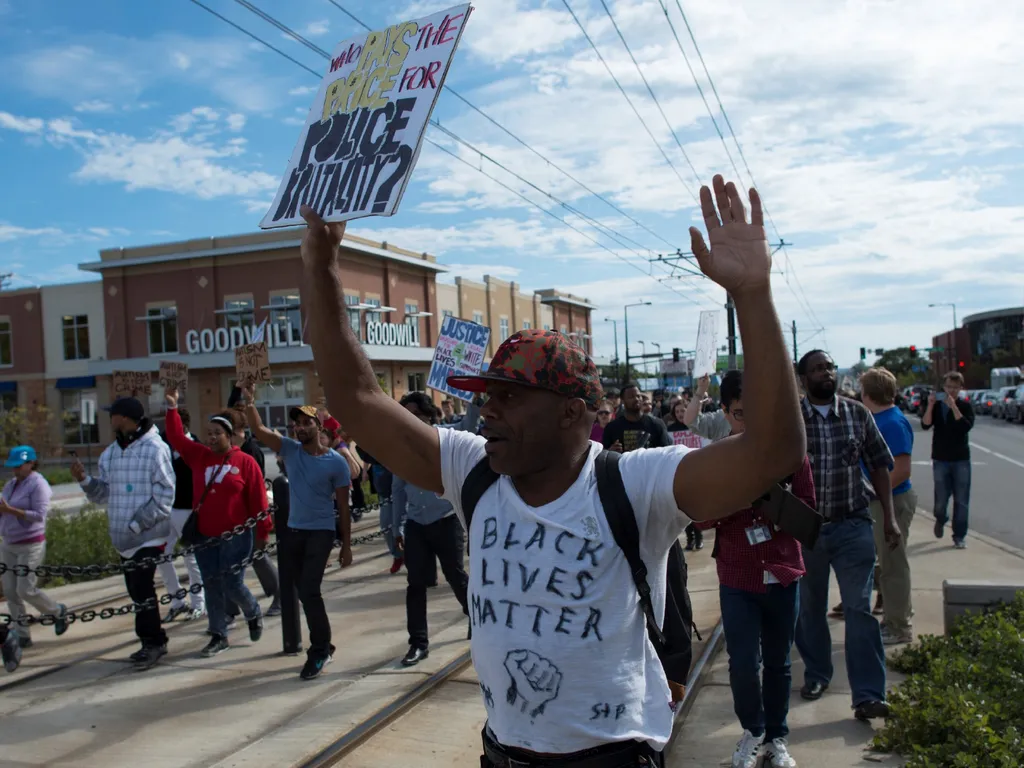
The Backdrop: Why BWCs?<br>
04
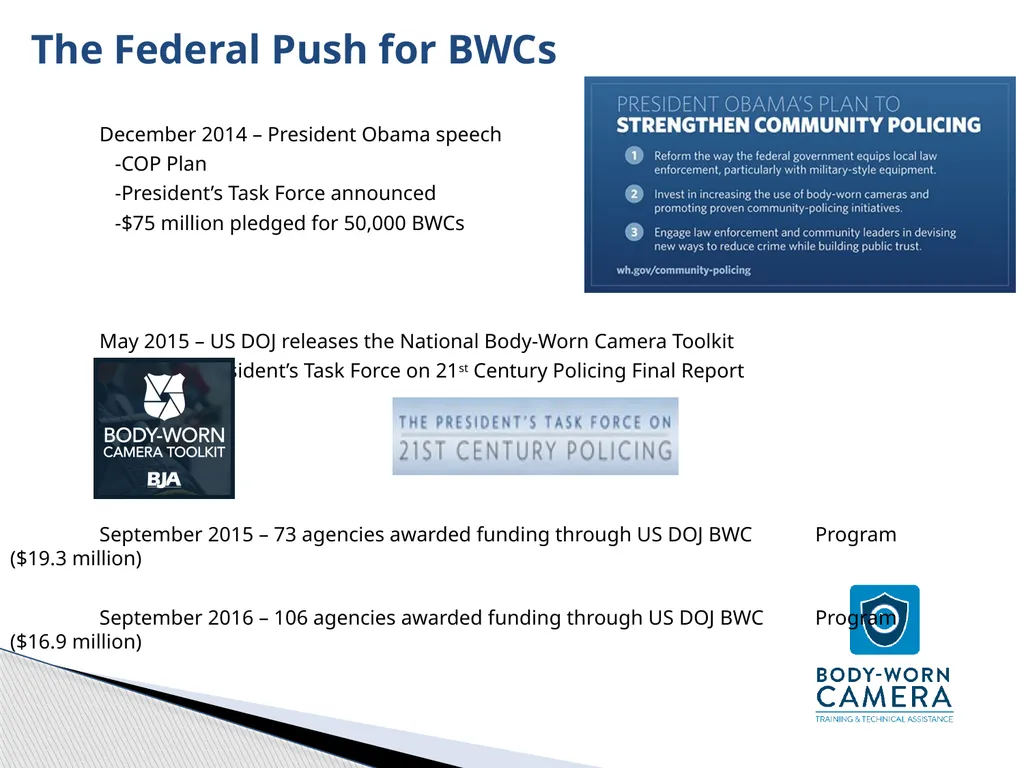
The Federal Push for BWCs December 2014 – President Obama speech
-COP Plan
-President’s Task Force announced
-$75 million pledged for 50,000 BWCs
May 2015 – US DOJ releases the National Body-Worn Camera Toolkit
President’s Task Force on 21st Century Policing Final Report
September 2015 – 73 agencies awarded funding through US DOJ BWC Program ($19.3 million)
September 2016 – 106 agencies awarded funding through US DOJ BWC Program ($16.9 million)<br>
05
Primary Claims by Advocates and Critics<br>
06
Potential Benefits<br>
07
Concerns and Consequences<br>
08
BWC Research: Four Key Findings<br>
09
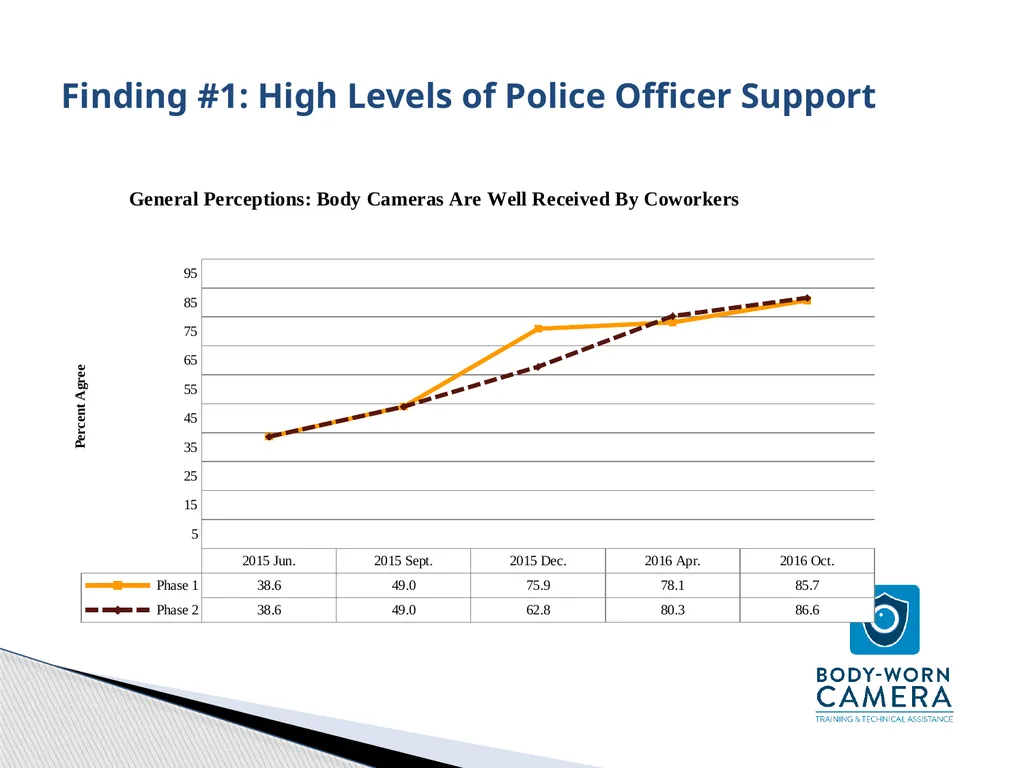
Finding #1: High Levels of Police Officer Support<br>
10
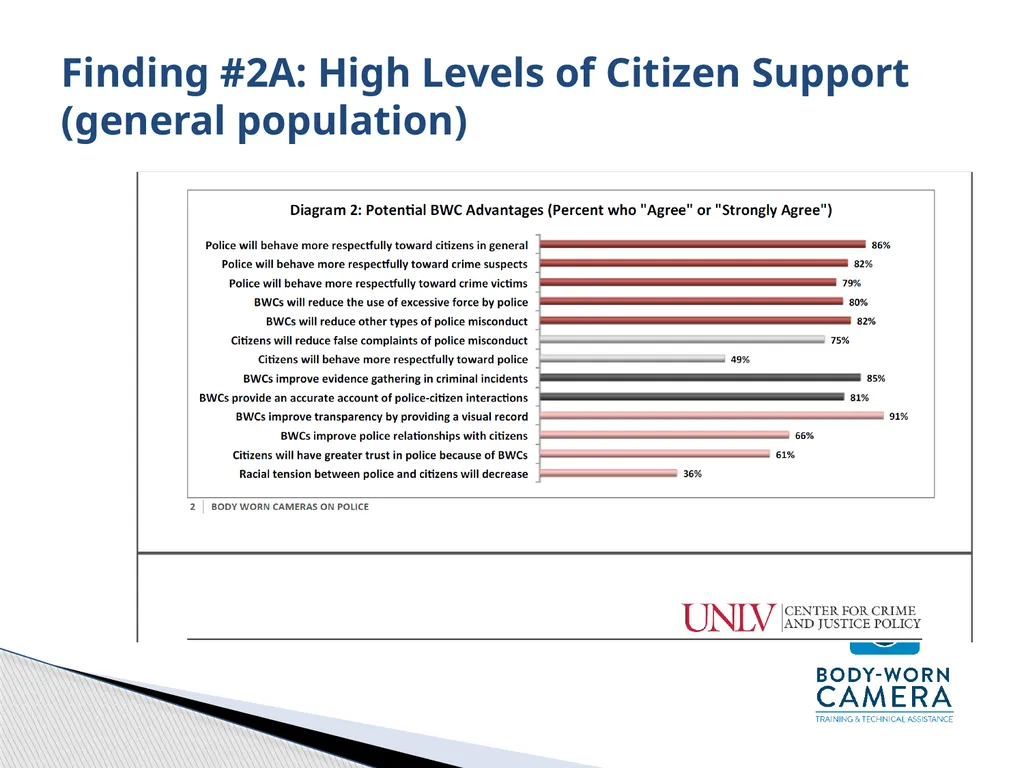
Finding #2A: High Levels of Citizen Support (general population)<br>
11
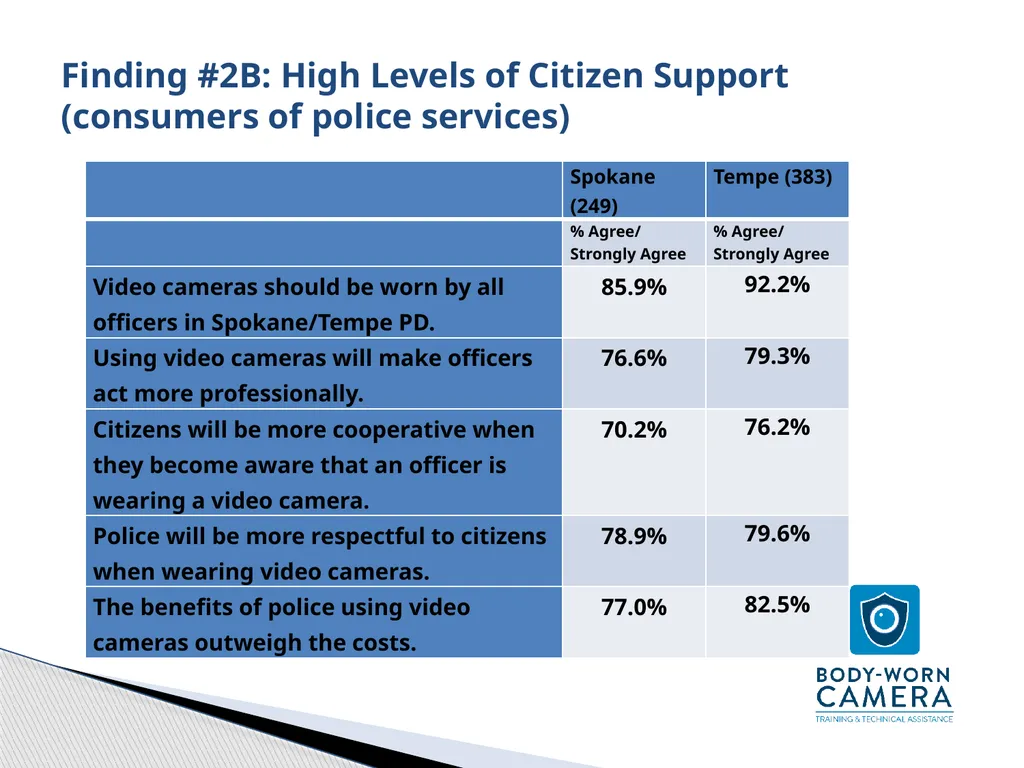
Finding #2B: High Levels of Citizen Support (consumers of police services)<br>
12
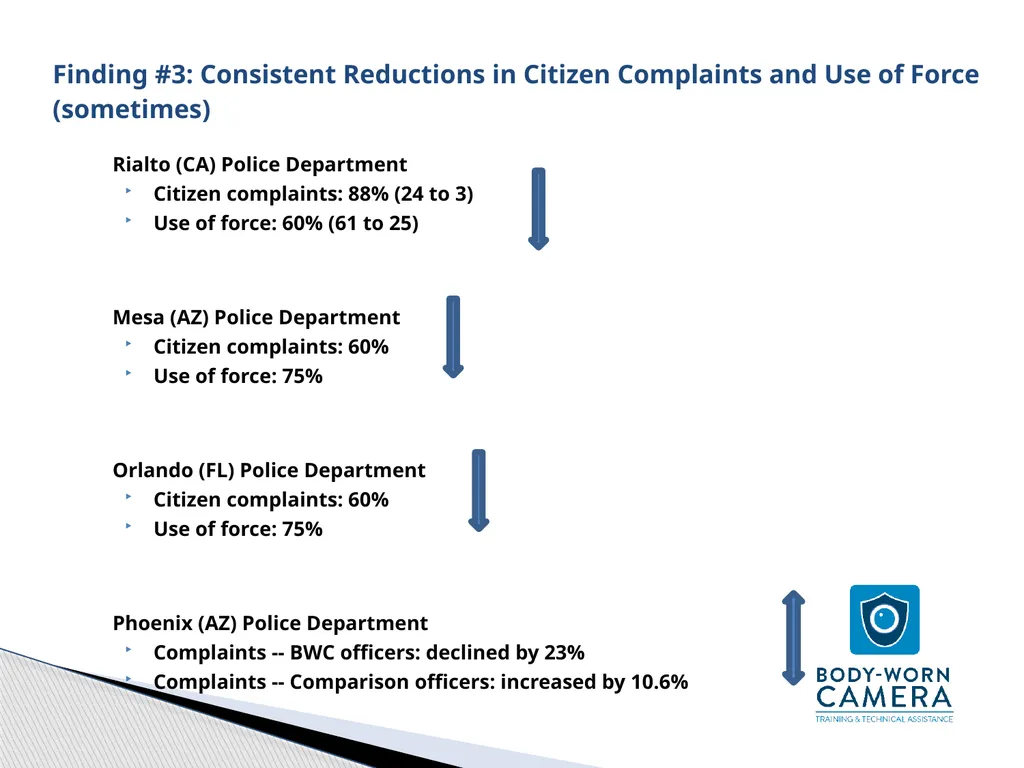
Finding #3: Consistent Reductions in Citizen Complaints and Use of Force (sometimes) Rialto (CA) Police Department
Citizen complaints: 88% (24 to 3)
Use of force: 60% (61 to 25)
Mesa (AZ) Police Department
Citizen complaints: 60%
Use of force: 75%
Orlando (FL) Police Department
Citizen complaints: 60%
Use of force: 75%
Phoenix (AZ) Police Department
Complaints -- BWC officers: declined by 23%
Complaints -- Comparison officers: increased by 10.6%<br>
13
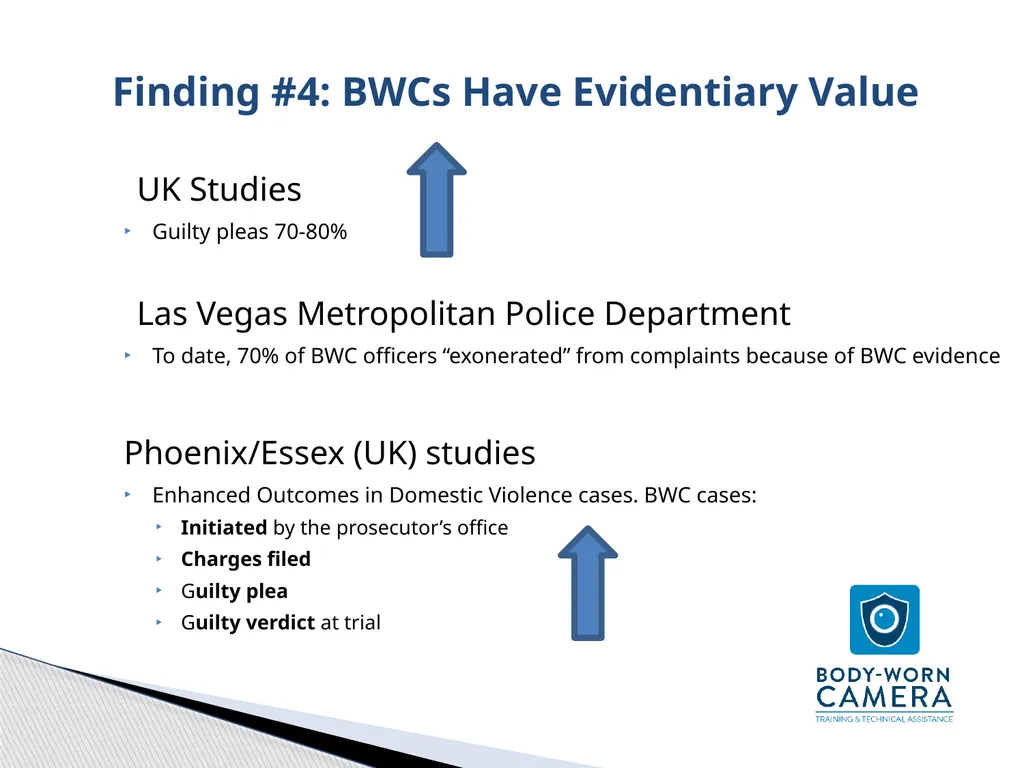
Finding #4: BWCs Have Evidentiary Value UK Studies
Guilty pleas 70-80%
Las Vegas Metropolitan Police Department
To date, 70% of BWC officers “exonerated” from complaints because of BWC evidence
Phoenix/Essex (UK) studies
Enhanced Outcomes in Domestic Violence cases. BWC cases:
Initiated by the prosecutor’s office
Charges filed
Guilty plea
Guilty verdict at trial<br>
14
BWC POLICY AND RESEARCH RESOURCES<br>
15
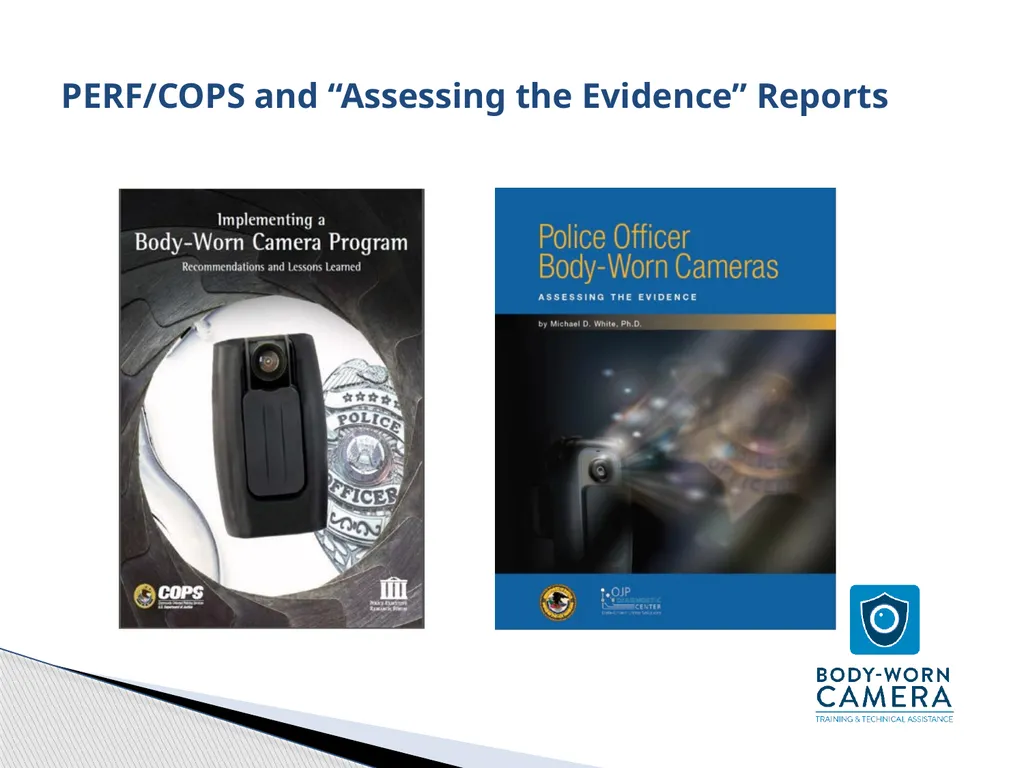
PERF/COPS and “Assessing the Evidence” Reports<br>
16
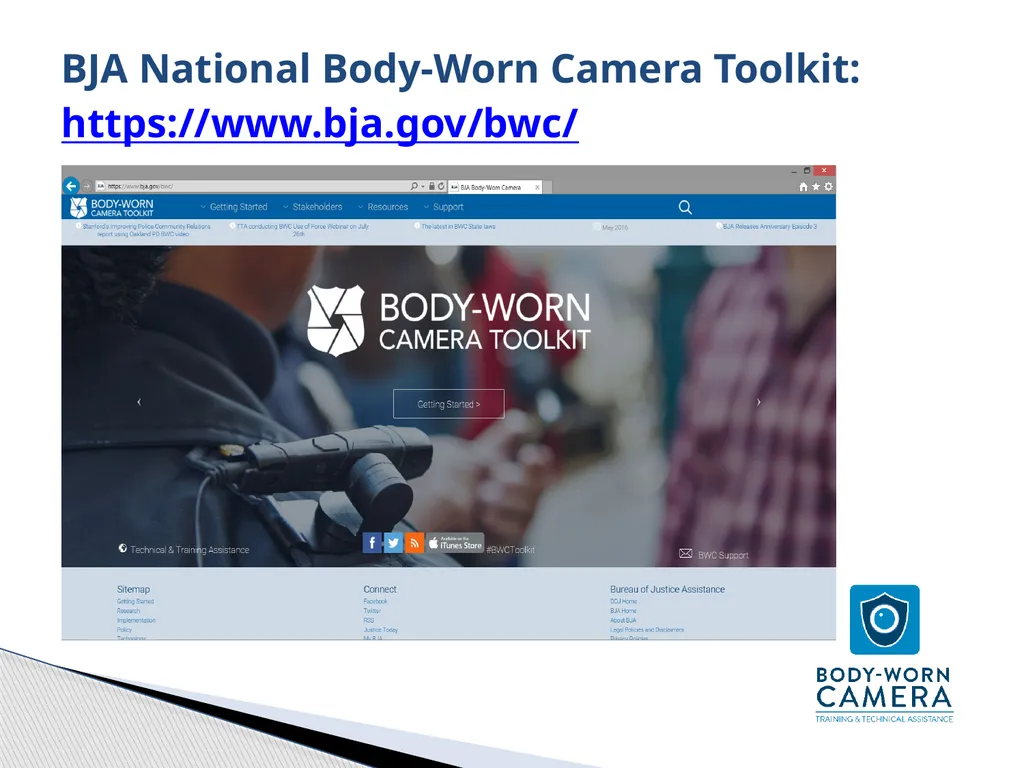
BJA National Body-Worn Camera Toolkit: https://www.bja.gov/bwc/<br>
17
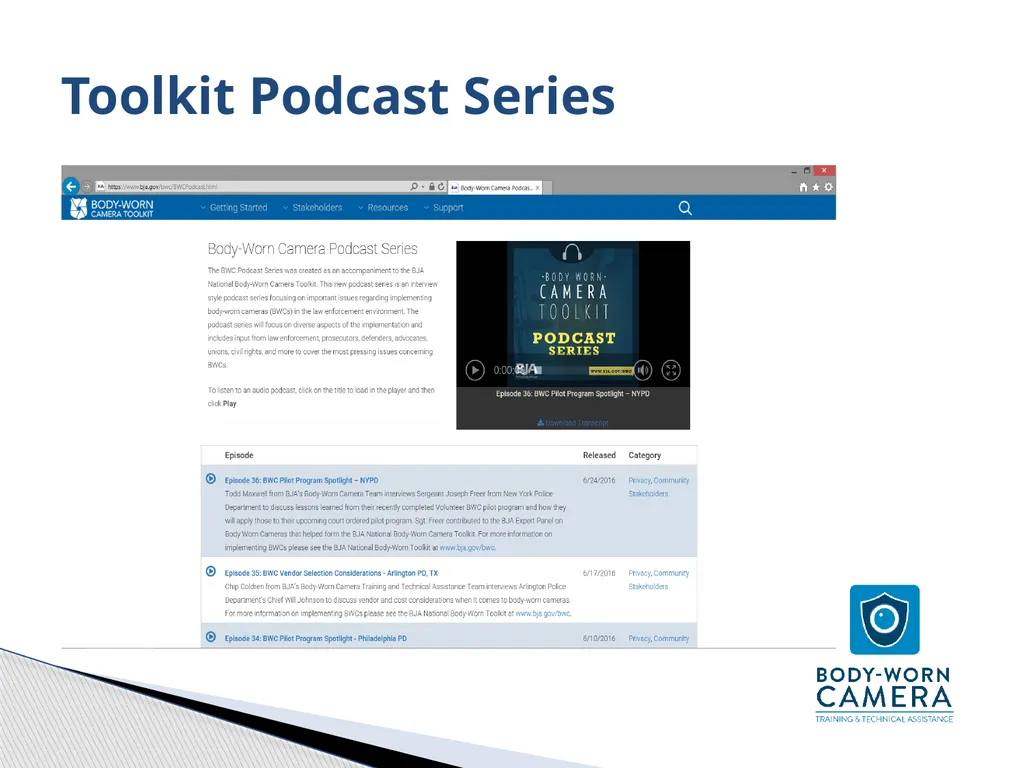
Toolkit Podcast Series<br>
18
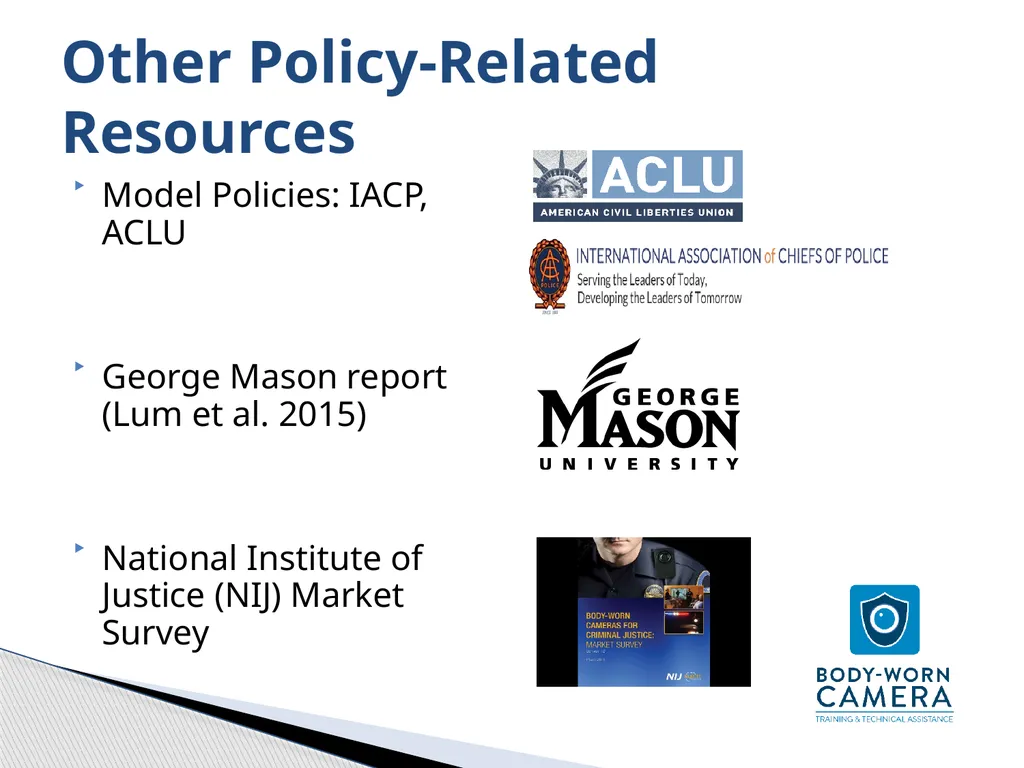
Model Policies: IACP, ACLU
George Mason report (Lum et al. 2015)
National Institute of Justice (NIJ) Market Survey Other Policy-Related Resources<br>
19
Thanks! Michael D. White, Ph.D.
Professor, Arizona State University
Co-Director, Training and Technical Assistance, BJA BWC PIP