Potential Energy (Gravitational and Elastic) and Energy Conservation Conservative and non-conservative forces Examples of conservative forces: gravitational and spring forces Gravitational potential energy Gravitational potential energy
"Potential Energy (Gravitational and Elastic) and" is the property of its rightful owner. Permission is granted to
download and print the materials on this website for personal, non-commercial use only, and to display it
on your personal computer provided you do not modify the materials and that you retain all copyright
notices contained in the materials. By downloading content from our website, you accept the terms of this
agreement.
Presentation Transcript
01
Potential Energy (Gravitational and Elastic) and Energy Conservation<br>
02
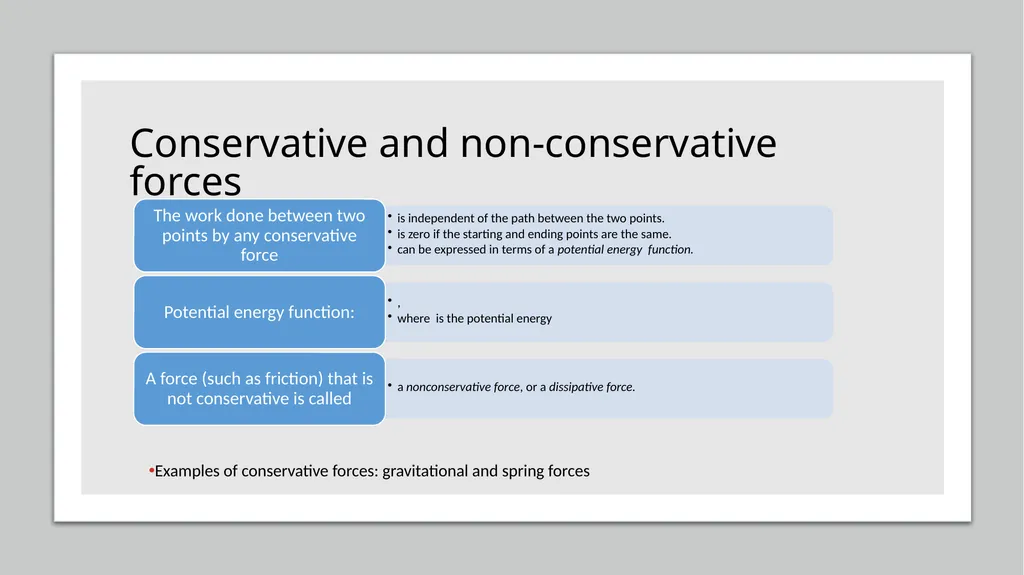
Conservative and non-conservative forces Examples of conservative forces: gravitational and spring forces<br>
03
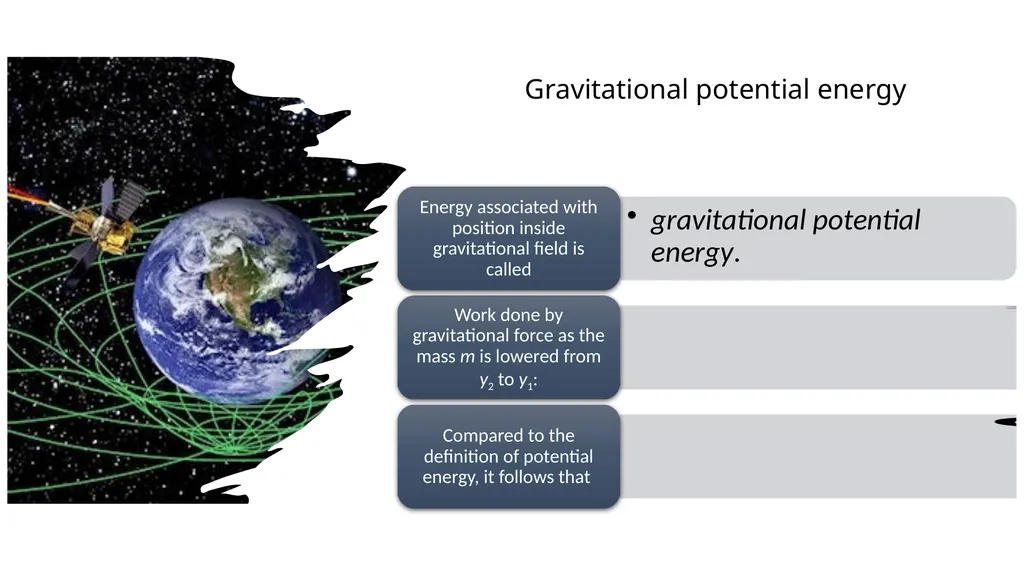
Gravitational potential energy<br>
04
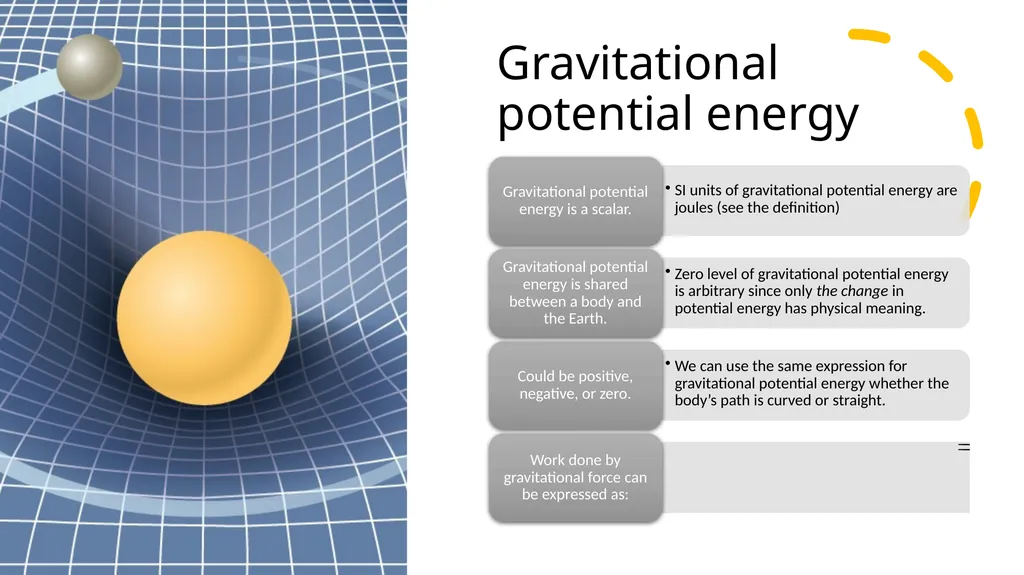
Gravitational potential energy<br>
05
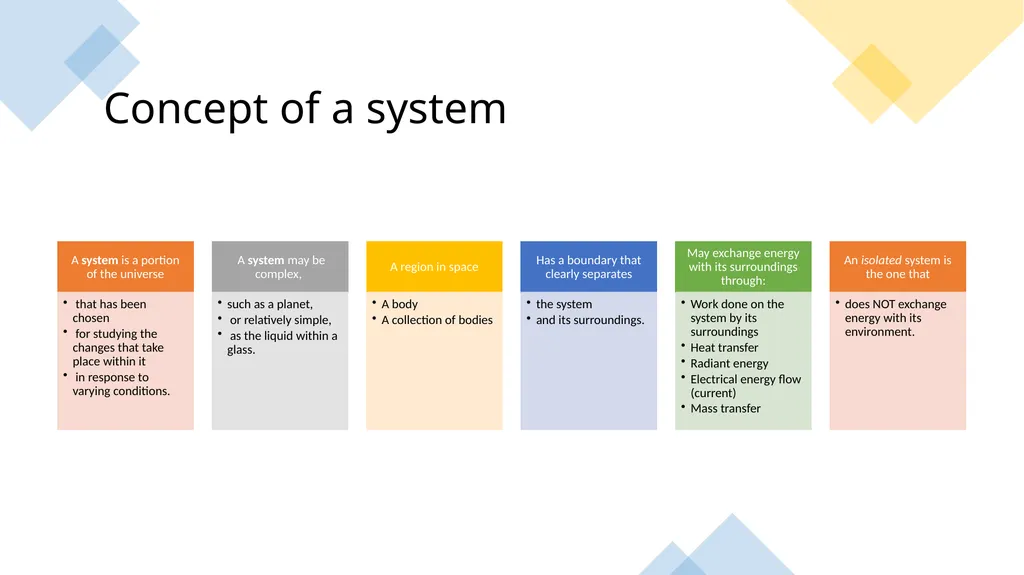
Concept of a system<br>
06
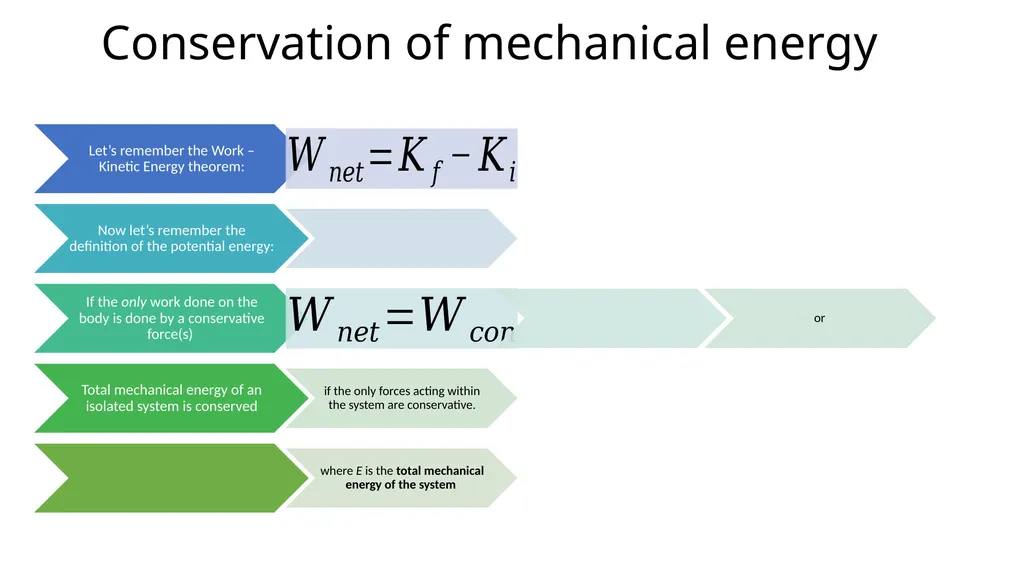
Conservation of mechanical energy<br>
07
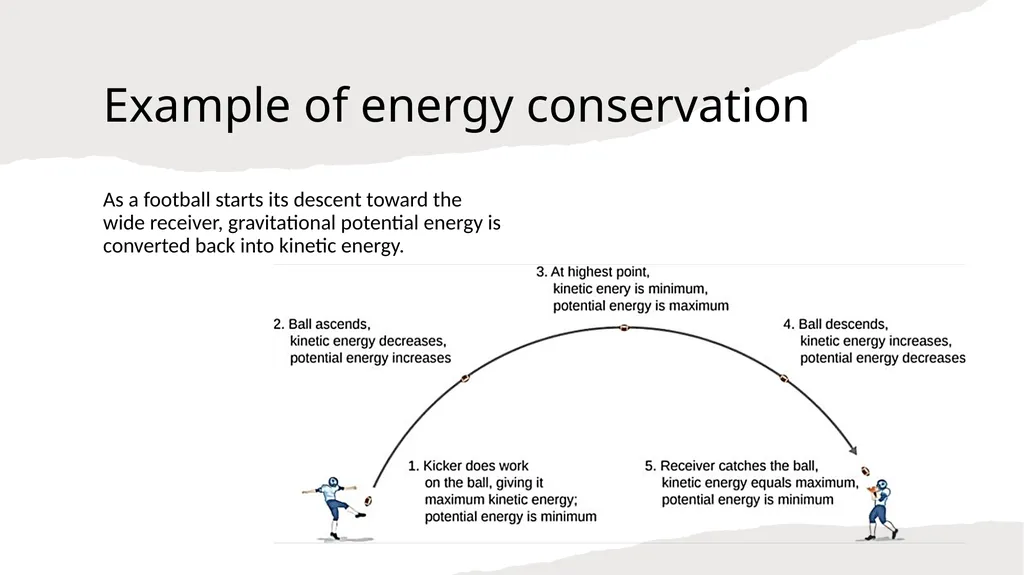
Example of energy conservation As a football starts its descent toward the wide receiver, gravitational potential energy is converted back into kinetic energy.<br>
08
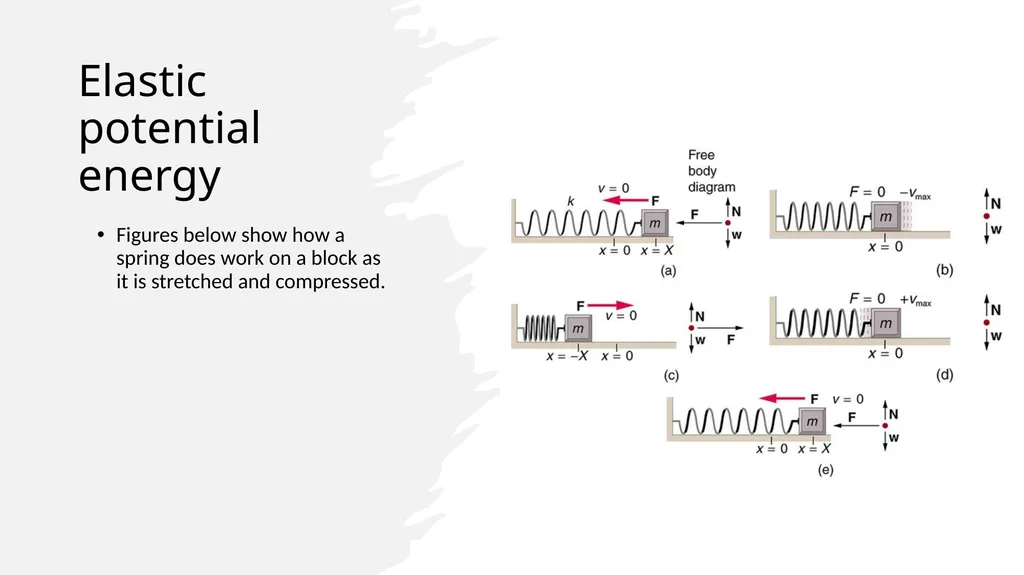
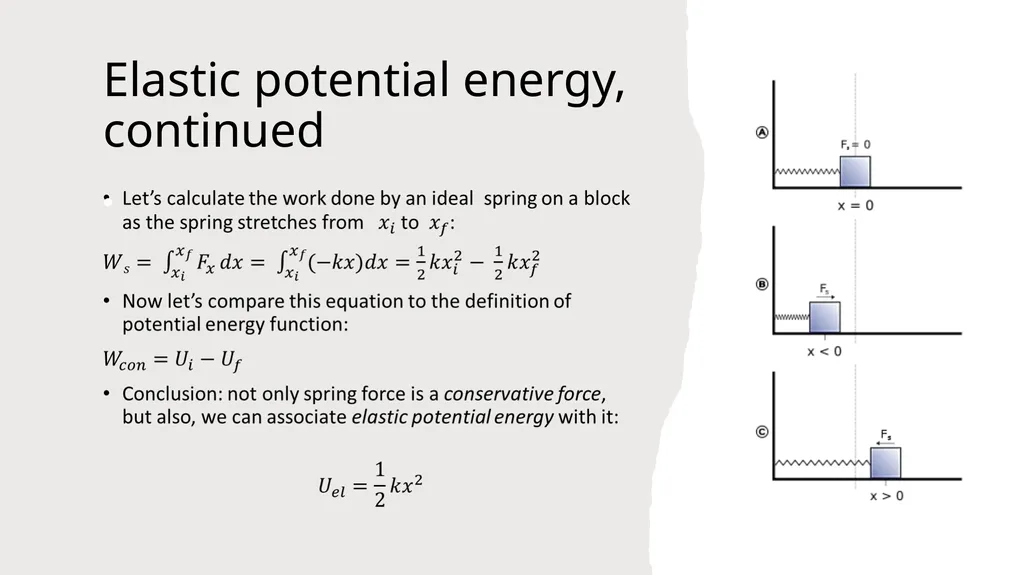
Elastic potential energy Figures below show how a spring does work on a block as it is stretched and compressed.<br>
09
Elastic potential energy, continued<br>
10
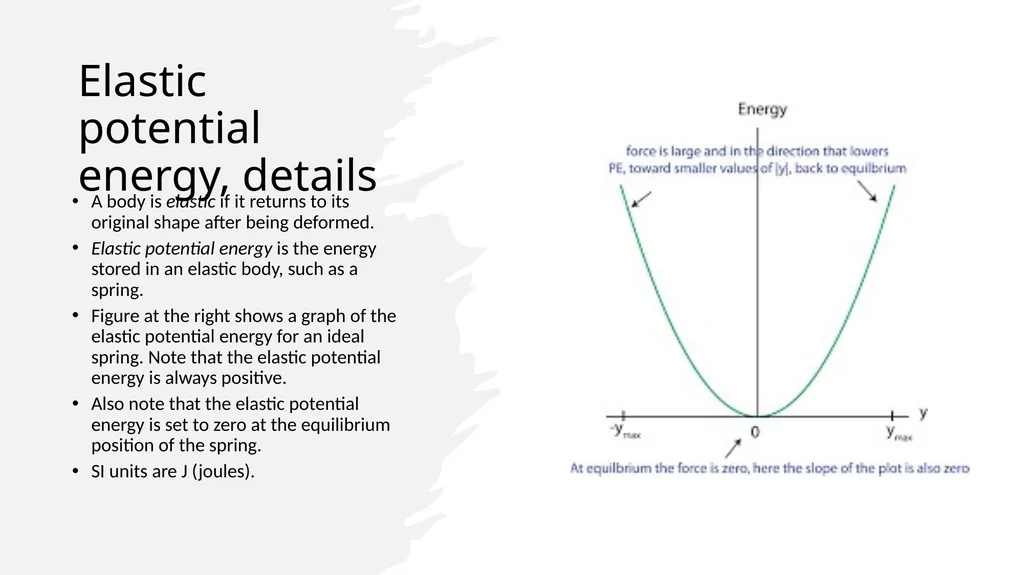
Elastic potential energy, details A body is elastic if it returns to its original shape after being deformed.
Elastic potential energy is the energy stored in an elastic body, such as a spring.
Figure at the right shows a graph of the elastic potential energy for an ideal spring. Note that the elastic potential energy is always positive.
Also note that the elastic potential energy is set to zero at the equilibrium position of the spring.
SI units are J (joules).<br>
11
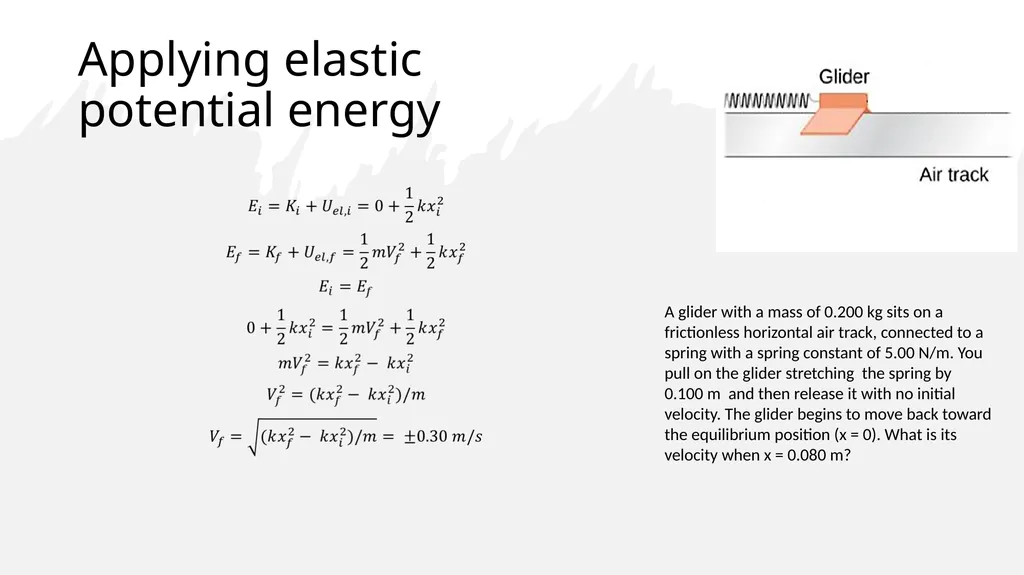
Applying elastic potential energy A glider with a mass of 0.200 kg sits on a frictionless horizontal air track, connected to a spring with a spring constant of 5.00 N/m. You pull on the glider stretching the spring by 0.100 m and then release it with no initial velocity. The glider begins to move back toward the equilibrium position (x = 0). What is its velocity when x = 0.080 m?<br>
12
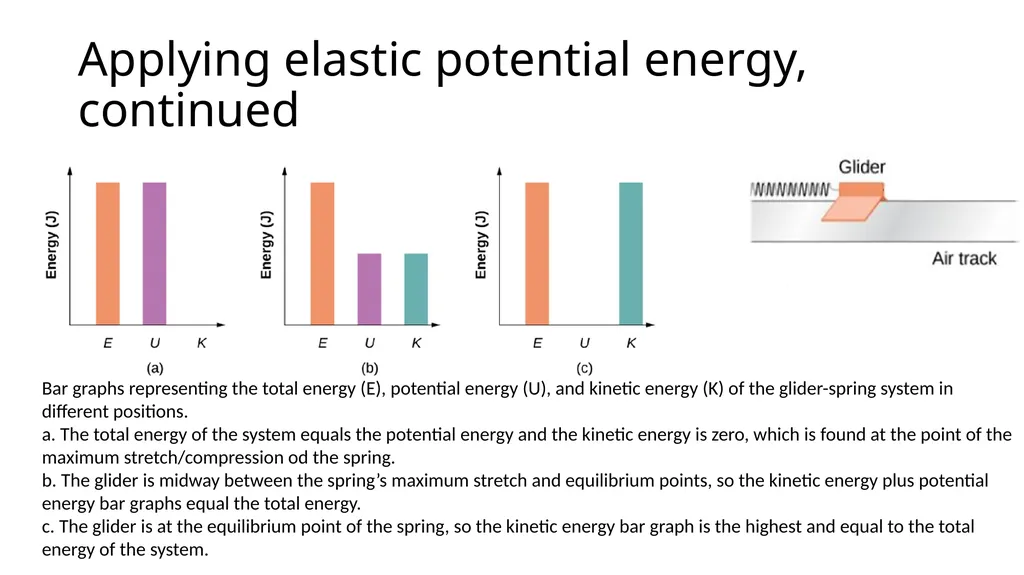
Applying elastic potential energy, continued Bar graphs representing the total energy (E), potential energy (U), and kinetic energy (K) of the glider-spring system in different positions.
a. The total energy of the system equals the potential energy and the kinetic energy is zero, which is found at the point of the maximum stretch/compression od the spring.
b. The glider is midway between the spring’s maximum stretch and equilibrium points, so the kinetic energy plus potential energy bar graphs equal the total energy.
c. The glider is at the equilibrium point of the spring, so the kinetic energy bar graph is the highest and equal to the total energy of the system.<br>
13
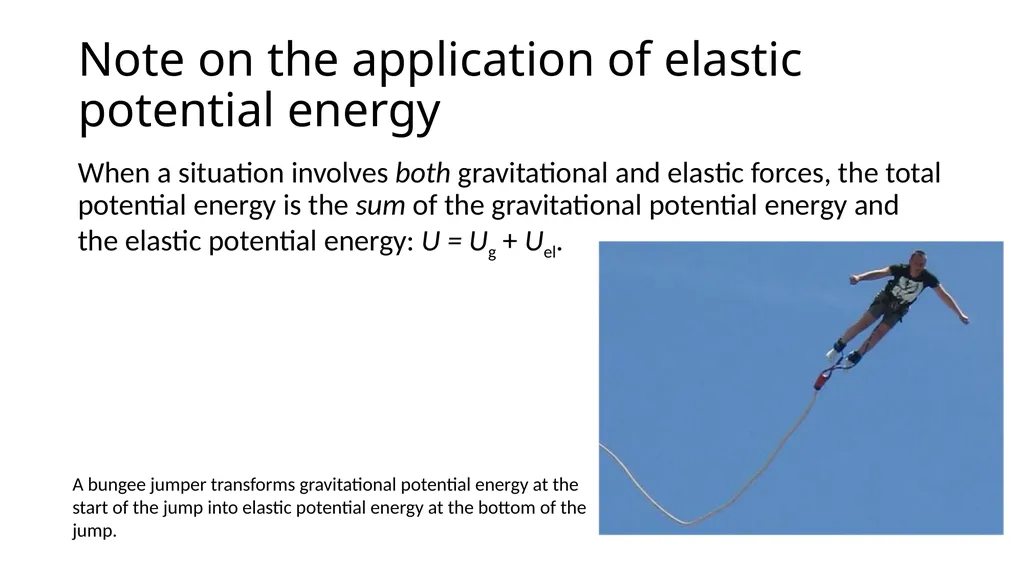
Note on the application of elastic potential energy When a situation involves both gravitational and elastic forces, the total potential energy is the sum of the gravitational potential energy and the elastic potential energy: U = Ug + Uel. A bungee jumper transforms gravitational potential energy at the start of the jump into elastic potential energy at the bottom of the jump.<br>
14
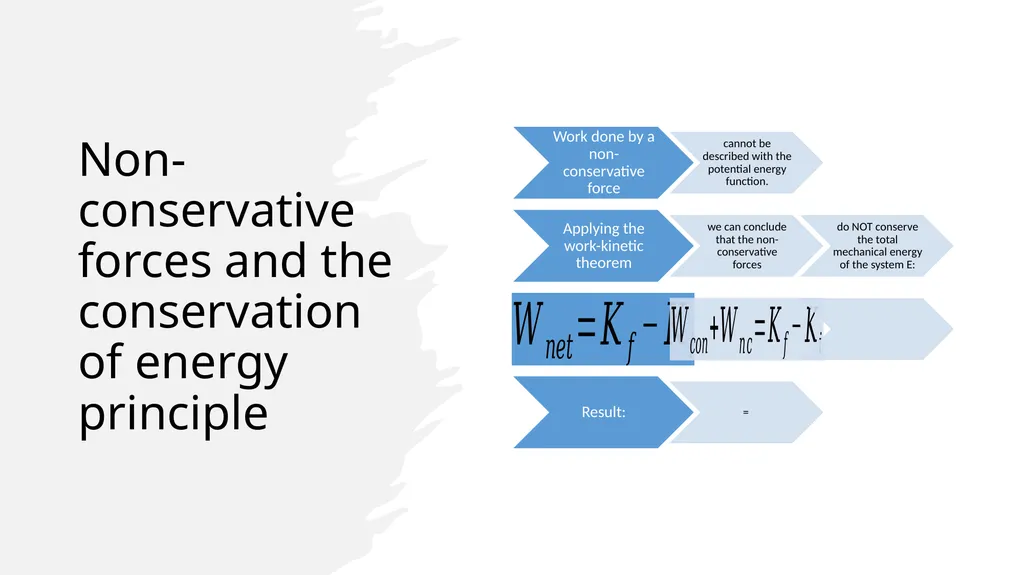
Non-conservative forces and the conservation of energy principle<br>
15
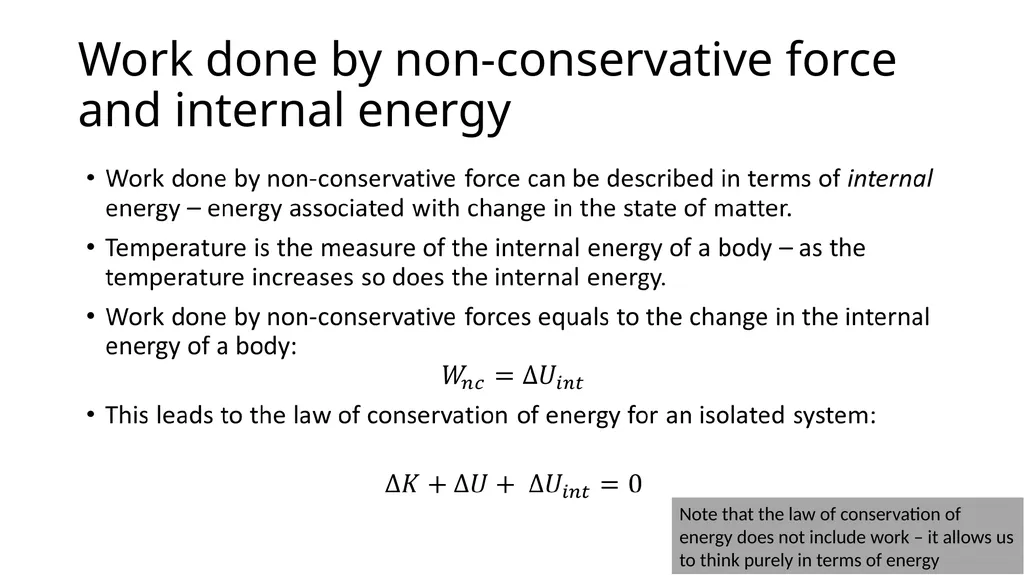
Work done by non-conservative force and internal energy Note that the law of conservation of energy does not include work – it allows us to think purely in terms of energy<br>