Practical Work for Learning Using a pot model to represent osmosis Plants and water Plants take up water through their roots, from the soil. But how does this happen? Learning outcomes You will be able to explain the overall movement of
"Practical Work for Learning Using a pot model to" is the property of its rightful owner. Permission is granted to
download and print the materials on this website for personal, non-commercial use only, and to display it
on your personal computer provided you do not modify the materials and that you retain all copyright
notices contained in the materials. By downloading content from our website, you accept the terms of this
agreement.
Presentation Transcript
01
Practical Work for Learning Using a pot model to represent osmosis<br>
02
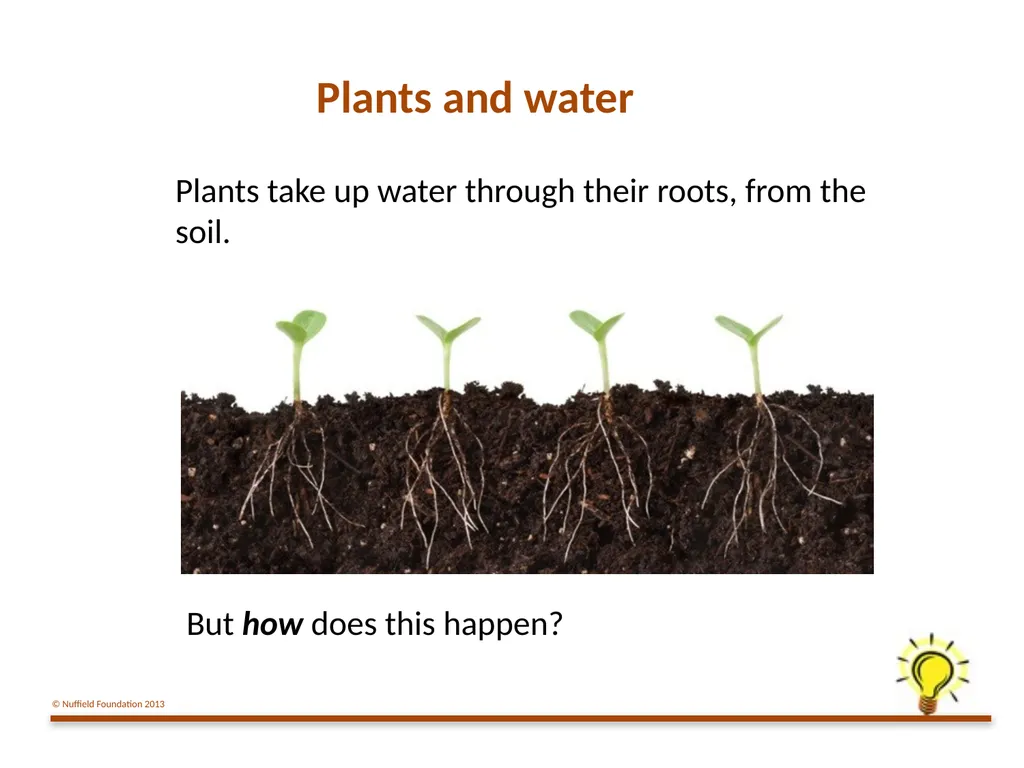
Plants and water Plants take up water through their roots, from the soil. But how does this happen?<br>
03
Learning outcomes You will be able to…
explain the overall movement of water into and out of plant cells
construct and apply a model of osmosis<br>
04
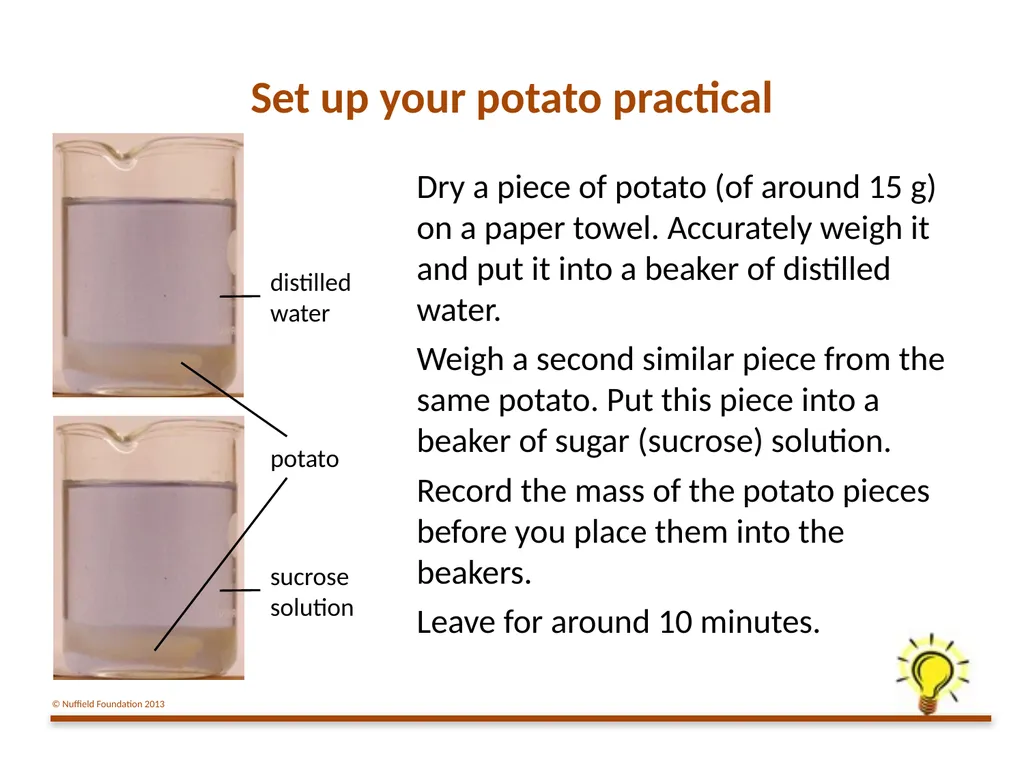
Set up your potato practical Dry a piece of potato (of around 15 g) on a paper towel. Accurately weigh it and put it into a beaker of distilled water.
Weigh a second similar piece from the same potato. Put this piece into a beaker of sugar (sucrose) solution.
Record the mass of the potato pieces before you place them into the beakers.
Leave for around 10 minutes. potato distilled water sucrose solution<br>
05
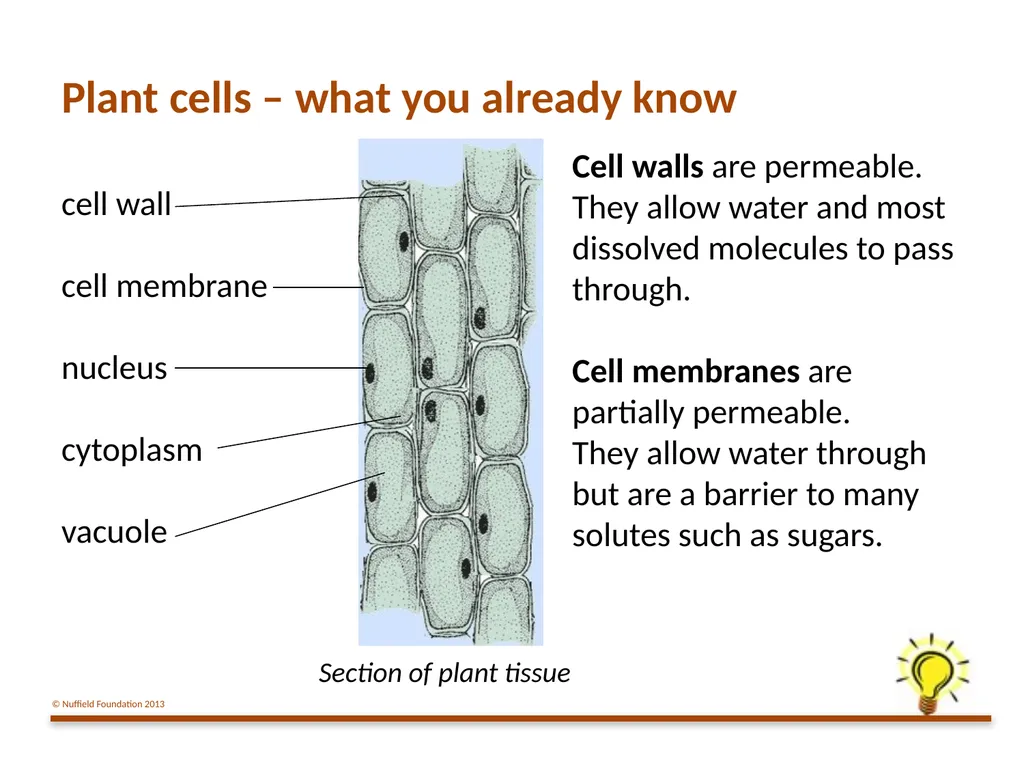
Plant cells – what you already know Section of plant tissue Cell walls are permeable. They allow water and most dissolved molecules to pass through. Cell membranes are partially permeable.
They allow water through but are a barrier to many solutes such as sugars.<br>
06
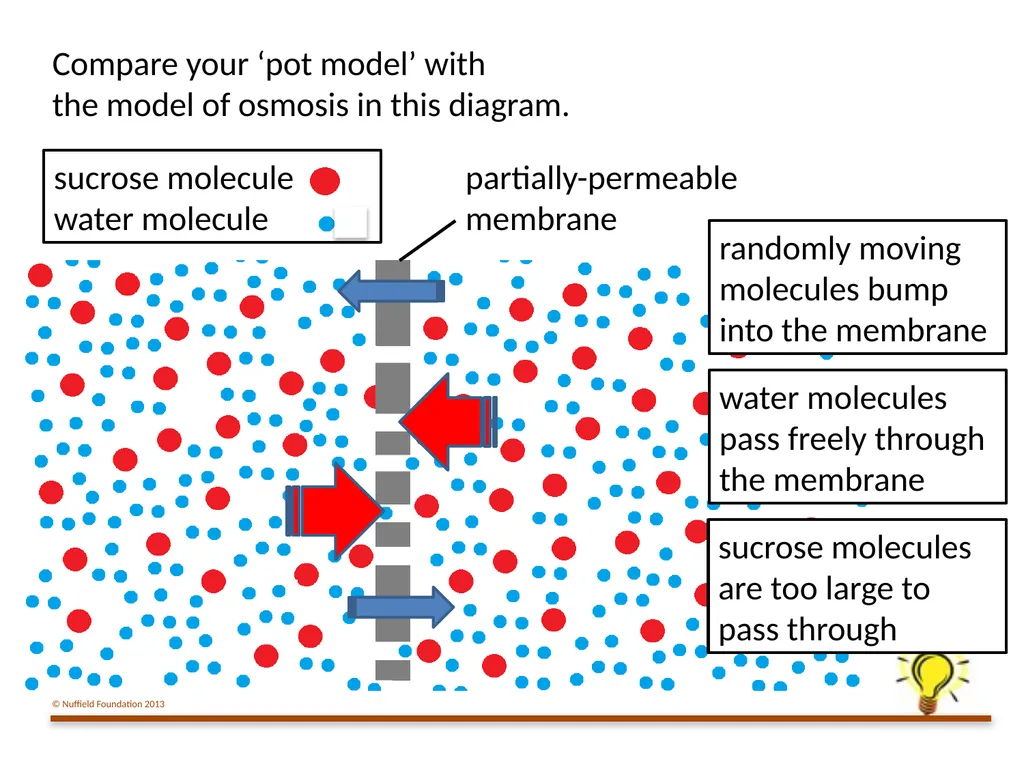
Osmosis is the overall movement of water, by diffusion, through a partially-permeable membrane. sucrose molecule
water molecule Partially-permeable membrane water molecules pass freely through the membrane sucrose molecules are too large to pass through<br>
07
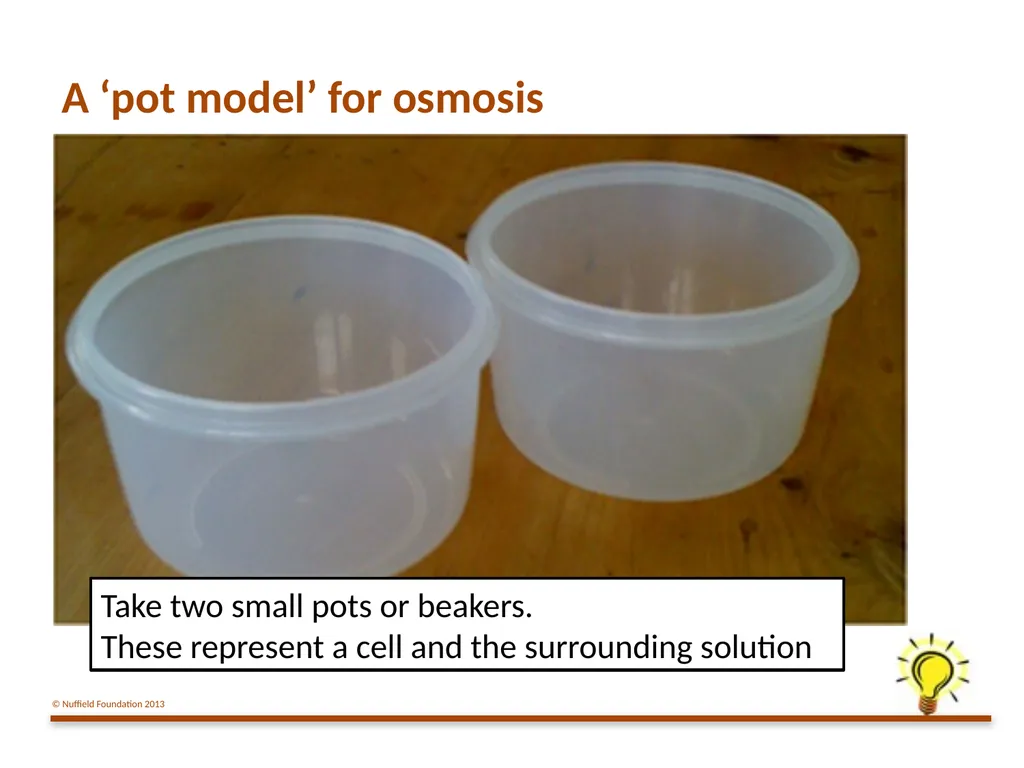
A ‘pot model’ for osmosis Take two small pots or beakers.
These represent a cell and the surrounding solution<br>
08
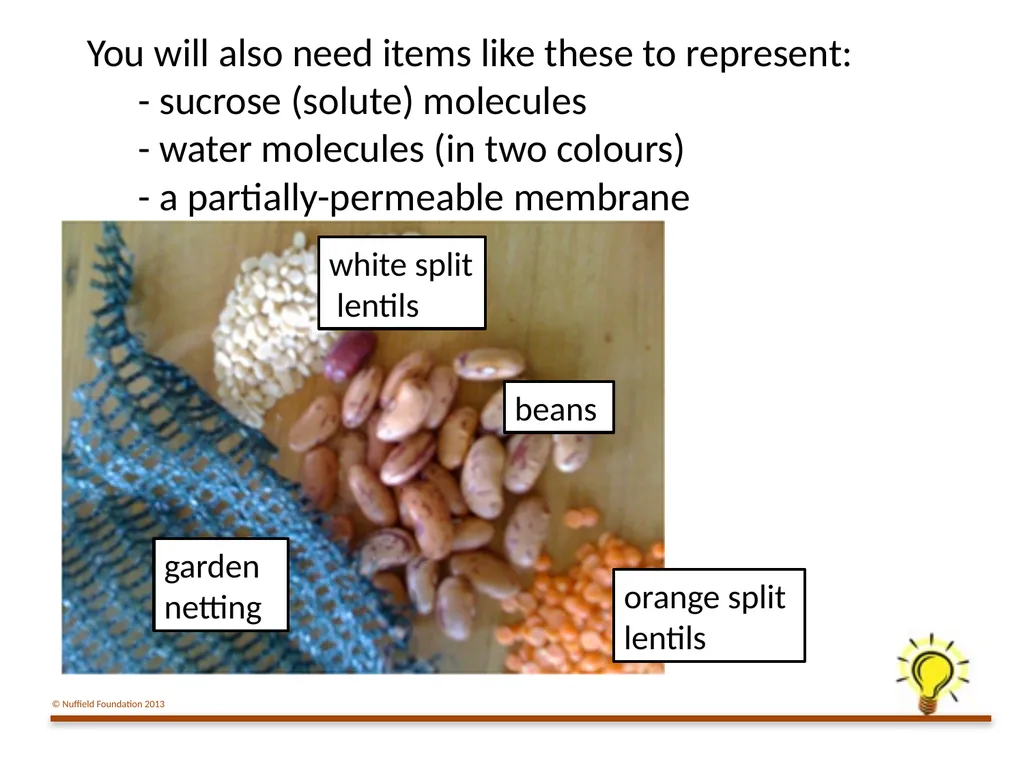
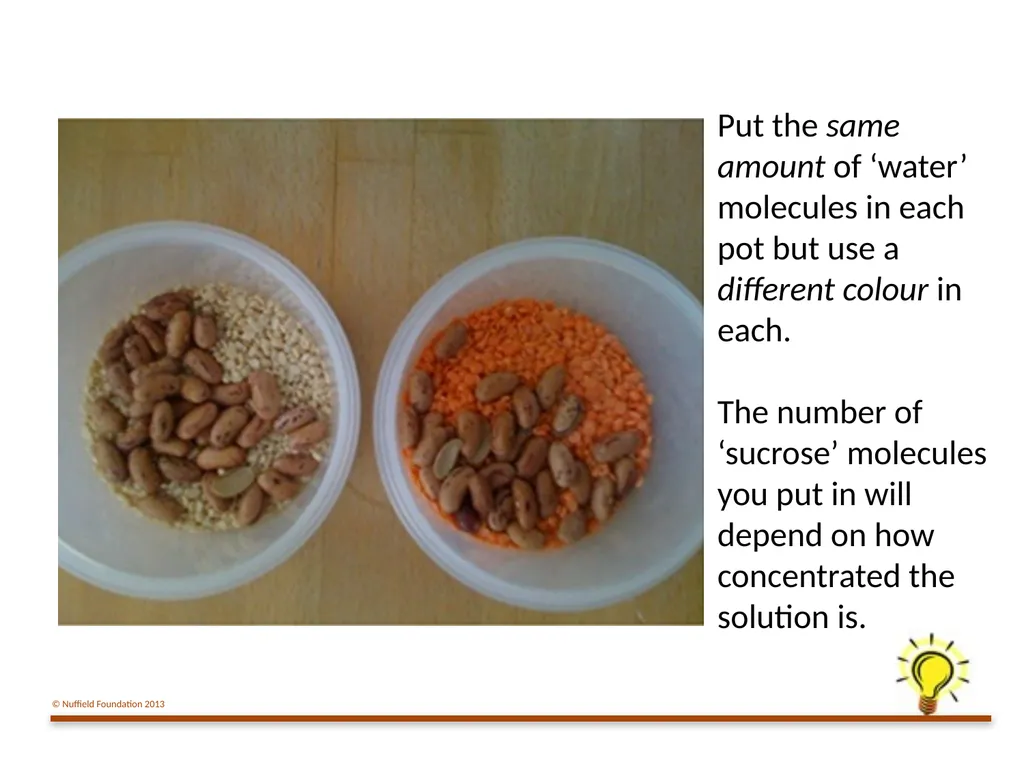
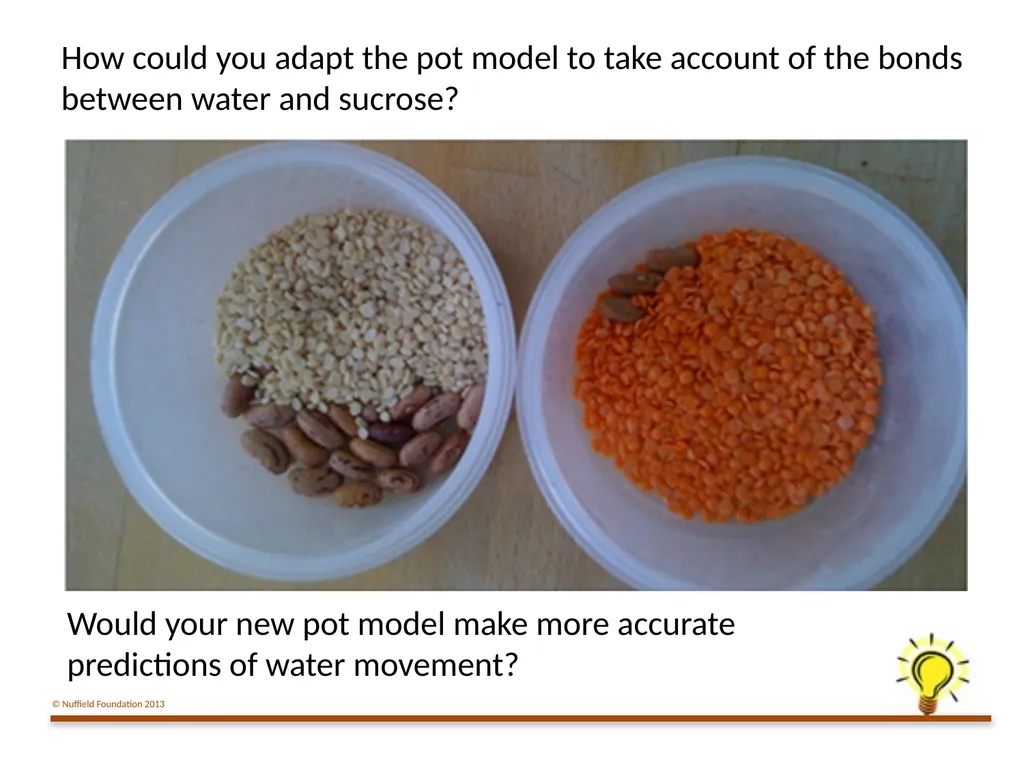
You will also need items like these to represent: - sucrose (solute) molecules - water molecules (in two colours) - a partially-permeable membrane beans garden netting white split lentils orange split lentils<br>
09
Put the same amount of ‘water’ molecules in each pot but use a different colour in each. The number of ‘sucrose’ molecules you put in will depend on how concentrated the solution is.<br>
10
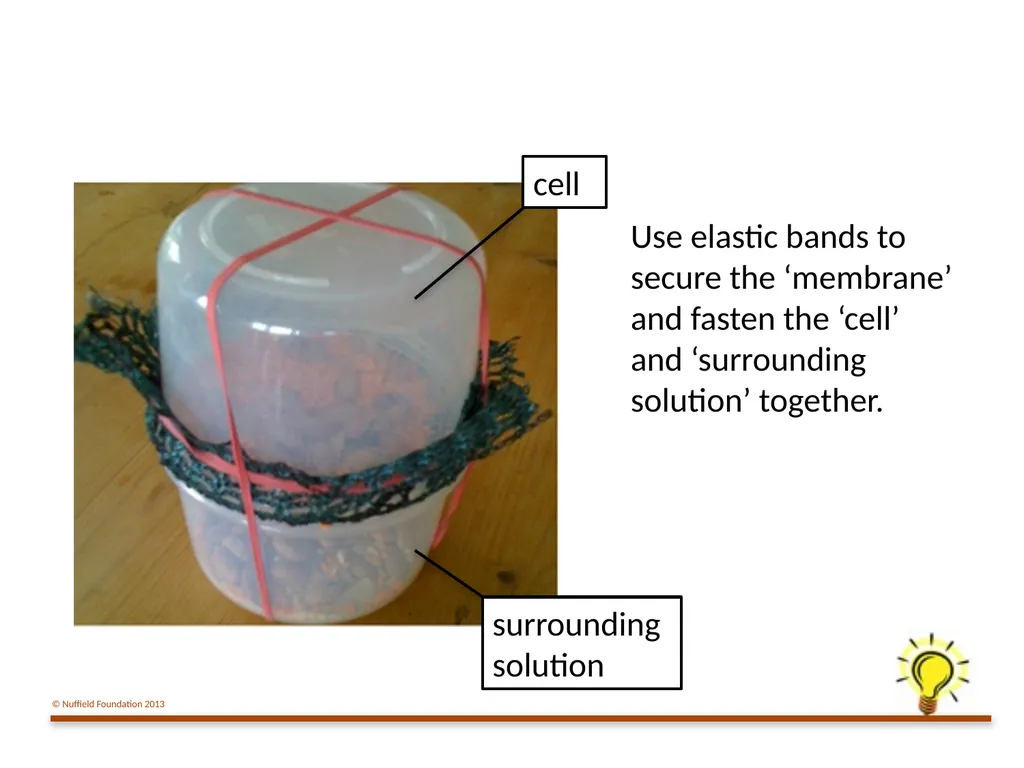
Use elastic bands to secure the ‘membrane’ and fasten the ‘cell’ and ‘surrounding solution’ together. cell surrounding solution<br>
11
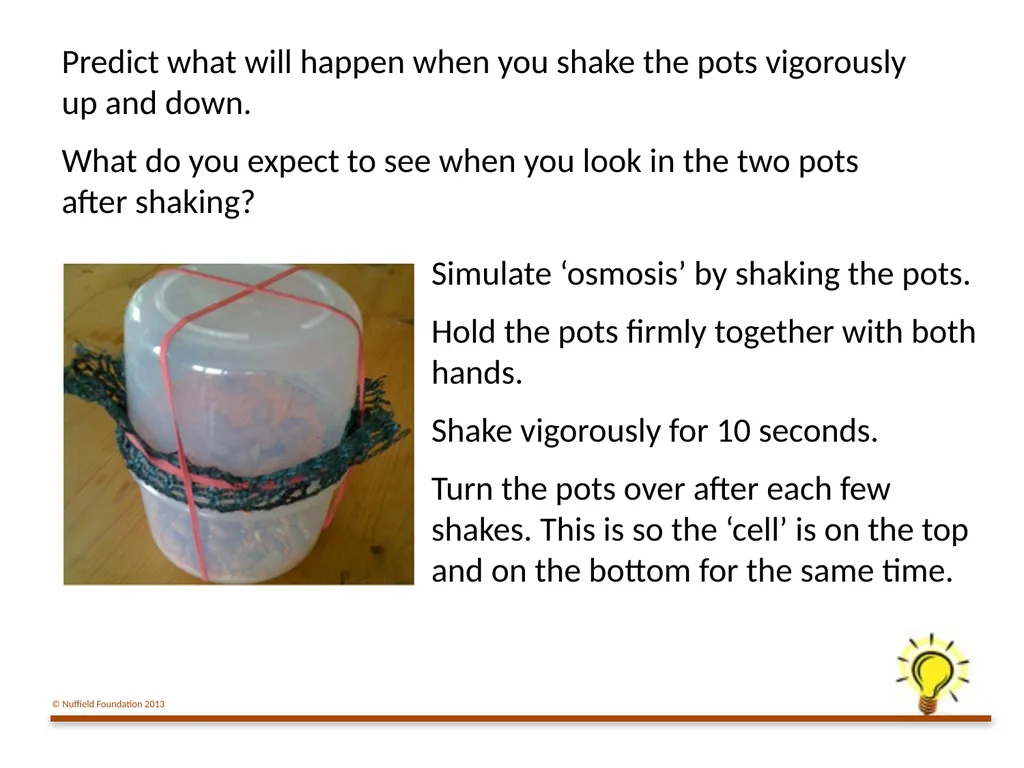
Simulate ‘osmosis’ by shaking the pots.
Hold the pots firmly together with both hands.
Shake vigorously for 10 seconds.
Turn the pots over after each few shakes. This is so the ‘cell’ is on the top and on the bottom for the same time. Predict what will happen when you shake the pots vigorously up and down.
What do you expect to see when you look in the two pots after shaking?<br>
12
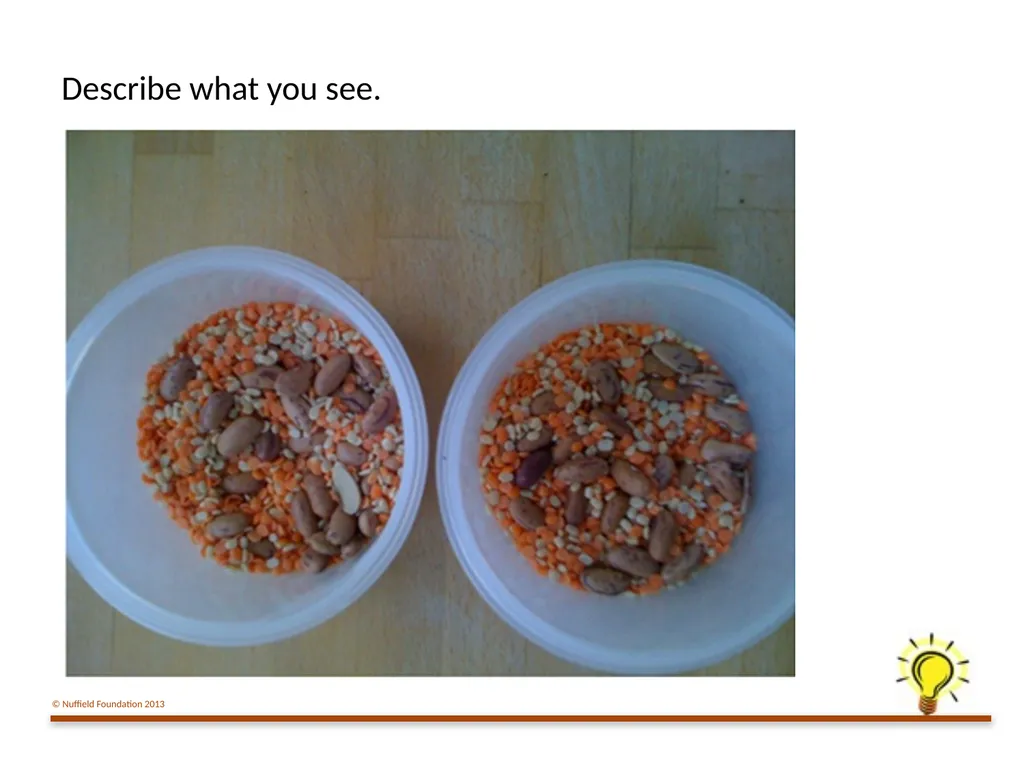
Describe what you see.<br>
13
Compare your ‘pot model’ with the model of osmosis in this diagram. sucrose molecule
water molecule partially-permeable membrane water molecules pass freely through the membrane sucrose molecules are too large to pass through randomly moving molecules bump into the membrane<br>
14
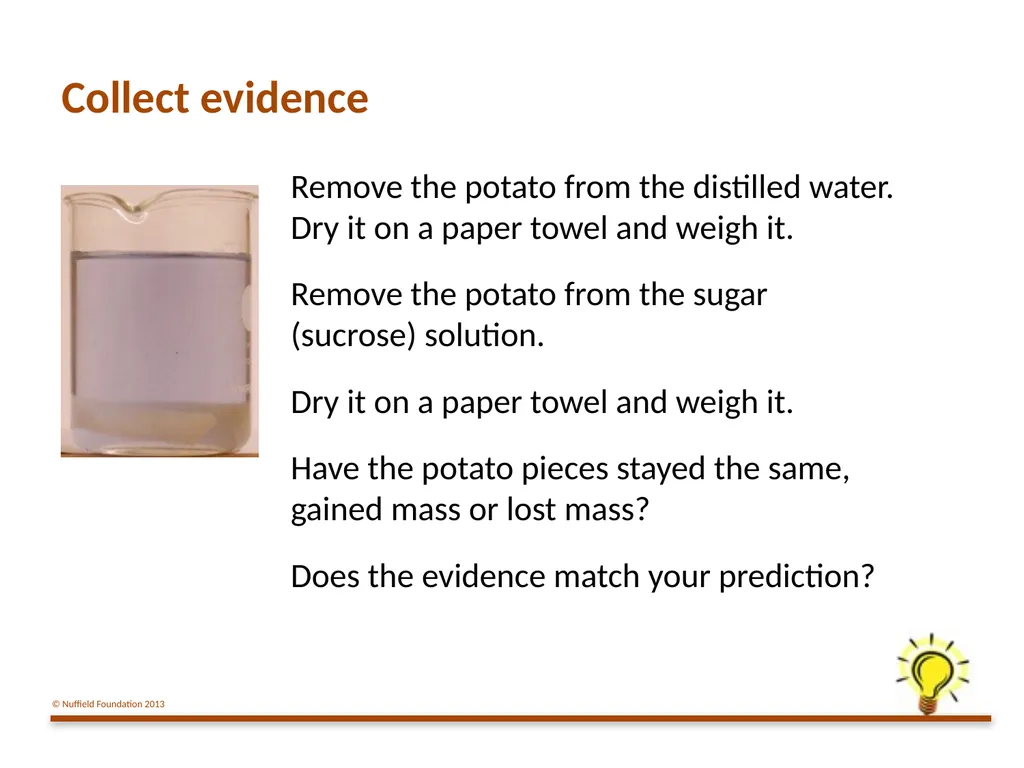
Collect evidence Remove the potato from the distilled water. Dry it on a paper towel and weigh it.
Remove the potato from the sugar (sucrose) solution.
Dry it on a paper towel and weigh it.
Have the potato pieces stayed the same, gained mass or lost mass?
Does the evidence match your prediction?<br>
15
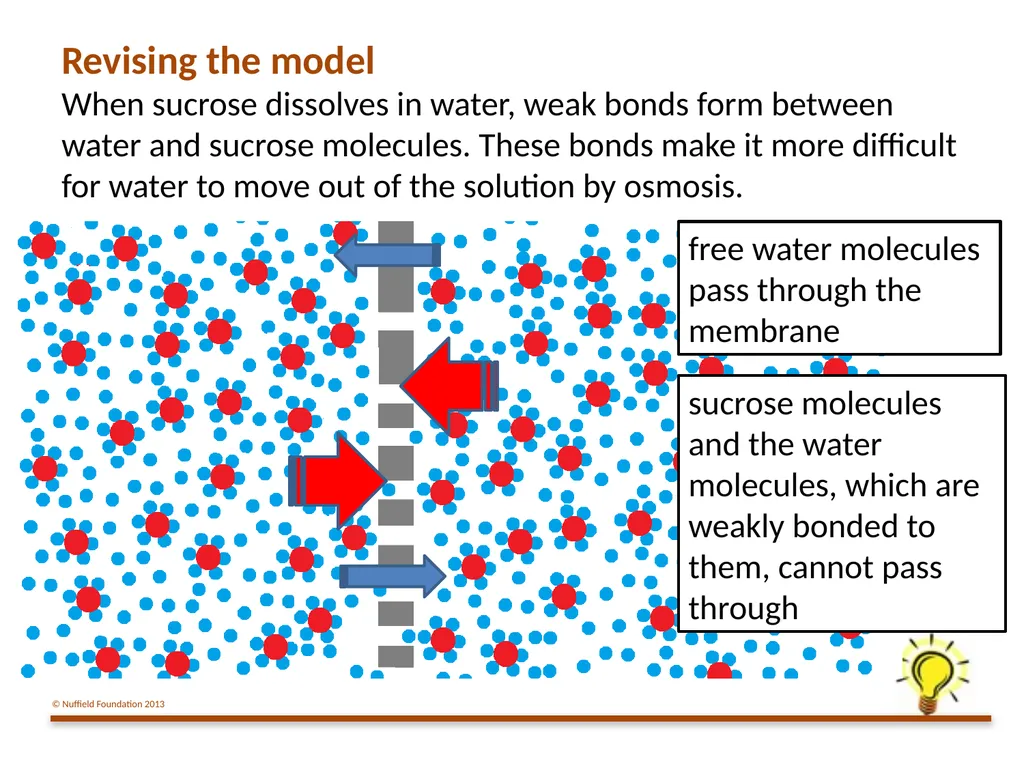
Revising the model When sucrose dissolves in water, weak bonds form between water and sucrose molecules. These bonds make it more difficult for water to move out of the solution by osmosis. sucrose molecules and the water molecules, which are weakly bonded to them, cannot pass through free water molecules pass through the membrane<br>
16
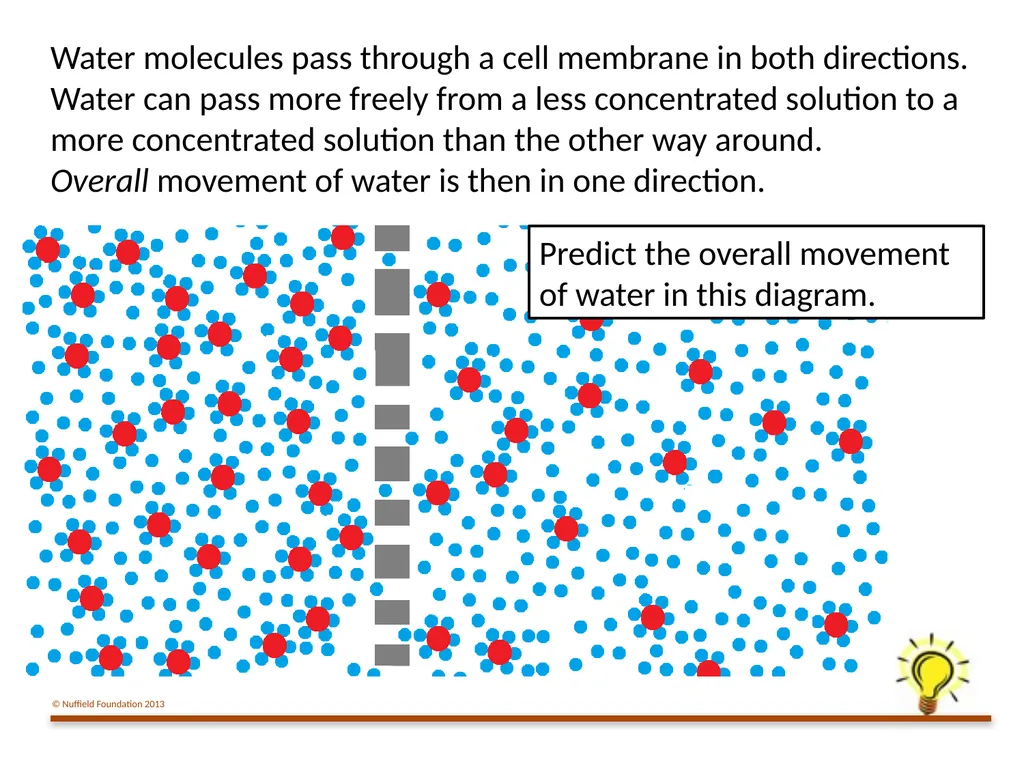
Water molecules pass through a cell membrane in both directions. Water can pass more freely from a less concentrated solution to a more concentrated solution than the other way around. Overall movement of water is then in one direction. Predict the overall movement of water in this diagram.<br>
17
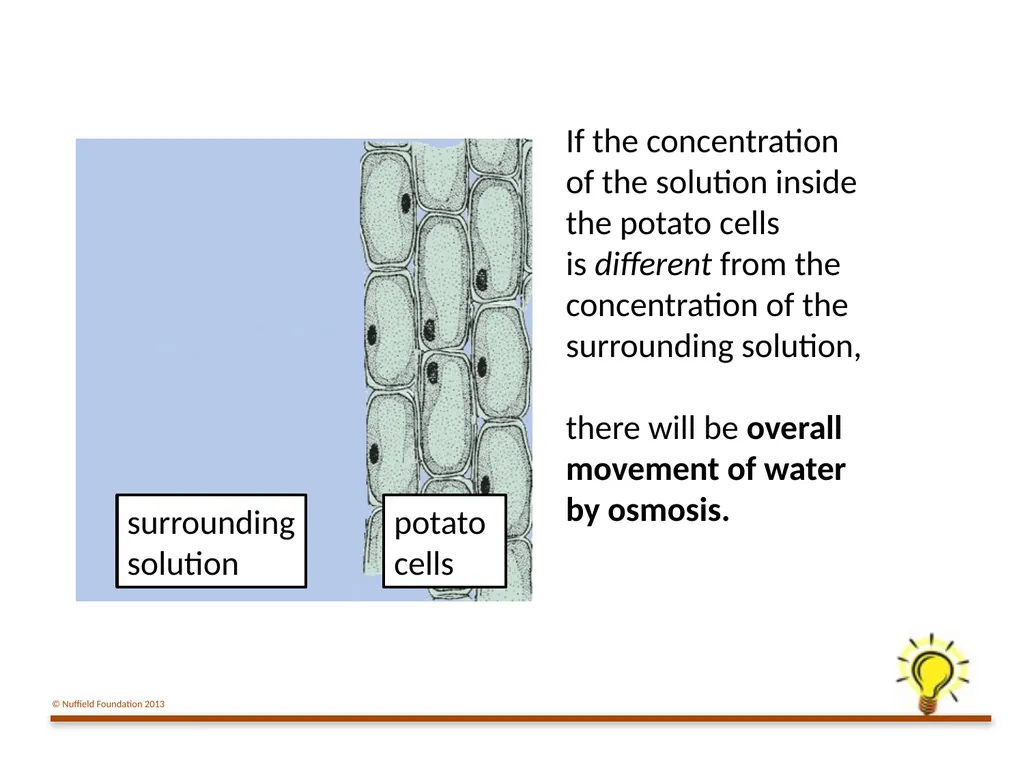
If the concentration of the solution inside the potato cells is different from the concentration of the surrounding solution, there will be overall movement of water by osmosis. potato cells surrounding solution<br>
18
Osmosis: an example of diffusion Osmosis is a special case of diffusion.
Osmosis happens when there is a partially-permeable membrane separating two solutions with different concentrations of dissolved salts or sugars.
Osmosis is the overall movement of water from a dilute to a more concentrated solution through a partially-permeable membrane.<br>
19
How could you adapt the pot model to take account of the bonds between water and sucrose? Would your new pot model make more accurate predictions of water movement?<br>