Preparation for birth Goal and learning outcomes The situation Welcoming mother and assessing risk factors Preparing for birth Summary Clinical practice Quality improvement References and additional resources Content Prepare a clean, safe,
"Preparation for birth Goal and learning outcomes" is the property of its rightful owner. Permission is granted to
download and print the materials on this website for personal, non-commercial use only, and to display it
on your personal computer provided you do not modify the materials and that you retain all copyright
notices contained in the materials. By downloading content from our website, you accept the terms of this
agreement.
Presentation Transcript
01
Preparation for birth<br>
02
Goal and learning outcomes
The situation
Welcoming mother and assessing risk factors
Preparing for birth
Summary
Clinical practice
Quality improvement
References and additional resources Content<br>
03
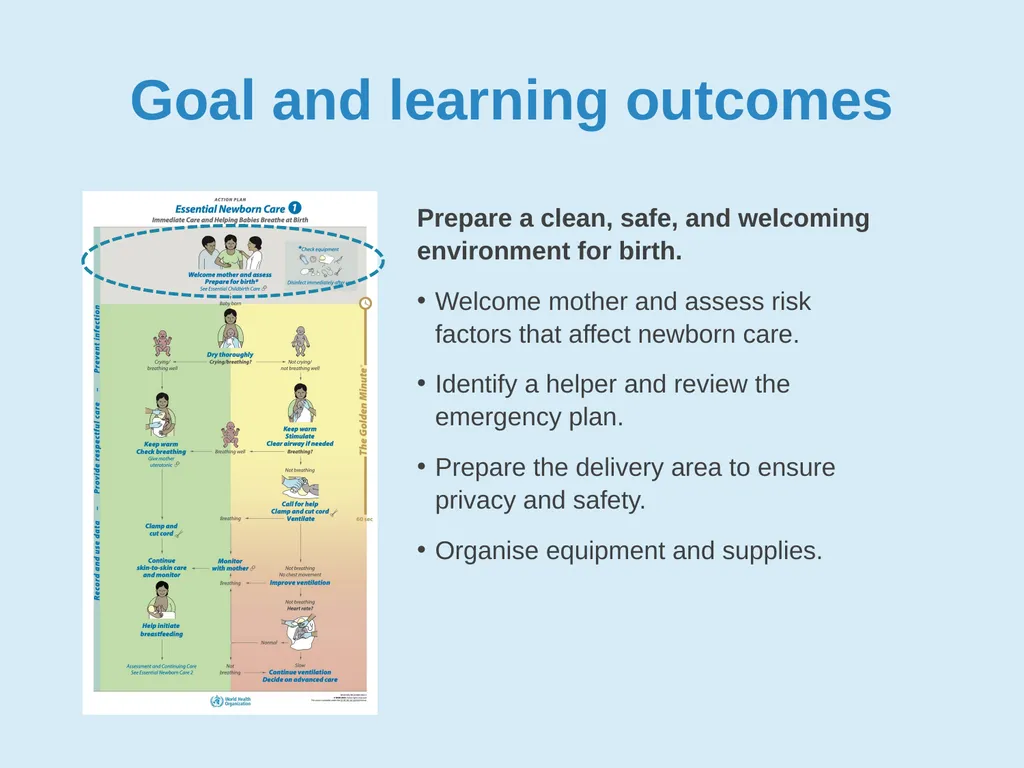
Prepare a clean, safe, and welcoming environment for birth.
Welcome mother and assess risk factors that affect newborn care.
Identify a helper and review the emergency plan.
Prepare the delivery area to ensure privacy and safety.
Organise equipment and supplies. Goal and learning outcomes<br>
Prepare for birth Form groups (midwife, mother, companion).
Welcome the mother and her companion and prepare for birth.
Debrief with your team and facilitator. Madame Sylla arrives with her mother
This is her third baby, and delivery will occur very soon.<br>
07
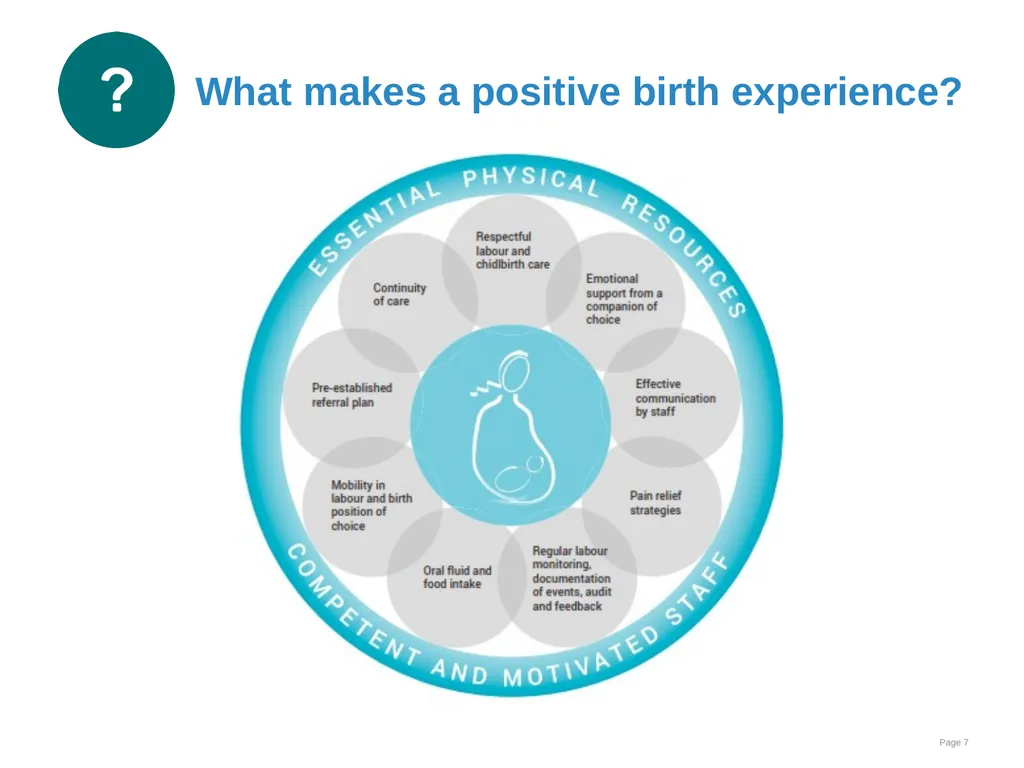
What makes a positive birth experience?<br>
08
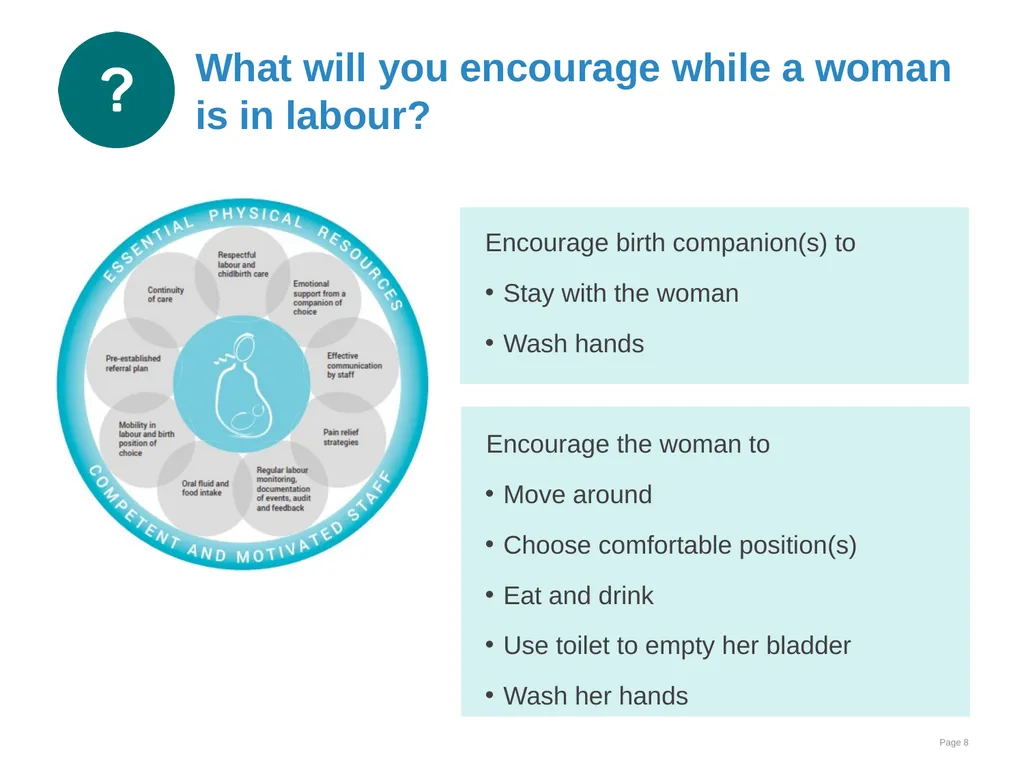
What will you encourage while a woman is in labour? Encourage birth companion(s) to
Stay with the woman
Wash hands
Encourage the woman to
Move around
Choose comfortable position(s)
Eat and drink
Use toilet to empty her bladder
Wash her hands<br>
09
Why is a companion during labour and childbirth recommended? Find the recommendations on pages 29–30.<br>
10
WHO recommendation and evidence A companion of choice is recommended for all women throughout labour and childbirth.
Companionship during labour and childbirth may:
Increase spontaneous vaginal births.
Reduce caesarean sections and instrumental vaginal births.
Reduce low Apgar scores at 5 minutes.<br>
11
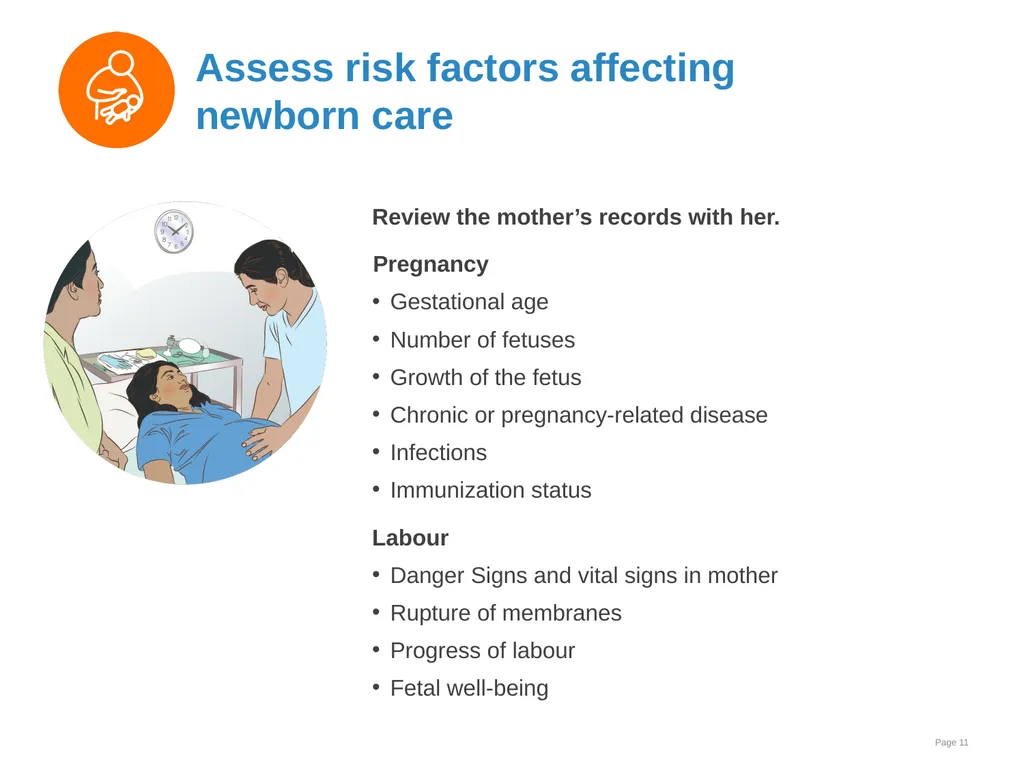
Assess risk factors affecting newborn care Review the mother’s records with her.
Pregnancy
Gestational age
Number of fetuses
Growth of the fetus
Chronic or pregnancy-related disease
Infections
Immunization status
Labour
Danger Signs and vital signs in mother
Rupture of membranes
Progress of labour
Fetal well-being<br>
12
Preparing for birth<br>
13
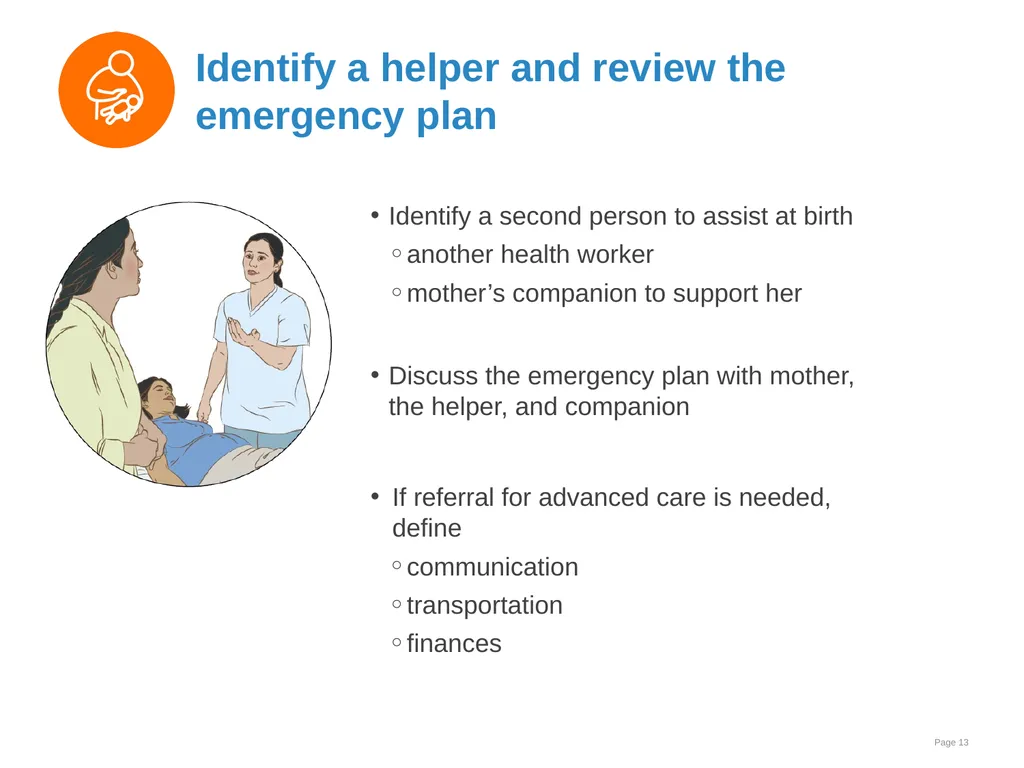
Identify a helper and review the emergency plan Identify a second person to assist at birth
another health worker
mother’s companion to support her
Discuss the emergency plan with mother, the helper, and companion
If referral for advanced care is needed, define
communication
transportation
finances<br>
14
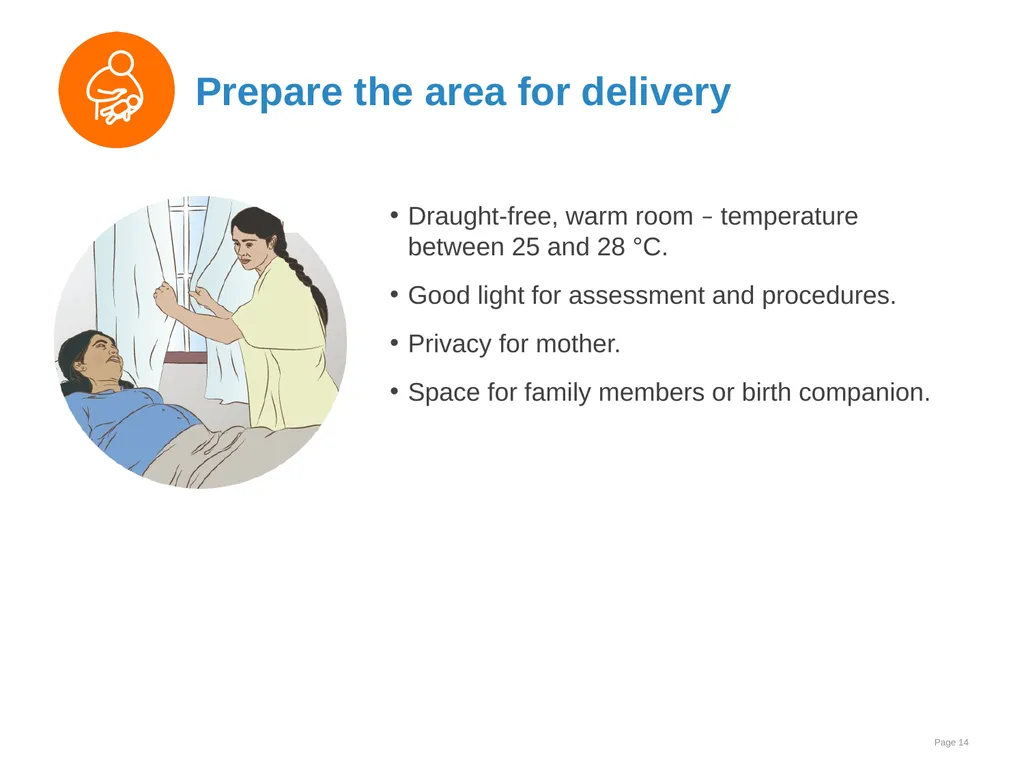
Prepare the area for delivery Draught-free, warm room – temperature between 25 and 28 °C.
Good light for assessment and procedures.
Privacy for mother.
Space for family members or birth companion.<br>
15
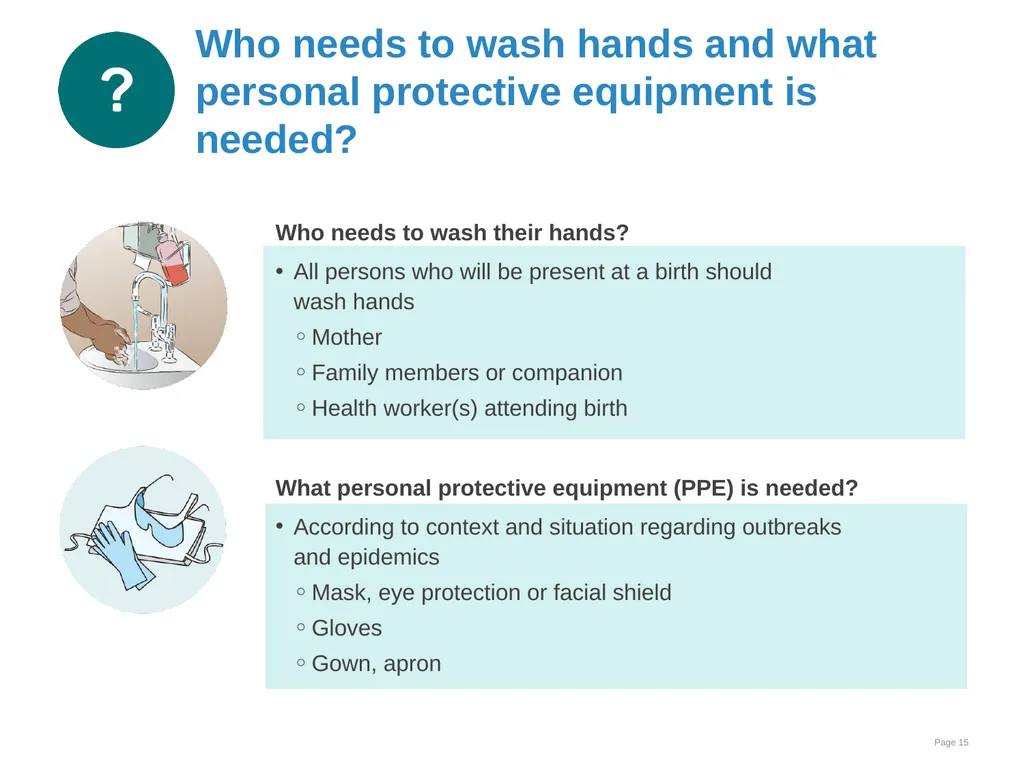
Who needs to wash hands and what personal protective equipment is needed? Who needs to wash their hands?
All persons who will be present at a birth should wash hands
Mother
Family members or companion
Health worker(s) attending birth
What personal protective equipment (PPE) is needed?
According to context and situation regarding outbreaks and epidemics
Mask, eye protection or facial shield
Gloves
Gown, apron<br>
16
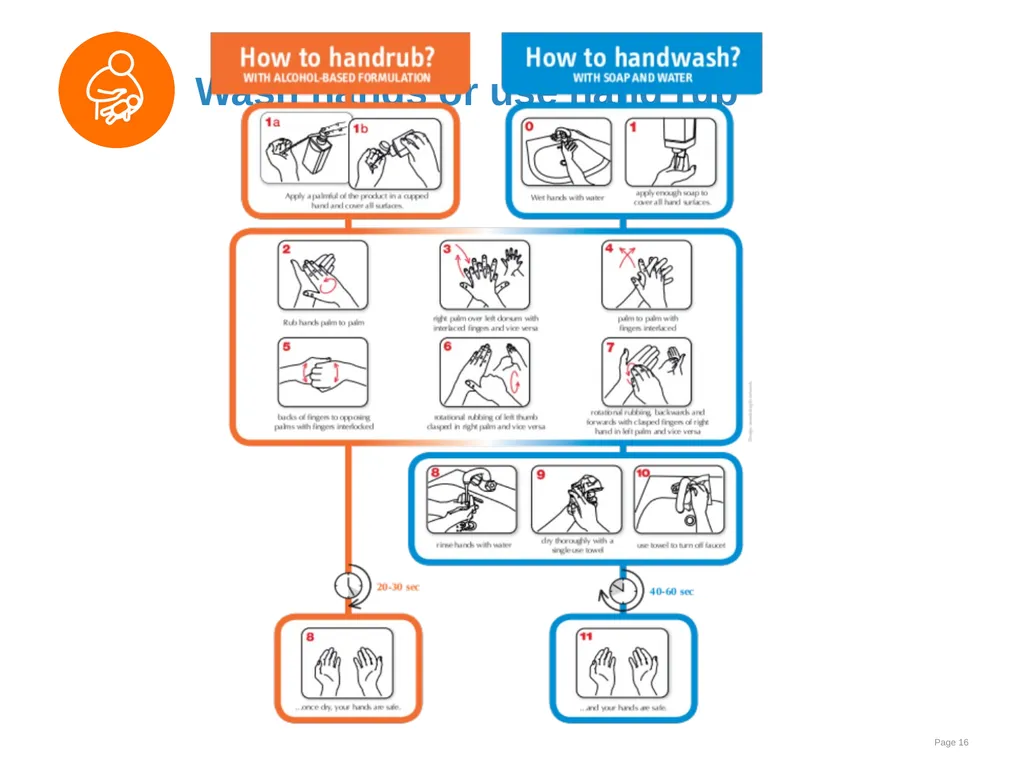
Wash hands or use hand rub<br>
17
Prepare an area for ventilation Prepare a flat, firm, clean, dry surface
Organise all equipment within reach
Ensure adequate lighting for assessment of the newborn
Maintain visual contact with mother, her birth companion, and the newborn<br>
18
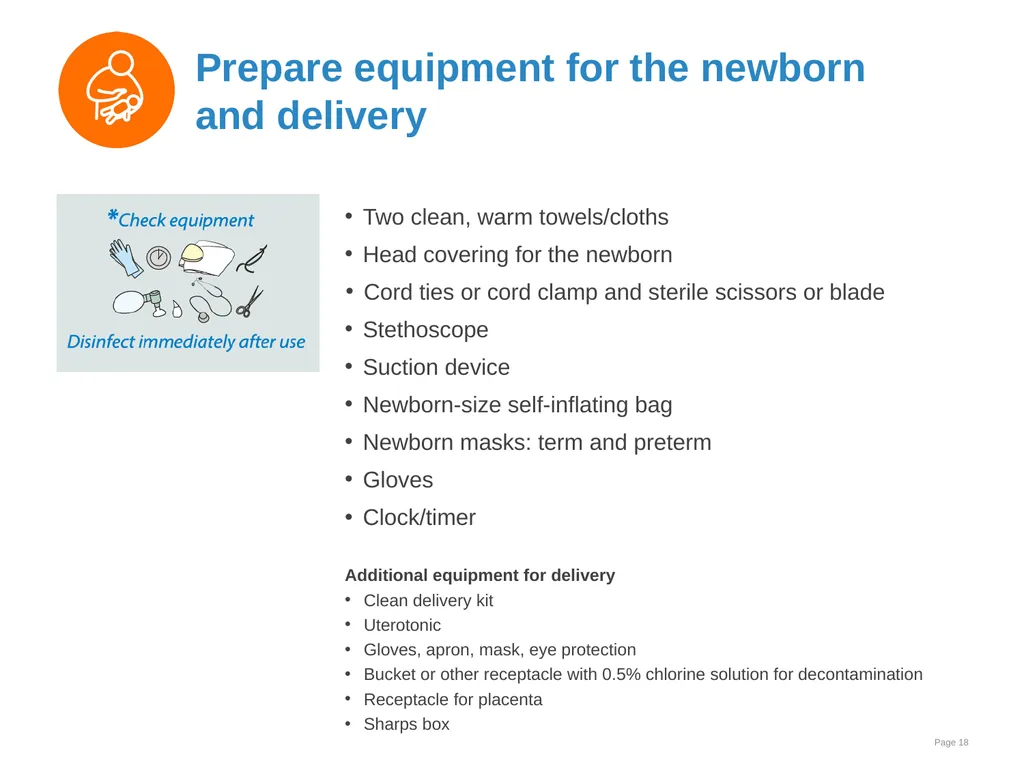
Prepare equipment for the newborn and delivery Two clean, warm towels/cloths
Head covering for the newborn
Cord ties or cord clamp and sterile scissors or blade
Stethoscope
Suction device
Newborn-size self-inflating bag
Newborn masks: term and preterm
Gloves
Clock/timer
Additional equipment for delivery
Clean delivery kit
Uterotonic
Gloves, apron, mask, eye protection
Bucket or other receptacle with 0.5% chlorine solution for decontamination
Receptacle for placenta
Sharps box<br>
19
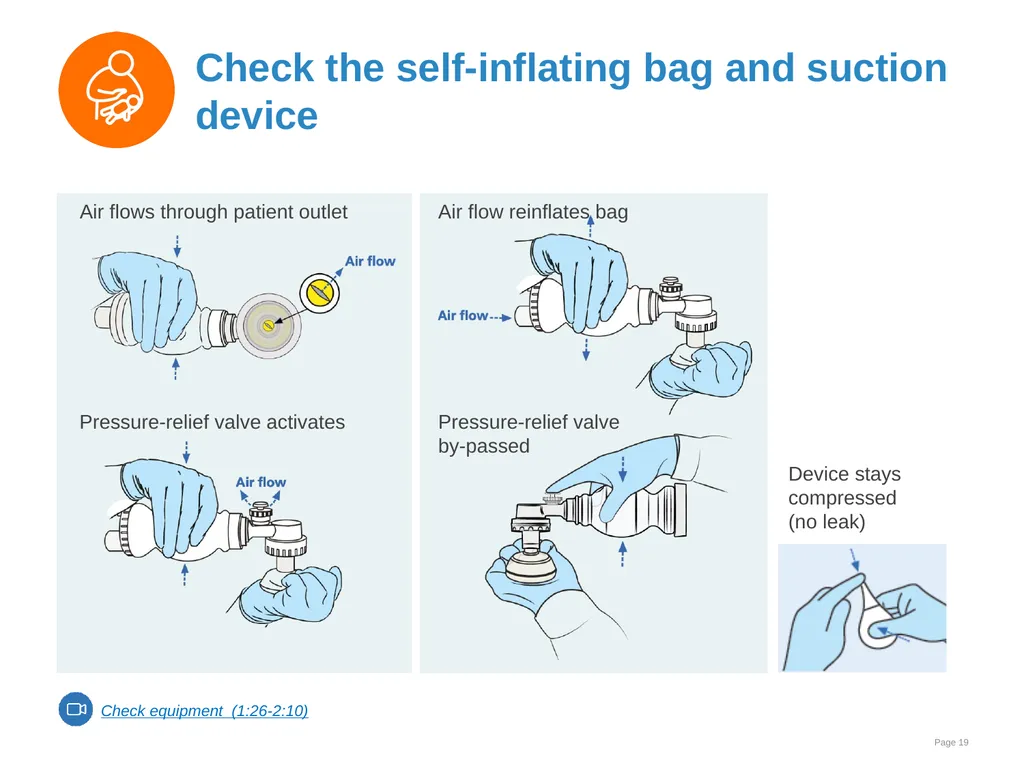
Check the self-inflating bag and suction device Air flows through patient outlet Pressure-relief valve activates Air flow reinflates bag Pressure-relief valve by-passed Device stays compressed (no leak)<br>
20
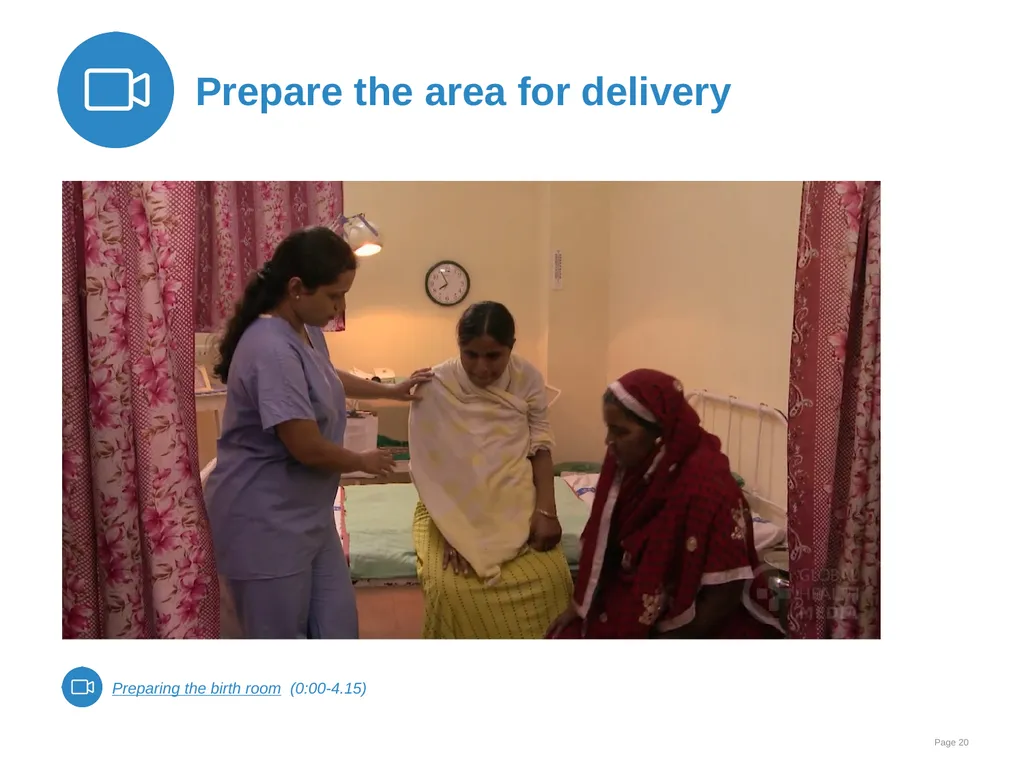
Prepare the area for delivery<br>
21
Prepare for birth Form groups (mother, companion, midwife).
Welcome the mother and her companion and prepare for birth.
Debrief with your team and facilitator. Mrs. Ahmed arrives with her mother-in-law.
This is her first pregnancy.
She attended 6 ANC visits. She has had no complications.
Her expected date of delivery is today; delivery will occur very soon.<br>
22
Summary: Preparation for birth In this module you have:
Prepared a clean, safe, welcoming environment for every birth.
Reviewed mother’s notes to assess for risk factors affecting the newborn.
Demonstrated effective communication with mother, her companion and a helper, explaining what will happen to the newborn immediately after birth.
Organised the delivery and resuscitation spaces, ensuring safety and maintaining dignity and privacy.
Checked the equipment and supplies to make sure they are complete and function properly.<br>