Presentation on The Tyger by William Blake Ujjwal Biswas Assistant Professor Department of English Semester III Session-2020-21 Khatra Adibasi Mahavidyalaya Life of Visionary Blake William Blake (28 November 1757 12 August 1827) was an
"Presentation on The Tyger by William Blake Ujjwal" is the property of its rightful owner. Permission is granted to
download and print the materials on this website for personal, non-commercial use only, and to display it
on your personal computer provided you do not modify the materials and that you retain all copyright
notices contained in the materials. By downloading content from our website, you accept the terms of this
agreement.
Presentation Transcript
01
Presentation on The Tyger by William Blake Ujjwal Biswas
Assistant Professor
Department of English
Semester – III
Session-2020-21
Khatra Adibasi Mahavidyalaya<br>
02
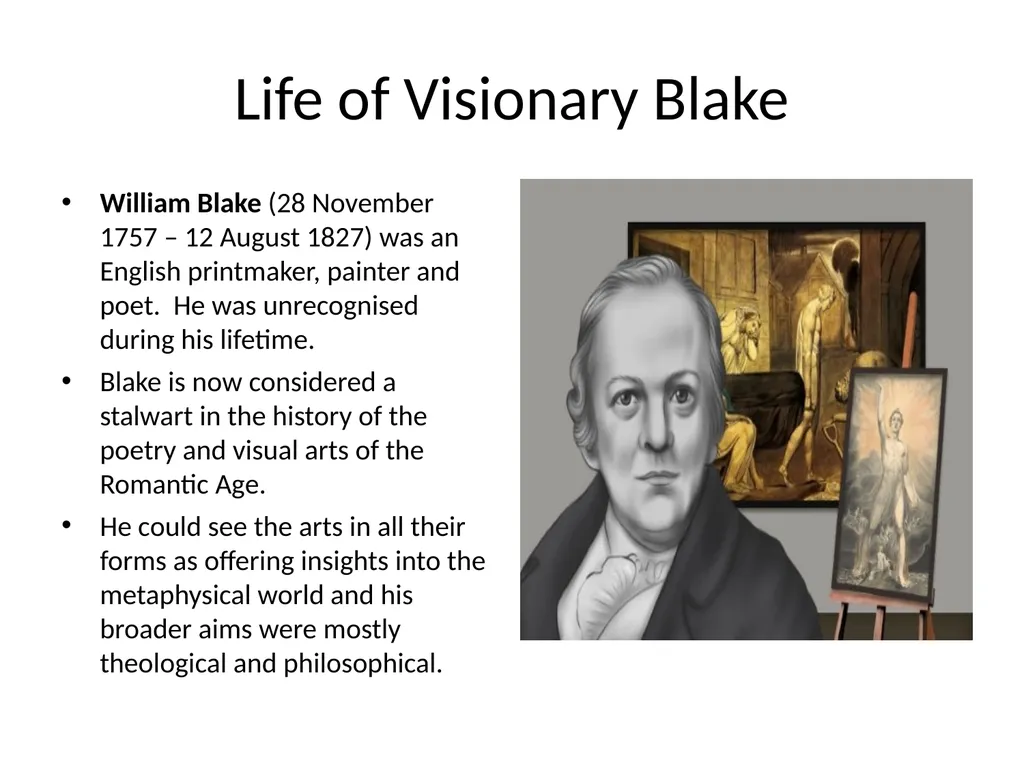
Life of Visionary Blake William Blake (28 November 1757 – 12 August 1827) was an English printmaker, painter and poet. He was unrecognised during his lifetime.
Blake is now considered a stalwart in the history of the poetry and visual arts of the Romantic Age.
He could see the arts in all their forms as offering insights into the metaphysical world and his broader aims were mostly theological and philosophical.<br>
03
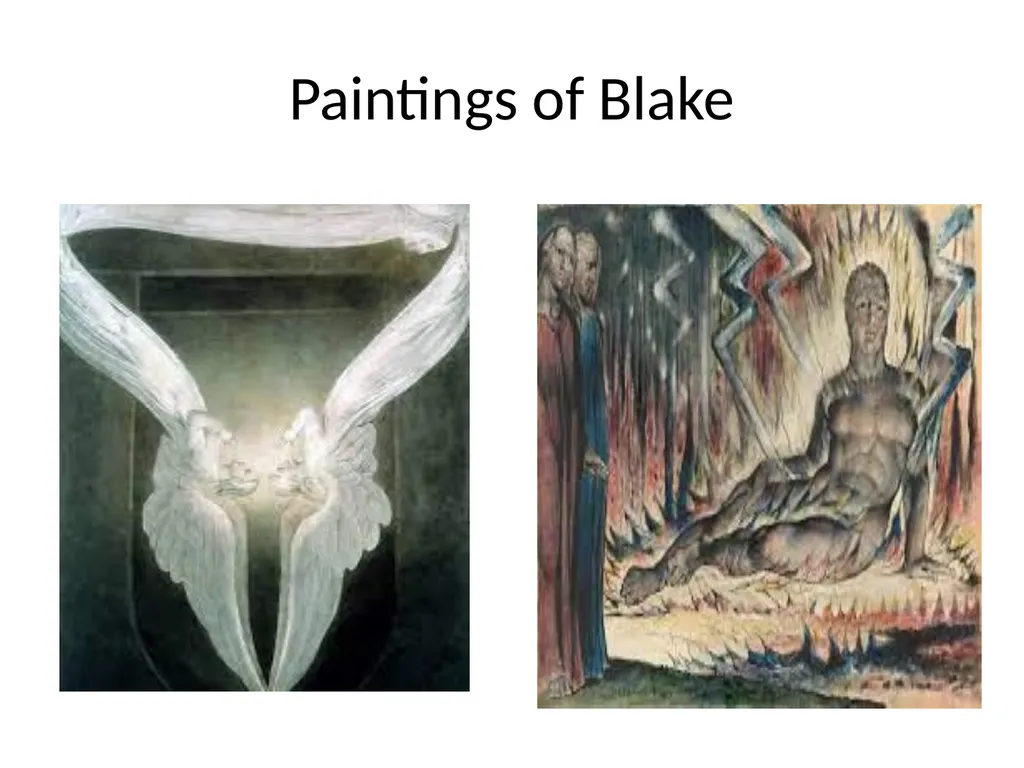
Paintings of Blake<br>
04
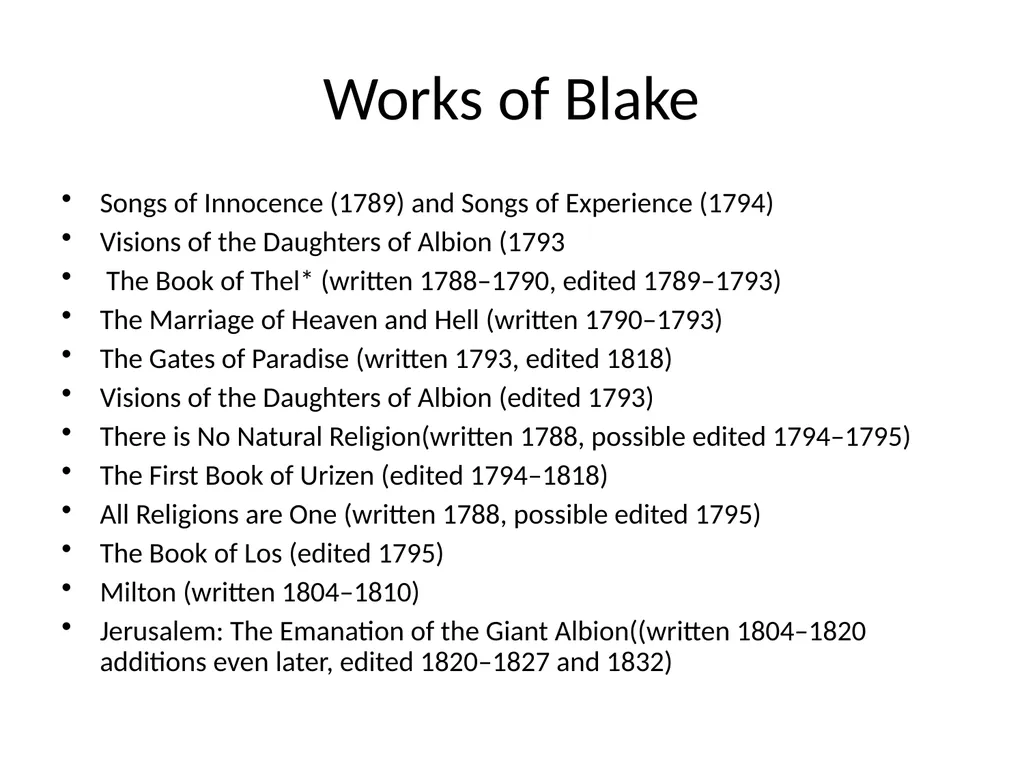
Works of Blake Songs of Innocence (1789) and Songs of Experience (1794)
Visions of the Daughters of Albion (1793
The Book of Thel* (written 1788–1790, edited 1789–1793)
The Marriage of Heaven and Hell (written 1790–1793)
The Gates of Paradise (written 1793, edited 1818)
Visions of the Daughters of Albion (edited 1793)
There is No Natural Religion(written 1788, possible edited 1794–1795)
The First Book of Urizen (edited 1794–1818)
All Religions are One (written 1788, possible edited 1795)
The Book of Los (edited 1795)
Milton (written 1804–1810)
Jerusalem: The Emanation of the Giant Albion((written 1804–1820 additions even later, edited 1820–1827 and 1832)<br>
05
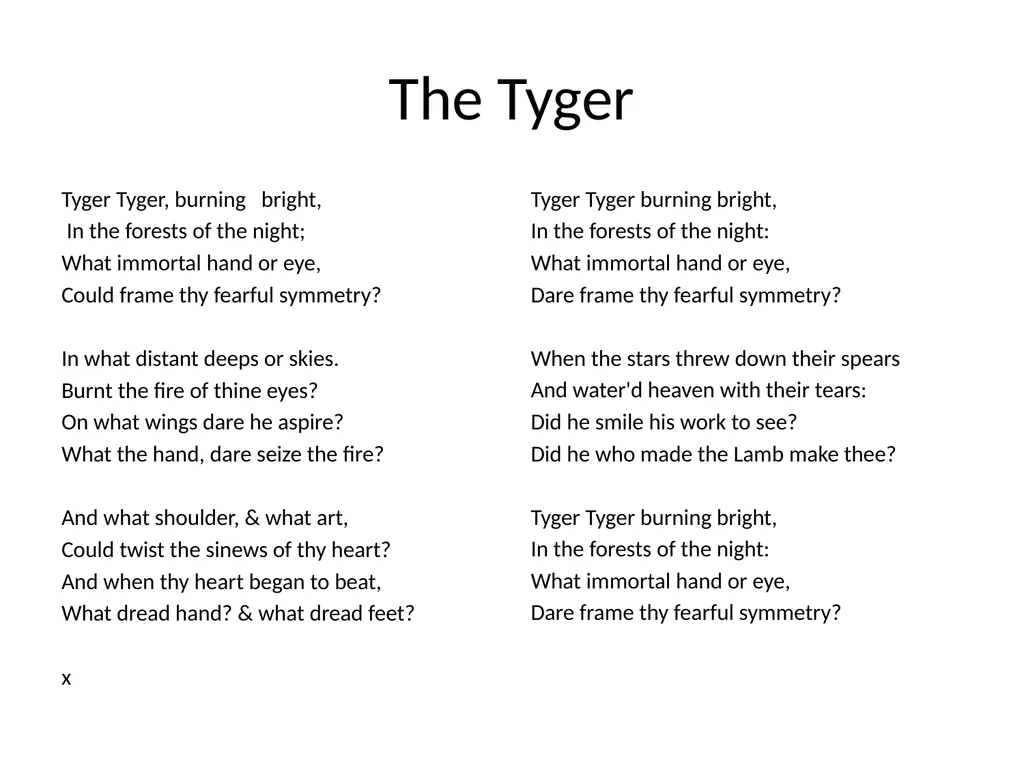
The Tyger Tyger Tyger, burning bright,
In the forests of the night;
What immortal hand or eye,
Could frame thy fearful symmetry?
In what distant deeps or skies.
Burnt the fire of thine eyes?
On what wings dare he aspire?
What the hand, dare seize the fire?
And what shoulder, & what art,
Could twist the sinews of thy heart?
And when thy heart began to beat,
What dread hand? & what dread feet?
x Tyger Tyger burning bright,
In the forests of the night:
What immortal hand or eye,
Dare frame thy fearful symmetry?
When the stars threw down their spears
And water'd heaven with their tears:
Did he smile his work to see?
Did he who made the Lamb make thee?
Tyger Tyger burning bright,
In the forests of the night:
What immortal hand or eye,
Dare frame thy fearful symmetry?<br>
06
Significant Issues Framed as a series of rhetorical questions
Speaker wonders about the creator who is responsible for such ferocious animal like tyger
Question on benevolent nature of God
Blake makes use of several literary devices in ‘The Tyger.’ These include but are not limited to alliteration, enjambment, and allusion.<br>