Primer design General rules for selecting GOI It should be the gene of your interest You need to have its sequence, preferably a full length sequence. Gene sequence is useful even if you are going to detect mRNA, you still want to know
"Primer design General rules for selecting GOI It" is the property of its rightful owner. Permission is granted to
download and print the materials on this website for personal, non-commercial use only, and to display it
on your personal computer provided you do not modify the materials and that you retain all copyright
notices contained in the materials. By downloading content from our website, you accept the terms of this
agreement.
Presentation Transcript
01
Primer design<br>
02
General rules for selecting GOI It should be the gene of your interest
You need to have its sequence, preferably a full length sequence. Gene sequence is useful even if you are going to detect mRNA, you still want to know position of introns
If you are detecting mRNA you need to know, whether the gene of your interest has alternative splicing variants
You need to know if the gene of your interest has close homologues or conserved domains ( to avoid designing primers,which will recognise off-targets)<br>
03
General rules for selecting reference genes you want them to be equally expressed in control and test samples:
check available literature and ask people around
check available microarray data (follow this link: GENEVESTIGATOR)
figure out what genes are involved in key pathways in all cells present in your sample
avoid picking genes within the same pathway or cross-talking pathways
pick only single member family genes
choose the least conservative coding part of a gene you picked
it is on your conscience to trust single reference gene data. just for you information, good people use more than one reference.
sic! before designing primers read carefully manual of a qPCR kit you are going to use. Different kit shave different demands for optimal amplicons lengths<br>
04
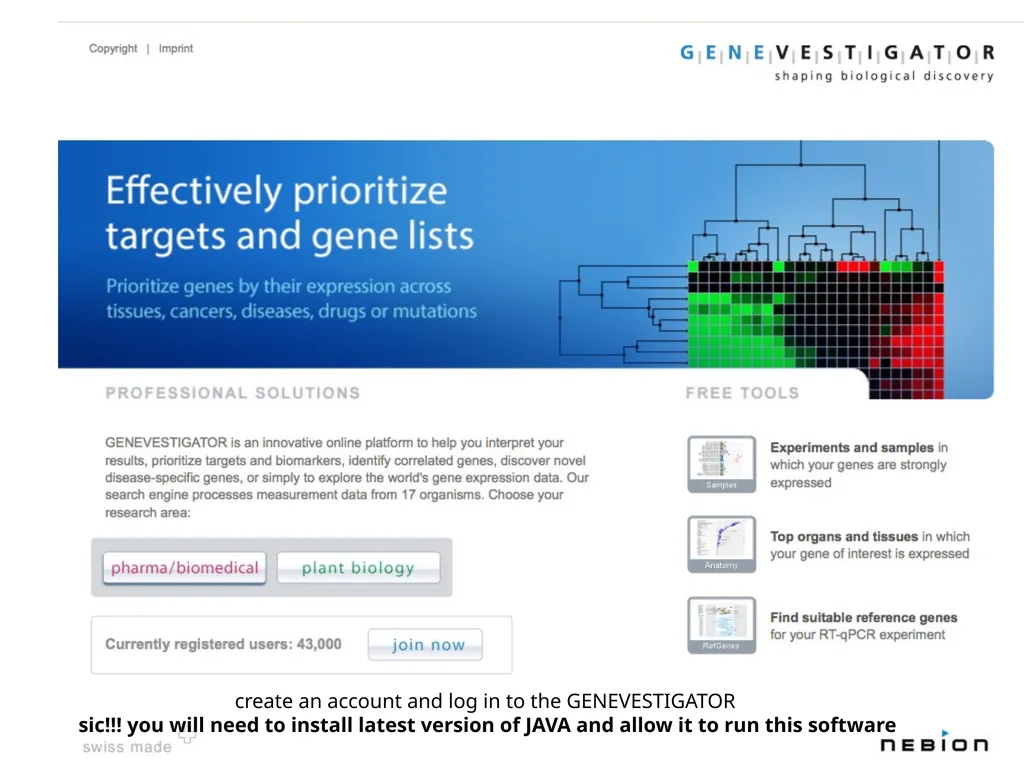
create an account and log in to the GENEVESTIGATOR
sic!!! you will need to install latest version of JAVA and allow it to run this software<br>
05
video tutorial are very useful<br>
06
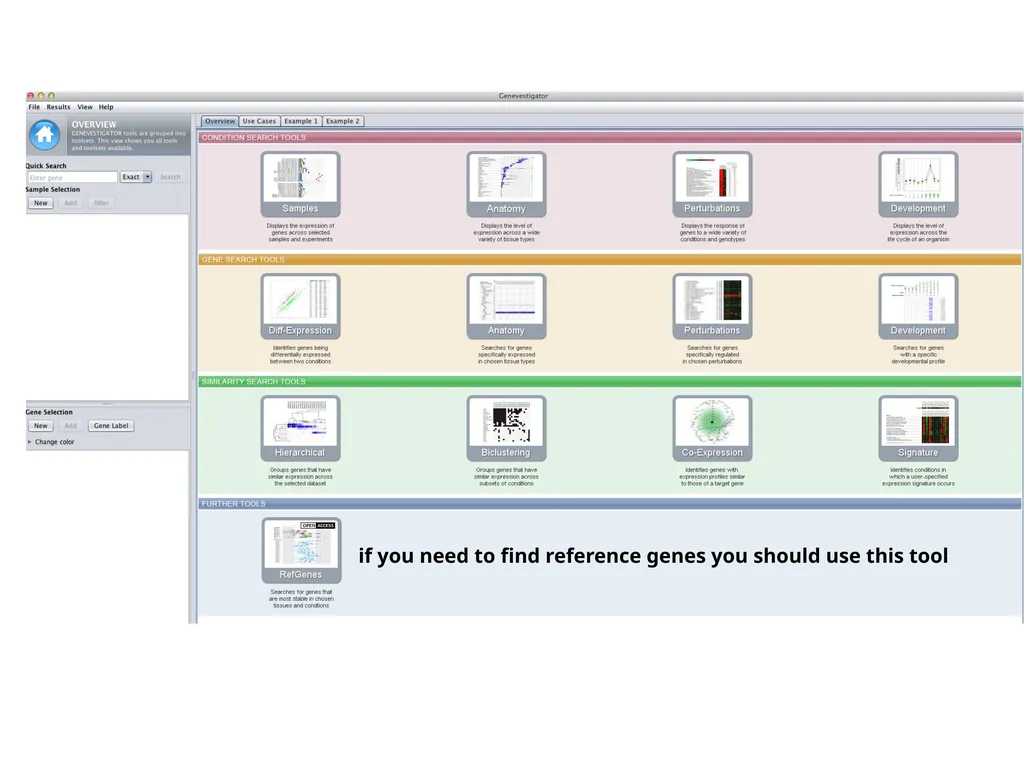
if you need to find reference genes you should use this tool<br>
07
please go to the home page of genevestigator click on tutorials<br>
08
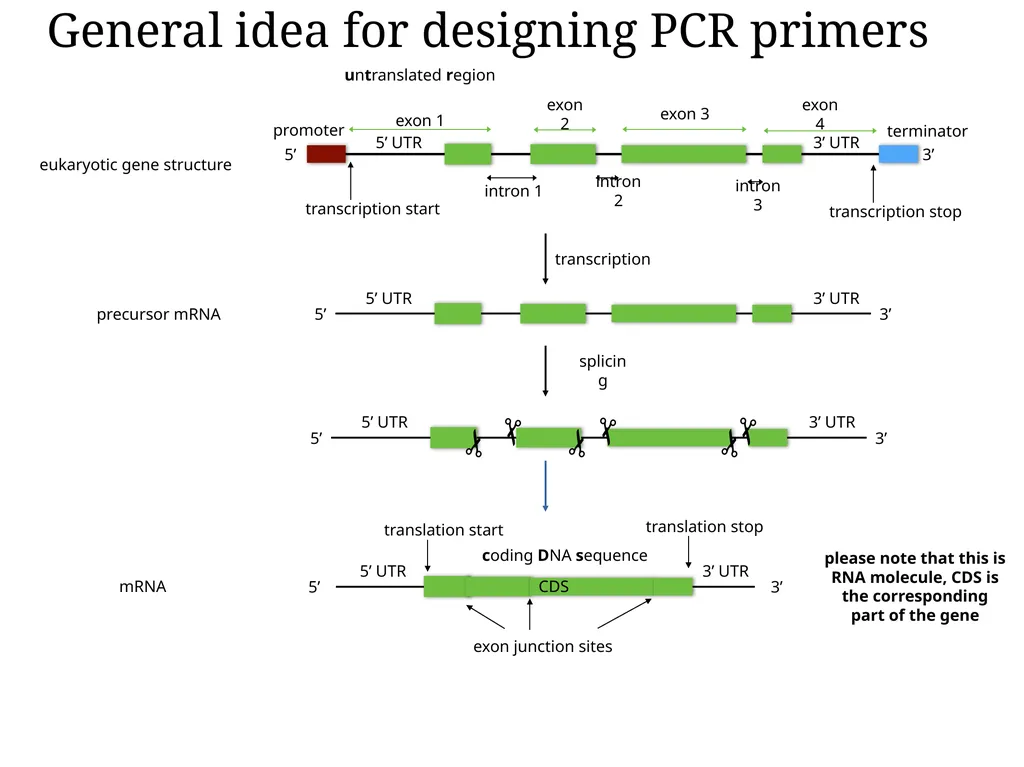
General idea for designing PCR primers 5’ UTR promoter eukaryotic gene structure terminator 3’ UTR untranslated region precursor mRNA CDS coding DNA sequence please note that this is RNA molecule, CDS is the corresponding part of the gene mRNA<br>
09
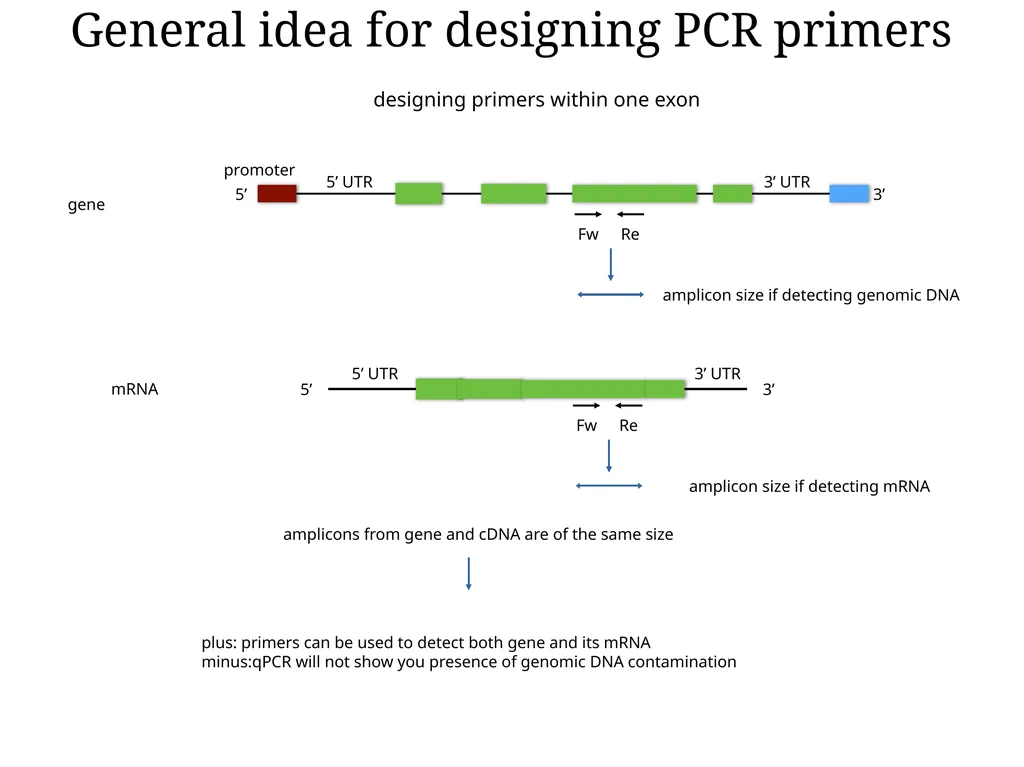
General idea for designing PCR primers amplicon size if detecting genomic DNA amplicon size if detecting mRNA plus: primers can be used to detect both gene and its mRNA
minus:qPCR will not show you presence of genomic DNA contamination amplicons from gene and cDNA are of the same size designing primers within one exon<br>
10
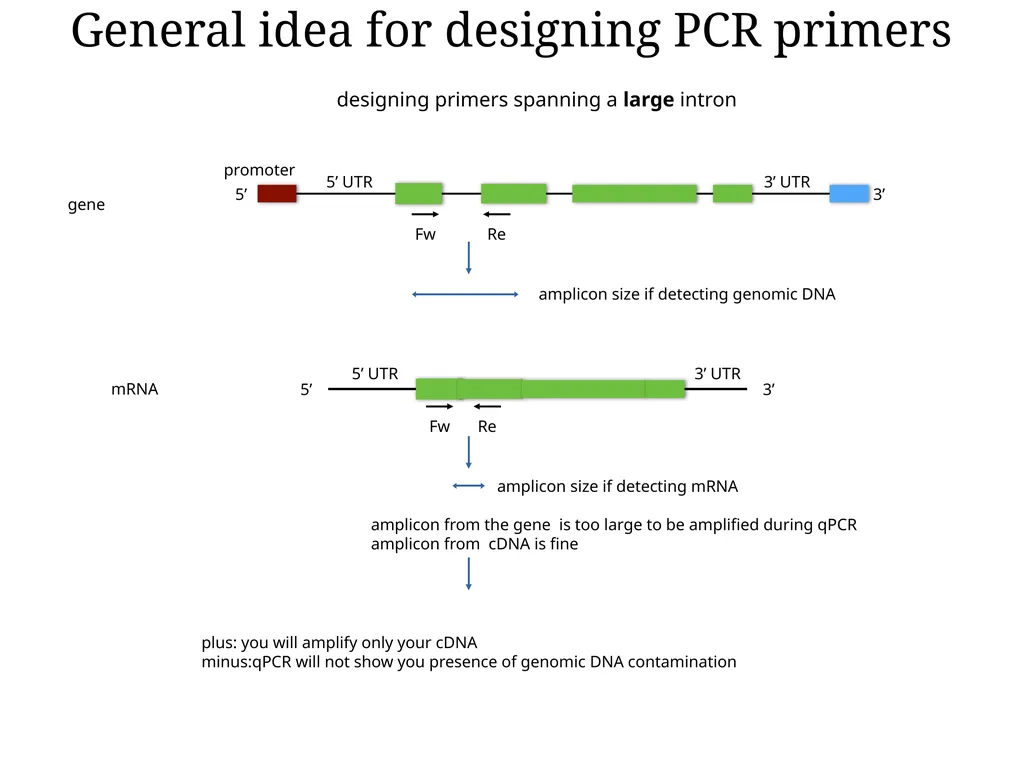
General idea for designing PCR primers amplicon size if detecting genomic DNA amplicon size if detecting mRNA plus: you will amplify only your cDNA
minus:qPCR will not show you presence of genomic DNA contamination amplicon from the gene is too large to be amplified during qPCR
amplicon from cDNA is fine designing primers spanning a large intron<br>
11
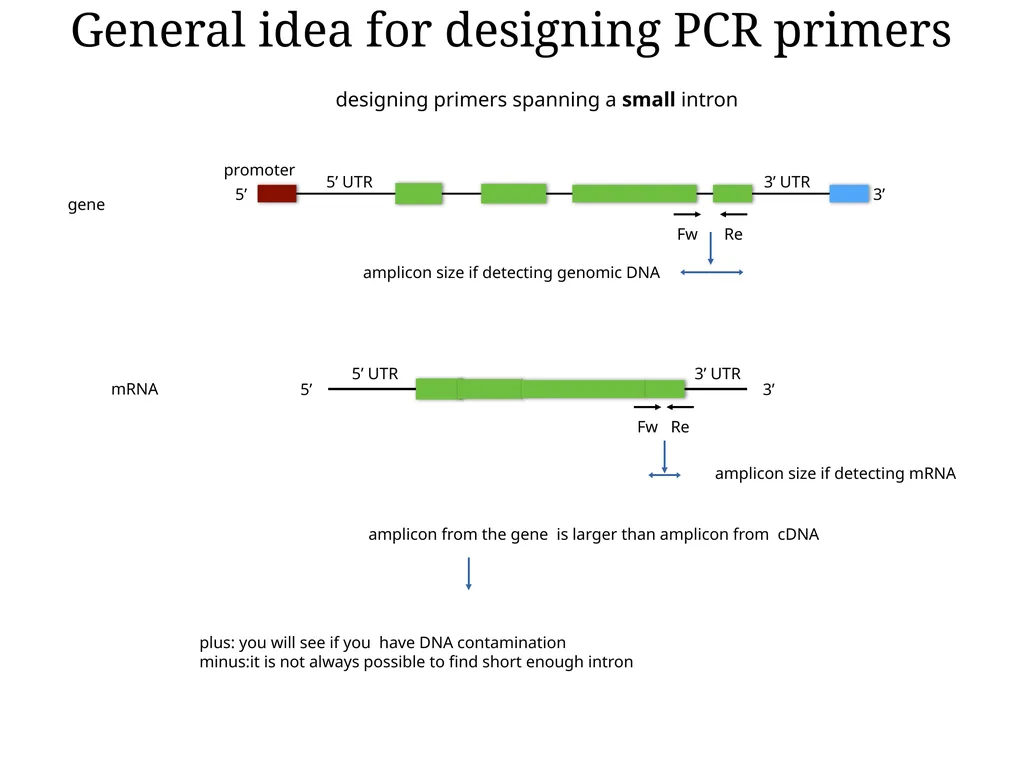
General idea for designing PCR primers amplicon size if detecting genomic DNA amplicon size if detecting mRNA plus: you will see if you have DNA contamination
minus:it is not always possible to find short enough intron amplicon from the gene is larger than amplicon from cDNA designing primers spanning a small intron<br>
12
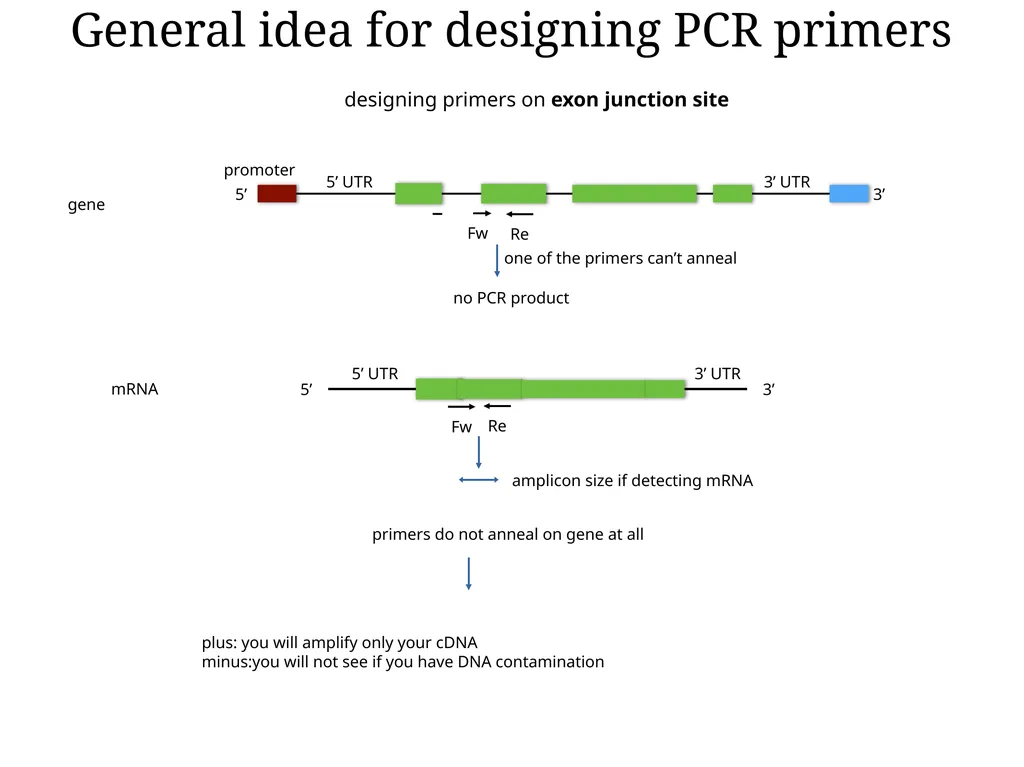
General idea for designing PCR primers one of the primers can’t anneal amplicon size if detecting mRNA plus: you will amplify only your cDNA
minus:you will not see if you have DNA contamination primers do not anneal on gene at all designing primers on exon junction site no PCR product<br>
13
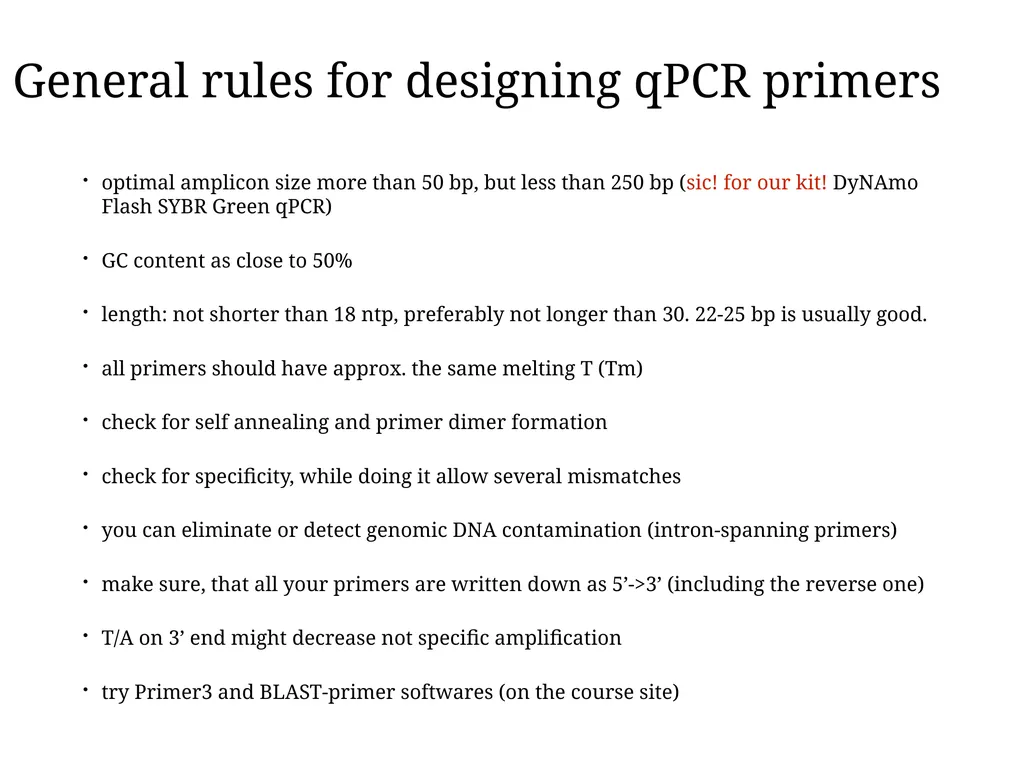
optimal amplicon size more than 50 bp, but less than 250 bp (sic! for our kit! DyNAmo Flash SYBR Green qPCR)
GC content as close to 50%
length: not shorter than 18 ntp, preferably not longer than 30. 22-25 bp is usually good.
all primers should have approx. the same melting T (Tm)
check for self annealing and primer dimer formation
check for specificity, while doing it allow several mismatches
you can eliminate or detect genomic DNA contamination (intron-spanning primers)
make sure, that all your primers are written down as 5’->3’ (including the reverse one)
T/A on 3’ end might decrease not specific amplification
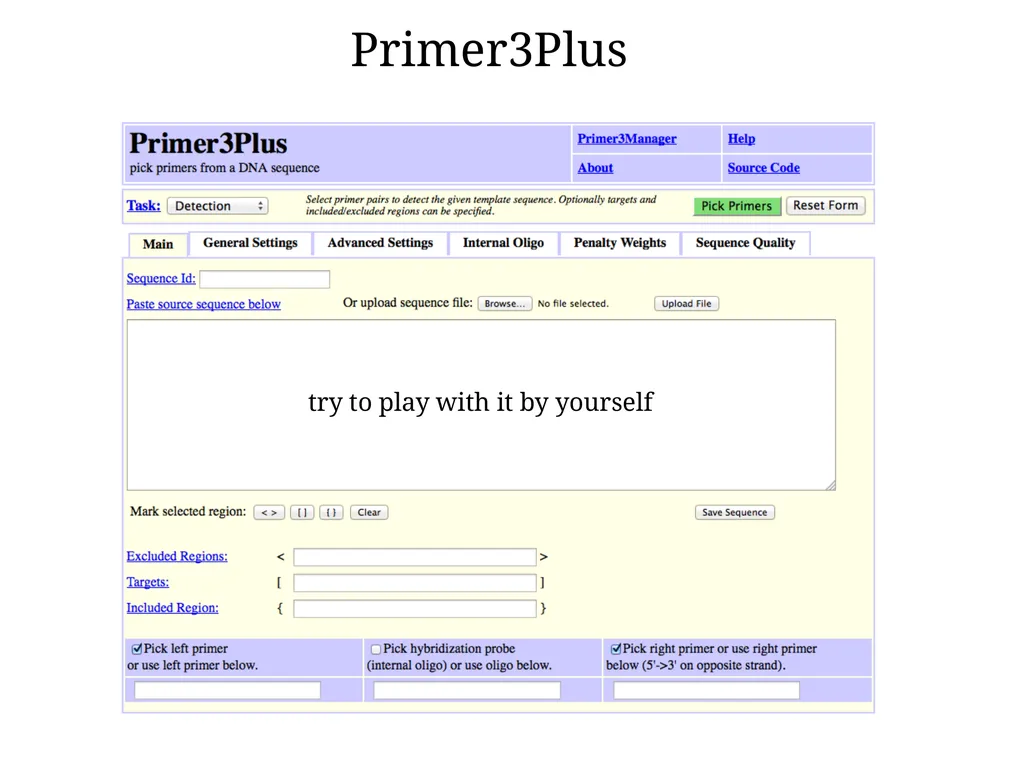
try Primer3 and BLAST-primer softwares (on the course site) General rules for designing qPCR primers<br>
14
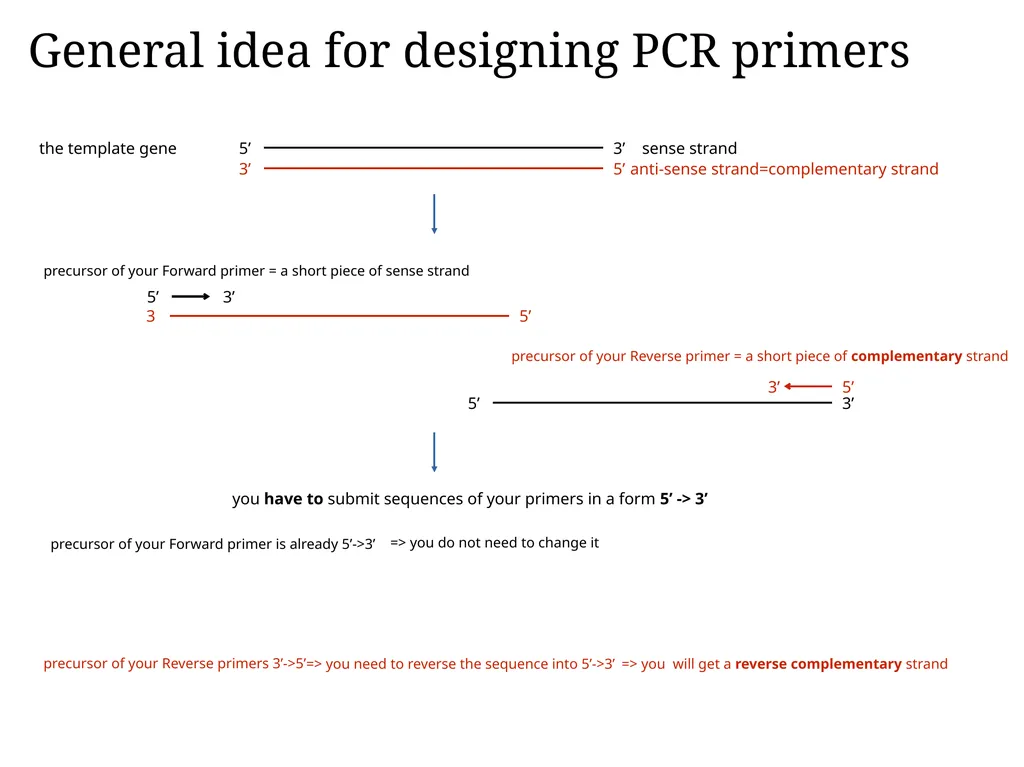
General idea for designing PCR primers precursor of your Forward primer = a short piece of sense strand anti-sense strand=complementary strand precursor of your Reverse primer = a short piece of complementary strand you have to submit sequences of your primers in a form 5’ -> 3’ precursor of your Forward primer is already 5’->3’ precursor of your Reverse primers 3’->5’ the template gene => you do not need to change it => you need to reverse the sequence into 5’->3’ => you will get a reverse complementary strand<br>
15
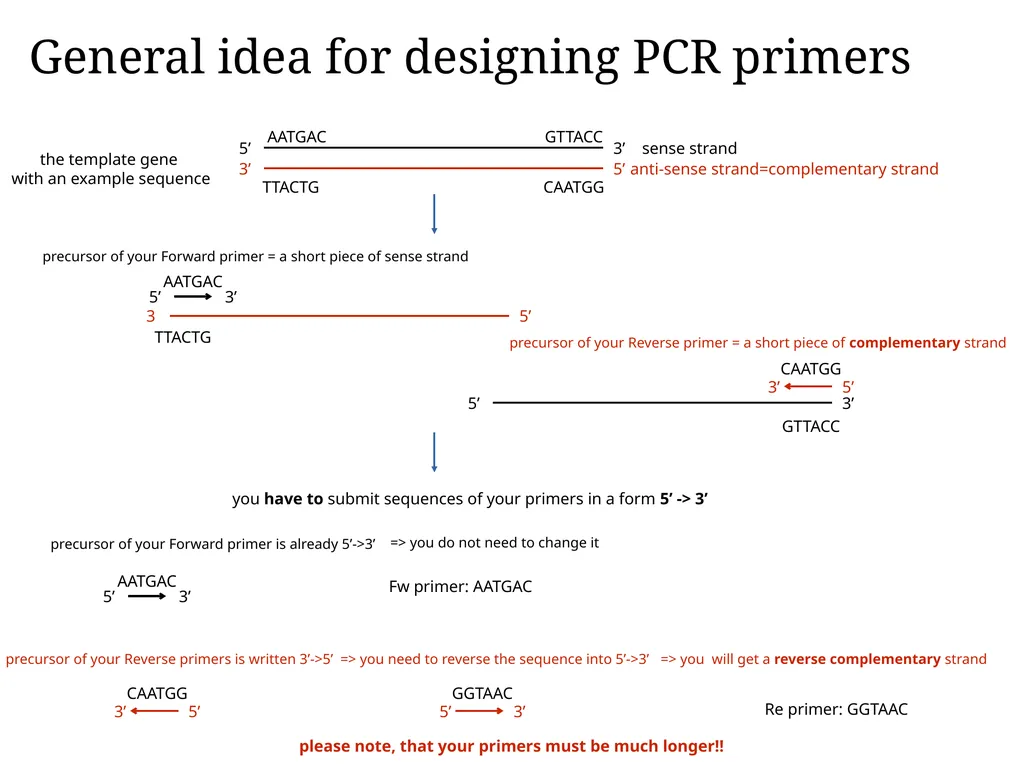
General idea for designing PCR primers precursor of your Forward primer = a short piece of sense strand precursor of your Reverse primer = a short piece of complementary strand you have to submit sequences of your primers in a form 5’ -> 3’ precursor of your Forward primer is already 5’->3’ precursor of your Reverse primers is written 3’->5’ the template gene
with an example sequence => you do not need to change it => you need to reverse the sequence into 5’->3’ => you will get a reverse complementary strand please note, that your primers must be much longer!! Fw primer: AATGAC Re primer: GGTAAC<br>
16
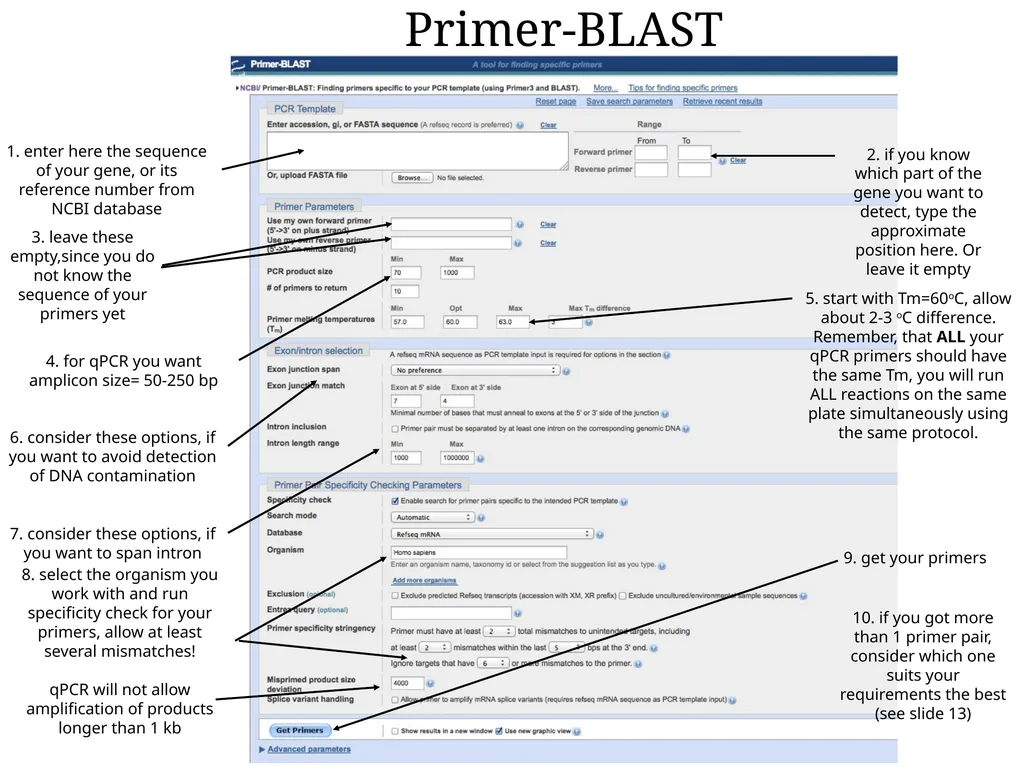
Primer-BLAST 10. if you got more than 1 primer pair, consider which one suits your requirements the best (see slide 13)<br>
17
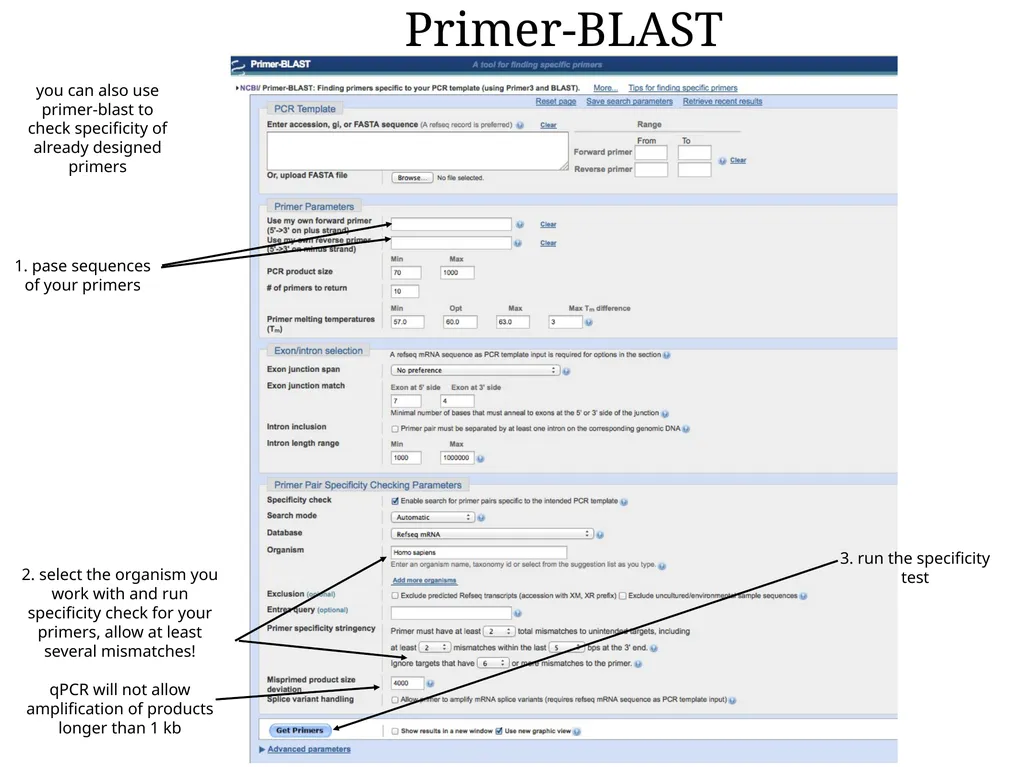
Primer-BLAST you can also use primer-blast to check specificity of already designed primers<br>