Protecting and advancing HIV prevention access for young, Black, queer communities Barriers and facilitators of person-centred care for key and vulnerable populations Princess Jauan Durbin M.S. Southern Legal Center for Youth, United States
"Protecting and advancing HIV prevention access for" is the property of its rightful owner. Permission is granted to
download and print the materials on this website for personal, non-commercial use only, and to display it
on your personal computer provided you do not modify the materials and that you retain all copyright
notices contained in the materials. By downloading content from our website, you accept the terms of this
agreement.
Presentation Transcript
01
Protecting and advancing HIV prevention access for young, Black, queer communities Barriers and facilitators of person-centred care for key and vulnerable populations Princess Jauan Durbin M.S.
Southern Legal Center for Youth, United States<br>
02
This work is supported in part by the Elizabeth Taylor AIDS Foundation (ETAF).
The presenter discloses a paid partnership with ViiV Healthcare that is not affiliated with their work on this project. No other financial relationships to disclose relevant to this presentation. Disclosures<br>
03
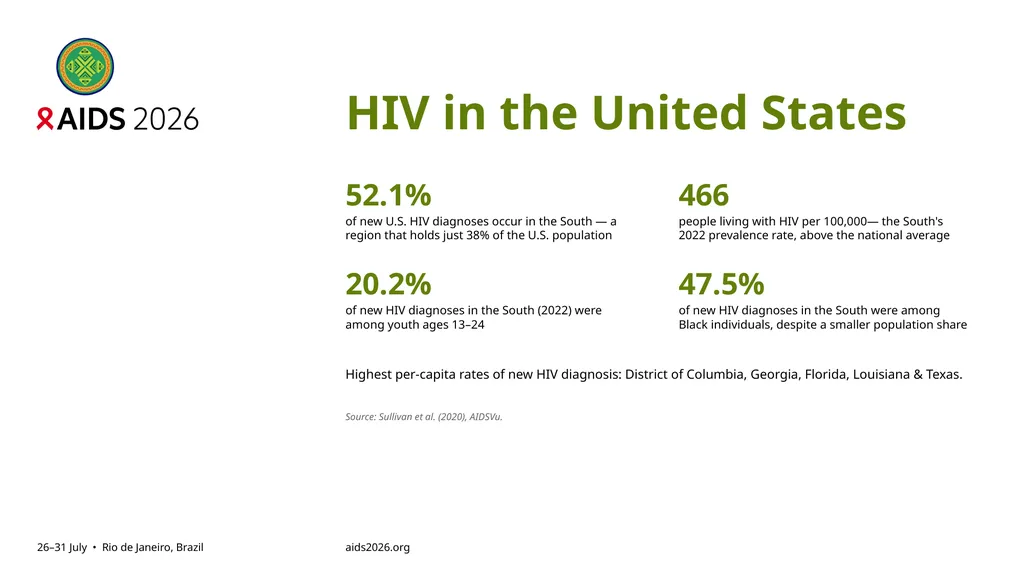
HIV in the United States 52.1%
of new U.S. HIV diagnoses occur in the South — a region that holds just 38% of the U.S. population 466
people living with HIV per 100,000— the South's 2022 prevalence rate, above the national average 20.2%
of new HIV diagnoses in the South (2022) were among youth ages 13–24 47.5%
of new HIV diagnoses in the South were among Black individuals, despite a smaller population share Highest per-capita rates of new HIV diagnosis: District of Columbia, Georgia, Florida, Louisiana & Texas. Source: Sullivan et al. (2020), AIDSVu.<br>
04
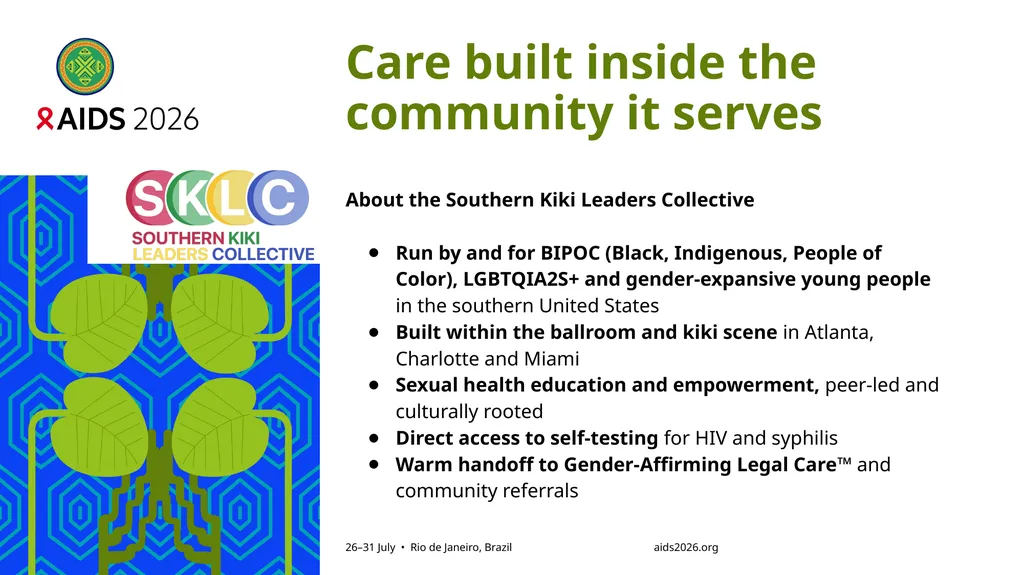
About the Southern Kiki Leaders Collective
Run by and for BIPOC (Black, Indigenous, People of Color), LGBTQIA2S+ and gender-expansive young people in the southern United States
Built within the ballroom and kiki scene in Atlanta, Charlotte and Miami
Sexual health education and empowerment, peer-led and culturally rooted
Direct access to self-testing for HIV and syphilis
Warm handoff to Gender-Affirming Legal Care™ and community referrals Care built inside the community it serves<br>
05
Meeting young people at the ball, not the clinic<br>
06
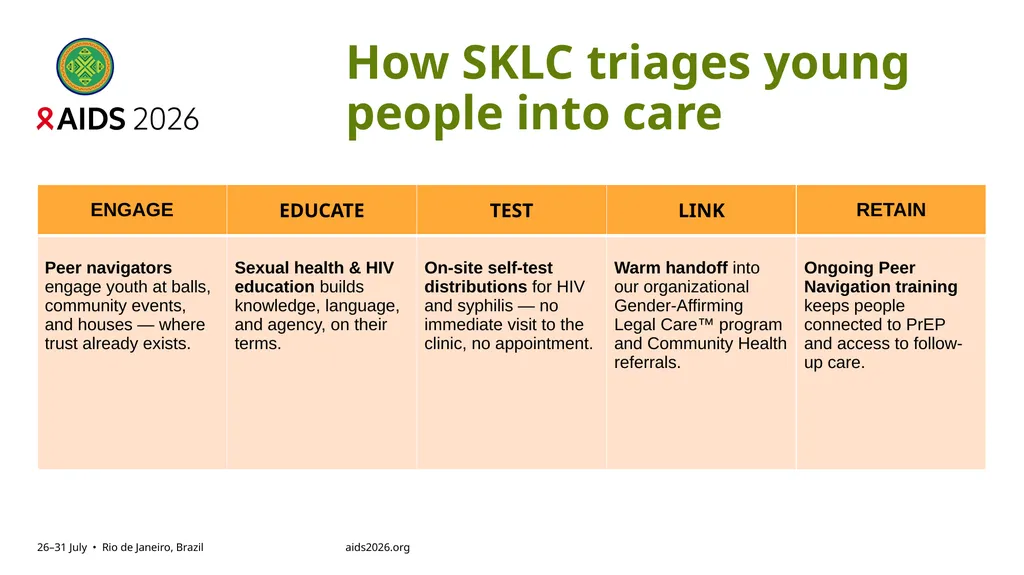
How SKLC triages young people into care<br>
07
SKLC pairs every clinical or legal service with the practical support that keeps young people from falling out of care
Transportation to appointments if and when needed
Emergency financial assistance to prevent eviction for youth flagged as at-risk during intake.
These are not add-ons; they are treated as core to the care model, because a missed bus or a lost apartment is often the real reason someone does not come back. Removing the barriers before they become reasons to disappear<br>
08
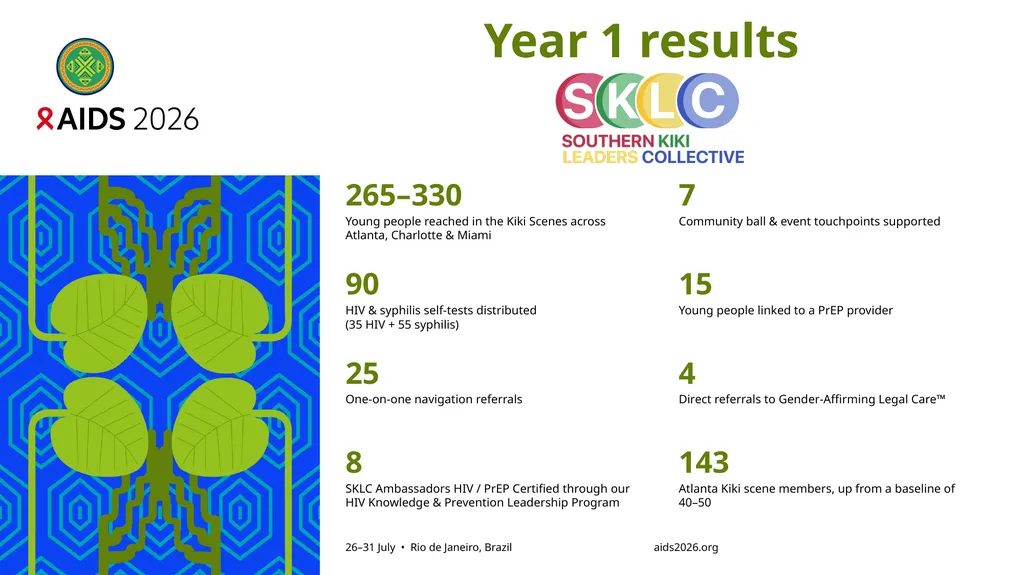
Year 1 results 265–330
Young people reached in the Kiki Scenes across Atlanta, Charlotte & Miami 7
Community ball & event touchpoints supported 90
HIV & syphilis self-tests distributed (35 HIV + 55 syphilis) 15
Young people linked to a PrEP provider 25
One-on-one navigation referrals 4
Direct referrals to Gender-Affirming Legal Care™ 8
SKLC Ambassadors HIV / PrEP Certified through our HIV Knowledge & Prevention Leadership Program 143
Atlanta Kiki scene members, up from a baseline of 40–50<br>
09
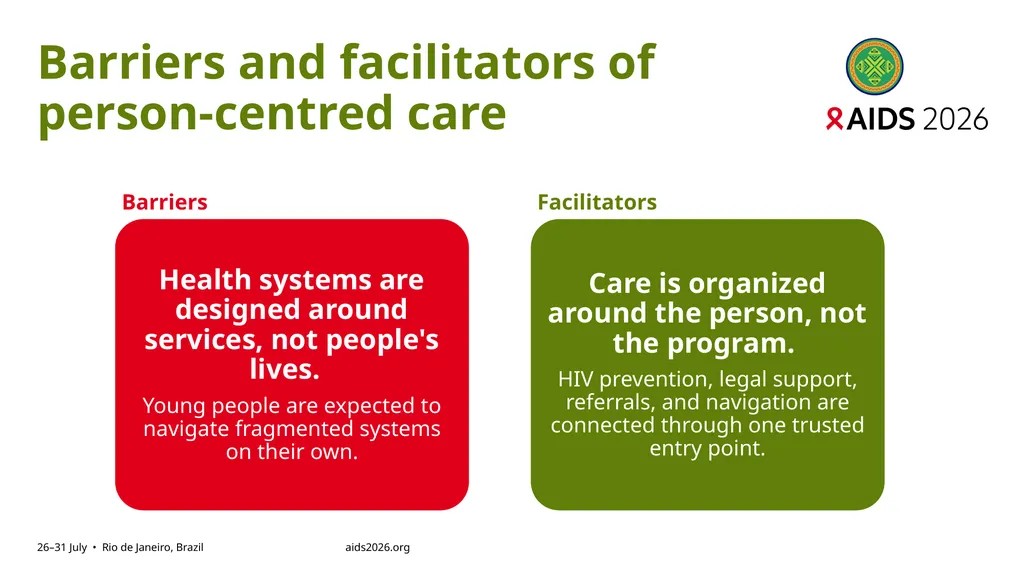
Barriers and facilitators of person-centred care Health systems are designed around services, not people's lives.
Young people are expected to navigate fragmented systems on their own. Care is organized around the person, not the program.
HIV prevention, legal support, referrals, and navigation are connected through one trusted entry point. Barriers Facilitators<br>
10
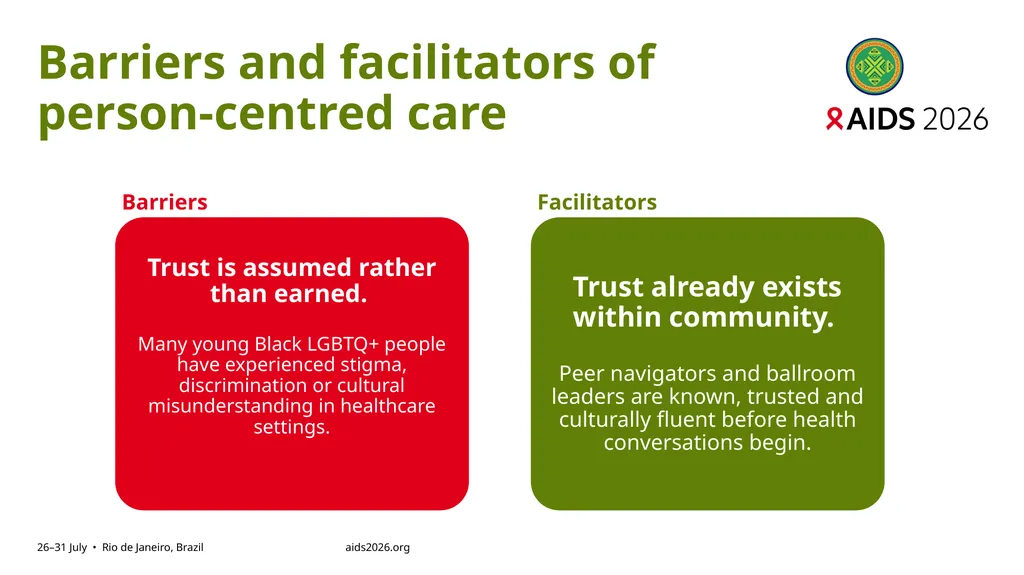
Barriers and facilitators of person-centred care Trust is assumed rather than earned. Many young Black LGBTQ+ people have experienced stigma, discrimination or cultural misunderstanding in healthcare settings. Trust already exists within community. Peer navigators and ballroom leaders are known, trusted and culturally fluent before health conversations begin. Barriers Facilitators<br>
11
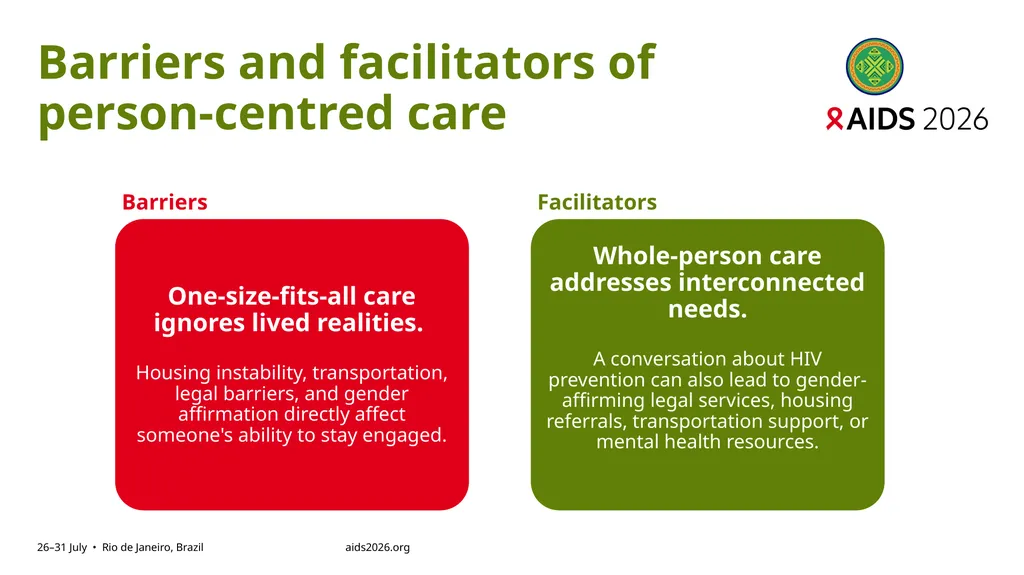
Barriers and facilitators of person-centred care One-size-fits-all care ignores lived realities. Housing instability, transportation, legal barriers, and gender affirmation directly affect someone's ability to stay engaged. Whole-person care addresses interconnected needs. A conversation about HIV prevention can also lead to gender-affirming legal services, housing referrals, transportation support, or mental health resources. Barriers Facilitators<br>
12
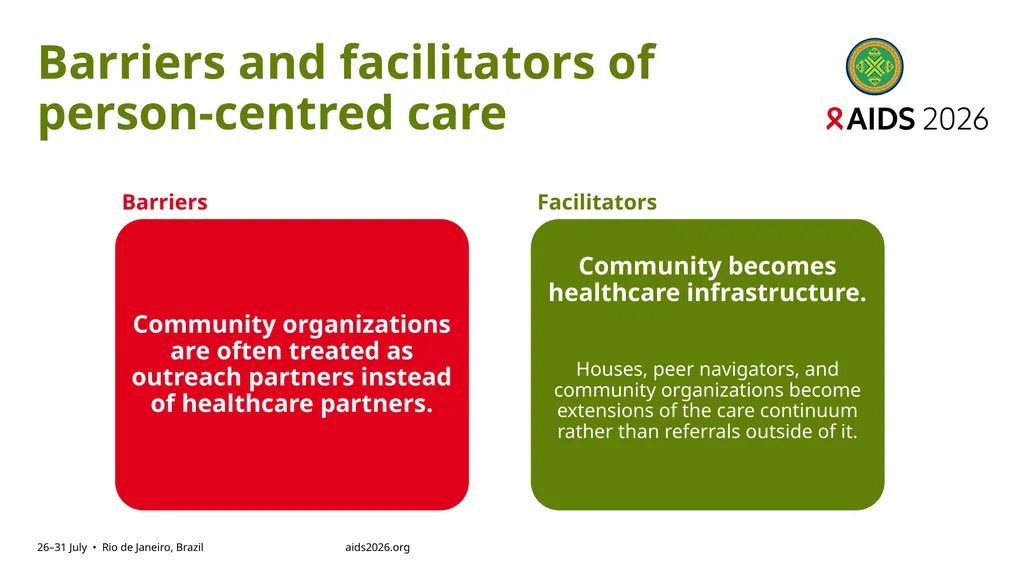
Barriers and facilitators of person-centred care Community organizations are often treated as outreach partners instead of healthcare partners. Community becomes healthcare infrastructure. Houses, peer navigators, and community organizations become extensions of the care continuum rather than referrals outside of it. Barriers Facilitators<br>
13
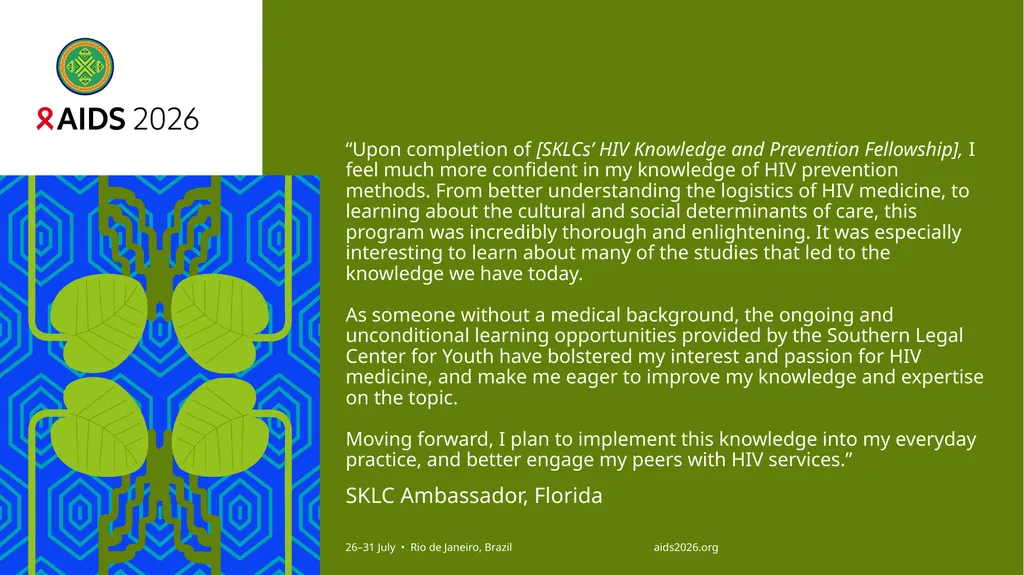
“Upon completion of [SKLCs’ HIV Knowledge and Prevention Fellowship], I feel much more confident in my knowledge of HIV prevention methods. From better understanding the logistics of HIV medicine, to learning about the cultural and social determinants of care, this program was incredibly thorough and enlightening. It was especially interesting to learn about many of the studies that led to the knowledge we have today.
As someone without a medical background, the ongoing and unconditional learning opportunities provided by the Southern Legal Center for Youth have bolstered my interest and passion for HIV medicine, and make me eager to improve my knowledge and expertise on the topic.
Moving forward, I plan to implement this knowledge into my everyday practice, and better engage my peers with HIV services.” SKLC Ambassador, Florida<br>
14
Thank you
Scale what already works: fund peer-led person-centred models.
Princess Jauan Durbin, M.S. · Southern Legal Center for Youth · Princess@slcy.org<br>