
Protein Recommendations for Healthy Aging:
AS
Published · 39 slides · 0 views
1 / 1

Description
Protein Recommendations for Healthy Aging: Considerations for Quantity and Quality Nancy R. Rodriguez, PhD, RDN, CSSD, FACSM MINNESOTA ACADEMY OF NUTRITION AN DIETETICS 2019 ANNUAL MEETING APRIL 24 - 26, 2019 Disclosures Research Support
Related Topics
Share
Embed code
Download this presentation From Below
"Protein Recommendations for Healthy Aging:" is the property of its rightful owner. Permission is granted to download and print the materials on this website for personal, non-commercial use only, and to display it on your personal computer provided you do not modify the materials and that you retain all copyright notices contained in the materials. By downloading content from our website, you accept the terms of this agreement.
Presentation Transcript
01
Protein Recommendations
for Healthy Aging:
Considerations for Quantity and Quality Nancy R. Rodriguez, PhD, RDN, CSSD, FACSM
MINNESOTA ACADEMY OF NUTRITION AN DIETETICS
2019 ANNUAL MEETING
APRIL 24 - 26, 2019<br>
MINNESOTA ACADEMY OF NUTRITION AN DIETETICS
2019 ANNUAL MEETING
APRIL 24 - 26, 2019<br>
02
Disclosures Research Support
Beef Checkoff
National Dairy Council
American Egg Board
USDA, NIH, American Heart Association
Speaker’s Bureau and Advisory Boards
National Dairy Council
National Cattleman’s Beef Association
Whey Protein Advisory Panel<br>
Beef Checkoff
National Dairy Council
American Egg Board
USDA, NIH, American Heart Association
Speaker’s Bureau and Advisory Boards
National Dairy Council
National Cattleman’s Beef Association
Whey Protein Advisory Panel<br>
03
Objectives Consider protein requirements with specific regard for healthy, active aging, essential amino acid intake, and the flexibility provided by current DRIs for respective dietary protein prescriptions;
Translate the latest scientific findings on the role of protein quantity, quality and timing/meal distribution into practical meal plans designed for healthy aging; and
Extend concept of amino acid density to the design of healthy eating patterns that incorporate high-quality protein sources to meet dietary protein recommendations.<br>
Translate the latest scientific findings on the role of protein quantity, quality and timing/meal distribution into practical meal plans designed for healthy aging; and
Extend concept of amino acid density to the design of healthy eating patterns that incorporate high-quality protein sources to meet dietary protein recommendations.<br>
04
Protein is Fundamental to Life Protein is made up of building
blocks and provides structural components for various proteins required for numerous physiological functions and optimal health<br>
05
Protein’s Roles in Health Build, maintain, and repair muscle
Deliver oxygen to tissues
Boost immunity
Build better brains
Assist with metabolism of other nutrients
Build stronger bones
Aid satiety/fullness
Manage weight
Provide energy<br>
Deliver oxygen to tissues
Boost immunity
Build better brains
Assist with metabolism of other nutrients
Build stronger bones
Aid satiety/fullness
Manage weight
Provide energy<br>
06
Protein Recommendations:
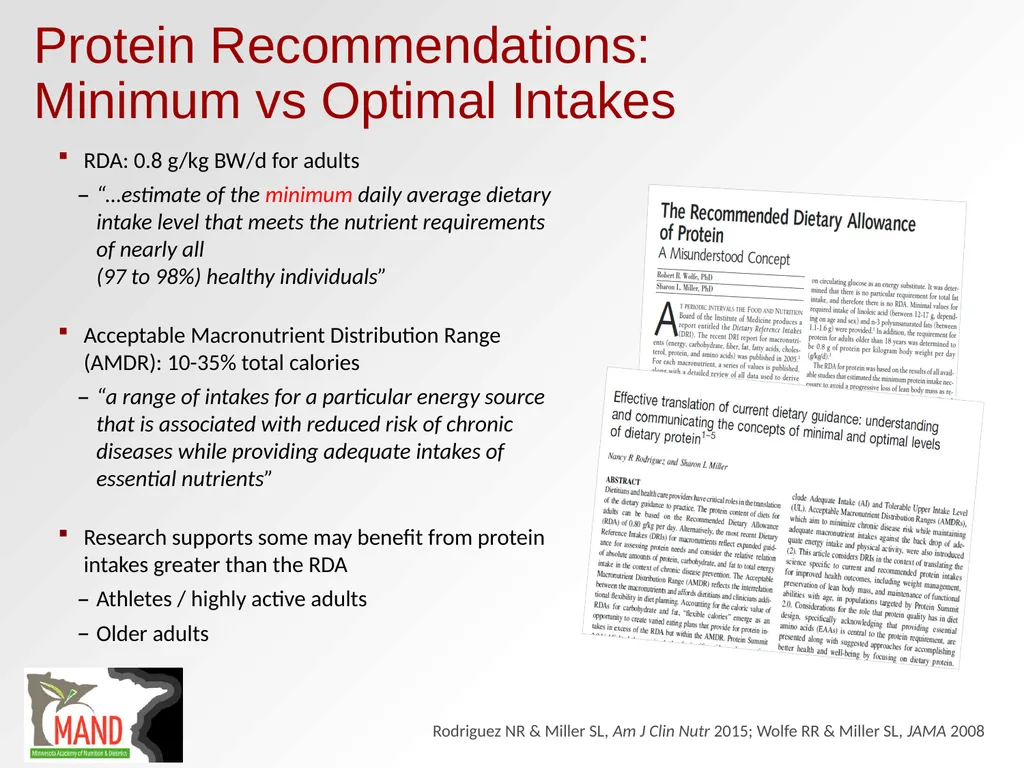
Minimum vs Optimal Intakes RDA: 0.8 g/kg BW/d for adults
“…estimate of the minimum daily average dietary intake level that meets the nutrient requirements of nearly all (97 to 98%) healthy individuals”
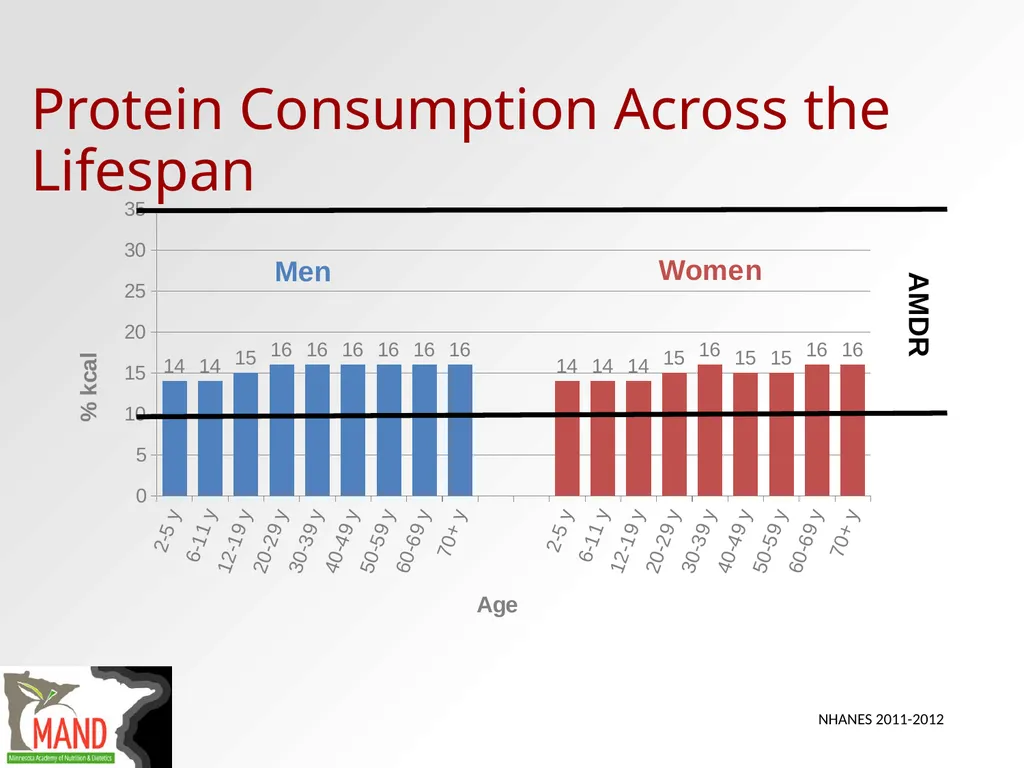
Acceptable Macronutrient Distribution Range (AMDR): 10-35% total calories
“a range of intakes for a particular energy source that is associated with reduced risk of chronic diseases while providing adequate intakes of essential nutrients”
Research supports some may benefit from protein intakes greater than the RDA
Athletes / highly active adults
Older adults Rodriguez NR & Miller SL, Am J Clin Nutr 2015; Wolfe RR & Miller SL, JAMA 2008<br>
“…estimate of the minimum daily average dietary intake level that meets the nutrient requirements of nearly all (97 to 98%) healthy individuals”
Acceptable Macronutrient Distribution Range (AMDR): 10-35% total calories
“a range of intakes for a particular energy source that is associated with reduced risk of chronic diseases while providing adequate intakes of essential nutrients”
Research supports some may benefit from protein intakes greater than the RDA
Athletes / highly active adults
Older adults Rodriguez NR & Miller SL, Am J Clin Nutr 2015; Wolfe RR & Miller SL, JAMA 2008<br>
07
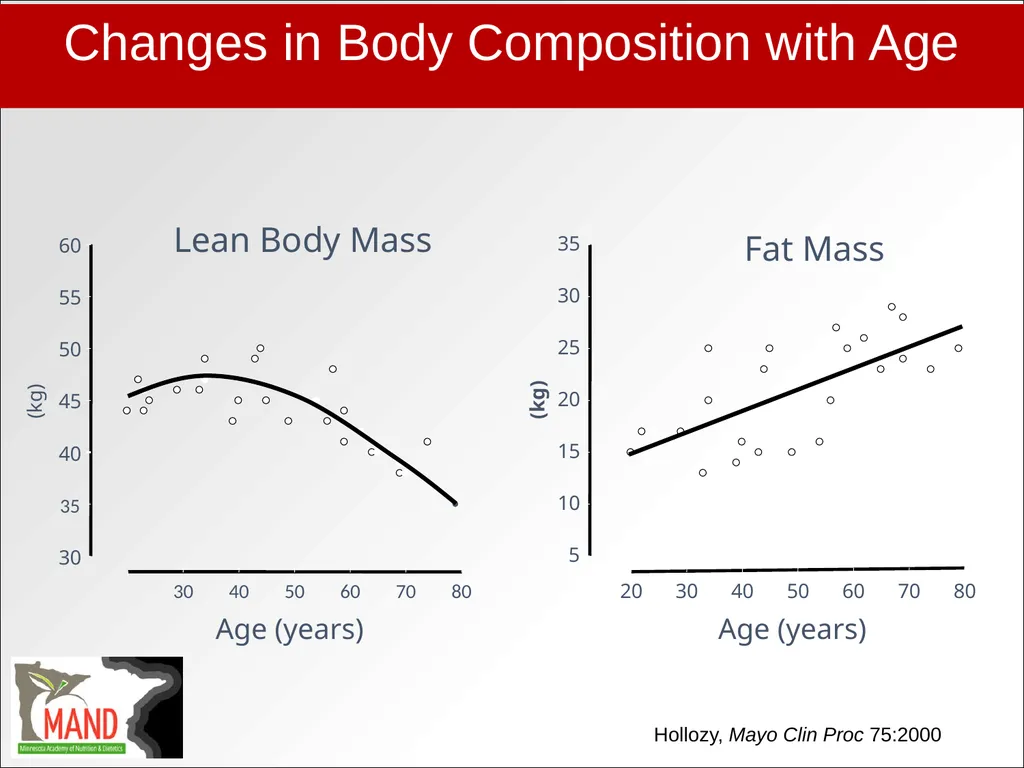
20 30 40 50 60 70 80 5 10 15 20 25 30 35 Age (years) (kg) 30 40 50 60 70 80 30 35 40 45 50 55 60 Age (years) (kg) Changes in Body Composition with Age Hollozy, Mayo Clin Proc 75:2000 Lean Body Mass Fat Mass<br>
08
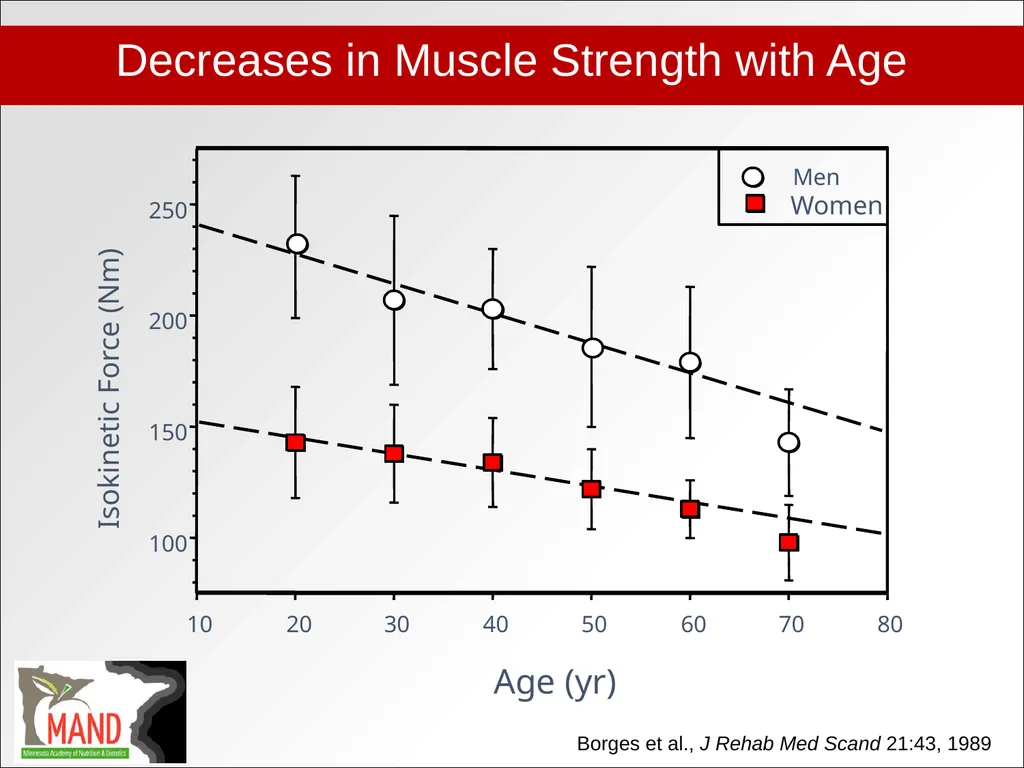
Age (yr) Decreases in Muscle Strength with Age Borges et al., J Rehab Med Scand 21:43, 1989<br>
09
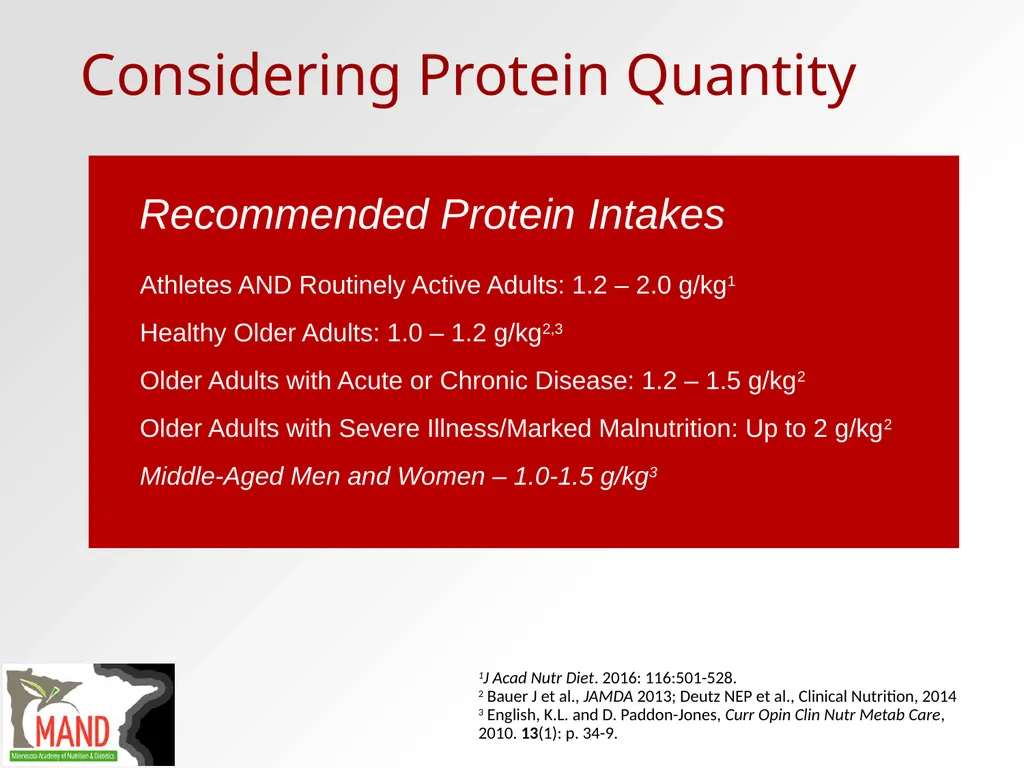
Considering Protein Quantity Recommended Protein Intakes
Athletes AND Routinely Active Adults: 1.2 – 2.0 g/kg1
Healthy Older Adults: 1.0 – 1.2 g/kg2,3
Older Adults with Acute or Chronic Disease: 1.2 – 1.5 g/kg2
Older Adults with Severe Illness/Marked Malnutrition: Up to 2 g/kg2
Middle-Aged Men and Women – 1.0-1.5 g/kg3 1J Acad Nutr Diet. 2016: 116:501-528.
2 Bauer J et al., JAMDA 2013; Deutz NEP et al., Clinical Nutrition, 2014
3 English, K.L. and D. Paddon-Jones, Curr Opin Clin Nutr Metab Care, 2010. 13(1): p. 34-9.<br>
Athletes AND Routinely Active Adults: 1.2 – 2.0 g/kg1
Healthy Older Adults: 1.0 – 1.2 g/kg2,3
Older Adults with Acute or Chronic Disease: 1.2 – 1.5 g/kg2
Older Adults with Severe Illness/Marked Malnutrition: Up to 2 g/kg2
Middle-Aged Men and Women – 1.0-1.5 g/kg3 1J Acad Nutr Diet. 2016: 116:501-528.
2 Bauer J et al., JAMDA 2013; Deutz NEP et al., Clinical Nutrition, 2014
3 English, K.L. and D. Paddon-Jones, Curr Opin Clin Nutr Metab Care, 2010. 13(1): p. 34-9.<br>
10
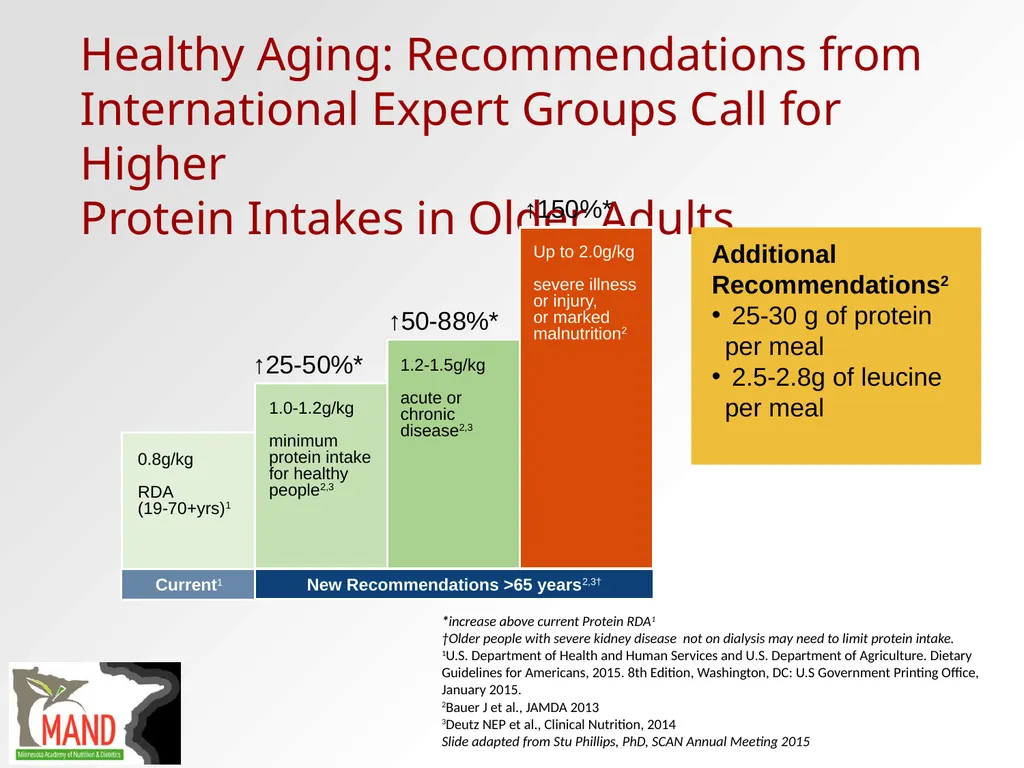
Healthy Aging: Recommendations from
International Expert Groups Call for Higher
Protein Intakes in Older Adults Additional Recommendations2
25-30 g of protein per meal
2.5-2.8g of leucine per meal 0.8g/kg
RDA
(19-70+yrs)1 1.0-1.2g/kg
minimum protein intake for healthy people2,3 1.2-1.5g/kg
acute or chronic
disease2,3 Up to 2.0g/kg
severe illness or injury,
or marked malnutrition2 Current1 New Recommendations >65 years2,3† *increase above current Protein RDA1
†Older people with severe kidney disease not on dialysis may need to limit protein intake.
1U.S. Department of Health and Human Services and U.S. Department of Agriculture. Dietary Guidelines for Americans, 2015. 8th Edition, Washington, DC: U.S Government Printing Office, January 2015.
2Bauer J et al., JAMDA 2013
3Deutz NEP et al., Clinical Nutrition, 2014
Slide adapted from Stu Phillips, PhD, SCAN Annual Meeting 2015<br>
25-30 g of protein per meal
2.5-2.8g of leucine per meal 0.8g/kg
RDA
(19-70+yrs)1 1.0-1.2g/kg
minimum protein intake for healthy people2,3 1.2-1.5g/kg
acute or chronic
disease2,3 Up to 2.0g/kg
severe illness or injury,
or marked malnutrition2 Current1 New Recommendations >65 years2,3† *increase above current Protein RDA1
†Older people with severe kidney disease not on dialysis may need to limit protein intake.
1U.S. Department of Health and Human Services and U.S. Department of Agriculture. Dietary Guidelines for Americans, 2015. 8th Edition, Washington, DC: U.S Government Printing Office, January 2015.
2Bauer J et al., JAMDA 2013
3Deutz NEP et al., Clinical Nutrition, 2014
Slide adapted from Stu Phillips, PhD, SCAN Annual Meeting 2015<br>
11
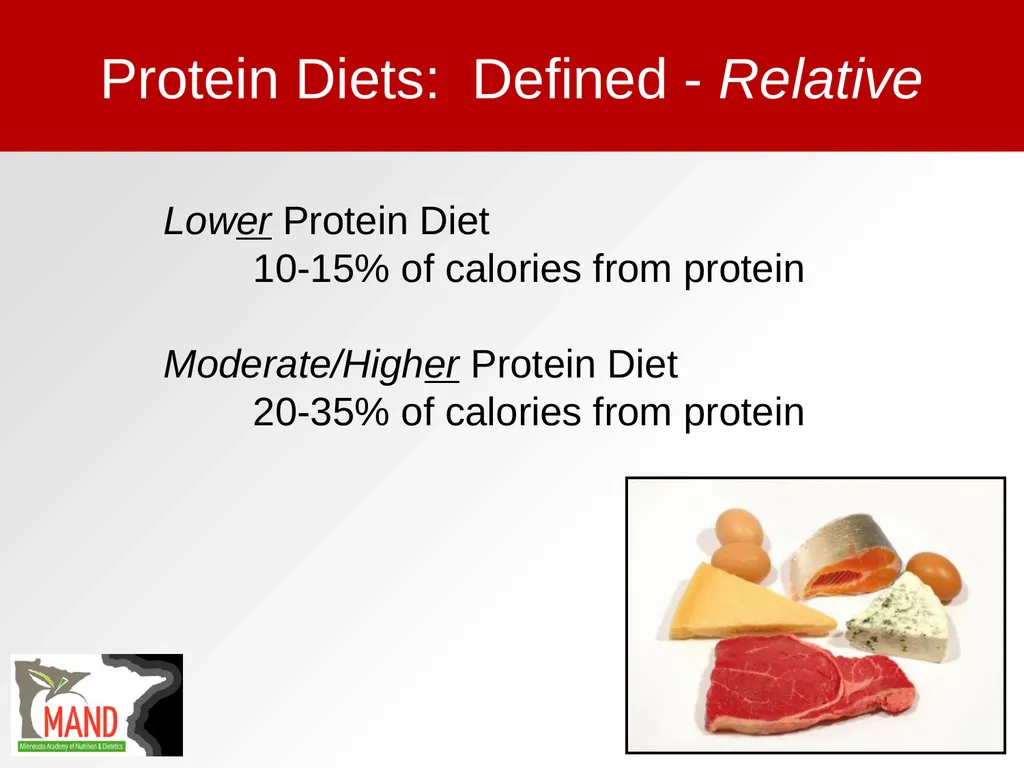
Lower Protein Diet
10-15% of calories from protein
Moderate/Higher Protein Diet
20-35% of calories from protein Protein Diets: Defined - Relative<br>
10-15% of calories from protein
Moderate/Higher Protein Diet
20-35% of calories from protein Protein Diets: Defined - Relative<br>
12
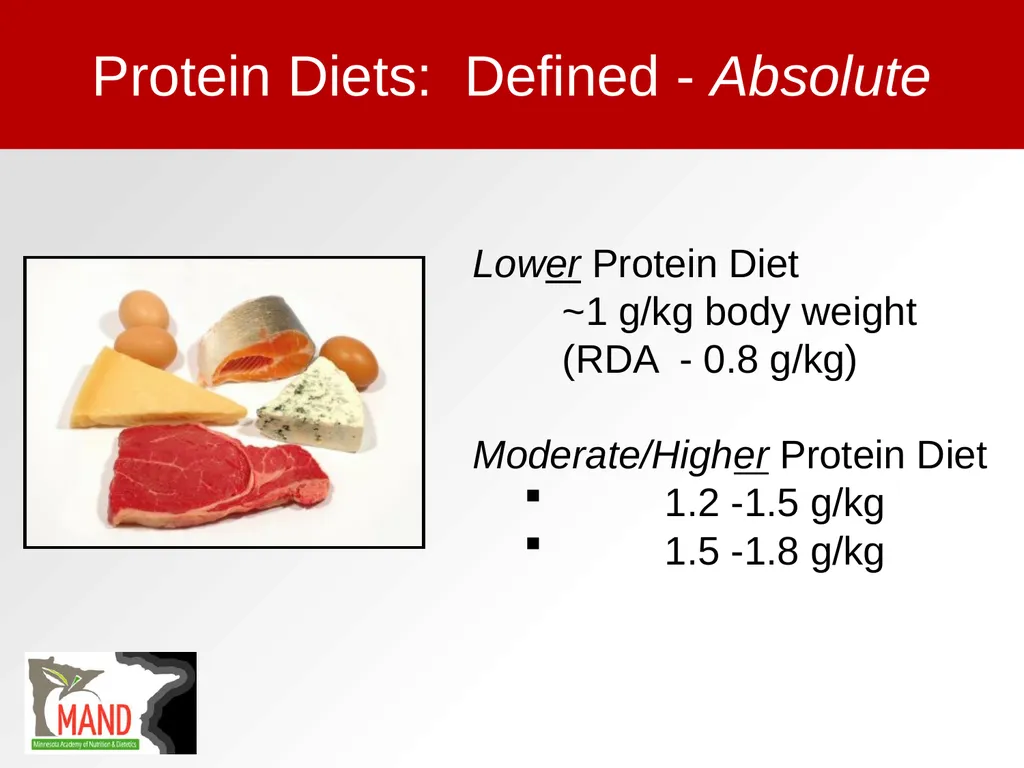
Lower Protein Diet
~1 g/kg body weight
(RDA - 0.8 g/kg)
Moderate/Higher Protein Diet
1.2 -1.5 g/kg
1.5 -1.8 g/kg Protein Diets: Defined - Absolute<br>
~1 g/kg body weight
(RDA - 0.8 g/kg)
Moderate/Higher Protein Diet
1.2 -1.5 g/kg
1.5 -1.8 g/kg Protein Diets: Defined - Absolute<br>
13
Protein Consumption Across the Lifespan AMDR NHANES 2011-2012<br>
14
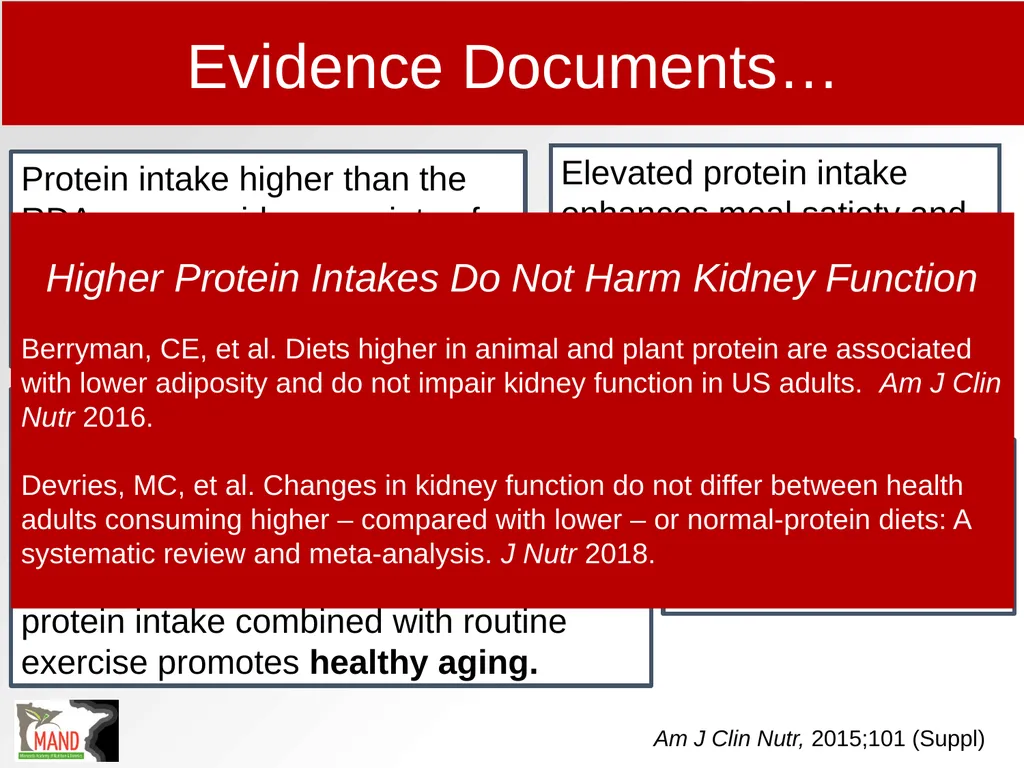
Protein intake higher than the RDA may provides a variety of metabolic benefits including regulation of blood glucose and reduced blood pressure Adequate protein and calcium intake interact to positively affect bone health. Elevated protein intake enhances meal satiety and is an effective and practical weight-loss/weight management strategy. Including a moderate serving of high-quality protein with each meal contributes to increasing skeletal muscle protein and reducing muscle losses for the majority of older adults. Higher protein intake combined with routine exercise promotes healthy aging. Am J Clin Nutr, 2015;101 (Suppl) Evidence Documents… Higher Protein Intakes Do Not Harm Kidney Function
Berryman, CE, et al. Diets higher in animal and plant protein are associated with lower adiposity and do not impair kidney function in US adults. Am J Clin Nutr 2016.
Devries, MC, et al. Changes in kidney function do not differ between health adults consuming higher – compared with lower – or normal-protein diets: A systematic review and meta-analysis. J Nutr 2018.<br>
Berryman, CE, et al. Diets higher in animal and plant protein are associated with lower adiposity and do not impair kidney function in US adults. Am J Clin Nutr 2016.
Devries, MC, et al. Changes in kidney function do not differ between health adults consuming higher – compared with lower – or normal-protein diets: A systematic review and meta-analysis. J Nutr 2018.<br>
15
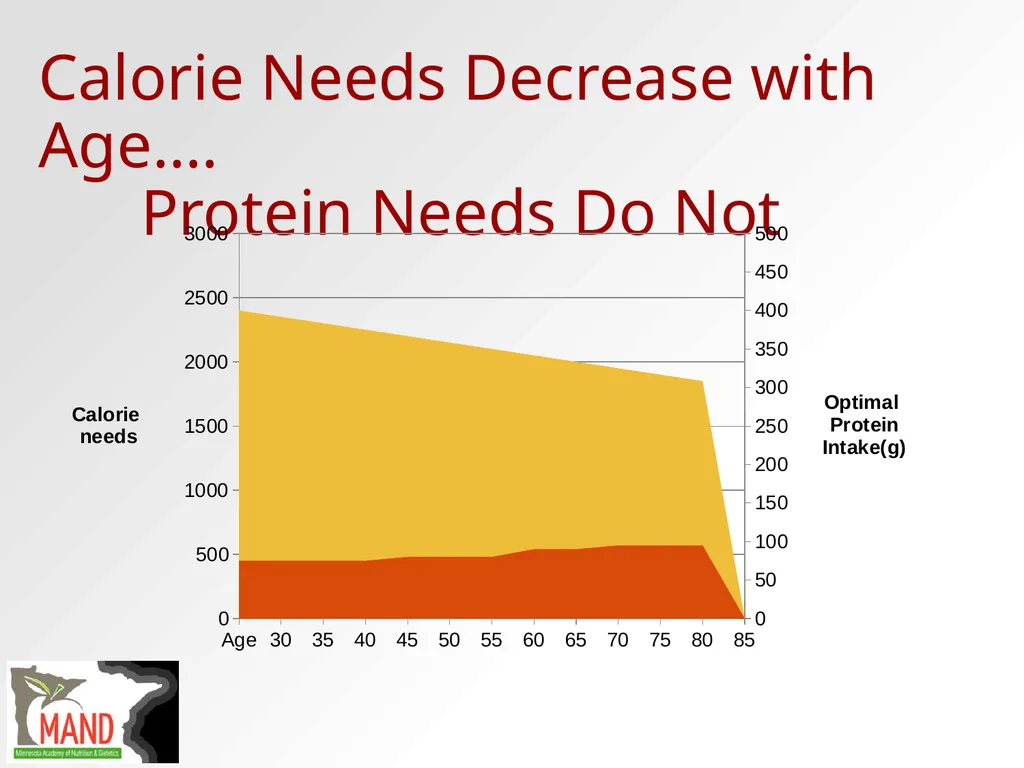
Calorie Needs Decrease with Age….
Protein Needs Do Not<br>
16
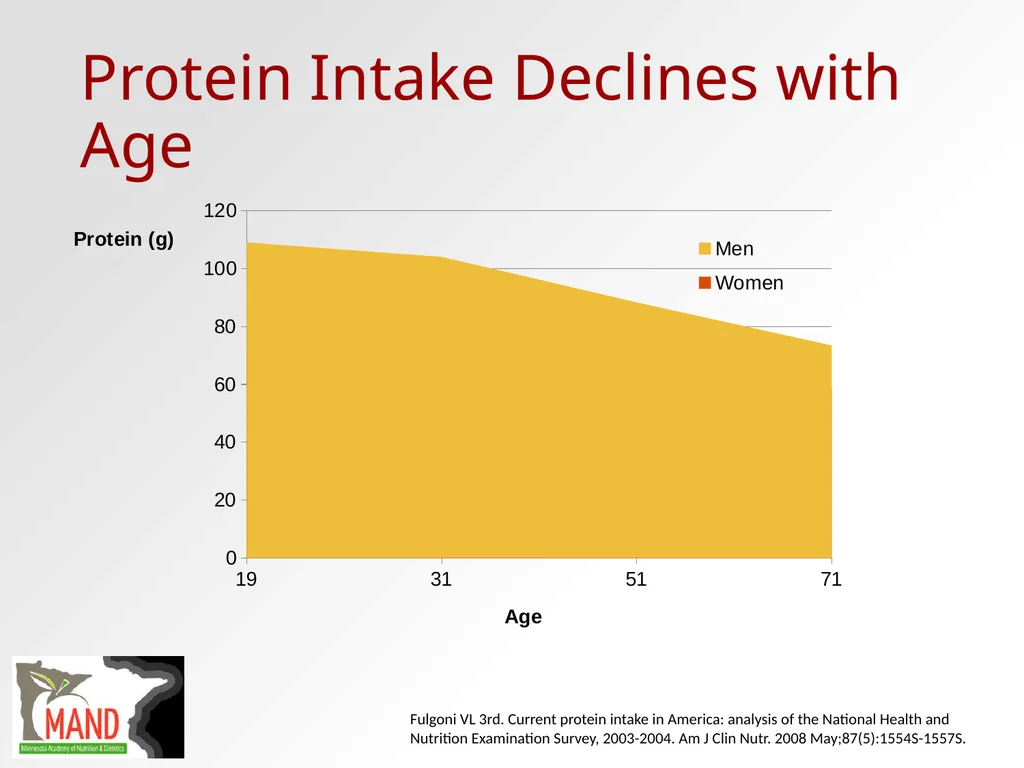
Protein Intake Declines with Age Fulgoni VL 3rd. Current protein intake in America: analysis of the National Health and Nutrition Examination Survey, 2003-2004. Am J Clin Nutr. 2008 May;87(5):1554S-1557S.<br>
17
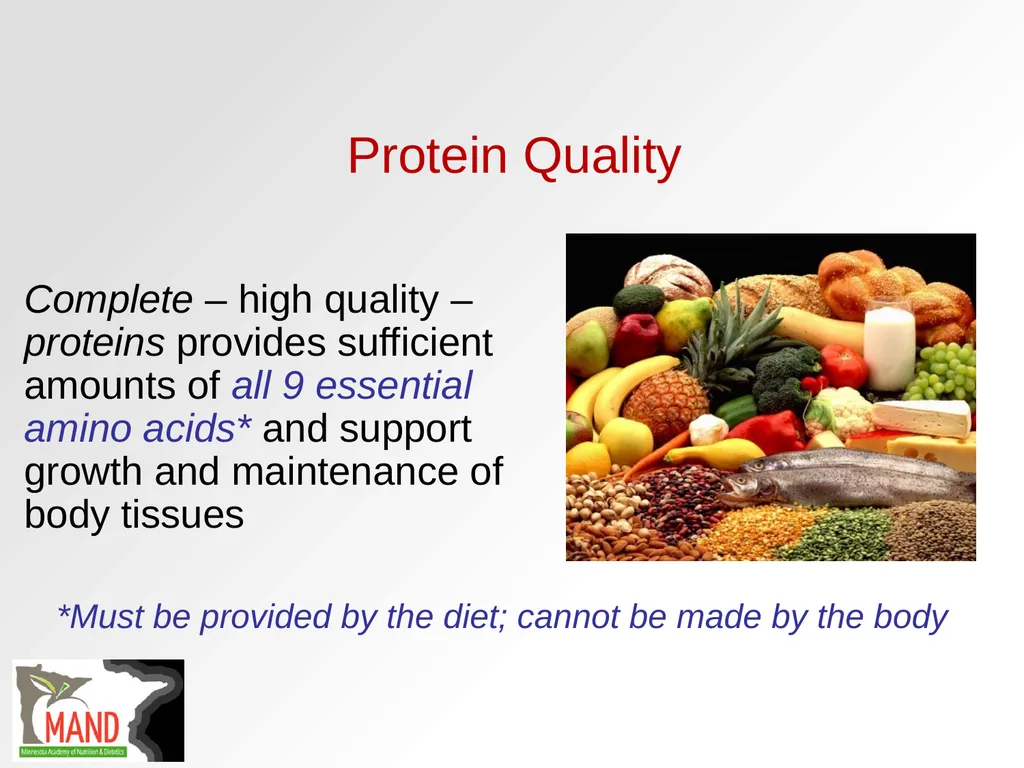
Protein Quality Complete – high quality – proteins provides sufficient amounts of all 9 essential amino acids* and support growth and maintenance of body tissues *Must be provided by the diet; cannot be made by the body<br>
18
Considerations for Protein Quality:
Translating to Practice<br>
19
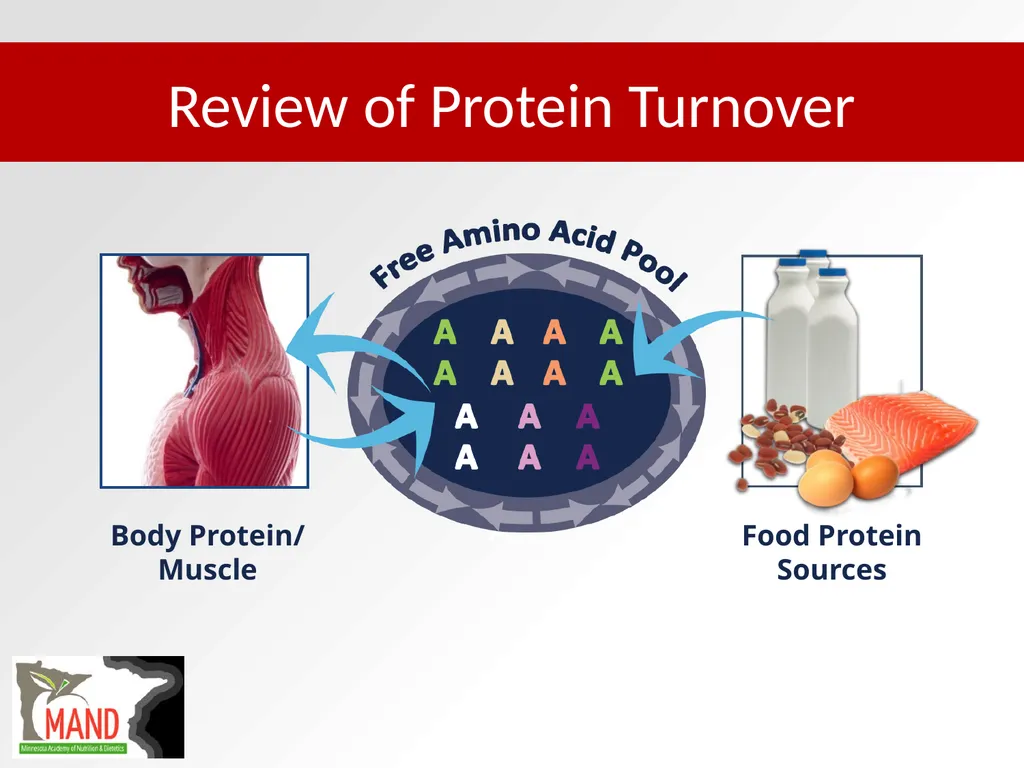
Review of Protein Turnover<br>
20
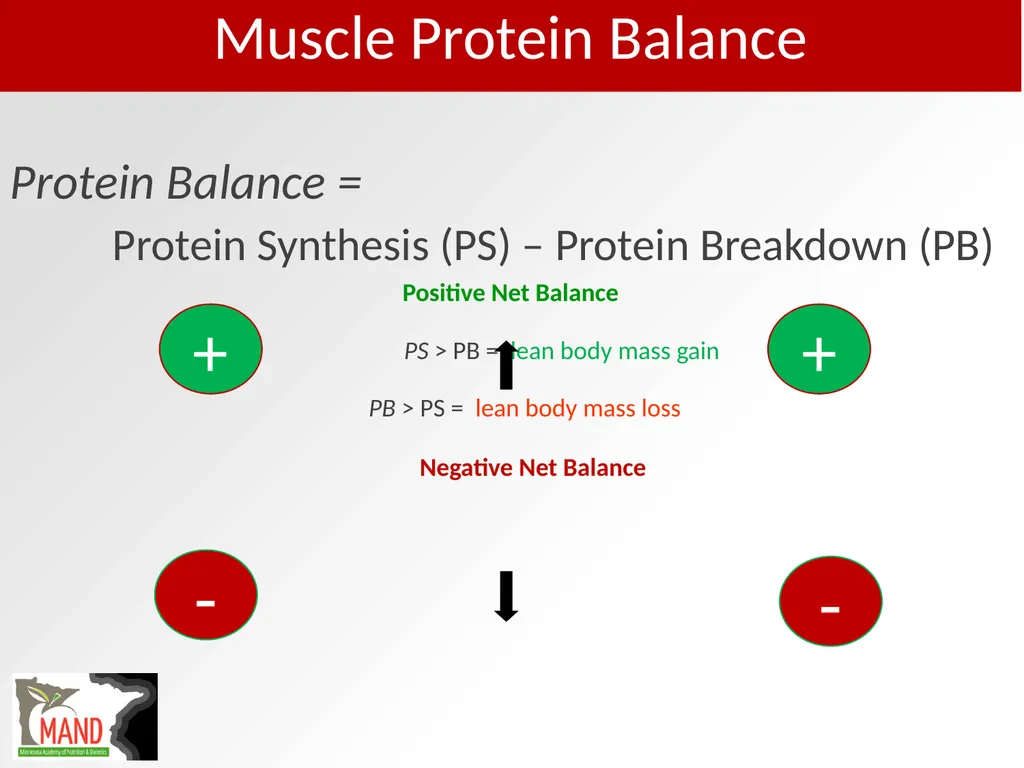
Muscle Protein Balance Protein Balance =
Protein Synthesis (PS) – Protein Breakdown (PB)
Positive Net Balance
PS > PB = lean body mass gain
PB > PS = lean body mass loss
Negative Net Balance<br>
Protein Synthesis (PS) – Protein Breakdown (PB)
Positive Net Balance
PS > PB = lean body mass gain
PB > PS = lean body mass loss
Negative Net Balance<br>
21
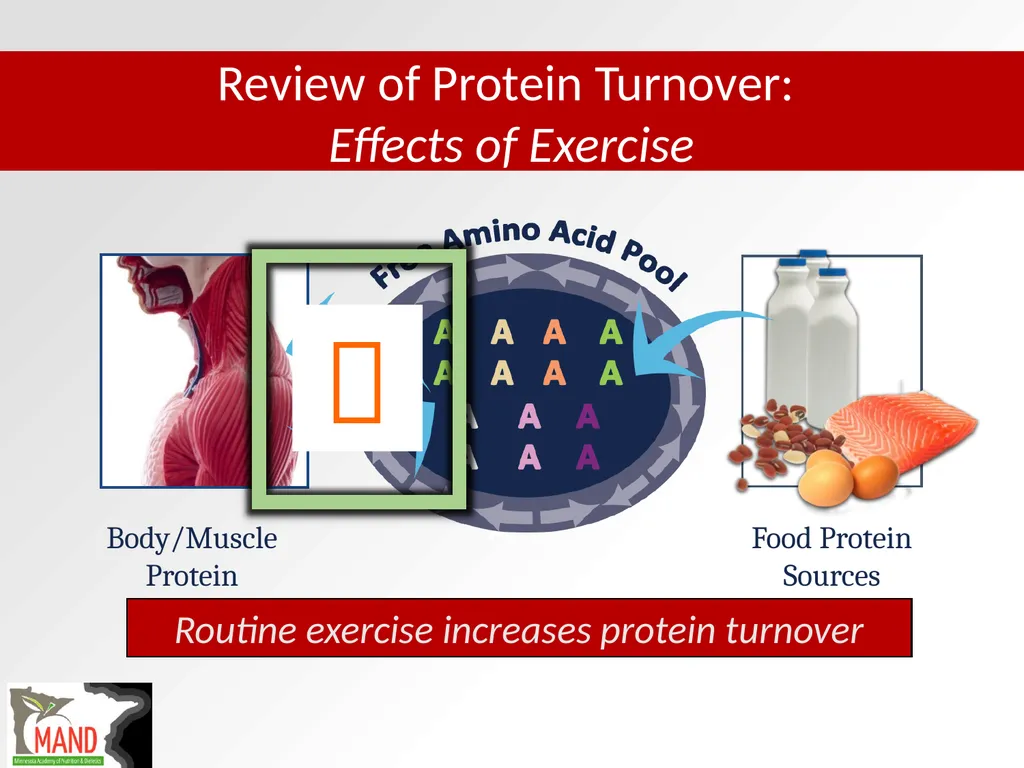
Review of Protein Turnover:
Effects of Exercise Routine exercise increases protein turnover <br>
Effects of Exercise Routine exercise increases protein turnover <br>
22
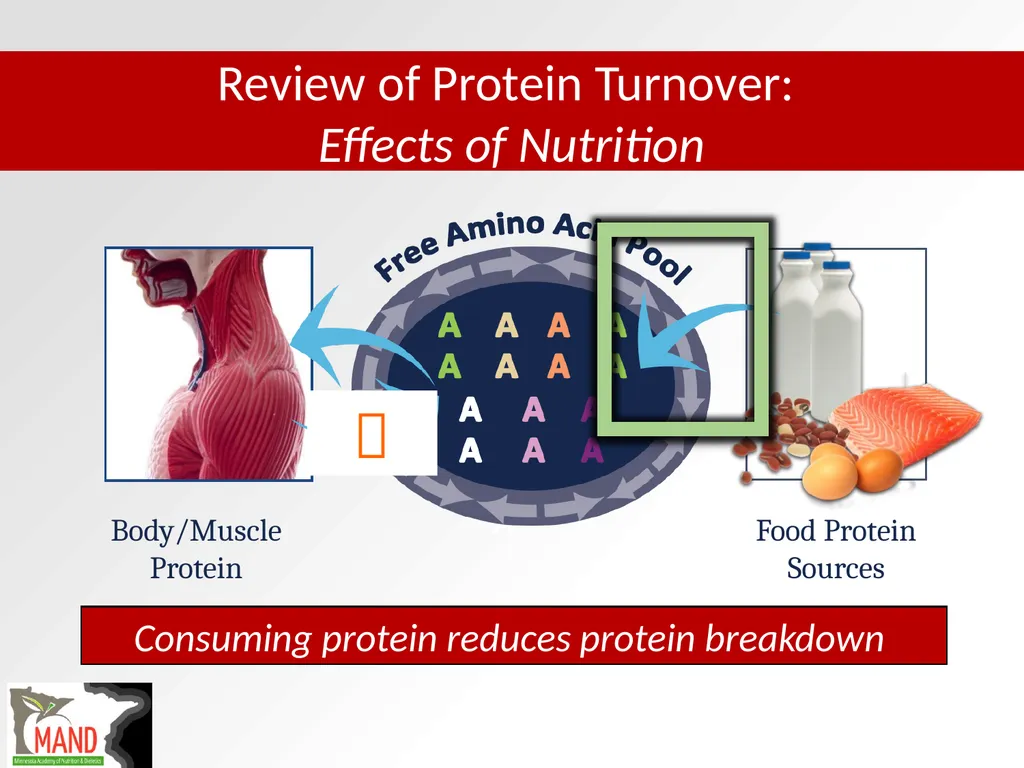
Review of Protein Turnover:
Effects of Nutrition Consuming protein reduces protein breakdown <br>
Effects of Nutrition Consuming protein reduces protein breakdown <br>
23
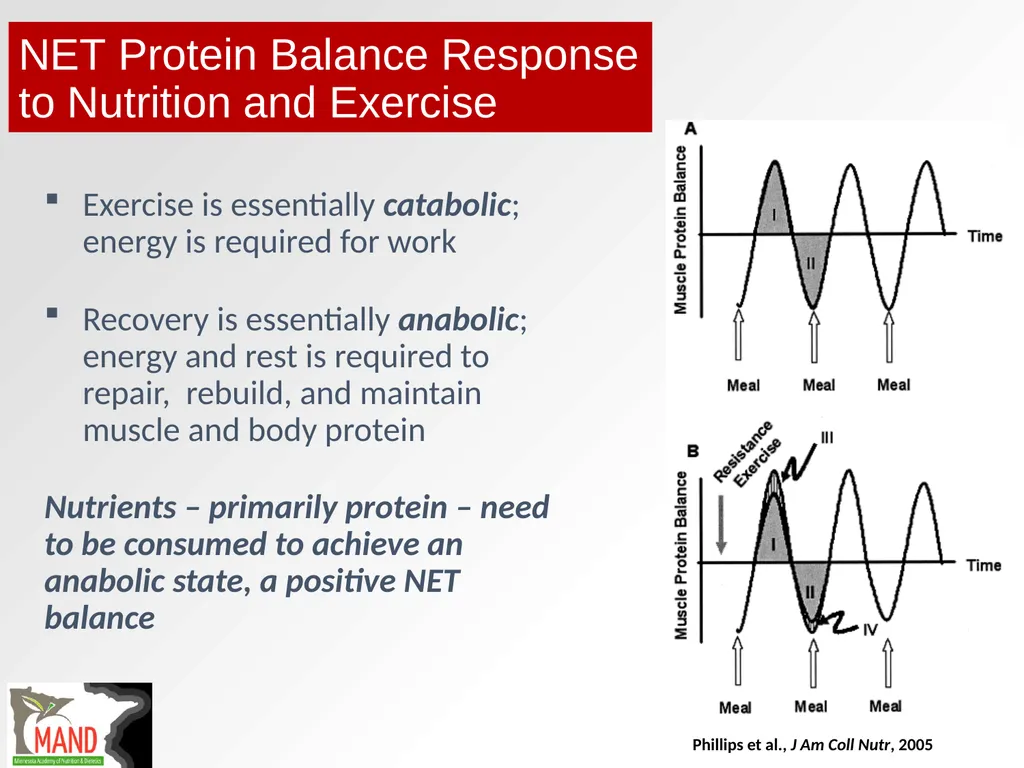
Phillips et al., J Am Coll Nutr, 2005 NET Protein Balance Response to Nutrition and Exercise Exercise is essentially catabolic; energy is required for work
Recovery is essentially anabolic; energy and rest is required to repair, rebuild, and maintain muscle and body protein
Nutrients – primarily protein – need to be consumed to achieve an anabolic state, a positive NET balance<br>
Recovery is essentially anabolic; energy and rest is required to repair, rebuild, and maintain muscle and body protein
Nutrients – primarily protein – need to be consumed to achieve an anabolic state, a positive NET balance<br>
24
Critical Role of Essential Amino
Acids in Context of Protein Requirements and Recommendations has been “Lost in Translation”<br>
25
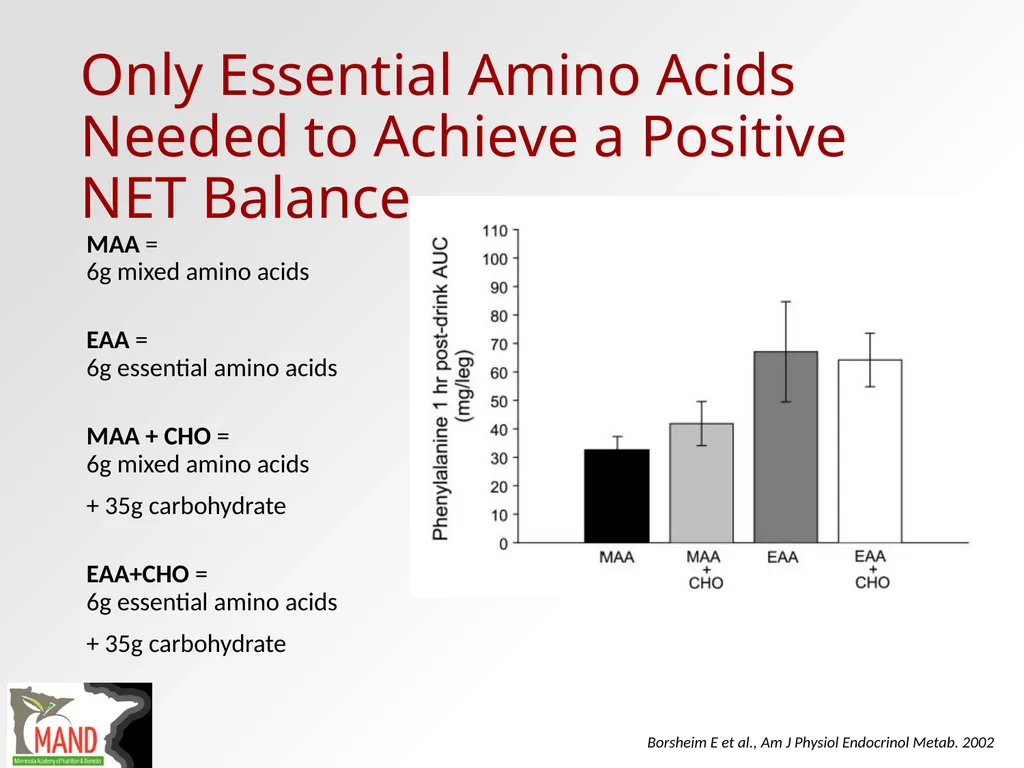
Only Essential Amino Acids Needed to Achieve a Positive NET Balance MAA =
6g mixed amino acids
EAA = 6g essential amino acids
MAA + CHO = 6g mixed amino acids
+ 35g carbohydrate
EAA+CHO = 6g essential amino acids
+ 35g carbohydrate Borsheim E et al., Am J Physiol Endocrinol Metab. 2002<br>
EAA = 6g essential amino acids
MAA + CHO = 6g mixed amino acids
+ 35g carbohydrate
EAA+CHO = 6g essential amino acids
+ 35g carbohydrate Borsheim E et al., Am J Physiol Endocrinol Metab. 2002<br>
26
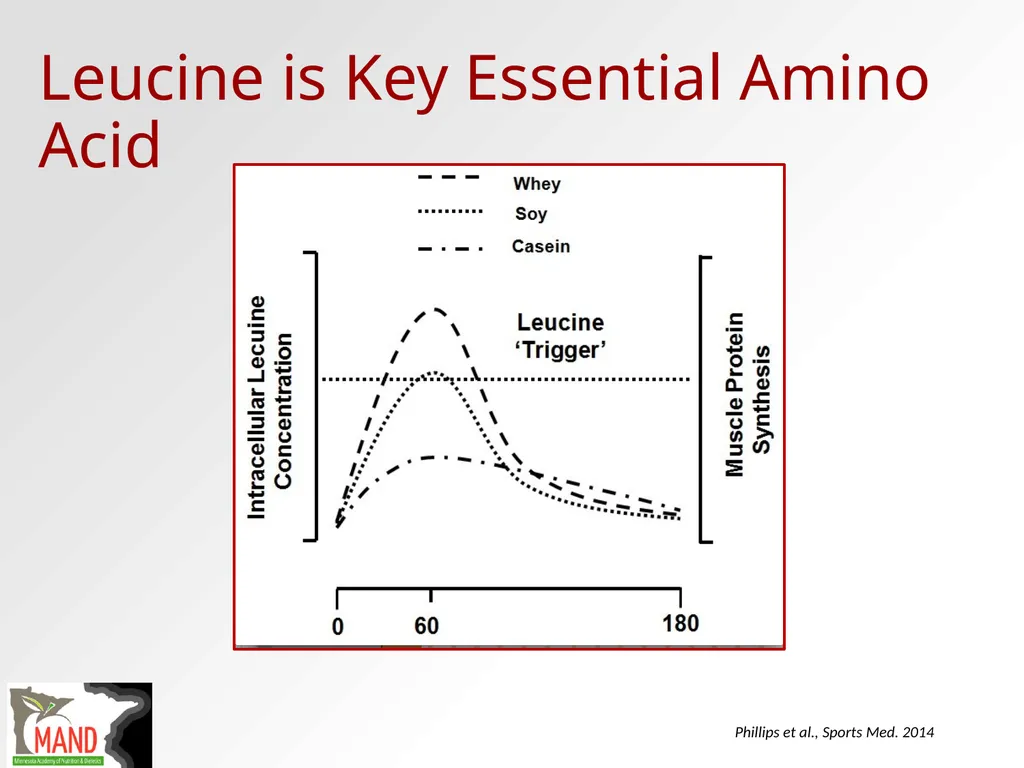
Leucine is Key Essential Amino Acid Phillips et al., Sports Med. 2014<br>
27
Translating Evidence Regarding Protein Quantity and Quality into Healthy Eating Patterns<br>
28
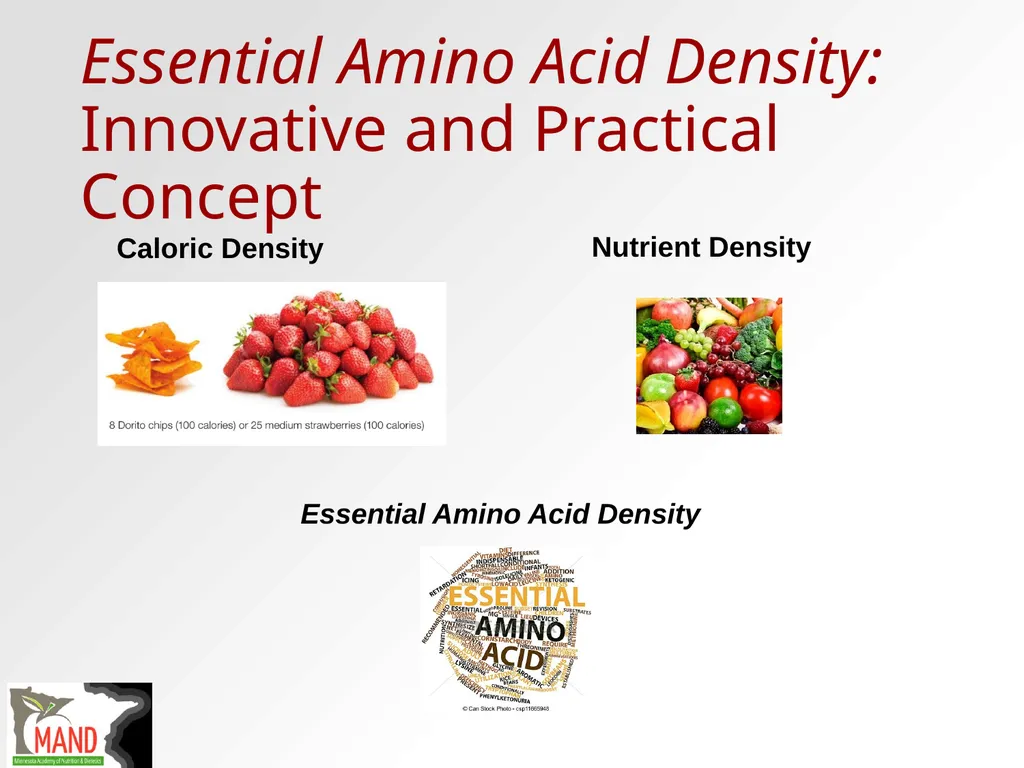
Essential Amino Acid Density:
Innovative and Practical Concept<br>
29
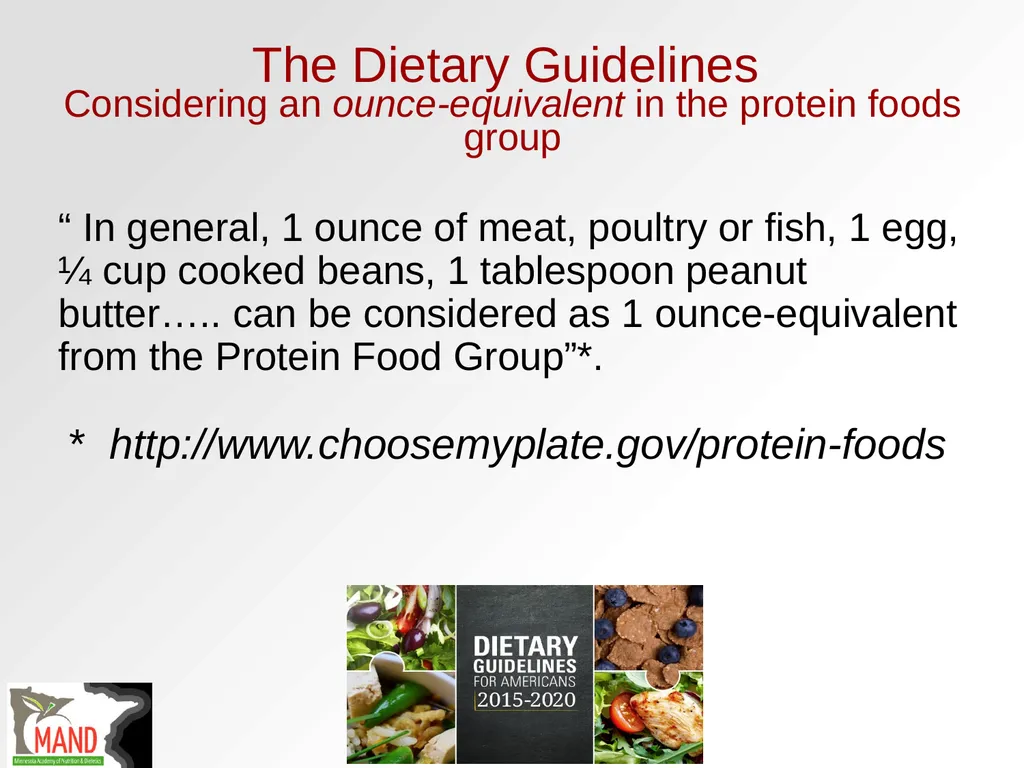
The Dietary Guidelines
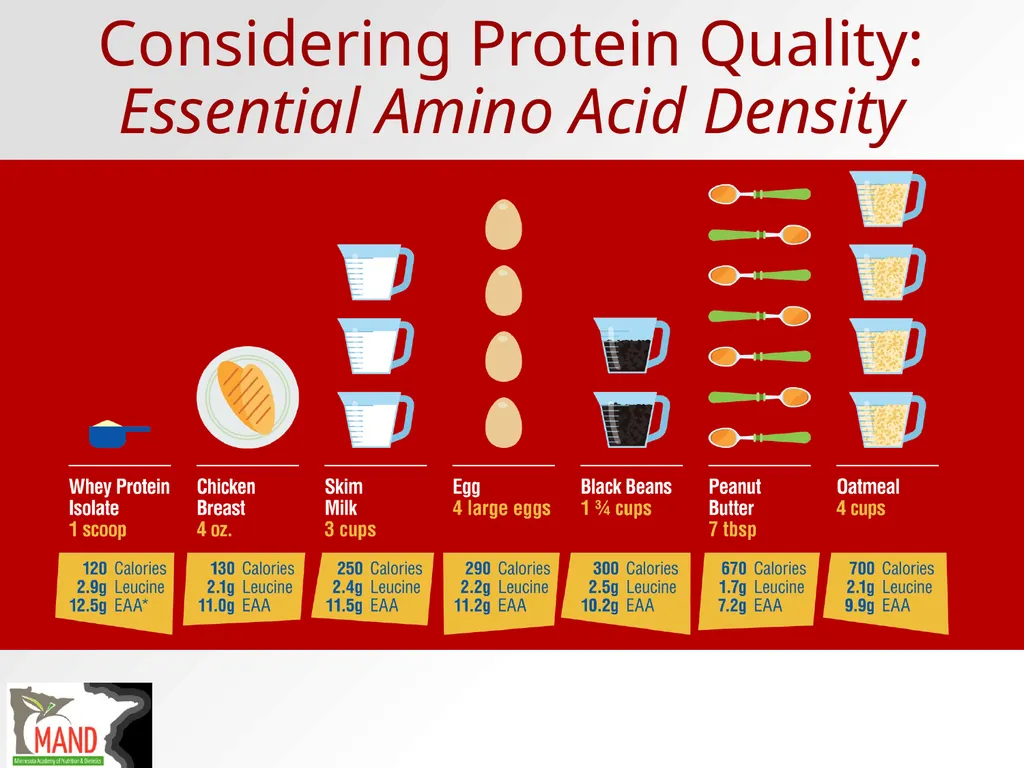
Considering an ounce-equivalent in the protein foods group “ In general, 1 ounce of meat, poultry or fish, 1 egg, ¼ cup cooked beans, 1 tablespoon peanut butter….. can be considered as 1 ounce-equivalent from the Protein Food Group”*.
* http://www.choosemyplate.gov/protein-foods<br>
* http://www.choosemyplate.gov/protein-foods<br>
30
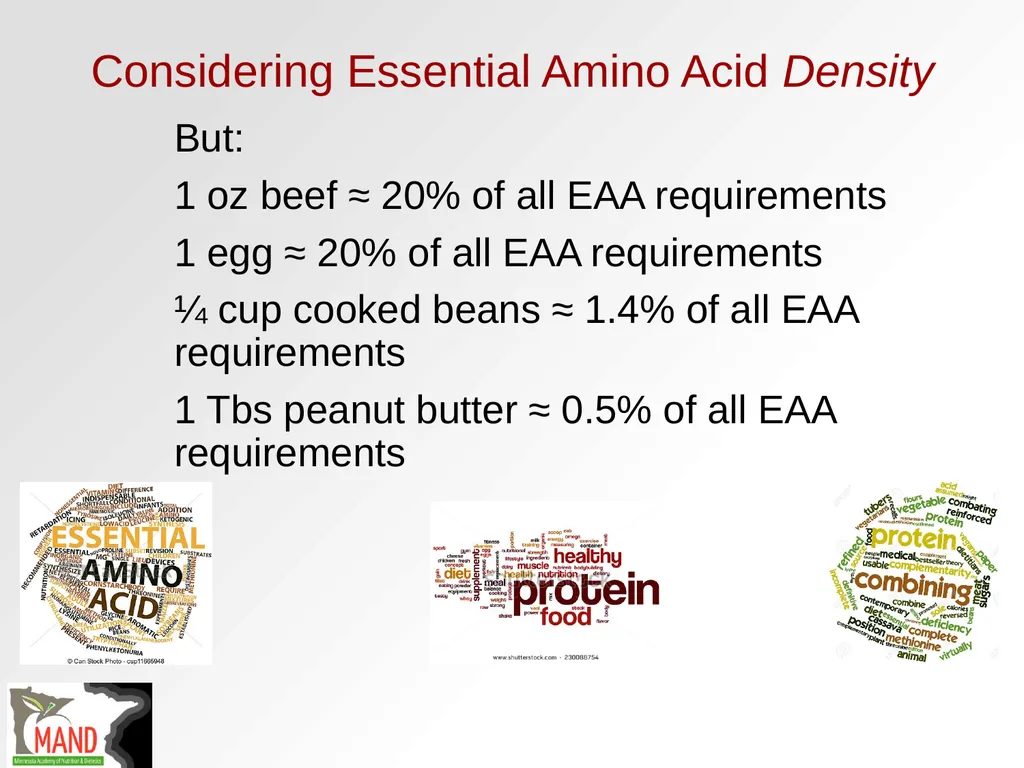
But:
1 oz beef ≈ 20% of all EAA requirements
1 egg ≈ 20% of all EAA requirements
¼ cup cooked beans ≈ 1.4% of all EAA requirements
1 Tbs peanut butter ≈ 0.5% of all EAA requirements Considering Essential Amino Acid Density<br>
1 oz beef ≈ 20% of all EAA requirements
1 egg ≈ 20% of all EAA requirements
¼ cup cooked beans ≈ 1.4% of all EAA requirements
1 Tbs peanut butter ≈ 0.5% of all EAA requirements Considering Essential Amino Acid Density<br>
31
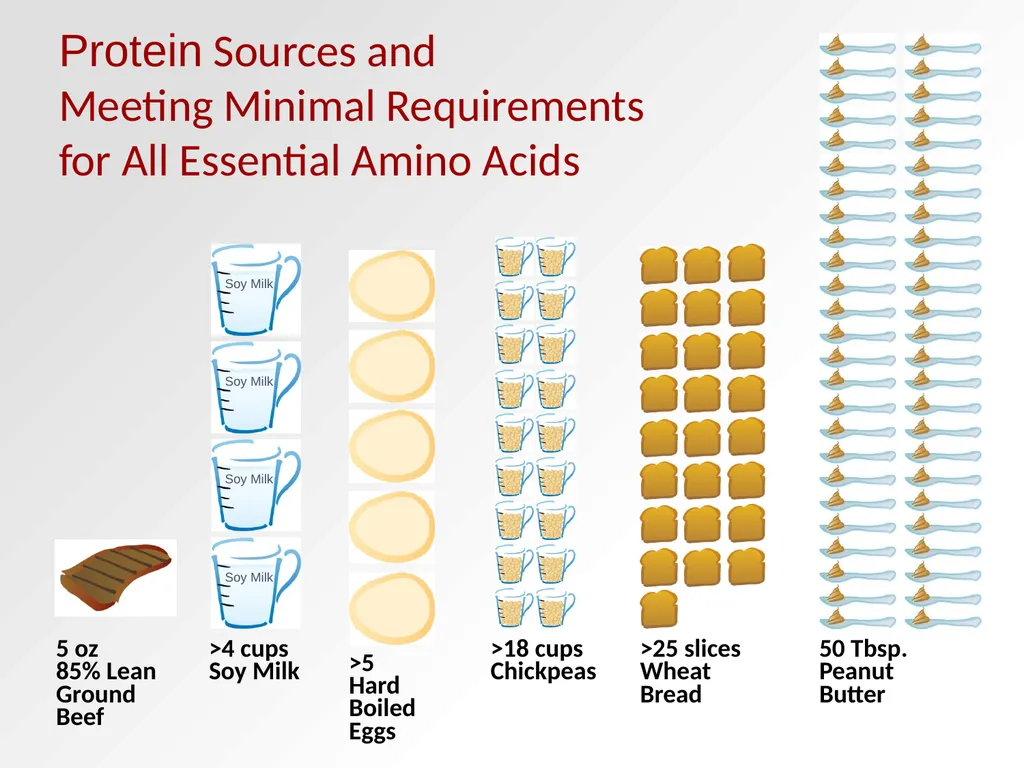
Protein Sources and
Meeting Minimal Requirements
for All Essential Amino Acids<br>
Meeting Minimal Requirements
for All Essential Amino Acids<br>
32
Considering Protein Quality:
Essential Amino Acid Density<br>
33
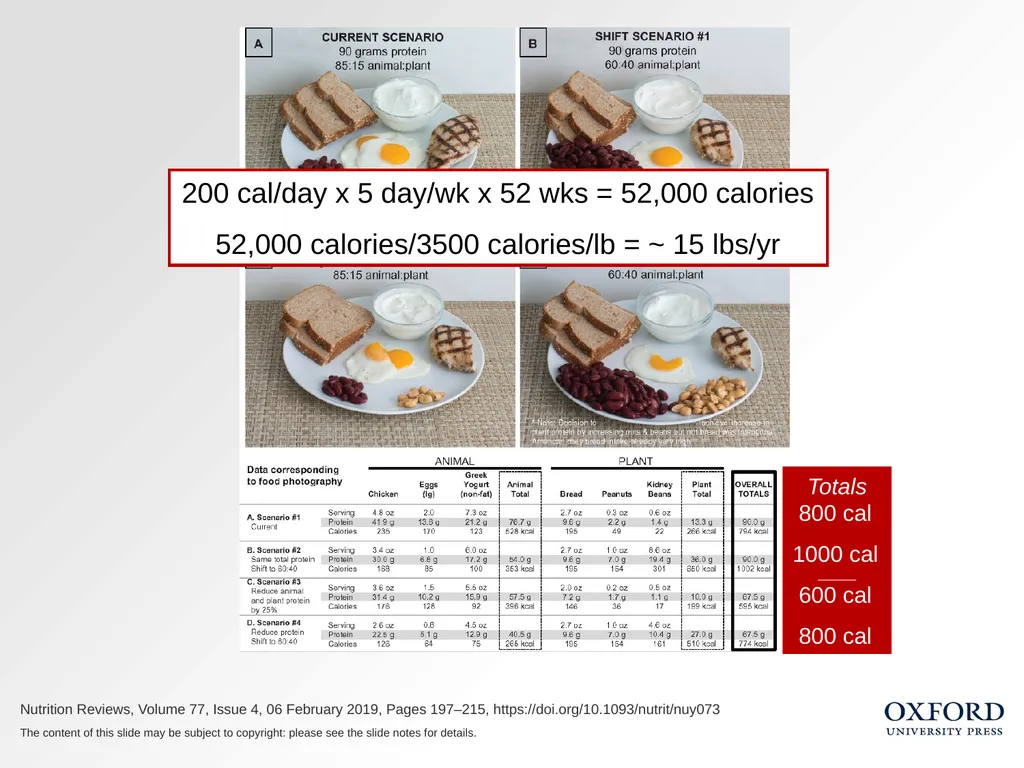
Nutrition Reviews, Volume 77, Issue 4, 06 February 2019, Pages 197–215, https://doi.org/10.1093/nutrit/nuy073
The content of this slide may be subject to copyright: please see the slide notes for details. Totals
800 cal
1000 cal
______
600 cal
800 cal 200 cal/day x 5 day/wk x 52 wks = 52,000 calories
52,000 calories/3500 calories/lb = ~ 15 lbs/yr<br>
The content of this slide may be subject to copyright: please see the slide notes for details. Totals
800 cal
1000 cal
______
600 cal
800 cal 200 cal/day x 5 day/wk x 52 wks = 52,000 calories
52,000 calories/3500 calories/lb = ~ 15 lbs/yr<br>
34
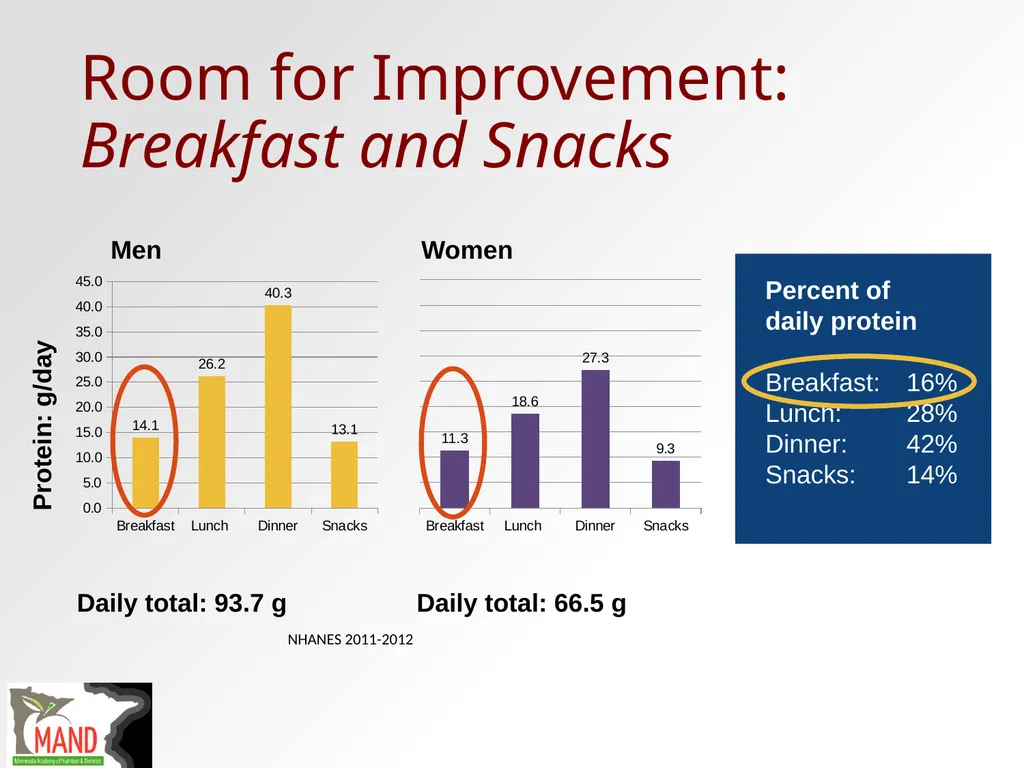
Room for Improvement:
Breakfast and Snacks Protein: g/day Men Daily total: 66.5 g Daily total: 93.7 g Women NHANES 2011-2012<br>
35
Protein Distribution Protein-centric meals for optimal protein utilization:
Can it be that simple?
Rodriguez, NR. J Nutr 2014
Dietary protein distribution positively influences 24 h muscle protein synthesis in healthy adults
Mamerow MM et al., J Nutr 2014<br>
Rodriguez, NR. J Nutr 2014
Dietary protein distribution positively influences 24 h muscle protein synthesis in healthy adults
Mamerow MM et al., J Nutr 2014<br>
36
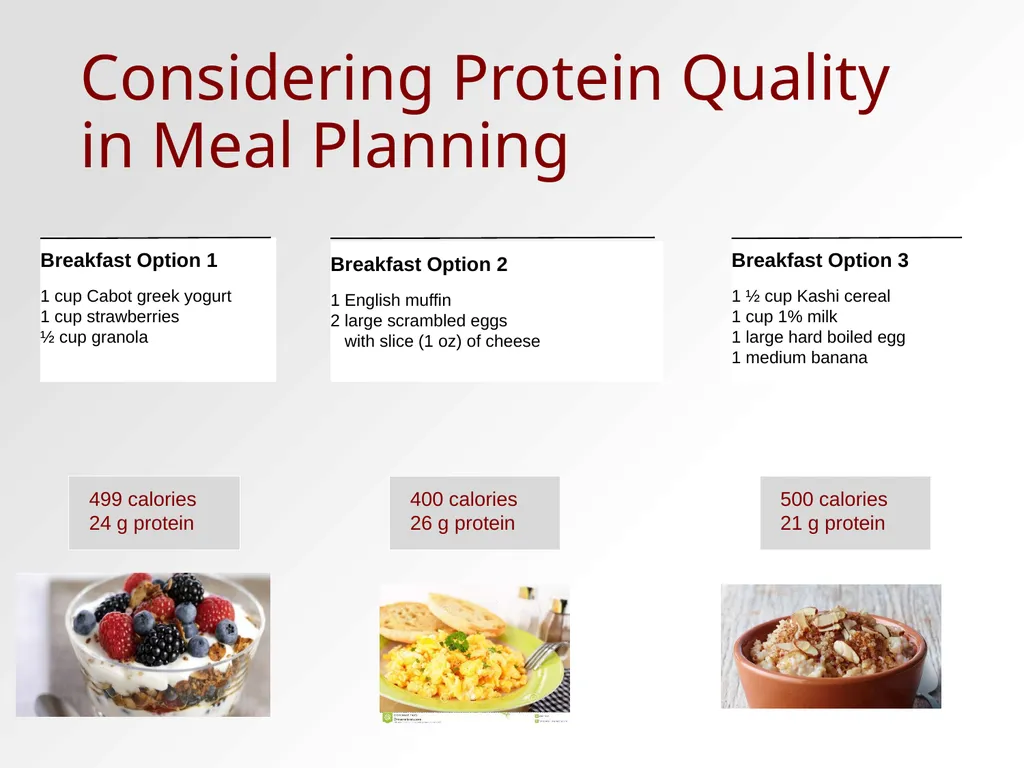
Considering Protein Quality
in Meal Planning<br>
37
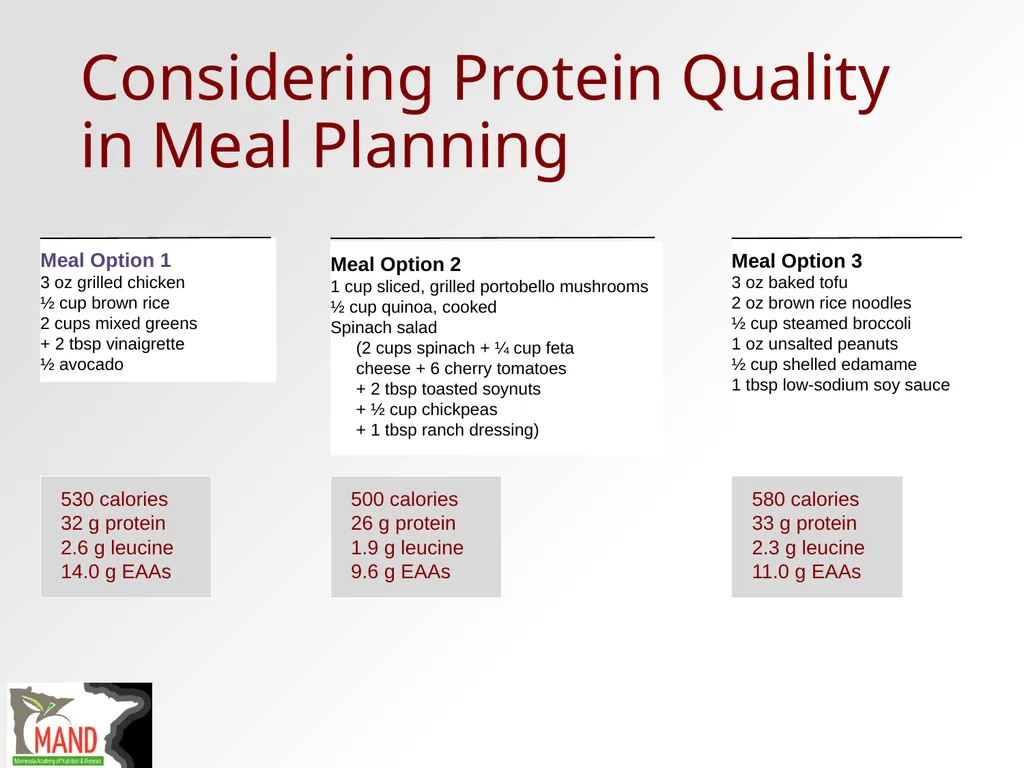
Considering Protein Quality
in Meal Planning<br>
38
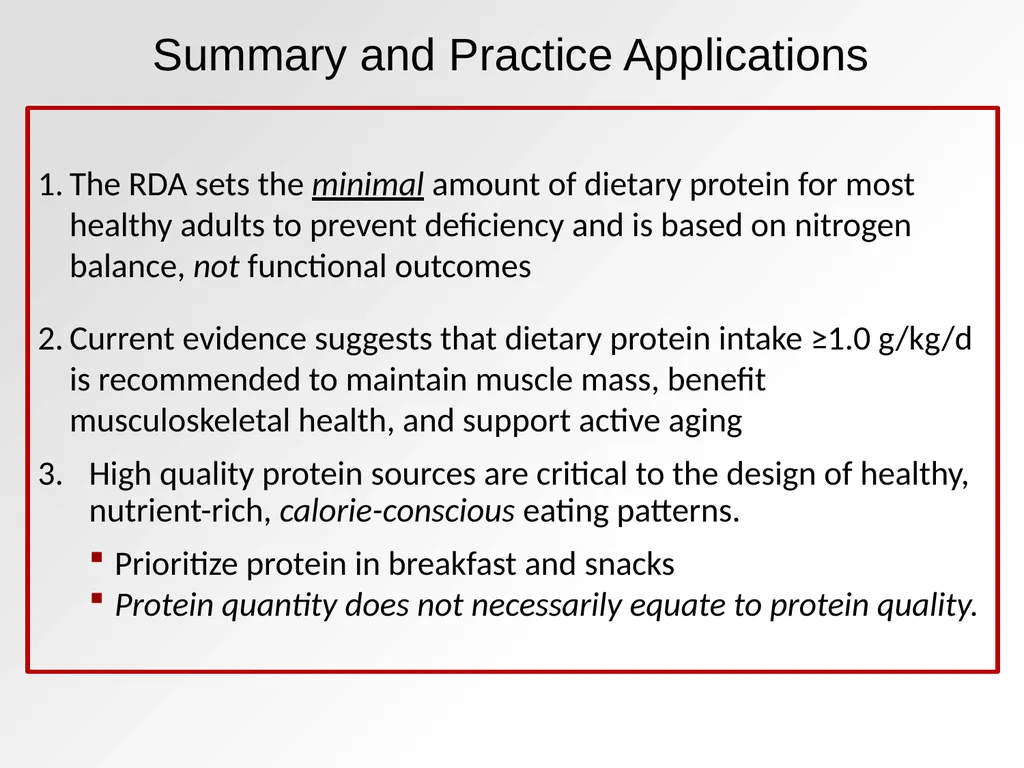
Summary and Practice Applications The RDA sets the minimal amount of dietary protein for most healthy adults to prevent deficiency and is based on nitrogen balance, not functional outcomes
Current evidence suggests that dietary protein intake ≥1.0 g/kg/d is recommended to maintain muscle mass, benefit musculoskeletal health, and support active aging
High quality protein sources are critical to the design of healthy, nutrient-rich, calorie-conscious eating patterns.
Prioritize protein in breakfast and snacks
Protein quantity does not necessarily equate to protein quality.<br>
Current evidence suggests that dietary protein intake ≥1.0 g/kg/d is recommended to maintain muscle mass, benefit musculoskeletal health, and support active aging
High quality protein sources are critical to the design of healthy, nutrient-rich, calorie-conscious eating patterns.
Prioritize protein in breakfast and snacks
Protein quantity does not necessarily equate to protein quality.<br>
39
Thank You!<br>